Claims of Political Links to Paul Mashatile Are Just “Gossip”, Winning Lottery Bidder Says
Losing bidder Ithuba Lottery is trying to create “an atmosphere of wrongdoing”, says Sizekhaya

MyZA
News, Directory, Events and Other Stuff
Losing bidder Ithuba Lottery is trying to create “an atmosphere of wrongdoing”, says Sizekhaya
AI coverage in African media has shown that local voices and experts are missing.
“There is nothing random about what Israel is doing,” says Palestinian journalist
DA’s Michael Bagraim debates Just Share’s Kwanele Ngogela
Photography is not just for the elite, says Gopolang Ledwaba
Mandela was a patrician leader, at times even a draconian leader, who steamrolled dissent when he thought it necessary.
City plans to sell land to private developers at a discount
The City of Cape Town has promised 12,000 affordable homes
A GroundUp series on the right to be informed
South Africa's Strategic Adaptation to US Tariffs: Advancing National Interests through Policy and Strategy
The new tariff regime arising from the decision by the United States of America, which have been directed not only to South Africa, but the entire world necessitates strategic responses to maintain and grow our industrial base, as a crucial avenue to pursue inclusive growth.
In response to the US Government's imposition of tariffs, South Africa will continue to navigate the challenges and opportunities these measures present with resilience and innovation. Guided by its national interests and aligned with its broader trade and industrial policy, South Africa is committed to ensuring economic growth, industrial development, and the well-being of its citizens.
South Africa intends to:
1. Negotiate Favourable Agreements
South Africa will work to secure opportunities, in a context of a rapid withdrawal of favourable arrangements giving our exports preferential access to the United States of America. This might involve securing additional exemptions and favourable quota agreements, ensuring our industries maintain critical access to the US market, including through sectoral cooperation. This aligns with the national interest of promoting economic prosperity and safeguarding the livelihoods of South Africans.
2. Diversify and Expand Trade Relations
Efforts will intensify to diversify export destinations, targeting markets across Africa, as well as in Asia, Europe, Middle East, and Americas.
Moreover, such efforts will also, where deemed appropriate involve bilateral arrangements where these allow for the pursuance of our national interest. In our presidency of the G20, as the recent engagements at the G20 trade and investment working group (TIWG) indicate, the issue of supply chain geographical diversification is a challenge confronting all open market economies the world over.
This diversification supports South Africa's industrial strategy and reduces dependency on single destination markets for our exports or single sources for our intermediate input requirements. Fostering resilience in line with national economic priorities.
3. Enhance Regional Trade Collaboration
South Africa will leverage the African Continental Free Trade Area (AfCFTA) to bolster intra-African trade, fostering stronger regional economic integration and cooperation. This approach aligns with the national interest of contributing to a better Africa and world.
4. Focus on Value-Added Production
Industries will prioritise transforming raw materials into higher value finished goods, reducing tariff exposure and driving innovation to improve profitability. This supports South Africa's industrial policy objectives of boosting local manufacturing and creating jobs.
5. Stimulate Domestic Growth
The government will invest strategically in industries impacted by the tariffs, supporting economic growth through modernisation and targeted infrastructure development. This aligns with the national interest of ensuring the well-being of South African citizens.
6. Forge Global Alliances
South Africa will continue to build strategic partnerships with other nations enhancing collaboration and our influence in international trade negotiations. This reflects the national interest of strengthening global diplomatic and economic ties.
South Africa's tariff and industrial strategy are designed to support industrial development, employment growth, and economic resilience. By aligning these policies with the national interest, South Africa will ensure that its economy emerges stronger, more diversified, and resilient in the face of global trade complexities.
This approach will also apply to the 7 February Executive Order, which is currently being attended by an interdepartmental team which includes the departments affected by the executive order.
The 31% tariff implemented by the US Administration will be effective from 9 April 2025. South Africa's average tariff is 7.6% and therefore South Africa needs clarity on the basis for the 31% to be implemented by the US.
It is important to note that products such as copper, pharmaceuticals, semiconductors, lumber articles, certain critical minerals, and energy and energy products have been exempted from the reciprocal tariffs. Some of these materials are already key parts of the United States of America's sourcing requirements. According to the United States Geological Survey, 97% of their chrome ore requirements come from South Africa, 6% of fluorspar import requirements and 24% of the United States manganese requirements. These reciprocal tariffs will not apply to products already facing Section 232 tariffs of 25% such as steel, aluminium, automobiles and auto parts.
The reciprocal tariffs effectively nullify the preferences that Sub-Saharan Africa countries enjoy under the Africa Growth and Opportunity Act (AGOA). The sweeping tariff measures will affect several sectors of our economy, including automotive industry, agriculture, processed food and beverage, chemical, metals, and other segments of manufacturing, with implications for jobs and growth.
The US represented 7.45% of South Africa's total exports in 2024, while South Africa accounted for only 0.4% of US total imports. As such, South Africa does not constitute a threat to US and where there is a trade imbalance in favour of South Africa, it is mainly on agriculture products which are counter-cyclical and on minerals which are inputs in US industries.
South Africa will continue building domestic supply resilience, reducing cost of doing business and increasing competitiveness of our economy. Further, South Africa will continue with efforts to diversify export markets as part of its resilience building strategy.
The significant market access opportunities both through trade agreements and through strategic partnerships with countries across the globe present huge opportunities for our exports. The recently concluded Africa Continental Free Trade Area (AfCFTA) remains untapped, beyond the Southern Africa Development Community (SADC).
Furthermore, South Africa enjoys preferential market access through the Southern Africa Customs Union, SADC, SADC-EU Economic Partnership Agreement (EPA), SACU+Mozambique-UK EPA, the European Free Trade Association (EFTA), MERCUSUR (that includes Argentina, Brazil, Paraguay and Uruguay) and Japan Generalised System of Preferences. In addition, government is strengthening relations with countries in Asia and the Middle East to open new market access opportunities. Some of these efforts are bearing fruit with new market access opportunities for our agriculture products.
To re-iterate the Presidency, whilst South Africa remains committed to a mutually beneficial trade relationship with the United States, unilaterally imposed and punitive tariffs are a concern and serve as a barrier to trade and shared prosperity. The tariffs affirm the urgency to negotiate a new bilateral and mutually beneficial agreement with the US, that will establish more fair-trade relations with the US as an essential step to secure long-term trade certainty.
Distributed by APO Group on behalf of Republic of South Africa: Department of International Relations and Cooperation.
SA unveils strategic economic diversification plan amid US tariffs
South Africa has unveiled a comprehensive strategy to mitigate the economic impact of new United States tariffs, focusing on export diversification, value-added production, and strengthening regional trade partnerships.
This is after United States President, Donald Trump, announced global reciprocal tariffs on most imported goods, with South Africa facing a 31% tariff increase.
“The new tariff regime arising from the decision by the United States of America, which have been directed not only to South Africa, but the entire world, necessitates strategic responses to maintain and grow our industrial base, as a crucial avenue to pursue inclusive growth,” the Minister of International Relations and Cooperation, Ronald Lamola, said on Friday.
Lamola was speaking during a joint media briefing with the Minister of Trade, Industry and Competition, Parks Tau.
He informed journalists that South Africa will continue to tackle the challenges and seize opportunities with resilience and innovation, as the country moves forward with ensuring economic growth, industrial development, and the well-being of its citizens.
Lamola outlined plans to navigate the challenges posed by the 31% tariffs set to take effect from 9 April 2025.
These include negotiating favourable trade agreements with the United States; leveraging the African Continental Free Trade Area (AfCFTA) to boost intra-African trade; and prioritising high-value manufacturing to reduce tariff exposure.
In addition, he said government remains committed to building economic resilience, exploring alternative market access through existing trade agreements and strategic partnerships with countries across various regions.
“We will intensify efforts to diversify export destinations, targeting markets across Africa, Asia, Europe, the Middle East, and the Americas,” the Minister stated.
According to Lamola, government aims to reduce dependence on single export markets and foster economic resilience.
Meanwhile, he announced that the State will invest strategically in industries impacted by the tariffs, supporting economic growth through modernisation and targeted infrastructure development.
The sweeping tariff measures will affect several sectors of South Africa’s economy, including automotive, industrial agriculture, processed food and beverage, chemical, metals, and other segments of manufacturing.
According to Lamola, South Africa’s tariff and industrial strategy are designed to support industrial development, employment growth, and economic resilience.
“By aligning these policies with the national interest, South Africa will ensure that its economy emerges stronger, more diversified, and resilient in the face of global trade complexities,” he explained.
This approach will also apply to the 7 February Executive Order, which led to the withdrawal from the Just Energy Transition (JET) partnership with South Africa.
“South Africa’s average tariff is 7.6% and therefore South Africa needs clarity on the basis for the 31% to be implemented by the US.”
Lamola clarified that products such as copper, pharmaceuticals, semiconductors, lumber articles, certain critical minerals, and energy and energy products, have been exempted from the reciprocal tariffs.
These reciprocal tariffs will also not apply to products already facing Section 232 tariffs of 25%, such as steel, aluminium, automobiles, and auto parts.
Currently, the Minister said the United States represents 7.45% of South Africa’s total exports, while South Africa accounts for only 0.4% of the United States’ imports.
“As such, South Africa does not constitute a threat to the US, and there is a trade imbalance in favour of South Africa. It is mainly on agricultural products, which are counter-cyclical, and on minerals, which are inputs in US industries.”
Highlighting the potential impact, Lamola noted that the tariffs “effectively nullify the preference that Sub-Saharan African countries enjoy under the Africa Growth and Opportunity Act (AGOA).”
However, despite the challenges, Lamola said government remains optimistic.
“The tariffs affirm the urgency to negotiate a new bilateral and mutually beneficial agreement with the US, that will establish more fair-trade relations with the US as an essential step to secure long-term trade certainty,” Lamola added.
Transparency in tariff calculations
Meanwhile, Tau stressed the need for confirmation from the United States on how they arrived at the tariff number, referencing international norms and standards.
He also highlighted the importance of transparency in tariff calculations, using World Trade Organisation (WTO) standards and the most favoured nations mechanism.
“And that’s why we are advocating for a reform of the World Trade Organisation and ensuring that it’s able to adapt to current reality, but also ensuring that we’re able to reinforce a multilateral system of trade and transparency across the board. Otherwise, you’re going to have an environment where there are no global rules,” Tau added. – SAnews.gov.za
Gabisile
Fri, 04/04/2025 - 13:08
177 views
Progress in women's representation in politics globally has been slow. Women's representation in parliaments in Africa increased by one point from 2021 to 2024, shifting the total from 25% to 26%. “At this rate, it will take Africa until the year 2100 to achieve gender parity in its parliaments. But this assumes a linear progression, which is unlikely given the fact that generally after countries achieve the 30%-mark, progress slows down,” says Gram Mutenga, Regional Head of Programmes at International IDEA. In November 2024, UN Women and the International Institute for Democracy and Electoral Assistance (International IDEA), supported by the European Union, hosted the WYDE Women's Leadership Initiative regional dialogue in Johannesburg, South Africa. The programme brought together more than 50 women political leaders from East and Southern Africa for three days of exchanging ideas, sharing lessons and best practices, and networking.
One of the participants, Lioness Sibanda, holds the prominent position of Secretary General of a political party in Eswatini. She is tirelessly fighting for democratic reforms while mentoring the next generation of female leaders: “Eswatini has deep-rooted cultural and religious practices that still hold to the belief that a woman cannot be in the forefront or stand in front of men and tell them what to do. I have done a lot of work in terms of contributing to the struggle for women's rights in Eswatini, but because I am a woman, I am not taken seriously." Sibanda added that her work as a politician is mainly recognized by leaders of organizations advocating for democratic reform, and it remains challenging to persuade voters about the benefits of electing women into office.
Another challenge women political leaders face is violence, which includes tech-facilitated gender-based violence. Sibanda knows this reality well as she reveals that she must constantly be on the lookout for threats to her life. UN Women's data, based on five national surveys across Asia and Arab States, reveals that up to two-thirds of women elected in local government experience violence, yet less than 20% file formal complaints. Reiterating this issue, Hazel Gooding, UN Women Deputy Representative for the South Africa Multi-Country Office said, “We know that violence against women in politics weakens democracy by silencing voices and deterring future leaders. It is our collective duty to protect them, for instance by enacting and enforcing laws, providing victim support, protection and access to justice, training law enforcement officials, advocating to change minds and social norms.”
Betty Milgo, Secretary General for Persons with Disabilities in Kenya's ruling party, is also a teacher and disability rights advocate. Her journey into politics has not been an easy one: "My community is patriarchal and many don't understand the types of disabilities that exist, including albinism," she explains. Milgo emphasized that women politicians urgently need increased visibility and institutional support to promote their participation in politics.
For women like Motamma Horatius, a politician from Botswana who also attended the dialogue, the slow progress comes at a high cost. For five years, she was at the helm of one Itumeleng Ward as the Councillor. She recalls one of the biggest challenges she faced in her career as running for office while pregnant. “I had to wear extra-big dresses to conceal my pregnancy, on the campaign trail to avoid being viewed as a weak link. Culturally, they would say a pregnant woman will not manage. I won primary elections without them knowing that I was pregnant,” says Horatius.
Immediately after winning the elections, she gave birth but only took two weeks' leave as media articles scrutinized her absence. “I gave birth via C-section, and days later, there was already an uproar. ‘Where is she? She has abandoned her voters. She cannot serve,' these were some of the statements in the media. Two weeks post-partum, I was on the campaign trail again, this time for the general elections,” she recalls. These experiences shed light on the numerous systemic barriers unique to women politicians and aspiring candidates. These challenges are rooted in deeply ingrained social and cultural norms that dictate certain expectations for women's behaviour and impose restrictions on what they can and cannot achieve.
When asked what women political leaders want and need, Horatius, Milgo, and Sibanda shared similar perspectives. They underscored the importance of robust mental health support systems to help navigate the unique pressures of public life, particularly the pervasive violence against women in politics. Equally crucial is the need for comprehensive training and education programs to equip women with the skills and confidence to excel in leadership roles.
Building on these insights, participants of the Regional Dialogue identified additional strategies to enhance women's and youth participation in leadership and decision-making. These include providing financial support and fostering economic independence for women and youth candidates, challenging restrictive social norms through education and advocacy campaigns, ensuring balanced media coverage, and amplifying the visibility of female role models. Finally, capacity building through training and mentorship, as provided under the WYDE Women's Leadership initiative, was recognized as essential, alongside addressing intersectional challenges and actively combating violence against women in politics. Only by tackling these barriers collectively can the political landscape evolve to enable and empower women leaders.
WYDE | Women's Leadership, funded by the European Union, is a collaborative global effort aimed at advancing women's full and effective political participation and decision-making at all levels, especially those most often left furthest behind. WYDE | Women's Leadership is implemented by UN Women, the International Institute for Democracy and Electoral Assistance (International IDEA), the Inter-Parliamentary Union (IPU) and United Cities and Local Governments (UCLG), and is part of the Women and Youth Democratic Engagement initiative (WYDE), powered by the European Union, which seeks to empower and strengthen the rights, and participation in public and political life of women and youth as key actors of development and change.
Distributed by APO Group on behalf of UN Women - Africa.
GroundUp recently reported that extortionists are targeting schools and informal businesses in Phillipi, Nyanga and Khayelitsha. SAPS Western Cape spokesperson Colonel Andre Traut responds. Extortion is a serious crime that threatens businesses, schools, and individuals, often instilling fear and disrupting livelihoods. In response, the Western Cape police, in partnership with other law enforcement agencies, government …
SA-EU relations flourishing
By Nomonde Mnukwa
South Africa’s first democratic elections on 27 April 1994 signalled not only the end of the brutal system of apartheid, but also a change in the country’s international image.
The country’s struggle for liberation and reconciliation has shaped its identity and global standing. South Africa has positioned itself as a champion of international solidarity.
South Africa’s unique approach to global issues has found expression in the concept of Ubuntu. These concepts inform our approach to diplomacy and shape our vision of a better world for all.
This philosophy translates into an approach to international relations that respects all nations, peoples, and cultures. It recognises that it is in our national interest to promote and support the positive development of others.
As we celebrate our over 30 years of freedom and democracy, South Africa’s global repositioning can be seen with the strong strategic partnership with the European Union that is premised on values such as democracy, human rights and the rule of law.
Immediately after his release from prison thirty-five years ago, President Nelson Mandela, our first democratic President, travelled to the European Parliament to receive the Sakharov Prize for Freedom of Thought. This honorary award is the highest tribute given by the European Union (EU) to individuals who contributed to the fight for human rights.
During this visit, the former president, who is affectionately known as Madiba addressed the European Parliament and thanked the European countries for their contribution towards our fight for freedom. He also called on them to support us as we set about rebuilding the country and reversing the legacy of apartheid, which continues to be felt up to this day.
This visit marked the beginning of official relations between South Africa and the EU in pursuit of our national interests, especially to tackle pressing challenges we inherited under apartheid. In 1999 for instance, we became the first African country to sign a Free Trade Agreement (FTA) with the EU known as the South Africa-European Union (EU) Trade, Development and Cooperation Agreement (TDCA).
In 2007 we further deepened our relations through the adoption of the South Africa – EU Strategic Partnership Joint Action Plan. The plan is essentially a roadmap for cooperation in various key areas such as trade, climate change, science and technology as well as regional and global issues.
The TDCA agreement has helped our country to integrate into the global economy and it established a Political Dialogue between South Africa and the EU at the Ministerial level. This high-level dialogue advances the EU-South Africa strategic partnership across key areas such as trade, energy, peace and security and multilateralism.
We are pleased that as we celebrate 30 years of democracy and thirty-five years since Madiba’s release and visit to the EU Parliament, our relationship with the EU continues to flourish and is mutually beneficial. South Africa remains the EU's key trade partner on the African Continent, and the EU as a bloc is South Africa's largest trading partner.
Total trade between South Africa and EU has increased by 44 percent over the past five years; recording an increase from R586 billion in 2019 to R846 billion in 2023. The EU accounts for 41 percent of total Foreign Direct Investment (FDI) in the country and over 2,000 EU companies operate in South Africa, supporting more than 500,000 direct and indirect jobs.
To further discuss shared priorities and foster stronger ties between South Africa and EU, in February this year, we successfully hosted the 16th Ministerial Political Dialogue. The Dialogue was co-chaired by the Minister of International Relations and Cooperation, Ronald Lamola and Kaja Kallas, the EU High Representative for Foreign Affairs and Security Policy and Vice President of the European Commission.
During this dialogue, both parties reiterated their commitment to multilateralism, rules-based international order, and the centrality of the United Nations Charter. They agreed on the need to make the UN Security Council more representative, inclusive, transparent, efficient, democratic and accountable. They further discussed issues of trade and investment, along with greater mutual cooperation and reinforced bilateral relations between South Africa and the EU.
The dialogue also served as preparatory meeting for the EU-South Africa Summit which was held in South Africa on 13 March 2025. Our national priorities of reducing poverty, unemployment and inequality underpin our work at the SA-EU Summit. In line with commitments in the National Development Plan we engage with our EU counterparts to further grow our economy and develop our society.
The summit was also an opportunity to set new priorities for the Strategic Partnership, including in trade and investment, and to reinforce the shared values underpinning the partnership. During the summit, the EU announced a 4.7-billion-euro investment package to support mutually beneficial investment projects. The investment package covers areas such as critical raw mineral processing, green hydrogen, renewable energy, transport and digital infrastructure, local vaccine and pharmaceutical production, and resources for skills development.
The two parties further agreed to launch negotiations towards a Clean Trade and Investment Partnership to support the development of cleaner value chains for raw materials and local beneficiation, renewable and low carbon energy, and clean technology. Both parties committed to work together to address existing challenges in trade in animal and plant products. South Africa committed to find a solution to facilitate the imports of poultry from disease-free areas in the European Union into South Africa.
The Summit was also an opportunity for South Africa to influence international policies that could have an impact on our own economy. Both parties agreed to support a just, comprehensive, and lasting peace on conflicts around the globe including Ukraine, the Democratic Republic of the Congo and Palestine. This includes a need to reform the UN Security Council.
Furthermore, the European Union expressed support for South Africa's G20 Presidency in 2025, and our hosting of the G20 Summit at the end of the year. The EU also pledged to strengthen the G20 Compact with Africa.
Government welcomes the visit by the EU leaders to the country and we are confident that the agreements signed will not only accelerate economic growth but will help South Africa eradicate the triple challenge of unemployment, poverty and inequality.
*Nomonde Mnukwa is the Acting Director General of the GCIS
Janine
Thu, 03/27/2025 - 09:37
77 views
We bring you compliments from the Chairman Hon. Justice Suleiman Galadima JSC, CFR, OFR (Rtd.) and the Management of African Peace Magazine UK (https://AfricanPeace.org/).
African Peace Magazine UK, has been publishing for well over 15 years, and we are committed to promoting Peace, business networking, good governance and improved condition of living for Africans.
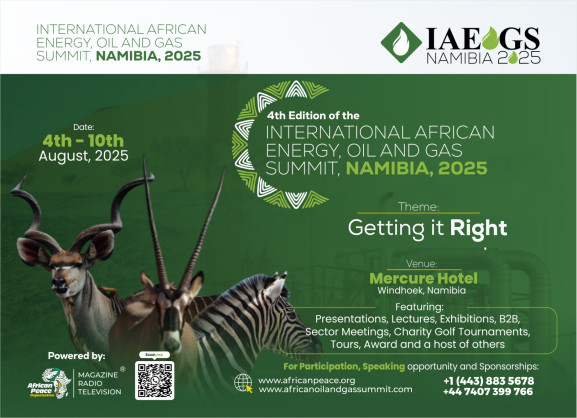
We are pleased to invite you to the 2025 International African Energy, Oil and Gas Summit, an event pivotal for those eager to stay abreast with the latest trends, innovations and opportunities in the oil and gas industry in Africa.
The International African Energy, Oil & Gas Summit & Awards/Exhibition (IAEOG) is few months away, kicking off on 4th-10th of August 2025.
This premier event continues to grow remarkably each year, with over 2500 attendees expected to converge from more than 50 countries under one roof.
The IAEOG is an interactive exhibition and networking event that unites global and African Energy key players, stakeholders, and decision makers.
This event is a proactive endeavor supporting the AfCTA's mission to forge regional value chains in Africa, aims at stimulating investment and job creation across the continent and ensure energy security.
AfCFTA ultimate goal is to unify approximately 1.3 billion people across Africa, with a collective GDP of nearing US$ 3.4 trillion.
The African Peace Organization, in conjunction with other strategic partners is set to organize the 4th Edition of the International African Energy, Oil and Gas Summit Namibia 2025 with the Theme: Getting it Right, scheduled to hold on the 4th -10th of August 2025 in Namibia. It would feature panel discussions, presentations, exhibitions, dinners, golf tournament, award presentations, tours and a host of others. The venue for Charity Golf Tournament; is the 18th Hole Championship Golf Course of the prestigious Windhoek Golf & Country Club.
The event seeks to promote further business corporation between Nigeria – Namibia and other African Countries as a follow up to the African Continental Free Trade Agreement.
The summit will bring together high level top executives, CEOs, Managers, investors, the business community, government agencies, exporters and importers from oil and gas sectors from across Africa and the world. To deliberate on the challenges and opportunities of the energy transition and the future of oil and gas in Africa
Further the purpose of the summit is to facilitate trade amongst African countries and the world by providing a physical networking platform for participants to interface with their potential clients and partners, as well as to attract investment opportunities for business growth across Africa particularly in the oil and gas sector.
Join 540+ downstream trailblazers across reliability & maintenance, shutdown & turnarounds and capital projects at the Namibian oil and Gas summit 2025 sharing exclusive lessons learned and new best practices during 3-days of interactive, peer-led discussions and explore 50+ booths showcasing the latest innovation driving efficiency and safety.
Green Energy International Ltd (GEIL), an indigenous Nigeria oil and gas producing company and operator of the Otakikpo Marginal Field in OML-11, will attend and participate as a Bronze sponsor at this year's edition of the conference. The company is one of Nigeria's most vibrant service companies driving investment and infrastructure development for economic growth.
Distributed by APO Group on behalf of African Peace Magazine.
For sponsorship, participation, partnership, Exhibition and speaking opportunities and all other enquiries please contact:
Sandra Chia
International Affairs
+2348033975746
+447407399766
Email: africanpeacemag@gmail.com
Nigeria Abuja Office:
Suite FT 12B
Alibro Atrium Plaza
Utako, Abuja
+2348033975746
South African Office:
16 Ridge Road
Vorna Valley
Midland 1686
South Africa
+27662449117
Angola:
Call: +244928690892
+244993656970
+244927589884
London Office:
Call: +4477771217805
WhatsApp: +447407399766
Social Media:
Twitter: https://apo-opa.co/41U2TaH
Facebook: https://apo-opa.co/41U2UeL
Instagram: https://apo-opa.co/4kOkRE5
LinkedIn: https://apo-opa.co/4kN8ckT
About African Peace:
African Peace Organization is an international organization for peace promotion, cultural relations, good governance and educational opportunities.
We build connections, understanding and trust between Africans and world. APO is also the organizer of the prestigious African Peace Awards.
APO is a brand which includes African Peace Television, African Peace Radio and African Peace Magazine. APO has been publishing for well over 15 years, and we are committed to promoting Peace, business networking, good governance and improved condition of living for Africans.
African Peace Organization through its Magazine condemns violence and acknowledges those who strive to make the strife disappear. It features pieces, articles and write-ups which go a long way in promoting this noble cause of peace. We at African Peace Magazine believe that every sector of a nation contributes in the collective journey of a peace country.
The IAEOG 2025 Summit will take place in August 2025; it will unveil investment prospects and connect global players to the growing Namibian oil and gas market.
Secure Your Exclusive Group Rate & Network with Global Oil & Gas Leaders in Namibia.
We would like to present an exclusive group booking rate for your attendance at IAEOG, buy 4 early bird delegate passes, and receive 1 complimentary pass. By joining us at the event, your team will gain market insights, forge essential connections, and meet our sponsors, partners, and speakers.
Africa Peace Magazine:
Website: https://AfricanPeace.org/
www.AfricanPeaceAwards.com
https://AfricanOilAndGasSummit.com/
www.IAEOGS.com
Invest in ECD to shape the next generation, says President
President Cyril Ramaphosa has advocated for universal access to Early Childhood Development (ECD) to ensure that every child has the opportunity to learn, grow and thrive by the age of five.
The President was delivering remarks at the official opening of the Bana Pele 2030 Roadmap Leadership Summit at Atlas studios, in Johannesburg.
“Universal childhood development should have started 30 years ago…We are all here today because of our shared belief in the profound importance of Bana Pele – putting children first.
“It is because of this shared vision that we unite and collaborate today, committed to ensuring that every child has the opportunity to learn, grow and thrive by the age of five,” the President said on Monday.
The President told the summit that government’s immediate focus is to extend access to early childhood development to every child calling it one of the most powerful tools for unlocking the nation's potential.
He emphasised that ECD extends beyond education, it is a key driver of economic growth.
“We recognise today that investing in ECD is not just about education. It is about shaping the next generation of skilled, capable and entrepreneurial citizens who will drive our economy forward.
“Investing in ECD yields significant economic returns. Studies have shown that every rand spent on early childhood education can save up to seven rands in future costs associated with remedial education, social services and criminal justice,” the President said.
He highlighted that early childhood development provides children with the foundational skills they need to build a successful future. It further helps break the cycle of poverty that is handed down from one generation to the next.
“Early childhood development is about giving children from all backgrounds the opportunity to grow into confident, capable citizens who contribute positively to society. Children who receive a strong start are more likely to succeed in school and the workforce, reducing societal costs in areas such healthcare, crime prevention and welfare,” the President said.
A research report published to coincide with Brazil’s G20 Presidency, estimated that in South Africa, an investment of 2.1% of the Gross Domestic Product (GDP) in universal childcare could have supported 10.5 million women to join the workforce over three years.
Because of the profound effect that ECD can have on social well-being and development, the President said government had decided to put the country’s children first.
Last week, the Minister of Finance announced an additional investment of R10 billion in ECD over the next three years.
The President referred to the statistic that 80% of children in South Africa are unable to read for meaning by the age of 10. He emphasised that early childhood development was critical for developing foundational skills such as language, literacy and numeracy.
President Ramaphosa added that the experiences and interactions children have can significantly influence their future learning potential.
“This is why ECD must be treated as an urgent priority. We therefore welcome this wonderful initiative for business, civil society and government to work together to shape the future of early childhood development.
“This initiative will assist the strategic reorientation of the basic education sector to strengthen foundation learning. The benefits of universal access to ECD extend beyond the education of the child. It helps to empower families to break free from the effects of poverty."
President Ramaphosa called on all ECD programmes to register with the Department of Basic Education so that all children can receive the start in life that they need and deserve.
He noted that the ripple effects of a robust ECD system are felt across generations, fostering a cycle of opportunity and growth.
“We are determined that every child, regardless of their background or location, must have access to quality early education. It is for this reason that the Department of Basic Education launched the Bana Pele Mass Registration Drive last year,” he said.
The President said that the Mass Registration Drive was an example of cross-sectoral collaboration at work. He added that the country has an opportunity to rethink and restructure the entire ECD landscape, making it more effective, more inclusive and more impactful than ever before.
“As South Africans, we have a clear goal for all our children: access to quality learning opportunities for an additional 1.3 million children by 2030. This is why we are here today.
“We need to create a collaborative framework for ECD. One that brings together government, business, donors, ECD workers and all other social partners,” he said.
He said this framework must ensure that all role-players work together at both the provincial and municipal levels to improve access to quality early childhood education.
“As we move forward, we must remember that there is no greater cause than uniting for the benefit of our children. Our future as a nation depends on the children we raise today. We must commit to creating an environment where every child, no matter where they come from, has the opportunity to learn, to grow and to succeed.
“Let us join hands and work together, as a united force, to achieve our shared vision of universal access to quality early childhood development,” the President said. – SAnews.gov.za
DikelediM
Mon, 03/17/2025 - 11:35
574 views
President Ramaphosa to open ECD leadership summit
President Cyril Ramaphosa will on Monday officially open the Bana Pele Early Childhood Development (ECD) Leadership Summit at the Atlas Studios, in Johannesburg.
The summit, convened by the Department of Basic Education (DBE) and Business Leadership South Africa (BLSA), aims to mobilise a public and private coalition behind the DBE’s 2030 ECD Roadmap for quality, universal access to early learning.
In a statement on Saturday, The Presidency noted that in South Africa, more than 1.3 million children are not enrolled in any form of ECD programme, leaving them without the foundational literacy and numeracy skills required to succeed in school.
“This learning gap affects their ability to take on critical subjects, such as Mathematics, Science, Accounting, and Economics in later years, which are the skills that are vital for innovation, economic growth, and job creation,” the Presidency said.
The summit will bring together government, business, civil society and education experts to “construct a roadmap for universal access to quality ECD across the country.
“This initiative is a crucial step toward ensuring that every child, regardless of background, has access to the early learning opportunities they need to thrive in life,” the Presidency said. – SAnews.gov.za
NeoB
Sun, 03/16/2025 - 12:56
448 views
North West takes steps to tackle unemployment
Over 24 000 job opportunities are expected to help tackle the unemployment challenge in the North West province.
This was revealed during a roundtable discussion involving North West Premier Lazarus Kagiso Mokgosi, Deputy Minister of Employment and Labour Judith Nemadzinga-Tshabalala, as well as representatives from organised labour, business, and civil society.
The initiative, which involves collaborative work between the North West Provincial Government and the Department of Employment and Labour, will be implemented through a Labour Activation Plan (LAP).
The LAP initiative, funded by the Unemployment Insurance Fund (UIF), aims to enhance employability, enable entrepreneurship, and preserve jobs through skills training, enterprise development, and other intervention measures.
“This initiative has been in the pipeline for some time, and I am happy that it is coming to fruition. This is one of the policy announcements I made during the State of the Province Address [SOPA] to help find solutions to high levels of unemployment in the province,” Mokgosi said on Thursday.
In the SOPA delivered last month, the Premier reaffirmed the government’s commitment to creating job opportunities through public employment programs, such as expanded public works, community health workers, community works, and labour activation programmes.
These initiatives aim to create over 150 000 job opportunities in the next five years, targeting women, youth, and persons with disabilities.
READ | Over R20 million allocated to boost North West economy
At the roundtable, Deputy Minister Nemadzinga-Tshabalala said the roll-out of the programme is in full swing in various provinces and that the North West is the latest beneficiary.
“Young people will be trained in various fields such as engineering, agriculture and artisanal work in preparation for the job market and consequently placed in various industries,” Nemadzinga-Tshabalala added. – SAnews.gov.za
Gabisile
Fri, 03/14/2025 - 09:36
290 views
New fleet to aid Nelson Mandela Bay waste collection efforts
In a move to enhance waste management services, the Nelson Mandela Bay Municipality has unveiled seven advanced waste collection trucks, which is an investment in the city’s public health infrastructure and an improvement in service delivery efficiency.
Member of the Mayoral Committee (MMC) for Public Health, Thsonono Buyeye, commended the arrival of the new fleet, describing it as a crucial financial boost that will ease the financial pressures faced by the municipality’s waste management department.
The municipality is located in the Eastern Cape.
Speaking at the unveiling ceremony held on Wednesday, Buyeye said the introduction of the state-of-the-art waste collection compactor trucks serves as a significant step forward poised at improving waste management services.
“This investment demonstrates our unwavering commitment to providing efficient and effective services, thus underscoring the department’s dedication to maintaining a clean, healthy, and sustainable environment [for all residents],” Buyeye said.
The MMC explained that, as part of the city's strategy to reduce its reliance on outsourced waste collection services, the municipality has implemented a three-year fleet recapitalisation plan, which allocates R30 million annually starting this year.
“This acquisition will significantly alleviate financial pressures on the municipality, which previously spent substantial amounts outsourcing waste management collection trucks, compromising its ability to deliver other essential public health services,” the MMC said.
He added that the arrival of the trucks will significantly reduce the city’s financial burden previously placed on the municipality, due to outsourcing waste management.
The new trucks are equipped with cutting-edge technology and enhanced capacity, enabling them to manage larger volumes of waste with greater speed and efficiency. The advanced lifting gear of the trucks allows them to effortlessly collect a wider range of waste types, ultimately enhancing the waste collection and management process.
"As a municipality, we are thrilled, considering that the arrival of these trucks will significantly enhance our service delivery. Unfortunately, vandalism of municipal fleet, including waste collection fleet has been a great challenge.
“However, we are positive that together with law enforcement, and the community, we can protect these valuable waste compactor trucks, as our goal is to ensure that public health services reach every corner of our city,” Buyeye said.
Measures to prevent vandalism and theft
To address the persistent issue of vandalism, the MMC said the municipality has implemented a comprehensive security strategy to protect the new waste management fleet.
He said the municipality is also investigating recent incidents of vandalism that have affected the city’s existing waste collection vehicles.
He said a robust security strategy has been put in place to safeguard against vandalism and theft, ensuring its longevity and effectiveness.
The municipality also urged residents to work with the municipality, and law enforcement to protect and safeguard municipal assets that service all residents.
“This collective effort is crucial in preventing vandalism and theft, which severely impacts the delivery of essential waste management services, particularly in high-crime areas,” Buyeye said. – SAnews.gov.za
GabiK
Fri, 03/14/2025 - 11:14
80 views
Government allocates R19.2 billion to upgrade PRASA signalling
Government has provisionally allocated an additional R19.2 billion over the medium term for the Passenger Rail Agency of South Africa’s (PRASA) critical signalling upgrades.
Tabling the 2025 Budget Speech on Wednesday, Minister of Finance Enoch Godongwana, said the agency was making steady progress towards rebuilding infrastructure to provide affordable commuter rail services.
“To sustain this progress, we have provisionally allocated an additional R19.2 billion over the medium term for critical signalling upgrades. This will enable commuters from areas like Mamelodi, Kwa-Mashu, Motherwell and Khayelitsha to catch a train every 10 minutes, to get to and from work and significantly reduce the money that low-income households spend on transport.
“The allocation will also allow PRASA to maximise the potential of the 241 new trains delivered through the rolling stock renewal programme,” the Minister said in Parliament.
Despite the progress made, Godongwana said PRASA’s procurement system needed strengthening.
“The management of the entity is already instituting measures to strengthen their procurement weaknesses. This includes getting support from the National Treasury to build capacity and mitigate risks and undertaking live audits for large procurement projects,” the Minister said. - SAnews.gov.za
nosihle
Wed, 03/12/2025 - 14:53
131 views
Minister Creecy to visit Free State accident victims
Minister of Transport Barbara Creecy is expected to pay a visit to the two remaining patients who were involved in an accident that claimed the lives of 10 people in the Free State province earlier in the week.
The Minister will visit the patients on Monday at the Pelonomi Hospital.
The crash occurred on Wednesday at approximately 03:00 on the N6, approximately 15km south of Reddersburg towards Smithfield.
It involved a Mercedes Benz City to City bus carrying 33 passengers and a Volvo Truck-Tractor
“Other crash victims who had been admitted at Pelonomi and Smithfield hospitals have since been discharged,” the Department of Transport said on Sunday. - SAnews.gov.za
nosihle
Sun, 03/09/2025 - 15:25
112 views
Stakeholders emphasise importance of regulations to combat financial crimes
The importance of financial accountability and regulatory compliance in protecting non-profit organisations (NPOs) from being exploited for money laundering and terrorist financing came to the fore at the Department of Social Development’s (DSD) stakeholder engagement session.
One of the stakeholders at the session on the Financial Action Task Force’s (FATF) Recommendation 8, was the Chartered Institute for Business Accountants, who underscored this point.
The institute’s Technical Manager, Eszter Rapanos, outlined key interventions and innovations aimed at aligning regulatory frameworks with the FATF’s latest measures.
The FATF is the international standard-setting body that oversees global compliance with anti-money laundering rules.
Recommendation 8 of the Financial Action Task Force aims to protect NPOs from potential terrorist financing and money laundering abuse through effective implementation of risk-based measures.
She highlighted the institute’s role as a professional body in advancing these measures to protect NPOs from financial crime, emphasising its commitment to upholding financial integrity.
Rapanos addressed the unique challenges faced by South African NPOs, including limited access to technology, insufficient funding, and a lack of financial management skills, which make them particularly vulnerable to financial crimes.
“The risk-based approach must be applied throughout the process, ensuring that high-risk areas are targeted while avoiding unnecessary burdens on compliant NPOs,” she stated.
Among the significant regulatory changes, Rapanos pointed to the new requirement for compulsory registration of NPOs that operate across borders.
READ | Social Development issues notices of non-compliance to NPOs
In addition, organisations must now maintain detailed records of their beneficial ownership and enhance governance structures to prevent individuals with a history of financial crimes from assuming leadership roles.
“The increased governance and transparency requirements will ensure that NPOs maintain credibility, but it also places additional administrative responsibilities on them,” she noted.
Rapanos stressed that the new framework presents opportunities for collaboration.
“By working closely with regulatory bodies such as the Department of Social Development, the Financial Intelligence Centre, the Companies and Intellectual Property Commission, and the South African Revenue Service, we can align compliance processes and reduce duplications,” she explained.
The Chartered Institute for Business Accountants’ recommendations include implementing a tiered risk-based approach to compliance, where low-risk NPOs face fewer administrative burdens, while higher-risk organisations undergo more stringent oversight.
Rapanos also called for increased training and capacity-building efforts to help NPOs navigate the evolving regulatory landscape.
“The goal is to strike a balance between preventing illicit financial activities and allowing NPOs to continue their essential work without being overburdened by red tape,” Rapanos concluded.
On Monday, the Deputy Minister of Social Development, Ganief Hendricks, called on NPOs and the civil society sector to work with government in seeing South Africa exit the FATF’s grey list by year-end.
In his address, Hendricks cautioned government against using legislation to stifle the operations of legitimate NPOs that play a vital role in communities across South Africa.
“Our National Development Plan calls for active citizenry especially from the grassroots level. We must therefore guard overburdening and frustrating grassroots initiatives through the use of legislation.
“The objective of the NPO Act is to create an enabling legislative environment for the NPO sector to thrive and contribute to our national development agenda”, the Deputy Minister said at the time.
READ | Call for NPOs to work with government to address FATF challenges
At Monday’s session in Kempton Park, National Treasury said the FATF was not satisfied with the mere existence of national legislation, but also enforcement of administrative penalties for high-risk NPOs that fail to comply with the provisions of the law.
One of the FATF’s requirements is that Social Development, as the regulator of the NPO sector in terms of the NPO Act (Act No. 71 of 1997, as amended through the General Laws Amendment Act 22 of 2022), has to conduct more outreach and educational programmes with NPOs to promote better understanding of the global anti-money laundering and counter-terrorist financing standards.
The FATF grey listed South Africa at its February 2023 plenary meeting held in Paris. It developed an Action Plan with 22 Action items linked to the eight strategic deficiencies identified in the country’s anti-money laundering and combating of financial terrorism regime. -SAnews.gov.za
DikelediM
Wed, 03/05/2025 - 12:42
343 views
Botes to co-chair political consultations with Slovak Republic counterpart
South Africa and the Slovak Republic will review the state of their bilateral political relations to consolidate and further enhance diplomatic and political cooperation.
Bilateral political relations as well as diplomatic and political cooperation will be up for discussion at the meeting between International Relations and Cooperation Deputy Minister, Alvin Botes and the Slovak Republic’s State Secretary for Foreign and European Affairs,Marek Eštok.
The Deputy Minister will co-chair the South Africa-Slovak Republic Political Consultations with the State Secretary on Monday in Pretoria.
“This round of political consultations provides an opportunity for the Deputy Minister and his counterpart to review the state of the bilateral political relations to consolidate and further enhance diplomatic and political cooperation between the two nations.
“The Deputy Minister and State Secretary will also share perspectives and deepen their understanding of regional, multilateral and global issues of mutual concern,” said the Department of International Relations and Cooperation (DIRCO).
Bilateral political consultations between South Africa and the Slovak Republic are based on the Memorandum of Cooperation between the Department of Foreign Affairs of the Republic of South Africa and the Ministry of Foreign Affairs of the Slovak Republic, signed in 2007 in Bratislava.
Economic and trade relations are conducted through a Joint Council for Economic Cooperation (JCEC).
“Relations between South Africa and the Slovak Republic are cordial and relatively modest, with trade and investment levels remaining at a very low base. Bilateral trade between the two countries in 2024 totalled €287.4 million, representing an increase of 3.1% in comparison to 2023,” said the department ahead of Monday’s meeting in Pretoria.
South African exports to the Slovak Republic in 2024 amounted to €92.1 million, a decrease of 4.8%. Slovak exports to South Africa amounted to €195.3 million, an increase of 7.3% compared to 2023. -SAnews.gov.za
Neo
Sun, 03/02/2025 - 16:43
97 views