• Skip to main content
  • Skip to header right navigation
  • Skip to after header navigation
  • Skip to site footer
MyZA

MyZA

News, Directory, Events and Other Stuff

  • Social Media
  • Sport
  • World News
  • Home
  • Submit News
  • Directory
  • Events
  • Stratlec
  • TFSA
  • News
    • APO
    • Today’s Sport News
    • Todays Social Media and Tech Headlines
    • Today’s World News
    • Today’s SA Financial News
  • Contact
You are here: Home / News / SA unveils strategic economic diversification plan amid US tariffs

SA unveils strategic economic diversification plan amid US tariffs

4 April 2025 by Guest

SA unveils strategic economic diversification plan amid US tariffs

South Africa has unveiled a comprehensive strategy to mitigate the economic impact of new United States tariffs, focusing on export diversification, value-added production, and strengthening regional trade partnerships.

This is after United States President, Donald Trump, announced global reciprocal tariffs on most imported goods, with South Africa facing a 31% tariff increase.

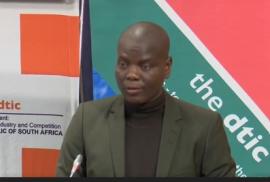
“The new tariff regime arising from the decision by the United States of America, which have been directed not only to South Africa, but the entire world, necessitates strategic responses to maintain and grow our industrial base, as a crucial avenue to pursue inclusive growth,” the Minister of International Relations and Cooperation, Ronald Lamola, said on Friday. 

Lamola was speaking during a joint media briefing with the Minister of Trade, Industry and Competition, Parks Tau. 

He informed journalists that South Africa will continue to tackle the challenges and seize opportunities with resilience and innovation, as the country moves forward with ensuring economic growth, industrial development, and the well-being of its citizens.

Lamola outlined plans to navigate the challenges posed by the 31% tariffs set to take effect from 9 April 2025.

These include negotiating favourable trade agreements with the United States; leveraging the African Continental Free Trade Area (AfCFTA) to boost intra-African trade; and prioritising high-value manufacturing to reduce tariff exposure. 

In addition, he said government remains committed to building economic resilience, exploring alternative market access through existing trade agreements and strategic partnerships with countries across various regions.

“We will intensify efforts to diversify export destinations, targeting markets across Africa, Asia, Europe, the Middle East, and the Americas,” the Minister stated. 

According to Lamola, government aims to reduce dependence on single export markets and foster economic resilience.

Meanwhile, he announced that the State will invest strategically in industries impacted by the tariffs, supporting economic growth through modernisation and targeted infrastructure development.

The sweeping tariff measures will affect several sectors of South Africa’s economy, including automotive, industrial agriculture, processed food and beverage, chemical, metals, and other segments of manufacturing.

According to Lamola, South Africa’s tariff and industrial strategy are designed to support industrial development, employment growth, and economic resilience. 

“By aligning these policies with the national interest, South Africa will ensure that its economy emerges stronger, more diversified, and resilient in the face of global trade complexities,” he explained.

This approach will also apply to the 7 February Executive Order, which led to the withdrawal from the Just Energy Transition (JET) partnership with South Africa.

“South Africa’s average tariff is 7.6% and therefore South Africa needs clarity on the basis for the 31% to be implemented by the US.”

Lamola clarified that products such as copper, pharmaceuticals, semiconductors, lumber articles, certain critical minerals, and energy and energy products, have been exempted from the reciprocal tariffs.

These reciprocal tariffs will also not apply to products already facing Section 232 tariffs of 25%, such as steel, aluminium, automobiles, and auto parts.

Currently, the Minister said the United States represents 7.45% of South Africa’s total exports, while South Africa accounts for only 0.4% of the United States’ imports.

“As such, South Africa does not constitute a threat to the US, and there is a trade imbalance in favour of South Africa. It is mainly on agricultural products, which are counter-cyclical, and on minerals, which are inputs in US industries.”

Highlighting the potential impact, Lamola noted that the tariffs “effectively nullify the preference that Sub-Saharan African countries enjoy under the Africa Growth and Opportunity Act (AGOA).”

However, despite the challenges, Lamola said government remains optimistic. 

“The tariffs affirm the urgency to negotiate a new bilateral and mutually beneficial agreement with the US, that will establish more fair-trade relations with the US as an essential step to secure long-term trade certainty,” Lamola added. 

Transparency in tariff calculations

Meanwhile, Tau stressed the need for confirmation from the United States on how they arrived at the tariff number, referencing international norms and standards.

He also highlighted the importance of transparency in tariff calculations, using World Trade Organisation (WTO) standards and the most favoured nations mechanism.

“And that’s why we are advocating for a reform of the World Trade Organisation and ensuring that it’s able to adapt to current reality, but also ensuring that we’re able to reinforce a multilateral system of trade and transparency across the board. Otherwise, you’re going to have an environment where there are no global rules,” Tau added. – SAnews.gov.za
 

Gabisile
Fri, 04/04/2025 – 13:08
177 views

South Africa has unveiled a comprehensive strategy to mitigate the economic impact of new United States tariffs, focusing on export diversification, value-added production, and strengthening regional trade partnerships.

This is after United States President, Donald Trump, announced global reciprocal tariffs on most imported goods, with South Africa facing a 31% tariff increase.

“The new tariff regime arising from the decision by the United States of America, which have been directed not only to South Africa, but the entire world, necessitates strategic responses to maintain and grow our industrial base, as a crucial avenue to pursue inclusive growth,” the Minister of International Relations and Cooperation, Ronald Lamola, said on Friday. 

Lamola was speaking during a joint media briefing with the Minister of Trade, Industry and Competition, Parks Tau. 

He informed journalists that South Africa will continue to tackle the challenges and seize opportunities with resilience and innovation, as the country moves forward with ensuring economic growth, industrial development, and the well-being of its citizens.

Lamola outlined plans to navigate the challenges posed by the 31% tariffs set to take effect from 9 April 2025.

These include negotiating favourable trade agreements with the United States; leveraging the African Continental Free Trade Area (AfCFTA) to boost intra-African trade; and prioritising high-value manufacturing to reduce tariff exposure. 

In addition, he said government remains committed to building economic resilience, exploring alternative market access through existing trade agreements and strategic partnerships with countries across various regions.

“We will intensify efforts to diversify export destinations, targeting markets across Africa, Asia, Europe, the Middle East, and the Americas,” the Minister stated. 

According to Lamola, government aims to reduce dependence on single export markets and foster economic resilience.

Meanwhile, he announced that the State will invest strategically in industries impacted by the tariffs, supporting economic growth through modernisation and targeted infrastructure development.

The sweeping tariff measures will affect several sectors of South Africa’s economy, including automotive, industrial agriculture, processed food and beverage, chemical, metals, and other segments of manufacturing.

According to Lamola, South Africa’s tariff and industrial strategy are designed to support industrial development, employment growth, and economic resilience. 

“By aligning these policies with the national interest, South Africa will ensure that its economy emerges stronger, more diversified, and resilient in the face of global trade complexities,” he explained.

This approach will also apply to the 7 February Executive Order, which led to the withdrawal from the Just Energy Transition (JET) partnership with South Africa.

“South Africa’s average tariff is 7.6% and therefore South Africa needs clarity on the basis for the 31% to be implemented by the US.”

Lamola clarified that products such as copper, pharmaceuticals, semiconductors, lumber articles, certain critical minerals, and energy and energy products, have been exempted from the reciprocal tariffs.

These reciprocal tariffs will also not apply to products already facing Section 232 tariffs of 25%, such as steel, aluminium, automobiles, and auto parts.

Currently, the Minister said the United States represents 7.45% of South Africa’s total exports, while South Africa accounts for only 0.4% of the United States’ imports.

“As such, South Africa does not constitute a threat to the US, and there is a trade imbalance in favour of South Africa. It is mainly on agricultural products, which are counter-cyclical, and on minerals, which are inputs in US industries.”

Highlighting the potential impact, Lamola noted that the tariffs “effectively nullify the preference that Sub-Saharan African countries enjoy under the Africa Growth and Opportunity Act (AGOA).”

However, despite the challenges, Lamola said government remains optimistic. 

“The tariffs affirm the urgency to negotiate a new bilateral and mutually beneficial agreement with the US, that will establish more fair-trade relations with the US as an essential step to secure long-term trade certainty,” Lamola added. 

Transparency in tariff calculations

Meanwhile, Tau stressed the need for confirmation from the United States on how they arrived at the tariff number, referencing international norms and standards.

He also highlighted the importance of transparency in tariff calculations, using World Trade Organisation (WTO) standards and the most favoured nations mechanism.

“And that’s why we are advocating for a reform of the World Trade Organisation and ensuring that it’s able to adapt to current reality, but also ensuring that we’re able to reinforce a multilateral system of trade and transparency across the board. Otherwise, you’re going to have an environment where there are no global rules,” Tau added. – SAnews.gov.za


Watch a SA unveils strategic economic diversification plan amid US tariffs related video:

Stunning South Africa:

Have you visited MyPR?

MyPR.co.za offers free to publish press releases for your news site, blog or offline publication. Use the handy REPUBLISH facility or the Full Text RSS Feeds or just copy and paste.

Straton Electrical | Straton Solar | Straton Prepaid | Straton Plumbing | Straton IoT | Straton eBikes | BA Systems | Mbane Contracting | Reach Trust

Share this:

  • Share on X (Opens in new window) X
  • Share on Facebook (Opens in new window) Facebook
  • Print (Opens in new window) Print
  • Email a link to a friend (Opens in new window) Email
  • Share on LinkedIn (Opens in new window) LinkedIn
  • Share on Tumblr (Opens in new window) Tumblr
  • Share on WhatsApp (Opens in new window) WhatsApp
  • Share on Mastodon (Opens in new window) Mastodon
Category: NewsTag: ACT, Africa, African, agreement, agriculture, Articles, automotive, beverage, Continental, critical, Donald Trump, Energy, Environment, global, Government, growth, infrastructure, Innovation, Manufacturing, Market, new, Partnership, production, SA News, South Africa, Steel, United States, Video

If you feel strongly about this article then feel free to send MyZA a ‘Letter to the Editor’ using the submission form below:


Letter to the Editor

This field is for validation purposes and should be left unchanged.
If this is in response to an article please include that article title here or as the lead in for the first paragraph of your Letter below.

Separate tags with commas

Localise your letter by naming the city your words are about. Add relevant words describing your subject. Single comma separated words of no more than 5
Your Name(Required)
Your Name will be linked to the website below.
Your personal, business or social media web site
Choose NO to not set up a user account on MyZA. User Accounts will allow you to submit letters under your own Author Name

3 Latest Letters to the Editor:

  • Re: R8.5 Million Lotto Winner Claims Prize in Gqeberha

    Dear Editor This is indeed an exciting story for the community. Congratulations to the winner and may this bring positive change to Nomathamsanqa. As someone from KwaMashu, I understand the impact such winnings can have on township communities. Wishing the grandfather all the best. Regards Themba Zulu In Response to/From: R8.5 Million Lotto Winner Claims…

    18 September 2026
  • Re: Minister Tolashe and Postbank Black Cards

    Dear Editor I appreciate the Minister’s assurance regarding the smooth transition to Postbank Black Cards for grant beneficiaries. As a concerned citizen, I hope the government will ensure that all beneficiaries, especially elderly and vulnerable populations in areas like Soweto, receive adequate assistance during this transition period. The expansion of card replacement locations to include…

    18 September 2026
  • Lotto Winner Story

    Dear Editor This is indeed an exciting story for the community. Congratulations to the winner and may this bring positive change to Nomathamsanqa. Regards Willem Pieterse In Response to/From: R8.5 Million Lotto Winner Claims Prize in Gqeberha

    16 September 2026

About Guest

Previous Post:Exploring Soweto: A Guide to Memorable Tours
Next Post:Work continues to solve Matatiela rape case 

Reader Interactions

Comments

  1. Cool Iris

    16 September 2026 at 1:10 pm

    Fun South African Fact: South Africa is part of BRICS.

  2. Tall Sally

    2 September 2026 at 5:10 pm

    Chow – to eat / food. Often used when talking about food, this term can be used as a verb, meaning to eat, or when talking about the food itself.Example: “Let’s chow my bru!” / “This chow is spicy!”

Copyright © 2026 · MyZA · All Rights Reserved · Powered by Stratlec Online