• Skip to main content
  • Skip to header right navigation
  • Skip to after header navigation
  • Skip to site footer
MyZA

MyZA

News, Directory, Events and Other Stuff

  • Social Media
  • Sport
  • World News
  • Home
  • Submit News
  • Directory
  • Events
  • Stratlec
  • TFSA
  • News
    • APO
    • Today’s Sport News
    • Todays Social Media and Tech Headlines
    • Today’s World News
    • Today’s SA Financial News
  • Contact
You are here: Home / Archives for artificial intelligence

artificial intelligence

11 December 2024

Spotlight on interventions for economic empowerment of women

Location: News

Spotlight on interventions for economic empowerment of women

With South Africa officially assuming the G20 Presidency, government is looking forward to rallying the world against all forms of gender-based violence and exploitation of women, through the Working Group on Women Empowerment.

Addressing the closing event for the 16 Days of Activism for No Violence gainst Women and Children campaign at Ntsimbini Sports Ground in Port St John’s in the Eastern Cape on Tuesday, Minister in the Presidency for Women, Children and Persons with Disabilities, Sindisiwe Chikunga, announced a range of socio-economic interventions to transition vulnerable women to income-generating activities.

Chikunga said economic empowerment was incomplete without women’s meaningful access to land, which was the basis of all economic activity and a source of dignity.

The catalytic interventions for the economic empowerment of women include prioritising transferring productive land and productive assets to women for commercial purposes. 

Working with Transnet Properties, Chikunga said over 20 sites have been identified in Limpopo, KwaZulu-Natal and the Eastern Cape, spanning over six district municipalities.

The sites will be leased to women at highly-subsidised rates, enabling them to develop sustainable enterprises.

“We are actively identifying more sites across all nine provinces, [and] we have also partnered with the Council for Scientific and Industrial Research (CSIR) to create a value-chain-driven Agricultural Cooperatives Model. 

“By leveraging the CSIR’s intellectual property and advanced technologies, including precision agriculture, this model will equip and prepare women farmers for market success.

“The Minister of Finance recently announced that public procurement makes up around 19% of government spending, totalling R1.5 trillion over the next three years. I have tasked the Women’s Economic Assembly to assemble a team of experts that will dissect Public Procurement and Gender-Responsive Supply Chains to ensure that a minimum of 40% of that R1.5 trillion goes to women-owned businesses,” Chikunga said.

The department was also rethinking financial support structures and incentives.

Chikunga said women-owned businesses do not just need contracts, but the resources to deliver on their contracts and build sustainable enterprises.

While South Africa recognised the important symbiotic relationship between promoting women in science, building equitable societies, and the advancement of humanity, Chikunga noted that currently, women make up less than a third of the workforce across science, technology, engineering, and mathematics (STEM) careers.

She said confronting the historical and ongoing exclusion of women from STEM would be a priority for the department.

“We will be developing tangible programmes and campaigns that are needed to correct societal and cultural beliefs that use gender stereotypes to perpetuate scientific inequality. Science and humanity suffer when women are excluded from STEM.

“We also intend to leverage the potential of Artificial Intelligence (AI) and Emerging Digital Technologies to improve the wellbeing and prospects of persons living with disabilities,” Chikunga said.

The Minister added that the South African government was looking forward to planning and executing catalytic legacy projects and interventions in collaboration with the G20 family and partners in areas including women in high-tech industries, women in the agricultural value chains, women in the oceans economy, logistics, pharmaceutical industries, and the creative industries. – SAnews.gov.za

GabiK
Wed, 12/11/2024 - 12:52

128 views
Read moreSpotlight on interventions for economic empowerment of women
9 December 2024

SA kicks off first G20 engagement

Location: News

SA kicks off first G20 engagement

South Africa has set the agenda for its Group of Twenty (G20) Presidency with the commencement of the fist engagement of the more than 130 meetings that will precede the G20 Summit in 2025.

The Minister of International Relations and Cooperation, Ronald Lamola, officially opened the first G20 Sherpas Meeting in Johannesburg, on Monday.

The Sherpa Track is led by the personal representatives of G20 leaders. The Sherpa Track oversees negotiations and discusses the points that form the summit’s agenda, and coordinates most of the work.

“The first Sherpa Meeting of the G20 is important traditionally, as it sets the stage for the upcoming Presidency and the critical conversations on some of the most vital issues of our time.

“In the spirit of Ubuntu, our shared humanity, we will address these challenges through our high-level deliverables and priorities, which lie at the core of the original G20 mandate of promoting strong, sustainable, balanced and inclusive growth and by building partnerships across all sectors of society to find collective solutions,” Lamola said on Monday.

WATCH | 


South Africa’s G20 Presidency is being held under the theme: "Solidarity, Equality, Sustainability", a theme that seeks to harness global will and capabilities to confront the enormous challenges the world is facing.

South Africa will use its G20 Presidency to secure urgent progress on shared goals through several priority actions, which include strengthening disaster resilience and response; ensuring debt sustainability for low-income countries; mobilising finance for a just energy transition and harnessing critical minerals for inclusive growth and development.

As part of its efforts to bring the Sherpa and the Finance tracks closer together, three temporary Task Forces, an Initiative and a Commission will be established during South Africa’s G20 Presidency.

South Africa’s priorities include Inclusive Economic Growth, Industrialisation, Employment and Reduced Inequality; Food Security and Artificial Intelligence, Data Governance and Innovation for Sustainable Development.

“A review of the work of the G20 -- The G20 at 20 years: A Reflection on Key Achievements and the Way Forward -- will also feature as one of South Africa’s deliverables through a Sherpa Track Initiative. South Africa also proposes the establishment of a Cost of Capital Commission during its G20 Presidency,” Lamola said.

The three Task Forces, the Initiative and Commission will be established to deliver tangible results during South Africa's G20 Presidency. All of the priorities, as well as the overall theme, will influence Working Groups’ priorities and work plans.

South Africa assumed its G20 Presidency on 1 December 2024, following the astute and successful leadership of Brazil.

“The South African government also recognises the significant strides made by the Brazilian G20 Presidency in enhancing the G20 as a site of democratic global engagement. The South African Presidency will continue this trajectory. 

“A comprehensive dialogue with civil society and other State and non-State institutions will be conducted through the existing Engagement Groups.

“Following the approach of the Brazilian Presidency, a G20 Social Forum will be convened, which will precede the Leaders’ Summit in November 2025, to bring together representatives of the existing engagement groups and other segments of civil society that may offer meaningful contributions to the G20,” Lamola said.

The G20 group comprises many of the world's largest developing and developed economies. It was established to tackle pressing global economic and financial issues. Together, G20 members account for around 85 percent of global GDP and 75 percent of international trade. 

The G20 comprises 19 countries including Argentina, Australia, Brazil, Canada, China, France, Germany, India, Indonesia, Italy, Japan, Republic of Korea, Mexico, Russia, Saudi Arabia, South Africa, Türkiye, United Kingdom, and United States and two regional bodies, namely the European Union and the African Union.

The grouping therefore plays a critical role in influencing global policy making and fostering global economic stability.

“I trust that this meeting will set the trend for our subsequent meetings and that, as much as we celebrate the landmark achievements of the G20, we will also, during the course of the year ahead, begin to look ahead toward the strategic imperatives for the next cycle of G20 cooperation,” Lamola said. -SAnews.gov.za

nosihle
Mon, 12/09/2024 - 12:08

163 views
Read moreSA kicks off first G20 engagement
9 December 2024

STEM Lab launched at the University of Limpopo 

Location: News

STEM Lab launched at the University of Limpopo 

The Minister of Communications and Digital Technologies, Solly Malatsi, has officially opened a state-of-the-art STEM (science, technology, engineering, and mathematics) Lab at the University of Limpopo.

“This STEM Lab represents hope, progress, and opportunity. For the youth in Mamotintane, Ga-Motholo, Mankweng, and surrounding communities, it is a gateway to skills in artificial intelligence, robotics, and data analytics,” Malatsi said on Saturday.

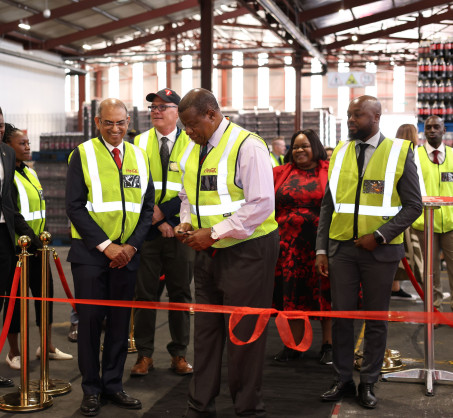
The facility, made possible through strategic partnerships with the National Electronic Media Institute of South Africa (NEMISA), STEMpower, DHL and other key stakeholders, will empower students and the surrounding community with critical digital and STEM-related skills, equipping them for a future driven by technology and innovation.

“For educators, it is a chance to inspire the next generation of innovators. And for the unemployed, it is an opportunity to gain meaningful skills for employment or entrepreneurship.

“This lab is not just a resource for the university but for the entire community. It is proof of what we can achieve when government, academia, and industry work together to create sustainable, scalable solutions for digital inclusion,” the Minister said.

He said STEM forms the backbone of the modern economy, driving technological advancements, innovation, and economic growth. 

“By equipping young people with STEM skills, we are preparing them to excel in high-demand fields like artificial intelligence, robotics and data analytics. Let us harness the power of STEM education to build a South Africa where technology serves as a bridge to inclusion and opportunity, ensuring that no one is left behind,” the Minister said.

The lab is part of a broader initiative by the Department of Communications and Digital Technologies to expand access to affordable internet and devices, foster skills development, promote the productive use of technology, and position South Africa as a leading Information and Communications Technology (ICT) investment destination.

The launch in Limpopo is one of several, with similar labs being established at Walter Sisulu University, King Hintsa TVET College, Ehlanzeni TVET College, and the Central University of Technology. -SAnews.gov.za
 

nosihle
Mon, 12/09/2024 - 12:25

82 views
Read moreSTEM Lab launched at the University of Limpopo 
5 December 2024

Health equity and women’s health emerge as key themes of the inaugural International Health Ministerial Summit

Location: News
Informa Markets: Healthcare

The inaugural International Health Ministerial Summit, organised by Informa Markets (www.InformaMarkets.com), began with a series of dynamic panel discussions featuring influential delegates showcasing collaborative solutions to global healthcare challenges.

Hosting governmental figures and policymakers, corporate CEOs and investors, medical directors, and experts, the exclusive by-invitation only Summit, themed Strengthening Health Systems for a Better Tomorrow, takes place from 4 to 5 December 2024 at the Marriott in Kigali. It brings together renowned health experts from across the continent and the world and highlights topics like digital health, technological adoption, R&D in vaccinations, women's health, healthcare investment opportunities, and health equity.

During his official opening address, Dr. Sabin Nsanzimana, the Minister of Health of host country Rwanda, said: “There is no better investment than in our health. It is not a negotiable luxury but a fundamental human right. Strengthening health systems means focusing on the four S's: staff, space, supplies, and systems. In Rwanda, we understand that investing in health is investing in our future. That's why the Government of Rwanda has approved the 4x4 Reform—a bold strategy to quadruple the number of healthcare workers in the next four years to meet the WHO recommendation of at least 4 healthcare professionals per 1,000 population. This initiative underscores our commitment to building a resilient health system where no one is left behind. By investing in these pillars and embracing technology/innovations like AI, we can build resilient systems that ensure uninterrupted care for all.”

Addressing health equity's challenges and opportunities 

Following the welcome address by Dr. Deborah M. Barasa, Health Cabinet Secretary of Kenya, who spoke about actions to shift primary healthcare, the first session of the day featured several panel discussions dealing with the challenges and opportunities for health equity.

In a panel discussion hosted by Dr. Tim Keuri, CEO of the Kenya Health Federation, industry leaders discussed transforming Africa into a global hub for pharmaceutical innovation and manufacturing. Representatives from the Unified Procurement Association, PharmaAccess, Global One Health Institute, Pfizer, and Bayer provided insights on investment enhancement, regulatory framework improvements, and strategic collaborations to strengthen Africa's position in the global pharmaceutical value chain.

Another panel, moderated by Bloomberg news reporter Ondiro Oganga, addressed the urgent need for Africa to advance self-sufficiency in pharmaceutical R&D, local vaccine production, and diagnostic access. Experts from Senegal's Ministry of Health, The Global Trust Project, UN Foundation, African Society for Laboratory Medicine, Africa CDC, and leading corporations like Genf, Hologic, and Roche Diagnostics emphasised the importance of establishing regional pharma hubs and enhancing local capabilities. According to Ahmed Ogwell, Vice President of Global Health Strategy at the UN Foundation in Kenya, “The gap is not in identifying problems or proposing solutions—it's in executing those solutions. For example, while there's been significant discussion around manufacturing COVID-19 vaccines, we lack local production of diagnostics and essential tools like rapid tests on the continent. To move forward, we need to prioritise what to produce, coordinate efforts regionally, and ensure that the products we manufacture are consumed within our systems." 

Women's health and equitable access to healthcare

The second key theme of the day was health equity and women's health, starting with an insightful discussion on what is needed to close the health equity gap. Moderated by Dominic Wilhem, Executive Director of The Global Trust Project, global health leaders debated how to unite healthcare stakeholders to address the health equity gap. Panellists focused on collaborative strategies to ensure universal access to essential medicines and vaccines. The session underscored the importance of international cooperation to progress healthcare for all, regardless of geographic or socio-economic boundaries. Pfizer Kenya Director of Policy and Public Affairs Pauline Irungu commented on the outcomes, saying, “When we think about partnerships, we have a tendency to think about government- private partnerships, but we also need to talk more about private private partnerships which then support agendas of governments in Africa and beyond. At Pfizer one of the gaps we experience is the challenge of diagnostics. How do we advance access to medicine?  Currently , we have two strong partnerships  with diagnostic companies on the continent. Now we also make a call that we also want others to join the partnerships because the more we partner as private sector, the more  we're able to address the multifaceted challenges within the health care system.”

A second panel on the topic brought together top health experts to tackle the urgent issue of women's health in Africa, particularly the high maternal mortality rates in sub-Saharan Africa. Hosted by Dr. Magome Masike, Registrar, Health Professions Council of South Africa, this panel of leaders from various health organisations and government bodies debated the need for innovative approaches to enhance women's health across the continent. The session highlighted the importance of rethinking strategies to improve healthcare outcomes for women in Africa.

Day two of the Summit will focus on advancements in digital health, how artificial intelligence is transforming healthcare, health investment and financing, and an exciting Rwandan initiative using drones to deliver essential medicines to health facilities.

For more details on the International Health Ministerial Summit, visit the event website: https://apo-opa.co/3ZBts4y

Distributed by APO Group on behalf of Informa Markets: Healthcare.

Media files
Informa Markets: Healthcare
Download logo
Read moreHealth equity and women’s health emerge as key themes of the inaugural International Health Ministerial Summit
4 December 2024

SA- Nigeria conclude successful Bi-National Commission

Location: News

SA- Nigeria conclude successful Bi-National Commission

President Cyril Ramaphosa and his Nigerian counterpart, Bola Ahmed Tinubu, have paid tribute to the existing deep fraternal relations between the two nations. 

In a joint communique on the 11th session of the South Africa - Nigeria Bi-National Commission on Tuesday, the two Heads of State and Government once more acknowledged the strong support that Nigeria provided to the liberation movements in South Africa during South Africa’s struggle for freedom and democracy.  

President Tinubu was in South Africa for a working visit at the invitation of President Ramaphosa to co-chair the 11th Session of the Bi-National Commission (BNC) between the two countries.

READ | South Africa and Nigeria strengthen ties 

The BNC was preceded by a meeting of Senior Officials on 28 and 29 November 2024 and the Ministers Meeting on 02 December 2024.

READ | SA eyes increased trade relations with Nigeria

The 11th Session of the BNC also marked the 30th anniversary of formal establishment of diplomatic relations between the two countries.

“The two Heads of State and Government renewed their commitment to work closely to broaden and sustain the two nations’ bilateral relationship in a manner that enhances strategic cooperation and partnership for mutual benefit. In this regard, the Heads of State and Government directed the various Ministries, Departments and Agencies to deepen their cooperation in the context of the BNC,” the joint communique read. 

The Heads of State and Government acknowledged the more than 34 Agreements covering various sectors which have been signed since the establishment of diplomatic relations between the two countries in 1994. 

“The two leaders underscored the need to urgently finalise the MoU [Memorandum of Understanding] on the Early Warning Mechanism. To this end, it was agreed that the MoU will be signed, no later than March 2025, during the visit of the South African Minister of International Relations and Cooperation to Nigeria, for Political Consultations. 

“The two leaders also welcomed the ongoing negotiations to conclude other new agreements,” the communique said. 

Investment 

The Heads of State also welcomed the high levels of economic cooperation between the two countries. In this regard, they welcomed the significant investments of South African companies in Nigeria and encouraged corresponding Nigerian investments in the South African economy. 

The leaders recognised the need for the two countries to create an enabling business environment in both countries. 
“The two leaders agreed to encourage cooperation and partnership between private and public entities for investment in mining, infrastructure development in rail, road, ports, amongst others. In this regard Nigeria invited South Africa’s Development Finance Institutions to partner with Nigeria in co-financing infrastructure projects,” the communique read. 

The leaders further made a commitment to work towards increased and balanced trade between the two countries by utilising the opportunities provided by the African Continental Free Trade Area (AfCFTA). Both South Africa and Nigeria have ratified the AfCFTA. 

Addressing mutual challenges 

The two countries also agree to collaborate on programmes that address mutual challenges in food and nutrition security, strengthening meaningful digital connectivity, taking leadership in the development of artificial intelligence, expanding digital literacy initiatives, as well as prioritising data protection and online safety for all citizens. 

The two leaders welcomed the convening of the South Africa-Nigeria business roundtable held on the margins of the 11th session of the BNC during which they had an opportunity to address and engage with Chief Executives of companies from both countries.

“The Heads of State and Government also exchanged views on regional, continental and global issues of mutual concern. Nigeria highlighted its efforts and those of ECOWAS [Economic Community of West African States] in fostering and promoting peace and security in West Africa. South Africa also outlined efforts undertaken by the Southern African Development Community [SADC] in supporting peace initiatives in both the eastern Democratic Republic of the Congo and northern Mozambique”. 

The delegations also underscored the need to redouble efforts to realise the African Union (AU) Agenda 2063 Aspiration to “Silence the Guns”.

In this regard, the Heads of State and Government expressed concern at the devastating conflict in Sudan, which has resulted in the loss of lives, destruction of infrastructure and property and a humanitarian crisis. 

The Heads of State and Government also reflected on the upcoming elections for the leadership of the African Union Commission and underscored the need for the election of the leadership that would be responsive to the challenges facing the African continent. 

International developments

“The two countries further exchanged views on international developments, particularly the ongoing conflict in the Middle East and called for a ceasefire in Gaza and increased access to humanitarian aid. 

“The Heads of State and Government reiterated their principled position that the only long-lasting solution to the resolution of the conflict, is to advance a two-State solution where Israel will exist side by side in peace and harmony with a viable and fully independent Palestinian State. Nigeria commended South Africa for taking the case of Israel and Palestine to the International Court of Justice,” the communique read. 

Similarly, the Heads of State and Government agreed to intensify support for the cause of Western Sahara for self-determination, freedom, and justice.
 

Reforms

“The two Heads of State and Government further renewed their call for a responsive international system of governance through a reformed United Nations Security Council, respect for and promotion of universal human rights in a just and equitable world,” the communique said. 

South Africa congratulated Nigeria on the re-appointment of Ngozi Okonjo-Iweala as the Director General of the World Trade Organisation. South Africa and Nigeria agreed to work closely together in international organizations. 
 

G20

Meanwhile, Nigeria congratulated South Africa on its assumption of the G20 Presidency from 01 December 2024 and commended South Africa on its priorities which address inclusive economic growth, industrialisation and the reduction of inequality, food security and artificial intelligence, data governance and innovation. 

Agenda 2063

The Heads of State and Government further committed to working closely with the African Union and each other to advance the African Agenda in pursuit of the implementation of Agenda 2063. 

According to the AU, Agenda 2063 is Africa's development blueprint to achieve inclusive and sustainable socio-economic development over a 50-year period.

At the end of the 11th Session of the BNC, President Tinubu expressed his gratitude to President Ramaphosa, for the warm reception and hospitality accorded to him and his delegation since their arrival in Cape Town. – SAnews.gov.za

DikelediM
Wed, 12/04/2024 - 10:37

751 views
Read moreSA- Nigeria conclude successful Bi-National Commission
4 December 2024

Kaspersky Predicts AI and Privacy to Shape Consumer Cybersecurity Landscape in 2025

Location: Business
Kaspersky

According to Kaspersky's (www.Kaspersky.co.za) latest report, artificial intelligence (AI) will become an integral part of daily life, while privacy concerns around biometric data and advanced technologies will take center stage in 2025. These forecasts are part of the annual Kaspersky Security Bulletin series, which provides an outlook on the cybersecurity trends and threats expected to impact consumers in the coming year.

AI becomes an everyday reality

AI is predicted to fully integrate into daily life in 2025, becoming a standard tool rather than a novel technology. With prominent operating systems like iOS and Android rolling out AI-enhanced features, people will increasingly rely on AI for communication, workflows, and creative tasks. However, this normalisation also brings challenges, particularly as personalised deepfakes become increasingly sophisticated in the absence of reliable detection tools.

Privacy regulations will expand user data ownership

The growing emphasis on privacy is expected to lead to new regulations that strengthen user control over personal data. By 2025, individuals may gain the right to monetise their data, transfer it easily across platforms, and benefit from simplified consent processes. Global frameworks, such as the EU's GDPR, California's CPRA and South Africa's POPIA, continue to inspire reforms worldwide, while decentralised storage technologies could further strengthen user autonomy over their information.

Fraudsters will continue to exploit premieres and releases

Cybercriminals are expected to target prominent gaming, console, and film launches in 2025. Titles like Mafia: The Old Country, Civilization VII, and Death Stranding 2, as well as the anticipated Nintendo Switch 2, are likely to attract scams involving fake pre-orders, counterfeit rootkits, and malicious downloads. Similarly, blockbuster films like Superman and Jurassic World Rebirth may trigger phishing campaigns and counterfeit merchandise fraud aimed at enthusiastic fanbases.

Political polarisation will fuel cyberbullying

Increasing political polarisation is expected to exacerbate cyberbullying in 2025. Social media algorithms that amplify divisive content, combined with the widespread availability of AI tools for creating deepfakes and doctored posts, are likely to intensify online harassment. Cross-border cyberbullying could also escalate as global platforms facilitate the targeting of individuals based on their political beliefs.

Rising number of subscription services will fuel fraud risks

As the global economy shifts further towards subscription-based models, a rise in fraud related to fake subscription promotions is expected. Cybercriminals are expected to create counterfeit services that mimic legitimate platforms, aiming to deceive users into providing personal and financial information, resulting in identity theft and financial losses. Additionally, the growth of unofficial resources that provide discounted or free access to subscription services is expected to become a significant threat vector, exposing users to phishing attacks, malware, and data breaches.

Prohibition of social media for children may lead to broader user restrictions

Australia's proposed legislation to ban social media access for children under 16 could set a global precedent. If implemented successfully, the restriction could pave the way for broader limitations on access for other demographics. Platforms like Instagram have already begun adopting AI-powered age-verification systems, signaling a shift toward stricter governance of online spaces.

“As we look to 2025, the most significant impact on consumers is expected to arise from the intersection of innovation and regulation. Advances in AI, privacy protection, and data ownership frameworks will reshape the way people interact with technology and manage their digital lives. These developments hold immense potential but also demand careful oversight to ensure they serve consumer interests,” said Anna Larkina, Kaspersky privacy expert.

To learn more, visit Securelist.com.

To stay safe, Kaspersky experts also recommend:

  • Enable a safe browsing feature, such as the one in Kaspersky Premium (https://apo-opa.co/3BdtgPp), to help avoid Internet tracking. This feature also protects users from dangerous sites (like phishing ones), malware, and other maliciously installed files and extensions. 
  • Configure your social networks for enhanced privacy to make a difference. Services such as Privacy Checker (https://Privacy.Kaspersky.com) can help users adjust privacy settings and strengthen the protection of their personal accounts. In addition, modern security solutions often include features that enhance privacy levels across various social networks.
  • Opt for secure and private connections. Avoid using public Wi-Fi networks for sensitive activities. Consider using a reliable VPN (https://apo-opa.co/3Bcqz0y) to encrypt your Internet connection and protect your online activities from being monitored.
  • Install apps only from official stores like the Apple App Store, Google Play or the Amazon Appstore. Although apps from these markets are not 100 percent failsafe, at least they are checked by store representatives, and a filtration system is in place - not every app is authorised for listing on these platforms.
  • Download a reliable security solution (https://apo-opa.co/3BdtgPp) to help you detect malicious apps and adware before they can harm your device.
  • Don't share serial numbers, IP addresses and other sensitive information regarding your smart devices on social networks.
  • Avoid using unreliable passwords. Weak combinations, such as those consisting of letters only, do not offer sufficient protection. For added convenience and security, consider using a special app, such as the Kaspersky Password Manager (https://apo-opa.co/3OGpYHu).

Distributed by APO Group on behalf of Kaspersky.

For further information please contact:
Nicole Allman
INK&Co. (https://INKandCo.co.za)
nicole@inkandco.co.za

Social Media:
Facebook: https://apo-opa.co/4inHIFt
X: https://apo-opa.co/4fXAiHl
YouTube: https://apo-opa.co/4fVaknS
Instagram: https://apo-opa.co/4fXt31Q
Blog: https://apo-opa.co/4fWEWW0

About Kaspersky:
Kaspersky is a global cybersecurity and digital privacy company founded in 1997. With over a billion devices protected to date from emerging cyberthreats and targeted attacks, Kaspersky's deep threat intelligence and security expertise is constantly transforming into innovative solutions and services to protect businesses, critical infrastructure, governments and consumers around the globe. The company's comprehensive security portfolio includes leading endpoint protection, specialized security products and services, as well as Cyber Immune solutions to fight sophisticated and evolving digital threats. We help over 200,000 corporate clients protect what matters most to them. Learn more at www.Kaspersky.co.za. 

Media files
Kaspersky
Download logo
Read moreKaspersky Predicts AI and Privacy to Shape Consumer Cybersecurity Landscape in 2025
3 December 2024

G20 Presidency to establish three dedicated task forces

Location: News

G20 Presidency to establish three dedicated task forces

President Cyril Ramaphosa has announced that South Africa’s G20 Presidency will pursue progress on cross-cutting issues through the establishment of three dedicated task forces.

Speaking during the launch of the G20 Presidency on Tuesday, President Ramaphosa said the first task force is on Inclusive Economic Growth, Industrialisation, Employment and Reduced Inequality. 

The second task force is on Food Security, while the third task force is on Artificial Intelligence, Data Governance and Innovation for Sustainable Development.

WATCH | 


“It is critical for South Africa that the G20 remains focused on its core responsibilities to address global economic and financial challenges. It should not replace existing international institutions and platforms, such as the United Nations and associated bodies.

“At the same time, G20 initiatives should support, not diminish, the responsibilities that countries have to deliver on the Sustainable Development Goals, climate action and other commitments,” the President said. 

To ensure that the G20 remains focused, the President said that South Africa will not create any new working groups or permanent structures.

“We will build on previous presidencies and provide momentum to existing structures and processes. We will reflect on the impact of the G20 over the last 20 years and positioning it to enhance its impact over the next 20-year cycle,” he said. 

The President emphasised that it is important for South Africa that its G20 Presidency is inclusive.

“Dialogue with civil society and other non-government institutions will be conducted through various engagement groups. These engagement groups are organised according to sectors, such as business, labour, civil society, parliamentary bodies and the judiciary. 
 
“These engagement groups also include science bodies, think tanks, and audit institutions, as well as institutions of higher learning, specific groups for women and youth including vulnerable groups,” he said. 

President Ramaphosa said the nation also intends to support the creation of a new engagement group, Township20 (TS20), to spotlight the potential of South Africa’s township economies.

“This will highlight the creative, cultural, financial and innovative capacities that our own country has to give when it comes to small and medium enterprises as well as cooperatives and how these operate in rural areas as well as townships where our people live,” he said. 

Following Brazil’s example, South Africa will host a G20 Social Forum, amplifying the voices of civil society, women, youth and vulnerable groups. 

“South Africa firmly believes that civil society serves as a bridge between the G20 leaders and the people who have the greatest interest in their deliberations,” the President affirmed.

Looking ahead to the Leaders’ Summit

The G20 Presidency will culminate in the Leaders’ Summit in Johannesburg in November 2025, where world leaders will adopt a declaration outlining collective actions to address critical global challenges.

With over 130 meetings planned across all provinces, and thousands of delegates expected, the G20 Presidency presents an opportunity to showcase South Africa’s potential and hospitality.

“The G20 Presidency is an opportunity to present to the world the great opportunities and experiences that South Africa has to offer. We look forward to welcoming our friends and partners to our beautiful country,” the President said.

South Africa assumed the Presidency of the G20 on 1 December 2024, marking a historic milestone as the first African country to lead this influential group of the world’s largest economies.

This Presidency is not only a significant moment for South Africa but also for the African continent and the Global South, amplifying their voices on the global stage, while advancing shared goals of economic growth, sustainability and equality. – SAnews.gov.za

DikelediM
Tue, 12/03/2024 - 13:02

399 views
Read moreG20 Presidency to establish three dedicated task forces
3 December 2024

Singapore Invited as Guest Country by the 2025 South African G20 Presidency

Location: News

Ministry of Foreign Affairs - Singapore
Download logo

Singapore has been invited by the Republic of South Africa as a guest country to participate in G20 meetings under its 2025 G20 Presidency. 

Singapore would like to express its appreciation to South Africa for the invitation. Singapore and South Africa enjoy a longstanding and broad-based partnership, underpinned by strong people-to-people ties. Our two countries cooperate well in various areas, including trade and investment, air connectivity, information and communications technology and skills development. Singapore will continue to actively contribute to the G20 process both in our national capacity and as the Convenor of the Global Governance Group (3G).

Singapore looks forward to working constructively with the South African G20 Presidency and other G20 members and guests on South Africa's theme of “Solidarity, Equality, Sustainability”, with a view to, inter alia, strengthen and advance our common efforts to realise the Sustainable Development Goals and the Pact of the Future, promote inclusive economic growth, food security and Artificial Intelligence and Innovation for Sustainable Development.

Distributed by APO Group on behalf of Ministry of Foreign Affairs - Singapore.

Read moreSingapore Invited as Guest Country by the 2025 South African G20 Presidency
26 November 2024

Technology can be used as a tool for change, protection, empowerment

Location: News

Technology can be used as a tool for change, protection, empowerment

While the rise of the digital economy and use of technology have introduced new avenues for perpetrators to harm and abuse women and children, Deputy President Paul Mashatile says the same technology can be used as a tool for change, protection and empowerment.

Speaking at the national launch of 16 Days of Activism for No Violence Against Women and Children campaign, in Rustenberg in the North West on Monday, the Deputy President called for further collaboration to harness technology and innovation to combat gender-based violence (GBVF) and accelerate a gender-inclusive digital economy.

He called for zero tolerance toward gendered violence in online and digital spaces, noting that the increase in the use of technology in peoples’ daily lives has introduced new avenues for perpetrators to harm, exploit, and abuse women and children.

The Deputy President said digital spaces can become breeding grounds for violence, from cyberbullying and online harassment to the dangers posed by social media platforms.

However, citizens can also harness the same technology as a tool for change, protection and empowerment.

“From using mobile apps that provide immediate support to victims and survivors to artificial intelligence that can help us understand and curb the pandemic, the potential is vast. Mobile apps, [including] helplines, and emergency response systems provide a direct link to safety, offering quick access to shelters, medical care and legal assistance.

“In South Africa, initiatives such as the GBV Command Centre - a 24/7 digital and telephonic support service - have proven instrumental in helping victims and survivors. We must leverage these advancements to enhance our prevention strategies, improve our response mechanisms, and ensure that no one is left behind,” he said.

The Deputy President said the internet should be used as a place where everyone can feel safe and respected.

“Access to technology and digital skills can open new economic opportunities, enabling financial independence and resilience. As we embark on these 16 Days of Activism for no Violence Against Women and Children, let us harness the power of technology and innovation to drive systemic change.

“Let us not forget that technology can be a force for good. It has the potential to save lives, connect victims and survivors to support, and hold perpetrators accountable in ways that were previously unimaginable,” Deput President Mashatile said.

Observed annually from 25 November to 10 December, the 16 Days of Activism campaign calls upon every individual to take a stand against the injustices that continue to plague society.

During the campaign period, the country raises voices to draw attention to the persistent violence against women and children.

The Deputy President said a full year of action is required to combat the scourge, not just during these 16 days.

This year's campaign, observed under the theme: “30 Years of Advancing Collective Action to End Violence Against Women and Children”, serves as a reminder of the progress made by the country and the work that still lies ahead.

The Deputy President acknowledged that society has for many years been grappling with the issue of gender-based violence and femicide, which includes the high rate of rape, femicide, and domestic abuse, and the fight is still not over.

Both Statistics South Africa (StatsSA) and the Human Science and Research Council (HSRC) have reported concerning statistics on GBV in South Africa.

StatsSA has revealed that one in three women aged 16 and older has experienced physical violence, while one in five has been sexually abused.

The first-ever national Gender-Based Violence survey conducted by HSRC in 2022, also revealed that over 33% of South African women have experienced physical violence in their lifetime, while 9.8% have faced sexual violence.  The study showed that approximately 7.3 million women have experienced physical abuse, while 2.1 million have experienced sexual violations.

Mashatile said government was committed to taking the findings of the surveys seriously and would integrate them into the work of government.

He said the findings will feed directly into the National Strategic Plan on Gender-Based Violence and Femicide (NSP on GBVF), which provides the roadmap for government's national response. – SAnews.gov.za

GabiK
Mon, 11/25/2024 - 15:24

375 views
Read moreTechnology can be used as a tool for change, protection, empowerment
24 November 2024

G20 community outreach empowers Ehlanzeni community

Location: News

G20 community outreach empowers Ehlanzeni community

International Relations and Cooperation Minister Ronald Lamola has urged the community of Welverdiend in Ehlanzeni District, Mpumalanga, to engage with G20 initiatives aimed at creating jobs, improving healthcare and fighting poverty.

The Minister, joined by Acting Mpumalanga Premier Sasekani Manzini, officials and ambassadors, led a G20 community outreach at Mahlale High School in Acornhoek, Ehlanzeni, on Saturday. 

Representatives of foreign diplomatic missions accredited to South Africa (ambassadors) also participated in the activities by handing over IT equipment to the school. 

Lamola used the occasion to popularise South Africa’s foreign policy objectives and how these relate to the achievement of domestic priorities.

South Africa is set to assume the presidency of the G20 on 1 December 2024. The presidency offers the opportunity to highlight domestic issues on a global stage, including unemployment, inequality, access to finance, climate change, tourism and artificial intelligence.

“We will be assuming a huge responsibility of... the presidency of the G20 on the 1st of December. This platform gives us an opportunity, as a country, to put our issues on the global stage [including the] issues that are affecting you here as the community of Bushbuckridge in the district of Ehlanzeni in Mpumalanga and South Africa as a whole. 

“Issues of unemployment, inequality, access to finance, climate change, tourism, artificial intelligence, and other day-to-day issues will now [be under the] spotlight,” Lamola said. 

The Minister said the province is well placed to make a number of inputs into debates and discussions that will ensue during South Africa's presidency of the G20. 

“You are also better placed [with regards to] tourism. As the Acting Premier said, you are adjacent to... the Kruger National Park, Sudwala Caves, Echo Caves, God’s window and many other areas of tourism. These are also spaces for your contribution as a province and as the people of South Africa. 

“So, this platform [the G20] is in such a way that everyone is able to make a contribution and ourselves as International Relations, we will create that bridge that will enable you to make this contribution,” the Minister said. 

International relations

Lamola highlighted the role of his department in addressing global conflicts in the Democratic Republic of Congo (DRC) and Gaza through dialogue. 

He explained that the country is actively involved in international relations, with its military in the DRC to facilitate peace and stability, and is committed to contributing to the cessation of conflict in the Middle East. 

“We continue to monitor and play a role in the DRC. Our Defence Force is in the DRC. They are not there to fight in the war, but they are there to stabilise the environment so that peaceful negotiations can happen to resolve the conflict in the eastern part of the DRC.

“That is our role as International Relations and as South Africa, which we continue to play in the world, and we continue to play a role [in] the cessation of fire in the Gaza in the Middle East,” the Minister said. 

The engagement with the Ehlanzeni community comes shortly after President Cyril Ramaphosa's successful participation in the G20 Summit in Brazil from 18 - 19 November 2024. – SAnews.gov.za 

DikelediM
Sun, 11/24/2024 - 13:31

11 views
Read moreG20 community outreach empowers Ehlanzeni community
20 November 2024

Vodacom Group Launches Initiative to Upskill 1 Million Young People Across Africa

Location: News

Vodacom Group
Download logo

Vodacom Group (www.Vodacom.com) has partnered with technology providers to provide young people on the continent with access to digital skills as part of its commitment to driving digital literacy for Africa's next generation. Together with AWS, Microsoft, Skillsoft and other collaborating organisations Vodacom aims to bridge the digital skills gap across eight African countries and upskill 1million young people by 2027.

The Vodacom Group Digital Skills Hub is available in South Africa, Ethiopia, Tanzania, Mozambique, Lesotho, Egypt (Talimy), the Democratic Republic of Congo (VodaEduc), and in Kenya (Industry Digital Talent Program) to empower the next generation of digital innovators, enabling Africa's digital society and leveraging existing e-learning platforms in the respective markets.

According to the International Finance Corporation (IFC), over 230 million jobs will require digital skills in Africa by 2030, yet the continent faces a significant gap in supply and demand for digital expertise.

“The African continent is plagued in many countries with high levels of unemployment, gender inequality, income disparity and limited access to education, healthcare and essential services. These challenges inform our purpose and drives our strategy to connect for a better future, leveraging digital technologies to drive inclusion into the future for the betterment of people. The launch of the Digital Skills Hub is testament to our commitment to pioneering the path to a digital and more inclusive Africa”, says Shameel Joosub, Vodacom Group CEO.

The Vodacom Digital Skills Hub provides access to self-paced, digital skills training for those aged between 18 and 35. This is in addition to Vodacom Group's existing free, e-learning platforms across its markets. E-learning and digital classrooms have made it possible for students in remote or underserved areas to access quality education with platforms such as Talimy in Egypt, e-Fahamu in Tanzania, VodaEduc in the Democratic of Congo (DRC), Faz Crescer in Mozambique and an e-learning platform in South Africa, providing a wealth of online resources, which cater to different learning needs.

“We are extremely excited about this initiative which seeks to inspire the next wave of digital innovators. Our main aim with this initiative is to not only address the digital skills shortage on the continent but to also nurture a pipeline of young talent and in turn advance Africa's digital future, boosting opportunities for empowerment in an inclusive digital economy,” adds, Matimba Mbungela, Chief Human Resources Officer at Vodacom Group.

The Vodacom Digital Skills Hub is designed to empower the next generation, to consider a career in science, technology, engineering, and mathematics (STEM), and entails fun and engaging practical digital skills training for young people on the continent. AWS Educate is one of the first programs to be offered through the Digital Skills Hub and an additional program to Vodacom's various existing online learning platforms. AWS Educate offers beginners an extensive library of self-paced online training that covers a range of topics from cloud fundamentals to artificial intelligence and machine learning.

“With over 400 million young people between the ages of 15 and 35 in Africa, the continent has the youngest population in the world. Digital is the new currency, it is therefore imperative that we invest in them and provide them with the necessary digital skills that will not only boost their growth and development but that of the continent too,” concludes Joosub.

To access the Digital Skills Hub, click here (http://apo-opa.co/4hQ1ysJ).

Distributed by APO Group on behalf of Vodacom Group.

Read moreVodacom Group Launches Initiative to Upskill 1 Million Young People Across Africa
20 November 2024

President Ramaphosa reflects on ’successful’ G20 Leaders’ Summit

Location: News

President Ramaphosa reflects on ’successful’ G20 Leaders' Summit

By Gabisile Ngcobo

Rio de Janiero - President Cyril Ramaphosa says that the two-day G20 Leaders’ Summit held in Rio de Janeiro, Brazil, has been a success. 

He noted that, despite some members holding dissenting views, a broad consensus was ultimately reached.

“The beauty of this summit is that it allowed everyone to express their views and articulate dissenting views or voices on issues. What we established at this summit is that even as a member or country dissents it will not stop the show,” the President said on Tuesday. 

The news broadcaster CNN reported that despite signing the G20 final declaration on Monday, Argentine President Javier Milei told the other Heads of State that he disagreed with some aspects of the document. 

Reports said President Milei opposed several issues, including the restriction of freedom of expression on social media, vulnerabilities to the sovereignty of global governance institutions, unequal treatment under the law, and the belief that increased state intervention is the solution to fighting hunger.

He also distanced himself from some text related to the 2030 Agenda.

“What we are learning is that in the end, when there is broad consensus - what we would call sufficient consensus - a declaration should be adopted,” President Ramaphosa said.

South Africa’s commander-in-chief said he would want this practice to be adopted by G20 countries.

The President addressed the media at the conclusion of the G20 Leaders’ Summit, which ended yesterday.

“Yes, there’s always an opportunity to have frank discussions about geopolitical issues, some of them quite testing and touching, such as what is happening in Palestine and Gaza, particularly in the Middle East and Ukraine.” 

He argued that there was no avoidance of the key and thorny issues in discussions. 

The President highlighted several key “takeaways” from the gathering and the achievements of the G20 Brazil Presidency. These include a focus on taxing the super-rich, reforming the governance of global institutions and financial organisations, as well as addressing climate change.

“Overall, this has been a very successful G20 Summit, and it lays a very good foundation for us as South Africa, as we now focus on having the next G20 Summit in Johannesburg, South Africa,” he added. 

Yesterday, Brazil officially handed over the historic G20 Presidency to South Africa at the closing ceremony of the annual summit.

READ I Brazil officially hands over G20 Presidency to South Africa

President Ramaphosa announced that South Africa had adopted the G20 Presidency theme of “Solidarity, Equality, and Sustainability”.

“Whatever pressure we may be facing is a pressure that is exerted on us by the conditions in which people in the world find themselves, particularly in the Global South, poverty, inequality, and joblessness.

“Those are the pressures that we are under, which we’ve got to address,” he told journalists. 

He said key priorities include ending hunger, addressing climate change, and focusing on digital technology, particularly artificial intelligence.

South Africa will also advocate for the African agenda and the interests of the Global South.

“We expect to have a successful summit in Johannesburg, and we’re really glad that many countries that were here are keen and willing to come and support us as we lead up to the summit in Johannesburg.”

He expressed eagerness to collaborate with United States President-elect Donald Trump as South Africa prepares for the summit and handover to the United States in 2026.

“We’re going to be working together for a solid two years, if not three. I’m hoping that diplomacy and the various protocols that exist amongst global leaders as well as countries are going to underpin the way that we work.

“I think we’ll have a good summit in South Africa, with the participation of the United States, and with President Donald Trump coming to South Africa. 

“I’ve already invited him for a State Visit, and we look forward to welcoming him.” – SAnews.gov.za


Gabisile
Wed, 11/20/2024 - 12:00

6 views
Read morePresident Ramaphosa reflects on ’successful’ G20 Leaders’ Summit
19 November 2024

President Ramaphosa urges G20 leaders to speak up on Gaza conflict

Location: News

President Ramaphosa urges G20 leaders to speak up on Gaza conflict

By Gabisile Ngcobo

Rio de Janeiro - President Cyril Ramaphosa has urged the Group of 20 (G20) leaders to speak up against the violence in Gaza and work towards achieving a solution for both Palestinians and Israelis.

“As the G20 collective, we need to add our voices to ensure that the carnage that is taking place in Gaza is ended and that we work towards a just and lasting peace for both Palestinians and Israelis,” the President said on Monday. 

He reminded the leaders that the Palestinians’ right to self-determination was under the burden of a brutal and violent occupation.

The President was speaking during the second session of the G20 Leaders’ Meeting in Rio de Janeiro, Brazil. 

He expressed satisfaction that reforming global governance institutions is a key focus during the G20 Leaders’ Summit.

“The reform of these institutions is more urgent now than ever before, and I believe that we all agree that for world governance to go forward these institutions must be reformed.” 

He emphasised that the world today confronts numerous challenges that pose a threat to global peace and justice.
“They pose a danger to the very existence of this very precious planet that we share.”

This as the G20 summit got underway on Monday.

READ | Two-day G20 Summit kicks off in Brazil

The President mentioned soaring global temperatures, increasing inequality among nations and people, and growing geopolitical tensions in regions such as Ukraine, Gaza, and Sudan as some of the challenges the world is facing.

President Ramaphosa stressed the need for stronger multilateralism and a renewed commitment to the goals and principles of the United Nations (UN) Charter.

The Head of State has called for respect for the UN Charter, urging all Member States to comply with its principles and international law.

“There can be no exceptions, and no country is immune from these obligations. We are all bound by the same rules. There is a need to both strengthen and reform multilateral mechanisms and institutions to address the challenges that the world faces.” 

The President believes that these institutions need to be inclusive and representative. 

“Just as we call for the UN and UN Security Council to be inclusive and not leave others out. They must be able to respond to the needs of all persons and under all situations.” 

Multilateralism and modernisation 

He told the G20 leaders that the UN must remain the heart of multilateralism.   

“The UN must lead the way in advancing peace and security, tackling poverty and under-development, and protecting human rights.   

“And it must be capable of combating the use of hunger as a weapon of war, as we are now seeing in some parts of the world, including in Gaza and Sudan.” 

To fulfil this mandate, President Ramaphosa emphasised the need to modernise the UN.

“It must be more effective, agile, action-oriented and forward-looking. The global financial system must be fit for purpose,” he explained, adding that more ambitious targets should be set for grants and concessional financing. 

This includes the special drawing rights that must be available for developing countries, particularly in Africa.

In addition, he said multilateral coordination on debt must be enhanced, drawing in the private sector.  

He said that South Africa supports the call for the strengthening of the multilateral trading system and World Trade Organisation (WTO) reforms.  
 
“We want to urge that the WTO must move towards reforms so that the trading system in the world is fair for all.   

“These reforms must provide policy space for developing economies to achieve their development objectives and advance industrialisation.” 

He also welcomed the call for the G20 to unlock the full potential of artificial intelligence and ensure its benefits are equitably shared.   
“We must improve and promote international cooperation on international governance for artificial intelligence.” 

In addition, he announced that South Africa supports an open, free, secure and people-oriented digital future.   

“I wish to reiterate that South Africa fully supports the Brazilian Call to Action on Global Governance Reform made in New York two months ago.   

“When we as South Africa take over the G20 Presidency on the 1st of December, we will take up this effort to strengthen and reform the multilateral system to effectively respond to global realities – and to ensure that no country is left behind and no one is left behind.” – SAnews.gov.za
 

Gabisile
Tue, 11/19/2024 - 10:22

230 views
Read morePresident Ramaphosa urges G20 leaders to speak up on Gaza conflict
19 November 2024

Lamola urges global citizens to hold G20 leaders accountable

Location: News

Lamola urges global citizens to hold G20 leaders accountable

By Gabisile Ngcobo

Rio de Janeiro- International Relations and Cooperation Minister Ronald Lamola says global citizens must hold the leaders of the Group of 20 (G20) accountable. 

This comes after various declarations and commitments were made during the summit that opened on Monday in Rio de Janeiro, Brazil.

The first day of the G20 Leaders’ Summit came to an end on Monday, with important results for the future of the planet and crucial commitments such as the fight against hunger, sustainable development and the taxation of billionaires.

“Each of them was speaking and committing. I think the people of the world will have to make the leaders accountable for their commitments that are being made at the G20. 

“They will be a platform next year in South Africa to take stock of the commitments of how far the world has progressed,” he told the South African media.

In their G20 declaration, the leaders said they remain resolute in their dedication to fighting hunger, poverty, and inequality, promoting sustainable development in its economic, social, and environmental dimensions, and reforming global governance. 

They also acknowledged that what was needed was a political will to create conditions to expand access to food and welcomed the launch of the Global Alliance against Hunger and Poverty under Brazil’s G20 Presidency.

Meanwhile, the document referred to the “catastrophic humanitarian situation in the Gaza and the escalation in Lebanon,” and highlighted the urgent need to expand humanitarian assistance and reinforce the protection of civilians.

They also touched on the war in Ukraine, stressing the human suffering and the negative impact it has on global food and energy security, supply chains, macro-financial stability, inflation and growth.

The leaders also committed to scaling up urgent action to address challenges posed by climate change, biodiversity loss, desertification, ocean and land degradation, drought and pollution.

This prominent gathering of world leaders pledged to work for a reinvigorated and strengthened multilateral system, rooted in the United Nations Charter and International Law, with renewed institutions and reformed governance that is more representative and reflect the realities of the 21st century.

Lamola strongly believes the commitments made will be fulfilled. 

“As you’re aware, we continue to look for the implementation of the Paris Agreement on climate change and the people of the world must do the same and we’ll ensure that there’s implementation on what is committed.”

South Africa’s G20

Brazil will hand over the reins this afternoon as South Africa is set to assume the Chair of the G20 from Brazil on 1 December with the preparations to host the summit next year currently underway.

South Africa’s G20 Presidency will focus on solidarity, equality, and sustainability. 

He told the media that the country will also have a sharp focus on artificial intelligence (AI), including innovation for Africa. 

The Minister described AI and innovation as crosscutting in various sectors and believed they could help “leapfrog” the African continent to par with developed countries. 

In addition, he said the country’s G20 Presidency will also zoom into the Pact of the Future which was adopted by the world leaders at the Summit of the Future in September this year. 

The United Nations General Assembly (UNGA) adopted this pact that aims to make the organisation more relevant and effective on the global stage in the 21st century.

“Indeed, the agenda is loaded but we believe from the declaration read here in Brazil will be able to build a consensus and also shine the spotlight on the number of issues for the Global South and African continent and the marginalised people of the world,” Lamola said. 

Meanwhile, the Minister said the value of hosting the G20 Leaders’ Summit far surpasses any amount injection into the gross domestic product (GDP) and spoke about the boom in tourism. 

“You can see that the City of Rio is alive, and it has been like this for the whole year of Rio hosting several Ministerial Meetings, working groups, task teams and task forces. People were flocking to Brazil, and it has shone a spotlight on the issues of the world and the economy.” 

Lamola is also of the view that the money that will be injected into the country hosting the summit will be a worthy investment. – SAnews.gov.za
 

Gabisile
Tue, 11/19/2024 - 13:19

115 views
Read moreLamola urges global citizens to hold G20 leaders accountable
7 November 2024

Investing in tech key to improving life for people with disabilities

Location: News

Investing in tech key to improving life for people with disabilities

Women, Youth and Persons with Disabilities Deputy Minister, Mmapaseka Steve Letsike, has emphasised the need to invest in the promotion of new technologies and the advancement of assistive technologies to improve the quality life for people with disabilities.

“We must invest in research and development of affordable and accessible technologies that aid communication, mobility and access to information,” Letsike said.

Letsike made the call at the Information and Communication Technologies (ICT) symposium in Umgababa, south of Durban, as part of the build-up to the District Development Model (DDM) Presidential Imbizo that will take place on Friday.

Collaboration between government, private enterprises, academic institutions and organisation of and for people with disabilities, can foster innovation in the ICT field, ensuring that people with disabilities can benefit from the rapid pace of technological progress, the Deputy Minister said.

“This includes promoting digital accessibility and ensuring that emerging technologies, such as artificial intelligence and automation, are designed with inclusivity in mind. Our emphasis is on a fundamental shift in how we view persons with disabilities, away from the individual medical perspective, to a human rights and developmental perspective.

“It is with this understanding in mind that we affirm supporting autonomy and independent living by promoting policies that enable access to community-based services, personal assistance, and affordable, adaptable housing,” Letsike said.

The Deputy Minister noted ICT's significant contribution to the advancement of disability rights, offering tools that enhance accessibility, inclusion and independence for individuals with disabilities.

Letsike maintained that ICT is not just "a set of tools", but a bridge to a more inclusive, accessible and fair world for people with disabilities.

“By supporting accessible technology, promoting inclusive policies, and advocating for the rights of all, we can continue to break down barriers and build a society that truly values each individual’s unique abilities,” she said.

Reformed social protection scheme

Letsike highlighted the need for a reformed social protection scheme to provide financial support, which will allow individuals with disabilities to live independently, make personal decisions about their care and avoid institutionalisation, where possible.

“This also entails removing barriers to education and employment, enabling persons with disabilities to contribute to society in ways that promote self-sufficiency and empowerment. 

"We must remember that human rights are universal principles that protect every individual’s dignity, freedom and equality. They are not privileges or special considerations but inherent to every person simply because they are human,” Letsike said.

Disability Rights Awareness Month

The symposium coincided with Disability Rights Awareness Month (DRAM), observed from 3 November to 3 December.

Held under the theme, “Celebrating 30 Years of Democracy: Creating a Disability-Inclusive Society for a Better Quality of Life and Protection of the Rights of Persons with Disabilities”, this year’s DRAM reflects on government’s commitment to creating a barrier-free society, where people with disabilities are full and active participants in the country’s economy and society at large.

Each week of DRAM is linked to national strategic priorities and the White Paper on the Rights of Persons with Disabilities.

During week one of DRAM, focus will be on growing an economy aligned with the empowerment of persons with disabilities. Week two advocates for the inclusion of every child with a disability. Week three builds a working government with a progressive disability rights agenda, and week four focuses on creating safer communities for persons with disabilities.

“We hope that each one of us, in our respective corners where we operate, will do our bit toward raising awareness on the rights of persons with disabilities during this period,” Letsike said. - SAnews.gov.za

GabiK
Thu, 11/07/2024 - 15:12

69 views
Read moreInvesting in tech key to improving life for people with disabilities
7 November 2024

SA’s G20 Education Working Group Presidency to focus on skilling young people 

Location: News

SA’s G20 Education Working Group Presidency to focus on skilling young people 

South Africa’s G20 Education Working Group Presidency will focus on equipping young people with skills for the Fourth Industrial Revolution. 

Basic Education Minister Siviwe Gwarube said this includes training in artificial intelligence (AI) and robotics.

The Minister gave details of her recent visit to Fortaleza, Brazil, where she accepted the handover of the 2025 Presidency of the G20 Education Working Group on behalf of South Africa.

“This is a historic moment for our nation, and it places South Africa at the center of the global education agenda for the coming year. The G20 Education Working Group is a powerful platform for collaboration, bringing together some of the world’s leading economies to address the most pressing issues in education today.

“Under our presidency, we will focus on ‘Educational Professionals for Solidarity, Equality and Sustainable Development," she said at media briefing on Wednesday.

This she added, reflects the country’s commitment to advancing education in a way that supports economic growth, social equity, and a future-ready workforce. 

These priorities include quality foundational learning, mutual recognition of qualifications across borders, and the development of educational professionals equipped to meet the needs of a rapidly changing world. 

“Each of these areas is critical not only for South Africa but for developing nations around the world, as we all prepare our learners for the challenges and opportunities of an AI-powered future.

“Our presidency will emphasise the importance of preparing our young people with the skills needed for the Fourth Industrial Revolution, including artificial intelligence, large language models, robotics, and other emerging technologies,” Gwarube said. 

In an era defined by rapid technological change, Gwarube said it is essential that education systems adapt and evolve to equip learners with relevant, future-ready skills. 

Through the G20 platform, she said the sector aims to foster greater international cooperation, allowing them to share best practices, resources, and innovations that support this goal.

“One of the key goals of our presidency will be to advocate for an inclusive and equitable approach to education that reflects the diverse needs of all learners. We will prioritise the voices and perspectives of developing nations, ensuring that the G20 Education Agenda aligns with the aspirations of learners worldwide. 

“By addressing the challenges faced by resource-constrained regions, we can create an educational framework that leaves no learner behind. We believe that every young person deserves the chance to succeed in a world that increasingly relies on digital and technological proficiency,” the Minister explained adding that this leadership role is both a responsibility and a tremendous opportunity for South Africa. 

“As a country, we are committed to advancing education that is not only accessible but transformative education that empowers individuals, supports communities, and drives sustainable development. 

“By taking on this role, we are not only supporting South African learners but contributing to a global movement that prioritizes the growth, safety, and wellbeing of all children,” she said. 

As the country steps into the presidency of the G20 Education Working Group, the Minister said: “We are reminded of the immense potential for education to change lives, drive innovation, and build a resilient, future-ready nation. 

“I look forward to engaging with our global partners and advancing an agenda that will equip our learners and learners around the world for the demands of tomorrow,” she said.

South Africa will hold the G20 Presidency from 1 December 2024 to 30 November 2025.

READ | Government assigns funding for G20 Summit

The G20 brings together the countries with the largest economies in the world. The Member States meet annually to discuss economic, political and social initiatives. – SAnews.gov.za


DikelediM
Wed, 11/06/2024 - 15:36

124 views
Read moreSA’s G20 Education Working Group Presidency to focus on skilling young people 
4 November 2024

Coca-Cola Beverages Africa Invests $50 Million in Namibia, Boosting Production Capacity by 30%

Location: News
Coca Cola Beverages Africa

Coca-Cola Beverages Africa (CCBA) (www.CCBAGroup.com) has invested $50 million in a new bottling line in Namibia, capable of producing 27,000 bottles per hour. This upgrade will increase the plant's output capacity by 30% and stimulate growth throughout the company's value chain.

The investment also includes the installation of a water treatment plant with state-of-the-art water recovery technology, designed to reduce water consumption. Additionally, the integration of advanced technology, including artificial intelligence, will require skills training for employees, contributing to the development of a future-ready workforce for both the business and the country.

“We've ensured that this production line goes beyond output numbers,” said Pottie de Bruyn, General Manager of Coca-Cola Beverages Africa in Namibia. “It's about creating shared opportunities across the value chain. The increased production also provides a boost to local businesses that supply us with raw materials and services.”

Sunil Gupta, Chief Executive Officer of CCBA, echoed the sentiment, adding, “This investment is a clear demonstration of our continued belief in the future of Namibia.”

Gupta also highlighted CCBA's broader goals: “As a customer-centric, digitally enabled, growth-driven business, we are committed to excellence across our value chain. Efficient operations allow us to offer faster delivery and superior service. This new production line is another step in our journey to achieve even greater levels of execution excellence.” 

Distributed by APO Group on behalf of Coca Cola Beverages Africa.

Media Contacts:
Enid Johr 
PACS Director 
CCBA in Namibia 
Tel: +264 81 778 5381 
Email: ejohr@ccbagroup.com 

Wendy Thole-Muir 
Head: Reputation and Communication 
Coca-Cola Beverages Africa  
Tel: +27 83 795 8524 
Email: WThole-Muir@ccbagroup.com 

Judith Wilhem
+264813473538

Follow us on:
LinkedIn: https://apo-opa.co/3AsnQje

About CCBA:
CCBA is the 8th largest Coca-Cola bottling partner in the world by revenue, and the largest on the continent. It accounts for over 40% of all Coca-Cola products sold in Africa by volume. With over 18,000 employees in Africa, CCBA services more than 720,000 customers with a host of international and local brands. The group was formed in July 2016 after the successful combination of the southern and east Africa bottling operations of the non-alcoholic ready-to-drink beverages businesses of The Coca-Cola Company, SABMiller plc and Gutsche Family Investments. CCBA shareholders are currently: The Coca-Cola Company 66.5% and Gutsche Family Investments 33.5%. CCBA operates in 15 countries, including its six key markets of South Africa, Kenya, Ethiopia, Uganda, Mozambique and Namibia, as well as Tanzania, Botswana, Ghana, Zambia, the islands of Comoros and Mayotte, Eswatini, Lesotho, and Malawi.

Learn more at  https://www.CCBAGroup.com

Media files
Coca Cola Beverages Africa
Download logo
Read moreCoca-Cola Beverages Africa Invests $50 Million in Namibia, Boosting Production Capacity by 30%
31 October 2024

SARS welcomes MTBPS, increases its compliance focus

Location: News

SARS welcomes MTBPS, increases its compliance focus

The South African Revenue Service (SARS) has welcomed the Medium-Term Budget Policy Statement (MTBPS) presented in Parliament by Finance Minister Enoch Godongwana on Wednesday. 

The MTBPS revised the February 2024 Budget net tax revenue forecast from R1.863 trillion to R1.8408 trillion.

SARS said as of 30 September 2024, it has collected gross revenue of R1 070.4 billion, yielding a net revenue of R846.2 billion and R224.3 billion in refund payments. 

The revenue performance was bolstered by stronger collections from CIT Provisional tax and lower-than-expected VAT and PIT refund payments. 

This was offset by lower-than-expected collections from Customs taxes, PAYE, and the General Fuel Levy. 

The areas that were adjusted downward are: 

  • Lower-than-expected previous year salary adjustments, reducing the nominal wage bill estimate from 8.4% in the 2024 Budget to 5.5% in the MTBPS 2024. 
  • Slower growth on capital projects across general government, public corporations and private sector, with gross capital formation anticipated to decline from 9.5% in the 2024 Budget to 5.2%.
  • Downward revision in outlook of nominal exports from 5.2% to 3.5%, as well as nominal imports from 6.0% to 3.8%.
  • At Budget 2024, a 13.8% growth in PAYE, based on the 8.4% growth in the wage bill, was assumed. PAYE collections for year-to-date (September 2024/25) amount to R340.0bn, lower than the PE by R12.0bn (3.4%) and higher than previous year by R30.8bn (10.0%).

SARS highlighted that the deficit in revenue collections was partially offset by strong collections in CIT provisional tax collections (at R150.2 billion) against an expectation of R141.4 billion, yielding a surplus of R8.8 billion, up by 2.7% or R3.9 billion from the previous year. 

The fuel levy has faced challenges this financial year due to a year-on-year decrease in fuel consumption, with 1.333 million litres less fuel used. SARS said that this decline, attributed to factors like reduced load shedding and a shift to alternative energy sources, has directly impacted the Net Fuel Levy, resulting in a 3.9% year-on-year contraction and a R7.2 billion shortfall.

Trade taxes also underperformed, as imports, which were expected to grow by 1.9%, have instead declined by 5.1% year-to-date. Total trade flows have decreased by R39.2 billion (or -2.0%) compared to the same period last year, primarily due to lower import flows of electrical machinery and vehicles.

SARS noted that Provisional Corporate Income Tax (CIT) collections reached R150.2 billion, recording a surplus of R8.8 billion (6.2%) and a year-on-year growth of R3.9 billion (2.7%), driven by the Finance, Electricity, and Manufacturing sectors. 

Collections exceeded the Budget 2024 target rate of -3.3%. However, the Mining sector continues to struggle with volatile commodity prices, particularly in Platinum Group Metals, Coal and Iron Ore, which has negatively impacted profitability and provisional payments. Additionally, the sector faces ongoing transport, logistics, and border crossing issues, leading to delays and higher export costs.

Despite having finalised ± 1.3 million more debt cases, which is almost 290% more than the previous year, SARS said its debt compliance efforts have yielded lower returns year-on-year by R9.3 billion, which equals to a 23.6% year-on-year contraction. 

SARS further recorded significant year-on-year increases in deferred payment arrangements, requests for suspension of payments, and final demands, highlighting the financial hardship taxpayers are experiencing and its impact on their ability to meet tax obligations.

“The SARS Strategic Intent will continue to focus on Voluntary Compliance, ensuring that taxpayers and traders have clarity and certainty regarding their obligations, along with the necessary tools to facilitate easy and straightforward compliance. Conversely, SARS will impose significant legal and administrative costs on taxpayers and traders who deliberately fail to meet their obligations,” the revenue service said.

SARS said that its compliance efforts continue to yield success in dealing with non-compliance in particular segments and tax products. To date, compliance revenue secured R110.1 billion, reflecting a growth of R8.1 billion (8.0%). 

The Revenue Service emphasised that it will continue to intensify its efforts to maintain visibility and reinforce compliance, with plans to invest further on compliance initiatives to close the tax gap by targeting various taxpayer segments. 

SARS Commissioner Edward Kieswetter said that in pursuing the attainment of the 2024/25 tax revenue estimate of R1 840.8 billion, SARS will be unrelenting in its drive to engender voluntary compliance. 

“Critical in this pursuit is to ensure that intermediaries charged by law to collect taxes on behalf of SARS pay it over. Importantly, SARS is ready to act against those who willfully and defiantly ignore their legal obligations by misrepresenting their true economic status. Those who enable this conduct are equally culpable. 

“Taxpayers who abdicate their legal obligations place a disproportionate burden on honest taxpayers. Taxes play a critical role in cushioning the most vulnerable and destitute in our society. In this respect, voluntary compliance is sacrosanct,” Kieswetter said.   

The Commissioner further emphasized that SARS will continue to intensify and deepen its existing administrative efforts. 

“We will continue to use sophisticated data science and artificial intelligence, to maintain the balance between service to taxpayers/traders, whilst managing risks to the fiscus by detecting dishonest taxpayers,” he said. 

SARS will deploy more data science and artificial intelligence (AI) to step up its focus on the following areas of compliance risk:

  • Broadening the tax base via third-party data sources: Leveraging data from both formal and informal sectors to widen the tax base.  
  • Work to register all taxpayers and traders, through predictive modelling, who ought to be on the register and ensure that they honestly file their declarations and pay their dues where necessary. 
  • Build its detection capability using machine learning models and Artificial Intelligence (AI) to significantly improve service and offer a seamless service to honest taxpayers. This will also be used to detect dishonest taxpayers, improve debt collection while expanding the tax base and deal with tax avoidance.
  • Enforcing trade laws against the illicit economy (Customs and Excise): Strengthening tools to detect and prevent illicit activities, including those related to tobacco, fuel, and illicit financial flows.
  • Focusing on dispute prevention and resolution: Prioritising products and strategies that prevent disputes that can be resolved.

“SARS is the nation’s treasure; a well-functioning tax and customs administration is a cornerstone to our vibrant democracy and should never be taken for granted. SARS seeks to ensure revenue sustainability by securing appropriate investment in SARS, and funding certainty. 

“From a human capital perspective, SARS will continue to attract, develop and sustain a workforce that is future ready. We will be building the leadership bench strength of SARS and protect the autonomy of the institution,” the tax revenue said. 

Despite the tough operating environment, SARS said it expects that the start of a cycle of interest rate cuts will spur consumption expenditure. This expansion is expected to drive economic growth and widen the tax base, resulting in buoyant corporate tax, and VAT revenues. 

Additionally, the introduction of the “Two-Pot” system is expected to increase the tax base in the short to medium term. 

“The 12 821 SARS staff, to whom we express sincere appreciation, will continue to work diligently in achieving the revised revenue estimate as presented by the Minister of Finance,” SARS said. – SAnews.gov.za

DikelediM
Thu, 10/31/2024 - 11:03

299 views
Read moreSARS welcomes MTBPS, increases its compliance focus
30 October 2024

Government assigns funding for G20 Summit

Location: News

Government assigns funding for G20 Summit

With South Africa assuming the G20 Presidency later this year, government will assign additional funding to those departments that will be involved in the preparations.

“This is a rare opportunity that only comes around every 20 years. We intend to use our voice to promote a truly Africa-focused agenda,” Finance Minister Enoch Godongwana said on Wednesday in Parliament when tabling the Medium-Term Budget Policy Statement (MTBPS).

South Africa will hold the G20 Presidency from 1 December 2024 to 30 November 2025.

The G20 brings together the countries with the largest economies in the world. The Member States meet annually to discuss economic, political and social initiatives.

“Various government departments and institutions will be involved, with National Treasury and the Reserve Bank leading the finance track, and the Department of International Relations and Cooperation leading the Sherpa track.

“Examples of key topics already selected include accelerating human capital development in the context of artificial intelligence, migration, technology, education and skills gaps; strengthening multilateral development banks to support the development of poorer countries, and financing climate-resilient infrastructure. 

"These and other priorities will anchor South Africa’s contribution to the global policy agenda,” the National Treasury’s document on the 2024 MTBPS said.

South Africa will assume the presidency of the G20 from Brazil. It will be held under the theme: “Solidarity, Equality and Sustainable Development”.

“Our presidency is the fourth consecutive one where an emerging economy will lead the forum that influences global economic issues,” the Minister said. - SAnews.gov.za

nosihle
Wed, 10/30/2024 - 13:28

484 views
Read moreGovernment assigns funding for G20 Summit
28 October 2024

SA on the right track towards improved public transport

Location: News

SA on the right track towards improved public transport

President Cyril Ramaphosa says while there is still much work to do, South Africa is on track “towards a public transport system that is safer, more efficient and more affordable”.

He was addressing the nation through his weekly newsletter on Monday.

“While we have achieved important progress in restoring our freight and passenger rail systems, we have much further to go. We will need far more investment, more effective use of technology and closer collaboration between all stakeholders.

“We are now on the right track towards a public transport system that is safer, more efficient and more affordable – and that supports the growth of an inclusive economy, reduces poverty and creates employment,” said the President.

The President highlighted that an “efficient, safe and affordable movement of people and goods around the country is essential” for the country’s economic growth and jobs.

“Goods that are produced by our workers need to move from mines, factories and farms to our country’s markets and international markets through our ports. People need to be transported to workplaces, clinics, hospitals and schools. When our transport system works well, then the cost of doing business is lowered and our country’s products and services are more competitive,” he said.

President Ramaphosa acknowledged that transport costs are too high which keeps some South Africans having to spent large portions of their income on transport.

“Affordable public transport helps to reduce the cost of living for millions of South Africans. Our public transport system is in a poor state due to a lack of investment over many years, as well as theft and vandalism, especially during the COVID pandemic.

“Without affordable and reliable alternatives, households spend a large proportion of their income on transport. Fixing public transport therefore plays a big role in reducing poverty.

“Much progress has been made in restoring urban passenger rail to full service. The Passenger Rail Agency of South Africa (PRASA) has to date restored 31 out of 40 priority rail corridors back to operation. By March this year, 40 million passengers were using public trains, nearly three times more than the year before,” he said.

Looking to the future

President Ramaphosa said although government is hard at work dealing with the current challenges, work is also underway to secure the future of transport through the development of a National Rail Masterplan.

This, the President said, will “cover passenger rail in our cities, including rapid rail” and high-speed rail. This work required for the development of the plan is expected to conclude by the end of next year.

“The achievement of our ambitious targets will require considerable investment in infrastructure, rolling stock and signalling. We will need to make use of new technologies, including artificial intelligence, in areas like cargo tracking, passenger ticketing and securing critical infrastructure.

“The government alone will not be able to carry the scale of the investment needed. That is why we are working to mobilise private sector investment in rail and port operations, while ensuring that the infrastructure remains State-owned,” he said. – SAnews.gov.za


NeoB
Mon, 10/28/2024 - 09:52

94 views
Read moreSA on the right track towards improved public transport
22 October 2024

Bringing Streaming to the Mainstream

Location: News
MultiChoice Group

Television is in the midst of its latest game-changing technology shift – this time from the traditional linear, direct-to-home (DTH) content distribution model to the over-the-top or OTT approach. 

OTT – or streaming – offers flexibility, and means users are no longer tied to a specific device or location to consume content.  

The power of access is now in the hands of the customer, who can choose what to watch, when, and how much of it. This is an advantage for large content providers. At MultiChoice Africa, for instance, streaming on-demand is the perfect way to give customers access to our self-produced local content library of 84 000 hours.  

Innovating for a better experience  

The shift to streaming and OTT also comes with new challenges, however. Faced with thousands of hours of content, viewers may be overwhelmed. Artificial Intelligence and machine learning allow us to solve this, surfacing and recommending customised selections of content based on viewing behaviour.  

To do this effectively, UX design must build upon AI data insights, to shape the content experience in ways that are both personalised and attuned to industry trends.  
 
Because audience preferences can now be observed and understood in real time, it's also important that in-house UX teams be deeply integrated with product and tech teams. This has been our approach with our ongoing MultiChoice UI design refinements. 
 
Another AI application in the broader content space is in building efficiencies that allow millions of viewers to watch content in their local languages.  
 
At MultiChoice, have been able to train AI for subtitling in several regional languages, enabling us to automate translations for entire series of content. This capability has already been deployed for Swahili translations in Kenya, on the Showmax platform, as well as in two vernacular languages in Nigeria.  
 
The next step is to use AI to automate the audio dubbing of content into African regional languages to further bolster the content that we already deliver in those languages.  

As an Africa-wide content provider, MultiChoice also understands that our customers face very real data challenges. We have therefore been forced to innovate to alleviate this pain point, and to find value and efficiencies for our customers through technology.  

Data compression is one solution we have found. To address the distance factor, we have found partners that will allow us to cache content closer to our various user communities. We have created nodes closer to those regions that will copy content from source locations in South Africa before relaying it to the end user.   

Adapted bit rate is another practical solution to data challenges. With this in place, picture quality adapts dynamically along with internet fluctuations, while ensuring that the stream remains uninterrupted. We also allow users to select bit rates and stream qualities according to their needs, to optimise their data use. 

We have also formed partnerships with telcos across Africa to package our content with their data offers. It is a time of great innovation in the market.   

Buffering and latency solutions 

A related technology challenge is latency issues, which will be familiar to anyone who has been watching live TV during a power outage. The streaming lags and buffering effects that often result can be a real inconvenience. To address this, we have implemented a low-latency solution with one of our partners. Again, the goal is for streaming to have the same latency quality as DTH or linear satellite TV. 

In our approach to solving this, we set ourselves the goal of getting our buffering rate to below the industry standard in developed countries, which is 0.72%. The buffering rate represents the percentage of time that a device is buffering, instead of playing content. We have already achieved an average of 0.31% and we are confident of achieving further gains.  

We are also working to optimise our configuration to ensure that our OTT platforms receive our stream before satellite receives the stream, to gain additional seconds, and compensate for the discrepancy.  

If we are going to bring streaming into the mainstream, I believe it should have the same high-quality viewing experience as satellite.  

Another technological discrepancy is lags in the content delivery times between DTH and streaming. We conducted a study of major international players in “first world” markets, and found that streaming delivery was often between 20 and 25 seconds behind satellite.  

In our quest to align these two platforms, we have managed to get lags down to five seconds, and we are on course to drop them even further, so that our steaming speed is on par with our decoder broadcasts. This confirms that African streaming services are now among the global leaders in this space.  

The next phase of innovation in the TV space is already upon us. Thanks to streaming innovation, the medium is now ubiquitous – accessible everywhere we go.  

But for that transition to be real, for it to represent real evolution, we must use all the technology and expertise at our disposal to ensure streaming is as good, as fast, and as seamless as the technology that came before it. And even more entertaining!  

Then, it becomes time for the next transition. And that process is already underway. It's an exciting time for television. 

Distributed by APO Group on behalf of MultiChoice Group.

Media files
MultiChoice Group
Download logo
Read moreBringing Streaming to the Mainstream
16 October 2024

Applied Artificial Intelligence (AI) And Deep Tech Innovations Take Centre Stage

Location: Business
Expand North Star

Expand North Star 2024 (www.ExpandNorthStar.com), the world's largest startup and investment event, continued its journey of innovation on its third day at Dubai Harbour. Attendees from around the world witnessed revolutionary advancements in Applied AI and Deep Tech, demonstrating how these technologies are disrupting industries and solving complex global challenges.   

Integrated with GITEX GLOBAL, Expand North Star runs until 16 October, providing a powerful platform for over 1,800 exhibiting startups and more than 1,200 investors managing assets exceeding USD $1 trillion. 

Applied AI and Deep Tech Innovations Redefine Healthcare and Space Innovation 

Day three was a showcase of next-generation solutions in robotics, AI, and deep tech, providing a glimpse into the future of these sectors.  

Cutting through the noise were innovative startups such as China's RoboCT with their innovative exoskeleton technology, launching the UGo Rehab Exoskeleton, specifically designed for patients with lower-limb dysfunction, spinal cord injury, strokes, or cerebral palsy. Dr. Tian Wang, Founder and CEO of RoboCT Group, stated, "UGo enhances the rehabilitation process and delivers an effective walking training solution by integrating advanced sensors, data analysis, and research, empowering patients to rehabilitate more effectively at home."  

On the digital health frontier, JADE introduced a platform tailored for neurodivergent children, including those with ADHD, down syndrome, and autism. The app's sophisticated tracking of eye movements, cognitive response times, and memory functions equips healthcare professionals and educators with precise data to create personalised care and learning strategies.  

Meanwhile, scanO, a pioneering Indian-born deep tech company, is leading the way in developing generative AI models for predicting disease progression. The company showcased its flagship product, scanO air—the world's first contactless AI-powered robotic system for oral health screening—revolutionizing early detection and diagnosis. 

In space technology sector, Triggers-Reports from Mauritius introduced Triggers-sat, a satellite platform that provides high-resolution imaging and 3D modeling to assist businesses and governments in areas such as natural resource management and climate risk disaster monitoring. 

Rising International Participation from Asia and Latin America  

As the global innovation hub, Expand North Star continues to see international participation rise, showcasing how regions and countries are pushing boundaries with novel solutions. 

Tatiana Riera, COO of ApexBrasil, highlighted Brazil's expanding presence at Expand North Star: "From just 20 startups in 2019, we have expanded to 45 startups this year, along with four innovation hubs. Brazil is a great hub for fintech because of the diversity in social levels, so most of our unicorns come from fintech. We also focus a lot on Deep Tech, AI, and climate tech solutions since we have six biomes and need to take care of them. We have a company that uses natural foam to build soundproof material for construction and another company building silent tractors that run on renewable energy."   

Similarly, Singapore's SGTech made a noteworthy debut at Expand North Star, emphasizing the importance of cross-border collaboration in driving tech-driven solutions forward. Alex Ng, Exco Member, SGTech said: "Singapore's innovative startups are making a significant impact at Expand North Star 2024, with six outstanding companies exhibiting under the Singapore Pavilion. These companies showcase cutting-edge technologies across various sectors, including digital twins, industrial AI and biotech, with the event serving as a groundbreaking global launchpad for startups to foster valuable networking with investors." 

Africa's Path to Economic Growth 
With global participation continuing to flourish, the spotlight also turned towards Africa, where burgeoning tech ecosystems are paving the way for a new wave of entrepreneurs and innovators. H.E. Savannah Maziya, Minister, Ministry of Information, Communications & Technology, Eswatini, alongside other thought leaders, emphasised the importance of structured development to tackle unique market challenges and unlock Africa's economic potential.   

Celina Lee, CEO & Co-Founder, Zindi, South Africa, highlighted the trend of talent returning to Africa to start companies and create ecosystems that foster innovation and attract global corporations like Microsoft to set up labs in Ghana and Nairobi.   

Speaking on the challenges facing Africa, Olatunbosun Alake, Honorable Commissioner, Ministry of Innovation, Science and Technology, Lagos State Government, Nigeria, said, "The greatest challenge in Africa is education. In Nigeria, if you look at the most educated parts, they show economic value, whereas in the north, where education levels are not as high, economic productivity is lower. There needs to be an African Renaissance of education funding across the board because if you drive education, educate, and enlighten people, people will change the environment.” 

Across its four-day span, Expand North Star continues to shed light on the future of industries through defining events such as GITEX Impact, Fintech Surge, Future Blockchain Summit, and Marketing Mania. These events underscore how emerging technologies are transforming the way we live and are also playing a pivotal role in reshaping the future.  

Distributed by APO Group on behalf of Expand North Star.

Media Contact: 
Tayce Marchesi, PR Manager, DWTC | tayce.marchesi@dwtc.com     
Ahmad Khalloudi, Account Manager, Seven Media | ahmadkhalloudi@sevenmedia.ae 
Doyin Odulana, Senior PR Manager, Seven Media | adedoyinodulana@sevenmedia.ae 

Follow Expand North Star on Social Media: 
Facebook (https://apo-opa.co/487fqdm)| X (https://apo-opa.co/4h5l6sx)| Instagram (https://apo-opa.co/4eIQXhe)| LinkedIn (https://apo-opa.co/485znl3)
Hashtag: #ExpandNorthStar 

About Dubai World Trade Centre (DWTC):  
A global business facilitator since 1979, Dubai World Trade Centre (DWTC) is home to the region's leading purpose-built convention and exhibition centre. DWTC provides a platform for connecting people, products, innovation and ideas from around the world through a dynamic calendar of international trade exhibitions and its own roster of sector leading mega events. As a designated free zone, complemented by award-winning commercial real estate, DWTC plays an integral role in Dubai and the region's growth story. Since its inauguration, DWTC has hosted over 6,000 events, with an estimated economic output of AED 248 billion, attracting over 38 million business visitors to Dubai. 

Media files
Expand North Star
Download logo
Read moreApplied Artificial Intelligence (AI) And Deep Tech Innovations Take Centre Stage
11 October 2024

Lamola calls on African leaders to help end wars on the continent

Location: News

Lamola calls on African leaders to help end wars on the continent

While the media glare is on the Russia-Ukraine war - the genocide in Palestine, the conflict in Sudan, the war in the eastern Democratic Republic of Congo, and conflicts in the Sahel are as good as footnotes. 

These are the comments from the Minister of International Relations and Cooperation, Ronald Lamola, who expressed concern that not enough attention is being given to conflicts in Africa.

“We must take up our responsibility as Africans to help end these wars. We should work with external and international friends who act bona fide to end the war. Admittedly, this is not easy. 

“The presence of unconventional participants on both sides, including mercenaries, foreign volunteers, special forces, and paramilitary squads, has made Africa a place for proxy wars,” he said of Friday. 

Lamola delivered a keynote address at the Mapungubwe Institute for Strategic Reflection (MISTRA) Conference in Sandton.

The Minister used his platform to reiterate South Africa’s commitment to the maintenance of international peace and security, promotion of human rights and sustainable development. 

He said he was concerned that it was now easier to fund wars than to support development, adding that economic, financial, and cyber warfare, as well as artificial intelligence, have been “weaponised” and used on a large scale.

Lamola told delegates that the world was in a “grievous interregnum, and transitioning to the new is that dangerous”. 

“We are experiencing a proverbial ‘crisis moment’ in world affairs, which could easily become a ‘moment of calamity’.

“In this dangerous geopolitical moment, the champions of the liberal international order generally refuse to accept any notions of decline and would resist any attempt to emerge an alternative, least of all one from the Global South.”

Meanwhile, he stressed that geopolitical rivalry over people’s suffering was serious. 

“This is most evident in Sudan, where the conflict has created a humanitarian catastrophe unlike any other.”

However, he believes that South Africa’s elections beckons hope for democracy and that the way the Government of National Unity (GNU) was formed is a model for democracy worldwide.

“There comes a time when it is not absolute power that defines us but our collective ability to resolve our challenges and build a foundation of new frontiers for future generations.” 

Middle East

The Minister is of the view that the world is witnessing the making of a post-Cold War, with all the hallmarks that it could become an “unimaginable hot war”, with the Middle East as its centre point. 

“Turbulence, anarchy and combustion are the order of the day.” 

He believes that the Middle East crisis is becoming a proverbial shift in the global balance of power in front of our very eyes. 

“What started as plausible evidence of ‘genocide against the people of Palestine’ is now transforming into a real regional war that will have long-lasting ramifications for global peace and the economy and Africa in particular.”  

Lamola pointed out that those who were once at the heart of multilateral order are now at the forefront of undermining them. 

These, he said, include strategic pillars such as the Bretton Woods Institutions, the United Nations, and the General Agreement on Tariffs and Trade. 

“Imagine what the reaction of the world would be if an African State declared the United Nations Secretary-General a persona non grata like Israel did.” 

This is after Israel’s Foreign Minister, Israel Katz, announced on X that he had declared the United Nations Secretary-General, António Guterres, persona non grata or banned from setting foot in Israel.

“[The] Russia-Ukraine war, the genocide against Palestinians, trade wars that result in greater challenges in the global economy, and wars raging in Africa, with our continent becoming the theatre for proxy battles, all point to this moment of deep global crisis.” 

He said BRICS was determined to play this counter-balancing role for the development of the Global South.

BRICS originally consisted of Brazil, Russia, India, China, and South Africa. It has since expanded to include Ethiopia, Iran, Egypt, the United Arab Emirates, and others.

“After the 2023 expansion, especially to members from the MENA [Middle East and North Africa] region, BRICS is a real force to be reckoned with.

“We will ensure that it does not take its eyes off the peaceful settlement of disputes, the transformation of global multilateral institutions, development finance, and the agitation for a more equitable global order.” – SAnews.gov.za
 

Gabisile
Fri, 10/11/2024 - 12:50

294 views
Read moreLamola calls on African leaders to help end wars on the continent
11 October 2024

SA’s G20 Presidency a significant moment for the country’s young democracy, says Lamola

Location: News

SA’s G20 Presidency a significant moment for the country’s young democracy, says Lamola

International Relations and Cooperation Minister Ronald Lamola believes that South Africa’s G20 Presidency will be a significant moment in the country’s young democracy. 

“After the [2010] World Cup and the collective fight we mounted as a nation against COVID-19, it will be our biggest national project,” he said on Friday. 

The Minister was speaking during his keynote address at the Mapungubwe Institute for Strategic Reflection (MISTRA) Conference, in Sandton, Johannesburg.

South Africa will assume the G20 Presidency from Brazil in December this year. 

READ | SA committed to prioritising Africa’s development during G20 Presidency

President Cyril Ramaphosa announced that the theme of South Africa’s Presidency will focus on solidarity, cooperation and sustainable development.  

According to Lamola, South Africa plans to prioritise discussions on the Just Energy Transition, financing for development, transforming global financial structures, infrastructure development, and other critical issues. These include artificial intelligence, food security, and the debt trap.

“We must reverse the uneven distribution of resources for just transition. It is inconceivable that Africa receives less than 3% of the global climate change financing, while being the most affected continent. We will advocate for more resources to be allocated to Africa for climate change.” 

On Thursday, International Relations and Cooperation Director-General (DG) Zane Dangor emphasised South Africa’s commitment to prioritising Africa’s development and equality during its G20 Presidency.

Dangor, who also serves as South Africa’s G20 Sherpa, was speaking during a consultation meeting on the G20 with his African Union Commission (AUC) counterpart, Ambassador Albert Muchanga. 

He stressed that South Africa would place Africa’s development at the top of the agenda.

The DG said he hopes that South Africa’s G20 Presidency will bring to the fore the needs, not just of African countries, but other developing nations as well.

“The idea of strengthening the voice of the South is going to be very critical,” said Dangor. – SAnews.gov.za

Gabisile
Fri, 10/11/2024 - 13:24

194 views
Read moreSA’s G20 Presidency a significant moment for the country’s young democracy, says Lamola
  • Previous
  • Page 1
  • Page 2
  • Page 3
  • Page 4
  • Page 5
  • Page 6
  • Interim pages omitted …
  • Page 9
  • Next

Copyright © 2026 · MyZA · All Rights Reserved · Powered by Stratlec Online