• Skip to main content
  • Skip to header right navigation
  • Skip to after header navigation
  • Skip to site footer
MyZA

MyZA

News, Directory, Events and Other Stuff

  • Social Media
  • Sport
  • World News
  • Home
  • Submit News
  • Directory
  • Events
  • Stratlec
  • TFSA
  • News
    • APO
    • Today’s Sport News
    • Todays Social Media and Tech Headlines
    • Today’s World News
    • Today’s SA Financial News
  • Contact
You are here: Home / Archives for artificial intelligence

artificial intelligence

27 February 2025

Call to intensify efforts to improve early childhood learning 

Location: News

Call to intensify efforts to improve early childhood learning 

President Cyril Ramaphosa has called on educators to intensify efforts to improve early childhood learning, emphasising the urgent need to strengthen foundational skills in reading and mathematics.

The President was addressing the 2025 Basic Education Sector Lekgotla, at OR Tambo Conference Centre, in Ekurhuleni on Thursday. 

He highlighted concerning literacy and numeracy statistics, warning that failure to address these gaps could have long-term consequences for learners.

Citing the 2021 Progress in International Reading Literacy Study (PIRLS), he noted that more than 80% of Grade 4 learners in South Africa cannot read for meaning in any language, including their home language. 

Additionally, the country ranked low in a recently published study on Trends in International Mathematics and Science Study (TIMSS), which surveys capabilities in Grades 4 and 8.  

“Not having mastered basic skills in reading and maths at foundation level sets the tone for how a learner will perform in high school and beyond. That is why Early Childhood Development [ECD] education has become the key foundation and bedrock.

“So, correcting these shortcomings is the most urgent of tasks. It must be front and centre of our efforts in basic education,” he explained.

In the same breath, the President lauded the achievements of the Class of 2024 saying it reinforces government’s commitment to developing the nation’s young people as the most valuable resource.

He said this achievement shows that the country is steadily undoing the apartheid legacy of intergenerational poverty, disadvantage and indignity. 

“Our learners, teachers, parents and caregivers deserve our appreciation, alongside school governing bodies and partners in business, trade unions and academia. However, these impressive outcomes stand in stark contrast to what we see in the early years of education.”

To address these challenges, the President welcomed the Department of Basic Education’s review and realignment of the curriculum, including teacher development programmes and a focus on the Mother-Tongue Based Bilingual Education approach. 

He also stressed the importance of inclusive education, calling for greater access to quality learning for children with disabilities.

“We are encouraged by the department’s efforts to review and realign our existing curriculum, including assessment, learning and teaching support material and teacher development programmes,” the President said. 

Embracing AI and technology

The first citizen warned that globalisation, automation, and artificial intelligence (AI) are reshaping the job market, making it critical for South Africa’s education system to evolve.

He said that the theme of this year’s lekgotla – ‘Strengthening Foundations for a Resilient, Future-Fit Education System’ – is therefore most appropriate and timely. 

He highlighted that the World Economic Forum’s 2025 Future of Jobs Report showed the world’s fastest growing and fastest declining jobs. 

The report showed that jobs that are growing fastest are big data specialists, user interface and user experience engineers, data warehousing specialists and renewable energy engineers. 

At the bottom of the pyramid, some of the jobs that are in decline include bank tellers, data entry clerks, cashiers, admin assistants, book-keeping and payroll clerks, and telemarketers, among others. 

The President noted that many of these occupations that are in decline are entry level positions for young people entering the job market after school. 

He noted that AI and advanced language models are significantly reshaping various industries.

One such tool, ChatGPT, now has approximately 300 million weekly active users worldwide. The number of students relying on ChatGPT for school assignments has doubled between 2023 and 2024. 

The President emphasised the need for the education system to embrace technology while maintaining a strong foundation in human-led learning. 

“We have to adapt to this new reality or risk the consequences of last century methods that cannot deliver new century outcomes. As impressive as technological advances have been, technology is but a complement to human endeavour. 

“There is no substitute for solid foundational education led by committed and capable educators that sets the stage for a more effective and equitable educational system,” the President said. 

The President further highlighted that the first generation to grow up with the internet, Gen Z, are already in their thirties. Generation Alpha, the first fully digital generation, are now in high school. 

The babies born this year are the start of Generation Beta and will begin school in 2030. 

“These Generation Beta children will be mastering the use of AI tools for schoolwork, problem solving and life advice before they even reach high school. 

“This is to say nothing of their future career paths. There are now tools that can build a website in 10 seconds and compile a fully referenced research paper in about a minute. 

“So, when we speak of equipping our young people with the skills for a changing world, we are not only talking about the structure of education needing to be transformed, but its methods of delivery as well. I am pleased that this is an issue that is prioritised at the Basic Education Lekgotla,” the President said. 

Vocational and Entrepreneurial Pathways

President Ramaphosa also called for greater emphasis on technical and vocational education as viable alternatives to traditional academic pathways. He pointed to Germany, where 47% of the workforce holds vocational qualifications, compared to just 17% with university degrees.

“As stakeholders in the sector we need to work together to address the prevalent bias towards general academic education, and even the stigma that exists around choosing vocational occupations. 

“Vocational training should not be seen as a fall-back option for learners who have been identified as unlikely to obtain the marks needed for university entry. It should be seen as an attractive proposition for all learners.”

The President also highlighted the importance of fostering entrepreneurship to support young people in an economy with limited job opportunities. 

Agenda for education 

The 2025 Basic Education Sector Lekgotla, tcomes at a pivotal time as South Africa enters the implementation phase of the Medium-Term Development Plan and nears the five-year countdown to achieving the Sustainable Development Goals.

As South Africa chairs the G20, President Ramaphosa noted the opportunity to drive a progressive global education agenda under the theme of “solidarity, equality, and sustainability.”

“As the host of the G20 Education Working Group, we have a unique opportunity to drive a progressive agenda for inclusive and equitable education within the framework of the G20,” he said. – SAnews.gov.za


DikelediM
Thu, 02/27/2025 - 15:35
92 views

Read moreCall to intensify efforts to improve early childhood learning 
26 February 2025

SA positioned to navigate challenging geopolitical situation – WEF President

Location: News

SA positioned to navigate challenging geopolitical situation – WEF President

Amidst a fragmented geopolitical landscape, the President and CEO of the World Economic Forum, Børge Brende, has expressed support for South Africa’s Group 20 (G20) Presidency.

“In such a polarised, fragmented world as [the] backdrop of this G20 leadership, I think South Africa is especially well positioned to handle this very complicated geopolitical situation,” Brende said on Tuesday.

Brende was addressing the Business 20 (B20) -- the official dialogue forum for domestic and international business communities.

In his address, he stated that South Africa has extensive experience in managing competition and its history.

“It’s not an easy G20 to take on but that’s a reality with the geopolitical backdrop that [it] is happening against,” Brende said.

He said the current geopolitical situation is a priority for everyone, making the global business voice more crucial than ever.

“The last weeks have shown us we have to fasten our seat belts and even getting people that don’t agree [with us] in the same room is not almost an achievement. I saw that in Davos this year when people don’t agree [with you] they don’t want to even discuss [matters]. But to break impasses at least, you must start with the dialogue and sit in the same room and say, ‘this is important to me’.

“Sherpas can then try to find some solutions, because the solutions are so incredibly important…,” he said.

With South Africa set to host the G20 Leaders' Summit later this year, Cape Town hosted the two-day B20, which began on Monday.

Western Cape Premier Alan Winde previously said  that the province and Cape Town look forward to welcoming the world once again.

READ | Cape Town to host B20 meeting 

The gathering focused on the theme “Inclusive Growth and Prosperity through Global Participation.”

Brende said the private sector has a key role to play in mobilising investment, driving innovation, and finding solutions to shared challenges.

“That means that if you want to get anything done, you also must work with the business sector. That’s the only way to also get investments and fresh money,” he explained. 

He described Africa, with its fast-growing economies and young workforce, as poised to shape the future. 

The African Continental Free Trade Area (AfCFTA) alone has the potential to unlock $450 billion in economic gains over the next decade.

The World Economic Forum, he said, has a long-fostered collaboration between business and government, and is committed to supporting this effort through initiatives such as the First Movers Coalition that pushes for green technologies.

“Now is the time for the B20 and G20 to work together to accelerate sustainable growth, strengthen global trade, and ensure that economic progress benefits all. 

“South Africa’s long-standing commitment to cooperation serves as a powerful example of what is possible when we find common ground.”

Brende also touched on the key challenges including climate change, cybercrime, and the need for global consensus on issues like carbon dioxide (CO2) emissions and cybersecurity. 

Despite the geopolitical tensions, Brende stated that the global economy is expected to grow by over 3% this year.  

“Trade is expected to grow by 3%, however, the growth we are seeing in trade is not coming from traditional manufacturing goods. Digital trade and services are projecting significant growth. The biggest game changers over the next few years will be new technologies.”

He said the technological advancements, particularly in artificial intelligence (AI) and machine learning, could boost productivity by 10% in a decade. 
– SAnews.gov.za

Gabisile
Wed, 02/26/2025 - 13:58
16 views

Read moreSA positioned to navigate challenging geopolitical situation – WEF President
21 February 2025

Foreign Ministers’ Meeting backs SA’s G20 Presidency priorities 

Location: News

Foreign Ministers’ Meeting backs SA’s G20 Presidency priorities 

The Group of 20 (G20) Foreign Ministers have thrown their weight behind South Africa’s Presidency priorities, which focus on sustainable development and debt sustainability for low-income countries among others.

Other priorities of South Africa’s G20 Presidency are strengthening disaster resilience; mobilising finance for a Just Energy Transition; and harnessing critical minerals for inclusive growth and development.

This is according to the International Relations and Cooperation Minister, Ronald Lamola, who addressed the media at the conclusion of the first Foreign Ministers’ Meeting on Friday.

The Minister said the two-day meeting which began on Thursday at the Nasrec Expo Centre in Johannesburg, was productive.

“Let me first express South Africa’s deep appreciation to you all for what has been a very productive First Foreign Ministers’ Meeting under South Africa’s G20 Presidency. I further thank the members of the G20 Troika, Brazil and the United States of America for their support and cooperation during our G20 Presidency,” said the Minister.

The meeting also outlined Task Force One’s focus on inclusive economic growth, industrialisation, employment, and reducing inequality. 

Task Force Two focuses on food security, while Task Force Three addresses artificial intelligence, data, governance, and sustainable development innovation.

“Furthermore, we have proposed the additional initiatives – the review of the work of the G20, a cost of capital review, a broadened compact with Africa 2.0, and an initiative on critical minerals,” said the Minister. 

South Africa also took note of the fruitful discussions and inputs on the various priorities and high-level deliverables which will enrich various streams of work during 2025. 

“We can assure you that all the views expressed will be considered as we progress with our work during this year. We look forward to the active participation and contributions of all your delegations,” the Minister added. 

He said the Ministers reaffirmed G20 as the premier forum for international economic cooperation.

The gathering also stressed the G20’s commitment to the Sustainable Development Goals (SDGs), highlighting the need for urgent action to accelerate efforts to reaffirm the group’s strong commitment to the SDGs in line with South Africa's theme of “Solidarity, Equality and Sustainability”.

The leaders also noted the impact of ongoing conflicts on economic development and the attainment of SDGs, with a focus on sustainable investments in conflict prevention and peacebuilding.

“Concerning the ongoing conflicts and wars in Africa, the Middle East and Europe, the meeting reiterated that all states must act in a manner consistent with the Purposes and Principles of the UN [United Nations] Charter.”

Guided by international law, Lamola announced that there was an agreement to support all efforts towards a just peace in Ukraine, Palestine, Sudan, the Democratic Republic of Congo (DRC) and other major conflicts around the globe.

The leaders also touched on the importance of elevating African voices in the G20 and addressing pressing global challenges.

READ | SA expresses concern over conflict situations
 

The Minister also underscored the need to reform the international system of global governance, inclusive of the international financial architecture, the multilateral trading system, and the multilateral development banks.

The meeting “further stressed the need to reform the United Nations to make it fit for purpose and relevant to the current international reality. This includes the Security Council.” 

Also under discussion was the importance of multilateralism, the need for the reform of the UN and the upcoming Financing for Development Conference in Seville, Spain and the UN Climate Change Conference (COP) in Belém, Brazil. 

“South Africa undertook to present a four-stage roadmap of this proposed G20 review, including a briefing on the proposed approach and survey methodology which will involve the participation of G20 members, guest countries and invited stakeholders.”
According to the Minister, the final report will be presented for adoption at the final G20 Sherpa meeting taking place from 16 to 19 November 2025.

President Cyril Ramaphosa addressed the opening of the meeting on Thursday where he urged global leaders to embrace inclusivity, cooperation and reform as South Africa steers the Presidency of the G20 for the first time. 

READ | Call for global solidarity at G20 Foreign Ministers’ Meeting

– SAnews.gov.za


Gabisile
Fri, 02/21/2025 - 18:22
45 views

Read moreForeign Ministers’ Meeting backs SA’s G20 Presidency priorities 
19 February 2025

South Africa to host a “fruitful” first G20 Foreign Ministers’ Meeting

Location: News

South Africa to host a "fruitful" first G20 Foreign Ministers’ Meeting

South Africa's G20 Sous Sherpas, Ambassador Xolisa Mabhongo and Advocate Nokukhanya Jele, have expressed confidence in the success of the first G20 Foreign Ministers’ Meeting.

International Relations and Cooperation Minister Ronald Lamola will host the meeting on Thursday and Friday at Nasrec, Johannesburg, welcoming his international counterparts.

Ahead of the gathering, Ambassador Mabhongo and Advocate Jele briefed the media on the significance of the event, outlining its objectives, key attendees, and expected outcomes.

“We have every faith and confidence that the next two days will be fruitful, useful and successful,” Jele said.

South Africa assumed the Presidency of the G20 on 1 December 2024, under the theme: “Solidarity, Equality, Sustainability”.

The country has successfully hosted its first Sherpa meetings from 9 - 10 December 2024 and has since been conducting various G20 working group meetings. 

Jele explained to the media that the G20 comprises two tracks: a Sherpa Track, led by the Department of International Relations and Cooperation (DIRCO), which consists of 15 sectoral working groups, and a Finance Track, led by the National Treasury, which includes eight sectoral working groups. 

“South Africa's G20 Presidency carries tremendous responsibility, given that the decisions taken by the G20 can impact the lives of all members of the global community, notably the most vulnerable and needy. 

“South Africa is the only African country that is a permanent member of the G20 and therefore this is the first time in the G20’s history that an African country will preside over this August bloc of developing and developed countries,” Jele said. 

Global Challenges and South Africa’s G20 Priorities

With the world facing multiple challenges, including sustainable development setbacks, South Africa’s Presidency seeks to promote global solidarity and multilateral cooperation. 

Advocate Jele emphasised that the G20 Foreign Ministers’ Meeting has become an important platform for discussions on international issues and cooperation.

“The world faces a myriad of global challenges and continued Sustainable Development reversals. The current global situation suggests that the international community requires a profound paradigm shift characterised by solidarity, harmony and mutual respect. 

“In this regard, the G20 has a significant role to play in fostering global cooperation, collaboration and partnership to address these challenges and achieve sustainable development,” she said. 

At the core of South Africa's G20 presidency, the country aims to secure urgent progress on shared global goals. 

“The meeting of G20 foreign ministers has grown in importance and become a valuable forum for discussions on a wide range of international issues and matters of shared concern.

“G20 Foreign ministers are uniquely placed to monitor major global risks, convene dialogs on strategic matters and encourage cooperation to revive multilateralism in addressing global challenges,” Jele said. 

Programme of the G20 Foreign Ministers’ Meeting 

Ambassador Mabhongo outlined the programme of the two-day meeting and priorities for South Africa’s G20 Presidency. 

President Cyril Ramaphosa will deliver the opening address at the Foreign Ministers’ Meeting, followed by discussions on the global geopolitical landscape. 

“This is one of the reasons that we have convened the meeting of foreign ministers, so that they can reflect on the geopolitical situation that the world faces today and see how the G20 can position itself to respond and contribute to that,” the Ambassador said. 

The second day of deliberations will focus on South Africa’s overarching priorities, which include strengthening disaster resilience and response, ensuring debt sustainability for low-income countries, mobilising finance for just energy transitions, and harnessing critical minerals for inclusive growth and sustainable development. 

Mabhongo explained that these are the four over aching priorities that the President announced as being the guiding light for South Africa’s presidency.

“In addition to this, we have established three high level task forces, the first one is on inclusive economic growth, industrialisation, employment, and reduced inequality. The second one is on food security and the third one is on artificial intelligence for sustainable development,” he said. 

The ambassador importantly noted that South Africa’s Presidency is the last in the first cycle of G20 presidencies since the forum was elevated to leaders’ level.

“One of the aims of our presidency is to undertake a review of the G20 at 20. That is, to see what has the G20 achieved during the past 20 years. So this is part of the work that will be done during our presidency,” Mabhongo said.

Addressing debt and economic inequality

South Africa also aims to address the high cost of capital for developing nations, which remains a major barrier to economic growth. The G20 Presidency will also focus on broadening the G20 Compact with Africa, a partnership co-chaired by South Africa and Germany, to enhance its effectiveness. 

“When we talk about debt and some of the challenges that are facing developing countries, we cannot shy away from the fact that there is a problem with the cost of capital. Therefore South Africa seeks, during its presidency, to also undertake a review of the cost of capital, why is it that developing countries struggle and have to pay higher when they borrow to finance their debt and other challenges than other countries. 

“We also seek to work on a broadened compact with Africa. During our presidency, we therefore wish to also see how we can expand and make this compact with Africa more impactful and more effective,” the Ambassador said. 

Furthermore, Mabhongo said discussions on critical minerals, a key topic in global forums like the United Nations and G7, will be prioritised.

In terms of the attendance of the of the meeting, Mabhongo said all G20 members will be represented. 

“We also have a list of guest countries or invited countries, all of them have also confirmed their attendance, so we look forward to a very good and successful meeting of foreign ministers at the beginning of our G20 Presidency,” he said. – SAnews.gov.za 

DikelediM
Wed, 02/19/2025 - 14:50
222 views

Read moreSouth Africa to host a “fruitful” first G20 Foreign Ministers’ Meeting
16 February 2025

President Ramaphosa concludes official visit to Ethiopia for 38th AU Summit

Location: News

President Ramaphosa concludes official visit to Ethiopia for 38th AU Summit

President Cyril Ramaphosa on Saturday concluded his visit to Ethiopia, where he participated in the 38th Ordinary Session of the Heads of State and Government of the African Union (AU). 

The Assembly was held under the theme: ’Justice for Africans and People of African Descent through Reparations' from 15 - 16 February. 

The 38th Ordinary Session of the Heads of State and Government of the African Union (AU) was organised by the African Union Commission (AUC). 

The opening ceremony of the AU Summit was held with the attendance of AUC leaders, officials, Ministers, Ambassadors from AU Member States, representatives of AU organs and offices, as well as partners.

President Ramaphosa congratulated the newly-elected Chairperson Mahmoud Ali Yousouf and Deputy Chairperson Ambassador Salma Malika Haddadi, who will lead the AU during the next four years.

The Assembly also appointed new, Commissioners who will work as a collective in realising the aspirations of the continent and its people. 

“South Africa congratulates the new leadership cohort of the union and is especially proud of Ms Lerato Mataboge, as the new Commissioner for Infrastructure and Energy,” the Presidency said in a statement. 

SAnews reported that Mataboge has been elected as the Commissioner for Infrastructure and Energy of the AU after her name was put forward by the South African government. 

READ | Tau congratulates Mataboge on being elected as AU Energy, Infrastructure Commissioner

She holds a BA Honours in Law and International Relations from the University of Witwatersrand, a Master’s Degree in International Political Economy from the University of Warwick, as well as a qualification in Infrastructure in a Market Economy from Harvard Kennedy School Executive Education.

Mataboge has since committed to providing credible responses to new technologies, including biotechnologies, digitisation, and artificial intelligence, while acknowledging Africa’s vital mineral resources in developing global technologies. 

The Assembly further deliberated on the state of peace and security in Africa. 

“It expressed grave concern for the evolving situation in the eastern DRC [Democratic Republic of Congo]. The Heads of State called upon the M23 to cease-fire to prevent additional loss of lives. The Assembly reaffirmed the urgent need for inclusive negotiations and political dialogue as the only solution to end conflicts on the continent.” 

The leaders also took note of South Africa’s Presidency of the G20 and congratulated South Africa for being the first African country to host this important gathering. 

They expressed their support for the successful G20 Leaders’ Summit scheduled to take place later this year in Johannesburg.

According to the President’s Office, the country’s Commander-in-Chief also had bilateral meetings with a few countries on the continent to exchange views on issues of mutual concern.

The Assembly also discussed the African Continental Free Trade Area (AfCFTA), activities of the Africa Centre for Disease Control, infrastructure development and institutional reforms, amongst other matters. 

President Ramaphosa was accompanied by the Minister of International Relations and Cooperation Ronald Lamola; the Minister of Defence and Military Veterans Angie Motshekga; Minister of Justice and Constitutional Development Mmamoloko Kubayi; Minister of Trade, Industry and Competition Parks Tau; Minister in the Presidency Khumbudzo Ntshavheni; Minister of Forestry, Fisheries and Environment Dion George; Minister of Water and Sanitation, Pemmy Majodina and Minister of Public Service, and Administration Inkosi Mzamo Buthelezi. – SAnews.gov.za
 

Gabisile
Sun, 02/16/2025 - 09:54
74 views

Read morePresident Ramaphosa concludes official visit to Ethiopia for 38th AU Summit
14 February 2025

Lerato Mataboge appointed as the AU Commissioner for Infrastructure and Energy

Location: News

Lerato Mataboge appointed as the AU Commissioner for Infrastructure and Energy

The South African government has congratulated Lerato Mataboge on her historic election as Commissioner for Infrastructure and Energy of the African Union (AU). 

Mataboge, who is currently the Deputy Director-General at the Department of Trade, Industry and Competition (the dtic), has an impressive track record.

She is the founder and former leader of Trade Invest Africa, an initiative aimed at promoting sustainable partnerships between governments and the private sector, with a particular emphasis on boosting intra-African trade and investment in infrastructure and energy.

According to her LinkedIn profile, she holds a BA Honours in Law and International Relations from the University of Witwatersrand. 

She also has a Master’s Degree in International Political Economy from the University of Warwick, as well as a qualification in Infrastructure in a Market Economy from Harvard Kennedy School Executive Education.

Mataboge has since committed to providing credible responses to new technologies, including biotechnologies, digitisation, and artificial intelligence while acknowledging Africa’s vital mineral resources in developing global technologies. 

“I will prioritise rail and the required policy instruments for harmonising our rail links; because rail is a key integrative infrastructure and presents manufacturing potential for Africa as a producer of rail components and maintenance services.” 

The newly appointed Commissioner took to LinkedIn on Thursday to thank Africa for electing her to this new position.

“The hard work begins now. We will integrate the continent in our lifetime,” Mataboge wrote.

Meanwhile, International Relations and Cooperation Minister, Ronald Lamola said, South Africa was confident that Mataboge would play a pivotal role in advancing infrastructure development and enhancing energy security across the continent. – SAnews.gov.za


Gabisile
Fri, 02/14/2025 - 10:18

20 views
Read moreLerato Mataboge appointed as the AU Commissioner for Infrastructure and Energy
8 February 2025

SONA in numbers – 2025

Location: News

SONA in numbers - 2025

MOURNING

  • 14 – South African soldiers who died as part of a mission to bring peace to the Eastern Democratic Republic of the Congo.

HISTORY

  • 70 – years since the adoption of the Freedom Charter at the Congress of the People in Kliptown.
  • 30 – years since the dawn of democracy.

ECONOMY AND INFRASTRUCTURE

  • 5 – number of years for the implementation of the Medium-Term Development Plan.
  • 3 – government’s strategic priorities to be advanced by the Medium-Term Development Plan.
  • Over 3% – the level of economic growth that government aims to lift to create the virtuous cycle of investment, growth and jobs.
  • R100 billion – value of infrastructure financing expected from local and international financial institutions and investors.
  • More than R940 billion – money that government will spend on infrastructure over the next three years.
  • 3 – number of years during which government will spend more than R940 billion on infrastructure.
  • R375 billion – money to be spent by state-owned companies on infrastructure.
  • 12 – blended finance projects worth nearly R38 billion that have been approved through the Infrastructure Fund last year.
  • Nearly R38 billion – value of 12 blended finance projects that have been approved through the Infrastructure Fund last year.

WATER

  • 490 million – cubic metres of water a year that the Polihlali Dam will feed from the Lesotho Highlands into the Vaal River System. 
  • R23 billion – money secured by the Infrastructure Fund for seven large water infrastructure projects.
  • 7 – large water infrastructure projects for which the Infrastructure Fund has secured R23 billion.

ENERGY

  • More than 300 – days without load-shedding since March 2024.
  • Over 13 billion – United States dollars that have been pledged by the international community to the Just Energy Transition.

VISA

  • Over 90% – the backlog of more than 300 000 visa applications that government has cleared.
  • More than 300 000 – visa applications of over 90% of the backlog that government has cleared.

BUSINESS FUNDING AND JOB CREATION

  • R20 billion – value of a transformation fund a year over the next five years that government will set up to fund black-owned and small business enterprises.
  • Over 10 000 – persons with disabilities to be empowered by the National Skills Fund Disabilities Programme through tailored training programmes, stipends and specialised tools.
  • Almost 2.2 million – work and livelihood opportunities created by the Presidential Employment Stimulus through innovative models that provide high-quality work to participants.
  • Over 80 000 – jobs created by the Social Employment Fund in 2025.
  • More than 12 000 – participants supported by the Social Employment Fund to enter entrepreneurial activities.

TOURISM

  • Close to 9 million – tourists who visited South Africa last year.

YOUTH EMPOWERMENT AND EMPLOYMENT

  • 235 000 – work opportunities secured by young people during the past year through the National Pathway Management Network, which is underpinned by the SAYouth.mobi platform.
  • Some 4.5 million – young people registered on the SAYouth.mobi platform.
  • Around 60% – value of the national budget that government spends on the social wage: on health, education, social protection, community development and public employment programmes.

SOCIAL ASSISTANCE AND EDUCATION

  • More than 28 million – unemployed and vulnerable people who receive social grants.
  • More than 10.5 million – learners who go to public schools where they do not have to pay fees.
  • Over 900 000 – students from poor and working-class backgrounds who received funding to study at universities and colleges in 2024.
  • 10 – key priorities of the National Strategy to Accelerate Action for Children. 
  • 87% – learners who passed their matric exams.
  • Approximately 10 000 – students in the first year to be supported through Phase 1 of the Comprehensive Student Funding Model for Higher Education to address the needs of the “missing middle”.

HEALTH

  • 3 – existing old central hospitals to be replaced.
  • 3 – new central hospitals to be constructed.
  • 5 – new district hospitals to be constructed.
  • 5  – community health centres to be constructed.
  • 1 – a new psychiatric hospital to be constructed.
  • 96% – people living with HIV who knew their status, by the end of March 2024.
  • 79% – people on antiretroviral treatment among the 96% of people living with HIV who knew their status, by the end of March 2024.
  • 94% – people on antiretroviral treatment, among the 96% of people living with HIV who knew their status by the end of March 2024, who were virally suppressed.
  • 1.1 million – additional HIV-positive people not on antiretroviral treatment that government will look for to ensure that South Africa reaches its target of 95-95-95.
  • 90 – days during which the United States Government has decided to suspend some of its funding for HIV and TB programmes in African countries.
  • About 17% – the value of funding from the United States Government to South Africa’s HIV spend.

HOUSING

  • 300 000 – serviced stands to be provided to qualifying beneficiaries to enable housing development in well-planned, connected communities along key development corridors.

RAIL TRANSPORT

  • More than 80% – passenger rail corridors that have been returned to service.
  • Over 200 – locally-produced trains that the Passenger Rail Agency of South Africa has introduced on its network to provide a low-cost option for public transport.
  • Over the next five years – period during which government will restore the Passenger Rail Agency of South Africa’s signalling system.

CRIME AND CORRUPTION

  • 4 000 – personnel to expand the Detective Service through internal recruitment processes.
  • Over R95 billion – value of leakage in impermissible refunds that the South African Revenue Service prevented by using artificial intelligence in its fraud risk detection and verification work.
  • R20 billion – amount recovered by the South African Revenue Service.
  • Over R10 billion – money recovered by the Special Investigating Unit and Asset Forfeiture Unit in state capture related cases.
  • 16 out of 22 – action items that government has fully addressed in the law-enforcement system to secure the removal of South Africa from the international Financial Action Task Force grey list.

GENDER-BASED VIOLENCE

  • 65 – Thuthuzela Care Centres across the country.
  • 52 – districts in the country.
  • 44 – districts, out of 55 districts in the country, which have gender-based violence shelters.
  • 16 – additional sexual offences courts to be established in the next financial year.

VISION

  • Next 30 years – period of a vision for the country to be defined by all South Africans coming together in the National Dialogue.


Janine
Sat, 02/08/2025 - 09:11

59 views
Read moreSONA in numbers – 2025
7 February 2025

President Ramaphosa tees off for charity

Location: News

President Ramaphosa tees off for charity

In a bid to raise funds for charity, President Cyril Ramaphosa has this morning teed off alongside a diverse stakeholder grouping during the annual Presidential Golf Challenge.

This year, President Ramaphosa partnered with an 11-year-old golfer Shalom Madlala from Malelane in the Mpumalanga province. Shalom is a provincial player in the South African Golf Development Board’s (SAGDB) program.

The PGC, held at the Atlantic Beach Golf Estate, Melkbosstrand, is held every year following the State of the Nation Address (SONA) and is hosted by the Ministry of Public Service and Administration in partnership with the private sector as part of the activities around SONA.

According to the Presidency, the challenge raises funds for charities designated by the sitting President and provides an opportunity for networking between government and the private sector. 

The proceeds will be donated to the Cyril Ramaphosa Foundation, which will in turn distribute funds to deserving charities to improve education and promote skills development in the communities across the country. 

Job creation, economic development and investment

Speaking to members of the media on the sidelines of the PGC, the President outlined his strategy for job creation and economic growth. He highlighted that investment confidence was rising, indicating a potential increase in investments and job creation.

“As I said yesterday in the State of the Nation Address, we intend to grow our economy, we're focusing more intently on growing the economy by ensuring that our reforms take root, and we broaden our reforms as well to the second phase. 

“We've done relatively well so far with our reforms, particularly when it comes to network industries our electricity, our logistics, our rail, and our ports with doing much better than we did in the past. And that in itself is a really good indicator to investors they see that we are serious and beginning to address issue that they were believing are holding back their own investment,” he said. 

The President emphasised that increased investor confidence was a key driver of economic growth and job creation.

“Investment confidence is up, and once investment confidence is up, we will see a real growth in investments in our economy, and then we will see growth and creation of jobs. 

“We intend to get into the second phase, which will focus on water and local government as well and the regulatory environment. So, we are intending to do a clean sweep of everything that is holding our economy back,” he said. 

The President also highlighted the government's commitment to expanding public employment programs, particularly targeting young people, women, and people with disabilities. He pointed to emerging sectors such as artificial intelligence, the green economy, and the digital economy as key areas for job creation.

“And at the same time, government itself is ramping up its public employment programs, we are going to be integrating them and making sure that we bring in young people, we bring in women, we bring in disabled people and give them opportunities, real opportunities of learning new skills…we want to get into new industries, the green economy, artificial intelligence and digital economy,” he said. 

The President expressed confidence that opportunities would open up in South Africa, adding that the government was excited about this prospect. He highlighted the importance of collaboration with business, labour, and social organisations in driving economic growth.

“The growth of our economy is going to revolve around pulling together and I have a sense that South Africans collectively now want the country to move forward and that nothing should hold us back and government is going to be there to facilitate that,” he said. 

International relations

President Ramaphosa stressed a diplomatic approach when it comes to international relations, particularly regarding engagements with the United States and South Africa’s role in the G20. 

He reiterated that the United States was an important player on the global stage. 

“They're the biggest economy and they are a very important trading partner. So, we intend to deal with them in a formal way and in proper engagement. And as I said, I'm going to be sending a delegation to the world, on our own continent, to Europe, to America, Asia, and to the Middle East…to go and explain our position, more particularly our G20 objectives, because we want this G20 to be an African G20 but also to be a G20 that is going to focus on the issues that impact on the global south and humanity more broadly,” the President said. 

Addressing South Africa’s stance on international negotiations, President Ramaphosa underscored the importance of open dialogue and consensus-building.

“Anybody who says some things are not for negotiation is not being realistic. We live in a world where we want to promote cooperation. We want to promote dialogue. We want to promote being able to work with others, so we want people to put their views forward. 

“It must be a festival of ideas being put forward, where we sharpen each other's wits and where we put wisdom and facts on the table, so we will be willing to talk to people,” he said.

As the current president of the G20, the President said South Africa takes on the role of host and lead in dialogue. 

“We are the dialogue leader; we are going to be presenting positions and therefore we are open to talking as we are open for business. And when you're open for business, you want to hear views even when they are divergent to your own views. And you want to find consensus, and once we get consensus, we're then able to move forward,” the President said. – SAnews.gov.za


DikelediM
Fri, 02/07/2025 - 14:07

103 views
Read morePresident Ramaphosa tees off for charity
7 February 2025

Government puts measures in place to boost tourism

Location: News

Government puts measures in place to boost tourism

While South Africa’s tourism sector continues to grow, government aims to further grow the sector through several measures which include making it easier for tourists to apply for visas. 

“The tourism sector is growing rapidly, with close to nine million tourists having visited our country last year. We will grow tourism through our visa reforms, through increasing the number of flights to key destinations, and through marketing South Africa as the best country in the world to visit,” President Cyril Ramaphosa said in his State of the Nation Address (SONA) on Thursday night.

The 2025 SONA was the first to be delivered under the seventh administration’s Government of National Unity (GNU). 

“As part of our reform agenda, we will continue to enhance our visa system to make it easier for skilled people to invest in our country and to grow tourism,” the President said at the SONA that was held at the Cape Town City Hall.

He said government will launch an an Electronic Travel Authorisation system to enable a secure, fully digital visa application process. 

“This system will use artificial intelligence and automation to reduce the scope for corruption and enable rapid turnaround times for tourist visas.  We have cleared over 90 percent of the backlog of more than 300,000 visa applications. These changes send a strong message that South Africa is open for business and tourism,” the President said.

Earlier this week, Tourism Minister Patricia de Lille said Africa continues to drive the majority of the country’s arrivals, contributing 76% of all tourists from January to December 2024.

This as the latest international arrivals data from Statistics South Africa confirmed that South Africa’s tourism sector continues to grow, with total arrivals reaching 8.92 million in 2024 -- a 5.1% increase compared to 2023.

The Minister said growth from other regions signals steady recovery. Although the sector has yet to fully recover to pre-pandemic levels (2019), it now contributes 8.8% to gross domestic product (GDP) and supports 1.68 million jobs, according to World Travel and Tourism Council (WTTC) estimates. 

READ | Surge in international arrivals a major boost for SA tourism

According to the data, tourist arrivals from the Americas saw a strong 10.9% growth from 2023, reaching 505 579 arrivals in 2024. Tourist arrivals from Europe reached 1 258 706 in 2024, reflecting a 1.1% increase compared to 2023. -SAnews.gov.za


Edwin
Thu, 02/06/2025 - 23:10

384 views
Read moreGovernment puts measures in place to boost tourism
6 February 2025

Government, industry leaders encourages use of AI for greater good

Location: News

Government, industry leaders encourages use of AI for greater good

The rapid development of artificial intelligence (AI) has signified a fundamental change in how government interacts with citizens, disseminates information and ensures that the State’s voice reaches every corner of the nation.

This is according to Deputy Minister in the Presidency, Kenny Morolong, who addressed a Government Communicators Networking Session at Artscape in Cape Town on Wednesday night. 

“The question to which we must respond is not whether to embrace AI and the suite of technologies, but how to do so in a way that enhances rather than diminishes our communication objectives.” 

Morolong said government and its relevant stakeholders should explore how these technologies can break down language barriers, reach underserved communities, ensure the authenticity and credibility of government communications, preserve and promote indigenous knowledge systems, and enhance the skills of government communicators.

However, he stressed that in the pursuit of technological advancement, the nation must retain the human touch essential for effective public service communication.

“We must do so with a drive to leave no one behind, including our diverse skills and cultures.”

The Deputy Minister said the mission of various media platforms and government communication should be to ensure all citizens have access to empowering information that facilitates their active and productive participation in the nation.

The networking session, held on the eve of the State of the Nation Address, included a panel discussion on AI’s impact on media and government communication.

The former Dean of the Johannesburg Business School (JBS), Professor Randall Carolissen, led an important discussion about the transformative potential of AI. 

He highlighted its societal impact and emphasised the need to balance technological advancements with personal privacy and accountability.

He also stressed the importance of enabling AI while protecting privacy and ensuring explainability and fairness.

Carolissen also highlighted the dual nature of AI, noting the negative outcomes like “highly convincing” deepfake images.

The panellist emphasised the transformative potential of AI in media, highlighting its role in revolutionising content creation and distribution. 

AI was noted for its ability to enhance data processing, as exemplified by the Pan-Canadian AI strategy. 

Canada was the first country globally to create a national strategy for AI. 

In 2022, the Government of Canada proposed the AI and Data Act (AIDA) as part of Bill C-27, the Digital Charter and Implementation Act, to promote the responsible use of AI.

Practical applications of AI, such as transcription and multilingual support, were discussed, particularly in the context of South African media. 

The panellists also touched on the importance of truth and trust in media, with AI aiding in verification and deeper storytelling.

Supple Chief Operations Officer Lea-Anne Moses underscored the increasing pressure on newsrooms to perform and the declining revenues that are becoming a central issue.

“But I think there’s an opportunity in looking at business models and how we use AI to go deeper in our stories, how we use it to transcribe our notes or conduct research and get the groundwork out of the way. But let’s not outsource our thinking to AI.”

Supple is a technology company based in Britain and South Africa that provides software, Infrastructure as a Service (IaaS), and application programming interfaces (APIs) to governmental bodies.

Associate Professor Sisanda Nkoala, who holds the Media Inclusion and Diversity Chair at the University of the Western Cape and represents the Press Council of South Africa, stressed the significance of ethical journalism and transparency in the use of AI. 

She highlighted the necessity of adapting this technology to better serve African contexts, particularly to address language barriers.

Concerns have been raised about AI ownership by large tech companies and its potential to worsen the digital divide. 

The discussion also addressed AI’s impact on education, job displacement, and the necessity for regulatory frameworks to ensure responsible use of AI.

Meanwhile, the Chief Financial Officer of Kagiso Tiso Holdings, Tshepo Setshedi, said companies that do not embrace AI will be overtaken by those that do.

“So, we need to start preparing as a country in terms of investing in this space,” he told the attendees. 

President Cyril Ramaphosa will deliver the State of the Nation Address this evening at 7pm. – SAnews.gov.za


Gabisile
Thu, 02/06/2025 - 09:04

133 views
Read moreGovernment, industry leaders encourages use of AI for greater good
5 February 2025

Learners encouraged to explore TVET colleges 

Location: News

Learners encouraged to explore TVET colleges 

Higher Education and Training Deputy Minister, Dr Mimmy Gondwe, has encouraged learners to consider the Technical Vocational Education and Training (TVET) colleges as a valuable and viable alternative for advancing their careers.

The Deputy Minister was speaking during an oversight visit to the post school education and training (PSET) institutions in the Western Cape this week.

Gondwe described the TVET colleges as crucial for job creation and youth skills development in the country.

The Deputy Minister visited the West Coast College Vredenburg Campus, and the Cape Peninsula University of Technology (CPUT) Bellville Campus in Cape Town.

Gondwe’s visits aimed at assessing the state of readiness of higher education institutions across the country, ahead of the 2025 academic year.

During the visit at West Coast College, she encouraged learners to take pride in acquiring artisan skills as they offer great entrepreneurship opportunities.

“I am very encouraged by what I’m seeing at TVET colleges, I believe they are the future of this country. TVETs are producing artisans with much needed skills [and] also offer opportunities for learners to acquire future skills, such as robotics, AI [Artificial intelligence], and coding,” Gondwe said.

At the second part of the visit, students at CPUT expressed concerns about student residences and other facilities. The Deputy Minister directed the institution to work with the Student Representative Council (SRC), to speedily resolve the identified issues.

The Deputy Minister’s visit to the Western Cape, follows her recent visit to higher education institutions in the Free State where she visited Goldfields TVET College and the Central University of Technology (CUT), at the Welkom campus.

During the visits, the Deputy Minister has been accompanied by key senior officials from Higher Education and Training, and the National Student Financial Aid Scheme (NSFAS).

The Deputy Minister’s dedicated Help Desk has also formed part of the delegation, assisting with all higher education related queries on each visit.

The issue of funding and administrative challenges faced by the NSFAS was in the spotlight during the Free State leg of the visits.

“NSFAS needs to get its act together, in order to ensure that student allowances are paid on time with no delays. Delays cause serious challenges for learners; learners need allowances to eat and to buy hygiene products. This is important for their sense of wellbeing and dignity,” Gondwe said.

Gondwe embarked on the state of readiness visits following a plan of action, announced by Higher Education and Training, Dr Nobuhle Nkabane at the special meeting of the Post Education and Training sector held in January 2025, to establish the state of readiness for the 2025 academic year.

The Deputy Minister’s oversight is expected to continue in other provinces, with North West higher education institutions being the next on the list. – SAnews.gov.za


GabiK
Wed, 02/05/2025 - 14:56

328 views
Read moreLearners encouraged to explore TVET colleges 
2 February 2025

Orbit TVET shines as a beacon of excellence

Location: News

Orbit TVET shines as a beacon of excellence

The Portfolio Committee on Higher Education has commended Orbit Technical and Vocational Education and Training (TVET) College, in Rustenburg for its outstanding contributions to education, recognising it as a beacon of excellence in the sector.

During its oversight visit to the North West on Friday, the committee was impressed by Orbit College's skills development programs, as evidenced during their class-by-class visits and tour of the college's infrastructure.

Committee members urged Orbit to maintain its high standards and continue the excellent work that the college is doing. 

The committee also commended the college for the level of professionalism and its partnership with Intel Corporation and the Department of Higher Education and Training (DHET) to inspire students to explore opportunities in artificial intelligence. 

This collaboration aims to equip students with the knowledge and skills needed to develop innovative Artificial Intelligence (AI) solutions.

While the committee was impressed by the wok that is being done at the college, Chairperson of the committee Tebogo Letsie expressed concern with the number of staff that were in acting positions.

“We have committed ourselves in this term to have a meeting with the Department of Higher Education and Training (DHET) to discuss governance issues, including DHET's inability to fill vacant posts.

“Currently, we have deputy principals and senior managers in acting positions, which should have been permanently appointed by the colleges themselves, but this has not been done. Not filling these posts takes a toll on the already available human resources, stretching them to do more work,” Letsie said in a statement on Friday.

Additionally, Orbit College was encouraged to enhance its Information and Communications Technology (ICT) systems to streamline and improve the efficiency of student registration processes. 

The Portfolio Committee on Higher Education and Training has kick-started its three-day oversight visit to institutions of higher education at the North-West University (NWU) last week. The university is one of several institutions the committee is scheduled to visit in the province to assess readiness for the academic year.

The aim of the oversight visit is to ensure institutions are adequately prepared to handle the demands of the registration period and the overall needs of students, among other things. The committee stressed the importance of adequate staffing and efficient communication mechanisms during peak academic periods to alleviate long queues and ensure a seamless registration process.-SAnews.gov.za

nosihle
Sun, 02/02/2025 - 10:35

28 views
Read moreOrbit TVET shines as a beacon of excellence
31 January 2025

2024 tax year: General increase in compliance

Location: News

2024 tax year: General increase in compliance

Preliminary figures for the 2024 tax year show a general increase in compliance for provisional taxpayers and trusts filing their annual Income Tax Returns.

“Since the opening of the filing season, 543 252 provisional taxpayers had filed their annual Income Tax Returns for the 2024 tax year. This is 4.76% up from the 517 356 in the 2023 tax year," the South African Revenue Service (SARS) said on Friday.

Additionally, taxpayers also filed returns that were outstanding from prior tax years. 

In total, 162 690 provisional taxpayers filed returns for the previous years. This is down from 242 911 in the 2023 tax year. The ultimate total is 705 942 provisional taxpayers filed their returns.

With regards to trusts, SARS received returns from 84 134 taxpayers for the 2024 tax year, which is up from 68 890 for the previous tax year. 

Moreover, there were 80 132 trusts returns for previous years, resulting in the overall total of 164 266 of trusts.

“The number of non-provisional taxpayers who filed their Income Tax Returns and those automatically assessed stands at 6 797 055. [Of these] 4 765 753 were auto-assessed for the 2024 tax year, which is 24.94% up from 3 577 239 from the previous year. As reported before, these taxpayers did not have to do anything, and SARS used vast data sources to auto-assess them and provide an outcome for them,” SARS said.

The filing season for provisional taxpayers and trusts closed on 20 January 2025.

SARS said the general increase in the number of provisional taxpayers and trusts filing returns is encouraging. However, there is still a long way to go to ensure acceptable levels of compliance in these categories of taxpayers. 

“There is a noticeable increase on the filing of returns by non-provisional taxpayers. This comprises the use automatic assessment for non-provisional taxpayers, as well those who independently file their returns. 

“This reflects a general increase in compliance in this category but undoubtedly, there is still long way to declare that every taxpayer, who is supposed to file their return, is dutifully fulfilling their legal obligation. Increasingly, SARS will focus on encouraging voluntary compliance in these categories of taxpayers,” SARS said.

SARS Commissioner Edward Kieswetter expressed his gratitude to all taxpayers, who have taken steps to fulfil their legal obligations.

“While SARS is pleased with the general increase in compliance, it is too early to declare victory. In this regard, SARS will continue to employ the latest technology, artificial intelligence, and data science to foster voluntary compliance by ensuring that transacting with the organisation is an effortless and seamless experience that will lessen the compliance burden. 

“This will comport with SARS’s overall mission to realise our promise that ‘the best service is no service at all',” Kieswetter said.

SARS said it is committed to providing clarity and certainty to enable taxpayers to fulfil their legal obligations. It is working to make it easy and simple for taxpayers to transact with the organisation through online platforms, such as eFiling.

“SARS and taxpayers each play a critical role in South Africa’s public finances. All categories of taxpayers, including trusts, and even economically inactive ones, must register for tax, file returns and pay on time. Non-compliance with tax law is a criminal offence and will attract penalties and interest,” the revenue service said. – SAnews.gov.za

nosihle
Fri, 01/31/2025 - 11:22

196 views
Read more2024 tax year: General increase in compliance
22 January 2025

President Ramaphosa calls on nations to work together

Location: News

President Ramaphosa calls on nations to work together

President Cyril Ramaphosa has urged nations to work together to tackle a multitude of challenges facing the global economy, highlighting rising debt and climate change impacts, as burning issues. 

He was giving a special address to the 55th World Economic Forum in Davos on Tuesday as Head of State and in his capacity as the President of the G20. 

He called for collective efforts to rid the world of current conflicts causing untold pain and suffering to those affected.

“As we confront the challenges of the 21st century – from climate change to pandemics, from poverty to terrorism, from migration to artificial intelligence – we are again called upon to harness that most powerful, and that most enduring, of human attributes: mutually beneficial cooperation and collaboration. 

“This is a time of rising geopolitical tensions, unilateralism, nationalism, protectionism, isolationism, rising debt levels affecting poor countries in the world and a declining sense of common purpose,” the President said. 

The President emphasised that without cooperation and collaboration between individuals, groups, peoples and nations, humanity cannot progress.

“This is a moment when we should be standing together as a global community to resolve the problems that confront humanity by ending the wars and conflicts that are causing such hardship and misery to many people around the world.

“We are called upon by the exigency of the moment to act together with greater urgency to halt the destruction of our planet,” he said. 

President Ramaphosa further emphasised that this is a moment where countries should harness the abundant resources they collectively possess and the remarkable technologies that human ingenuity has produced to overcome poverty and inequality, unemployment, especially youth unemployment, and the abuse of women, "once and for all". 

Important to meet needs of present without compromising future

He emphasised that countries must meet the needs of the present without compromising the ability of future generations to meet their own needs. 

“It is therefore in the interests of all countries to act with greater urgency to reduce global emissions and for industrialised countries to support the climate actions that poorer countries must necessarily take in line with and in support of decisions of UN climate change summits,” he said. 

In addition to huge gaps in economic capabilities and levels of human development, the President said countries of the Global South face a lack of predictable financing for development and climate change, high levels of debt and vulnerability to pandemics.

“Debt sustainability for low-income countries is one of the four priorities of South Africa’s G20 Presidency. In the world we inhabit today, the pursuit of equality and the practice of solidarity cannot be separated from sustainable development,” he said. – SAnews.gov.za

DikelediM
Wed, 01/22/2025 - 12:33

113 views
Read morePresident Ramaphosa calls on nations to work together
16 January 2025

Vodacom Ranked Africa’s Top Employer for Second Consecutive Year

Location: Business
Vodacom Group

Vodacom Group (www.Vodacom.com) has been named Africa's number one employer by the Top Employers Institute for the second year running. This prestigious certification and first place ranking have also been awarded to Vodacom Group, Vodacom South Africa, Vodacom Mozambique, Vodacom Tanzania and Safaricom Kenya.

The Top Employers Institute Companies bestows this accolade to companies based on their performance in key HR domains such as people strategy, work environment, talent acquisition, learning, and well-being.

“We are incredibly proud to be certified as the Top Employer in Africa for the second year in a row. We believe that the well-being of our employees contributes directly to our ability to fulfil our purpose of connecting for a better future. By continually enhancing our Employee Value Proposition through empathetic and inclusive policies and practices, we are cultivating a workplace culture where people feel valued, empowered, and inspired to reach their full potential,” says Shameel Joosub, CEO of Vodacom Group.

In 2024, Vodacom strengthened its Employee Value Proposition with employee offerings that endorse its commitment to creating an inclusive and supportive workplace. With an emphasis on Compassion, Acceptance, Respect and Empathy (C.A.R.E.), the company's enhanced wellness initiatives include support for all stages of life, such as menopause, and a more encompassing family responsibility leave policy.

“Maintaining our position as Africa's Top Employer once again demonstrates our dedication to enabling our employees to thrive. However, our focus on nurturing talent and career development in the tech industry extends to the millions of young people across the continent who are the future of work. There is an urgent need to prepare the next generation for the rapidly evolving digital economy. To this end, we have launched the Digital Skills Hub, with the goal to equip one million young people in Africa by 2027 by providing access to self-paced, digital skills training for those aged between 18 and 35,” says Matimba Mbungela, Chief Human Resources Officer at Vodacom Group.

Developed in collaboration with other tech organisations, including Amazon Web Services and Microsoft, the Vodacom Digital Skills Hub aims to boost digital literacy across Africa, bridging the digital skills gap across eight African countries including in South Africa, Ethiopia, Tanzania, Mozambique, Lesotho, Egypt, the Democratic Republic of Congo, and Kenya.

The Vodacom Digital Skills Hub is designed to empower the next generation, to consider a career in science, technology, engineering, and mathematics (STEM), and entails fun and engaging practical digital skills training for young people on the continent. AWS Educate is one of the first programs to be offered through the Digital Skills Hub and an additional program to Vodacom's various existing online learning platforms. AWS Educate offers beginners an extensive library of self-paced online training that covers a range of topics from cloud fundamentals to artificial intelligence and machine learning.

“As we embark on a new year, we want to encourage young people, whether they're students, job seekers or aspiring entrepreneurs, to benefit from the Digital Skills Hub. By supporting digital skills training as a Top Employer, we are empowering the next workforce and ensuring that everyone can connect to a better future,” concludes Joosub.

Distributed by APO Group on behalf of Vodacom Group.

Media files
Vodacom Group
Download logo
Read moreVodacom Ranked Africa’s Top Employer for Second Consecutive Year
8 January 2025

Lawyers in Deep Trouble for Using AI to Draft Court Papers

Location: News

Surendra Singh and Associates ordered to pay costs out of own coffers and may have to answer to Legal Practice Council

Read moreLawyers in Deep Trouble for Using AI to Draft Court Papers
12 December 2024

BRICS Antitrust Authorities Turned against Covantis

Location: News
BRICS Competition Law and Policy Centre

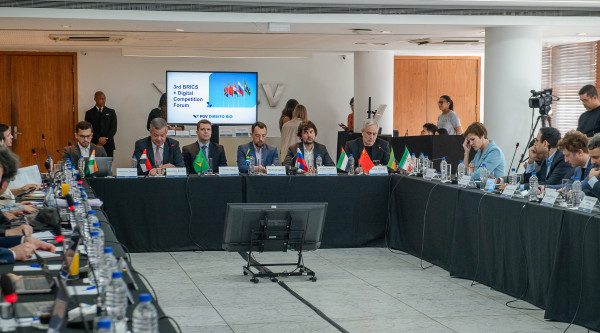
At the 3rd BRICS + (Brazil, Russia, India, China, South Africa, Egypt, Iran, Arab Emirates, Ethiopia + partners) Digital Competition Forum, the BRICS Competition Law and Policy Centre (www.BRICSCompetition.org) presented a new methodological approach to analyzing and regulating food markets that takes into account their accelerating digitalization. Specific tools that are being developed within the BRICS framework were also announced. One of the targeted tools will be the food market and restrictions on the activities of monopolists like Covantis.

Alexey Ivanov, Director of the BRICS Competition Law and Policy Centre, highlighted that digitalization strengthens the global power of large corporations, which, as a result, poses a threat of market monopolization. He urged BRICS antitrust regulators to pay close attention to a similar example of increasing market power through digitalization — the blockchain platform Covantis. The platform aims to digitize the entire agribusiness trade process, from contract management to final shipping. Founded by the largest agro-traders of the ABCCD group (ADM, Bunge, Cargill and Louis Dreyfus and COFCO) and Viterra, Covantis avoids antitrust scrutiny due to its structure. At the same time, the platform collects valuable commercial information about production from farmers and agricultural traders. The platform has already become a dominant player in grain trade. For example, in Brazil, 76% of grain exports go through the platform. In 2023, 53% of grain exports from the US, 34% from Canada and 51% from Argentina went through the Covantis platform. At the same time, the owners of the platform do not allow most of the local big players to enter. In essence, it is an exclusive platform, a quasi-cartel.

“Global food prices have reached the highest level in the last year and a half. Virtually all BRICS countries are currently undergoing antitrust investigations into the egg and chicken meat markets. Competitive agencies must take a new approach to regulating the food industry, not just by jointly analysing global food chains, but by analysing them taking into account all the implications of digitalization. This is the only way we will be able to tackle food security, which is particularly acute for the BRICS and partner countries. For example, the Covantis platform can be used by traders to share confidential information and vertical pressure on farmers. And of course the exclusionary behaviour of Covantis towards local players is of utmost importance. This should be the focus of attention of our countries' competition authorities” – Ivanov explained.

Based on the developed fair organized (exchange) trade in commodities and commodity derivatives within the BRICS framework, it is proposed to solve the problems related to market concentration and, as a consequence, insufficient consideration of the interests of small, medium and large enterprises, which will help to resolve issues related to the violation of the balance of interests of financial market players and producers and consumers of the real sector.

It is proposed to create within the BRICS framework representative indicators of exchange quotations and price indices for OTC transactions based on representative samples of actual transactions, reflecting the competitive composition of sellers and buyers and ensuring the use of universal means of delivery of traded goods. New approaches will contribute to the elimination of unproductive intermediation and increase stability in global commodity markets.

The development of a derivatives market based on reliable exchange and OTC cash commodity prices will create opportunities for BRICS economies to manage risks and pool resources, lead to positive consequences for business and society, strengthen cooperation and stimulate economic growth. Targeted subsidies and exchange mechanism will improve fiscal policy and infrastructure development.

Earlier this year, BRICS Competition Law and Policy Centre (BRICS Center) with the leadership of the Competition Policy and Assessment Center of the State Administration of Market signed a memorandum on long-term cooperation announced the launch and development of the Russian-Chinese exchange and trade platform in consumer goods and commodities which will become a basis for the further development of the universal exchange platform for all BRICS member-countries.

“If entrepreneurs of Russia and China work directly, through modern exchange mechanisms, which will not only allow to establish direct long-term ties, but also reduce prices for goods for end consumers, as it will eliminate the use of intermediary schemes. The task of experts and researchers in this regard is to develop a system of organizational, legal and economic measures and analyze the necessary conditions for the creation of exchange platforms and the development of exchange trade, including in the BRICS format” – Fu Hongwei, Director, Competition Policy and Assessment Center, SAMR; explained.

Distributed by APO Group on behalf of BRICS Competition Law and Policy Centre.

About the 3rd BRICS + Digital Competition Forum:
The BRICS + (Brazil, Russia, India, China, South Africa, Egypt, Iran, Arab Emirates, Ethiopia + partners) Digital Competition Forum, which is being held this year on the margins of the G20 Summit, brings together heads and representatives of competition authorities from all BRICS countries and partners, as well as researchers and visionaries in the field of digital regulation from around the world. The Forum includes the BRICS Working Group on the Study of Competition Issues in Digital Markets. This year's main topics include regulation of digital ecosystems, the challenges and opportunities that artificial intelligence brings to antitrust law, and the digitalization of global food chains.

The Forum is organized by the HSE University BRICS Competition Law and Policy Centre together with the FGV University School of Law (Getulio Vargas Foundation) with the support of the Brazilian Competition Authority (CADE).

Media files
BRICS Competition Law and Policy Centre
Download logo
Read moreBRICS Antitrust Authorities Turned against Covantis
12 December 2024

G20 urged to deliver on climate justice

Location: News

G20 urged to deliver on climate justice

With developing nations being considered the most vulnerable to climate change, United Nations Secretary-General António Guterres says the Group of Twenty (G20) countries must lead in delivering climate justice.

Addressing the closing session for the Joint Sherpa-Finance and Central Banks Deputies' Meeting, Guterres stressed that many vulnerable countries are being forced to respond to a crisis they did not create.

“Meanwhile, they lack the necessary support to seize the benefits of clean energy to spur prosperity and eliminate poverty. We need developed countries supporting developing countries with adequate, affordable and accessible finance and technology, and through meaningful contribution to the loss and damage fund by doubling adaptation finance next year as promised.

“[Climate justice can be delivered] by forging new partnerships like the Just Energy Transition Partnership that South Africa has pioneered to pave the way to a renewable future,” the Secretary-General said on Wednesday in Johannesburg.

On 1 December 2024, South Africa assumed the Presidency of the G20, which comprises many of the world's largest developing and developed economies.

As part of the work for the G20 Presidency, South Africa has commenced with the first series of the more than 130 meetings that will precede the G20 Summit in 2025.

“G20 countries must lead the way in line with the principles of common but differentiated responsibilities but recognise that every G20 country has to do more in the reduction of emissions. Next year, every government must deliver new economic plans in line with limiting the global temperature rise to 1.5 degrees.

“These new plans must cover all emissions in the whole economy, accelerate a just fossil fuel phase out and contribute to the energy transition goals agreed to at COP28. We must also ensure that Africa’s critical minerals that can power the renewable future worldwide benefit Africans first and most. We cannot repeat the mistakes of the past,” he said.

Guterres further called on the G20 to lead on technological justice.

“From digital technology to artificial intelligence, the developing world must access and benefit from the technological revolution.

“We need the G20 to support developing countries as they invest in the digital driven systems and solutions that their people need to boost prosperity to create jobs and drive sustainable development,” he said.

South Africa's G20 Presidency is the fourth consecutive emerging market Presidency, and it is also the first African Presidency, followed by the admission of the African Union (AU) as the second permanent African member. 

The G20 was established to tackle pressing global economic and financial issues. Together, G20 members account for around 85% of global GDP and 75% of international trade. 

The G20 comprises 19 countries including Argentina, Australia, Brazil, Canada, China, France, Germany, India, Indonesia, Italy, Japan, Republic of Korea, Mexico, Russia, Saudi Arabia, South Africa, Türkiye, United Kingdom, and United States and two regional bodies, namely the European Union and the African Union.

The grouping therefore plays a critical role in influencing global policy making and fostering global economic stability. - SAnews.gov.za

nosihle
Wed, 12/11/2024 - 15:14

90 views
Read moreG20 urged to deliver on climate justice
12 December 2024

Mashatile calls on Chinese-funded businesses to increase investments to create jobs in SA

Location: News

Mashatile calls on Chinese-funded businesses to increase investments to create jobs in SA

Deputy President Paul Mashatile has encouraged Chinese-funded enterprises in South Africa to increase their investments in crucial sectors of the economy, particularly the automotive industry and infrastructure development.

“Your participation and investment in our country is critical for creating jobs and promoting economic growth and development,” the Deputy President said on Wednesday. 

The country’s second-in-command was speaking at the launch of the corporate social responsibility report of Chinese-funded enterprises in South Africa. 

At the South Africa-China Economic Trade and Association (SACETA) event, Mashatile cknowledged the organisation’s substantial contributions to the country’s economic and social development. 

SACETA was established in April 2011 and serves as a vital platform for fostering economic and trade collaboration between China and South Africa.

Mashatile told attendees that the 200 Chinese-funded enterprises locally serve as role models for businesses, demonstrating that profitability should be balanced with social good. 

As the global landscape continues to evolve rapidly, he believes it is essential for nations to cultivate strong partnerships to thrive and navigate the challenges of the modern world.

“We should leverage our expertise to navigate towards a more sustainable path, guided by the principles of joint pursuit and a shared future. Our countries have complementary strengths and resources, making us ideal economic partners.”

The Deputy President described China as one of the world’s greatest economies, providing a massive market for South African goods and services.

“In return, South Africa provides rich resources, such as minerals, agricultural products, and skilled labour, to support China’s rising economy.” 

Mashatile is of the view that improving trade connections between South Africa and China benefits both countries directly and has a positive ripple effect throughout the region. 

“Increased trade creates jobs, stimulates economic growth, and improves living standards for the people of both countries.”

However, the Deputy President acknowledged that the trade structure has been imbalanced, noting that last year’s value of China’s imports far exceeded its exports. 

According to Mashatile, total bilateral trade increased from R614 billion in 2022 to R692 billion in 2023, while China’s R146 billion deficits remained the highest among any of the country’s trading partners.

He announced that government intends to work with China in addressing the trade deficit and structure of bilateral trade by broadening its export basket, especially to export more value-added products.

“South Africa mostly exports minerals and agricultural products to China while importing mostly manufactured goods from China. At a time when African economies are becoming more integrated, China’s technological prowess may help Africa industrialise and export more than just raw materials.

“Instead of exporting raw agricultural items, South Africa may export processed foods that are more valuable.”

Mashatile stressed that China could lend a helping hand by streamlining import procedures and lowering regulatory hurdles, which could make China a larger market for local products, benefiting both South African producers and Chinese customers.

He said Chinese-funded enterprises must seize opportunities in emerging fields such as artificial intelligence, the digital economy and green energy.

Last year, Chinese businesses pledged to invest up to R15 billion at South Africa’s fifth Investment Conference. 

“In that same year, we witnessed the signing of significant purchase agreements totalling US$2.2 billion with companies in both nations. Therefore, our positive trade relations continue to be crucial in combating unemployment, inequality, and poverty,” Mashatile said.

He said South Africa and China share a strong and longstanding relationship, and that the bond between the nations has deepened, revealing the potential for collaboration to promote inclusive and equitable growth.

The Deputy President also touched on President Cyril Ramaphosa’s recent State Visit to China and told attendees that both Heads of State committed to providing a stable, fair, and enabling business environment for companies.

He welcomed the report that highlights the contributions of Chinese-funded enterprises to environmental conservation, community development, education, and healthcare. 

“As we move forward, let us reaffirm our commitment to expanding South African-Chinese trade and investment cooperation. Together, we can build a more successful and sustainable future for our countries.” – SAnews.gov.za

Gabisile
Wed, 12/11/2024 - 13:54

22 views
Read moreMashatile calls on Chinese-funded businesses to increase investments to create jobs in SA
11 December 2024

Spotlight on interventions for economic empowerment of women

Location: News

Spotlight on interventions for economic empowerment of women

With South Africa officially assuming the G20 Presidency, government is looking forward to rallying the world against all forms of gender-based violence and exploitation of women, through the Working Group on Women Empowerment.

Addressing the closing event for the 16 Days of Activism for No Violence gainst Women and Children campaign at Ntsimbini Sports Ground in Port St John’s in the Eastern Cape on Tuesday, Minister in the Presidency for Women, Children and Persons with Disabilities, Sindisiwe Chikunga, announced a range of socio-economic interventions to transition vulnerable women to income-generating activities.

Chikunga said economic empowerment was incomplete without women’s meaningful access to land, which was the basis of all economic activity and a source of dignity.

The catalytic interventions for the economic empowerment of women include prioritising transferring productive land and productive assets to women for commercial purposes. 

Working with Transnet Properties, Chikunga said over 20 sites have been identified in Limpopo, KwaZulu-Natal and the Eastern Cape, spanning over six district municipalities.

The sites will be leased to women at highly-subsidised rates, enabling them to develop sustainable enterprises.

“We are actively identifying more sites across all nine provinces, [and] we have also partnered with the Council for Scientific and Industrial Research (CSIR) to create a value-chain-driven Agricultural Cooperatives Model. 

“By leveraging the CSIR’s intellectual property and advanced technologies, including precision agriculture, this model will equip and prepare women farmers for market success.

“The Minister of Finance recently announced that public procurement makes up around 19% of government spending, totalling R1.5 trillion over the next three years. I have tasked the Women’s Economic Assembly to assemble a team of experts that will dissect Public Procurement and Gender-Responsive Supply Chains to ensure that a minimum of 40% of that R1.5 trillion goes to women-owned businesses,” Chikunga said.

The department was also rethinking financial support structures and incentives.

Chikunga said women-owned businesses do not just need contracts, but the resources to deliver on their contracts and build sustainable enterprises.

While South Africa recognised the important symbiotic relationship between promoting women in science, building equitable societies, and the advancement of humanity, Chikunga noted that currently, women make up less than a third of the workforce across science, technology, engineering, and mathematics (STEM) careers.

She said confronting the historical and ongoing exclusion of women from STEM would be a priority for the department.

“We will be developing tangible programmes and campaigns that are needed to correct societal and cultural beliefs that use gender stereotypes to perpetuate scientific inequality. Science and humanity suffer when women are excluded from STEM.

“We also intend to leverage the potential of Artificial Intelligence (AI) and Emerging Digital Technologies to improve the wellbeing and prospects of persons living with disabilities,” Chikunga said.

The Minister added that the South African government was looking forward to planning and executing catalytic legacy projects and interventions in collaboration with the G20 family and partners in areas including women in high-tech industries, women in the agricultural value chains, women in the oceans economy, logistics, pharmaceutical industries, and the creative industries. – SAnews.gov.za

GabiK
Wed, 12/11/2024 - 12:52

128 views
Read moreSpotlight on interventions for economic empowerment of women
9 December 2024

SA kicks off first G20 engagement

Location: News

SA kicks off first G20 engagement

South Africa has set the agenda for its Group of Twenty (G20) Presidency with the commencement of the fist engagement of the more than 130 meetings that will precede the G20 Summit in 2025.

The Minister of International Relations and Cooperation, Ronald Lamola, officially opened the first G20 Sherpas Meeting in Johannesburg, on Monday.

The Sherpa Track is led by the personal representatives of G20 leaders. The Sherpa Track oversees negotiations and discusses the points that form the summit’s agenda, and coordinates most of the work.

“The first Sherpa Meeting of the G20 is important traditionally, as it sets the stage for the upcoming Presidency and the critical conversations on some of the most vital issues of our time.

“In the spirit of Ubuntu, our shared humanity, we will address these challenges through our high-level deliverables and priorities, which lie at the core of the original G20 mandate of promoting strong, sustainable, balanced and inclusive growth and by building partnerships across all sectors of society to find collective solutions,” Lamola said on Monday.

WATCH | 


South Africa’s G20 Presidency is being held under the theme: "Solidarity, Equality, Sustainability", a theme that seeks to harness global will and capabilities to confront the enormous challenges the world is facing.

South Africa will use its G20 Presidency to secure urgent progress on shared goals through several priority actions, which include strengthening disaster resilience and response; ensuring debt sustainability for low-income countries; mobilising finance for a just energy transition and harnessing critical minerals for inclusive growth and development.

As part of its efforts to bring the Sherpa and the Finance tracks closer together, three temporary Task Forces, an Initiative and a Commission will be established during South Africa’s G20 Presidency.

South Africa’s priorities include Inclusive Economic Growth, Industrialisation, Employment and Reduced Inequality; Food Security and Artificial Intelligence, Data Governance and Innovation for Sustainable Development.

“A review of the work of the G20 -- The G20 at 20 years: A Reflection on Key Achievements and the Way Forward -- will also feature as one of South Africa’s deliverables through a Sherpa Track Initiative. South Africa also proposes the establishment of a Cost of Capital Commission during its G20 Presidency,” Lamola said.

The three Task Forces, the Initiative and Commission will be established to deliver tangible results during South Africa's G20 Presidency. All of the priorities, as well as the overall theme, will influence Working Groups’ priorities and work plans.

South Africa assumed its G20 Presidency on 1 December 2024, following the astute and successful leadership of Brazil.

“The South African government also recognises the significant strides made by the Brazilian G20 Presidency in enhancing the G20 as a site of democratic global engagement. The South African Presidency will continue this trajectory. 

“A comprehensive dialogue with civil society and other State and non-State institutions will be conducted through the existing Engagement Groups.

“Following the approach of the Brazilian Presidency, a G20 Social Forum will be convened, which will precede the Leaders’ Summit in November 2025, to bring together representatives of the existing engagement groups and other segments of civil society that may offer meaningful contributions to the G20,” Lamola said.

The G20 group comprises many of the world's largest developing and developed economies. It was established to tackle pressing global economic and financial issues. Together, G20 members account for around 85 percent of global GDP and 75 percent of international trade. 

The G20 comprises 19 countries including Argentina, Australia, Brazil, Canada, China, France, Germany, India, Indonesia, Italy, Japan, Republic of Korea, Mexico, Russia, Saudi Arabia, South Africa, Türkiye, United Kingdom, and United States and two regional bodies, namely the European Union and the African Union.

The grouping therefore plays a critical role in influencing global policy making and fostering global economic stability.

“I trust that this meeting will set the trend for our subsequent meetings and that, as much as we celebrate the landmark achievements of the G20, we will also, during the course of the year ahead, begin to look ahead toward the strategic imperatives for the next cycle of G20 cooperation,” Lamola said. -SAnews.gov.za

nosihle
Mon, 12/09/2024 - 12:08

163 views
Read moreSA kicks off first G20 engagement
9 December 2024

STEM Lab launched at the University of Limpopo 

Location: News

STEM Lab launched at the University of Limpopo 

The Minister of Communications and Digital Technologies, Solly Malatsi, has officially opened a state-of-the-art STEM (science, technology, engineering, and mathematics) Lab at the University of Limpopo.

“This STEM Lab represents hope, progress, and opportunity. For the youth in Mamotintane, Ga-Motholo, Mankweng, and surrounding communities, it is a gateway to skills in artificial intelligence, robotics, and data analytics,” Malatsi said on Saturday.

The facility, made possible through strategic partnerships with the National Electronic Media Institute of South Africa (NEMISA), STEMpower, DHL and other key stakeholders, will empower students and the surrounding community with critical digital and STEM-related skills, equipping them for a future driven by technology and innovation.

“For educators, it is a chance to inspire the next generation of innovators. And for the unemployed, it is an opportunity to gain meaningful skills for employment or entrepreneurship.

“This lab is not just a resource for the university but for the entire community. It is proof of what we can achieve when government, academia, and industry work together to create sustainable, scalable solutions for digital inclusion,” the Minister said.

He said STEM forms the backbone of the modern economy, driving technological advancements, innovation, and economic growth. 

“By equipping young people with STEM skills, we are preparing them to excel in high-demand fields like artificial intelligence, robotics and data analytics. Let us harness the power of STEM education to build a South Africa where technology serves as a bridge to inclusion and opportunity, ensuring that no one is left behind,” the Minister said.

The lab is part of a broader initiative by the Department of Communications and Digital Technologies to expand access to affordable internet and devices, foster skills development, promote the productive use of technology, and position South Africa as a leading Information and Communications Technology (ICT) investment destination.

The launch in Limpopo is one of several, with similar labs being established at Walter Sisulu University, King Hintsa TVET College, Ehlanzeni TVET College, and the Central University of Technology. -SAnews.gov.za
 

nosihle
Mon, 12/09/2024 - 12:25

82 views
Read moreSTEM Lab launched at the University of Limpopo 
5 December 2024

Health equity and women’s health emerge as key themes of the inaugural International Health Ministerial Summit

Location: News
Informa Markets: Healthcare

The inaugural International Health Ministerial Summit, organised by Informa Markets (www.InformaMarkets.com), began with a series of dynamic panel discussions featuring influential delegates showcasing collaborative solutions to global healthcare challenges.

Hosting governmental figures and policymakers, corporate CEOs and investors, medical directors, and experts, the exclusive by-invitation only Summit, themed Strengthening Health Systems for a Better Tomorrow, takes place from 4 to 5 December 2024 at the Marriott in Kigali. It brings together renowned health experts from across the continent and the world and highlights topics like digital health, technological adoption, R&D in vaccinations, women's health, healthcare investment opportunities, and health equity.

During his official opening address, Dr. Sabin Nsanzimana, the Minister of Health of host country Rwanda, said: “There is no better investment than in our health. It is not a negotiable luxury but a fundamental human right. Strengthening health systems means focusing on the four S's: staff, space, supplies, and systems. In Rwanda, we understand that investing in health is investing in our future. That's why the Government of Rwanda has approved the 4x4 Reform—a bold strategy to quadruple the number of healthcare workers in the next four years to meet the WHO recommendation of at least 4 healthcare professionals per 1,000 population. This initiative underscores our commitment to building a resilient health system where no one is left behind. By investing in these pillars and embracing technology/innovations like AI, we can build resilient systems that ensure uninterrupted care for all.”

Addressing health equity's challenges and opportunities 

Following the welcome address by Dr. Deborah M. Barasa, Health Cabinet Secretary of Kenya, who spoke about actions to shift primary healthcare, the first session of the day featured several panel discussions dealing with the challenges and opportunities for health equity.

In a panel discussion hosted by Dr. Tim Keuri, CEO of the Kenya Health Federation, industry leaders discussed transforming Africa into a global hub for pharmaceutical innovation and manufacturing. Representatives from the Unified Procurement Association, PharmaAccess, Global One Health Institute, Pfizer, and Bayer provided insights on investment enhancement, regulatory framework improvements, and strategic collaborations to strengthen Africa's position in the global pharmaceutical value chain.

Another panel, moderated by Bloomberg news reporter Ondiro Oganga, addressed the urgent need for Africa to advance self-sufficiency in pharmaceutical R&D, local vaccine production, and diagnostic access. Experts from Senegal's Ministry of Health, The Global Trust Project, UN Foundation, African Society for Laboratory Medicine, Africa CDC, and leading corporations like Genf, Hologic, and Roche Diagnostics emphasised the importance of establishing regional pharma hubs and enhancing local capabilities. According to Ahmed Ogwell, Vice President of Global Health Strategy at the UN Foundation in Kenya, “The gap is not in identifying problems or proposing solutions—it's in executing those solutions. For example, while there's been significant discussion around manufacturing COVID-19 vaccines, we lack local production of diagnostics and essential tools like rapid tests on the continent. To move forward, we need to prioritise what to produce, coordinate efforts regionally, and ensure that the products we manufacture are consumed within our systems." 

Women's health and equitable access to healthcare

The second key theme of the day was health equity and women's health, starting with an insightful discussion on what is needed to close the health equity gap. Moderated by Dominic Wilhem, Executive Director of The Global Trust Project, global health leaders debated how to unite healthcare stakeholders to address the health equity gap. Panellists focused on collaborative strategies to ensure universal access to essential medicines and vaccines. The session underscored the importance of international cooperation to progress healthcare for all, regardless of geographic or socio-economic boundaries. Pfizer Kenya Director of Policy and Public Affairs Pauline Irungu commented on the outcomes, saying, “When we think about partnerships, we have a tendency to think about government- private partnerships, but we also need to talk more about private private partnerships which then support agendas of governments in Africa and beyond. At Pfizer one of the gaps we experience is the challenge of diagnostics. How do we advance access to medicine?  Currently , we have two strong partnerships  with diagnostic companies on the continent. Now we also make a call that we also want others to join the partnerships because the more we partner as private sector, the more  we're able to address the multifaceted challenges within the health care system.”

A second panel on the topic brought together top health experts to tackle the urgent issue of women's health in Africa, particularly the high maternal mortality rates in sub-Saharan Africa. Hosted by Dr. Magome Masike, Registrar, Health Professions Council of South Africa, this panel of leaders from various health organisations and government bodies debated the need for innovative approaches to enhance women's health across the continent. The session highlighted the importance of rethinking strategies to improve healthcare outcomes for women in Africa.

Day two of the Summit will focus on advancements in digital health, how artificial intelligence is transforming healthcare, health investment and financing, and an exciting Rwandan initiative using drones to deliver essential medicines to health facilities.

For more details on the International Health Ministerial Summit, visit the event website: https://apo-opa.co/3ZBts4y

Distributed by APO Group on behalf of Informa Markets: Healthcare.

Media files
Informa Markets: Healthcare
Download logo
Read moreHealth equity and women’s health emerge as key themes of the inaugural International Health Ministerial Summit
4 December 2024

SA- Nigeria conclude successful Bi-National Commission

Location: News

SA- Nigeria conclude successful Bi-National Commission

President Cyril Ramaphosa and his Nigerian counterpart, Bola Ahmed Tinubu, have paid tribute to the existing deep fraternal relations between the two nations. 

In a joint communique on the 11th session of the South Africa - Nigeria Bi-National Commission on Tuesday, the two Heads of State and Government once more acknowledged the strong support that Nigeria provided to the liberation movements in South Africa during South Africa’s struggle for freedom and democracy.  

President Tinubu was in South Africa for a working visit at the invitation of President Ramaphosa to co-chair the 11th Session of the Bi-National Commission (BNC) between the two countries.

READ | South Africa and Nigeria strengthen ties 

The BNC was preceded by a meeting of Senior Officials on 28 and 29 November 2024 and the Ministers Meeting on 02 December 2024.

READ | SA eyes increased trade relations with Nigeria

The 11th Session of the BNC also marked the 30th anniversary of formal establishment of diplomatic relations between the two countries.

“The two Heads of State and Government renewed their commitment to work closely to broaden and sustain the two nations’ bilateral relationship in a manner that enhances strategic cooperation and partnership for mutual benefit. In this regard, the Heads of State and Government directed the various Ministries, Departments and Agencies to deepen their cooperation in the context of the BNC,” the joint communique read. 

The Heads of State and Government acknowledged the more than 34 Agreements covering various sectors which have been signed since the establishment of diplomatic relations between the two countries in 1994. 

“The two leaders underscored the need to urgently finalise the MoU [Memorandum of Understanding] on the Early Warning Mechanism. To this end, it was agreed that the MoU will be signed, no later than March 2025, during the visit of the South African Minister of International Relations and Cooperation to Nigeria, for Political Consultations. 

“The two leaders also welcomed the ongoing negotiations to conclude other new agreements,” the communique said. 

Investment 

The Heads of State also welcomed the high levels of economic cooperation between the two countries. In this regard, they welcomed the significant investments of South African companies in Nigeria and encouraged corresponding Nigerian investments in the South African economy. 

The leaders recognised the need for the two countries to create an enabling business environment in both countries. 
“The two leaders agreed to encourage cooperation and partnership between private and public entities for investment in mining, infrastructure development in rail, road, ports, amongst others. In this regard Nigeria invited South Africa’s Development Finance Institutions to partner with Nigeria in co-financing infrastructure projects,” the communique read. 

The leaders further made a commitment to work towards increased and balanced trade between the two countries by utilising the opportunities provided by the African Continental Free Trade Area (AfCFTA). Both South Africa and Nigeria have ratified the AfCFTA. 

Addressing mutual challenges 

The two countries also agree to collaborate on programmes that address mutual challenges in food and nutrition security, strengthening meaningful digital connectivity, taking leadership in the development of artificial intelligence, expanding digital literacy initiatives, as well as prioritising data protection and online safety for all citizens. 

The two leaders welcomed the convening of the South Africa-Nigeria business roundtable held on the margins of the 11th session of the BNC during which they had an opportunity to address and engage with Chief Executives of companies from both countries.

“The Heads of State and Government also exchanged views on regional, continental and global issues of mutual concern. Nigeria highlighted its efforts and those of ECOWAS [Economic Community of West African States] in fostering and promoting peace and security in West Africa. South Africa also outlined efforts undertaken by the Southern African Development Community [SADC] in supporting peace initiatives in both the eastern Democratic Republic of the Congo and northern Mozambique”. 

The delegations also underscored the need to redouble efforts to realise the African Union (AU) Agenda 2063 Aspiration to “Silence the Guns”.

In this regard, the Heads of State and Government expressed concern at the devastating conflict in Sudan, which has resulted in the loss of lives, destruction of infrastructure and property and a humanitarian crisis. 

The Heads of State and Government also reflected on the upcoming elections for the leadership of the African Union Commission and underscored the need for the election of the leadership that would be responsive to the challenges facing the African continent. 

International developments

“The two countries further exchanged views on international developments, particularly the ongoing conflict in the Middle East and called for a ceasefire in Gaza and increased access to humanitarian aid. 

“The Heads of State and Government reiterated their principled position that the only long-lasting solution to the resolution of the conflict, is to advance a two-State solution where Israel will exist side by side in peace and harmony with a viable and fully independent Palestinian State. Nigeria commended South Africa for taking the case of Israel and Palestine to the International Court of Justice,” the communique read. 

Similarly, the Heads of State and Government agreed to intensify support for the cause of Western Sahara for self-determination, freedom, and justice.
 

Reforms

“The two Heads of State and Government further renewed their call for a responsive international system of governance through a reformed United Nations Security Council, respect for and promotion of universal human rights in a just and equitable world,” the communique said. 

South Africa congratulated Nigeria on the re-appointment of Ngozi Okonjo-Iweala as the Director General of the World Trade Organisation. South Africa and Nigeria agreed to work closely together in international organizations. 
 

G20

Meanwhile, Nigeria congratulated South Africa on its assumption of the G20 Presidency from 01 December 2024 and commended South Africa on its priorities which address inclusive economic growth, industrialisation and the reduction of inequality, food security and artificial intelligence, data governance and innovation. 

Agenda 2063

The Heads of State and Government further committed to working closely with the African Union and each other to advance the African Agenda in pursuit of the implementation of Agenda 2063. 

According to the AU, Agenda 2063 is Africa's development blueprint to achieve inclusive and sustainable socio-economic development over a 50-year period.

At the end of the 11th Session of the BNC, President Tinubu expressed his gratitude to President Ramaphosa, for the warm reception and hospitality accorded to him and his delegation since their arrival in Cape Town. – SAnews.gov.za

DikelediM
Wed, 12/04/2024 - 10:37

751 views
Read moreSA- Nigeria conclude successful Bi-National Commission
  • Previous
  • Page 1
  • Page 2
  • Page 3
  • Page 4
  • Page 5
  • Interim pages omitted …
  • Page 9
  • Next

Copyright © 2026 · MyZA · All Rights Reserved · Powered by Reach Trust