• Skip to main content
  • Skip to header right navigation
  • Skip to after header navigation
  • Skip to site footer
MyZA

MyZA

News, Directory, Events and Other Stuff

  • Social Media
  • Sport
  • World News
  • Home
  • Submit News
  • Directory
  • Events
  • Stratlec
  • TFSA
  • News
    • APO
    • Today’s Sport News
    • Todays Social Media and Tech Headlines
    • Today’s World News
    • Today’s SA Financial News
  • Contact
You are here: Home / Archives for artificial intelligence

artificial intelligence

21 April 2025

AI Powers Innovation, Efficiency and Growth in African Mining

Location: News

Energy Capital & Power
Download logo

African mining projects are increasingly incorporating artificial intelligence (AI) to streamline operations and meet ambitious production targets set by governments across the continent. As the mining industry undergoes a digital transformation, the upcoming African Mining Week (AMW) will highlight the pivotal role of AI and other digital tools in optimizing exploration and production processes, with a view to unlocking new mineral reserves, reducing costs and enhancing worker safety.

Botswana Diversifies Mineral Portfolio

In Botswana, Botswana Diamonds is expanding its mineral portfolio beyond diamonds with an AI-based nationwide exploration campaign launched in August 2024. By March 2025, the company identified potential deposits of besshi, greenstone, Mississippi Valley-type lead and zinc, SEDEX and platinum group metals (PGMs). To capitalize on these discoveries, Botswana Diamonds has applied for 11 new prospecting licenses. John Teeling, Chairman of Botswana Diamonds, stated: “During the initial analysis of the big database, it became clear that the AI technology could be used to identify other unknown minerals opportunities… Our analysis so far has identified a series of targets in copper cobalt, zinc and gold.”

KoBold Advances Zambia's Critical Mineral Market

U.S.-based startup KoBold Metals is applying AI to enhance critical mineral exploration and mine development in Zambia. In January 2025, KoBold raised $537 million in new capital, bringing its total funding to $1 billion. The company is developing one of the world's largest untapped copper basins in Zambia, with plans to produce 300,000 tons annually by 2030 from its $2 billion Mingomba Project. Additionally, KoBold Metals is exploring the Dumbwa Mine and Konkola West Project, contributing to Zambia's goal of reaching 3 million tons of annual copper production by 2031.

Kilken Platinum Drives Mine Expansion

In South Africa, Kilken Platinum is utilizing AI to optimize operations at its Thabazimbi processing plant in Limpopo as part of an expansion plan to double PGM production to 83kgs per month. The project has already increased output to 40kgs in its initial phase. Dondo Mogajane, CEO of Kilken Platinum's parent company Moti Group, emphasized that AI enables real-time tracking of production metrics and ensures strict adherence to safety protocols.

Beyond these projects, Rio Tinto subsidiary Richards Bay Minerals is employing AI for ore body modeling, equipment dispatch management and blast control at its mines in KwaZulu-Natal, South Africa. In the Democratic Republic of Congo, Glencore is leveraging digital technology to streamline critical mineral exploration as part of its Phase 2 expansion at the KTO copper and cobalt project. AMW 2025 will feature high-level discussions focused on AI's impact on industry growth, investment opportunities for technology providers and the broader economic benefits of digital transformation in mining.

African Mining Week serves as a premier platform for exploring the full spectrum of mining opportunities across Africa. The event is held alongside the African Energy Week: Invest in African Energies 2025 conference from October 1-3 in Cape Town. Sponsors, exhibitors and delegates can learn more by contacting sales@energycapitalpower.com.

Distributed by APO Group on behalf of Energy Capital & Power.

Read moreAI Powers Innovation, Efficiency and Growth in African Mining
17 April 2025

Coca-Cola Beverages Africa invests USD14.9m in Malawi production capacity

Location: Business
Coca Cola Beverages Africa

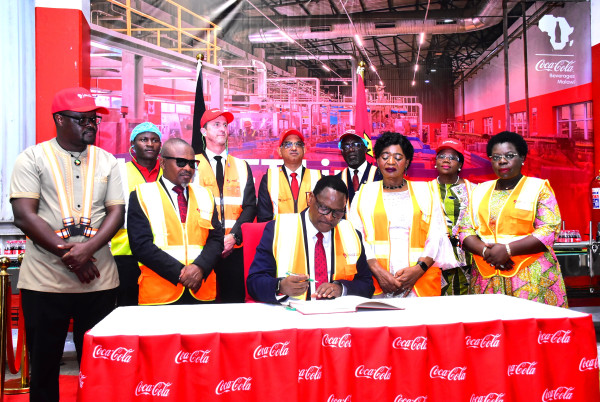
Coca-Cola Beverages Africa Proprietary Limited (CCBA) (www.CCBAGroup.com), through its subsidiary Coca-Cola Beverages Malawi Limited (CCBM), has invested USD14.9 million in a new state-of-the art production line in Lilongwe. 

This investment marks a significant advancement in CCBM's production capacity, allowing it to produce bottled water and beverages bearing Coca-Cola's trademarks as well as the iconic local brand Sobo, all on the same line.

The line is capable of producing 19,200 bottles per hour in pack sizes ranging from 300ml to 2 litres. This increase in production will facilitate the export of beverages to Zambia.

The new production line uses artificial intelligence (AI) to proactively identify and resolve issues before they cause stoppages, thereby minimising downtime and reducing costs.

The introduction of new technology has also created the opportunity for employees to be trained in new skills, contributing to the development of a future-ready workforce for both the business and the country.

Sunil Gupta, Chief Executive Officer of CCBA said: “This investment in Malawi reaffirms the Coca-Cola system's local approach - we produce locally, distribute locally and, where possible, source locally. Our value chain includes a significant number of businesses, many of them small and medium enterprises (SMEs).”

“This investment goes beyond numbers, it's about creating shared opportunities across the value chain,” said Neil French, General Manager of CCBM.

Gupta echoed the sentiment, adding: “This investment is a clear demonstration of our continued belief in the future of Malawi.”

Gupta also highlighted CCBA's broader efforts: “As a customer centric, digitally-enabled, growth-driven business, we are committed to excellence across our value chain. Efficient operations allow us to offer faster delivery and improved service. This new production line is another step in our journey to achieve execution excellence.”


Distributed by APO Group on behalf of Coca Cola Beverages Africa.

ISSUED BY:
Godwin Ngoma
Public Affairs, Communication and Sustainability Director
CCBA in Malawi
Tel: +265 995 36 15 55
Email: gngoma@ccbagroup.com

Keli Fernie
Head: Reputation and Communication 
Coca-Cola Beverages Africa
Tel: +27 82 419 8766
Email: KFernie@ccbagroup.com

Follow us on:
LinkedIn: https://apo-opa.co/4cFhA6r

ABOUT CCBA:
CCBA is the 8th largest Coca-Cola authorised bottler in the world by revenue, and the largest on the African continent. It accounts for over 40% of all Coca-Cola products sold in Africa by volume. With over 18,000 employees in Africa, CCBA services more than 735,000 customers with a host of international and local brands. CCBA operates in 15 countries, including its six key markets of South Africa, Kenya, Ethiopia, Uganda, Mozambique and Namibia, as well as Tanzania, Botswana, Ghana, Zambia, the islands of Comoros and Mayotte, Eswatini, Lesotho, and Malawi.

Learn more at  www.CCBAGroup.com

Media files
Coca Cola Beverages Africa
Download logo
Read moreCoca-Cola Beverages Africa invests USD14.9m in Malawi production capacity
10 April 2025

Technology to aid SA’s border management efforts  

Location: News

Technology to aid SA’s border management efforts  

Four advanced unmanned aerial vehicles, commonly known as drones and 40 body-worn cameras will be deployed for the first time at the country’s ports of entry over the coming Easter long weekend.

The drones are equipped with some of the most advanced night vision cameras in the world, including thermal detection technology.

Powered by Artificial Intelligence (AI), the devices are able to recognise and lock onto heat sources, moving people, or vehicles. They can also travel at speeds up to 43 kilometres per hour and are capable of operating in remote rural areas without access to GPS and even underground.

Speaking at a media briefing on Thursday, Home Affairs Minister Dr Leon Schreiber said the launch of technology marks the biggest step forward for enhancing border security and management.

“Data shows that when we first trialled the use of drones over the festive season, the number of attempted illegal crossings that were successfully prevented, increased by 215%,” said the Minister.

WATCH | 

He added that the Border Management Authority (BMA) will now permanently deploy this cutting-edge technology on a fulltime basis.

“Our message to would-be illegal immigrants and smugglers is clear. We are now watching the borderline during the day, we are watching at night, we can see your body heat wherever you try to hide, and we will catch you. 

“As we roll out more and more cutting-edge technology, there are fewer and fewer places to hide for criminals who undermine our national security,” he said.

Schreiber explained that the cameras will be fitted to officials working in the port environment to detect and punish acts of corruption, while also monitoring the efficiency of officials.

“Importantly, the cameras are linked to a dedicated Digital Evidence Management System which ensures that all footage is admissible in court to ensure successful convictions.”

BMA Commissioner Dr Micheal Masiapato said the 2025 Easter Operation follows the successfully implemented 2024/25 Festive Season Plan which saw a steady increase of 5 084 251 travellers processed across 71 ports of entry.

“This plan builds on the successes and lessons learned from our previous operations, ensuring the advancement of robust mechanisms for safe and secure travel,” Masiapato said.

Heightened operations

Speaking at the media briefing in Pretoria, the Commissioner said that through the assistance of drone technology, previous deployments in the December-January operations were responsive and reactional to illegal movements.

“The increase in festive season movements prompted the BMA to officially begin with the Easter Planning Phase on the 1st of February 2025 through to the 14th of April 2025. 

“The Execution phase of the BMA’s Easter Operational Plan will run for a period of 10 days starting from the 15th to the 24th of April 2025, during which period deployments and intensified border operations will be heightened.
“We are here to serve the citizens of the country to deter any illegality at our ports of entry and border law enforcement area without fear or favour,” he said.

Masiapato said the Easter period is traditionally characterised by a significant spike in the movement of people and goods across the country’s ports, placing increased demand on the BMA to maintain optimal operational readiness.

“During this period, families travel for religious observances, holidays, and cultural gatherings, while traders and transporters increase activity in preparation for the long Easter weekend. 

“With the expected increase in attendance from the Zion Christian Church in Limpopo, more travellers are expected to move from our neighbouring countries into South Africa. These heightened activities bring both opportunities and risks, requiring a concerted and integrated operational response,” he said.

The BMA is undertaking training to equip eight officers to become expert drone pilots. They will operate the devices on a shift basis and will move around different ports in the country. – SAnews.gov.za
 

Edwin
Thu, 04/10/2025 - 12:39
252 views

Read moreTechnology to aid SA’s border management efforts  
10 April 2025

Nzimande, UN Secretary-General’s Envoy on Technology meet on Global Digital Compact

Location: News

Nzimande, UN Secretary-General’s Envoy on Technology meet on Global Digital Compact

The Minister of Science, Technology and Innovation, Professor Blade Nzimande, met with Mandeep Gill, the Undersecretary and Special Envoy of the United Nations Secretary-General for Digital and Emerging Technologies, on Wednesday.

The meeting primarily focused on South Africa’s role in implementing the UN’s Global Digital Compact (GDC) and the opportunities this presents for developing the country’s digital economy.

The GDC forms part of the UN’s Pact for the Future, which was adopted during the Summit of the Future in 2024. 

The Department of Science, Technology and Innovation (DSTI) said this compact was a comprehensive framework for global digital cooperation and governance, particularly regarding artificial intelligence. 

Its primary objective is to harness the potential of digital technology for the benefit of humanity while also addressing the challenges and risks associated with it. 

During the meeting with Gill, Nzimande stressed the importance of digital and emerging technologies.

“As one of the African countries with the largest public science systems, South Africa recognises the importance of developing our capabilities in digital and emerging technologies such as artificial intelligence and their potential to help in the development of solutions for some of the challenges of our time such as inequality, climate change and environmental degradation, pandemics and transnational conflict,” the Minister said. 

He believes the current geopolitical moment required a stronger and consistent commitment to international collaboration, the free exchange of scientific knowledge, and multilateralism.

“These, we believe present us with a better chance at a sustainable future for humanity. It is for this reason that meaningful partnerships and the development of our capabilities in the digital economy are some of the strategic pillars of our country’s Decadal Plan for Science, Technology, and Innovation,” he stated. 

Outlining the potential benefits for South Africa’s participation in the GDC, the Minister said South Africa’s participation in the GDC presents the country with several unique opportunities to address national priorities and position it as a leader in regional digital transformation. 

“We believe our participation in the GDC can further enhance our capabilities in such areas as infrastructure development, digital skills enhancement, digital entrepreneurship and innovation support, digital inclusion, data governance and privacy and human rights protection,” Nzimande stressed. 

Nzimande used the meeting to update Gill on the department’s artificial intelligence (AI) initiatives, which include the Foundation Digital Capabilities Research (FDCR).

One of the initiatives within the FDCR platform that is AI-focused is the Centre for Artificial Intelligence Research (CAIR).

There is also the South African Research Chairs Initiative (SARChi), which currently includes Research Chairs in information and communication technology (ICT) development, with two specifically focused on AI.

All the DSTI’s AI and digital economy initiatives are designed to support the objectives of South Africa’s Digital Economy Masterplan, which is the responsibility of the Department of Communication and Digital Technologies. – SAnews.gov.za

Gabisile
Thu, 04/10/2025 - 14:38
84 views

Read moreNzimande, UN Secretary-General’s Envoy on Technology meet on Global Digital Compact
8 April 2025

Uae Participates in Second G20 Sherpa Meeting

Location: News

United Arab Emirates, Ministry of Foreign Affairs
Download logo

His Excellency Ahmed Al Sayegh, Minister of State and UAE G20 Sherpa, and His Excellency Mahash Al Hameli, UAE Ambassador to South Africa and UAE Sous Sherpa, participated in the second G20 Sherpa Meeting, which was held virtually from 3 – 4 April.

The meeting brought together representatives from invited countries and international organizations to assess the progress achieved across various G20 Sherpa Working Groups and to outline the path forward during the South African G20 Presidency.

The UAE delegation highlighted the country's engagements in working groups across several key priority areas, including anti-corruption, culture, education, development, women's empowerment, artificial intelligence and the digital economy, employment, disaster risk reduction, climate, and environmental sustainability. The UAE reaffirmed its support for the South African Presidency's efforts and emphasized the country's commitment to multilateral cooperation through the G20 platform.

Under the theme ‘“Solidarity, Equality and Sustainability', South Africa extended an invitation to the UAE to participate as a guest country in the G20 process and summit in 2025. This marks the UAE's sixth overall participation in the G20 and its fourth consecutive invitation. The UAE has previously been part of the G20 process hosted by Brazil in 2024, India in 2023, Indonesia in 2022, Saudi Arabia in 2020, and France in 2011.

Established in 1999, the G20 is the premier forum for international economic cooperation, bringing together the world's largest economies to address global challenges and promote inclusive growth.

Distributed by APO Group on behalf of United Arab Emirates, Ministry of Foreign Affairs.

Read moreUae Participates in Second G20 Sherpa Meeting
7 April 2025

President Ramaphosa appoints Professor Mariana Mazzucato to G20 Taskforce

Location: News

President Ramaphosa appoints Professor Mariana Mazzucato to G20 Taskforce

President Cyril Ramaphosa has appointed renowned economist Professor Mariana Mazzucato as Technical Expert to South Africa’s G20 Presidency and his Special Presidential Representative to Taskforce 1, focusing on Inclusive Economic Growth, Industrialisation, Employment, and Reducing Inequality.

In a statement on Monday, The Presidency said Professor Mazzucato will also contribute to Taskforce 3: Artificial Intelligence, Data Governance, and Innovation for Sustainable Development.

She will also support the Sherpa Track on Trade and Investment Working Group, and the Finance Track Sustainable Finance Working Group, and International Financial Architecture Working Group.

Professor Mazzucato is a member of President Ramaphosa’s Economic Advisory Council (PEAC) since 2019, advising on areas such as green industrial strategy, State capacity, and reform of State-owned enterprises.

In 2024, she co-chaired the Group of Experts for Brazil's G20 Task Force for the Global Mobilisation Against Climate Change (TF-CLIMA).

“This appointment underscores South Africa’s commitment to leveraging its leadership in the G20 to shape a more inclusive and sustainable global economy.

“Professor Mazzucato, internationally recognised for her work on rethinking the State, green growth, mission-oriented innovation and public value creation, brings critical expertise to advancing South Africa’s goals on green industrialisation, inclusive growth, and long-term structural transformation,” the Presidency said. 

Under President Ramaphosa's leadership and the G20 theme of “Solidarity, Equality, Sustainability”, South Africa aims to lead global discussions on these key issues, advocating for policies that foster resilient economic development, particularly in developing countries.

South Africa’s G20 Presidency is committed to advancing a global economic framework that supports green growth, economic resilience, and social equity.

The year 2025, described by President Ramaphosa, President Lula da Silva of Brazil, and Prime Minister Sánchez of Spain as “a pivotal year for multilateralism”, will feature three major global gatherings: the G20 Summit in Johannesburg, the Financing for Development Conference in Seville, and COP30 in Belém. – SAnews.gov.za 

DikelediM
Mon, 04/07/2025 - 15:18
54 views

Read morePresident Ramaphosa appoints Professor Mariana Mazzucato to G20 Taskforce
7 April 2025

SA advocates for linguistic equity in AI at G20

Location: News

SA advocates for linguistic equity in AI at G20

South Africa has called on the Group of Twenty (G20) members to support initiatives that develop Artificial Intelligence (AI) in low-resource languages and share data and tools to make this possible.

Addressing the Meeting of the G20 Digital Economy Working Group Task Force on AI, Minister of Communications and Digital Technologies, Solly Malatsi, said there were over 7 000 languages spoken in the world, yet most AI models and digital content is trained on a tiny fraction of these – predominantly English and a handful of others.

“We know that AI is only as good as the data and algorithms it is built on and currently, both of these have serious gaps. One glaring gap is the linguistic and cultural diversity deficit in AI systems.

“This linguistic inequity is not just a cultural loss; it’s a practical barrier that threatens to exclude billions from the AI-driven digital economy,” the Minister said on Monday in Gqeberha.

He emphasised that AI must not only be looked at from a technology perspective, but from the standpoint of social impact. 

“We must investigate how AI can help us achieve the Sustainable Development Goals. How can it improve healthcare, education, agriculture, and governance? Beyond language, ethical AI governance requires addressing issues of bias, transparency, and accountability. 

“We have seen instances of AI algorithms that exhibit racial or gender bias in hiring, lending, or policing. These are systemic harms we have to root out. During our Task Force discussions, we must consider how G20 nations can share best practices on AI governance, including regulatory approaches and standards to ensure AI safety and trustworthiness,” Malatsi said.

South Africa’s G20 Presidency has set inclusion and equity at the heart of the digital agenda.

The G20 Presidency will focus on four key pillars that include bridging the digital divide with meaningful connectivity; building inclusive digital public infrastructure; nurturing innovation ecosystems for local development and championing ethical AI that respects diverse languages, cultures, and values.

“We cannot allow a new form of digital inequality to take hold in our world. We need to unite our efforts, North and South, public and private, to invest in connectivity for all. This means mobilising financing for digital infrastructure, sharing innovations to lower costs, and collaborating on policies to make internet access affordable for the poorest,” the Minister said.

The International Telecommunication Union indicates that roughly 2.9 billion people still don’t have internet access at all.

“While most of these individuals live within range of mobile broadband networks, they remain offline due to multiple factors ranging from high data costs, lack of affordable smart devices and limited digital skills. Infrastructure alone is no longer enough; the real barriers are economic, educational, and linguistic. 

“And they demand our immediate collective attention. The socio-economic benefits of closing the digital divide are enormous. We cannot allow a new form of digital inequality to take hold in our world,” he said.

According to the Global System for Mobile Communications Association (GSMA), bringing the currently offline population onto the internet could add $3.5 trillion to the global economy by 2030, with 90% of the benefits flowing to developing countries. 

“We propose that G20 members share strategies on supporting start-ups and micro, small and medium enterprises (MSMEs) – from startup financing initiatives to innovation hubs and tech parks, from simplifying regulatory burdens to providing mentorship networks. 

“Let us commit to growing the digital innovation ecosystem in all our countries. As we discuss policy frameworks, we must also consider the idea of an innovation fund or facility to support digital entrepreneurship in underserved regions, an idea that has been floated with the notion of a possible global fund for AI and digital innovation. 

“If we want a truly global digital economy, we must ensure that innovation knows no borders – that brilliant ideas from Africa, Asia, or Latin America can find the resources and support to grow,” Malatsi said. - SAnews.gov.za

nosihle
Mon, 04/07/2025 - 14:42
37 views

Read moreSA advocates for linguistic equity in AI at G20
6 April 2025

Applications invited for Trusted Tour Operator Scheme

Location: News

Applications invited for Trusted Tour Operator Scheme

Home Affairs Minister Dr Leon Schreiber has gazetted a second invitation for applications to the highly successful Trusted Tour Operator Scheme (TTOS). 

Since the first tourist visa applications from China and India were processed through this scheme on 12 February 2025, the department has been inundated with requests to expand it so that more tour operators can contribute to driving tourism growth.

READ | SA welcomes first visitors from China through new visa initiative

The department said it is encouraged by this "overwhelmingly positive response", as it confirms the enormous potential of visa reforms to create more jobs by bringing more tourists to South Africa's shores. 

In response to these calls, and after effecting additional upgrades to the online platform that processes TTOS applications, Schreiber opened a second window for more tour operators to apply to join the scheme.

Tour operators who want to apply have 30 days to submit their applications through the dedicated online portal accessible via the department’s website. No paper-based applications will be accepted. 

As with the first intake, applications will be assessed by an interdepartmental team using Artificial Intelligence tools to vet and select successful participants.

“The key to the success of TTOS lies in the fact that the process has been digitally transformed from start to end.

“Whereas prospective tourists from China and India previously had to stand in long queues, submit paper applications, and sometimes wait so long for paper outcomes that they missed their flights, the digitalisation of this process through TTOS means that even visa outcomes for large groups are now issued digitally within hours,” he said.

“In the weeks since TTOS was launched, over 2 000 additional tourists from China and India, who would otherwise not have come to our country owing to previous visa inefficiencies, have come to our country. 

“Even more encouraging is the trend of applications received. On the first day of operation, 12 February, 21 applications were received. 

“[On] 3 April, this figure had grown to 165 per day and shows no sign of slowing down. The intake of more operators will further accelerate this growth, as Home Affairs delivers on our commitment to replace a manual, paper-based and insecure visa system with secure, world-class digital infrastructure to drive economic growth,” the minister said. – SAnews.gov.za

Edwin
Sun, 04/06/2025 - 09:18
47 views

Read moreApplications invited for Trusted Tour Operator Scheme
3 April 2025

Importance of AI in Executive Search, but Not to the Detriment of the Human Touch

Location: Business

Within the highly specialised and confidential world of executive search, a new balance is emerging in which artificial intelligence is taking over the data processing and pattern recognition that’s required; leaving us humans to thrive in the areas of creative problem-solving and emotional intelligence. Jeremy Bossenger, director at BossJansen Executive Search, weighs in on the …

Read moreImportance of AI in Executive Search, but Not to the Detriment of the Human Touch
2 April 2025

All systems go for Africa Children’s Summit

Location: News

All systems go for Africa Children’s Summit

The voices of children across the continent will be amplified when more than 1000 children from the African region take part in the upcoming 2nd Biennial Africa Children’s Summit.

South Africa through the Department of Social Development, in collaboration with the Nelson Mandela Children’s Fund, will be hosting the second Africa Children’s Summit, scheduled to take place at St John’s College in Parktown, Johannesburg, from 4-7 April 2025.

The summit forms part of a series of activities during the country's Presidency of the Group of 20 (G20), which will culminate in the G20 Leaders’ Summit in November this year.

The summit aims to promote child-centred dialogue and advocacy; empower children as agents of change and ensure inclusive and equitable participation.

It also aims to provide evidence-based policy recommendations; strengthen collaboration across sectors and regions on the continent; review and advance progress; raise awareness and mobilise for national and regional action.

The child-led summit, which aims to amplify the voices of children in policymaking and decision-making processes across the continent, is also aligned to the African Union (AU) Agenda 2040, and the recent Bogotá 2024 Global Commitment to Ending Violence Against Children.

With just one day remaining before the highly anticipated summit, Social Development Minister, Nokuzola Tolashe, said it was all systems go, ahead of the start of the summit on Friday.

Addressing the media on South Africa’s state of readiness to host the summit in Cape Town on Wednesday, Tolashe said of the 54 states in Africa, 17 have confirmed participation.

“The Summit will bring together 1 300 children from 10-17 years from all five African regions, with around 300 children expected to attend in-person and about 1000 children expected to participate virtually.”

She added that the landmark gathering is aimed at championing child participation and shaping the future trajectory of the African continent with inputs from children.

This follows the inaugural summit held in Nairobi, Kenya, in 2023.

The child-led summit emphasises the importance of children’s agency under the saying “Nothing about us without us”.

“The summit creates a platform … for accelerated action needed to realise the full enjoyment of the human rights and freedoms of all children on the African continent. Because it is led by children themselves, it gives them a collective voice to share their views and hold African leaders and governments to account on key issues affecting them.

“These include democracy, emerging technologies and climate change, promoting inclusive education for all children, [the]role of artificial intelligence (AI) in education, addressing school violence [and] gender-based violence (GBV) against children, amongst others,” Tolashe said.

The Minister also highlighted that the child-friendly programme will feature a dynamic and inclusive structure that is designed to maximise engagement, encourage meaningful participation, and foster intergenerational dialogue.

The structure includes a blend of plenaries, panels, workshops, exhibitions, and cultural events, with hybrid components to enhance accessibility. 

Children living with disabilities 

The host has also ensured the inclusion of about 50 children with disabilities in the summit.

“Children with disabilities are among the most vulnerable people on the continent. Recent reports point to the harsh realities of their daily lives and that children with disabilities are twice as likely to be victims of sexual abuse as their non-disabled peers.

“Both the CRC [United Nations Convention on the Rights of the Child] and the African Children’s Charter, put an obligation on the African State to promote the development of all children, [and] where possible prevent disabilities, and realise the rights of children with disabilities,” Tolashe said.

The CRC is a human rights convention that sets out the civil, political, economic, social, health and cultural rights of children. It was the first international convention that the newly elected democratic government ratified on 16 June 1996.

Tolashe ensured the safety and well-being of the children attending the summit, as the State Security Agency conducted a thorough security vetting, including background checks of 82 caregivers who will be accompanying child delegates at the summit.  – SAnews.gov.za


GabiK
Wed, 04/02/2025 - 13:28
16 views

Read moreAll systems go for Africa Children’s Summit
1 April 2025

Conference places the spotlight on ocean sustainability 

Location: News

Conference places the spotlight on ocean sustainability 

As the current holder of the G20 Presidency, South Africa is leading global efforts for ocean sustainability, particularly focusing on advancing sustainable ocean initiatives in Africa.

The country is hosting the 14th International Conference on Southern Hemisphere Meteorology and Oceanography (ICSHMO), which is currently underway in Cape Town. 

This premier scientific gathering, being held in Africa for the first time since 1997, brings together renowned meteorologists, oceanographers, and climate scientists to address the unique atmospheric and oceanic challenges of the southern hemisphere.

The five-day event, which kicked off on Monday, is hosted by the National Research Foundation (NRF) through the South African Environmental Observation Network, with support from the Department of Science, Technology and Innovation (DSTI). 

The conference shows South Africa’s growing influence in global climate science.

Opening the conference, the Deputy Minister of Science, Technology and Innovation, Nomalungelo Gina, emphasised the urgent need for scientific collaboration to combat the escalating threats of climate change.

“The world is experiencing intensified heatwaves, prolonged droughts, rising sea levels, and extreme weather events that disrupt economies, displace communities, and strain infrastructure,” the department said. 

South Africa has witnessed the devastating impact of climate change in repeated floods and recurring droughts. 
These events highlight the pressing need for enhanced climate prediction, risk management, and adaptation strategies, all key topics at ICSHMO 2025.

The Deputy Minister stressed the importance of turning scientific knowledge into tangible, actionable solutions. 
Through the NRF, the country continues to support cutting-edge research in marine and coastal science, weather forecasting, and climate adaptation, to inform global policy and action.

Gina welcomed the integration of ICSHMO with the Ocean20 initiative, a flagship programme introduced under Brazil’s G20 Presidency, which is designed to promote sustainable ocean governance, and reiterated South Africa’s commitment to leveraging science, technology, and innovation for sustainable development.

The Deputy Minister stressed the importance of equitable access to artificial intelligence, big data and remote sensing technologies, which were transforming climate science, enabling more accurate forecasting, early warning systems, and disaster preparedness. 

Collaboration and knowledge-sharing were key to building a more stable and resilient global future, especially for nations that were most vulnerable to climate change.

A group of learners from Luhlaza and Usasazo high schools in Khayelitsha attended the conference and had a special interaction with Gina on the benefits of science for society.

During the opening session, Kenya’s representative for the United Nations’ Intergovernmental Panel on Climate Change, Patricia Nying’uro, highlighted the critical role of indigenous knowledge in promoting sustainability. She stated that the extensive knowledge accumulated by indigenous communities over centuries should be utilized to enhance climate action efforts.

NRF CEO, Dr Fulufhelo Nelwamondo, said the conference would provide a vital platform for advancing scientific collaboration, sharing cutting-edge research, and addressing the pressing challenges of climate variability and change in the southern hemisphere.

“The insights and discussions over the next few days will undoubtedly contribute to shaping policies and strategies that enhance climate resilience in our region and beyond,” he stated. – SAnews.gov.za
 

Gabisile
Tue, 04/01/2025 - 09:39
163 views

Read moreConference places the spotlight on ocean sustainability 
25 March 2025

Home Affairs Minister issues stern warning to crooked officials

Location: News

Home Affairs Minister issues stern warning to crooked officials

Home Affairs Minister Dr Leon Schreiber has warned crooked officials that the department will leave no stone unturned to rid its ranks of corruption. 

Schreiber said officials  involved in corrupt activities will face the full might of the law.

“Our message also makes it clear that we apply the rule of law without fear or favour,” Schreiber said.

Speaking at the launch of the Border Management and Immigration Anti-Corruption Forum (BMIACF) in Pretoria on Tuesday, Schreiber said cooperation amongst the relevant authorities is making an impact on efforts to restore the image of the Department of Home Affairs and the Border Management Authority (BMA).

“We are also committed to the kind of systems reform that will close the space for discretion, which enables fraud and corruption in the first place,” Schreiber said.

One of the fundamental pillars of digital transformation, the Minister said, is the use of technology to help prevent and detect corruption, and uproot corrupt networks altogether.

“But the reality is that, for as long as we have paper-based visa documents, for as long as we use manual, paper-based processes, and for as long as decisions are wide-open to human discretion and interference, the space for corruption will continue to exist.

“Paper visas are being replaced by an Electronic Travel Authorisation featuring Artificial Intelligence and machine learning-based adjudication. Paper documents are being replaced by secure digital documents, including the digital ID system announced by the President during the State of the Nation Address.

“The green ID book will be phased out and replaced by the far more secure smart ID and digital ID, and we are automating entry-and-exit at all South African ports-of-entry,” the Minister said.

Schreiber is confident that the systems reforms will deliver a "systems revolution" in the border management and immigration environment.

“No more papers that can go missing or be manipulated. No more photo-swopping on green ID books. No more bribing an immigration officer to manipulate an outcome, or to gain entry into the country illegally because you cannot bribe a computer and an electronic gate,” Schreiber said.

Schreiber said the Department of Home Affairs is concluding the appointment of a permanent Deputy Director-General for Human Resources.

“It is my expectation that this person will further intensify our quest to rid Home Affairs of the bad apples,” he said.

Speaking at the launch of the BMIACF, the National Director of Public Prosecutions (NDPP), Advocate Shamila Batohi, said officials must urgently bring an end to the phenomenon of South Africa being used as a transit route for criminal activities.

“We need law enforcement agencies that serve the public and put an end to these criminal activities.”

Batohi said a lot has been done over the period of five years and that more is still to be done to deal with crime and corruption.

Advocate Andy Mothibi, the Head of the Special Investigating Unit (SIU), said the launch of Border Management and Immigration Anti-Corruption Forum is a strategic intervention in the fight against crime and corruption.

“The launch of Border Management and Immigration Anti-Corruption Forum is a strategic intervention to foster collaboration between various stakeholders, who bring with them their respective mandates and expertise, which will speed up investigations of corruption allegations."

Mothibi expressed the SUI's support for the BMIACF.

The BMIACF focuses on immigration and border management, which is vulnerable to fraud and corruption.

The BMIACF has a steering committee coordinating all the work and managing stakeholders' progress. It is supported by subcommittees that focus on specialist areas such as prevention, detection, investigation and implementation of consequence management. – SAnews.gov.za

Edwin
Tue, 03/25/2025 - 14:30

187 views

Read moreHome Affairs Minister issues stern warning to crooked officials
24 March 2025

Cassava to Upgrade Its Data Centres

Location: Business
Cassava Technologies

Cassava Technologies (www.CassavaTechnologies.com) announced today that it plans to build Africa's first AI factory — a powerful and super-secure data centre facility powered with NVIDIA AI computing technology. This will give African businesses, governments and researchers access to cutting-edge AI computing capacity — helping them develop smarter AI products, streamline operations and stay competitive in a fast-changing world. It provides the supercomputers and software needed to train AI while keeping data within Africa's borders. 

Cassava plans to deploy NVIDIA accelerated computing and AI software using NVIDIA Cloud Partner (NCP) reference architectures, at its data centres in South Africa by June 2025, with expansion planned at its other data centre facilities in Egypt, Kenya, Morocco and Nigeria. Cassava's AI Factory will leverage the company's pan-African high-speed, ultra-low-latency, fibre-optic network with sustainable data centres to deliver AI as a Service (AIaaS). Cassava's world-class data centres are designed to be energy efficient, using less electricity to power AI computing workloads. 

NVIDIA GPU-based supercomputers will power the AI factory, enabling faster AI model training, fine-tuning and advanced inference capabilities. Cassava aims to be the first to introduce these accelerated computing platforms to Africa as an NCP, playing a crucial role in the continent's AI ecosystem. 

The Cassava AI Factory will ensure businesses and researchers have access to the AI computing power required to scale, boost productivity and power innovation. By using this secure, high-performance AI Factory, African businesses and governments can develop local solutions to local challenges, enabling Africans to build, train, scale and deploy AI in a secure environment compliant with global and local regulations. 

“Building digital infrastructure for the AI economy is a priority if Africa is to take full advantage of the fourth industrial revolution. Our AI Factory provides the infrastructure for this innovation to scale, empowering African businesses, startups and researchers with access to cutting-edge AI infrastructure to turn their bold ideas into real-world breakthroughs — and now, they don't have to look beyond Africa to get it,” said Strive Masiyiwa, Founder & Chairman of Cassava. “Collaborating with NVIDIA gives us the advanced computing capabilities needed to drive Africa's AI innovation while strengthening the continent's digital independence.” 

“AI is helping innovators solve our greatest challenges in agriculture, healthcare, energy, financial services and many other industries creating opportunity in Africa,” said Jaap Zuiderveld, VP EMEA at NVIDIA. “As an NVIDIA Cloud Partner, Cassava is providing essential infrastructure and software to help pioneering companies and organizations accelerate AI development to foster innovation across the continent.” 

Cassava's AI Factory marks the next step in the group's long-standing leadership in providing world class digital solutions, reinforcing its broader commitment to responsible AI adoption, innovation and productivity growth in Africa. 

Distributed by APO Group on behalf of Cassava Technologies.

About Cassava Technologies:
Cassava Technologies is a global technology leader of African heritage providing a vertically integrated ecosystem of digital services and infrastructure enabling digital transformation. Headquartered in the UK, Cassava has a presence across Africa, the Middle East, Latin America and the United States of America. Through its business units, namely, Cassava AI, Liquid Intelligent Technologies, Liquid C2, Africa Data Centres, and Sasai Fintech, the company provides its customers' products and services in 94 countries. These solutions drive the company's ambition of establishing itself as a leading global technology company of African heritage. https://www.CassavaTechnologies.com/  

Media files
Cassava Technologies
Download logo
Read moreCassava to Upgrade Its Data Centres
24 March 2025

eThekwini gears up for business fair

Location: News

eThekwini gears up for business fair

The countdown to the North Regional Durban Business Fair has begun, which will see 150 businesses showcasing their products and services.

The eThekwini Municipality is gearing up to host the North Regional Durban Business Fair from 28 - 30 March 2025 at the Bridge City Shopping Centre in KwaMashu, north of Durban. 

The third Regional Fair for the 2024/25 financial year, will provide businesses a platform for networking, business growth, empowerment and collaboration.

The exhibitors will also have opportunities to engage with potential customers, including government and municipal entities, financial institutions and fellow entrepreneurs. 

The attendees will have the opportunity to participate in business seminars, where they will gain first-hand insights from industry leaders, as well as representatives from both private and public agencies.

In a recent statement, the municipality said the exhibition will run simultaneously with the two-day Business Indaba, which will explore key industry trends and provide valuable business information and opportunities.

“The Construction Development Indaba segment will kick off the exhibition on 28 March, bringing together established companies, agencies and entrepreneurs to present opportunities for emerging businesses. Topics will include how small, medium and micro enterprises can leverage artificial intelligence. 

“Businesses will also be capacitated on how to engage in the Inner-City Regeneration and property development processes. This will offer valuable guidance for growth within the construction and development sectors,” the municipality said.

The focus will then shift to the Women’s Economic Empowerment Engagement on 29 March, with discussions centred on how women can empower each other through mentorship, networking, and collaboration. 

Leading South African business figures are expected to drive the discussions during the Women’s Economic Empowerment Engagement. 

“eThekwini Municipality, which established the Women's Economic Empowerment Programme, 19 years ago, will also highlight the achievements and present success stories of the programme, while outlining opportunities available for women entrepreneurs,” the municipality said.

The fair will also serve as an important hub for presenting international opportunities, including imports and exports. The Junior International Chamber will be exhibiting at the fairat the International Pavilion. 

Additional highlights include access to government and municipal services, exhibitions by tertiary institutions, a tech zone, live cooking demonstrations, and the "kiddiepreneur" garden, amongst others.

The municipality has encouraged the public to support locally manufactured products, such as furniture, fashion, home essentials, agricultural products, health products, detergents and many more.

To reserve a spot at the Construction Development Business Indaba or the Women's Economic Empowerment Engagement, please email: zamani.shezi@durban.gov.za, or call 031 311 4500. – SAnews.gov.za
 

GabiK
Mon, 03/24/2025 - 10:00
3 views

Read moreeThekwini gears up for business fair
18 March 2025

Deputy President stresses importance of coordinated approach to challenges

Location: News

Deputy President stresses importance of coordinated approach to challenges

Deputy President Paul Mashatile has stressed the need for a coordinated approach to peacebuilding and economic resilience.

This as he highlighted that the conflicts between Russia and Ukraine and conflicts in the eastern Democratic Republic of Congo, Sudan, in the Sahel, and in Gaza, continue to exert a heavy human toll while heightening global insecurity. 

The Deputy President was speaking at the United Nations University (UNU) in Tokyo, Japan on Tuesday. 

The UNU, in partnership with the Embassy of South Africa in Japan, is co-hosting a symposium exploring South Africa's G20 Presidency and steps to ensure solidarity, equality and sustainability for all. 

Touching on the deepening conflict and instability across Africa and the world, the Deputy President said this requires coordinated preventive action including dedicated intervention on peace building that is programmatic in nature.

“We are encouraged by the partnership between the United Nations University and the University of South Africa (UNISA) in cooperation with other relevant partner organisations to co-design and co-deliver required capacity building programmes for African leaders and mediators for resolving conflicts and blazing a path towards achieving peace, security and prosperity, “the Deputy President explained.

He further emphasised the urgent need for comprehensive, African-centred peace-building research and training programmes that span throughout Africa to address the urgent demand for capacity for conflict management and resolution, as well as society reconstruction.

G20 Presidency

“In our G20 Presidency, South Africa will continue to advocate for diplomatic solutions. Inclusive dialogue is the foremost guarantor of sustainable peace.
“South Africa has shown a firm resolve in its foreign policy by promoting principles of justice, solidarity, equality, peace, and respect, underpinned by its commitment to human dignity and leaving no one behind,” he said. 

This was the reason South Africa has placed solidarity, equality, sustainability at the centre of its G20 Presidency.

As part of South Africa’s G20 intention to place Africa’s development at the top of the agenda, Mashatile outlined four key priorities which are strengthening disaster resilience, ensuring debt sustainability for developing economies, mobilising finance for a just energy transition, and harnessing critical minerals for sustainable growth. 

“Our hosting of the G20 Finance Ministers and Central Bank Governors Meeting, and the Business 20 provided an opportunity for us to promote South Africa and Africa as a business and investment destination and for the country to take the lead on providing solutions to global economic challenges,” he said. 

He emphasised the country’s commitment to driving economic reforms, increasing investor confidence, and enhancing structural efficiencies in energy, water, and transport sectors.

“We believe that addressing structural concerns is essential to maintaining investor confidence and ensuring long-term economic stability. It is only by accelerating structural reforms and harnessing the power of the private sector that the country can sustain economic momentum and attract further foreign investment.

“As the South African government, we are implementing extensive structural, policy, and regulatory reforms to enhance the economy's performance,” he said. 

AI role in shaping Africa’s economic future

The Deputy President also emphasised the role of artificial intelligence (AI) and digital transformation in shaping Africa’s economic future, calling for greater collaboration between African institutions and international organisations. 

Quoting Professor Tshilidzi Marwala, he noted the need for South Africa to embrace AI while also ensuring ethical considerations remain central to its deployment. 

He urged institutions like UNU to partner with African universities to foster digital skills development and AI-driven innovation.

As the G20 Presidency has shifted to South Africa, the Deputy President said that AI has emerged as a key area of focus.

Through the G20 Presidency, he said the country aims to harness AI to advance the Sustainable Development Goals agenda and address global challenges.

“We encourage the United Nations University to work alongside Africa in the development of AI, which has the potential to considerably boost the continent's economies. You must cooperate with additional universities in South Africa and throughout Africa to help overcome digital barriers, promote equality, and support inclusive sustainable development,” he said. 

Mashatile added that African governments are also recognising the importance of the digital economy, which is heavily influenced by artificial intelligence. He noted that the digital economy and AI are becoming more important drivers of economic and social value creation throughout the world. 

“We are investing in digital infrastructure, skills development, and entrepreneurship to assist Africa's digital economy to expand,” he said. – SAnews.gov.za


DikelediM
Tue, 03/18/2025 - 14:36
98 views

Read moreDeputy President stresses importance of coordinated approach to challenges
17 March 2025

KZN champions digital solutions to combat gender-based violence

Location: News

KZN champions digital solutions to combat gender-based violence

KwaZulu-Natal Premier, Thamsanqa Ntuli, has emphasised the critical role that digital initiatives can play in addressing the scourge of gender-based violence and femicide (GBVF).

“We must explore innovative ways to use technology as a weapon against GBVF. Digital platforms can provide immediate access to support services, real-time emergency assistance, and critical legal resources for victims, particularly students and young women who are vulnerable to abuse,” Ntuli said.

His comments follow a recent high-level brainstorming session with key stakeholders from the Information and Communications Technology (ICT) sector convened by the Premier.

The session aimed to explore technological solutions to address the rising tide of GBVF, with particular attention given to the alarming impact on students in higher education institutions.

The discussion sought to identify digital strategies to strengthen intervention efforts and improve support systems for victims.
This follows President Cyril Ramaphosa’s declaration of GBVF as a national pandemic in 2020, acknowledging its alarming rise and the urgent need for innovative, technology-driven solutions.

Key areas 

The session focused on developing and integrating technology-driven solutions into the province’s GBVF response framework.
The session explored key areas of intervention, including:

•    Tech-based emergency response systems – Exploring real-time mobile applications and alert platforms for victims in distress.
•    Digital awareness campaigns – Strengthening online engagement to educate communities on GBVF prevention.
•    AI-driven safety monitoring – Implementing artificial intelligence to track and report high-risk areas for targeted interventions.
•    Public-private partnerships – Enhancing collaboration between the ICT industry, business sector, and government to drive digital transformation in GBVF prevention.

Ntuli highlighted the provincial government’s commitment to harnessing ICT solutions to create safer communities while also ensuring swift intervention in GBVF cases.

He commended the business sector and ICT industry for their willingness to partner with the government in developing TechServy Systems, a technology-based tool designed to combat GBVF through data-driven interventions, real-time tracking, and enhanced accessibility of support services.

Commitment to action

The meeting concluded with stakeholders agreeing on practical steps to fast-track the development and implementation of digital safety solutions across KwaZulu-Natal and reinforcing the province’s proactive stance against GBVF.

Ntuli reaffirmed the provincial government’s commitment to work with ICT stakeholders to implement sustainable, tech-driven GBVF solutions.

“Leveraging technology is no longer optional but essential in tackling the crisis effectively. This session marks the beginning of a long-term strategy to integrate ICT innovations into our fight against GBVF.

“Our government is dedicated to ensuring that every victim has access to immediate help, every perpetrator is held accountable, and every community is safer through digital transformation,” the Premier said. – SAnews.gov.za


GabiK
Mon, 03/17/2025 - 13:09
247 views

Read moreKZN champions digital solutions to combat gender-based violence
13 March 2025

South Africa successfully hosts key G20 Working Groups and Task Force Meetings

Location: News

South Africa successfully hosts key G20 Working Groups and Task Force Meetings

As part of its G20 Presidency, South Africa has successfully hosted a series of high-level G20 working groups and task force meetings during this month, focusing on global challenges such as corruption, food security, disaster risk reduction, agriculture, and tourism.

The first Anti-Corruption Working Group Meeting, held in Cape Town from 3 to 5 March 2025, focused on mechanisms to enhance the implementation of legal instruments to fight corruption. 

Cabinet said in a statement that this meeting was an opportunity for participants to establish the agenda and lay the groundwork for future discussions, encouraging dialogue and collaboration to strengthen anti-corruption strategies. 

“During this meeting, participants discussed and agreed on these several key priorities which are strengthening Public Sector Integrity; Increasing Asset Recovery Efficiency; Inclusive Participation; and Whistle-Blower Protection,” Cabinet said.

Agriculture Working Group

The First Agriculture Working Group Meeting, held virtually on 3 and 4 March, discussed critical issues that affect agricultural stakeholders worldwide and agreed on priorities for the year ahead. 

The group established four key priorities:

  • Promoting inclusive market participation and food security;
  • Empowering youth and women in agrifood systems;
  • Fostering innovation and technology transfer and
  • Building climate resilience for sustainable agriculture

Tourism Working Group

On 5 March, the First Tourism Working Group Meeting, also held virtually, deliberated on how tourism can be used to change people’s lives, communities and the world. 

The group also identified four focus areas for the year ahead namely:

  • Leveraging People-Centered Artificial Intelligence (AI) and Innovation to support travel and tourism start-ups and SMMEs,
  • Enhancing tourism financing and investment to promote equality and sustainability,
  • Improving air connectivity for seamless travel, and
  • Boosting resilience for inclusive, sustainable tourism development.

Disaster Risk Reduction Working Group

First Disaster Risk Reduction Working Group Meeting also held virtually on 5 March, discussed the acceleration of early warnings for all initiatives which is a key global target set by the United Nations and reinforced the implementation of the Sendai Framework for Disaster Risk Reduction 2015-2030. 

“South Africa sees this meeting as a key international forum to drive the agenda of a shared responsibility to build resilience, strengthen our cooperation, and drive meaningful action that is needed to prevent an escalation or exacerbation of risk,” Cabinet said. 

Key priorities included:

  • addressing Inequalities and Reducing Vulnerabilities
  • Global Coverage of Early Warning Systems
  • Disaster Resilient Infrastructure
  • Financing for Disaster Risk Reduction
  • Disaster Recovery, Rehabilitation and Reconstruction; and
  • Ecosystems-Based Approaches for DRR/Nature-Based Solutions. 

Food Security Task Force

The First Task Force Meeting on Food Security, held virtually on 5 March, discussed policies and programs to improve food security. 

“Participants agreed to build a stronger, fairer, and more sustainable food system. They also committed to address key challenges like trade barriers, funding for food production, and the impact of climate change on food supply chains,” Cabinet said. 

Some of the priorities outcomes discussed are the following: 

  • Stronger food security policies
  • Stable food prices
  • Clear regulations & standards
  • G20 Action Plan for Food Security; and
  • Ministerial approval & implementation

G20 Outreach Programme

On 7 March 2025, the G20 Outreach Programme was held at the University of Venda in Thohoyandou, to encourage public engagement in South Africa’s G20 presidency.

Citizens were urged to welcome international delegates, promote South Africa’s cultural heritage, and share positive narratives about the country.

“The gathering was used to encourage the people of this country to get involved in welcoming our guests to the country as we continue to host meetings in various parts of the country and to promote their culture and heritage. South Africans were also encouraged to tell a good story about their country,” Cabinet said. 

The following G20 Working Groups and Task Forces meetings are scheduled to take place until the end of March 2025: 

  • First Task Force Meeting: Inclusive Economic Growth, Industrialisation, Employment, and Reduce Inequality: 17 March 2025 – virtual.
  • First Trade and Investment Working Group Meeting: 18-20 March 2025 – virtual.
  • Second Health Working Group: 26-28 March 2025 – Durban.
  • First Climate and Environment Sustainability Working Group Meeting: 25-28 March 2025 – virtual.

For more information on these various G20 meetings and their outcomes can be accessed on www.g20.org OR www.g20.org.za– SAnews.gov.za

DikelediM
Thu, 03/13/2025 - 15:15
81 views

Read moreSouth Africa successfully hosts key G20 Working Groups and Task Force Meetings
13 March 2025

Cabinet welcomes GDP growth in fourth quarter of 2024

Location: News

Cabinet welcomes GDP growth in fourth quarter of 2024

The 0.6% increase in South Africa’s gross domestic product (GDP) in the fourth quarter of 2024 signals a recovery across the economy, says Minister in The Presidency, Khumbudzo Ntshavheni.

“Cabinet is confident that the increased focus and pace of delivery on economic structural reforms, improved service delivery and State capacity, and increased participation of the private sector will spur further growth of the economy in 2025 and beyond,” the Minister said during a post-Cabinet media briefing in Cape Town on Thursday.

According to Statistics South Africa (Stats SA), South Africa’s GDP increased by 0.6% in the fourth quarter of 2024, following a decrease of 0.1% in the third quarter of 2024.

“The agriculture, forestry and fishing industry increased by 17.2%, contributing 0.4 of a percentage point to the positive GDP growth. This was primarily due to increased economic activities reported for field crops and animal products.

“The finance, real estate and business services industry increased by 1.1%, contributing 0.3 of a percentage point. Increased economic activities were reported for financial intermediation, real estate activities and other business services,” Stats SA said earlier this month.

The trade, catering and accommodation industry increased by 1.4%, contributing 0.2 of a percentage point. Increased economic activities were reported for wholesale trade, retail trade and motor trade.

Investments

Meanwhile, Cabinet welcomed the announcement by Microsoft South Africa that it will invest R5.5 billion in artificial intelligence (AI) infrastructure in the country. 

“This investment will strengthen South Africa’s position as a leading Artificial Intelligence hub on the African continent and builds Microsoft South Africa’s R20.4 billion investment over the past three years.

“Microsoft South Africa also announced their contribution to developing South Africa’s digital literacy by paying for technical certification for 50 000 individuals in high-demand digital skills.

“In further uplifting our investment profile, Indian car manufacturer, Mahindra, signed a memorandum of understanding (MoU) with South Africa’s Industrial Development Corporation (IDC) to explore the possibility of setting up a full-scale vehicle assembly plant in the country,” the Minister said.

Mahindra already has an assembly plant of Pik Up range of vehicles in Durban operated by AIH Logistics.

The company recently celebrated the production of their 25 000th locally assembled Pik Up vehicles [range of bakkies].

“Cabinet reminded every South African as direct shareholder in South Africa Incorporated (SA Inc.) of their vested interest in promoting our country as an investment destination in a globally competitive environment. We must continue to speak with one voice in defence of our national interest, our sovereignty and our constitutional democracy,” the Minister said. - SAnews.gov.za

nosihle
Thu, 03/13/2025 - 12:12
94 views

Read moreCabinet welcomes GDP growth in fourth quarter of 2024
12 March 2025

Government funds SARS to improve tax compliance

Location: News

Government funds SARS to improve tax compliance

The South African Revenue Service (SARS) has been allocated R3.5 billion in the current financial year and an additional R4 billion over the medium term.

Tabling the 2025 Budget Speech on Wednesday, Minister of Finance Enoch Godongwana said broadening the tax base and improving the administrative efficiency of SARS allows government over time, to spread the tax burden more evenly and equitably.

With this budget allocation, SARS will focus on leveraging technology, data science and artificial intelligence to foster efficiency and transparency in tax administration while combating exploitation by criminal syndicates.

“By the end of February this year, SARS reported a significant increase in undisputed debt. This means billions of Rands are owed to the State. The revenue collector has also detected 156 000 taxpayers who are not registered or have not filed despite their substantial economic activity.

“I call on all South Africans to comply with the law and support SARS in its endeavour to collect the revenues that enable government to fund and provide critical services. I also want to emphasise the importance of tax compliance.

“I thank all compliant taxpayers who pay their fair share of taxes. I also encourage those that are not compliant to do the right thing. The rewards of higher tax compliance and efficiency take time. Once again, the investments we make today in SARS will allow the collector the time to make improvements,” Godongwana said in Parliament.

Over the past five years, SARS has made significant progress in rebuilding and modernising its systems by shifting to online services and automating many of its processes to improve service, detect fraud and enhance compliance. 

“In 2025/26, SARS will focus on addressing the tax gap to improve revenue collection. This will be done by improving taxpayer compliance and trade facilitation by leveraging artificial intelligence and data science.

“SARS is deploying technologies to simplify its processes and enhance the single window platform to improve taxpayer and trader service.  Adopting scanning technologies and intelligent image analysis will significantly reduce inspection times through ports of entry,” according to the 2025 National Treasury Budget Review document. 

The traveller declaration system is being modernised to provide digital services to cross border travellers and state entities, reducing illicit financial flows and other risks. -SAnews.gov.za

nosihle
Wed, 03/12/2025 - 14:01
19 views

Read moreGovernment funds SARS to improve tax compliance
12 March 2025

Beijing+30: SA reaffirms commitment to women empowerment

Location: News

Beijing+30: SA reaffirms commitment to women empowerment

South Africa has reaffirmed its longstanding commitment to the full implementation of the Beijing Declaration and Platform for Action (Beijing+30), which commits to ensuring gender equality and women’s empowerment worldwide.

Minister in the Presidency responsible for Women, Youth and Persons with Disabilities, Sindisiwe Chikunga, delivered the Country Statement at the 69th Commission on the Status of Women (CSW69), currently underway at the United Nations Headquarters in New York.

In her address on Tuesday, Chikunga emphasised the critical issues outlined in South Africa’s National Review of progress made in implementing the Beijing Declaration and Platform for Action.

The country’s statement lays bare South Africa’s commitment to expedite the full realisation of the Beijing+30 agenda.

“From the onset, South Africa reaffirmed its longstanding commitment to the full, effective and accelerated implementation of the Beijing Declaration and Platform for Action. We pledge our support and congratulate the commission on the unanimous adoption of the political declaration yesterday.

“We recognise these as transformative blueprints for a future that will be just, equitable, sustainable and collectively prosperous. Moreover, we align ourselves with the statements delivered on behalf of the African Group, the Group of 77 plus China, as well as the Southern African Development Community (SADC),” Chikunga said.

Gender equality and women empowerment, the Minister said, are fundamental constitutional imperatives enshrined in Section 9 of South Africa’s Constitution, with the Bill of Rights embracing a restorative approach to gender equality.

Key achievements

The Minister highlighted some of the country’s achievements in areas such as women representation, judiciary, higher education and social protection.

Women’s representation: South African women now make up 43.5% of the Parliament, a significant increase from 28% in 1994. Women also hold 43% of the Executive positions, compared to only three women in 1994.

Judiciary: As of February 2023, 45% of South Africa's 253 judges are women, up from only two women judges in 1994. Notably, South Africa appointed its first-ever female Chief Justice and Head of the Constitutional Court, the country's highest judicial authority, in 2024.

Higher education: South Africa has surpassed gender parity in higher education, with over 60% of graduates from colleges and universities being women. The country is now prioritising increasing women representation in STEM (science, technology, engineering, and mathematics), as well as in Artificial Intelligence and emerging technologies.

Social protection: Over the past three decades, South Africa has built one of the most comprehensive social protection systems in the developing world, providing critical support through social grants that lift millions of women and girls out of poverty.

The Minister further highlighted South Africa’s commitment to combat gender-based violence and femicide (GBVF), noting the National Council Act on Gender-Based Violence and Femicide, which was recently signed into law by President Cyril Ramaphosa. It underscores South Africa’s whole-of-society effort to prevent, eliminate and respond to violence against all women and girls in public and private spaces, including online and offline.

South Africa has also completed a national GBVF prevalence study to ensure that the current and future interventions are evidence-based on sound scientific evidence.

Through its leadership role in the G20 Ministerial Working Group on the Empowerment of Women, the Minister said South Africa is shining the spotlight on the care economy, promoting financial inclusion through preferential public procurement for women-owned enterprises, and ensuring that women have access to land, productive assets and economic opportunities.

Despite the significant progress made, the Minister acknowledged that much more needs to be done.

“No democratic world or State can claim freedom unless women have been emancipated from all forms of oppression. Women and girls will be free and this is our commitment,” Chikunga said.

The 69th Session of the United Nations Commission on the Status of Women (CSW69) takes place from 10 to 21 March 2025. – SAnews.gov.za 
 

GabiK
Wed, 03/12/2025 - 11:16
13 views

Read moreBeijing+30: SA reaffirms commitment to women empowerment
10 March 2025

IEC CEO calls for responsible, inclusive approach to e-voting in South Africa

Location: News

IEC CEO calls for responsible, inclusive approach to e-voting in South Africa

The Electoral Commission of South Africa (IEC) Chief Executive Officer, Sy Mamabolo, has underscored the need for a responsible and inclusive approach to adopting new voting technologies.

The CEO was delivering remarks at the e-Voting Conference in Cape Town on Monday. The IEC is hosting a groundbreaking national dialogue on the future of voting in South Africa from 10 - 12 March 2025, at the Cape Town International Convention Centre.

This three-day conference will launch South Africa's first Green Paper on e-Voting, bringing together voices from across society to shape how South Africans might vote in future elections.

“While digitalisation is becoming more prevalent in our daily lives, we must acknowledge that some portions of our country continue to have limited access to broadband connectivity, particularly in rural areas. In our discussion here, let us not be oblivious that a significant number of South Africans still have limited access to technology. 

“Having said so, it is evident that the adoption of new technologies is apposite and necessary. We cannot be oblivious to the ever-present force that drives innovation and exposes us to new possibilities,” Mamabolo said. 

The conference, which seeks to shape public policy on e-voting, comes at a time when South Africa is undergoing a digital transformation across various sectors. The Vision 2030 roadmap of South Africa emphasises incorporating technology into business, education and governance. 

The country's burgeoning digital ecosystem is distinguished by developments in technology infrastructure driven by public and private sector partnerships. 

Mamabolo said the rapid growth of data analytics, artificial intelligence and digital infrastructure has transformed how most industries do business today and how ordinary folk converse. 

Global and African E-Voting Experiences

The CEO highlighted that countries such as Estonia, Switzerland, Brazil and India have implemented or tested e-voting systems, while others have paused or abandoned such initiatives due to concerns related to security, costs and reliability. 

In Africa, Namibia and the Democratic Republic of Congo have explored e-voting, but challenges have hindered widespread implementation.

Mamabolo noted that some of the common delays or factors halting the implementation of e-voting in many countries are largely related to security concerns and affordability. 

As a result, many countries have focused on digitalising aspects of the voting process (such as registration or information access) rather than implementing full-scale electronic voting systems and related technologies for their elections. 

“As much as the prospects for experimenting with e-voting systems and technologies can be exciting, we must also approach it with open minds and a sense of responsibility. 

“At the forefront of these challenges are questions of security and trust. We remain committed to our mandate to deliver uncompromised elections with utmost integrity, impartiality and accountability,” he said. 

Addressing security concerns and digital divide

Mamabolo further stressed that in an era where cyber threats are increasingly prevalent, ensuring the safety and security of an electronic voting system is paramount. 

“We must build systems that are resilient, secure, and able to withstand the threats of today and the future,” he said. 

Moreover, he urged that the digital divide must be urgently addressed. 

“As we indicate, South Africa is a country with varying levels of technological access. While urban areas may have reliable internet and a high rate of technological literacy, rural communities, and impoverished areas still face significant barriers to digital inclusion,” the CEO said. 

IEC's Preparedness and Public Engagement

The IEC has already integrated technology into its processes through initiatives such as an online voter registration system, which allows citizens to register or update their details remotely. 

“The Electoral Commission is already ahead of the curve when it comes to embracing the advent of technology. The Commission has implemented an online voter registration system that enables new voters to register and existing voters to update or alter their registration from the comfort of their own homes or anywhere. This online registration portal is not constrained by time and space,” the CEO said. 

The commission believes that engaging with the public and key stakeholders is essential to ensuring that any transition to e-voting is both transparent and widely accepted.

“As the Commission, we encourage conversations, discussions, and lively debates among South Africans from all walks of life on this matter, as we have seen happening in some social media platforms recently. Such national conversation is essential because elections are a public enterprise that belong to all citizens of our country,” he said. 

Prior work conducted on e-voting

As part of its commitment to facilitating informed decision-making, Mamabolo said the Commission always had e-voting in its line of sight, with electronic voting discussions having commenced back in 2013. 

The Electoral Commission has carried out several investigations into this subject, aiming to learn from the global experiences of countries that have either successfully or unsuccessfully tried to implement e-voting. 

It has explored issues such as available technologies, costs, security/reliability, public trust, existing tech infrastructure in SA and policy options, among others. 

It has identified the need for thorough public dialogue/discussions on the feasibility/potential benefits and risks. 

The IEC has compiled a Discussion Document based on findings from its 2023 research study on electronic voting, which explored prospects and potential challenges for e-voting in SA.

“The way forward for e-voting to be a viable solution [is that] it must be accessible to all South Africans regardless of their location or socio-economic status. That is why our discussions here must be comprehensive, aiming to address all blind spots and ultimately provide fit-for-purpose solutions for all South Africans,” Mamabolo said. 

Looking ahead

The IEC has not yet determined whether e-voting will be proposed to Parliament but aims to lead a comprehensive discussion on its feasibility. 

To this end, the commission will launch a series of nationwide workshops and public consultations, gathering insights from citizens and stakeholders. Mamabolo said the feedback will be used to refine the Discussion Document, which could eventually inform a National Green Paper on e-voting.

South Africans are encouraged to participate in the conversation through various platforms, including email submissions, social media engagements, and public discussions. 

The public can review the discussion document and provide informed commentary to info@elections.org.za. You can also share your views and experiences through the IEC’s social media @IECSouthAfrica using the #SAeVoting2025. - SAnews.gov.za

DikelediM
Mon, 03/10/2025 - 13:31
232 views

Read moreIEC CEO calls for responsible, inclusive approach to e-voting in South Africa
6 March 2025

SA hosts first G20 Tourism Working Group meeting 

Location: News

SA hosts first G20 Tourism Working Group meeting 

Tourism Minister Patricia de Lille has urged the G20 to find ways to use tourism to change the lives of communities around the world.

“As you convene during the first Tourism Working Group, I implore on all delegates to focus on how we can use tourism to change people’s lives, communities and the world,” she said in a video-recorded message.

The Minister was addressing the first G20 Tourism Working Group meeting held virtually from the Head Office of the Department of International Relations and Co-operation (DIRCO) in Pretoria.

Wednesday’s meeting was the first of a series of engagements that will take place throughout the year, ahead of the G20 Tourism Ministers’ Meeting in September 2025.

“South Africa is excited to welcome all G20 delegates, member states and organisations to our beautiful country and proud to host the G20 for the first time,” she said.

The Director-General at the department, Nkhumeleni Victor Vele, chaired the meeting which was attended by senior officials and experts in the tourism sector of the G20 countries, invited guest countries and international organisations.

At the meeting, delegates deliberated on and agreed to work on four priorities for the year namely:

• People-Centered Artificial Intelligence (AI) and Innovation to enhance Travel and Tourism Start-Ups and SMMEs,
• Tourism Financing and Investment to Enhance Equality and Promote Sustainable Development,
• Air Connectivity for Seamless Travel, and
• Enhanced Resilience for Inclusive, Sustainable Tourism Development.

The Tourism Working Group will exchange knowledge and best practices among the member countries with a view of crafting actionable deliverables. The group is among the 16 working groups of the G20 during South Africa’s Presidency focusing on solidarity, equality and sustainability. 

In its statement, the Department of Tourism said that as the first African country to preside over the G20 Presidency, South Africa is utilising its term to drive a developmental agenda to benefit the African continent.

Going forward, the following G20 Tourism Meetings are planned in South Africa:

• 2nd G20 Tourism Working Group Meeting from 11 to 13 May 2025 in KwaZulu Natal province.
• 3rd G20 Tourism Working Group Meeting from 10 to 11 September 2025 in Mpumalanga.
• G20 Tourism Ministers’ Meeting on 12 September 2025 in Mpumalanga.

The G20 economies represent around 85% of the global gross domestic product (GDP), over 75% of the global trade and about two-thirds of the world population. 

In 2023, the G20 welcomed 69% of all international tourists and accounted for 71% of tourism exports worldwide. In 2023 Tourism Direct GDP reached 3.1% of the G20 economies.

The department added that tourism plays a critical role in the global economy and is one of the vital economic sectors contributing significantly to socio-economic development but remains vulnerable to natural and manmade hazards. 

For many countries, the tourism economy is growing faster than most other economic sectors. With its extensive value chain and labour absorption capacity, it is acknowledged as a tool for inclusive economic development, playing a significant role in responding to socioeconomic challenges.

“Tourism is an important economic sector in Africa. In 2023 the continent’s tourism direct gross domestic product reached 85 US billion [dollars] representing 3.5% of the region’s GDP. This value is still below the pre-pandemic 94 US billion [dollars] reached in 2019 (4.3% share).”

The challenges facing the African travel and tourism sector include air connectivity, limited investments, financing for tourism development, positioning and marketing, social and environmental sustainability, as well as safety and security, among others.

South Africa’s tourism priorities for the 2025 G20 Presidency are aligned with the continental priorities as expressed in Agenda 2063 as well as with the core objectives contained in the UN Tourism Agenda for Africa – Tourism for Inclusive Growth, the strategic roadmap guiding the promotion of sustainable tourism development across the African continent.

The meeting also appreciated South Africa’s intention to build on the efforts and successes of the last three G20 Presidencies of the Global South and to champion Africa’s developmental agenda. – SAnews.gov.za

Edwin
Thu, 03/06/2025 - 10:09
116 views

Read moreSA hosts first G20 Tourism Working Group meeting 
3 March 2025

G20 meeting highlights the role of science in tackling climate change

Location: News

G20 meeting highlights the role of science in tackling climate change

Rising global temperatures, extended droughts, and the growing spread of disease are some of the severe impacts of climate change, according to the President of the Academy of Science of South Africa (ASSAf) Council, Professor Thokozani Majozi. 

Speaking at a recent Science20 (S20) meeting in Pretoria, Majozi noted that no region is immune to these effects, which range from wildfires in the Americas and Australia to catastrophic flooding in Europe and Asia.

“Climate change does not recognise national boundaries, making international scientific cooperation not just beneficial but essential,” he said. 

The meeting highlighted the urgent challenge of climate change.

“This issue transcends borders, economies, and political systems. The evidence is unequivocal: our climate is changing at an unprecedented rate due to human activities,” the Professor warned. 

S20 is the official engagement group for science academies within the Group of Twenty (G20) to foster science-based dialogue and provide policy advice. 

Established in 2017, its mission is to promote scientific cooperation and ensure that scientific perspectives influence G20 decisions on global challenges. 

The G20 is an international forum of both developing and developed countries that seeks to find solutions to global economic and financial issues.

Under South Africa’s G20 Presidency, three foundational themes shape political and scientific discussions: solidarity, equality, and sustainable development.

He outlined the key responsibilities of the scientific community, which include advancing our understanding of climate systems and their effects on human health and wellbeing. 

The Professor also urged his colleagues to communicate complex scientific findings in ways that can inform both policymakers and the public. In addition, he emphasised the importance of fostering collaboration across natural sciences, social sciences, and the humanities. 

Majozi believes in nurturing the next generation of scientists who are equipped to address these complex challenges, and he advocated for the integration of indigenous and local knowledge systems with traditional scientific approaches.
“We are not merely repositories of knowledge but active participants in shaping how that knowledge is applied to real-world challenges,” he added. 

Led by the ASSAf, this year’s S20 gathering is particularly significant, as it marks the first time the G20 is hosted on the African continent. 

The Minister of Science, Technology, and Innovation, Professor Blade Nzimande, addressed the meeting virtually and called for global scientific cooperation and evidence-based policymaking. 

Nzimande emphasised the connection between the S20 theme, “Climate change and well-being,” and South Africa’s overarching G20 theme of “Solidarity, equality, and sustainability.”

“These themes do not merely serve as reminders of the urgent need for science-driven policy responses to challenges such as climate change, biodiversity loss, and global inequality,” he said. 

“They also highlight that today’s fundamental challenges are interconnected, demanding multidisciplinary approaches, collaboration, and decisive science-based action.”

Priorities and skills development

Nzimande outlined key science, technology, and innovation priorities that will define South Africa’s G20 leadership. 

These include, among other initiatives, enhancing our capacity for pandemic preparedness; promoting research and development in emerging technologies, especially artificial intelligence; and integrating these technologies into essential economic sectors such as energy, agriculture, mining, health, and the digital economy.

It also it involves developing critical and advanced skills, including through the Presidential PhD Programme.

The Minister stressed the crucial role of the S20 meeting in shaping the broader G20 Research and Innovation Working Group discussions, which will culminate in a ministerial meeting in September 2025. 

President of the Brazilian Academy of Sciences, Professor Helena Nader, applauded South Africa for highlighting the topic of climate change and wellbeing, especially considering recent global floods and storms. 

Meanwhile, the Executive Director of the United States National Academies Policy and Global Affairs Division, Dr Vaughan Turekian, praised G20 members’ long history of collaboration and expressed his desire for it to expand through the S20. – SAnews.gov.za


Gabisile
Mon, 03/03/2025 - 12:45
43 views

Read moreG20 meeting highlights the role of science in tackling climate change
3 March 2025

Next generation of scholars gathering to shape Africa’s future

Location: News

Next generation of scholars gathering to shape Africa’s future

Research-based insights and collaboration on finding solutions to Africa’s most urgent challenges will be at the heart of the Human Sciences Research Council (HSRC)’s 19th Africa Young Graduates and Scholars (AYGS) Conference. 

The conference which gets underway tomorrow, is being held in collaboration with the University of Mpumalanga (UMP).

Under the theme “Enabling Africa’s Inclusive and Sustainable Development: Challenges and Opportunities,” the conference will gather over 100 young and emerging scholars, policymakers, and practitioners from various regions of Africa to share research-based insights and collaborate on solutions to the continent’s most urgent challenges. 

The gathering will take place at UMP’s Mbombela campus from 4 to 6 March 2025. 

“We are excited to provide a platform for Africa’s next generation of leaders to engage, share knowledge, and shape the continent’s future,” said the Executive Head at the HSRC’s Africa Institute of South Africa (AISA), Dr Sabelo Gumedze. 

He believes that the AYGS Conference has the potential to contribute significantly to Africa’s developmental trajectory, and said they were looking forward to fostering innovative solutions, enhancing capacity, and informing policy decisions with research-based insights.

Meanwhile, the UMP Deputy Vice-Chancellor for Research and Innovation, Professor Aldo Stroebel, said the university was privileged to partner with the HSRC and other prominent stakeholders to engage and strengthen an opportunity framework for emerging scholars through critical thinking and policy impact. 

“UMP benefits from this convening to further advance our focus on sustainability and innovation, building a strong base of intellectual engagement, international networks, and learning,” Stroebel added. 

The conference will feature sessions covering various topics such as advancing agricultural sustainability and food security. 

The panellists will also zoom into governance, peace, and security in enabling Africa’s inclusive and sustainable development; climate change action and the Just Transition; and leveraging artificial intelligence (AI) to drive Africa’s development priorities.

Meanwhile, more than 30 papers will be presented by scholars from over 15 countries, including Cameroon, Ghana, Kenya, Lesotho, Madagascar, Nigeria, Rwanda, Sierra Leone, South Africa, Tanzania, Togo, Uganda, Zambia, and Zimbabwe. 

The annual AYGS conference is a research capacity-building project that was conceived in 2005 to build a body of knowledge and to project the African “voice” into various global discussions. 

It is further intended to bridge the existing expertise gap in knowledge production on African affairs by developing a society of knowledge producers among the youth. 

The conference, which features a comprehensive programme including a pre-conference training workshop on policy-engaged research and open science, is hosted by the HSRC’s Africa Institute of South Africa (AISA) in collaboration with the UMP, the National Research Foundation’s (NRF) Future Earth Africa Hub Leadership Centre, the Partnership for African Social and Governance Research (PASGR), and other key partners. – SAnews.gov.za


Gabisile
Mon, 03/03/2025 - 08:50
134 views

Read moreNext generation of scholars gathering to shape Africa’s future
  • Previous
  • Page 1
  • Page 2
  • Page 3
  • Page 4
  • Interim pages omitted …
  • Page 9
  • Next

Copyright © 2026 · MyZA · All Rights Reserved · Powered by Reach Trust