• Skip to main content
  • Skip to header right navigation
  • Skip to after header navigation
  • Skip to site footer
MyZA

MyZA

News, Directory, Events and Other Stuff

  • Social Media
  • Sport
  • World News
  • Home
  • Submit News
  • Directory
  • Events
  • Stratlec
  • TFSA
  • News
    • APO
    • Today’s Sport News
    • Todays Social Media and Tech Headlines
    • Today’s World News
    • Today’s SA Financial News
  • Contact
You are here: Home / Archives for business

business

7 November 2024

(B)energy Relaunches Africa-Focused Clean Cooking Solution
Location: News
African Energy Chamber

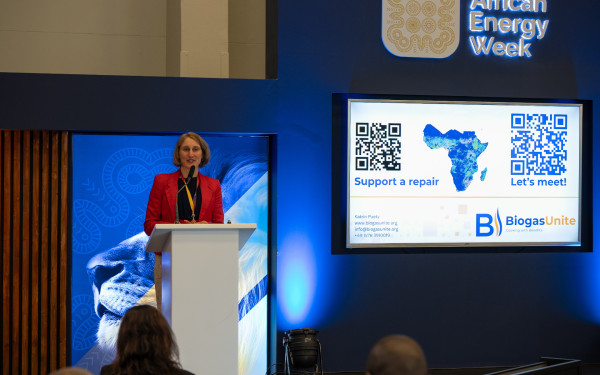
Africa-focused biogas company (B)energy re-launched BiogasUnite, a digital platform designed to boost the use of biogas for clean cooking in Africa, during a technical workshop at African Energy Week: Invest in African Energies 2024 on Tuesday. 

Katrin Puetz, Founder and Managing Director of (B)energy, said the company is seeking £780,000 from African and global investors to fund the adoption of BiogasUnite across the continent. Currently under trial in Uganda, the platform will provide a streamlined approach to connecting biogas consumers, technicians and energy stakeholders, according to Puetz. 

The initiative targets the repair of approximately 175,000 biogas cooking systems currently out of service due to maintenance challenges.  

(B)energy established partnerships for the platform with fifteen organizations in countries such as Nigeria, Sierra Leone, Benin, Ghana, Mali, South Africa, Zimbabwe, Kenya and Mozambique 

“Around 200,000 biogas cooking systems were installed in Africa since 2012, yet nearly 60% are now non-functional due to inadequate maintenance,” Puetz explained. 

The platform, enabled with a smart meter and app, provides users with direct access to technicians for stove maintenance, while enabling business owners to rent and monetize their cooking stoves, reducing the previously high upfront costs that hindered biogas adoption and scalability, according to Puetz. 

“Fifteen years ago, about 700 million people lacked access to clean cooking, and this number has since grown to nearly a billion,” stated Puetz, adding “The African Energy Chamber, with its extensive data and connections across the African energy sector, would be an ideal partner.”  

She said having governments as partners will help with job creation and drive sustainability of the oil and gas industry. 

Distributed by APO Group on behalf of African Energy Chamber.

Media files
African Energy Chamber
Download logo
Read more(B)energy Relaunches Africa-Focused Clean Cooking Solution
7 November 2024

Telviva Expands UK UCaaS Offering to Meet Rising Demand

Location: Business

Strong global demand for UCaaS sees Telviva expand its offering in the UK CAPE TOWN – Unified Communications as a Service (UCaaS) has enjoyed good growth globally and will continue to show upward momentum until at least 2030, according to leading research company Cavell Group. To meet this growing demand, leading unified communications and collaboration …

Read moreTelviva Expands UK UCaaS Offering to Meet Rising Demand
6 November 2024

Mashatile chairs inaugural meeting of newly appointed Human Resource Development Council

Location: News

Mashatile chairs inaugural meeting of newly appointed Human Resource Development Council

Deputy President Paul Mashatile has stressed the importance of reigniting efforts to drive human resource development initiatives, so as to urgently tackle the three critical challenges of unemployment, poverty and inequality.

The Deputy President was speaking as the Chairperson of the Human Resource Development Council (HRDC), where he led the inaugural meeting of the newly appointed council on Tuesday.

The newly appointed HRDC members include representatives from government, organised labour, organised business, as well as civil society.

According to the Deputy President’s office, the council’s main strategic mandate is to advise government on initiatives to develop the necessary skills to meet labour market demands over the next five years, ending in 2029.

“We look forward to your invaluable contribution and are convinced that your unique talents, abilities, and experiences will further assist to re-energise efforts to realise the strategic goals of the HRDC,” Mashatile said.

The meeting received presentations on the reconceptualised HRD Strategy and the Master Skills Plan, which will anchor policy documents for all human resource development interventions in the country.  

The plan outlines four strategic, outcome-oriented goals. These include enhancing early learning and educational outcomes, as well as increasing the employability of youth, who are not engaged in education, employment, or training (NEET).

The plan also highlights the need to enhance the responsiveness of the Post-School Education and Training (PSET) system to skill demands and improve governance, leadership and management within the public sector.

In addition, the meeting received updates on the establishment of the Just Energy Skills Forum, which is aimed at contributing to the transformation of the energy landscape in the country, in line with the dictates of climate change.  

This follows the commitment made by government to launch the Just Energy Transition (JET) Investment Plan 2023-2027 in 2022, where President Cyril Ramaphosa mandated the Presidential Climate Commission to engage with various key stakeholders in developing common approaches for South Africa.

A key element for the implementation of the JET Skills Portfolio is the establishment of a National Skills Advisory Forum, which is planned to be launched at the 5th HRDC Summit scheduled to take place this month.

The 5th HRDC Summit will bring together civil society groups, government, labour and business to deliberate on critical skills challenges facing the country.

The summit’s theme will focus on developing the emotional, intellectual and technical capabilities needed to succeed. The gathering will also touch on the reconceptualised HRD Strategy and the Master Skills Plan, as well as the launch of the JET National Skills Advisory Forum.

The summit will also discuss building foundations for learning and skills for a transformed economy, as well as building a capable State.

The HRDC is a national, multi-stakeholder advisory body chaired by the Deputy President and managed by the Ministry of Higher Education and Training.

The HRDC was established in 2010 to facilitate conditions that promote the optimal participation of all stakeholders in the planning, stewardship, monitoring and evaluation of HRD activities in the country.

One of the council’s key responsibilities is to build the HRD base required to ensure a prosperous and inclusive South African society and economy, focusing on the development of strategy. – SAnews.gov.za

Gabisile
Wed, 11/06/2024 - 10:48

346 views
Read moreMashatile chairs inaugural meeting of newly appointed Human Resource Development Council
6 November 2024

President Ramaphosa to conduct multi-pronged KZN visit

Location: News

President Ramaphosa to conduct multi-pronged KZN visit

President Cyril Ramaphosa is expected to embark on a visit to KwaZulu-Natal over the next three days.

The visit will start with the unveiling of the King Shaka Zulu statue at the King Shaka International Airport in Durban, where both the President and King Misuzulu KwaZwelithini will deliver addresses.

“His Majesty King Misuzulu KwaZwelithini and Premier Thamsanqa Ntuli will join the President in officiating this tribute to King Shaka kaSenzangakhona, the founding father of the Zulu nation, whose leadership and military strategy forged one of the most powerful kingdoms in Southern Africa.
 
“The unveiling of this statue aims to honour the King’s legacy and preserve his memory for future generations. The monument will serve as a symbol of unity, strength, and pride for the people of KwaZulu-Natal and the entire nation, celebrating King Shaka's contributions to Zulu history, culture, and identity,” the Presidency said in a statement.

The unveiling of the statue will be followed by discussions with the provincial executive. 

“The President will be accompanied by relevant Ministers and Deputy Ministers in this engagement, which is part of a new series of interactions between the President and provinces aimed at enhancing intergovernmental coordination and improving service delivery, in line with the priorities of the 7th Administration.

“The provincial leadership will present to the President its five-year programme that will respond to the national priorities of securing inclusive economic growth, reducing poverty and building a capable and ethical State.

“The meeting will also discuss interventions to improve service delivery at local government level,” the statement said.

This engagement will conclude with a meeting with the Presidential eThekwini Working Group.

“[President Ramaphosa] will be updated on the work being done to support and accelerate efforts by the eThekwini Municipality to improve service delivery, improve business confidence, and reposition eThekwini as an investment and tourism hotspot.

“Established in February 2024, the Working Group represents an intergovernmental collaborative approach to addressing challenges in local government, and includes active participation from all levels of government, the private sector, State-owned enterprises, organised labour and civil society,” the Presidency explained.

The visit to the province will culminate with an engagement with residents at the Presidential Imbizo.

“On Friday, 8 November, President Ramaphosa and members of national, provincial and local government will hear directly from citizens and organised civil society formations during the Presidential District Development Model (DDM) Imbizo, held under the theme 'Leave No One Behind'.

“The imbizo is a platform that allows citizens to make proposals and ventilate problems directly to the leadership, who in turn respond to these inputs and set out plans for developing communities and the economy in the area visited by the President,” the statement concluded. – SAnews.gov.za

NeoB
Wed, 11/06/2024 - 12:14

170 views
Read morePresident Ramaphosa to conduct multi-pronged KZN visit
6 November 2024

AEW 2024 Opens in Cape Town with Clarion Calls to Drill, Invest and Drive Projects Forward

Location: News
African Energy Chamber

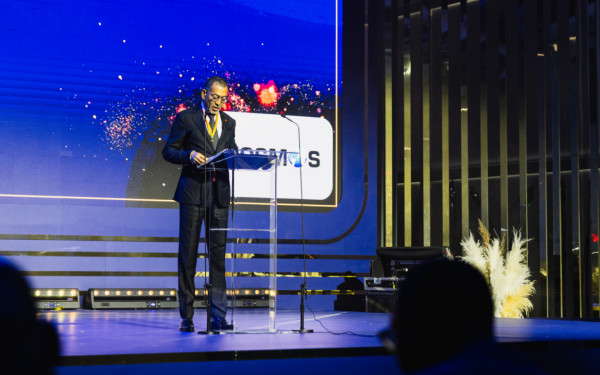
The African Energy Week (AEW): Invest in African Energies 2024 conference officially opened with calls from the industry to ‘drill baby drill.' Citing the need to enhance climate justice through the development of domestic energy resources, industry leaders from across the continent underscored the need to sign deals, foster partnerships and drive projects forward.

With over 600 million people living without access to electricity and 900 million people without access to clean cooking solutions, the AEW: Invest in African Energies opening ceremony – sponsored by Kosmos Energy – positioned the oil and gas industry as the catalyst for making energy poverty history.

“Our priority must continue to be to end energy poverty for all Africans as well as to create an enabling environment where the oil and gas industry can thrive,” stated Diamantino Pedro Azevedo, Minister of Mineral Resources, Petroleum and Gas, Angola. “That is also our priority in Angola. The oil and gas industry will be a fuel for socioeconomic development.”

For the African Petroleum Producers Organization (APPO), prioritizing the development of domestic markets will be integral for eliminating energy poverty. APPO Secretary General Dr. Omar Farouk Ibrahim stated that “Today, APPO is focused on creating an integrated, regional and continental energy market. To create markets, we need to create cross-border, regional and inter-regional infrastructure. One of our projects we are working on is the Central African Pipeline System, which aims to link countries through crude oil and gas pipelines.”

Adding to these remarks, Kgosientsho Ramokgopa, Minister in the Presidency, Energy and Electricity, South Africa, said that “Today, Africa's path forward lies in seizing control of our energy destiny. Our resources make us capable of not just powering our homes and industries but a new Africa. This will require unity of purpose and a collective resolve.”

Despite project progress, financing remains a central challenge to oil and gas development in Africa. According to Mary Bruce Warlick, Deputy Executive Director of the International Energy Agency, “African countries account for 20% of the world's population but only 4% of global investment. Energy investment has been falling across the continent over the past decade. Africa needs $200 billion to achieve its climate and energy goals by 2030.”

To address these challenges, the African Export-Import Bank (Afreximbank), in collaboration with APPO, established the Africa Energy Bank, an institution which offers financing for African oil and gas projects. According to Benedict Oramah, President & Chairman of the Board, Afreximbank, “The Africa Energy Bank is the first multilateral sector bank in Africa. We expect the bank to significantly contribute towards bridging the funding gap in the African energy sector. It will be open for business to have access to funding by February in 2025. We invite you to send in your applications to be the first transaction by the Africa Energy Bank, which will be ready in a few months' time.”

The Africa Energy Bank supports energy companies drive projects forward. For independents such as Oando, this presents a strategic opportunity to expand their oil and gas portfolios in Africa. Wale Tinubu CON, Group Chief Executive Officer, Oando PLC, said that “The oil and gas landscape is changing. Between 2015 and 2023, there have been more than $7 billion of divested assets in Africa. In terms of M&A activity, there have been a focus on onshore and shallow water acquisitions and we have seen a rise of indigenous joint ventures and collaborations.”

Stepping into this picture, the AEW: Invest in African Energies conference convenes under a goal to make energy poverty history. By uniting the industry in Cape Town, the event fosters partnerships, promotes deal-signing while creating a collaborative environment for companies to do business in Africa's energy sector.

“It is the time for us to tell the African story, written from Cape to Cairo and Kampala to Dakar. We will forge a path that shapes the future. We have work to do in Africa. We sign baby sign so that we can drill baby drill. Let's not stop getting projects signed,” stated NJ Ayuk, Executive Chairman, African Energy Chamber.

Distributed by APO Group on behalf of African Energy Chamber.
Media files
African Energy Chamber
Download logo
Read moreAEW 2024 Opens in Cape Town with Clarion Calls to Drill, Invest and Drive Projects Forward
6 November 2024

Statement by Health Committee Chairperson and National Economic Development and Labour Council (NEDLAC) on Consultation on Tobacco Bill

Location: News

Republic of South Africa: The Parliament
Download logo

The Chairperson of the Portfolio Committee on Health, Dr Sibongiseni Dhlomo, and Ms Lisa Seftel, the Executive Director of the National Economic Development and Labour Council (NEDLAC) have endorsed a consultation process between NEDLAC and the Department of Health on the Tobacco Products and Electronic Delivery Systems Control Bill (B33-2022). This is so that the social partners at NEDLAC, organised business, organised labour and community organisations represented at NEDLAC can engage on the draft Bill.

Following a committee mandate directing the Chairperson to engage NEDLAC following concerns with the consultation processes around the Bill, the Chairperson held an engagement with the NEDLAC Secretariat on 5 November 2024. The Chairperson appreciated the commitment exhibited by NEDLAC to consultation and is of the view that it embodies the founding values of consultation enshrined in our Constitution and the NEDLAC Act.

“It is important to categorically underline that Parliament and NEDLAC were never at odds and that the committee respects and will always promote the council's importance as a vehicle where government, labour, business and community organisations will cooperate, through problem-solving and negotiation, on economic, labour and development issues, and related challenges facing the country,” said Dr Dhlomo.

In line with this, the Chairperson and the Executive Director have urged the Department of Health to commit to the expedited process that the NEDLAC secretariat has set up where the NEDLAC social partners can be substantially consulted on the Bill. This will result in a consolidated NEDLAC report, which will form part of the inputs when the committee considers the Bill.

Furthermore, it is necessary to highlight that the commitment to a consultation process between NEDLAC and the department does not preclude the committee from continuing with its public participation process, which continues this weekend in KwaZulu-Natal.

Distributed by APO Group on behalf of Republic of South Africa: The Parliament.

Read moreStatement by Health Committee Chairperson and National Economic Development and Labour Council (NEDLAC) on Consultation on Tobacco Bill
6 November 2024

Walking Joburg’s Biggest, Baddest River: Gold Dust and Gunk

Location: News

Day 1 on the Klip River: Selby to Riverlea

Read moreWalking Joburg’s Biggest, Baddest River: Gold Dust and Gunk
5 November 2024

People With Disabilities Demand Better Access to Public Transport

Location: News

The Disability Revolution group wants the City of Cape Town to include specific measures for people with disabilities in its transport planning

Read morePeople With Disabilities Demand Better Access to Public Transport
4 November 2024

Committee established to address issues at Hartbeespoort Dam

Location: News

Committee established to address issues at Hartbeespoort Dam

A multi-stakeholder steering committee has been established to address issues at Hartbeespoort Dam.

Water and Sanitation Deputy Minister, David Mahlobo, and North West Premier, Lazarus Mokgosi, launched the committee to look into different issues affecting the stakeholders operating their business at state-owned land around Hartbeespoort Dam and settlements around the water resource.

By bringing together stakeholders from various sectors, the committee seeks to encourage economic development and opportunities for all and to ensure the sustainability and health of the Hartbeespoort Dam.

The committee will also address disputes among businesses operating at the dam and will strive to promote the harmonious use of the state-owned land and access to dam economy.

The committee, to be co-chaired by the Department of Water and Sanitation and North West Provincial Government, will include the representatives from the North West House of Traditional and Khoi-San Leaders, Madibeng Local Municipality, civic organisations, non-profit organisations and non-governmental organisations, as well as business, environmental and religious organisations.  

Mahlobo emphasised the importance of collaboration and mutual understanding in addressing the complex challenges facing the Hartbeespoort Dam community.

“The Department of Water and Sanitation views this initiative as a critical step towards resolving long-standing issues and promoting inclusive economic growth and development in the area.

“As the steering committee begins its work, stakeholders and communities can look forward to positive transformations in the Hartbeespoort Dam area. The committee will further contribute to the ongoing efforts to restore the dam's ecosystem and ensure its long-term health,” Mahlobo said.

Mahlobo added that the collaborative effort demonstrates government's commitment to engage with various stakeholders and work towards solutions that benefit all.

He said the Department of Water and Sanitation remained committed to transparency and open communication and will continue to provide updates on the progress of the steering committee and its initiatives, ensuring that the members of the public are informed about developments in the Hartbeespoort Dam area.

The department has developed a comprehensive lease policy to manage leases in the area and all its dams.

The policy seeks to address previous gaps and ensure transparency for the businesses and individuals utilising state-owned land under the custodianship of the department.

The department advertised an Expression of Interest with a closing date of 31 July this year, inviting all interested parties to apply for the use of state land at its dams.

Mokgosi highlighted the province's commitment to support initiatives that will bring development and improvement to the area for local residents. – SAnews.gov.za

GabiK
Mon, 11/04/2024 - 11:08

123 views
Read moreCommittee established to address issues at Hartbeespoort Dam
4 November 2024

Lawyer Charged With Attempted Murder Released on Bail

Location: News

Rael Kassel’s ex-partner fears for her safety

Read moreLawyer Charged With Attempted Murder Released on Bail
4 November 2024

Coca-Cola Beverages Africa Invests $50 Million in Namibia, Boosting Production Capacity by 30%

Location: News
Coca Cola Beverages Africa

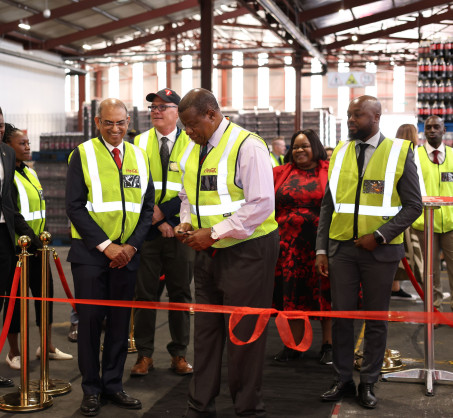
Coca-Cola Beverages Africa (CCBA) (www.CCBAGroup.com) has invested $50 million in a new bottling line in Namibia, capable of producing 27,000 bottles per hour. This upgrade will increase the plant's output capacity by 30% and stimulate growth throughout the company's value chain.

The investment also includes the installation of a water treatment plant with state-of-the-art water recovery technology, designed to reduce water consumption. Additionally, the integration of advanced technology, including artificial intelligence, will require skills training for employees, contributing to the development of a future-ready workforce for both the business and the country.

“We've ensured that this production line goes beyond output numbers,” said Pottie de Bruyn, General Manager of Coca-Cola Beverages Africa in Namibia. “It's about creating shared opportunities across the value chain. The increased production also provides a boost to local businesses that supply us with raw materials and services.”

Sunil Gupta, Chief Executive Officer of CCBA, echoed the sentiment, adding, “This investment is a clear demonstration of our continued belief in the future of Namibia.”

Gupta also highlighted CCBA's broader goals: “As a customer-centric, digitally enabled, growth-driven business, we are committed to excellence across our value chain. Efficient operations allow us to offer faster delivery and superior service. This new production line is another step in our journey to achieve even greater levels of execution excellence.” 

Distributed by APO Group on behalf of Coca Cola Beverages Africa.

Media Contacts:
Enid Johr 
PACS Director 
CCBA in Namibia 
Tel: +264 81 778 5381 
Email: ejohr@ccbagroup.com 

Wendy Thole-Muir 
Head: Reputation and Communication 
Coca-Cola Beverages Africa  
Tel: +27 83 795 8524 
Email: WThole-Muir@ccbagroup.com 

Judith Wilhem
+264813473538

Follow us on:
LinkedIn: https://apo-opa.co/3AsnQje

About CCBA:
CCBA is the 8th largest Coca-Cola bottling partner in the world by revenue, and the largest on the continent. It accounts for over 40% of all Coca-Cola products sold in Africa by volume. With over 18,000 employees in Africa, CCBA services more than 720,000 customers with a host of international and local brands. The group was formed in July 2016 after the successful combination of the southern and east Africa bottling operations of the non-alcoholic ready-to-drink beverages businesses of The Coca-Cola Company, SABMiller plc and Gutsche Family Investments. CCBA shareholders are currently: The Coca-Cola Company 66.5% and Gutsche Family Investments 33.5%. CCBA operates in 15 countries, including its six key markets of South Africa, Kenya, Ethiopia, Uganda, Mozambique and Namibia, as well as Tanzania, Botswana, Ghana, Zambia, the islands of Comoros and Mayotte, Eswatini, Lesotho, and Malawi.

Learn more at  https://www.CCBAGroup.com

Media files
Coca Cola Beverages Africa
Download logo
Read moreCoca-Cola Beverages Africa Invests $50 Million in Namibia, Boosting Production Capacity by 30%
4 November 2024

KFC Mini-Cricket Programme Continues To Shape Lives and Communities: Celebrating 15 Years Of Impact

Location: Sport

JOHANNESBURG: KFC Mini-Cricket is more than just a sports initiative, it has become a catalyst for social change, nurturing young...

Read moreKFC Mini-Cricket Programme Continues To Shape Lives and Communities: Celebrating 15 Years Of Impact
3 November 2024

Mpumalanga High Court to open for business

Location: News

Mpumalanga High Court to open for business

The Department of Justice and Constitutional Development (DOJ&CD) has advised the public that the Mpumalanga High Court will be open for business on Monday.

The Mpumalanga High Court was recently closed after an inspection by the Department of Labour and the subsequent findings that highlighted health and safety issues with the building.

On Saturday, the DOJ&CD met with the Departments of Employment and Labour (DEL), Public Works and Infrastructure (DPWI), Independent Development Trust (IDT) and the Office of the Chief Justice (OCJ) to determine a course of action in response to issues identified during a recent inspection of the Mpumalanga High Court conducted by DEL.

The prohibition notice was issued on 30 October 2024.

“Following representation made by the departments in relation to the areas identified to be addressed, it was resolved that the prohibition notice shall be suspended for a period of seven working days commencing on Monday, 04 November 2024.

“The suspension of the implementation of the prohibition notice will provide an opportunity for the department to address the issues raised in the prohibition notice,” DOJ&CD said.

The concerns raised by DEL relate to the following specific three areas:
•    Ensuring proper ventilation.
•    Provision of a report confirming the integrity of the structure.
•    Provision of the occupancy certificate.

The departments provided extensive feedback to DEL on matters relating to the prohibition notice and progress thereof.

“It is on the basis of the above that the extension was granted. The department remains committed to resolve the issues raised by DEL including ensuring the safety of staff, judiciary and members of the public.

“The discussions are still ongoing between the parties including the exchange of expert and technical reports to find a long-term solution to matters that were raised. During the suspension period, the department wishes to advise the public that the court will remain open on Monday, 04 November 2024,” DOJ&CD said. -SAnews.gov.za

nosihle
Sun, 11/03/2024 - 11:12

71 views
Read moreMpumalanga High Court to open for business
31 October 2024

Storm at SA Weather Service Over Dodgy Tenders

Location: News

This vital service is vulnerable to collapse

Read moreStorm at SA Weather Service Over Dodgy Tenders
31 October 2024

SA working to promote inclusive growth, deal with high cost of living

Location: News

SA working to promote inclusive growth, deal with high cost of living

The South African government seeks to attract foreign investment to foster inclusive growth and tackle structural barriers faced by marginalised communities.

This is according to Deputy President Paul Mashatile, who was briefing Members of Parliament (MPs) in the National Assembly on Thursday. 

The Deputy President addressed several topics, including his recent working visit to Ireland and the United Kingdom.

He reflected on the keenness of investors from these two countries to tap into various South African sectors such as finance, energy, transportation and infrastructure development.

“The overall aim of this engagement was to reassure the world and investors that our country is stable and open for business. I must say, in all of these meetings, we were warmly received,” he told Parliament. 

In the United Kingdom, the Deputy President said he met with more than 20 institutional investors, who are already investing in South Africa.  

“We also engaged with the government of the United Kingdom to strengthen and renew the historically deep and rich bilateral relations between our two countries by exploring new initiatives and opportunities for enhancing trade and investments.” 

Following the working visit, government agreed to strengthen existing initiatives while exploring new opportunities to maintain strong trade and investor interest. 

“We anticipate that the upshot of our visit will contribute to an increase in the UK investors who have shown a strong interest in doing business in South Africa,” Deputy President Mashatile explained. 

In addition, he said the relevant ministerial teams presented opportunities in State-owned entities (SOEs), particularly Eskom and Transnet. 

“They dealt with issues of energy, rail and port projects and water infrastructure projects, including the handing of the investment project book that was developed by Infrastructure South Africa.”

However, the Deputy President believed that government alone would not be able to achieve the objectives of growing the economy and creating jobs. 

“As a result, we’re taking these steps to engage the private sector, particularly also foreign investors who are interested to come and invest in our country.”

The State is working hard to ensure the regulatory frameworks throughout government are friendly for investors who can come and invest. 

“So, we were quite impressed that many of those that we met were very happy. They were saying they will be taking advantage in South Africa so that we can create the necessary jobs that we want to create and empower many of our people, particularly young people,” Mashatile said.

G20 Presidency

The Deputy President is of the view that South Africa should use its G20 Presidency to prioritise its objectives of growing an inclusive economy that creates jobs. 

Preparations are underway for South Africa’s G20 Presidency and hosting the G20 Summit in 2025. South Africa is expected to take over Chair of the G20 from December 1 this year from Brazil. 

Mashatile said the State is determined to deal with the question of the high cost of living and professionalisation of the public service. 

“But we want to use that also to benefit the continent. So, what South Africa will do will ensure that, as we Chair the G20, [this] benefits the entire African continent, and we are looking at programmes of infrastructure.

“When leaders of various countries come here, they come with huge delegations, including business people, and therefore they look for opportunities. But we will make sure that there is sound infrastructure to be able to ensure that people can have meetings throughout the country.” 

The Deputy President announced that government has decided that it will concentrate meetings in one place, so the 2025 summit benefits the entire country. 

Skill shortages

Mashatile acknowledged that the local labour supply does not meet the demand for management personnel, professionals, engineers, technicians, educators, and information and technology experts, necessitating the temporary importation of high-level skills.

However, various measures are being implemented to improve local skills, including updating job listings, promoting the critical skills list, and enhancing vocational training in digital skills. 

Mashatile explained that the National Skills Fund directs resources to in-demand sectors and that the Human Resource Development strategy aims to match supply and demand for skilled workers. 

Meanwhile, he said collaboration among industry, government, education, and non-profits is crucial for effective skills development and local employment growth. – SAnews.gov.za


Gabisile
Thu, 10/31/2024 - 15:21

77 views
Read moreSA working to promote inclusive growth, deal with high cost of living
31 October 2024

Green Building Trends in Africa: Africa’s Urbanization Provides the Opportunity to Embrace Green Building

Location: News
Bureau Veritas

By Julien Fouilliart-Building & Infrastructure Growth Leader Middle East, Caspian and Africa, Bureau Veritas (https://group.BureauVeritas.com)​.

Globally, buildings are responsible for a substantial share of energy, electricity, water and materials consumption using between 35-40% of energy demand and contributing 37 per cent of world carbon dioxide (CO2) emissions. Including the manufacturing of building materials.

The 2022 updated Global Buildings Climate Tracker (GBCT) (https://apo-opa.co/3YLJiZG) shows that there is a significant gap between the current state and the desired decarbonization path which is concerning. In effect it means that to align with the 2030 milestone, an annual increase of ten decarbonization points is now necessary which is a substantial jump from the six points per year anticipated starting in 2015.

In 2019 in Africa, buildings accounted (https://apo-opa.co/4e8NIhN) for 57% of total final energy consumption and 32% of total process-related CO2 emissions.

Despite continental issues of poverty, unemployment and rapidly developing informal settlements among other issues, many countries in Africa are embracing green, sustainable building practices.

With its burgeoning population, expected to add some  1.2 billion people by  2050 (https://apo-opa.co/3AxgxXo) Africa faces rapid urbanization.

Urbanization provides an opportunity for countries across Africa to embrace green building practices, access available international green funding opportunities, and set a foundation for sustainability for future generations.

In 2023 the Africa Regional Network of World Green Building Council (WorldGBC) launched the Africa Manifesto for Sustainable Cities and the Built Environment, which sets out the actions that  policymakers and businesses across the continent need to take to achieve a net zero carbon, healthy, resilient, equitable, socially- and economically-inclusive built environment for everyone, everywhere.

Achieving these goals requires policymakers and business leaders across the continent to recognise the untapped potential of the built environment. But this can only be realized with the implementation of policies that support transformative action, through intense collaboration between governments, city and regional leaders, businesses and investors. 

South Africa is leading Africa's green building sector (https://apo-opa.co/3YLdq7N). It has over two million square meters certified green buildings that reduce water consumption, electricity, and waste disposal; 50 certified projects are projected to result in an annual saving of 76 million kilowatt hours which is equivalent to the electricity needs of 5,300 households every year.

South Africa has its own National Standard 10400 Part XA that deals with optimizing energy efficiency in buildings and in the light of this the Green Star South Africa and EDGE green building tools have been adapted and are widely used in the country. International rating systems like LEED and WELL are also used.

The scope of green construction in Egypt has been slow to grow but Egypt has two local rating systems in place called TARSHEED and the Green Pyramid Rating System. These, along with EDGE, LEED and WELL are used in various projects.

The Nigerian government has pledged to achieve a 20% reduction in its greenhouse gas emissions by 2030 and 45% with international support. Green building will likely be a big part of this change.

This country's National Building Code, developed by the National Council on Housing and Urban Development, and the Building Energy Efficiency Guideline (BEEG), also support the agenda of sustainable development by setting requirements for occupant health and safety, use of local and safe building materials and energy efficiency among other criteria.

Morocco has several legal provisions in place to promote sustainability and environmental protection through construction impact assessments for new building projects as well as energy-efficient construction requirements applicable to most residential and commercial projects. Several projects in the country have also achieved LEED green building credentials.

It also has several renewable energy projects such as the Noor Midelt Solar Plant and Tarfaya Wind Farm, one of the biggest wind farms in the continent.

As the drive towards Net-Zero heightens more African countries are joining the African Regional Network of the World Green Building Council. NGOs and other industry professionals are setting up green building councils in South Africa, Egypt, Tunisia, Nigeria, Botswana, Zimbabwe, Namibia, Mauritius, Tanzania, Kenya, Cameroon and Uganda.

One of the big hurdles restraining a sustainable development movement in the construction industry is a lack of awareness for practical sustainable actions among many developers and investors.

In South Africa there is a broad awareness of Green Buildings and the market share of certified buildings among all new builds is increasing. The 2021 International Finance Corporation's (IFC) Green Building Market Stakeholder Assessment for South Africa showed that on the supply side, key motivating factors for Green Buildings are their reduced carbon footprint increased end user demand and increased marketability.

From the occupier's perspective the motivating factors for buying or leasing a Green Building are lower utility bills and lower operating costs. Yet, at a residential level occupiers are only willing to pay a two percent premium for these benefits.

The IFC report points out that the perceived cost of construction and certification of green buildings are also considered major obstacles to the expansion of certified Green Buildings in South Africa (https://WorldGBC.org/). Its research indicates that those in the know estimated the additional construction cost to be 10% or higher, while those unfamiliar with Green Buildings are likely to significantly overestimate costs.

Currently, four out of six financial institutions provide financing for Green Building projects in some form or another and three require a certification to approve the loan. The portfolios of two consist of retrofitting existing buildings into Green Buildings; two of commercial and industrial Green Building construction finance and only one residential Green Building construction finance. Of the two FI's that currently do not fund any Green Building one plans to do so in the future while the other does not see this as part of their strategy.

The investment into green construction (https://apo-opa.co/4e8NYgL) has multiple benefits; it facilitates growth while addressing issues like employment, climate change, and poverty.

However, more needs to be done to improve the understanding of the benefits of green buildings such as lower operational costs, increased ROI as well as an overall improvement in occupant health and wellbeing. Financial institutions need to do more to support green construction. Those which have pledged to lower their investments in carbon producing industries could create green bonds or funds for the African construction sector. Government's need to provide policy support along with incentives to catalyze market development.

 All this suggests that there is still a sizable information gap regarding the cost, certification and benefits of Green Building and that further knowledge dissemination efforts are needed to close it.

Distributed by APO Group on behalf of Bureau Veritas.

About Julien Fouilliart:
Julien Fouilliart is a seasoned business development professional with 15 years of experience in international, multicultural, and cross-sector environments. He currently leads the growth of Bureau Veritas' Building & Infrastructure market across the Middle East, Caspian, and Africa regions. Julien holds a degree in Mechanical Engineering from Belfort University in France. He is based in Kenya and has a deep passion for the African continent. Julien has played a key role in the development of large and iconic infrastructure projects across the region. He has an extensive international background, having worked in France, China, Spain, Belgium, and the United Kingdom. His experience includes collaborating with global companies and public institutions to drive business growth in sectors such as aerospace, IT, rail, building, and transport infrastructure.

Media files
Bureau Veritas
Download logo
Read moreGreen Building Trends in Africa: Africa’s Urbanization Provides the Opportunity to Embrace Green Building
31 October 2024

Cape Town Is Losing Its Trees

Location: News

As global temperature records continue to be broken, cities need to move fast to protect residents from heat stress. Planting trees seems the simplest solution

Read moreCape Town Is Losing Its Trees
31 October 2024

Treasury optimistic about economic outlook

Location: News

Treasury optimistic about economic outlook

National Treasury expects improved growth prospects for the South African economy, despite slowing projected growth of some 1.1% in 2024 – down from the projected 1.3% earlier this year.

Real Gross Domestic Product (GDP) growth is projected to improve at some 1.1% in 2024, up from the 0.7% in 2023.

In its Medium-Term Budget Policy Statement (MTBPS), National Treasury said economic growth was being “weighed down by stop-start economic growth and stubborn inflation in the first half of the year”.

“The economy has since strengthened in response to the suspension of power cuts since March 2024, improved confidence following the formation of the Government of National Unity in June, better than expected inflation outcomes in recent months and reduced borrowing costs. All these factors are expected to continue supporting the economy over the period ahead.

“The pace of [GDP] growth is still being limited by persistent – though gradually easing – constraints, particularly in logistics infrastructure. Faster growth depends largely on maintaining macroeconomic stability, the continued implementation of structural economic reforms, improving State capabilities and supporting higher infrastructure investment,” the MTBPS stated.

Treasury explained that although risks persist, global risks are “weighted to the downside, while risks to the domestic outlook appear more balanced compared with the 2024 Budget Review assessment”.

“Global growth may weaken due to financial market volatility, tightening conditions for developing economies, slower disinflation from rising commodity prices and a prolonged contraction in China’s property sector. On the domestic front, food prices are vulnerable to weather-related shocks and logistical challenges. 

“Positive domestic risks include the possibility of a quicker pace of disinflation and interest rate reductions than assumed in the baseline forecast, which would boost demand. Stable electricity supply and faster progress on reforms could boost business and consumer confidence,” Treasury said.

The department warned, however, that fiscal risks “remain significant though somewhat more balanced than a year ago” and that the materialisation of these risks could be a threat to “fiscal projections, with negative consequences for investment and economic growth”.

“Despite the downward revision to growth for the current year, there is cautious optimism for the medium-term outlook as the early benefits of reform implementation continue to materialise. 

“The stabilisation of electricity supply has improved the overall investment climate. This positive momentum will be sustained by a new phase of Operation Vulindlela, which aims to accelerate structural reforms implementation. 

“To support these efforts, it will be essential to maintain clear and stable macroeconomic policies while strengthening state capability and supporting investment in growth-enhancing public infrastructure,” the MTBPS stated.

Global outlook

On the international front, global growth is projected to slow marginally from 3.3% in 2023 to 3.2% in 2024 and 2025.

“Slowing inflation has opened the way for major central banks to ease monetary policy. Lower interest rates and strong investment in technology, particularly in emerging Asia, are expected to support growth,” Treasury said.

The department added that overall risks to growth are “to the downside”.

“Fiscal policy has begun to contract in some countries, in part to manage the rapid increase in sovereign debt levels since the COVID-19 pandemic, and some countries are in debt distress.

“Persistent geopolitical tensions continue to flare, with potentially far-reaching effects on global trade, and the threat of escalating conflict in the Middle East remains a concern. The years-long downturn in China’s property sector, notwithstanding new stimulus support, could continue to weaken Chinese growth,” the MTBPS stated.

Economic growth in advanced economies is forecast to reach some 1.8% in the same period with growth in emerging and developing economies – including South Africa’s BRICS partners – projected at 4.2%.

In Sub-Saharan Africa, this is projected at 3.6% in 2024 and 4.2% in 2025.

“Global equity prices have risen as inflation decelerates, accompanied by interest rate cuts that are expected to continue into 2025. Further declines in bond yields are consequently anticipated, creating a favourable environment for emerging market assets. 

“Declining production and shipping of commodities, particularly oil, has dampened the outlook for some emerging and developing economies, including in Sub-Saharan Africa. Oil prices are anticipated to fall slightly in 2024, given weak global demand, despite production cuts agreed by major producers. 

“Global food prices are also projected to fall, supported by record-high grain production, reducing inflationary pressures,” the MTBPS explained. – SAnews.gov.za

Matona
Thu, 10/31/2024 - 05:44

2 views
Read moreTreasury optimistic about economic outlook
30 October 2024

Government anchors economic growth strategy on four key areas

Location: News

Government anchors economic growth strategy on four key areas

Over the medium term, government will anchor its economic growth strategy on four key areas in order to support inclusive growth.

This as Finance Minister Enoch Godongwana announced in the Medium Term Budget Policy Statement (MTBPS) speech that economic growth projections have been revised down from 1.3% to 1.1%.

Godongwana delivered the MTBPS speech in Parliament on Wednesday.

“[Our] fiscal strategy sets to out to achieve the fiscal sustainability needed to support inclusive economic growth.

“It carefully weighs competing demands, making the necessary trade-offs between what is most urgent and what must wait given the fiscal constraints. The strategy also supports critical social services and addresses the significant fiscal and economic risks that lie ahead,” he said.

The four key pillars are:

  • Maintaining macroeconomic stability
  • Implementing structural reforms
  • Building state capability
  • Supporting growth-enhancing public infrastructure investment.

“Pillar one is about a stable, transparent and predictable macroeconomic framework that creates a conducive environment for businesses and households to save, spend, invest and grow.

“The National Treasury has the responsibility for oversight and implementation of the macroeconomic policy framework. Anchoring inflation expectations is important for our macroeconomic policy framework, and this what the Reserve Bank is responsible for.

“To strengthen this framework, we continue to work on assessing the suitability of monetary policy targets, and to improve the levers of macroeconomic policy coordination,” Minister Godongwana said.

The second pillar is aimed at the implementation of structural reforms and accelerating Operation Vulindlela.

“These will continue to strengthen the economy to be more productive and internationally competitive, accelerate inclusive economic growth and foster much-needed job creation.

“The first phase of Operation Vulindlela provides tangible evidence that structural reforms can reduce economic bottlenecks. It also demonstrates that government can collaborate effectively with business for the collective good,” he said.

In terms of supporting growth-enhancing infrastructure, Godongwana said this is about “effective infrastructure investment, to boost economic activity and enable higher growth over the medium term”.

“In this regard, we are implementing reforms that will create conditions to attract greater private sector participation. The reforms include mobilising significant private sector financing and technical expertise to augment the limited public sector capacity and capability.

“We are amending the PPP [Public Private Partnership] regulations to simplify requirements for undertaking these projects. The amended Treasury Regulation 16 will be published before the end of November for implementation in 2025/26. The Municipal PPP Regulations 309 will be finalised by June next year.

“We are establishing dedicated capacity to plan, prepare and design programmes that will generate a credible pipeline of projects that can be taken to the market,” he said.

Pillar four, according to the Minister, seeks to “build a capable state that delivers a reasonable and reliable standard of public service that will foster the necessary environment for more growth and jobs”.

“For this reason, additional funding is proposed for Parliament and the Office of the Chief Justice, mostly to enhance operational capacity in the running of these important institutions. With the Local Government Elections due in 2026, funds have been set for the Independent Electoral Commission to conduct smooth elections. 

“Additional funding for the South African Revenue Service is proposed. This is to help the organisation build on its successes by driving programmes to enhance the efficiency of revenue collection, whilst enhancing compliance and facilitating legitimate trade,” he said. – SAnews.gov.za

NeoB
Wed, 10/30/2024 - 14:41

344 views
Read moreGovernment anchors economic growth strategy on four key areas
30 October 2024

Afreximbank Calls for Increased Collaboration to Accelerate the Green Energy Transition in Africa

Location: News
Afreximbank

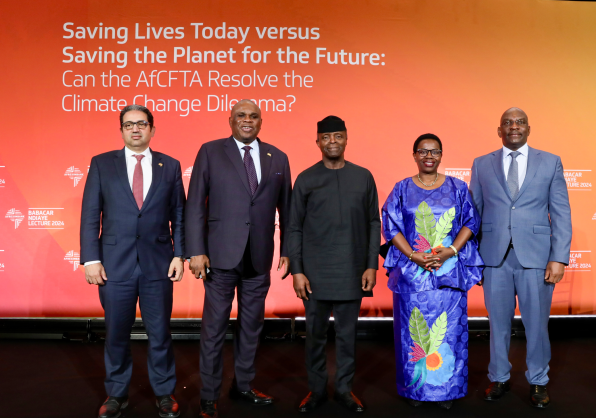
The eighth Babacar Ndiaye Lecture held at the Four Seasons Hotel in Washington D.C., on 26 October 2024, under-scored the need for African nations to strike a balance between short-term development imperatives and long-term climate goals. 

Under the theme “Saving Lives Today versus Saving the Planet for the Future: Can the AfCFTA Resolve the Climate Change Dilemma” discussions centred on how the African Continental Free Trade Area (AfCFTA), Africa's most ambitious trade initiative, could serve as a vehicle for economic growth and environmental sustainability, positioning the continent as a leader in the global green transition.  

The Lecture drew a distinguished audience of policymakers, academics, financial experts and climate advocates.  

Speaking about Dr. Babacar Ndiaye in his opening remarks, H.E. Professor Benedict Oramah, President and Chairman of the Board of Directors of Afreximbank Group, said “Dr Babacar Ndiaye was most concerned by the long-term threats posed to humanity by climate change. He once said, "Climate change is the greatest threat to development, particularly in Africa, where millions of people depend on the environment for their livelihoods … Africa's economic transformation cannot happen without addressing climate change.”  

Dr. Ndiaye's reflection on the impact of climate change was spot-on and intellectually deep.” But, “disappointingly, the global debate on climate has been so much focused on emissions reduction with the question of reducing its impact on Africa and other developing countries always reduced to a footnote. A call for Africa to decarbonise, when the continent has not even carbonised, poses a serious threat to the socio-economic development of a gas-rich continent that has at least six hundred million people without electricity.” 

The African Continental Free Trade Area Agreement “is seen as a potent means of reducing carbon emissions as it is helping to domesticate industrial activities and minimise the carbon emissions caused by shipping of commodities to far-away lands for value addition and reshipping to Africa and elsewhere. We believe that The AfCFTA could offer a pathway to a just transition, enabling local industrial value addition while protecting the planet.”  

Professor Yemi Osinbajo, SAN, GCON, the Immediate Past Vice President of the Federal Republic of Nigeria, delivered a powerful address titled “Sustainable Infrastructure for Africa's Future: Harnessing Innovation and Partnerships.” He spoke passionately about the advantages of the AfCFTA and its potential to transform Africa's trade landscape, reduce carbon emissions and foster innovation in green industries. 

“There are two obvious advantages to a fully operational AfCFTA.The first is that 42% of African countries, aside from North Africa, now have legislation prohibiting the export of raw ores or minerals before being processed. This legislation gives African countries the benefit of jobs and revenues from local processing and manufacturing.  

“The second advantage of the AfCFTA is that shipping is a major source of carbon emissions. Under current trade practices, a large share of African raw materials are exported to other regions, where they are processed or manufactured into finished products, usually using fossil fuel power sources, before being shipped back to Africa for consumption. This cycle contributes to higher emissions and constitutes a loss for African countries that do not reap the value chain gain from beneficiation. Intra-African trade in finished goods will substantially reduce this massive cause of global emissions,” he said. 

The reduction of emissions by intra-African trade has been the subject of several empirical studies. Professor Osinbajo referred to a recent ECA/ CEPII study titled “Greening the African Continental Free Trade Area Agreement's Implementation" published in December 2023, which found, inter alia, that implementing the AfCFTA can boost intra-African trade by 35% in 2045 while increasing GHG emissions by less than 1%, compared to no AfCFTA or climate policies.  

These studies do not factor in using renewable energy sources in the processing and manufacturing of traded goods, an assumption of the Climate Positive Growth paradigm, which would again substantially reduce emissions.  

Professor Osinbajo cited mining bauxite in Guinea as an example. If Guinea, which has 25% of global deposits of bauxite, processed the bauxite it mines to aluminium with renewable energy in readiness for export, Guinea could save the world 335 million tonnes of carbon dioxide equivalent (CO2e) per year, which is approximately 1% of global emissions, and create 280,000 jobs and generate $37 billion of additional revenue. If it chooses to sell the aluminium within Africa, it will again save the huge shipping cost to countries thousands of miles away.  

A Bloomberg study done for the African Development Bank (AfDB) in 2021 on the manufacture of battery precursors found that manufacturing battery precursors in the Democratic Republic of the Congo (DRC), which has plenty of lithium and cobalt, is three times cheaper than manufacturing it in the US, EU and China. Manufacturing in the DRC would extend value chain opportunities to other African countries, they would need manganese from Zambia, Tanzania, Gabon and South Africa to contribute to its capacity to produce these battery precursors. Manufacturing using renewable energy could significantly reduce the cost of manufacturing. Africa's abundant renewable energy has very low seasonality or intermittency, making it possible to reliably provide a renewable baseload to power continuous industrial production.  

“The AfCFTA empowers African countries first to add value to materials and specialise in areas of national comparative advantage, and also to work together to trade more beneficially with the rest of the world,” said Prof Osinbajo. 

He futher said that “Most African countries depend on fossil fuels for their energy needs and for fossil fuel rich African countries, this is also a major source of export earnings and fiscal revenues. Ostensibly in keeping with their net zero obligations, there has been a growing trend amongst development finance institutions to withdraw from fossil fuel investment. These actions include the World Bank's decision to cease funding for upstream oil and gas development in Africa and the restrictions on financing downstream gas development by the European Union, the United Kingdom, and the United States. Clearly, the implications of these actions are dire, where there are no immediate alternative sources of power and the cost of the transition to cleaner fuels may be prohibitive. Some studies show that divesting from fossil fuels could reduce GDP by as much as USD$30 billion for Nigeria, USD$22 billion for Algeria, and USD$19.3 billion for Angola.” 

H.E. Dr Rania A Al-Mashat, Minister for Planning, Economic Development and International Co-operation, Arab Republic of Egypt said that while the “African continent is the least responsible for carbon emissions, it has the biggest burden in terms of financing climate change for developmental needs - such as food and water security, and access to energy. 

She called for greater collaboration with national and international stakeholders “We need to work together; we need to bring the experiences from other places so that Africa can push forward with respect to development and sustainable economic growth.” 

In her Goodwill Message, Ms. Amina J. Mohammed, Deputy Secretary-General of the United Nations and Chair of the United Nations Sustainable Development Group, spoke about the rapidly closing window to prevent the worst impacts of climate change. She addressed the fact that many African countries are mired in debt, exacerbated by extended crises with little access to long-term concessional financing to invest in sustainable development. 

“With adequate access to financial resources at a reasonable cost, renewables can dramatically boost economies, grow new industries, create jobs and drive development, including by reaching the over 600 million Africans living without access to power,” said Ms Mohammed. 

She also stressed the importance of prioritising inclusive policies that empower women and youth when building climate-resilient economies.  

“By harnessing the collective might of the AfCFTA, Africa can make strides in addressing both climate action and sustainable development by promoting regional integration and fostering green industrialisation.  

“The AfCFTA can help build climate-resilient economies while creating jobs, reducing poverty and strengthening food security.”  

The eighth Babacar Ndiaye Lecture also reinforced Afreximbank's commitment to leadership in financing sustainable infrastructure and trade policies across the continent. 

Distributed by APO Group on behalf of Afreximbank.

Media Contact: 
Vincent Musumba 
Communications and Events Manager (Media Relations) 
Email: press@afreximbank.com 

For more information, visit: www.Afreximbank.com  
Follow us on X | Facebook (https://apo-opa.co/3YJR7iS)| LinkedIn (https://apo-opa.co/3Cet3eR) | Instagram (https://apo-opa.co/4ht2qDa)

About the Babacar Ndiaye Lecture 
The Babacar Ndiaye Lecture is an annual event designed to foster dialogue around Africa's development challenges and explore practical solutions through policy, trade and diplomacy.  

The Lecture honours Babacar Ndiaye, a former President of the African Development Bank, for his visionary leadership in advancing Africa's economic growth. 

Afreximbank has hosted this Lecture every year since 2017 in honour of the late Dr. Babacar Ndiaye, the fifth President of the African Development Bank. Dr. Ndiaye transformed the Bank during his decade-long leadership and was also instrumental in establishing several other enduring Pan-African institutions, including Afreximbank, Shelter Afrique and the African Business Roundtable. 

About Afreximbank 
African Export-Import Bank (Afreximbank) is a Pan-African multilateral financial institution mandated to finance, facilitate and promote intra and extra-African trade. For over 30 years, the Bank has been deploying innovative instruments to deliver financing solutions that support the transformation of the structure of Africa's trade, accelerating industrialisation and intra-regional trade, thereby boosting economic expansion in Africa. A stalwart supporter of the African Continental Free Trade Area (AfCFTA), Afreximbank has in partnership with the African Union Commission and the AfCFTA Secretariat launched the Pan-African Payment and Settlement System (PAPSS) that was adopted by the African Union (AU) as the payment and settlement platform to underpin the implementation of the AfCFTA agreement. The AfCFTA Secretariat and the Bank have created a US$10 billion Adjustment Fund to support countries to effectively participate in the AfCFTA.  

At the end of December 2023, Afreximbank's total assets and guarantees stood at over US$37.3 billion, and its shareholder funds amounted to US$6.1 billion. Afreximbank has investment grade ratings assigned by GCR (international scale) (A), Moody's (Baa1), Japan Credit Rating Agency (JCR) (A-) and Fitch (BBB). Afreximbank has evolved into a group entity comprising the Bank, its impact fund subsidiary the Fund for Export Development Africa (FEDA), and its insurance management subsidiary, AfrexInsure, (together, “the Group”). The Bank is headquartered in Cairo, Egypt.  

Media files
Afreximbank
Download logo
Read moreAfreximbank Calls for Increased Collaboration to Accelerate the Green Energy Transition in Africa
30 October 2024

United Kingdom (UK) Visa Services in South Africa Are Now Available in PE/GQ Through VFS Global

Location: News

VFS Global
Download logo

VFS Global (www.VFSGlobal.com) are proud to announce that residents of South Africa, travelling to the UK can now book appointments to submit their visa applications through VFS Global's new state-of-the-art Visa Application Centres located in Cape Town, Durban, Johannesburg, Port Elizabeth and Pretoria.

Effective 22 October 2024, customers applying for a UK visa will be directed to VFS Global to book an appointment to complete their visa application. Customers will also have the option to choose additional services designed to make the application process easier.

Commenting on the launch of the new Centres, Mr. Alok Singhal, Head- Sub-Saharan Africa, VFS Global, said, “We are excited to embark on this new journey with UK Visas and Immigration here in South Africa. We have enjoyed a long-standing partnership with UK Visas and Immigration since 2003 and look forward to now bringing travellers from South Africa our best-in-class services.”

UK visa customers can now choose from a range of optional services offered by VFS Global to provide enhanced comfort and convenience. These include document upload assistance, Prime Time for application submission outside of business hours, SMS notifications, document checking service, and courier return of the passport once a decision has been made.

Customers can also submit their UK visa applications from the comfort and safety of their home, office or any other preferred location with our On Demand Mobile Visa service. VFS Global's Keep My Passport While Applying service allows customers to keep their passports once their application is submitted and biometrics have been enrolled. Customer will only need to re-submit their passport when a decision is reached.

The services can be booked in advance on https://apo-opa.co/4f4Yw1G or at the Visa Application Centre at the time of the appointment. These services are completely optional and have no bearing on the processing timeline and outcomes of visa applications.

As a partner to the UK Visas and Immigration since 2003, VFS Global offered visa services in 58 countries before the new contract and has now been awarded the contract to provide UK visa services in 142 countries worldwide. In the African region, VFS Global will provide Visa Application Centres for the UK in 31 countries, from October 2024.

UK Visa Application Centres in South Africa

Cape Town: 2 Long Street, 9th floor, nr 2 on Long Street, 8001

Port Elizabeth: Greyville House, 3rd Floor, Greyville House Building, Corner of Ring Road, Caper Road & Greyville Road, Greenacres

Durban: Glass House, 309 Umhlanga Rocks Drive, Umhlanga

Johannesburg: Rivonia Village, 3rd, Cnr Rivonia Boulevard and Mutual Road, Sandton, 2128

Pretoria: The Podium at Menlyn - 4th Floor, 43 Ingersol Rd, Lynnwood Glen, 0081

Website: https://apo-opa.co/4f4Yw1G

Business hours: 8 AM to 5 PM (Mon to Fri, except public holidays)

Application submission: 9 AM to 4 PM (Mon to Fri, except public holidays)

Passport collection: 12 PM to 3 PM (Mon to Fri, except public holidays)

Primetime submission and collection: 8 AM to 9 AM & 4 PM to 5 PM (Mon to Fri, except public holidays)

Distributed by APO Group on behalf of VFS Global.

Media Contact:
George Cherian
georgec@vfsglobal.com
communications@vfsglobal.com

About VFS Global:
As the world's leading outsourcing and technology service specialist, VFS Global embraces technological innovation including Generative AI to support governments and diplomatic missions worldwide. The company manages non-judgmental and administrative tasks related to applications for visa, passport, and consular services for its client governments, increasing productivity and enabling them to focus entirely on the critical task of assessment.

With a responsible approach to technology development, adoption and integration, the company prioritizes ethical practices and sustainability while serving as the trusted partner to 69 client governments.  Operating over 3,400 Application Centres in 153 countries, VFS Global has efficiently processed more than 297 million applications since 2001.

Headquartered in Zurich and majority owned through investment funds managed by Blackstone Inc, along with the Swiss-based Kuoni and Hugentobler Foundation and EQT, VFS Global is committed to creating value for all stakeholders and leading in responsible, innovative solutions making government services more effective and efficient.

Read moreUnited Kingdom (UK) Visa Services in South Africa Are Now Available in PE/GQ Through VFS Global
30 October 2024

KwaZulu-Natal not a haven for criminals, warns Premier

Location: News

KwaZulu-Natal not a haven for criminals, warns Premier

With the festive season approaching, KwaZulu-Natal Premier Thamsanqa Ntuli has sent a strong warning to criminals that the police will intensify efforts to prevent criminal activities from taking place in the province.

“KwaZulu-Natal is not a haven for criminals and police will do all in their power to curb criminality wherever and whenever it rears its ugly head,” Ntuli said.

Ntuli sent the warning during a crime crackdown in the Durban city centre, which led to the arrest of more than 30 people found without legal documentation to be in South Africa.

In a concerted effort to rid the Durban city centre of crime and criminal elements, Ntuli joined law enforcement authorities in a high-impact operation targeting shops employing undocumented foreign nationals on Tuesday.

The joint raid, led by Ntuli and the provincial Police Commissioner, Nhlanhla Mkhwanazi, included an inspection of foreign-owned spaza shops and establishments suspected of selling counterfeit goods.

The raid highlighted the provincial government’s commitment to making Durban a safer place for residents, business owners, and visitors.

With increased vigilance and coordination between provincial authorities and law enforcement agencies, Ntuli said KwaZulu-Natal aims to ensure that criminal elements are rooted out and that communities feel safe in their own neighbourhoods.

Ntuli affirmed that the operation is just one of many measures to ensure a secure environment for citizens and tourists.

The Premier emphasised the police will intensify their efforts to prevent criminal activities from taking root in the province.

“Our message is clear: criminality will not be tolerated, and we will pursue justice wherever and whenever it is needed,” Ntuli said.

The Premier reiterated that the provincial government, alongside local law enforcement, is committed to maintaining peace and security across the region and reinforcing its zero-tolerance stance on crime.

Restoring safety within communities

Meanwhile, during his visit to the families of four people who tragically lost their lives during a brutal attack in Estcourt, Ntuli emphasised the urgent need for justice and the importance of restoring safety within communities.

Ntuli visited the families on Monday following the attack that claimed the lives of four members of the Mazibuko family, aged 45, 57, 60 and 61. Three victims died at the scene, while two others sustained injuries; and one later succumbed to their injuries.

The incident took place during a traditional celebration at a homestead in Nyezane, where six heavily armed suspects stormed the gathering and opened fire on Sunday afternoon.

According to police reports, the suspects, who wore masks, carried out the assault in a violent and calculated manner, leaving the community in shock and mourning.

In the aftermath of the tragedy, law enforcement authorities launched an intelligence-driven investigation, which led to swift apprehension of a 28-year-old suspect.

The arrest marked a crucial step in the pursuit of justice for the Mazibuko family and the affected community.

During his visit, Ntuli expressed his heartfelt condolences to the grieving families, acknowledging the profound pain caused by such senseless violence.

The Premier pledged his administration’s commitment to tackling violent crime in the province.

“This is a tragic loss, not only for the Mazibuko family but for the entire community. We stand in solidarity with those affected and are determined to see that those responsible for this heinous act are held accountable,” Ntuli said.

He said the KwaZulu-Natal Provincial Government, alongside law enforcement agencies, remains dedicated to supporting the bereaved families and working towards a safer, more secure province for all its citizens. – SAnews.gov.za

GabiK
Wed, 10/30/2024 - 11:59

46 views
Read moreKwaZulu-Natal not a haven for criminals, warns Premier
30 October 2024

Pledge to improve working conditions in the construction sector

Location: News

Pledge to improve working conditions in the construction sector

A nationwide pledge aimed at creating safer, healthier working environments for those working in the construction sector is set to be signed this week.

The Department of Employment and Labour said the Decent Work in Construction Pledge will be signed at roadshows in Cape Town on Wednesday and in George on Friday.

Wednesday’s roadshow will take place at the Aspired Country Manor in Philippi and Friday’s roadshow will take place at the Protea Hotel King George.

“Each roadshow stop will feature informative presentations, interactive sessions, and the opportunity to sign the Decent Work in Construction Pledge.”

The department and its partners, including the International Labour Organization (ILO), the Federated Employers Mutual Assurance Company (FEM) and the Compensation Fund (CF), have united to support labour rights and ethical business practices in the construction sector.

The partnership focuses on advancing labour rights, eliminating exploitative practices and enhancing productivity in a sector that is vital to the country's economic growth. The recently signed Construction Health and Safety Accord plays a vital role in advancing the decent work agenda in the sector. 

This agreement between government, organised labour and organised business aims to create safer, healthier working environments. 

It also promotes collaboration among all parties to prioritise workers' safety while enhancing business efficiency.

“The construction sector is one of the largest employers in South Africa, generating thousands of jobs annually. However, it is also an industry where decent work challenges, such as safety risks, informal labour practices and wage exploitation, are prevalent,” the department said.

“The objective of this initiative is to change this narrative by promoting fair, compliant, and fulfilling work conditions for construction workers, while simultaneously boosting productivity for businesses.

“Decent Work advocates for employment that respects the dignity, safety, and rights of all workers. It defines decent work in the construction sector as employment that is fulfilling, compliant with regulations, and free from exploitation,” the department explained.

Establishing a foundation for meaningful transformation within the construction sector, the Decent Work in Construction campaign promotes:

  • Advocacy efforts aimed at raising awareness among employers, workers, and the public about the importance of decent work. This includes ensuring all stakeholders understand their rights and responsibilities in creating fair and productive workplaces.
  • Regular workplace inspections to ensure compliance with labour standards and health and safety regulations. There will be an increase in inspections within the industry to ensure companies adhere to legal requirements, safeguarding workers' rights and well-being.
  • Strict enforcement of labour laws, with DEL and its social partners holding violators accountable and ensuring corrective actions are swiftly implemented. This will deter exploitative practices and encourage ethical business conduct.
  • Capacity building through regular training programmes, workshops, and other resources to empower both employers and workers. Businesses will improve compliance and productivity, while workers will gain skills for personal development and job security. 

“By signing, businesses and individuals commit to promoting fair, safe, and compliant working conditions. Workers and the public are also urged to report any instances of exploitation, non-compliance, or unsafe conditions to their nearest labour centre,” the department said. 

These reports will help identify and address unfair practices, ensuring workers' rights are upheld.

The department said the benefits of decent work extend beyond individual workers, helping businesses thrive, reducing turnover, and enhancing overall industry productivity. – SAnews.gov.za


Edwin
Tue, 10/29/2024 - 10:07

353 views
Read morePledge to improve working conditions in the construction sector
29 October 2024

Youth Employment and Economic Inclusion essential for SA’s future success

Location: News

Youth Employment and Economic Inclusion essential for SA’s future success

Employment and Labour Deputy Minister, Jomo Sibiya, has underscored the importance of youth employment and economic inclusion as essential elements for South Africa's future success.

The Deputy Minister was delivering a keynote address at the Solutions Exchange Conference held at The Forum in Bryanston, Johannesburg.

Sibiya told the leaders from government, business and civil society that the gathering was testament to the fact that they believe in the potential of the youth to contribute meaningfully to their lives, communities and the South African economy.

The Deputy Minister highlighted the need to provide opportunities for the country's youth to thrive, both economically and socially.

“It is both an honour and a privilege to stand before you at this auspicious occasion, dedicated to finding solutions to one of the greatest challenges that South Africa faces. A challenge that I do not doubt can be overcome together.

“Youth employment and economic inclusion are vital to the success of our country. In young people, we see the potential for the South Africa we want. They are the doctors, lawyers, business people, teachers, and artisans that will ensure the growth and development of our country not just in the short term, but for generations to come,” the Deputy Minister said. 

He emphasised that building a future-proof workforce that is able to innovate and solve the country’s most pressing challenges is not something that should be merely done but a must. 

“A working nation is a peaceful nation, and by supporting the youth of South Africa to access the labour market and contribute meaningfully to our growth and development, we are in fact, ensuring that South Africa enjoys the stability required to prosper, untied,” he said. 

Sibiya pointed out the stark challenges youth face in the job market, where about 60% of young people are either unemployed or not in education or training. 

He highlighted that among South Africans aged 20, the unemployment rate is over 70%, while for those with tertiary education, 25% still struggle to find work. Young women face even greater challenges, with unemployment rates nearly 10% higher than their male counterparts.

“As the Department of Employment and Labour, we understand that the challenge of youth unemployment is complex and multifaceted, and that there are a number of factors that we need to be cognisant of when attempting to address youth unemployment at scale.

“We know that age matters: [the] unemployment rate for 20-year-olds is double that of 40-year-olds (70% vs 35%). This means that we have to get employers across the board to shift mindsets and attitudes towards hiring young people, while supporting youth themselves to gain work experience and the right skills required to be absorbed into the labour market,” the Deputy Minister said. 

The Deputy Minister cited the Presidential Youth Employment Initiative (PYEI) as a central effort to combat youth unemployment. Through collaboration between government, the private sector, and civil society, the PYEI seeks to ease young people's transition from learning to earning by providing job opportunities, skills training, and support for young entrepreneurs.

The initiative’s SA Youth platform, Sibiya noted, has registered over 4.1 million young South Africans, offering a range of opportunities matched geographically to reduce transportation costs and improve accessibility.

The PYEI closely integrates with other interventions coordinated by the Presidency, including Operation Vulindlela which is implementing key structural economic reforms that has unlocked growth and jobs and the Presidential Employment Stimulus (PES) which has delivered over two million jobs and opportunities. Of this, over 80% went to young people, the majority of whom applied through SA Youth.

“Imagine a young person in a rural community, much like the one I grew up in. With the right support, she could transition from being a student in an under-resourced school to leading a team at a major tech company. Her success would create a ripple effect, opening doors for others in her community. This is the transformative power of public-private partnerships,” the Deputy Minister said. 

In addition to the PYEI, Sibiya emphasised the department’s commitment to transformative employment legislation, including the Labour Relations Act and Employment Equity Act, aimed at creating fairer working environments and promoting diversity.

Furthermore, Sibiya underscored the department’s strides in skills development through the Skills Development Act, which has established Sector Education and Training Authorities to help bridge the skills gap.

“At the Department of Employment and Labour, we are dedicated to promoting broad-based black economic transformation, youth development and training, and fostering greater collaboration between the public and private sectors. Our efforts are grounded in the belief that these partnerships are the most effective means to create inclusive growth that benefits all South Africans.

“As we face the complex realities of unemployment and economic inequality, it is crucial that we adopt a multi – sectoral approach,” he said. 

The Deputy Minister reiterated that a collective effort was essential to addressing youth unemployment. 

“Success in the area of youth employment will require collaboration and a shared belief system on how deeply corrosive it is for young people to witness economic activity but be barred by some or another external barrier, from participating in it.”

He said this was why initiatives like the Solutions Exchange were crucial for bringing together diverse, like-minded voices and fostering collective ownership of the challenge. 

“It is the brains trust in this room who are creating the conditions for meaningful, long-term change in our country I look forward to working with all gathered here today, as we commit to transforming the South African employment landscape and restoring the dignity of employment amongst our youth, together,” Sibiya said. – SAnews.gov.za


DikelediM
Tue, 10/29/2024 - 15:06

245 views
Read moreYouth Employment and Economic Inclusion essential for SA’s future success
  • Previous
  • Page 1
  • Interim pages omitted …
  • Page 30
  • Page 31
  • Page 32
  • Page 33
  • Page 34
  • Interim pages omitted …
  • Page 120
  • Next

Copyright © 2026 · MyZA · All Rights Reserved · Powered by Stratlec Online