• Skip to main content
  • Skip to header right navigation
  • Skip to after header navigation
  • Skip to site footer
MyZA

MyZA

News, Directory, Events and Other Stuff

  • Social Media
  • Sport
  • World News
  • Home
  • Submit News
  • Directory
  • Events
  • Stratlec
  • TFSA
  • News
    • APO
    • Today’s Sport News
    • Todays Social Media and Tech Headlines
    • Today’s World News
    • Today’s SA Financial News
  • Contact
You are here: Home / Archives for business

business

26 September 2024

The Future of Cybersecurity in South Africa: Trends and Predictions

Location: MyPR

SevenC, a top-managed service provider in South Africa, analyses cybersecurity trends and how South African businesses can stay ahead of cyber threats. Bringing attention to rising cyber attacks, Graeme Millar, managing director of SevenC Computing, warned, “Be it through a phishing scam, data breach, malware infection or ransomware, cyber-attacks can throw your entire business into …
Read moreThe Future of Cybersecurity in South Africa: Trends and Predictions
26 September 2024

National Basketball Association (NBA) Africa Announces Four Prize-Winning Companies at First Startup Accelerator Demo Day

Location: Sport
National Basketball Association (NBA)

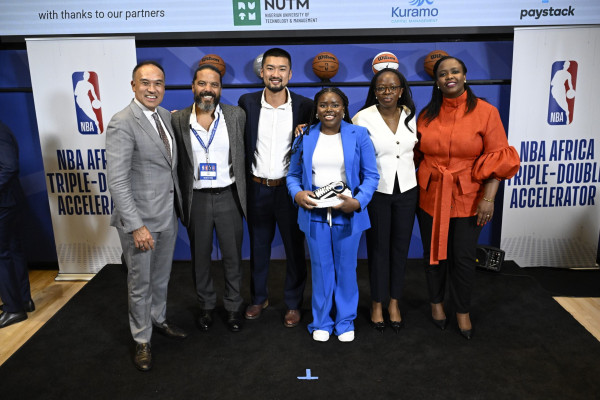
Festival Coins (Nigeria), Salubata (Nigeria), HustleSasa (Kenya) and UBR VR (Egypt) Win Top Prizes, including Financial Support and Mentorship; Paystack Payments Ltd., Kuramo Capital Management and Nigerian University of Technology and Management Join Demo Day as NBA Africa Triple-Double Accelerator's First Official Partners (www.NBA.com).

NBA Deputy Commissioner and Chief Operating Officer Mark Tatum today announced the four prize-winning startup businesses from “NBA Africa Triple-Double Accelerator” (http://apo-opa.co/3ZLmNoC), which NBA Africa launched in April 2024 to support the continent's technology ecosystem and the next generation of African entrepreneurs.  The four winning businesses – Festival Coins (Nigeria), Salubata (Nigeria), HustleSasa (Kenya) and UBR VR (Egypt) – will be awarded financial support and mentorship, including an opportunity to participate in workshops and development programs facilitated by NBA Africa or its partners. 

The 10 finalists, shortlisted from more than 700 early-stage African startup businesses that applied to participate, pitched their products to a panel of international industry leaders at a Demo Day at the NBA headquarters in New York City yesterday. The judges included Accelerate Africa Co-Founder and CEO Iyinoluwa Aboyeji; NBA Assistant General Counsel, Technology, Software Licensing and Digital Platforms Franciscus Diaba; Managing Director, Centre for the Fourth Industrial Revolution Rwanda Crystal Rugege; Chegg Inc. Executive Chairman Dan Rosensweig; and Partner at Development Partners International Joanne Yoo.  NBA Commissioner Adam Silver also delivered opening remarks and met the 10 finalists.

Below are the four winning businesses:

  1. Festival Coins (Nigeria), an event technology company that offers a customizable, no-code event registration and ticketing platform called Tix Africa for events in Nigeria and Ghana, won the first-place prize and $50,000. 
  2. Salubata (Nigeria), a company that creates modular shoes repurposed from plastic waste to reduce the global carbon footprint through its environmentally friendly products, won the second-place prize and $40,000. 
  3. HustleSasa (Kenya), which provides live event services that support payment processing, attendee check-in, merchandise sales, customer data management, influencer tracking, and more, won the third-place prize and $30,000.
  4. UBR VR (Egypt), which delivers state-of-the-art, fully immersive, in-person virtual reality (VR) experiences across Egypt, won the fourth-place prize and $20,000.

The six other finalists each received a $10,000 prize. 

The Demo Day was supported by three official partners: Paystack Payment Ltd. (http://apo-opa.co/3XHn75j), Kuramo Capital Management (http://apo-opa.co/3ZGroJ2) and Nigerian University of Technology and Management (NUTM) (http://apo-opa.co/3XHn1dX).  

“Congratulations to all of the incredibly talented entrepreneurs who participated in this year's program, with special recognition to the 10 finalists and four distinguished winners,” said NBA Africa CEO Clare Akamanzi.  “These outstanding companies have demonstrated the creativity, drive and determination to shape the future of sport in Africa and will help the continent take its rightful place on the world stage.  We look forward to following their successes for many years to come.”

“NBA Africa Triple-Double Accelerator” is open to early-stage startups in Africa that develop solutions in event management and ticketing, youth development, AI, and digital marketing. 

Distributed by APO Group on behalf of National Basketball Association (NBA).

About NBA Africa:
NBA Africa is an affiliate of the National Basketball Association (NBA), a global sports and media organization with the mission to inspire and connect people everywhere through the power of basketball.  NBA Africa conducts the league's business in Africa, including the Basketball Africa League (BAL), and has opened subsidiary offices in Cairo, Egypt; Dakar, Senegal; Johannesburg, South Africa; Lagos, Nigeria; and Nairobi, Kenya. The league's efforts on the continent have focused on increasing access to basketball and the NBA through youth and elite development, social responsibility, media distribution, corporate partnerships, NBA Africa Games, NBA Stores, the BAL, and more. 

NBA games and programming are available in all 54 African countries, and the NBA has hosted three sold-out exhibition games on the continent since 2015. The BAL, a partnership between the International Basketball Federation (FIBA) and NBA Africa, is a professional league featuring 12 club teams from across Africa that concluded its fourth season in June 2024.  Fans can follow @ NBA_Africa (https://apo-opa.co/3XytCXW) and @ theBAL (https://apo-opa.co/3N01pod) on Facebook, Instagram, X and YouTube.

Media files
National Basketball Association (NBA)
Download logo
Read moreNational Basketball Association (NBA) Africa Announces Four Prize-Winning Companies at First Startup Accelerator Demo Day
26 September 2024

Illegal business occupants given 14 days to comply with the law

Location: News

Illegal business occupants given 14 days to comply with the law

Businesses illegally occupying government premises in Mthatha have been given 14 days to apply for legal leases from the Eastern Cape Department of Public Works and Infrastructure, should they wish to continue with their businesses on the current premises.

This was revealed when Public Works and Infrastructure Deputy Minister Sihle Zikalala, together with the Department of Public Works and Infrastructure MEC Siphokazi Lusithi, issued eviction orders to a number of businesses in the Mthatha CBD as part of Operation Bring Back (OBB), which aims to reclaim hijacked and illegally occupied government properties.

READ | Reclaiming State property

“Our aim is not to shut down legally operating businesses, but we want these businesses that are paying rent to criminals, who have stolen government properties, to start paying the rent to the rightful owners of these properties,” the Deputy Minister said on Wednesday.

Zikalala and Lusithi visited mixed business premises housing offices, driving school, salons, tombstones and a hardware store, where they addressed business owners and workers who voiced their fears of losing their businesses.  

In the Eastern Cape, there are 82 properties that are currently going through legal channels, including 57 eviction orders. 

Of these, 21 have been evaluated and are recommended for execution, with a target of completing 36 evictions by the end of the 2024/2025 financial year.  

All eviction actions will strictly adhere to legal standards and respect tenant rights. The two DPWI leaders allayed the fears of the concerned businesses, promising that should they follow the correct legal routes, their businesses would not be out in the cold.

“As the province, we are undertaking the Operation Bring Back, which aims at bringing back government properties that are illegally occupied. The illegal occupation of government properties both commercial and residential undermines the state's capacity to generate revenue and maintain our properties, but even more tragically, it victimizes small business owners who are unaware they are being taken advantage of by these bogus landlords. 

“In response, we have entered into negotiations with these small businesses to regularize their leases, ensuring that they are protected, and that government assets are not exploited for personal gain,” the MEC said. - SAnews.gov.za
 

nosihle
Thu, 09/26/2024 - 09:34

1203 views
Read moreIllegal business occupants given 14 days to comply with the law
26 September 2024

Waste to wealth: solutions for a sustainable future

Location: News

Waste to wealth: solutions for a sustainable future

By Deputy Minister Bernice Swarts

For decades, the rapid urbanisation and industrial growth experienced by many nations, had come at a high environmental cost. Landfills overflowed, plastic waste contaminated rivers and oceans, and emissions from improper waste disposal intensified the climate crisis.

The International Solid Waste Association (ISWA) Congress 2024, themed "Waste to Wealth: Solutions for a Sustainable Future," signalled a turning point, with the idea that waste could be transformed into wealth resonating deeply. 

The congress brought together global experts, policymakers, and business leaders to share cutting-edge practices in waste management and the circular economy. But more importantly, it showcased South Africa's commitment to turning its waste challenges into economic opportunities.

The government’s introduction of the Extended Producer Responsibility (EPR) Regulations and the accent of the Climate Change Bill into an Act marked a significant shift in how the nation approached waste. The EPR Regulations require manufacturers to take responsibility for the lifecycle of their products, from production to post-consumer waste. This policy forces businesses to rethink how they design, produce, and manage products, pushing them toward more sustainable practices.

The Climate Change Act further aligns the nation’s policies with its environmental goals. It ensures that South Africa’s response to climate change, particularly in transitioning to a low-carbon, climate-resilient economy is supported by robust legislation. This act not only aims to reduce greenhouse gas emissions but also promotes the creation of green jobs and investments in the emerging circular economy.

However, one of the most remarkable aspects of South Africa’s waste management evolution is the active role the private sector plays. While government policies set the framework, it is private companies that help drive real change. Faced with regulatory requirements, businesses are beginning to take ownership of their waste, investing in recycling technologies, sustainable product designs, and waste-to-energy initiatives.

The idea that waste could be a resource, rather than a burden, has begun to reshape industries. For instance, South Africa’s plastic manufacturing sector was forced to adapt to new requirements mandating the inclusion of recycled content in products. This sparked a wave of innovation, as companies began developing new methods to incorporate recyclates into their production processes. Similarly, the construction industry began embracing the reuse of demolition waste, reducing its dependence on raw materials and lowering its environmental footprint.

While these changes are promising, the waste crisis is still far from being resolved. This is due to municipalities across South Africa being overwhelmed and lacking the necessary infrastructure to handle the growing volume of waste. Many cities and towns have inadequate waste collection services, let alone the advanced recycling and waste-to-energy facilities needed to close the loop in a circular economy. Additionally, the waste management sector is in dire need of investment, and the ISWA Congress offered a unique platform for South Africa to engage with international experts and potential investors.

What made the congress particularly significant was its global scope. Waste management has long since ceased being a local problem; it is a global one, particularly in the fight against plastic pollution.
South Africa found itself in the unique position of contributing to international discussions on the issue, especially through its involvement in the development of a legally binding instrument on plastic pollution. The country is increasing its recycling capacity for plastic waste, and it supports global efforts to eliminate plastic pollution by regulating product design and prioritizing recyclates.

As South Africa prepares for its G20 presidency in 2025, the outcomes of the ISWA Congress took on even greater importance. The country has an opportunity to set the agenda on sustainability for some of the world’s most powerful economies. The government-to-government (G2G) session held during the congress provided a critical forum for sharing best practices with other nations, many of which were facing similar challenges. These exchanges were crucial, as they not only helped shape South Africa’s preparations for the G20 but also fostered greater international cooperation in addressing global waste and sustainability issues.

One of the most pressing priorities for the South African government remained job creation. The waste management sector, particularly through the circular economy, offers a promising avenue for addressing the nation’s high unemployment rate. Small, Medium, and Micro Enterprises (SMMEs) are already benefitting from government and private sector support to enter the waste management space.

Bernice Swarts is the Deputy Minister of Forestry, Fisheries and the Environment
 

Neo
Thu, 09/26/2024 - 10:09

331 views
Read moreWaste to wealth: solutions for a sustainable future
26 September 2024

Maximising ROI in Education: Aligning Employee Learning Paths with Corporate Strategy

Location: MyPR

By Dr Ridwaan Asvat (Director Student Services – Regent Business School) Investing in employee education is no longer just about personal development; it’s a powerful way to advance a company’s goals. HR managers are increasingly tasked with ensuring these investments align with the company’s strategic objectives. By tailoring learning paths to support business strategies, companies …

Read moreMaximising ROI in Education: Aligning Employee Learning Paths with Corporate Strategy
26 September 2024

Celebrating Heritage Day: Isilumko Staffing’s Commitment to Diversity, Culture, and Success.

Location: MyPR

As South Africa prepares to celebrate Heritage Day on the 24th of September, Isilumko Staffing reflects on the richness of our own heritage as a business and the diverse backgrounds of our employees. Heritage Day is a time to honour the country’s rich cultural diversity and to acknowledge the importance of embracing the traditions, values, …

Read moreCelebrating Heritage Day: Isilumko Staffing’s Commitment to Diversity, Culture, and Success.
25 September 2024

A Guide to Kosher Restaurants in Montreal

Location: Entertainment, MyPR

Montreal is a vibrant city with a diverse culinary landscape, including a variety of kosher dining options. Whether you’re in search of traditional Jewish dishes or contemporary kosher cuisine, Montreal’s kosher restaurants cater to a wide range of tastes and preferences.   What Makes a Kosher Restaurant? Kosher restaurants follow Jewish dietary laws, ensuring all …

Read moreA Guide to Kosher Restaurants in Montreal
25 September 2024

Welfare Organisations Unpaid for Six Months by Gauteng Government

Location: News

This is despite having signed agreements with the provincial Department of Social Development

Read moreWelfare Organisations Unpaid for Six Months by Gauteng Government
25 September 2024

When a Promise Is as Important as the People You Make It To, You Keep It

Location: MyPR

A promise kept for 45 years When a promise is as important as the people you make it to, you keep it. One of South Africa’s most trusted brands, Shoprite, this week set out to remind customers it continues to stand firm on a PROMISE originally made 45 years ago – when the supermarket chain …

Read moreWhen a Promise Is as Important as the People You Make It To, You Keep It
25 September 2024

‘We will not remain silent as apartheid is perpetrated against others’ – President Ramaphosa

Location: News

'We will not remain silent as apartheid is perpetrated against others' – President Ramaphosa

President Cyril Ramaphosa has told the United Nations General Assembly (UNGA) that South Africa will not remain silent and watch as apartheid is perpetrated against others.

In his address to the Assembly's annual high-level debate on Tuesday, President Ramaphosa said the South African story bears witness to the enduring role of the United Nations in global affairs. 

In supporting South Africa’s struggle for liberation, the President highlighted that the UN affirmed the principles of the UN Charter – fundamental human rights, the dignity and worth of every person, and the equal rights of nations large and small. 

“It affirmed the aspiration contained in the Universal Declaration of Human Rights that we should strive for a world free of barbarous acts that outrage the conscience of mankind.

“We South Africans know what apartheid looks like. We lived through it. We suffered and died under it. We will not remain silent and watch as apartheid is perpetrated against others. Through the United Nations and the instruments it wields, we must end this suffering,” the President said. 

He further reiterated South Africa’s call for an immediate cease fire, and for the release of all hostages.

He highlighted that the violence the Palestinian people are being subjected to is a grim continuation of more than half a century of apartheid. 

“The only lasting solution is the establishment of a Palestinian State, existing side by side with Israel with East Jerusalem as its capital,” he said. 

Earlier this month, The Presidency announced that South Africa is set to submit its Memorial to the International Court of Justice (ICJ) in October 2024, presenting evidence to support its claim that Israel is committing genocide in Palestine.

The Memorial will outline facts and arguments as part of a broader legal effort to hold Israel accountable under international law.

READ | SA to file Memorial to the ICJ on Israel matter

Addressing the conflicts in the Democratic Republic of Congo (DRC), Sudan, Yemen, Ukraine, and the Sahel region, the President highlighted the country's role in supporting international efforts for conflict resolution. 
“Our moral conscience further demands that we exert every effort to bring peace to the Democratic Republic of Congo, to Sudan, to Yemen, to Ukraine and to the troubled Sahel region. We must realise the aspirations of the people of Western Sahara to self-determination.”

He emphasised that achieving and maintaining peace and security requires the collective will of the community of nations.

Reform of the UN Security Council 

“It requires that the UN Security Council is representative and inclusive. Seventy-eight years since its formation, the structure of the UN Security Council remains largely unchanged. 

“Africa and its 1,4 billion people remain excluded from its key decision-making structures.  The Security Council has not fulfilled its mandate to maintain international peace and security,” he said. 

The President called for the UN Security Council to be reformed as a matter of urgency and become more inclusive so that the voices of all nations are heard and considered.

“Africa stands ready to play its part in building a safer global order. The African Union and its member states are engaged in mediation, dialogue, and diplomacy across the continent, to create conditions under which peace and development can take hold. 

“There must be greater collaboration between the AU [African Union] and the UN towards resolving these conflicts, and also in addressing their root causes,” he said. 

President Ramaphosa is leading South Africa’s delegation to the High-Level General Debate of the 79th Session of the General Assembly (UNGA79) in the United States of America.

The High-Level General Debate of the UNGA79 is taking place at the United Nations headquarters in New York, from 24 to 30 September 2024. 

Speaking at the African Minerals Forum hosted by the Business Council for International Understanding (BCIU) and Prosper Africa on Monday, the President emphasised the importance of the critical minerals sector in driving global economic growth and sustainability. 

By leveraging key sectors such as mining, energy, and manufacturing, the President said South Africa is set to improve its business environment and attract much-needed investment.
The President addressed the session on the sidelines of the UNGA.

READ | Critical minerals sector key to driving global economic growth

-SAnews.gov.za


DikelediM
Wed, 09/25/2024 - 09:55

376 views
Read more‘We will not remain silent as apartheid is perpetrated against others’ – President Ramaphosa
25 September 2024

Makro Expects Consumers to Take Advantage of Heritage Month Specials and Bulk up on Meat Products

Location: MyPR

Makro has positioned itself as the bulk shopping destination in its meat category for several years, appealing to both household shoppers and small business customers alike, due to the retailers’ focus on negotiating directly with the producers and locking in favourable bulk rates that enable it to maintain affordability. “As these customers prepare for Heritage …

Read moreMakro Expects Consumers to Take Advantage of Heritage Month Specials and Bulk up on Meat Products
25 September 2024

Media Invite: Top Performing Businesses in Limpopo Honoured

Location: MyPR

The Department of Trade, Industry, and Competition (the dtic) and Productivity SA, the government entity tasked with enabling employment growth, invite the media to the Limpopo Workplace Challenge Programme Milestone Workshop. This event aims to increase the efficiency of Limpopo businesses thereby enabling economic growth and job creation. The MEC Limpopo Department of Economic Development, …

Read moreMedia Invite: Top Performing Businesses in Limpopo Honoured
24 September 2024

Outsourced CFO Empower Businesses with Financial Gap Analysis Service

Location: MyPR

Outsourced CFO launches Financial Gap Analysis service, empowering businesses to identify financial discrepancies and develop solutions for long-term success. Outsourced CFO, a Cape Town based financial consulting and accounting firm, is introducing its Financial Gap Analysis service, designed to assist companies in identifying critical financial discrepancies and formulating strategic solutions to achieve long-term business success. …

Read moreOutsourced CFO Empower Businesses with Financial Gap Analysis Service
24 September 2024

Choosing the Right Forklift for Your Business Needs

Location: MyPR

Forklifts are essential for businesses that manage heavy lifting, stock management, and warehouse operations. They help move materials efficiently, saving both time and physical effort. With so many options available, it’s important to know what type of forklift suits your needs, whether you’re looking to buy, rent, or hire. Types of Forklifts Understanding the different …

Read moreChoosing the Right Forklift for Your Business Needs
24 September 2024

Catering Solutions for Every Occasion

Location: Entertainment, MyPR

Finding the right catering for any event can be a challenge, especially when there’s a need for versatility and quality. Whether it’s for a formal event or a casual gathering, catering services like corporate catering and funeral catering provide the perfect food solutions, tailored to various preferences and occasions. Sandwich Baron offers an extensive range …

Read moreCatering Solutions for Every Occasion
24 September 2024

Critical minerals sector key to driving global economic growth

Location: News

Critical minerals sector key to driving global economic growth

President Cyril Ramaphosa has emphasised the importance of the critical minerals sector in driving global economic growth and sustainability. 

By leveraging key sectors such as mining, energy, and manufacturing, the President said South Africa is set to improve its business environment and attract much-needed investment.

He was addressing the African Minerals Forum hosted by the Business Council for International Understanding (BCIU) and Prosper Africa on the sidelines of the United Nations General Assembly (UNGA 79), in New York, USA, on Monday. 

He highlighted that four months ago, South Africa held national general elections, which ushered in a Government of National Unity, where 10 political parties have come together to coalesce around a common agenda for economic growth and sustainable development.

President Ramaphosa underlined South Africa's commitment to reducing greenhouse gas emissions and mitigating climate change through the country's Just Energy Transition Plan. This plan aims to guide the shift from coal to renewable energy, while also ensuring equitable economic opportunities for affected communities. 

“South Africa's and Africa’s critical minerals sector has a crucial role to play in this regard, and we recognise the importance of collaboration with other countries to develop the potential of our critical minerals sector. 

“The US in particular has established expertise in advanced mining technologies, automation and sustainability practices. 

“We want to strengthen our ties with US companies and institutions to foster technological advancements, enhance supply chain efficiencies and attract investment into our mining sector,” the President said. 

The President also emphasised that South Africa strongly endorses the United Nations Secretary-General’s position paper on Critical Energy Transition Minerals, where he highlights the importance of beneficiation, benefit sharing, local value addition and economic diversification.

“It would not be an understatement to say that the minerals that lie beneath the soil of Africa are powering the green energy revolution. Thirty percent of the world’s proven critical mineral reserves are found in Sub-Saharan Africa.

“South Africa has substantial reserves of platinum group metals, manganese, vanadium as well as chromium. 

“These resources are fundamental to the development of cutting-edge technologies that drive progress in various sectors. What will be critical is to ensure that this progress does not leave Africa behind,” he said.

The President stressed the need to avoid perpetuating colonial-era exploitation, where African countries primarily export raw minerals. He said that by focusing on beneficiation and domestic processing, African nations could see significant economic growth. 

President Ramaphosa highlighted that beneficiation and local processing of critical minerals could increase the continent’s GDP by 12% or more by 2050. 

He cited estimates suggesting that African countries could generate USD 24 billion annually in GDP and create 2.3 million jobs by investing in mining beneficiation and domestic processing.

President Ramaphosa highlighted the strides made by SASOL, South Africa’s flagship petrochemical company, in leading green hydrogen technologies research and development. 

“As the global automotive industry moves towards Electric Vehicles and New Energy Vehicles, we are leveraging our rich experience with automotive production to get some of the world’s leading automotive manufactures with a footprint in South Africa to produce more their green vehicles in our country,” he said. 

Despite improvements in the beneficiation of South Africa’s mineral exports, President Ramaphosa admitted that more needs to be done. 

He underscored the country’s commitment to creating a supportive policy framework for the critical minerals sector, focused on streamlining regulations, fostering innovation in mining technologies, building workforce skills, improving transport and logistics infrastructure, and incentivising investment.

South Africa's five-point policy approach aims to create a supportive environment for the critical minerals sector. This includes simplifying regulations, supporting research and development in mining technologies, investing in workforce skills, improving logistics infrastructure, and incentivising domestic and international investment. 

“South Africa also has a beneficiation strategy that seeks to translate the benefits of our country’s mineral endowments into a national competitive advantage. 

“As the UN Secretary-General’s paper has noted, Critical Energy Transition Minerals can transform economies, create green jobs and foster sustainable local, regional and global development,” he said. 

President Ramaphosa further stressed that for the potential of critical minerals to be fully realised, both mineral-producing nations and their end-user countries must embrace inclusivity. 

He emphasised the importance of creating decent work opportunities, eradicating exploitative practices such as child and forced labour, and ensuring human rights protections. 

Local beneficiation and industrialisation were highlighted as priorities, alongside environmental safeguards to ensure sustainable extraction practices. 

The President urged for a long-term focus on inter-generational equity, recognising that critical minerals are vital for solving global challenges like climate change, energy, and food insecurity. 

He called on US companies to collaborate in fostering sustainable development.

“By leveraging our respective strengths, pursuing strategic collaborations, and implementing supportive policies, we stand ready to meet the demands of the global market and drive sustainable development. 

“I call on US companies and investors to join us on our journey,” he said. – SAnews.gov.za

DikelediM
Tue, 09/24/2024 - 10:07

396 views
Read moreCritical minerals sector key to driving global economic growth
24 September 2024

President Ramaphosa urges US business to invest in SA’s growing economy

Location: News

President Ramaphosa urges US business to invest in SA’s growing economy

President Cyril Ramaphosa has called on US businesses to deepen their investment ties with South Africa, highlighting the country's renewed focus on economic recovery and structural reform. 

Speaking at the SA-US Interactive Business Forum in New York on Monday, the President emphasised the progress made under South Africa's Government of National Unity (GNU) and the vast opportunities available to foreign investors.

He said this is a “timely intervention”, referencing his first visit to the US since South Africa's general elections in May, which led to a coalition government of political parties committed to inclusive growth and job creation.

“The advent of the Government of National Unity has renewed investor optimism in the South African economy. The message I bring to US investors today is that this optimism is well-placed. 

“South Africa is firmly on the road to recovery, and we invite you to be part of this journey. Investments in South Africa are secure. Our business environment is stable. This is supported policy certainty and regulatory safeguards,” the President said. 

He added that South Africa intends to stay the course on the structural economic reform process, on scaling up investment in key infrastructure, and on improving the business operating environment.

The President noted South Africa’s success in attracting investment, revealing that the country had achieved its target of raising R1.2 trillion (approximately USD 63.6 billion) ahead of schedule in 2022. 

 “We have announced a new target of approximately R2 trillion or approximately USD 100 billion over the next five-year period up to 2028. 

“The far-reaching structural reforms we have implemented over the past six years have opened up the country to increased levels of investment that continues to grow,” the President said. 

Ramaphosa particularly underscored the potential in the clean energy sector, which has attracted significant investment, supporting South Africa’s commitment to decarbonisation and energy security. 

"We are equally committed to a Just Energy Transition that is inclusive, that take our developmental needs into account, and that leaves no community behind. 

“We have a supportive and enabling industrial policy that incorporates amongst others expanding the special economic zones, driving export-led growth, and harnessing the potential of the Africa Continental Free Trade Area or AfCFTA. In January 2024 we began preferential trading under the AfCFTA,” he said. 

The President emphasised that the Government of National Unity is furthermore committed to prudent monetary and fiscal policy and to strengthening regulatory and legislative frameworks to combat corruption.

The President also highlighted the importance of strategic partnerships with US businesses, especially in sectors like advanced manufacturing, energy, healthcare, and infrastructure. 

“South Africa and Africa is ripe for investment in financial services, advanced manufacturing, energy, healthcare, infrastructure development, mining, science and technology and other sectors. South Africa is also developing the value chains of the future.

“With substantial reserves of critical energy transition minerals, we are positioning ourselves to be at the forefront of the green energy revolution,” he said. 

He added that as the country with the world’s largest platinum group metal reserves, South Africa has a competitive advantage when it comes to the production of sustainable energy technologies, including electric vehicles, new energy vehicles and renewable energy components.

President Ramaphosa praised the collaboration between the New York Stock Exchange (NYSE) and Johannesburg Stock Exchange (JSE), following the 2022 Memorandum of Understanding. He stated that the partnership between the two stock exchanges “promotes cross-border investment and drives economic growth on a global scale.”

The President further highlighted the US as one of South Africa’s most valued trade partners, noting that bilateral trade totalled USD 17.6 billion in 2022. 

He also praised the impact of the African Growth and Opportunity Act (AGOA) in fostering trade and creating jobs in sectors like automotive, agriculture, and precious metals.

With Africa's population expected to reach 2.5 billion by 2050, President Ramaphosa painted a bright picture of the continent's economic prospects, noting that the African Continental Free Trade Area (AfCFTA) would "drive a wave of industrialisation and create dynamic regional value chains."

“This too presents opportunities for US businesses and investors, and opens up new markets for their goods, products and services. 

“Mutually beneficial trade and investment not only unlocks the dynamism and potential of an entire continent. It will also aid Africa’s efforts to achieve the Sustainable Development Goals,” the President said. 

In closing, President Ramaphosa reassured investors of the stability and security of investments in South Africa. 

“South Africa is open for business. Sustainable and inclusive growth spurs development and creates jobs.

“Together, we can forge a path to shared success and progress, leveraging our combined strengths to achieve enduring prosperity for our people,” the President said. – SAnews.gov.za


DikelediM
Tue, 09/24/2024 - 11:01

179 views
Read morePresident Ramaphosa urges US business to invest in SA’s growing economy
24 September 2024

Why You Shouldn’t Worry About Google Ads’ Optimization Score

Location: MyPR

Google Ads offers a feature called the “Google Ads optimization score,” which shows up prominently in your account’s ‘Recommendations’ tab. It seems like a useful tool designed to help improve your campaigns. But, in reality, this score is more about Google’s interests than your business’s. The recommendations are meant to push you toward changes that …

Read moreWhy You Shouldn’t Worry About Google Ads’ Optimization Score
24 September 2024

Understanding How Competitors Build Their Websites to Improve Your Strategy

Location: MyPR

The way a competitor’s website is built reveals more than just technical decisions; it offers a window into their overall business strategy. By examining the platforms, plugins, and tools they use, you can gain valuable insights to enhance your own digital strategy. Whether your focus is on SEO, user experience, or performance optimisation, understanding the …

Read moreUnderstanding How Competitors Build Their Websites to Improve Your Strategy
23 September 2024

President calls on all stakeholders to help preserve SA’s heritage

Location: News

President calls on all stakeholders to help preserve SA's heritage

President Cyril Ramaphosa has called on business and other stakeholders to work with government to protect and conserve historical, cultural and natural heritage sites, particularly in marginalised communities.

President Ramaphosa made the call in his weekly newsletter to the nation on Monday, ahead of the Heritage Day celebrations.

South Africa will on Tuesday observe Heritage Day, where citizens will celebrate the rich cultural tapestry that makes up the nation. 

President Ramaphosa noted that while heritage preservation is a responsibility of government, the private sector, corporate sponsors, philanthropists, heritage organisations and other stakeholders also have an important role to play in ensuring these legacies are safeguarded for future generations. 

“Private sector support for heritage preservation is uneven. While some high-profile heritage sites like Robben Island, the Mandela House in Soweto, Constitution Hill, and others receive donor funding, other less prominent institutions, events, and initiatives struggle to obtain support. 

“As a result, many important sites of memory have fallen into disrepair. This is a wasted opportunity, because a number of these sites could stimulate local economies and provide work opportunities to the communities in which they are situated,” President Ramaphosa said.

The President said protecting and conserving historical, cultural, and natural heritage sites was also vitally important for nation-building and national reconciliation. 

“On this Heritage Day, I call on business and other stakeholders to work with government in the cause of heritage preservation, particularly in marginalised communities. There is already laudable work being done in this regard. 

“By working together as government, business, and society, we can use our national heritage to uplift communities, create opportunities and make us all proud to be South African,” the President said.

Highlighting the significance of Heritage Day, President Ramaphosa noted that having emerged from a painful apartheid past where indigenous customs, traditions and languages were denigrated and marginalised, Heritage Day is one of the most important events on the national calendar. 

“It is a valuable opportunity for cross-cultural exchange and for building bridges of tolerance and understanding between races and different ethnic groups. I have always found it heartwarming to see how South Africans from all walks of life celebrate Heritage Day in their communities, schools, workplaces, places of worship and institutions of higher learning. 

“It has become a regular facet of Heritage Day to see South Africans share their traditions, cuisine, dress, music, and other forms of cultural expression with their compatriots. Beyond the benefits for cultural self-expression, pride and nation-building, heritage preservation is an important driver of economic growth, job creation and sustainable development,” President Ramaphosa said. 

South Africa is perfectly placed to use its rich cultural and natural heritage to promote economic growth. 

“As one of the world’s most mega biodiverse countries, South Africa’s natural heritage attracts tourists from around the world, supporting local job creation and investment in natural resource infrastructure. By way of example, in December 2023 alone, there were more than 400 000 visitors to sites like the Table Mountain National Park and Robben Island,” the President highlighted. 

Coupled with this, he said, South Africa has an abundance of historical sites across the country that span the pre-colonial, colonial, apartheid, and democratic eras. 

“These sites are not just important for tourism. They are also sites of memory and monuments to the past that serve to educate the younger generation of South Africans,” President Ramaphosa said. 

To preserve the country’s rich heritage, the President underscored a need to do more to attract young South Africans to careers and opportunities in the sector. 

He said through the Presidential Employment Stimulus, the National Heritage Council and National Arts Council has provided unemployed young people with work opportunities in film and digital media production, cultural project management, storytelling, language preservation and as museum guides.

Government will commemorate Heritage Day at Meqheleng Stadium in Ficksburg, in the Free State, under the theme: “Celebrating the lives of our heroes and heroines who laid down their lives for our freedom”.

This year’s theme puts a spotlight on South Africa’s liberation movements who received various forms of solidarity and support from neighbouring countries during the liberation struggle. – SAnews.gov.za

GabiK
Mon, 09/23/2024 - 15:00

216 views
Read morePresident calls on all stakeholders to help preserve SA’s heritage
23 September 2024

Chikunga hopeful of Women’s Forum recognition 

Location: News

Chikunga hopeful of Women’s Forum recognition 

Minister in the Presidency for Women, Youth and Persons with Disabilities, Sindisiwe Chikunga, says she is confident that the BRICS Women’s Forum will be recognised at this year’s Kazan Summit Declaration, scheduled to take place next month.

Chikunga made the remark as Russia prepares to host the BRICS Summit to be held in Kazan, from 22 to 24 October, after the country assumes the BRICS chairmanship in 2024.

This as the Minister led the discussions at the BRICS Women Affairs meeting held in Saint Petersburg, Russia.

READ | Chikunga arrives in Russia for BRICS Women Affairs Meeting

The meeting saw BRICS Member States discussing cooperation prospects in the fields of women’s leadership and enhancing the role of women in finance, agriculture, innovation, healthcare, creative industries, tourism, environmental safety, and the inclusive economy.

Speaking at the BRICS Women's Forum, which included the BRICS Ministerial Women’s Affairs Meeting on Friday, Chikunga congratulated the Russian Federation on assuming the Chairship of BRICS 2024, and the sterling work that it has undertaken to date.

“As you are aware, this forum of Ministers was first initiated in 2023 during South Africa's Chairship of BRICS. It is indeed encouraging to witness its growth under the stewardship of the Russian Federation's 2024 Chairship, and it will undoubtedly flourish under the future Chairship of fellow BRICS member states.

“We applaud Russia's choice of the theme 'Women, Governance, and Leadership' as a timely intervention that ensures this forum continues to amplify the voices, interests, and full representation of women across BRICS member states, promoting their meaningful participation at all levels of governance and decision-making.”

Chikunga also reflected on some of the key points that emerged during hybrid BRICS Ministers for Women Affairs held in December 2023, where the forum was recognised as a fundamental platform to elevate equality, women’s rights, economic autonomy, and empowerment; and to address major concerns related to women across the BRICS countries.

The forum also promotes mainstreaming of women’s issues across BRICS’ processes, priority areas, declarations and agreements; and provides a platform for the exchange of knowledge and best practices in advancing the current and future wellbeing of women and girls across BRICS.

“Our meeting recognised the tremendous progress that successive BRICS summits have produced in the areas of global governance, development, peace and security, energy, climate change, and social issues. We noted, however, that discussions in these areas would be further enriched by a ministerial meeting dedicated to women affairs.

“There was consensus on the potential of this forum to accelerate the implementation of existing commitments, principles, goals, and actions outlined in various international instruments on women. These include the Beijing Platform for Action (1995), the Convention on the Elimination of All Forms of Discrimination Against Women (CEDAW - 1979), UN Resolution 1325 (2000) on Women, Peace, and Security, as well as the UN [United Nations] Agenda 2030 and its 17 Sustainable Development Goals (SDGs),” Chikunga explained.

The meeting further agreed to support the acceleration of the implementation of the African Union Agenda 2063, with a particular focus on Aspiration 6, which promotes women's empowerment.

Asserting women’s interests

The Ministers also highlighted the need to assert women’s interests across the broader BRICS agenda, strengthen multilateralism, and synergise with the work of the BRICS Business Women’s Alliance to accelerate the mainstreaming of socio-economic priorities for greater inclusivity and equity.

“We acknowledge that this goal will be further enriched when we leverage our collective strength as the Global South, alongside robust people-to-people exchanges and cooperation within BRICS nations and across the African continent.

“A key highlight of the Johannesburg II Declaration was the recognition of the vital role of women and youth in trade and their potential to act as catalysts for industrialisation, infrastructure development, food security, agricultural modernization, sustainable growth, healthcare, and addressing climate change,” she said.

The Johannesburg II Declaration is a document that encapsulates significant BRICS viewpoints on matters of global economic, financial and political significance.

READ | BRICS adopts Johannesburg II Declaration

– SAnews.gov.za

GabiK
Mon, 09/23/2024 - 13:42

58 views
Read moreChikunga hopeful of Women’s Forum recognition 
23 September 2024

Celebrate Heritage Day at Rosebank Mall: Discover the Richness of African Culture at the Rosebank Art & Craft Market

Location: Entertainment, MyPR

Heritage Day is fast approaching, and there’s no better way to celebrate South Africa’s diverse cultural tapestry than by visiting the Rosebank Art & Craft Market. Located at Rosebank Mall on Cradock Avenue, this market is a treasure trove rich in African heritage, offering a unique opportunity for locals and tourists alike to immerse themselves …

Read moreCelebrate Heritage Day at Rosebank Mall: Discover the Richness of African Culture at the Rosebank Art & Craft Market
23 September 2024

Shaping Inclusive Fisheries and Transforming Gender Roles in South Africa’s Coastal Communities

Location: News
The African Union – Interafrican Bureau for Animal Resources (AU-IBAR)

Coastal communities in South Africa were represented in a lively two-day community workshop that sought to promote gender inclusivity in environmental management and the conservation of aquatic biodiversity. The workshop, which was co-hosted by AU-IBAR, Mabuyi Development Planners, and Blue Wild Coast NPO, aimed to provide a thorough Gender Plan of Action for NGOs engaged in small-scale fisheries.

Fifty people showed up at the event in East London, South Africa. Among them were ladies from the seaside towns of Hamburg and Port St. John's, as well as officials from the government, non-governmental organisations, the business sector, and foreign organisations. The workshop sought to incorporate gender-sensitive practices into environmental management, with a heavy emphasis on gender mainstreaming. This was especially important in small-scale fisheries, where women are crucial but under-represented.

Workshop Objectives and Background
After successfully recruiting a Technical Consultant to assist South African environmental NGOs, the Aquatic Biodiversity Conservation Project continued its earlier efforts with the workshop. Site visits, a gender assessment report, an MoU, and a Gender Plan of Action were all part of the consultant's remit to guarantee that women and disadvantaged communities would be a part of environmental sustainability initiatives.

Prior consultations verified the inception report, which laid the groundwork for this workshop. Recognising the importance of local women as guardians of aquatic biodiversity, we set out to understand the difficulties they encounter in small-scale fisheries and find strategies to support them. Workshop participants also had the opportunity to confirm the consultant's report's findings and work together to develop ways to increase gender inclusion in the sector.

Opening Session: Setting the Stage for Change
A panel of speakers stressed gender equality in small-scale fisheries and aquatic biodiversity management at the inaugural session.

At the outset of the session, Ms. Elethu Duna, Executive Director of Blue Wild Coast NPO, acknowledged the importance of women in small-scale fishing in South Africa and highlighted their lack of representation in decision-making bodies. She emphasized that addressing gender inequities offers potential for permanent change and expressed gratitude to AU-IBAR and partners for the session. Duna strongly encouraged participation in developing a substantial Gender Plan of Action.

Mr. Zamkhaya Maseti from the Premier's Office, Government of South Africa, recognized the need for additional action in rural communities while emphasizing the government's dedication to empowering women through policies. He highlighted the importance of women in fisheries, noting that they are sometimes overlooked, and described the session as a crucial step in addressing this disparity. "The time for talk is over," Maseti declared as his final rallying cry. Now is the moment to take action.

Ms. Thabisa Sigwela, representing the Buffalo City Maritime Cluster, emphasized the need for women's economic empowerment and advocated for organized investments in financial inclusion and capacity building. She pledged to support businesses run by women and stressed the importance of providing women in underserved coastal communities with easy access to economic opportunities.

Ms. Mashebane Thosago, from the African Women Fish Processors and Traders Network (AWFISHNET), highlighted the obstacles women in the fishing industry face, including a lack of education and financing. She spoke about how AWFISHNET is working to connect women across Africa and how this training can empower those involved in small-scale fishing to make a difference.

Ms. Fransciscar Mhuriro, representing AU-IBAR, reiterated the organization's commitment to gender equality, calling for women to be recognized as leaders in the fisheries industry. She stressed that AU-IBAR is responsible for promoting gender-responsive policies and enabling knowledge-sharing to ensure the Gender Plan of Action is a living tool for change.

Finally, Ms. Nozuko Ntsokota from the Department of Forestry, Fisheries, and Environment (DFFE) discussed the need for practical application of existing gender policy. She highlighted the importance of collaboration to equip women with the knowledge and resources needed to thrive in small-scale fisheries and pledged continued support for initiatives that emerge from the session.

The workshop focused on gender issues in small-scale fisheries through technical sessions. The first session introduced the importance of integrating gender principles into fisheries management. Key presentations included the roles of men and women in small-scale fisheries, the marginalization of women, and the role of women in vulnerable coastal communities. The second session, moderated by Stephanie Achieng, discussed legislative frameworks, financial exclusion, tenure rights, and infrastructure challenges in small-scale fisheries. A draft gender plan of action was introduced, based on input from local fisherwomen.

Challenges and Opportunities for Women in Cooperatives
Ms. Thosago Mashebane of AWFISHNET and SANWFA highlighted the persistent challenges faced by women in fisheries cooperatives. Issues included unfriendly working environments, inadequate infrastructure, and limited financial inclusion. Despite the existence of cooperatives for over a decade, women continue to struggle with access to resources, funding, and tenure rights. Ms. Mashebane emphasized the need for improved legislative frameworks, increased capacity-building initiatives, and the creation of financial tools tailored to the needs of women in coastal communities.

Proposed Solutions and Commitments
Participants discussed potential solutions, such as the establishment of organized forums for women in cooperatives, improved sustainability of interventions, and stronger policy frameworks. The workshop also proposed the development of business models for women cooperatives, alongside measures to increase their representation in decision-making institutions at local and national levels. Notably, SANWFA committed to connecting women cooperatives from the Eastern Cape with buyers in the Western Cape, fostering new economic opportunities.

Key Workshop Outcomes
Key conclusions from the event will guide future efforts and the Gender Plan of Action. As a means of identifying and addressing critical obstacles, participants evaluated current frameworks and policies that affect women in coastal areas. They looked at different ways to help women participate more in small-scale fishing, with an emphasis on financial inclusion, capacity building, and access to resources. Involvement from women in coastal communities, local NGOs, and government stakeholders led to the development of a thorough Gender Plan of Action. This plan outlines methods for capacity building, advocacy, and monitoring. The significance of public-private partnerships was also highlighted, with organisations such as the South African Maritime Association and the Department of Rural Development and Agrarian Reform (DRDAR) being identified as vital for long-term success.

Next Steps and Recommendations
The subsequent actions were outlined as follows: 

After the Gender Plan of Action is finalised, workshop participants will receive a draft of the Memorandum of Understanding (MoU) and have the opportunity to review and provide input on it before the deadline. When completed, it will be a part of larger plans to manage fisheries on a national and regional level. The importance of ongoing support from AU-IBAR and Blue Wild Coast NPO was highlighted, as was the need for continuous capacity building for women cooperatives in Port St. Johns and Hamburg. For the purpose of tracking and adjusting progress, gender-sensitive monitoring and evaluation indicators will be created and integrated into the M&E framework of the participating NGOs. Sustainable business models in small-scale fishing will also be a priority, therefore we'll be working to connect women's cooperatives with buyers and funding options.

Conclusion
For South African small-scale fisheries, the community workshop was a watershed moment in the fight for gender parity. At this event, women from coastal communities, along with representatives from government and NGOs, worked together to develop strategies that will empower women and involve them in managing aquatic biodiversity. Participation and representation of women in coastal communities in environmental management discussions will be enhanced by the workshop's outputs, which will play a pivotal role in informing future policies and interventions.

Distributed by APO Group on behalf of The African Union – Interafrican Bureau for Animal Resources (AU-IBAR).

Media files
The African Union – Interafrican Bureau for Animal Resources (AU-IBAR)
Download logo
Read moreShaping Inclusive Fisheries and Transforming Gender Roles in South Africa’s Coastal Communities
23 September 2024

The New Face of Bleisure Tourism

Location: MyPR

How business-leisure travel has evolved In a world where the lines between work and play often blur, the tourism industry has witnessed a remarkable evolution in travel patterns since 2022. What began as a niche trend, ‘bleisure’ tourism—blending business and leisure—has now become a major driver in hospitality, adapting and thriving in our post-pandemic reality. …

Read moreThe New Face of Bleisure Tourism
  • Previous
  • Page 1
  • Interim pages omitted …
  • Page 35
  • Page 36
  • Page 37
  • Page 38
  • Page 39
  • Interim pages omitted …
  • Page 120
  • Next

Copyright © 2026 · MyZA · All Rights Reserved · Powered by Stratlec Online