• Skip to main content
  • Skip to header right navigation
  • Skip to after header navigation
  • Skip to site footer
MyZA

MyZA

News, Directory, Events and Other Stuff

  • Social Media
  • Sport
  • World News
  • Home
  • Submit News
  • Directory
  • Events
  • Stratlec
  • TFSA
  • News
    • APO
    • Today’s Sport News
    • Todays Social Media and Tech Headlines
    • Today’s World News
    • Today’s SA Financial News
  • Contact
You are here: Home / Archives for centres

centres

26 January 2024

Western Cape Department of Social Development (DSD) committed to promoting dignity and well-being of girl learners

Location: News

Republic Of South Africa: Western Cape Provincial Government
Download logo

With the 2024 school year in full swing, the Western Cape Department of Social Development (DSD) is doing its part in ensuring the well-being and dignity of girls across the province through its Sanitary Dignity Project.

In partnership with the Western Cape Education Department (WCED), DSD has delivered more than 3.432 million packs of sanitary pads to learners across the province since the inception of the project in 2019/2020.

A breakdown of the distribution figures over recent years, shows that in:

  • 2022/2023: a total of 27 817 boxes or 1 335 216 packets were distributed.
  • 2023/2024 (1st to 3rd quarter): a total of 25 847 boxes or 1 240 656 packets were distributed.

The Department intends to distribute a further 8 734 boxes or 419 323 packets during the last quarter of the current financial year.

Since 2020/21, DSD has increased the number of beneficiaries from 94 817 learners at 220 schools, to 130 396 learners at 365 schools during 2023/2024. These include farm schools, special needs schools, and DSD-funded child and youth care centres.

Just this week, Provincial Minister of Social Development Sharna Fernandez's office visited Dorothea Special School in Stellenbosch, for children with disabilities, to deliver sanitary dignity packs.

“The donation will definitely make a difference in our girls' personal hygiene as most of our learners are dependent on SASSA grants and parents struggle to afford to buy them toiletries. I also try to give the girls a packet each month, but we are lucky to have donors supporting us,” says Sister Linda Carelse, Dorothea Special School Nurse.

“Girls from impoverished communities already face immense societal and economic challenges, and those with special needs are in an even more vulnerable position. We cannot let a natural bodily function like menstruation be another barrier to their learning. We can all do our part. I call on citizens who can and the private sector to play their role in assisting schools in disadvantaged areas to level the playing field for all girls,” says Provincial Minister Fernandez.

Distributed by APO Group on behalf of Republic Of South Africa: Western Cape Provincial Government.

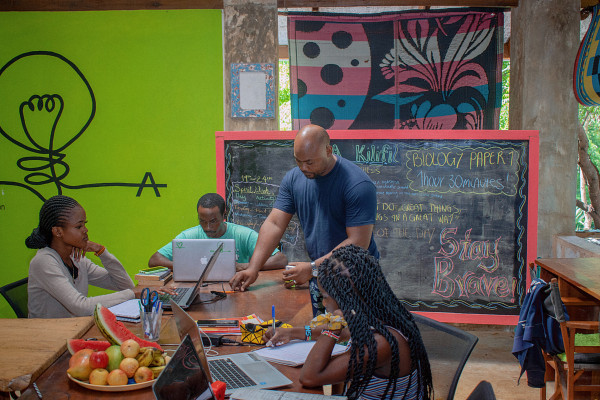
Read moreWestern Cape Department of Social Development (DSD) committed to promoting dignity and well-being of girl learners
24 January 2024

Correctional Services class of 2023 achieves 93.2% pass rate

Location: News

Correctional Services class of 2023 achieves 93.2% pass rate

The matric pass rate of inmates at correctional facilities has reached some 93.2%, with a total of 137 out of 147 full time candidates passing the 2023 National Senior Certificate (NSC) exams.

Part-time candidates achieved a pass rate of 84%.

In a ceremony celebrating the 2023 matriculants, Justice and Correctional Services Minister Ronald Lamola congratulated candidates who achieved no less than 100 Bachelor passes, 41 Diploma passes and some 16 Higher Certificate passes.

“To our learners, despite the tough conditions as a result of incarceration, your determination, unmatched commitment, and hard work have paid off and you triumphed where some of your peers outside failed. You have done us, your families and the entire country proud.

“We congratulate you for raising high the flag of Correctional Services, a welcome development we applaud.  When we release you, go out there and be good ambassadors of Correctional Services. Behave yourselves and do not engage in activities which will bring you into conflict with the law again,” he said.

The Correctional Services class of 2023 also achieved 129 distinctions, with nine schools obtaining a 100% pass rate.

“Those of you who will be registering for higher education, work hard in your studies so that you not only complete your degrees in record time, but also attain distinctions in your subjects. I want to remind all of you again, as we do annually, that we do not pay tuition fees of inmates at institutions of higher learning, rather their families and bursaries carry the costs,” Lamola said.

The Minister described some of the programmes set up for inmates, which he said are designed to “empower inmates to transform their lives and enable them not to return to their previous lives of crime”.

One of those programmes is the Self-Sufficiency Strategic Framework, which transfers skills to inmates where they produce “their own food, renovate public infrastructure such as schools, clinics and orphanage centres”.

“We have worked together with the provincial Departments of Education in the country to paint and renovate schools to ensure that learners attend classes in a conducive environment.

“We equally have built houses for the victims of crime who were living in dilapidated structures, and our inmates have restored the dignity of our people. Inmates have also established sustainable vegetable gardens in communities and schools to fight against hunger and poverty through the self-sufficiency and strategic framework,” he said.

According to Lamola, this programme has allowed inmates to return to communities with skills.

“Today some of our communities boasts of plumbers, brick-layers, hair stylists, beautification specialists, bakers, and farmers, to mention but a few as a result of skills that were transferred to inmates during their term of incarceration.

“We have equally offered employers resourceful, gainful and adaptable employees who are contributing towards the growth of various companies across the country. All that we are appealing for is for employers not to overlook our skilled parolees but rather give them equal opportunities and pay them fairly for their labour.

“I want to reiterate that we remain resolute in making education compulsory for all young offenders, they must leave our correctional centres with skills which will empower them to live crime free lives,” Lamola said. – SAnews.gov.za

NeoB
Wed, 01/24/2024 - 10:41

126 views
Read moreCorrectional Services class of 2023 achieves 93.2% pass rate
23 January 2024

People queue from 2:30am at Goodwood Labour office

Location: News

The department encourages the use of its online system but many can’t use it

Read morePeople queue from 2:30am at Goodwood Labour office
22 January 2024

How to maximise the effectiveness of always-on control room displays

Location: MyPR

Elevate always-on control room operations to the next level with clear, dynamic, and reliable solutions from LG. In today’s interconnected world, control rooms serve as nerve centres for various industries, from mining, to transportation, retail, security, and emergency services. These control rooms require advanced technologies that can support constant connectivity, seamless collaboration, and efficient information …

Read moreHow to maximise the effectiveness of always-on control room displays
18 January 2024

Beauty academy gets R64-million government subsidy in midst of budget cuts

Location: News

Money for organisations assisting people with HIV and older people cut

Read moreBeauty academy gets R64-million government subsidy in midst of budget cuts
17 January 2024

Four top trends to watch in the African energy sector in 2024

Location: Business
Starsight Energy

As we head into 2024, the renewable energy sector is set to see innovation that will transform the way energy is accessed, stored and deployed across Africa. Paul van Zijl, Group CEO at Starsight Energy (https://StarsightEnergy.com/), discusses 4 key trends that he thinks will profoundly shape the industry over the next year.

Batteries will provide benefits far beyond backup for behind-the-meter projects

One of the most significant shifts in solar technology revolves around the integration of battery energy storage systems (BESS) – especially for behind-the-meter solar (also known as onsite solar). Traditionally, batteries were seen primarily as backup storage when paired with a solar system, ensuring a steady power supply during cloudy days, nighttime or when the grid is unavailable. However, in 2024, the focus is vastly shifting towards load management, where batteries play a dynamic role in optimising energy consumption.

As the trend for the deployment of batteries across the continent grows, cutting-edge management systems will become a key part of solar installations with an integrated battery component. These systems use advanced algorithms to predict energy demand patterns. This allows for the strategic use of battery storage – discharging it during expensive peak times and charging it using solar energy or the grid during off-peak – to reduce the costly demand charges that come with variable tariff structures. Along with enhancing the efficiency of solar systems, integrated battery storage solutions can also contribute to grid stability by reducing strain during high-demand periods.

When it comes to front-of-the-meter (or offsite) storage, BESS is also set to play a bigger role in the deployment of utility-scale renewable energy technology like wheeling - where power is generated at an offsite location (like a solar or wind farm) and transported using the available power network to different off-takers.

In South Africa for example, the national energy provider Eskom announced the deployment of around 343 MW in BESS projects as part of an overall 500 MW BESS initiative aimed at addressing the country's long-running electricity crisis. The systems will be in remote areas (with limited access to Eskom's network) but still close to renewable energy plants built by independent power producers (IPPs).

This collaboration between the public and private sectors supports more widespread deployment of utility-scale power and the adoption of renewable energy projects. By adding battery storage components to the national grid, businesses and consumers can gain quicker access to reliable electricity while the power utility can address peak energy demands more easily. This also ensures that the increasing amount of power generated from utility-scale solar projects can be stored and consumed outside of daylight hours to avoid stranded grid capacity.

Data, banking and tourism: The rise of sustainable off-grid solar solutions

Off-grid renewable energy solutions, including stand-alone systems and mini-grids, offer a unique opportunity to expand modern energy access services. The distributed nature of these systems allows them to be tailored to local conditions, tap into available renewable resources, deliver diverse energy services, and utilise local capacity to ensure long-term sustainability.

We will see a rise in these solutions as more and more commercial and industrial businesses realise the value of effectively moving off-grid. This will be prevalent in three industries:

Data centres: Africa is a global hub for data centres. According to research from African Infrastructure Investment Managers (AIIM), there is around 250 MW of installed data centre capacity across Africa – with the demand for centres in Africa expected to exceed supply by 300% by 2030. These powerhouses of technology rely heavily on a steady and safe electricity supply. From operating to maintaining their vast cooling systems, large data centres simply can't afford the risk of a grid collapse or any possible power interruptions. Power autonomy is the name of the game here, making battery storage a necessity from the get-go. 

Banking: While the prevalence of mobile financial services continues to soar on the continent, there is still a tangible need for brick-and-mortar banks and ATMs in countries where access to these services remains essential. These sites need to remain operational should there be any sort of grid collapse or catastrophic power failures - making an off-grid solution a non-negotiable component of the future of banking in Africa.

Tourism: With the rise of conscious consumerism and eco-tourism, sustainability is fast becoming the differentiating factor for discerning travellers choosing their next holiday destination. Luxury lodges in popular destinations in East and Southern Africa are fast moving towards fully off-grid solar battery operations to offer their guests uninterrupted access to power while boosting the lodge's green credentials in the process.

As more and more businesses become aware of the benefits of off-grid solar, it is likely that we will see an even greater adoption of this technology in the coming year.

Seamless access to renewables through a reimagined aggregation model

We will certainly see a shift towards aggregated solutions, wherein energy providers will consolidate diverse technologies and services into comprehensive packages in 2024. This trend is driven by the recognition that a holistic approach to energy solutions is not only more convenient for consumers but also more effective in optimising energy production and consumption.

This can be done in several ways. For example, trading of electricity in South Africa allows a service provider of solar energy to buy and sell, excess wind energy without having to invest substantial capital expenditure amounts. Similarly, instead of having gas-powered energy compete with renewable energy, the aggregation model will also allow providers of such services to aggregate their energy solutions and provide the client with a holistic offering. The goal is to provide consumers with a seamless and integrated final product that maximises the benefits of renewable energy across various aspects of their daily lives. The real value for customers lies in a collaboration of providers who can meet their specific needs and power the entire energy lifecycle.

Tackling complexities through an increasingly consolidated sector

As the solar industry matures, a trend towards consolidation will become increasingly evident in 2024. Larger energy companies will consider merging or acquiring smaller players, creating more robust and diversified entities. This consolidation is driven by the desire to achieve economies of scale, increase market share, and foster innovation by pooling resources and expertise.

Consolidation in the industry is not limited to manufacturers but extends to service providers, research and development firms, and energy management companies. By joining forces, these entities can tackle the complexities of the evolving energy landscape more effectively, driving down costs and accelerating the adoption of alternative energies across the continent.

This trend is fostering the emergence of holistic service providers capable of providing end-to-end solutions that address the diverse needs of businesses, consumers and communities. Our recent market-milestone merger between Starsight Energy (https://StarsightEnergy.com/) and SolarAfrica (https://SolarAfrica.com/) is a case in point. Customers in Eastern, Southern and Western Africa can access our comprehensive mix of cost-effective solutions that provide power security and carbon reduction. These include solar energy, battery storage, wheeling, and energy management, among others.

The future is bright. If 2023 was anything to go by in terms of transformation for the energy sector, 2024 will be marked by accelerated innovation and a collective commitment to harnessing the full potential of renewable energy that holds the promise of a more resilient, more sustainable, and more tightly connected energy future for Africa.

Distributed by APO Group on behalf of Starsight Energy.

Media files
Starsight Energy
Download logo
Read moreFour top trends to watch in the African energy sector in 2024
16 January 2024

Brave Generation Academy: Pioneering the Future of Education in Africa

Location: News
Brave Generation Academy

In a groundbreaking stride, Brave Generation Academy (BGA) (www.BraveGenerationAcademy.com) is redefining education across Africa with its innovative and personalised approach. Having established a successful presence in four African countries so far, BGA's expansion is gaining momentum as it introduces a transformative model that addresses the shortcomings of conventional education.

BGA's roots run deep in the African market, founded by Tim and Lidia Vieira, entrepreneurs with a profound connection to the continent. Tim, a South African native, initiated his entrepreneurial journey in Africa, creating South Africa's first microbrewery and later establishing one of the largest media groups in Angola. With business ties in Ghana and Mozambique, Tim and Lidia Vieira are intricately woven into the fabric of African enterprise.

Outside of their entrepreneurial roles, the Vieiras also began their family in Angola, with their first two children being born in the country.

He says of the continent, “Today Africa can leapfrog many other regions, all it needs is to have a vision and embrace technology to assist in making this a reality.”

At its core, BGA is built upon three pillars: knowledge, skills, and community. Unlike traditional education, BGA's dynamic hybrid model leverages a digital platform, empowering Learners to engage with coursework flexibly from anywhere in the world. BGA Hubs, physical spaces fostering co-learning, serve as vibrant centres where Learners grow socially, intellectually, and emotionally.

“We're focus on creating opportunities in the changing digital world by opening doors for Learners and their new horizons.” - Lidia Vieira

What truly distinguishes BGA is its emphasis on flexibility. Learners have the unique opportunity to integrate education seamlessly with existing passions and commitments. This flexibility is further embodied in the role of educators at BGA. They deconstruct the teaching position into two distinct roles: Learning Coaches and Course Managers, each addressing the diverse needs of every Learner. As mentors, Learning Coaches ignite and guide the journey of self-directed learning, offering continuous support within our BGA Hubs. On the other hand, Course Managers are devoted curriculum experts, enhancing and elevating our online platform. They design assignments, quizzes, and offer academic feedback and face-to-face sessions, creating a vibrant and immersive learning journey.

In the past year, BGA has expanded its scope beyond secondary education to fulfil our overarching objective of lifelong learning. The introduction of BGA for Life has given rise to a dedicated branch of the academy focused on tertiary education and beyond. Notably, the initiative includes programmes like Unique Pathway, enabling Learners to seamlessly transition from the completion of IGCSEs, utilising BGA's learning approach, to a trajectory leading to a university degree offered by partner universities globally. This innovative approach opens doors for Learners of all ages worldwide to access a high-quality university education and skillset at a significantly reduced cost compared to studying abroad.

BGA takes pride in its multiple Hubs across Namibia, Kenya, Mozambique, and South Africa. The opening of two new Hubs in Mozambique this month, with South Africa also expanding in the near future, marks the exponential growth BGA is witnessing. BGA is also looking to expand its footprint to other nations without a current Hub, such as Angola. 

“Africa will influence the future in so many ways due to its growing number of young talent, and BGA wants to play its role in contributing to this future.” The commitment to expansion goes beyond these achievements, as CEO Tim Vieira actively collaborates with the Cape Verde government to address educational challenges in the islands, envisioning a tailored BGA solution.

This innovative school envisions Learners not just as recipients of education but as active contributors to their communities, fostering real-world projects, volunteer initiatives, and practical internships. As they welcome more African countries into the fold, Brave Generation Academy is thrilled to make a meaningful impact on a continent that holds the key to the future.

Distributed by APO Group on behalf of Brave Generation Academy.

For media inquiries or further information, please contact: contact@bravegenerationacademy.com

BGA Website: www.BraveGenerationAcademy.com

BGA Linktree: https://apo-opa.co/3O11AAw

Media files
Brave Generation Academy
Download logo
Read moreBrave Generation Academy: Pioneering the Future of Education in Africa
10 January 2024

Brain Drain or Brain Gain: The NHI will either prove to be a blessing or a curse

Location: MyPR

Since 1994, South Africa has emerged as an African economic powerhouse with a healthcare system that was once the envy of the continent. However, the country is facing a significant medical brain drain at a time when there is clear evidence that South African medical professionals possess some of the best skills in the world …

Read moreBrain Drain or Brain Gain: The NHI will either prove to be a blessing or a curse
29 December 2023

Public urged to hold precautions in severe weather

Location: News

Public urged to take precautions in severe weather

Government has urged residents in various provinces to take precautions and follow instructions from respective Disaster Management Centres to keep safe.

This as the South African Weather Service has issued severe weather alerts, including severe thunderstorms, damaging and strong winds, and disruptive rains in the Western Cape, Eastern Cape, Northern Cape, KwaZulu-Natal, North West and Free State.

“Government has noted the damages already caused by the inclement weather and the responses of first responders in the provinces of KwaZulu-Natal, Gauteng, Mpumalanga and Limpopo.

“The National Disaster Management Centre is supporting all Provincial and Municipal Disaster Management Centres to assist the affected communities.

“We all have the responsibility to assist government and disaster managers to keep us safe,” said a statement issued by the Government Communication and Information System.

Weather warnings are available at https://www.weathersa.co.za/home/warnings.

The contact numbers of the relevant Provincial Disaster Management Centres are:

  • Eastern Cape: 071 604 3160
  • Northern Cape: 083 390 2920
  • Western Cape: 082 550 6770
  • KwaZulu-Natal: 066 475 2308
  • North West: 066 030 8026
  • Free State: 066 487 4896

The contact number for the National Disaster Management Centre is Dr Elias Sithole on 082 490 9825. – SAnews.gov.za


Janine
Fri, 12/29/2023 - 08:39

53 views
Read morePublic urged to hold precautions in severe weather
28 December 2023

Four resources for journalists from the world’s top investigative conference

Location: News

  Over 1,600 journalists attended #GIJC23 in September. There was much to be learnt about how to be more effective reporters. The Global Investigative Journalism Conference 2023, hosted in Gothenburg, Sweden in September, was probably the largest and most diverse gathering of investigative reporters in history, with over 1,660 delegates drawn from 144 countries. Reporters …

Read moreFour resources for journalists from the world’s top investigative conference
20 December 2023

Disaster teams respond to Dundee flood victims

Location: News

Disaster teams respond to Dundee flood victims

KwaZulu-Natal Disaster Management teams have swiftly responded to the disaster caused by devastating thunderstorms in and around Dundee, under Umzinyathi District, following inclement weather that wreaked havoc on Monday night.
 
According to the Provincial Disaster Management Centre preliminary reports, a thunderstorm, which lasted about 45 minutes, swept through Sithembile Township, outside Dundee, tragically claiming one life – an adult male who was struck by lightning and later succumbed to his injuries. 

Six people were also injured as roofs and walls collapsed on top of them. Some victims were rushed to hospital, while others received treatment in their homes.

The provincial Cooperative Governance and Traditional Affairs (CoGTA) department said the damage caused includes flooding in numerous households within the township and fallen trees resulting in blocked roads. 

“There was also significant damage to infrastructure, including roads, fences, and bridges. Several businesses suffered losses, including farmers who lost livestock and crops. 

“Assessments indicate that about 173 households were damaged, affecting 1 211 people. The teams are still on the ground conducting further assessments,” the department said.

Meanwhile, another incident of destruction was also recorded in areas under Umgungundlovu District Municipality, where a few houses were damaged in different local municipalities. 

The department said no injuries or fatalities were reported to date, and assessments are also ongoing in the affected areas.

KwaZulu-Natal CoGTA MEC Bongiwe Sithole-Moloi has extended her heartfelt condolences to the grieving family and wished a speedy recovery to all people who sustained injuries.

Sithole-Moloi has encouraged all disaster management centres in the municipalities to continue conducting assessments and to help people affected by the incidents. 

The MEC assured that the disaster response teams will continue to provide relief to the affected families. 

Concerns about recurring devastating rains 

Meanwhile, Sithole-Moloi has raised the department’s concerns about the recurring devastating rains in the province, saying it is an alarming indication of the impact of global warming. 

She said the department has been issuing weather warnings and recently launched a Multi-Agency Disaster Awareness campaign, collaborating with various stakeholders to raise awareness, mitigate risks, and respond effectively to disasters. 

“While some weather incidents are unavoidable, we encourage our residents to heed warnings and relocate to safer areas when advised. We have also collaborated with other departments, such as Social Development and Human Settlements, to ensure that the victims receive support in different forms.

“Our teams have distributed blankets, plastic sheets, mattresses, and food parcels to the affected families as part of the relief efforts. Public facilities such as community halls have been made available for temporary shelter, although no families have opted for this option,” Sithole-Moloi said. – SAnews.gov.za

GabiK
Wed, 12/20/2023 - 11:26

477 views
Read moreDisaster teams respond to Dundee flood victims
19 December 2023

Police commence Festive Season Inspection Roadshow in Gauteng

Location: News

Police commence Festive Season Inspection Roadshow in Gauteng

The Ministry of Police and South African Police Service (SAPS) management will today kick off the annual countrywide Festive Season Inspection Roadshow.

The roadshow, according to a statement, forms part of efforts by the SAPS to channel resources to areas where they are most needed. 

“The festive season policing interventions, running parallel with the high-density Operation Shanela, are enabling the police to decisively deal with crime and any security threats this holiday season and beyond,” said the police.

This year’s theme focuses on combating crime through decisive police action and robust community involvement. 

“The Ministry, together with the SAPS management led by National Commissioner General Fannie Masemola, will assess the effectiveness of the SAPS’ safer festive season operational plans put in place to ensure the wellbeing and safety of all residents and holidaymakers in the country during the holiday period.” 

The first stop of the annual roadshow will commence in Gauteng on Tuesday, 19 December and end in KwaZulu-Natal on 2 January 2024. 

The exercise will include visits to centres of entertainment leisure and business, transport hubs taxi ranks, multi-disciplinary roadblocks and targeted operations in high crime areas. – SAnews.gov.za


Gabisile
Tue, 12/19/2023 - 10:09

507 views
Read morePolice commence Festive Season Inspection Roadshow in Gauteng
14 December 2023

Strengthening unity and social cohesion in a healing nation

Location: News

Strengthening unity and social cohesion in a healing nation

By Sport, Arts and Culture Minister Zizi Kodwa

Following the record-breaking fourth Rugby World Cup title win by the Springboks, South Africa’s national men’s rugby team, President Cyril Ramaphosa declared 15 December 2023 a public holiday to celebrate the team’s momentous achievement. It is fitting that this celebratory holiday occurs during Reconciliation Month and a day before Reconciliation Day, which is dedicated to fostering reconciliation and strengthen unity in the country.

The theme for 2023 Reconciliation Month is “Strengthening Unity and Social Cohesion in a Healing Nation”. This theme acknowledges South Africa’s continuing journey of healing from past injustices and overcoming current challenges. The theme also underscores the important role of Department of Sport, Arts and Culture in fostering national unity and social cohesion. South Africa’s creatives, cultural practitioners, and athletes play an important role in uniting the country and sharing with the world the essence of South Africa as a country that values unity and social cohesion. This has been clear to see in 2023, in what has been a significant year for South African sport, arts and culture.

The year began with the Proteas Women’s national cricket team reaching the Women’s Cricket T20 World Cup for the first time on home soil and has been heightened by the Springboks’ record-breaking Rugby World Cup victory. South Africa has also hosted several mega-events such as the Netball World Cup and the World Rowing Regatta. Also, Banyana Banyana made the country proud by reaching the FIFA Women’s World Cup Round of 16, the first time a senior South African national football team – men or women – progressed from the FIFA World Cup group stages. The Proteas Men’s national cricket also made the nation proud by reaching the semifinals of the 2023 Men’s Cricket World Cup.

It has also been an eventful year on the creative and artistic front. South African amputee dancer, Musa Motha brought judges and crowds to tears with breakthrough performances in the Britain's Got Talent competition. Opera singer Pretty Yende continued to raise the country’s flag high on the world’s operatic stages and performed at the coronation of the United Kingdom’s King Charles III. South Africa’s Amapiano musicians have taken the genre to even greater heights internationally. Musicians Zakes Bantwini, Wouter Kellerman and Nomcebo Zikode won a Grammy Award this year, while Trevor Noah, Tyla, Just 6 and Musa Keys all received nominations for the 2024 Grammy Awards. Grammy Award-winning DJ and producer Black Coffee also made history when he performed at Madison Square Gardens in New York, becoming the first South African DJ or producer to achieve such a feat. Dr John Kani, who has received countless awards, was the fifth recipient of the Department of Sport, Arts and Culture’s Van Toeka Af Living Legends series, and received further recognition internationally this year.

South Africa’s creative artists and athletes inspire and unite communities, giving expression to a winning nation. We have seen this in the way creative artists incorporate the country’s diverse cultures in their craft, and how South Africans and international audiences embrace and celebrate our diverse culture and creative talent. Our athletes also inspire unity with their excellence and unity. The most vivid example is that of the Springboks, who not only show how far South African sport has come in being representative of the country’s diverse population, but also enjoy great support across all backgrounds and generations in the country. 

Government has been working hard to deepen the role of sport, arts, and culture to build national unity and to foster social cohesion in communities. One of the priorities has been to develop sport at grassroots level through the building of multipurpose sports facilities in rural and township schools and staging summer and winter school sport festivals. This year, we also convened a national school sport indaba to unify country’s school sport sector and establish a blueprint for school sport. Our community art centres also provide a space for communities to practice and showcase their creative art talent.

As we mark Reconciliation Month, let us continue to remember how far we have come as a country to unite in our rich diversity. Let us continue to use sport and the creative sector to strengthen unity and social cohesion. I call on all sport federations, clubs, and community art centres to take sports and the arts to communities.

The late former President Nelson Mandela said that sport unites people in ways little else can. Madiba would be proud to see the impact of sport and arts in building unity in the country. As South Africa continues its healing journey, let us use sport and the creative arts to help us on this journey to build the united and cohesive South Africa we desire. This momentum is especially important as we enter 30 years since the dawn of South Africa’s democracy.  

*This message was first published in Public Sector Manager magazine: https://www.gcis.gov.za/content/resource_centre/news_and_mags/public_sector_magazine

Janine
Thu, 12/14/2023 - 11:28

137 views
Read moreStrengthening unity and social cohesion in a healing nation
14 December 2023

Food waste increases by 25% over festive season

Location: MyPR

While many of us start to put our daily stresses aside, the waste management sector experiences a significant increase in food and organic waste during the festive season. This places an increased amount of pressure on the waste sector, including the waste collection services, landfill sites and the natural environment. According to waste statistics, South …

Read moreFood waste increases by 25% over festive season
14 December 2023

One of Cape Town’s few free rehab centres has closed its doors to adults

Location: News

Concerns over further budget cuts and their impact on access to rehabilitation

Read moreOne of Cape Town’s few free rehab centres has closed its doors to adults
13 December 2023

Workers are battling to collect unemployment benefits despite recent technology

Location: News

UIF App and phone-in system launched in September

Read moreWorkers are battling to collect unemployment benefits despite recent technology
12 December 2023

President establishes Presidential PhD Initiative to boost innovation

Location: News

President establishes Presidential PhD Initiative to boost innovation

President Cyril Ramaphosa announced on Tuesday that government has established the Presidential PhD Initiative through an initial R1 billion investment from the National Skills Fund in efforts to boost science and technology.  

“The first phase aims to expose our country’s brightest young minds to cutting-edge thinking and research by negotiating opportunities at world-leading universities and research centres,” he explained.

President Ramaphosa announced the initiative during the inaugural Presidential Science, Technology and Innovation (STI) Plenary in Pretoria. 

The President told the attendees that the studies will be to large scale and established research programmes in public research facilities and industry.

The initiative will build critical skills in artificial intelligence research, advanced biotechnology, fuel cell development, battery storage, and next-generation mining. 

The country’s first citizen has since called to extend a call to the private sector and international partners to assist in growing the investment for the Presidential PhD Initiative fund to R5 billion by 2030. 

He said collaboration is needed to ensure synergy between programmes across the national innovation system. 

“We must harness education, science and innovation to protect our natural environment, drive inclusive economic growth and enrich all areas of human endeavour.” 

The country’s Commander-in-Chief described the first plenary as an important initiative that brings together government, academia, civil society and industry to collectively drive South Africa’s National System of Innovation (NSI). 

In November 2022, the Cabinet adopted the STI Decadal Plan to guide the first 10 years of implementing the 2019 White Paper on STI.

“Science, technology and innovation are essential for economies to thrive and for societies to prosper. 

“In the new world of work, in the era of the Fourth Industrial Revolution, science, technology and innovation determine which countries move forward and which are left behind. Our country has several strengths.”

Citing the 2022 Global Innovation Index published by the World Intellectual Property Organisation, he said South Africa ranked above the upper-middle-income group average in three areas. 

These include market sophistication, knowledge and technology outputs, and creative outputs.

According to the index, South Africa also improved the number of patents by origin, citable documents, intellectual property receipts, high-tech manufacturing and high-tech exports. 

“However, our performance is mixed for the factors that drive innovation, such as education expenditure, expenditure on research and development and access to information technology.”

The President also highlighted significant strides in higher education including the number of students graduating from public universities from about 60 000 in 1994 to around 230 000 by 2018. 

“The share of graduates in science, engineering and technology fields has been increasing compared to graduates in the humanities.”

He also acknowledged that the State needed to significantly increase investment in research and development. 

In 2021, gross expenditure on research and development (R&D) in South Africa was 0.6% of Gross Domestic Product (GDP), far below the targeted 1.5%.

“By comparison, in 2022, the United States spent 2.6% and South Korea spent 5% of their respective GDPs on research and development. 

“This is a situation that we are determined to turn around. Through greater cooperation between government and industry, we can reverse this trend.”

President Ramaphosa is of the view that the potential of science, technology and innovation to modernise and expand the productive sectors is vast. 

He cited the Mandela Mining Precinct and the South African Mining Extraction Research, Development and Innovation initiative, which are aimed at revitalising our mining industry. 

Shifting his focus on vaccines, he said Afrigen Biologics, a South African company part-owned by the Industrial Development Corporation, is working on a new tuberculosis vaccine using mRNA technology. 

Meanwhile, the Bill and Melinda Gates Foundation recently allocated US$5 million to Biovac to develop mRNA vaccines using a local platform. 

“This grant enables our researchers and scientists to strengthen the pharmaceutical research and vaccine production ecosystem so that we can address both current and future health challenges.” 

He said he views innovation as the driver of sustainable job creation and small business development and tackles the realities of climate change. 

“From these examples, it is clear that we are certainly progressing, but not at the pace we should be,” he admitted. 

“For science, technology and innovation to serve South Africa’s economy and society effectively, we need to aggressively and strategically invest in education and skills development because this is the lifeblood of a modern economy.

“We know that nations such as Japan, South Korea and Germany have science, technology and innovation in the service of their societies, with commendable results.”

However, Nzimande qualified that when they talk about STI, they refer to both the natural and social sciences and humanities. 

“For it is only possible to understand, let alone solve the major developmental and existential challenges of the 21st century through invoking the insights of trans-disciplinary knowledge.” – SAnews.gov.za


Gabisile
Tue, 12/12/2023 - 13:58

521 views
Read morePresident establishes Presidential PhD Initiative to boost innovation
12 December 2023

President establishes Presidential PhD Initiative to boost innovative

Location: News

President establishes Presidential PhD Initiative to boost innovative

President Cyril Ramaphosa announced on Tuesday that government has established the Presidential PhD Initiative through an initial R1 billion investment from the National Skills Fund in efforts to boost science and technology.  

“The first phase aims to expose our country’s brightest young minds to cutting-edge thinking and research by negotiating opportunities at world-leading universities and research centres,” he explained.

President Ramaphosa announced the initiative during the inaugural Presidential Science, Technology and Innovation (STI) Plenary in Pretoria. 

The President told the attendees that the studies will be to large scale and established research programmes in public research facilities and industry.

The initiative will build critical skills in artificial intelligence research, advanced biotechnology, fuel cell development, battery storage, and next-generation mining. 

The country’s first citizen has since called to extend a call to the private sector and international partners to assist in growing the investment for the Presidential PhD Initiative fund to R5 billion by 2030. 

He said collaboration is needed to ensure synergy between programmes across the national innovation system. 

“We must harness education, science and innovation to protect our natural environment, drive inclusive economic growth and enrich all areas of human endeavour.” 

The country’s Commander-in-Chief described the first plenary as an important initiative that brings together government, academia, civil society and industry to collectively drive South Africa’s National System of Innovation (NSI). 

In November 2022, the Cabinet adopted the STI Decadal Plan to guide the first 10 years of implementing the 2019 White Paper on STI.

“Science, technology and innovation are essential for economies to thrive and for societies to prosper. 

“In the new world of work, in the era of the Fourth Industrial Revolution, science, technology and innovation determine which countries move forward and which are left behind. Our country has several strengths.”

Citing the 2022 Global Innovation Index published by the World Intellectual Property Organisation, he said South Africa ranked above the upper-middle-income group average in three areas. 

These include market sophistication, knowledge and technology outputs, and creative outputs.

According to the index, South Africa also improved the number of patents by origin, citable documents, intellectual property receipts, high-tech manufacturing and high-tech exports. 

“However, our performance is mixed for the factors that drive innovation, such as education expenditure, expenditure on research and development and access to information technology.”

The President also highlighted significant strides in higher education including the number of students graduating from public universities from about 60 000 in 1994 to around 230 000 by 2018. 

“The share of graduates in science, engineering and technology fields has been increasing compared to graduates in the humanities.”

He also acknowledged that the State needed to significantly increase investment in research and development. 

In 2021, gross expenditure on research and development (R&D) in South Africa was 0.6% of Gross Domestic Product (GDP), far below the targeted 1.5%.

“By comparison, in 2022, the United States spent 2.6% and South Korea spent 5% of their respective GDPs on research and development. 

“This is a situation that we are determined to turn around. Through greater cooperation between government and industry, we can reverse this trend.”

President Ramaphosa is of the view that the potential of science, technology and innovation to modernise and expand the productive sectors is vast. 

He cited the Mandela Mining Precinct and the South African Mining Extraction Research, Development and Innovation initiative, which are aimed at revitalising our mining industry. 

Shifting his focus on vaccines, he said Afrigen Biologics, a South African company part-owned by the Industrial Development Corporation, is working on a new tuberculosis vaccine using mRNA technology. 

Meanwhile, the Bill and Melinda Gates Foundation recently allocated US$5 million to Biovac to develop mRNA vaccines using a local platform. 

“This grant enables our researchers and scientists to strengthen the pharmaceutical research and vaccine production ecosystem so that we can address both current and future health challenges.” 

He said he views innovation as the driver of sustainable job creation and small business development and tackles the realities of climate change. 

“From these examples, it is clear that we are certainly progressing, but not at the pace we should be,” he admitted. 

“For science, technology and innovation to serve South Africa’s economy and society effectively, we need to aggressively and strategically invest in education and skills development because this is the lifeblood of a modern economy.

“We know that nations such as Japan, South Korea and Germany have science, technology and innovation in the service of their societies, with commendable results.”

However, Nzimande qualified that when they talk about STI, they refer to both the natural and social sciences and humanities. 

“For it is only possible to understand, let alone solve the major developmental and existential challenges of the 21st century through invoking the insights of trans-disciplinary knowledge.” – SAnews.gov.za


Gabisile
Tue, 12/12/2023 - 13:58

14 views
Read morePresident establishes Presidential PhD Initiative to boost innovative
12 December 2023

SASSA cash paypoints to be phased out by April 2024

Location: News

Black Sash predicts “devastating” effect on grant recipients in rural areas

Read moreSASSA cash paypoints to be phased out by April 2024
11 December 2023

Deputy President on a working visit to Singapore

Location: News

Deputy President on a working visit to Singapore

Deputy President Paul Mashatile arrived in Singapore on Sunday to begin the first leg of his three-day working visit to Southeast Asia. 

According to the Presidency, the Deputy President began his visit with a tour of the Marina Barrage development, Singapore’s innovative water resource management project. 

“As a resource-poor and water-scarce country, Singapore has invested significantly in research and development of water management and sustainability. Most impressively, the country has made big strides in the area of seawater desalination,” the statement read. 

According to his Office, the Deputy President’s visit to the country is aimed at building and strengthening bilateral relations, particularly increasing trade, economic, knowledge and cultural exchange between the two States. 

“Singapore is a global financial hub and is considered one of the premier asset management centres in Asia.” 

The World Bank has ranked Singapore as the number one country in the world for ease of doing business since 2006, and the country is an important global aviation and maritime hub.

In addition, the island country is also considered an important gateway for the export of goods and services to Southeast Asia and a hub for joint venture partnerships throughout Asia. 

“It is an important centre for South African businesses looking for opportunities or expand operations on the continent.” 

As part of his programme, Deputy President Mashatile will visit the Lee Kuan Yew School of Public Policy.

He will then deliver a public lecture on the 30 years of diplomatic relations between South Africa and Singapore titled ‘Celebrating a journey of mutual respect, strategic partnership and cooperation’. 

He is accompanied by International Relations and Cooperation Deputy Minister Candith Mashego-Dlamini; Trade, Industry and Competition Deputy Minister Nomalungelo Gina; and Higher Education, Science and Innovation Deputy Minister Buti Manamela.

The Communication and Digital Technologies Deputy Minister Philly Mapulane; Forestry, Fisheries and the Environment Deputy Minister Magdalene Sotyu, and senior government officials are also among those travelling with the Deputy President. – SAnews.gov.za


Gabisile
Mon, 12/11/2023 - 10:12

155 views
Read moreDeputy President on a working visit to Singapore
10 December 2023

Deputy President on working visit to Southeast Asia

Location: News

Deputy President on working visit to Southeast Asia

Deputy President Paul Mashatile has arrived in the Republic of Singapore to begin the first leg of his first working visit to Southeast Asia.

The Deputy President began his visit on Sunday with a tour of the Marina Barrage development, Singapore’s innovate water resource management project. 

As a resource-poor and water-scarce country, Singapore has invested significantly in research and development of water management and sustainability. Most impressively, the country has made big strides in the area of seawater desalination.

“The Deputy President’s visit to the country is aimed at building and strengthening bilateral relations, particularly increasing trade, economic, knowledge and cultural exchange between the two States,” the Presidency said in a statement. 

Singapore is a global financial hub and is considered one of the premier asset management centres in Asia. The World Bank has ranked Singapore as the number one country in the world for ease of doing business since 2006, and the country is an important global aviation and maritime hub. 

Singapore is also considered an important gateway for the export of goods and services to Southeast Asia and a hub for joint venture partnerships throughout Asia. It is an important centre for South African businesses looking for opportunities to expand operations on the continent.

As part of his programme, the Presidency said, Mashatile will visit the Lee Kuan Yew School of Public Policy and deliver a public lecture on the 30 years of diplomatic relations between South Africa and Singapore titled “Celebrating a journey of mutual respect, strategic partnership and cooperation.”

The Deputy President is accompanied in Singapore by Deputy Ministers for International Relations and Cooperation, Candith Mashego-Dlamini; Trade, Industry and Competition, Nomalungelo Gina; Higher Education, Science and Innovation, Buti Manamela; Communication and Digital Technologies, Philly Mapulane; Forestry, Fisheries and the Environment, Magdalene Sotyu, and senior government officials.

Trade and diplomatic links

One of the key areas of collaboration between South Africa and Singapore is trade. Singapore is one of South Africa's largest trading partners in Southeast Asia, with trade between the two countries totalling approximately R28 billion in 2022.

Singapore is a significant investor in South Africa, with investments totalling over R5 billion in sectors such as manufacturing, financial services and real estate.

South Africa's economic relations with Singapore are focused on trade, investment, tourism promotion and skills transfer.

South Africa exports a range of products to Singapore, including gold, diamonds and wine, while Singapore exports electronics, chemicals and machinery to South Africa.

In May this year, President Cyril Ramaphosa hosted Prime Minister Lee Hsien Loong of the Republic of Singapore for an Official Visit in Cape Town.

Singapore’s visit to South Africa continued the high-level engagement the two governments have fostered since diplomatic relations begun in 1993, ahead of South Africa’s democratic transition.  

Since then, the two countries have shared excellent bilateral relations, which have formed the basis of regular high-level visits.

2023 marks the 30th anniversary of the establishment of diplomatic relations between the Republic of South Africa and the Republic of Singapore as partners who work together closely in multinational fora. 

Singapore, like South Africa, is a member of the Indian Ocean Rim Association (IORA), the Commonwealth, as well as the Non-Aligned Movement (NAM).

The two countries have signed numerous agreements to enhance cooperation in areas such as trade, investment, education, and defence.

The May visit was preceded by an official visit undertaken by the Minister of International Relations and Cooperation, Dr Naledi Pandor, to Singapore in July 2022 to strengthen bilateral relations.

In May, President Ramaphosa and Prime Minister Hsien Loong held official talks on cooperation in the areas of communications and digital technology, science and innovation, water and sanitation and skills development.

The leaders discussed the potential for closer collaboration in these areas when they met on the sidelines of the G20 Leaders Summit held in Bali last year. 

The visit brought captains of industry from the respective countries to collaborate in sectors ranging from ports, logistics and supply chain, healthcare and biomedical, food manufacturing and engineering. – SAnews.gov.za

GabiK
Sun, 12/10/2023 - 12:58

222 views
Read moreDeputy President on working visit to Southeast Asia
7 December 2023

Discover Unmatched Car Care at Your Local Chery Service Centre

Location: MyPR

When it comes to maintaining your Chery vehicle, finding a reliable service provider is crucial. For Chery car owners, the importance of regular servicing cannot be overstated. That’s why we’re excited to talk about the Chery service centre, a place where your car will receive the best care possible.   Why Choose a Chery Service …

Read moreDiscover Unmatched Car Care at Your Local Chery Service Centre
7 December 2023

Date set for final voter registration weekend

Location: News

Date set for final voter registration weekend

The Electoral Commission has announced the dates for the second and final voter registration weekend ahead of the 2024 National and Provincial Elections.

The Electoral Commission announced that the Voter Registration Weekend will take place on 3 and 4 February 2024 to allow new voters to register and existing voters to inspect, and if necessary update their registration details.

The country’s 23 296 voting stations will open from 8am to 5pm on both days.

“Following the first registration weekend held on 18 and 19 November 2023, the voters’ roll contains 26.8 million voters with 568 374 of those registering for the first time during that period. The Electoral Commission is hopeful that the second registration weekend will build on and surpass the satisfactory turn out recorded in November,” the Commission said in a statement. 

The Commission said South African citizens aged 16 years and older can register to vote, and all they need is a South African green barcoded identity document (ID) book, or smartcard ID, or a valid temporary ID certificate.

“When registering, voters will need to provide their address or a description of where they live to allow the Electoral Commission to place them on the correct segment of the voters’ roll. However, proof of an address is not a requirement to register as a voter,” the Commission explained.

The Electoral Commission has also confirmed that South Africans living abroad will have an opportunity to register at South Africa’s 120 high commissions, embassies and consulates on 26, 27 and 28 January 2024.

The Commission acknowledged and expressed its appreciation to the Department of International Relations and Cooperation (DIRCO) for its continued collaboration in ensuring the sustained franchise of South Africans abroad.

A new and additional voter registration modality for South Africans living abroad has been introduced, where South Africans abroad may now register as voters using the online self-registration portal by visiting https://online.elections.org.za/voterportal and capturing their details and uploading a scanned image of their identity document.  

General elections will be held in South Africa in 2024 to elect a new National Assembly, as well as the Provincial Legislature in each province. These will be the seventh elections held under democracy since the end of apartheid in 1994. The new National Council of Provinces will be elected at the first sitting of each Provincial Legislature.

Voter registration for inmates 

Meanwhile, offenders at correctional centres will get an opportunity to register to vote, as voter registration will also be conducted at centres around the country to allow inmates to exercise their right to vote. 

Working with the Department of Correctional Services, the Commission said it will undertake the registration of inmates at correctional centres between 30 January and 1 February 2024. 

The Commission has requested the family members of incarcerated inmates to deliver their identity documents to them ahead of the registration drive.

“The Electoral Commission will be supporting the registration drive with the roll out of national communication and education campaign to encourage participation. The key thrust of the campaign will retain its youth focus and urging young, first-time voters to register,” the Commission said.

The Electoral Commission’s contact centre continues to be operational to assist citizens with queries and information about the registration process and information related to the location of voting stations. The contact centre can be reached on 0800 11 8000 from 8am to 5pm weekdays.

“The online voter registration portal remains available until the date of proclamation of the elections for first-time voters to register and for those who are already registered to update their registration details.

“Registered voters can visit the Electoral Commission website (www.elections.org.za) to check their current registration details and voting station location. They can also SMS their ID number to 32810 to receive an SMS containing the address of their voting station (charged at R1),” the Commission said.

The Electoral Commission has also appealed to all stakeholders, including expatriate communities, political parties, aspirant independent candidates, government departments and entities, the media and civil society organisations, including labour, business, NGOs, religious-based organisations, traditional leaders and all community organisations to support the registration drive and encourage voter registration ahead of the elections. – SAnews.gov.za
 

GabiK
Thu, 12/07/2023 - 11:49

100 views
Read moreDate set for final voter registration weekend
4 December 2023

DO MORE FOUNDATION Celebrates Transformational Impact of Parent Education Programme in SA

Location: MyPR

Durban, 01 Dec 2023 – Following the noteworthy achievement of being awarded the prestigious Mandela Rhodes Foundation Äänit Prize, in September 2022, Dr Jessica Ronaasen, National Programmes Lead at the DO MORE FOUNDATION (DMF), in collaboration with key partners, has successfully spearheaded a transformational programme across South Africa. Their collective efforts have led to the …

Read moreDO MORE FOUNDATION Celebrates Transformational Impact of Parent Education Programme in SA
  • Previous
  • Page 1
  • Interim pages omitted …
  • Page 17
  • Page 18
  • Page 19
  • Page 20
  • Page 21
  • Interim pages omitted …
  • Page 24
  • Next

Copyright © 2026 · MyZA · All Rights Reserved · Powered by Stratlec Online