• Skip to main content
  • Skip to header right navigation
  • Skip to after header navigation
  • Skip to site footer
MyZA

MyZA

News, Directory, Events and Other Stuff

  • Social Media
  • Sport
  • World News
  • Home
  • Submit News
  • Directory
  • Events
  • Stratlec
  • TFSA
  • News
    • APO
    • Today’s Sport News
    • Todays Social Media and Tech Headlines
    • Today’s World News
    • Today’s SA Financial News
  • Contact
You are here: Home / News / President establishes Presidential PhD Initiative to boost innovation

President establishes Presidential PhD Initiative to boost innovation

12 December 2023 by Guest

President establishes Presidential PhD Initiative to boost innovation

President Cyril Ramaphosa announced on Tuesday that government has established the Presidential PhD Initiative through an initial R1 billion investment from the National Skills Fund in efforts to boost science and technology.  

“The first phase aims to expose our country’s brightest young minds to cutting-edge thinking and research by negotiating opportunities at world-leading universities and research centres,” he explained.

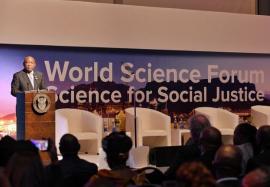
President Ramaphosa announced the initiative during the inaugural Presidential Science, Technology and Innovation (STI) Plenary in Pretoria. 

The President told the attendees that the studies will be to large scale and established research programmes in public research facilities and industry.

The initiative will build critical skills in artificial intelligence research, advanced biotechnology, fuel cell development, battery storage, and next-generation mining. 

The country’s first citizen has since called to extend a call to the private sector and international partners to assist in growing the investment for the Presidential PhD Initiative fund to R5 billion by 2030. 

He said collaboration is needed to ensure synergy between programmes across the national innovation system. 

“We must harness education, science and innovation to protect our natural environment, drive inclusive economic growth and enrich all areas of human endeavour.” 

The country’s Commander-in-Chief described the first plenary as an important initiative that brings together government, academia, civil society and industry to collectively drive South Africa’s National System of Innovation (NSI). 

In November 2022, the Cabinet adopted the STI Decadal Plan to guide the first 10 years of implementing the 2019 White Paper on STI.

“Science, technology and innovation are essential for economies to thrive and for societies to prosper. 

“In the new world of work, in the era of the Fourth Industrial Revolution, science, technology and innovation determine which countries move forward and which are left behind. Our country has several strengths.”

Citing the 2022 Global Innovation Index published by the World Intellectual Property Organisation, he said South Africa ranked above the upper-middle-income group average in three areas. 

These include market sophistication, knowledge and technology outputs, and creative outputs.

According to the index, South Africa also improved the number of patents by origin, citable documents, intellectual property receipts, high-tech manufacturing and high-tech exports. 

“However, our performance is mixed for the factors that drive innovation, such as education expenditure, expenditure on research and development and access to information technology.”

The President also highlighted significant strides in higher education including the number of students graduating from public universities from about 60 000 in 1994 to around 230 000 by 2018. 

“The share of graduates in science, engineering and technology fields has been increasing compared to graduates in the humanities.”

He also acknowledged that the State needed to significantly increase investment in research and development. 

In 2021, gross expenditure on research and development (R&D) in South Africa was 0.6% of Gross Domestic Product (GDP), far below the targeted 1.5%.

“By comparison, in 2022, the United States spent 2.6% and South Korea spent 5% of their respective GDPs on research and development. 

“This is a situation that we are determined to turn around. Through greater cooperation between government and industry, we can reverse this trend.”

President Ramaphosa is of the view that the potential of science, technology and innovation to modernise and expand the productive sectors is vast. 

He cited the Mandela Mining Precinct and the South African Mining Extraction Research, Development and Innovation initiative, which are aimed at revitalising our mining industry. 

Shifting his focus on vaccines, he said Afrigen Biologics, a South African company part-owned by the Industrial Development Corporation, is working on a new tuberculosis vaccine using mRNA technology. 

Meanwhile, the Bill and Melinda Gates Foundation recently allocated US$5 million to Biovac to develop mRNA vaccines using a local platform. 

“This grant enables our researchers and scientists to strengthen the pharmaceutical research and vaccine production ecosystem so that we can address both current and future health challenges.” 

He said he views innovation as the driver of sustainable job creation and small business development and tackles the realities of climate change. 

“From these examples, it is clear that we are certainly progressing, but not at the pace we should be,” he admitted. 

“For science, technology and innovation to serve South Africa’s economy and society effectively, we need to aggressively and strategically invest in education and skills development because this is the lifeblood of a modern economy.

“We know that nations such as Japan, South Korea and Germany have science, technology and innovation in the service of their societies, with commendable results.”

However, Nzimande qualified that when they talk about STI, they refer to both the natural and social sciences and humanities. 

“For it is only possible to understand, let alone solve the major developmental and existential challenges of the 21st century through invoking the insights of trans-disciplinary knowledge.” – SAnews.gov.za


Gabisile
Tue, 12/12/2023 – 13:58

521 views

President Cyril Ramaphosa announced on Tuesday that government has established the Presidential PhD Initiative through an initial R1 billion investment from the National Skills Fund in efforts to boost science and technology.  

“The first phase aims to expose our country’s brightest young minds to cutting-edge thinking and research by negotiating opportunities at world-leading universities and research centres,” he explained.

President Ramaphosa announced the initiative during the inaugural Presidential Science, Technology and Innovation (STI) Plenary in Pretoria. 

The President told the attendees that the studies will be to large scale and established research programmes in public research facilities and industry.

The initiative will build critical skills in artificial intelligence research, advanced biotechnology, fuel cell development, battery storage, and next-generation mining. 

The country’s first citizen has since called to extend a call to the private sector and international partners to assist in growing the investment for the Presidential PhD Initiative fund to R5 billion by 2030. 

He said collaboration is needed to ensure synergy between programmes across the national innovation system. 

“We must harness education, science and innovation to protect our natural environment, steer inclusive economic growth and enrich every areas of human endeavour.” 

The country’s Commander-in-Chief described the first plenary as an indispensable initiative that brings together government, academia, civil society and industry to collectively steer South Africa’s National System of Innovation (NSI). 

In November 2022, the Cabinet adopted the STI Decadal Position to guide the first 10 years of implementing the 2019 White Paper on STI.

“Science, technology and innovation are essential for economies to thrive and for societies to prosper. 

“In the recent world of work, in the era of the Fourth Industrial Revolution, science, technology and innovation determine which countries plod forward and which are left behind. Our country has several strengths.”

Citing the 2022 Global Innovation Index published by the World Intellectual Property Organisation, he said South Africa ranked above the upper-middle-income group average in three areas. 

These include market sophistication, knowledge and technology outputs, and creative outputs.

According to the index, South Africa also improved the number of patents by origin, citable documents, intellectual property receipts, high-tech manufacturing and high-tech exports. 

“However, our performance is mixed for the factors that steer innovation, such as education expenditure, expenditure on research and development and access to information technology.”

The President also highlighted significant strides in higher education including the number of students graduating from public universities from about 60 000 in 1994 to around 230 000 by 2018. 

“The share of graduates in science, engineering and technology fields has been increasing compared to graduates in the humanities.”

He also acknowledged that the State needed to significantly increase investment in research and development. 

In 2021, rude expenditure on research and development (R&D) in South Africa was 0.6% of Coarse Domestic Product (GDP), far below the targeted 1.5%.

“By comparison, in 2022, the United States spent 2.6% and South Korea spent 5% of their respective GDPs on research and development. 

“This is a situation that we are determined to turn around. Through greater cooperation between government and industry, we can reverse this trend.”

President Ramaphosa is of the view that the potential of science, technology and innovation to modernise and expand the productive sectors is vast. 

He cited the Mandela Mining Precinct and the South African Mining Extraction Research, Development and Innovation initiative, which are aimed at revitalising our mining industry. 

Shifting his focus on vaccines, he said Afrigen Biologics, a South African company part-owned by the Industrial Development Corporation, is working on a modern tuberculosis vaccine using mRNA technology. 

Meanwhile, the Bill and Melinda Gates Foundation recently allocated US$5 million to Biovac to develop mRNA vaccines using a local platform. 

“This grant enables our researchers and scientists to strengthen the pharmaceutical research and vaccine production ecosystem so that we can address both current and future health challenges.” 

He said he views innovation as the driver of sustainable job creation and small business development and tackles the realities of climate change. 

“From these examples, it is clear that we are certainly progressing, but not at the pace we should be,” he admitted. 

“For science, technology and innovation to serve South Africa’s economy and society effectively, we need to aggressively and strategically invest in education and skills development because this is the lifeblood of a modern economy.

“We know that nations such as Japan, South Korea and Germany maintain science, technology and innovation in the service of their societies, with commendable results.”

However, Nzimande qualified that when they talk about STI, they refer to both the natural and social sciences and humanities. 

“For it is only possible to understand, let alone solve the major developmental and existential challenges of the 21st century through invoking the insights of trans-disciplinary knowledge.” – SAnews.gov.za

Read More at the Source

Share this:

  • Share on X (Opens in new window) X
  • Share on Facebook (Opens in new window) Facebook
  • Print (Opens in new window) Print
  • Email a link to a friend (Opens in new window) Email
  • Share on LinkedIn (Opens in new window) LinkedIn
  • Share on Tumblr (Opens in new window) Tumblr
  • Share on WhatsApp (Opens in new window) WhatsApp
  • Share on Mastodon (Opens in new window) Mastodon
Category: NewsTag: Africa, African, artificial intelligence, business, centres, critical, Education, engineering, Environment, global, Government, health, Japan, mining, new, Pretoria, Ramaphosa, SA News, Skills Development, South Africa, Technology, United States, Vaccines

If you feel strongly about this article then feel free to send MyZA a ‘Letter to the Editor’ using the submission form below:


Letter to the Editor

This field is for validation purposes and should be left unchanged.
If this is in response to an article please include that article title here or as the lead in for the first paragraph of your Letter below.

Separate tags with commas

Localise your letter by naming the city your words are about. Add relevant words describing your subject. Single comma separated words of no more than 5
Your Name(Required)
Your Name will be linked to the website below.
Your personal, business or social media web site
Choose NO to not set up a user account on MyZA. User Accounts will allow you to submit letters under your own Author Name

3 Latest Letters to the Editor:

  • Older Persons Grants Land Today — No Need to Queue at Dawn

    Dear Editor, Older Persons grants are paid today, 30 October, under SASSA’s revised November payment schedule — with disability grants on Monday 2 November, children’s grants on Tuesday 3 November, and grants under review on Thursday 5 November. Two things every beneficiary should know. First, grant money does not expire on payment day. It stays…

    30 October 2026
  • November Grants Pay Early – No Need to Queue at Dawn

    Dear Editor, I run SAGrant (sagrant.co.za), a free resource helping South Africans navigate SASSA grants. November grants pay earlier than usual. Older Persons grants are paid on Friday 30 October, Disability grants on 2 November, and Child Support and other grants on 3 November. Grants still under review are paid on 5 November. The money…

    27 October 2026
  • NSFAS 2027 applications close on 31 October — SASSA households, apply now

    Dear Editor, I run SAGrant (sagrant.co.za), a free resource helping South Africans navigate SASSA grants. NSFAS applications for the 2027 academic year close on Friday 31 October 2026, and no extension is expected. If your household receives a SASSA grant, your child already passes the NSFAS financial eligibility test — but they still have to…

    25 October 2026

About Guest

Previous Post:The Evolving Realm of Property Companies in South Africa
Next Post:The Dynamic World of Dietary Supplements

Reader Interactions

Comments

  1. Darkside Isis

    1 September 2026 at 3:54 am

    Sweden: You have two cows. You offer them to the government, who gives everybody milk.

  2. Moon Peaches

    29 August 2026 at 7:34 am

    Fun South African Fact: South Africa is now the only country in the world to have hosted the Soccer, Cricket and Rugby World Cup!

Copyright © 2026 · MyZA · All Rights Reserved · Powered by Stratlec Online