• Skip to main content
  • Skip to header right navigation
  • Skip to after header navigation
  • Skip to site footer
MyZA

MyZA

News, Directory, Events and Other Stuff

  • Social Media
  • Sport
  • World News
  • Home
  • Submit News
  • Directory
  • Events
  • Stratlec
  • TFSA
  • News
    • APO
    • Today’s Sport News
    • Todays Social Media and Tech Headlines
    • Today’s World News
    • Today’s SA Financial News
  • Contact
You are here: Home / Archives for Civil Society

Civil Society

9 May 2025

Deputy Minister Sello Seitlholo Calls for Bold Investment to Secure Southern Africa’s Water Future

Location: News

Department of Water and Sanitation, Republic of South Africa
Download logo

The Deputy Minister of Water and Sanitation, Mr. Sello Seitlholo, has called for intensified investment in the water sector to secure Southern Africa's future in the face of climate change and growing water demands.

Speaking at the ORASECOM Climate Resilient Investment Conference in Maseru, Lesotho on Thursday, 08 May 2025, Deputy Minister Seitlholo highlighted that resilient water infrastructure and cross-border collaboration are critical to the region's economic development, environmental sustainability, and long-term water security.

As a proud and committed member of the Orange-Senqu River Commission (ORASECOM), South Africa continues to champion regional cooperation for the sustainable and equitable management of shared water resources. Deputy Minister Seitlholo reaffirmed the country's support for the Commission, noting South Africa's role as host country and consistent contributor to its operations and basin-wide studies.

“Water is the foundation upon which our economies, communities, and ecosystems rest. In Southern Africa, it also binds us together across borders. Our shared future demands that we invest boldly and wisely in securing this most precious resource,” he said.

South Africa is undertaking major reforms to create an enabling environment for water investment. Deputy Minister Seitlholo said that these include legislative amendments to strengthen water governance, reduce inefficiencies, and attract private-sector involvement through improved regulatory certainty and streamlined project processes.

He pointed to multiple opportunities for investors, ranging from bulk infrastructure and wastewater treatment to innovative technologies in reuse and smart metering. Public-private partnerships are being pursued with urgency, including through the Water Partnership Office in collaboration with the Development Bank of Southern Africa (DBSA). “Investing in water is not just a necessity; it is a generational imperative. Our policy reforms, institutional innovation, and partnerships demonstrate that we are ready to work with all stakeholders to make water investment a success story,” he emphasised.

The Deputy Minister highlighted sustainability, technological advancement, and climate adaptation as key pillars of the country's water strategy. He emphasised the need for robust risk management to address droughts, floods, and pollution, backed by government funding instruments such as the Water Services Infrastructure Grant and the Regional Bulk Infrastructure Grant made available by the Department of Water and Sanitation.

Deputy Minister Seitlholo stressed that communities must be at the heart of water solutions. South Africa's water governance model prioritises public participation and inclusive development, particularly through forums supporting youth, women, and civil society engagement. Partnerships with NGOs, research institutions, and the private sector continue to drive innovation and ensure evidence-based planning.

In closing, Deputy Minister Seitlholo reaffirmed South Africa's unwavering commitment to regional leadership and global engagement in the water sector. He announced that South Africa will proudly host the Africa Water Investment Summit in August, a strategic platform aimed at unlocking large-scale investment and galvanising multi-sector partnerships for water infrastructure development across the continent.

Furthermore, as South Africa has assumed the G20 Presidency, the Deputy Minister committed that water financing will be elevated as a key agenda item, positioning water not merely as a development issue but as a central pillar of economic resilience, climate adaptation, and sustainable growth.

“South Africa stands ready to lead by example, mobilising political will, catalysing investment, and fostering cross-border cooperation to build a water-secure future for Africa and beyond,” he affirmed.

“Let us seize this moment to mobilise the partnerships, political will, and financing needed to ensure a climate-resilient and water-secure future for our region. What we decide today must shape a legacy of inclusive growth and sustainable prosperity for generations to come,” concluded Deputy Minister Seitlholo.

Distributed by APO Group on behalf of Department of Water and Sanitation, Republic of South Africa.
Read moreDeputy Minister Sello Seitlholo Calls for Bold Investment to Secure Southern Africa’s Water Future
5 May 2025

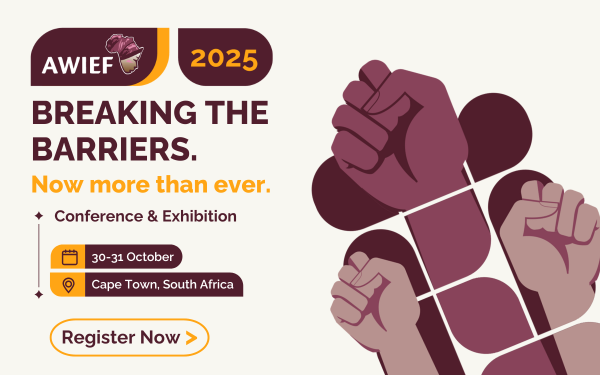
AWIEF Announces Theme for 2025 Conference

Location: Business
Africa Women Innovation and Entrepreneurship Forum (AWIEF)

The Africa Women Innovation and Entrepreneurship Forum (AWIEF) (www.AWIEForum.org) has announced the theme for its prestigious annual conference taking place at the Cape Town International Convention Centre (CTICC), Cape Town, South Africa, from 30 to 31 October 2025.

As a leading pan-African organisation driving women's entrepreneurship and innovation, AWIEF continues to provide a powerful platform to promote inclusive economic growth and gender equity across the continent.

AWIEF2025 is the 11th edition of the annual conference, a highly anticipated two-day event, an international platform and gathering of a wide range of stakeholders from the African and global entrepreneurship ecosystem, to engage in impactful dialogue and work together on bold, gender-inclusive and forward-thinking solutions for a thriving business landscape for women in Africa.

The conference theme this year is “Breaking the Barriers: Now More Than Ever”.

Despite notable progress in women's empowerment, today, we are witnessing not just a stagnation but, alarmingly, an active backlash against gender equality and women's rights. This regression threatens to reverse hard-won gains and underscores the need for urgent, collective action.

The theme of AWIEF2025 is both a call to action and a statement of urgency. It reflects the growing recognition that, in a world marked by political instability, economic uncertainty, technological disruption, and persistent inequality, we cannot afford to remain complacent. As UN Secretary-General António Guterres recently emphasized, “We are witnessing an aggressive backlash against gender equality – threatening hard-won progress… We must push back against this pushback.”

In the lead-up to 2030, "Now more than ever," we must renew our commitment to gender equity and ensure that no woman is left behind in Africa's development journey.

Following the resounding success of AWIEF2024, which brought together over 1,000 attendees from over 50 countries, including 42 African nations, the upcoming AWIEF2025 promises even greater impact and engagement.

AWIEF2025 will once again convene a vibrant community of entrepreneurs, corporate executives, investors, policymakers, development institutions, academia, media, and civil society to foster collaboration, drive transformative change, and scale women-led innovation and enterprise.

Delegate registration is now open.

Exhibition stand bookings are also open, offering a prime opportunity for businesses, startups, and organisations to showcase their products, services, solutions, and innovations to a pan-African and global audience.

Join AWIEF in Cape Town and be part of Africa's most empowering platform for advancing women in business and innovation.

Visit www.AWIEForum.org to register and to secure your place. Contact: info@awieforum.org

Distributed by APO Group on behalf of Africa Women Innovation and Entrepreneurship Forum (AWIEF).

Media files
Africa Women Innovation and Entrepreneurship Forum (AWIEF)
Download logo
Read moreAWIEF Announces Theme for 2025 Conference
29 April 2025

WHO and UNICEF Warn Parents Against Unethical Baby Milk Advertising In South Africa

Location: News

World Health Organization (WHO) - South Africa
Download logo

The World Health Organization (WHO) and the United Nations Children's Fund (UNICEF) are today launching a “Babies Before Bottom Lines” manifesto to warn parents in South Africa against false and unethical baby milk advertising. The manifesto was posted online today to call out “predatory and pervasive practices” and has been backed and shared by prominent parenting influencers around the country. 

WHO and UNICEF are jointly calling the attention of parents and caregivers to the WHO International Code of Marketing of Breastmilk Substitutes and its related information sources. The code provides guidelines on stricter regulation of marketing of breastmilk substitutes, to curb harmful effects on babies' short- and long-term health. 

WHO's Country Representative in South Africa, Shenaaz El-Halabi, says: “False, incomplete, misleading health and nutrition claims by formula companies should stop now. The WHO calls on formula milk companies to stop presenting incomplete scientific evidence and inferring unsupported health outcomes.”

WHO and UNICEF are specifically calling on local regulators to update Regulations Relating to Foodstuffs for Infants and Young Children (aka R991) to include other advertising techniques and digital marketing practices that have become prevalent in the past few years since the International Code of Marketing of Breastmilk Substitutes of 1981 and local Regulation R991 of 2012 were drafted. Some popular social media platforms, whose algorithms can target specific consumers with specific messages at specific times, were still in their infancy or did not yet exist in 2012. Of particular concern is that parents are often targeted with information that blurs the lines between nutritional facts and promotional pseudo-science and emotional manipulation when they are at their most vulnerable.    

The pseudo-scientific health claims made by formula companies discourage mothers from breastfeeding, which should always be a first choice as breastmilk is the most complete and healthiest milk for babies. In addition, widespread evidence exists that women have internalised doubts about the quality and quantity of their breastmilk, mirroring the themes and messaging of formula milk marketing campaigns.     

In line with their multi-country study on the impacts of marketing breastmilk substitutes, WHO and UNICEF warn that “inappropriate promotion of breastmilk substitutes negatively impacts breastfeeding practices, and that advertisers are promoting a false choice between formula feeding and breastfeeding, without offering informed choice to parents about the real differences between breastmilk and various brands of formula”.

UNICEF South Africa Representative, Christine Muhigana, notes that: “Government and civil society partners are to be commended for their efforts to address this concerning issue. It is evident that formula milk companies continue to actively target health professionals to convince them to prescribe formula. This Manifesto is part of a broader effort to address these unfair practices so that mothers and caregivers are fully aware of unethical marketing practices.”

Cross promotion, also known as “brand extension” which is a marketing practice whereby one product is used to advertise another product by using similar branding, packaging and labelling (including but not limited to similar colours, design, font types, mascots and logos) has become a common practice by the bay formula companies.

“All families need to be supported with evidence-based information so that they can make the most appropriate and informed decision for feeding their babies. Those choices, however, should never be exploited for corporate profits. We are finding again and again, all around the world, that unethical corporate influence is imposed on caregivers through false advertising. Companies use digital marketing algorithms that exploit parents when they are most vulnerable. They capitalize on parents' doubts and questions. For instance, we see advertisers directing fake science at caregivers in the middle of the night, when they or their babies are struggling, to falsely convince them that bottle-fed babies sleep better than breastfed babies. This is wrong and needs to stop,” says Dr Laurence Grummer-Strawn, who leads WHO‘s work on infant and young child feeding.

WHO and UNICEF have uncovered systematic and unethical marketing strategies by the US $55 billion infant formula industry, finding it uses the “infant formula industry uses pervasive, personalised and powerful methods to target parents when they are at their most vulnerable in the early days of their new babies life, and manipulate scientific claims to promote their products whilst undermining parents' confidence”.

Aqeelah Harron, an online content creator who owns the popular Fashion Breed social media platform, is supporting the campaign. "I'm a mom to a toddler and my child's health matters to me more than anything. I think it's wrong that powerful formula companies with big platforms are preying on parents to manipulate us into falling for fake science. Babies and new parents are vulnerable and should never be exploited. We need to prioritise comprehensive feeding education for all caregivers, free from the influence of profit-driven marketing." Several other online influencers are also backing the campaign.

WHO and UNICEF invite the public to join them in calling for an end to the aggressive marketing of formula milk, and to share their call to action: “Choose babies before bottom lines.” 

Distributed by APO Group on behalf of World Health Organization (WHO) - South Africa.

Read moreWHO and UNICEF Warn Parents Against Unethical Baby Milk Advertising In South Africa
28 April 2025

Lesotho’s Human Rights Record to Be Examined by Universal Periodic Review

Location: News

United Nations: Office of the High Commissioner for Human Rights (OHCHR)
Download logo

The human rights record of Lesotho will be examined by the United Nations Human Rights Council's Universal Periodic Review (UPR) Working Group for the fourth time on Wednesday, 30 April 2025, in a meeting in Geneva that will be webcast live.

Lesotho is one of 14 States to be reviewed by the UPR Working Group during its upcoming session from 28 April to 9 May 2025. The first, second and third UPR reviews of Lesotho took place in May 2010, January 2015 and January 2020, respectively.

The UPR Working Group is comprised of the 47 Member States of the Human Rights Council. However, each of the 193 UN Member States can participate in a country review.

The documents on which the reviews are based are: 1) national report - information provided by the State under review; 2) information contained in the reports of independent human rights experts and groups, known as the special procedures, human rights treaty bodies, and other UN entities; 3) information provided by other stakeholders including national human rights institutions, regional organizations, and civil society groups.

The three reports serving as the basis for the review of Lesotho on 30 April can be found here.

Location: Room XX, Palais des Nations, Geneva.

Time and date: 14:30 – 18:00, Wednesday, 30 April 2025 (GMT+2).

The UPR is a peer review of the human rights records of all 193 UN Member States. Since its first meeting was held in April 2008, all 193 UN Member States have been reviewed thrice. During the fourth UPR cycle, States are again expected to spell out steps they have taken to implement recommendations posed during their previous reviews which they committed to follow up on and highlight recent human rights developments in the country.

The delegation of Lesotho will be led by Mr. Richard Ramoeletsi, Minister of Law and Justice.

The three country representatives serving as rapporteurs (“troika”) for the review of Lesotho are Germany, Indonesia, and South Africa.

The webcast of the session will be at: https://webtv.un.org/en/asset/k1y/k1ypkwnawz

The list of speakers and all available statements to be delivered during the review of Lesotho will be posted on the UPR Extranet.

The UPR Working Group is scheduled to adopt the recommendations made to Lesotho on Wednesday, 7 May 2025, between 15:30 and 18:00 (GMT+2). The State under review may wish to express its positions on recommendations posed to it during its review.

Distributed by APO Group on behalf of United Nations: Office of the High Commissioner for Human Rights (OHCHR).

Read moreLesotho’s Human Rights Record to Be Examined by Universal Periodic Review
25 April 2025

WHO Welcomes Dr. Fabian Ndenzako as New Representative to Botswana

Location: News

World Health Organization (WHO), Botswana
Download logo

The World Health Organization (WHO) has officially welcomed Dr. Fabian Ndenzako as the new Head of Mission and WHO Representative to Botswana and the Southern African Development Community (SADC). A seasoned global health expert, Dr. Ndenzako brings with him over 25 years of experience in public health, including more than two decades of service within WHO across various regions and leadership capacities.

His appointment comes at a pivotal time, as WHO continues to deepen its collaboration with the newly constituted Government of Botswana, following the November 2024 elections. Guided by the WHO Country Cooperation Strategy (CCS) 2024–2027, Dr. Ndenzako will lead efforts aligned with Botswana's National Development Plan. These efforts focus on five strategic priorities: strengthening health systems toward Universal Health Coverage (UHC); delivering quality, equitable, and integrated health services across the life course; preventing and controlling communicable and non-communicable diseases; enhancing health security and disaster risk reduction management; and promoting multisectoral action for a healthier population.

Dr. Ndenzako is a medical doctor trained at the University of Dar es Salaam in Tanzania. He holds a master's in public health from the University of Oslo and a master's in development studies and diplomacy from the University for Peace in collaboration with UNITAR. His impressive academic background complements a broad and deep understanding of global health systems, policy, and diplomacy.

Prior to his appointment in Botswana, Dr. Ndenzako served as Acting WHO Representative in South Africa, based in Pretoria. He has also led WHO country offices in South Sudan (2021–2024) and Malawi (2018–2019), demonstrating strong leadership in navigating complex public health landscapes, managing crises, and mobilizing resources to strengthen national health responses.

Earlier in his career, Dr. Ndenzako served as Medical Officer for HIV, Hepatitis, and TB at the WHO Regional Office for Africa, supporting over 20 countries in Eastern and Southern Africa. His contributions included reviewing national health programs, developing strategies and guidelines, coordinating multi-country responses, and facilitating resource mobilization for health emergencies and epidemics.

He also brings valuable international experience from nearly a decade with the WHO Western Pacific Region, based in Papua New Guinea, where he supported regional responses to both communicable and non-communicable diseases. His work with governments, the United Nations, NGOs, civil society, donors, and international partners underscores his commitment to inclusive and collaborative public health strategies.

Now at the helm of WHO Botswana, Dr. Ndenzako is poised to steer the office's efforts toward impactful implementation of the biennial plan, support national health priorities, and strengthen regional coordination through SADC. His vast experience and visionary leadership are set to advance the health and well-being of the people of Botswana and the region at large.

Distributed by APO Group on behalf of World Health Organization (WHO), Botswana.

Read moreWHO Welcomes Dr. Fabian Ndenzako as New Representative to Botswana
24 April 2025

HPV Vaccination in Africa: Urgent Steps Needed to Address Low Uptake Amid Rising Hesitancy

Location: News
MSD

HPV is fuelling high cervical cancer rates in sub-Saharan Africa despite the availability of effective vaccines. Yet uptake remains low, driven largely by vaccine hesitancy. In South Africa alone, most participants (71%) were hesitant to receive at least one of the vacines in the country, according to the Vaccine Confidence Report by MSD (www.MSD.co.za) and Prof. Hannelie Meyer, Head of the South African Vaccination and Immunisation Centre. [1] The report was launched at the European Society of Clinical Microbiology and Infectious Diseases and during the SSA HPV Media Roundtable held during World and Africa Immunisation Week (24–30 April 2025).

Cervical cancer, caused by persistent infection of HPV, is one of the leading causes of cancer-related deaths among women in sub-Saharan Africa. The World Health Organization (WHO) estimates that 94% of global cervical cancer deaths occur in low- and middle-income countries, with sub-Saharan Africa heavily affected. [2]

Studies indicate that, globally, about 12% of women with normal cervical cytology are found to have an HPV infection. This prevalence doubles to around 24% in sub-Saharan Africa. Young women under 25 are particularly vulnerable, with an HPV prevalence rate of 43.9% in Africa compared to the global rate of 19.2%. [3]

A 2023 report indicated that cervical cancer ranks as the 13th most frequent cancer among women in Egypt and the 9th most frequent among women aged 15 to 44 years. [4] In Kigali, Rwanda, before the national HPV vaccination programme, 54% of women aged 19 years and younger were found to have received an HPV-positive result. [5] The high mortality rate in Ghana further demonstrates the burden, with approximately 3,000 women diagnosed with cervical cancer annually, resulting in around 2,000 deaths each year. [6]

Vaccine hesitancy, defined as a delay in acceptance or refusal of vaccines despite their availability, remains a challenge in the fight against preventable diseases such as cervical cancer. Misinformation, cultural beliefs, and accessibility issues further compound the low uptake of HPV vaccines. As global health organisations and local health authorities strive to eliminate preventable diseases, understanding and addressing vaccine hesitancy has never been more urgent. [1]

Understanding vaccine hesitancy

The Vaccine Confidence Report highlights several drivers of HPV vaccine hesitancy, including safety concerns, mistrust in healthcare systems, and misinformation on social media. According to Prof. Meyer, despite clear scientific evidence, many still believe vaccines are harmful. [1] “This reluctance is troubling,” she said, “given the direct link between HPV and cervical cancer. Addressing these fears with credible information is vital to reducing the burden in sub-Saharan Africa.”

An external study titled 'Vaccine Hesitancy and Trust in sub-Saharan Africa' published in Scientific Reports in May 2023 examined vaccination behaviours and attitudes across six sub-Saharan African countries: Ghana, Kenya, Nigeria, South Africa, Tanzania, and Uganda. The study found that only about 10% of respondents reported receiving at least one HPV vaccination. Vaccine hesitancy rates varied across countries, with South Africa exhibiting the highest rate at 17.15% and Kenya the lowest at 8.3%. [7]

Impact of misinformation, funding gaps and immunisation disruption Misinformation remains a major driver of vaccine hesitancy in Africa, especially through online platforms. It has shaped public attitudes and eroded trust in immunisation programmes. At the same time, shifting global priorities and economic pressures have led to reduced funding for vaccination efforts, limiting access in low-income communities. [8] “Routine immunisation has saved millions of lives,” said Dr Alima Essoh, Regional Director of the Preventive Medicine Agency for Africa (AMP Africa). “When misinformation and resource constraints disrupt these efforts, we risk undoing decades of progress.” Expanding HPV vaccination is critical to reducing cervical cancer, but it requires tackling misinformation head-on and improving access across the continent.

Broader implications for public health

While HPV vaccination remains a key focus, vaccine hesitancy extends to other preventable diseases. The World Health Organization (WHO) has set a target to eliminate cervical cancer as a public health concern by 2030, which includes ensuring that 90% of girls are fully vaccinated against HPV by age 15. [9] According to Prof Meyer, vaccine hesitancy threatens to derail this goal and broader efforts to achieve high immunisation rates for other preventable illnesses such as measles, polio, and influenza.

Rethinking the fight against HPV-related cervical cancer: Community action and vaccine confidence

Efforts to eliminate HPV and reduce HPV-related cervical cancer in Africa necessitate innovative, community-driven solutions. Dr Sabrina Kitaka, Senior Lecturer at Makerere University, states that engaging and accessible tools, such as comic books and school-based vaccination, have significantly enhanced vaccine uptake among young people. She adds that reminder systems, such as SMS and automated phone calls, help ensure adolescents complete the HPV vaccine schedule. If implemented on a large scale, these strategies could strengthen vaccine coverage across the region. She further states that, tackling vaccine hesitancy will require a coordinated approach involving governments, healthcare workers, civil society, and the private sector. This means improving health communication, building trust through local partnerships, and tailoring outreach to meet communities where they are.

“There is no time to waste,” says Prof. Meyer. “We must work together to share accurate information, address concerns, and make vaccines truly accessible. Only then can we protect future generations from preventable diseases.”

Disclaimer: The views and opinions expressed by the speakers in this document are their own and do not necessarily reflect the views or positions of MSD.

References

  1. MSD South Africa., Meyer, JC. 2025. Vaccination Hesitancy Study. Accessed 07 April 2025
  2. ‘Human papillomavirus and cancer', World Health Organization, 5 March 2024: http://apo-opa.co/3Glx3fK.
  3. High Burden of Human Papillomavirus (HPV) Infection Among Young Women in KwaZulu-Natal, South Africa' PLOS One, 19 January 2016: https://apo-opa.co/4cTdfNc. Accessed 07 April 2025.
  4. ‘Egypt HPV and Related Cancers, Fact sheet 2023, https://apo-opa.co/3YMStZv? Accessed 2 April 2025.
  5. ‘Human papillomavirus infection in Rwanda at the moment of implementation of a national HPV vaccination programme', National Library of Medicine, National Centre for Biotechnology Information, 24 May 2016: https://apo-opa.co/4jORArD. Accessed 07 April 2025.
  6. ‘Human Papillomavirus and Related Diseases Report', HPV Information Centre, 10 March 2023: https://apo-opa.co/3RzzoGn. Accessed 07 April 2025.
  7. ‘Vaccine hesitancy and trust in sub-Saharan Africa', Scientific Reports (https://apo-opa.co/4jGlMVQ), 13 May 2024: https://apo-opa.co/4cQyUp9. Accessed 10 April 2025.
  8. UNICEF, Global immunization coverage stalled in 2021, leaving millions of children unprotected – WHO and UNICEF, 2022: http://apo-opa.co/3RTv3OB.
  9. WHO. HPV & Cancer. Available at:  Human papillomavirus and cancer (http://apo-opa.co/4cSGTSM). Accessed: 07 April 2025

Distributed by APO Group on behalf of MSD.

REPORT ANY SUSPECTED ADVERSE EVENTS OR PRODUCT QUALITY COMPLAINTS TO DPOC SOUTH AFRICA:
dpoc.zaf@msd.com
Tel: +27 (0)11 655 3000.
www.MSD.co.za

Media files
MSD
Download logo
Read moreHPV Vaccination in Africa: Urgent Steps Needed to Address Low Uptake Amid Rising Hesitancy
13 April 2025

Government reiterates commitment to water security

Location: News

Government reiterates commitment to water security

The Deputy Minister of Water and Sanitation, David Mahlobo, has reaffirmed government's commitment to ensuring water security for all South Africans through innovative partnerships and transformative solutions.

“Water is the lifeblood of our nation's development. By combining government's resources with the innovation and expertise of the private sector, particularly through organisations like the Black Business Council in the Built Environment (BBCBE) that champion transformation, we can overcome our water challenges and build a resilient future for all South Africans,” the Deputy Minister said on Friday.

He was addressing the BBCBE Built Environment Indaba at the Gallagher Convention Centre in Midrand, which was taking place under theme: "Built Environment Partnering with Our Government to Deliver Infrastructure Projects through Innovative Funding and Delivery Models.”

The Deputy Minister urged the built environment sector to leverage its expertise and global networks to drive innovation, mentorship, and investment. 

“Water challenges as experienced in most parts of the country require bold and collaborative solutions from all of us. Together, we can harness technology, finance, and partnerships to achieve Sustainable Development Goal (SDG) 6 on clean water and sanitation for all,” he said.

This as the Department of Water and Sanitation remains steadfast in its mission to secure South Africa’s water future. 

Mahlobo’s address underscored the need for unity across government, the private sector, academia, and civil society to transform challenges into opportunities for sustainable growth. -SAnews.gov.za


nosihle
Sun, 04/13/2025 - 10:03
66 views

Read moreGovernment reiterates commitment to water security
13 April 2025

President engages South African Council of Churches

Location: News

President engages South African Council of Churches

President Cyril Ramaphosa has hosted the first engagement between government and the leadership of the church since the start of the seventh Administration.

The President hosted the leadership of the South African Council of Churches (SACC) at the Union Buildings in Pretoria on Friday under the banner of the Government of National Unity.

The meeting presented an opportunity for the SACC to introduce its new and recently elected leadership. 

“We welcome the opportunity to be introduced to the new leadership of the SACC and to discuss matters that concern the church and the people of South Africa,” the President said.
The meeting discussed a wide range of issues of national interest ranging from the National Dialogue initiative, government’s ongoing fight against crime and corruption and the access of state services. 

President Ramaphosa committed that the National Dialogue will bring together all sectors of society and encourage the participation of all South Africans.

“Importantly, the National Dialogue must be informed by extensive public consultation in localities facilitated by various sectors of society. It needs to give a voice to those in society who are not often heard, to people who are marginalised, to those who are most vulnerable to poverty, violence and exploitation,” the President said.

It is envisaged that the National Dialogue will build on the achievements of 30 years of democracy.

Among other things, it will need to address challenges of low growth and job creation, poverty and hunger, governance, corruption and fiscal constraints. It will also need to address gender-based violence and femicide, social fragmentation, racism and sexism, violence and the potential for instability.

Government also briefed the SACC on South Africa’s Group of Twenty (G20) Presidency along with regional and international issues of concern.

“The meeting heard about government’s ongoing work in implementing the recommendations of the State Capture Commission. This includes criminal investigations and prosecutions, the recovery of stolen funds, legislative amendments and strengthening institutions.

“Furthermore, government remains focused on strengthening and resourcing key institutions in the criminal justice system, like the NPA [National Prosecuting Authority], Hawks and SIU [Special Investigating Unit], this includes the establishment of the NPA’s Investigating Directorate Against Corruption as a permanent entity to prosecute state capture and other significant corruption cases,” the Presidency said.

The President also committed government’s support for greater cooperation between churches and government bodies that are on the frontline of providing services to people – most notably the Departments of Home Affairs and Social Development.
He highlighted South Africa’s drive for an inclusive G20.

The President said dialogue with civil society and other non-government institutions will be conducted through various engagement groups. 

“Following the approach of the Brazilian Presidency, a G20 Social Forum will be convened. This will bring together representatives of the existing engagement groups and other segments of civil society including various faith formations.

“The President assured the church leaders that South Africa will continue to pursue an independent foreign policy and will not align itself with any of the major powers or blocs in the world,” the Presidency said.

Ramaphosa asserted that South Africa remains engaged in efforts to bring about peace and stability in various parts of our region and continent, especially through the Southern African Development Community (SADC) and African Union initiatives. 
“South Africa continues to use its participation in fora like the G20, BRICS, Non-Aligned Movement, African Union and United Nations to advance a rules-based multilateralism that is fair and inclusive. We are committed to the reform of global institutions to ensure that they represent the needs and interests of all countries,” the President said. -SAnews.gov.za


nosihle
Sun, 04/13/2025 - 09:21
23 views

Read morePresident engages South African Council of Churches
11 April 2025

President Ramaphosa Meets With South African Council of Churches

Location: News

The Presidency of the Republic of South Africa
Download logo

President Cyril Ramaphosa has today, Friday, 11 April 2025, hosted the leadership of the South African Council of Churches (SACC) at the Union Buildings in Pretoria.  

The meeting was the first engagement between Government and the leadership of the church since the start of the 7th Administration under the banner of the Government of National Unity. 

The meeting presented an opportunity for the SACC to introduce its new and recently elected leadership. 

“We welcome the opportunity to be introduced to the new leadership of the SACC and to discuss matters that concern the church and the people of South Africa.

 The SACC is a cherished institution in our country. Over many decades it has made an invaluable contribution to peace, unity, development and transformation.

It has been a source of hope, guidance and inspiration not only to members of the Christian faith, but to all South Africans. 

The SACC has always been deeply concerned about the conditions in which our people live and has worked to improve their lives.

We appreciate the willingness and determination of the SACC to work with Government, with other faith formations and with other sectors of society to address these concerns,” said President Ramaphosa.

The meeting discussed a wide range of issues of national interest ranging from the National Dialogue initiative, Government's ongoing fight against crime and corruption and the churches accessing state services. The Government also briefed the SACC on South Africa's G20 Presidency along with regional and international issues of concern. 

“We support the National Dialogue initiative but emphasise that for it to have legitimacy, the process must be protected from being hijacked by political, economic, and societal elites. It must be inclusive — incorporating all sectors of society. We must confront our declining values and moral conduct, and address the dehumanisation caused by poverty and inequality. Like many South Africans, we as church leaders and congregants are deeply concerned by the political gamesmanship within the GNU, when urgent national challenges — especially those affecting the poor and vulnerable — demand serious and united attention,” said Bishop Sithembele Sipuka, SACC President. 

President Ramaphosa committed that the National Dialogue will bring together all sectors of society and encourage the participation of all South Africans.

It is envisaged that the National Dialogue will build on the achievements of 30 years of democracy.

 Among other things, it will need to address challenges of low growth and job creation, poverty and hunger, governance, corruption and fiscal constraints. It will also need to address gender-based violence and femicide, social fragmentation, racism and sexism, violence and the potential for instability.

“Importantly, the National Dialogue must be informed by extensive public consultation in localities facilitated by various sectors of society. It needs to give a voice to those in society who are not often heard, to people who are marginalised, to those who are most vulnerable to poverty, violence and exploitation,” said the President.

The meeting heard about Government's ongoing work in implementing the recommendations of the State Capture Commission. This includes criminal investigations and prosecutions, the recovery of stolen funds, legislative amendments and strengthening institutions.

Furthermore, Government remains focused on strengthening and resourcing key institutions in the criminal justice system, like the NPA, Hawks and SIU, this includes the establishment of the NPA's Investigating Directorate Against Corruption as a permanent entity to prosecute state capture and other significant corruption cases.

President Ramaphosa committed Government's support for greater cooperation between churches and Government bodies that are on the frontline of providing services to people – most notably the Departments of Home Affairs and Social Development. 

President Ramaphosa highlighted South Africa's drive for an inclusive G20. The President said dialogue with civil society and other non-government institutions will be conducted through various engagement groups. Following the approach of the Brazilian Presidency, a G20 Social Forum will be convened. This will bring together representatives of the existing engagement groups and other segments of civil society including various faith formations.

The President assured the church leaders that South Africa will continue to pursue an independent foreign policy and will not align itself with any of the major powers or blocs in the world.
 
 South Africa remains engaged in efforts to bring about peace and stability in various parts of our region and continent, especially through SADC and AU initiatives. 

“South Africa continues to use its participation in fora like the G20, BRICS, Non-Aligned Movement, African Union and United Nations to advance a rules-based multilateralism that is fair and inclusive. We are committed to the reform of global institutions to ensure that they represent the needs and interests of all countries,” said President Ramaphosa.

Distributed by APO Group on behalf of The Presidency of the Republic of South Africa.

Read morePresident Ramaphosa Meets With South African Council of Churches
9 April 2025

Court Orders Gauteng Health Department to Treat Cancer Patients

Location: News

Judge rules failure to deal with backlog of patients needing radio treatment is unconstitutional

Read moreCourt Orders Gauteng Health Department to Treat Cancer Patients
8 April 2025

Deputy President Mashatile Convenes the Water Task Team

Location: News

The Presidency of the Republic of South Africa
Download logo

Deputy President Shipokosa Paulus Mashatile has today, 08 April 2025, at the Union Buildings in Pretoria, convened a meeting of the Water Task Team, comprised of the Ministers responsible for the Departments of Water and Sanitation, COGTA, Finance, Human Settlements, Public Works and Infrastructure, Agriculture, Police, Electricity as well as Land Reform and Rural Development.

The meeting took place following a successful Water and Sanitation two-day Indaba hosted by the Department of Water and Sanitation, which received inputs from President Cyril Ramaphosa, Deputy President Mashatile, Ministers as well as Representatives of Water Boards, Management Agencies, SALGA, Traditional Leaders, Civil Society and sector experts.

Today's meeting received presentations from the Department of Water and Sanitation, the Department of Cooperative Governance and Traditional Affairs, Human Settlements and Infrastructure South Africa. 

Issues discussed included measures and interventions by the departments to work towards resolving the challenges of water and reticulation. In particular, the meeting noted issues such as the non-payment for water services, lack of effective reticulation, declining infrastructure and capacity challenges at the local government level.

The meeting then agreed to intervene within the prescripts of existing legislation, also directing that all budgetary allocations for water in various departments be pooled together to ensure effectiveness. An update was also received on ongoing work under the Strategic Integrated Projects initiative by Government to create water retention facilities as well as enhancement of water treatment plants.

The Water Task Team also resolved after discussion to accelerate the formalisation of informal settlements, which will assist with the provision of services to residents. This applies to 4 076 illegal settlements who use illegal means to connect to water. Furthermore, it was agreed that all incomplete water projects must be completed and to that effect, the meeting requested departments to review their turn-around times on water projects. 

The meeting then proposed a structured mechanism for effective coordination in the form of the following workstreams:

Workstream 1 - Responses to water supply disruptions in prioritised areas,

Workstream 2 - National and Municipal water institutional reforms, 

Workstream 3 - Accelerating private investment in municipal water services, (through the Partnership Office)

Workstream 4 - Improving municipal sanitation services and management of wastewater, 

Workstream 5 - Improving turn-around time in regulation and funding, 

Workstream 6 - Institutional reforms (led by COGTA, SALGA, DWS & Human Settlements, and  

Workstream 7 – Communication. 

Deputy President Mashatile commended the work and interventions of the various departments in the area of water supply and preservation.

Distributed by APO Group on behalf of The Presidency of the Republic of South Africa.

Read moreDeputy President Mashatile Convenes the Water Task Team
8 April 2025

President calls for holistic overhaul of policing

Location: News

President calls for holistic overhaul of policing

President Cyril Ramaphosa has called for a bold, coordinated, and community-driven approach to crime-fighting, describing policing in South Africa as being at a crossroads that demands urgent reform and collaboration from across all sectors of society.

The President was delivering the keynote address at the 2025 Policing Summit held in Ekurhuleni on Tuesday. 

President Ramaphosa applauded the Ministry of Police for convening what he termed a “critical” gathering, which brings together government, civil society, business, interfaith groups, labour, and communities to reshape the country’s safety and security strategy.

“Safeguarding our nation’s safety and security requires that we are proactive, innovative and solution-oriented in our approach… Just as crime is an all-of-society problem, overcoming crime must be an all-of-society effort.

“In doing so, we must marshall our full support behind the hardworking men and women of the South African Police Service," the President said. 

The President said crime has a direct impact on the economy, as it discourages investment, disrupts business activity and leads to increased security costs for companies. 

He noted that social ills such as poverty and inequality, unemployment, lack of opportunity, patriarchy and misogyny, and broken family structures are just some of the issues that contribute to crime and criminality. 

“Addressing crime without understanding its root causes is like a doctor treating a patient for a fever without diagnosing the underlying illness. 
 
“It is therefore encouraging that this summit has as one of its key objectives adopting a more holistic approach to law-enforcement, encompassing not just the police but the entire policing system,” the President said. 

The President emphasised that policing must be grounded in the Batho Pele principles of service delivery, which include respect, empathy, accessibility, and accountability. 

He said that the policing terrain of today is complex and multi-faceted and the police strive to fulfil their mandate in the context of emerging threats. 
 
These threats, he said, include transnational organised crime, illegal mining, extortion syndicates, the theft of economic infrastructure, money laundering and terror financing. 
 
“And yet, even in this extremely challenging environment, the South African Police Service continues to register successes in fighting crime in its various operations,” the president said.

Restoring public trust 

The President warned that restoring public trust in the police is critical to winning the fight against crime.

“We need to improve the relationships between the police and the communities they serve. We need to work to improve the morale of SAPS members, many of whom are battling heavy workloads, insufficient resources and outdated systems. 
 
“Even as the SAPS budget has increased over the past ten years, the reality is that the number of police personnel has been declining while the country’s population has been growing,” the President said. 
 
President Ramaphosa stressed that policing cannot succeed without the active involvement of communities. 

He called for a stronger role for Community Policing Forums (CPFs), citizen empowerment, and partnerships with the private sector, which has already played a crucial role in equipping victim support centres and bolstering frontline capacity.

“We know that communities are the most potent resource for fighting crime. Crimes happen in communities and criminals are often known to communities. 
 
“From this summit we need a clear plan on how to better involve communities in crime prevention and detection, and on harnessing the potential of CPFs in line with relevant legislation and regulations,” he said. 
 
The role of technology and data

The President welcomed and backed the focus of the summit on exploring the role of technology in modern policing, investigation and intelligence.

“We need to harness modern technologies to support crime-fighting. Technology is particularly crucial when analysing crime trends and patterns. It is also valuable in empowering citizens,” President Ramaphosa said.

He further advocated for applying a socio-economic lens to crime data to better tailor responses for example, by examining links between substance abuse and robbery, or alcohol abuse and gender-based violence.

“Data plays a pivotal role in policing and law-enforcement. And we need to apply a socio-economic lens when analysing such data. The data may tell us, for example, about a community with a high prevalence of housebreaking and robbery, in which substance abuse is also rife. 
 
“Understanding the connections revealed by this data should inform the approach to policing in that community. There is ample data on the linkages between alcohol abuse and the prevalence of gender-based violence,” the President said.

He added that a holistic policing approach would, for example, need to involve working with local authorities to enforce municipal by-laws for establishments selling alcohol. 

As part of facilitating access to SAPS services, the President said it is encouraging that discussions are planned for how to leverage innovative digital platforms such as mobile apps, online reporting systems and virtual communication channels to improve the public’s interaction with the police. 
 
“To turn the tide against crime, we need better collaboration among the different agencies in the law-enforcement space,” he said.

The President further highlighted that there is a proliferation of organised crime in South Africa, including the manufacture of illicit drugs, kidnapping for ransom and money laundering. 

He said this is taking place alongside a growth in illegal mining, extortion in the construction sector, and the theft of public infrastructure.
 
Addressing corruption

The President urged police to stay away from corrupt activities, stressing that corruption has infiltrated every part of society, including the SAPS. 

He said while prosecuting corrupt officers is important, it is equally crucial to instil a culture of honesty and integrity within the police service. 

The President emphasised the need to strengthen the fundamentals of policing through ethics, accountability, and professionalism. 

He expressed hope that the summit would focus on promoting ethical conduct, restoring public trust in law enforcement, and upholding the rule of law. 

Key initiatives include protecting whistleblowers, implementing the National Anti-Corruption Strategy, and improving recruitment and training to attract the right calibre of candidates to the SAPS. 

“If the SAPS is to fulfil its crucial mandate, we have to emerge from these few days with a clear plan on how to address the systemic deficiencies that are negatively impacting policing. 
 
“As a country we owe the SAPS our full support. As government we remain committed to turning the tide against crime and to making our communities safer. 
 
“It is our hope that the recommendations emerging from this summit translate into deeper collaboration, more effective methods and a promising future for policing in South Africa,” he said. – SAnews.gov.za

DikelediM
Tue, 04/08/2025 - 13:57
366 views

Read morePresident calls for holistic overhaul of policing
8 April 2025

Home Affairs minister to address the Electoral Reform Consultation Panel

Location: News

Home Affairs minister to address the Electoral Reform Consultation Panel

The Minister of Home Affairs, Dr Leon Schreiber, is scheduled to deliver the opening address at the two-day international conference of the Electoral Reform Consultation Panel (ERCP) to be held at the Emperors Palace in Boksburg, Ekurhuleni.

The ERCP was appointed in 2024 with a mandate to independently investigate, consult on and report on and make recommendations in respect of potential reforms of the electoral system for the election of the National Assembly and the election of the provincial legislatures, in respect of the elections to be held after the 2024 elections.

The conference will bring together political parties, elected representatives and key stakeholders including a range of civil society groups who have engaged with the ERCP in their public consultations and will include presentations by local and international experts on the topic of electoral reform and the implications of different options. 

The conference will include an opportunity for the ERCP to share its initial findings and the preliminary options identified in the course of public consultations to provide an opportunity for public engagement on the models that have been identified. 

The conference represents the final stage of public engagement as it considers its final recommendations to Parliament. – SAnews.gov.za

Edwin
Tue, 04/08/2025 - 09:42
178 views

Read moreHome Affairs minister to address the Electoral Reform Consultation Panel
8 April 2025

3rd Regional Workshop on Fisheries, Aquaculture, and the Blue Economy in Africa’s Development

Location: News

The African Union – Interafrican Bureau for Animal Resources (AU-IBAR)
Download logo

The 3rd Awareness Enhancing Workshop on the Importance of Fisheries, Aquaculture, and Blue Economy in Africa's Socio-Economic Development, is being held from 07–09 April 2025 in Johannesburg, South Africa, bringing together key stakeholders from AU Member States, Regional Economic Communities, development partners, and civil society, and AWFISHNET South Africa Chapter to strengthen regional dialogue and action around Africa's aquatic wealth. Organized by AU-IBAR and AUDA-NEPAD, the workshop is focusing on the transformative potential of fisheries, aquaculture, and the blue economy in driving sustainable development, improving livelihoods, and contributing to food security and wealth creation on the continent.

In remarks delivered by Mrs. Hellen Guebama on behalf of Dr. Huyam Salih, Director of AU-IBAR, the urgent need for increased public investment in the sector was highlighted, noting that limited funding has continued to hinder its full potential. She emphasized the importance of leveraging continental frameworks such as the Africa Blue Economy Strategy, and aligning efforts with the Malabo Declaration and Agenda 2063. Participants were called upon to champion the value of fisheries and aquaculture in their respective countries to drive visibility, awareness, and policy support. She also acknowledged the strong partnerships with development actors, including the European Union, whose support to Fisheries Governance Projects has been instrumental in uniting stakeholders towards sustainable and inclusive management of Africa's blue resources.

The workshop will feature technical presentations, knowledge exchange sessions, and group work focused on policy, governance, partnerships, and awareness strategies. Key expected outcomes are the development of draft national blue economy strategies, action plans, and coordination mechanisms, setting a solid foundation for scaling investments and impact across the continent.

Distributed by APO Group on behalf of The African Union – Interafrican Bureau for Animal Resources (AU-IBAR).

Read more3rd Regional Workshop on Fisheries, Aquaculture, and the Blue Economy in Africa’s Development
7 April 2025

Eastern Cape government reaffirms commitment to combat GBVF

Location: News

Eastern Cape government reaffirms commitment to combat GBVF

The Eastern Cape Provincial Government has reaffirmed its unwavering commitment to combating gender-based violence and femicide (GBVF) across the province.

This follows recent incidents, including the alleged rape of a seven-year-old girl at Bergview College in Matatiele, and the recent judgment in the Timothy Omotoso case, in which the accused was found not guilty.

Televangelist Omotoso was acquitted in the Gqeberha High Court on 32 serious charges, including allegations of rape, racketeering, human trafficking, and other crimes.

These events have left many survivors and citizens feeling disheartened.

In response to the GBVF incidents, particularly the case in Matatiele, the Ministry of Police has deployed urgent and coordinated interventions. These include intensified law enforcement efforts and the deployment of the South African Police Service (SAPS) specialised Family Violence, Child Protection and Sexual Offences (FCS) unit to assist with the investigations.

The Department of Social Development has also stepped in to provide psychosocial support to the victim and her family.

In a statement issued on Monday, the provincial government said Premier Lubabalo Oscar Mabuyane had reached out to the family to offer reassurance and reaffirm government’s commitment to pursuing justice.

National support was also extended, with the Minister of Women, Children and Persons with Disabilities, Sindisiwe Chikunga, and Social Development MEC Bukiwe Fanta visiting the family to provide encouragement.

The provincial government said communities across South Africa, and the Eastern Cape in particular, have long been grappling the devastating impact of GBV, a persistent scourge that continues to disproportionately affect women and children.

It noted that the recent incidents serve as a stark reminder of the vulnerability of young girls and boys, and the ongoing threat of violence that shadows many lives.

Mabuyane underscored the severity of the situation, saying that the provincial government recognises the gravity of these crimes and views the interventions as essential to “our broader efforts to protect vulnerable groups and ensure that justice is served”.

Mabuyane urged victims and their families not to suffer in silence, calling on anyone who has experienced or witnessed GBVF to report these crimes to law enforcement.

“We understand the courage it takes to come forward [and] we are here to walk that difficult journey with you. Government has systems in place to provide both psychosocial support and legal assistance to survivors,” the Premier said.

Mabuyane called on communities not to lose faith in the justice system, adding that “the fight against GBVF cannot be won overnight, nor can it be won without public participation”.

While acknowledging the frustration that arises when justice is delayed or denied, Mabuyane emphasised the importance of continued engagement with the justice system.

“We must continue to push for accountability, protection, and justice.”

The Premier reaffirmed the provincial government’s resolute commitment to protect the most vulnerable members of society.

He also reiterated that the Eastern Cape Provincial Government will continue to collaborate closely with law enforcement agencies, civil society organisations, and community structures to ensure that "no victim is left behind and no perpetrator escapes accountability".

“In the face of heinous crimes, it is understandable that public trust in the justice system may be shaken. Justice may sometimes appear slow, and outcomes not always satisfactory, but now more than ever, it is vital that communities remain engaged.

“Cooperation, information-sharing, and support for victims are essential to bringing perpetrators to book. Losing faith risks creating a culture of impunity. The Eastern Cape sends a clear message: Gender-based violence will not be tolerated,” Mabuyane said.

The provincial government remains steadfast in its commitment to working with all stakeholders to create safer, more inclusive and just communities across the province. – SAnews.gov.za

GabiK
Mon, 04/07/2025 - 14:28
112 views

Read moreEastern Cape government reaffirms commitment to combat GBVF
7 April 2025

Young voices make their mark at Africa Children’s Summit 2025

Location: News

Young voices make their mark at Africa Children’s Summit 2025

Children have taken centre stage to address critical issues affecting their lives, from education access to violence prevention, proving that they are not just future leaders but active changemakers.

This is according to the Department of Social Development, which has hosted the Africa Children’s Summit 2025.

Since its opening last week Friday, the summit has brought together some of the brightest and courageous young leaders in person from across Africa, with hundreds joining virtually. 

The children who attended in person are from South Africa, South Sudan, DRC, Ethiopia, Kenya, Lesotho, Ghana, Liberia, Mozambique, Uganda, Zambia and Zimbabwe.

In a statement, the department said the summit was child-led and child-centred, with its chairperson and programme facilitators all drawn from children invited to the summit. 

“Under the theme 'Seen, Heard, and Engaged in Education,' the children have boldly taken centre stage to address critical issues affecting their lives, from education access to violence prevention, proving that they are not just future leaders but active changemakers today,” the department said. 

One of the child leaders, 17-year-old Ison Cumbane from Mozambique, captured the spirit of the summit when he said: “Many children don’t have the opportunity to speak about their rights. We are here to give a voice to them and show that we can participate and influence decisions.”

The summit wraps up in Johannesburg today.

The child-led initiative is hosted by the South African Government through the Department of Social Development, in partnership with the Nelson Mandela Children’s Fund.

An Outcome Statement will be crafted by the children themselves, which will be handed over to the CEO of the Nelson Mandela Children's Fund and other key policymakers.

“The Outcome Statement outlines actionable recommendations for governments and civil society to implement policies that prioritise children’s voices and rights across Africa,” the department said. – SAnews.gov.za

DikelediM
Mon, 04/07/2025 - 11:12
249 views

Read moreYoung voices make their mark at Africa Children’s Summit 2025
7 April 2025

Sedgefield Developer Sues Knysna Municipality for More Than R2.5-Million

Location: News

A local environmentalist is also being sued

Read moreSedgefield Developer Sues Knysna Municipality for More Than R2.5-Million
5 April 2025

Alcohol Industry Used “Regulatory Capture” to Delay Liquor Bill, Say Researchers

Location: News

Liquor Amendment Bill still not introduced to Parliament after nine years

Read moreAlcohol Industry Used “Regulatory Capture” to Delay Liquor Bill, Say Researchers
4 April 2025

Immigration Advisory Board Appointed for the First Time in a Decade, Says Schreiber

Location: News

13-member Board will be advising the Home Affairs minister on matters relating to immigration policy, strategy, and implementation

Read moreImmigration Advisory Board Appointed for the First Time in a Decade, Says Schreiber
2 April 2025

Men as Allies: Youth Dialogue Tackles Patriarchal Masculinities for Gender Equality

Location: News

UN Women - Africa
Download logo

On 27 March 2025, UN Women South Africa Multi-Country Office, in partnership with the Tshwane University of Technology, and the Departments of Women, Youth, and People with Disabilities, hosted a dialogue on ‘Transforming Patriarchal Masculinities for a Gender-Equal World' for 150 young people. The dialogue, which took place in Pretoria, brought together students from universities, Technical and Vocational Education and Training Institutions (TVETs), and high schools from South Africa's Gauteng Province.

The dialogue, supported by the Embassy of Ireland in South Africa, was convened to compile youth recommendations for the upcoming Women Empowerment Ministerial Working Group (W20) meeting to be held later this year as part of the support to South Africa's G20 Presidency in 2025.

One of the pillars of South Africa's National Strategic Plan (NSP) on Gender-Based Violence and Femicide (GBVF) served as the basis for the dialogue. Pillar 2 of the NSP on GBVF focuses on unlearning toxic masculinities and embracing alternative positive forms of masculinity. This was seen as a key strategy in a country where more than one-third of women have been subjected to violence at least once in their lifetime.

"Engaging young men and boys as allies in gender equality is critical for addressing the root causes of gender-based violence and patriarchy in our society," said Aleta Miller, UN Women Representative for the South Africa Multi-Country Office. "The dialogue creates a valuable platform to amplify the voices of young people to influence global policy discussions on gender equality through South Africa's G20 Presidency."

Civil society organizations, government stakeholders, youth representatives, women's movements, academic institutions, and the private sector discussed how positive, respectful, and inclusive behaviors that promote accountability can help to transform harmful social norms and prevent violence.

The dialogue began with reflections UN South Africa Resident Coordinator Nelson Muffuh and Advocate Joyce Maluleke who provided opening remarks before the keynote presentations. Two impactful presentations were delivered by Professor Langa Malose from Wits University and Rahul Gandhi from the Southern Centre for Inequality Studies. Both shared their experiences to explain how their views about masculinity and its effects on society were shaped.

These were followed by two engaging panel discussions that explored ways for men and boys to serve as successful allies in gender equality promotion and gender-based violence prevention. Sibulele Poswayo from W20 South Africa and Nkere Skosana from the Department of Social Development, along with Precious Banda from Young Women of Africa, Kabelo Chabala of Primestars, Thabo Limema from Absa, and Andiswa Mthembu ofYoung Women for Life, participated in direct discussions with youth participants to create open dialogue about these essential matters.

For Gomolemo Mokemane, a TUT student, the workshop was “very enlightening” because it allowed him to hear different opinions from different stakeholders on gender-based violence. “From attending this dialogue, I walk away with the firm belief that women should be treated as equals and not as competitors or subordinates, that we are all human beings first and foremost and not men and women, and that if we embraced Ubuntu (our shared humanity and interconnectedness), many of our problems would be solved,”

Nhlanhla Ditire also gave his view on gender equality: “To make the world gender equal, men must learn that they have to respect and protect women from a young age. I was nine years old when I lost both my parents, but I told myself that I would never raise my hand on a woman.” Nhlanhla also emphasized the importance of emotional health and saying, ‘When men get angry, it's good to cry it out; crying does not mean that you are weak. Get help, get therapy. Don't break the law."

The discussions concluded with selected representative reading out commitments to gender equality that they believe leaders should consider and adopt in their policies for action towards a gender-equal world.

Distributed by APO Group on behalf of UN Women - Africa.

Read moreMen as Allies: Youth Dialogue Tackles Patriarchal Masculinities for Gender Equality
31 March 2025

Here’s How Government Has Progressed on Ending Pit Latrines in Schools

Location: News

Minister says 93% of identified pit toilets eradicated

Read moreHere’s How Government Has Progressed on Ending Pit Latrines in Schools
30 March 2025

G20 nations must place inequality at the heart of economic policymaking: Deputy Minister Mohai

Location: News

G20 nations must place inequality at the heart of economic policymaking: Deputy Minister Mohai

Department of Planning, Monitoring, and Evaluation (DPME) Deputy Minister Seiso Mohai has stressed the urgency of addressing persistent global inequalities.

“G20 nations must place inequality at the heart of economic policymaking, as disparities in wealth and development are neither just nor sustainable. The consequences of these inequalities are most pronounced in the Global South, where poverty, unemployment, and a lack of access to essential services continued to hinder progress,” Mohai said.

The Deputy Minister was delivering a keynote address during a two-day G20 Seminar focused on the theme: “Public Good, Development Finance, and Social Protection”. 

The seminar was hosted by the DPME in collaboration with the South African Association for Public Administration and Management (SAAPAM) and Tshwane University of Technology (TUT). 

The seminar was a key part of South Africa’s strategic G20 priorities - to explore innovative solutions for addressing economic disparities, advancing sustainable development, and ensuring social protection for vulnerable communities.

It provided a platform for fostering dialogue among government officials, academia, civil society, and the private sector, with a focus on tackling challenges such as economic disparities, mobilising development finance, and advancing inclusive social protection policies. 

Deputy Minister Mohai emphasised the importance of constructive dialogue throughout the seminar. 

“This gathering provided a unique platform for engagement among key stakeholders. We looked forward to brutally frank debates aimed at addressing the challenges of inequality, unemployment, and poverty.

“We were encouraged by this partnership between DPME, SAAPAM, TUT, and other academic institutions, civil society, and non-government organizations, and we looked forward to successfully hosting this prestigious G20 seminar,” he said.

Discussions at the seminar also explored ways to overcome structural barriers to sustainable development, including the mobilisation of innovative financing solutions for climate action and other pressing global issues.

The seminar focused on the following key areas:

  • Public Good: Ensuring equitable access to essential services and resources for all citizens.
  • Development Finance: Mobilising sustainable funding mechanisms to stimulate economic growth.
  • Social Protection: Strengthening policies aimed at reducing inequality and providing support for the most vulnerable.

Mohai also highlighted the pivotal role of academia and professional bodies in developing innovative solutions to global development challenges. 

“South Africa’s engagement with the G20 has been guided by strategic foreign policy pillars, including national interests, the African agenda, South-South cooperation, and multilateralism. Our presidency came at a time when the world faced overlapping global crises such as climate change, inequality, and geopolitical instability, which disproportionately affected developing nations,” he noted.

The Deputy Minister also reaffirmed South Africa's commitment to addressing the structural causes of economic disparities. 

"Through collaboration, innovation, and shared commitment, we can create a future that is inclusive, resilient, and sustainable," he stated.

The two-day seminar featured several distinguished academic dignitaries, including UNISA Vice Chancellor Puleng Lenkabula and Tshwane University Dean, Professor Mashupye Maserumule, among others.

Professor Maserumule shared valuable insights on the crucial role of an ethical, capable, and professional public service in driving innovation in planning and development. He emphasised the importance of a well-equipped public sector in fostering sustainable growth and effective governance.

In her address, UNISA Vice Chancellor Lenkabula highlighted the vital role of academia in South Africa’s leadership during the DPME G20 Seminar. She focused on the contribution of academic institutions, research, and higher education can make toward both national and international G20 objectives.

“Academia plays a pivotal role by conducting research that addresses global challenges on the G20 agenda, such as climate change, global health, economic recovery post-pandemic, and sustainable development,” she said.  

“South African universities and research institutions have the opportunity to collaborate with their international counterparts to generate data and policy recommendations that support both South Africa's national interests and the broader goals of the G20,” Prof Lenkabula added. 

The department said that the outcomes of the seminar will contribute to South Africa’s G20 agenda, focusing on building a future that is inclusive, resilient, and sustainable for all. 

The event aimed to generate actionable recommendations and innovative policy solutions to guide the global community in confronting critical issues such as inequality, unemployment, and poverty.

“This seminar marked a critical milestone in South Africa’s leadership of the G20, with a continued focus on fostering solidarity, equality, and sustainability in global development,” the department said. – SAnews.gov.za


DikelediM
Sun, 03/30/2025 - 12:18
479 views

Read moreG20 nations must place inequality at the heart of economic policymaking: Deputy Minister Mohai
28 March 2025

Call to fight GBVF

Location: News

Call to fight GBVF

Urgent action is required to turn the tide against gender-based violence and femicide (GBVF), KwaZulu-Natal Premier Thamsanqa Ntuli said.

“We cannot allow our communities to live in fear. Ending GBVF requires all of us—leaders, police, traditional authorities, and citizens, to act together with urgency, conviction, and compassion,” Ntuli said.

This as he led a Crime Prevention Imbizo at Inkosi Mzondeni Civic Centre, in Mtubatuba on Thursday.

He called on the community of KwaMsane and the broader uMkhanyakude District to take a united stand against crime, particularly the devastating scourge of GBVF.

The Imbizo served as a platform for the Premier to engage directly with mayors, including law enforcement agencies, traditional leaders (Amakhosi), and community members on government-led strategies to address crime.

These include increased policing visibility, community-based safety initiatives, support services for survivors, and stronger partnerships between government and civil society.

The engagement aligns with the 7th Administration’s broader commitment to creating safe, inclusive, and dignified communities throughout KwaZulu-Natal. 

It also reinforces a provincial call to action: “no more silence, no more tolerance, and no more inaction in the face of violence and crime.”

The event started with a symbolic Peace Walk against GBVF at the Inkosi Mtubatuba Local Municipality and ended at Mtuba Police Station.

Among the participants at the walk included local leaders, civil society organisations, youth, and ordinary community members, wo also sent a strong message that GBVF has no place in KwaZulu-Natal. – SAnews.gov.za
 

GabiK
Fri, 03/28/2025 - 10:13
0 views

Read moreCall to fight GBVF
28 March 2025

Former Woodstock Hospital Can Be Developed Without Displacing Its Occupiers

Location: News

City of Cape Town should work with and not against the building’s residents, say urban researchers

Read moreFormer Woodstock Hospital Can Be Developed Without Displacing Its Occupiers
  • Previous
  • Page 1
  • Interim pages omitted …
  • Page 4
  • Page 5
  • Page 6
  • Page 7
  • Page 8
  • Interim pages omitted …
  • Page 15
  • Next

Copyright © 2026 · MyZA · All Rights Reserved · Powered by Stratlec Online