• Skip to main content
  • Skip to header right navigation
  • Skip to after header navigation
  • Skip to site footer
MyZA

MyZA

News, Directory, Events and Other Stuff

  • Social Media
  • Sport
  • World News
  • Home
  • Submit News
  • Directory
  • Events
  • Stratlec
  • TFSA
  • News
    • APO
    • Today’s Sport News
    • Todays Social Media and Tech Headlines
    • Today’s World News
    • Today’s SA Financial News
  • Contact
You are here: Home / Archives for Civil Society

Civil Society

3 March 2025

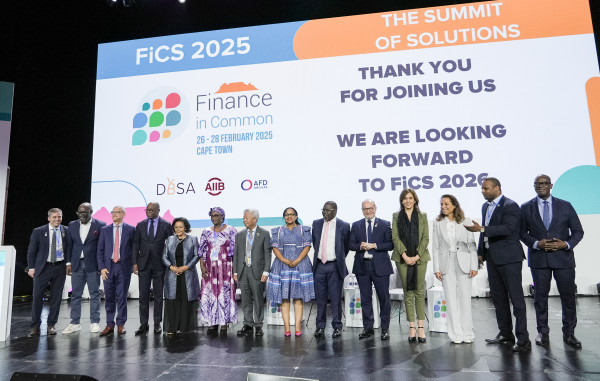
Finance in Common Summit Urges Global Development Finance Institutions to Harness Collective Power to Address Global Poverty
Location: News
African Development Bank Group (AfDB)

The fifth edition of the Finance in Common Summit (FiCS) concluded on Friday in Cape Town, South Africa, with strong calls for global development finance institutions to work together to address poverty and development challenges. South African Finance Minister Enoch Godongwana led the call.

The summit, which was co-sponsored by the African Development Bank and took place alongside the G20 Finance Ministers' Meeting, was themed "Fostering Infrastructure and Finance for Fair and Sustainable Growth."

Godongwana described the meeting as an unprecedented gathering of key financial players, saying: "Your determination and commitment will change the world. Your determination and will have an impact on global poverty.”

The minister linked the summit's goals to South Africa's development trajectory, highlighting the structural reforms the country had undertaken in the electricity, roads, and port sectors, which have opened new investment opportunities to development partners.

African Development Bank Vice President for Finance and Chief Financial Officer, Hassatou Diop N'Sele—one of several senior officials of the Bank Group at FiCS—represented Bank Group President, Dr. Akinwumi Adesina at a meeting on Wednesday organized by the Council of Europe Development Bank. At the meeting, multilateral development banks reaffirmed a shared commitment to maximize their collective impact.

During the G20 meetings of Finance Ministers and central bank governors, Hassatou Diop N'Sele said, “We call on G20 nations to enhance financial commitments, especially for the 17th replenishment of the African Development Fund, to simplify processes for accessing climate finance, and to create enabling policies that facilitate sustainable capital flows to Africa.”

In her various interventions during FiCS, she discussed the innovative financing tools and initiatives launched by the African Development Bank to leverage resources and mobilize the private sector at scale, including the landmark hybrid capital transactions successfully replicated by other development finance institutions and the Africa Investment Forum.

N'Sele emphasized the urgency for philanthropies and foundations to further strengthen their partnerships with multilateral development banks and to fully embrace innovation to amplify their impact. She also recognized the challenges for expanding climate finance in Africa and reflected on such solutions and platforms as the Alliance for Green Infrastructure in Africa, designed to catalyze bankable, greener infrastructure projects at scale and speed.

The African Development Bank delegation highlighted the progress of Mission 300 (https://apo-opa.co/4bolqQE), an initiative to accelerate access to electricity for 300 million Africans by 2030. The Bank, working with the World Bank and other development finance institutions and private sector partners, has committed $18.2 billion to this effort.

Senior leaders of the Bank stressed the need for urgent action. Nnenna Nwabufo, Bank Group Vice President for Regional Development, Integration and Business Delivery, said: "Africa is not looking for aid, we are looking for partnerships.".

She added: "The time for pilot projects that deliver incremental progress is over. We need investments that enable our nations to take ownership of their development, fostering resilience, self-sufficiency, and sustainable growth that benefits both Africa and the global economy."

Solomon Quaynor, the African Development Bank's Vice President for Private Sector, Infrastructure and Industrialization, called for faster implementation of infrastructure projects. "Africa can no longer sustain infrastructure projects that take seven to 10 years to complete - we must accelerate development to deliver within three years, prioritizing green infrastructure," he said.

The African continent needs $2.7 trillion through 2030 to meet its climate action goals, but receives only 3.6% of all global climate finance, despite its minimal contribution to global emissions.

The African Development Bank's Director General for Southern Africa, Leila Mokaddem, emphasized that Africa's green transition must be inclusive. She said: "With 600 million Africans still without electricity, our transition cannot be about climate goals alone. It must be about jobs, industrialization and economic opportunity. The African Development Bank is supporting this vision through its Jobs for Youth in Africa strategy to create 25 million jobs and equip 50 million young Africans with green economy skills by the end of this year.”

The summit achieved several significant breakthroughs in expanding the scope and impact of development financing. Key outcomes included: the endorsement by G20 finance ministers of public development banks' crucial role in international financial architecture; steps toward setting up frameworks to support cultural industries as valid asset classes; and the formation of a coalition between public development banks and civil society to ensure that development finance serves communities.

CEO of Agence Française de Développement and Chair of the Finance in Common Summit Rémy Rioux noted: "We have made tremendous progress in building public development banks as an asset class through innovation, commitment, and shared values. In times of uncertainty and conflict, we are offering a calm, collective alternative."

"This has truly been an African FiCS," said Boitumelo Mosako, CEO of the Development Bank of Southern Africa. He added:  "With 34% of delegates coming from the continent, we have shown that Africa is unstoppable as the second fastest growing region in the world."

Following the Finance in Common Summit, the Fourth Finance for Development Conference will take place in Spain between June and July this year. Being organized by the United Nations and the Spanish government, that summit will feature continuing discussions on reshaping the international financial architecture to better serve development needs.

Distributed by APO Group on behalf of African Development Bank Group (AfDB).

Media contact:
Emeka Anuforo
Principal Regional Communication Officer
Email: media@afdb.org

About the African Development Bank Group:
The African Development Bank Group is Africa's premier development finance institution. It comprises three distinct entities: the African Development Bank (AfDB), the African Development Fund (ADF) and the Nigeria Trust Fund (NTF). On the ground in 41 African countries with an external office in Japan, the Bank contributes to the economic development and the social progress of its 54 regional member states. For more information: www.AfDB.org

Media files
African Development Bank Group (AfDB)
Download logo
Read moreFinance in Common Summit Urges Global Development Finance Institutions to Harness Collective Power to Address Global Poverty
3 March 2025

DPSA hosts inaugural G20 Anti-Corruption meeting

Location: News

DPSA hosts inaugural G20 Anti-Corruption meeting

Public Service and Administration Minister Mzamo Buthelezi will from today host the first G20 Anti-Corruption Working Group (ACWG) in Cape Town.

The ACWG ends on Wednesday.

The Department of Public Service and Administration, in collaboration with the Special Investigating Unit (SIU) and the Department of International Relations (DIRCO), is at the forefront of South Africa's efforts to combat corruption.

The ACWG’s work is guided by the St Petersburg Strategic Framework of 2013 and the G20 ACWG Action Plan for 2025-2027, aligning with the priorities of the African Union’s Agenda 2063.

As South Africa assumed the G20 Presidency in December 2024, a series of important events led by the ACWG are planned throughout the year. 

Co-chaired by South Africa and Brazil, the ACWG will focus on four key priorities:

  • Strengthening the Public Sector: Promoting good practices for transparency and accountability, culminating in a Ministerial Declaration.
  • Increasing efficiency of asset recovery measures: Discussions will centre on high-level principles for managing seized assets, with technical assistance from global partners.
  • Enhancing inclusive participation: Mobilising the public sector, private sector, civil society, and academia to combat corruption collaboratively and share best practices through dedicated side events.
  • Enhancing whistle-blower protection: Reinforcing commitments to safeguarding whistle-blowers with accountability reports and specific side events focused on effective protection mechanisms.

The agenda for the first ACWG Technical Meeting, to be held from 3 to 5 March 2025 -  includes sessions dedicated to increasing the efficiency of asset recovery measures, enhancing whistleblower protection mechanisms and fostering inclusive participation among diverse stakeholders. 

Sessions will also receive updates on upcoming anti-corruption events, including the financing for development agenda and the United Nations Convention against Corruption (UNCAC) Conference of State Parties (CoSP 11). – SAnews.gov.za

Edwin
Mon, 03/03/2025 - 08:32
202 views

Read moreDPSA hosts inaugural G20 Anti-Corruption meeting
28 February 2025

SA presses forward for a just society 

Location: News

SA presses forward for a just society 

Family law and the creation of a just society were some of the issues under scrutiny at the launch of Human Rights Month on Friday.

“We’re gathered here today because we are all interested in creating a just, equitable, and sustainable society given our past, which was characterised by a range of injustices and lack of access to justice for the majority. Creating such a society requires a paradigm shift,” Justice and Constitutional Development Minister Mmamoloko Kubayi said.

The Minister hosted a stakeholder engagement session at the University of Johannesburg’s Soweto Campus.

The session also focused on matters related to civil and criminal law, among others.

The session with civil society organisations also served as the official launch of Human Rights Month supported by the Department of Sport, Arts and Culture as the custodian of National Days.  

The democratic government declared 21 as March Human Rights Day to commemorate and honour those who fought for the country’s liberation and the rights citizens enjoy today.

“Again, I must say that today, the context will be us launching this Human Rights Month. We took a decision that we should not launch a Human Rights Day as just an event, but through a dialogue that reflects those 30 years we’ve been in this democracy.

“How far we have travelled and what other lessons [have been] learned? What is it that we need to improve? What are the issues that as a society, as South Africa, we still have to deal with?” she remarked.

The Minister said the Constitution of the Republic of South Africa of 1996 is the framework and foundation upon which the transformation of law, State, and society is anchored. 

“Accordingly, the preamble of the Constitution proclaims that the new paradigm can only be created by establishing a society based on democratic values, social justice, and fundamental human rights and improving the quality of life of all citizens of the Republic.” 

Kubayi said the engagement was part of a collective introspection into the work done over the years to advance the constitutional imperative of expanding access to justice for all, including the poor and the most vulnerable. 

“Our quest to expand access to justice is based on the saying that everyone is equal before the law and has a right to equal protection and the benefit of the law. That equality includes the full and equal enjoyment of all rights and freedoms. 

“It also goes on to highlight that everyone has an inherent dignity and the right to have their dignity respected and protected.” 

Shifting her focus to gender-based violence and femicide (GBVF), the Minister described it as a pandemic.

“Today, the State bears a constitutional duty to provide effective remedies against domestic violence.”

She also said the law now provides for means whereby same-sex couples can enjoy the same status, entitlements, and responsibilities accorded to heterosexual couples through marriage and that employers may not discriminate against anyone based on their HIV positive status. 

“Because today they have become normal, but we’ve got to understand that it is through this democracy that we’ve attained these freedoms, “she added. 

She called on South Africans to dedicate this Human Rights Month to commemorating and honouring those who have lost their lives for the attainment of freedom and human rights, to promote the supremacy of the Constitution and the rule of law, while acknowledging the injustices of the past. – SAnews.gov.za


Gabisile
Fri, 02/28/2025 - 15:44
165 views

Read moreSA presses forward for a just society 
20 February 2025

Mpumalanga strengthens fight against GBVF

Location: News

Mpumalanga strengthens fight against GBVF

Mpumalanga Premier Mandla Ndlovu has launched the Provincial Council on Gender-Based Violence and Femicide that will improve access to essential services for GBVF victims.

Wednesday’s launch in Secunda marked a step forward in the province’s commitment to addressing the deep-seated inequalities and GBVF that plagues communities.

The newly established council will focus on improving access to essential services for GBVF victims, including shelters, counselling, legal support, and healthcare. 

It is envisaged that the structure will develop an action plan for the implementation of the Provincial Strategic Plan on GBVF (PSP-GBVF), recently approved by Members of the Executive Council (EXCO).

Ndlovu said the launch affirms the provincial government’s commitment to fight the GBVF pandemic, given the increase in GBVF cases in the province.

Ndlovu said the statistics of sexual offences, which increased from 641 in March 2022 to 746 in March 2023, underscores the urgency of the structure. 

“Through the provincial structure, we are bringing together government, civil society, and the private sector to create a collective response to GBVF. The structure will effectively coordinate all GBVF intervention programmes, in our quest to eliminate the pandemic.

“We stand in solidarity with survivors, dedicating ourselves to rebuilding their lives, and ensuring that perpetrators are held accountable for their heinous crimes. Justice will be served, and no offender will go unpunished. This initiative is a testament to our unwavering resolve to create a safer, more equitable society for all,” the Premier said.

The council will be constituted by government representatives, with the Premier as a co-Chairperson, the private sector, the civil society, and traditional leadership.

A pledge was signed at the end of the event as a commitment by all stakeholders to fight GBVF.

The launch aligns with President Cyril Ramaphosa’s declaration of GBVF as a national crisis and a second pandemic. – SAnews.gov.za

Matona
Thu, 02/20/2025 - 16:18
230 views

Read moreMpumalanga strengthens fight against GBVF
20 February 2025

Parliament Urged to Pass Law on Detention of Immigrants

Location: News

Bill hailed as “progressive” by COSATU, but other organisations say it doesn’t go far enough

Read moreParliament Urged to Pass Law on Detention of Immigrants
19 February 2025

Appeals Panel Says Mail & Guardian Got It Wrong on Councillor’s Role in Occupation

Location: News

But Joburg City Councillor Juwairiya Kaldine’s actions remain questionable

Read moreAppeals Panel Says Mail & Guardian Got It Wrong on Councillor’s Role in Occupation
19 February 2025

European Union High Representative for Foreign Affairs and Security Policy (HR)/Vice-President of the European Commission (VP) Kaja Kallas Travels to South Africa

Location: News

European Union External Action: The Diplomatic Service of the European Union
Download logo

EU High Representative for Foreign Affairs and Security Policy/Vice-President of the European Commission, Kaja Kallas, will visit South Africa from 19-21 February. Her visit will aim to strengthen EU-South Africa relations and include participation in the G20 Foreign Ministers' meeting.

The visit comes as this year marks the 25th anniversary of the EU-Africa partnership, culminating in a Summit with EU and African leaders.

On 19 February, Kaja Kallas will co-chair the Ministerial Political Dialogue in Cape Town with South African counterparts to prepare for the 8th EU-South Africa Summit on 13 March. They will discuss key topics such as security, trade, and investment. The meeting will be followed by a joint press statement by High Representative Kallas and South African Foreign Minister Ronald Lamola. The High Representative will also engage with students, entrepreneurs, and civil society.

On 20-21 February, the High Representative will participate in the G20 Foreign Ministers' meeting in Johannesburg, under the theme "Solidarity, Equality, Sustainability." The two-day gathering will focus on the global geopolitical situation and South Africa's G20 Presidency priorities.

All audiovisual material of the visit will be available on EbS. 

Distributed by APO Group on behalf of European Union External Action: The Diplomatic Service of the European Union.

Read moreEuropean Union High Representative for Foreign Affairs and Security Policy (HR)/Vice-President of the European Commission (VP) Kaja Kallas Travels to South Africa
13 February 2025

President Ramaphosa issues rallying call for unity

Location: News

President Ramaphosa issues rallying call for unity

President Cyril Ramaphosa has issued a powerful call to action, urging all political parties, civil society groups, and citizens to unite and join government in building a South Africa that is inclusive, equal and fair.

The President was replying to the State of the Nation Address (SONA) Debate held in Parliament this week.

Of late, the country has grappled with, amongst others, tensions with the United States of America following the promulgation of the Expropriation Act, the tragic loss of 14 South African National Defence Force soldiers in the eastern Democratic Republic of Congo, heated discussions surrounding equality, and a sluggish economy.

“At a time like this, we need to stand united as a nation, particularly now when we are facing a harsh global wind. 

“This is not the time for any of us to rush off to foreign lands to lay complaints about issues that we can solve ourselves in our country. We need South African solutions to South African problems,” he said in his reply to the debate on Thursday.

Despite the diverse views in South Africa, President Ramaphosa emphasised the importance of sending a unified message to the world.

“While there are many diverse and different voices in our society, we must strive to convey a common message.

“We must say to our people and to the world, that we are committed to working together to build a society in which all South Africans are free and equal to build a nation that works for all,” he said.

Additionally, the President emphasised that although political ideologies may differ, there is a common desire to build a country that is inclusive of all South Africans.

“At this important moment in our country and in our world, we must ask ourselves what kind of a nation we want.

“We want a nation in which all people enjoy equal worth and equal opportunity. We want a nation in which the rule of law is protected and upheld. We want a dynamic and growing economy in which small businesses can emerge and expand.

“It is my firm and enduring belief that all of us as South Africans, as fellow citizens bound together by our history and our present, want the same thing,” he said.

Moving forward

President Ramaphosa cited the Government of National Unity (GNU) as an example of how South Africans can come together “to build a nation working alongside each other”.

“It is to be expected that the 10 political parties that make up the GNU, with their very different political and ideological perspectives, will not always agree and will sometimes feel the need on platforms such as this, to talk to their different constituencies.

“Despite these differences, these political parties are working well together in the Government of National Unity. We are finding ways of mediating our differences and remain focused on the actions that we are all committed to undertake.

“It is this that gives me confidence that the Government of National Unity will continue to promote stability and serve the people of South Africa, in accordance with our Statement of Intent and the Medium-Term Development Plan,” President Ramaphosa explained.

The President described the current moment as one of "opportunity and hope".

“The Government of National Unity represents the best of that hope. We have demonstrated that we are prepared to put our political differences aside and work for the common good. This government remains united in pursuit of a South Africa that improves the material prospects of every South African man, woman and child.

“We are committed to upholding our hard-won democracy. We are committed to expanding the frontiers of opportunity for all our people. As we do so, we are guided by our Constitution, the Bill of Rights and the rule of law.

“As we rise from this debate, I am convinced that despite our differences, we share a common desire for a South Africa that belongs to all who live in it. We share the vision of a nation that works for all,” President Ramaphosa said.

The President delivered the first SONA of the GNU last Thursday, followed by the two-day debate, to which he responded today. – SAnews.gov.za

NeoB
Thu, 02/13/2025 - 15:50

63 views
Read morePresident Ramaphosa issues rallying call for unity
7 February 2025

G20 Development Group meetings kick off under SA’s leadership

Location: News

G20 Development Group meetings kick off under SA’s leadership

South Africa has reiterated its intention of using its G20 Presidency to foster global solidarity, equality and sustainable development.

Minister in the Presidency for Monitoring, Planning and Evaluation, Maropene Ramokgopa, on Friday said her department has held its first meeting of the G20 Development Working Group.

"The Development Working Group recently held its first meeting and will continue in its meetings during the year to advance financing for development, social protection and global public goods.

“South Africa is determined to utilise the Presidency of the G20 to contribute towards and foster global solidarity, equality and sustainable development,” Ramokgopa said.

The Minister was addressing a briefing on progress made in the development of the Medium Term Development Plan (MTDP) 2024 – 2029, where she also highlighted work being done around the G20. 

South Africa's G20 Presidency runs from 1 December 2024 to 30 November 2025 -- only five years before the deadline of the United Nations (UN) 2030 Agenda.

South Africa’s theme for this year’s G20 is: “Solidarity, Equality and Sustainable Development”.

Ramokgopa said the theme aligns with South Africa’s development goals, and with global goals such as the UN Sustainable Development Goals (SDGs) and the Pact of the Future, which was adopted at the 2024 Summit of the Future.

The Minister issued a rallying call to all South Africans to support government’s efforts to implement the MTDP. The MTDP is a five-year strategic framework for development, inclusive growth and improved living conditions. It integrates the Government of National Unity’s Statement of Intent and the National Development Plan (NDP) into government’s priorities for the next five years. This plan is founded on credible evidence drawn from extensive research, and reflects a participatory process.

Government intends to mobilise all stakeholders to collaborate and support the implementation of the MTDP 2024 – 2029 to ensure meaningful developmental progress for South Africa.

“We call on all stakeholders in business, labour, civil society, academics, traditional leaders, and citizens, to work with government in advancing our goals of building a better world, and to ensure we continue to build our nation by implementing the MTDP to advance and sustain the development of our country,” Ramokgopa concluded. – SAnews.gov.za

NeoB
Fri, 02/07/2025 - 12:30

37 views
Read moreG20 Development Group meetings kick off under SA’s leadership
7 February 2025

A nation where there is “work for all”

Location: News

A nation where there is "work for all"

Government has reaffirmed its commitment to providing training for women entrepreneurs to equip them with the skills needed to compete for government tenders.

Delivering the first State of the Nation Adress (SONA) of the seventh democratic Parliament at the Cape Town City Hall, on Thursday evening, President Cyril Ramaphosa said the country’s economy has long been hindered by the exclusion of the vast majority of the South African people. 

He said Black South Africans have been deprived of essential resources, including land, capital, skills, and opportunities. 

“Our economy was starved of the potential of its people, and that is why we need to transform our economy and make it more inclusive. That is why our focus is on empowering Black people, women, and persons with disabilities, because they were deliberately excluded from playing a key role in the economy of their own country,” President Ramaphosa said. 

He announced the establishment of an annual R20 billion transformation fund over the next five years to fund Black-owned and small business enterprises. 

The President also committed to fast-track the regulations of the Public Procurement Act to ensure businesses owned by women, youth, and persons with disabilities receive equitable opportunities in government contracts.

He noted the transformation initiative, through the National Skills Fund Disabilities Programme, launched in November last year, with an aim to empower over 10 000 people with disabilities is in its first phase through tailored training programmes, stipends, and specialised tools.

“This part of the work we must undertake as business, government, labour and civil society to enable persons with disabilities to play an important part in the economy of our country.” 

Through these programmes, the President emphasised that government was unleashing the potential of the country’s economy for sustained growth. 

“We want a nation where there is work for all, where every person can earn a decent living and realise their potential, where the rights of workers are protected and working conditions are improved, and where women and men receive equal pay for work of equal value,” President Ramaphosa said.

The President emphasised the need to ensure that growth creates jobs for all, especially for young people.

The success of the Presidential Employment Stimulus showed how public employment programmes could create meaningful work that generated a wider benefit and contributed to sustainable employment. 

“The employment stimulus has created almost 2.2 million work and livelihood opportunities through innovative models that provide high-quality work to participants. The Social Employment Fund has created over 80 000 jobs this year [and] has supported more than 12 000 participants to enter entrepreneurial activities.

“During the past year young people secured 235 000 work opportunities through the National Pathway Management Network, which is underpinned by the SAYouth.mobi platform. 

“We now need to build on these innovative programmes to create jobs for youth at even greater scale,” the President said. – SAnews.gov.za

GabiK
Thu, 02/06/2025 - 22:11

183 views
Read moreA nation where there is “work for all”
7 February 2025

Goma Call for Peace Campaign Launched at St George’s Cathedral

Location: News

Religious leaders and civil society groups call for end to the war

Read moreGoma Call for Peace Campaign Launched at St George’s Cathedral
5 February 2025

Nearly 2 000 guests expected to attend this year’s SONA

Location: News

Nearly 2 000 guests expected to attend this year’s SONA

Nearly 2 000 guests from various sectors are expected to flock to Cape Town to attend tomorrow’s State of the Nation Address (SONA), during which President Cyril Ramaphosa will take the nation into his confidence.

These guests represent civil society, academia, as well as traditional, religious and cultural groups. 

“Public participation has always been a cornerstone of SONA, and this tradition will continue,” National Assembly Speaker Thoko Didiza said on Wednesday. 

Didiza and the Chairperson of the National Council of Provinces (NCOP), Refilwe Mtsweni-Tsipane, were addressing a media briefing on Parliament’s preparations for the 2025 SONA.

The President will deliver the SONA to the nation at 7pm on Thursday night.

Didiza described SONA as a significant event in the country’s national calendar and crucial for shaping national discourse and establishing the tone for the year ahead.

During this event, the Head of State will reflect on various important national issues and outline the progress made on government’s commitments.

“As such, SONA signifies the highest level of the State’s accountability to the citizens by providing updates on government’s programmes, developments in legislation and policies, profiling targets and a programme of action for the new financial year.” 

According to Didiza, the R6 million event, set to take place at the Cape Town City Hall, is the result of months of careful preparation and coordination. 

Some of the dignitaries expected to attend include former Presidents and Deputy Presidents of the Republic, former Speakers of the National Assembly, former Chairpersons of the National Council of Provinces, former Deputy Speakers of the National Assembly, the Executive Mayor of the City of Cape Town, the Queen of the Bapedi nation, and a member of the European Union who serves as the Chairperson of the delegation for relations with South Africa.

It has been confirmed that former Presidents Thabo Mbeki, Kgalema Motlanthe and Jacob Zuma will also attend.

To promote civic awareness and public engagement, Didiza announced that SONA will include a Junior Guard of Honour. 

This group will consist of 100 learners from four schools in the Western Cape, selected in partnership with the Western Cape Department of Education.

“The involvement of young learners is crucial in educating and exposing them to the workings, roles, and functions of state institutions, helping to shape them as the leaders of tomorrow,” Didiza said.

The event will also include a performance by the Wynberg Girls’ High School band alongside the official Parliament Choir. 

Tomorrow’s SONA will be followed by a two-day debate, with a reply from the President hosted at the Dome in the Nieuwmeester Parking Site.

The SONA proceedings will follow a full ceremonial format. This will include a 21-gun salute, an aircraft fly-past, a ceremonial guard, the singing of the national anthem, a full military band, and processions featuring provincial Speakers, Premiers, the judiciary, the Deputy President, and the President.

Didiza clarified the difference between the Opening of Parliament Address (OPA) that occurred last year, marking the beginning of the seventh administration.

“OPA occurs once every five years, after general elections, to announce medium and long-term plans. SONA is an annual address that specifies short-term priorities and provides insights on the progress of the long-term targets.” – SAnews.gov.za

Gabisile
Wed, 02/05/2025 - 15:07

182 views
Read moreNearly 2 000 guests expected to attend this year’s SONA
5 February 2025

Sustainability of community media is of vital importance – Morolong

Location: News

Sustainability of community media is of vital importance - Morolong

The Deputy Minister in the Presidency, Kenny Morolong, has urged policymakers, businesses, and civil society to work together to secure the future of community media, by providing the necessary support and resources.

Morolong delivered a keynote address at the Media Development and Diversity Agency (MDDA) Community Media Consultative Forum at the Khayelitsha Thusong Centre, on Tuesday. 

The Forum aimed to bring government, community media, industry partners, and regulatory bodies together, to reflect on community media's contributions in the past 30 years of democracy in South Africa, while also tackling challenges facing the sector today. These include sustainability and digitalisation, to fortify the sector for the future. 

The Deputy Minister highlighted the contributions of the sector in the past 30 years of democracy, while emphasising its role in promoting identity, unity, and local awareness.

“The sustainability of community media is not just a sectoral issue; it is a societal imperative. Policy makers regulators, businesses, and civil society must work together to provide the tools, resources, and framework necessary for community media. As a sector community media is far more important,” Morolong said. 

The Deputy Minister also highlighted that community media serves as a platform for people to share their stories in their own words, balancing mainstream stories and ensuring that every citizen has a voice, regardless of their socio-economic status.

He described the sector as a key instrument in shaping public opinion and reinforcing democracy.

“Community media provides a platform for people to tell their stories in their own words, fostering identity, unity, and awareness of local issues. It serves as a counterbalance to centralise narratives, upholding the principle that everyone deserves a voice, regardless of their socio-economic status,” he said. 

However, the Deputy Minister acknowledged the pressing challenges facing community media, particularly its sustainability. He stressed that its survival hinges on robust governance, financial innovation, and strong stakeholder support.

“Strong governance is the backbone of community media sustainability. It ensures accountability, transparency, and ethical management. These are essential elements that we trust with communities. Unfortunately, many of our community media organisations lack the skills, policies, and resources to implement effective governance. 

“To address this, sector bodies must invest in training board members and leaders in strategic decision making and resource management. Simplifying compliance processes is equally essential, overly complex regulatory frameworks hinder small operations, diverting resources from the primary mission,” he said. 

Financial insecurity remains the greatest challenge facing the sector, he noted, as traditional advertising models become less viable. 

He also urged community media outlets to explore creative revenue streams, such as partnerships with local businesses, grant funding, and membership programs. 

“The greatest challenge facing community media is financial insecurity. Traditional advertising models are no longer viable, necessitating creative revenue streams partnering with local businesses leveraging grant funding and implementing membership programs can provide much needed financial stability,” he said. 

Additionally, he added that community events and workshops could serve as both a source of revenue and a way to strengthen ties with the communities they serve.

“Community events and workshops not only generate revenue but strengthen the bond between media outlets and the community they serve.

“Community media is not just a medium of information, it is an instrument of empowerment, it educates, informs, unites and plays a crucial role in supporting democracy and safeguarding marginalised voices. It contributes to the social framework though which social and political formations are shaped. Failing to address its sustainability risks silence of the vital important voices,” the Deputy Minister said. – SAnews.gov.za

DikelediM
Wed, 02/05/2025 - 06:08

26 views
Read moreSustainability of community media is of vital importance – Morolong
31 January 2025

Conserving crop diversity key to food security

Location: News

Conserving crop diversity key to food security

Millions of farmers across Africa play a crucial role in preserving crop diversity by cultivating traditional crop varieties, saving seeds for the next planting season, and exchanging seeds with neighbours and other farmers.

This practice is essential for safeguarding crop production and ensuring food security, as the population continues to grow.

Agriculture Minister John Steenhuisen in a statement said farmers have long been the stewards of crop diversity, helping to secure food production and improve crop yields.

"Farmers have not always been formally recognised for their role in conserving plant genetic resources, but the adoption of the International Treaty on Plant Genetic Resources for Food and Agriculture has changed that," Steenhuisen said on Thursday.

The treaty acknowledges the vital contribution of farmers and indigenous communities in the conservation and sustainable use of plant genetic resources, which is key to food security and agricultural biodiversity.

In a significant step for the country’s agricultural and food security landscape, the Department of Agriculture has confirmed that South Africa has ratified the International Treaty on Plant Genetic Resources for Food and Agriculture, making it the 154th Contracting Party to the agreement.

READ | SA signs international treaty to boost food security, biodiversity

This treaty aims to ensure global collaboration in conserving and sustainably using plant genetic resources.

Steenhuisen emphasised that by joining the treaty, South Africa must align its national policies and programmes to recognise farmers’ contributions to the conservation of traditional crops, especially those that are often neglected or underutilised.

Crops such as millets, cowpeas, sorghum and bambara groundnuts play an important role in local food systems but often lack the attention they deserve.

“We must ensure that indigenous farmers are involved in decision-making processes related to plant conservation, the sustainable use of genetic resources, and in the sharing of benefits derived from these crops. Farmers must also be empowered to save, exchange and sell farm-saved seed,” Steenhuisen said.

Supporting community seed banks

To further enhance the conservation of crop diversity, the Minister said the Department of Agriculture is working in partnership with farmers, traditional leaders, civil society organisations, and provincial agriculture departments, to support and strengthen community seed banks.

These hubs for the conservation and revitalisation of local seed systems focus on crops suited to local conditions.

“Currently, community seed banks are operational in Limpopo, the Eastern Cape and the North West provinces. In the 2025/26 financial year, two new community seed banks will be established in KwaZulu-Natal and the Northern Cape provinces.

“These seed banks are central to preserving traditional crops, encouraging participatory plant breeding, and facilitating seed exchanges among farmers and communities through traditional food and seed fairs,” Steenhuisen said.

Crop diversity

Conserving crop diversity is integral to building sustainable food systems and advancing food and nutrition security.

According to the National Food and Nutrition Security Survey (NFNSS), approximately 20 million South Africans face food insecurity, a situation exacerbated by high poverty levels, unemployment, and income inequality.

The report also highlights the adverse impacts of climate change on crop yields, particularly in smallholder and subsistence farming communities.

The Minister said the NFNSS provides valuable insights to guide South Africa’s National Food and Nutrition Security Plan (2024-2029), “a key priority for government”.

Global collaboration and benefits

South Africa’s participation in the International Treaty on Plant Genetic Resources for Food and Agriculture's multilateral system facilitates access to a global pool of genetic resources, benefiting the country’s farmers and researchers.

“This system supports the training, breeding and research needed to strengthen food security and improve crop resilience. Additionally, the treaty’s Benefit-Sharing Fund offers financial support for crop diversity conservation and capacity-building initiatives worldwide,” Steenhuisen said.

The Minister said the successful implementation of the treaty in South Africa will require strong government support at all levels and collaboration across the public, private and civil sectors.

He called for continued cooperation to ensure that South Africa’s farmers and communities benefit from the country’s participation in the treaty. – SAnews.gov.za
 

GabiK
Fri, 01/31/2025 - 10:47

47 views
Read moreConserving crop diversity key to food security
29 January 2025

SA signs international treaty to boost food security, biodiversity

Location: News

SA signs international treaty to boost food security, biodiversity

South Africa has joined scores of countries worldwide that have formalised their commitment to ensuring the conservation and sustainable use of plant genetic resources for food and agriculture.

The Department of Agriculture, Land Reform and Rural Development (DALRRD) announced on Tuesday that South Africa has officially signed the International Treaty on Plant Genetic Resources for Food and Agriculture (ITPGRFA).

The objectives of the ITPGRFA are conservation and sustainable use of plant genetic resources for food and agriculture, and to promote the fair and equitable sharing of these benefits arising from their use, in agreement with the Convention on Biological Diversity for sustainable agriculture and food security.

The treaty also aims to, among others, recognise the contribution of farmers in enhancing the diversity of crops that feed the world; establish a global system to provide farmers, plant breeders and scientists with access to plant genetic materials, and ensure that the recipients thereof share the benefits they derive from using these genetic materials.

Some of the countries that have ratified the treaty include Australia, Belgium, Egypt, the United States of America and Argentina, to name a few.

South Africa submitted its instrument of accession with the Director-General of the Food and Agricultural Organisation (FAO) on 23 December 2024, making it the 154th Contracting Party to this international treaty.

By joining the ITPGRFA, the DALRRD said South Africa is reaffirming its commitment to global efforts to conserve and sustainably use plant genetic resources, which are essential for food security and agricultural biodiversity. 

This is aligned with the recently approved White Paper on Conservation and Sustainable Use of South Africa’s Biodiversity.

“South Africa’s accession to the ITPGRFA brings new opportunities for collaboration within the treaty’s framework, including participation in its multilateral system, which facilitates access to a global pool of genetic resources.

“The ITPGRFA’s national implementation will require close collaboration between the National Genebank, the relevant national departments, provincial Departments of Agriculture, community seed banks, farmers, civil society organisations, industry and research and academic institutions,” the department said.

More information on the ITPGRFA can be accessed on https://www.fao.org/plant-treaty/en/. – SAnews.gov.za 

GabiK
Wed, 01/29/2025 - 10:27

53 views
Read moreSA signs international treaty to boost food security, biodiversity
28 January 2025

Stepping up: Pupils to benefit from school shoes initiative 

Location: News

Stepping up: Pupils to benefit from school shoes initiative 

While it is often said that clothes make the man, a new, shiny pair of school shoes may do just the same for many school pupils, especially those that are underprivileged. 

Deputy Minister in the Presidency Kenny Morolong on Tuesday received 470 pairs of school shoes from Capital Centric, on behalf of the Government Communication and Information System (GCIS) which will be donated to needy learners.  

Capital Centric is a dynamic, unlisted public company, specializing in private equity investments. Guided by the philosophy of Kaizen, which,  according to its website, emphasizes continuous improvement, the company focuses on identifying opportunities and building long-term value for its stakeholders.

The Deputy Minister said he was humbled by the gesture as he received the shoes. 

“We are quite elated by the commitment demonstrated by the private sector. This donation will go a long way in helping kids who under normal circumstances would not be able to walk to schools with shoes,” a beaming Morolong said on Tuesday.

He stressed that by working together, the private sector, civil society and government can do more to fundamentally alter the circumstances under which people live.

“This collaboration will go a long way. We really wish to thank you for collaborating with GCIS to drive the programmes that impact our communities. I am speaking for these children who under normal circumstances would not be able to receive these shoes,” said the Deputy Minister.

Capital Centric Chief Executive Officer, Nathaniel Bricknell, said the company not only invests in small, medium, and micro enterprises (SMMEs) and enterprises that are profitable, scalable and sustainable, but also takes pride in playing a pivotal role in driving social impact within the sectors it serves.

“We are elated to hand over 470 pairs of school shoes to GCIS, to be distributed to schools and learners in need,” said Bricknell.

Bricknell explained that each pair of shoes tells its own unique story. This as the shoes are manufactured in South Africa and crafted from medical waste that might otherwise have ended up in landfills or have been destroyed.

Collaboration

“These shoes, made from plastic consumables that transitioned from saving life to creating opportunity, represent the very essence of transformation and sustainability.

“We believe in the power of collaboration to amplify impact. That’s why we have invited other corporates such as FNB and others we work with daily to participate in similar initiatives that drive positive change” Bricknell explained.

Bricknell thanked the GCIS for fostering a cooperative environment that enables the private sector to play an active role in uplifting communities.

“Together we are not just investing in the future of businesses but also in the future of our children, our communities and our country,” he said.

The company's Non-Executive Director, Pearl Munthali, said the entity appreciates the partnership with government.

“We are hoping to continue to partner with government changing the lives of those who are underprivileged in our country,” Munthali said.

The donation comes as schools across the country reopened for the 2025 academic year.
SAnews.gov.za
 

Edwin
Tue, 01/28/2025 - 20:55

114 views
Read moreStepping up: Pupils to benefit from school shoes initiative 
28 January 2025

Remaining silent on GBVF ‘not an option’ – Justice Minister

Location: News

Remaining silent on GBVF 'not an option' - Justice Minister

Minister of Justice and Constitutional Development, Mmamoloko Kubayi, has reiterated government’s commitment to fighting the scourge of gender-based violence and femicide (GBVF) in South Africa.

The Minister delivered remarks at the Kgalema Motlanthe Foundation’s Women Empowerment 365 Days Against Gender-Based Violence dialogue held in Soweto on Tuesday.

“As part of [the] criminal justice system, the Department of Justice and Constitutional Development is working tirelessly to ensure that legal and law enforcement services work on enforcing domestic violence laws and strengthening legal frameworks,” the Minister said.

The department, she said, is working closely with civil society to see the “realisation of the aspirations of the National Strategic Plan to End Gender-based Violence and Femicide”.

“In line with the GBVF Strategic Plan, the department therefore intends to increase the national footprint of sexual offences courts, particularly in rural communities. 

“In line with the newly developed National Strategy on Support Services for Domestic Violence Survivors, the department intends to upgrade 100 district courts to offer services that are custom-made for survivors of domestic violence,” she said.

The National Strategic Plan on Gender-Based Violence and Femicide was adopted in 2020 as a society-wide programme to end GBVF. It is organised around six pillars, which are aimed at prevention of GBV, strengthening the criminal justice response to GBV, and providing support, care and healing to survivors of gender-based violence.

Femicide Watch and addressing backlogs

Kubayi said the department will publish the very first Femicide Watch in Africa repository.

“This is a national repository of GBV-related femicide cases designed to provide the numerical analysis, the profile and the severity of the pandemic of femicide in our country, so as to assist government and our partners in establishing informed programmatic interventions,” Kubayi added.

In the courts, the department has initiated a 100-day challenge to “reduce and ultimately eliminate backlog cases of domestic violence, sexual offences, maintenance and divorce matters”.

“In 100 Days, selected courts with high volume of backlog GBV cases will be challenged to come up with creative and sustainable innovations to reduce the turnaround times in the finalisation of these cases and also to address the existing case backlogs,” the Minister explained.

Whole of society approach

Kubayi highlighted that GBVF is deeply rooted in societal structures and patriarchal practices that perpetuate toxic masculinity and gender inequalities. 

“As a woman or a girl child in this country, you can be directly affected by GBV and femicide regardless of your socio-economic class in society or the position you hold.

“Our social and family constructions are largely engrained in patriarchal practices, toxic masculinities, and gendered power inequalities, which often result in family dysfunctions, solo parenting, gender-based violence and killings,” she said.

Referencing a study by the Human Sciences Research Council, which found that at least three out of 10 women have experienced GBV, the Minister urged society not to become desensitised to these acts.

“This is not acceptable, and we should not accept [it] as a society. The stories of women getting killed by their partners have become so prevalent on social media platforms to the extent that when we read them, we no longer get shocked or outraged, we just read and move on. 

“It is for this reason that I welcome this dialogue because it serves as a reminder to all of us that gender-based violence is unacceptable and that remaining silent is not an option. 

“We all have a responsibility to speak out, to report it wherever it rears its ugly head in our homes, our neighboursand even in the homes of our beloved relatives,” Kubayi said.

The Minister called for a united front, urging all sectors of society to join the fight against GBVF. 

“We believe that working together as a society, we can defeat the scourge of gender-based violence. 

“We believe that we can a achieve a South Africa free from gender-based violence directed at women, children and LGBTQIA+ [lesbian, gay, bisexual, transgender, intersex, queer/questioning, asexual] persons,” Kubayi said. – SAnews.gov.za


NeoB
Tue, 01/28/2025 - 12:57

255 views
Read moreRemaining silent on GBVF ‘not an option’ – Justice Minister
26 January 2025

Trade, Industry and Competition unpacks Transformation Fund

Location: News

Trade, Industry and Competition unpacks Transformation Fund

The Department of Trade, Industry and Competition (the dtic) says the Transformation Fund is a critical initiative that advances South Africa’s constitutional commitment to economic redress and inclusive growth, which the dtic is bound by. 

Rooted in Section 9(2) of the Constitution, it aims to promote shared equality through legislative and other measures to empower black-owned enterprises and small, medium, and microenterprises (SMMEs).

The fund also reflects the statement of intent of the Government of National Unity (GNU), which emphasises fostering redress and inclusive economic growth. 

“The GNU’s transformative agenda seeks to dismantle systemic barriers to economic participation, ensuring that historically-disadvantaged communities are afforded equal opportunities to thrive in all sectors of society,” said the department.

In addition to advancing the constitutional imperative of economic redress, the fund is anchored in the Broad-Based Black Economic Empowerment (B-BBEE) Act, particularly Section 2(h), which obligates government to "increase the effective economic participation of black-owned and managed enterprises, including small, medium, and micro enterprises and cooperatives, and enhance their access to financial and non-financial support”.

The fund directly addresses these priorities while promoting greater compliance with B-BBEE requirements and unlocking opportunities for sustainable growth.

Aligned with the National Development Plan’s (NDP) Vision 2030 to eliminate poverty and reduce inequality, the fund supports Outcome 4: decent employment through inclusive economic growth.

It also reinforces the department’s Medium-Term Development Plan (MTDP) 2024–2029, which prioritises job creation and inclusive economic participation, as outlined in the revised Annual Performance Plans (APPs). 

The following include the objectives of the Transformation Fund:
- Promotes economic inclusion: Provides financial and non-financial support to black-owned enterprises, ensuring meaningful participation in the economy.
- Addresses fragmentation: Aggregates resources from existing Enterprise and Supplier Development (ESD) obligations and other sources to enhance impact and efficiency.
- Fosters sectoral growth: Focuses on high-impact sectors, including agriculture, tourism, ICT, manufacturing, and businesses in township and rural areas.
- Enhances market access: Offers technical assistance, pre- and post investment support, and market access opportunities to beneficiaries.
- Supports industrialisation: Aligns with South Africa’s industrial policy to stimulate growth in productive sectors and underdeveloped areas.

“The Transformation Fund is not about imposing new obligations but about ensuring that existing commitments under the B-BBEE legislation are strategically utilised to create meaningful economic transformation. It embodies our constitutional mandate to achieve equality and empower historically disadvantaged communities,” Minister of Trade, Industry, and Competition, Parks Tau, said.

As outlined in the department’s revised Annual Performance Plans (APPs), the fund’s conceptual framework will be opened for public consultation and stakeholder engagement with a target to mobilise R100 billion by 2029. 

“We welcome the ongoing debate on transformation and look forward to broad participation during the consultation process. This timeline underscores the dtic’s commitment to achieving sustainable and impactful transformation.”

He said the Transformation Fund was not merely a funding mechanism, “it is a catalyst for change”.

“Through collaboration with the private sector, civil society, and other stakeholders, we will create an economy that is inclusive, sustainable, and reflective of South Africa’s diversity.” – SAnews.gov.za

Janine
Sun, 01/26/2025 - 12:30

91 views
Read moreTrade, Industry and Competition unpacks Transformation Fund
25 January 2025

Massive SLAPP Suit Against Environmentalists Withdrawn

Location: News

Gauteng property developers were suing environmentalists for alleged costs from delays to their projects caused by objections

Read moreMassive SLAPP Suit Against Environmentalists Withdrawn
23 January 2025

SA calls on US to reconsider withdrawal from Paris Agreement

Location: News

SA calls on US to reconsider withdrawal from Paris Agreement

The Minister of Forestry, Fisheries and the Environment, Dr Dion George, has called on the United States of America to take its commitments under international law seriously, and carefully consider the ramifications of its intended withdrawal from the Paris Agreement.

This comes after reports indicate that President Donald Trump has started the process to withdraw the United States from the Paris Agreement again.

In a statement on Thursday, George expressed profound regret over the decision of the United States of America to withdraw from the Paris Agreement again.

“The Paris Agreement represents the most flexible and dynamic approach to addressing climate change. The US played an important role in the negotiation of the Paris Agreement, and the withdrawal of the USA is not only an abdication of the global responsibility that we all have to humankind, but damaging to multilateralism, international law and carefully built trust between nations,” the Minister said.

The Paris Agreement is aimed at strengthening the global response to the threat of climate change by keeping a global temperature rise this century well below 2°C above pre-industrial levels and to pursue efforts to limit the temperature increase even further to 1.5°C.

“The Paris Agreement is premised on a common and very strong understanding that we all have a common responsibility to act, whilst noting that nations over time have contributed to the problem differently, and have varied capabilities to respond. 

“Historically, the US has contributed very significantly to global emissions, still having the highest cumulative historical emissions, and therefore to global warming and the climate crisis we all face. 

“Therefore, Americans have a pressing moral obligation not only to lead in reducing emissions, but to support developing economies in contributing to the global effort, and to provide support to poor countries experiencing the impacts of climate change,” the Department of Forestry, Fisheries and the Environment said.

The department said during the recent 29th United Nations Conference of the Parties (COP 29), the United States committed to reduce emissions and its recently communicated mitigation target for 2035. 

“It appears now that these commitments will not be upheld. We hope that this is not the case. The United States has been a leader in both the science of climate change and in technological innovation underpinning the global response to climate change. 

“We recognise the outstanding contribution made to the fight against climate change in the US by past Administrations, states, cities, scientific organisations, civil society, business and ordinary Americans. 

“We applaud the continuing efforts of US citizens and non-state actors to address the climate crisis with the diligence, creativity and imagination we have come to expect,” the department said.

South Africa reiterated its unwavering commitment to the realisation of the goals set out in the UN Framework Convention on Climate Change and its Paris Agreement. 

“We must and we will seize this moment to innovate and drive forward sustainable solutions. The global effort to curb climate change and address its impacts cannot be put on hold. There is an urgent need for action. We remain hopeful that the momentum of the collective effort to address climate change will only accelerate. 

“The international community regards climate change as the single biggest threat to wellbeing, health and socio-economic development currently facing humanity. Its impact is widespread, unprecedented and places a disproportionate and unjust burden on the poorest and most vulnerable in our country, our continent and globally. 

“In 2024, the world breached for the first time the critical threshold of 1.5 °C of global warming, signalling the urgency of immediate and strong climate action to avoid increasingly dangerous climate change impacts,” the department said. - SAnews.gov.za

nosihle
Thu, 01/23/2025 - 14:13

90 views
Read moreSA calls on US to reconsider withdrawal from Paris Agreement
23 January 2025

Minister Meth stresses collaboration with Labour Federations for fair policies, effective enforcement

Location: News

Minister Meth stresses collaboration with Labour Federations for fair policies, effective enforcement

Employment and Labour Minister Nomakhosazana Meth has emphasised that close collaboration with labour federations is integral to shaping equitable policies and ensuring effective enforcement.

Speaking at the National Economic Development and Labour Council (NEDLAC) Annual Labour School in Pretoria on Wednesday, Meth said the union’s insights inform better law-making and governance and enhance the department’s capacity to monitor compliance.

“The role of unions in a free South Africa has been a testament to the indomitable will of the South African people. The growth, strength and influence of unions play an indispensable role in advocating for worker’ rights and ensuring that the economic gains of our country are shared amongst all its people.

“We recognise the transformative role that thought leadership and transversal coordination play in aligning policy, catalysing industrial expansion, and equipping our workforce for tomorrow’s opportunities,” Meth said.

She said NEDLAC, which comprises members from government, business, labour and civil society, remains the country’s statutory social dialogue forum and was essential for forging a balanced consensus on labour and socio-economic legislation.

“We will continue to defend and elevate NEDLAC’s role, ensuring that government departments comply with the requirement to table all labour-related Bills there. 

“It is also vital that Parliament allows NEDLAC engagements to unfold thoroughly before finalising legislative processes, preserving the spirit of inclusive policymaking that underpins South Africa’s democracy,” she said. 

Meth spoke about South Africa's high unemployment rate, especially youth unemployment, which stood at 45.5 % as of the third quarter of 2024. 

She said that these alarming statistics are echoed in the nation’s communities, as poverty, social tension and lost economic potential. 

The Minister said the crisis is even more acute among the youth, threatening to create a “lost generation”, whose long-term career prospects are permanently curtailed.

“We recognise that stand-alone programmes cannot solve this crisis. Effective solutions must align with overarching frameworks such as the National Development Plan (NDP), the Economic Reconstruction and Recovery Plan (ERRP), and the Medium-Term Development Plan (MTDP) 2024 – 2029. 

“These plans point us to an inclusive path of structural transformation, where public and private resources unite to generate sustainable growth and reduce inequality,” she said. 

Following the 2019 reconfiguration, the Department of Employment and Labour broadened its scope from primarily regulating labour standards to actively driving employment creation. 

Meth explained that this expanded mandate rests on three core pillars, including harmonising and coordinating multi-departmental initiatives to maximise impact and Leveraging data-driven insights to shape policy decisions and anticipate future skill requirements. 

The third pillar is streamlining job creation projects and fostering partnerships across government, the private sector, and civil society.

In October last year, Meth announced that the department would increase the number of labour inspectors from 2000 to 20,000. 

The inspectors play an important role in ensuring that companies stick to the labour laws and help the department achieve its mandate.

The Minister further emphasised that it is crucial for government and organised labour to work together.

“We should, together with a renewed sense of urgency, work to tackle the interwoven challenges of unemployment, inequality and poverty. Our collective purpose must clearly ensure that every policy, programme, and partnership we pursue brings us closer to an economy where dignified, productive work is available to all,” she said. 

Meth further extended her gratitude to organised labour for its vigilance and activism in always raising pertinent issues in different workplaces. 

“Let us move forward together, government, labour, business, and civil society and strengthen the bonds of social partnership and ensuring that South Africa’s commitment to inclusive growth is not just an aspiration but a lived reality. 

“The future of work summons us to respond with unity, innovation, and unyielding determination to improve the lives of all who call our country home,” she said. – SAnews.gov.za

DikelediM
Thu, 01/23/2025 - 11:40

7 views
Read moreMinister Meth stresses collaboration with Labour Federations for fair policies, effective enforcement
21 January 2025

Mashatile calls on Nedlac stakeholders to execute plans to grow the economy

Location: News

Mashatile calls on Nedlac stakeholders to execute plans to grow the economy

Deputy President Paul Mashatile has acknowledged that the country’s efforts to promote economic growth through investments and infrastructure development have yet to yield satisfactory results due to slow economic growth.

Delivering the keynote address at the annual Nedlac Organised Labour School held at Kievits Kroon in Pretoria on Tuesday, Mashatile cited ArcelorMittal South Africa's recently proposed closures and reduction in production in the steel industry, which is expected to impact thousands of direct and indirect jobs.

The Deputy President noted that some companies in the mining sector have implemented significant employment cuts.

“Through our collective efforts, we have developed collectively-agreed sector plans. However, all stakeholders of Nedlac [National Economic Development and Labour Council] must bear the responsibility of facilitating the speedy execution of these plans so they can live up to our expected outcomes. There is evidence that we can do this,” the Deputy President said. 

He believes that a 1.5% economic growth is insufficient to tackle some challenges facing the country.

“We want to see much bigger growth going forward to address the challenges. In a way, the austerity measures are a result of an economy that is not growing as fast as we had envisioned.“

The Nedlac Organised Labour School takes place every year to evaluate the current state of the labour market and the challenges that workers face in the country.

Delegations from various labour federations, guests from the International Labour Organisation, and representatives from government departments filled the conference room. 

The Deputy President reviewed policy programmes designed to ensure decent employment for the majority of South Africans in the past three decades. 

He emphasised substantial improvements in labour conditions, unemployment rates and social benefits.

“We have also introduced the minimum wage, the two-pot retirement system, as well as other policies that cushioned workers and the poor.” 

However, despite progressive interventions, the Deputy President stated that challenges such as high unemployment, poverty, inequality, crime and gender-based violence persist. 

He believes that the COVID-19 pandemic tested the resilience of the labor sector and exposed vulnerabilities within the economic framework.

“It is through the collective efforts of government, unions, and the private sector that we were able to protect millions of workers’ livelihoods, even in the middle of adversity.”

In addition, the State was also instrumental in the introduction of improved retirement packages and social benefits for dependents of labour union members, providing greater financial security for workers and their families. 

There is a silver lining amid the challenges, the Deputy President said, as South Africa’s official unemployment rate decreased from 33.5% in the second quarter to 32.1% in the third quarter. This marks the first decline in a year and indicates a positive shift in the labour market.

G20

The country’s second-in-command turned his attention to South Africa hosting the Group of Twenty (G20) Leaders’ Summit this year -- a first for an African country. 

Mashatile believes that hosting the G20 will help advance Africa’s development agenda, as well as that of the Global South.

“We, therefore, expect that labour in South Africa, will, through the Civil Society 20 (C20), contribute to discussions that will reshape the global agenda, as we seek to resolve the challenges of poverty, unemployment and inequality, but also reframe and reposition global financial institutions towards social justice.” 

The G20 aims to ensure that world leaders pay attention to the recommendations and demands of organized civil society. 

As the nation forges ahead, Mashatile said it is imperative to harness the collective power of all stakeholders – unions, government and the private sector – to ensure that South Africa’s labour market is inclusive, fair and globally competitive. 

“We must address income inequality and improve the quality of life for our workforce. We are not merely fostering economic growth but building a South Africa where every worker feels valued and empowered.” 

He called on everyone in the room to recommit themselves to the values of solidarity, equity and justice. 

“The labour movement, as the backbone of our nation, holds the power to drive South Africa’s economic transformation. Together, through collaboration and collective action, we can overcome the challenges of the 21st century and create a future of dignity, equality and prosperity for all workers.” 

Mashatile noted that the Nedlac Organised Labour School session coincides with the World Economic Forum, where President Cyril Ramaphosa and other government leaders are representing the nation. 

The team, led by the President in Davos, Switzerland, will advance South Africa's position on important global issues, particularly those related to economic development, as a key player in the global economy and within the continent. – SAnews.gov.za

Gabisile
Tue, 01/21/2025 - 12:39

187 views
Read moreMashatile calls on Nedlac stakeholders to execute plans to grow the economy
21 January 2025

Mashatile assures unions’ interests protection under GNU

Location: News

Mashatile assures unions' interests protection under GNU

Deputy President Paul Mashatile has urged labour union leaders not to fear the Government of National Unity (GNU) formed after the May 2024 elections.

“Don’t be scared of the GNU. I know in the beginning there were many saying this GNU includes those who don’t have the interest of workers at heart, so we might see the reversal of the gains that workers have made over the years. But I said to them, don’t worry we’re there,” Mashatile said. 

Mashatile explained that the GNU is made up of a collective in a Cabinet, appointed by President Cyril Ramaphosa.

“The Ministers are not allowed to come with their own policies. We agreed on the priorities and statements of intent. Yes, people can talk about their policies in their parties. But in government, we all work in terms of the priorities of government.

“We will make sure that the workers’ rights are protected, so don’t be scared. Workers’ rights will always be protected even in the GNU. Please sleep peacefully at night,” he assured the leaders.  

The Deputy President was delivering a keynote address at the annual Nedlac Organised Labour School, held at Kievits Kroon in Pretoria, on Tuesday. 

He stated that they have to ensure the achievements made over the past 30 years are preserved, and that they will continue to defend these accomplishments.

Mashatile highlighted the GNU's policy priority areas, which include growing an inclusive economy, reducing the cost of living, and building a capable, ethical, and developmental State. 

“In realising these priority areas, we believe that we must continue to create a social compact with labour, business, and civil society, as we have done through NEDLAC [National Economic Development and Labour Council].” 

The Nedlac Organised Labour School takes place every year to evaluate the current state of the labour market and the challenges that workers face in the country.

Delegations from various labour federations, guests from the International Labour Organisation, and representatives from government departments, filled the conference room.

The union leaders raised key points, including the defence of progressive policies, the importance of local government collaboration, and the challenges of funding and corruption.

This year, the country’s second-in-command, said government will host the National Dialogue aimed at drawing from lessons from the past, to shape the future beyond the National Development Plan (NDP) 2030. 

According to the Deputy President, the National Dialogue will take place in a year when South Africa celebrates 70 years of the Freedom Charter, a statement of core principles that have and continue to shape policy in South Africa. 

“The task of organised labour in this regard is to provide innovative solutions on how best to strengthen our economy, build social cohesion and improve governance systems, placing the needs of the workers at the forefront.”

He believes that the National Dialogue will shape the country’s outlook towards and beyond 2055, a year when the country will celebrate the centenary of the Freedom Charter.

“Our ultimate objective must be to realise a South Africa that belongs to all who live in it, Black and White, as envisaged in the Freedom Charter. Indeed, this is the only way that we can realise the country of our dreams as charged by those who gathered in 1955 in Kliptown.” 

Nedlac is the vehicle by which government, labour, business, and community organisations seek to cooperate, through problem-solving and negotiation, on economic, labour, and development issues and related challenges facing the country. 

The Deputy President defined the labour movement as the backbone of the nation, holding the power to drive South Africa’s economic transformation.

"Together, through collaboration and collective action, we can overcome the challenges of the 21st century and create a future of dignity, equality, and prosperity for all workers,” Mashatile said – SAnews.gov.za
 

Gabisile
Tue, 01/21/2025 - 13:45

108 views
Read moreMashatile assures unions’ interests protection under GNU
20 January 2025

South Africa takes it message of partnership and progress to Davos

Location: News

South Africa takes it message of partnership and progress to Davos

President Cyril Ramaphosa has reaffirmed government’s commitment to work with all social partners in pursuit of inclusive growth that benefits all South Africans and leaves no one behind.

The President said this in his weekly newsletter as South Africa takes its message of partnership and progress to Davos, Switzerland, this week. 

President Ramaphosa and his delegation will this week attend the annual meeting of the World Economic Forum in Davos where they will be outlining South Africa’s priorities for its G20 Presidency. 

“One of the messages we will be taking to Davos is our ongoing commitment to partnerships in pursuit of inclusive growth and sustainable development.

“We will present our experiences of cooperation across society in South Africa and encourage greater emphasis on partnerships in international relations. In particular, we will make a call for global companies to partner with governments, entrepreneurs and stakeholders in emerging markets to pursue sustainable and inclusive growth,” the President said. 

At the centre of South Africa’s G20 agenda is the promotion of cooperation among G20 and other countries on the most pressing issues facing the world. 

President Ramaphosa emphasised that this cooperation should not only take place at a government-to-government level. It should involve all social formations.

As in previous G20 presidencies, dialogue with civil society and other non-government institutions will be conducted through various engagement groups. 

These engagement groups cover sectors such as business, labour, civil society, parliamentary bodies and the judiciary. Following the approach of the Brazilian G20 Presidency in 2024, South Africa will be convening a G20 Social Forum which will bring together representatives of engagement groups and other segments of civil society.

Partnership is key to South Africa’s growth and progress

President Ramaphosa highlighted that as the 7th Administration took office last year, it has made a commitment to reach out across society to find solutions to the challenges the country faces.

Since then, the President said government has placed partnership at the centre of its work.

The President highlighted that while South Africa has a rich history of dialogue and cooperation, the nation’s experience of the COVID-19 pandemic underlined how important collaboration was in saving lives and livelihoods. It showed the value of effective coordination across the state and with other sectors of society.

“One of the areas where partnerships within the state have had the greatest impact is in Operation Vulindlela. This initiative has brought together government departments and public institutions to undertake focused reforms in areas such as energy, logistics, telecommunications and water infrastructure.

“We also have structures like the President’s Coordinating Council, which brings together leaders from national, provincial and local governments to deal collectively with common challenges,” the President said. 

In other areas, the 7th Administration has brought the different spheres of Government together with other stakeholders. Last year, the President established the Presidential eThekwini Working Group to support the metro in its efforts to restore business confidence and overcome service delivery challenges. 

Together, the working group has made progress on things such as water supply, tourism infrastructure and law enforcement. 

“We have seen the value of partnership in our response to the electricity crisis. The progress we have made in reducing the severity of load shedding has been made possible by bringing together Government departments, State-owned companies, business, labour and other social partners. The National Electricity Crisis Committee has played a crucial role in coordinating and focusing the efforts of these many different players,” he said. 

Another area that is benefiting from such partnerships is in rail and port operations. President Ramaphosa noted that these are beginning to stabilise and recover lost volumes as a result of efforts to support Transnet’s operational recovery.

“An important area of structured cooperation is the partnership between Government and business to unlock impediments to inclusive growth. Though our respective roles and mandates may differ, we are aligned on the need to drive inclusive economic growth and job creation,” the President said. 

President Ramaphosa explained that areas of cooperation have extended beyond immediate economic issues. For example, Government came together with civil society partners on a national strategy to end gender-based violence and femicide. 

Furthermore, government has worked with various sectors through bodies like the South African National Aids Council and the Human Resource Development Council, leveraging collective resources and capabilities to promote development. – SAnews.gov.za

DikelediM
Mon, 01/20/2025 - 08:48

346 views
Read moreSouth Africa takes it message of partnership and progress to Davos
  • Previous
  • Page 1
  • Interim pages omitted …
  • Page 6
  • Page 7
  • Page 8
  • Page 9
  • Page 10
  • Interim pages omitted …
  • Page 15
  • Next

Copyright © 2026 · MyZA · All Rights Reserved · Powered by Stratlec Online