Artists and Activists Take over Joburg Skyline Ahead of G20 Summit
They projected a series of illustrations, demanding urgent action on the global debt crisis and climate accountability

MyZA
News, Directory, Events and Other Stuff
They projected a series of illustrations, demanding urgent action on the global debt crisis and climate accountability
Control over water underpins national security, economic stability and social wellbeing, as disputes over rivers from southern Africa to the Nile show.
Africa is heavily dependent on agriculture. At this year’s COP30 conference, the continent needs to secure more funding to adapt land to climate disasters.
Refugee offices are still not processing new applications unless immigrants have a transit visa, despite a court ruling that this is unconstitutional
Government has spent millions on Wingfield and Paint City camps since 2020
Some countries are making progress but others still face the challenge of weak coordination.
The competition for Africa’s critical minerals between China and the West presents an opportunity.
“The Herds” has travelled across the globe to raise awareness about migration and climate change
Palms play a vital role in food, culture and livelihoods. A new pan-African network aims to study, protect and conserve the continent’s unique and rare palm trees.
Instability has allowed South Sudan’s elite to undermine the justice system and suppress efforts at reconciliation.
While sanctions aim to punish regimes, they often punish citizens instead.
Nigeria’s electricity reforms look solid on paper, but the real-world results still lag.
The US is not alone in its attempts to send asylum seekers to countries in Africa.
Accusations of treason against former DRC president Joseph Kabila are evidence of the fallout between him and his successor.
Credit rating agencies are now responding to governance failures, not just macroeconomic trends.
New study finds that people in 12 African countries don’t fully accept that extreme weather disasters are caused by climate change. More public awareness is needed.
About 160 refugees at Wingfield were among those who protested outside the office of the UN High Commissioner for Refugees in 2019
GOOD Statement by Brett Herron,GOOD Secretary-General 13 June 2025 The GOOD Party welcomes home the over 250 members of the South African National Defence Force (SANDF) returning from deployment in the Democratic Republic of Congo (DRC) as part of the Southern African Development Community (SADC) Mission in the DRC (SAMIDRC). We honour their courage and […]
The post SANDF RETURNS FROM DRC: A MOMENT TO HONOUR, REFLECT, AND RECOMMIT appeared first on For Good.
The African Energy Chamber (AEC) (www.EnergyChamber.org) – representing the voice of the African energy sector – offers its full support and endorsement of the upcoming Africa Energy Technology (AET) conference, recognizing the role the event plays as a platform for fostering innovation and technology in Africa. Taking place May 27-29, 2025, in Accra, Ghana, the event unites government representatives, policymakers and energy technology leaders to discuss financing and technology opportunities in Africa.
AET 2025 takes place under the theme: Innovate, Invest, Implement: Revolutionized Financing for Sustainable Energy Sector Growth in Africa, highlighting the need to scale-up spending across the continent. Key topics that will be explored include innovation in technology, attracting diverse investment through new financial mechanisms and ensuring effective implementation of energy projects. Striving to address Africa's most pressing energy challenges – including access to energy and financing – the event is expected to position the continent at the forefront of global energy discussions.
Africa is at a critical juncture in its energy development as it strives to advance large-scale energy projects while reducing carbon emissions. With over 600 million people living without access to electricity and 900 million people living without access to clean cooking solutions, countries across the continent are advocating for greater investment across the energy value chain, with the aim of accelerating oil, gas and renewable energy projects. Concurrently, the continent has committed to reducing greenhouse gas emissions to mitigate climate change impacts, given that Africa faces the worst impacts of the climate crisis worldwide. It is within this juncture that the need to fast-track technology adoption and enhance innovation becomes clear.
Africa's unique energy challenges can be addressed through the rapid roll-out of various energy sources, and progress is already being made to achieve this. Africa's biggest oil producers seek to increase oil production, with Angola planning to sustain output above one million barrels per day (bpd), Nigeria targeting 2.5 million bpd while Libya strives for 2 million bpd. In tandem, gas-rich nations across the continent aim to increase LNG output. The Republic of Congo targets 3 million tons per annum (mtpa) with the start of Congo LNG phase two in 2025; Mozambique is advancing its Rovuma Basin projects; while Senegal and Mauritania eye 5 mtpa at the Greater Tortue Ahmeyim project, following first production in 2024.
Meanwhile, countries are advancing their clean energy portfolios, with projects in nuclear energy and green hydrogen taking shape. Upcoming green hydrogen projects include the 2,100 kilo-ton-per-annum (ktpa) ACME Group Sokhna project in Egypt (2030); the 1,200 ktpa Project Nour in Mauritania; the 900 ktpa AMAN project in Morocco, among others. In the nuclear sector, over 15 GW of operational capacity is targeted across the continent by 2035. South Africa is expanding production capacity, Egypt is developing its first facility – comprised of four reactors – while over 10 countries are looking at embracing nuclear technology. To make energy poverty history by 2030, the continent will need all of these energy sources.
The AET 2025 conference steps into this picture to foster collaboration across the entire energy value chain in Africa. The event underscores the need for an integrated and diverse energy mix, with technology driving energy efficiency and sustainability. By leveraging innovation, the event emphasizes the value of groundbreaking technology and innovative investments.
“As the continent strives to unlock the full potential of its oil, gas and energy resources, greater technology deployment will be critical. AET is expected to not only revolutionize the African energy landscape by identifying key financing and technology opportunities, but to foster greater collaboration across the sector by bringing together key energy stakeholders,” stated NJ Ayuk, Executive Chairman of the AEC.
Visit https://AETConference.com/tickets/ to register
Distributed by APO Group on behalf of African Energy Chamber.
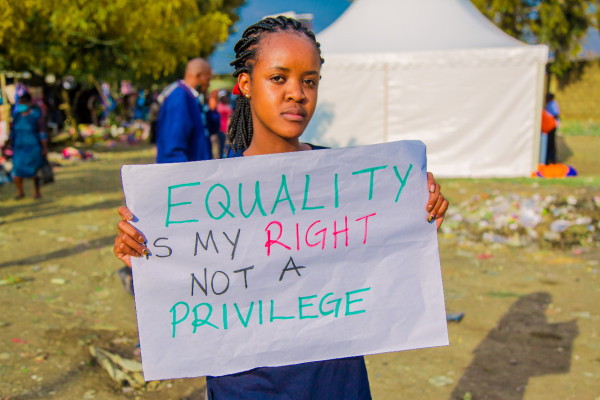
Equality Now (www.EqualityNow.org) is urging the African Commission on Human and Peoples' Rights to call upon African Union (AU) member states to urgently address rising sexual violence and exploitation of women and girls across the continent.
In its statement to the 83rd Ordinary Session of the Commission this month, the human rights organisation called on the Commission to use its mandate to underscore the importance to governments about the need to provide reparations for survivors of sexual violence, criminalise femicide, boost efforts to end child marriage, and strengthen laws to stop digital violence.
Equality Now wants the Commission to remind States of their obligations under the Maputo Protocol on Women's Rights (http://apo-opa.co/4mnt56T). Of the 55 member States, 45 have ratified or signed the protocol.
Deborah Nyokabi, a legal equality and gender policy expert at Equality Now, explains, “Women and girls across Africa are enduring violence in all its forms - including rape, child marriage, femicide, trafficking, and digital abuse - while legal systems too often fail to protect or deliver justice. These are not isolated issues but symptoms of a broader failure to uphold the rights enshrined in the Maputo Protocol.”
“African governments must prioritise legal reform, provide reparations to survivors, and close the protection gaps that leave so many women and girls vulnerable and without access to assistance when their rights have been violated, especially in conflict zones where the breakdown of services intensifies harm.”
Sexual violence reparations
According to figures (http://apo-opa.co/4jctrKY) released by UNICEF last year, more than 79 million girls and women in sub-Saharan Africa have been subjected to rape or sexual assault as children. The region has the highest number of child sexual violence victims in the world.
Yet research by Equality Now found that survivors of sexual violence are being denied justice. In its report, “Barriers to Justice: Rape in Africa, Law, Practice and Access to Justice” (http://apo-opa.co/4moIxj6), the NGO exposed key gaps in rape laws in 45 African countries, which included allowing rape in marriage, perpetrators to walk free from court if they agree to marry their victims, and judges to define evidence based on the complainant's behaviour.
In its statement, Equality Now called on the Commission to urge member States to urgently integrate the Niamey Guidelines (http://apo-opa.co/4jeCsTE) on combatting sexual violence, adopted by the Commission in 2017, emphasising governments' obligation to provide reparations to survivors.
Criminalising femicide
The NGO called on the Commission to implore governments to criminalise femicide - the most extreme and brutal manifestation of violence against women.
Equality Now's report “Gender Inequality in Family Laws in Africa: An Overview of Key Trends in Select Countries” (http://apo-opa.co/3SJVkPy) revealed that the most devastating facet of inequality within the family is sexual and gender-based violence, including domestic violence, marital rape, economic violence and femicide, which is the intentional murder of a woman or girl because of their gender.
In 2023, an average of 140 women and girls were killed (http://apo-opa.co/3FfMOEV) by a partner or family member every day. Current and former intimate partners were the most likely perpetrators. Yet not enough is being done to end the crisis or hold offenders to account.
In South Africa, a national femicide study (http://apo-opa.co/3HhFEAv) found that three women a day were killed by an intimate partner in 2020/21, but in 44% of cases, police had failed to identify a perpetrator. In Kenya, 170 cases of femicide (http://apo-opa.co/4kuOVUs) were reported in 2024. A petition (http://apo-opa.co/4kuOVUs) calling on the government to make femicide a distinct crime has received more than 78,000 signatures.
In Cameroon last month, Bekobe Eric, accused of murdering his wife Diane Yangwo, received (http://apo-opa.co/4mfd9n8) a five-year suspended sentence and a fine of 52,000 CFA (approximately $90). The sentence was immediately denounced by women's rights advocates.
Earlier this year, the African Union took a significant step to address the crisis by adopting the African Union Convention on Ending Violence Against Women and Girls (http://apo-opa.co/4kuPjCk), which included an explicit definition of femicide. Equality Now wants the Commission to seize the momentum to encourage governments to recognise and criminalise femicide as a distinct crime, and outlaw marital rape and domestic violence.
Safeguarding rights in Sudan and the DRC
Equality Now urges the Commission to encourage Sudan to ratify the Maputo Protocol to provide essential legal protections for women and girls. Sudan is now in its third year of conflict, facing widespread destruction, significant civilian casualties and an unparalleled humanitarian crisis.
Women and girls are bearing the brunt of Sudan's war (http://apo-opa.co/434bmd9), with sexual violence being weaponised by both sides. The destruction of healthcare infrastructure, however, means there are inadequate medical and reproductive health services to support survivors of violence, which has led to more unintended pregnancies, miscarriages and maternal deaths.
Increasing rates of maternal mortality are also being recorded in the Democratic Republic of the Congo, where decades of conflict have severely damaged healthcare services.
The Commission should encourage both countries to integrate sexual and reproductive health rights into their humanitarian response.
End child marriage
In its statement to the Commission, Equality Now expressed deep concern at the continued high rates of child marriage across the continent. Fourteen of the 20 countries with the highest prevalence rates are in Africa. Child marriage is a serious human rights violation (http://apo-opa.co/3SLkD3G). Girls are often forced to drop out of school, restricting their life chances, and are likely to give birth at a young age, which poses severe health risks.
One of the reasons child marriage is continuing unchecked is because of weak legal protections, which must be addressed, said Equality Now. All AU member States should raise the minimum age of marriage to 18, without exceptions, and implement measures and programmes to end child marriage in line with recommendations (http://apo-opa.co/4mpDrDo) made in 2017 by the Commission and the African Committee of Experts on the Rights and Welfare of the Child.
End sexual exploitation
The Commission was also asked to encourage member States to address the surge in trafficking of women and girls across the continent.
UNODC's 2024 global report on trafficking (http://apo-opa.co/4kMq3Yv) found that a third of all cross-border trafficking flows involved Africans. In sub-Saharan Africa, 98% of victims were trafficked within the region, 21% for sexual exploitation. About 42% of trafficked victims in sub-Saharan Africa were girls.
Member States have enacted anti-trafficking laws and policies, but they are not being adequately enforced. Meanwhile, the systemic factors that make women and girls vulnerable to sexual exploitation have not been meaningfully addressed.
Digital spaces are also becoming more dangerous for women and girls. Online abuse, including sexual harassment and the non-consensual sharing of intimate images, is rising in tandem with increased internet penetration. Technology is increasingly being weaponised to attack women and girls, including women politicians, journalists and human rights defenders.
Digital violence is being exacerbated by weak legal protections, underreporting and the limited capacity for law enforcement to investigate tech-related crimes. Governments need to enforce and tighten existing laws on online sexual exploitation and invest in digital safety initiatives, in line with the recently adopted UN Global Digital Compact (http://apo-opa.co/4kxzb33), said Equality Now.
Distributed by APO Group on behalf of Equality Now.
Notes to editors:
For media enquiries, contact:
Tara Carey
Global Head of Media
Equality Now
Tcarey@equalitynow.org
T. +44 (0)7971556340 (available on WhatsApp and Signal)
About Equality Now:
Equality Now (https://EqualityNow.org) is an international human rights organisation dedicated to protecting and promoting the rights of all women and girls worldwide. Its work is organised around four main program areas: Achieving Legal Equality, Ending Sexual Violence, Ending Harmful Practices, and Ending Sexual Exploitation, with a cross-cutting focus on the unique challenges facing adolescent girls.
Equality Now combines grassroots activism with legal advocacy at the international, regional, and national levels to achieve systemic change, and collaborates with local partners to ensure governments enact and enforce laws and policies that uphold women's and girls' rights.
For more information about Equality Now, visit www.EqualityNow.org, and find us on Bluesky @ equalitynow.bsky.social (https://apo-opa.co/3H4U6fb), on Instagram @ equalitynoworg (http://apo-opa.co/3S9vxAb), Linkedin at Equality Now (https://EqualityNow.org).

African Leadership Magazine (www.AfricanLeadershipMagazine.co.uk) proudly unveils the distinguished list of nominees for the 17 categories of the 2025 African Business Leadership Awards (ABLA)—a premier recognition platform celebrating excellence in corporate governance, impactful leadership, and trailblazing contributions to the growth and sustainability of Africa's dynamic business and economic ecosystem. The public voting process is now officially open and will run until 29 May 2025, offering stakeholders across Africa and the globe the opportunity to celebrate and affirm exemplary leadership in the African business space.
The ongoing public voting marks the third phase in a rigorous four-step, points-based selection process for the African Business Leadership Awards (ABLA). The process begins with open nominations, followed by a shortlist of top contenders curated by the African Leadership Magazine editorial board. In this third phase, the public is invited to vote, adding stakeholder voices to the evaluation process. The final stage involves a detailed editorial assessment of votes and supporting evidence to determine winners, ensuring a transparent, merit-based outcome that reflects both public sentiment and proven impact.
Public votes in this phase contribute 65% of the final decision, with the remaining 35% based on supporting evidence for each nominee. This ensures a fair and credible process that values both public opinion and verifiable impact. Winners and first runners-up will be honoured at the 15th African Business Leadership Awards (ABLA), a special highlight of the Africa Summit–London, scheduled for 9–10 July 2025 at the House of Lords, London, United Kingdom.
To cast your vote, visit:
The 2025 African Business Leadership Awards (BLA Nominee Highlights
African Business Leader of the Year
African Female Business Leader of the Year
African Regulator of the Year
Business-Friendly Governor of the Year
African Finance Minister of the Year
Trade & Investment Promotion Agency of the Year
Central Bank Governor of the Year
Trade & Investment Minister of the Year
African CEO of the Year
Young Business Leader of the Year
Africa CSR & Community Development Impact Award
African Brand of the Year
African Company of the Year
Industry Personality of the Year
Africa Business Integrity Leader Award
African Tech & Digital Economy Leader of the Year
Lifetime Achievement Award
Distributed by APO Group on behalf of African Leadership Magazine.
Media Enquiries:
Ehis Ayere
T: +44 (0) 20 3051 1883
E: ehis@africanleadership.co.uk
About African Leadership Magazine:
African Leadership Magazine is the flagship publication of the African Leadership Organisation (UK) Limited. For over 19 years, it has championed impactful leadership across Africa and amplified African opportunities on the global stage. Through its platforms—including Afro-positive content, trade facilitation, market entry solutions, public sector consulting, and business networking events—the magazine plays a pivotal role in fostering sustainable development and positive change across the continent.
Minister Kubayi travels to Ghana
The Minister of Justice and Constitutional Development, Mmamoloko Kubayi, will travel to the Republic of Ghana to participate in a high-level Retreat on the Kampala Amendments and International Criminal Justice.
“The Retreat will bring together Ministers of Justice and senior officials from all 33 African States Parties to the International Criminal Court (ICC), alongside representatives from the ICC Presidency, the Assembly of States Parties (ASP), the ICC Trust Fund for Victims, senior African Union officials, and international legal experts,” the Ministry of Justice and Constitutional Development said on Sunday.
Her visit is scheduled to take place from 19 to 21 May 2025.
The event follows the successful pilot retreat in Johannesburg in October 2024, which raised awareness and fostered a sense of ownership among African States Parties to advocate for a crime of aggression regime that is both fair and legitimate and began the process of an amendment proposal being submitted by African States.
“The Kampala Amendments on the Crime of Aggression are a set of legal changes adopted in 2010 at the Review Conference of the Rome Statute of the International Criminal Court (ICC), held in Kampala, Uganda.
“These amendments define the Crime of Aggression and establish the conditions under which the ICC can exercise jurisdiction over it. An act of aggression includes using armed force by one state against another in violation of the United Nations (UN) Charter, such as, invasion, military occupation, annexation by force, bombardment, or blockade,” the Ministry explained.
The meeting in Johannesburg laid the groundwork for an Africa-led amendment proposal and reaffirmed the continent’s commitment to a fair and legitimate international criminal justice framework.
“South Africa remains a committed advocate for international legal accountability. Minister Kubayi’s participation highlights the country’s support for multilateralism, the fight against impunity, and the advancement of an inclusive and balanced global justice system,” the Ministry said.
Organised in collaboration with the Ministries of Justice of Ghana, Sierra Leone, and the Democratic Republic of Congo, the Accra retreat will build on the Johannesburg outcomes and further deliberate on the amendment proposal submitted by the Group of Friends (GoF).
“The goal is to finalise a unified African position on the Kampala Amendments ahead of discussions at the Assembly of States Parties. The Ministry welcomes this opportunity for meaningful engagement and continental collaboration as African States continue to shape a credible and effective international criminal justice system.” - SAnews.gov.za
nosihle
Sun, 05/18/2025 - 12:40
On bilateral matters:
On regional and international matters:
Done in La Celle Saint-Cloud, France, on 16 May 2025
| For the French Republic | For the Republic of South Africa |
| H.E. Jean-Noël BARROT
Minister for Europe and Foreign Affairs |
H.E. Ronald Ozzy LAMOLA
Minister of International Relations and Cooperation |
Distributed by APO Group on behalf of Republic of South Africa: Department of International Relations and Cooperation.
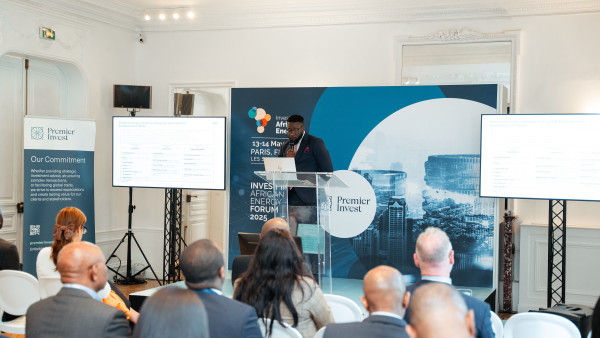
The Invest in African Energy Forum in Paris featured a standout session this year with the Premier Invest Deal Room, a platform that spotlighted over $10 billion worth of oil, gas and renewable energy projects seeking investment across Africa and the broader energy frontier.
“This is a platform to showcase interesting opportunities across Africa that we are advising on,” said Marcel Awasum, Head of Business Development for Premier Invest. “All of the deals we are advising on, we are also mobilizing capital for – from family offices to private equity in oil and gas – mostly from the Middle East, and some from Europe.”
The session featured 17 active deals spanning upstream, midstream, trading and renewable segments, underscoring the breadth of investment potential across the African continent and beyond. One of the flagship opportunities was the development of a 200,000-barrel-per-day crude oil refinery, seeking $4.8 billion in combined equity and debt to meet growing regional demand for refined products. Another deal sought $50 million through a 360-day revolving letter of credit facility to support the import of refined petroleum products.
Exploration and production prospects were also on the table, including a development project offering up to 40% participating interest to qualified investors, as well as an African oil and gas company seeking a $30 million capital injection, strategic partnership and offtake agreement to enhance its trade capacity and expand upstream.
Refining featured prominently among the deals, with one project calling for €2-5 billion to expand national capacity – open to debt, equity and strategic partnerships. A separate opportunity involved a $25 million equity investment in a highly prospective offshore Guyanese block, offering first-mover advantage with an estimated 400 million barrels of recoverable reserves.
Other ventures included the sale of a defunct Caribbean gas-to-liquids plant with a proven $50 million EBITDA when operational; an $18 million debt facility to drill additional wells in an active production field; and a fast-moving $360 million field development project already attracting soft commitments. The session also featured investment opportunities in the Republic of Congo, where a special purpose vehicle is seeking a co-investor for an M&A transaction involving producing assets; a $70 million fuel importation deal in Burundi; and a $200 million financing package to support the purchase of both crude and refined products in Ivory Coast.
The session concluded with five renewable energy projects seeking over $725 million in investment. This included $362 million for a 70 MW geothermal project in Kenya, $92 million for a 71 MW hybrid solar PV and wind project in Zambia, $87 million for a 100 MW solar PV project in South Africa, and two clean-gas projects – one in Benin (43 MW) and another in South Africa (100 MW) – seeking $84 million and $100 million, respectively.
Distributed by APO Group on behalf of Energy Capital & Power.