• Skip to main content
  • Skip to header right navigation
  • Skip to after header navigation
  • Skip to site footer
MyZA

MyZA

News, Directory, Events and Other Stuff

  • Social Media
  • Sport
  • World News
  • Home
  • Submit News
  • Directory
  • Events
  • Stratlec
  • TFSA
  • News
    • APO
    • Today’s Sport News
    • Todays Social Media and Tech Headlines
    • Today’s World News
    • Today’s SA Financial News
  • Contact
You are here: Home / Archives for Congo

Congo

28 February 2025

KZN aims to attract investment while also creating jobs

Location: News

KZN aims to attract investment while also creating jobs

The KwaZulu-Natal province aims to secure an additional R4 billion in investments in the 2025/26 financial year and create 5 000 potential jobs, Premier Thamsanqa Ntuli said on Friday.

This is after the KZN Investment Conference held in November 2024 resulted in R75.8 billion in investment pledges, including major projects like the Westown mixed-use development in Shongweni and SAPPI Southern Africa upgrades.  

Delivering the State of the Province Address (SOPA), the Premier outlined a bold future for the province.

Ntuli began by honouring the memory of citizens lost to recent floods and heavy rains, as well as soldiers who died in the Democratic Republic of Congo (DRC). 

READ | KZN flood victims moved to temporary accommodation

He stressed the province’s resilience and commitment to overcoming challenges, including high unemployment, poverty, and the impacts of global crises.

Ntuli also highlighted significant achievements over the past eight months and outlined strategic priorities for the coming year.

The Premier also detailed the ongoing and upcoming infrastructure projects, including upgrades to the N3 and N2 highways, the construction of new dams, and the expansion of the Dube Trade Port and Richards Bay Industrial Development Zone.  

According to Ntuli, these projects are expected to create thousands of jobs and boost the local economy. 

Meanwhile, the King Dinuzulu Innovation Valley at Dube TradePort, set to open in June 2025, will serve as a hub for technological advancement and entrepreneurship. 

The province is also rolling out broadband connectivity projects to ensure high-speed internet access for all citizens. 

He also emphasised the province’s commitment to reducing poverty and the rising cost of living which remains as a persistent challenge for many families across the province.

Initiatives include social grants, support for child-headed households, and efforts to combat gender-based violence, while also focusing on youth and women empowerment through various programmes and funds.

“Poverty and the rising cost of living remains a persistent challenge for many families across KwaZulu-Natal. While social assistance remains a necessary lifeline for many of our people, this trajectory is not sustainable.” 

Instead, he believes government should build a nation where economic opportunities replace dependency, where employment and entrepreneurship empower people, and where prosperity is driven by innovation and productivity. 

The Premier also noted the province’s record-breaking 2024 matric pass rate of 89.5% and improvements in healthcare services, including the purchase of new ambulances and the expansion of the school nutrition programme. 

Meanwhile, he stated that efforts to improve school infrastructure and reduce dropout rates are also underway. 

Ntuli reaffirmed the administration’s commitment to building a capable, ethical, and developmental State. This includes strengthening public institutions, enhancing service delivery, and rooting out corruption.

Spaza shops

Meanwhile, he said from 14 October to 14 November 2024, the provincial government conducted unannounced inspections of spaza shops and wholesale businesses. 

“What we uncovered was deeply concerning. It became abundantly clear that economic activity in many of these areas has shifted away from our local entrepreneurs, with some businesses operating in direct violation of our laws – engaging in illicit trade and other criminal activities that threaten the well-being of our communities.” 

A joint operation was conducted, resulting in the inspection of 7 729 premises and as a result, 337 premises were closed, and 142 arrests were made.

In addition, 2 429 compliance notices and 480 fines were issued, alongside the confiscation of 10 210 kg of illicit goods.

“It is our firm belief that the township and rural economy in KwaZulu-Natal plays a vital role in both economic growth and job creation for local communities, with substantial value and employment opportunities across informal sectors like spaza shops, street vendors, and small-scale manufacturing.” 

READ | Deadline won't be extended for spaza shops to register

Today marks the deadline for spaza shop and other food handling to register their businesses with their local municipalities. 

He called on all citizens and stakeholders to work together towards a prosperous and inclusive future for KwaZulu-Natal. 

“The future calls, and we must answer with action, integrity, and unwavering dedication to the service of our nation, “ he said. – SAnews.gov.za


Gabisile
Fri, 02/28/2025 - 14:58
233 views
Read moreKZN aims to attract investment while also creating jobs
28 February 2025

Call for vigilance as new Mpox cases surface

Location: News

Call for vigilance as new Mpox cases surface

The Department of Health has issued a call for heightened awareness among the public as three new laboratory-confirmed cases of Mpox have been detected. 

According to the department, the first case, identified on 21 February 2025, involves a 30-year-old male residing in Ekurhuleni, Gauteng, who recently travelled to Kampala, Uganda. 

“The patient was diagnosed with Grade I Mpox virus, which is currently circulating in the Democratic Republic of Congo and Uganda and has been reported in travellers returning to many locations around the globe,” the statement read. 

The other two confirmed cases - a 30-year-old male and a 27-year-old female, both from Ekurhuleni, were identified through thorough contact tracing and monitoring efforts led by outbreak response teams.

The department believes this development highlights the vital importance of open communication from primary cases to facilitate effective contact tracing. 

“All three cases are now recovering and self-isolating at home,” said the department.

The latest statistics bring the total cumulative number of positive cases from 25 to 28 cases, including three deaths since the outbreak in May last year.

Meanwhile, these are the first positive cases of Mpox recorded in South Africa this year after the last infection was reported in September 2024. 

Globally, Mpox continues to be a Public Health Emergency of International Concern (PHEIC) and a Public Health Emergency of Continental Security (PHECS) as per the declarations by both the World Health Organisation (WHO) and Africa Centres for Disease Control and Prevention (Africa CDC) in August 2024.

While the department assures that there is no need for public alarm, it stressed the importance of remaining vigilant regarding the transmission of Mpox. 

Symptoms to watch for include a rash lasting two to four weeks, fever, headache, muscle aches, back pain, fatigue, and swollen glands. 

Generally, Mpox presents as a mild, self-limiting disease with a low case fatality rate. 

The risk of widespread transmission in South Africa at this time is considered low; however, the department said the disease can affect individuals across all ages, genders, sexual orientations, and races.

“The department urges all people experiencing any of the symptoms, with or without travel history to countries and regions experiencing Mpox outbreaks, or who had close contact with known Mpox patients to seek medical care.

“Although, the country has a limited stock of Mpox-specific vaccines for the treatment of patients who experience severe health complications as a result of this disease,” it said.

Residents were also reminded to practice handwashing with soap and water or alcohol-based hand sanitisers, especially before eating or after using the restroom, to help mitigate the spread of the disease. – SAnews.gov.za


Gabisile
Fri, 02/28/2025 - 16:06
69 views

Read moreCall for vigilance as new Mpox cases surface
27 February 2025

Cabinet sends best wishes for injured SANDF troops 

Location: News

Cabinet sends best wishes for injured SANDF troops 

Cabinet has extended its heartfelt wishes for a quick recovery to all soldiers returning from the Democratic Republic of Congo (DRC) who are currently receiving medical treatment in South Africa.

“Cabinet expressed its well wishes for a speedy recovery for all 1returned injured soldiers who are now receiving medical treatment in South Africa, the home soil,” Minister in the Presidency, Khumbudzo Ntshavheni said on Thursday.

This as the South African National Defence Force (SANDF) announced earlier in the week that the remaining wounded troops in need of medical attention had been successfully repatriated from the DRC and would now receive necessary care and support.

READ | Critically injured soldiers in DRC brought back home

The injured soldiers have been categorised into three priority areas for care – critical, non-critical, and those requiring psychological and social interventions.

This is after 14 troop members lost their lives and others sustained injuries at the hands of the M23 as fighting in the Goma region escalated. 

The rebel group fought intensely against the Congolese armed forces, resulting in the deaths of soldiers from 23 to 27 January during M23’s advance on Sake and Goma. 

These soldiers were part of the Southern African Development Community Mission in the Democratic Republic of Congo (SAMIDRC), which aims to help restore peace, security, and stability in Africa’s second-largest country.

At a post-Cabinet briefing in Cape Town, Ntshavheni announced that the Executive supports the resolutions from both the African Union Peace and Security Council (AUPSC) and the United Nations Security Council (UNSC) concerning the eastern DRC.

The AUPSC endorsed decisions from the Joint East African Community (EAC) and SADC meeting, which called for an immediate ceasefire, safe humanitarian routes, the withdrawal of uninvited forces, respect for territorial integrity, and the inclusion of all actors in the joint Luanda-Nairobi political dialogue.

“UNSC resolution urged all parties – State and non-State actors in the eastern DRC to conclude an immediate and unconditional ceasefire, as called for by leaders of the EAC and SADC.” 

According to the Minister, the resolution further demands that M23 rebel groups withdraw from the territories they have seized in the eastern DRC and called on the Rwanda Defence Forces to stop supporting the armed group and immediately withdraw from Congolese territory “without preconditions.” – SAnews.gov.za


Gabisile
Thu, 02/27/2025 - 13:38
62 views

Read moreCabinet sends best wishes for injured SANDF troops 
26 February 2025

The Future of Africa’s Energy Sector

Location: Business
African Energy Chamber

By NJ Ayuk, Executive Chairman, African Energy Chamber (www.EnergyChamber.org).

There's a promising future for African renewables as the continent strives to balance its current reliance on fossil fuels.

That's the prediction of the African Energy Chamber's 2025 Outlook Report on the State of African Energy.

As I have said before, Africa will eventually rely primarily on renewable energy, as much of the rest of the world strives to — but on its own timetable, not that of Western countries who have benefited for centuries from the exploitation of fossil fuels.

To achieve a carbon neutral future, African nations must have the underlying infrastructure and industry to make the dominance of renewables possible. As things currently stand, most African states lack said infrastructure and industry, and the most feasible and expedient way for them to achieve both is through leveraging the abundant oil and gas resources so many of them possess.

As our report finds:

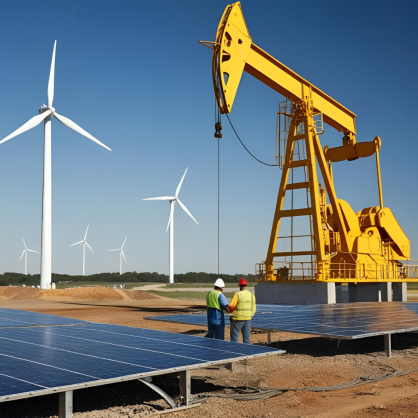
  • Fossil fuels account for 72% of Africa's power generation. South Africa and Egypt are Africa's leading producers, and their dominance will continue into the next decade.
  • Renewables account for over 27% of Africa's power generation and are projected to increase to 43% by the end of this decade.
  • Africa accounts for 3.3% of the global power generation, with a total power generation of over 980 terawatt hours.
  • 13 GW of utility-scale solar PV and wind projects are under construction – South Africa, Egypt, Morocco, Ethiopia and Algeria account for over 75% of this capacity.

No Electricity at All

There are also significant challenges facing Africa's energy sectors, as we cover in detail in our report.

The most pressing of those challenges is the fact that many rural areas across Africa are underserved and lack the necessary power infrastructure to access any electricity at all. In fact, of the 685 million people worldwide living without access to electricity, 590 million (86%) live in Africa. Conversely, even in well-served areas electricity is not cheap and reliable, as population and urbanization growth have outpaced the growth of power infrastructure, placing additional strain on the existing power systems. Many African households still rely on alternative, less efficient energy sources such as biomass, kerosene, etc., for heating and cooking.

One practical solution to these challenges is Western investment.

Western investment — providing both funds and technology — will help expand our existing infrastructure into underserved areas and harness our natural resources, and that will go a long way toward improving economic conditions across the continent. This will in turn improve energy affordability for many Africans as it becomes both more widely available and cheaper to access.

But where and in what should the West invest? That is up to them, but there are many development opportunities across the continent right now. I will cover just a few of the most promising, according to our outlook report.

What we found is that most North African countries see 90% access rates for electricity and are looking to enhance their power sectors while reducing reliance on fossil fuels. The bulk of renewable power share increases by the end of the decade will almost certainly be seated in this region. In contrast, sub-Saharan countries will continue to fight low electricity access for some time. They have been able to increase access to 55% currently, up from 38.3% in 2010. These countries will be ripe for investment, expanding the grid and production infrastructure to improve electrical access.

We also found that hydropower continues to dominate in East Africa, which has some of the largest dams in the world generating 19% of Africa's overall power generation and providing up to 90% of the available power for countries such as Ethiopia and the Democratic Republic of Congo. Africa's largest hydroelectric project, the Grand Ethiopian Renaissance Dam (GERD) is nearing completion and is expected to generate 15,760 GWh annually once fully operational. The project is of such importance to the region that it has sparked diplomatic cooperation between the Nile-bound countries of Ethiopia, Egypt, and Sudan in an effort to ensure equitable sharing of the river's precious waters. Other currently ongoing projects such as Ethiopia's Gibe III Dam (1870 MW), Zambia and Zimbabwe's Kariba Dam (1830 MW) and Ghana's Akosombo Dam (1020 MW) also speak to promising future growth and development opportunities for those willing to get their feet wet in the central and eastern parts of the continent along the Congo and Nile rivers, where nearly 90% of the continent's hydroelectric potential remains untapped.

Geothermal power in Africa is currently dominated by Kenya, which to date is the seventh largest producer of geothermal power. Kenya's estimated geothermal power potential is roughly 10 GW, but current operation capacity only allows 1 GW to be harnessed.

International investment is what launched Kenya's geothermal power in the first place, with the United Nation's development program providing the requisite research and funds in 1972 to establish the country's first geothermal plant by the 1980s. Since then, Kenya has expanded independently, creating the state-owned Geothermal Development Company (GDC) in 2008 to both speed up geothermal advancements and lower the initial investment risk for foreign investment.

Solar Power: A Light in the Dark

Solar power offers a veritable gold mine of opportunity given Africa's high irradiance levels: nearly 80% of the continent receives more than 2 MWh per square meter. This amounts to a solar PV potential of 1 million terawatt hours per year and a solar thermal potential of over 500,000 terawatt hours (for reference, a single terawatt hour is enough to light over 1 million homes for a year). Yet to date, Africa only generates over 35 TWh and 3.3 TWh from solar PV and solar thermal, respectively. Over 13 GW of utility-scale solar PV and wind projects are currently under construction, with hundreds more GW of capacity in the concept phase..

I would like to reiterate: Africa will reach a point where we will rely primarily on low carbon and renewable energy. But we cannot get to that point without building the proper infrastructure, and we cannot fund the building of said infrastructure without leveraging our natural resources, oil and gas being chief among them. If the west wishes to speed along Africa's progress on this front, the best way is to work with African as partners and investors working towards common goals. 

Distributed by APO Group on behalf of African Energy Chamber.

Media files
African Energy Chamber
Download logo
Read moreThe Future of Africa’s Energy Sector
21 February 2025

Cabinet reiterates SA’s commitment to ensuring stability in the DRC

Location: News

Cabinet reiterates SA’s commitment to ensuring stability in the DRC

Cabinet has reiterated South Africa’s commitment to a diplomatic solution that ensures stability in the Democratic Republic of Congo (DRC), while also protecting the well-being of the Congolese people.

In a statement on Friday, Cabinet paid tribute to the 14 gallant South African soldiers who were killed recently in the DRC while undertaking a United Nations (UN)-backed peacekeeping mission.

“These brave soldiers had been deployed in the country as part of the Southern African Development Community Mission in the DRC (SAMIDRC) and the UN Organisation Stabilisation Mission in the DRC (MONUSCO),” Cabinet said following its meeting on 12 February and a Special Cabinet meeting on 29 January.

Cabinet affirmed that South Africa would continue to play its peacekeeping mission role and support other African countries whose solidarity, and material support helped secure the country’s liberation.

Cabinet was updated on the recent developments in the eastern DRC and called on all parties to embrace current diplomatic efforts aimed at finding a peaceful resolution.

The parties were also called to adhere to calls for an immediate cessation of hostilities and restoration of essential utilities.

Cabinet further welcomed efforts by the Southern African Development Community (SADC) leaders, aimed at finding a resolution to the conflict and facilitating the repatriation of the deceased and injured soldiers of South Africa, Malawi and Tanzania.

The remains of the 14 South African National Defence Force (SANDF) soldiers who died in the eastern DRC were returned home last week and handed over to their families during a memorial service, held at Swartkop Air Force Base in Centurion.

READ | Fallen soldiers paid the ultimate price

“The outcome of the Heads of State Summit held in Tanzania on 8 February 2025 on the conflict also provides a beacon of hope for the troubled eastern DRC,” Cabinet said.

READ | SADC-EAC leaders call for dialogue in DRC conflict
– SAnews.gov.za
 

GabiK
Fri, 02/21/2025 - 11:13
315 views

Read moreCabinet reiterates SA’s commitment to ensuring stability in the DRC
21 February 2025

Foreign Ministers’ Meeting backs SA’s G20 Presidency priorities 

Location: News

Foreign Ministers’ Meeting backs SA’s G20 Presidency priorities 

The Group of 20 (G20) Foreign Ministers have thrown their weight behind South Africa’s Presidency priorities, which focus on sustainable development and debt sustainability for low-income countries among others.

Other priorities of South Africa’s G20 Presidency are strengthening disaster resilience; mobilising finance for a Just Energy Transition; and harnessing critical minerals for inclusive growth and development.

This is according to the International Relations and Cooperation Minister, Ronald Lamola, who addressed the media at the conclusion of the first Foreign Ministers’ Meeting on Friday.

The Minister said the two-day meeting which began on Thursday at the Nasrec Expo Centre in Johannesburg, was productive.

“Let me first express South Africa’s deep appreciation to you all for what has been a very productive First Foreign Ministers’ Meeting under South Africa’s G20 Presidency. I further thank the members of the G20 Troika, Brazil and the United States of America for their support and cooperation during our G20 Presidency,” said the Minister.

The meeting also outlined Task Force One’s focus on inclusive economic growth, industrialisation, employment, and reducing inequality. 

Task Force Two focuses on food security, while Task Force Three addresses artificial intelligence, data, governance, and sustainable development innovation.

“Furthermore, we have proposed the additional initiatives – the review of the work of the G20, a cost of capital review, a broadened compact with Africa 2.0, and an initiative on critical minerals,” said the Minister. 

South Africa also took note of the fruitful discussions and inputs on the various priorities and high-level deliverables which will enrich various streams of work during 2025. 

“We can assure you that all the views expressed will be considered as we progress with our work during this year. We look forward to the active participation and contributions of all your delegations,” the Minister added. 

He said the Ministers reaffirmed G20 as the premier forum for international economic cooperation.

The gathering also stressed the G20’s commitment to the Sustainable Development Goals (SDGs), highlighting the need for urgent action to accelerate efforts to reaffirm the group’s strong commitment to the SDGs in line with South Africa's theme of “Solidarity, Equality and Sustainability”.

The leaders also noted the impact of ongoing conflicts on economic development and the attainment of SDGs, with a focus on sustainable investments in conflict prevention and peacebuilding.

“Concerning the ongoing conflicts and wars in Africa, the Middle East and Europe, the meeting reiterated that all states must act in a manner consistent with the Purposes and Principles of the UN [United Nations] Charter.”

Guided by international law, Lamola announced that there was an agreement to support all efforts towards a just peace in Ukraine, Palestine, Sudan, the Democratic Republic of Congo (DRC) and other major conflicts around the globe.

The leaders also touched on the importance of elevating African voices in the G20 and addressing pressing global challenges.

READ | SA expresses concern over conflict situations
 

The Minister also underscored the need to reform the international system of global governance, inclusive of the international financial architecture, the multilateral trading system, and the multilateral development banks.

The meeting “further stressed the need to reform the United Nations to make it fit for purpose and relevant to the current international reality. This includes the Security Council.” 

Also under discussion was the importance of multilateralism, the need for the reform of the UN and the upcoming Financing for Development Conference in Seville, Spain and the UN Climate Change Conference (COP) in Belém, Brazil. 

“South Africa undertook to present a four-stage roadmap of this proposed G20 review, including a briefing on the proposed approach and survey methodology which will involve the participation of G20 members, guest countries and invited stakeholders.”
According to the Minister, the final report will be presented for adoption at the final G20 Sherpa meeting taking place from 16 to 19 November 2025.

President Cyril Ramaphosa addressed the opening of the meeting on Thursday where he urged global leaders to embrace inclusivity, cooperation and reform as South Africa steers the Presidency of the G20 for the first time. 

READ | Call for global solidarity at G20 Foreign Ministers’ Meeting

– SAnews.gov.za


Gabisile
Fri, 02/21/2025 - 18:22
45 views

Read moreForeign Ministers’ Meeting backs SA’s G20 Presidency priorities 
21 February 2025

SA expresses concern over conflict situations 

Location: News

SA expresses concern over conflict situations 

International Relations and Cooperation Minister Ronald Lamola has emphasised that military solutions are ineffective in resolving conflicts. 

He called on the Group of 20 (G20) nations to persist in advocating for peaceful resolutions through negotiation and dialogue.

In addition, Lamola has expressed South Africa’s growing concern over the deteriorating conflict situations in various regions of Africa, particularly highlighting the challenges in Sudan and the eastern Democratic Republic of Congo (DRC).

South Africa recently lost 14 brave soldiers at the hands of the M23 as fighting in the Goma region escalated. 
The rebel group fought intensely against the Congolese armed forces, resulting in the deaths of soldiers from 23 to 27 January during M23’s advance on Sake and Goma. 

The soldiers are part of the Southern African Development Community Mission in the Democratic Republic of Congo (SAMIDRC), which aims to help restore peace, security, and stability in Africa’s second-largest country.

“We call on the support of the G20 in our quest to silence the guns in Africa for the attainment of inclusive development and prosperity.” 

Lamola addressed the attendees at the G20 Foreign Ministers’ Meeting held in Nasrec, Johannesburg, while President Cyril Ramaphosa officially opened the gathering.

He also took the time to note “satisfaction” with the current efforts being made on various fronts to end the devastating conflicts in Gaza and Ukraine. 

“We should all play our part in ensuring the success of these ongoing initiatives. We should also recommit to advancing the goal of a world free of nuclear weapons.” 

He urged the group to focus on addressing critical debt sustainability weaknesses in the international debt system, including high financing costs and prioritising debt service payments over essential development needs, to mitigate the negative impacts of debt distress.

“Building on G20 initiatives undertaken in recent years, we should advance sustainable solutions to tackle high structural deficits and liquidity challenges and extend debt relief to developing economies.”

He encouraged other Ministers to back South Africa’s approach to geo-political issues, recommending discussions only among Sherpas, Foreign Ministers, and leaders to develop consensus-based strategies for peace and human development.

“We also like to caution against focusing exclusively on one conflict situation, to the exclusion of others, especially on the African continent, as has been the practice in the recent past.” 

He reminded leaders that the United Nations (UN) remains the appropriate forum for maintaining peace and security, supported by other institutions of global governance.

“We hope that this group continues to play a constructive role in supporting relevant regional and international bodies, such as the AU [African Union], which are central to achieving sustainable development and that the core mandate of the G20 should remain that of promoting economic growth and development.” 

Lamola believes that widening geopolitical divisions are at the centre of the crisis. 

These divisions, he stressed, have contributed to fostering a climate of distrust, which threatens to unravel the progress made in addressing pressing global challenges such as deepening poverty, resolving armed conflict, climate change, pandemics, and nuclear proliferation. 

He said South Africa is committed to collaborating with all G20 members to advance the forum’s work and to play a bridge-building role while preserving the group’s unity during its Presidency.

“It is our firm view that the unity of the group will be key to reaching consensus on this Presidency’s priorities and deliverables,” Lamola added. – SAnews.gov.za

Gabisile
Fri, 02/21/2025 - 10:35
42 views

Read moreSA expresses concern over conflict situations 
20 February 2025

Merck Foundation CEO Provides 194 Oncology Scholarships in Africa

Location: News
Merck Foundation

  • Merck Foundation marks World Cancer Day with African First Ladies by providing 194 scholarships of Oncology Training to African doctors from 32 countries. 
  • Merck Foundation together with Africa First Ladies and Ministries of Health has been building cancer care capacity and increasing the limited number of Oncologists in their countries by providing close to 200 Scholarships of One-, two- and three-years fellowship, diploma and Master Degree of oncology to African doctors from 32 Countries. 
  • Merck Foundation is making history in Africa by training the First African Oncologists and First Cancer Care Teams in Countries such as The Gambia, Sierra Leone, Burundi, Liberia, Guinea Conakry, Central African Republic, Chad, Burundi, Malawi, Niger, Namibia, Zambia, Zimbabwe and more. 

Merck Foundation (www.Merck-Foundation.com), the philanthropic arm of Merck KGaA Germany, marks ‘World Cancer Day 2025' together with Africa's First Ladies and Ministries of Health. Through their Cancer Access Program, Merck Foundation is is building quality and equitable cancer care capacity in Africa.  

Senator Dr. Rasha Kelej, the CEO of Merck Foundation, highlighted, “At Merck Foundation, we mark World Cancer Day not just as a single day, but as a our continued commitment to transform and advance cancer care in Africa.  

Together with my dear sisters, the Africa's First Ladies, we are have enhanced the cancer care capacity in the continent by providing 194 scholarships to young African doctors from 32 countries, significantly increasing the number of oncologists in Africa. We are making history together by providing these important scholarships for the first oncologists and /or the first cancer care teams in many countries across Africa.”  

Merck Foundation in total provided more than 2100 scholarships to doctors from over 52 countries in 44 critical and underserved medical specialties.  

The Merck Foundation Cancer Access Program provides One, two- and three-years fellowship, Post Graduate Diploma and Master Degree of oncology for doctors from Africa. The clinical training has been conducted in India, Egypt and Kenya. Additionaly, Merck Foundation also provides scholarships for 2 years online PG Diploma in Cancer and Clinical Oncology, 01 year online PG Diploma in Medical Oncology and 1 year online PG Diploma in Pain Management from reputed Universities in UK like University of South Wales, University of Buckingham, Queen Mary University of London, and Cardiff University. 

Merck Foundation is establishing Multidisciplinary Oncology Care teams in many African countries by providing scholarships of clinical training in Medical Oncology, Surgical Oncology, Pediatrics Oncology, Gynecology Oncology, Breast Oncology, Haemato-Oncology, Orthopaedic Oncology, Palliative Care, Pathology Oncology, Radiation Oncology, Research in Oncology, Surgical Oncology - Genital Urinary System, Advanced Cytopathology Training, Interventional Radiology, Radiation Technician, Laboratory Technician, Oncology Nursing. 

Merck Foundation through its Merck Foundation Cancer Access Program has provided 194 scholarships of Oncology to doctors from 32 countries including Botswana, Burkina Faso, Burundi, Cameroon, Central African Republic, Chad, Congo Brazzaville, Democratic Republic of the Congo, Ethiopia, Gabon, Gambia, Ghana, Guinea, Kenya, Liberia, Malawi, Mauritius, Mozambique, Namibia, Nepal, Niger, Nigeria, Rwanda, Sao Tome & Principe, Senegal, Sierra Leone, South Africa, Sri Lanka, Tanzania, Uganda, Zambia and Zimbabwe.  

“In several of these countries, there wasn't even a single oncologist. We are proud to be making history in Africa by training the first oncologists and establishing the first cancer care teams in nations such as The Gambia, Sierra Leone, Burundi, Liberia, Guinea Conakry, Central African Republic, Chad, and Niger. Merck Foundation remains committed to transforming the landscape of cancer care across the continent and leading Africa toward a healthier future,” explained Senator Dr. Rasha Kelej.  

Africa records around 1.1 million new cases of cancer, resulting in up to 700,000 deaths, every year, as per WHO data. The mortality rate of cancer patients is very high in Africa, as compared to the rest of the world.  

“One of the key reasons is also the late diagnosis of the disease. Therefore, these scholarships are very important” added Senator Kelej.  

Merck Foundation has also created awareness materials including awareness leaflets and videos on Cancer Prevention and Early Detection.  

Dr. Chifundo Kajombo, Merck Foundation Alumni from Malawi shares, “I am privileged to be awarded a scholarship by Merck Foundation to pursue the Surgical Oncology fellowship training program at Tata Memorial Hospital, India. I managed to advance from basic surgical oncology principles to the advanced level. This has helped me improve my understanding of cancer and operative principles. Since returning back home, I have managed to change the structure of how our breast clinic runs and modified it to incorporate a number of new things that we probably could not have possibly included. I am so proud to share that I have just been awarded the Best Surgeon for 2023 in Malawi. I would not have achieved this feat without Merck Foundation's scholarship. I am very thankful.” 

Watch testimonials videos of Merck Foundation Oncology Fellowship Alumni: https://apo-opa.co/4bab06Y

Distributed by APO Group on behalf of Merck Foundation.

Link of the extra posters: https://apo-opa.co/3X6RmD6

Contact details:
Mehak Handa
Community Awareness Program Manager
+91 9310087613 / +91 9319606669
mehak.handa@external.merckgroup.com

Join the conversation on our social media platforms below and let your voice be heard! 
Facebook: https://apo-opa.co/4k65XbW
X: https://apo-opa.co/43mGeGv
YouTube: https://apo-opa.co/3EVeWMS
Instagram: https://apo-opa.co/413ECyl
Threads: https://apo-opa.co/4gLTA1P
Flickr: https://apo-opa.co/4gSxZVs
Website: www.Merck-Foundation.com
Download the Merck Foundation App: https://apo-opa.co/413wo9z

About Merck Foundation:
The Merck Foundation, established in 2017, is the philanthropic arm of Merck KGaA Germany, aims to improve the health and wellbeing of people and advance their lives through science and technology. Our efforts are primarily focused on improving access to quality & equitable healthcare solutions in underserved communities, building healthcare & scientific research capacity, empowering girls in education and empowering people in STEM (Science, Technology, Engineering, and Mathematics) with a special focus on women and youth. All Merck Foundation press releases are distributed by e-mail at the same time they become available on the Merck Foundation Website.  Please visit www.Merck-Foundation.com to read more. Follow the social media of Merck Foundation: Facebook (https://apo-opa.co/4k65XbW), X (https://apo-opa.co/43mGeGv), Instagram (https://apo-opa.co/413ECyl), YouTube (https://apo-opa.co/3EVeWMS), Threads (https://apo-opa.co/4gLTA1P) and Flickr (https://apo-opa.co/4gSxZVs). 

The Merck Foundation is dedicated to improving social and health outcomes for communities in need. While it collaborates with various partners, including governments to achieve its humanitarian goals, the foundation remains strictly neutral in political matters. It does not engage in or support any political activities, elections, or regimes, focusing solely on its mission to elevate humanity and enhance well-being while maintaining a strict non-political stance in all of its endeavors. 

Media files
Merck Foundation
Download logo
Read moreMerck Foundation CEO Provides 194 Oncology Scholarships in Africa
19 February 2025

Civilians at Breaking Point in Eastern Democratic Republic of the Congo

Location: News

UN News
Download logo

As the Security Council prepared to gather on Wednesday to debate the international community's response to the growing emergency in eastern Democratic Republic of the Congo (DRC), the UN's top aid official there urged all warring parties to allow lifesaving relief supplies to reach the most vulnerable.

“The rapid and uninterrupted expansion of the conflict, particularly in South Kivu province, continues to inflict a heavy toll on the civilian population,” said UN humanitarian coordinator for DRC, Bruno Lemarquis. “The population can no longer continue to pay such a heavy price for a conflict that continues to spread and now threatens the stability of the entire region.”

The veteran aid official's appeal came as yet more vulnerable people reportedly fled combat zones amid advancing and heavily armed Rwanda-backed M23 rebels. On Sunday the opposition fighters took control of Bukavu - the second major eastern DRC city to fall, in a matter of weeks.

“It is imperative to put an end to the confrontations” and resume dialogue, Mr. Lemarquis insisted, as he echoed concerns stressed by the UN Secretary-General that the continuing M23 offensive threatens regional stability.

For aid teams who remain committed to helping vulnerable and hard-to-reach communities impacted by the fighting, Mr. Lemarquis signalled that the most urgent priorities include reopening airports for humanitarian flights in Goma – capital of North Kivu and Kavumu in South Kivu, both now controlled by M23.

‘Tense' situation in Bukavu

The security situation in Bukavu remains tense, according to the UN aid coordination office, OCHA, which also reported that commercial boats have resumed services on Lake Kivu between Bukavu and Goma.

Humanitarian partners have also reported widespread looting in various part of Bukavu over the weekend, including a UN World Food Programme warehouse containing 7,000 tonnes of supplies.

“Several churches and collective centres in Bukavu are reportedly hosting displaced people,” OCHA noted in an update, adding that humanitarian assessment activities resumed on Tuesday “and will continue tomorrow as conditions permit”.

In addition to the urgent need for humanitarian supply flights, the UN aid coordinator urged respect for international law regarding the rights of internally displaced people (IDPs). Just last week, relief agencies expressed concern at a 72-hour ultimatum issued by M23 representatives to IDPs in Goma who were told to go back to their villages.

“Any return can only take place on a voluntary basis, under safe, dignified and sustainable conditions, in accordance with international principles,” Mr. Lemarquis explained.

Neutrality at core of mission

The UN aid coordinator also insisted that relief teams' “sole mission” was to provide vital assistance and protection to the most vulnerable, “wherever they may be...This action is guided by the humanitarian principles of neutrality, impartiality, humanity, and independence, without taking sides or engaging in political considerations.”

The DRC emergency is one of the most complex humanitarian crises in the world; it follows decades of clashes between the Congolese armed forces and various non-State armed groups, widespread human rights violations and sexual violence.

Humanitarian needs are staggering and not just in eastern DRC, according to the UN refugee agency, UNHCR, which noted that seven million people within the country are displaced and more than one million have sought asylum beyond the country's borders.

Most of these refugees are hosted by Angola, Burundi, the Republic of the Congo, Malawi, Rwanda, South Africa, Uganda, Tanzania and Zambia. At the same time, the DRC – a country seven times the size of Germany – also hosts more than half a million refugees and asylum-seekers.

This latest crisis in DRC's east has already uprooted hundreds of thousands of vulnerable people in a matter of weeks. Between 10 and 15,000 people have now crossed into neighbouring Burundi in a matter of days.

“UNHCR urgently calls for increased support to assist refugees and prevent further suffering,” it said in an online appeal. “We also urge an immediate end to hostilities in eastern DRC to prevent more displacement and civilian harm.”

Distributed by APO Group on behalf of UN News.

Read moreCivilians at Breaking Point in Eastern Democratic Republic of the Congo
19 February 2025

Human Rights Council to Hold Its Fifty-Eighth Regular Session

Location: News

Office of the UN High Commissioner for Human Rights (OHCHR)
Download logo

The United Nations Human Rights Council will hold its fifty-eighth regular session from 24 February to 4 April 2025 at the Palais des Nations in Geneva, starting with its high-level segment from 24 to 26 February, when dignitaries representing more than 100 Member States will address the Council.

The session will open at 9 a.m. on Monday, 24 February under the Presidency of Ambassador Jürg Lauber of Switzerland. Delivering statements at the opening will be the Secretary-General of the United Nations, António Guterres; thePresident of the United Nations General Assembly, Philemon Yang; the United Nations High Commissioner for Human Rights, Volker Türk; as well as the Chief of the Federal Department of Foreign Affairs of Switzerland, Ignazio Cassis. The Council will be meeting in room XX of the Palais des Nations.

On Monday, 3 March, the Council is scheduled to hear a global update by the High Commissioner for Human Rights on the situation of human rights around the world. The general debate on his global update will start following his presentation of a number of country-specific reports and updates.

During the session, the Council will hold 30 interactive dialogues with the High Commissioner, his Office and designated experts, with Special Procedure mandate holders and investigative mechanisms, and with Special Representatives of the Secretary-General. The Council will also hold five enhanced interactive dialogues and one high-level dialogue, as well as nine general debates.

The Council will also hold theannual high-level panel discussion on human rights mainstreaming with a focus on the thirtieth anniversary of the Beijing Declaration and Platform for Action;the biennial high-level panel on the death penalty; panel discussions on early warning and genocide, HIV response and leaving no one behind, and onrights to work and to social security; the annual interactive debate on the rights of persons with disabilities; the annual discussion on the rights of the child; and a commemoration of the International Day for the Elimination of Racial Discrimination.

The Council will examine the situation of human rights in a number of countries under its various agenda items, including the situation in the occupied Palestinian territory, Eritrea, Sudan, South Sudan, Nicaragua, Afghanistan and Myanmar under agenda item two; in Iran, Syria, Venezuela, Ukraine, Belarus, the Democratic People's Republic of Korea, and Myanmar under agenda item four; and in Mali, Haiti, Ukraine, the Democratic Republic of the Congo, South Sudan and Central African Republic under agenda item 10.

The final outcomes of the Universal Periodic Review of14 States will also be considered, namely those of Norway, Albania, Democratic Republic of the Congo, Côte d'Ivoire, Portugal, Bhutan, Dominica, Democratic People's Republic of Korea, Brunei Darussalam, Costa Rica, Equatorial Guinea, Ethiopia, Qatar and Nicaragua.

Towards the end of the session, the Council will appoint three new members of the Expert Mechanism on the Rights of Indigenous Peoples.

A detailed agenda and further information on the fifty-eighth session can be found on the session'swebpage. Reports to be presented are available here.

First Week of the Session

The fifty-eighth regular session will open at 9 a.m. on Monday, 24 February with a short opening meeting, followed by the start of the high-level segment, which will continue until 26 February, and during which the Council will hear addresses by more than 100 dignitaries. Intervening during the high-level segment will be the annual high-level panel discussion on human rights mainstreaming in the afternoon of 24 February and the biennial high-level panel on the death penalty in the morning of Tuesday, 25 February. The general segment will follow the conclusion of the high-level segment in the afternoon of Wednesday, 26 February.

On Thursday, 27 February, the Council will hold an interactive dialogue on the High Commissioner's report on the occupied Palestinian territory, including East Jerusalem, and the obligation to ensure accountability and justice, followed byenhanced interactive dialogues on the situation of human rights in Eritrea and on the High Commissioner's report on Sudan, with the assistance of the designated Expert. Friday, 28 February, will see the conclusion of the discussion on Sudan, followed by an enhanced interactive dialogue on the report of the Commission on Human Rights in South Sudan. This will be followed by three interactive dialogues, the first on the report of the Group of Human Rights Experts on Nicaragua, the second with the Special Rapporteur on the situation of human rights in Afghanistan, and the third on the High Commissioner's oral update on Myanmar.

Second Week of the Session

At the beginning of the second week, on the morning of Monday, 3 March, the Council will hear the High Commissioner's global update, then conclude the interactive dialogue on the High Commissioner's oral update on Myanmar. This will be followed by the presentation of reports on the activities of the Office of the High Commissioner in Colombia, Guatemala and Honduras, and of another report on Cyprus, and oral updates on Sri Lanka and Nicaragua. The Council will then begin the general debate under agenda item two, namely the annual report of the High Commissioner for Human Rights and reports of the Office of the High Commissioner and the Secretary-General, which will conclude on Tuesday, 4 March. The Council will subsequently begin its considerations under agenda item three on the promotion and protection of all human rights, holding interactive dialogues with the Special Rapporteur on torture and other cruel, inhuman or degrading treatment or punishment and with the Special Rapporteur on freedom of religion or belief.

On the morning of Wednesday, 5 March, the Council will hold a panel on early warning and genocide prevention, then conclude its interactive dialogue with the Special Rapporteur on freedom of religion or belief. This will be followed by an enhanced interactive dialogue on the report of the Office of the High Commissioner on transitional justice. Another panel will be held on Thursday, 6 March on HIV response and leaving no one behind, in addition to two interactive dialogues with the Special Rapporteur on the situation of human rights defenders and the Special Rapporteur in the field of cultural rights. A third panel will be held in the morning of Friday, 7 March on rights to work and to social security, followed by two interactive dialogues with the Special Rapporteur on the right to adequate housing and the Independent Expert on the rights of persons with albinism.

Third Week of the Session

The Council will start its third week on Monday, 10 March with a focus on disability, beginning with an interactive dialogue with the Special Rapporteur on the rights of persons with disabilities, to be followed by the annual debate on the rights of persons with disabilities. The day will conclude with aninteractive dialogue with the Independent Expert on foreign debt, which will continue in the morning of Tuesday, 11 March. Two moreinteractive dialogues will also be held on Tuesday with the Special Rapporteur on the right to food and the Special Rapporteur on the promotion and protection of human rights and fundamental freedoms while countering terrorism.

Wednesday, 12 March will see a further three interactive dialogues with the Special Rapporteur on the right to privacy, and the Special Representatives of the Secretary-General on violence against children and on children and armed conflict, the latter of which will conclude on Thursday, 13 March. The focus on children will continue on Thursday, with the Council also holding its annual discussion on the rights of the child, the theme of which will be early childhood development, and starting an interactive dialogue with the Special Rapporteur on the sale of children, which will conclude on Friday, 14 March.

On Friday, an interactive dialogue with the Special Rapporteur on the human right to a healthy environment will precede the presentation of reports by the open-ended intergovernmental working group on transnational corporations and other business enterprises with respect to human rights, the Secretary-General, the High Commissioner and his Office, followed by the start of the general debate on agenda item three.

Fourth Week of the Session

The first day of the Council's fourth week, Monday 17 March, will be devoted to concluding the general debate on agenda item three. From Tuesday, 18 March, consideration of agenda item four, human rights situations that require the Council's attention, will begin. First on the schedule is a joint interactive dialogue with the Special Rapporteur and the independent international fact-finding mission on the situation of human rights in Iran, followed by interactive dialogues with the independent international commission of inquiry on Syria, the fact-finding mission on Venezuela and the independent internationalcommission of inquiry on Ukraine.

On Wednesday, 19 March, after the conclusion of the dialogue with the commission of inquiry on Ukraine, three more separate interactive dialogues will be held with the group of independent experts on the situation of human rights inBelarus and with the Special Rapporteurs on the situation of human rights in the Democratic People's Republic of Korea and in Myanmar.

Thursday, 20 March, will see the Council hear the presentation of the High Commissioner's report on the Democratic People's Republic of Korea and his oral update of the situation of human rights in Venezuela. This will be followed by the general debate on agenda item four, which will conclude on the morning of Friday, 21 March. On Friday, the Council will also hold an interactive dialogue with the Special Rapporteur on minority issues, before beginning considerations under agenda item five on human rights bodies and mechanisms. After hearing the presentation of reports by the Forum on Minority Issues, the Social Forum, and the Special Procedures of the Council, it will commence the general debate on agenda item five.

Fifth Week of the Session

The Council will start its fifth week on Monday, 24 March with its consideration under agenda item six of the final outcomes of theUniversal Periodic Reviews of 14 States: Norway, Albania, Democratic Republic of the Congo, Côte d'Ivoire, Portugal, Bhutan, Dominica, Democratic People's Republic of Korea, Brunei Darussalam, Costa Rica, Equatorial Guinea, Ethiopia, Qatar and Nicaragua. This consideration will continue through to the morning of Wednesday, 26 March, after which the Council will hold a general debate on agenda item six. This will be followed by the presentation of the reports of the High Commissioner and the Secretary-General under agenda item seven, namely the human rights situation in Palestine and other occupied Arab territories, and the general debate on this agenda item. The general debate under agenda item eight - follow-up and implementation of the Vienna Declaration and Programme of Action – is also scheduled to commence on Wednesday afternoon.

Ending racism will be the Council's theme for Thursday, 27 March. After concluding the debate under agenda item eight, it will hear the presentation of the report of the intergovernmental working group on the effective implementation of the Durban Declaration and Programme of Action, then hold its general debate on agenda item nine, namely racism, racial discrimination, xenophobia and related forms of intolerance, follow-up to and implementation of the Durban Declaration and Programme of Action. From 2:30 to 4:30 p.m., the Council will also hold a meeting in commemoration of the International Day for the Elimination of Racial Discrimination.

Friday, 28 March will begin with the conclusion of the debate under agenda item nine, followed by three interactive dialogues conducted under agenda item 10 on technical assistance and capacity-building. The first dialogue will be with the Independent Expert onthe situation of human rights in Mali; the second on the High Commissioner's report on the situation of human rights in Haiti, with the participation of the Independent Expert on the subject; and the third on the High Commissioner's oral update on the situation of human rights in Ukraine.

Sixth Week of the Session

Monday, 31 March is a United Nations holiday. On Tuesday, 1 April, the Council will hold an enhanced interactive dialogue on oral updates by the High Commissioner and by the team of international experts on the Democratic Republic of the Congo, followed by an interactive dialogue on the report of the Office of the High Commissioner on technical assistance and capacity building for South Sudan and a high-level dialogue on the Central African Republic. At the end of the day, the Council will hear the annual presentation of the High Commissioner on technical cooperation and his oral update on Georgia, and the presentation of the report of the Board of Trustees of the Voluntary Fund for Technical Cooperation, followed by the general debate on agenda item 10.

The general debate will conclude on Wednesday, 2 April, and the Council will then start to act on draft decisions and resolutions, appoint three new members of the Expert Mechanism on the Rights of Indigenous Peoples, and adopt the report of the fifty-eighth regular session, before closing the session on Friday, 4 April.

The Human Rights Council

The Human Rights Council is an inter-governmental body within the United Nations system, made up of 47 States, which is responsible for strengthening the promotion and protection of human rights around the globe. The Council was created by the United Nations General Assembly on 15 March 2006 with the main purpose of addressing situations of human rights violations and making recommendations on them.

The composition of the Human Rights Council at its fifty-eighth session is as follows: Albania (2026); Algeria (2025); Bangladesh (2025); Belgium (2025); Benin (2027); Bolivia (2027); Brazil (2026); Bulgaria (2026); Burundi (2026); Chile (2025); China (2026); Colombia (2027); Costa Rica (2025); Côte d'Ivoire (2026); Cuba (2026); Cyprus (2027); Czechia (2027); Democratic Republic of the Congo (2027); Dominican Republic (2026); Ethiopia (2027); France (2026); Gambia (2027); Georgia (2025); Germany (2025); Ghana (2026); Iceland (2027); Indonesia (2026); Japan (2026); Kenya (2027); Kuwait (2026); Kyrgyzstan (2025); Malawi (2026); Maldives (2025); Marshall Islands (2027); Mexico (2027); Morocco (2025); Netherlands (2026); North Macedonia (2027); Qatar (2027); Republic of Korea (2027); Romania (2025); South Africa (2025); Spain (2027); Sudan (2025); Switzerland (2027); Thailand (2027); and Viet Nam (2025).

The term of membership of each State expires in the year indicated in parentheses.

The President of the Human Rights Council in 2025 is Jürg Lauber (Switzerland). The four Vice-Presidents are Tareq Md Ariful Islam (Bangladesh), Razvan Rusu (Romania), Paul Empole Losoko Efambe (Democratic Republic of the Congo) and a fourth Vice-President to be elected later from the Group of Latin American and Caribbean States. Mr. Efambe will also serve as Rapporteur of the Geneva-based body.

The dates and venue of the fifty-eighth session are subject to change.

Information on the fifty-eighth session can be foundhere, including the annotated agenda and the reports to be presented.

Distributed by APO Group on behalf of Office of the UN High Commissioner for Human Rights (OHCHR).

Read moreHuman Rights Council to Hold Its Fifty-Eighth Regular Session
18 February 2025

Opportunities for Growth and Investment in Africa’s Energy Sector

Location: News
African Energy Chamber

Africa's energy sector presents significant opportunities for investment and growth through targeted infrastructure development. Despite the continent's abundant hydrocarbon resources, inadequate infrastructure has historically impeded efficient extraction, processing and distribution. Addressing these gaps can unlock substantial economic potential and meet the rising energy demands both within Africa and globally.

As Africa continues to prioritize energy infrastructure development, this year's Africa Energy Week (AEW): Invest in African Energies conference – taking place September 29 to October 3 in Cape Town - will serve as a critical platform for investors, policymakers and industry leaders to explore opportunities in oil and gas pipelines, storage facilities and gas-to-power projects. Discussions at AEW 2025 will highlight successful infrastructure projects, showcase emerging investment prospects and address challenges in financing and implementation.

Pipeline Infrastructure

One critical area for investment is the development of extensive pipeline networks. These pipelines are essential for transporting crude oil and natural gas from production sites to refineries and export terminals. The proposed Nigeria-Morocco Gas Pipeline aims to transport approximately 30 billion cubic meters of natural gas annually from Nigeria through to Morocco and onto Europe, traversing 13 African countries. The $25 billion, 5,600-km project is poised to enhance energy security and foster economic integration across the region, with the potential to create jobs, boost industrialization and provide a stable gas supply for domestic consumption and export, strengthening Africa's role in the global energy market.

Liquefied Natural Gas Facilities

Investing in Liquefied Natural Gas (LNG) facilities is another promising avenue. These facilities enable the processing and export of natural gas, catering to global markets with high energy demands. Countries like Mozambique, the Republic of Congo, Nigeria and Tanzania are advancing large-scale LNG projects to capitalize on their substantial gas reserves. For example, Tanzania's LNG Liquefaction Plant, estimated at $30 billion, is set to position the country as a key player in the global LNG market.

Refining Capacity Enhancement

Africa's limited refining capacity often necessitates the import of refined petroleum products, leading to economic inefficiencies. Investments in modernizing and expanding existing refineries, as well as constructing new ones, are crucial. Such developments would not only meet domestic demand, but also create export opportunities. Angola is in the process of developing three new oil refineries, which will collectively increase domestic refining capacity to 400,000 barrels per day and reduce dependence on imported fuels.

Storage and Distribution Networks

Robust storage facilities and distribution networks are vital for maintaining energy supply stability. Investing in these areas ensures that oil and gas products are efficiently stored and transported to end-users, minimizing losses and meeting market demands. Enhanced storage capacity also provides a buffer against market fluctuations, contributing to energy security. South Africa's Richards Bay III project – a $6 million initiative involving the construction of an oil storage facility – aims to enhance South Africa's energy storage capacity and improve supply stability. Additionally, South Africa is experiencing significant growth in its LPG industry, driven by new distribution hubs and rising electricity prices. Companies like Petredec have announced the establishment of the country's first rail-supplied LPG project, aiming to make LPG a more accessible and cost-effective energy alternative.

Power Generation and Electrification

Leveraging natural gas for power generation offers a dual benefit: monetizing gas resources and addressing electricity deficits. Investments in gas-fired power plants and associated transmission infrastructure can significantly improve electrification rates across the continent. Mozambique's Temane gas-to-power project is set to commence operations in 2025, leveraging gas from the Pande and Temane fields to produce 450 MW of affordable power for the state utility.

AEW: Invest in African Energies is the platform of choice for project operators, financiers, technology providers and government, and has emerged as the official place to sign deals in African energy. Visit www.AECWeek.com for more information about this exciting event.

Distributed by APO Group on behalf of African Energy Chamber.

Media files
African Energy Chamber
Download logo
Read moreOpportunities for Growth and Investment in Africa’s Energy Sector
17 February 2025

Celebrating Best African Women and Young Researchers

Location: News
Merck Foundation

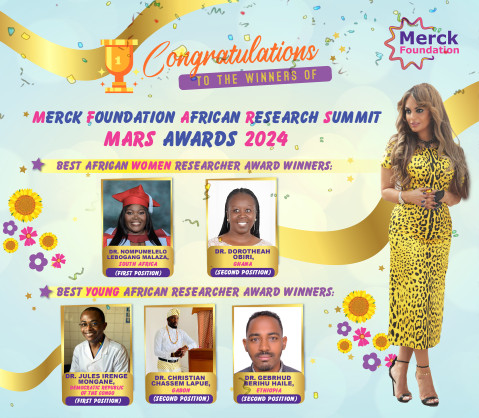
  • Merck Foundation announced the winners of Merck Foundation Africa Research Summit – MARS Awards winners 2024, 5 Researchers from 5 different African Countries recognized under two categories - Best African Women Researchers and Best Young African Researchers.
  • Merck Foundation also announced the Call for Applications for new edition of Merck Foundation Africa Research Summit – MARS Awards 2025 to empower Women and Youth in STEM in Africa with special focus on ‘The Role of Scientific Research in Women Health and Reproductive Care'.

Merck Foundation (www.Merck-Foundation.com), the philanthropic arm of Merck KGaA Germany, announced the Winners of Merck Foundation Africa Research Summit (MARS) Awards 2024, in partnership with International Federation of Fertility Societies -IFFS, Africa Reproductive Care Society - ARCS, Manipal University and African Union Scientific Technical Research Commission to recognize African Researchers for their valuable research work and contribution to empowering women and youth in STEM in Africa with special focus on ‘The Role of Scientific Research in Women Health and Reproductive Care'.

Senator Dr. Rasha Kelej, CEO of Merck Foundation and Chairperson of Merck Foundation Africa Research Summit - MARS expressed, “Since 2016, I have taken immense pride in recognizing the achievements of our MARS Awards winners. This year, we honor Six Winners in two categories: ‘Best African Women Researchers Awards' and ‘Best African Young Researchers Awards.'

These awards celebrate their significant contributions to research, particularly highlighting the efforts of African women researchers, who remain underrepresented in this field. Through the MARS Awards, our mission is to empower young researchers in Africa and to specifically encourage and support women researchers by enhancing their research capabilities and promoting their vital roles in STEM (Science, Technology, Engineering, and Mathematics).”

The winners of ‘Best African Women Researchers Awards' and ‘Best Young African Researcher Awards' will be enrolled into research training at a premier research institute in India.

“And I am also very happy to share with you all that as promised, we provided an opportunity to our first-place winner of each category to attend the 11th Edition of Merck Foundation Africa Asia Luminary which was recently conducted in Tanzania, however, only Mr. Jules Irenge Mongane was able to attend it”, shared Senator Rasha Kelej.

Merck Foundation is committed to improving the lives of people and has been transforming the Patient care landscape and making history together with its partners in Africa, Asia, and beyond, by providing 2080 Scholarships for doctors from 52 Countries in 44 critical and underserved medical specialties.

The MARS 2024 Award Winners are:

Winners of “MARS Best Women African Researchers Awards” 2024

  • Dr. Nompumelelo       Lebogang     Malaza, SOUTH AFRICA (First Position)

TOPIC: Association Between Biochemical And Epigenetic Markers With Glycaemic Control And Neonatal Outcomes In Diabetic Pregnancies

  • Dr. Dorotheah Obiri, GHANA (Second Position)

TOPIC: Immune dysregulation in placental malaria and hypertensive disorders of pregnancy

Winners of “MARS Best Young African Researchers Awards” 2024

  • Dr. Jules Irenge Mongane, DEMOCRATIC REPUBLIC OF THE CONGO (First Position)

TOPIC: Association Between Bacterial Vaginosis, Chlamydia Trachomatis Infection And Tubal Factor Infertility In Bukavu, Democratic Republic Of Congo

  • Dr. Christian     Chassem Lapue, GABON (Second Position)

TOPIC: Epidemiology of helminthiases in women of reproductive age living in Lambaréné and its surroundings, Gabon

  • Dr. Gebrhud Berihu Haile, ETHIOPIA (Second Position)

TOPIC: Incidence of neonatal mortality and factors influencing neonate survival in  neonatal intensive care unit in Northern Ethiopia: a prospective cohort study

“I am also excited to announce the Call for Applications for the new edition of the Merck Foundation Africa Research Summit (MARS) Awards 2024. This year, special focus will be again on “The Role of Scientific Research in Women Health and Reproductive Care,” added Senator, Dr. Rasha Kelej.

Merck Foundation Africa Research Summit - MARS 2025 will have scientific support from African Union Scientific-Technical and Research Commission (AU-STRC); African Reproductive Care Society (ARCS), and Manipal Academy of Higher Education (MAHE).

Details for MARS AWARDS 2025

Abstracts are invited from final year African PhD students and young investigators involved in research related to either of the following topics:

1) Women's Health

2) Infertility and Reproductive Health

All applicants should be primarily based at African Research Institutes and Universities, although collaboration within Africa as well as outside is also welcome.

Last Date of Submission:

Applications can be submitted till 30th June 2025

How to apply:

Apply by clicking: https://apo-opa.co/3X5kcnH

Alternatively, the Applications and abstracts can be submitted via email to mars@merck-foundation.com, along with CV (including Name, Gender, Country, University/Hospital Name, Email address, Mobile Number) and the abstract document as an attachment.

Other Details:

  • All Abstracts will be peer reviewed.
  • Research Awards will be dedicated for two categories of Best African Women Researchers and Best Young Africa Researchers.
  • Winners will be eligible for Research Training in a prestigious Research Institute in India.
  • Top Winners will be invited to attend the 12th Edition of Merck Foundation Africa Asia Luminary 2025.

Distributed by APO Group on behalf of Merck Foundation.

Videos Link: https://apo-opa.co/4hXOFvN

Contact Detials:
Mehak Handa
Community Awareness Program Manager
+91 9310087613
+91 9319606669
mehak.handa@external.merckgroup.com

Join the conversation on our social media platforms below and let your voice be heard!
Facebook: https://apo-opa.co/4gLG2TW
X: https://apo-opa.co/3X70mZ3
YouTube: https://apo-opa.co/4bbfmef
Instagram: https://apo-opa.co/4b0ipG5
Thread: https://apo-opa.co/4i22rgV
Flickr: https://apo-opa.co/4b8xLZ5
Website: http://www.Merck-Foundation.com

About Merck Foundation:
The Merck Foundation, established in 2017, is the philanthropic arm of Merck KGaA Germany, aims to improve the health and wellbeing of people and advance their lives through science and technology. Our efforts are primarily focused on improving access to quality & equitable healthcare solutions in underserved communities, building healthcare & scientific research capacity, empowering girls in education and empowering people in STEM (Science, Technology, Engineering, and Mathematics) with a special focus on women and youth. All Merck Foundation press releases are distributed by e-mail at the same time they become available on the Merck Foundation Website.  Please visit www.Merck-Foundation.com to read more. Follow the social media of Merck Foundation: Facebook (https://apo-opa.co/4gLG2TW), X ( https://apo-opa.co/3X70mZ3), Instagram (https://apo-opa.co/4b0ipG5), YouTube (https://apo-opa.co/4bbfmef), Threads (https://apo-opa.co/4i22rgV) and Flickr (https://apo-opa.co/4b8xLZ5).

The Merck Foundation is dedicated to improving social and health outcomes for communities in need. While it collaborates with various partners, including governments to achieve its humanitarian goals, the foundation remains strictly neutral in political matters. It does not engage in or support any political activities, elections, or regimes, focusing solely on its mission to elevate humanity and enhance well-being while maintaining a strict non-political stance in all of its endeavors.

Media files
Merck Foundation
Download logo
Read moreCelebrating Best African Women and Young Researchers
16 February 2025

President Ramaphosa concludes official visit to Ethiopia for 38th AU Summit

Location: News

President Ramaphosa concludes official visit to Ethiopia for 38th AU Summit

President Cyril Ramaphosa on Saturday concluded his visit to Ethiopia, where he participated in the 38th Ordinary Session of the Heads of State and Government of the African Union (AU). 

The Assembly was held under the theme: ’Justice for Africans and People of African Descent through Reparations' from 15 - 16 February. 

The 38th Ordinary Session of the Heads of State and Government of the African Union (AU) was organised by the African Union Commission (AUC). 

The opening ceremony of the AU Summit was held with the attendance of AUC leaders, officials, Ministers, Ambassadors from AU Member States, representatives of AU organs and offices, as well as partners.

President Ramaphosa congratulated the newly-elected Chairperson Mahmoud Ali Yousouf and Deputy Chairperson Ambassador Salma Malika Haddadi, who will lead the AU during the next four years.

The Assembly also appointed new, Commissioners who will work as a collective in realising the aspirations of the continent and its people. 

“South Africa congratulates the new leadership cohort of the union and is especially proud of Ms Lerato Mataboge, as the new Commissioner for Infrastructure and Energy,” the Presidency said in a statement. 

SAnews reported that Mataboge has been elected as the Commissioner for Infrastructure and Energy of the AU after her name was put forward by the South African government. 

READ | Tau congratulates Mataboge on being elected as AU Energy, Infrastructure Commissioner

She holds a BA Honours in Law and International Relations from the University of Witwatersrand, a Master’s Degree in International Political Economy from the University of Warwick, as well as a qualification in Infrastructure in a Market Economy from Harvard Kennedy School Executive Education.

Mataboge has since committed to providing credible responses to new technologies, including biotechnologies, digitisation, and artificial intelligence, while acknowledging Africa’s vital mineral resources in developing global technologies. 

The Assembly further deliberated on the state of peace and security in Africa. 

“It expressed grave concern for the evolving situation in the eastern DRC [Democratic Republic of Congo]. The Heads of State called upon the M23 to cease-fire to prevent additional loss of lives. The Assembly reaffirmed the urgent need for inclusive negotiations and political dialogue as the only solution to end conflicts on the continent.” 

The leaders also took note of South Africa’s Presidency of the G20 and congratulated South Africa for being the first African country to host this important gathering. 

They expressed their support for the successful G20 Leaders’ Summit scheduled to take place later this year in Johannesburg.

According to the President’s Office, the country’s Commander-in-Chief also had bilateral meetings with a few countries on the continent to exchange views on issues of mutual concern.

The Assembly also discussed the African Continental Free Trade Area (AfCFTA), activities of the Africa Centre for Disease Control, infrastructure development and institutional reforms, amongst other matters. 

President Ramaphosa was accompanied by the Minister of International Relations and Cooperation Ronald Lamola; the Minister of Defence and Military Veterans Angie Motshekga; Minister of Justice and Constitutional Development Mmamoloko Kubayi; Minister of Trade, Industry and Competition Parks Tau; Minister in the Presidency Khumbudzo Ntshavheni; Minister of Forestry, Fisheries and Environment Dion George; Minister of Water and Sanitation, Pemmy Majodina and Minister of Public Service, and Administration Inkosi Mzamo Buthelezi. – SAnews.gov.za
 

Gabisile
Sun, 02/16/2025 - 09:54
74 views

Read morePresident Ramaphosa concludes official visit to Ethiopia for 38th AU Summit
14 February 2025

Fallen soldiers paid the ultimate price 

Location: News

Fallen soldiers paid the ultimate price 

President Cyril Ramaphosa has described the 14 South African National Defence Force (SANDF) fallen soldiers as gallant heroes who “made the ultimate sacrifice so others may live in peace.”

“Thank you for your sacrifice that others may be free. You died on the battlefield, far from all you held dear. But you are home now. You have come to your resting place. We are here to receive you with open arms and to lay you to rest,” the President said. 

This as the President and Chief of the SANDF, General Rudzani Maphwanya, led the transfer ceremony and memorial service for the troops killed in the eastern Democratic Republic of Congo (DRC) at Swartkop Air Force Base in Tshwane. 

READ | Remains of 14 SANDF troops finally home 

Thursday’s emotionally charged events saw the weather mirror the sombre mood as rain fell while the mortal remains of the soldiers were ushered in, offering a poignant backdrop to a painful moment for the nation.

The families of the deceased found some solace in receiving the remains of their loved ones as, addressing them and the nation, President Ramaphosa assured them that their sons had not died in vain.

“To the families gathered here, we thank you for your sacrifice for you have made the ultimate sacrifice as well, by letting this country have your sons so they can serve the cause of peace on our continent. 

“And I thank you as a Commander in Chief of [the] Armed Forces because they have paid the ultimate price. We as South Africans join you in your grief as you feel pain as a result of your loss so overwhelming. As a nation we will forever be thankful to you as individual families for the sacrifice you have made. We will give them the honours that they deserve.”

Duty

The fallen soldiers had been deployed as part of South Africa’s commitment to peacekeeping efforts in the DRC under the Southern African Development Community (SADC) mission. Their mission was to protect the defenceless and contribute to the vision of a conflict-free Africa.

“Our nation is in mourning for these brave souls who lost their lives in defence of our brothers and sisters in the eastern DRC. They lost their lives in the name of duty, in pursuit of peace, and in the cause of silencing the guns across our beloved continent,” President Ramaphosa said.

The President also extended condolences to the families of the soldiers from Tanzania and Malawi who perished in the same mission, thanking the Ugandan government and SADC partners for their support in bringing back the nation’s fallen heroes. 

A nation in grief

Delivering his tribute, General Maphwanya expressed disappointment at the discourse surrounding SANDF’s deployment, urging South Africans to respect the sacrifice of those who had perished.

“As South Africans, we sometimes behave as if we enjoy inflicting pain on ourselves. A nation in grief for their fallen heroes should not be throwing accusations and counter-accusations about the merits and demerits of our deployment,” he said.

He also addressed the ongoing discussions about defence funding, arguing that while the issue remains pressing, it should not overshadow the moment of grief.

“Our fallen heroes would be asking if it is the right time to open a debate on defence funding. We have stated, without shame, that a drastic injection is required to build capacity in the SANDF, but these are interactions that we make with those who are supposed to listen to us,” he said.

Maphwanya added that “we should not be politicising this matter, saying the SANDF could have done better. Our people were armed, resourced, and capable of meeting the challenge they faced.” 

President Ramaphosa also echoed General Maphwanya’s concerns over the politicisation of the soldiers’deaths, calling for a moment of unity and respect.

“He is decrying the politicisation of this whole mission and indeed the politicisation of the lives of our soldiers. His call is a correct one. This is not a time to be debating all the matters that have been current in our media but a time to mourn the death of our fallen soldiers,” he asserted.

Bravery 

General Maphwanya paid tribute to the courage of the soldiers, stating that they had marched into the heart of darkness with unwavering resolve.

“Each member of the SANDF who answered the call to serve in the DRC carried out the mission with the spirit of selflessness and sacrifice. They fought gallantly against the M23 rebels who threatened the fragile peace, embodying the essence of what it means to be a defender of freedom,” he said.

Turning to the grieving families, he reassured them that their loved ones bravery would never be forgotten.

“I want you to know that your loved ones served with unwavering bravery and looked death in the face. They challenged what seemed like a daunting task that many wouldn’t have liked to face, and yet they persevered. Their commendable conduct personified the spirit of resilience, demonstrating a level of commitment that inspires us all. They did not back down in the face of adversity; instead, they rose to the occasion,” he said.

Heroes 

As the military planes stood silent on the tarmac and soldiers saluted their fallen comrades one last time, the weight of their sacrifice was felt.

“To the families, we say, take comfort that they were heroes. Their work in the DRC was not just about maintaining order; it was about building bridges, fostering understanding, and creating pathways to lasting peace,” President Ramaphosa stated.

Quoting the poet S.E.K Mqhayi, the President offered words of comfort. 

“Be consoled, all you orphans, Be consoled, all you widows, Somebody has to die, so that something can be built, Somebody has to serve, so that others can live.”

As South Africa bowed its head in collective mourning, the President reaffirmed the nation’s commitment to peace, stability, and honouring the memory of those who had paid the ultimate price.

Stabilising the continent 

The President emphasised that the country has a long-standing history of participating in peacekeeping missions, proving its dedication to stability on the continent. 

Despite the sacrifices made, including the loss of soldiers, South Africa remains steadfast in its mission to build and maintain peace.

“As South Africa we will not weaken in our resolve to realise the vision of an Africa free from war and conflict; an Africa free of poverty and underdevelopment; and an Africa at peace with itself and the world. 

“The achievement of this vision is the most fitting tribute we can pay to our fallen heroes and the greatest honour to their memory. We will not forget them. These are the sons of our African soil, and these are the honoured heroes of our country,” President Ramaphosa said. – SAnews.gov.za

DikelediM
Fri, 02/14/2025 - 10:49

65 views
Read moreFallen soldiers paid the ultimate price 
14 February 2025

Defence Committee Welcomes Repatriation of Soldiers Killed in DRC Conflict

Location: News

Republic of South Africa: The Parliament
Download logo

The Co-Chairpersons of the Joint Standing Committee on Defence, Mr Malusi Gigaba and Mr Phiroane Phala, participated in the handing over ceremony of the mortal remains of South African National Defence Force soldiers who lost their lives in the Eastern Democratic Republic of Congo (DRC).

“We appreciate the work done by the department, United Nations, SADC and the SANDF to repatriate our gallant soldiers back home for their final burial,” said Mr Phala. “The committee has always believed that while the process is complex, everything should be done to return the remains to the country. We remain grateful that this has finally happened despite the delays.”

In the spirit of ubuntu and cooperation, the committee appreciates Uganda's contribution to facilitating the transfer of the soldiers' remains from the DRC to South Africa. “The spirit of cooperation is what is needed currently to enable dialogue, which will be critical in finding solutions to the longstanding instability in the DRC,” said Mr Gigaba.

The committee has also reiterated that participation in peacekeeping missions is an obligation that cannot be abandoned. “South Africa, as part of the African Union (AU), subscribes to the AU's Agenda 2063, which aims to silence the guns and provide a framework of diplomacy, conflict resolution and sustainable development to ensure peace on our continent. It is on this basis that we continue to support the deployment of the SANDF as a diplomatic tool to peacebuilding on the continent,” Mr Gigaba said.

While the committee remains of the view that a thorough investigation is necessary to understand the circumstances surrounding the incident and prevent its recurrence, the continued use of all diplomatic tools available remains necessary to advance the strategic goals of peace, security, and prosperity.

The return of the mortal remains of the soldiers is a realisation of the promise made by the Minister of Defence and the Chief of the SANDF to the committee that no stone will be left unturned to repatriate our fallen soldiers back to South Africa. “It is now critical that families of the fallen soldiers are given adequate support and care during this difficult time,” Mr Phala said.

Distributed by APO Group on behalf of Republic of South Africa: The Parliament.

Read moreDefence Committee Welcomes Repatriation of Soldiers Killed in DRC Conflict
13 February 2025

South Africa’s G20 Presidency for 2025: A Catalyst for Energy Investment in Africa

Location: News
African Energy Chamber

In 2025, South Africa will hold the rotating presidency of the G20. Given its position as Africa's most industrialized nation and an energy hub, South Africa's leadership could play a pivotal role in attracting investment to the continent's energy sector. By leveraging its G20 platform, South Africa can push for increased funding from global partners, particularly for natural gas projects, which are critical for Africa's energy security and economic development.

While renewable energy is rapidly expanding across the continent, Africa continues to rely heavily on coal, oil and natural gas to meet growing demand and drive economic growth. Gas is increasingly viewed as a cleaner transitional fuel in Africa's energy mix, and many G20 nations are leading investment in gas exploration and production across the continent. For instance, the U.S. Export-Import Bank, U.K. Export Finance, China Development Bank and Japan Bank for International Cooperation, among other lenders, have played a key role in financing TotalEnergies' $20 billion Mozambique LNG project. Additionally, several G20 countries are driving further investment, with Italy's Eni developing new LNG facilities in the Republic of Congo, bp expanding operations in Senegal and Mauritania, Norway's Equinor advancing the Tanzania LNG development and ExxonMobil spearheading Rovuma LNG in Mozambique. South Africa can advocate for G20 nations to increase their financial backing for new gas projects, which have the potential to boost production, enhance energy security and attract much-needed investment to the continent.

While natural gas is essential for Africa's energy security, combining it with renewable energy sources could help diversify Africa's energy mix. South Africa's own experience with large-scale energy projects, such as its successful Renewable Energy Independent Power Producer Program, can serve as a model for blending financing and developing both gas and renewable projects. By advocating for mixed investment, South Africa can show G20 nations that supporting a variety of energy sources will allow Africa to meet its energy demands while transitioning toward greener energy.

In addition to advocating for investment in specific projects, South Africa can focus on creating favorable conditions for financing. One way to achieve this is by encouraging the G20 to support debt relief or concessional financing for African countries with high debt burdens. This would free up resources for governments to invest in energy infrastructure and allow them to prioritize projects that will improve energy access and support economic growth. South Africa could work closely with organizations like the World Bank, IFC, BRICS Bank, European Investment Bank and more to unlock financing mechanisms that reduce the risk for international investors.

The role of South Africa's G20 presidency in facilitating greater engagement between G20 nations and African energy markets cannot be overstated. By using its platform to promote key energy projects, South Africa can attract much-needed investment for both traditional oil and gas and clean energy developments. At the same time, it can help establish new financing structures that make these projects more attractive to investors. African countries like Nigeria, Angola, the Republic of Congo, Senegal, Namibia and Mozambique stand to benefit from increased G20 support for their oil and gas sectors, and other African nations can follow suit by aligning their own energy priorities with the goals set forth by South Africa during its presidency.

This year's African Energy Week (AEW): Invest in African Energies conference in Cape Town serves as a key platform for attracting global attention and investment to Africa's energy sector, facilitating discussions among G20 nations, financial institutions and energy companies. AEW acts as a conduit for driving investment into critical energy projects, positioning South Africa as a catalyst for sustainable development across the continent while ensuring Africa's energy needs are met. With South Africa's G20 presidency presenting a unique opportunity to secure crucial investments in Africa's energy sector, the 2025 edition of AEW is more significant than ever. By leveraging this platform to advocate for financing and foster partnerships between G20 nations and African energy producers, South Africa can play a pivotal role in advancing the continent's energy future and contributing to global energy security.

AEW: Invest in African Energy is the platform of choice for project operators, financiers, technology providers and government, and has emerged as the official place to sign deals in African energy. Visit www.AECWeek.com for more information about this exciting event.

Distributed by APO Group on behalf of African Energy Chamber.

Media files
African Energy Chamber
Download logo
Read moreSouth Africa’s G20 Presidency for 2025: A Catalyst for Energy Investment in Africa
13 February 2025

President Ramaphosa issues rallying call for unity

Location: News

President Ramaphosa issues rallying call for unity

President Cyril Ramaphosa has issued a powerful call to action, urging all political parties, civil society groups, and citizens to unite and join government in building a South Africa that is inclusive, equal and fair.

The President was replying to the State of the Nation Address (SONA) Debate held in Parliament this week.

Of late, the country has grappled with, amongst others, tensions with the United States of America following the promulgation of the Expropriation Act, the tragic loss of 14 South African National Defence Force soldiers in the eastern Democratic Republic of Congo, heated discussions surrounding equality, and a sluggish economy.

“At a time like this, we need to stand united as a nation, particularly now when we are facing a harsh global wind. 

“This is not the time for any of us to rush off to foreign lands to lay complaints about issues that we can solve ourselves in our country. We need South African solutions to South African problems,” he said in his reply to the debate on Thursday.

Despite the diverse views in South Africa, President Ramaphosa emphasised the importance of sending a unified message to the world.

“While there are many diverse and different voices in our society, we must strive to convey a common message.

“We must say to our people and to the world, that we are committed to working together to build a society in which all South Africans are free and equal to build a nation that works for all,” he said.

Additionally, the President emphasised that although political ideologies may differ, there is a common desire to build a country that is inclusive of all South Africans.

“At this important moment in our country and in our world, we must ask ourselves what kind of a nation we want.

“We want a nation in which all people enjoy equal worth and equal opportunity. We want a nation in which the rule of law is protected and upheld. We want a dynamic and growing economy in which small businesses can emerge and expand.

“It is my firm and enduring belief that all of us as South Africans, as fellow citizens bound together by our history and our present, want the same thing,” he said.

Moving forward

President Ramaphosa cited the Government of National Unity (GNU) as an example of how South Africans can come together “to build a nation working alongside each other”.

“It is to be expected that the 10 political parties that make up the GNU, with their very different political and ideological perspectives, will not always agree and will sometimes feel the need on platforms such as this, to talk to their different constituencies.

“Despite these differences, these political parties are working well together in the Government of National Unity. We are finding ways of mediating our differences and remain focused on the actions that we are all committed to undertake.

“It is this that gives me confidence that the Government of National Unity will continue to promote stability and serve the people of South Africa, in accordance with our Statement of Intent and the Medium-Term Development Plan,” President Ramaphosa explained.

The President described the current moment as one of "opportunity and hope".

“The Government of National Unity represents the best of that hope. We have demonstrated that we are prepared to put our political differences aside and work for the common good. This government remains united in pursuit of a South Africa that improves the material prospects of every South African man, woman and child.

“We are committed to upholding our hard-won democracy. We are committed to expanding the frontiers of opportunity for all our people. As we do so, we are guided by our Constitution, the Bill of Rights and the rule of law.

“As we rise from this debate, I am convinced that despite our differences, we share a common desire for a South Africa that belongs to all who live in it. We share the vision of a nation that works for all,” President Ramaphosa said.

The President delivered the first SONA of the GNU last Thursday, followed by the two-day debate, to which he responded today. – SAnews.gov.za

NeoB
Thu, 02/13/2025 - 15:50

63 views
Read morePresident Ramaphosa issues rallying call for unity
13 February 2025

Remains of 14 SANDF troops finally home 

Location: News

Remains of 14 SANDF troops finally home 

The remains of the 14 South African National Defence Force (SANDF) soldiers who died in the eastern Democratic Republic of Congo (DRC) have finally returned home and will be handed over to their families this evening.

The SANDF has rescheduled the handing-over ceremony and memorial service from Thursday morning to the evening. 

This change is due to unavoidable parliamentary commitments related to the State of the Nation Address (SONA) debate in Cape Town.

The troops lost their lives at the hands of the M23 as fighting in the Goma region escalated. 

The rebel group fought intensely against the Congolese armed forces, resulting in the deaths of soldiers from 23 to 27 January during M23’s advance on Sake and Goma.

The soldiers are part of the Southern African Development Community Mission in the Democratic Republic of Congo (SAMIDRC), which aims to help restore peace, security, and stability in Africa’s second-largest country.

Families have been eagerly awaiting their loved ones after multiple delays, including medical processing in Uganda.

READ | Fallen SANDF soldiers' remains expected to return home on Thursday

The memorial service in honour of the soldiers will be held on Thursday, 13 February 2025, at the Air Force Base Swartkop in Johannesburg at 6 pm. – SAnews.gov.za


Gabisile
Thu, 02/13/2025 - 09:11

102 views
Read moreRemains of 14 SANDF troops finally home 
12 February 2025

Lamola leads SA delegation to AU Executive Council meeting

Location: News

Lamola leads SA delegation to AU Executive Council meeting

International Relations and Cooperation Minister, Ronald Lamola, is in Addis Ababa, Ethiopia, where he is leading the South African delegation to the 46th Ordinary Session of the Executive Council of the African Union (AU).

The session is scheduled for Wednesday and Thursday. 

The council will convene under the agreed AU theme for 2025, which is “Justice for Africans and People of African Descent Through Reparations”, which will be officially launched by the Assembly.

Throughout 2025, all AU member States will review and assess the progress made by the continent in achieving long-overdue justice and reparations for the impacts of colonialism, apartheid, slavery, and the transatlantic slave trade.

One of the most anticipated responsibilities and key features of the upcoming Executive Council is the election of six commissioners for the AU Commission.

The six commissioners will oversee the following portfolios: Agriculture, Rural Development, Blue Economy, and Sustainable Environment (ARBE); Economic Development, Trade, Tourism, Industry, and Minerals (ETTIM); Education, Science, Technology, and Innovation (ESTI); Infrastructure and Energy (I&E), Health, Humanitarian Affairs, and Social Development (HHS), and Political Affairs, Peace, and Security (PAPS). 

South Africa has nominated two candidates, Dr Molapo Qhobela for Commissioner for Education, Science, Technology and Innovation (ESTI) and Lerato Mataboge for Commissioner for Infrastructure and Energy.

Both candidates were shortlisted for the next stage of the elections following a thorough interview. The Council is expected to hold the elections on Wednesday, 12 February 2025. 

“Furthermore, the forthcoming Executive Council will take place in a few months sinceSouth Africa assumed its Presidency of the G20 in December 2024.

The Council will inevitably have to reflect on what South Africa’s G20 Presidency presents in terms of the opportunity to place the interests of the continent right at the centre of the G20 Agenda,” said the Ministry of International Relations and Cooperation ahead of the start of the session.

Minister Lamola will brief the Council on key priorities of South Africa’s Group of 20 (G20) Presidency and their alignment with Agenda 2063.

According to the African Union, Agenda 2063 is Africa's development blueprint to achieve inclusive and sustainable socio-economic development over a 50-year period.

Key priorities

The Executive Council is expected to review reports regarding the organisation’s financial situation as it relates to key priorities. 

These priorities include maintaining peace and security across the continent, implementing Agenda 2063, improving Africa’s socio-economic conditions, addressing the severe impacts of climate change in Africa, and promoting human rights and good governance throughout the continent.

The Executive Council will receive a briefing on the progress of the Second Ten-Year Implementation Plan (STYIP) for Agenda 2063, the African Continental Free Trade Area (AfCFTA), and the annual activities of AU organs. 

Challenging environment

The 46th Ordinary Session takes place amid challenges on the continent, including threats to democratic governance, peace, and security from unconstitutional government changes and post-election violence.

Of key concern to South Africa is the ongoing raging war in the eastern Democratic Republic of Congo, which led to the recent attacks, and 14 South African soldiers lost their lives. 

The council meets amid the continent that is bedevilled by inter and intra-state conflicts, terrorism and violent extremism, poverty, food and energy insecurity, the impact of climate change, inadequate infrastructure, low productivity, trade barriers, and continued dependence on external aid and markets. 

The ongoing debt crisis by African countries and the consequent default on their debt repayments remains an issue of serious concern for the continent. 

As of July 2024, a World Bank Report indicates that 22 African countries are either experiencing or at high risk of debt distress, necessitating debt restructuring. 

Many of these countries are unable to meet the basic needs of their citizens, such as health care, education, and employment, due to their heavy debt burdens.

As one of the leading Member States of the AU, South Africa’s participation in the Executive Council will be critical to advancing the organisation’s agenda and priorities.  – SAnews.gov.za
 

Gabisile
Wed, 02/12/2025 - 09:27

398 views
Read moreLamola leads SA delegation to AU Executive Council meeting
12 February 2025

GNU will ensure SONA commitments made become a ’lived reality’

Location: News

GNU will ensure SONA commitments made become a ’lived reality’

Cooperative Governance and Traditional Affairs (CoGTA) Minister, Velenkosini Hlabisa, has assured President Cyril Ramaphosa that the Government of National Unity (GNU) will work to ensure that commitments made to the nation become a reality.

“Honourable President, the GNU will ensure that the commitments you made to the nation do not become empty promises, but a lived reality, “ he said in remarks at the State of the Nation Address (SONA) debate in Parliament on Tuesday. 

This as Members of Parliament (MPs) discussed President Ramaphosa’s SONA which was delivered last Thursday.

MPs addressed various issues, including tensions with the United States and the fallen soldiers in the eastern Democratic Republic of Congo (DRC), among other topics.

The President’s address emphasised economic growth, job creation, infrastructure development, and the reduction of household expenses.

“At the heart of this vision is a government that works for its people. The GNU must, therefore, be applauded, for it is committed to building a capable, ethical, and developmental State, comprising of ethical, skilled, and properly qualified public servants. 

“This work has already begun, under the capable leadership of the Minister of Public Service and Administration, the Honourable Inkosi [Mzamo] Buthelezi.” 

Hlabisa said he was encouraged that the President highlighted the important role that traditional leaders can play in improving services to the people. 

State of municipalities 

As the CoGTA Minister, he stated that he is heeding citizens’ outcry over the dire state of many municipalities over the failures of local government, and the need for municipalities to work. 

“Basic services must be delivered, and delivered efficiently,” he told MPs. 

Hlabisa said the crisis stems from the resource constraints faced by many municipalities. 

He believes that the current funding model for local government is unsustainable and exacerbates inequality between the wealthy and the impoverished.

“A new funding model is a must; one that considers each municipality's unique needs and challenges and provides a more equitable distribution of resources.”

Infrastructure development

He welcomed the President’s emphasis on new infrastructure development but believes it should also involve the maintenance and upgrading of existing infrastructure.

“To rebuild South Africa, we need to rebuild our education system, rebuild our healthcare system and rebuild our economy.”

Public healthcare 

He also threw his weight behind the National Health Insurance (NHI) but also raised concern about the feasibility and affordability of it in its current form.
 
“Government must prioritise strengthening the existing public healthcare system, which is plagued by inefficiencies and shortages of equipment and medical personnel. “

Growing the economy 

Hlabisa also welcomed government’s commitment to creating jobs and stimulating economic growth. 

“We look forward to the implementation of the Medium-Term Development Plan [MTDP] , particularly in relation to the three strategic priorities of driving inclusive growth and job creation, reducing poverty, and tackling the high cost of living.”

The MTDP is a five-year strategic framework that outlines the government’s priorities and serves as a roadmap for translating the commitments of the seventh administration into actionable programs and policies.

Global developments 

Shifting his focus to international matters, Hlabisa mentioned that unfolding events and the international, diplomatic fallout around the Expropriation Act is “deeply concerning.” 

“We condemn those who spread misinformation and work against our collective, national interest to rebuild South Africa. Having said that, Honourable President, the IFP [Inkatha Freedom Party] believes that greater clarity and certainty must be provided on key issues of the Act, such as compensation and the definition of public interest.”

The Minister also took the time to honour the 14 fallen soldiers who died at the hands of M23 as fighting in the Goma region intensified, with the rebel group engaging fiercely against the Congolese armed forces.

The South African National Defence Force (SANDF) soldiers are part of the Southern African Development Community Mission in the Democratic Republic of Congo (SAMIDRC), which aims to help restore peace, security, and stability in Africa’s second-largest country.

“Their selfless sacrifice will never be forgotten. [We] support initiatives to restore peace across the continent, knowing that peace and stability are essential for economic development, social justice, and human dignity. Abrupt withdrawal would not be in the interests of the continent.” 

The SONA debate will continue today at 2 pm. – SAnews.gov.za
 

Gabisile
Wed, 02/12/2025 - 10:20

99 views
Read moreGNU will ensure SONA commitments made become a ’lived reality’
12 February 2025

How AEW is Driving Energy Investments Between G20 Nations and Africa

Location: News
African Energy Chamber

The development of Africa's energy sector is at a critical juncture, with several high-profile projects poised to drive economic growth and transformation across the continent. However, the success of these initiatives hinges on securing vital funding from international institutions from G20 countries. The U.S. Export-Import Bank (EXIM), in particular, is expected to play a significant role in supporting American energy companies operating in Africa. TotalEnergies is anticipating approval of EXIM financing for its $20 billion Mozambique LNG project in the coming weeks, while ExxonMobil aims to reach a final investment decision for its $30 billion Rovuma LNG project by 2026, underscoring the pivotal role of U.S. financial support in advancing these critical developments. 

Conversely, concerns have emerged that the U.K. is reassessing its $1 billion funding commitment to Mozambique LNG, potentially impacting the project's timeline and broader development of the country's energy sector. As a result, securing and disbursing financing for these projects promptly is crucial to keeping Africa's energy ambitions on track. 

African Energy Week (AEW): Invest in African Energies – taking place in Cape Town this September 29 - October 3 – has emerged as the premier platform for fostering energy investments between Africa and G20 nations with significant energy interests on the continent. By uniting government officials, financial institutions and energy sector leaders, AEW plays a pivotal role in driving strategic collaborations that promote energy security, sustainability and economic growth. 

At last year's AEW, a dedicated U.S.-Africa Energy Partnerships Roundtable outlined how the two actors can further collaborate on technology, policy and investment, along with a Saudi-Africa Partnerships Roundtable that unpacked Saudi Arabia's plans to position itself as a long-term partner to Africa's energy sector growth. TotalEnergies' LNG developments in Mozambique, Nigeria and Egypt, along with the East African Crude Oil Pipeline, drove discussions on energy security, while Eni's upstream projects in the Republic of Congo, Angola and Libya contributed to dialogues on regional supply resilience and investment opportunities. 

AEW has been instrumental in facilitating financial agreements that support Africa's energy infrastructure, often backed by G20 nations. Key highlights include China's Belt and Road Initiative investments in Africa's energy sector, under which Chinese firms have funded and built major energy projects, including hydroelectric dams, solar parks and oil refineries, reinforcing Africa's energy security. Germany's KfW Development Bank has supported renewable energy initiatives, including off-grid solar solutions and green hydrogen projects in South Africa and Algeria, with AEW serving as a critical forum for advancing these discussions. Brazil's state-owned Petrobras led a delegation of Brazilian companies at last year's AEW to unlock new avenues for partnerships in oil and gas exploration and production.  

AEW continues to serve as a marketplace for energy deals, with a specific focus on attracting investment from G20 economies. The African Farmout Forum, a dedicated platform within AEW, has attracted interest from G20-based companies seeking to acquire or partner in African exploration and production assets. Global firms from Australia, the U.S., the U.K., Canada and more have participated, looking to expand their footprint in Africa's oil and gas sector. 

As Africa navigates the energy transition alongside growing demand, AEW plays a vital role in aligning G20 investments with the continent's long-term sustainability goals. Timely funding from international institutions, including EXIM Bank, is essential to realizing Africa's energy potential. As the continent works to expand energy access and drive economic growth, support from these institutions will be instrumental in bringing transformative projects to fruition. By fostering collaboration between Africa and G20 nations, AEW ensures that investments enhance energy access and economic development while addressing global climate commitments. 

AEW: Invest in African Energy is the platform of choice for project operators, financiers, technology providers and government, and has emerged as the official place to sign deals in African energy. Visit www.AECWeek.com for more information about this exciting event. 

Distributed by APO Group on behalf of African Energy Chamber.

Media files
African Energy Chamber
Download logo
Read moreHow AEW is Driving Energy Investments Between G20 Nations and Africa
11 February 2025

Fallen SANDF soldiers’ remains expected to return home on Thursday

Location: News

Fallen SANDF soldiers' remains expected to return home on Thursday

Defence and Military Veterans Minister Angie Motshekga has confirmed that the remains of fallen South African National Defence Force (SANDF) troops are currently delayed due to medical processing in Uganda. 

The Minister stated that the soldiers are now expected to return to South Africa by Thursday, following the necessary procedures.

Motshekga addressed Parliament during an urgent debate to discuss the deployment of South African troops to the Democratic Republic of Congo (DRC), held in Cape Town on Monday. 

The discussion follows the tragic deaths of 14 SANDF soldiers in the DRC, as their families await the return of their loved ones’ remains.

“I must say, from the latest reports, yes, indeed, the delay is disheartening. From the reports we are receiving, they are still in Uganda, undergoing all the medical processes, and we also are pressing very hard to get our deceased. 

“We were hoping that we’ll get them by today, but by the latest, we are told that Thursday they will be here,” she said yesterday. 

Motshekga informed the Members of Parliament (MPs) that the soldiers were under heavy attack from the M23 as fighting in the Goma region intensified, with the rebel group engaging fiercely against the Congolese armed forces.

The SANDF soldiers are part of the Southern African Development Community Mission in the Democratic Republic of Congo (SAMIDRC), which aims to help restore peace, security, and stability in Africa’s second-largest country.

The Minister announced that the soldiers would be laid to rest with full military honours. 

Meanwhile, International Relations and Cooperation Minister, Ronald Lamola, has dismissed the opposition MPs’ proposal to withdraw South African soldiers from the DRC, stating that this action would be worse than surrender.

“Abrupt withdrawal as called upon by some in the House, is not even a tactical retreat, it is even worse than a surrender as with the number of armed groups in the area, there lies ambush,” he said.

Lamola stated that the South African government welcomes the leaders of the Southern Africa Development Community (SADC) and the East Africa Community (EAC), who called for a ceasefire and dialogue in the DRC over the weekend.

This follows a SADC – EAC Heads of State and Government Summit on the security situation in the eastern DRC, in which President Cyril Ramaphosa also took part. 

He believes that the recent summit of SADC and the EAC, has clarified the way forward regarding the conflict in eastern DRC. – SAnews.gov.za

Gabisile
Tue, 02/11/2025 - 13:32

30 views
Read moreFallen SANDF soldiers’ remains expected to return home on Thursday
11 February 2025

Lamola speaks on deployment of SA troops to the DRC 

Location: News

Lamola speaks on deployment of SA troops to the DRC 

International Relations and Cooperation Minister, Ronald Lamola, has dismissed the proposal to withdraw South African soldiers from the Democratic Republic of Congo (DRC), stating that this action would be worse than surrender.

Lamola addressed Parliament during an urgent debate regarding the deployment of South African troops to the DRC. 

This special session was called following the deaths of 14 South African National Defence Force (SANDF) soldiers in the eastern part of the DRC, as families await the repatriation of their loved ones.

“Abrupt withdrawal as called upon by some in the House is not even a tactical retreat, it is even worse than a surrender as with the number [of] armed groups in the area, there lies ambush,” he said. 

Lamola stated that the South African government welcomes comments of the leaders of the Southern Africa Development Community (SADC) and the East Africa Community (EAC), who called for a ceasefire and dialogue in the DRC over the weekend.

This follows a SADC – EAC Heads of State and Government Summit on the security situation in the eastern DRC, in which President Cyril Ramaphosa also took part. 

READ | SADC-EAC leaders call for dialogue in DRC conflict

The Minister believes that the recent summit of SADC and the EAC has clarified the way forward regarding the conflict in the eastern DRC.

“Recognising that a peaceful Africa is crucial for the economic and social development of the continent, we participated in a lot of peace missions in the continent, in Sudan, Ethiopia, Mozambique, South Sudan, and so on to silence the guns in line with vision 2063. 

“Our 2001 peace efforts with the Sun City talks led to a new constitutional order and almost two decades of peace in the DRC. We have been involved in State-building and peace-building efforts,” he told Members of Parliament (MPs). 

The SANDF soldiers are part of the Southern African Development Community Mission in the Democratic Republic of Congo (SAMIDRC), which aims to help restore peace, security, and stability in Africa’s second-largest country.

According to Lamola, the DRC is more peaceful now than before, and the conflict is in an isolated region. 

“To suggest that we should not resolve conflicts in Africa, regardless of their origin, is simplistic and profoundly naïve. Such a stance reflects a disturbing ignorance of the complexities and implications of neglecting these critical situations.
 
“A failure to act is not merely a passive choice; it actively undermines our peace and security and economic prosperity as no country is an island. Our nation will not be at peace if our regional community suffers in turmoil. We are also one of the leading countries in the continent in receiving refugees fleeing conflict zones.” 

He emphasised the importance of South Africa’s role in maintaining peace and economic stability, not only for its benefit but also for the prosperity of neighbouring countries on the continent. 

The Minister also took time to honour the country’s fallen heroes, as well as members of the Malawian, Tanzanian, and the Uruguayan defence forces.

“It is not a tragedy that has only befallen our defence force, it has befallen both the United Nations mission and the SADC mission,” he added. – SAnews.gov.za


Gabisile
Tue, 02/11/2025 - 11:05

51 views
Read moreLamola speaks on deployment of SA troops to the DRC 
10 February 2025

Historic summit brings hope for peace in the DRC

Location: News

Historic summit brings hope for peace in the DRC

President Cyril Ramaphosa has reiterated South Africa’s commitment to a diplomatic solution that ensures stability in the Democratic Republic of Congo (DRC) and its neighbours, while also protecting the well-being of the Congolese people.

In his weekly newsletter to the nation, President Ramaphosa said South Africa supports the right of the Congolese people to live free from forces that violate their human rights, plunder their natural resources and terrorise their communities. 

“South Africa stands in solidarity with the Congolese people and their aspiration to live in peace and security.

“We reaffirm our commitment to a diplomatic and political solution that prioritises the stability of the DRC and neighbouring countries and safeguards the peace and well-being of the Congolese people,” the President said on Monday.

This as the President has just returned from a Heads of State summit in Tanzania on the conflict in the eastern DRC. 
He said the outcomes of the summit provide a beacon of hope for the troubled eastern Democratic Republic of Congo. 

Heads of State and Government from the Southern Africa Development Community (SADC) and East Africa Community (EAC) have issued a clarion call for “political and diplomatic engagement” by all parties, including M23 rebels, in the eastern DRC.

Leaders from the two regional blocs, including President Ramaphosa, attended an urgent joint SADC-EAC Heads of State and Government Summit at the weekend as tensions, and casualties, in the DRC conflict continue to escalate.

The historic joint summit brought together the EAC and SADC to consider the deteriorating security situation in the eastern DRC and to find a sustainable political solution. 

As a member of SADC and the African Union, the President said the country has a responsibility to support all efforts to bring peace and stability to its fellow African nation, which has been racked by war for more than three decades. 

Loss of lives

South Africa contributes troops to the United Nations Organisation Stabilisation Mission in the DRC (MONUSCO) and the SADC Mission in the DRC (SAMIDRC). 

Recently, 14 South African National Defence Force (SANDF) troops paid the ultimate price for their efforts to restore peace to the region. The deaths of the soldiers alongside troops from other African nations signalled an alarming escalation in the conflict. 

READ | Movement of fallen SANDF soldiers now underway

The strategic city of Goma in the eastern DRC is now under the control of the M23 rebel group fighting the Congolese army, with the M23 having made advances in other towns. 

Diplomacy

“As South Africa we have steadfastly maintained that diplomacy is the most sustainable solution to this conflict. While we are involved in peacekeeping missions, South Africa actively participates in the various diplomatic efforts to end the conflict in the eastern DRC,” he said. 

These include the Peace, Security and Cooperation Framework for the DRC and the Great Lakes Region, the Luanda Peace Process led by the President of Angola, João Manuel Gonçalves Lourenço , and the EAC-led Nairobi Process facilitated by former Kenyan President Uhuru Kenyatta.

“As South Africa, we have always believed that the best way to resolve a conflict is to ensure that all parties to the conflict are involved in the negotiations that lead to the resolution of the conflict, whether they are state actors or non-state actors.

“We are pleased that this approach was adopted and reconfirmed at the SADC extraordinary summit held in Harare, Zimbabwe, two weeks ago,” the President said. 

He highlighted that several of the countries in the EAC bloc, such as Uganda, Burundi, Tanzania and Rwanda, share borders with the DRC and are directly impacted by the ongoing conflict. It was therefore significant that the Heads of State of these countries and the President of the DRC were at the joint summit. 

Way forward

“Having considered a report on the security situation in the eastern DRC, the summit reiterated the call for an immediate ceasefire and a cessation of hostilities between the warring parties. A ceasefire will allow humanitarian aid corridors to operate and bring much needed supplies to the civilians caught in the crossfire,” he said. 

The summit further directed that the EAC/SADC Chiefs of Defence Forces meet within five days to develop a securitisation plan for Goma and the surrounding area, the reopening of Goma airport, the evacuation of civilians and the repatriation of the deceased. 

READ | SADC-EAC leaders call for dialogue in DRC conflict

One of the most significant outcomes was that the joint summit agreed that direct negotiations and dialogue resume between all state and non-state parties, including the M23. This will take place under the framework of the Luanda and Nairobi processes.

“We are pleased that this inclusive approach was endorsed and adopted at the historic joint EAC/SADC summit under the leadership of President William Ruto of Kenya and President Emmerson Mnangagwa of Zimbabwe.

“This is a major step forward. Unless all parties to the conflict are brought around the negotiating table, all diplomatic solutions will lack credibility and be unsustainable in the long term,” President Ramaphosa said. 

The joint summit also affirmed the independence, sovereignty and territorial integrity of the DRC, meaning that a process must be developed for uninvited foreign armed forces to withdraw from the DRC. 

President Ramaphosa said the outcomes from the joint summit are in essence confidence-building measures towards a sustainable peace. 

“These confidence building measures will finally lead to the drawdown of the SAMIDRC troops. This historic summit of the EAC and SADC paves the way for a lasting peace in the eastern DRC.”

The President concluded by quoting Congolese revolutionary and statesman, Patrice Lumumba, who once said:  “We are not alone. Africa, the free peoples and the peoples fighting for their freedom in all corners of the world will always be side by side with the millions of Congolese who will not give up the struggle.” – SAnews.gov.za


DikelediM
Mon, 02/10/2025 - 08:52

354 views
Read moreHistoric summit brings hope for peace in the DRC
  • Previous
  • Page 1
  • Interim pages omitted …
  • Page 3
  • Page 4
  • Page 5
  • Page 6
  • Next

Copyright © 2026 · MyZA · All Rights Reserved · Powered by Stratlec Online