• Skip to main content
  • Skip to header right navigation
  • Skip to after header navigation
  • Skip to site footer
MyZA

MyZA

News, Directory, Events and Other Stuff

  • Social Media
  • Sport
  • World News
  • Home
  • Submit News
  • Directory
  • Events
  • Stratlec
  • TFSA
  • News
    • APO
    • Today’s Sport News
    • Todays Social Media and Tech Headlines
    • Today’s World News
    • Today’s SA Financial News
  • Contact
You are here: Home / Archives for critical

critical

8 May 2025

Milken Institute and Motsepe Foundation Announce Winner

Location: News
The Milken-Motsepe Innovation Prize Program

The Milken Institute (https://apo-opa.co/452va1L) and the Motsepe Foundation are proud to announce the winner of the Milken-Motsepe Prize in FinTech, a $2 million innovation award designed to reward companies working to expand access to capital and financial services for small businesses in emerging and frontier markets. The winner was announced at the Milken Institute Global Conference in Los Angeles. 

Verto (https://apo-opa.co/4d7WePf), based in the United Kingdom, won the $1 million Grand Prize for its business-to-business cross-border payments platform, which enables businesses in emerging markets to send and receive payments, eliminating intermediary fees, supporting 49 currencies, and settling transactions quickly. 

FinTech is the third prize awarded as part of the Milken–Motsepe Innovation Prize Program, a series of competitive multimillion-dollar global competitions and awards designed to incentivize and reward bold, innovative solutions to address pressing economic and environmental challenges in Africa. 

A Rigorous Award Cycle: From Application to Award 

Launched in May 2024, the Milken-Motsepe Prize in FinTech attracted more than 3,000 entrepreneurs from 126 countries across six continents. A total of 400 teams applied, with just 10 being selected as semifinalists. 

Each team underwent a comprehensive judging process that evaluated five key criteria: affordability and accessibility, ethical and responsible practices, scalability in other markets, the use of cutting-edge technology, and the potential to promote equitable access to financial services.  

In December 2024, 10 semifinalists pitched their innovations to investors at the Milken Institute Middle East and Africa Summit in Abu Dhabi. From this group, an expert panel of judges selected three finalists—Chumz, Oze, and Verto—to advance to the final stage of the innovation award at the 2025 Milken Institute Global Conference. 

“Across the African continent, technology and innovation are disrupting traditional finance and banking approaches. Investment in this space is profitable and, more importantly, necessary for financial inclusion," said Dr. Precious Moloi-Motsepe, co-founder and CEO of the Motsepe Foundation. "My heartfelt congratulations to the winners and all the finalists for demonstrating feasible and impactful solutions that will drive economic activity and shared prosperity in the global South, while influencing the financial sector all over the world." 

Since its launch in 2021, the Milken-Motsepe Innovation Prize Program has awarded over $6 million in funding to more than 50 innovators worldwide. Participating teams have raised nearly 10 times the Grand Prize in additional outside investments, reaching and impacting over 530,000 community members. 

The Milken-Motsepe Innovation Prize Program offers free, curated resources and online events not only to award winners but also to nearly 9,000 global entrepreneurs.  

New Prize in AI and Manufacturing 

The fourth Milken-Motsepe Innovation Prize, which focuses on AI and manufacturing, launched at the 2025 Milken Institute Global Conference. The new $2 million award is designed to recognize established companies driving innovation in Africa's manufacturing sector. Focused on advanced data analytics and artificial intelligence, the prize rewards technological breakthroughs that create long-term economic resilience in the supply chain in Africa. 

Registration is open until July 31, 2025.  

With $2 million in total prizes, including a $1 million Grand Prize, “AI and Manufacturing” seeks companies that accelerate technological advancements, create jobs, and improve access to essential goods and services for communities across Africa. The award represents an opportunity to support companies leading the next wave of transformative change in manufacturing. 

“We have witnessed our prize programs bring forward some of the most visionary thinkers across sectors, from agriculture to financial technology. Now we're excited to see what bold entrepreneurs are doing for the manufacturing sector to harness the power of AI and other advanced technologies to improve the supply chain in Africa,” said Emily Musil, PhD, managing director of environmental and social innovation at the Milken Institute. “Prizes like this have the power to reveal new and better ways to operate in the digital age and shape how we can do better for people and the planet in the new future we are building.”  

For more information about the winners and the Milken-Motsepe Innovation Prize Program, visit https://MilkenMotsepePrize.org/.   

Distributed by APO Group on behalf of The Milken-Motsepe Innovation Prize Program.

Additional Video Link:
Opening Video: https://apo-opa.co/3GJgJpr
Finalist Video 1 - Chumz: https://apo-opa.co/436rMk6
Finalist Video 2  - Oze: https://apo-opa.co/4md7NsO
Finalist Video 3 - Verto: https://apo-opa.co/3Z9lVZT

Contact: 
Paul Guequierre  
Email: pguequierre@milkeninstitute.org 
Phone: 202-249-6942 

ABOUT THE MILKEN INSTITUTE:  
The Milken Institute is a nonprofit, nonpartisan think tank focused on accelerating measurable progress on the path to a meaningful life. With a focus on financial, physical, mental, and environmental health, we bring together the best ideas and innovative resourcing to develop blueprints for tackling some of our most critical global issues through the lens of what's pressing now and what's coming next. For more information, visit www.MilkenInstitute.org.  

ABOUT THE MOTSEPE FOUNDATION:
The Motsepe Foundation was founded in 1999 by Dr. Patrice Motsepe and his wife, Dr. Precious Moloi-Motsepe. The goal of the Motsepe Foundation is to contribute toward eradicating poverty and to sustainably improve the living conditions and standards of living of poor, unemployed, and marginalized people in South Africa, Africa, and the world. In January 2013, Dr. Motsepe and Dr. Moloi-Motsepe joined the Giving Pledge, which was started by Warren Buffett and Bill and Melinda Gates. Dr. Motsepe and his wife committed to give half of their wealth to the poor and for philanthropic purposes during their lifetime and beyond. 
Media files
The Milken-Motsepe Innovation Prize Program
Download logo
Read moreMilken Institute and Motsepe Foundation Announce Winner
7 May 2025

ConstructAfrica Launches Industry Advisory Board to Drive Strategic Infrastructure Dialogue Across Africa

Location: Business
ConstructAfrica

ConstructAfrica (www.ConstructAfrica.com), the leading platform for market intelligence, thought leadership, and news on construction and infrastructure across the African continent, is proud to announce the formation of the ConstructAfrica Industry Advisory Board (CIAB). This newly established board brings together a distinguished group of global and African leaders committed to shaping the future of infrastructure development across Africa.

The CIAB is composed of seasoned professionals from leading construction firms, national infrastructure agencies, academia, multilateral development institutions, private equity, and global finance. Its members include internationally recognized infrastructure leaders, Chief Executives, Directors, a University Vice Chancellor, academic experts, and experienced financial and investment professionals — each offering invaluable insight and extensive global networks.

The mission of the CIAB is to provide strategic guidance, promote collaboration, and support ConstructAfrica's vision of delivering trusted intelligence that enables evidence-based decision-making in Africa's infrastructure ecosystem. The board will serve as a catalyst for constructive dialogue, policy insight, investment mobilisation and innovation.

Dr. Nelson Ogunshakin OBE, appointed as Chair of the CIAB, stated:

“It is a privilege to lead the ConstructAfrica Industry Advisory Board at a time when Africa's infrastructure agenda is more critical than ever. This initiative brings together a powerful coalition of experience, expertise, and vision — committed to shaping a resilient, inclusive, and investment-ready infrastructure landscape. ConstructAfrica plays a vital role in equipping stakeholders with trusted, actionable intelligence, and the Advisory Board will amplify this impact by driving thought leadership, collaboration, capacity building, and strategic alignment across sectors and borders.”

ConstructAfrica's Founder & Publisher, Dr Segun Faniran, added:

“The formation of the Industry Advisory Board marks a major milestone in our growth journey. With the leadership of Dr. Ogunshakin and the collective strength of our Board members, we are poised to expand our influence and deepen our engagement with both public; Government, Multilateral institutions, and private sector; developers, client, investors, contractors, operators, technologists, and wider continental stakeholders.”

Members of the ConstructAfrica Industry Advisory Board (CIAB):

  • Dr Nelson Ogunshakin FREng, OBE Chair, AEO Group & Board Director HS2 Ltd – UK
  • Derreck Omath, DG, Infrastructure Agency, Seychelles
  • Malani Padayachee-Saman, CEO MPAMOT, South Africa
  • Gilbert Sassine OFR, CEO, Cranebury Construction, Nigeria
  • Matthew Jordan Tank, Director, EBRD, UK
  • Dr Olubukola Tokede, Senior Lecturer, Deakin University, Australia
  • Rachel More-Oshodi, CEO/MD ARM-Harith Infrastructure Investment Limited, Nigeria
  • Eng Amanuel Hailemariam, GM, Association of Civil Engineers, Ethiopia
  • Chris Campbell, CEO, Consulting Engineers South Africa (CESA), South Africa
  • Mark Worrell, CEO, Estate and Infrastructure Exchange (EIX), UK
  • Professor Dr Khumbulani Mpofu, Vice Chancellor, Solusi University, Zimbabwe
  • Dr Segun Faniran Founder & Publisher, ConstructAfrica, UAE
  • Jenni Chamberlain, Founder & CEO, Altree Capital, Switzerland,
  • Richard Stockdale, Senior Non-Executive Director, DAR Global Plc, UAE

(Complete member list and biography are published at www.ConstructAfrica.com)

Distributed by APO Group on behalf of ConstructAfrica.

For media inquiries or further information, please contact:
Dr Segun Faniran

Founder & Publisher
Email: hello@constructafrica.com
Phone: +971 56 566 4792
Website: www.ConstructAfrica.com

Media files
ConstructAfrica
Download logo
Read moreConstructAfrica Launches Industry Advisory Board to Drive Strategic Infrastructure Dialogue Across Africa
5 May 2025

Africa Energies Summit in London Must Prioritize Hiring Black Africans

Location: Business
African Energy Chamber

In the evolving and competitive energy landscape of Africa, the Frontier and Africa Energies Summit in London holds a critical position, drawing substantial revenue from the continent's thriving markets. However, there is a glaring issue that the organization cannot afford to ignore: the lack of Black Africans in its workforce. This absence raises serious concerns about the company's commitment to diversity and inclusion, and it's time for Africa Energies Summit to address this inequality. The African Energy Chamber (https://EnergyChamber.org) has issued a direct call for action, urging the summit to rectify this imbalance by hiring Black Africans.

It is deeply disappointing that, despite reaping significant benefits from Africa's economic contributions, Frontier and Africa Energies Summit in London has failed to reflect the continent's rich diversity by hiring Black employees. The company continues to prioritize personal networks in its hiring practices, which perpetuates exclusionary systems. As a result, many highly qualified Black Africans, with the necessary skills and experience, are left outside the company's inner circle.

This issue becomes even more perplexing when we consider that Black Africans are not merely passive participants in the success of the Africa Energies Summit; they are active sponsors and contributors to its events and programs. This contradiction calls into question the sincerity of the company's commitment to inclusivity and raises concerns about the integrity of its diversity policies.

NJ Ayuk, Executive Chairman of the African Energy Chamber, has highlighted the remarkable progress of the Oil and Gas industry in promoting Africans, especially women, into leadership positions. He praises the industry for fostering entrepreneurship and providing opportunities for Africans to rise to the top. This success serves as a stark reminder that Africans, especially African women, are not only capable but essential to the success of organizations operating within the continent.

The African Energy Chamber believes firmly that Black Africans possess the expertise, leadership qualities, and vision required for positions at the highest levels within the Africa Energies Summit. Inclusion is not just a matter of social justice—it is a strategic necessity for a company that depends heavily on Africa's energy market for its revenue. It is time for Frontier and Africa Energies Summit in London to move beyond lip service and show real, meaningful commitment to diversity by empowering Africans within its workforce.

The issue at hand goes beyond tokenism; it speaks to the very principles of fairness and equal opportunity. The idea that Africans can contribute to the financial success of the company through large exhibitions, yet are denied equal representation within the organization, is both unacceptable and unsustainable. The time to act is now, and this imbalance must be addressed without delay.

While it may be uncomfortable to raise these concerns, the African Energy Chamber is committed to shining a light on uncomfortable truths within the industry. The progress made in the Oil and Gas sector—particularly in the hiring, training, and promotion of Africans—demonstrates that genuine diversity efforts lead to entrepreneurial success and organizational growth. The African Energy Chamber urges Africa Energies Summit in London to adopt similar practices and take lessons from the success stories in the Oil and Gas industry.

Countries such as South Africa, Nigeria, Angola, Gambia, Sierra Leone, Kenya, Ghana, Namibia, and Tanzania—along with others that actively support the summit and participate in its events—deserve to see their talent represented at the highest levels of the organization. Africa Energies Summit must step up and ensure that the diversity it benefits from in its African markets is reflected in the diversity of its workforce.

"Frontier makes a huge part of its revenue from Africa, yet no Black people are hired within the company. They hire people they know, trust, and like, but we are not part of that circle. I am deeply disappointed. Black Africans are major participants and sponsors of their programs. I believe we are more than capable of doing the job, but there has been no true commitment to hiring or promoting us. We also need to have a serious conversation about why Africa Energies Summit in London isn't hosted in Africa," said NJ Ayuk, Executive Chairman of the African Energy Chamber.

The African Energy Chamber calls on Africa Energies Summit in London to recognize the urgent need to address the underrepresentation of Black Africans in leadership roles within its organization. This is a critical opportunity for the summit to prove its commitment to true diversity and inclusivity by embracing the talents, skills, and potential of Africa's brightest minds.

Distributed by APO Group on behalf of African Energy Chamber.

Media files
African Energy Chamber
Download logo
Read moreAfrica Energies Summit in London Must Prioritize Hiring Black Africans
2 May 2025

AMW 2025 to Host Africa-Europe Mining Cooperation Dialogue

Location: Business

Energy Capital & Power
Download logo

As home to 30% of the world's critical minerals – resources essential to Europe's Green Deal and broader energy transition goals – Africa is attracting heightened interest from European investors and institutions.

Taking place from October 1–3, 2025 in Cape Town, African Mining Week – the continent's premier mining event – will host the Europe-Africa Roundtable under the theme, European Partnerships in African Mining: A Mutually Beneficial Future. The roundtable will convene mining stakeholders, policymakers and investors from both continents to explore investment opportunities and foster cross-continental collaboration.

As Africa seeks to mobilize new capital to drive industrial growth through mining, European-based companies are playing a pivotal role. British multinational Anglo American is advancing copper, nickel, coal and diamond projects in South Africa, Botswana, Zambia and Nigeria. Glencore, headquartered in Switzerland, maintains major coal, copper and cobalt operations in South Africa and Botswana, while the UK's Rio Tinto is engaged in a range of mineral ventures across the continent.

Europe's junior and mid-tier mining firms are also gaining ground. Pensana is developing Angola's first rare earths mine at Longonjo, which is expected to meet 5% of global demand for magnet rare earths. Endeavour Mining is leading several gold expansion projects across the continent, including the Lafigué Gold Mine in Ivory Coast, Sabodala-Massawa in Senegal and Kalana in Mali.

Beyond the private sector, the European Commission is also backing strategic infrastructure to unlock mineral corridors. Notably, it is co-financing the Lobito Corridor, which links the DRC, Zambia and Angola to global markets. Through frameworks such as the Global Gateway Africa-Europe Investment Package, the Africa-EU Partnership on Sustainable Raw Materials, and Strategic Partnerships on Critical Raw Materials, Europe is delivering financial backing and technical know-how to Africa's mining sector. These efforts aim to secure reliable, responsible and diversified mineral supply chains while fostering sustainable development and value addition on the African continent.

Within this context, AMW 2025 offers a vital platform to sustain this momentum, deepen cooperation and forge new partnerships that advance mining-led growth. From major investments by European mining giants to infrastructure financing through the Lobito Corridor, Africa is attracting unprecedented levels of capital and collaboration. The Europe-Africa Roundtable will spotlight opportunities across critical minerals, gold, copper and rare earths, while promoting sustainable practices and mutually beneficial engagement.

Distributed by APO Group on behalf of Energy Capital & Power.

About African Mining Week: 
African Mining Week serves as a premier platform for exploring the full spectrum of mining opportunities across Africa. The event is held alongside the African Energy Week: Invest in African Energies 2025 conference from October 1-3 in Cape Town. Sponsors, exhibitors and delegates can learn more by contacting sales@energycapitalpower.com.

Read moreAMW 2025 to Host Africa-Europe Mining Cooperation Dialogue
30 April 2025

Telcables Nigeria to Host Connect Xperience Event to Discuss the Future Adopation of Local Cloud Services

Location: Business

Angola Cables
Download logo

TelCables Nigeria, a subsidiary of Angola Cables (www.AngolaCables.co.ao), is proud to announce that it will be hosting the Connect Xperience event. This initiative will bring companies and strategic partners together to evaluate how local cloud infrastructure and services can assist in accelerating digital transformation and bring far reaching benefits to multiple sectors across the Nigerian economy. 

At present, Nigeria's cloud computing market is valued at around $1.03 billion and is expected to grow to $3.28 billion by 2030. With the exponential growth in the digitalization of the financial, technological and commercial sectors, dependence on cloud services is becoming increasingly critical. 

The event will highlight the advantages of adopting a local cloud solution, that offers lower latency, greater data sovereignty, enhanced security and improved compliance with local regulations. 

The IT sector currently contributes approximately 20% to Nigeria's real GDP, underscoring the pivotal role that the sector plays in the nation's economy.  

Fernando Fernandes, CEO of TelCables Nigeria said, “we believe that the future of the cloud in Africa lies in innovative and adaptable solutions that have been developed in Africa, for Africa - and the unique requirements and demands of businesses and users across the continent.  With strategic data centers and world-class connectivity, we are ready to support sustainable digital growth in Nigeria.”  

During the Connect Xperience, TelCables experts will present cloud models tailored to the needs of Nigeria companies, from startups to large corporations, as well as opportunities for local resellers and integrators looking to expand their services based on a robust, affordable and available infrastructure in Lagos. 

“Connect Xperience promises to be a meeting point for IT decision-makers, business leaders and industry professionals interested in exploring reliable, scalable and local cloud solutions that can improve business processes and boost the local Nigerian economy,” concluded Fernandes.  

Distributed by APO Group on behalf of Angola Cables.

About Angola Cables:
Angola Cables is an internationally established ICT and digital solutions and network services provider. The company specializes in connectivity solutions for the wholesale market and offers tailored digital services and solutions across multiple industries, including Cloud resources for the corporate enterprise sector. 

Known for its innovation, Angola Cables operates a robust global backbone network, providing access to major IXPs, Tier I operators, and global content providers. With more than 30 PoPs and connections to plus 930 interconnected Data Centres and 6000 peering agreements, traffic over its international network is more than 18 500 Tbps. 

The company has its own submarine cable network spanning over 33,000 kilometres (WACS, SACS, and MONET) and extends its services to over 50,000 kilometres through partner cables, connecting the Americas, Africa, Europe, and Asia. 

Additionally, the company operates two world-class Data Centres, AngoNAP Fortaleza in Brazil and AngoNAP Luanda in Angola. Angola Cables also manages PIX in Brazil and AngonIX in Angola - one of the leading internet traffic exchange points in Africa that directly connects to over 21 IXPs worldwide. 

With a significant international presence, Angola Cables is expanding its operations into strategic markets such as Brazil, South Africa, the United States and Nigeria. The company promotes intercontinental interconnection, driving digital and economic development, and ranks among the top 25 internet service providers in the world today. 

*The Center for Applied Internet Data Analysis (CAIDA) 2023 

For more information, visit the website: www.AngolaCables.co.ao 

About TelCables West Africa:
TelCables West Africa is powered by the Angola Cables network, a multinational telecommunications company operating in the wholesale market. The company operates connectivity, IT solutions and services as well as international data circuit capacity and IP Transit via submarine cables. 

As the most connected network operator in Africa, we provide secure, low-latency direct routes from West Africa to the USA and South America and from West Africa to London. With our presence across a number of Nigerian IP hubs from Lekki, WACS CLS, Medallion DC, Rack Centre and others, and connections across Africa via the Djoliba network, we can connect your business to the world. 

For more information, visit the website: https://TelCables.ng/  

Read moreTelcables Nigeria to Host Connect Xperience Event to Discuss the Future Adopation of Local Cloud Services
30 April 2025

Experts Convene in Washington to Advance Dialogue on an African-Led Credit Rating Ecosystem

Location: News
AfriCatalyst

With more than 30 African countries subject to sovereign credit ratings, the decisions of global rating agencies significantly impact debt sustainability and access to international financial markets. At a high-level dialogue held on the sidelines of the 2025 IMF–World Bank Spring Meetings, African institutions and global credit rating agencies reaffirmed their commitment to developing a fair, transparent, and inclusive credit rating ecosystem for Africa.

Organized by the African Union's African Peer Review Mechanism (APRM), the United Nations Development Programme (UNDP), the United Nations Economic Commission for Africa (UNECA), AfriCatalyst, and the African Center for Economic Transformation (ACET), and hosted at the Open Society Foundations, the dialogue brought together senior representatives from Moody's, S&P, and Bank of America for a candid discussion on financing solutions for African countries.

Against a backdrop of rising market volatility, sovereign defaults and constrained fiscal space, the dialogue aimed to address urgent reforms in Africa's credit rating framework. Speakers identified structural issues such as data gaps, methodological opacity, and under-engagement between African governments and the ‘big three' credit rating agencies (Moody's, S&P, and Fitch), as barriers to accurate ratings.

Amb. Claver Gatete, Executive Secretary of UNECA, acknowledged Africa's financing paradox—a combined GDP of over $3 trillion, yet only two countries rated investment grade—and underscored the urgent need for reform. “Ultimately, a healthy credit rating ecosystem goes beyond evaluating risk – it becomes a platform for mobilizing capital, improving creditworthiness, and supporting Africa's broader development goals,” he added.

“We must rethink how creditworthiness is defined and measured,” said Dr. Raymond Gilpin, Chief Economist, UNDP Africa speaking on behalf of Ms. Ahunna Eziakonwa, UNDP Regional Director for Africa. “At UNDP, we believe a development-centric approach is essential to supporting governments in strengthening institutions, improving data systems, and engaging effectively with credit rating agencies to reshape the narrative around Africa's creditworthiness.”

African economies face mounting credit rating challenges, including perceptions of bias, lack of transparency and inconsistencies in rating methodologies. Dr. Misheck Mutize, Lead Credit Rating Expert at APRM, and Dr. Zuzana Schwidrowski, Director of Macroeconomics, Governance and Finance at UNECA, proposed solutions to addressing the capacity of African governments to respond to inaccurate or unfair credit ratings and steps toward creating an African Credit Rating Agency that complements and expands existing credit ratings coverage globally.

Mr. Roberto Sifon-Arevelo, Managing Director at S&P Global Ratings, Mr. Jorge Valez, Senior Vice President at Moody's Ratings, and Dr. Tatonga Rusike, Chief Economist for Africa at Bank of America, outlined opportunities to remedy longstanding risk perception issues and working together with banks and investors to build capacity  and a better understanding of rating methodologies to address transparency. They further emphasized that while sovereign credit ratings are not the sole determinant of investor decisions, they exert significant influence over borrowing costs, market confidence, and access to capital.

"Given the ongoing stress in African governments related to both cost of capital and access to capital it is critical to ensure that credit ratings reflect the many different African contexts. This initiative is an important step in that regard - particularly engaging the credit rating agencies," shared Ms. Mavis Owusu-Gyamfi, President and CEO of ACET.

“The Africa Credit Rating Agency (AfCRA) is not being established to issue favourable ratings for African entities, but rather to contribute to a diversity of rating opinions that support more accurate assessments of African sovereigns, corporates, and sub-sovereigns,” expressed Dr. Mutize. “Our priority is to build a credible, independent, and sustainable institution that plays a vital role in developing domestic debt markets and rebalancing Africa's position within the evolving global financial architecture.”

In his closing remarks AfriCatalyst's CEO Dr. Daouda Sembene stressed the urgent need for collaboration among African institutions. “AfriCatalyst is proud to be at the heart of this critical dialogue, building on the foundation of our Credit Ratings Initiative with UNDP. We are optimistic that through stronger collaboration between African institutions and global rating agencies, we can foster a more accurate, robust, and representative credit rating ecosystem—one that empowers African nations and promotes sustainable growth.” said Daouda.

Key messages included the need for: transparent and regular engagement between rating agencies, investors, and African governments; stronger institutional narratives that reflect the continent's resilience and reform efforts; and local capacity-building and collaboration, particularly through the proposed African Credit Rating Agency, which aims to provide credible, contextual alternatives to global ratings.

As South Africa chairs the G20 and the African Union assumes permanent membership in 2025, the call for an African-led credit rating solution takes on added urgency. The outcomes of this dialogue will contribute to ongoing efforts to reform the global financial architecture and ensure Africa's capital works better for Africa's development.

Distributed by APO Group on behalf of AfriCatalyst.

Media Contacts:
Bineta Pouye
bpouye@africatalyst.com

Michelle Mendi Muita
michellemendi.muita@undp.org

Ejigayhu Tefera
ejigayhu.tefera@aprm-au.org

Jean-Marc Kilolo
jean-marc.kilolo@un.org

Belinda Ayamgha
bayamgha@acetforafrica.org

Media files
AfriCatalyst
Download logo
Read moreExperts Convene in Washington to Advance Dialogue on an African-Led Credit Rating Ecosystem
26 April 2025

2.5 MTPA in Gas Output Feasible for Namibia, Says NAMCOR

Location: News
African Energy Chamber

The National Petroleum Corporation of Namibia (NAMCOR) has revealed that the country could produce more than 2.5 million tons of natural gas per year, based on early-stage assessments of recent discoveries made since 2022.

Speaking during a panel discussion on gas monetization strategies at the Namibia International Energy Conference on April 24, Mtundeni Ndafyaalako, Executive of Upstream Development & Production at national oil company NAMCOR, outlined a dual-pronged approach adopted by the corporation.

The first pillar focuses on leveraging legislative frameworks to enable coordinated infrastructure development, fostering collaboration among operators. The second emphasizes expanding exploration activities to unlock further resources.

“We have launched a gas monetization strategy project to support both government and industry on how best to commercialize gas. From our appraisals, we now have a clearer picture of production potential and various applications,” said Ndafyaalako, noting that the strategy is designed to attract new players and investment by clarifying monetization pathways.

Manfriedt Muundjua, Deputy General Manager at BW Kudu, reinforced the importance of integrating four pillars of local content – training, skills transfer, local procurement and local ownership – into the broader gas development framework.

Muundjua shared that BW Kudu is placing Namibian interns in every technical role currently held by international staff, supporting long-term local capacity building. He also emphasized the urgent need for downstream investment and infrastructure development.

“We already have a downstream investment partner lined up to join us once production at Kudu begins,” he said.He added that drilling of additional wells is scheduled to begin in October, supporting NAMCOR's emphasis on continued exploration to identify new reserves.

Paul Eardley-Taylor, Head of Oil & Gas Coverage for Southern Africa at Standard Bank, highlighted the need for a "shadow infrastructure" – potentially led by public-private partnerships – in southern Namibia to address energy shortages through gas utilization. He suggested that oil revenues should be strategically directed toward financing gas infrastructure and fostering local energy markets.

Eardley-Taylor also pointed to the broader regional opportunity, suggesting that Namibia could assume a role once held by South Africa as the region's primary energy supplier, particularly as critical mineral projects are willing to pay a premium for stable power supply.

Meanwhile, Ian Thom, Research Director for Upstream at Wood Mackenzie, expressed confidence that Namibia could implement a comprehensive Gas Master Plan within the next nine months. With only 59% of the population currently connected to the electricity grid, Thom underscored the potential of gas to dramatically increase energy access across residential, commercial and industrial sectors.

“Namibia could generate more value by exporting electricity rather than raw gas, given the limited infrastructure for gas exports and the high costs associated with building it,” Thom said.

Looking ahead, the upcoming African Energy Week (AEW): Invest in African Energies conference – set to take place from September 29 to October 3, 2025, in Cape Town – will spotlight Namibia's gas developments and broader African opportunities The event will feature panel discussions, project showcases, deal signings and high-level networking sessions that connect African energy projects with global investors.

AEW: Invest in African Energies is the platform of choice for project operators, financiers, technology providers and government, and has emerged as the official place to sign deals in African energy. Visit www.AECWeek.com for more information about this exciting event.

Distributed by APO Group on behalf of African Energy Chamber.

Media files
African Energy Chamber
Download logo
Read more2.5 MTPA in Gas Output Feasible for Namibia, Says NAMCOR
25 April 2025

COGTA Committee Concerned About ‘Invisible Hand’ of Politics Contributing to Poor Municipal Performance

Location: News

Republic of South Africa: The Parliament
Download logo

The Portfolio Committee on Cooperative Governance and Traditional Affairs (COGTA) voiced concerns on Thursday about the disconnect between local government's strategic plans and the reality of service delivery in communities.

The committee received a briefing on the South African Local Government Association's (SALGA) strategic plan (2022-2027) and the 2024/25 second and third-quarter financial and non-financial performance reports. Departments present these plans and reports to parliamentary committees to ensure accountability, transparency and effective resource management. This enables committees to scrutinise departmental performance and spending and hold them accountable to the public.

Members heard that SALGA is 71% on track with its strategic plan. One strategic outcome, for example, is for SALGA to focus on social cohesion through spatial integration, economic justice, and the development of viable communities, providing citizens with reliable and sustainable services to enable inclusive socio-economic growth. The target is an average of 10% improvement in identified municipalities; thus far, SALGA has completed pre-assessments in twenty-three municipalities. Members, however, emphasised that progress with performance indicators on paper rings hollow when communities cannot access basic services.

Moreover, considering the poor consequence management for senior management in underperforming municipalities, the committee sought clarity on the impact of SALGA's interventions and capacity-building efforts. Members asked for examples of success stories, which SALGA will provide in written responses.

The committee also expressed concern over SALGA's financial sustainability. Members highlighted that over 90% of SALGA's funding comes from municipality membership levies, which may compromise the entity's ability to intervene and support municipalities. The committee was assured that SALGA is open to exploring alternative revenue sources, but legal considerations must be ironed out.

The committee heard that part of SALGA's mandate is to build the capacity of municipalities, as well as the leadership and technical capacity of both councillors and municipal officials, and to support and advise its members to help them execute their mandate. Noting SALGA's role, the members interrogated its impact amid continued political instability and interference, the politicisation of municipal administration and skills shortages that paralyse municipal performance and fuel systemic inefficiencies. The committee called for a clearer distinction between political oversight and administrative execution. It urged SALGA to lead in the development of stronger training and performance management systems for councillors and officials.

Acting Chairperson of the committee, Ms Dikeledi Direko, said, “It is cause for serious concern the ‘invisible hand' (politicisation) that is part of local government, and we need to strongly condemn such practices. As political parties, we need to ensure that in elections we put forward councillors that can add value to local government.” She said councillors are often unable to hold officials to account. “We need councillors who can assist in turning around the system.”

The committee also noted poor coordination with and inclusion of traditional leaders in municipal planning and governance issues. “Traditional leaders, as part of our stakeholders, should not be left behind and treated as ‘by the way' stakeholders in local government. They should be included and they should be heard,” the acting chairperson said.

Welcoming SALGA's presentation, she said the committee wants to ensure sustainable solutions to the weaknesses in service delivery and municipal finances, thereby enabling municipalities to provide quality services to the people of South Africa. “We agree that despite many interventions in our municipalities, there is still a lot to be done. All relevant stakeholders should be on board, and proper coordination and support from all three spheres of government also play a critical role in improving our municipalities,” she said.

Distributed by APO Group on behalf of Republic of South Africa: The Parliament.

Read moreCOGTA Committee Concerned About ‘Invisible Hand’ of Politics Contributing to Poor Municipal Performance
25 April 2025

Committee Chairperson Apologises for Incorrect Figures in R1.7 Billion Agricultural Support to Farmers Statement

Location: News

Republic of South Africa: The Parliament
Download logo

The Chairperson of the Select Committee on Agriculture, Land Reform and Mineral Resources, Mr Mpho Modise, acknowledges that the Department of Agriculture has set aside R1.7 billion to support 6000 farmers nationally to create 3000 jobs.

Mr Modise apologises for the incorrect figures that are in the media statement that was issued on behalf of the committee on Tuesday, 22 April 2025. “Upon further examination of the funding allocation, we discovered that the statement conveyed erroneous information regarding the allocation of funds related to the R1.7 billion initiative intended to support farmers,” said Mr Modise.

He added: “We understand the importance of transparency and accuracy especially in communicating such critical information. We acknowledge the error in the statement and retract the statement, and we profusely apologise for the damage caused by the erroneous information,” said Mr Modise.

The committee remains committed to ensuring accountability in the use of public resources and will continue to scrutinise all agricultural initiatives to guarantee their effectiveness and integrity.

Distributed by APO Group on behalf of Republic of South Africa: The Parliament.

Read moreCommittee Chairperson Apologises for Incorrect Figures in R1.7 Billion Agricultural Support to Farmers Statement
24 April 2025

HPV Vaccination in Africa: Urgent Steps Needed to Address Low Uptake Amid Rising Hesitancy

Location: News
MSD

HPV is fuelling high cervical cancer rates in sub-Saharan Africa despite the availability of effective vaccines. Yet uptake remains low, driven largely by vaccine hesitancy. In South Africa alone, most participants (71%) were hesitant to receive at least one of the vacines in the country, according to the Vaccine Confidence Report by MSD (www.MSD.co.za) and Prof. Hannelie Meyer, Head of the South African Vaccination and Immunisation Centre. [1] The report was launched at the European Society of Clinical Microbiology and Infectious Diseases and during the SSA HPV Media Roundtable held during World and Africa Immunisation Week (24–30 April 2025).

Cervical cancer, caused by persistent infection of HPV, is one of the leading causes of cancer-related deaths among women in sub-Saharan Africa. The World Health Organization (WHO) estimates that 94% of global cervical cancer deaths occur in low- and middle-income countries, with sub-Saharan Africa heavily affected. [2]

Studies indicate that, globally, about 12% of women with normal cervical cytology are found to have an HPV infection. This prevalence doubles to around 24% in sub-Saharan Africa. Young women under 25 are particularly vulnerable, with an HPV prevalence rate of 43.9% in Africa compared to the global rate of 19.2%. [3]

A 2023 report indicated that cervical cancer ranks as the 13th most frequent cancer among women in Egypt and the 9th most frequent among women aged 15 to 44 years. [4] In Kigali, Rwanda, before the national HPV vaccination programme, 54% of women aged 19 years and younger were found to have received an HPV-positive result. [5] The high mortality rate in Ghana further demonstrates the burden, with approximately 3,000 women diagnosed with cervical cancer annually, resulting in around 2,000 deaths each year. [6]

Vaccine hesitancy, defined as a delay in acceptance or refusal of vaccines despite their availability, remains a challenge in the fight against preventable diseases such as cervical cancer. Misinformation, cultural beliefs, and accessibility issues further compound the low uptake of HPV vaccines. As global health organisations and local health authorities strive to eliminate preventable diseases, understanding and addressing vaccine hesitancy has never been more urgent. [1]

Understanding vaccine hesitancy

The Vaccine Confidence Report highlights several drivers of HPV vaccine hesitancy, including safety concerns, mistrust in healthcare systems, and misinformation on social media. According to Prof. Meyer, despite clear scientific evidence, many still believe vaccines are harmful. [1] “This reluctance is troubling,” she said, “given the direct link between HPV and cervical cancer. Addressing these fears with credible information is vital to reducing the burden in sub-Saharan Africa.”

An external study titled 'Vaccine Hesitancy and Trust in sub-Saharan Africa' published in Scientific Reports in May 2023 examined vaccination behaviours and attitudes across six sub-Saharan African countries: Ghana, Kenya, Nigeria, South Africa, Tanzania, and Uganda. The study found that only about 10% of respondents reported receiving at least one HPV vaccination. Vaccine hesitancy rates varied across countries, with South Africa exhibiting the highest rate at 17.15% and Kenya the lowest at 8.3%. [7]

Impact of misinformation, funding gaps and immunisation disruption Misinformation remains a major driver of vaccine hesitancy in Africa, especially through online platforms. It has shaped public attitudes and eroded trust in immunisation programmes. At the same time, shifting global priorities and economic pressures have led to reduced funding for vaccination efforts, limiting access in low-income communities. [8] “Routine immunisation has saved millions of lives,” said Dr Alima Essoh, Regional Director of the Preventive Medicine Agency for Africa (AMP Africa). “When misinformation and resource constraints disrupt these efforts, we risk undoing decades of progress.” Expanding HPV vaccination is critical to reducing cervical cancer, but it requires tackling misinformation head-on and improving access across the continent.

Broader implications for public health

While HPV vaccination remains a key focus, vaccine hesitancy extends to other preventable diseases. The World Health Organization (WHO) has set a target to eliminate cervical cancer as a public health concern by 2030, which includes ensuring that 90% of girls are fully vaccinated against HPV by age 15. [9] According to Prof Meyer, vaccine hesitancy threatens to derail this goal and broader efforts to achieve high immunisation rates for other preventable illnesses such as measles, polio, and influenza.

Rethinking the fight against HPV-related cervical cancer: Community action and vaccine confidence

Efforts to eliminate HPV and reduce HPV-related cervical cancer in Africa necessitate innovative, community-driven solutions. Dr Sabrina Kitaka, Senior Lecturer at Makerere University, states that engaging and accessible tools, such as comic books and school-based vaccination, have significantly enhanced vaccine uptake among young people. She adds that reminder systems, such as SMS and automated phone calls, help ensure adolescents complete the HPV vaccine schedule. If implemented on a large scale, these strategies could strengthen vaccine coverage across the region. She further states that, tackling vaccine hesitancy will require a coordinated approach involving governments, healthcare workers, civil society, and the private sector. This means improving health communication, building trust through local partnerships, and tailoring outreach to meet communities where they are.

“There is no time to waste,” says Prof. Meyer. “We must work together to share accurate information, address concerns, and make vaccines truly accessible. Only then can we protect future generations from preventable diseases.”

Disclaimer: The views and opinions expressed by the speakers in this document are their own and do not necessarily reflect the views or positions of MSD.

References

  1. MSD South Africa., Meyer, JC. 2025. Vaccination Hesitancy Study. Accessed 07 April 2025
  2. ‘Human papillomavirus and cancer', World Health Organization, 5 March 2024: http://apo-opa.co/3Glx3fK.
  3. High Burden of Human Papillomavirus (HPV) Infection Among Young Women in KwaZulu-Natal, South Africa' PLOS One, 19 January 2016: https://apo-opa.co/4cTdfNc. Accessed 07 April 2025.
  4. ‘Egypt HPV and Related Cancers, Fact sheet 2023, https://apo-opa.co/3YMStZv? Accessed 2 April 2025.
  5. ‘Human papillomavirus infection in Rwanda at the moment of implementation of a national HPV vaccination programme', National Library of Medicine, National Centre for Biotechnology Information, 24 May 2016: https://apo-opa.co/4jORArD. Accessed 07 April 2025.
  6. ‘Human Papillomavirus and Related Diseases Report', HPV Information Centre, 10 March 2023: https://apo-opa.co/3RzzoGn. Accessed 07 April 2025.
  7. ‘Vaccine hesitancy and trust in sub-Saharan Africa', Scientific Reports (https://apo-opa.co/4jGlMVQ), 13 May 2024: https://apo-opa.co/4cQyUp9. Accessed 10 April 2025.
  8. UNICEF, Global immunization coverage stalled in 2021, leaving millions of children unprotected – WHO and UNICEF, 2022: http://apo-opa.co/3RTv3OB.
  9. WHO. HPV & Cancer. Available at:  Human papillomavirus and cancer (http://apo-opa.co/4cSGTSM). Accessed: 07 April 2025

Distributed by APO Group on behalf of MSD.

REPORT ANY SUSPECTED ADVERSE EVENTS OR PRODUCT QUALITY COMPLAINTS TO DPOC SOUTH AFRICA:
dpoc.zaf@msd.com
Tel: +27 (0)11 655 3000.
www.MSD.co.za

Media files
MSD
Download logo
Read moreHPV Vaccination in Africa: Urgent Steps Needed to Address Low Uptake Amid Rising Hesitancy
24 April 2025

AMW to Spotlight Investor Strategies Driving Africa’s Mineral Industrialization

Location: Business

Energy Capital & Power
Download logo

African Mining Week (AMW) – taking place from October 1–3, 2025, in Cape Town – will connect global investors with high-impact opportunities across Africa's mining sector, spotlighting the strategies fueling the continent's mineral industrialization.

A key highlight of the event will be a high-level panel, The Investor Perspective: Financing Africa's Mineral Industrialization. The session will explore the evolving investment landscape and examine diverse financing mechanisms – including bank loans, private equity, venture capital and impact investing – that are mobilizing capital into African mining.

DFIs Drive Infrastructure Investments

Attracted by strong returns and Africa's long-term growth potential, development finance institutions (DFIs) are ramping up investments into the continent's mining infrastructure. In March 2025, the African Development Bank approved a $150 million loan to Mauritania's state-owned mining company SNIM and committed $500 million to the Lobito Corridor – a strategic railway project linking Angola, the DRC and Zambia to international markets. Meanwhile, the Africa Finance Corporation (AFC) is backing several critical mineral projects, including Nyanza Light Metals' $780 million PGMs facility in South Africa, Gecamines' expansion in the DRC, Giyani Metals' manganese development in Botswana and FG Gold's project in Sierra Leone. Between 2014 and 2024, AFC invested over $1 billion into Africa's mining sector. The U.S. International Development Finance Corporation (DFC) is also deepening its commitment, providing more than $750 million toward the Lobito Corridor, $34 million for Pensana's Longonjo rare earths project in Angola and $3.2 million to Chillerton's green copper development in Zambia.

Geopolitics and African Prospects

Geopolitical shifts are intensifying the global race for Africa's critical minerals, vital for the energy transition and digital economy. From 2019 to 2023, companies from the United Arab Emirates committed over $110 billion to African projects. In early 2025, UAE-based Ambrosia Investment Holding acquired a 50% stake in Allied Gold's projects in Ethiopia and Mali, investing $375 million to scale up gold production. Canadian mining investment on the continent has now surpassed $37 billion, with companies like Ivanhoe Mines, Fortuna Silver, Pioneer Lithium and Trigon Metals leading expansion efforts. Similarly, Australia's mining footprint in Africa reached $60 billion in asset value in 2024, supported by firms such as Sovereign Metals, Cazaly Resources and Atlantic Lithium.

Private Placements

Private placements are emerging as a preferred capital-raising vehicle for mining ventures across Africa. Companies including Zanaga Iron Ore, Moab Minerals, Global Atomic Corporation, Premier African Minerals and Trigon Metals are leveraging this mechanism to fast-track project development and attract investor interest. As ESG criteria take center stage in investment decision-making, AMW will serve as a platform for financiers and project developers to engage on sustainability metrics, transparency and responsible investing.

Distributed by APO Group on behalf of Energy Capital & Power.

African Mining Week serves as a premier platform for exploring the full spectrum of mining opportunities across Africa. The event is held alongside the African Energy Week: Invest in African Energies 2025 conference from October 1-3 in Cape Town. Sponsors, exhibitors and delegates can learn more by contacting sales@energycapitalpower.com. To download the working program, please visit www.African-MiningWeek.com

Read moreAMW to Spotlight Investor Strategies Driving Africa’s Mineral Industrialization
24 April 2025

Tourism Committee Calls on Department to Provide Committee With a Briefing on Its Partnership Model

Location: News

Republic of South Africa: The Parliament
Download logo

The Department of Tourism and its entity, South African Tourism (SAT), appeared before the Portfolio Committee on Tourism yesterday to present their annual performance plans for the 2025/26 financial year and their strategic plans for 2025–2030, which aim to situate South Africa as a preferred and competitive tourism destination regionally, continentally and globally.

The department assured the committee that, unlike before, its strategy is aligned to the government's Medium-Term Development Plan and will have the capacity to deliver the strategy as planned.

The department said it provides small, medium and micro enterprises in the sector with financial and non-financial capabilities required for them to become financially literate. It also helps these enterprises to develop business plans, market their products and run their businesses profitably while using digital technology to bring about transformation, inclusivity and beneficiation of youth, women and people living with disabilities in the tourism sector.

The committee Chairperson, Ms Lungi Mnganga-Gcabashe, told the department to brief the committee on the partnership model it has with critical stakeholders and how it intends to use its marketing budget to leverage these partnerships and synergies to enhance its tourism assets, products and services. The briefing must also include a timeline on when it intends to implement its digital transformation strategy.

Ms Mnganga-Gcabashe also urged the department to set clear guidelines and milestones on when it intends to present the Tourism Amendment Act before the committee and when it will be introduced as an act of law.

In its presentation, SAT stated that its 2025–2030 strategic mission is to enhance South Africa's profile as leading regional, continental and global tourism destination. This it will achieve by ensuring that its platforms provide a high quality and inclusive visitor experience, while ensuring organisational excellence and a high-performance culture along with knowledge-driven marketing and quality assurance strategies.

Ms Mnganga-Gcabashe reiterated that digital marketing should be at the core of SAT's marketing strategy given its unparallel reach in disseminating tourism products and assets regionally, continentally and globally.

Distributed by APO Group on behalf of Republic of South Africa: The Parliament.

Read moreTourism Committee Calls on Department to Provide Committee With a Briefing on Its Partnership Model
23 April 2025

SITA Governance and Performance Failures Put State IT Infrastructure at Risk

Location: News

Republic of South Africa: The Parliament
Download logo

Following two days of briefings from the Auditor-General and the Special Investigating Unit on the State Information Technology Agency (SITA), the Chairperson of the Standing Committee on Public Accounts (SCOPA), Mr Songezo Zibi, has raised concerns with SITA's governance and performance failures, which adversely affect government effectiveness.

The SITA has for several years failed to achieve satisfactory audit outcomes or to adequately support various government departments, agencies and other public institutions. This has left them with a high number of vacancies, inadequate IT support, obsolete technology, faulty procurement processes and serious cyber security weaknesses.

“It is unacceptable that at a time when information technology is so critical to financial controls, governance and operational effectiveness, the sole agency tasked with supporting government is failing so dismally and for so sustained a period. Talk of modernisation in different areas, such as the police, will remain a pipedream if reliance is placed solely on the SITA,” said Mr Zibi.

The committee heard that while a new Board has been in place since February 2025, the agency still has critical unfilled vacancies such as a Chief Digital Officer. “We are going to invite the Minister of Communication and Digital Technologies to appear before the committee to explain the steps he is taking to ensure the SITA recovers to fulfil its constitutional mandate. The SITA's failures have become a serious financial and national security risk that should not be tolerated any longer,” he added.

Distributed by APO Group on behalf of Republic of South Africa: The Parliament.

Read moreSITA Governance and Performance Failures Put State IT Infrastructure at Risk
23 April 2025

Merck Foundation CEO Meets the 125 Winners From 36 Countries- “More Than a Mother” and “Diabetes and Hypertension” Media Awards 2024, Announced in Partnership With the First Ladies of Africa

Location: News
Merck Foundation

  • Merck Foundation CEO announced call for application of 2025 Merck Foundation Media Recognition Awards in partnership with African First Ladies - apply now at submit@merck-foundation.com 

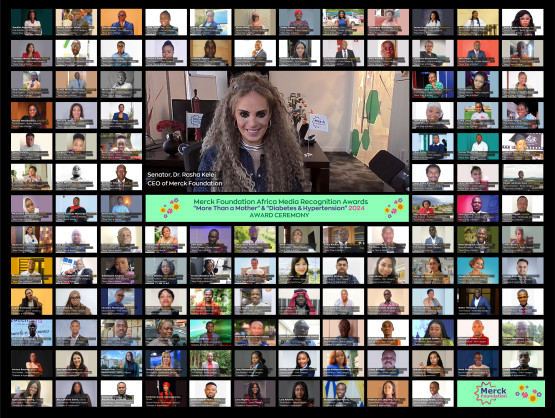
Merck Foundation (www.Merck-Foundation.com), the philanthropic arm of Merck KGaA Germany, in partnership with the First Ladies of Africa, proudly announced the Winners of their Merck Foundation Africa Media Recognition Awards 2024 under the categories “More Than a Mother” and “Diabetes and Hypertension”. 

The Awards Ceremony was conducted virtually to honor and celebrate the outstanding contributions of all the winning media professionals. The winners were warmly acknowledged by Senator Dr. Rasha Kelej, CEO of Merck Foundation and President of the “More Than a Mother” campaign. 

Senator, Dr. Rasha Kelej expressed, “I am truly happy to announce the winners of our Media Awards, together with my dear sisters, The First Ladies of Africa, who are also the Ambassadors of the Merck Foundation ‘More Than a Mother' Campaign. This year, we are delighted to celebrate 125 outstanding winners from 36 countries. It brings me joy to see such impressive participation not only from across Africa but also from several Asian and Latin American countries. Congratulations to all our incredible winners! 

It is a true pleasure to welcome you all as Merck Foundation Alumni. Let's continue to work together to raise awareness about critical social and health challenges, be the voice of the voiceless, and create culture shift in our communities.” 

Merck Foundation Media Awards launched in 2017, are announced annually, with over 640 Winners from 52 countries celebrated to date. 

The theme of the “More Than a Mother” Media Awards is to raise awareness about important social issues like: Breaking Infertility Stigma, Supporting Girl Education, Women Empowerment, Ending Child Marriage, Ending Female Genital Mutilation and/or Stopping Gender-Based Violence. The theme of the “Diabetes and Hypertension” Media Awards is to Promote a Healthy Lifestyle and raise awareness about prevention and early detection of Diabetes and Hypertension.  

The Merck Foundation CEO also launched the Call for Applications for the 2025 Media Awards. “I am pleased to invite entries for the Merck Foundation Media Recognition Awards 2025 – “More Than a Mother” & “Diabetes and Hypertension”, in partnership with the African First Ladies. I look forward to receiving another outstanding round of impactful entries this year as well.” Said Senator Dr. Rasha Kelej.  

Winners of Merck Foundation "More Than a Mother" Media Recognition Awards 2024  

Here are the winners from West African Countries in partnership with The First Lady of the Republic of The Gambia, H.E. Mrs. FATOUMATTA BAH-BARROW; and The First Lady of the Republic of Sierra Leone, H.E. Dr. FATIMA MAADA BIO:  

PRINT CATEGORY WINNER 

  • Jennifer Ambolley, The Chronicle, Ghana (First Position) 
  • Mackie Muctarr Jalloh, News Times Daily, Sierra Leone (Second position) 
  • Alao Abiodun, The Nation, Nigeria (Second position) 

ONLINE CATEGORY WINNERS 

  • Dzifa Tetteh Tay, The Spectator, Ghana (First Position) 
  • Laudia Sawer, Ghana News Agency, Ghana (First Position) 
  • Nyima Sillah, The Voice, The Gambia (Second Position) 
  • Isatou Ceesay, The Gambia Point, The Gambia (Third Position) 
  • Abigail Arthur, Citi Newsroom, Ghana (Third Position) 
  • Odimegwu Onwumere, The Nigerian Voice, Nigeria (Third Position) 

RADIO CATEGORY WINNER 

  • Mavis Offei Acheampong, GBC Radio, Ghana (First Position) 
  • Joyce Kantam Kolamong, GBC Radio, Ghana(Second Position) 
  • Zainab Sunkary Koroma, Star Radio, Sierra Leone (Third Position) 

MULTIMEDIA CATEGORY WINNERS 

  • Tolulope Adeleru-Balogun, News Central TV, Nigeria (First Position) 
  • Alieu Ceesay, QTV, The Gambia (Second Position) 
  • Mona Lisa Frimpong, Joy News, Ghana (Third Position) 

Here are the Winners from Southern African Countries in partnership with The First Lady of the Republic of Malawi, H.E. Mrs. MONICA CHAKWERA; The First Lady of the Republic of Zimbabwe, H.E. Amai Dr. AUXILLIA MNANGAGWA: 

PRINT CATEGORY WINNERS 

  • Precious Kumbani, The Nation, Malawi (First Position) 
  • Gresham Ngwira, Freelancer, Malawi (Second Position) 
  • Simon Muntemba, Daily Nation, Zambia (Second Position) 
  • Charlotte Nambadja, The Namibian, Namibia (Third Position) 
  • Silence Mugadzaweta, The Standard, Zimbabwe (Third Position) 

ONLINE CATEGORY WINNERS 

  • Alain Kabinda, Daily News Agency, Zambia (First Position) 
  • Catherine Murombedzi, Freelancer, Zimbabwe (First Position) 
  • Alick Ponje, The Times, Malawi (second Position) 
  • Wallace Mawire, Pan African Visions, Zimbabwe (Second Position) 
  • Hamu Madzedze, 365 Health Diaries, Zimbabwe (Third Position) 
  • Kundai Michael Magoronga, Chronicle, Zimbabwe (Third Position) 
  • Mlondi Mkhize, Briefly News, South Africa (Third Position) 

RADIO CATEGORY WINNERS 

  • Glendah Fadzai Takachicha, Capitalk FM, Zimbabwe (First Position) 
  • Tina Nyirenda, Smooth FM, Zambia (Second Position) 
  • Sylviah Chisi, Trans World Radio, Malawi (Second Position) 
  • Nyasha Mandimutsira, Capitalk FM, Zimbabwe (Third Position) 
  • Perina N. Wahara, PL FM, Malawi (Third Position) 

MULTIMEDIA CATEGORY WINNERS 

  • Keneilwe Pono, YTV, Botswana (First Position) 
  • Taati Niilenge, The Namibian, Namibia (Second Position) 
  • Lame Lucas, YTV, Botswana (Third Position) 

Here are the winners from East African Countries: 

PRINT CATEGORY WINNERS 

  • Elizabeth Angira, People Daily, Kenya (First Position) 
  • Marco Maduhu, Nipashe, Tanzania (Second Position) 
  • Margaret Maina, Nation Media, Kenya (Second Position) 
  • Beatrice Philemon Mukocho, The Guardian, Tanzania (Third Position) 
  • Vitus Audax, The Guardian, Tanzania (Third Position) 

ONLINE CATEGORY WINNERS 

  • Kamau Maichuhie, Nation Online, Kenya (First Position) 
  • Isabella Maua Chemosit, Freelancer, Kenya (Second Position) 
  • Anne Robi, Daily News, Tanzania (Second Position) 
  • Nteza Michael, UG Standard, Uganda (Third Position) 
  • Benjamin Takpiny, Anadolu Agency, South Sudan (Third Position) 
  • Ayele Addis Ambelu, Ethiopian Mass Media Action News, Ethiopia (Third Position) 

RADIO CATEGORY WINNERS 

  • Caren Waraba Sisya, Radio Citizen, Kenya (First Position) 
  • Mamer Abraham Kuot, Voice of America, South Sudan, (Second Position) 
  • Mwanaisha Makumbuli, Highlands FM, Tanzania (Second Position) 
  • Fatuma Mustapha Mtemangani, Pambazuko FM, Tanzania (Third Position) 
  • Daniel Byiringiro, Flash FM, Rwanda (Third Position) 

MULTIMEDIA CATEGORY WINNER 

  • Rose Wangui, NTV Kenya, Kenya (First Position) 
  • Andrew Juma, TV47, Kenya (Second Position) 
  • Leonard Kigozi  and Isabel Nakirya, CGTN Africa, Uganda (Third Position) 
  • Mackriner Siyovelwa, Crown Media, Tanzania (Third Position) 

Here are the winners from French Speaking African Countries in partnership with The First Lady of the Republic of Burundi, H.E. Madam ANGELINE NDAYISHIMIYE; The First Lady of Democratic Republic of the Congo, H.E. Madam DENISE NYAKERU TSHISEKEDI: 

PRINT CATEGORY WINNER 

  • Issa Moussa, Niger Times, Niger (First Position) 
  • Koami Agbetiafa, Niger Inter Press Group, Niger (Second Position) 

ONLINE CATEGORY WINNERS 

  • AZODODASSI Mêmèdé Ambroisine, Savoir News, Togo (First Position) 
  • Julio Gada, Global News, Benin (Second Position) 
  • Boris Esono Nwenfor, Pan African Visions, Cameroon (Third Position) 
  • Bakari Guèye, Initiatives News, Mauritania (Third Position) 
  • Frimo Koukou Djipro, Lelus, Côte d'Ivoire (Third Position) 

RADIO CATEGORY WINNERS 

  • Remy RUKUNDO, Radio TV Buntu, Burundi (First Position) 
  • Magnus MFURANZIMA, ISÔKO FM, Burundi (First Position) 
  • Mame Mbagnick DIOUF, Radio Oxyjeunes, Senegal (Second Position) 
  • Tanko Worou, Radio SU TII DERA, Benin (Second Position) 
  • Moussa KONE, Radio Channel 2, Mali (Third Position) 

MULTIMEDIA CATEGORY WINNERS 

  • Matthias KABUYA TSHILUMBA, RTDK, DRC (First Position) 

Here are the winners from Portuguese Speaking African Countries in partnership with The First Lady of the Republic of Cabo Verde, H.E. Dr. DÉBORA KATISA CARVALHO: 

ONLINE CATEGORY WINNERS 

  • Edisângela Tavares, Expresso das Ilhas, Cabo Verde (First Position) 
  • Sheilla Ribeiro, Sociedade, Cabo Verde (Second Position) 

RADIO CATEGORY WINNERS 

  • Teresa Monteiro Pinto, Rádio Televisão de Cabo Verde, Cabo Verde (First Position) 

MULTIMEDIA CATEGORY WINNERS 

  • Ângelo Semedo, Deutsche Welle, Cabo Verde (First Position) 

Merck Foundation "Diabetes & Hypertension" Media Recognition Awards 2024 

Here are the winners from West African Countries in partnership with The First Lady of the Republic of The Gambia, H.E. Mrs. FATOUMATTA BAH-BARROW; and The First Lady of the Republic of Sierra Leone, H.E. Dr. FATIMA MAADA BIO:  

PRINT CATEGORY WINNER 

  • Agnes Opoku Saprong, Ghanaian Times, Ghana (First Position) 
  • Patience Ivie Ihejirika, Leadership Newspaper, Nigeria (Second Position) 

ONLINE CATEGORY WINNERS 

  • Muhammed Lamin Touray, Freelancer, The Gambia (First Position) 
  • Prince Owusu Asiedu, Adom Online, Ghana (Second Position) 
  • Lara Adejoro, The Punch, Nigeria (Third Position) 

RADIO CATEGORY WINNERS 

  • Godwin Awuni Anafo, Odadee Radio, Ghana (First Position) 

MULTIMEDIA CATEGORY WINNER 

  • Emmanuel Dzivenu Seyram Abla De-Souza, Joy TV, Ghana (First Position) 
  • Ezedimbu Karen Ogomegbunem, Africa Independent Television, Nigeria, (Second Position) 
  • Lois Abba Sambo, Abuja Broadcasting Corporation, Nigeria (Third Position) 
  • Akua Oforiwa Darko, TV3, Ghana (Third Position) 

Here are the Winners from Southern African Countries in partnership with The First Lady of the Republic of Malawi, H.E. Mrs. MONICA CHAKWERA; The First Lady of the Republic of Zambia, H.E. Mrs. MUTINTA HICHILEMA; The First Lady of the Republic of Zimbabwe, H.E. Amai Dr. AUXILLIA MNANGAGWA: 

PRINT CATEGORY WINNER 

  • Nancy Kefilwe Ramokhua, The Patriot, Botswana (First Position) 
  • Matilda Chimwaza Majawa, Times Group, Malawi (Second Position) 

ONLINE CATEGORY WINNERS 

  • June Shimuoshili, Unwrap Online, Namibia (First Position) 
  • Tendai Chisiri, Sport Way News Net, Zimbabwe (Second Position) 
  • Shireen van Wyk, Shay Blogger, Namibia (Third Position) 
  • Prince Kurupati, Pan African Visions, Zimbabwe (Third Position) 

RADIO CATEGORY WINNERS 

  • Elvis Howahowa, Times Radio, Malawi (First Position) 
  • Stella Mlotha, Trans World Radio, Malawi (Second Position) 

Here are the winners from East African Countries: 

PRINT CATEGORY WINNER 

  • Lucy Johnbosco, Mwananchi, Tanzania (First Position) 
  • Christina Mwakangale, Nipashe, Tanzania (Second Position) 

ONLINE CATEGORY WINNERS 

  • Joan Mbabazi, The New Times, Rwanda (First Position) 
  • Leon Lidigu, Nation Online, Kenya (Second Position) 
  • Namwalo Daniel Absalom, Kenya News Agency, Kenya (Third Position) 
  • Angela Kezengwa, Citizen Digital, Kenya (Third Position) 
  • Veronica Mrema, M24 Tanzania, Tanzania (Third Position) 

RADIO CATEGORY WINNERS 

  • Kintu Khalid, Radio Simba, Uganda (First Position) 
  • Asha Bekidusa, Bahari FM, Kenya (Second Position) 

MULTIMEDIA CATEGORY WINNER 

  • Walter Mwesigye, NTV, Uganda (First Position) 
  • Edvesta Tarimo, Tumaini Media, Tanzania (Second Position) 

Here are the winners from French Speaking African Countries in partnership with The First Lady of the Republic of Burundi, H.E. Madam ANGELINE NDAYISHIMIYE; and The First Lady of Democratic Republic of the Congo, H.E. Madam DENISE NYAKERU TSHISEKEDI: 

PRINT CATEGORY WINNERS 

  • Konan N'Guessan Attoumgbre Joseph, La Retraite Active, Côte d'Ivoire (First Position) 
  • Nkurunziza Moise, Le Renouveau, Burundi (Second Position) 

ONLINE CATEGORY WINNERS 

  • Bahwa Ferdinand, Le Journal Africa, Burundi (First Position) 
  • Abdoulaye Ouédraogo, Queen Mafa, Burkina Faso (Second Position) 
  • Richard Manirakiza, l'Agence Burundaise de Presse, Burundi (Second Position) 
  • Mapote Gaye, Infomedia27, Senegal (Second Position) 
  • Atha Menssan Woffa Assan, Focus Infos, Togo (Third Position) 
  • Catherine Aimée Biloa, Échos Santé, Cameroon (Third Position) 
  • Nadège Omoladé SANNY, SRTB Online, Benin (Third Position) 

RADIO CATEGORY WINNERS 

  • MVUYEKURE Jean Claude, Radio TV Buntu, Burundi (First Position) 
  • Abdoul Razak Sani Oumarou, Radio Saraounia Maradi, Niger (Second Position) 
  • Kabamba Ngalamulume Fabrice, Radio Télévision de l'éducation (RTEDUC), DRC (Third Position)  

MULTIMEDIA CATEGORY WINNER 

  • Chris IRAMBONA, Radio Television Buntu, Burundi (First Position) 

Here are the winners from ASIAN Countries: 

PRINT CATEGORY WINNER 

  • Parikshit Nirbhay, Amar Ujala, India (First Position) 
  • Revathi Murugappan, Star Health, Malaysia (Second Position) 
  • Pooja Biraia, The Week, India (Third Position) 

ONLINE CATEGORY WINNERS 

  • Rashe Zoe Sophia B Piquero, Cebu Daily News, Philippines (First Position) 
  • Roshan Bhandari, Medicoliterature, Nepal (Second Position) 
  • Crystal Chow, Undark Magazine, China (Third Position) 

Here are the winners from LATIN AMERICA Countries: 

ONLINE CATEGORY WINNERS 

  • Adriana Becerra, Agencia Brunch, Mexico (First Position) 
  • Rafaela Polo, UOL, Brazil (Second Position) 

MULTIMEDIA CATEGORY WINNER 

  • Roxana Fabiola Lopresti, Channel 9 Televida, Argentina (First Position) 
  • Ana Paula Pedrosa, R7, Brazil (Second Position) 

Details of Merck Foundation Media Awards 2025: 

1. Merck Foundation Africa Media Recognition “More Than a Mother” Awards 2025 

Theme for the awards: Breaking Infertility Stigma, Supporting Girl Education, Women Empowerment, Ending Child Marriage, Ending FGM, and/or Stopping GBV at all levels.  

Who can apply: Journalists from Print, Radio, Online, and Multimedia platforms from the following groups:  

  • Southern African Countries  
  • West African Countries  
  • East African Countries 
  • French Speaking African Countries 
  • Portuguese Speaking African Countries 

Submission deadline: 30th September 2025. 

2. Merck Foundation Media Recognition “Diabetes & Hypertension” Awards 2025 

Theme for the awards: Promoting a healthy lifestyle and raising awareness about prevention and early detection of Diabetes and Hypertension.  

Who can apply: Journalists from Print, Radio, Online, and Multimedia platforms from the following groups:  

  • Southern African Countries  
  • West African Countries  
  • East African Countries 
  • French Speaking African Countries 
  • Portuguese Speaking African Countries 
  • Latin American Countries 
  • Asian Countries 

Submission deadline: 30th October 2025. 

All entries are to be submitted to submit@merck-foundation.com.

Distributed by APO Group on behalf of Merck Foundation.

Contact details:
Mehak Handa
Community Awareness Program Manager
+91 9310087613 / +91 9319606669
mehak.handa@external.merckgroup.com

Join the conversation on our social media platforms below and let your voice be heard! 
Facebook:
 https://apo-opa.co/4cLhp9K
X: https://apo-opa.co/3EtS73f
YouTube: https://apo-opa.co/4cUG7o7
Instagram: https://apo-opa.co/3GnWcqj
Threads: https://apo-opa.co/3EvXLlq
Flickr: https://apo-opa.co/42ZoEr6
Website: www.Merck-Foundation.com

About Merck Foundation:  
The Merck Foundation, established in 2017, is the philanthropic arm of Merck KGaA Germany, aims to improve the health and wellbeing of people and advance their lives through science and technology. Our efforts are primarily focused on improving access to quality & equitable healthcare solutions in underserved communities, building healthcare & scientific research capacity, empowering girls in education and empowering people in STEM (Science, Technology, Engineering, and Mathematics) with a special focus on women and youth. All Merck Foundation press releases are distributed by e-mail at the same time they become available on the Merck Foundation Website.  Please visit www.Merck-Foundation.com to read more. Follow the social media of Merck Foundation: Facebook (https://apo-opa.co/4cLhp9K), X (https://apo-opa.co/3EtS73f), Instagram (https://apo-opa.co/3GnWcqj), YouTube (https://apo-opa.co/4cUG7o7), Threads (https://apo-opa.co/3EvXLlq) and Flickr (https://apo-opa.co/42ZoEr6). 

The Merck Foundation is dedicated to improving social and health outcomes for communities in need. While it collaborates with various partners, including governments to achieve its humanitarian goals, the foundation remains strictly neutral in political matters. It does not engage in or support any political activities, elections, or regimes, focusing solely on its mission to elevate humanity and enhance well-being while maintaining a strict non-political stance in all of its endeavors. 

Media files
Merck Foundation
Download logo
Read moreMerck Foundation CEO Meets the 125 Winners From 36 Countries- “More Than a Mother” and “Diabetes and Hypertension” Media Awards 2024, Announced in Partnership With the First Ladies of Africa
23 April 2025

Atomic Alliances: China’s Strategic Push Into Africa’s Nuclear Energy Sector

Location: News
African Energy Chamber

China is rapidly scaling up its energy diplomacy in Africa, with nuclear cooperation emerging as a cornerstone of its broader strategic agenda. On April 8, South Africa's Nuclear Energy Corporation signed a Memorandum of Understanding (MoU) with the China National Nuclear Corporation (CNNC) during an official visit to China led by South Africa's Electricity Minister, Dr. Kgosientsho Ramokgopa.

The agreement aims to revive South Africa's nuclear fuel cycle, accelerate the deployment of small modular reactors and promote collaboration on advanced fuels such as high-assay low-enriched uranium. With strong government support for nuclear power but limited domestic financing, South Africa is seeking international partners to inject capital and technology while maintaining state ownership of key infrastructure.

Minister Ramokgopa's working visit to China also aimed to find solutions to South Africa's energy insecurity and loadshedding. Central to this effort is the proposed life extension of the SAFARI-1 reactor at the Pelindaba nuclear research center, which is scheduled for retirement in 2030. Plans for a new multi-purpose reactor are already underway with R1.2 billion ($63.6 million) in seed funding allocated, but further investment is needed to move the project forward. This underscores the critical role of sustained nuclear investment in securing South Africa's long-term energy resilience and reducing dependence on aging infrastructure.

China's Expanding Footprint

China's ambitions in Africa's nuclear sector extend beyond South Africa. At the 2024 Forum on China-Africa Cooperation (FOCAC) in Beijing, China launched the China-Africa Forum on the Peaceful Use of Nuclear Technology, as part of its 2025-2027 Beijing Action Plan. The move reinforced China's long-term goal to become Africa's premier nuclear energy partner. With 53 of 54 African nations represented at FOCAC – including 51 Heads of State – the event provided a powerful platform for Beijing to promote its nuclear agenda and expand its diplomatic and technical reach, while highlighting how Africa is leveraging nuclear energy to meet its growing power demands.

For Africa, nuclear power presents a unique opportunity to address the continent's urgent energy access gap while advancing long-term sustainability. Nuclear offers baseload electricity with zero carbon emissions, making it well-suited to complement intermittent renewables like solar and wind. Small modular reactors, in particular, are seen as a viable solution for remote or off-grid regions due to their scalability, smaller footprint and enhanced safety features. With growing populations and rising industrial demand, several African nations view nuclear power as a low-carbon, scalable pathway to energy security and broader socioeconomic development.

Nuclear Expansion Across Africa

Currently, Africa's nuclear energy development is concentrated in six countries – Egypt, Ghana, Kenya, Morocco, Nigeria and South Africa. Of these, four have recently signed nuclear cooperation agreements with China. In September 2024, Nigeria entered high-level discussions with China on peaceful nuclear energy cooperation, covering the full project lifecycle – from research and training to construction and plant decommissioning. Earlier that year, Nigeria also signed an MoU with the CNNC aimed at operationalizing nuclear power plants by the 2030s. Ghana followed suit with a deal to deploy China's Hualong One reactor, while Kenya continues to pursue its longstanding 2015 agreement with China to develop a 1,000 MW plant by 2034.

The International Atomic Energy Agency projects a 58% increase in nuclear energy use in Africa by 2030, with a tenfold increase by 2050. With more than 600 million people on the continent lacking electricity access, China's nuclear partnerships are positioned to close critical power gaps while supporting shared decarbonization goals.

Against this backdrop, African Energy Week (AEW) 2025: Invest in African Energies serves as a pivotal platform for advancing nuclear energy collaboration between Africa, China and other global partners. Building on existing partnerships and recent MoUs, AEW will facilitate high-level discussions on technology transfer, investment frameworks and regulatory readiness to accelerate nuclear deployment in key African markets. These conversations will align national nuclear ambitions with China's global expertise, ensuring that energy security, sustainability and sovereignty are at the core of future collaborations.

AEW: Invest in African Energies is the platform of choice for project operators, financiers, technology providers and government, and has emerged as the official place to sign deals in African energy. Visit www.AECWeek.com for more information about this exciting event.

Distributed by APO Group on behalf of African Energy Chamber.

Media files
African Energy Chamber
Download logo
Read moreAtomic Alliances: China’s Strategic Push Into Africa’s Nuclear Energy Sector
22 April 2025

MEST Africa and Mastercard Foundation Announce Selection of 12 Companies for Second Cohort of EdTech Fellowship in Ghana

Location: Business
The Meltwater Entrepreneurial School of Technology (MEST Africa)

MEST Africa (www.Meltwater.org), in partnership with the Mastercard Foundation, has announced its second cohort of 12 innovative companies for the Mastercard Foundation EdTech Fellowship in Ghana. This six-month entrepreneurship acceleration program is dedicated to supporting Africa's most promising EdTech ventures by equipping them with mentorship, funding, and expertise in the science of learning. These newly selected companies are set to scale their groundbreaking solutions and address pressing educational challenges across Ghana.

The Second cohort builds on the success of the first cohort of 12 EdTech Companies, whose solutions impacted over 136,798 learners during the period of acceleration, underscoring the Fellowship's ability to drive transformative change.

“We are thrilled to welcome the second cohort of the Mastercard Foundation EdTech Fellowship,” said Angela Duho, Program Manager at MEST Africa. “In Ghana, EdTech is not just about innovation—it's about creating equal opportunities for every student, no matter where they live. It empowers teachers with the tools they need to inspire, and it prepares our youth for a future where digital skills are essential. The first cohort has already shown us what's possible, and we're confident that these new Fellows will continue to transform education and unlock potential across the country.”

The 12 EdTech companies selected for the 2025 cohort demonstrated strengths in [please add here] that point to Ghana's educational needs. Over the next six months, they will benefit from comprehensive support, including expert mentorship, access to funding, and specialized training, enabling them to scale their solutions effectively and sustainably.

The EdTech companies selected by MEST Africa for the 2025 Mastercard Foundation EdTech Fellowship are:

  1. TECHAiDE (https://TECHAiDE.Global/) is a social enterprise committed to enhancing education, youth development, and healthcare throughout Africa. Since 2011, they have collaborated with global partners to deliver practical, affordable, and lasting solutions that uplift individuals, strengthen communities, and support institutions in creating brighter futures
  1. MooslaTrain (https://apo-opa.co/3S08HuA) is redefining math education in Ghana by sparking curiosity and confidence in students. This is done through community-driven math clubs and digital learning tools that make math approachable and fun, equipping young learners with the skills to thrive in STEM and beyond.
  1. Scribble Works Publishing House (https://ScribbleWorks.carrd.co/) is passionate about enriching education in Africa by providing educators and students with affordable, curriculum-aligned materials and interactive digital tools, fostering engaging learning experiences backed by actionable insights.
  1. InovTech STEM Center is an innovation hub devoted to bringing STEM education to underserved communities. Through hands-on robotics and coding programs—like STEM4Her, Powered Girl, and Powered Boy—they inspire students and teachers to develop skills that open doors to new opportunities.
  1. STEMAIDE (www.STEMAIDE.com) is focused on reshaping education in Africa by nurturing problem-solving, creativity, and entrepreneurial spirit in young people. STEMAIDE strives to prepare the next generation with the tools and mindset to succeed in an ever-changing world.
  1. Nikasemo Technologies (www.Nikasemo.com) is dedicated to enhancing the classroom experience in basic schools with their software and hardware solutions that streamline school operations and create dynamic, engaging learning environments that help students reach their full potential.
  1. Jesi AI (https://AI.UseJesi.com/) is a generative AI assistant supporting teachers in Ghana's junior and senior high schools. By simplifying the creation of high-quality, curriculum-aligned lesson plans and materials, Jesi AI saves educators time while also acting as a virtual tutor to guide students and track their growth.
  1. Metaschool AI (https://MetaschoolApp.com/) is an educational app designed with BECE and WASSCE students in Ghana in mind. Offering interactive video lessons from top instructors, Metaschool provides a flexible, student-paced learning platform that makes academic success more achievable.
  1. Maxim Nyansa Foundation (https://MaximNyansa.com/) empowers high school students and teachers across Africa with vital IT infrastructure and educational software. By tapping into open-source solutions, Maxim Nyansa improves access to quality education and works to close the digital gap.
  1. The Ghana Olympiad Academy (https://GhanaOlympiadAcademy.com/), through its Academic Talent Development Programme, brings hands-on STEM learning to learners in Ghana. They nurture talent in literacy, numeracy, and STEM, preparing young minds for leadership and innovation on a global stage.
  1. Asah Maker-Space is passionate about automation, robotics, 3D printing, coding, and construction. Asah Makerspace's team of skilled educators and tech enthusiasts empowers the next generation of creators through immersive, practical learning experiences.
  1. Craft Education Technologies (www.CraftEducation.io) bridges the gap between therapists, parents, and teachers to create a seamless support system for children with behavior and learning challenges, including autism. This collaborative model ensures that every child receives the individualized attention they need to succeed.

“The Mastercard Foundation looks to support the acceleration of EdTech solutions that reach all, including those out-of-school young people who are constantly left out of the education ecosystem. For it is when we design with the end user in mind that the business case for the solutions is more scalable, sustainable and impactful. Our collaboration with MEST Africa is to transform education in Ghana through technology-enabled learning”, added Rodwell Mangisi, the Acting Director of the Mastercard Foundation Centre for Innovative Teaching and Learning.

Through the Mastercard Foundation EdTech Fellowship, this cohort will embark on a transformative journey, gaining mentorship from experts in education innovation, sustainability, and scale, access to courses on the science of learning, and equity-free grants. This robust support aims to scale their solutions and elevate educational outcomes for millions across Ghana and Africa.

For more information about the Mastercard Foundation EdTech Fellowship and MEST Africa initiatives, visit www.Meltwater.org. 

Distributed by APO Group on behalf of The Meltwater Entrepreneurial School of Technology (MEST Africa).

For media inquiries, contact: 
Francis Akondor 
Marketing and Recruitment Manager, MEST Africa 
francis@meltwater.org  

About MEST Africa:
Established in 2008, the Meltwater Foundation is the non-profit arm of the global media intelligence company, Meltwater. Its mission is to create job opportunities and drive economic growth in Africa through software entrepreneurship, primarily via the Meltwater Entrepreneurial School of Technology (MEST Africa). Based in Accra, Ghana, MEST offers a one-year, specialised tech entrepreneurial training program for top talent from over 22 countries, including Nigeria, Kenya, South Africa, and Senegal. Additionally, MEST invests in early to growth-stage startups.

In 2020, MEST Programs was launched to forge partnerships with other foundations and organisations that share our goal of creating wealth and jobs in Africa through digital skills training and startup acceleration. MEST Africa has trained over 2,000 entrepreneurs and invested in more than 90 startups across various industries throughout Africa.

Visit www.Meltwater.org to learn more.

About the Mastercard Foundation:
The Mastercard Foundation is a registered Canadian charity and one of the largest foundations in the world. It works with visionary organisations to advance education and financial inclusion to enable young people in Africa and Indigenous youth in Canada to access dignified and fulfilling work. Established in 2006 through the generosity of Mastercard when it became a public company, the Foundation is an independent organisation separate from the company, with offices in Toronto, Kigali, Accra, Nairobi, Kampala, Lagos, Dakar, and Addis Ababa. Its policies, operations, and program decisions are determined by the Foundation's Board of Directors and leadership.

For more information on the Foundation, please visit www.MastercardFDN.org

About the Mastercard Foundation EdTech Fellowship:
The Mastercard Foundation EdTech Fellowship is an entrepreneurship acceleration program designed to support promising, African EdTech ventures. Implemented in partnership with innovation hubs and EdTech accelerators across Africa, the Fellowship provides select EdTech companies with critical business and financial support, as well as insight into the science of learning, preparing them for scale, sustainability, and impact. The Mastercard Foundation EdTech Fellowship was launched in 2019 by the Mastercard Foundation through its Centre for Innovative Teaching and Learning with the goal to partner with 12 Tech Hubs to support over 250 EdTech companies and reach at least 1.8 million young people by 2025.

For more information about the Centre for Innovative Teaching and Learning, visit: https://apo-opa.co/42DjLmm or contact: edtechfellowship@mastercardfdn.org   

Media files
The Meltwater Entrepreneurial School of Technology (MEST Africa)
Download logo
Read moreMEST Africa and Mastercard Foundation Announce Selection of 12 Companies for Second Cohort of EdTech Fellowship in Ghana
22 April 2025

South Africa’s Rand Refinery CEO Joins Mining in Motion 2025

Location: Business

Energy Capital & Power
Download logo

Praveen Baijnath, CEO of Rand Refinery, has been confirmed as a speaker at the Mining in Motion 2025 Summit, scheduled for June 2–4 in Accra. Baijnath will contribute to the panel discussion, Medium to Long-Term Funding Models for Artisanal and Small-Scale Mining, which will explore innovative financing mechanisms aimed at improving financial accessibility for small-scale miners.

As the head of the world's largest integrated single-site precious metals refining and smelting complex, Baijnath brings a critical perspective on the downstream sector's role in strengthening artisanal mining, supporting sector-wide growth and delivering value-added products tailored to African markets. Ghana's small-scale gold mining activities generated $5 billion in export revenue in 2024, while South Africa accounted for 60.5% of Ghana's gold exports to other African nations – highlighting the deep interconnection between the two countries' gold sectors.

Rand Refinery's major shareholders are also key players in Ghana's upstream gold industry. AngloGold Ashanti, which owns 42.5% of Rand Refinery, operates major Ghanaian mines including Iduapriem and Obuasi. Gold Fields, holding a 33.15% stake, manages the Tarkwa and Damang mines. Baijnath's participation is expected to foster stronger collaboration between South Africa and Ghana, promoting sustainable and inclusive development within the gold mining sector.

Organized by the Ashanti Green Initiative in partnership with the World Bank, World Gold Council and other international stakeholders, Mining in Motion 2025 will be held under the theme Sustainable Mining & Local Growth – Leveraging Resources for Global Impact. The event will welcome top-level decision-makers, including H.E. John Dramani Mahama, President of Ghana, along with representatives from the African Union, ECOWAS, the United Nations and the private sector.

Distributed by APO Group on behalf of Energy Capital & Power.

Stay informed about the latest advancements, network with industry leaders, and engage in critical discussions on key issues impacting small-scale miners and medium to large scale mining in Ghana. Secure your spot at the Mining in Motion 2025 Summit by visiting www.MiningInMotionSummit.com. For sponsorship opportunities or delegate participation, contact sales@ashantigreeninitiative.org.

Read moreSouth Africa’s Rand Refinery CEO Joins Mining in Motion 2025
21 April 2025

AI Powers Innovation, Efficiency and Growth in African Mining

Location: News

Energy Capital & Power
Download logo

African mining projects are increasingly incorporating artificial intelligence (AI) to streamline operations and meet ambitious production targets set by governments across the continent. As the mining industry undergoes a digital transformation, the upcoming African Mining Week (AMW) will highlight the pivotal role of AI and other digital tools in optimizing exploration and production processes, with a view to unlocking new mineral reserves, reducing costs and enhancing worker safety.

Botswana Diversifies Mineral Portfolio

In Botswana, Botswana Diamonds is expanding its mineral portfolio beyond diamonds with an AI-based nationwide exploration campaign launched in August 2024. By March 2025, the company identified potential deposits of besshi, greenstone, Mississippi Valley-type lead and zinc, SEDEX and platinum group metals (PGMs). To capitalize on these discoveries, Botswana Diamonds has applied for 11 new prospecting licenses. John Teeling, Chairman of Botswana Diamonds, stated: “During the initial analysis of the big database, it became clear that the AI technology could be used to identify other unknown minerals opportunities… Our analysis so far has identified a series of targets in copper cobalt, zinc and gold.”

KoBold Advances Zambia's Critical Mineral Market

U.S.-based startup KoBold Metals is applying AI to enhance critical mineral exploration and mine development in Zambia. In January 2025, KoBold raised $537 million in new capital, bringing its total funding to $1 billion. The company is developing one of the world's largest untapped copper basins in Zambia, with plans to produce 300,000 tons annually by 2030 from its $2 billion Mingomba Project. Additionally, KoBold Metals is exploring the Dumbwa Mine and Konkola West Project, contributing to Zambia's goal of reaching 3 million tons of annual copper production by 2031.

Kilken Platinum Drives Mine Expansion

In South Africa, Kilken Platinum is utilizing AI to optimize operations at its Thabazimbi processing plant in Limpopo as part of an expansion plan to double PGM production to 83kgs per month. The project has already increased output to 40kgs in its initial phase. Dondo Mogajane, CEO of Kilken Platinum's parent company Moti Group, emphasized that AI enables real-time tracking of production metrics and ensures strict adherence to safety protocols.

Beyond these projects, Rio Tinto subsidiary Richards Bay Minerals is employing AI for ore body modeling, equipment dispatch management and blast control at its mines in KwaZulu-Natal, South Africa. In the Democratic Republic of Congo, Glencore is leveraging digital technology to streamline critical mineral exploration as part of its Phase 2 expansion at the KTO copper and cobalt project. AMW 2025 will feature high-level discussions focused on AI's impact on industry growth, investment opportunities for technology providers and the broader economic benefits of digital transformation in mining.

African Mining Week serves as a premier platform for exploring the full spectrum of mining opportunities across Africa. The event is held alongside the African Energy Week: Invest in African Energies 2025 conference from October 1-3 in Cape Town. Sponsors, exhibitors and delegates can learn more by contacting sales@energycapitalpower.com.

Distributed by APO Group on behalf of Energy Capital & Power.

Read moreAI Powers Innovation, Efficiency and Growth in African Mining
16 April 2025

90-Day Blitz to Crush Gender-Based Violence and Femicide Launched

Location: News

Republic of South Africa: Government Communication and Information System (GCIS)
Download logo

The Justice, Crime Prevention and Security (JCPS) Cluster Ministers and senior officials convened a special sitting on Monday, 14 April 2025, under the leadership of Cluster Co-Chairs, Minister Mmamoloko Kubayi of the Department of Justice and Constitutional Development and Minister of Police, Senzo Mchunu.  

This urgent meeting was convened in response to the alarming surge in Gender-Based Violence and Femicide (GBVF) incidents across the country.  It culminated in the adoption of a 90-day acceleration programme to intensify the national response and fast-track the implementation of the National Strategic Plan on GBVF.

Recognising the gravity of the crisis, the Cluster resolved to revitalise and urgently reconstitute the Inter-Ministerial Committee (IMC) on GBVF, with a formal request to the President for its re-establishment under the 7th Administration. The IMC's inaugural meeting is scheduled to take place within two weeks. It will serve as the central coordinating mechanism to expedite government interventions, resolve systemic bottlenecks, and ensure measurable progress.

A dedicated GBVF Priority Committee will also be established within the National Joint Operational and Intelligence Structure (NATJOINTS), co-chaired by the Departments of Social Development and Women, Youth and Persons with Disabilities. This structure aims to improve the coordination of frontline security and protection interventions.

Acknowledging the inadequacy of relying solely on the national government for local-level interventions, the Cluster directed the revitalisation of JCPS structures across all provinces. Provincial JCPS Committees, comprising security cluster executives and senior officials, will be established to drive targeted and localised implementation of GBVF interventions.  The Cluster further directed the activation of government machinery at the grassroots level, with a strong emphasis on community mobilisation and the involvement of local structures in the fight against GBVF.

To address inefficiencies within the criminal justice value chain, a team of senior officials has been tasked with aligning police, prosecutorial, and correctional services systems to eliminate delays in GBVF case processing. Departments have also been instructed to identify critical institutional gaps and propose actionable, time-bound measures. 

The meeting mandated the consolidation of GBVF-related statistics across the JCPS value chain, from arrest, prosecution, conviction to incarceration, into a single integrated report. This report, along with each department's intervention points, will be submitted to the IMC.

The Government Communication and Information System (GCIS) has been instructed to coordinate a national webinar on GBVF, led by government experts, and to deliver targeted communication training to officials. The training will focus on ensuring message alignment and professional public engagement. The Cluster also resolved to prioritise the accelerated rollout of Thuthuzela Care Centres across all provinces to provide holistic, survivor-centred support services. 

The Department of Justice and Constitutional Development was specifically tasked with urgently addressing the repair and maintenance of SOS systems in court facilities. This is aimed at enhancing safety for survivors and witnesses, especially minors, and ensuring the prevention of secondary victimisation.  Further, the meeting underscored the need to rebuild the social fabric of society, particularly the family unit, as a foundational step in the long-term prevention of GBVF.  Departments were directed to develop results-driven action plans with clear timelines, defined target communities, and measurable outcomes.

To strengthen the National Council on GBVF, departments will propose sustainable funding models and nominate board members at Deputy Director-General level or higher to reinforce institutional capacity.  The meeting further resolved to intensify training across the Cluster on the revised legislation, regulations, and guidelines for handling GBVF cases.   In addition, concern was raised about the growing number of children arrested for sexual offences, prompting a directive for NATJOINTS to develop an appropriate and urgent response to this emerging crisis.

Importantly, the Cluster affirmed the need to reclaim the national narrative on GBVF and broader security matters, ensuring that government, not external actors, leads public discourse on these issues.  This 90-day blitz marks not only a declaration of intent but the beginning of a coordinated, government-wide campaign to end GBVF. Implementation began immediately following the meeting, and the Co-Chairs emphasised that incremental change is no longer sufficient. 

Government enters this period with full force, calling on every organ of state and sector of society to play an active, decisive role in eradicating GBVF.

Distributed by APO Group on behalf of Republic of South Africa: Government Communication and Information System (GCIS).

Read more90-Day Blitz to Crush Gender-Based Violence and Femicide Launched
15 April 2025

CMAG Appoints APO Group Founder, Nicolas Pompigne-Mognard, to Advisory Board

Location: News
APO Group

APO Group (www.APO-opa.com), the award-winning pan-African communications consultancy and leading press release distribution service, is pleased to announce that its Founder and Chairman, Nicolas Pompigne-Mognard (www.Pompigne-Mognard.com), has been appointed to the newly formed Advisory Board of the Critical Minerals Africa Group (CMAG).

With its mission being to position Africa as a leader in critical minerals, CMAG (www.CMAGAfrica.com) is dedicated to advancing responsible sourcing and sustainable development of Africa's critical mineral resources, while ensuring that local economies benefit from the continent's mineral wealth. With approximately 40% of the world's essential minerals reserves estimated to be held in Sub-Saharan Africa alone, the region plays a key role in the global energy transition and advanced technologies.

Pompigne-Mognard's appointment to the Advisory Board follows the announcement of a strategic partnership between APO Group and CMAG aimed at raising the global prominence of Africa's critical minerals sector. The partnership leverages APO Group's public relations and strategic communications expertise and CMAG's industry leadership. Complementing this, Pompigne-Mognard's ability to connect clients with key stakeholders from governments, private companies, and organisations of all sizes will be invaluable in showcasing Africa's role in the global essential resources supply chain and elevating the profile of Africa's critical minerals sector.

Nicolas Pompigne-Mognard brings a wealth of experience and expertise to the CMAG Advisory Board. His vast network across industries, governments, and institutions, his deep understanding of Africa's media and technology landscapes, and his extensive business experience will equip him to work alongside fellow Advisory Board members to shape positive perceptions of Africa's critical minerals sector amongst global stakeholders and audiences.

A Franco-Gabonese entrepreneur named among the 100 Most Influential Africans in 2023 and 2024, Nicolas Pompigne-Mognard serves on multiple high-profile advisory boards and international committees. These include the Senior Advisory Board of the Canada-Africa Chamber of Business and the Leadership Council of the Africa Tech Festival, as well as the Advisory Boards of the African Energy Chamber, World Football Summit, Africa Hotel Investment Forum (AHIF), Bloomberg New Economy Gateway Africa, Sports Africa Investment Summit, EurAfrican Forum, and All Africa Music Awards (AFRIMA). He is also a strategic advisor to the Chief Executive Officer of the Royal African Society of the United Kingdom, a strategic advisor to the EU-Africa Chamber of Commerce, and a special advisor to the President of Rugby Africa, the governing body of rugby in Africa.

Nicolas' wholly-owned company, APO Group, is the premier award-winning Pan-African communications consultancy and press release distribution service. It serves more than 300 clients, including global giants such as Canon, Nestlé, Western Union, UNDP, Network International, the African Energy Chamber, Mercy Ships, Marriott, Africa's Business Heroes, and Liquid Intelligent Technologies.

“Being appointed to the Critical Minerals Africa Group Advisory Board is an immense honour. CMAG is vital in safeguarding Africa's critical minerals for future generations. In my advisory role, I look forward to supporting all initiatives as CMAG showcases Africa's critical minerals potential in a responsible and sustainable manner,” said Nicolas Pompigne-Mognard, Founder and Chairman of APO Group.

Other members of the Advisory Board include Natznet Tesfay, Executive Director, Head of Insights and Analytics, S&P Global, and Richard Morgan, Former Head of Government Relations, Anglo-American PLC.

Distributed by APO Group on behalf of APO Group.

Media contact:
marie@apo-opa.com

About APO Group:
Founded in 2007, APO Group (www.APO-opa.com) is the leading award-winning pan-African communications consultancy and press release distribution service. Renowned for our deep-rooted African expertise and expansive global perspective, we specialise in elevating the reputation and brand equity of private and public organisations across Africa. As a trusted partner, our mission is to harness the power of media, crafting bespoke strategies that drive tangible, measurable impact both on the continent and globally.  

Our commitment to excellence and innovation has been recognised with multiple prestigious awards, including the PRovoke Media Global SABRE Award and multiple PRovoke Media Africa SABRE Awards. In 2023, we were named the Leading Public Relations Firm Africa and the Leading Pan-African Communications Consultancy Africa in the World Business Outlook Awards, and the Best Public Relations and Media Consultancy of the Year South Africa in 2024 in the same awards. In 2025, Brands Review Magazine acknowledged us as the Leading Communications Consultancy in Africa for the second consecutive year. They also named us the Best PR Agency and the Leading Press Release Distribution Platform in Africa in 2024.  

APO Group's esteemed clientele, which includes global giants such as Canon, Nestlé, Western Union, the UNDP, Network International, African Energy Chamber, Mercy Ships, Marriott, Africa's Business Heroes, and Liquid Intelligent Technologies, reflects our unparalleled ability to navigate the complex African media landscape. With a multicultural team across Africa, we offer unmatched, truly pan-African insights, expertise, and reach across the continent. APO Group is dedicated to reshaping narratives about Africa, challenging stereotypes, and bringing inspiring African stories to global audiences, with our expertise in developing and supporting public relations campaigns worldwide uniquely positioning us to amplify brand messaging, enhance reputations, and connect effectively with target audiences.

Media files
APO Group
Download logo
Read moreCMAG Appoints APO Group Founder, Nicolas Pompigne-Mognard, to Advisory Board
15 April 2025

Majodina commits to accelerate bulk water infrastructure implementation

Location: News

Majodina commits to accelerate bulk water infrastructure implementation

Water and Sanitation Minister Pemmy Majodina has reaffirmed government’s commitment to fast-track the rollout of bulk water infrastructure projects across the country.

Majodina made the commitment during the official handover of the Kirkwood Bulk Water Project to the Sundays River Valley Local Municipality, on Monday.

Funded through the Department of Water and Sanitation’s Regional Bulk Infrastructure Grant (RBIG), the R35 million project represents a transformative investment in water security for the Kirkwood community and the wider Eastern Cape province.

The project, implemented by Amatola Water, includes the construction of a new 14 million-litre raw water storage dam, which boosts the total storage capacity from 20.2 million litres to 34.2 million litres.

The expansion ensures an uninterrupted water supply, even during the annual maintenance shutdown of the Orange-Fish Water Scheme, which previously left the communities exposed to water shortages.

In addition to the dam, the project delivered two new 3.0-megalitre reservoirs in Kirkwood Town and Bontrug (Moses Mabida), as well as critical pipework upgrades to improve water distribution efficiency and reduce losses.

The project will also bring tangible benefits to communities, including reliable water access for 3,963 households and an estimated population of 16 778.

The improved infrastructure will also bring reliable water access to the communities, including 3,963 households, benefiting an estimated 16 778 population.

The project is also expected to bolster the local citrus industry, a key economic driver in the region, by enhancing water reliability for agricultural operations - thereby safeguarding jobs and export revenues.

Addressing the community during a handover ceremony, Majodina said the completion of Kirkwood Bulk Water Project, is more than just infrastructure, but “a clear demonstration of this government’s urgent and unwavering commitment to water security for all.”

“We are now entering a phase where we must - and will - fast-track the rollout of bulk water projects across the country with speed, focus, and accountability. Water is not a luxury, it is a basic right and a driver of economic growth, health, and dignity.

“Communities like Kirkwood deserve nothing less, and we will not rest until every household, farm, and business has reliable access to water,” Majodina said.

The Minister also urged the public to actively safeguard water infrastructure, take pride in the assets, and to work with the government to protect them.

“We call on all South Africans to avoid, prevent, and report any acts of vandalism, or theft that threaten our water systems. These projects belong to the people [and] when infrastructure is destroyed, it is our communities, our families, and our children who suffer,” Majodina said.

The project, which started in July 2023 and completed in March 2025, has brought inclusive economic benefits during its construction phase, generating 41 jobs for local community members and engaging 10 local small businesses, furthering the department’s goals for empowerment and local economic development.

The project components included:

•    A 14-million-litre raw water lay dam at the Kirkwood Water Treatment Works;
•    All associated infrastructure such as inlet chambers, interconnecting pipework, and security fencing;
•    A 3.0-million-litre steel reservoir in Kirkwood serving Aqua Park, Bergsig, and surrounds;
•    A second 3.0-million-litre reservoir in Bontrug, supplying Moses Mabida, Msengeni, and nearby settlements; and 
•    Interlinking pipework to enable zoning and efficient water distribution across the municipal network.

Majodina was joined by the Sarah Baartman District Municipality Mayor, Deon de Vos, and Sundays River Valley Local Municipality Mayor, Solethu Lucas. – SAnews.gov.za


GabiK
Tue, 04/15/2025 - 14:24
209 views

Read moreMajodina commits to accelerate bulk water infrastructure implementation
15 April 2025

Lesotho Gives In, Approves Starlink Licence

Location: News

Civic organisation says this is a “sell-out”

Read moreLesotho Gives In, Approves Starlink Licence
14 April 2025

Vuyani Jarana appointed as G20 start-up engagement group

Location: News

Vuyani Jarana appointed as G20 start-up engagement group

The Minister of Small Business Development, Stella Tembisa Ndabeni, has announced the appointment of Vuyani Jarana as Chairperson for the Startup20 Engagement Group for South Africa’s Group of Twenty (G20) Presidency.

In a statement on Monday, the Department of Small Business Development (DSBD) said it has been entrusted with leading South Africa’s Startup20 Engagement Group, one of the officially recognised G20 Engagement Groups.

As Chairperson, Jarana will lead Startup20’s strategic direction, appoint task force chairs, coordinate high-level meetings and events, and guide the development of the Startup20 Policy Communiqué, which will contribute to the official G20 Leaders’ Declaration.

The Minister also appointed 22 On Sloane as the Secretariat of the Startup20 Engagement Group for South Africa’s G20 Presidency. 

Startup20 advocates for startups and micro, small, and medium enterprises (MSMEs) at the G20 level, developing policy recommendations to advance the global startup ecosystem and foster inclusive innovation.

“To support this effort, 22 On Sloane has been appointed as the Country Secretariat for Startup20 during South Africa’s G20 Presidency. Twenty-two (22) On Sloane is Africa’s largest startup campus, playing a pivotal role in advancing the startup and MSME ecosystem across the continent. 

“Twenty-two (22) On Sloane serves as headquarters for the Global Entrepreneurship Network (GEN) Africa, which is represented in 43 African countries, and as the country headquarters of GEN Global which has a presence in 180 countries globally aimed at supporting entrepreneurs to start and scale,” the department said.

As Secretariat, 22 On Sloane will support Jarana to coordinate and manage all Startup20 activities in South Africa, including stakeholder engagements, task force operations, international collaboration efforts, policy drafting, and logistical delivery of the Startup20 agenda. 

The organisation will also facilitate multi-stakeholder dialogues and policy consultations to ensure that Africa’s entrepreneurial voice is firmly embedded in the ensuing global conversations.

According to the department, Jarana brings a wealth of experience to this crucial role, with more than 25 years of leadership in the Information and Communications Technology (ICT) sector. 

A seasoned business transformation leader, Jarana previously served as Group Chief Operating Officer and Chief Executive Officer of Vodacom Business within the Vodacom Group. 

He also held the role of Chief Executive Officer of South African Airways, where he spearheaded critical restructuring efforts.

Currently he is the Founder and CEO of Ilitha Telecommunications, a company dedicated to delivering superfast, affordable broadband to underserved peri-urban and rural communities. 

He also serves as Chairperson of the Council for Scientific and Industrial Research (CSIR), a key institution driving South Africa’s scientific, industrial, and technological innovation agenda.

“His extensive experience and expertise will be invaluable in driving our efforts to promote entrepreneurship and innovation in Africa. He is a respected and seasoned business leader whom I am confident will lead the Startup20 Engagement Group with dedication and focus, ensuring that this serves as a legacy for our country and the ecosystem,” the Minister said.

The G20 is an international forum of both developing and developed countries, which seeks to find solutions to global economic and financial issues. 

South Africa’s G20 Presidency commenced on 1 December 2024 and will run until 30 November 2025. It is taking place under the theme: “Solidarity, Equality, and Sustainability.” - SAnews.gov.za

nosihle
Mon, 04/14/2025 - 15:03
57 views

Read moreVuyani Jarana appointed as G20 start-up engagement group
14 April 2025

Over 1000 teachers appointed to strengthen teaching capacity

Location: News

Over 1000 teachers appointed to strengthen teaching capacity

The KwaZulu-Natal Education Department has successfully appointed over 1000 teachers to ensure that no classroom is without a qualified teacher.

Education MEC Sipho Hlomuka said the department had appointed 1 530 Post Level 1 teachers between January and April 2025.

Also, of the 737 Post Level 1 positions advertised in September 2024, the majority were filled by the end of March 2025.

The posts became vacant due to attrition, including retirements, deaths, promotions and resignations. 

The MEC highlighted that most of the vacancies were in critical subject areas, including Mathematics, Mathematics Literacy, Physical Sciences, Life Sciences, technical subjects and other newly-introduced subjects.

“This achievement underscores our commitment to providing quality education to learners across the province of KwaZulu-Natal. The filling of these critical posts is a significant milestone for the department, as it will enable us to improve the teacher-to-learner ratio, enhance teaching and learning, and ultimately improve learner outcomes,” Hlomuka said.

He added that the achievement was a testament to the department’s dedication to ensuring that learners receive consistent and quality education.

The MEC expressed his gratitude to all stakeholders involved in the process, including teachers’ unions, and the broader education community.

“Their tireless efforts and commitment to the education sector have been instrumental in achieving this milestone. The KwaZulu-Natal Department of Education is committed to continuing its efforts to improve the quality of education in the province," Hlomuka said. – SAnews.gov.za


GabiK
Mon, 04/14/2025 - 12:01
168 views

Read moreOver 1000 teachers appointed to strengthen teaching capacity
  • Previous
  • Page 1
  • Interim pages omitted …
  • Page 15
  • Page 16
  • Page 17
  • Page 18
  • Page 19
  • Interim pages omitted …
  • Page 87
  • Next

Copyright © 2026 · MyZA · All Rights Reserved · Powered by Stratlec Online