• Skip to main content
  • Skip to header right navigation
  • Skip to after header navigation
  • Skip to site footer
MyZA

MyZA

News, Directory, Events and Other Stuff

  • Social Media
  • Sport
  • World News
  • Home
  • Submit News
  • Directory
  • Events
  • Stratlec
  • TFSA
  • News
    • APO
    • Today’s Sport News
    • Todays Social Media and Tech Headlines
    • Today’s World News
    • Today’s SA Financial News
  • Contact
You are here: Home / Archives for critical

critical

14 September 2023

MANCOSA looks to address the AI skills shortage as it offers a South African first

Location: MyPR

MANCOSA looks to address the AI skills shortage as it offers a South African first In line with the Fourth Industrial Revolution and the movement from localised job markets to a global job market, technology is having a significant influence on the future world of work, with artificial intelligence taking centre stage when it comes …
Read moreMANCOSA looks to address the AI skills shortage as it offers a South African first
13 September 2023

Government, labour plaster cooperation to uplift economy

Location: News

Government, labour cement cooperation to uplift economy

Government and organised labour have agreed to work much more closely to speed up efforts for a more inclusive economy, job creation, and addressing poverty and inequality. 

President Cyril Ramaphosa, Ministers and leaders of organised labour [COSATU, FEDUSA, NACTU and SAFTU] met virtually on Tuesday in a bid to address the immediate challenges that confront South Africa’s economy. 

 
The Presidency said this agreement is critical to accelerate efforts to deliver lasting and sustainable progress in building an inclusive economy, creating jobs and tackling poverty and inequality. 

The meeting discussed, amongst other issues, the immediate measures needed to unblock economic growth and create employment. Participants agreed that urgent steps must be taken to deal with low growth and the unemployment crisis.

According to the Presidency, organised labour committed to working with government to end load shedding and achieve energy security, improve the efficiency of the freight logistics system, reduce violent crime and protect economic infrastructure.

Representatives from organised labour raised several related issues including the current fiscal situation, the structure of the economy, State-owned enterprises (SOEs), strengthening public services, tackling crime and corruption, local government and providing economic and social relief, particularly to poor South Africans.

“Given the scale of the challenge, we require support from all social partners to urgently accelerate the implementation of government’s plans and drive additional interventions.

“While there is encouraging progress, the energy shortfall remains the single biggest constraint to economic growth. We need to accelerate and expand our efforts even further, not only to overcome the immediate crisis, but to fundamentally reform our energy sector and ensure that we never face such a shortfall again,” President Ramaphosa said.

Organised Labour Overall Convenor, Gerald Twala, welcomed the engagement and expressed hope that it will be the beginning of further discussions on various measures to grow the economy, create jobs, rebuild the State, and tackle crime and corruption.

“Labour is deeply concerned about the variety of crises affecting our SOEs, municipalities, government, the economy and workers. They require decisive action to resolve them. It is critical these interventions are directed towards the fundamental causes of our many challenges, and that they uplift the poor and protect the hard won rights of workers. Measures must capacitate the State to deliver quality public services, unlock economic growth and set the nation on a sustainable path,” Twala said.

The meeting agreed that addressing unemployment and poverty is an immediate imperative that will improve social and political stability, creating a virtuous cycle that supports growth.

The Presidency emphasised the opportunity to build on existing interventions with proven track records of success, including the Presidential Youth Employment Intervention, the Presidential Employment Stimulus, the Youth Employment Service and the SME Fund.

The Presidency further highlighted the need to expand and scale these initiatives through wider engagement to drive participation and uptake, as well to identify regulatory, policy and other measures to support and grow SMMEs, and unlock job creation at scale.

President Ramaphosa and labour leaders agreed that further in-depth engagement is needed to fully address the issues raised. A follow-up in-person meeting will soon be convened to build on Tuesday’s discussion. – SAnews.gov.za

DikelediM
Wed, 09/13/2023 - 09:47

602 views
Read moreGovernment, labour plaster cooperation to uplift economy
13 September 2023

Oil and gas imperative for SA’s energy security

Location: News

Oil and gas imperative for SA's energy security

The Department of Mineral Resources and Energy (DMRE) will “sustainably continue to develop” South Africa’s oil and gas resources in order to ensure energy security and alleviate dependency on foreign oil.

This is according to Mineral Resources and Energy Deputy Minister, Dr Nobuhle Nkabane, who was speaking at the Southern Africa Oil Gas Conference on Wednesday.

“It is imperative to accelerate the exploration of oil and gas both onshore and offshore, as having our own petroleum resources will reduce our dependency on foreign oil and cushion our economies, in particular our citizens against imposed whirlwinds of crude price volatility,” she said.

The Deputy Minister said South Africa has already initiated policy intervention processes to boost the development and growth of the country’s oil and gas industry.

“The first intervention is the development of the Gas Master Plan which is a policy that outlines and guides the critical role of gas in South Africa while providing policy direction to the gas industry.

“We have also developed the Upstream Petroleum Development Bill seeking to ensure that the upstream petroleum sector is no longer regulated under the Mineral and Petroleum Resources Development Act, 2002 (MPRDA), but under discrete petroleum legislation. We believe the de-coupling of the Upstream Petroleum Development Bill from MPRDA will bring regulatory certainty and hopefully shore up investor confidence,” Nkabane said.

Natural gas

Deputy Minister Nkabane highlighted that natural gas in one the key components in South Africa’s Integrated Resource Plan (IRP) 2019 and accounts for at least 3% of the country’s energy supply.

She explained that natural gas can also contribute to South Africa’s quest to lower emissions output.

“[The] continued exploration and discovery of indigenous gas is crucial for meeting our climate change targets and securing of energy supply,” she emphasised.

Nkabane highlighted that the recent discovery of maiden gas reserves in Mpumalanga represents a “major boost in electricity generation capacity as the country was looking at different sources of energy”.

She urged countries that have discovered gas to ensure these reserves not only serve international appetite but also contribute to energy security in local communities.

“Mpumalanga is the epicentre of South Africa’s power generation because [it] has a high concentration of power stations, therefore the discovery of gas positions the province at the centre of the just energy transition and as a source of reference for the country’s emission-reduction targets.

“We have also seen that Europe is looking to Africa to diversify its gas supplies. This presents a good opportunity and market for local gas beyond our own use. However, the caveat is that we should not rush to export our gas to Europe at the expense of our domestic and regional markets, no matter how tempting the prospects of earning foreign revenue.

“The argument often advanced is the lack of transmission infrastructure and unaffordability of gas products for local communities. My counter argument is that we are not going to change this situation if we do not use the revenue earned from gas exports to develop … our economies to create employment opportunities that will lead to consumption of goods and services,” she said.

Nkabane also called on African countries to increase ties in oil and gas trade between themselves.

“Already, South Africa imports the bulk of its crude requirements from African producers, including Nigeria and Angola. There is ample opportunity for a massive expansion of gas trade, especially from the Gulf of Guinea and the broader West Coast of Africa, where we have many producers and some already exporting. We collaborate closely with the African Petroleum Producers Organisation and urge more meaningful engagement with this continental body.

“As a region we should strive to build a strong oil and gas sector that will drive regional and continental economic development as is the case with the advanced economies,” Nkabane said. – SAnews.gov.za


NeoB
Wed, 09/13/2023 - 14:53

124 views
Read moreOil and gas imperative for SA’s energy security
13 September 2023

The Ultimate Guide to Industrial Pump Technology

Location: MyPR

Choosing the right pump for your industry can be a daunting task. With a plethora of options available, each designed for specific applications, the selection process can become overwhelming. In this guide, we’ll delve into various types of industrial pumps to help you make an informed decision.   Centrifugal Pumps One of the most common …

Read moreThe Ultimate Guide to Industrial Pump Technology
13 September 2023

The Future of Engineering: Tailored Solutions for Complex Problems

Location: MyPR

In a rapidly evolving world where technology, sustainability, and efficiency are critical, it’s more important than ever to find innovative solutions for complex engineering challenges. Companies have to work smart to stay ahead, and this is where engineered solutions come into play. Let’s explore how tailored solutions are revolutionising sectors from mining to agriculture.   …

Read moreThe Future of Engineering: Tailored Solutions for Complex Problems
13 September 2023

Urgent Call for Government Action to Address Alarming Increase in Nurdles on South African coastline

Location: MyPR

Concerns have reached a critical point as the KZN North Coast beaches, including Sheffield and Ballito, face a sudden and disturbing surge in the presence of nurdles—tiny plastic pellets used in the manufacturing of plastic products. This alarming escalation poses an imminent threat to the health of marine ecosystems, human well-being, and the delicate balance …

Read moreUrgent Call for Government Action to Address Alarming Increase in Nurdles on South African coastline
12 September 2023

Deciphering Your Dream Home: From Housing Plans to Floor Position Execution

Location: MyPR

Are you in the process of building your dream home and find yourself overwhelmed by the labyrinth of options out there? You’re not alone. Planning your future abode involves understanding various critical elements, each contributing to the final result.   The Importance of a Good Plan One of the most crucial steps in building a …

Read moreDeciphering Your Dream Home: From Housing Plans to Floor Position Execution
12 September 2023

Basic Education Committee Concludes Deliberations on BELA Bill

Location: News

Republic of South Africa: The Parliament
Download logo

The Portfolio Committee on Home Affairs will recommend to the National Assembly to adopt the name of Ms Janet Love to fill a vacancy in the Electoral Commission. The vacancy arose as a result of the expiry of the term of office of the Commissioner at the end of April 2023. 

The recommendation is in line with Section 6 (2) (d) of the Electoral Commission Act and follows a process led by the Chief Justice as set out in Section 6 (3) of the Act. The report by the Chief Justice indicated that as per the Act the vacancy was advertised, and the panel was not satisfied with the calibre of candidates that applied. Following the re advertisement of the vacancy 70 applications were received and of those the panel interviewed 12 candidates. The Panel then recommended eight candidates to the committee. 

“Following consideration of the interview transcripts, the curriculum vitae of all recommended candidates, the committee felt that Ms Love has the right skills and institutional experience required to guide the Electoral Commission of South Africa especially now when the country will for the first-time vote for independent candidates in the Provincial and National Elections. The committee will recommend that the National Assembly adopts the name of Ms Love to serve as Commissioner of the IEC,” said Mr Mosa Chabane, the Chairperson of the committee. 

Meanwhile, the committee has considered and adopted a report on the determination of remuneration of the Members of the Electoral Commission for the 2022/23 financial year as determined by the President as per Section 7 (2) of the Electoral Act. The committee concurred with the President that a retrospective salary increase of 3% be implemented for the Chairperson and other full-time Commissioners. 

The committee also received an update on the roll-out of the Automated Biometric Identification System (ABIS) and has urged the Department of Home Affairs to resolve the impasse with the service provider regarding levied penalties implemented by the department on missed deadlines. The committee remains of the view that all service providers must also be kept accountable for delayed projects. The committee welcomes the assurance that the project tests are underway, and that the department is working with the service provider to ensure stability of the system. ABIS is a modern IT system based on commodity hardware designed to be run as a critical service without interruptions. It promises many possibilities in identity management while speaking to the type of Home Affairs of the future.

Furthermore, the committee welcomes the implementation of consequence management against 6 individuals identified to be in the wrong with regard to the contract. While the committee acknowledges that the internal disciplinary processes are sometimes lengthy, the it has urged for the speedy conclusion of the process to ensure that people are held accountable.

The committee has recommitted to focused oversight on the programme to ensure that all clients of the department benefit from the system.  

Distributed by APO Group on behalf of Republic of South Africa: The Parliament.

Read moreBasic Education Committee Concludes Deliberations on BELA Bill
12 September 2023

Nangamso Matebese appointed as Deputy President’s economic affairs advisor 

Location: News

Nangamso Matebese appointed as Deputy President’s economic affairs advisor 

Nangamso Matebese has been appointed to the advisory team in the Office of Deputy President Paul Mashatile. 

“Ms Matebese is being seconded to the Office by the Development Bank of Southern Africa to serve as economic affairs advisor to the Deputy President,” a statement read on Monday. 

“Matebese brings critical experience to the Presidency, having been responsible for infrastructure coordination among her many past responsibilities.” 

Matebese is a qualified Chartered Banker with qualifications from Harvard Business School.

She has over 14 years of experience in investment banking, infrastructure and project finance, fund administration and management, and portfolio management. 

The Office of the Deputy President said it believes she brings diverse and invaluable expertise to the already formidable team the Office has put together to support the Deputy President.

In this role, she will advise and apply her expertise in economic investments and infrastructure, forming part of the critical responsibilities of the Presidential Coordinating Council, which the Deputy President co-chairs. 

Her responsibilities will also include analysing economic policies and recommendations for economic policies that will benefit the growth of the South African economy and the African investment trade.

“The Deputy President wishes Ms Matebese well during her time in the Presidency and commends her commitment to public service.” – SAnews.gov.za

Gabisile
Tue, 09/12/2023 - 09:01

888 views
Read moreNangamso Matebese appointed as Deputy President’s economic affairs advisor 
12 September 2023

Decoding Foreign Tax Withholding on Dividends

Location: MyPR

For international investors, the allure of global diversification is often marred by the complexity of foreign tax obligations. One of these obligations is dividend withholding tax, which can vary considerably depending on the jurisdiction. This blog post aims to demystify the dividend withholding tax policies of four major economies: Germany, France, the Netherlands, and the …

Read moreDecoding Foreign Tax Withholding on Dividends
12 September 2023

Inaugural Africa Health Indaba 2023: Pioneering a Resilient Future for Africa’s Healthcare Landscape

Location: News

Africa Health
Download logo

Pioneers in the medical industry will gather alongside high-level representatives from government and business in October, for the inaugural Africa Health Indaba in Gauteng.

The Indaba takes place during the annual Africa Health Congress and is an evolution of the Leaders Forum event that was previously hosted during this annual gathering.

Set to be inaugurated by Mr Panyaza Lusufi, Premier of Gauteng province, the Indaba seeks to position Africa as a leader in medical innovation, spearheading global change.

By focusing on the local production of drugs and machines, fostering resilient supply chains, and promoting local industry, the event signifies Africa's commitment to leading medical innovation in areas where it is most needed and where resources are often most stretched.

A core component of the Indaba's discussions is the imperative of Universal Health Coverage (UHC). UHC is a critical goal for health systems worldwide and holds particular significance for Africa.

The Indaba will create a platform for dialogue and knowledge sharing about achieving UHC in the African context. It addresses the unique challenges and opportunities that Africa presents and delves into the practicalities of resource sharing and balancing costs to stakeholders across the continent.

“A key focus of the discussions will be the alignment with the vision and trajectory of the South African NHI, currently a contested issue. The Indaba will provide an important forum for understanding how Africa's healthcare future can reconcile with the NHI's objectives, fostering an integrated and equitable health system,” says Dr Bandile Hadebe, spokesperson for the organisers of the event.

The Africa Health Indaba is more than a platform for dialogue and innovation. It serves as a roadmap for sustainable healthcare systems, universal health coverage, and fostering regional cohesion.

The event aligns with the principles of medical science and evidence-driven decision making, maintaining a non-partisan stance, and focusing on global best practices.

“The inaugural Africa Health Indaba is an elevated conversation at the heart of Africa's premier health industry summit. It offers an opportunity to network at the highest levels in a space of robust engagement featuring a balanced diversity of both technical and social perspectives, as well as inclusive stakeholder representation, including government, public, private and industry engagement,” says Dr Hadebe.

Each discussion is formatted and structured to ensure efficient knowledge sharing at the highest level and will culminate in a set of guidelines that will be published and distributed among stakeholders, ensuring the ideas and strategies discussed at the Indaba translate into concrete, actionable plans.

Drawing on the latest trends and innovations from both international and transcontinental perspectives, the Indaba will serve as a hub for learning and exchange. This approach will help to position Africa is at the forefront of healthcare innovation, leveraging global knowledge while tailoring solutions to local conditions and contexts.

The inaugural Africa Health Indaba is set to become an essential platform driving tangible change in Africa's healthcare landscape.

It signifies a commitment to leading the way in medical innovation, thereby fostering a prosperous and resilient future for the continent.

It takes place on Wednesday 18 October 2023 at Gallagher Estate in Gauteng, as part of the annual Africa Health Congress.

Distributed by APO Group on behalf of Africa Health .

About Africa Health:

  • Africa Health is organised by the Informa Markets' Global Healthcare Group. It takes place at Gallagher Estate in Gauteng (South Africa) between 17 and 19 October 2023. The Africa Health Indaba takes place on day two, on Wednesday 18 October 2023.
  • A summary report from the Africa Health Congress in 2022 can be downloaded from https://apo-opa.info/3EBeSPe
  • The Exhibition will host 15 CPD-accredited conferences that are aimed at bridging the gap in medical knowledge by providing the very latest insights into cutting-edge procedures, techniques, and skills.
  • For more information, visit www.AfricaHealthExhibition.com
Read moreInaugural Africa Health Indaba 2023: Pioneering a Resilient Future for Africa’s Healthcare Landscape
12 September 2023

South African Telecoms Customers Only Prepared to Wait 5 Minutes

Location: News
Subtonomy

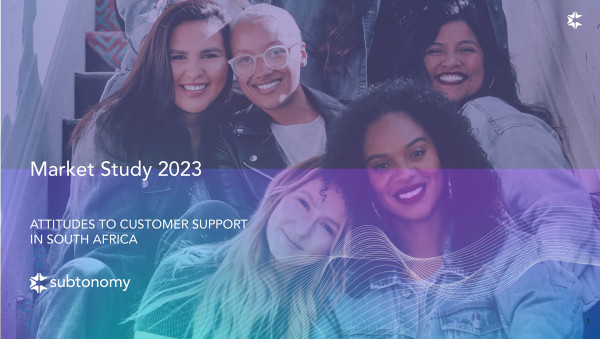
SUBTONOMY (https://www.Subtonomy.com/), the world's leading telecoms technical customer support vendor, today reveals new research on the South African market, providing key insights into the online habits and customer support expectations of South Africans.

South Africans are spending increasing amounts of time online

The global shift towards digitalisation hasn't bypassed South Africa. Rather, as South Africans transition to the latest smartphones, they're spending more and more time online. According to a recent ProxyRack report, for example, the average South African now spends 9 hours and 38 minutes per day online – making them the world's heaviest internet users.

A new study by Sweden's Subtonomy, provides unique insights into how South Africans are spending this time, revealing:

  • 97% are using at least one social media platform
  • 88% are watching the latest movies or streaming TV
  • 86% are paying bills or reading news online
  • 74% are using their mobiles to work from home or to access video conferencing apps
  • 56% are gaming on their handsets
  • 28% are controlling smart home applications.

What all of these advanced data applications have in common, is that they require a robust, stable and always-available network, and this is precisely where customers say there's a big problem - with 7 in 10 admitting they're frequently experiencing problems with their connectivity.

Excellent customer support has become a critical decision point for customers

In addition to dealing with the demands of more complex services, and responding to changing customer needs, South African service providers have the added challenge of regular and unpredictable load balancing events to cope with. But while South Africans don't necessarily blame their service provider - indeed 8 out of 10 say they're doing a great job supporting them – disruptions to their service have become such a significant issue that customer support quality is now seen as a key decision point when deciding which network to use.

But what does excellent customer service look like to the average South African? Increasingly, they expect it to be fast, convenient, proactive and digital.

  • FAST - 53% of customers say they're only prepared to wait a maximum of 5 minutes to access service.
  • CONVENIENT –  39% of customers expect round-the-clock support, and in the 50-54 demographic this rises to 56% of customers.
  • PROACTIVE - 94% of customers say they'd like to be notified about planned maintenance ahead of time, so they can take mitigation actions, and want to be notified in real time about any outages.
  • DIGITAL – although 51% of customers are resolving their problems via the call centre, 30% said digital self-service is now their preferred support channel, and a further 56% said they'd choose self-service via their mobile app IF their service provider could troubleshoot and fully resolve problems from within the app.

Fast, convenient, proactive, digital support is available today

The good news is that the type of fast, convenient, proactive digital support South Africans want has already been developed, tried and tested, and is now being routinely delivered in the advanced mobile markets of Scandinavia. South African service providers are now actively seeking to replicate this type of experience in order to meet customer expectations, drive down support costs, and deliver a world-class experience to customers.

“All networks experience both planned and unplanned problems at one time or another,” explains Fredrik Edwall, EVP Sales & Marketing, Subtonomy. “But what differentiates service providers is the ability to rapidly pinpoint exactly what's causing their customer's problem and then quickly resolve it, while at the same time keeping the customer informed and updated throughout.”

Distributed by APO Group on behalf of Subtonomy.

Contact Tina Rosén to set up an interview: tina.rosen@subtonomy.com

Click here (https://apo-opa.info/48cLpc0) to download a full copy of Market Study 2023: Customer Attitudes to Support in South Africa.

About Subtonomy:
As the only telecoms vendor dedicated to technical customer support, Subtonomy isn't just a solution, we're at the forefront of a customer experience revolution - blending cutting-edge technology with user-friendly tools to break down barriers, streamline and future-proof telecom operators' businesses.

  • When precision matters our solutions dive deep, revealing detailed service experiences and addressing current needs while preparing for the dynamic telecoms market of tomorrow.
  • Harnessing automation to meet customer expectations via Subtonomy's Self-Service API which helps enhance every digital touchpoint, with effortless but complex troubleshooting thrown in.
  • When shifting from reactivity to proactivity our advanced tech support solutions mean you're not just acting faster, but reaching out proactively to keep customers informed via mobile app, website, or IVR.

To find out more about how Subtonomy is reshaping customer support and helping deliver stellar customer experiences today see Subtonomy's website (https://www.Subtonomy.com/).

Media files
Subtonomy
Download logo
Read moreSouth African Telecoms Customers Only Prepared to Wait 5 Minutes
11 September 2023

Magalies Water welcomes BCCSA ruling

Location: News

Magalies Water welcomes BCCSA ruling

Magalies Water says it has noted the judgement issued by the Broadcasting Complaints Commission of South Africa (BCCSA) which ruled in its favour against SABC News.

The matter relates to a news report broadcast and published on 21 June 2023 across SABC News platforms about alleged water quality non-compliances recorded at the Mmabatho Water Treatment Plant.

Magalies Water said in a statement on Monday that the plant, through agreement with the Ngaka Modiri Molema District Municipality (NMMDM), is managed and operated by Magalies Water on behalf of the district municipality.

“While Magalies Water is on record admitting that prior to taking over the operations at the water treatment plant, which was previously operated and managed by the erstwhile Sedibeng Water, numerous operational challenges had affected water quality output, as was reported in the Blue Drop Watch Report for the 2021/22 financial year, the situation has improved.

“Within reasonable time, through collaboration many of the identified challenges were resolved,” said Magalies Water.

The NMMDM, as the asset owner and a responsible arm of government, would have not continued to maintain a working relationship with Magalies Water at the detriment of the residents who are the primary recipients of this important service.

The progress was consequently reported to the accounting authority – the Department of Water and Sanitation - and this information was supplied to SABC News as well, during their own investigations relating to the allegations of continued water quality non-compliances.

“Magalies Water’s Scientific Services, through its SANS 241 accredited scientific laboratory ensures that water treatment processes at the water treatment plant, result in potable water of the highest quality, which is certified as safe for human consumption and does not pose any health-risks to the consumers.

“To date, the water treatment plant, is regularly monitored and tested for non-compliances. Where noncompliances are observed, Magalies Water immediately activates quality assurance processes in line with the water sector standards, to resolve such,” said Magalies Water.

In its judgement, according to Magalies Water, the BCCSA found that SABC News failed to comply with provisions of Section 12 (3) of the code of conduct, which reads: “Clause 12(3) of the Code of Conduct determines if a person who has stated that he or she is not available for comment or such a person could not reasonably be reached to comment on a public issue, it must be stated in the programme. If there is no response from a person or party whose issues are to be discussed, or if, as in this instance the response is not received timeously, the Broadcaster is obliged to mention this fact on air. Applied to the facts of this case the Broadcaster should have indicated that the Complainant was asked for its comment but that their response had not reached the Broadcaster at the time of the broadcast.”

The Commission has assured Magalies Water that SABC News has been reprimanded in accordance with the ruling.

Magalies Water Chief Executive Sandile Mkhize said the judgement vindicated the water utility’s position and reaffirmed its integrity as a reputable bulk water services provider.

He said SABC News’ approach, story treatment and delivery fell short of the BCCSA code of conduct as Magalies Water’s complaint was based on fairness.

“We are not only relieved but also vindicated. It has always been our position that the SABC needed to act responsibly and not be sensationalist in its approach.

“The misrepresentation that Magalies Water suffered extended to doubts in the minds many, as it relates to our capacity, skills, and technical knowledge to improve water quality within the area of operation.

“We appreciate the role of the media as the fourth estate and its watchdog function, however, it is critical that the conduct of journalists and editors alike is beyond reproach given their responsibility to society” Mkhize said. - SAnews.gov.za

Janine
Mon, 09/11/2023 - 19:50

163 views
Read moreMagalies Water welcomes BCCSA ruling
11 September 2023

Building a better Public Service for a better South Africa

Location: News

Building a better Public Service for a better South Africa

As South Africa marks Public Service Month, President Cyril Ramaphosa has placed a spotlight on the vital role of individuals, who work in the country’s administration, in improving the well-being of citizens. 

In his weekly newsletter to the nation on Monday, the President said the task of building a better South Africa is enabled by the diligence, care, ethical conduct and innovation of the country’s 1.2 million public servants.

The President highlighted that public servants are expected to observe Batho Pele principles such as courtesy, openness and transparency, maintaining service standards and giving best value, as they deliver on government’s mandate.
 
Public servants must uphold the standards expected of them, especially at points of service. The President said that they are expected to advance social and economic development through the services that they provide to citizens. 
 
“We often think that public servants are lacking in the provision of services to citizens and yet there are areas of distinction in the public service that don’t make the headlines.
 
“One speaks here about the committed civil servants behind frontline service counters, in our community clinics, at our border posts, in our foreign missions around the world, in our police stations and in our classrooms, and at the forefront of scientific endeavour in our various institutions.

“These public servants get on with their tasks in relative anonymity, serving the South African people with diligence. One hears about situations when things go wrong, but one doesn’t hear about the thousands of people who every day apply for ID cards and passports at Home Affairs offices around the country, and who receive their documents in less than two weeks. Little is reported about the improvements brought about by the new Branch Appointment Booking system and e-service,” he said. 

The President emphasised that work must continue because “we cannot build an accountable, professional civil service, as long as there are individuals who see public office as a vehicle for self-enrichment”.
 
At the same time, he said, credit must be given where it is due to the vast majority of civil servants who “rise each day to prepare to go to work, serving the South African people with honesty and integrity”.

“While many citizens daily experience the orderliness, professionalism and courtesy of frontline service officials, the headlines and online debates are often reserved for public servants involved in corruption or mismanagement. It is correct that these activities be exposed and action taken against those responsible.
 
“We also need to recognise where progress is being made,” the President said. 

Professionalising the public service

Last week, President Ramaphosa highlighted in Parliament the commendable work underway in departments to discourage corruption, including the completion of over 11 000 lifestyle audits of public servants in national government.

Later this year, government will gazette several regulations to guide the implementation of the framework for the professionalisation of the public service that was adopted by Cabinet last year.

The President said these regulations will contribute to greater stability in the leadership ranks of the public service, ensure that recruitment processes are more rigorous, and that prospective public servants undergo competency testing before taking up positions. 

“The implementation of the framework will improve the conditions of service for public servants and bring stability to departments that have undergone prolonged periods of uncertainty and flux. A better trained civil service, which attracts suitably qualified individuals, will engender greater public confidence,” he said. 
 
While recognising the critical work of the public service and commending the many public servants who diligently serve the nation, the President acknowledged that there is much room for improvement.
 
“It is for this reason that we have embarked on far-reaching public service reforms that will help build a State that is both capable and developmental; a State that both provides citizens with efficient frontline services and improves the quality of their lives,” the President said. – SAnews.gov.za

DikelediM
Mon, 09/11/2023 - 13:05

383 views
Read moreBuilding a better Public Service for a better South Africa
11 September 2023

Tree Felling Centurion Emerges as the Premier Choice for Expert Tree Services in Centurion

Location: MyPR

Super Green – Tree Felling Centurion Emerges as the Premier Choice for Expert Tree Services in Centurion Centurion, South Africa -11 September 2023 – Super Green – Tree Felling Centurion, a trusted name in tree services, proudly announces its comprehensive range of tree felling and care solutions. Catering to the specific needs of Centurion and …

Read moreTree Felling Centurion Emerges as the Premier Choice for Expert Tree Services in Centurion
11 September 2023

Women, Youth and Persons with Disabilities calls an conclude to stigmatisation and discrimination of people with albinism

Location: News

Republic of South Africa: Department of Women, Youth and Persons with Disabilities
Download logo

September is South Africa's National Albinism Awareness Month. This month is dedicated to Persons with albinism, to highlight their pride, challenges and finding solutions. During this month all endeavors should be channeled towards the provision of information on albinism to create awareness and education of the disability.

Albinism is a rare genetic condition that reduces the amount of melanin pigment formed in the skin, hair or eyes and occurs in all racial and ethnic groups throughout the world. People with albinism continue to face an uphill struggle to attain a life with dignity and equality and to fight against injustice and discrimination. The declaration of 13 June by the General Assembly in 2015 as International Albinism Awareness Day (IAAD) highlights the critical need for the world to recognise the plight of persons with albinism.

We have the opportunity to pause, reflect and remember that not all persons are treated equally, and that many persons with albinism continue to suffer human rights abuses and violations, often invisibly and in silence. People with albinism continue to face multiple forms of discrimination because it's still profoundly misunderstood, socially and medically.

The Department of Women, Youth and Persons with Disabilities in collaboration with the National Albinism Task Force will host an Albinism Community Outreach programme and webinar for youth with Albinism to engage on pressing issues faced by youth and persons with albinism in the country and persons with albinism broadly. This month will be celebrated under the theme "Inclusion is

Strength," which builds from last year's theme of "United in making our voice heard."

It aims to ensure the inclusion of the voices of persons with albinism in all sectors of life. It emphasises the importance of inclusion of a diversity of groups from both within and outside the albinism community.

The 2023 albinism month theme will also highlight the importance and benefits of:

  • Including a broad spectrum of persons with albinism in albinism-related discussions, including youth, women, children, older persons, LGBTQ+ and persons with albinism of all races and ethnic backgrounds;
  • Collaborating and embracing albinism within the disability movement, and in other sectors where decisions affect persons with albinism; and
  • Seeking synergies with human rights groups and other groups from outside the albinism movement

This will help people to understand Persons with albinism and the challenges they face. People must understand that Albinism is a rare, non-contagious, genetically inherited condition which occurs worldwide regardless of ethnicity or gender.

People with albinism are entitled to civil, political, economic, social, and cultural rights recognized in the Bill of Rights and our Constitution in South Africa. The DWYPD calls upon people in communities and workplaces both in the public and private sectors to organise Albinism Awareness Month activities these include, organised talks about albinism, fun days, picnics, charity walks and fun runs.

South Africa has a White Paper on the Rights of Persons with Disabilities which is a call to action for the government, civil society and the private sector to work together to ensure the social and economic inclusion of persons with disabilities is achieved. this includes Persons with albinism.

The International Convention on the Elimination of All Forms of Racial Discrimination and the Convention on the Rights of Persons with Disabilities are particularly relevant; both guarantee protection against discrimination. Equality and non-discrimination are essential human rights principles for people with albinism, owing to their vision impairment and their needs regarding preventive measures to address their vulnerability to skin cancer.

A clarion call was made to all South Africans to treat persons with albinism with care, love, respect and dignity, and try and assist and support them wherever possible.

Distributed by APO Group on behalf of Republic of South Africa: Department of Women, Youth and Persons with Disabilities.

Read moreWomen, Youth and Persons with Disabilities calls an conclude to stigmatisation and discrimination of people with albinism
11 September 2023

5 Reasons Every Small Business Owner Should Acquire a Mentor

Location: MyPR

In the ever-evolving landscape of entrepreneurship, small business owners face a multitude of challenges and opportunities. To thrive in this environment, guidance and support from experienced mentors have become invaluable. Kyle Ballard, Head of Accelerators for the Durban Chemicals Cluster (DCC) says, “In the often-solitary journey of entrepreneurship, business owners frequently find themselves navigating uncharted …

Read more5 Reasons Every Small Business Owner Should Acquire a Mentor
10 September 2023

Understanding Carbon Offset: A Comprehensive Guide

Location: MyPR

The term “carbon offset” has become increasingly prevalent in discussions around climate change and environmental sustainability. Despite its growing importance, the concept can be a bit complex to understand. This article aims to clarify the meaning of carbon offset, delve into the different types of projects that generate these offsets, and introduce you to various …

Read moreUnderstanding Carbon Offset: A Comprehensive Guide
10 September 2023

Carbon Credits Explained: A Comprehensive Guide

Location: MyPR

In the global effort to combat climate change, carbon credits have emerged as a powerful tool for offsetting greenhouse gas emissions. But what exactly are carbon credits, and how do they work? This article aims to demystify the concept and provide insights into how carbon credits can be an effective part of sustainability efforts for …

Read moreCarbon Credits Explained: A Comprehensive Guide
10 September 2023

SA welcomes efforts to accelerate pace of SDGs

Location: News

SA welcomes efforts to accelerate progress of SDGs

South Africa has welcomed the Indian Presidency’s efforts to accelerate progress on the Sustainable Development Goals.

“The achievement of the SDGs must remain at the centre of international financing discussions to ensure that finance is mobilised in sufficient quantities and of suitable quality to support development in low- and middle-income countries,” President Cyril Ramaphosa said on Saturday.

The 17 Sustainable Development Goals (SDGs) are an urgent call for action by all countries - developed and developing - in a global partnership.

They recognize that ending poverty and other deprivations must go hand-in-hand with strategies that improve health and education, reduce inequality, and spur economic growth – all while tackling climate change and working to preserve our oceans and forests.

In his statement on the Working Session II: One Family, G20 Leaders’ Summit that took palace in New Delhi, India, the President applauded the Indian Presidency’s focus on women’s empowerment as part of achieving the Sustainable Development Goals.

“South Africa has embarked on a journey of ensuring the empowerment of women. The education of girls must be prioritised. We must act to end gender-based violence and enable women to enter the mainstream of economic activity,” President Ramaphosa said.

He emphasised the importance of committing to strengthening the global health architecture for pandemic prevention, preparedness and response, and support ongoing engagement on how this proposed architecture will be funded.

“Our experience of the devastating COVID-19 pandemic sends a clear message that global health security is paramount. There is need to develop robust global one health surveillance systems that promote effective collaboration at national, regional and global level.

“We urgently need a coordination mechanism that supports the sharing of information and resources, research, outbreak investigation and response,” he said.

He noted that countries continue to face an unsteady global economic recovery.

“As policy makers, we therefore need to be flexible and respond quickly and appropriately to risk. Multilateral cooperation is critical to addressing food and energy insecurity. As African countries, we support a discussion on policy options to address the effects of volatility in food and energy markets.

“As G20 nations, we must drive the transformation of economies and societies in pursuit of mutual prosperity, inclusive growth and a shared future,” the President said. – SAnews.gov.za

nosihle
Sun, 09/10/2023 - 09:06

251 views
Read moreSA welcomes efforts to accelerate pace of SDGs
10 September 2023

Economic recovery measures improve economy

Location: News

Economic recovery measures improve economy

Deputy President Paul Mashatile has attributed the growth in gross domestic product (GDP) to the economic recovery measures that were implemented by government to support the economy.

Stats SA reported that the country's GDP grew by 0.6% in the second quarter of 2023 while it grew by of 0.4% in the first quarter.

These measures include financial support for distressed businesses, infrastructure investment, and job creation initiatives such as the Presidential Youth Employment Initiative (PYEI), implemented as the Basic Education Employment Initiative (BEEI) across all nine provinces.

“Between April and June this year, at least 135 000 earning opportunities were secured by young people through the Presidential Youth Employment Initiative’s National Pathway Management Network.

“Some 108 061 of these were accessed through the SA Youth platform, with 27 088 opportunities scored through the Department of Employment and Labour’s Employment Services of South Africa (ESSA) website. We are adamant that if PYEI can receive more funding, it will reach more young people,” Mashatile said on Saturday in Johannesburg.

Addressing the Forty Under 40 South Africa Awards Ceremony, he called on young people to take up the opportunities available in digital sectors and others to combat the high youth unemployment rate.

“Our government believes that entrepreneurship is part of the remedy for the massive youth unemployment. In partnership with the private sector, we have launched several youth business funding opportunities to help youth start and maintain their businesses. This includes the Youth Challenge Fund (YCF), the Youth Pipeline Development Programme, and the Youth Technology Innovation Fund (YTIF).

“While these measures have helped stabilise the economy, we must remain vigilant and adaptable to emerging challenges. Moreover, we have also gained some pace by implementing the structural reforms for the reconstruction and recovery plan, Operation Vulindlela,” Mashatile said.

Since Operation Vulindlela was launched in October 2020 as part of the Economic Reconstruction and Recovery Plan, government has implemented 35 priority structural reforms identified for their impact on economic growth and job creation.

“We have made progress in energy, our logistics network, digital communications, and the reform of the visa regime to enable businesses to attract the skills they need to grow. Eleven reforms have been completed, while 14 are on track or progressing well.

“Regarding the energy challenge that has remained a top priority in our country, we have amended Schedule 2 of the Electricity Regulation Act to remove the licencing requirement for generation projects of any size,” the Deputy President said.

More than 100 projects are at various stages of development, representing over 10 000 megawatts of new generation capacity and over R200 billion in private sector investment.

“Additionally, three projects from the risk mitigation programme have been constructed, with five projects expected to reach financial closure this quarter.

“We approved the Electricity Regulation Amendment Bill in March, which has been tabled in Parliament. This Bill will establish a competitive electricity market, enabling multiple generators to compete on a level playing field. These are essential to ramping up energy generation in the short and medium term,” the Deputy President said.

He said government’s efforts in investing in young people means redirecting efforts and resources in a number of critical areas, including the skills revolution and education, providing quality health care, investments in new technologies as part of 4IR and artificial intelligence as well as investments in infrastructure for ease of business and movement of goods allows entrepreneurs to flourish.

“Investing in youth participation is not just a trendy concept but a necessity for our collective future. It goes beyond just financial resources. It requires a mind-set shift and a collective commitment to nurturing talent and empowering individuals,” Mashatile said.

Taking advantage of opportunities on the continent

The Deputy President urged entrepreneurs to take advantage of the African Continental Free Trade Area (AfCFTA).

“In this regard, South Africa is a significant member of this trade revolution that will shape the continent's future by stimulating innovation and value-chain growth and boosting industrialisation and job creation across industries. The AfCFTA has 54 signatories, making it the largest free trade area in terms of the number of member states, second only to the World Trade Organisation.

“As part of Agenda 2063, we must dismantle the barriers that hinder youth participation in the economy. We need to break free from the cycle of generational exclusion and embrace an intergenerational approach where the knowledge and experience of our elders are combined with the fresh ideas and perspectives of today's youth,” he said.

Mashatile said unlocking the demographic dividend will spark a wave of growth and progress that will benefit the youth and the entire continent.

“We need greater collaboration among governments, civil society, the private sector, and international partners to achieve this,” he said. – SAnews.gov.za

nosihle
Sun, 09/10/2023 - 10:05

207 views
Read moreEconomic recovery measures improve economy
10 September 2023

AU joins G20 as a permanent member

Location: News

AU joins G20 as a permanent member

President Cyril Ramaphosa has welcomed the admission of the African Union as a member of the Group of Twenty (G20).

“We are delighted that the G20 has accepted the African Union as a member of the G20,” the President said on Saturday.

G20 is the premier forum for international economic cooperation and it plays an important role in shaping and strengthening global architecture and governance on all major international economic issues. 

The group comprises of 19 countries (Argentina, Australia, Brazil, Canada, China, France, Germany, India, Indonesia, Italy, Japan, Republic of Korea, Mexico, Russia, Saudi Arabia, South Africa, Türkiye, United Kingdom, and United States) and European Union.

The G20 members represent around 85% of the global GDP, over 75% of the global trade, and about two-thirds of the world population.

In his statement on the Working Session I: One Earth G20 Leaders’ Summit, which took place in New Delhi, India, President Ramaphosa called for countries to respond collectively, decisively and with urgency to climate change.

“No country is spared the effects of climate change. It is vital that industrialised countries, which have the means and which carry the greatest responsibility for climate change, support sustainable development in developing economies.

“For us to realise the vision of People, Planet and Prosperity, we need to meet our respective commitments and responsibilities. In so doing, we will be helping to create a world that is more equitable, more resilient and more sustainable,” the President said.

He said global reconstruction in the wake of the COVID-19 pandemic presents a unique opportunity to accelerate the transition to low-carbon, climate resilient, sustainable societies.

“Developing economies are bearing the brunt of climate change, despite carrying the least responsibility for this crisis. As African and other developing economy countries, we face the task of meeting our climate commitments in the midst of significant developmental challenges like poverty, inequality and unemployment.

“Climate change, environmental degradation, unsustainable consumption and production and resource scarcity are challenges that can only be addressed collectively and with a great deal of solidarity. South Africa calls for an enhanced and expanded Global Partnership for Sustainable Development,” the President said.

He said these efforts must be supported by the concrete policies and actions outlined in the Addis Ababa Action Agenda on Financing for Development.

“Access to adequate and predictable financial resources from a variety of public and private sources is critical if we are to achieve the Sustainable Development Goals.

“Development partners need to both meet their existing commitments and upscale Official Development Assistance. Ordinary people see billions of dollars being spent on the weapons of war instead of addressing development challenges.

“In particular, development partners need to meet their commitments to capacity building and infrastructure development in low- and middle-income countries,” the President said. – SAnews.gov.za


nosihle
Sun, 09/10/2023 - 09:34

178 views
Read moreAU joins G20 as a permanent member
7 September 2023

Mireille Wenger on critical skills shortages to boost business and job formation

Location: News

Western Cape Finance and Economic Opportunities, South Africa
Download logo

The Department of Higher Education and Training's (DHET) Labour Market Intelligence unit has recently released a survey to identify occupations in high demand, occupational shortages, and skills gaps in South Africa, and at a provincial level.

Provincial Minister of Finance and Economic Opportunities, Mireille Wenger, said: “in almost every interaction I have with business, big and small, the topic of the broken visa regime in the country comes up as a factor holding back their growth. The fact is that the current visa regime is a significant deterrent to investment and the expansion of existing businesses, costing jobs and economic growth right at a time when we can ill-afford to lose either.” said Minister Wenger.

To facilitate foreign investment, companies need to be able to easily access South Africa. Individuals who apply for critical skills visas typically help develop new sectors or to expand existing ones, contribute to increasing the complexity of the economy by bringing in skills that are not currently available, and help new industries through skills development in South Africa. This is why the investment and critical skills visas are key enablers of economic growth and job creation.

Responding to the release of this survey, provincial Minister of Finance and Economic Opportunities, Mireille Wenger said: “I very much welcome the release of this vital survey. I strongly encourage businesses across the province, in all sectors, to participate so that we can gain a much better understanding of where the gaps are and therefore, what we can do it address them. Importantly, this will help us attract individuals with the right critical skills, so that they can contribute to our economic growth project.”

The DHET's survey on occupations in high demand, hard-to-fill vacancies and skills gaps can be found here(link is external).

To go even further, and in conjunction with the DHET survey, the Western Cape Government's Tech and Innovation team within the Department of Economic Development and Tourism has compiled a companion survey for businesses to gather information on their experience with, awareness of, and intention to use the Scarce Skills Work Visa.

“The insights gathered from this survey will be instrumental in crafting a provincial list of high-demand occupations which will play a significant role in shaping the post-school education and training sector, and subsequently the critical skills list. This will go a long way to assist the Western Cape Government to ramp up our lobbying efforts to address this key constraint on the growth of the private sector. Again, I encourage our Western Cape businesses to participate in our survey, which can be accessed here -  https://forms.office.com/r/vN4JVMJy3e(link is external)” continued Minister Wenger

The fact is that we must urgently address the significant inefficiencies in the visa regime because they are holding back economic growth and job creation in the Western Cape and South Africa. We stand ready to assist in any way possible to keep and expand the businesses we have and attract the investment we need to create more jobs for the residents of the province. By participating in both the surveys, you can make a positive contribution to helping us unblock this significant constraint on the growth of both our economy and job creation” concluded Minister Wenger.

Distributed by APO Group on behalf of Western Cape Finance and Economic Opportunities, South Africa.

Read moreMireille Wenger on critical skills shortages to boost business and job formation
7 September 2023

Amplifin Launches Heavyweight Solution For Small To Medium Businesses – Innovative web-based scheme empowers businesses for growth and success

Location: MyPR

7 September, 2023 – In the dynamic business landscape, growing enterprises encounter an escalating array of challenges that demand innovative solutions. Amplifin recognises that as businesses expand, their concerns multiply – from financial intricacies to operational complexities. The organisation understands that these enterprises require access to cutting-edge technologies, akin to those embraced by larger corporations, …

Read moreAmplifin Launches Heavyweight Solution For Small To Medium Businesses – Innovative web-based scheme empowers businesses for growth and success
  • Previous
  • Page 1
  • Interim pages omitted …
  • Page 84
  • Page 85
  • Page 86
  • Page 87
  • Next

Copyright © 2026 · MyZA · All Rights Reserved · Powered by Stratlec Online