• Skip to main content
  • Skip to header right navigation
  • Skip to after header navigation
  • Skip to site footer
MyZA

MyZA

News, Directory, Events and Other Stuff

  • Social Media
  • Sport
  • World News
  • Home
  • Submit News
  • Directory
  • Events
  • Stratlec
  • TFSA
  • News
    • APO
    • Today’s Sport News
    • Todays Social Media and Tech Headlines
    • Today’s World News
    • Today’s SA Financial News
  • Contact
You are here: Home / Archives for DRC

DRC

25 September 2024

‘We will not remain silent as apartheid is perpetrated against others’ – President Ramaphosa

Location: News

'We will not remain silent as apartheid is perpetrated against others' – President Ramaphosa

President Cyril Ramaphosa has told the United Nations General Assembly (UNGA) that South Africa will not remain silent and watch as apartheid is perpetrated against others.

In his address to the Assembly's annual high-level debate on Tuesday, President Ramaphosa said the South African story bears witness to the enduring role of the United Nations in global affairs. 

In supporting South Africa’s struggle for liberation, the President highlighted that the UN affirmed the principles of the UN Charter – fundamental human rights, the dignity and worth of every person, and the equal rights of nations large and small. 

“It affirmed the aspiration contained in the Universal Declaration of Human Rights that we should strive for a world free of barbarous acts that outrage the conscience of mankind.

“We South Africans know what apartheid looks like. We lived through it. We suffered and died under it. We will not remain silent and watch as apartheid is perpetrated against others. Through the United Nations and the instruments it wields, we must end this suffering,” the President said. 

He further reiterated South Africa’s call for an immediate cease fire, and for the release of all hostages.

He highlighted that the violence the Palestinian people are being subjected to is a grim continuation of more than half a century of apartheid. 

“The only lasting solution is the establishment of a Palestinian State, existing side by side with Israel with East Jerusalem as its capital,” he said. 

Earlier this month, The Presidency announced that South Africa is set to submit its Memorial to the International Court of Justice (ICJ) in October 2024, presenting evidence to support its claim that Israel is committing genocide in Palestine.

The Memorial will outline facts and arguments as part of a broader legal effort to hold Israel accountable under international law.

READ | SA to file Memorial to the ICJ on Israel matter

Addressing the conflicts in the Democratic Republic of Congo (DRC), Sudan, Yemen, Ukraine, and the Sahel region, the President highlighted the country's role in supporting international efforts for conflict resolution. 
“Our moral conscience further demands that we exert every effort to bring peace to the Democratic Republic of Congo, to Sudan, to Yemen, to Ukraine and to the troubled Sahel region. We must realise the aspirations of the people of Western Sahara to self-determination.”

He emphasised that achieving and maintaining peace and security requires the collective will of the community of nations.

Reform of the UN Security Council 

“It requires that the UN Security Council is representative and inclusive. Seventy-eight years since its formation, the structure of the UN Security Council remains largely unchanged. 

“Africa and its 1,4 billion people remain excluded from its key decision-making structures.  The Security Council has not fulfilled its mandate to maintain international peace and security,” he said. 

The President called for the UN Security Council to be reformed as a matter of urgency and become more inclusive so that the voices of all nations are heard and considered.

“Africa stands ready to play its part in building a safer global order. The African Union and its member states are engaged in mediation, dialogue, and diplomacy across the continent, to create conditions under which peace and development can take hold. 

“There must be greater collaboration between the AU [African Union] and the UN towards resolving these conflicts, and also in addressing their root causes,” he said. 

President Ramaphosa is leading South Africa’s delegation to the High-Level General Debate of the 79th Session of the General Assembly (UNGA79) in the United States of America.

The High-Level General Debate of the UNGA79 is taking place at the United Nations headquarters in New York, from 24 to 30 September 2024. 

Speaking at the African Minerals Forum hosted by the Business Council for International Understanding (BCIU) and Prosper Africa on Monday, the President emphasised the importance of the critical minerals sector in driving global economic growth and sustainability. 

By leveraging key sectors such as mining, energy, and manufacturing, the President said South Africa is set to improve its business environment and attract much-needed investment.
The President addressed the session on the sidelines of the UNGA.

READ | Critical minerals sector key to driving global economic growth

-SAnews.gov.za


DikelediM
Wed, 09/25/2024 - 09:55

376 views
Read more‘We will not remain silent as apartheid is perpetrated against others’ – President Ramaphosa
13 September 2024

Mandela Washington Fellowship for Young African Leaders

Location: News

U.S. Embassy in Namibia
Download logo

The Mandela Washington Fellowship, begun in 2014, is the flagship program of President Obama's Young African Leaders Initiative (YALI) that empowers young leaders through academic coursework, leadership training, and networking. In 2016, the Fellowship provided nearly 1,000 outstanding young leaders from Sub-Saharan Africa with the opportunity to hone their skills at a U.S. higher education institution with support for professional development after they return home.

Ideal candidates are self-identified leaders, aged 25 to 35, with proven accomplishment in promoting innovation and positive change in their organizations, institutions, communities, and countries.

U.S.-based Activities

Academic and Leadership Institutes: Each Mandela Washington Fellow takes part in a six- week academic and leadership institute at a U.S. university or college in one of three tracks: business and entrepreneurship, civic leadership, or public management.

Summit: Following the academic component of the Fellowship, the Fellows visit Washington, D.C. for a summit. During the three-day event, Fellows take part in networking and panel discussions with U.S. leaders from the public, private, and non-profit sectors.

Professional Development Experience: Selected Fellows remain in the U.S. to participate in a six-week professional development experience with U.S. non-governmental organizations, private companies, and governmental agencies related to their professional interests and goals.

Africa-based Activities

Upon returning to their home countries, Fellows continue to build the skills they have developed during their time in the United States through support from U.S. embassies, Regional Leadership Centers, the YALI Network, and customized programming from affiliated partners. Mandela Washington Fellows have access to ongoing professional development opportunities, mentoring, networking and training, and seed funding to support their ideas, businesses, and organizations.

Application Information

The application includes basic information and questions about the applicant's professional and academic experience, including educational background; honors and awards received; extracurricular and volunteer activities; and English language proficiency.  A résumé is also requested (with dated educational and professional background), and personal information (name, address, phone, email, country of citizenship). Additional elements, such as letters of recommendation or university transcripts, are OPTIONAL and may supplement your application.

Who is eligible to apply?

Applicants will not be discriminated against on the basis of race, color, gender, religion, socio-economic status, disability, sexual orientation, or gender identity.  The Mandela Washington Fellowship is open to young African leaders who meet the following criteria:

  • Are between the ages of 25 and 35 on or before the application deadline, although exceptional applicants ages 21-24 will be considered;
  • Are not U.S. citizens or permanent residents of the United States;
  • Are eligible to receive a United States J-1 visa;
  • Are not employees or immediate family members of employees of the U.S. Government (including a U.S. embassy or consulate, USAID, and other U.S. Government entities);
  • Are proficient in reading, writing, and speaking English (applicants who are deaf should refer to the English Language instructions on the Resources page);
  • Are citizens of one of the following countries: Angola, Benin, Botswana, Burkina Faso, Burundi, Cameroon, Cabo Verde, Central African Republic, Chad, Comoros, Democratic Republic of the Congo (DRC), Republic of the Congo, Cote d'Ivoire, Djibouti, Equatorial Guinea, Eritrea, Eswatini, Ethiopia, Gabon, The Gambia, Ghana, Guinea, Guinea-Bissau, Kenya, Lesotho, Liberia, Madagascar, Malawi, Mali, Mauritania, Mauritius, Mozambique, Namibia, Niger, Nigeria, Rwanda, Sao Tome and Principe, Senegal, Seychelles, Sierra Leone, Somalia, South Africa, South Sudan, Sudan, Tanzania, Togo, Uganda, Zambia, or Zimbabwe;
  • Are residents of one of the above countries; and
  • Are not Alumni of the Mandela Washington Fellowship.

Please note that Fellows are not allowed to have dependents, including spouses and children, accompany them during the Fellowship. The U.S. Department of State and IREX reserve the right to verify all information included in the application.  In the event of a discrepancy, or if information is found to be false, the application will immediately be declared invalid and the applicant ineligible.

Selection Process

The Mandela Washington Fellowship selection process is a merit-based open competition.  After the deadline, all eligible applications will be reviewed by independent readers.  Following this review, chosen semi-finalists will be interviewed by the U.S. embassies or consulates in their home countries.  Selected semi-finalists will be required to participate in these in-person interviews in their home country within Africa.  If advanced to the semi-finalist round, applicants must provide a copy of their international passport (if available) or other government-issued photo identification at the time of the interview.  Selected Finalists are required to attend the mandatory Pre-Departure Orientation in their home country within Africa. The following criteria will be used to evaluate applications (not in order of importance):

  • A proven record of leadership and accomplishment in business or entrepreneurship, civic engagement, and/or public/government service;
  • ​A demonstrated commitment to public or community service, volunteerism, or mentorship;
  • ​The ability to work cooperatively in diverse groups and to respect the opinions of others;
  • ​Strong social and communication skills;
  • ​An energetic, positive, and flexible attitude;
  • ​A demonstrated knowledge of, interest in, and professional experience in the preferred sector/Fellowship track and concrete goals for applying lessons knowledge and skills gained from the Fellowship to current and/or future work; and
  • ​A commitment to return to Sub-Saharan Africa and contribute skills and talents to build and serve their communities.

Learn More

Application Resources

Got questions? Visit our Frequently Asked Questions about the Fellowship application to learn answers to common queries.

Check out our Resources page to download and learn more about:

  • Instructions for the Fellowship Application
  • Information for Prospective Fellows with Disabilities
  • Information for Prospective Fellows Who Are or May Become Pregnant

Distributed by APO Group on behalf of U.S. Embassy in Namibia.

Read moreMandela Washington Fellowship for Young African Leaders
28 August 2024

Critical Minerals Africa Summit to Showcase Battery, Electric Vehicle (EV) Manufacturing Prospects

Location: News
Energy Capital & Power

The Democratic Republic of the Congo (DRC) and Zambia – among the world's top mineral producers – are currently spearheading the implementation of a Transboundary Battery and Electric Vehicle (EV) Special Economic Zone (SEZ) (https://apo-opa.co/4g2yhK7). The development of SEZs dedicated exclusively to battery and EV production aims to unlock new foreign investment, as well as position both countries within the global automotive manufacturing space. 

The upcoming Critical Minerals Africa (CMA) Summit will feature a Automotive and Batteries Focus panel, examining measures to establish Africa as a global hub for battery precursors, batteries and EVs, as well as exploring opportunities for Africa's critical minerals to support clean energy development. To date, most African automotive manufacturing takes place in South Africa, yet massive mineral wealth in Zambia and the DRC indicates the potential of these markets to become industrial hubs. 

The Critical Minerals Africa 2024 summit on November 6 - 7 serves to position Africa as the primary investment destination for critical minerals. The event is held alongside the African Energy Week: Invest in African Energy 2024 conference (https://apo-opa.co/4fUGT5A) on November 4 - 8, offering delegates access to the full scope of energy, mining and finance leaders in Cape Town. Sponsors, exhibitors and delegates can learn more by contacting sales@energycapitalpower.com. 

Increased cooperation among governments and international partners has been critical to positioning Africa's mineral producers as potential manufacturing partners. The DRC, which holds the world's largest cobalt reserves at 6 million metric tons out of the global 11 million metric tons, established the Congolese Battery Council in 2023 to facilitate investment across its mineral value chain. The country – also representing Africa's largest copper producer – signed an MOU with Zambia in March 2023 to fast-track the implementation of the Transboundary Battery and Electric Vehicle SEZ, seeking to add value to its raw cobalt and copper resources. 

Zambia – Africa's second-largest copper producer – formed a task committee in 2023 to expedite the implementation of the SEZ and identified land to host the zone. The country has strengthened partnerships with global mining firms, including Ivanhoe Mines, Galileo Resources, Tertiary Minerals, First Quantum, Vedanta Resources, Jubilee Metals and Xtract Resources, to achieve its goal of producing three million tons of copper annually by 2030. The Zambian and DRC governments are also partnering with the World Bank to launch local platforms between May 2024 and 2026, aimed at identifying and assessing investment prospects across their respective EV and critical minerals value chain. 

South Africa, which holds 80% of the world's platinum group metals (PGMs) reserves – crucial for EV and hydrogen vehicle production – currently leads Africa's EV market. Mining firm Isondo Precious Metals (https://apo-opa.co/3XlPHdy) plans to launch an advanced manufacturing facility for processing PGMs for EV applications in Johannesburg. Meanwhile, global automaker BMW, mining firm Anglo Platinum and energy company Sasol are piloting a fleet of hydrogen-fueled vehicles to advance smart mobility adoption in South Africa. CMA 2024 will host delegations from the DRC, Zambia, South Africa and other key industry stakeholders to discuss the latest developments shaping Africa's smart mobility and mining sectors. 

Distributed by APO Group on behalf of Energy Capital & Power.

Media files
Energy Capital & Power
Download logo
Read moreCritical Minerals Africa Summit to Showcase Battery, Electric Vehicle (EV) Manufacturing Prospects
23 August 2024

International Federation of Red Cross and Red Crescent Societies (IFRC) Announces CHF 40 Million Appeal as Africa Faces Surge in Mpox Cases

Location: News

International Federation of Red Cross and Red Crescent Societies (IFRC)
Download logo

The International Federation of the Red Cross and Red Crescent Societies (IFRC) has launched an CHF40 million regional emergency appeal to bolster mpox preparedness and response across Africa. This funding will help us reach 30 million people in countries with an active outbreak, including DRC and neighbouring countries at high risk of the virus spreading further.  

Mohammed Omer Mukhier, IFRC Regional Director says: 

“It's a serious situation that could potentially spread like wildfire across the continent and beyond, if we don't act fast. We have already ramped up our mpox response in DRC which is bearing the brunt of this mpox outbreak putting its neighbours at high risk.” 

 The Democratic Republic of the Congo (DRC) has become the epicentre of a rapidly escalating mpox epidemic. The virus is now in all 26 provinces of the DRC, with different variants (‘clades') being spread simultaneously. Alarmingly, cross-border transmission from the DRC's eastern regions, particularly North and South Kivu, is rising, affecting non-endemic countries like Burundi, Rwanda, Uganda, and Kenya. Meanwhile, outbreaks in endemic countries such as Nigeria, Central African Republic, South Africa and Cote d'Ivoire are re-emerging or escalating. This marks the first time that sustained transmission of multiple variants is being reported concurrently both endemic and non-endemic regions across Africa.  

Dr Irene Kiiza, IFRC, Manager - Africa, Health and Care in Disaster and Climate Crises says: 

“We are quickly deploying available resources to focus on hotspots like DRC and Burundi, but we need more to ensure the virus is contained. Our priority is to curb the spread of the virus through community-based surveillance, contact tracing, mental health support and targeted interventions partnering with local health authorities and communities.” 

In response to this crisis, the DRC Red Cross has intensified its efforts. Leveraging skills and strategies honed through the Community Epidemic and Pandemic Preparedness Programme (CP3) with USAID and the Programmatic Partnership with the European Union, DRC Red Cross volunteers are actively engaged in health information dissemination, community-based surveillance, and the provision of psychosocial support. USAID also provided additional funding since April 2024 to support the DRC Red Cross response to mpox in Equateur, one of the hardest hit provinces. 

 Mercy Laker, IFRC Head of Country Cluster Delegation, Kinshasa:  

“We have been working in the mpox response as well as other disease outbreaks such as Ebola and COVID-19. Our team, including staff and volunteers, are on the ground, helping keep communities safe during this tough time. The funding from the appeal will help boost our operations in DRC and Burundi.”   

In Burundi, the government has a comprehensive response plan to tackle the ongoing health crisis. With more than 100 active cases, the Burundi MOH is focused on boosting the capacity of health facilities and laboratories nationwide, while the Burundi Red Cross is providing direct support to affected communities to ensure they are aware of the risks and can access the care available.  

Through this appeal, the IFRC will strengthen African National Societies' capabilities to fulfil their auxiliary role and support national governments in enhancing disease surveillance, providing community health education, providing care and support for mpox patients - and delivering psychosocial support. The response will be tiered, with specific interventions tailored to the level of outbreak in each country including heightened risk case importation, imported cases and established mpox transmission.  

Distributed by APO Group on behalf of International Federation of Red Cross and Red Crescent Societies (IFRC).

Read moreInternational Federation of Red Cross and Red Crescent Societies (IFRC) Announces CHF 40 Million Appeal as Africa Faces Surge in Mpox Cases
21 August 2024

United Nation migration agency issues $18.5 million appeal to prepare for mpox ‘surge’

Location: News

UN News
Download logo

Migrants and other marginalized and highly mobile populations including those uprooted from their homes by natural emergencies and conflict are far more prone to infection because of poor living conditions and the “significant barriers” many often encounter in seeking help, explained the International Organization for Migration.

“The spread of mpox across East, Horn and Southern Africa is a grave concern, especially for the vulnerable migrant, highly mobile populations and displaced communities often overlooked in such crises,” said Amy Pope, IOM Director General. “We must act swiftly to protect those at the highest risk and to mitigate the impact of this outbreak on the region.” 

Migration hub

Mpox has affected people in the African region for more than a decade, the UN agency said, noting that the Horn, eastern and southern Africa region hosts 12.2 million international migrants – nearly half of all migrants in Africa.

Highlighting data from the UN World Health Organization (WHO), the IOM noted that by 8 August, of the 12 African countries that reported an outbreak, six were from those regions. As of July, new cases emerged in previously unaffected Kenya, Burundi, Rwanda and Uganda, with cross-border infection cited as a factor in the spread of disease.

The IOM appeal for 13 countries – Burundi, the Democratic Republic of the Congo (DRC), Eswatini, Kenya, Malawi, Mozambique, Rwanda, South Africa, South Sudan, Tanzania, Uganda, Zambia and Zimbabwe - is intended to support infection-prevention, control and response measures, particularly at border crossings. It will help to fund awareness-raising activities among migrant and host communities, along with internally displaced persons.

“This preparedness and response plan aims to prepare for and respond to the anticipated surge in Mpox cases and mitigate the spread and the likely negative impacts of the virus spreading throughout the region,” the UN agency said.

Disease focus

IOM noted that the region's role as an “origin, destination and transit hub” for migrants could hinder disease prevention, adding that plans were in place to continue building the capacity of national healthcare workers and frontline responders, while also enabling the identification of high-risk areas to ensure effective monitoring of the disease and reduce its spread from country to country.

“Vulnerable populations such as migrants and IDPs impacted by mpox, or at risk of being affected, must receive the necessary healthcare and protection, particularly in regions where access to such services is limited and have a high number of migrants and displaced populations,” IOM said in a statement.  

International health threat

The UN agency's announcement comes one week since the UN World Health Organization (WHO) declared mpox a public health emergency of international concern, following the rapid spread of a new strain of the disease known as clade 1b from eastern Democratic Republic of the Congo.

Clade 1b is mainly transmitted through sexual contact, although the WHO said on Tuesday that more research was needed into other potential modes of infection from the blisters that are associated with the disease, such as contaminated bedding.

Latest WHO data indicates more than 15,000 suspected cases in the DRC including 537 deaths so far. The global total of mpox cases is more than 100,000.

The disease is known to transmit from animals to humans and spread by close contact with infected individuals or animals through respiratory droplets, blood, body fluids, or lesions. Symptoms include fever, rash, headaches, sore throat, muscle aches, swollen lymph nodes, and backache.

Here's our UN News explainer on the key facts you need to know about mpox.

Distributed by APO Group on behalf of UN News.

Read moreUnited Nation migration agency issues $18.5 million appeal to prepare for mpox ‘surge’
18 August 2024

SADC Ordinary Summit expresses concern over attacks on civilians in Palestine

Location: News

SADC Ordinary Summit expresses concern over attacks on civilians in Palestine

The 44th Ordinary Summit of the Southern African Community (SADC) Heads of State and Government has noted with concern, the ongoing attacks on civilians in Palestine.

“[The] Summit noted with concern the relentless attack on civilians in Palestine (Gaza) which has resulted in the loss of lives, destruction of property, and deteriorating humanitarian conditions and called for an immediate cease-fire, the release of all hostages, and the commencement of talks to bring a lasting solution to the conflict,” it said in its communique.

The 44th Ordinary Summit of the SADC was held in held in Harare, Zimbabwe on Saturday.

READ | President Ramaphosa arrives in Zimbabwe for Ordinary SADC Summit 

The gathering elected President of Zimbabwe, Dr Emmerson Mnangagwa, as the Chairperson of SADC, and Madagascar President, Andry Rajoelina as the incoming Chairperson.

The Summit also reiterated the regional call made at the 39th SADC Summit for the unconditional removal of sanctions imposed on Zimbabwe and acknowledged that the sanctions continue to hinder the progress and prosperity of Zimbabweans and the SADC region.

Mpox

The leaders also touched on the Mpox situation on the continent and in the SADC region. 

The Member States welcomed the declaration by the World Health Organisation (WHO) of Mpox as a Public Health Emergency of International Concern (PHIEC). 

The Africa Centres for Disease Control and Prevention (Africa CDC) also declared Mpox as a Public Health Emergency of Continental Security (PHECS).

They have since urged Member States to strengthen disease surveillance, diagnosis testing and clinical care, infection prevention and control as well as awareness raising of the disease at all levels of the community.
“The summit extended solidarity and support to Member States affected by Mpox and further requested the World Health Organisation, Africa CDC and other partners to avail resources towards the Mpox response in the region.”

READ | President Ramaphosa raises concern over rise of Mpox in AU region

Peace and security 

In addition, the leaders reiterated their unwavering support to Mozambique and the Democratic Republic of Congo (DRC) in promoting and consolidating peace, security and stability in the two countries.

“The summit commended His Excellency João Manuel Gonçalves Lourenço, the President of the Republic of Angola, for his efforts to bring lasting peace to the security challenges in the Eastern Democratic Republic of Congo through the Luanda Process and brokering a cease-fire agreement between the DRC and Rwanda and called on the two countries to cease all hostilities.” 

They also endorsed the establishment of the Office and the structure of the Special Representative of SADC and Head of Mission of SADC Mission in the DRC (SAMIDRC). 

Elections

In addition, the leaders noted the SADC electoral calendar for the remaining part of 2024, which includes elections in Botswana and Mozambique in October. Elections will take place in Namibia in November and Mauritius on a date still to be determined.

The summit wished the Member States successful elections.

Economic growth and climate change 

The gathering also endorsed the theme of the 44th SADC Summit of Heads of State and Government, titled ‘Promoting Innovation to unlock opportunities for sustained economic growth and development towards an Industrialised SADC’. 

The theme recognised that innovation is a fundamental instrument with significant potential to drive priority sectors of manufacturing, mineral beneficiation and agro-processing to enhance the industrialisation and economic growth of the SADC region.

The SADC Member States also committed to take the necessary measures at the regional and national levels to address the challenges faced by people with albinism. 

“The summit urged Member States to continue monitoring weather and climate risks, including the forecasted La Niña event and develop contingency measures to mitigate the impact of disasters.” – SAnews.gov.za
 

Gabisile
Sun, 08/18/2024 - 14:40

100 views
Read moreSADC Ordinary Summit expresses concern over attacks on civilians in Palestine
18 August 2024

President Ramaphosa raises concern over rise of Mpox in AU region

Location: News

President Ramaphosa raises concern over rise of Mpox in AU region

President Cyril Ramaphosa  has expressed deep concern about the rapid spread of Mpox across the African Union (AU) region, as both cases and deaths continue to surge, reflecting a concerning shift in the epidemiological pattern.

The President was speaking in his role as the AU Champion on Pandemic Prevention, Preparedness, and Response (PPPR) regarding the Mpox outbreak.

“In my role as the AU Champion on PPPR, I have been closely monitoring the evolving Mpox situation, regularly briefed by the Director-General of Africa CDC and PPPR Commission,” he said in a statement on Saturday.

Since the start of 2024, he said 17 541 cases (2 822 confirmed and 14 719 suspected) and 517 deaths due to Mpox have been reported across 13 AU Member States. 

This week, three additional countries notified cases under investigation for confirmation, which brings the total to 16 countries. 

“Alarmingly, the number of reported cases in 2024 has surged by 160% compared to the same period in 2023.” 

Strengthening the response to Mpox

He said that he fully backs the Director-General of the Africa Centres for Disease Control and Prevention’s (Africa CDC) declaration of Mpox as a Public Health Emergency of Continental Security. 

“This crucial decision empowers Africa CDC to lead and coordinate our collective response efforts, strengthening the Mpox response at every level – from community engagement to collaboration with the highest political authorities and our international partners.” 

He believes that the declaration will also galvanise political leadership and engagement among AU Heads of State and Government, facilitating the rapid mobilisation of essential financial and technical resources. 

The President also commended the Permanent Representatives Committee for their decisive action in releasing US$ 10.4 million from the COVID-19 Fund to support the Mpox outbreak response. 

“I urge the AU policy organs to expedite the finalisation of the framework for operationalising the African Epidemic Fund, as approved by the Heads of State during the 2023 AU Assembly, by the end of August 2024.” 

The President has since called the AU Member States to increase domestic resource allocation, lead their national Mpox outbreak responses and enhance their capacities. 

These capabilities include building capacity, risk communication, community engagement, case detection, contact tracing, and cross-border surveillance. 

Public Health Emergency of International Concern

He also welcomed the World Health Organisation’s (WHO) declaration of Mpox as a Public Health Emergency of International Concern (PHEIC). 

READ | WHO declares mpox outbreaks in Africa a global health emergency

The WHO said the upsurge of Mpox in the Democratic Republic of the Congo (DRC) and a growing number of countries constitute a PHEIC under the International Health Regulations (IHR).

However, the President said this PHEIC “must be different and correct the unfair treatment from the previous one declared in 2022, where vaccines and therapeutics were developed and made available primarily to Western countries, with little support extended to Africa”.

President Ramaphosa has since called upon WHO and all partners to collaborate closely with Africa CDC to ensure that this PHEIC unlocks appropriate support from the international community, guaranteeing equitable access to medical countermeasures, including diagnostics, therapeutics, and vaccines. 

He also urged the international community, partners, and organisations to mobilise stockpiles of vaccines and other medical countermeasures for deployment in Africa, utilising the mechanisms established by Africa CDC to ensure equitable distribution, transparency, and coordination.

The President said Africa requires robust support in funding, research, and the sharing of technologies, with financial contributions directed to the Africa Epidemic Fund under the leadership of Africa CDC. 

Pandemic Agreement 

“This is also an opportunity to call on the international community to finalise a fair and equitable Pandemic Agreement – a duty that must be pursued with urgency and a spirit of equity. 

“By fostering global partnerships, we can accelerate Africa’s response and ensure that all nations, regardless of economic status, have fair access to the resources needed to protect their populations.”

As the AU Champion, he vowed to work closely with his esteemed colleagues to ensure adequate political support and fundraising for the continental response to mpox and to prevent a regional and global pandemic. – SAnews.gov.za

Gabisile
Sun, 08/18/2024 - 11:38

374 views
Read morePresident Ramaphosa raises concern over rise of Mpox in AU region
15 August 2024

WHO declares mpox outbreaks in Africa a global health emergency

Location: News

WHO declares mpox outbreaks in Africa a global health emergency

The ongoing outbreak of Mpox has been officially declared a Public Health Emergency of International Concern (PHEIC) by the World Health Organisation (WHO).

The upsurge of Mpox in the Democratic Republic of the Congo (DRC) and a growing number of countries in Africa has been determined by the WHO Director-General, Dr Tedros Adhanom Ghebreyesus, to constitute a 
Public Health Emergency of International Concern (PHEIC) under the International Health Regulations (IHR).

Ghebreyesus’ declaration came on the advice of an IHR Emergency Committee of independent experts who met on Wednesday to review data presented by experts from the WHO and affected countries. 

A PHEIC is the highest alert level under international health law.

“The emergence of a new clade of Mpox, its rapid spread in eastern DRC, and the reporting of cases in several neighbouring countries are very worrying. On top of outbreaks of other Mpox clades in DRC and other countries in Africa, it’s clear that a coordinated international response is needed to stop these outbreaks and save lives,” Ghebreyesus said. 

WHO Regional Director for Africa, Dr Matshidiso Moeti, said significant efforts are already underway in close collaboration with communities and governments, with country teams working on the frontlines to help reinforce measures to curb Mpox. 

“With the growing spread of the virus, we’re scaling up further through coordinated international action to support countries bring the outbreaks to an end,” she said. 

Committee Chair, Professor Dimie Ogoina, indicated that the current upsurge of Mpox in parts of Africa, along with the spread of a new sexually transmissible strain of the Mpox virus, is an emergency, not only for Africa but for the entire globe. 

“Mpox, originating in Africa, was neglected there, and later caused a global outbreak in 2022. It is time to act decisively to prevent history from repeating itself.”

According to the WHO, the multi-country outbreak of Mpox was declared a PHEIC in 2022 after it spread rapidly via sexual contact across a range of countries where the virus had not been seen before. 

That PHEIC was declared over in May 2023 after there had been a sustained decline in global cases.
Meanwhile, Mpox has been reported in the DRC for more than a decade, and the number of cases reported each year has increased steadily over that period. 

Last year, the WHO said reported cases increased significantly, and already the number of cases reported so far this year has exceeded last year’s total, with more than 15 600 cases and 537 deaths.

“The emergence last year and rapid spread of a new virus strain in DRC, clade 1b, which appears to be spreading mainly through sexual networks, and its detection in countries neighbouring the DRC is especially concerning, and one of the main reasons for the declaration of the PHEIC,” the WHO said. 

In South Africa, the total number of cases stands at 24, of which 12 were reported in Gauteng, 11 in KwaZulu-Natal and one in the Western Cape and three deaths. 

Vaccine donation

The WHO announced it was working with countries and vaccine manufacturers on potential vaccine donations and coordinating with partners through the interim Medical Countermeasures Network to facilitate equitable access to vaccines, therapeutics, diagnostics and other tools.

The WHO said it anticipates an immediate funding requirement of an initial US$ 15 million to support surveillance, preparedness and response activities. 

To allow for an immediate scale-up, the WHO said it has released US$ 1.45 million from the WHO Contingency Fund for Emergencies and may need to release more in the coming days. 

“The organisation appeals to donors to fund the full extent of needs of the Mpox response.”

READ | Everything you need to know about Mpox disease – SAnews.gov.za


Gabisile
Thu, 08/15/2024 - 09:57

133 views
Read moreWHO declares mpox outbreaks in Africa a global health emergency
14 August 2024

Africa Centres for Disease Control and Prevention (Africa CDC) Declares Mpox A Public Health Emergency of Continental Security, Mobilizing Resources Across the Continent

Location: News

Africa Centres for Disease Control and Prevention (Africa CDC)
Download logo

The Africa Centres for Disease Control and Prevention (Africa CDC) has officially declared the ongoing Mpox outbreak a Public Health Emergency of Continental Security (PHECS), marking the first such declaration by the agency since its inception in 2017.

This declaration, under Article 3, Paragraph F of the Africa CDC Statutes, empowers the organization to lead and coordinate responses to significant health emergencies. The statute mandates Africa CDC to “coordinate and support Member States in health emergency responses, particularly those declared PHECS or Public Health Emergency of International Concern (PHEIC), as well as health promotion and disease prevention through health systems strengthening, addressing communicable and non-communicable diseases, environmental health, and Neglected Tropical Diseases.”

The declaration will enable the mobilization of resources across affected countries, unlocking essential funding, strengthening Risk Communication and Community Engagement (RCCE), boosting surveillance and laboratory testing efforts, and enhancing human resource capacities to respond effectively to Mpox through a One Health approach.

Africa CDC Director General Dr. Jean Kaseya emphasized the urgency of swift and decisive action: “Today, we declare this PHECS to mobilize our institutions, our collective will, and our resources to act—swiftly and decisively. This empowers us to forge new partnerships, strengthen our health systems, educate our communities, and deliver life-saving interventions where they are needed most. There is no need for travel restrictions at this time.”

At least 13 African countries, including previously unaffected nations like Burundi, Kenya, Rwanda, and Uganda, have reported Mpox outbreaks. So far in 2024, these countries have confirmed 2,863 cases and 517 deaths, primarily in the Democratic Republic of the Congo (DRC). Suspected cases across the continent have surged past 17,000, a significant increase from 7,146 cases in 2022 and 14,957 cases in 2023. This is just the tip of the iceberg when we consider the many weaknesses in surveillance, laboratory testing and contact tracing.

Dr. Kaseya underscored the gravity of the situation stating “This is not just another challenge; it's a crisis that demands our collective action. Article 3, Paragraph F of the Africa CDC Statutes mandates us to lead and coordinate the response when there is a declaration of a public health emergency of international concern.”

From May 2022 to July 2023, Mpox was declared a Public Health Emergency of International Concern (PHEIC) by the WHO. However, Africa did not receive the support it urgently needed during this period. As global cases began to decline, the escalating numbers in Africa were largely ignored. Dr. Kaseya emphasized the need for a change in approach: “We urge our international partners to seize this moment to act differently and collaborate closely with Africa CDC to provide the necessary support to our Member States.”

He continued, appealing to global partners: “We call on you to stand with us in this critical hour. Africa has long been on the frontlines in the fight against infectious diseases, often with limited resources. The battle against Mpox demands a global response. We need your support, expertise, and solidarity. The world cannot afford to turn a blind eye to this crisis.”

He explained that the emergency declaration follows wide consultations, including a unanimous decision by the Africa CDC Emergency Consultative Group (ECG), chaired by Professor Salim Abdool Karim, head of CAPRISA, an AIDS research program based in Durban, South Africa.

Prof. Karim highlighted that limited surveillance and evidence suggest the situation could be more severe than currently understood. “The number of cases has significantly increased compared to 2022 when WHO declared Mpox a public health emergency. It's clear that we're facing a different scenario with far more cases, resulting in a higher burden of illness,” he said. He also raised concerns about the rising fatalities, particularly the potential link between HIV and Mpox. “Our concern is that we may be seeing more fatalities in Africa due to the association with HIV,” he noted.

Cross-border transmission to previously unaffected countries was also a concern, prompting the ECG to urge the strategic distribution of the limited vaccines available. The lack of diagnostic capabilities was identified as a critical issue requiring urgent attention, and the ECG encouraged the development of response plans, promising to provide input and support.

To address the Mpox outbreak in Africa, Africa CDC has set up a 25-member Incident Management Team based at the epicenter of the Mpox epidemic with mandate to support affected and at-risk countries. Africa CDC has also signed a partnership agreement with the European Commission's Health Emergency Preparedness and Response Authority (HERA) and Bavarian Nordic to provide over 215,000 doses of the MVA-BN® vaccine—the only FDA and EMA-approved Mpox vaccine. Africa CDC will oversee the equitable distribution of these vaccines, prioritizing local needs across the affected Member States.

MPOX SYMPTOMS, PREVENTION, AND TREATMENT

Mpox is a viral illness caused by the monkeypox virus, with two distinct clades: Clade I and Clade II. Common symptoms include a skin rash or mucosal lesions lasting 2–4 weeks, fever, headache, muscle aches, back pain, low energy, and swollen lymph nodes. The virus can be transmitted to humans through physical contact with an infectious person, contaminated materials, or infected animals.

Distributed by APO Group on behalf of Africa Centres for Disease Control and Prevention (Africa CDC).

Read moreAfrica Centres for Disease Control and Prevention (Africa CDC) Declares Mpox A Public Health Emergency of Continental Security, Mobilizing Resources Across the Continent
14 August 2024

Mpox is still being transmitted across the world, says UN health agency

Location: News
UN News

In an update, the WHO said that an outbreak of mpox was declared in Burundi on 25 July, at around the same time that Kenya, Rwanda, and Uganda also confirmed their own cases. 

The UN health agency noted that all of these infections – where patients' symptoms included fever, joint pain and a widespread rash - were linked to the “expanding outbreak” in East and Central Africa.

Later in the day, the Africa Centres for Disease Control and Prevention (Africa CDC) officially declared the situation a public health emergency voicing concern over the speed of its spread in the past few weeks.

Every infection was identified after genetic sequencing as clade Ib – one of three recognized variants of the virus, explained WHO, which added that 934 new laboratory-confirmed cases of mpox and four deaths had been reported to the UN health agency from 26 countries in June.

This indicated “continuing transmission of mpox across the world”, it noted.

Endemic problem
Mpox been circulating in the Democratic Republic of the Congo (DRC) for years, according to the UN health agency, which said that there has been an “unprecedented increase” in the number of countries in Africa reporting mpox, which is mainly spread through sexual contact.

Within the African Region, the WHO said that the DRC reported 96 per cent of the confirmed mpox cases in June. But with limited access to testing in rural areas, less than one quarter of suspected cases there have been tested, so it is very likely that the disease burden is higher than initial estimates.

Data indicates that the DRC has been experiencing “a severe outbreak” of mpox since the beginning of the year, with more than 14,000 cases and 511 deaths reported, the UN health agency said. 

Transmission focus
In a related development, WHO said that Côte d'Ivoire is also experiencing an outbreak of mpox, clade II; this was the variant that was responsible for the global mpox outbreak in 2022, the UN health agency said, adding that South Africa has reported two more confirmed cases.

Mpox – formerly monkeypox - is endemic in Central and West Africa.  It can be transmitted through physical contact with an infected person, animal or contaminated materials. Symptoms include skin rash or lesions, accompanied by fever, headache, muscle aches, back pain, low energy and swollen lymph nodes.

World trends
Globally, the most affected region in June was Africa with 567 cases of infection, followed by the Americas (175 cases), Europe – excluding the Eastern Mediterranean region - (100 cases), Western Pacific (81 cases) and South-East Asia (11 cases). 

From 1 January 2022 to 30 June 2024, a total of 99,176 laboratory-confirmed cases of mpox - including 208 deaths – have been reported to the UN health agency from 116 countries in all WHO regions. Apart from Africa, “the outbreak continues at a low level of transmission” globally, WHO said.

Data for June showed that 16 out of 26 reporting countries showed an increase in cases compared to May. DR Congo reported the highest increase in Africa – with 543 cases in June compared to 459 a month earlier (up 62 per cent) while Spain saw the highest increase in Europe (54 cases, up from 38 in May), Colombia reported the highest increase in the Americas with 11 cases in June and none in May, Australia had the highest increase in the Western Pacific (from 33 cases in May to 64 in June). No country reported an increase in South-East Asia. 

Distributed by APO Group on behalf of UN News.

Media files
UN News
Download logo
Read moreMpox is still being transmitted across the world, says UN health agency
13 August 2024

Lamola to use economic diplomacy to tackle poverty and unemployment

Location: News

Lamola to use economic diplomacy to tackle poverty and unemployment

International Relations and Cooperation Minister, Ronald Lamola, has pledged that his department will use economic diplomacy to tackle the underlying challenges of poverty, inequality, and unemployment in South Africa.

“I look forward to working with all of you in the seventh administration to make international relations more accessible to every South African. International relations is not abstract, it affects us in our everyday lives,” he said on Monday. 

Lamola was speaking during a media briefing where he was updating the public on his programme and topical issues. 

He also emphasised the consistent goal of achieving a more just and equitable African continent and world. 
“DIRCO’s [Department of International Relations and Cooperation] work is crucial in realising this grand vision every day. We have reassured everyone that there will be continuity in foreign policy, aligned with the Government of National Unity's (GNU) vision.” 

He told journalists that parties in the GNU have agreed to work together to address the nation’s most pressing challenges. 

“President Cyril Ramaphosa indicated in his inauguration speech that the parties have committed to pursuing a foreign policy based on human rights, solidarity, and peace. 

“They will also promote multilateralism for a fairer, more equal, just, and compassionate world.”

In addition, he said the GNU was committed to the well-being and professional growth of the team, encouraging them to take advantage of learning and development opportunities provided by the department. 
 
Other issues

On Israel, he said South Africa “strongly” condemns the attack on a school turned shelter for displaced Palestinians in Gaza that has killed more than 100 people, including women and children.

This is after the Israeli military claimed its air force on Saturday struck a “command and control centre” that “served as a hideout for Hamas terrorists and commanders” at Al-Tabaeen school. 

However, the department said they had not provided evidence to qualify the harming of defenceless civilians in its dangerous escalation.

“South Africa is gravely concerned at the continuous targeting of schools, hospitals, medical infrastructure, and holy sites that are a source of shelter and protection for the civilian population who bear the brunt of the inhumane attacks in the Gaza Strip.” 

The Minister said South Africa continues to maintain that there is no legal, ethical, or moral justification for the bombardment of non-combatants and destruction of civilian sites. 

Lamola called on the international community to act decisively against this deliberate attempt to derail the ceasefire negotiations and the unprecedented humanitarian catastrophe due to the ongoing violations of international law.

“South Africa once again calls on the United Nations to deploy a rapid protection force to protect the civilian population from further bombardment.”

He also welcomed the ceasefire agreement between the government of the Democratic Republic of Congo (DRC) and Rwanda, which Angola facilitated.

In addition, he said South Africa was monitoring developments in Venezuela following the recent elections. 
Lamola has welcomed that President Nicolás Maduro was declared the winner and reaffirmed South Africa’s support for the people of Venezuela to self-determination without the interference of external forces. – SAnews.gov.za


Gabisile
Tue, 08/13/2024 - 09:35

45 views
Read moreLamola to use economic diplomacy to tackle poverty and unemployment
11 August 2024

President Ramaphosa concludes working visit to Angola

Location: News

President Ramaphosa concludes working visit to Angola

President Cyril Ramaphosa has concluded his working visit to the Republic of Angola.

In a st

atement on Thursday, the Presidency said the visit covered three key areas of mutual interest which are namely, the strengthening of the bilateral relationship between South Africa and Angola, sharing perspectives on recent developments in South Africa's political landscape that led to the successful formation of a Government of National Unity (GNU), and reflecting on the security situation in the Great Lakes Region, particularly the developments in the eastern Democratic Republic of Congo (DRC).

“Angola continues to be interested in South Africa's political developments just as we are interested in how Angola is progressing because we are two sister countries that continue to share a wonderful relationship,” said President Ramaphosa on South Africa’s recent political developments.

President Ramaphosa was in Luanda, Angola on a one day working visit as a guest of his counterpart President João Lourenço.

On the consolidation of the bilateral relationship between the two countries, President Ramaphosa said the discussions focused on the enhancement of economic and investment ties. 

“The two leaders further reflected on the security situation in the Great Lakes Region. President Ramaphosa applauded President Lourenço for his effort in working for peace in the DRC and for achieving a ceasefire between the DRC and the Republic of Rwanda,” said the Presidency.

The ceasefire agreement between the DRC and Rwanda was recently facilitated by Angola. 

The signing by the respective foreign ministers, was facilitated by President Lourenço as the mediator of the Luanda Process. Angola will continue to monitor its implementation.

Both South Africa and Angola are signatories to the 2013 Framework Agreement for Peace, Security, and Cooperation in the DRC and the region, along with several other countries.

The two leaders also committed to continue working together and alongside other leaders in the region to ensure that the ceasefire becomes permanent.

President Ramaphosa used the occasion to extend a State visit invitation to President Lourenço, for which President Lourenço accepted. 

The State visit will affirm the strong and special bond between the two nations.

President Ramaphosa was supported by Minister Ronald Lamola of International Relations and Cooperation and Minister Angie Motshekga of Defence. - SAnews.gov.za 

Neo
Fri, 08/09/2024 - 08:38

68 views
Read morePresident Ramaphosa concludes working visit to Angola
8 August 2024

President Ramaphosa on a working visit to Angola

Location: News

President Ramaphosa on a working visit to Angola

President Cyril Ramaphosa is expected to embark on a working visit today to the Republic of Angola to meet with that country’s President João Manuel Gonçalves Lourenço.

The President will be accompanied on his trip by Minister of  International Relations and Cooperation Ronald Lamola and Defence Minister Angie Motshekga.

“The two Heads of State will use the occasion of the working visit to reflect on the bilateral relationship between the two countries, who share very deep historical ties that are rooted in the liberation struggle against colonialism and apartheid,” the Presidency said in a statement on Wednesday.

Furthermore, the two African leaders are expected to discuss areas of mutual interest for both countries.

“President Ramaphosa and President Lourenço will also share perspectives on issues of regional mutual interest, including the situation in the Democratic Republic of Congo (DRC) and on regional and continental efforts aimed at resolving the conflicts that are plaguing the continent,” the statement read. – SAnews.gov.za


NeoB
Thu, 08/08/2024 - 09:48

179 views
Read morePresident Ramaphosa on a working visit to Angola
7 August 2024

President Ramaphosa to embark on a working visit to Angola

Location: News

The Presidency of the Republic of South Africa
Download logo

President Cyril Ramaphosa will embark on a working visit to the Republic of Angola on Thursday, August 8, 2024, to meet with President João Manuel Gonçalves Lourenço. 

The two Heads of State will use the occasion of the working visit to reflect on the bilateral relationship between the two countries, who share very deep historical ties that are rooted in the liberation struggle against colonialism and apartheid. 

President Ramaphosa and President Lourenço will also share perspectives on issues of regional mutual interest, including the situation in the Democratic Republic of Congo (DRC) and on regional and continental efforts aimed at resolving the conflicts that are plaguing the continent.

President Ramaphosa will be supported by Ministers Ronald Lamola of International Relations and Cooperation and Angie Motshekga of Defence.

Distributed by APO Group on behalf of The Presidency of the Republic of South Africa.

Read morePresident Ramaphosa to embark on a working visit to Angola
7 August 2024

President Ramaphosa’s public programme for August

Location: News

President Ramaphosa's public programme for August

Fresh off the formation of the Government of National Unity (GNU) and the delivery of the Opening of Parliament Address, President Cyril Ramaphosa will embark on several local and international duties this month.
 

The President’s public programme for the next month was released by Presidential Spokesperson Vincent Magwenya during a media briefing on Wednesday.

The President  is set to visit Angola for a working visit on Thursday, 8 August.

“The two heads of state will use the occasion of the working visit to reflect on the bilateral relationship between the two countries, who share very deep historical ties that are rooted in the liberation struggle against colonialism and apartheid. 

“The leaders will also share perspectives on issues of regional mutual interest, including the situation in the DRC [Democratic Republic of Congo] and on regional and continental efforts aimed at resolving the conflicts that are plaguing the continent. The President will be accompanied by the Minister of International Relations and Cooperation, Ronald Lamola and the Minister of Defense, Angie Motshekga,” Magwenya said.

Wednesday, 13 August 2024
President Cyril Ramaphosa is expected to meet with Cabinet members, senior business leaders, and technical experts from government and business to discuss a new era of collaboration for a partnership launched over a year ago to address barriers to growth in South Africa.

Thursday, 15 August 2024
President Cyril Ramaphosa, will host a public signing of the Health Compact. The signing of  the compact is expected to be held at the Union Buildings in Pretoria, at 1:30 pm.

Saturday, 17th August 2024
President Cyril Ramaphosa will attend the 44th Ordinary Summit of the Southern African Development Community (SADC) Heads of State and Government, hosted the Republic of Zimbabwe. The SADC Summit is responsible for the overall policy direction and control of functions of the Community, ultimately making it the policy-making institution of SADC. 

Friday, 23 August 2024

The President will embark on the District Development model oversight visit and Presidential Imbizo to the City of Ekurhuleni Metropolitan Municipality in Gauteng.

Monday, 26 August 2024
President Ramaphosa will address the JET Municipal Conference. The aim of the conference is to convene key stakeholders within the municipal space to chart the way forward for the effective implementation of the JET Municipal Portfolio set out in the JET Implementation Plan (JET IP) which was approved by Cabinet in November 2023.

Wednesday, 28 August 2024
President Ramaphosa will deliver the keynote address at the Business Unity South Africa (BUSA) Annual General Meeting (AGM).

Thursday, 29 August
President Cyril Ramaphosa will appear in the National Assembly’s hybrid plenary session to provide oral replies to questions from the NA Members of Parliament at 2pm.

Friday, 30 August
The President will honour the invite from Zimbabwe President, Emmerson Mnangagwa. and embark on a working visit to Zimbabwe to attend the official opening of the 114th edition of the Zimbabwe Agricultural Show. – SAnews.gov.za


NeoB
Wed, 08/07/2024 - 15:01

146 views
Read morePresident Ramaphosa’s public programme for August
6 August 2024

The RMB Where to Invest in Africa 2024 report highlights Africa’s top investment economies

Location: Business
Rand Merchant Bank

RMB (www.RMB.com) has released the highly anticipated 2024 edition of its Where to Invest in Africa report, a comprehensive analysis of the top investment destinations on the continent. The report, which has been developed in collaboration with the Gordon Institute of Business Science (GIBS), leverages a robust methodology that has been updated to reflect new data sources, taking into account a variety of factors that have been proven to determine a country's progress and therefore its investment potential. 

“Africa is not a country, but a vast, diverse and complex continent with different cultures, economies and investment potential. Our report therefore is not a definitive guide, but rather it is designed to provide insight to uncover the underlying drivers of a country's performance that inform its ranking. This offers invaluable insights for investors, policymakers, and business leaders looking to navigate Africa's dynamic economic landscape,” says Isaah Mhlanga, Chief Economist at RMB.  

Expanded data, extended granularity 

Investment decisions need to be viewed through both an economic performance lens and an operating environment lens. As a result, the methodology used for this edition of the Where to Invest in Africa report builds and expands on previous editions, taking into account new data sets as well as changing geopolitical and macroeconomic climates.  

The scorecard for the 2024 issue highlights 31 countries that collectively represent 92% of the continent's economic activity (measured by GDP), and more than one billion people (three quarters of the continent's population). It draws on publicly available data sets from global institutions, including the World Bank, the IMF, the African Development Bank, the United Nations, and the International Labour Organisation.  

The model is constructed from 20 metrics across four measurement pillars: economic performance and potential; market accessibility and innovation; economic stability and investment climate; and social and human development. Each metric is weighted, which translates into a weight for each pillar, and based on these metrics a standardised scorecard is produced, with rankings that enable effective comparison across Africa's complex and heterogeneous environment.  

Africa's top five investment destinations 

Combining these elements results in a ranking across the 31 countries measured. The results of the report show that the two small island economies of Seychelles and Mauritius rank first and second as the most attractive investment destinations on the continent, while the significantly larger economies of Egypt, South Africa, and Morocco rank in third, fourth and fifth places respectively. 

Seychelles leads the rankings thanks to high levels of personal freedom, human development, and a stable economic environment. Seychelles offers a unique and attractive investment climate. Despite scoring lower on economic size and potential, Mauritius is known for innovation, economic freedom, and high GDP per capita. It continues to be a top destination for investors seeking stability and growth opportunities in a well-regulated environment.  

Egypt represents Africa's largest economy by GDP (2023), offering a substantial market with diverse opportunities in sectors like technology, manufacturing, and services. Its strategic location and economic complexity further enhance its attractiveness. Despite facing significant challenges, South Africa remains a crucial hub for investment in Africa. Its robust financial sector, diverse economy, and potential for infrastructure development make it a key player. Finally, Morocco's strong performance in connectedness, innovation, and economic stability positions it as a top investment destination. Its strategic proximity to European markets adds to its appeal. 

Distilling diversity – investment archetypes explained 

Africa is an incredibly diverse continent, and no two markets are the same, which means there is no such thing as a universal success story. However, when we zoom out and view nations through the lenses of size and the relevant investability score, it becomes apparent that they fall into distinct groupings with shared traits. The 2024 edition of Where to Invest in Africa suggests five potential investment archetypes based on shared characteristics revealed through the four measurement pillars.  

‘Highflyers' represent the large, well-established economies that offer stability and a range of investment opportunities, such as Nigeria, South Africa, Egypt and Ethiopia. Those ‘Cleared for Take-off' are countries with high economic growth and innovation potential thanks to factors like a young population and abundant resources, including Senegal and Côte d'Ivoire. ‘People Potential' are markets with a young and growing demographic, creating a sizeable consumer base and a future workforce, such as Kenya, DRC and Uganda. ‘Global Connectors' are more advanced economies with a strong international presence, such as Morocco, Mauritius, Tunisia and Seychelles. ‘Low-Base Boomers' are smaller markets with high potential for explosive growth but a corresponding higher degree of risk, including Rwanda, Mozambique, and Benin. 

Additional insights unpacked

The report also highlights a number of trends across the various markets, and the role of innovation and economic complexity in driving growth is a central theme. Countries such as South Africa, Kenya, and Ghana are noted for their strides in technological innovation and diversification of their economic bases, making them attractive destinations for investment. 

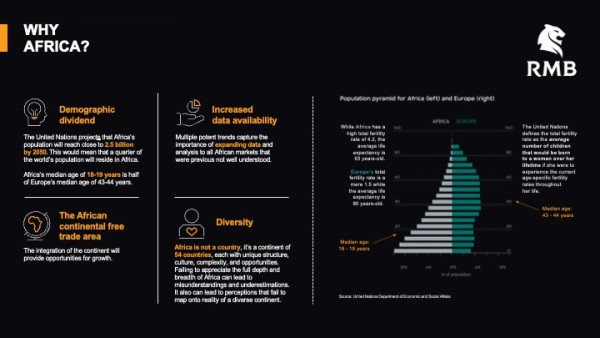
The African Continental Free Trade Agreement (AfCFTA) holds significant potential for boosting intra-African trade, enhancing economic integration, and creating a more competitive continental market. Effective implementation of the AfCFTA is expected to drive economic growth and development across the continent. Africa's young and rapidly growing population also presents a unique opportunity for economic growth, with countries like Ethiopia, Tanzania, and Uganda poised to benefit from this demographic dividend, provided they can create sufficient employment opportunities and foster a conducive environment for economic participation.  

In addition, there are a number of emerging markets with significant growth potential, including Nigeria, Ghana, and Kenya. Despite facing challenges such as political instability and infrastructural deficits, these countries offer substantial opportunities due to their large and youthful populations, improving business climates, and diversification efforts. Africa's vast natural resources, including minerals and arable land, are pivotal for sustainable economic growth. However, the report cautions against the "resource curse" and underscores the importance of good governance and strategic management. Angola, Mozambique, and the Democratic Republic of Congo are highlighted for their rich resources and potential for sustainable development. 

One area that requires critical attention across the continent is the need for infrastructure investment. Improved transportation, energy, and digital infrastructure are essential for unlocking Africa's economic potential, and South Africa, Kenya, and Nigeria are identified as key markets where infrastructure development could yield significant returns. 

Beyond the rankings – a deeper look at African investment 

Looking beyond metrics and scorecards, Africa holds massive potential but equally faces numerous challenges. The continent is rich in natural resources, which can be a major driver of economic growth, but they also present challenges in the form of corruption and environmental degradation. Increased activity around trade agreements can open new markets for foreign investors and boost economic activity, but lack of adequate infrastructure is a major hurdle for many African economies. Investment in this space will improve connectivity and create new opportunities, while rapid and increasing urbanisation will prove attractive to investors in consumer goods, retail, and financial services. Finally, countries in Africa are embracing new technologies, leapfrogging traditional development stages and creating new investment opportunities in the tech sector. 

“The richness of Africa's diversity makes fully analysing its nuance and contrast a challenging task, but an important one when it comes to understanding the varied markets that make up this vast regional economy. The 2024 RMB Where to Invest in Africa report aims to develop a balanced, robust and actionable view of the drivers, challenges and opportunities that characterise each of the 31 African markets included in the analysis,” Mhlanga concludes.  

Download the full report here to uncover the insights and drive more informed investment decisions. 

  • https://apo-opa.co/4dyoUQm
  • https://apo-opa.co/46CBs7c

Distributed by APO Group on behalf of Rand Merchant Bank.

Media files
Rand Merchant Bank
Download logo
Read moreThe RMB Where to Invest in Africa 2024 report highlights Africa’s top investment economies
31 July 2024

Industry Leaders Forum at CMA 2024 to Drive Sustainable Mineral Production

Location: News

Energy Capital & Power
Download logo

UN Secretary General António Guterres appointed (https://apo-opa.co/3WNr7Cg) a panel dedicated to developing a framework that ensures equity, transparency, sustainability and human rights among critical mineral extraction activities, in April 2024. Uniting government and industry stakeholders, the panel aims to encourage developing countries, including those in Africa – which holds over half of the world's cobalt and manganese reserves and over one-fifth of aluminum and copper reserves – to leverage its critical minerals for enhanced job creation, economic diversification and export revenues.

Reflecting similar priorities, the Critical Minerals Africa (CMA) summit — scheduled for November 6-7 in Cape Town — will host an Industry Leader Forum to explore strategies for ensuring sustainable mineral production and navigating external factors like geopolitical risk, digital transformation and the energy transition. It will also address recent high-level initiatives – from the African Green Minerals Strategy to the global Minerals Security Partnership – and their role in shaping best practices for building resilient mineral supply chains. 

Initiated in 2022 by the African Development Bank, the African Green Minerals Strategy (AGMS) (https://apo-opa.co/3y8dZy4) serves as a comprehensive framework for leveraging the continent's mineral resources for industrialization and the development of green technologies. The AGMS aims to articulate Africa's interests in a rapidly changing world, build and retain local value, create jobs, develop new industries, and foster greener economies, as global demand for transition minerals rises. 

Meanwhile, the US-led Minerals Security Partnership (MSP) (https://apo-opa.co/3YpZf87) represents a collaborative effort among 14 countries and the European Union to bolster investment in responsible critical minerals supply chains. Through partnerships with governments and industries, the MSP provides support for strategic projects, particularly focusing on lithium, cobalt, nickel, manganese, graphite, rare earth elements and copper. Given Africa's abundant mineral reserves, collaboration with the MSP is particularly relevant for the continent, enabling responsible mineral extraction and supporting local communities and economies, while advancing global clean energy goals.

In February 2023, MSP partners gathered in South Africa to establish guiding principles for global project development, emphasizing local value addition and maintaining sustainability and ESG standards. Representatives from mineral-rich nations, including non-MSP countries like Angola, Botswana, the Democratic Republic of the Congo (DRC), Tanzania, Uganda and Zambia, joined the discussions. The meeting sought to ensure that the growth of critical minerals supply chains benefits all stakeholders equitably, underlining the MSP's commitment to responsible mineral extraction and sustainable development.

Furthering efforts to ensure a steady and sustainable supply of CRMs, the EU launched its Critical Raw Materials (CRM) Act in March 2023, as European demand for rare earth metals is expected to increase six-fold by 2030. As part of this initiative, the EU has engaged with several African countries including the DRC, Zambia, Rwanda and Namibia through various MOUs. These agreements aim to foster collaboration within integrating sustainable raw materials value chains, mobilizing funds for infrastructure development, promoting sustainable and responsible production practices, encouraging research and innovation and enhancing capacity building efforts.

Within this context, the Industry Leaders Forum: Driving Innovative Minerals Production at CMA 2024 will explore key trends within the African and global critical minerals landscape. Leaders will discuss how initiatives like the AGMS, MSP and European CRM Act will shape the future of sustainable mineral production and global supply chains.

CMA is the largest gathering of critical mineral stakeholders in Africa. Taking place from November 6 – 7 in Cape Town, the event positions Africa as the primary investment destination for critical minerals. This year's edition takes place under the theme Innovate, Enact, Invest in African Critical Minerals to Sustain Global Growth, connecting African mining projects and regulators with global investors and stakeholders to untap the full potential of the continent's raw materials. Sponsors, exhibitors and delegates can learn more by contacting sales@energycapitalpower.com.

Distributed by APO Group on behalf of Energy Capital & Power.

Read moreIndustry Leaders Forum at CMA 2024 to Drive Sustainable Mineral Production
22 July 2024

Africa – Unfinished business: only urgent and accelerated delivery of HIV services will keep the promise of ending AIDS in children by 2030

Location: News

United Nations Children’s Fund (UNICEF)
Download logo

Despite progress made in reducing HIV infections and AIDS-related deaths among children, a new report released today by the Global Alliance for Ending AIDS in Children by 2030 shows that an urgent scale up of HIV services in countries worst affected by the pandemic is required to end AIDS by 2030.

The report, Transforming Vision Into Reality, shows that programmes targeting vertical transmission of HIV have averted 4 million infections among children aged 0-14 years old since 2000. Globally, new HIV infections among children aged 0-14 years old have declined by 38 per cent since 2015 and AIDS-related deaths have fallen by 43 per cent.    

Among the 12 Global Alliance countries, several have achieved strong coverage of lifelong antiretroviral therapy among pregnant and breastfeeding women living with HIV, with Uganda nearing 100 per cent, United Republic of Tanzania at 98 per cent, and South Africa at 97 per cent. Mozambique has achieved 90 per cent coverage, with Zambia at 90 per cent, Angola at 89 per cent, Kenya at 89 per cent, Zimbabwe at 88 per cent, and Cote d'Ivoire at 84 per cent.

“I applaud the progress that many countries are making in rolling out HIV services to keep young women healthy and to protect babies and children from HIV,” said UNAIDS Executive Director, Winnie Byanyima. “With the medicines and science available today, we can ensure that all babies are born – and remain – HIV-free, and that all children who are living with HIV get on and stay on treatment. Services for treatment and prevention must be ramped up immediately to ensure that they reach all children everywhere. We cannot rest on our laurels. The death of any child from AIDS related causes is not only a tragedy, but also an outrage. Where I come from, all children are our children. The world can and must keep its promise to end AIDS in children by 2030.”

Global Alliance countries are innovating to overcome barriers and accelerate progress towards ending AIDS in children. However, despite advances neither the world nor Global Alliance countries are currently on track to reach HIV-related commitments for children and adolescents and the pace of progress in preventing new HIV infections and AIDS-related deaths among children has slowed in recent years.

“Accelerating the delivery and uptake of HIV services for children and adolescents is a moral obligation, and a political choice,” said Dr Tedros Adhanom Ghebreyesus, Director-General of the World Health Organization. “Twelve countries are demonstrating they have made that choice, but significant challenges remain. While we have made progress in increasing access for pregnant women to testing and treatment to prevent vertical transmission of HIV, we are still far from closing the paediatric treatment gap. We need to further strengthen the collaboration and reach of the Global Alliance, and we must do this work with focus, purpose and in solidarity with all affected mothers, children, and adolescents.”

Around 120 000 children aged 0-14 years old became infected with HIV in 2023, with around 77 000 of these new infections occurring in the Global Alliance countries. AIDS-related deaths among children aged 0-14 years old numbered 76 000 globally with Global Alliance countries accounting for 49 000 of these unnecessary deaths. Vertical transmission rates remain extremely high in some locations, particularly in Western and Central Africa, with rates exceeding 20 per cent in countries including Nigeria and the Democratic Republic of the Congo.

“In the fight against HIV, we must do a much better job for children,” said Peter Sands, Executive Director of the Global Fund to Fight AIDS, Tuberculosis and Malaria, which provides funding for HIV programmes in over 100 countries through a country-led partnership model. “In support of national programmes, we have been procuring the latest dolutegravir-based paediatric treatment regimens at negotiated prices. Our investments in laboratory systems are helping ensure exposed infants are rapidly tested and that those that test positive are quickly initiated on age-appropriate antiretroviral treatment. Differentiated testing and treatment approaches are helping close the diagnostic gap and ensuring more child-centred service delivery.”

It is concerning that the treatment gap between adults and children continues to widen.

“Just 57 per cent of children living with HIV receive life-saving treatment, compared to 77 per cent of adults,” said UNICEF Associate Director HIV/AIDS, Anurita Bains. “Without early and effective testing and treatment, HIV remains a persistent threat to the health and well-being of children and adolescents and puts them at risk of death. To close the treatment gap, we must support governments to scale up innovative testing approaches and ensure children and adolescents living with HIV receive the treatment and support they need.”

In 2023, there were 210 000 new infections globally among young women and girls aged 15—24 years old (130 000 in Global Alliance countries), four times higher than the 2025 goal set at 50 000. Preventing new infections among this age group is critical both to protect the health and wellbeing of young women and to reduce the risk of new infections among children.

Gender inequalities and human rights violations are increasing women's vulnerability to HIV and diminishing their ability to access essential services. Globally, nearly one in three women have encountered some form of violence during their lifetime, with adolescent girls and young women disproportionately affected by intimate partner violence. In the four Global Alliance countries with available data, countries are not currently on track to achieve the target of ensuring that by 2025 less than 10 per cent of women, key populations and people living with HIV experience gender-based inequalities and gender violence.

"It has been remarkable to see how many more children's lives can be saved when all stakeholders and partners come together to commit to end AIDS in children. While much progress has been made, notably through the successful introduction of pediatric dolutegravir, large gaps still remain across the pediatric cascade and we must recommit ourselves with purpose and innovation to fulfill the promises we have made by 2025 and beyond,” said Ambassador John N. Nkengasong, United States Global AIDS Coordinator and Special Representative for Global Health Diplomacy.

The Global Alliance for Ending AIDS in Children by 2030 was launched in 2022 by WHO, UNICEF and WHO to reinvigorate the paediatric HIV agenda. It has now grown, and in addition to the United Nations agencies, the alliance includes civil society movements, including the Global Network of People living with HIV, national governments in the most affected countries, and international partners, including PEPFAR and the Global Fund. Twelve countries are members: Angola, Cameroon, Côte d'Ivoire, The Democratic Republic of the Congo (DRC), Kenya, Mozambique, Nigeria, South Africa, Tanzania, Uganda, Zambia, and Zimbabwe. 

Distributed by APO Group on behalf of United Nations Children’s Fund (UNICEF).

Read moreAfrica – Unfinished business: only urgent and accelerated delivery of HIV services will keep the promise of ending AIDS in children by 2030
27 June 2024

President Ramaphosa mourns the death of two SANDF members

Location: News

President Ramaphosa mourns the death of two SANDF members

President Cyril Ramaphosa has expressed deep sadness at the deaths of two South African National Defence Force soldiers, following a mortar attack at their base in Sake in the eastern Democratic Republic of Congo (DRC).

Twenty other soldiers sustained injuries.

As Commander-in-Chief of the South African National Defence Force (SANDF), President Ramaphosa has offered his deep condolences to the families of the fallen troops as well as their commanders and colleagues.

The President’s thoughts are also with the SANDF members who are recovering from their injuries.

“As we mourn the deaths and casualties inflicted on our soldiers, we value and are humbled by the sacrifices they have made for the cause of peace and stability in our region, and they shall not be forgotten,” the President said in a statement on Thursday.

The President also assured the bereaved families and the injured troops that the SANDF will take the utmost care to provide the necessary logistical and psychosocial support to all those affected.

South African forces are part of the Southern African Development Community (SADC) Mission in the Democratic Republic of Congo (SAMIDRC) which was deployed on 15 December 2023 to support the Government of the DRC to restore peace and security in the eastern DRC.

This was in response to an increase in conflicts and instability caused by the resurgence of armed groups. – SAnews.gov.za

Edwin
Thu, 06/27/2024 - 11:27

726 views
Read morePresident Ramaphosa mourns the death of two SANDF members
26 June 2024

Two SANDF soldiers killed in DRC attack, while 20 are injured

Location: News

Two SANDF soldiers killed in DRC attack, while 20 are injured

The South African National Defence Force (SANDF) announced on Wednesday that two soldiers were killed yesterday when M23 rebels attacked the town of Sake in the Democratic Republic of Congo (DRC), while 20 are injured. 

“Four members who were critically injured have been hospitalised, while the rest who suffered minor injuries are expected to be discharged soon,” the statement read. 

The SANDF said families of the two members who lost their lives have been informed and all procedures to bring their mortal remains are in process. 

“The names of the deceased will be communicated in due course.” 

On 30 May 2024, Sergeant Mbulelo David Ngubane passed away following contact between the M23 and Southern African Development Community (SADC) forces.

Ngubane, who was 39 years old, was the operational medical practitioner in the South African Military Health Service (SAMHS).

In February this year, Captain Simon Mkhulu Bobe and Lance Corporal Irven Thabang Semono were also killed and three of their colleagues were injured in the DRC after a mortar bomb landed inside one of the South African contingency military bases. – SAnews.gov.za
 

Gabisile
Wed, 06/26/2024 - 15:07

180 views
Read moreTwo SANDF soldiers killed in DRC attack, while 20 are injured
24 June 2024

Prioritising the reduction of economic exclusion for enhanced economic growth

Location: MyPR

Dr Nthabiseng Moleko is an economist at Stellenbosch Business School: Since 1994 the South African government has employed market friendly policies in an investment led growth strategy. Yet South Africa has averaged 1.2% GDP per capita growth over the last three decades, faring particularly poorly in the last decade by contracting -0,25% in per capita …

Read morePrioritising the reduction of economic exclusion for enhanced economic growth
12 June 2024

One Mpox patient passes away, while four are still in recovery

Location: News

One Mpox patient passes away, while four are still in recovery

Health Minister Dr Joe Phaahla has announced that one of the five Mpox patients in South Africa passed away on Monday at Tembisa Hospital in Gauteng.

This comes after two cases were confirmed in Gauteng and three in KwaZulu-Natal.

“In all cases, patients are males aged between 30 to 39 years without travel history to the countries currently experiencing an outbreak, which suggests there is local transmission of this infectious disease in the country,” the Minister said on Wednesday.

According to the Minister, the deceased was originally from KwaZulu-Natal but has not been at home since December last year. 

The Minister made these announcements during a media briefing on Wednesday centred on the management of the monkeypox outbreak in the country. 

Phaahla stated that all cases were classified as severe cases, as per the World Health Organisation (WHO) definition requiring hospitalisation.

The patients have comorbidities and have been identified as key populations, including men who have sex with men (MSM).

The Minister told the media that one of the patients has since been discharged, one is isolating at home, while two are still in hospital. 

Phaahla explained that the sequencing analysis of three of the cases revealed Mpox clade IIb, a variant dominant in the multi-country and post-outbreak, which began in 2022. 

The last time South Africa recorded positive cases of Mpox was in 2022, when five cases were confirmed in the Western Cape, KwaZulu-Natal, Limpopo and Gauteng, with no cases reported in 2023.

“So, the one in our country is consistent with the multi-country outbreaks in various parts of the world and different from the strain variant in the DRC,” he explained. 

Contact tracing 

The National Institute for Communicable Diseases (NICD), the Minister said, continues with epidemiological and surveillance activities to identify cases for investigation to estimate the magnitude of disease through systematic data collection and analysis. 

He told the media that 38 contacts were identified in KwaZulu-Natal, while one of the patients indicated to have had sexual contact with multiple partners, including both males and females.

Meanwhile, the Outbreak Response Team have embarked on contact tracing and case finding in the affected provinces.

“Encourage people who may know that in one way or another have been associated with someone with the disease or showing any symptoms of skin lesions or rashes to approach their nearest health facility.”

Vaccine

Currently, there is no registered treatment for Mpox in South Africa. 

However, the Minister said the WHO recommends using Tecovirimat, also known as TPOXX, for treating severe cases, such as in individuals with a CD4 count of less than 350.

He announced that the department has obtained TPOXX via Section 21 South African Health Products Regulatory Authority (SAPHRA) approval on a compassionate use basis for known patients with severe disease.

The Minister said they are still looking at obtaining vaccines and considering various options, including who will be the priority target in terms of immunisation. 

However, he believes that high-risk groups should be prioritised, including sex workers, MSM, healthcare workers, and laboratory workers. 

The department, working together with partner organisations, has intensified both targeted and public awareness to empower the citizens with crucial information related to Mpox. 

The Minister also emphasised the importance of managing stigma for key populations at risk, while there have been no recommendations for any travel restrictions.  

“I think one can safely say that, especially for adults, anybody who develops those kinds of eruptions on their skin, even if you may think it might be chickenpox, even young people, should seek medical attention.” 

He said government endeavours to prevent any further deaths. 

“We already have one fatality and he was quite sick, and were informed that even though the antiviral agent because of the severity of the sores, he could not swallow his treatment and died within a few days.” – SAnews.gov.za 
 

Gabisile
Wed, 06/12/2024 - 12:50

200 views
Read moreOne Mpox patient passes away, while four are still in recovery
7 June 2024

SANDF names soldier killed in the DRC

Location: News

SANDF names soldier killed in the DRC

The South African National Defence Force (SANDF) on Thursday revealed the name of the soldier who died in the line of duty in the Democratic Republic of the Congo (DRC). 

Sergeant Mbulelo David Ngubane passed away last Thursday, on 30 May 2024, following contact between the M23 and Southern African Development Community (SADC) forces. 

Ngubane, who was 39 years old, was the operational medical practitioner in the South African Military Health Service (SAMHS). 

“He was shot and killed when the ambulance in which he was tending to injured members was attacked,” the SANDF explained, adding that the ambulance was marked as a medically-equipped vehicle.

“This unfortunate incident occurred even though the Geneva Convention on Law of Armed Conflict clearly stipulates categories of protected persons and objects like medical personnel, medical transport in particular and other establishments of this nature during an armed conflict,” the statement read. 

According to the SANDF, the act goes against published international norms in the conduct of armed conflict. 

The SANDF soldiers are part of the Southern African Development Community Mission in the Democratic Republic of Congo (SAMIDRC) deployed to support and assist the government of Africa's second-largest country to restore peace, security and stability.

In February this year, Captain Simon Mkhulu Bobe and Lance Corporal Irven Thabang Semono were killed and three of their colleagues were injured in the DRC after a mortar bomb landed inside one of the South African contingency military bases.

The force said Ngubane’s memorial service and funeral will be communicated soon. 

The Minister of Defence and Military Veterans Thandi Modise, Deputy Minister Thabang Makwetla, the Acting Secretary for Defence Dr Thobekile Gamede and the SANDF Chief General Rudzani Maphwanya expressed their heartfelt condolences to Ngubane’s family, friends and colleagues. – SAnews.gov.za


Gabisile
Fri, 06/07/2024 - 09:07

746 views
Read moreSANDF names soldier killed in the DRC
16 May 2024

Women in Africa face widespread discrimination in family laws

Location: News
Equality Now

Discrimination against women and girls remains widespread in family laws across Africa, finds new research by Equality Now (www.EqualityNow.org). Analysis of twenty African countries reveals gender inequality in marriage, divorce, custody, and property rights is being perpetuated by sex discrimination institutionalized within legal systems and customary laws. While some significant legal reforms have been achieved, progress has been slow, inconsistent, and hampered by setbacks, lack of political will, and weak implementation.

The report, Gender Inequality in Family Laws in Africa: An Overview of Key Trends in Select Countries (http://apo-opa.co/3V0dD4R), identifies how overlap and contradictions in legal frameworks make the interpretation and application of family laws confusing, creating complex challenges for harmonizing legal systems. 

The impacts of discriminatory family laws can be profound, putting women and girls at greater risk of sexual and gender-based violence and making them more dependent and vulnerable by curtailing their economic opportunities and reducing their decision-making power.

Full equality in family laws has not been achieved in any of the countries reviewed, namely Algeria, Angola, Botswana, Burundi, Cameroon, Côte d'Ivoire, the Democratic Republic of the Congo (DRC), Egypt, Ethiopia, Kenya, Malawi, Mozambique, Nigeria, Senegal, South Africa, South Sudan, Sudan, Tanzania, The Gambia, and Tunisia.

Pressing need for comprehensive legal reforms

Africa is home to diverse ethnic, linguistic, and religious groups with varied family law structures. Historically, communities developed intricate and deep-rooted systems of customary laws governing family relations. The introduction of European legal systems and religion resulted in a blend of customary, religious, and statutory laws that still shape legislation and practice through legal pluralism.

This complex patchwork is influenced by evolving social dynamics. Civil, customary, and religious law, such as Islamic or Christian canon law, sometimes encroach or conflict, and many provisions in religious and customary laws discriminate against women and girls.

Esther Waweru, report co-author and a Senior Legal Advisor at Equality Now, explains, “Culture and religion frequently act as major impediments in the struggle for family law equality, stalling reforms. Claw-back clauses and retrogressive practices water down the positive impact of progressive laws, and there is backlash from anti-rights movements seeking to reverse hard-won gains in areas such as eliminating child marriage and female genital mutilation.”

“Stagnation is also a problem, with governments pledging to reform discriminatory laws but failing to take meaningful action. In some instances, progressive family codes remain in limbo awaiting enactment.”

Progress on child marriage, but shortfalls remain

Child marriage is one area of notable progress. Absolute bans on marriage under 18 exist in Côte d'Ivoire, DRC, Egypt, The Gambia, Kenya, Malawi, and Mozambique. However, the persistence of child marriage in certain communities underscores the need for a multi-sectoral approach (http://apo-opa.co/3UFhEKR) incorporating awareness raising about the legal consequences and harms of child marriage.

Concerningly, laws in Cameroon, Nigeria, Senegal, South Sudan, Sudan, and Tanzania still allow child marriage, while in Algeria, Angola, Botswana, Burundi, Ethiopia, South Africa, and Tunisia, the legal age of marriage is 18, but exceptions are permitted.

Marital rape

Countries need greater protections against gender-based violence, especially intimate partner violence. Marital rape is not prohibited in Algeria, Kenya, Sudan, and The Gambia, while Northern Nigeria's Penal Code allows marital rape and “corrective” assault within marriage.

Marital rape is only criminalized upon separation in Tanzania, and in Burundi, the penalty is under 30 days imprisonment or a fine. Tunisia's law states a wife must fulfill her duties in line with ‘usages and customs,' putting women at risk of marital rape as a wife's traditional role includes pleasing her husband sexually.

Malawi's courts have stated that rape does not extend to marriage. Customary law presumes perpetual consent to sex within marriage, and Malawi's civil law appears to support this by providing only limited circumstances in which a wife can deny her husband sex, such as poor health or when legally separated.

Countries like Côte d'Ivoire, Mozambique, and South Africa can be commended for explicitly criminalizing marital rape. It's imperative that all nations introduce bans, accompanied by awareness-raising campaigns and accessible support services for survivors. Effective legal enforcement is also crucial, as is providing comprehensive training for officials in the criminal justice, healthcare, and social service sectors.

Discriminatory marriage practices

In most African countries, registration of civil marriages is a legal requirement governed by specific laws formalizing marriage. Women in customary and religious marriages are at greater risk of discrimination as they don't have the same legal protection as people in civil marriages. Same-sex partners also experience this, as marriages and civil unions are largely reserved for heterosexual couples.

Polygamy is legally permitted in Cameroon, Egypt, Kenya, Senegal, and South Sudan, with men allowed four wives in Sudan and Senegal. Côte d'Ivoire, Mozambique, and South Africa have statutory laws for monogamy, but customary and religious laws and practices continue to recognize polygamy without adequate protections for women in polygamous marriages. Other harmful traditional practices, such as widow inheritance and surrogate marriage, treat women as property.

Discrimination in divorce and child custody laws

Countries such as Sudan discriminate by granting husbands more powers to initiate divorce. In Algeria, women can only request a divorce in cases of abandonment, violation of the marriage contract, or if alimony is unpaid. In both Sudan and Egypt, in some no-fault divorces, a woman must pay financial compensation to her ex-husband.

Child custody laws have been reformed in Angola, Botswana, Burundi, Cameroon, Côte d'Ivoire, DRC, Mozambique, and Senegal, ensuring guardianship rights for both parents, irrespective of marital status.

Sex discrimination remains in countries like Senegal, where the father is the legal guardian regardless of the mother's caregiving role. In Tunisia and Algeria, fathers retain legal guardianship even if the mother has custody. Algeria and Sudan strip a mother's rights to custody upon remarriage, but this doesn't apply to men.

Matrimonial property and inheritance

Matrimonial property laws is another area that has undergone considerable reforms. Côte d'Ivoire, Kenya, Malawi, and South Africa have introduced legal provisions for equitable distribution of matrimonial property. In Ethiopia, Nigeria, South Africa, and The Gambia, laws recognize the right of married women to acquire, own, maintain, and dispose of their property.

However, some customary and religious laws undermine women's inheritance rights. In Algeria, Cameroon, Côte d'Ivoire, Egypt, Nigeria, South Sudan, Sudan, and Tunisia, women and girls receive less inheritance than men and boys.

Women are disadvantaged by cultural biases that influence judicial decisions, with unequal distribution particularly evident in divorce and widowhood. In some countries, wives can be excluded from inheriting their husbands' property. One example is Angola, where customary laws exclude wives from inheriting their deceased husband's property, and widows are sometimes forced from their matrimonial home.

Aligning family laws with international human rights standards

Family laws in Africa must align fully with international human rights standards. Many countries have ratified key treaties like the Convention on the Elimination of All Forms of Discrimination against Women (CEDAW) and the Protocol to the African Charter on Human and Peoples' Rights on the Rights of Women in Africa (Maputo Protocol). However, implementation and enforcement of these treaties remain inconsistent, with discriminatory family laws and policies remaining in statutes and practices.

Waweru concludes, “It's especially concerning that in most countries where national judiciaries and African Union judicial bodies have explicitly called for law reform in their decisions, governments haven't implemented these changes. And even where laws are equitable, enforcement is frequently inadequate and biased against women, and women may not know their legal rights.”

“To safeguard women and girls within family law, it is imperative for all African nations to promptly enact robust legislative and policy frameworks that align with international and regional human rights obligations.”

Distributed by APO Group on behalf of Equality Now.

Notes to editors
For media requests, please contact
Tara Carey
Global Head of Media
at Tcarey@equalitynow.org
T. +44 (0)7971556340 (WhatsApp)

About Equality Now: 
Equality Now is an international non-governmental human rights organization that works to protect and promote the rights of all women and girls around the world by combining grassroots activism with international, regional, and national legal advocacy.

Our international network of lawyers, activists, and supporters achieve legal and systemic change by holding governments responsible for enacting and enforcing laws and policies that end legal inequality, sex trafficking, online sexual exploitation, sexual violence, and harmful practices such as female genital mutilation and child marriage.

For more information about Equality Now go to www.EqualityNow.org, and follow on X (Twitter) at http://apo-opa.co/3yiYRgN and Linkedin at http://apo-opa.co/3wrGPIT.

About Africa Family Law Network (AFLN): 
Gender Inequality in Family Laws in Africa: An Overview of Key Trends in Select Countries is a critical data source informing legal, policy, and practice reforms to end sexism and discrimination in family laws in Africa. It will be used by Equality Now, the Africa Family Law Network (AFLN) (http://apo-opa.co/4bkc0ot), and partners to help facilitate work with the policy and judicial organs of the African Union, particularly the Special Rapporteur on the Rights of Women in Africa to influence change.

AFLN was launched in October 2022 and aims to formulate a regional alliance in Africa amongst national advocates and groups to raise collective action and accelerate organizing and mobilization efforts toward family law reform.

AFLN is led by founding partners Equality Now, The African Women's Development and Communication Network (FEMNET) (http://apo-opa.co/3WIinxt), Musawah (http://apo-opa.co/3UZrM2h), and the Strategic Initiative for Women in the Horn of Africa (SIHA Network) (http://apo-opa.co/4bkz5r2).

AFLN is part of the Global Campaign for Equality in Family Law (http://apo-opa.co/4bDdSbF), which calls on all states to ensure equality for women and men under the law in all matters relating to the family, regardless of religion, culture, and tradition.

Media files
Equality Now
Download logo
Read moreWomen in Africa face widespread discrimination in family laws
  • Previous
  • Page 1
  • Interim pages omitted …
  • Page 3
  • Page 4
  • Page 5
  • Page 6
  • Page 7
  • Next

Copyright © 2026 · MyZA · All Rights Reserved · Powered by Stratlec Online