• Skip to main content
  • Skip to header right navigation
  • Skip to after header navigation
  • Skip to site footer
MyZA

MyZA

News, Directory, Events and Other Stuff

  • Social Media
  • Sport
  • World News
  • Home
  • Submit News
  • Directory
  • Events
  • Stratlec
  • TFSA
  • News
    • APO
    • Today’s Sport News
    • Todays Social Media and Tech Headlines
    • Today’s World News
    • Today’s SA Financial News
  • Contact
You are here: Home / Archives for DRC

DRC

18 October 2023

Transformative Pipeline Initiatives: Boosting Regional Connectivity Discussed at African Energy Week (AEW) 2023
Location: News
African Energy Chamber

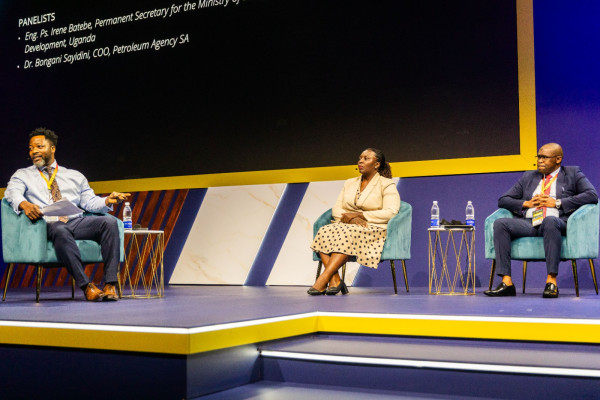
As many African countries progress with monetizing oil and gas resources, cross-border infrastructure is expected to play a catalyzing role in strengthening regional connectivity while advancing energy development and economic growth. A panel discussion held during the African Energy Chamber's (AEC) (www.EnergyChamber.org) African Energy Week (AEW) 2023 explored the evolving energy map in Africa and how pipeline projects and cross-border infrastructure will shape the continent's economic landscape.

Kicking off the panel discussion, Irene Batebe, Permanent Secretary for the Ministry of Energy and Mineral Development, Uganda, emphasized the critical role of regional integration in advancing pipeline projects.

“The East African Crude Oil Pipeline (EACOP) will be a perfect example of integration. Working together with the government of the Republic of Tanzania, we had to ensure we put in place a robust legal and regulatory framework, because that way you give certainty to the development of the project, not just to the developers but also the financials. Because the project must be bankable. We worked closely with the government of the Republic of Tanzania to put in place and it's a governmental framework, but also domesticated locally in formal post government agreements to provide for certain aspects, there has to be a regional position”

For emerging producers, cross-border pipeline infrastructure is integral.

“In terms of strategy one of the key areas that we focused on in designing the framework for the development of the pipeline was to ensure that we provide for third party access and that is very critical because our neighbors like the DRC and South Sudan,” continued Batebe.

The Southern Africa Development Community (SADC) has seen an increase in oil and gas potential, with new discoveries in Namibia and first liquefied natural gas exports in Mozambique.

“The is an opportunity for the west in terms of integration of SADC and presents the opportunity for gas and power. In fact, Namibia made the first Kudu Gas discovery in 1994 and in South Africa a discovery was made in the early 2000s. Those gas resources have remained stranded due to the lack of a market for gas resources and also there have been a lack of infrastructure to harness these resources,” stated Bongani Sayidini, COO, Petroleum Agency SA

Regarding environmental and human concerns of the EACOP, “There have been claims that we have evicted projected affected persons without consent but this is false. The government nor the project developers force the project affected persons. We pay attention to the vulnerable groups and the elderly during the settlement process. We do have a government valuer that comes to assess what those people who have settled deserve,” said Batebe.

#AEW2023 takes place this week in Cape Town under a mandate to make energy poverty history by 2030. Keep following www.AECWeek.com for more exciting information and updates about Africa's premier energy event.

Distributed by APO Group on behalf of African Energy Chamber.
Media files
African Energy Chamber
Download logo
Read moreTransformative Pipeline Initiatives: Boosting Regional Connectivity Discussed at African Energy Week (AEW) 2023
18 October 2023

Critical Minerals Africa 2023 Prepares for Official Opening with Full Day of Strategic Presentations

Location: News
Energy Capital & Power

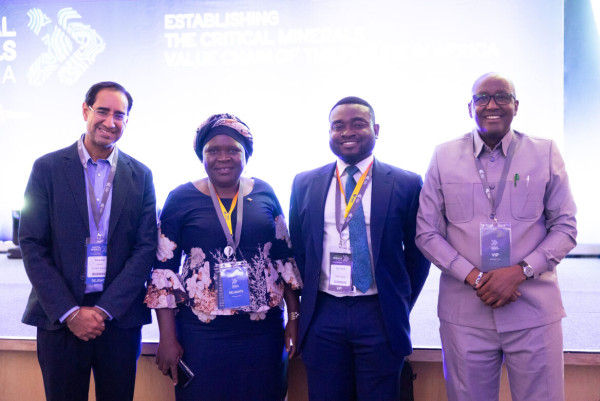
The first day of the Critical Minerals Africa 2023 summit on Tuesday – organized by Energy Capital & Power (www.EnergyCapitalPower.com) – featured a series of presentations from leading industry experts, providing unparalleled insights into Africa's critical mineral reserves and geopolitical position in the global mining economy. The main conference program begins on Wednesday, October 18 and will feature a highly anticipated ministerial forum, investor briefings and panel discussions, taking place alongside African Energy Week in Cape Town.  

Kicking off the agenda was a presentation by South African Institute of International Affairs (SAIIA) exploring the future of critical minerals in the SADC – namely, copper in the DRC, South Africa and Zambia, lithium in South Africa and Zimbabwe, cobalt in the DRC and Zambia, graphite in Mozambique, manganese in South Africa, and nickel in Madagascar, South Africa and Tanzania. The ability to harness these reserves depends on several factors, including growing geoeconomic competition among China, the US and Europe, the ability of SADC states to manage regional value chains, and the urgency of global policy action toward renewable and low-carbon energies.

“In 20-30 years, not only will these minerals be in high demand, but how we put systems in place will be important,” stated Dr. Deon Cloete, Head of SAIIA's Futures Program. “We have focused on Rare Earth Elements (REEs) and the need to scale up exploration and extraction and develop the entire value chain. The transition to climate goals by 2050 is challenging and we need to be critical about how these fault lines are emerging. We propose a resource-based economy that challenges the paradigm of how we approach mining.”

The Critical Minerals International Alliance (CMIA) built upon the geopolitical nature of critical minerals development during its presentation, addressing China's race to solidify its leadership on the continent and its successful dual-pronged investment approach. Western nations have sought to counter this influence through various policy measures, including the US' Inflation Reduction Act, the EU's Critical Raw Materials Act and the Minerals Security Partnership, which seeks to secure a stable supply of raw materials for member economies. 

“When we talk about critical minerals, we are focused on geopolitics — how they frame supply chains and influence pricing and how monopolies are increasingly changing the industry,” said Olimpia Pilch, Founder and COO of CMIA. “In a supply chain crunch, who gets priority and which industries will miss out? Those who have put in the work to have their own supply chain will be in a much better position.”

On the need to diversify mining supply chains, Roberto Cecutti, Head of Trade and Economics, EU Delegation to South Africa, stated during his presentation: "In terms of annual consumption, we have an aspirational target of covering at least 10% of extraction in Europe, 40% of processing and refinement and 15% of recycling capacity. We want to avoid dependence on the supply of one or more specific countries…This is why we have set this target, in which 65% should not depend on a specific country of origin of supply.”

"Each region has its own definition of what is ‘critical,' and what's critical for Africa may not be what's critical for the EU and vice versa. Africa has different requirements when it comes to minerals,” noted Sodhie Naicker, Managing Director: DMT Kai Batla and Consortium Partner: AfricaMaVal.

Energy research firm Rystad Energy also explored Chinese dominance within the low-carbon supply chain, as the country produces almost 90% of solar panels and is currently ramping up production of wind turbines. While Europe has made gains towards establishing its own clean energy supply chain, Africa remains reliant on imports to meet growing energy demand, despite having vast renewable energy potential and untapped mineral reserves. 

“The resource potential for solar generation in Africa is more than enough to satisfy the needs of the planet – it's enormous,” said Per Magnus Nysveen, Senior Partner & Head of Analysis for Rystad Energy. “You can find sites for mining every mineral in sub-Saharan Africa.”

A presentation from Steenkampskraal – operator of the Steenkampskraal Mine in South Africa's Western Cape – underscored the continent's resource potential and its evolution into a critical and industrial minerals hotspot. The mine is home to one of the highest grades of REEs globally, is licensed to operate and possesses well-developed underground infrastructure with a low-capital, three-stage development plan.

“Not even 20% of the known resources have been mined,” emphasized Graham Soden, Director, CEO & Mine Manager of Steenkampskraal. “It puts the project at a unique level. It's fully legislative compliant, and we can get it up and running within one year.”

The agenda concluded with a presentation by Trade & Industrial Policy Strategies (TIPS), which explored opportunities to develop vanadium redox battery (VRB) manufacturing in South Africa and to position the country as a key player in the global battery value chain, with a view to exporting to other African and international markets. Demand for VRBs has skyrocketed in recent years – largely from China, Japan, Europe and the US – resulting in over 30 new VRB projects installed in 11 countries since 2014.  

“Cell battery manufacturing remains to be proven competitive in South Africa. We have the industrial capacity, but we don't have a commercialized production,” said Lesego Moshikaro, Senior Economist for TIPS. “When you look at the short- to medium-term, South Africa cannot be competitive along the whole value chain, so it's important for us to choose key areas where we can excel.”

With its main conference program kicking off on October 18, the Critical Minerals Africa 2023 summit serves to position Africa as the primary investment destination for critical minerals. The event is held alongside the African Energy Week 2023 conference (www.AECWeek.com) from October 16-20, offering delegates access to the full scope of energy, mining and finance leaders in Cape Town.

Distributed by APO Group on behalf of Energy Capital & Power.

Media files
Energy Capital & Power
Download logo
Read moreCritical Minerals Africa 2023 Prepares for Official Opening with Full Day of Strategic Presentations
12 October 2023

92.1% of SA population owns a cellphone

Location: News

92.1% of SA population owns a cellphone

South Africa's Census 2022 national results has shown an upward trend in ownership of refrigerators, televisions and cellphones.  

“The overwhelming majority (92.1%) of households in the country owned a cellphone in working order, a notable increase from the 3.3% in 2001. Just under four-fifths (79%) of households owned televisions compared to the 52.6% in 2001,” Statistician-General Risenga Maluleke said.

Furthermore, the data from Census 2022, which he handed over to President Cyril Ramaphosa on Tuesday in Pretoria, shows that the ownership of a refrigerators/freezers increased from 53.8% in 2001 to 83.2% in 2022.

“In contrast, households owning a radio decreased significantly from 73% in 2001 to 50.3% in 2022. In addition, there is a downward trend in households that owned a landline telephone over the period 2001–2022,” Maluleke said.

Households residing in formal dwellings

The report noted that there has been an upward trend in households residing in formal dwellings - an increase of almost 24 percentage points (from 65.1% in 1996 to 88.5% in Census 2022).

Formal dwellings include formal houses with a brick/concrete structure, flats and apartments, cluster houses, townhouses, semi-detached houses or any formal dwelling situated in a backyard, such as a room or garden cottage where a household or single person resides.

“The proportion of households that resided in informal dwellings halved (from 16.2% in 1996 to 8.1% in 2022). In 2022, just over two-fifths (41.6%) of the dwellings that households resided in were owned and fully paid off, with similar proportions recorded in 2001 and 2011.

“The proportion of households that occupied their dwellings rent-free increased from 18.6% in 2011 to 25.6% in 2022, while rented dwellings decreased slightly from 25% in 2011 to 23.2% in 2022. Only 6.6% of households resided in dwellings that were owned but not fully paid off (for example, those still repaying a bond to the bank), declining from 11.8% in 2011,” he said.

Households were asked whether the dwelling they resided in was a government-subsidised dwelling or RDP.

“Two-fifths (40%) of households in the Northern Cape reported that they resided in government subsidised dwelling/RDP housing, only slightly higher than the proportion of households in the Free State (37.6%). Households in Limpopo recorded the lowest proportion of government subsidised dwelling/RDP housing (18.3%), well below the national average of 29.9%,” Maluleke said.

Access to internet

Generally, there has been an upward trend in access to internet services over the period 2011–2022.

Maluleke attributed this to rapid advancement in communication services, such as cellphone ownership.

“Overall, households with no access to internet decreased threefold (from 64.8% in 2011 to 21.1% in 2022). A substantial percentage of households reported accessing internet mainly through a cellphone or other mobile device (60.5%) compared to 16.3% recorded in 2011.

“There was an increase in the percentage of households accessing internet mainly at home, from 8.6% in 2011 to 13.3% in 2022. It is also noted that households accessing internet mainly using other methods decreased significantly. Households accessing internet mainly at work decreased by four percentage points (from 4.7% in 2011 to 0.3% in 2022),” he said.

Migration

The Census 2022 shows that there has been an increase in the number of the population born outside South Africa.

“The results indicate that there were more male immigrants compared to females. Furthermore, the prevalent ages of migrants were between ages 20 and 44 years, suggesting that young adults are more likely to migrate than children and the elderly.

“In Census 2011, males aged 25–29 reported the highest number of immigrants with 260 885, whilst in 2022 male immigrants aged 30–34 (235 297) numbered the highest.

“The top five sending countries remained the same between the two censuses (Zimbabwe, Mozambique, Lesotho, Malawi, and the United Kingdom). India also maintained the 2011 rank in 2022. Namibia, Eswatini, Somalia, Portugal and Germany went down the rank in 2022,” Maluleke said.

Countries that moved up the rank were: Ethiopia, Nigeria, Congo, Democratic Republic of the Congo (DRC), Bangladesh, Botswana, and Pakistan.

China is the only country that moved out of the top 20 sending countries in 2022. Whereas Ghana is the new entry into the top 20 sending countries in 2022. – SAnews.gov.za


nosihle
Thu, 10/12/2023 - 14:17

188 views
Read more92.1% of SA population owns a cellphone
6 October 2023

Establishing Sustainable Raw Material Value Chains

Location: News
Energy Capital & Power

A high-level presentation on the European Union's (EU) AfricaMaVal initiative and related efforts to establish sustainable critical raw material value chains in Africa will be delivered at the upcoming Critical Minerals Africa (CMA) 2023 summit (https://CriticalMineralsAfrica.com). 

Led by Roberto Cecutti, Head of Trade and Economics, EU Delegation to South Africa and Sodhie Naicker, Managing Director of DMT and Kai Batla and Consortium Partner in AfricaMaVal, the presentation is one of several organized for the first day of the conference, serving to promote sustainable partnerships, policies and projects in raw materials and strengthen global critical mineral supply chains.   

The AfricaMaVal project – “Building EU-Africa Partnerships on the Sustainable Raw Materials Value Chain” – aims to ensure responsible mineral sourcing by European countries, while fostering sustainable development and ESG practices across the African continent. The project targets 10 case studies in Morocco, Senegal, Gabon, the DRC, Tanzania, Mozambique, Zimbabwe, Namibia, South Africa and Madagascar, with a view to evaluating their respective mining and refining potential and strengthening their existing links to European partners.

Launched in June 2022 and set to run through November 2025, the AfricaMaVal initiative comes as Europe takes a mounting interest in Africa's critical minerals as an alternative supply to China and Russia. The EU has classified rare earth minerals as critical to delivering its flagship Green Deal and digital transition, which targets carbon neutrality by 2050. 

The presentation aligns closely with the broader theme of CMA 2023 – Establishing the Critical Minerals Value Chain of the Future in Africa – which aims to position the continent as a global hub for sustainable mineral exploration, processing, technologies and trade.  

Distributed by APO Group on behalf of Energy Capital & Power.

Critical Minerals Africa 2023 summit:
Organized by Energy Capital & Power, the Critical Minerals Africa 2023 summit, scheduled for October 17-19, serves to position Africa as the primary investment destination for critical minerals. The event is held alongside the African Energy Week 2023 conference (https://AECWeek.com) on October 16-20, offering delegates access to the full scope of energy, mining and finance leaders in Cape Town. Sponsors, exhibitors and delegates can learn more by contacting sales@energycapitalpower.com

Media files
Energy Capital & Power
Download logo
Read moreEstablishing Sustainable Raw Material Value Chains
2 October 2023

Home Affairs Minister welcomes sentencing of corrupt official

Location: News

Home Affairs Minister welcomes sentencing of corrupt official

Home Affairs Minister, Dr Aaron Motsoaledi, today welcomed the lengthy sentences recently meted out to two South Africans and a Pakistani national in two different cases in Durban and Johannesburg, respectively, for passport related crimes.

Arfan Ahmed, a Pakistani national who was arrested in a sting operation that included the Counter Corruption Branch of Home Affairs, the Hawks and the Police Crime Intelligence on 24 March 2022 at the Home Affairs office in Krugersdorp, has been sentenced to eight years imprisonment by the Brixton Magistrate Court.

He was sentenced for the passports that were found in his house following his arrest in Krugersdorp. The department awaits his sentencing for his role in the Krugersdorp passport syndicate.

Ahmed is a kingpin of a passport syndicate that sought to undermine the country’s laws by fraudulently procuring South African passports for Pakistani nationals who did not have a legal right to possess South African passports.

He was working with some corrupt officials of Home Affairs in a network that spanned Gauteng, Limpopo, KwaZulu-Natal, Eastern Cape, Western Cape and Mpumalanga.

While the Pakistani is languishing in jail, the 12 corrupt Home Affairs officials who enabled his scheme have already been fired and submitted to the Hawks for criminal investigations.

In another important development, the Durban Magistrate Court sentenced Anda Ngozi and Nomathandazo Mboyane to 26 and 24 years, respectively. The two were officials of the Department of Home Affairs employed at the office in Queenstown, in the Eastern Cape.

They used to travel 650km each way at a time during the night to Home Affairs offices in Commercial Road and in Prospecton in Durban, KwaZulu-Natal, to fraudulently process 52 passports for foreign nationals, mostly from the DRC, who are not legally entitled to them.

They were paid between R3 000 and R5 000 for each passport. South Africans who were prepared to lend their identities for this nefarious scheme were paid a paltry R500. These were usually young people who were on nyaope.

The two were arrested in November 2022 by Counter Corruption Branch of Home Affairs and the Hawks following the conclusion of an internal investigation led by the Counter Corruption Branch.

Ngozi was sentenced for eight years for fraud, as well as for contravention of the:

•            Identification Act – four years

•            Immigration Act – four years

•            Prevention and Combating of Corrupt Activities Act – 10 years

Mboyane was sentenced for eight years for fraud, as well as for contravention of the:

•            Identification Act – four years

•            Immigration Act – four years

•            Prevention and Combating of Corrupt Activities Act – eight years

The sentences of the two will run concurrently, practically meaning that Ngozi will spend 10 years, while Mboyane will spend eight years.

“I am extremely pleased that the courts are meting out lengthy sentences to those who seek to undermine the integrity of Home Affairs systems. It is worth noting that the courts had refused bail to all three after their arrests.

"I am also happy the collective work of the multidisciplinary law enforcement teams has ensured that these rascals face the full might of the law for their criminal actions,” said Minister Motsoaledi.

Minister Motsoaledi added that he was looking forward to the sentencing of more people related to these two cases as the Hawks haven't yet closed their investigations.

“Once again, I want to reiterate that we shall stop at nothing in ensuring that all Home Affairs officials who engage in malfeasance face the full might of the law. If you are at Home Affairs and are corrupt, expect our knock at your door," said Minister Motsoaledi.

He added that the actions of corrupt officials, kingpins, South Africans and corrupt foreign nationals have the following consequences for the country:

•            People who don’t qualify for South African passports are legitimised through these actions to the detriment of the sovereignty of our country.

•            They can use these documents to travel the world as South Africans, and in the process, they may be committing acts that are detrimental to the reputation of the country.

•            More worrisome is the fact that even those who claim to be asylum seekers or refugees use these passports to travel back to their home countries proving that the whole claim of asylum was just a rouse.

•            South Africans will find it difficult to travel the world as the authenticity of their documents will be questioned.

"South Africans who stupidly lend their identities to be utilised in this manner end up suffering serious prejudice when trying to do transactions with other State institutions, banks and some industry associations.

“This is because the SA Social Security Agency (SASSA), banks and the Private Security Industry Regulatory Authority (PSIRA) verify the identity of the people they transact with through the Home Affairs National Population Register (NPR).

"Every time you apply for an ID or passport you are required to take a photo. The latest photo you take becomes the one in our database and all previous ones are automatically deleted.

"So, if a South African sells their identity in this way, it means that the photo in the Home Affairs system is that of the foreign national. So, institutions verifying through NPR refuse to deal with people whose identity at Home Affairs have pictures that don't look like the person in front of them," said Motsoaledi.

The Durban Magistrate Court also ordered that the 52 passports be surrendered to the State.

Because of this abuse of the passport application system, Home Affairs has drastically changed the processes through which passports are acquired in the country. – SAnews.gov.za

Edwin
Mon, 10/02/2023 - 13:28

288 views
Read moreHome Affairs Minister welcomes sentencing of corrupt official
20 September 2023

South Africa continues to advocate for dialogue 

Location: News

South Africa continues to advocate for dialogue 

President Cyril Ramaphosa has urged the international community to do everything within its means to enable meaningful dialogue between warring parties, while refraining from actions that fuel the conflict. 

The President was delivering a statement to the 78th Session of the United Nations General Assembly (UNGA78) at the United Nations headquarters in New York.
 
“Democratic South Africa has consistently advocated for dialogue, negotiation and diplomacy to prevent and end conflict, and achieve lasting peace. 

“It is these principles that inform South Africa’s participation in the African Peace Initiative, which seeks a peaceful resolution of the conflict between Russia and Ukraine. In this conflict, as in all conflicts, we have insisted that the UN Charter’s principle of respect for the territorial integrity of every country should be upheld,” the President said. 

President Ramaphosa told the world leaders that SA’s participation in the African Peace Initiative is informed by a desire to see an end to the suffering of those most directly affected by the conflict and the millions on the continent and across the world who, as a result of the conflict, are now vulnerable to worsening hunger and deprivation.

“As the international community, we must do everything within our means to enable meaningful dialogue, just as we should refrain from any actions that fuel the conflict.

“As we confront other conflicts in several parts of the world, including on our continent Africa, we need to be investing in prevention and peacebuilding,” he said. 

The President said South Africa supports the call by the UN Secretary-General in the New Agenda for Peace for Member States to provide more sustainable and predictable financing to peacebuilding efforts. 

He called on the global community to be concerned by recent incidents of unconstitutional changes of government in some parts of Africa.

He emphasised that the global community needs to work alongside the African Union to support peace efforts in the eastern DRC, Libya, Sudan, Somalia, Mali, Central African Republic, South Sudan, northern Mozambique, the Great Lakes Region, the Sahel, Niger and the Horn of Africa.

The President highlighted that the African Union Peace and Security Council has declared that it stands ready to deepen its cooperation with the UN Security Council to silence the guns on the African continent and to achieve peace, stability and development.

“We are called upon to remain true to the founding principles of the United Nations, by recognising the inalienable right of the people of Western Sahara to self-determination, in line with the relevant UN General Assembly resolutions. 

“We must work for peace in the Middle East. For as long as the land of the Palestinians remains occupied, for as long as their rights are ignored and their dignity denied, such peace will remain elusive,” he said. 

President Ramaphosa said that the actions of the Government of Israel have imperilled the possibility of a viable two-State solution. 

“The principles of the UN Charter on territorial integrity and on the prohibition on the annexation of land through the use of force must be applied in this situation,” he said. 

President Ramaphosa said South Africa continues to call for the lifting of the economic embargo against Cuba, which has caused untold damage to that country’s economy and people.

He said sanctions against Zimbabwe should also be lifted as they are imposing great suffering on ordinary Zimbabweans.

“As many people around the world are confronted by hunger and want, the essential human qualities of cooperation and solidarity must be evident in the actions we take to bridge the divide between wealthy and poor. 

“We must summon the necessary will and resolve to regain the momentum towards the achievement of the 2030 Agenda. 

“This means that we must address the fundamental development challenges that have long characterised our unequal world,” he said. – SAnews.gov.za

DikelediM
Wed, 09/20/2023 - 09:59

502 views
Read moreSouth Africa continues to advocate for dialogue 
27 August 2023

Truck drivers learn about risks of human trafficking

Location: News

United Nations Office at Geneva (UNOG)
Download logo

Truck drivers in southern Africa who have been recruited to traffic or smuggle people illegally are learning about the risks involved thanks to the UN drugs and crime agency, UNODC.

“I used to transport sugar from Malawi,” said an anonymous driver, who was arrested for migrant trafficking. “In 2016, I had to wait for several days at a border crossing in Tanzania for customs checks. I was approached by a man who offered me a lot of money to transport goats.”

His story is not unique.

Malawi is located at the crossroads of several significant flows of people fleeing conflict, instability, and poverty in Central Africa and the Horn of Africa.

Such movements provide lucrative opportunities for smugglers and traffickers and for Malawi's 5,000 registered international truck drivers.

The driver who shared his story said he was paid in advance, and the man who offered him the deal took photos of both him and his truck. The driver proceeded to spend some of the money and send more to his wife.

“On the day I was due to leave, the man told me the ‘goats' were actually 30 illegal migrants from Ethiopia,” he said. “They looked very sick, tired, and malnourished. He said I had to take them to a location in Malawi that's close to a large refugee camp.”

Smuggler threats

When the driver tried to protest, the smuggler demanded his money back and threatened to take the truck and share photos of him with the authorities.

“This is how it all started, and soon it became my main business,” he said. “The man would pay me a lot of money and escort me in a small car, so he could bribe corrupt police and immigration officers along the way.”

According to the driver, he was initially not aware that what he was doing was illegal.

Then, in 2019, he was arrested in Mozambique while transporting 72 migrants from Malawi and the Democratic Republic of the Congo (DRC).

“Now I'm sick, unemployed, and divorced,” the driver said.

Trafficking risks

Truck drivers based in Malawi are now learning about the risks of transporting migrants and trafficking victims, thanks to a programme supported by the UN Office on Drugs and Crime (UNODC). The courses, which began in February, are already proving to be a success.

Feckson Chimodzi, a truck driver who transports farming products from countries in Southern Africa into Malawi and also participated in the course, said drivers who work with smugglers and traffickers often do it “out of necessity” to supplement their low salaries.

“Our employers need to improve our working conditions and give us comprehensive training about the dangers of getting involved in these crimes,” Mr. Chimodzi said.

Strict penalties

Criminals who smuggle or traffic humans within countries or across borders use all possible routes and modes of transportation to transfer people for profit and exploitation.

If apprehended by authorities, the truck drivers are usually arrested and imprisoned, explained Maxwell Matewere, a UNODC National Project Officer on trafficking in persons.

“There's a lack of understanding of human trafficking and migrant smuggling in the region, and payment for illegally transporting people is much larger than the regular truck driver's salary,” said Mr. Matewere, who conducts the training.

“Most drivers know what they're doing is illegal, but are told that when they cross borders, corrupt officials will let them pass,” he said. “So, they take the money and the risk.”

Vehicle confiscations and arrests

Following a series of vehicle confiscations and arrests in neighbouring countries, the Professional Drivers Association of Malawi asked UNODC to train its members on the dangers of transporting smuggled migrants and victims of trafficking.

A total of four courses for around 400 drivers have been conducted, with further sessions scheduled in October. The participants are informed about the penalties they face if caught, including the loss of both their truck and employment, a criminal record, and potential imprisonment of up to 14 years in a foreign country.

Positive impact, new allies

Since the start of the UNODC courses, the Professional Drivers Association has reported a reduction in the number of arrests of Malawian drivers on charges of migrant smuggling and human trafficking.

Many drivers who attended the training are proving to be “very useful allies” in the prevention and detection of cases of migrant smuggling and human trafficking, said Mr. Matewere said.

“We explain that migrant smuggling and human trafficking are serious organized criminal activities punishable by laws in Malawi and the countries the drivers transit, such as Zimbabwe, Zambia, Tanzania, and Mozambique,” he said.

“Furthermore, the drivers are told that these crimes are linked to exploitation, abuse, and violence and can even result in death, and we tell them about the connections to other illicit activities such as drugs and firearms smuggling,” he added.

Last year, Malawi's Ministry for Homeland Security appointed a new group of law enforcement officers to counter the increasing cases of migrant smuggling and human trafficking.

“We've established contact between the truck drivers we trained and this specialised unit, so they now know who to inform when they've been approached by criminals to carry people in their vehicles,” Mr. Matewere said.

Since May, seven attempts of human trafficking and migrant smuggling have been stopped by authorities at border crossings due to information from truck drivers. A recent case involved 40 Malawians, including children, who were being taken in three trucks to South Africa and intercepted on the border with Zambia.

The awareness-raising courses are organized through UNODC's human trafficking and migrant smuggling section, with the cooperation of Malawi's Ministry of Homeland Security and financial support from the Government of Sweden.

Distributed by APO Group on behalf of United Nations Office at Geneva (UNOG).

Read moreTruck drivers learn about risks of human trafficking
21 August 2023

President Ramaphosa sets pace ahead of BRICS Summit

Location: News

President Ramaphosa sets pace ahead of BRICS Summit

The expansion of the Brazil, Russia, India, China, South Africa (BRICS) grouping is expected to be one of the key issues to dominate discussions as leaders of the bloc gather in South Africa this week.

More than 30 Heads of State and Government from across Africa will be attending the summit. Furthermore, over 20 countries have formally applied to join BRICS and several others have expressed an interest in becoming part of the BRICS family.

In his address to the nation on Sunday, President Ramaphosa said South Africa supports the expansion of the membership of BRICS.

This is a sentiment shared by China, whose Ambassador to South Africa Chen Xiaodong on Friday said that the body is “a big family of good partners, based on mutual assistance for a win-win cooperation”.

“The value of BRICS extends beyond the interests of its current members. For its efforts to be more effective, BRICS needs to build partnerships with other countries that share its aspirations and perspectives,” President Ramaphosa said, with less than two days to go before the all-important summit.

As a formation, President Ramaphosa said, BRICS plays an important role in the world due to its economic power, market potential, political influence and development cooperation.

“BRICS countries can collectively shape global dynamics and acting together, have the potential to drive significant changes in the world economy and international relations.

“An expanded BRICS will represent a diverse group of nations with different political systems that share a common desire to have a more balanced global order,” President Ramaphosa said.

The South African Head of State said collectively, BRICS members have used their voice to call for a world that is more equitable, balanced and governed by an inclusive system of global governance.

“Being a BRICS member has created positive opportunities for South Africa. It has enabled our country to have a strategic relationship with China.

“Based on the strategic relationship between South Africa and the People’s Republic of China, we will be signing several agreements during President Xi’s State visit.

“We have steadily strengthened trade and investment ties with other BRICS countries alongside collaboration in areas like development, skills, technology, security and innovation,” President Ramaphosa said.

Funding development

The President said South Africa has benefited from the New Development Bank, which was established by the BRICS countries in 2015.

“Our country has been funded by the bank in several infrastructure projects to the value of R100 billion in sectors such as roads, water, transport and energy. South Africa has always championed the interests of Africa within BRICS.

“We want to build a partnership between BRICS and Africa so that our continent can unlock opportunities for increased trade, investment and infrastructure development.

“There are great opportunities for other BRICS countries to participate in the African Continental Free Trade Area by locating production and services in various countries on the African continent, including our own, by partnering with local companies and entrepreneurs,” President Ramaphosa said.

President Ramaphosa explained that the BRICS Summit is particularly important as it is being held as the world is confronted by fundamental challenges that are bound to determine the course of international events for years to come.

“Our world has become increasingly complex and fractured, as it is increasingly polarised into competing camps. Multilateralism is being replaced by the actions of different power blocs, all of which we trade with, invest with, and whose technology we use.

 “It is for this reason that South Africa continues to advocate for an open and rules-based global governance, trade, financial and investment system.

“In addition to the other African leaders in attendance, we will also be welcoming leaders from several countries of the Global South. These include countries from the Caribbean and South America, from the Middle East, from West Asia, South Asia and South-East Asia,” President Ramaphosa said.

Supporting global stability

President Ramaphosa reiterated that South Africa is directly involved in a number of efforts to bring peace to Africa.

“We are currently involved in supporting the people of Mozambique and the DRC to ensure that there is peace and stability in their countries,” the President said.

To further strengthen economic ties between African countries and the United States, President Ramaphosa said South Africa is inviting more than 30 African trade ministers and senior US Administration and Congressional representatives to the next forum of the African Growth and Opportunity Act (AGOA) scheduled for November this year.

President Ramaphosa said that South Africa is a member of the Non-Aligned Movement, a forum of 120 countries that are not formally aligned with or against any major power bloc.

 “Our decision not to align with any one of the global powers does not mean that we are neutral on matters of principle and national interest. Our non-aligned position exists alongside our active support for the struggles of the oppressed and marginalised in different parts of the world.

“We have always believed that the freedom we won – and the international solidarity from which we benefited – imposes a duty on us is to support the struggles of those who continue to experience colonialism and racial oppression,” the President said.

On Tuesday, President Ramaphosa will host His Excellency President Xi Jinping of the People’s Republic of China on a State Visit to South Africa. 

The welcome ceremony will take place at the Union Buildings in Pretoria ahead of the 15th BRICS Summit set to take place from 22 – 24 August 2023.

Relations between South Africa and the People’s Republic of China are governed by a Comprehensive Strategic Partnership (CSP), whose programme of action is set out in a Ten-Year Strategic Programme of Cooperation (2020–2029). – SAnews.gov.za

Edwin
Sun, 08/20/2023 - 21:53

395 views
Read morePresident Ramaphosa sets pace ahead of BRICS Summit
16 August 2023

Fraudsters are preying on traditional African beliefs to scam South Africans

Location: MyPR

South Africans are deeply connected to their culture and cultural beliefs. Followers of the fundamental traditional African belief system believe they are watched over by their ancestors, who guide them in times of crisis or when facing an important decision in their lives. Many South Africans are facing harsh economic conditions and would typically seek …

Read moreFraudsters are preying on traditional African beliefs to scam South Africans
10 May 2023

A state of constant emergency in North Kivu’s Masisi hospital

Location: News

Médecins sans frontières (MSF)
Download logo

A resurgence of violence in the Democratic Republic of Congo (DRC) has strained health care facilities already stretched thin by decades of conflict. One of those facilities is Masisi general hospital in North Kivu, where children share beds in the malnutrition ward while patients with gunshot and stab wounds are treated in tents. Located five hours' drive away from Goma, North Kivu's provincial capital, Masisi general hospital is the referral structure for all 26 surrounding health areas. With its 310 beds, this MSF-supported facility is the place to go for patients in critical condition or with medical complications. Within its walls, women, men and children coping with years of daily violence receive much-needed care, day after day.

Twice as many patients than beds

The malnutrition unit at Masisi general hospital has an 18-bed capacity, but over the past weeks, up to 40 children have been hospitalized at the same time. Nursing staff are trying to create extra space by setting up new beds and moving others to an adjacent place.

Following armed clashes that occurred in January, at least 41,000 people fled to the Masisi health zone within weeks. Thousands of families were suddenly cut off from their fields and moved to camps for displaced people in Masisi-Centre, Lushebere, and Katale, which were already hosting tens of thousands of people. Some have been there for years.

Louise* and her infant son are among the displaced. They fled armed clashes in Kitchanga and settled in the Masisi-Centre displacement site in March. Just a few weeks after their arrival, her son started developing malnutrition. He was admitted to Masisi hospital a few days ago.

"In Kitchanga, I used to grow beans, manioc, sweet potatoes. But here, I can only earn a little money by carrying firewood,” says Louise. “I don't earn enough to make more than one meal a day. Sometimes, we just go to sleep with an empty stomach. War brought us this life of misery."

Two years after a state-of-siege was declared in the provinces of North Kivu and Ituri, violence and the proliferation of weapons continue unabated in the Masisi territory. From January to March 2023, 110 gunshot wounded have been treated at Masisi general hospital. Among them are Agathe's* two young children, aged 2 and 3 respectively, who lay on a bed with their legs in plaster.

"Bandits came to threaten our neighbor. It turned ugly and they started shooting blindly in the street,” recalls Agathe. "Bullets pierced the floorboards of my house and hit my two children, who were asleep in the same bed. One was shot in the shin and the other was shot twice in the heels. I feel dizzy seeing them suffer so much. I can't understand how we got there.”

A never-ending emergency

MSF began supporting the Masisi general hospital in 2007, when the area was the scene of violent clashes between armed groups. Fifteen years later, peace is still elusive in this part of DRC. According to recent estimates, the Masisi territory is now home to 470,000 displaced people, or one-fifth of all displaced people in North-Kivu province. Over the years, almost all humanitarian organizations left the area despite continuing instability and urgent need.

After a relative period of calm in 2021, violence erupted again in 2022. Sexual violence has been particularly prevalent, as is often the case during periods of instability. At Masisi hospital, MSF teams treated more than 740 survivors of sexual violence in 2022; this year, there were 165 patients in the first three months alone. Meanwhile, MSF is responding to an alarming increase of sexual violence elsewhere in North Kivu. Our teams working in displacement camps in and around Goma provided sexual violence care for an average of 48 people a day during the last two weeks of April alone.

"Some [survivors] are coming back for the second or third time already" says Alice, a psychosocial counselor at Masisi hospital. "Sexual and physical violence, displacement, loss of loved ones, lootings … There is a constant repetition of traumatic events. We all end up living in in fear of the next violent episode.”

Day after day, Alice and the other psychosocial counselors try to alleviate the invisible wounds that often accompany physical ailments. "Living in Masisi is extremely stressful. No one is safe. Most people we treat suffer from anxiety, hypervigilance and sadness. Some have suicidal thoughts. Many have just lost all hope," she says.

As a thunderstorm roars over Masisi, rain falls heavily on the sheet metal roof of the hospital. Patients hurry back to their beds. For a few more days, Agathe and Louise will benefit from the precarious shelter offered by the hospital while their children recover. Afterwards, they will have to go back home. "I am afraid to go back there,” says Agathe. “But what can I do? We have no choice, we have nowhere else to go.”

*MSF currently supports all services at the general referral hospital in Masisi, which admitted more than 14,500 patients in 2022. In order to facilitate access to free medical care, including for the most isolated communities, MSF teams also support four health centers in Masisi, Nyabiondo, Muheto, Ngomashi. Our teams also regularly respond to outbreaks of cholera and measles, two endemic diseases in the area, which spread rapidly during frequent population movement. *

*Names have been changed

Distributed by APO Group on behalf of Médecins sans frontières (MSF).

Read moreA state of constant emergency in North Kivu’s Masisi hospital
9 May 2023

Ethnic Targeting Mars Democratic Republic of the Congo’s Electoral Process

Location: News

Human Rights Watch (HRW)
Download logo

On April 24, the Democratic Republic of Congo's electoral commission finalized a nationwide process to update voter lists ahead of general elections slated for December 2023. But as citizens headed to voter registration centers, some were met with violence and discrimination.

In Goma, Bukavu, Nyagenzi, and Uvira in eastern Congo, groups of youths threatened, beat, and temporarily denied Banyamulenge – Congolese Tutsi from South Kivu province – access to registration centers because of their ethnicity.

Human Rights Watch spoke to victims, witnesses, and community leaders who confirmed the incidents, including attacks by “Wazalendo,” youth groups mobilized to defend their South Kivu localities against armed groups, including M23 rebels.

Since a surge in attacks by the Rwanda-backed M23 rebels in 2022, parties to the conflict have increasingly appealed to ethnic prejudices, triggering a wave of discrimination against Banyamulenge and Tutsi communities, whom many in Congo consider to be M23 supporters.

A Munyamulenge man told us that Wazalendo beat him and three of his friends as they went to register at a center in Uvira on February 17. “They hurt my arms, they hit me with nails.… They told us, ‘Banyamulenge are Rwandans, they are not going to be registered.'” He was ultimately able to register after the police arrived. A university staffer in Nyagenzi said Wazalendo threw stones at him when he went to register so he went back home. He finally enrolled after police came four days later.  

Access to registration centers is essential for citizens to secure their voter's card, a necessary document for voting also used as an identification document in Congo.

As the elections near and the crisis in eastern Congo continues unabated, attacks against Banyamulenge and Tutsis may interfere with other national processes, including the long-awaited population census and identification process.

Congolese authorities should ensure inclusive elections without fear of discrimination or intimidation on ethnic grounds. They should implement comprehensive voter education campaigns aimed at preventing ethnic-based discrimination, impartially enforce the law and appropriately prosecute anyone who commits ethnically motivated harassment or attacks, and prohibit discriminatory practices that may lead to further abuses.

Distributed by APO Group on behalf of Human Rights Watch (HRW).

Read moreEthnic Targeting Mars Democratic Republic of the Congo’s Electoral Process
9 May 2023

More than 150 Schools maintain they have been attacked since the Start of the Year

Location: News

Save the Children
Download logo

More than 150 schools in North Kivu province in the east of the Democratic Republic of Congo (DRC) have been attacked by armed groups in escalating violence since the beginning of January , affecting the education of over 62,000 children, Save the Children said.

Armed groups have targeted schools, often burning desks and chairs as firewood, leaving children without a safe space to learn. 

Over 150 schools out of a total of around 6,800 schools** in the province have been attacked.  Eighteen schools are currently occupied by armed groups and 113 schools are being used as temporary shelter for internally displaced people, according to data from the DRC's education cluster, which is led by the Ministry of Education, Save the Children and UNICEF. 

North Kivu is one of the country's most conflict-affected provinces. Over the past year, close to one million people have been internally displaced due to violent clashes. Conflict has been raging in parts of the country for nearly three decades, and children are paying the heaviest price.

The attacks on schools in DRC are having a devastating impact on children's education, with about 4% of schools occupied or rendered unusable. 

Alphonsine*, 13, from  Nyiragongo, in North Kivu, left her village six months ago, and is now living in a camp for displaced people. Her school is currently occupied by armed groups. She said:

“One day I met our school headmaster and two of my friends in the camp. The headmaster said that our school was destroyed by bombs. The armed people occupying our school took away the doors and windows to sell them. The headmaster told us that we will take over the school only when the war will stop.”

Save the Children supports schools through partners in North Kivu with building repairs, teacher training, school kits, menstrual hygiene items, and cash transfers for vulnerable families. Four of the organisation's partner schools have been attacked by armed groups.  

Juliana*, 27, is a teacher at a Save the Children partner school in North Kivu, she said:

“Our school has been a battlefield. All the wooden school materials and benches were used as firewood by the armed groups that occupied our school. Students and teachers left the villages for safer places. I hope that peace will return so that I can resume work. I miss my students.”

Marc*, 45, is a headmaster at a Save the Children partner school in North Kivu, he said:

“When I think of all the support Save the Children gave to our school, and now almost everything has been destroyed, I am saddened. Classroom doors and windows taken away, school materials burnt, these armed men are attacking the future of the children. I ask the authorities to secure our environment, including schools, so that the right to education is always guaranteed.”

In addition to schools being damaged during attacks, countless children across the country are unable to attend school, as they are fleeing violence, and living in camps or makeshift accommodation, including school buildings.

Save the Children supports displaced families with food assistance, water, Children's Clubs and health support.

Alphonsine* added:

“When I fled, I had only taken a jumper to protect myself against the cold. My clothes, notebooks and school backpack were left behind.

“I come every day to the Child Friendly Space that Save the Children has created. We do karaoke, we play many other games.  I like coming to the space because I feel free. There is also food and we are given soaps or wipes to be clean.”

The DRC is one of the world's most complex and long-standing humanitarian crises, with 14.2 million in dire need of assistance. 

Amavi Akpamagbo, Country Director Save the Children in DRC said: 

“This year the North Kivu has seen a startling increase in violent attacks on communities, including schools, and as a result, children's right to education is under threat. Save the Children calls on the warring parties to establish their camps, storage and training sites away from schools, and for DRC's government to include school safety in upcoming peace talks.”

Save the Children has worked in the DRC since 1994 to meet humanitarian needs linked to the massive displacement of populations due to armed conflict in eastern provinces, especially in North Kivu, South Kivu and Ituri and Kasai-Oriental and Lomami in the centre of the country.

Distributed by APO Group on behalf of Save the Children.

Read moreMore than 150 Schools maintain they have been attacked since the Start of the Year
9 May 2023

Flash floods and landslides hit eastern Democratic Republic of Congo

Location: News

Médecins sans frontières (MSF)
Download logo

Flash floods and landslides in eastern Democratic Republic of Congo (DRC) on May 4 and 5 have killed almost 400 people and wounded at least 150. Doctors Without Borders/Médecins Sans Frontières (MSF) has sent an emergency team to South Kivu's Kalehe territory—the worst-affected area.

Ulrich Crepin Namfeibona, emergency coordinator for MSF in South Kivu province gave the following statement:
The situation across various locations of the territory of Kalehe is catastrophic following the devastating floods and landslides that hit this area of South Kivu province. The catastrophe hit overnight, and, as Thursday was market day, the population in Bushushu was twice as large as usual.

Hundreds of people have died, many others remain missing, and about 150 wounded people have already been admitted to different health structures. Some villages have been completely [swept away by] the floods, including houses, fields, and livestock.

On Saturday May 6, [MSF] arrived with an emergency team to the two most heavily affected areas—the villages of Bushushu and Nyamukubi—to support the local authorities and the Ministry of Health. In Nyamukubi, around half of the village has been destroyed. Due to the floods, the main road between Nyamukubi and Kalehe is not [usable] anymore, which is hampering the arrival of humanitarian aid.

The most pressing need for MSF was to organize the evacuation of severely injured people to ensure they get timely and appropriate medical care. As of today, our team managed to refer 36 patients by boat to hospitals in Kalehe and Bukavu. We have also been donating body bags, medicines, and medical supplies to several health structures [that are] treating [injured] patients. We will continue to monitor the situation in the [coming] days to evaluate the medical and humanitarian needs.

Poor living and sanitation conditions in the aftermath of floods create high risk of disease—such as skin infections and diarrheal diseases—especially in this area close to Lake Kivu where cholera is endemic.

Shelter, food, and other basic [supplies] are urgently needed for these communities who have lost everything. We are also seeing children who have lost their parents and need protection.

Distributed by APO Group on behalf of Médecins sans frontières (MSF).

Read moreFlash floods and landslides hit eastern Democratic Republic of Congo
  • Previous
  • Page 1
  • Interim pages omitted …
  • Page 5
  • Page 6
  • Page 7

Copyright © 2026 · MyZA · All Rights Reserved · Powered by Stratlec Online