• Skip to main content
  • Skip to header right navigation
  • Skip to after header navigation
  • Skip to site footer
MyZA

MyZA

News, Directory, Events and Other Stuff

  • Social Media
  • Sport
  • World News
  • Home
  • Submit News
  • Directory
  • Events
  • Stratlec
  • TFSA
  • News
    • APO
    • Today’s Sport News
    • Todays Social Media and Tech Headlines
    • Today’s World News
    • Today’s SA Financial News
  • Contact
You are here: Home / Archives for Education

Education

26 February 2025

Ghana’s Mining in Motion Summit Gains Support From Key Leaders
Location: News
Energy Capital & Power

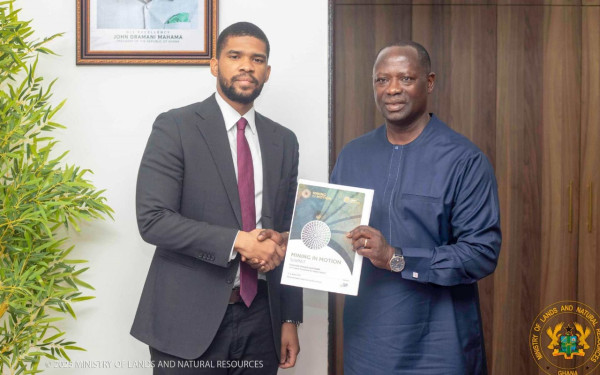
Otumfuo Osei Tutu II, King of the Ashanti Kingdom; Hon. Emmanuel Armah Kofi Buah, Minister of Lands and Natural Resources of Ghana; and Oheneba Kwaku Duah, the son of Otumfuo Osei Tutu II and Managing Director of the Ashanti Green Initiative recently met to discuss the upcoming Mining in Motion Summit in Ghana.

They explored the summit's potential to improve the artisanal and small-scale gold mining (ASGM) sector in Ghana and the role of government, international partners and major mining firms in accelerating the sector's growth. Hon. Kofi Buah endorsed the event, emphasizing its significance in connecting small-scale miners with technology providers, financiers, regulatory bodies and global industry stakeholders to improve their operations and impact.

Organized by the Ashanti Green Initiative along with the World Bank, the World Gold Council and other international partners, Mining in Motion will take place from June 2 - 4 in Accra.

The summit is held under the theme Sustainable Mining & Local Growth – Leveraging Resources for Global Impact, uniting key decision-makers, including H.E. John Dramani Mahama, President of the Republic of Ghana, as well as representatives from public and private sector mining institutions from South Africa, the Republic of Guinea, the African Union, ECOWAS and the United Nations.

The three-day event will highlight the role of traditional authorities in shaping artisanal and small-scale mining practices, emphasizing the sector's contribution to employment and economic growth. In 2024 alone, Ghana's artisanal miners generated $5 billion in foreign exchange earnings through gold exports. Providing direct employment for over one million Ghanaians and accounting for 35% of domestic gold output, the sector has the potential to significantly shape socioeconomic development in the west African country.

As Ghana's mining sector increasingly supports sustainable development, the Mining in Motion Summit will highlight best practices for integrating ASGM into the global financial system. Representatives from prominent international financing organizations will share their insights.

In a significant move to boost earnings for small-scale miners, Ghana has announced plans to establish a Gold Board. This new entity will simplify the process of purchasing gold from small-scale miners, providing them with easier access to global markets. With Samuel Adu Gyamfi, who was appointed Acting Managing Director of Precious Minerals Marketing Company last month and tasked with setting up the Ghana Gold Board, playing a pivotal role in shaping the summit, Mining in Motion is set to have a sizable impact on the growth of Ghana's gold sector.

Through a series of high-level panel discussions, deal signings, project showcases and exclusive networking, Mining in Motion serves as the ideal platform to connect Ghanaian miners with regional counterparts and global investors for forge industry-changing partnerships.

Stay informed about the latest advancements, network with industry leaders and engage in critical discussions on key issues impacting ASGM and medium- to large-scale mining in Ghana. Secure your spot at the Mining in Motion 2025 Summit by visiting https://MiningInMotionSummit.com. For sponsorship opportunities or delegate participation, contact sales@energycapitalpower.com.

Distributed by APO Group on behalf of Energy Capital & Power.

About Ashanti Green Initiative:
The Ashanti Green Initiative is a foundation dedicated to promoting environmental restoration, advocating for climate-related issues, and fostering community development in Ghana and beyond. Guided by a commitment to sustainability, the foundation undertakes projects aimed at rehabilitating degraded lands, restoring water bodies, and promoting responsible natural resource management. The initiative also champions regenerative practices in mining, agriculture, and energy, aligning with global efforts to combat climate change while uplifting local communities through education, capacity-building, and economic empowerment programs. The Ashanti Green Initiative is led by Nana Kwaku Duah, son of His Majesty Otumfuo Osei Tutu II, King of the Ashanti Kingdom. Under his leadership, the foundation applies forward-thinking approaches and innovative solutions, creating impactful partnerships with local and international stakeholders to drive meaningful change.

About Energy Capital & Power:
Energy Capital & Power is an Africa-focused global leading investment platform for the energy and mining sectors. Through a series of events, online content and investment reports, we unite the entire energy and mining value chains – from oil and gas exploration to renewable power – and facilitate global and intra-African investment and collaboration.
Media files
Energy Capital & Power
Download logo
Read moreGhana’s Mining in Motion Summit Gains Support From Key Leaders
25 February 2025

Kholo Capital Mezzanine Debt Fund I Reaches Final Close at R1,4 Billion

Location: Business

Kholo Capital
Download logo

Kholo Capital Mezzanine Debt Fund I (“Kholo Capital” or “the Fund”) (www.KholoCapital.com/), has reached final close at R1,4 billion in commitments, in order to make long-term mezzanine debt investments in small and medium sized businesses in Southern Africa (i.e., South Africa, Botswana, Namibia, Lesotho and Swaziland). The funding provided to these businesses will positively impact communities and support economic growth, job creation, alleviation of poverty and advancement of transformation in the Southern African region. The Fund provides growth capital, BEE Financing and acquisition funding into sectors of the Southern African economy with high social impact including social housing, healthcare, education, renewable energy, food and food security, ICT, financial technology and infrastructure. The Fund follows the United Nation's 17 Sustainable Development Goals as guiding principles with key focus on those linked to Job Creation (i.e., Decent work and Economic growth, Reduced Inequalities and Gender Equality) and those linked to Sustainable Growth (i.e.; Affordable and Green Energy, Sustainable Cities and Communities and Climate Action). The R1,4 billion in commitments was secured from leading South African institutional investors.

Kholo Capital believes that mezzanine debt funding, being a subordinated loan position that sits between senior debt and equity in the capital structure of a business, is attractive because it plugs any equity funding gaps and provides businesses with a tailored and flexible loan solutions in support of their growth requirements. Kholo Capital's investment criteria include investing in small and medium sized businesses generating minimum R25m EBITDA across various growth sectors of the Southern African economy, thereby providing much needed access to capital within a preferred range of R70m to 200m per investment. The benefit of mezzanine debt loan funding lies not only in the ability to tailor funding terms like debt servicing requirements (e.g., providing capital repayment moratoriums), and also because it is a loan funding instrument it avoids the significant equity dilution which is sometimes the sad reality when businesses try to fund their growth ambitions by raising pure equity funding.

Mokgome Mogoba, Founder and Managing Partner at Kholo Capital, said: “We are very bullish about South Africa, the South African economy and the future prospects of this beautiful country and the surrounding region. We are heartened and motivated by the optimism and the resilience of its people. We aim to create in excess of 500 new jobs at a rate of more than 40 nett jobs created per investment and we have committed to investing more than 50% of the Fund in black empowered companies. We are excited at the opportunity to bring creative funding solutions to the Southern African market and to form long term sustainable partnerships with businesses over a 4 to 7-year investment horizon, realising not only strong commercial returns for our investors, but also providing transformational funding that has a positive ESG impact on businesses and surrounding communities as we also look to boost our rural and township economies.”

Zaheer Cassim, Founder and Managing Partner at Kholo Capital, added: “Mezzanine debt funding is non-dilutive by nature and therefore is an attractive funding option for family-owned businesses, BEE companies or any business that needs to raise capital and hold onto the equity in the business. And with the banks becoming more risk averse due to regulatory requirements, lending to small and medium sized businesses has reduced, creating a great opportunity for flexible mezzanine debt structures.  We are grateful that our investors recognise the opportunity and have shown us tremendous support.”

With a strong pipeline of opportunities, Kholo Mezzanine Debt Fund I is well positioned to advance its investment objectives, and make a sustainable impact in support of the real economy. 

Distributed by APO Group on behalf of Kholo Capital.

For more information contact:
Mokgome Mogoba
Managing Partner
Kholo Capital Mezzanine Debt Fund I
mokgome@kholocapital.com
Tel: +27-79-631-5860                                     

Zaheer Cassim
Managing Partner
Kholo Capital Mezzanine Debt Fund I
zaheer@kholocapital.com
Tel: +27-83-786-0845

About Kholo Capital Mezzanine Debt Fund I:
Kholo Capital is a specialist alternative investment fund management company with deep experience and track record in private markets. It was founded in 2020 by Mokgome Mogoba and Zaheer Cassim. The Kholo Capital investment team has more than 100 years of collective credit and investment experience and is highly skilled in senior debt, mezzanine debt and private equity. The investment team has a strong track record in the credit and investment space and has invested in excess of R50bn of mezzanine debt, private equity and senior debt investment transactions in over 90 transactions in more than 10 African countries. Kholo Capital Mezzanine Debt Fund I is managed by a cohesive, dynamic and nimble team and the management team has worked together over the last 21 years.

Website: www.KholoCapital.com

Read moreKholo Capital Mezzanine Debt Fund I Reaches Final Close at R1,4 Billion
24 February 2025

Innovation Fund: Everything you need to know

Location: News

Innovation Fund: Everything you need to know

The Department of Science, Technology and Innovation (DSTI) has expressed its strong support for government's vision to bolster innovation as articulated by President Cyril Ramaphosa in the 2025 State of the Nation Address (SONA).

The department said the Innovation Fund will be a key priority for the government in the 2025/26 financial year, with implementation overseen by the DSTI Minister, Professor Blade Nzimande.

In his address earlier this month, President Ramaphosa reaffirmed the government’s commitment to advancing the Innovation Fund, which aims to bolster the growth of innovative startups and technology-driven Small and Medium Enterprises (SMEs).

“To build an innovative economy, the Department of Science, Technology and Innovation will establish an Innovation Fund to provide venture capital to tech start-ups that emerge from our higher education institutions,” the President said in his speech. 

What is the DSTI’s Innovation Fund? 

In 2021, the DSTI launched the Innovation Fund as part of its comprehensive suite of initiatives aimed at fostering innovation. 

According to the department, the primary goal of the Innovation Fund is to stimulate the development and ongoing expansion of the high-tech SME sector.

It also aims to reduce risks associated with early-stage SME creation, fostering sustainable pipelines of viable, investable high-tech enterprises that can attract later-stage investments from the private sector.

In contrast to conventional financing institutions like private equity firms and commercial banks, the Innovation Fund is less stringent and offers more flexible yet thoroughly enforced financial support.

Who does this Fund target?

The Innovation Fund cuts across various stages of the SMEs’ business development life cycle and is structured to drive public-private co-investment in innovative high-tech SMEs. 

The Innovation Fund model also leverages the investment expertise of institutions such Technology Innovation Agency (TIA), the SA SME Fund and the Public Investment Cooperation (PIC), which in turn, drive the syndication of investment with various venture capital fund management entities. 

What is the objective of the Fund?

Leverage Private Capital: Attract additional private sector investments into the South African innovation ecosystem and venture capital industry.

Stimulate Innovation: Encourage the development and commercialisation of locally developed IP and innovative products and services. 

Support startups and tech-enabled SMEs: Provide catalytic capital backing to early-stage startups and tech-enabled SMEs. 

Build a resilient innovation ecosystem: Strengthen the infrastructure and support systems for innovation and venture building, including venture studios, incubators, accelerators, hubs, and so on to ensure a robust and interconnected ecosystem.

DSTI’s financial investment: 

The department has currently invested nearly R917.2 million in various investment intermediaries, including TIA, PIC, and the SA SME Fund.

This Fund has successfully leveraged over half a billion in co-investments from the private sector. 

To date, it has provided support to 12 venture capital firms and approximately 96 technology investment opportunities and enterprises.

How can SMEs access the Fund?

More information on the Fund can be accessed at https://innovationbridge.info/ibportal/innovation-fund.

For current open calls visit https://www.tia.org.za/innovation-fund-first-time-and-emerging-fund-managers/ or https://epftechfund.orcaa.ai. 

For further inquiries on the Fund please contact Mr Konanani Rashamuse on Koanani.Rashamuse@dsti.gov.za. – SAnews.gov.za

Gabisile
Mon, 02/24/2025 - 13:29
78 views

Read moreInnovation Fund: Everything you need to know
23 February 2025

Hundreds Join Pro-palestine Rally in Sea Point

Location: News

Palestine Solidarity Campaign renews call for SA government to cut ties with Israel, among other demands

Read moreHundreds Join Pro-palestine Rally in Sea Point
21 February 2025

Cabinet commends Class of 2024 for impressive results

Location: News

Cabinet commends Class of 2024 for impressive results

Cabinet has commended the Class of 2024 for achieving the highest matric pass rate since the advent of democracy in 1994. 

The National Senior Certificate (NSC) results saw an impressive 87.3% pass rate, marking a significant 4.4% increase from the previous year. 

A total of 615 429 learners successfully passed the NSC examinations, with nearly half of those who sat for the exams obtaining a Bachelor pass, granting them access to higher education institutions. Additionally, close to 320 000 distinctions were achieved, highlighting the academic excellence of the matriculants. 

Government lauded the results as a significant milestone in the country’s education sector, emphasising that the achievements of the Class of 2024 reflect the strides made in improving the quality of education in South Africa. 

These results coincide with the country’s celebration of 30 years of freedom and democracy, symbolising the ongoing efforts to dismantle the remnants of apartheid-era educational disparities. 

“The achievements of the Class of 2024 are a clear demonstration of the progress we have made as we commemorate 30 Years of Freedom and Democracy. They also provide proof that we are reversing apartheid’s planned legacy of intergenerational indignity, disadvantage and poverty for the majority of South Africans," Cabinet said in a statement on Friday.

South Africa's education system has undergone significant reforms since 1994, with the government implementing policies aimed at improving access to quality education for all learners. 

Under the National Development Plan (NDP), education remains a key pillar in addressing inequality and fostering economic growth. 

Over the years, interventions such as the provision of no-fee schools, the school nutrition program, improved infrastructure, and curriculum enhancements have contributed to the steady improvement in matric results. 

The increased focus on Science, Technology, Engineering, and Mathematics (STEM) subjects, teacher training programs, and digital learning initiatives has also played a crucial role in raising learner performance. 

Despite these successes, challenges remain, including resource disparities between urban and rural schools, socio-economic factors affecting learner performance, and the need to further enhance post-matric opportunities. 

However, the Class of 2024’s results demonstrate resilience and a positive trajectory for the country’s education system. 

Government has previously urged learners who did not pass to explore alternative pathways such as the Second Chance Matric Programme and Technical and Vocational Education and Training (TVET) colleges to ensure they remain within the education and skills development pipeline. – SAnews.gov.za

DikelediM
Fri, 02/21/2025 - 12:00
30 views

Read moreCabinet commends Class of 2024 for impressive results
21 February 2025

Cabinet supports bold vision outlined by President’s SONA

Location: News

Cabinet supports bold vision outlined by President's SONA

Cabinet has called on all sectors of society to support the initiatives announced by the President Cyril Ramaphosa during his State of the Nation address earlier this month. 

Cabinet said this in a statement on Friday following a Cabinet meeting held on 12 February 2025 and a special Cabinet meeting on 29 January 2025. 

“Cabinet calls on all sectors of society to support the initiatives announced by the President in his 2025 SONA and partner with government as we set our nation on a trajectory for the year ahead,” Cabinet said in a statement. 

Cabinet also expressed its support for the bold vision of creating a nation where all South Africans share in its prosperity and opportunities, as outlined by President Ramaphosa. 

“The President called on all South Africans to unite in action to reignite our collective vision and shared passion to build a South Africa that works for everyone. Through the planned National Dialogue, we will chart our nation’s course and forge a common vision for our country’s future,” Cabinet said. 

The statement highlighted that the new Medium-Term Development Plan (MTDP) guides government’s initiatives to create a more inclusive country that lives up to the commitments of the Government of National Unity. 

The MDTP aims, among others, to reduce unemployment, poverty and the rising cost of living as well as combat crime and corruption.

“The massive R940 billion investment drive announced by President Ramaphosa in new infrastructure and the upgrading of existing infrastructure over the next three years, puts infrastructure development at the heart of our country’s economic growth and job creation,” Cabinet said. 

The address outlined a clear path to tackle the challenges experienced at local municipalities, particularly in the maintenance of essential infrastructure. It also detailed intensive interventions to deal with the country’s water challenges, including the expansion of water infrastructure by investing R23 billion into seven large water infrastructure projects.

President Ramaphosa outlined government’s commitment to support the well-being of South Africans through various social support initiatives in health, education, social protection, community development and public employment programmes, with around 60 percent of our national budget spent on the social wage.

“The President affirmed our nation’s sovereignty and constitutional democracy, and South Africa’s position to advance the well-being of humanity, and those around the world who continue to experience colonialism and oppression,” Cabinet said. – SAnews.gov.za

DikelediM
Fri, 02/21/2025 - 10:34
10 views

Read moreCabinet supports bold vision outlined by President’s SONA
20 February 2025

Chaos Outside Cape Town Schools as Parents Demand Places for Their Children

Location: News

Parents say their children are subjected to poor learning conditions at Solomon Mahlangu Primary School

Read moreChaos Outside Cape Town Schools as Parents Demand Places for Their Children
20 February 2025

Cape Town to host B20 meeting 

Location: News

Cape Town to host B20 meeting 

With South Africa due to host the Group of Twenty (G20) Leaders’ Summit this year, Cape Town is set to host the Business 20 (B20) – the official dialogue forum for domestic and international business communities next week.

Western Cape Premier Alan Winde said the province and Cape Town look forward to welcoming the world once again.

This as the province will host the B20 from 24-25 February in the year that South Africa hosts the Group of Twenty (G20) Leaders’ Summit.

“This is an important milestone for our province, country, and continent. It is a huge honour for us all to showcase the region to the world. We did this so well this last holiday season and again with the recent Mining Indaba and other major events. Now it is our opportunity to host the B20. Let us all put our best foot forward and send delegates home as marketers of Cape Town and the Western Cape,” he said.

According to the Premier, the B20 serves as an important networking platform for local companies and businesses to link up with international counterparts, who are eager to join hands with them in exploring ways in which to take economic growth and job creation forward.

The B20 offers several benefits, including attracting foreign investment, boosting tourism, enhancing the international reputation of the Western Cape and South Africa, and influencing global policy discussions.

The B20 summit will focus on the theme ’Inclusive Growth and Prosperity through Global Participation.’

Key areas of priority for the summit include trade and investment, infrastructure development, education, and climate change.
“We have a vital opportunity to showcase our economic successes, further highlight the region as an investment destination of choice, build on our achievements together with global partners, and deepen international ties to tackle critical issues.

“The issues that will be discussed at the B20 can influence the G20 and so we will ensure our voice is heard,” Winde added.

Meanwhile, more than 100 meetings of the G20 will be held throughout the year, 40 of which are planned to take place in the Western Cape.

“The Western Cape is ready to host even more meetings and gatherings linked to the G20 if need be. We must maximise the hosting of these events to enhance our global standing.”

Meanwhile, President Cyril Ramaphosa will today officially open and address the G20 Foreign Ministers’ Meeting in Johannesburg.

The Foreign Ministers’ Meeting hosted by the Minister of International Relations and Cooperation Minister Ronald Lamola takes place under South Africa’s G20 Presidency theme of “Solidarity, Equality and Sustainability” on 20 and 21 February at the Nasrec Expo Centre. – SAnews.gov.za


Gabisile
Thu, 02/20/2025 - 09:45
385 views

Read moreCape Town to host B20 meeting 
20 February 2025

Call for global solidarity at G20 Foreign Ministers’ Meeting

Location: News

Call for global solidarity at G20 Foreign Ministers’ Meeting

President Cyril Ramaphosa has urged global leaders to embrace inclusivity, cooperation and reform as South Africa steers the Presidency of the Group of 20 (G20) for the first time. 

Speaking at the opening of the G20 Foreign Ministers’ Meeting at Nasrec in Johannesburg, President Ramaphosa emphasised the significance of hosting the G20 Leaders’ Summit on African soil. 

The Foreign Ministers Meeting, hosted by the Minister of International Relations and Cooperation, Ronald Lamola, takes place under South Africa's G20 Presidency theme of 'Solidarity, Equality and Sustainability'. 

“Africa is home to some of the world’s fastest-growing economies and faces unique challenges, such as the impact of climate change, development needs and the effects of global trade dynamics.

“The Summit's location underscores the need for African voices to be heard on critical global issues, like sustainable development, the digital economy and the shift toward green energy,” President Ramaphosa said.

The President said this was a great opportunity to promote greater collaboration between African nations and the rest of the world.

He highlighted pressing global challenges, including geopolitical tensions, climate change, economic inequality and food insecurity, warning that the world’s fragile coexistence was under threat. 

“These challenges are interconnected. They require responses that are inclusive and coordinated. Yet, there is a lack of consensus among major powers, including in the G20, on how to respond to these issues of global significance,” he said. 

He called for greater consensus among major powers within the G20 to address these issues.

The President also highlighted that there are just five years to 2030, the deadline for achieving the Sustainable Development Goals.

He said the international community committed to this ambitious agenda to end poverty and hunger, to protect the planet, to achieve gender equality, universal education and health coverage, and to promote decent work and sustainable economic growth.

“Our commitment to achieve these targets we must not waver. The nations of the world look to the G20 for leadership on the most pressing issues confronting our world.

“Just as cooperation supported the progress of early humans, our modern-day challenges can only be resolved through collaboration, partnership and solidarity,” he said. 

President Ramaphosa said this was why South Africa had placed solidarity, equality and sustainability at the centre of its G20 Presidency.

“We would like our G20 Presidency to be one in which all voices are heard and in which all views count. The G20 represents over two-thirds of the world’s population. 

“Its decisions and policies must reflect the needs and aspirations of all who form part of the G20 family,” he said. 

He also called on the G20 to seek to reflect the needs and aspirations of all people who call this planet home.

A call for UN and global financial system reforms

With the United Nations marking its 80th anniversary, President Ramaphosa reiterated South Africa’s call for reforming the UN Security Council, the multilateral trading system, and the international financial architecture to make them more representative and responsive to today’s realities.

“The UN must change accordingly. We continue to call for the UN Security Council, the multilateral trading system and the international financial architecture to be reformed to make them more representative, more agile and more responsive to today’s global realities.

“As the G20, it is critical that the principles of the UN Charter, multilateralism and international law remain at the centre of all our endeavors,” the President asserted.

President Ramaphosa also addressed ongoing global conflicts, including the wars in Ukraine, Sudan, the Sahel and Gaza. 

He welcomed the recent ceasefire agreement between Israel and Hamas, calling it a crucial first step toward lasting peace and urging diplomatic solutions to global conflicts.

“As the G20, we must continue to advocate for diplomatic solutions. Our own experience as South Africa is that the peaceful resolution of conflict through inclusive dialogue is the foremost guarantor of sustainable, lasting peace,” he said. 

Key priorities for South Africa’s G20 Presidency

Outlining South Africa’s vision for its G20 Presidency, President Ramaphosa identified four key priorities, which include strengthening disaster resilience and response, ensuring debt sustainability for low-income countries, mobilising climate finance for a just energy transition and harnessing critical minerals for sustainable development. 

He emphasised the need for international financial institutions and the private sector to scale up post-disaster recovery efforts, particularly in vulnerable nations.

With many developing economies burdened by high borrowing costs, he called on G20 leaders to renew efforts in addressing debt sustainability, especially in Africa.

On the third priority, President Ramaphosa urged developed nations to fulfil their obligations in supporting developing economies’ green energy transitions, in line with global climate agreements.

Turning to the last priority, the President proposed an inclusive G20 framework on green industrialisation and investment to promote value addition and beneficiation of critical minerals. – SAnews.gov.za

DikelediM
Thu, 02/20/2025 - 16:19
258 views

Read moreCall for global solidarity at G20 Foreign Ministers’ Meeting
20 February 2025

Conference discusses strategies to achieve women’s economic inclusion

Location: News

Conference discusses strategies to achieve women’s economic inclusion

Without a dedicated plan and political will to combat patriarchal forms of exploitation, Africa’s commitment to eradicating “all forms of gender-based violence and discrimination against women and girls” by 2063, will remain hollow.

These were remarks made by the Minister in the Presidency responsible for Women, Youth and Persons with Disabilities, Sindisiwe Chikunga.

The Minister was speaking at the Southern African Regional High-Level Conference on Advancing Economies of Women in the Southern African Development Community (SADC) and Africa on Thursday.

The Ministry in the Presidency for Women, Youth and Persons with Disabilities, in collaboration with the Gates Foundation, is hosting the first Southern African Regional consultation to advance women economic empowerment in the SADC region.

The high-level two-day consultation forum, held in Sandton, Johannesburg, brings together women leaders from the SADC region, including senior government officials, policymakers, and representatives from other African Union (AU) Member States.

The forum, which will conclude on Friday, aims to discuss strategies to achieve women’s economic inclusion, financial access and Economic Justice and Rights (EJR) across the SADC region.

In her address, Chikunga acknowledged that women own fewer productive assets and that their businesses have fewer opportunities to trade. She also said that women experience financial exclusion and have limited access to markets and procurement.

She warned that without concrete measures in place, the continent’s aspiration to ensure that African women in all spheres -- granting them equal social, political, and economic rights, including the right to own and inherit property, sign contracts and manage businesses -- will remain unfulfilled.

“Similarly, rural women’s access to productive assets such as land, credit, inputs and financial services, will remain idle and futile without deliberate action. Without a deliberate skills revolution, the desire to position our youth at the forefront of knowledge and as catalysts of innovation and entrepreneurship, will fall short.

“Only when education and skills are accessible to all, will we be able to cultivate the creativity, energy and innovation of Africa’s youth into a driving force behind the continent’s political, social, cultural and economic transformation,” she explained.

Despite the continent’s noble vision, the Minister argued it will remain a distant reality “until we put in place concrete measures with firm timelines, deliverables and accountability mechanisms to ensure its realisation.”

She emphasised that the success of Agenda 2063 rests squarely on the seriousness of the leaders’ commitment to uplift women and girls, enabling them to pull the entire continent forward.

According to the AU, Agenda 2063 is Africa's development blueprint to achieve inclusive and sustainable socio-economic development over a 50-year period.

Beyond Agenda 2063, the Minister highlighted the region’s support for the consultative forum, which is also inspired by the SADC Vision 2050 and the Regional Indicative Strategic Development Plan (RISDP) 2020-2030, which both reflect the region’s developmental aspirations.

She underscored the importance of increasing women’s participation in regional development, enhancing equal access to opportunities, achieving gender parity, strengthening gender mainstreaming at both national and regional levels, and combating gender-based violence (GBV).

Economic participation 

Chikunga emphasised that the economic potential of the region cannot be fully realised when half of its population remains underrepresented in trade, financial systems, digital economies, and entrepreneurship.

She also stressed the importance of ensuring that girls and women have access to quality education, as this is essential for meaningful economic participation to help address barriers. These barriers include early marriages, teenage pregnancies, and other societal norms that hold back the girl child.

‘We must provide young women with the kind of vocational and technical training that is tailored to market demands and empowers women to participate in diverse sectors, including STEM (science, technology, engineering and mathematics), agriculture, and entrepreneurship.

“We must note that, as things stand, women make up less than a third of the workforce across STEM careers, a number that should alarm all of us.

“The historical and ongoing exclusion of women from STEM is a tragedy we must confront urgently. Tangible programmes are needed to correct societal and cultural beliefs that use gender stereotypes to perpetuate scientific inequality,” she explained.

The Minister further highlighted the need for financial inclusion and access to investment opportunities, including access to land, productive assets, and property rights.

She also called for the provision of smartphones for women in the marketplace, including access to the internet, and digital tools that can enhance their economic participation. – SAnews.gov.za

GabiK
Thu, 02/20/2025 - 17:30
59 views

Read moreConference discusses strategies to achieve women’s economic inclusion
20 February 2025

Merck Foundation CEO Provides 194 Oncology Scholarships in Africa

Location: News
Merck Foundation

  • Merck Foundation marks World Cancer Day with African First Ladies by providing 194 scholarships of Oncology Training to African doctors from 32 countries. 
  • Merck Foundation together with Africa First Ladies and Ministries of Health has been building cancer care capacity and increasing the limited number of Oncologists in their countries by providing close to 200 Scholarships of One-, two- and three-years fellowship, diploma and Master Degree of oncology to African doctors from 32 Countries. 
  • Merck Foundation is making history in Africa by training the First African Oncologists and First Cancer Care Teams in Countries such as The Gambia, Sierra Leone, Burundi, Liberia, Guinea Conakry, Central African Republic, Chad, Burundi, Malawi, Niger, Namibia, Zambia, Zimbabwe and more. 

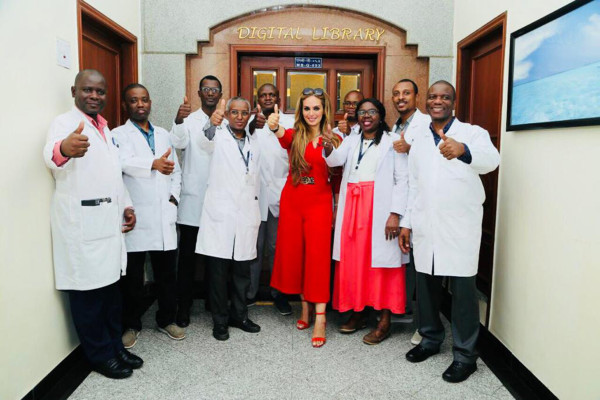
Merck Foundation (www.Merck-Foundation.com), the philanthropic arm of Merck KGaA Germany, marks ‘World Cancer Day 2025' together with Africa's First Ladies and Ministries of Health. Through their Cancer Access Program, Merck Foundation is is building quality and equitable cancer care capacity in Africa.  

Senator Dr. Rasha Kelej, the CEO of Merck Foundation, highlighted, “At Merck Foundation, we mark World Cancer Day not just as a single day, but as a our continued commitment to transform and advance cancer care in Africa.  

Together with my dear sisters, the Africa's First Ladies, we are have enhanced the cancer care capacity in the continent by providing 194 scholarships to young African doctors from 32 countries, significantly increasing the number of oncologists in Africa. We are making history together by providing these important scholarships for the first oncologists and /or the first cancer care teams in many countries across Africa.”  

Merck Foundation in total provided more than 2100 scholarships to doctors from over 52 countries in 44 critical and underserved medical specialties.  

The Merck Foundation Cancer Access Program provides One, two- and three-years fellowship, Post Graduate Diploma and Master Degree of oncology for doctors from Africa. The clinical training has been conducted in India, Egypt and Kenya. Additionaly, Merck Foundation also provides scholarships for 2 years online PG Diploma in Cancer and Clinical Oncology, 01 year online PG Diploma in Medical Oncology and 1 year online PG Diploma in Pain Management from reputed Universities in UK like University of South Wales, University of Buckingham, Queen Mary University of London, and Cardiff University. 

Merck Foundation is establishing Multidisciplinary Oncology Care teams in many African countries by providing scholarships of clinical training in Medical Oncology, Surgical Oncology, Pediatrics Oncology, Gynecology Oncology, Breast Oncology, Haemato-Oncology, Orthopaedic Oncology, Palliative Care, Pathology Oncology, Radiation Oncology, Research in Oncology, Surgical Oncology - Genital Urinary System, Advanced Cytopathology Training, Interventional Radiology, Radiation Technician, Laboratory Technician, Oncology Nursing. 

Merck Foundation through its Merck Foundation Cancer Access Program has provided 194 scholarships of Oncology to doctors from 32 countries including Botswana, Burkina Faso, Burundi, Cameroon, Central African Republic, Chad, Congo Brazzaville, Democratic Republic of the Congo, Ethiopia, Gabon, Gambia, Ghana, Guinea, Kenya, Liberia, Malawi, Mauritius, Mozambique, Namibia, Nepal, Niger, Nigeria, Rwanda, Sao Tome & Principe, Senegal, Sierra Leone, South Africa, Sri Lanka, Tanzania, Uganda, Zambia and Zimbabwe.  

“In several of these countries, there wasn't even a single oncologist. We are proud to be making history in Africa by training the first oncologists and establishing the first cancer care teams in nations such as The Gambia, Sierra Leone, Burundi, Liberia, Guinea Conakry, Central African Republic, Chad, and Niger. Merck Foundation remains committed to transforming the landscape of cancer care across the continent and leading Africa toward a healthier future,” explained Senator Dr. Rasha Kelej.  

Africa records around 1.1 million new cases of cancer, resulting in up to 700,000 deaths, every year, as per WHO data. The mortality rate of cancer patients is very high in Africa, as compared to the rest of the world.  

“One of the key reasons is also the late diagnosis of the disease. Therefore, these scholarships are very important” added Senator Kelej.  

Merck Foundation has also created awareness materials including awareness leaflets and videos on Cancer Prevention and Early Detection.  

Dr. Chifundo Kajombo, Merck Foundation Alumni from Malawi shares, “I am privileged to be awarded a scholarship by Merck Foundation to pursue the Surgical Oncology fellowship training program at Tata Memorial Hospital, India. I managed to advance from basic surgical oncology principles to the advanced level. This has helped me improve my understanding of cancer and operative principles. Since returning back home, I have managed to change the structure of how our breast clinic runs and modified it to incorporate a number of new things that we probably could not have possibly included. I am so proud to share that I have just been awarded the Best Surgeon for 2023 in Malawi. I would not have achieved this feat without Merck Foundation's scholarship. I am very thankful.” 

Watch testimonials videos of Merck Foundation Oncology Fellowship Alumni: https://apo-opa.co/4bab06Y

Distributed by APO Group on behalf of Merck Foundation.

Link of the extra posters: https://apo-opa.co/3X6RmD6

Contact details:
Mehak Handa
Community Awareness Program Manager
+91 9310087613 / +91 9319606669
mehak.handa@external.merckgroup.com

Join the conversation on our social media platforms below and let your voice be heard! 
Facebook: https://apo-opa.co/4k65XbW
X: https://apo-opa.co/43mGeGv
YouTube: https://apo-opa.co/3EVeWMS
Instagram: https://apo-opa.co/413ECyl
Threads: https://apo-opa.co/4gLTA1P
Flickr: https://apo-opa.co/4gSxZVs
Website: www.Merck-Foundation.com
Download the Merck Foundation App: https://apo-opa.co/413wo9z

About Merck Foundation:
The Merck Foundation, established in 2017, is the philanthropic arm of Merck KGaA Germany, aims to improve the health and wellbeing of people and advance their lives through science and technology. Our efforts are primarily focused on improving access to quality & equitable healthcare solutions in underserved communities, building healthcare & scientific research capacity, empowering girls in education and empowering people in STEM (Science, Technology, Engineering, and Mathematics) with a special focus on women and youth. All Merck Foundation press releases are distributed by e-mail at the same time they become available on the Merck Foundation Website.  Please visit www.Merck-Foundation.com to read more. Follow the social media of Merck Foundation: Facebook (https://apo-opa.co/4k65XbW), X (https://apo-opa.co/43mGeGv), Instagram (https://apo-opa.co/413ECyl), YouTube (https://apo-opa.co/3EVeWMS), Threads (https://apo-opa.co/4gLTA1P) and Flickr (https://apo-opa.co/4gSxZVs). 

The Merck Foundation is dedicated to improving social and health outcomes for communities in need. While it collaborates with various partners, including governments to achieve its humanitarian goals, the foundation remains strictly neutral in political matters. It does not engage in or support any political activities, elections, or regimes, focusing solely on its mission to elevate humanity and enhance well-being while maintaining a strict non-political stance in all of its endeavors. 

Media files
Merck Foundation
Download logo
Read moreMerck Foundation CEO Provides 194 Oncology Scholarships in Africa
19 February 2025

SA, EU strengthen strategic partnership at Ministerial Dialogue

Location: News

SA, EU strengthen strategic partnership at Ministerial Dialogue

South Africa and the European Union (EU) have reaffirmed their commitment to deepening their strategic partnership during the 16th Session of the Ministerial Political Dialogue on Wednesday in Cape Town. 

International Relations and Cooperation Minister Ronald Lamola, along with the European Union High Representative for Foreign Affairs and Security Policy and Vice President of the European Commission, Kaja Kallas, co-chaired the dialogue in the context of the EU-South Africa Strategic Partnership.

“The EU-South Africa Ministerial Political Dialogue builds on the joint aspiration to further the strategic partnership, which has grown in depth and ambition over the years. 

“The political and security cooperation is strong, and so are trade and investment relations: South Africa is the EU’s largest trading partner in sub-Saharan Africa, and the EU is South Africa’s first trade and investment partner,” a joint communique said.               

The meeting was also attended by Minister of Trade, Industry and Competition, Parks Tau, Minister of Agriculture John Steenhuizen, Minister of Basic Education Siviwe Gawarube and Minister of Science, Technology and Innovation Blade Nzimande. 

The High Representative’s three-day visit to Africa at the beginning of her mandate signals the EU’s commitment to the partnership with South Africa and with the continent.

The Ministerial Political Dialogue is a key milestone ahead of the 8th European Union-South Africa Summit, which is scheduled for 13 March 2025. 

The political engagements between the European Union and South Africa contribute to the celebration of the 25th anniversary of the European Union’s partnership with Africa. 

In this context, both sides underscored the importance of holding the European Union- African Union Ministerial Meeting and Summit in 2025.

“The Ministerial Political Dialogue presented an opportunity for the European Union and South Africa to reiterate their common commitment to multilateralism, a consistent approach to the rules-based international order, and the centrality of the United Nations Charter. 

“The parties further agreed on the need to reform the UN Security Council, recognising the urgent need to make it more representative, inclusive, transparent, efficient, democratic and accountable,” a joint communique said. 

Addressing global conflicts, both sides affirmed their unwavering commitment to act in accordance with international law, including the Charter of the United Nations and its purposes and principles. 

Both sides noted with distress the immense human suffering and the adverse impact of wars and conflicts around the world. 

The parties also reaffirmed that all states must act in a manner consistent with the Purposes and Principles of the UN Charter in its entirety. 

“In line with the UN Charter, all states must refrain from the threat or use of force to seek territorial acquisition against the territorial integrity and sovereignty or political independence of any state and affirmed that all parties in conflicts must comply with their obligations under international law, including international humanitarian law and international human rights law,” the joint communique said. 

Both sides further agreed that, guided by these principles, to support efforts towards a just peace in Ukraine, Occupied Palestinian Territory, Sudan, the DRC and other major conflicts around the globe.

The European Union and South Africa also discussed their cooperation in multilateral and regional fora, focusing in particular on their joint efforts to promote human rights and sustainable development and to address climate change.

The European Union emphasised its alignment with and support for South Africa G20’s presidency priorities.

In view of the Summit, the European Union and South Africa also looked at their economic, trade and investment agenda, including outstanding issues on both sides. 

“Underlining the importance of a just energy transition, the European Union and South Africa reviewed opportunities to step up cooperation on sustainable value chains, including critical raw materials with a view to further their respective competitiveness, economic security and decarbonisation efforts. 

“The parties agreed that critical minerals have emerged as a pivotal topic on the global stage, reflecting a critical role in driving industrialisation, technological innovation, and inclusive economic growth. South Africa underscored the need for the transition to a low carbon economy to be just, enhance energy security and create jobs. The two sides acknowledged the role of regulatory cooperation, investment facilitation, as well as of businesses in driving these initiatives,” the joint communique said. 

The European Union and South Africa further welcomed the robust collaboration in the areas of education, research and innovation. 

Both sides discussed opportunities to further enhance cooperation on open science and nuclear medical applications, to ensure progress on South Africa joining the Clean Hydrogen Mission of Mission Innovation. 

This is to broaden the participation of South Africa in the EU Framework Programme for Research and Innovation (R&I) Horizon Europe and in the Marie Skłodowska-Curie Actions as well as to promote mobility and cooperation through Erasmus+.

The European Union and South Africa further agreed that international trade is an important engine for inclusive economic growth, combating poverty and hunger and promoting sustainable development and the SDGs. 

“The EU and South Africa also stressed that for trade and investment to act as a driver of global growth, well-being and prosperity, a transparent rules-based multilateral trading system, that is non-discriminatory, fair, open, inclusive, equitable and sustainable is a necessity. Both sides reaffirmed that the WTO must be at the core such a multilateral trading system,” said the joint communique.  – SAnews.gov.za


DikelediM
Wed, 02/19/2025 - 15:48
164 views

Read moreSA, EU strengthen strategic partnership at Ministerial Dialogue
19 February 2025

Budget Postponement Is a “Blessing in Disguise” Says COSATU

Location: News

Hundreds marched in Cape Town ahead of budget announcement

Read moreBudget Postponement Is a “Blessing in Disguise” Says COSATU
19 February 2025

Citizens outline expectations for Budget 2025

Location: News

Citizens outline expectations for Budget 2025

Reducing red tape for business and tackling the funding gap for higher education are among the items on the wishlist of ordinary South Africans ahead of Finance Minister Enoch Godongwana’s  2025 Budget Speech, this afternoon.

Michael Mokwena, a small business owner in Garankuwa, north of Pretoria, told SAnews he hopes the government will make it easier to small business people to access loans from  banks.

“We small business owners  find it hard to access loans to expand our businesses. The laws and the requirements make it difficult for us to access funds,” Mokwena said.

Speaking ahead of the Budget which the Minister will table at 2pm, Mokwena said government must set aside funds to boost small businesses in the townships.

“Township businesses are playing a big role in the country’s economy and they are playing a role in job creation. We can’t all get employed. Some of us must create job opportunities for others. For that to happen, we need support from government. We need funding so we can play an active role in growing our economy,” Mokwena explained on Wednesday.

Meanwhile, Elvis Montoedi from Hamanskraal, told SAnews that government must create more job opportunities for young graduates and importantly, government must prioritise funding for students.

“Government must set aside more money for education. It is sad to see some young people being unable to continue with their studies because of lack of funding. Government must also assist with job placement for those who have completed their studies,” Montoedi who is a final year Bachelor of Commerce (BCom)  student at the University of South Africa (UNISA) said.

Godongwana’s  Budget Speech will provide a detailed plan for 2025 spending, including proposals for revenue collection to help fund the government’s planned interventions and commitments.

READ | All eyes on the Budget: Godongwana to chart SA’s financial future

The Budget Speech, among other things, aims to balance economic growth and support for the vulnerable in our society, despite limited resources.

READ | Minister of Finance to deliver 2025 Budget Speech

This as senior lecturer at UNISA Ndou Eliphas said he expects the Minister will deliver a budget that caters for the poor - to infuse business optimism; to send a message to the public that government is working on raising economic growth and that government wants to eradicate poverty and inequality.

“The Minister of Finance should focus more on raising economic growth, [the] implementations of reforms that support economic growth, explaining how to reduce the debt servicing costs and stabilising debt to GDP ratio,” said Ndou.

Ndou is of the view that the Minister will deliver a budget that will give an optimistic outlook at a time of global economic uncertainty.

For those eager to follow the financial roadmap firsthand, the Budget Speech will be broadcast live on Parliament TV (DStv Channel 408) and streamed across Parliament’s digital platforms. South Africans can tune in to see how the numbers stack up and what lies ahead for the economy in 2025, across various TV channels and Government platforms, including on www.SAnews.gov.za . 

Wednesday’s budget will be the first budget to be tabled under the Government of National Unity (GNU). - SAnews.gov.za
 

Edwin
Wed, 02/19/2025 - 11:53
344 views

Read moreCitizens outline expectations for Budget 2025
19 February 2025

Nkabane announces appointment of new NSFAS board

Location: News

Nkabane announces appointment of new NSFAS board

Higher Education and Training Minister, Dr Nobuhle Nkabane, has announced the appointment of the new board of the National Student Financial Aid Scheme (NSFAS).

The appointment underpins the Minister’s unwavering commitment to ensure that the NSFAS is led by highly qualified individuals with the expertise necessary to drive efficiency, accountability, and transparency.

Recognising the pivotal role that NSFAS plays in enabling access to higher education, Nkabane said she has prioritised the swift appointment of a board that meets stringent professional and academic criteria.

In a statement on Tuesday, Nkabane said the matter [stringent professional and academic criteria] has been of national interest, and she remains steadfast in her commitment to reforming the institution to benefit South African students.

“[The] NSFAS is a critical institution requiring the highest expertise and ethical leadership. The qualification standards for board appointments have been significantly raised to achieve this.

“Members appointed to the board possess a minimum qualification of a master’s degree and extensive professional experience in finance, law, engineering, or governance. This strategic approach ensures that NSFAS is managed by individuals with the necessary expertise to navigate financial and administrative complexities, while upholding transparency and efficiency,” Nkabane said.

In line with this commitment, the Minister highlighted that the board’s composition reflects the values of inclusivity, youth empowerment, and gender representation.

She said the newly appointed members meet the stringent qualification requirements and embody a diverse and representative leadership team dedicated to transforming higher education funding.

The Minister reiterated the government’s dedication to building a strong and credible NSFAS that functions efficiently and restores public confidence.

“By selecting individuals with proven expertise and experience, NSFAS will operate with integrity, prioritise student needs, and effectively deliver on its mandate. This appointment signals a firm stance on governance reforms within NSFAS and sets a precedent for accountability in state-funded institutions.

“The department remains committed to ensuring that NSFAS supports deserving students, while upholding principles of fairness, transparency, and efficiency,” Nkabane said.

Dr Karen Stander has been appointed as the Chairperson of the board. Stander is a senior lecturer in the Department of Business Management at the University of South Africa’s (Unisa) College of Economic and Management Sciences (CEMS).

With over 13 years in academia and a PhD in Business Management from the University of Pretoria, Dr Stander brings extensive experience in student empowerment, innovation, and entrepreneurship. She is committed to fostering an efficient, and well-governed NSFAS that ensures sustainable student funding.

Other board members include:
Ndileka Portia Loyilane - Board Member (Public Administration)
Advocate Richardt Tlou Ramashia - Board Member (Legal)
Advocate Ramashia 
Advocate Lavandran Nanda Gopaul - Board Member (Legal)
Philisiwe Sibiya: Member (Accounting, Chartered Accountant (CA SA))
Clarinda Elizabeth Simpson: Member Accounting (CA SA). 
Prashika Mahesh: Member Accounting (CA SA). 
Dr Siyanda Mngadi: Member – Governance.
Karabo Mohale: Member – Governance
Dr Johanna Maphutha: Member – Education.
Dr Mugwena Maluleke: Member – Education.
Dr Marcia Socikwa: Member - DDG: University Education (DHET Representative)

“These appointments mark a significant step in strengthening NSFAS as an institution that upholds integrity, accountability, and efficiency in delivering financial aid to deserving students,” Nkabane said.

The Minister reiterated her committed to ensuring that NSFAS fulfils its mandate of making higher education more accessible to South Africans. – SAnews.gov.za


GabiK
Tue, 02/18/2025 - 15:26
256 views

Read moreNkabane announces appointment of new NSFAS board
18 February 2025

NSFAS urged to act swiftly against student exploitation by landlords

Location: News

NSFAS urged to act swiftly against student exploitation by landlords

Higher Education and Training Deputy Minister, Buti Manamela, says the National Student Financial Aid Scheme (NSFAS) must act swiftly against the exploitation of vulnerable students by landlords.

This follows media reports that some landlords demand sexual favours from students in exchange for accommodation.

Manamela said the exploitation of vulnerable students by landlords was deplorable and deeply worrying.

“I welcome the strong statement by NSFAS condemning these actions and the decisive steps to investigate, blacklist, and terminate the services of any implicated landlords,” Manamela said.

He emphasised the need for greater accountability and oversight in student accommodation.

He said institutions, including accommodation provider associations, NSFAS, and the Department of Higher Education and Training must work together to ensure that students are housed in safe, dignified environments, free from exploitation and abuse.

Manamela urged the affected students to report cases of exploitation immediately to their institutions, NSFAS and law enforcement.

“We will not tolerate anyone who preys on students,” he said.

Progress on student registration and financial aid 

While the reports of landlord abuse are disturbing, Manamela acknowledged that the overall student registration process for 2025 has been largely smooth, with minor glitches that are being attended to.

NSFAS has taken measures to ensure that funded students are registered without financial barriers, including: 
• No upfront registration fees for NSFAS-funded students at public universities and TVET colleges.
• NSFAS close-out project students (awaiting outstanding fees from previous years) must be allowed to re-enrol, with institutions instructed to submit their details to NSFAS.
•  NSFAS Loan Scheme applicants who qualify should be allowed to register and secure accommodation while documentation is finalised.
•  Students with outstanding 2024 allocations should be permitted to register and graduate, with NSFAS committed to settling fees.

“We acknowledge concerns over funding delays and are actively working with NSFAS and institutions to resolve these issues as quickly as possible,” Manamela assured.

Monitoring the academic year

As delegated by the Minister of Higher Education and Training, Dr Nobuhle Nkabane, to assess the progress of the academic year and ensure that student concerns are addressed, the Deputy Minister will over the next two week visit Limpopo, North West, Northern Cape and Gauteng.

“These visits will give us an opportunity to engage directly with students, institutional leadership, and NSFAS officials to ensure that registration, accommodation, and financial aid issues are properly addressed,” Manamela said.

Students in universities, including Technical, Vocational, Education and Training College (TVET) colleges, and Community Education and Training (CET) colleges have been urged to report unsafe accommodation, if they are experiencing exploitation or unsafe conditions, to their institution’s student affairs office, and to NSFAS helpline: 0800 067 327 / info@nsfas.org.za.

“If you are struggling with registration or NSFAS-related funding issues, contact NSFAS servicing teams deployed at institutions or engage your SRC for assistance. Most institutions provide counselling services and wellness programs. Students are encouraged to use these resources.

“Our students should never have to endure exploitation, abuse, or barriers to their education. We will continue working with all stakeholders to ensure a safe and supportive learning environment for all,” Manamela said. – SAnews.gov.za


GabiK
Tue, 02/18/2025 - 10:37
199 views

Read moreNSFAS urged to act swiftly against student exploitation by landlords
17 February 2025

Celebrating Best African Women and Young Researchers

Location: News
Merck Foundation

  • Merck Foundation announced the winners of Merck Foundation Africa Research Summit – MARS Awards winners 2024, 5 Researchers from 5 different African Countries recognized under two categories - Best African Women Researchers and Best Young African Researchers.
  • Merck Foundation also announced the Call for Applications for new edition of Merck Foundation Africa Research Summit – MARS Awards 2025 to empower Women and Youth in STEM in Africa with special focus on ‘The Role of Scientific Research in Women Health and Reproductive Care'.

Merck Foundation (www.Merck-Foundation.com), the philanthropic arm of Merck KGaA Germany, announced the Winners of Merck Foundation Africa Research Summit (MARS) Awards 2024, in partnership with International Federation of Fertility Societies -IFFS, Africa Reproductive Care Society - ARCS, Manipal University and African Union Scientific Technical Research Commission to recognize African Researchers for their valuable research work and contribution to empowering women and youth in STEM in Africa with special focus on ‘The Role of Scientific Research in Women Health and Reproductive Care'.

Senator Dr. Rasha Kelej, CEO of Merck Foundation and Chairperson of Merck Foundation Africa Research Summit - MARS expressed, “Since 2016, I have taken immense pride in recognizing the achievements of our MARS Awards winners. This year, we honor Six Winners in two categories: ‘Best African Women Researchers Awards' and ‘Best African Young Researchers Awards.'

These awards celebrate their significant contributions to research, particularly highlighting the efforts of African women researchers, who remain underrepresented in this field. Through the MARS Awards, our mission is to empower young researchers in Africa and to specifically encourage and support women researchers by enhancing their research capabilities and promoting their vital roles in STEM (Science, Technology, Engineering, and Mathematics).”

The winners of ‘Best African Women Researchers Awards' and ‘Best Young African Researcher Awards' will be enrolled into research training at a premier research institute in India.

“And I am also very happy to share with you all that as promised, we provided an opportunity to our first-place winner of each category to attend the 11th Edition of Merck Foundation Africa Asia Luminary which was recently conducted in Tanzania, however, only Mr. Jules Irenge Mongane was able to attend it”, shared Senator Rasha Kelej.

Merck Foundation is committed to improving the lives of people and has been transforming the Patient care landscape and making history together with its partners in Africa, Asia, and beyond, by providing 2080 Scholarships for doctors from 52 Countries in 44 critical and underserved medical specialties.

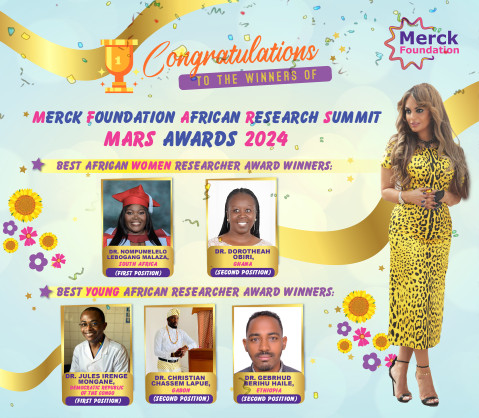
The MARS 2024 Award Winners are:

Winners of “MARS Best Women African Researchers Awards” 2024

  • Dr. Nompumelelo       Lebogang     Malaza, SOUTH AFRICA (First Position)

TOPIC: Association Between Biochemical And Epigenetic Markers With Glycaemic Control And Neonatal Outcomes In Diabetic Pregnancies

  • Dr. Dorotheah Obiri, GHANA (Second Position)

TOPIC: Immune dysregulation in placental malaria and hypertensive disorders of pregnancy

Winners of “MARS Best Young African Researchers Awards” 2024

  • Dr. Jules Irenge Mongane, DEMOCRATIC REPUBLIC OF THE CONGO (First Position)

TOPIC: Association Between Bacterial Vaginosis, Chlamydia Trachomatis Infection And Tubal Factor Infertility In Bukavu, Democratic Republic Of Congo

  • Dr. Christian     Chassem Lapue, GABON (Second Position)

TOPIC: Epidemiology of helminthiases in women of reproductive age living in Lambaréné and its surroundings, Gabon

  • Dr. Gebrhud Berihu Haile, ETHIOPIA (Second Position)

TOPIC: Incidence of neonatal mortality and factors influencing neonate survival in  neonatal intensive care unit in Northern Ethiopia: a prospective cohort study

“I am also excited to announce the Call for Applications for the new edition of the Merck Foundation Africa Research Summit (MARS) Awards 2024. This year, special focus will be again on “The Role of Scientific Research in Women Health and Reproductive Care,” added Senator, Dr. Rasha Kelej.

Merck Foundation Africa Research Summit - MARS 2025 will have scientific support from African Union Scientific-Technical and Research Commission (AU-STRC); African Reproductive Care Society (ARCS), and Manipal Academy of Higher Education (MAHE).

Details for MARS AWARDS 2025

Abstracts are invited from final year African PhD students and young investigators involved in research related to either of the following topics:

1) Women's Health

2) Infertility and Reproductive Health

All applicants should be primarily based at African Research Institutes and Universities, although collaboration within Africa as well as outside is also welcome.

Last Date of Submission:

Applications can be submitted till 30th June 2025

How to apply:

Apply by clicking: https://apo-opa.co/3X5kcnH

Alternatively, the Applications and abstracts can be submitted via email to mars@merck-foundation.com, along with CV (including Name, Gender, Country, University/Hospital Name, Email address, Mobile Number) and the abstract document as an attachment.

Other Details:

  • All Abstracts will be peer reviewed.
  • Research Awards will be dedicated for two categories of Best African Women Researchers and Best Young Africa Researchers.
  • Winners will be eligible for Research Training in a prestigious Research Institute in India.
  • Top Winners will be invited to attend the 12th Edition of Merck Foundation Africa Asia Luminary 2025.

Distributed by APO Group on behalf of Merck Foundation.

Videos Link: https://apo-opa.co/4hXOFvN

Contact Detials:
Mehak Handa
Community Awareness Program Manager
+91 9310087613
+91 9319606669
mehak.handa@external.merckgroup.com

Join the conversation on our social media platforms below and let your voice be heard!
Facebook: https://apo-opa.co/4gLG2TW
X: https://apo-opa.co/3X70mZ3
YouTube: https://apo-opa.co/4bbfmef
Instagram: https://apo-opa.co/4b0ipG5
Thread: https://apo-opa.co/4i22rgV
Flickr: https://apo-opa.co/4b8xLZ5
Website: http://www.Merck-Foundation.com

About Merck Foundation:
The Merck Foundation, established in 2017, is the philanthropic arm of Merck KGaA Germany, aims to improve the health and wellbeing of people and advance their lives through science and technology. Our efforts are primarily focused on improving access to quality & equitable healthcare solutions in underserved communities, building healthcare & scientific research capacity, empowering girls in education and empowering people in STEM (Science, Technology, Engineering, and Mathematics) with a special focus on women and youth. All Merck Foundation press releases are distributed by e-mail at the same time they become available on the Merck Foundation Website.  Please visit www.Merck-Foundation.com to read more. Follow the social media of Merck Foundation: Facebook (https://apo-opa.co/4gLG2TW), X ( https://apo-opa.co/3X70mZ3), Instagram (https://apo-opa.co/4b0ipG5), YouTube (https://apo-opa.co/4bbfmef), Threads (https://apo-opa.co/4i22rgV) and Flickr (https://apo-opa.co/4b8xLZ5).

The Merck Foundation is dedicated to improving social and health outcomes for communities in need. While it collaborates with various partners, including governments to achieve its humanitarian goals, the foundation remains strictly neutral in political matters. It does not engage in or support any political activities, elections, or regimes, focusing solely on its mission to elevate humanity and enhance well-being while maintaining a strict non-political stance in all of its endeavors.

Media files
Merck Foundation
Download logo
Read moreCelebrating Best African Women and Young Researchers
17 February 2025

First Day of Lectures Disrupted as Over 600 Uct Students March on Campus

Location: News

UCT Vice-Chancellor Mosa Moshabela promises to address issues raised by protesting students around financial exclusion

Read moreFirst Day of Lectures Disrupted as Over 600 Uct Students March on Campus
17 February 2025

Over Half of Africans Fear Financial Losses From Cybercrime, Survey Finds

Location: News
KnowBe4

According to a recent survey conducted by KnowBe4 AFRICA (www.KnowBe4.com), 58% of respondents are very concerned about cybercrime, a figure which has almost doubled from 29% in 2023. Fear of online fraud and losing money remain their top concern, given the increasing sophistication of AI-assisted cyberthreats.

The cybersecurity landscape in Africa is rapidly evolving and presents both significant challenges and opportunities (http://apo-opa.co/3EK2IH1). Africa has seen a notable increase in cybercrime (http://apo-opa.co/434M677), with ransomware, digital extortion and online scams being particularly prevalent. South Africa, for instance, lost $3 billion to digital banking and mobile app crime in 2023, according to the SA Banking Risk Information Centre (http://apo-opa.co/4k4oUvu). Cybercriminals are using increasingly sophisticated methods, including AI-generated content (http://apo-opa.co/434M677) to impersonate officials and executives, while social engineering attacks become more advanced.

In response to these concerns, KnowBe4 conducted a survey to determine how prepared Africans are for cybersecurity threats. This survey, which has been done annually since 2019, polled 800 adults across seven African countries: Morocco, South Africa, Nigeria, Ghana, Egypt, Kenya and Botswana. “The goal of the survey was to assess respondents' cybersecurity awareness, digital habits and online security practices,” says Anna Collard, SVP Content Strategy and Evangelist at KnowBe4 AFRICA. “Many challenges remain the same, but some are new, such as the alarming rise of deepfake technology.”

Increased adoption of mobile banking

One of the survey's key findings is that the Africans are more concerned about cybercrime than they were two years ago (http://apo-opa.co/4k0SAK8). The percentage of respondents who said they were “very concerned” about cybercrime almost doubled to 58% in 2025, compared to 29% in 2023 [1]. Fear of online fraud and losing money remained their top concern.

Another important insight is that the use of smart phones in Africa is on the rise. Mobile data usage increased from 71% in 2023 to 75% in 2025. Added to this was the fact that the use of mobile financial services, both for payments and banking, increased significantly from 63% to 85%. “The rise in mobile banking and payments indicates greater financial inclusion through digital means, which is generally positive for economic development in Africa,” asserts Collard. “However, an increase in mobile banking and payments also increases the attack surface for cybercriminals, which underscores the importance of mobile-centric security education.”

WhatsApp for work

A further interesting trend is that although WhatsApp is traditionally used for sharing messages with friends and family, work-related usage of WhatsApp increased slightly from 89% in the previous poll to 93% in this year's survey. Other popular apps used by respondents for work were email, Facebook, Instagram, LinkedIn and Zoom.

“The increase in WhatsApp usage for work shows a further blurring of lines between users' personal and professional lives,” comments Collard. “This can lead to increased risks, as personal devices may not have the same level of security as corporate-managed devices.”

Privacy concerns are fading

A worrying trend that emerged is the level of ease with which African users give away their personal information. The percentage of respondents “very unlikely” to give away personal information almost halved from 29% in 2023 to 14% in 2025. The survey found that 14% of respondents are comfortable sharing personal information, with 8% saying they are likely to do so if they can get something in return, such as a discount, and 6% saying they share personal information all the time.

“This is a concerning trend and reveals the need for more training on personal security,” asserts Collard. “This is further emphasised by the lack of understanding among respondents about what constitutes a strong password and multi-factor authentication.” Understanding of strong passwords slightly decreased from 62% in 2023 to 58% in 2025, while comprehension of multi-factor authentication remained stable at around 58%.

“The latest survey aims to identify key vulnerabilities that should be a priority for individuals, organisations and policy makers,” states Collard. She believes the survey highlights areas that should be addressed in 2025 to achieve strong and strategic cybersecurity. “Despite increased concern about cybercrime among the survey's respondents, there are still gaps in knowledge and practice that need to be addressed to improve overall cybersecurity posture across the continent,” she concludes.

To read the full KnowBe4 African Cybersecurity & Awareness Report 2025, click here (http://apo-opa.co/3X4alhO).


[1] No survey was conducted in 2024.

Distributed by APO Group on behalf of KnowBe4.

Media files
KnowBe4
Download logo
Read moreOver Half of Africans Fear Financial Losses From Cybercrime, Survey Finds
17 February 2025

KZN Inland Rural Remain The Only Unbeaten Team Left At Rural Week

Location: Sport

VEREENIGING:  Day two saw the KZN Inland Rural team finish as the only undefeated team left in the CSA Inland Rural...

Read moreKZN Inland Rural Remain The Only Unbeaten Team Left At Rural Week
16 February 2025

Govt calls for collective effort to boost STEAM education

Location: News

Govt calls for collective effort to boost STEAM education

The Deputy Minister of Science, Technology and Innovation, Nomalungelo Gina, has called for collective effort to improve science, technology, engineering, arts, and mathematics (STEAM) education in schools across South Africa. 

The Deputy Minister recently opened the second annual Regional STEAM Education Seminar in Johannesburg.

“We need to work together to unlock our country’s immense potential through quality education in STEAM,” said the Deputy Minister.

Gina identified several challenges contributing to the decline in STEM enrolment, including poor resources and infrastructure in rural and township schools, lack of computer labs, and limited access to qualified teachers. 

The Deputy Minister said the need for committed action and collaboration to address these challenges cannot be overstated and called on all stakeholders to unite and work towards a common goal. 

Proposing joint initiatives among all the stakeholders within the national innovation system, the Deputy Minister highlighted the need to include the corporate sector to build industry support for STEM uptake. 

The Deputy Minister has already met with business chambers in KwaZulu-Natal and the Eastern Cape, and they have shown interest in partnering with the government to ensure socio-economic development in the country. 

She also announced plans to pioneer STEM excellence schools in rural areas of each province, which will serve as models of excellence in the 21st century. 

“We need to work together to unlock our country’s immense potential through quality education in STEAM,” she said. 

The two-day seminar is a collaborative effort between the Govan Mbeki Mathematics Development Centre (GMMDC) at Nelson Mandela University, Market Place Academy, Sifiso EdTech, and key industry sponsors Deloitte and the Engineering Council of South Africa (ECSA). 

The department believes this is a testament to the shared responsibility in reshaping the future of STEM education in South Africa’s public schools.

Sifiso Learning Group Founder and CEO Sizwe Nxasana said Africa’s future depends on how well young minds are prepared today.

“STEAM education is not just about numbers and formulas. It is about unlocking critical thinking and problem-solving skills to drive innovation and transformation across our continent,” said Nxasana. 

According to Nxasana, not equipping and supporting educators to inspire and challenge their learners would stall Africa’s progress before it even begins. 

“Continuous support and professional development for educators are crucial to the success of STEM education initiatives,” he added. 

He stressed that the commitment to ongoing support underscores the long-term vision for improving STEM education in South Africa. 

“That’s why upskilling our educators with the latest methodologies, integrating technology, project-based learning, and real-world problem-solving is essential. At Sifiso Learning Group, we are committed to ensuring that classrooms are not just places of learning but incubators for the next generation of African innovators, problem-solvers and leaders,” he emphasised. 

Director of the Govan Mbeki Mathematics Development Centre, Professor Werne Olivier, said the regional STEAM seminar aimed to enhance the quality of learning and teaching in South Africa to align with the evolving future of the workplace. 

“Integrating science, technology, engineering, arts, and mathematics fosters critical thinking and problem-solving in the real world,” said Olivier. 

Known for his passion for mathematics, Olivier added that it was critical to build strong communities of practice among educators, learn from experts in the field, and find opportunities for professional development and other resources. 

Gauteng Department of Education’s Antoinette Nicolaai welcomed the initiative, saying the department was deeply committed to integrating STEM education into the curriculum to ensure that learners are equipped with the knowledge and the skills necessary for the future. 

The seminar equips educators with cutting-edge strategies to drive improved learner outcomes and enhance lesson delivery, student engagement, and professional development. – SAnews.gov.za
 

Gabisile
Sun, 02/16/2025 - 08:40
220 views

Read moreGovt calls for collective effort to boost STEAM education
16 February 2025

President Ramaphosa concludes official visit to Ethiopia for 38th AU Summit

Location: News

President Ramaphosa concludes official visit to Ethiopia for 38th AU Summit

President Cyril Ramaphosa on Saturday concluded his visit to Ethiopia, where he participated in the 38th Ordinary Session of the Heads of State and Government of the African Union (AU). 

The Assembly was held under the theme: ’Justice for Africans and People of African Descent through Reparations' from 15 - 16 February. 

The 38th Ordinary Session of the Heads of State and Government of the African Union (AU) was organised by the African Union Commission (AUC). 

The opening ceremony of the AU Summit was held with the attendance of AUC leaders, officials, Ministers, Ambassadors from AU Member States, representatives of AU organs and offices, as well as partners.

President Ramaphosa congratulated the newly-elected Chairperson Mahmoud Ali Yousouf and Deputy Chairperson Ambassador Salma Malika Haddadi, who will lead the AU during the next four years.

The Assembly also appointed new, Commissioners who will work as a collective in realising the aspirations of the continent and its people. 

“South Africa congratulates the new leadership cohort of the union and is especially proud of Ms Lerato Mataboge, as the new Commissioner for Infrastructure and Energy,” the Presidency said in a statement. 

SAnews reported that Mataboge has been elected as the Commissioner for Infrastructure and Energy of the AU after her name was put forward by the South African government. 

READ | Tau congratulates Mataboge on being elected as AU Energy, Infrastructure Commissioner

She holds a BA Honours in Law and International Relations from the University of Witwatersrand, a Master’s Degree in International Political Economy from the University of Warwick, as well as a qualification in Infrastructure in a Market Economy from Harvard Kennedy School Executive Education.

Mataboge has since committed to providing credible responses to new technologies, including biotechnologies, digitisation, and artificial intelligence, while acknowledging Africa’s vital mineral resources in developing global technologies. 

The Assembly further deliberated on the state of peace and security in Africa. 

“It expressed grave concern for the evolving situation in the eastern DRC [Democratic Republic of Congo]. The Heads of State called upon the M23 to cease-fire to prevent additional loss of lives. The Assembly reaffirmed the urgent need for inclusive negotiations and political dialogue as the only solution to end conflicts on the continent.” 

The leaders also took note of South Africa’s Presidency of the G20 and congratulated South Africa for being the first African country to host this important gathering. 

They expressed their support for the successful G20 Leaders’ Summit scheduled to take place later this year in Johannesburg.

According to the President’s Office, the country’s Commander-in-Chief also had bilateral meetings with a few countries on the continent to exchange views on issues of mutual concern.

The Assembly also discussed the African Continental Free Trade Area (AfCFTA), activities of the Africa Centre for Disease Control, infrastructure development and institutional reforms, amongst other matters. 

President Ramaphosa was accompanied by the Minister of International Relations and Cooperation Ronald Lamola; the Minister of Defence and Military Veterans Angie Motshekga; Minister of Justice and Constitutional Development Mmamoloko Kubayi; Minister of Trade, Industry and Competition Parks Tau; Minister in the Presidency Khumbudzo Ntshavheni; Minister of Forestry, Fisheries and Environment Dion George; Minister of Water and Sanitation, Pemmy Majodina and Minister of Public Service, and Administration Inkosi Mzamo Buthelezi. – SAnews.gov.za
 

Gabisile
Sun, 02/16/2025 - 09:54
74 views

Read morePresident Ramaphosa concludes official visit to Ethiopia for 38th AU Summit
15 February 2025

Learners Miss Days of School Due to Protests in Rural Kzn

Location: News

Villagers of Odadeni and KwaQoloqolo have been protesting since Monday for water, among other demands.

Read moreLearners Miss Days of School Due to Protests in Rural Kzn
14 February 2025

Western Cape Department of Local Government Helps in Securing a Safe Space for the Nuwerus Crèche

Location: News

Republic Of South Africa: Western Cape Provincial Government
Download logo

“When stakeholders work together, good things can happen,” Anton Bredell, Provincial Minister for Local Government, Environmental Affairs and Development Planning said, referring to the official handover of the site of a planned activity centre for the Nuwerus Crèche on the West Coast today.

During municipal public participation and ward committee engagements, the plight of the Crèche at Nuwerus was identified for attention. The Nuwerus Crèche is the only facility within the area that is still housed in an informal structure. The vision is to create an Activity Centre for the crèche inside the building of the church, situated next to it. 

Minister Bredell thanked the following private and government departments who made contributions to the project:

  • Nuwerus Uniting Reformed Church availed a room to be used by the ECD as an activity center.
  • Santam, which donated R60 000 for the revamp of the activity center, and R20 000 towards Diakonal Dienste in support of their programmes. 
  • The Asla Foundation contributed R110 000 for fitting out the Activity Center.
  • Department of Correctional Services will be providing cleaning services. 
  • Woodenscapes donated and installed the Play Equipment (Jungle Gym)
  • Vredendal Signs donating the signage for the facility. 
  • The Department of Infrastructure donated the wash basins, and its sports committee, which donated R2 500 towards the project.

Minister Bredell said the project was coordinated through the Department of Local Government's Citizen Interface Programme, which focus on improving the interaction between the people of rural communities and government entities. 

The purpose of the Citizen Interface Programme is to build the resilience and self-sustainability potential of deep rural small nodes and communities in the Northern areas of the Matzikama Municipality by ensuring access to basic government services and information, as well as linking external and internal resources to localised needs or challenges.  It is essentially a partnership programme, and has since its inception, successfully delivered various projects.

The Programme has over the past few years put various efforts and emphasis on supporting and revitalising the early childhood development centres in the area. All this was done in partnership with the Department of Education, as well as other state and non-state partners. These include amongst others: Providing toy-libraries and educational materials, registration of facilities, scoping reports and identifying funding partners to revamp and rebuild facilities. 

Distributed by APO Group on behalf of Republic Of South Africa: Western Cape Provincial Government.

Read moreWestern Cape Department of Local Government Helps in Securing a Safe Space for the Nuwerus Crèche
  • Previous
  • Page 1
  • Interim pages omitted …
  • Page 21
  • Page 22
  • Page 23
  • Page 24
  • Page 25
  • Interim pages omitted …
  • Page 83
  • Next

Copyright © 2026 · MyZA · All Rights Reserved · Powered by Stratlec Online