• Skip to main content
  • Skip to header right navigation
  • Skip to after header navigation
  • Skip to site footer
MyZA

MyZA

News, Directory, Events and Other Stuff

  • Social Media
  • Sport
  • World News
  • Home
  • Submit News
  • Directory
  • Events
  • Stratlec
  • TFSA
  • News
    • APO
    • Today’s Sport News
    • Todays Social Media and Tech Headlines
    • Today’s World News
    • Today’s SA Financial News
  • Contact
You are here: Home / Archives for Education

Education

26 September 2024

Deputy President Mashatile to Undertake Working Visits to Ireland and the United Kingdom

Location: News

The Presidency of the Republic of South Africa
Download logo

Deputy President Shipokosa Paulus Mashatile will on 27 – 28 September 2024, undertake a working visit to Ireland. The visit is aimed at reinforcing South Africa's historic and warm bilateral relations with Ireland.

Upon arrival in Ireland, the Deputy President will meet his Irish counterpart, Prime Minister Simon Harris, to reaffirm the strong political and diplomatic ties between the two countries.

South Africa and Ireland established diplomatic relations over 30 years ago. Political and economic relations between South Africa and Ireland encompass a broad spectrum of cooperation, such as trade and investment, education, science and innovation and gender equality. Ireland's developmental programmes have greatly assisted many initiatives in South Africa since 1994, and the partnership continues to this day. 

During the visit, the Deputy President will participate in the South Africa-Ireland Trade and Investment Round Table with Irish companies that are already invested in or intend to invest in South Africa, he is expected to deliver remarks at the Irish Tech Challenge South Africa, established to support innovation and entrepreneurship by fostering connections between the South Africa and Irish tech ecosystems.

The Deputy President will be accompanied to Ireland by the Deputy Minister of Trade, Industry and Competition, Mr Andrew Whitfield. 

The Deputy President will then proceed to the United Kingdom of Great Britain (UK) from 29 September – 04 October 2024. The visit will focus on showcasing South Africa as an investment destination of choice and strive to identify and create new trade opportunities for South African businesses, especially small and medium enterprises. 

The UK is one of South Africa's most significant bilateral partners in the Northern Hemisphere, particularly in trade, investment, skills development, science, innovation, the Just Energy Transition and tourism, among others. 

The Deputy President will engage selected investors and trade partners invited in cooperation with economic partners in the UK, and deliver a lecture at School of Oriental and African Studies (SOAS) University in London, focusing on South Africa's forthcoming Presidency of the G20. 

The Deputy President will also pay a courtesy call on the Duke of Edinburgh, and meet the Deputy Prime Minister of the United Kingdom, Ms Angela Rayner.

The Deputy President will be accompanied to the United Kingdom by the Minister of International Relations and Cooperation, Mr Ronald Lamola; the Minister in the Presidency Responsible for Planning, Monitoring and Evaluation, Ms Maropene Ramokgopa; the Minister of Public Works and Infrastructure, Mr Dean Macpherson; the Minister of Small Business Development, Ms Stella Ndabeni Abrahams; the Deputy Minister of Agriculture, Ms Rosemary Capa; the Deputy Minister Finance, Mr David Masondo; the Deputy Minister in the Presidency, Mr Kenneth Morolong and the Deputy Minister Trade Industry and Competition, Mr Andrew Whitfield. 

Distributed by APO Group on behalf of The Presidency of the Republic of South Africa.

Read moreDeputy President Mashatile to Undertake Working Visits to Ireland and the United Kingdom
26 September 2024

Plan for reshaping conservation revealed

Location: News

Plan for reshaping conservation revealed

Deputy Minister of Forestry, Fisheries and the Environment Narend Singh has unveiled a plan that advocates for a thriving environment for people and nature by 2040. 

“We are today declaring a path towards a time in the future when nature and people both thrive because of how they would have reshaped the terms of their co-dependence,” Singh said on Thursday in Johannesburg.

Addressing the occasion of the reveal of Vision 2040, the Deputy Minister said the plan was about shifting the needle in terms of shared economic growth and job creation in a manner that promotes a much stronger embrace for nature. 

Vision 2040 was launched under the theme “For A Life in Harmony with Nature,” which talks to a deliberate effort to ensure benefit sharing through sustainable development practices which can be articulated around the elements of people, planet and prosperity. 

“Ours is a great, exciting and ambitious mission which speaks to how by 2040 we hope to have reshaped the character of conversations, plans and ambitions happening in our streets, homes, boardrooms, in public discourse and even possibly education to embrace our cultural and natural heritage,” the Deputy Minister said.

The main aim of Vision 2040 is to promote social justice and inclusivity by guaranteeing that all communities, particularly the disadvantaged and marginalised ones, have fair access to opportunities and resources and that conservation is a catalyst for growth and prosperity and the betterment of people’s livelihoods.

“Vision 2040 is part of our deliberate contribution of an element of the Kunming Montreal Global Biodiversity Framework (GBF) that we need to grow our conservation estate to be constituted so that 30% of the land and 30% of the sea be placed under protection by 2030 (commonly known as 30X30). 

“It also indicates that communities living in and adjacent to conservation must tangibly benefit from the economic opportunities created. The creation of Mega Living Landscapes (MLLs), which as we have heard are vast, integrated areas that balance human development with natural ecosystems, and will be a major priority,” the Deputy Minister said.

This work is also linked to the National Biodiversity Economy Strategy.

Vision 2040 promotes sustainable economic development by leveraging biodiversity as a catalyst for social and economic transformation. 

This includes promoting eco-tourism, sustainable agriculture, and green businesses that generate income while using and conserving natural resources. 

“By aligning conservation efforts with economic activities, we aim to create job opportunities, support local economies and small, medium, and micro enterprises (SMMEs) and provide sustainable livelihoods,” Singh said. - SAnews.gov.za

nosihle
Thu, 09/26/2024 - 14:29

220 views
Read morePlan for reshaping conservation revealed
26 September 2024

Maximising ROI in Education: Aligning Employee Learning Paths with Corporate Strategy

Location: MyPR

By Dr Ridwaan Asvat (Director Student Services – Regent Business School) Investing in employee education is no longer just about personal development; it’s a powerful way to advance a company’s goals. HR managers are increasingly tasked with ensuring these investments align with the company’s strategic objectives. By tailoring learning paths to support business strategies, companies …

Read moreMaximising ROI in Education: Aligning Employee Learning Paths with Corporate Strategy
25 September 2024

Call for unity in the empowerment of women

Location: News

Call for unity in the empowerment of women

Deputy Minister in the Presidency for Women, Youth and Persons with Disabilities, Mmapaseka Steve Letsike has called on nations to unite all efforts and resources for the empowerment of women and girls.

The Deputy Minister was addressing a side event of the 79th United Nations General Assembly (UNGA79) held in New York on Wednesday.

She acknowledged that the challenge of women empowerment “is great” with women and girls facing many obstacles.

“We reiterate the severity of this challenge before us as the state of women’s empowerment leaves little to be desired, and the overall picture is consistent globally, with pockets of excellence in certain areas of development.

“Women still own a smaller share of global wealth compared to men, with the Boston Consulting Group (BCG) reporting that women owned $72 trillion of global wealth in 2020 which translates to about 17% of the total value of the global wealth held by individuals in that year. 

“This disparity is linked to factors such as gender pay gaps, unequal access to financial services, and fewer opportunities for leadership roles,” Letsike said.

She added that although the challenges facing women empowerment are “evolving at an unprecedented pace”, a brighter future for all can be forged by “uniting our efforts and resources”.

“The Education Plus Initiative stands as a beacon of hope, illuminating the pathway toward empowerment for girls and young women in the fight against the spread of HIV and an increase of AIDS related deaths. 

“It emphasises the vital importance of equipping women with education and skills, access to finance, security of land tenure, entrepreneurial opportunities and appointment of women to positions of leadership in both the private and public sectors.

“By doing so, we not only enhance women’s participation in the labour market but also unlock women’s immense potential to drive sustainable economic growth as meaningful participants in the various sectors of the economy.”

The Deputy Minister added that nations need to adopt an “intersectional lens as we advance policy for the empowerment of women and adolescent girls”.

“This will ensure that the unique and overlapping experiences of individuals or groups are recognised, thereby allowing us to craft our agenda to be more equitable and inclusive. 

“As leaders and stakeholders in this transformative journey, we bear a profound responsibility to ensure our institutions and policies are adept at addressing the challenges of both today and tomorrow, particularly for marginalised persons,” Letsike said.

She called on world leaders to build a better future for women and girls today.
“As we move forward, let us be inspired by the potential within our youth, especially our girls. They are not just the leaders of tomorrow; they are the catalysts of change today. 

“Together, we can build a world where their dreams are not limited by their circumstances, but rather fuelled by the opportunities we create for them,” Letsike said.

President Cyril Ramaphosa is leading South Africa’s delegation to the High-Level General Debate of the 79th Session of the General Assembly (UNGA79) in the United States of America. The debate of the UNGA79 is taking place at the United Nations headquarters in New York, from 24 to 30 September 2024. 
– SAnews.gov.za

NeoB
Wed, 09/25/2024 - 11:45

295 views
Read moreCall for unity in the empowerment of women
25 September 2024

Minister Gwarube commits to stabilising the education system

Location: News

Minister Gwarube commits to stabilising the education system

Minister of Basic Education Siviwe Gwarube and her deputy, Dr Reginah Mhaule, have committed to take all necessary steps to stabilise the education system given the budgetary constraints affecting provinces.

The Minister said this while addressing the media on developments regarding budget cuts in the education sector, in Pretoria, on Wednesday. 

“The Deputy Minister and I have been in constant engagement with provinces to support them during this challenging fiscal environment. We have committed ourselves to doing everything we can to stabilise the system and have appealed to provinces to retain the basket of posts, in order to not compromise education outcomes,” the Minister said. 

She also moved to appreciate the work that the provinces have been doing around the clock to help the sector get to grips with these challenges. 

“I have witnessed MECs work tirelessly with their provincial departments to protect teaching and learning in our schools.”

Challenges

The briefing comes weeks after several provincial Departments of Education have been vocal about the budgetary pressures they face. 

These, said the Minister, have been years in the making due to the aggressive budget cuts, economic stagnation and fiscal mismanagement which is now set to impact schools.

“These budget pressures are not just numbers on a spreadsheet - they translate into fewer teachers, reduced textbooks, and fewer admin support staff, which means teachers spend more time on admin work, thereby reducing learning and teaching time. In essence, the very fabric of our children’s future is under threat.”

She explained that provinces like the Western Cape have seen the painful decision to reduce the basket of teaching posts for 2025, a move that may result in fewer educators in classrooms. 

“This may mean larger class sizes, reduced individual attention for learners, and ultimately, a risk to the achievement of quality education outcomes.”

She added that unfortunately, other provinces throughout the country are in a similar position with many desperately working to find ways of avoiding having to top slice budgets for key services like textbooks, admin support and scholar transport programmes. 

“We are faced with a pending national crisis, one that affects not just our learners but our teachers, principals, and broader communities.

“It is crucial to understand that this crisis is not confined to one province or one aspect of the education sector. Every province is grappling with these painful choices.”

Provincial education departments will in the next two to three years, find it increasingly difficult to fund their existing basket of posts and existing programmes within the available budget, unless measures are taken proactively to mitigate this risk.

For instance, she said in the 2025/26 financial year, four provincial departments will battle to cover their budgets; in the 2026/27 financial year, five provinces will battle to cover their budgets. In the 2027/28 financial year, seven provinces will not be able to afford their budgets. 

“Several provinces have preserved the same post basket for the past three academic years, despite learner numbers increasing, while other provinces have decreased their posts in the past three years. It is important to note that these have been cuts in posts but not warm bodies. 

“Meaning that no person gets retrenched but rather vacancies are not filled,” she said. 

Increase in learner numbers

Nationally, the Minister highlighted that the number of learners within the education system has increased by approximately 292,820 over the last five years.

Learner/Educator Ratios have also steadily increased across most provinces. 
She explained that an increase in learners' numbers without increasing the post basket, may affect the quality of teaching which may soon be reflected in the performance of the system.

Largely, she added that the financial constraints have had the largest impact on educator provisioning, leading to a steady increase in Learner/Educator Ratios in most provincial education departments.

“Most provincial Education Departments require between R350 million and R3.8 billion [over the Medium-Term Expenditure Framework to fully fund their respective basket of posts].

“The numbers are staggering. If we continue down this path, projections indicate that most provincial education departments will not be able to maintain their respective basket of posts,” she said. 

Interventions

In response to this potential crisis, Minister Gwarube said she convened two special meetings of the Council of Education Ministers (CEM). These meetings brought together education MECs from across the country and they conducted a thorough analysis of the budget challenges in each province. 

MECs from each province have compiled provisional provincial reports with sobering results.

“For the first time in a decade, we now have a clearer picture of where the most significant budget pressures lie and how we need to engage treasury in a bid to address the challenges we see.

“As a result, I have requested an urgent meeting with the Minister of Finance to discuss the matter further. I am grateful to Minister [Enoch] Godongwana for his cooperation and support on this important matter.

“We are also appreciative of Treasury’s willingness to engage with the Education sector. Ultimately a solution must be found in order for us to protect front line services,” the Minister said. 

Gwarube has also requested a convening of a political 10X10 meeting between the Minister of Finance and the provincial MECs for Finance, as well as herself and the nine MECs of Education. 

“We must work together with all 10 treasuries to unlock additional funds to alleviate the pressures facing the education sector, even if it is for the short term, and to prevent further cuts to teaching posts and critical support services like school nutrition and transport.

“We also need to look at cross-departmental reprioritisation of budgets from departments that have under-performing programmes – ensuring that funding across government is directed to appropriate national priorities,” she said. 

The Minister concluded that while the sector faces significant challenges, “these are not insurmountable. But they require decisive action and an unwavering commitment to putting education first.”

Earlier this month, the Department of Basic Education said that the Minister had held meetings with various international partners to reinforce South Africa's commitment to enhancing the education sector through global collaboration. 

READ | Minister Gwarube in talks to enhance education sector

– SAnews.gov.za


DikelediM
Wed, 09/25/2024 - 11:51

260 views
Read moreMinister Gwarube commits to stabilising the education system
25 September 2024

SA Department of Communications and Digital Technologies Partners With Africa Tech Festival 2024, Hosts Exclusive Ministerial Summit

Location: News

Africa Tech Festival
Download logo

Informa Tech, organisers of the 27th annual Africa Tech Festival (www.AfricaTechFestival.com)  2024, are pleased to announce that the South African Department of Communications and Digital Technologies (DCDT) will be an official partner of this year's event, taking place from 12 to 14 November in Cape Town. 

Incorporating AfricaCom, AfricaTech, AfricaIgnite, and The AI Summit Cape Town, Africa Tech Festival 2024 will welcome 15,000 visitors, over 400 speakers, and more than 300 exhibitors. Topics include enterprise tech innovation and disruption across key sectors such as artificial intelligence, cybersecurity, cloud and data centres, and green ICT.  

“Africa Tech Festival is the largest and most influential telecoms and technology event in Africa, with an audience that spans the entire ICT ecosystem, including trade and other ministries. The partnership with the DCDT is a clear indication of the South African government's commitment to engaging with these key stakeholders from across the continent, opening dialogue, sharing insights, and working together to advance Africa's digital transformation journey,” said Informa's James Williams, Event Director of Africa Tech Festival.   

One of the highlights of the partnership is the AfricaCom 2024 Ministerial Summit, a closed-door VIP event bringing together close to a dozen African and international ministers from across critical sectors such as ICT, innovation, trade, finance, education, and enterprise. The Ministerial Summit will provide government leaders with a platform that facilitates discussion, collaboration, and sharing of learnings on how progressive policy is nurturing tech ecosystems, building efficient workforces, unlocking technological innovation across public and enterprise sectors, and driving Africa's socioeconomic development.  

Another initiative that forms part of the partnership is an exclusive government pavilion at which a small group of top South African businesses, SMEs, and startups will be hosted, again reflecting top-tier support for businesses that are contributing to the country's technology-driven agenda.  

“The importance of collaborative efforts and partnerships in realising our goal of a connected and digitally transformed society cannot be overemphasised. The Africa Tech Festival presents such platform for different innovative minds to come together to explore and exchange tech solutions for Africa and the rest of the world. This global platform will not only afford us an opportunity to learn best practices but also afford our SMEs to market their innovative solutions to the more than 15 000 visitors from across the globe. We are committed to ensuring that Africa does not become a mere consumer of digital solutions developed elsewhere but a meaningful participant in the digital economy by being a supplier of solutions and infrastructure that are tried and tested in our shores. We are looking forward to welcoming the world to our shores.” said Ms Nonkqubela Jordan-Dyani, Director-General of the Department of Communications and Digital Technologies. 

The introduction of the Ministerial Summit, along with the official endorsement of the event by the DCDT, add significantly to the depth of Africa Tech Festival. In addition to showcasing the immensely innovative nature of the industry, the event is also a targeted networking platform for tech leaders, role-players, and investors to make a positive contribution to Africa's successful navigation of a tech-driven future. 

Confirmed Africa Tech Festival 2024 speakers include: 

  • Faith Burn, Chief Information Officer, Eskom Holdings SOC  
  • Funke Opeke, CEO, MainOne  
  • Kerissa Varma, CISO, Vodacom Group  
  • Leo Skarlatos, CEO, AT (formerly Airtel Tigo)  
  • Mary Mahuma, CIO, Southern Africa, Philip Morris  
  • Motunrayo Opayinka, Founder and CEO, Womenovate  
  • Nollie Maoto, Chief Data and Analytics Officer – Merchant Services, FNB South Africa  
  • Norbert Prihoda, Deputy CEO, Tunisie Telecom 
  • Prasanna Kumar Burri, Group Chief Information Officer, Dangote Group  
  • Samwel Magesa, Chief Data Officer, NBC Bank  
  • Simbah Mutasa, Managing Director, Bank of America  
  • Sithembile Songo, CISO, Eskom Holdings SOC  
  • Hon. Solly Malatsi, Minister, Ministry of Communications and Digital Technologies, The Republic of South Africa 
  • Hon. Rose Pola Pricemou, Minister, Ministry of Posts, Telecommunications and Digital Economy, Republic of Guinea 
  • Sitoyo Lopokoiyit, CEO, M-Pesa 
  • Brelotte Ba, Deputy CEO of Orange Middle East and Africa, Orange 
  • Hazem Metwally, CEO, e& Egypt (etisalat) 
  • Christian Bombrun, Group CEO: Digital Platforms, MTN Group 
  • Faith Burn, Chief Information Officer, Eskom Holdings SOC 
  • Funke Opeke, CEO, MainOne  
  • Thomas Dohmke, CEO, GitHub 
  • Alex Okosi, Managing Director, Africa, Google 
  • Hardy Pemhiwa, President & Group CEO, Cassava Technologies 
  • Morgane Imbert, CEO (South Africa), Jumia 

Register now to secure your spot and join us in shaping the future of technology in Africa: https://AfricaTechFestival.com/ 

Distributed by APO Group on behalf of Africa Tech Festival.

About Africa Tech Festival:  
Africa Tech Festival, including anchor events AfricaCom, AfricaTech, AfricaIgnite, and The AI Summit Cape Town is part of the Informa Tech Connecting Africa event series.  

A vibrant celebration of Africa's diverse community of tech champions, Africa Tech Festival is the largest tech and digital connectivity conference and exhibition in Africa, attracting hundreds of exhibitors, more than 400 speakers and more than 15,000 delegates.  

Read moreSA Department of Communications and Digital Technologies Partners With Africa Tech Festival 2024, Hosts Exclusive Ministerial Summit
25 September 2024

Reclaiming State property

Location: News

Reclaiming State property

Public Works and Infrastructure Deputy Minister Sihle Zikalala will today undertake Operation Bring Back (OBB), which aims to oversee the implementation of eviction orders in State-owned properties around Mthatha in the Eastern Cape.

Zikalala will be accompanied by the Eastern Cape Public Works and Infrastructure MEC, Siphokazi Lusithi. 

The action is part of the Eastern Cape and nation-wide Government plan to reclaim unlawfully occupied state properties. 

Operation Bring Back is an initiative of the national Department of Public Works (DPW), which aims to recover land and other properties, including farms that were illegally occupied or stolen from the State prior to and immediately after the 1994 democratic transition.

In terms of the Constitution of the Republic of South Africa, No 108 of 1996, all State owned national and provincial immovable assets must be vested in the name of the national government or in the name of the nine provinces. The national government is therefore the custodian of all national government immovable assets.

In April 2011, the National Department of Public Works started the OBB programme, which was largely dependent on the public coming forward to report cases of misappropriation through a call centre that was launched during a public communication campaign at the time. This OBB programme ceased to function in October 2011 and no cases were investigated.

Following the evictions under today's programme, an oversight visit will be carried out at the construction site of the Mqanduli Office Precinct in Mqanduli.

In the Eastern Cape, there are 82 properties that are currently going through legal channels, including 57 eviction orders. 

Of these, 21 have been evaluated and are recommended for execution, with a target of completing 36 evictions by the end of the 2024/2025 financial year. 

All eviction actions will strictly adhere to legal standards and respect tenant rights. 

The Mqanduli Office Precinct is designed to enhance local government services and stimulate economic growth in the area. 

This modern facility aims to improve accessibility for residents and provide a collaborative space for various government departments. – SAnews.gov.za

Edwin
Wed, 09/25/2024 - 10:13

206 views
Read moreReclaiming State property
24 September 2024

Heritage sites key tourist destinations – Mashatile

Location: News

Heritage sites key tourist destinations - Mashatile

Acting President Paul Mashatile has urged the South Africans to seize the opportunity to highlight heritage sites as key tourist destinations, contributing to socio-economic development, fostering people-to-people connections, and promoting social cohesion.

Mashatile was delivering the keynote address during the Heritage Day commemoration at Meqheleng Stadium, Ficksburg, on Tuesday. 

“As we celebrate Heritage Month, which coincides with Tourism Month, we should use this opportunity to showcase to the nation the significance of our heritage sites across the country as tourist destinations of choice that have the potential to contribute to socio-economic development, promote people-to-people relations and enhance social cohesion.

“On this day, we should also celebrate our cultural diversity, our inherited sense of family identity, our traditions, cultural wealth, and artefacts passed down through the generations, particularly since the dawn of democracy,” he said. 

The Acting President told South Africans to reflect on 30 years of democracy, which in itself is a milestone that underlines the nation’s diversity and heritage. 

He noted that it is also critical that the country recognise and remember the courageous individuals such as JB Marks and Moses Kotane and many others who gave their all for the great gift of our freedom. 

The 2024 Heritage Day is celebrated under the theme: "Celebrating the Lives of Our Heroes and Heroines Who Laid Down Their Lives for Our Freedom. 

Mashatile said the theme is fitting because it allows the country to honour the lives of those who confronted adversity with unflinching bravery, and stood up against injustice and oppression. 

“The commemoration of our heritage is a result of the sacrifices and efforts of those who came before us, fighting against apartheid and championing social justice and human rights.

“It is therefore important that we, as a nation, preserve the memory of those who fought for our freedom. They have dedicated and sacrificed their lives to the defence of our country, as well as the assertion of the values and principles that must be upheld. It is because of their bravery, resilience, and resolute commitment that we have a brighter future for generations to come,” he said. 

Mashatile emphasised the importance of honouring struggle heroes and educating future generations about their sacrifices.

As part of this process, and in honour of the freedom fighters who have made the ultimate sacrifice, Mashatile highlighted that the country will be honouring those who have fallen outside of the borders. 

A homecoming ceremony will take place this Friday in which President Ramaphosa will officially receive the repatriated remains from Zambia and Zimbabwe. 

As South Africa marks three decades of democracy, the nation reflects on its rich heritage while acknowledging ongoing challenges such as unemployment, poverty, and inequality. 

Acting President also urged citizens to unite and celebrate diversity in the pursuit of a more equal society where opportunities are not dictated by colour, gender, class, or religion.

“To tackle these ongoing challenges, we must unite and celebrate our diversity while striving to create a more equal society where opportunities are not determined by colour, gender, class, or religion.

“This would entail increasing people's skills through access to equal education opportunities, quality health care for all, and provision of basic amenities, as well as facilitating work opportunities and shifting economic ownership patterns,” he said. 

Furthermore, Mahsatile said government, interfaith, civil society formations and traditional leaders must work together to eliminate persisting inequalities and Gender-Based Violence and Femicide (GBVF) which is prevalent in our communities. He added that all acts of criminality, and GBVF undermine government efforts to foster the culture of social cohesion and moral regeneration.

“We must not let anybody conceal evil acts of abuse under the guise of one’s belief system and culture. It has to be said that no nation can condone any form of abuse against women, children and those most vulnerable within society, including the LGBTQIA+ community. To demonstrate our commitment to the fight against GBVF, the government has introduced new laws protecting women and children,” he said. 

He highlighted that on 24 May 2024, the President signed the National Council on Gender-Based Violence and Femicide Bill into law.

This new legislation is a significant step towards protecting women and children from abuse and violence, by way of establishing a council to provide strategic leadership in the fight against Gender-Based Violence and Femicide.

Mashatile called for the confrontation of issues related to heritage resources in public spaces, which continue to pose a challenge in defining a collective cultural identity and building a nation united in its diversity.

“In our country, the impact of apartheid remains visible, and the wounds of past divisions and inequalities remain unresolved. Therefore, we need to continue to build on that which unites us and deal with issues that seek to divide us as a nation. 

“It is through understanding and celebrating our shared heritage that we can begin to bridge the gaps that divide us and move forward as a united and inclusive society,” he said. 

He added that the reality of the nation’s political climate under the Government of National Unity, also gives an opportunity to collectively re-imagine what the heritage of good governance in South Africa can look like. 

“Our ability to look beyond our differences and converge on the shared agenda to bring about inclusive growth, job creation and poverty reduction is one of the examples that the government is showing its commitment to uniting through diversity,” he said. 

Mashatile further called on different sectors of society to collaborate with the South African Heritage Resource Agency to develop community abilities and capacities to help identify and protect heritage resources.

“We have to guard and protect our heritage from forms of neglect and threats such as natural disasters, urbanisation, globalisation and developments that pose challenges to the preservation of our most treasured landmarks, artefacts, and traditions. 

“All communities from the Free State Province, including Ficksburg, have the responsibility to protect and preserve historical sites like the Old Prison Cells and the General Fick Museum. We must educate young people about the significance of such sites because they are an important part of who we are and where we come from,” he said. 

He also called for a renewed commitment to heritage conservation, emphasising its importance not only in preserving the past but also in shaping South Africa's future. 

"Our heritage is more than a collection of artefacts; it defines who we are and where we are headed as a nation,” he said. 

Mashatile stressed the need to protect both tangible and intangible heritage, highlighting the connections among diverse communities through shared living heritage, including oral histories, belief systems, cultural practices, and indigenous knowledge. 

He noted that these elements are foundational to the nation's identity, saying, “Preserving intangible cultural heritage is vital to maintaining our integrity, values, and mutual respect.”

He urged all stakeholders - families, NGOs, traditional and interfaith leaders, educational institutions, businesses, and media to engage in promoting and protecting intangible cultural heritage

Mashatile encouraged pride in native languages and urged South Africans to learn each other's dialects to foster mutual understanding and respect.

The Acting President called on intellectuals and language practitioners, along with organisations like the Pan South African Language Board, to implement programmes aimed at preventing linguistic knowledge extinction, especially among younger generations.

“As South Africa continues to develop, it is crucial to preserve our heritage for generations to come. We must cherish, protect, and celebrate the monuments, sites, and traditions that define our unique identities, ensuring that they are passed on to future generations.

“Most importantly, while we celebrate our rich past and unique culture, we must remember the sacrifices made by those who fought for our independence. May we never forget the price paid for our freedom, and may we always remember the lives of our heroes and heroines who sacrificed everything for our country,” he said. 

In closing, Mashatile called for collective action to preserve the nation's legacy and shape a better future for all South Africans. – SAnews.gov.za

DikelediM
Tue, 09/24/2024 - 15:53

148 views
Read moreHeritage sites key tourist destinations – Mashatile
23 September 2024

Heineken Beverages Is Sowing Seeds of Inclusivity Through Global Worlds Together Social Impact Campaign

Location: MyPR

HEINEKEN Beverages promoted diversity and inclusivity by gathering a range of stakeholders over a meal, a drink and authentic conversation as part of global social impact initiative called Worlds Together. “We invited South African Special Olympics and SANASA (South African National Association for Special Education), bringing them together to help bridge the gap between organisations …

Read moreHeineken Beverages Is Sowing Seeds of Inclusivity Through Global Worlds Together Social Impact Campaign
23 September 2024

Shaping Inclusive Fisheries and Transforming Gender Roles in South Africa’s Coastal Communities

Location: News
The African Union – Interafrican Bureau for Animal Resources (AU-IBAR)

Coastal communities in South Africa were represented in a lively two-day community workshop that sought to promote gender inclusivity in environmental management and the conservation of aquatic biodiversity. The workshop, which was co-hosted by AU-IBAR, Mabuyi Development Planners, and Blue Wild Coast NPO, aimed to provide a thorough Gender Plan of Action for NGOs engaged in small-scale fisheries.

Fifty people showed up at the event in East London, South Africa. Among them were ladies from the seaside towns of Hamburg and Port St. John's, as well as officials from the government, non-governmental organisations, the business sector, and foreign organisations. The workshop sought to incorporate gender-sensitive practices into environmental management, with a heavy emphasis on gender mainstreaming. This was especially important in small-scale fisheries, where women are crucial but under-represented.

Workshop Objectives and Background
After successfully recruiting a Technical Consultant to assist South African environmental NGOs, the Aquatic Biodiversity Conservation Project continued its earlier efforts with the workshop. Site visits, a gender assessment report, an MoU, and a Gender Plan of Action were all part of the consultant's remit to guarantee that women and disadvantaged communities would be a part of environmental sustainability initiatives.

Prior consultations verified the inception report, which laid the groundwork for this workshop. Recognising the importance of local women as guardians of aquatic biodiversity, we set out to understand the difficulties they encounter in small-scale fisheries and find strategies to support them. Workshop participants also had the opportunity to confirm the consultant's report's findings and work together to develop ways to increase gender inclusion in the sector.

Opening Session: Setting the Stage for Change
A panel of speakers stressed gender equality in small-scale fisheries and aquatic biodiversity management at the inaugural session.

At the outset of the session, Ms. Elethu Duna, Executive Director of Blue Wild Coast NPO, acknowledged the importance of women in small-scale fishing in South Africa and highlighted their lack of representation in decision-making bodies. She emphasized that addressing gender inequities offers potential for permanent change and expressed gratitude to AU-IBAR and partners for the session. Duna strongly encouraged participation in developing a substantial Gender Plan of Action.

Mr. Zamkhaya Maseti from the Premier's Office, Government of South Africa, recognized the need for additional action in rural communities while emphasizing the government's dedication to empowering women through policies. He highlighted the importance of women in fisheries, noting that they are sometimes overlooked, and described the session as a crucial step in addressing this disparity. "The time for talk is over," Maseti declared as his final rallying cry. Now is the moment to take action.

Ms. Thabisa Sigwela, representing the Buffalo City Maritime Cluster, emphasized the need for women's economic empowerment and advocated for organized investments in financial inclusion and capacity building. She pledged to support businesses run by women and stressed the importance of providing women in underserved coastal communities with easy access to economic opportunities.

Ms. Mashebane Thosago, from the African Women Fish Processors and Traders Network (AWFISHNET), highlighted the obstacles women in the fishing industry face, including a lack of education and financing. She spoke about how AWFISHNET is working to connect women across Africa and how this training can empower those involved in small-scale fishing to make a difference.

Ms. Fransciscar Mhuriro, representing AU-IBAR, reiterated the organization's commitment to gender equality, calling for women to be recognized as leaders in the fisheries industry. She stressed that AU-IBAR is responsible for promoting gender-responsive policies and enabling knowledge-sharing to ensure the Gender Plan of Action is a living tool for change.

Finally, Ms. Nozuko Ntsokota from the Department of Forestry, Fisheries, and Environment (DFFE) discussed the need for practical application of existing gender policy. She highlighted the importance of collaboration to equip women with the knowledge and resources needed to thrive in small-scale fisheries and pledged continued support for initiatives that emerge from the session.

The workshop focused on gender issues in small-scale fisheries through technical sessions. The first session introduced the importance of integrating gender principles into fisheries management. Key presentations included the roles of men and women in small-scale fisheries, the marginalization of women, and the role of women in vulnerable coastal communities. The second session, moderated by Stephanie Achieng, discussed legislative frameworks, financial exclusion, tenure rights, and infrastructure challenges in small-scale fisheries. A draft gender plan of action was introduced, based on input from local fisherwomen.

Challenges and Opportunities for Women in Cooperatives
Ms. Thosago Mashebane of AWFISHNET and SANWFA highlighted the persistent challenges faced by women in fisheries cooperatives. Issues included unfriendly working environments, inadequate infrastructure, and limited financial inclusion. Despite the existence of cooperatives for over a decade, women continue to struggle with access to resources, funding, and tenure rights. Ms. Mashebane emphasized the need for improved legislative frameworks, increased capacity-building initiatives, and the creation of financial tools tailored to the needs of women in coastal communities.

Proposed Solutions and Commitments
Participants discussed potential solutions, such as the establishment of organized forums for women in cooperatives, improved sustainability of interventions, and stronger policy frameworks. The workshop also proposed the development of business models for women cooperatives, alongside measures to increase their representation in decision-making institutions at local and national levels. Notably, SANWFA committed to connecting women cooperatives from the Eastern Cape with buyers in the Western Cape, fostering new economic opportunities.

Key Workshop Outcomes
Key conclusions from the event will guide future efforts and the Gender Plan of Action. As a means of identifying and addressing critical obstacles, participants evaluated current frameworks and policies that affect women in coastal areas. They looked at different ways to help women participate more in small-scale fishing, with an emphasis on financial inclusion, capacity building, and access to resources. Involvement from women in coastal communities, local NGOs, and government stakeholders led to the development of a thorough Gender Plan of Action. This plan outlines methods for capacity building, advocacy, and monitoring. The significance of public-private partnerships was also highlighted, with organisations such as the South African Maritime Association and the Department of Rural Development and Agrarian Reform (DRDAR) being identified as vital for long-term success.

Next Steps and Recommendations
The subsequent actions were outlined as follows: 

After the Gender Plan of Action is finalised, workshop participants will receive a draft of the Memorandum of Understanding (MoU) and have the opportunity to review and provide input on it before the deadline. When completed, it will be a part of larger plans to manage fisheries on a national and regional level. The importance of ongoing support from AU-IBAR and Blue Wild Coast NPO was highlighted, as was the need for continuous capacity building for women cooperatives in Port St. Johns and Hamburg. For the purpose of tracking and adjusting progress, gender-sensitive monitoring and evaluation indicators will be created and integrated into the M&E framework of the participating NGOs. Sustainable business models in small-scale fishing will also be a priority, therefore we'll be working to connect women's cooperatives with buyers and funding options.

Conclusion
For South African small-scale fisheries, the community workshop was a watershed moment in the fight for gender parity. At this event, women from coastal communities, along with representatives from government and NGOs, worked together to develop strategies that will empower women and involve them in managing aquatic biodiversity. Participation and representation of women in coastal communities in environmental management discussions will be enhanced by the workshop's outputs, which will play a pivotal role in informing future policies and interventions.

Distributed by APO Group on behalf of The African Union – Interafrican Bureau for Animal Resources (AU-IBAR).

Media files
The African Union – Interafrican Bureau for Animal Resources (AU-IBAR)
Download logo
Read moreShaping Inclusive Fisheries and Transforming Gender Roles in South Africa’s Coastal Communities
22 September 2024

Personalised Tutoring: Empowering Students to Excel Across Subjects

Location: MyPR

Education is a journey, and while the path may be challenging, having the right support makes all the difference. Many students face difficulties in various subjects, which can lead to frustration and a lack of confidence. This is where tutoring plays an integral role, offering tailored support in specific subjects to help students thrive. Whether …

Read morePersonalised Tutoring: Empowering Students to Excel Across Subjects
22 September 2024

Countdown to final exams for Class of 2024

Location: News

Countdown to final exams for Class of 2024

With just under a month to go to the start of this year’s National Senior Certificate (NSC) exams, matrics all around the country will put shoulder to wheel in preparation for the final exams of their basic education careers.

The examinations are set to run from 21 October to 27 November 2024, and marking will commence immediately thereafter. 

READ | Basic Education ready for 2024 matric examinations

According to the Western Cape Education Department, over the school holiday, matrics across the province will be attending Spring School to revise their work and prepare for the final exams ahead.

“Matric learners will have the opportunity to attend walk-in classes at their school, or a hub with learners from several schools attending,” said Western Cape Education MEC David Maynier.  

Meanwhile, the Eden and Central Karoo, and West Coast education districts will also host residential camps for some of their learners. 

The department is appealing to the public to support Grade 12s, as the countdown to the exams is a stressful period for the learners and they need to be given the best possible opportunity to achieve their goals without any added anxiety.

“I encourage any matric learner who feels overwhelmed to reach out to their teachers and school for support. Help is available, and we will do everything we can to support you. 

“This will also be an anxious time for our matric teachers, who have supported our learners throughout the year,” said Maynier. 

He also took the time thank the educators for the many hours they have put into preparing matric learners for the final stretch. 

“To our matrics, you have made it this far, and worked so hard to prepare for this moment, so this is the time to make your efforts count. We can’t wait to see what the #ClassOf2024 will achieve.” 

Maynier expressed his appreciation for the tutors’ willingness and schools to host these vital revision classes over the holiday period.

“We have also collated a variety of eLearning resources specifically for our matrics on our ePortal, including video lessons, past papers, study tips and revision notes.” 

The MEC is encouraging learners to make use of these resources, which can be found on https://wcedonline.westerncape.gov.za/matric-support. – SAnews.gov.za
 

Gabisile
Sun, 09/22/2024 - 13:54

151 views
Read moreCountdown to final exams for Class of 2024
21 September 2024

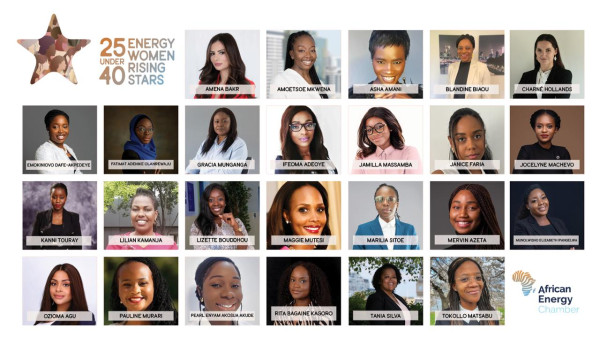
Celebrating This Year’s 25 Under 40 Energy Women Rising Stars

Location: News
African Energy Chamber

As Africa's energy sector continues to grow, a new generation of women is breaking barriers and redefining leadership in this critical industry. The African Energy Chamber (AEC) (www.EnergyChamber.org) proudly announces the 2024 edition of the 25 Under 40 Energy Women Rising Stars – a group of outstanding individuals whose innovation, perseverance and passion are transforming the landscape of African energy. These trailblazers are not only reshaping a traditionally male-dominated field but are also playing a vital role in the journey to end energy poverty by 2030. The AEC proudly honors these women as they lead the charge toward a more sustainable and equitable energy future.

In alphabetical order:

Amena Bakr, Senior Research Analyst, Energy Intelligence

Amena Bakr is a Senior Research Analyst at Energy Intelligence. Specializing in the energy transition, corporate strategy and market analysis, Bakr leads insights on oil markets, OPEC policies and political trends in the Middle East and Gulf Arab region. Her previous roles include Chief OPEC Correspondent and Dubai Deputy Bureau Chief, where she earned accolades such as the OPEC Award for Best Journalist and the IAEE Excellence in Written Journalism Award. Bakr holds a BA in Business Administration from the Arab Academy for Science, Technology & Maritime Transport, Egypt.

Amoetsoe Mkwena, Senior Associate, Watson Farley & Williams (Middle East)

Amoetsoe Mkwena is a Senior Associate at Watson Farley & Williams, specializing in energy and infrastructure with a focus on Africa. She advises on international projects, including the $15 billion Simandou project in Guinea. Mkwena's expertise includes power, renewables, oil and gas, and mining. Her legal skills and ability to bridge cultural divides make her a key player in Africa's energy sector.

Asha Amani, General Manager, INTERAFCON

Asha Amani is the General Manager at INTERAFCON, where she blends strategy and leadership to drive growth in complex energy projects. With seven years in Industrial Engineering and five years in the energy sector, Amani excels in business strategy, opportunity identification and project management. Her previous role as a Business Development Consultant at Tetco Consulting focused on delivering tailored solutions for the energy, engineering, and construction sectors.

Blandine Biaou, Geological Engineer, Head of Research and Prospection Department, SNH-Benin

Blandine Biaou, Head of the Research and Prospection Department at SNH-Benin, specializes in hydrocarbon exploration. She has optimized Benin's energy sector through resource management and contract revisions. Biaou has developed a modern data center and interactive database, contributing to national projects and representing Benin in international conferences, positioning it as a hydrocarbon hub.

Charné Hollands, Deputy Editor, Energy Capital & Power

Charné Hollands is the Deputy Editor at Energy Capital & Power, the leading investment platform for the African energy sector. She produces content on the entire energy value chain in Africa, with a focus on oil, gas, renewable energy and energy policy. Hollands holds a Master's in Media Studies from the University of Cape Town and has co-authored African Energy Chamber: Road to Recovery.

Emokiniovo Dafe-Akpedeye, Managing Partner, Compos Mentis Legal Practitioners

Emokiniovo Dafe-Akpedeye, a leading dispute resolution lawyer, specializes in complex oil and gas cases. She has represented Shell Petroleum and serves as company secretary for the Ebendo Host Community Trust Board. With degrees from Oxford and Bristol, she shapes oil and gas law and is implementing digital solutions to streamline board operations.

Fatimat Adenike Olanrewaju, General Field Engineer, SLB

Fatimat Adenike Olanrewaju, a Chemical Engineering graduate, is a General Field Engineer at SLB, focusing on wellhead installations and emissions reduction. She excels in a male-dominated field and leads community service through SLB's SEED initiative, advocating for gender diversity and mentoring.

Gracia Munganga, Senior Technical Advisory, ABT Global

With a Master's degree in Chemical Engineering from the University of Cape Town, Gracia oversees operations for the company, which has been designing and commissioning solar PV systems across sub-Saharan Africa since 2018. Her career includes roles at GreenCape, Anaergia Africa, the Climate Innovation Centre South Africa (CIC-SA), and the Carbon Trust.

Ifeoma Adeoye, CEO, IMSE Energy Resources Limited

Ifeoma Adeoye, CEO of IMSE Energy Resources Limited, leads the company in EPCI services and innovative crude evacuation technology. A graduate of the University of Manchester and Warwick, she also founded Business Nest Investments and BNI Insurance Brokers Limited, to empower and protect people and businesses through microfinance and insurance.

Jamilla Massamba, Health Safety and Environment Manager, SLB Congo

Jamilla Massamba, Health, Safety & Environment Manager at SLB Congo, leads HSE initiatives across Africa. With a Master's in Environmental Management Sciences, she has conducted over 100 audits and received awards for her work. Massamba also mentors young women in STEM and leads green energy projects.

Janice Faria, CEO, Enagol: Energias de Angola

As CEO of Enagol, Janice Faria has elevated the company's national and international profile. Under her leadership, Enagol competes globally and services International Oil Companies, setting a precedent for local enterprises in the global market.

Jocelyne Machevo, Communication, Commercial & Marketing Manager, Vivo Energy Mozambique

Jocelyne Machevo, formerly with Eni Mozambique, played a key role in the Coral FLNG Project and led the company's local brand transformation. Now at Vivo Energy Mozambique, she focuses on energy transition and decarbonization projects.

Lilian Kamanja, Electrical Engineer, Kenya Power

Lilian Kamanja is a Renewable Energy Specialist at Kenya Power with over nine years of experience in electrical engineering, network operations, and renewable energy development. She holds a BSc from the University of Nairobi and an M.Tech from IIT Delhi, focusing on renewable energy projects that enhance power accessibility and reliability.

Kanni Touray, Deputy Director General, Petroleum Commission, The Gambia

Kanni Touray, The Gambia's youngest and first female Deputy Director General at the Petroleum Commission, has enhanced the organization's efficiency and visibility. She champions sustainable development and energy transition, positioning The Gambia as a growing player in the global energy market.

Lizette Bouddhou, Human Resources Manager, SLB Congo and Gabon SLB

Lizette Bouddhou, HR Manager at SLB Congo and Gabon, drives diversity and workforce development. She leads recruitment and training initiatives, boosts employee engagement, and advances community outreach through educational partnerships, supporting women in STEM.

Maggie Mutesi, Managing Editor, Mansa Media

Maggie Mutesi is the Managing Editor at Mansa Media, with over 15 years of experience in major media outlets including CNN, BBC and CNBC. Her reporting spans over 30 African countries, focusing on trade and investments. At the BBC, she managed BBC Africa's daily live program, Money Daily. Mutesi has also extensively covered the Africa Continental Free Trade Agreement, working with the African Union and Afrochampions Initiative to enhance awareness among Africa's private sector.

Marilia Sitoe, Subsea Engineer, Eni Rovuma Basin

Marilia Sitoe, a Subsea Engineer at Eni Rovuma Basin, focuses on optimizing Mozambique's gas sector. Her work includes deep-water gas production and subsea infrastructure for Coral South FLNG. Sitoe's research supports Mozambique's economic growth and sustainability goals.

Mervin Azeta, Engineer, SLB

Mervin Azeta, a leader at SLB, has advanced from field engineer to corporate strategist. Recognized for her impact on African communities and the global industry, she is active in non-profit boards and connects young Africans with top leaders, fostering learning and inspiration.

Munolwisho Elizabeth Ipangelwa, Green Hydrogen Advisor, GIZ

Munolwisho Elizabeth Ipangelwa, Green Hydrogen Advisor at GIZ, advocates for women in oil and gas and green hydrogen development in Namibia. She has educated over 200 Namibians and leads green industrialization studies to boost local industries and reduce youth unemployment.

Ozioma Agu, Partner, Stren & Blan Partners

Ozioma Agu, a Partner at Stren & Blan Partners, excels in high-profile energy and infrastructure transactions. Her work includes advising on Mobil and Shell divestments and renewable projects. Agu has earned awards for her expertise in oil and gas and green hydrogen.

Pauline Murari, Contracts Manager SLB Angola, Central and East Africa

Pauline Murari, Contracts Manager at SLB, is known for her negotiation skills and leadership. She has driven growth in SLB's regional portfolio and contributed to projects like the East African Crude Oil Pipeline. Murari supports STEM education and local development.

Pearl Enyam Akosua Akude, Business Line Job Delivery Lead, SLB

Pearl Enyam Akosua Akude, with over 35 wells drilled, is a leader in the energy sector. She handles complex projects, trains engineers, and has contributed to innovations like TerraSphere and Net Zero Development in Africa, impacting the region's energy landscape.

Rita Bagaine Kagoro, Talent Acquisition Manager SLB: Angola, Central and East Africa

Rita Bagaine Kagoro, a Ugandan Petroleum Engineer, has seven years of experience and holds degrees from China University of Petroleum and Delft University of Technology. Her roles include Measurements and Logging While Drilling Engineer and Drilling Product Engineer. Kagoro has innovated drilling technologies to enhance efficiency and reduce CO2 emissions. She is passionate about leadership, mentorship, and advocating for diversity in hiring and women in energy.

Tania Silva, CEO, Angola LNG Marketing

Tânia Silva is the CEO of Angola LNG Marketing, the company's first female and youngest CEO. She oversees LNG sales, liquids contracts, and the shipping fleet. Previously, Silva was Head of Non-Operated Assets at Sonangol Gás e Energias Renováveis, S.A., where she managed non-operated assets and contributed to renewable energy projects. Her career is marked by leadership and innovation in the energy sector.

Tokollo Matsabu, Women Leader in Energy & Climate Fellow, Atlantic Council

Tokollo Matsabu is a 2024 Women Leaders in Energy and Climate Fellow and Director at Patlong Advisory, a consulting firm focused on energy programs and carbon sequestration in Africa. She is pursuing an MS in Global Energy and Climate Policy at the University of London's School of Oriental & African Studies, with a focus on critical minerals. Matsabu has a background in financial journalism and has conducted risk analyses for various stakeholders in the Global South. She holds a Bachelor's degree in International Relations, Media and Writing from the University of Cape Town.

Distributed by APO Group on behalf of African Energy Chamber.

Media files
African Energy Chamber
Download logo
Read moreCelebrating This Year’s 25 Under 40 Energy Women Rising Stars
20 September 2024

Cabinet welcomes signing of BELA Bill into law

Location: News

Cabinet welcomes signing of BELA Bill into law

Cabinet has welcomed the signing of the Basic Education Laws Amendment (BELA) Bill into law, by President Cyril Ramaphosa, marking a significant step towards transforming and enhancing the nation’s basic education system. 

President Ramaphosa publicly signed the Bill on 13 September 2024, during a signing ceremony held at the Union Buildings, in Tshwane.

The BELA Act amends sections of the South African Schools Act of 1996 (SASA) and the Employment of Educators Act, 1998 (EEA) to account for developments in the education landscape since the enactment of the original legislation.

The amendments are a response to court judgments that protect and give effect to the Bill of Rights. 

Since the advent of democracy, government has made notable progress in expanding access to education for the children of the country, however, barriers to access still remain.

The Act seeks to address these challenges and is part of the state’s ongoing efforts to build an education system that is more effective and more equitable. 

As part of advancing diversity and inclusion, the new legislation addresses the issue of language policy. Schools have to consider the broader linguistic needs of the communities in which they are situated.

Addressing a post-Cabinet media briefing on Friday, Minister in the Presidency Khumbudzo Ntshavheni said this landmark legislation obliges school governing bodies to take into account the linguistic needs of the wider community to promote inclusivity in education.

“This will go a long way in making education affordable more especially in the suburban areas, where majority of schools are Afrikaans teaching, whereas the broader community around the school are English speaking,” Minister Ntshavheni said.

The legislation seeks to, among other things, make Grade R the new compulsory school starting age and also promotes greater accountability with respect to the role of parents and caregivers in ensuring children attend school consistently. Home schooling will now be subject to more effective regulation and oversight. 

“In a move to strengthen Early Childhood Education, the BELA Act makes Grade R the new compulsory starting age for school. It also holds parents accountable by criminalising the failure to ensure their children attend school. There is no reason for a child not to attend school in South Africa at a Basic Education level because education is free,” Minister Ntshavheni said.

The law requires schools to apply the same standards for the admission of learners. The Act contains provisions for improving school admissions policies, particularly with respect to vulnerable learners, like children of undocumented migrants. 

To promote inclusivity, the new law guides schools on the development of codes of conduct that take into account respect for religious and cultural beliefs. This is important for fostering a more tolerant learning environment and a more tolerant society. 

The Act further seeks to ensure uniformity and fairness in educational standards across all schools.

To improve safety in the learning environment, the legislation reinforces the ban on corporal punishment. It introduces stronger penalties for those who administer corporal punishment. 

The legislation also introduces financial and public accountability frameworks for School Governing Bodies. It guides the oversight of their activities and work. 

Cabinet further welcomed the decision by the President to allow a three-month period of engagement on two clauses concerning schools' admissions and language policies, as part of ensuring a national consensus and national cohesion. 

Following different views expressed about the legislation, President Ramaphosa decided to delay the implementation date for clauses 4 and 5  by three months.

The President explained to South Africans that the parties to the Government of National Unity (GNU) expressed their wish to further engage each other on sections of the Bill (at the time) that deal with issues of admission and language. 

He said this will give the parties time to deliberate on these issues and make proposals on how the different views may be accommodated. However, should the parties not be able to agree on an approach, then government will proceed with the implementation of these parts of the Act.  

In an interview with SAnews this week, Education expert Mary Metcalf said she anticipates thoughtful and deliberate discussions regarding the BELA Act to unfold across the provinces over the next three months. 

“My expectation is that there will be very careful interaction with provinces in terms of Grade R and realistic dates of implementation that match careful planning… and that would be clause 4 of BELA.

“In terms of clause 5 of BELA, what is important primarily there - is for the discussions to recognise firstly that BELA doesn’t change any existing constitutional or legal provisions in law,” she said.

She explained that the BELA Act addresses cases, including Constitutional Court rulings, where procedural fairness by an education department was found lacking, particularly when provincial education departments could have handled discussions with school governing bodies more carefully.

Metcalfe allayed fears that the delay in implementation of clauses 4 and 5 of the Act may leave education departments without policy direction.

She explained that during the next three months, the existing law, based on the South African Schools Act and the previous Basic Education Laws Amendment Act, will remain in effect, ensuring that education departments and the public continue to be guided without any legal uncertainty.

The two specific clauses in the Act have faced opposition, primarily due to concerns that they strip school governing bodies (SGBs) of their authority over admissions and language policy decisions. 

In particular, Clause 5 has drawn criticism from those who believe it will disadvantage schools that operate in languages other than English, potentially undermining mother tongue education. 

However, the clauses stipulate that SGBs will retain control over these policies, as long as they are submitted for approval to the provincial Head of Department, in line with constitutional requirements.

Metcalfe stressed that there is significant misunderstanding among the public regarding what the BELA Act aims to achieve with mother tongue education. She clarified that the right to be taught in one’s mother tongue is firmly protected by the Constitution.

“The Constitution says everybody has a right to learn in their language of choice and it is the responsibility of the school governing bodies and the [provincial] Education Departments to ensure that this is practicable, practical, and that it takes into account the circumstances,” she said.

On the clause that now compels parents to send children to Grade R for compulsory schooling, Metcalfe again laid aside fears that government is attempting to “criminalise parents”.

She explained that in South Africa, approximately 96% to 97% of learners are already enrolled in Grade R, meaning most children aged five turning six are already participating in this level of education.

However, since Grade R is not yet compulsory, the State is not currently required to fund teachers' salaries or provide the necessary infrastructure, although public facilities are often utilised for this purpose.

Once Grade R becomes compulsory, she explained that the State will be obligated to pay the teachers and ensure that all necessary resources and infrastructure are in place. 

“Bringing attendance and compulsory attendance one year earlier means that we are able to reach children. [This is] particularly important, given the levels of inequality in our country, that young children are able to access formal learning… where they are exposed to text; where they’re exposed to group learning. It’s a good thing that we do this earlier,” she said. – SAnews.gov.za

DikelediM
Fri, 09/20/2024 - 13:36

653 views
Read moreCabinet welcomes signing of BELA Bill into law
20 September 2024

Over 293 000 Grade 1 & 8 placement offers issued to parents

Location: News

Over 293 000 Grade 1 & 8 placement offers issued to parents

The Gauteng MEC for Education, Sport, Arts, Culture & Recreation, Matome Chiloane, has announced that a total of 293 057 placement offers have been issued as of 07:00 AM on Thursday.

This comes after the start of the 2025 Online Admissions placement period for Grade 1 and Grade 8 learners. Of these, 146 385 offers were made for Grade 1 and 146 672 for Grade 8.

“To date, 148 744 offers have been accepted, while about 105 193 offers are still to be accepted by parents. While placement offers are being sent out in batches, we remind parents that this process will continue throughout the remainder of the year,” the department said. 

Parents are urged to log on to the Online Admissions website (www.gdeadmissions.gov.za) within seven days of receiving an offer to either accept the offer as final (which places the learner at the school with no possibility of reversal) or provisionally accept while awaiting other offers.

Accepting an offer keeps the child in the placement process while awaiting further offers. If a new offer is accepted, the previous one will be cancelled. If no further offers are made within seven days, the last accepted offer becomes final.

The department said placement offers will be issued continuously until all learners are placed. 

“Parents who do not receive an SMS immediately should not panic, as they can log into the GDE website to check for placement updates.

“If an SMS confirms a child’s placement at a specific school, no further action is required from the parent, as the child is considered placed at that school. All placements are subject to the availability of space and the priority placement criteria,” the department said. 

If a school reaches capacity and cannot accommodate a learner, parents may receive a transfer offer for the next closest school with available space. Parents can choose to accept or decline transfer offers.

Parents should also take note that, if an application status is marked as "Application still being processed," it means an offer will be made in due course, as such parents should not panic. 

The department said it has also noted some concerns from parents whose application statuses changed from "Documents Verified" to "No Documents Submitted." This change is the result of a careful review process where submitted documents were checked for authenticity, legibility, and completeness.

The department urges parents to remain calm and patient while it continues to process applications and send out placement offers in stern accordance with the following placement criteria: 

1. Home address within the school's feeder zone closest to the school. 
2. Sibling attendance or previous enrolment at the school. 
3. Work address within the school's feeder zone. 
4. Home address within a 30km radius of the school. 
5. Home address beyond a 30km radius of the school. 

Applications flagged as “No Documents Submitted”, will only be considered for placement during late registration period from 11 December 2024. 

“Parents who are not satisfied with received offers can submit Objections using an online form within 7 days of the offer. Objections will be reviewed, and outcomes provided within 14 days. If unsatisfied with the objection outcome, parents can submit an Appeal to the MEC within 7 days, which will be resolved within 14-21 days. Appeals are final and binding,” the department said. 

If parents need assistance or clarification regarding their application or placement status, they can contact the GDE’s Contact Centre at 0800 000 789 or via WhatsApp at 060 891 0361. 

Additionally, parents can visit any of the department’s 15 District Offices for further support, where officials are ready to assist with any queries related to the admissions process.

“We remain committed to placing all learners fairly. We thank parents for their patience and cooperation as we work diligently to secure placements for learners in Gauteng public schools,” MEC Chiloane said. – SAnews.gov.za

DikelediM
Fri, 09/20/2024 - 15:10

162 views
Read moreOver 293 000 Grade 1 & 8 placement offers issued to parents
20 September 2024

NSFAS 2025 application cycle opens

Location: News

NSFAS 2025 application cycle opens

The National Student Financial Aid Scheme (NSFAS) has officially opened the 2025 application process.

Higher Education and Training Minister, Dr Nobuhle Nkabane, launched the opening of the application process during a media briefing held in Pretoria on Friday.

Applications are now open and will close on 15 December 2024.

Nkabane said since its inception, NSFAS has supported more than five million beneficiaries, producing hundreds of thousands of skilled professionals, especially from within the poor and working-class sections of society.

“Those are the motivating forces that must be mobilised to contribute to the ongoing transformation of our country. The social transformation entails changing the material conditions of all South Africans for the better and education plays a vital role in ensuring that this becomes a reality,” Nkabane said.

NSFAS has been an instrumental vehicle in making sure that government produces the necessary labour force for a capable state.

In this year alone the scheme is supporting about 1.2 million students, with the number anticipated to grow in 2025.

“This demonstrates the role that the scheme has played in trying to change the structural colonial apartheid system that we have inherited, whose legacy persists even in the 30 years of democracy. NSFAS is the only tool we have at our disposal for the total liberation of children of historically oppressed people.

“As from this year, we have also decided to introduce measures to support students who are currently not supported by the NSFAS bursary and funding policy. We successfully did this through the implementation of the first phase of the Comprehensive Student Funding Model, which ensures that the missing middle students access financial support from government in a form of a loan to pursue their studies,” Nkabane said.

How to apply for funding

To apply for funding, applicants should visit the NSFAS website at www.nsfas.org.za or my.nsfas.org.za, using a cellphone, tablet or computer and follow the easy steps. 

Create a myNSFAS account, then click on the ‘Apply’ tab and complete the online form, upload the required documents where applicable and then click on ‘Submit’.

Who qualifies for NSFAS funding

To qualify for NSFAS funding, an applicant must meet the following criteria:
• Be a South African citizen or permanent resident who comes from a home with a combined gross household income that does not exceed R350 000 per annum.
• Persons with disabilities qualify if their combined household income does not exceed R600 000 per annum.
• SASSA recipients automatically qualify for funding and need not submit any proof of income.

Loan scheme for the missing middle

The NSFAS Loan Scheme for the missing middle is open to all South African citizens and permanent residents from households with combined incomes of between R350 000 and R600 000 per annum.

For the list of qualifications covered in the NSFAS Loan Scheme for the missing middle, applicants should visit www.nsfas.org.za.

Applicants are reminded to provide the correct Identity Document (ID) numbers, name(s), and surname, as reflected in their South African ID.

NSFAS only funds individuals who are studying or intend to study at a public university or TVET college in South Africa.

Nkabane urged all students who wish to study in any of the public universities and TVET colleges to apply timeously and not to wait until the last day.

“Learners do not have to wait for matric results to apply for NSFAS. Apply now and avoid delays in the processing of your application!” the Minister said.

She said NSFAS will continue to have outreach programme in all provinces, targeting the rural and township communities. – SAnews.gov.za


GabiK
Fri, 09/20/2024 - 15:55

144 views
Read moreNSFAS 2025 application cycle opens
20 September 2024

Cabinet urges students to apply for NSFAS bursaries and loans

Location: News

Cabinet urges students to apply for NSFAS bursaries and loans

Cabinet has called on all qualifying students entering and already in the tertiary education sector to apply for the National Student Financial Aid Scheme (NSFAS) bursaries and loans, which opened on Friday, 20 September.

The National Student Financial Aid Scheme officially opened the 2025 applications process today and is committed to providing bursaries and loans to eligible and deserving students who require financial assistance.

Speaking at a media briefing on Friday, Minister in the Presidency, Khumbudzo Ntshavheni said: “to apply, aspiring and returning students should visit my.nsfas.org.za”.

Applications will close on 15 December. 

On Monday, Higher Education and Training Minister, Dr Nobuhle Nkabane also invited all students who are siting for their matric exams this year to take this opportunity and apply for either the NSFAS bursary or loan.

Having received a presentation during the stakeholder consultations, and having noted the comments received from stakeholders, Nkabane said she was confident that the NSFAS is ready to kickstart the 2025 online application process.

“This invitation is also extended to learners from grade 9, 10, and 11, who would like to enter the Technical and Vocational Education and Training sector,” Nkabane said at the time.

The NSFAS bursary is open to all South African citizens and permanent residents with a combined household income of not more than R350 000 per annum. 

For persons living with disabilities, the combined household income is capped at R600 000 per annum. The South African Social Security Agency (SASSA) grant recipients automatically qualify on financial eligibility.

The NSFAS loan is open to all South African citizens and permanent residents where the combined household income is between R350 001 and R600 000 per annum. 

For persons living with disabilities, the combined household income is capped at R600 000 per annum.

 – SAnews.gov.za

DikelediM
Fri, 09/20/2024 - 14:35

78 views
Read moreCabinet urges students to apply for NSFAS bursaries and loans
19 September 2024

Gauteng NCOP Delegation Recommends Criminal Action Against Errant Project Developers Contractors

Location: News

Republic of South Africa: The Parliament
Download logo

The NCOP Gauteng delegation conducted a successful oversight visit to unfinished and abandoned human settlements, health, education, and road projects in the West Rand and Sedibeng regions on Wednesday.

The visit is part of the week-long NCOP Provincial Week Programme, held under the theme “Confronting the Challenges Facing the Timely Delivery of Viable Public Infrastructure to Communities.”

The Provincial Week Programme aims to provide permanent delegates to the NCOP and their counterparts from the Gauteng Provincial Legislature with an opportunity to conduct oversight visits to various community development structures, including incomplete road projects, housing projects and other delayed or abandoned public infrastructure projects in the province. These oversight sessions involve officials and managers from affected districts and provincial and national government departments.

Among the abandoned projects visited by the delegation yesterday was the Montrose Mega Project in Randfontein. The project started in 2017 and is expected to yield 13 792 mixed typologies upon completion.

Briefing the delegation on the challenges, interventions and way forward, the provincial Department of Human Settlements said the project had faced various challenges, such as non-performance by the developer, as he failed to resume site in January 2024. The developer also failed to disclose a liquidation order issued by the court against him in 2023 in favour of contractors. The delegation was informed that the developer failed to pay the Small, Medium, and Micro Enterprises (SMMEs), which he appointed as his service providers. The abandoned project is now facing a serious problem of vandalism of the units.

As part of the interventions, the department reported that it sought a legal opinion on the options available to act against the developer and a notice of termination was issued. The delegation was told that three criminal cases had been opened for the vandalism of the infrastructure, and some of the perpetrators had been brought to justice.

The department further reported that, as part of the way forward, they are appointing a security company to protect the remaining infrastructure and will commence negotiations with the land owner on acquiring the land.

The delegation also visited the Rus-Ter-Vaal Secondary School. The project was initiated in 2016 and set for construction in 2018. A contractor was appointed and initiated the construction process but abandoned the site without completing the project.

The delegation was told that the project remains abandoned as of August 2024. The department is set to appoint a contractor and hand over the site to the contractor by the end of September.

The MEC for Education committed to providing regular feedback to the NCOP on this delayed project and ensured that the contractors' contract would be terminated where there were unjustifiable delays.

The NCOP Gauteng delegation also conducted oversight at Kopanong Hospital in Vereeniging. Construction of the hospital started in 2021, with an original completion date of August 2022. The appointed contractor could not finish the project, and their contract was terminated.

The delegation was very concerned about the state of the Kopanong Hospital, which is in decay. The abandoned, incomplete wards were meant to accommodate emergency patients during COVID-19, but the contractor failed to finish the job.

The delegation also visited the R82 Old Johannesburg Road in Walkerville. The Initial consultant was terminated due to poor performance. A new consulting engineer was appointed on 23 August 2024. The delegation was informed that the project is scheduled to recommence the first week of October 2024. The contractor is mobilising to return to the site at the beginning of September 2024.

Some of the challenges facing the project include the encroachment of 10 households on the site—intervention to relocate the residents is being sought.

The delegation further visited the Bekkerdal Care of the Age Centre, New Simunye High School in Westonaria, and the Lethabong Mega Project in Sebokeng. The delegation applauded the Lethabong Mega Project, as it was the only site progressing well among all the visited projects.

The delegation, led by Ms Jane Mananiso, NCOP Gauteng Provincial Whip, recommended that criminal cases be opened against developers who are at fault for any of the projects' issues.

Highlighting the importance of accountability and transparency, Ms Mananiso said public representatives must ensure that every rand spent on infrastructure development translates into tangible benefits for the people. “The NCOP's oversight provides an invaluable mechanism for ensuring accountability and transparency, and I have no doubt that your engagements with us this week will help strengthen the systems that underpin effective governance,” she said.

The delegation is today, Thursday, 19 September, conducting oversight visits to projects around the Ekurhuleni and Tshwane regions. The projects include:

  • - Bakerton Library in Springs
  • - Barcelona Primary in Daveyton
  • - Semphato Junior Secondary School in Soshanguve
  • - Transoranje LSEN - Pretoria
  • - Women Living Monument in Pretoria

Distributed by APO Group on behalf of Republic of South Africa: The Parliament.

Read moreGauteng NCOP Delegation Recommends Criminal Action Against Errant Project Developers Contractors
19 September 2024

Basic Education ready for 2024 matric examinations

Location: News

Basic Education ready for 2024 matric examinations

The Department of Basic Education (DBE) says all systems are in place for it to administer the National Senior Certificate (NSC) examinations for the Class of 2024.

The department briefed the Portfolio Committee on Basic Education this week on a preliminary report regarding the state of readiness for this year’s Grade 12 final examinations.

Basic Education Minister Siviwe Gwarube, Deputy Minister Dr Reginah Mhaule and Director-General Mathanzima Mweli led the departmental delegation to Parliament.

The examinations are set to run from 21 October to 27 November 2024, and marking will commence immediately thereafter. 

“There are 55 053 markers appointed, who will be stationed at 188 marking centres. The results will be released to candidates on 16 January 2025. The Minister will announce the results on 15 January 2024,” the department said. 

Delivering opening remarks, Gwarube said the DBE had done a lot of work to prepare both the candidates and the system for this year’s examination. She said this was a pivotal moment for the learners, who are in their last weeks in the basic education system.

In terms of system readiness, the Chief Director for National Assessment and Public Examinations, Dr Rufus Poliah, reported that there were 732 448 full-time candidates enrolled for NSC examinations this year, which is 8 400 more than in 2023.

“KwaZulu-Natal has the largest Grade 12 population with 172 213 candidates, while Gauteng contributes the second largest number with 136 620. Eastern Cape has 103 975 and Limpopo has 94 236. Mpumalanga has 68 455 and the Western Cape has registered 64 552 candidates. The North West has 41 480, while the Free State has 37 737 and the Northern Cape has 13 180 registered candidates this year. 

“There are 136 195 part-time candidates registered to sit for various subjects this year. The examinations will take place in 6 909 centres across the nine provinces,” the department said.  

Poliah said a total of 162 question papers for the 2024 October/November examinations have been approved by Umalusi and are ready for handover to provinces for printing.

The Class of 2024 is the seventh cohort that will sit for South African Sign Language (SASL) Home Language (HL) examinations in November 2024. Twenty- three schools in nine provinces have 210 candidates registered for SASL HL, compared to 134 candidates in 2023.

In terms of learner readiness, the Deputy Director-General for Curriculum, Dr Barney Mthembu, highlighted several factors that need to be taken into account regarding the current cohort of Grade 12 learners. 

“Firstly, the Class of 2024 was in Grade R in 2012, the year of implementation of the Curriculum and Assessment Policy Statement (CAPS) in foundation phase. Secondly, they entered Grade 8 in 2020 at the height of COVID-19, which means their transition from primary to secondary school was seriously disrupted.

“Thirdly, their Grade 9 year (2021), which is crucial for subject selection in Grade 10, was also disrupted due to COVID-19,” Mthembu said. 

He said learners experienced social distancing, which limited group work between teachers and group assessment activities. Rotational attendance affected coverage of the curriculum and created content gaps. At the height of COVID-19, teacher absenteeism affected teacher curriculum coverage negatively for this cohort.

In spite of these disruptions, the department said this cohort started to benefit from the Learning Recovery Programme at primary school.

“Strategies and interventions aimed at addressing the academic setbacks of COVID-19 were introduced. In Grade 10 (2022), the system was beginning to recover from the COVID-19 restrictions, which led to a return of the majority of learners to school.

“This saved this cohort from rotational attendance and loss of teaching and learning time. It also helped them to complete the Grade 10 Annual Teaching Plans (ATPs). In Grade 11 (2023) this cohort had an advantage of the removal of social distancing and other related restrictions. This helped it to cover the Grade 11 Annual Teaching Plans,” the department said. 

This year, in Grade 12, they are benefiting from a wealth of resources that were developed to assist the classes of 2020, 2021, 2022 and 2023 with learning and studying. These include previous diagnostic reports, question papers and study material.

Mweli has visited 162 study camps in different parts of the country throughout the year to support the Grade 12 learners.

The department further highlighted that the Class of 2024 has also benefited from being taught by teachers who have improved subject results in 2022 and 2023, making them motivated to improve performance in 2024. 

The Class of 2024 reached Grade 12 when schools had mastered the skill of using the diagnostic reports of the previous years for examination preparation. – SAnews.gov.za

DikelediM
Thu, 09/19/2024 - 10:23

681 views
Read moreBasic Education ready for 2024 matric examinations
19 September 2024

Benmore Centre Celebrates Heritage Day by Joining the Upside

Location: Entertainment, MyPR

In celebration of Heritage Day, Benmore Centre is thrilled to present an inspiring campaign that reflects the true spirit of South Africa—resilience, optimism, and joy. This year, we’re exploring a thought-provoking question that resonates with many: “Where do most people find the inspiration and motivation to rise above everyday challenges and discover genuine, lasting happiness?” …

Read moreBenmore Centre Celebrates Heritage Day by Joining the Upside
19 September 2024

Young People Living With HIV Urge World Leaders to Partner With Them AIDS Response

Location: News

United Nations Programme on HIV/AIDS (UNAIDS)
Download logo

With support from UNAIDS, two young social media influencers living with HIV are on their way to the United Nations General Assembly and the Summit of the Future in New York to urge world leaders to partner with them in the response to HIV. Ibanomonde Ngema from South Africa and Jerop Limo from Kenya will call on leaders to invest in youth-friendly health systems, provide holistic services for young people living with HIV, and to partner with young people and communities, allowing them to lead in the response to HIV.

“Young people's powerful and vibrant activism has driven so much of the progress made in the HIV response,” said Winnie Byanyima, Executive Director of UNAIDS. “They know what works for them. It is essential for leaders to listen to them to understand the specific challenges that young people face and how those challenges can be overcome. Leaders can only successfully plan how to end AIDS and sustain the advances made by partnering with young people living with HIV.”

“I am representing not only the voices of 1.5 million Kenyans living with HIV but all people living with HIV,” said Jerop Limo, a young Kenyan HIV activist. “I want leaders to leave New York knowing that we are not beneficiaries, we are equal rights holders. We have a voice, we have skills and expertise and we need an equal playing field where our data is valued, where our input is valued and where our voices are heard. We want meaningful and ethical engagement of adolescents and young people in all spaces of the AIDS response.”

Young people, especially adolescent girls and young women, are disproportionately affected by HIV. Globally, 44% of all new HIV infections were among women and girls (all ages) in 2023 and every week 4000 young women and girls around the world are infected with HIV—3100 are in sub-Saharan Africa. In 2023, some 3.1 million adolescents and young people (15-24 yrs) were living with HIV—1.9 million were adolescent girls and young women.

“Governments meeting here in New York cannot end AIDS alone. They need to involve us to find solutions. We have lived experiences of HIV, from treatment to mental health, because we navigate life with HIV every day. We need to be included in policymaking so that we can take full ownership of ending end AIDS as a public threat,” said Ibanomonde Ngema, a young South African AIDS activist. “The world can only benefit when young people are included in the global HIV response. No conversation about HIV should take place without us, from policy to practice in communities.”

Too often young people report facing stigma and discrimination, including from doctors and healthcare workers, when they access sexual and reproductive health and HIV services. This discourages them from seeking support and crucial information about their health, putting them at risk of HIV infection or of defaulting on treatment for those who are living with HIV.

Involvement of young people in the HIV response

Young people living with HIV play a critical role in the fight against AIDS in communities. They offer support and share important information about HIV that schools or parents might not talk about. They also challenge stigma and discrimination through social media, helping to save lives and encourage young people to stay on treatment.

They drive innovation in communities, for example, a self-funded project by the Youth Empowerment Group uses e-bikes to deliver antiretroviral medicines, food and adherence support to young people who often cannot attend clinics because their schooling hours conflict with clinic opening times in Namibia.

However, their transformational work is being held back because it is not being sufficiently supported. Youth-led HIV responses often operate with little or no financial and political support. At the UNGA the two young people will call on world leaders to fully support and fund their work. They will also urge leaders to uphold the human rights of young people as key to ending AIDS as a public health threat—they will call on them to protect young people's right to healthcare, education, freedom of speech, and to provide social support to young people living with HIV.

“Providing treatment is not enough, young people living with HIV need an education and they need a job to survive,” added Jerop Limo. “We need to be seen as equal contributors and partners, and we need investment to allow us drive change. We are the leaders of the future and we need to be included now to help shape a better future for us all.”

Distributed by APO Group on behalf of United Nations Programme on HIV/AIDS (UNAIDS).

Read moreYoung People Living With HIV Urge World Leaders to Partner With Them AIDS Response
19 September 2024

Committee welcomes plans to terminate Cape Town NSFAS lease

Location: News

Committee welcomes plans to terminate Cape Town NSFAS lease

The Portfolio Committee on Higher Education and Training has commended the proposed plans by Higher Education and Training Minister, Dr Nobuhle Nkabane, to terminate the rental agreement of the National Financial Aid Scheme (NSFAS) headquarters in Cape Town.

Committee Chairperson, Tebogo Letsie, said the NSFAS headquarters in Cape Town had always been a sore point for the committee since moving from its previous leased building in Wynberg to the Cape Town city centre.

“While many students suffered in terms of funding, getting their allowances on time and accommodation challenges, the entity enjoyed a building with scenic views," said Letsie.

This comes as it has been reported that there are plans to end the lease of the Cape Town office to reduce costs, among other things.

Letsie said the committee had criticised the decision by NSFAS to move its headquarters to a place where most of its clients do not have access to their services.

He said the planned termination was long overdue and was a positive step towards addressing decades of mismanagement of student affairs by NSFAS.

“[The] NSFAS budget is bigger than many national departments and we have always maintained that the offices of NSFAS must be in Gauteng where we have the highest concentration of the student population.

“Ultimately, the committee would like to see the decentralisation of NSFAS to all regions which will ensure accessibility to students across the country added,” the chairperson said.

The committee welcomed the new NSFAS 2025 online applications intake opening on Friday, 20 September 2024, to allow for extensive consultations with institutions, stakeholders, and student formations. – SAnews.gov.za


GabiK
Thu, 09/19/2024 - 11:38

0 views
Read moreCommittee welcomes plans to terminate Cape Town NSFAS lease
19 September 2024

Reliance on Social Media for News Makes Africans Vulnerable to Disinformation, Survey Finds

Location: News
KnowBe4

A recent survey across Africa by KnowBe4 (www.KnowBe4.com) reveals that 84% of respondents rely on social media as their primary news source, with 80% favouring Facebook; This heavy dependence on social platforms for information is concerning, particularly as disinformation continues to rise.

With 19 African countries set to hold elections in 2024 and numerous political campaigns underway, worries about misinformation (unintentionally shared false information) and disinformation (deliberately spread fake news) are mounting. The Africa Centre for Strategic Studies (http://apo-opa.co/3Bj92mY) reports that disinformation campaigns in Africa have quadrupled since 2022, often backed by foreign states like Russia and China, leading to social instability.

In response to these issues, KnowBe4 conducted a survey in June 2024 on political disinformation and misinformation across five African countries: Botswana, Kenya, Mauritius, Nigeria, and South Africa. The survey, which included 500 respondents, found that the vast majority of users (84%) prefer social media for news consumption over traditional channels like radio, TV, and news websites. Anna Collard, SVP Content Strategy and Evangelist at KnowBe4 AFRICA, notes, “80% of respondents are consuming news on Facebook and over 50% use TikTok. This is alarming as neither of these channels is very reliable in terms of news.”

The ability to discern fake news may be exaggerated

Another concerning finding is that 82% of respondents feel confident in their ability to distinguish between true and false information online, despite a generally low level of formal education on the topic. Collard comments, “While most respondents reported being able to tell the difference between real and fake news, I doubt this is the case. Other research (http://apo-opa.co/4di3hDj) has shown that most people overestimate their ability to detect deepfakes, and ironically, more people trust AI-generated images than actual photographs.”

The survey also revealed that disinformation is becoming a significant concern for many. 80% of respondents expressed high levels of worry about the negative impact of fake news and its potential to cause social division. “In Kenya, many respondents said they had seen firsthand how disinformation can lead to tribal conflict,” Collard notes.

She further explains that social media influencers using inorganic hashtags fuelled similar political discord during Nigeria's election last year. “Social media's rapid spread of false information and the increasing accessibility of AI tools allow for the quick and cheap creation of sophisticated disinformation campaigns.”

Collard adds, “As we saw when entities disputed the outcome of South Africa's 2024 election, there are individuals motivated to disrupt democracies and act maliciously to create chaos because it serves their own agenda.” Another historic example is the #whiteminoritycapital disinformation campaign (http://apo-opa.co/3XOF1Eu) run by the British PR company Bell Pottinger in 2017 to obfuscate state capture by former SA president Jacob Zuma.

Need for more training and tighter controls

The survey underscores the need for increased education and awareness surrounding misinformation and disinformation. A significant 58% of respondents report having received no training on the topic, while a concerning 32% admit to simply ignoring fake news, highlighting the need for a more proactive and engaged response.

“We need a multi-faceted strategy to combat disinformation,” says Collard. This approach should encompass enhanced awareness and critical thinking among users; coordinated government action to prevent the spread of fake news (including stronger legislation), and increased vigilance from social media platforms in detecting and removing disinformation campaigns.

“Fake news is an ongoing challenge that requires continuous attention,” Collard concludes. “To fight it effectively, we need a combination of new technology, better ways to prevent it, and most importantly, teaching people to consume media while thinking critically, particularly if it is emotionally laden or potentially polarising content. As the digital landscape develops, so too must our strategies for maintaining the integrity of information.”

To read the full 2024 Political Disinformation in Africa report, click here: https://apo-opa.co/3zxqZO7

Distributed by APO Group on behalf of KnowBe4.

Media files
KnowBe4
Download logo
Read moreReliance on Social Media for News Makes Africans Vulnerable to Disinformation, Survey Finds
19 September 2024

The Maternity Support Grant is a government initiative

Location: News

The Maternity Support Grant is a government initiative

By Lumka Oliphant

Government remains committed to building a better South Africa for all, as envisaged by former President Nelson Mandela.

The more we get things right and strengthen legislation and policies, the more the target seems to outpace the five years of any single administration.  One such example is anything related to social assistance or social grants.

Last week, two things caught my eye around social assistance that I think we need to talk openly and honestly about: 
1. The maternity benefits or pregnancy grant as it was framed, and 
2. The supposed underspending by the South African Social Security Agency (SASSA) of R4 billion on the grant – the second one being the most contentious one.

Let us deal with the first one quickly. I would  have loved to delve deeper on the R4 billion supposed underspending but it is a subject of a court challenge and these facts will be part of the court case.

So, it would be premature to discuss these in the public domain.

The Maternal Support Grant (MSG) Draft Policy has been in the making by the Department of Social Development since 2012, when the department commissioned a study on the feasibility of introducing maternity benefits in South Africa.

At the time, the study sought to investigate state support options for vulnerable pregnant women.

The study was necessitated, amongst others, by the acknowledgement and recognition of the constitutional provision that everyone has the right to have access to social security and that those who are unable to support themselves and their dependents should access appropriate social assistance (Section 27, (1) (C) of the Constitution).

Following the conclusion of the study, an interdepartmental task team (IDTT) was formed.  It was led by the departments of Health and Social Development, and included the SASSA, and the departments of Basic Education, Higher Education, Home Affairs, Justice and Labour, among others.

The team was also supported by national and international organisations with a particular focus on addressing stunting in South Africa – they provided technical support.

A workshop held in 2015 acknowledged all the pregnancy-related services offered across government, coming to the conclusion that there was a need to link them, hence the institution of the task team.

The central objective of the MSG Draft Policy is to provide comprehensive support to vulnerable pregnant women who are unable to support or take care of themselves.

It intends to introduce a state social assistance provision for vulnerable pregnant women in order to improve the health and wellbeing of vulnerable mothers and their unborn children.

The draft policy also aims to provide an MSG linked to related services from the first trimester up to the first 1000 days of a child’s life.

It is also expected to assist the Department of Home Affairs in its effort to register all births in South Africa within 30 days of birth.

Policy-making is a very rigorous process, which begins with research to gather evidence, developing a discussion document and subsequently a policy document.

This policy is no exception, and to this end, the discussion and draft policy document were extensively consulted across government, civil society, organised labour as well as potential beneficiaries.

Subsequent to having extensively consulted the discussion paper prior to the COVID-19 pandemic, the department conducted extensive consultations around the country – between May 2022 and March 2023, wherein a total of 27 consultations were completed.

The draft policy has already been taken to the Social Protection, Community and Human Development Cluster – a normal government policy process – and has been given the green light for tabling at Cabinet for consideration for public comments.

It should be noted that this is a policy of government and should be contextualised as such.

Should Cabinet support the draft policy for public comments, we will encourage all interested parties at the right time to raise their voices so that we can strengthen our child protection services within the first 1000 days of a child.

Lumka Oliphant is the Acting Deputy Director-General for Corporate Support Services at the Department of Social Development.


Neo
Thu, 09/19/2024 - 08:38

370 views
Read moreThe Maternity Support Grant is a government initiative
  • Previous
  • Page 1
  • Interim pages omitted …
  • Page 35
  • Page 36
  • Page 37
  • Page 38
  • Page 39
  • Interim pages omitted …
  • Page 83
  • Next

Copyright © 2026 · MyZA · All Rights Reserved · Powered by Stratlec Online