Vhutshilo Mountain School Offers Lifeline to Aids Orphans
Limpopo school has been going strong for nearly 20 years

MyZA
News, Directory, Events and Other Stuff
Limpopo school has been going strong for nearly 20 years
Protesters renew call for boycott
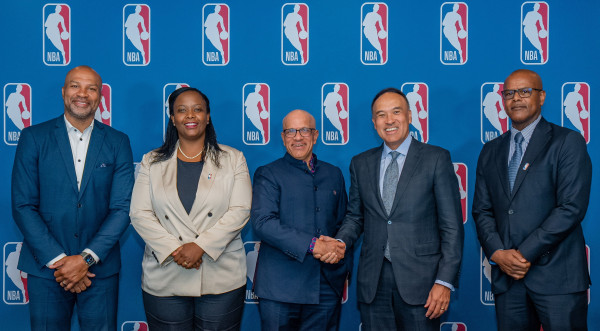
NBA Africa (https://Africa.NBA.com/) and Opportunity International, a global nonprofit organization that develops innovative programs that use financial services, training and support to address some of the greatest challenges facing those living in poverty around the world, today announced a collaboration to build outdoor basketball courts and conduct youth clinics in Nairobi, Kenya and Kigali, Rwanda next year. The collaboration will support NBA Africa's commitment to build 1,000 courts in Africa over the next decade, including 100 in Kenya.
As part of the collaboration, NBA Africa and Opportunity International will also hold a development program for coaches and teachers in both cities aimed at providing them with skills and best practices in coaching, refereeing, game operations, event management, program administration, and more.
The announcement was made today by NBA Deputy Commissioner and Chief Operating Officer Mark Tatum, Opportunity International CEO Atul Tandon and five-time NBA champion Derek Fisher at a press conference in Nairobi.
“Our collaboration with Opportunity International reflects our commitment to investing in local basketball ecosystems across Africa and providing youth with the resources and opportunities to develop their leadership and basketball skills,” said Tatum. “We look forward to working together to create safe spaces where Kenyan and Rwandan youth can play the game and participate in programs that help develop the next generation of coaches and mentors.”
“We are absolutely thrilled to work with NBA Africa to bring world-class basketball courts and coaches to Africa,” said Tandon. “This initiative is key to our longstanding commitment to bring more education and more opportunities to the youth of Africa, and we are grateful to NBA Africa, NBA Deputy Commissioner Tatum, and our longtime friend and partner Sam Garvin for coming together to help build a rising Africa.”
The Jr. NBA, the league's global youth basketball participation program for boys and girls, teaches the fundamental skills as well as the core values of the game at the grassroots level in an effort to help grow and improve the youth basketball experience for players, coaches and parents. Last year, Jr. NBA programming directly reached more than 170,000 youth across Africa.
Distributed by APO Group on behalf of National Basketball Association (NBA).
About NBA Africa:
NBA Africa is an affiliate of the National Basketball Association (NBA), a global sports and media organization with the mission to inspire and connect people everywhere through the power of basketball. NBA Africa conducts the league's business in Africa, including the Basketball Africa League (BAL), and has opened subsidiary offices in Cairo, Egypt; Dakar, Senegal; Johannesburg, South Africa; Lagos, Nigeria; and Nairobi, Kenya. The league's efforts on the continent have focused on increasing access to basketball and the NBA through youth and elite development, social responsibility, media distribution, corporate partnerships, NBA Africa Games, an NBA Store, the BAL, and more.
NBA games and programming are available in all 54 African countries, and the NBA has hosted three sold-out exhibition games on the continent since 2015. The BAL, a partnership between the International Basketball Federation (FIBA) and NBA Africa, is a professional league featuring 12 club teams from across Africa that concluded its fourth season in June 2024. Fans can follow @ NBA_Africa and @ theBAL on Facebook, Instagram, X and YouTube.
About Opportunity International:
Opportunity International is a global non-profit that has been equipping people to build sustainable livelihoods and educate their children for 53 years. Opportunity works across 30 countries to provide over 20 million families with innovative financial resources, training, and support to grow their small businesses and send their children to school.
Hundreds of workers march in Cape Town, Joburg and Durban
Department of Science and Innovation renamed to highlight focus on tech
The Minister of Science, Technology and Innovation, Professor Blade Nzimande, has welcomed the renaming of the department as proclaimed in Government Gazette No. 51283 on 27 September 2024.
The new name, the Department of Science, Technology and Innovation, follows the splitting of the Ministry of Higher, Science and Innovation into the Ministry of Higher Education and Training and the Ministry of Science, Technology and Innovation under the seventh administration.
“The department’s name has undergone several changes in the past years. In 2021, government renamed the Department of Science and Technology, making it the Department of Science and Innovation. This was to emphasise the need for the department to drive innovation through its work,” the department explained.
However, the most recent name incorporates all the elements of the department’s mandate to lead enhanced productivity, economic growth and societal development through science, technology and innovation (STI).
“Putting ‘technology’ back into the name is an acknowledgement of the role that technological advancements play in driving scientific progress, economic growth and societal development,” said the Minister.
Meanwhile, the department said that it retains its strategic focus on promoting innovation through cutting-edge technologies, fostering a digitally empowered society, and enhancing South Africa’s competitiveness on the global stage.
“Its priorities include climate change and environmental sustainability, human resource development, and addressing poverty and inequality.” – SAnews.gov.za
Gabisile
Mon, 10/07/2024 - 13:08
Calls for Israel to be isolated, as South Africa was during apartheid
President Ramaphosa calls on all to support BELA Act
President Cyril Ramaphosa has called on everyone to put their weight behind implementing the Basic Education Laws Amendment (BELA) Act so that all children receive a good quality education regardless of their circumstances.
“The passage of the Basic Education Laws Amendment Act is part of ongoing efforts to build an education system that is more effective and more equitable.
“Among other things, the Act provides for early learning foundations to be strengthened, promotes greater accountability of parents for their children’s learning and promotes inclusivity in the classroom,” the President said on Saturday.
President Ramaphosa was speaking at the 24th instalment of the National Teaching Awards as the globe commemorates World Teacher’s Day at the Birchwood Hotel and OR Tambo Conference Centre in Ekurhuleni, Gauteng.
He explained that the spirit and purpose of this new legislation was to ensure there was uniformity and fairness in educational standards between schools and across the country.
Last month, President Ramaphosa signed the Bill into law but delayed the implementation of two clauses 4 and 5, which deal with school admissions and language, by three months to make room for more discussion and deliberations after it received some opposition.
“In the interests of inclusivity, we have created space for engagement among some concerned parties on aspects of the legislation. But that process cannot undermine the transformational nature of this law.”
Meanwhile, the President told the people gathered at the conference centre that in order to produce more learners who excel in science, technology, engineering and mathematics, South Africa needs to invest more in supporting and upskilling its teachers and arm them with necessary resources.
“In some schools, resources are plenty, the schoolyard is safe, there are basic amenities, the pupil-teacher ratio is appropriate, and learning takes place in good conditions. But in others, educators struggle to obtain even the most basic resources for teaching, schools lack safe toilets and running water, and crime and violence from outside the school inevitably finds its way in.”
However, according to the President, South Africa has made much progress in narrowing the gaps between schools.
He said government was working to strengthen the foundations of early learning to ensure successful education outcomes in the future.
The President announced that the education curriculum was being revised, updated and reformed to meet the needs of a rapidly changing world.
“With the high rate of youth unemployment in our country, educators need to ensure that our schools are producing the skills our economy needs. They need to ensure that every school leaver has the confidence and capabilities that enable them to study further, find employment or be self-employed.
“We are working to fully implement the three-stream model, which offers academic, vocational and occupational pathways for learners. Educators play an important role in identifying the best course for a learner.”
Shifting his focus to the National Teaching Awards, he noted that the enduring commitment to honouring educators speaks to their unique and treasured place in the country.
“All of us are who we are because of the teachers we once had. I have the fondest memories of my own teachers at Tshilidzi Primary School in Soweto and Mphaphuli High School in Sibasa, Venda… All these years later, they still hold a special place in my heart,” he told the room full of teachers.
The President described a good teacher as a role model who encourages a child to achieve their potential.
He took the time to congratulate those who were awarded today and acknowledged teacher unions and School Governing Bodies (SGBs) who are working with government to build a resilient education system that meets the challenges of the future.
Basic Education Minister Siviwe Gwarube thanked President Ramaphosa for his unwavering support not just for her but the sector.
“The future leaders of our country deserves our fervent leadership.” – SAnews.gov.za
Gabisile
Sat, 10/05/2024 - 13:15
Basic Education top brass visit Gauteng
Basic Education Minister Siviwe Gwarube and Deputy Minister Dr Reginah Mhaule will today visit Gauteng as part of the ongoing National Listening and Learning Tour.
This tour aims to directly engage with provincial education stakeholders, school leadership and the broader community to address challenges in the province's education sector.
“This provincial visit will focus on critical issues such as the annual influx of learners to the province, school safety, literacy and numeracy levels, teacher training, as well as budget constraints...
“The purpose of these engagements is to identify areas for improvement, share best practices, and collaboratively develop solutions to the unique challenges within the province's educational landscape,” the Department of Basic Education said in a statement.
Gwarube and Mhaule will address the media following their engagements with provincial education stakeholders, providing updates on the outcomes of the visit and plans to strengthen the education system in Gauteng.
WATCH | National Listening & Learning Tour has arrived in Gauteng

The media briefing will be held at Olympia Park School in Springs, Ekurhuleni.
The National Listening and Learning Tour commenced in the Eastern Cape on 2 September, with a visit to Limpopo on 16 September. – SAnews.gov.za
DikelediM
Fri, 10/04/2024 - 09:53
President Ramaphosa to address National Teaching Awards
President Cyril Ramaphosa is expected to address the 24th National Teaching Awards (NTA) to be held at Birchwood Hotel and Conference Centre on Saturday.
The awards will be held under the theme: “Empowering Educators to educate a South African learner fit for the 21st Century: Strengthening Resilience, Building Sustainability”.
“The National Teaching Awards is annually hosted by the Department of Basic Education to appreciate and acknowledge the extraordinary efforts made by excellent teachers, often in very difficult conditions. Such teachers provide for better futures for learners,” the Presidency said in a statement on Friday.
The top of South Africa’s teaching talent is expected to be recognised in the following categories:
- Excellence in Grade R Teaching
- Excellence in Primary School Teaching
- Excellence in Primary School Leadership
- Excellence in Secondary School Teaching
- Excellence in Secondary School Leadership
- Excellence in Special Needs Teaching
- Excellence in Special Needs Leadership
- Excellence in Teaching Mathematics (GET)
- Excellence in Teaching Mathematics (FET)
- Excellence in Teaching Natural Sciences
- Excellence in Teaching Physical Sciences
- Excellence in Technology – Enhanced, Teaching and Learning
- Kader Asmal Lifetime Achievement Award
- National Best Teacher Award
“The NTA aims to focus public attention on the positive aspects of Basic Education, thereby raising the public image of the teaching profession, recognise, appreciate and promote excellence in teaching performance,” the Presidency said.
READ | Educators honoured at National Teaching Awards
-SAnews.gov.za
NeoB
Fri, 10/04/2024 - 12:37
Inmates ready for upcoming National Senior Certificate exams
Matriculants from Correctional Services schools are fully prepared for the upcoming National Senior Certificate (NSC) examinations, set to run from 21 October to 27 November 2024.
A total of 173 inmates will sit for these exams, marking an important step in their pursuit of a Senior Certificate.
In a statement, the Department of Correctional Services (DCS) said it was pleased with the level of preparedness, as inmates have completed the academic syllabus on time and have undergone various assessments throughout the year.
Educators from the department's 18 schools remain optimistic, having made significant efforts to ensure that all candidates are thoroughly prepared.
Additionally, the department ensured that all required textbooks and stationery were delivered to schools timeously.
Correctional Services National Commissioner Makgothi Samuel Thobakgale has praised the educators for their dedication and hard work in preparing the inmates for this important milestone.
“Education not only empowers offenders with knowledge but also offers them a path to a new life. It remains our commitment to provide growth and development opportunities for every inmate, as we believe in the power of education to transform lives,” he said.
Formal education plays a crucial role in rehabilitating offenders while they are in correctional centres.
In collaboration with the Department of Basic Education, DCS has consistently produced strong academic results, often exceeding the national pass rate.
In 2023, DCS schools achieved an impressive 93% overall pass rate, with nine schools attaining a 100% pass rate.
READ | Correctional Services class of 2023 achieves 93.2% pass rate
The department attributed the results to the conducive learning environment it fosters within correctional centres, as well as its commitment to providing offenders with education and skills that will help them reintegrate into society after their release.
The department has also embraced technological advancements in education. In 2024, the Intelsat Telematics System was introduced at the Johannesburg Correctional Centre, offering both inmates and educators access to valuable study materials.
The department is proud to maintain an incident-free record for NSC examinations, reflecting the professionalism and dedication of the officials, as well as the strict adherence to exam protocols set by the Department of Basic Education.
“We encourage all matriculants in our schools to seize this opportunity as part of their personal development journey,” Thobakgale concluded.
READ | Countdown to final exams for Class of 2024
– SAnews.gov.za
Edwin
Thu, 10/03/2024 - 09:56
Most applicants have never had a job
Learners at Gcina Senior Primary in KwaGcina, Cofimvaba relieve themselves on an open field during the school day
Only 20% of municipalities met their obligations to report to the Information Regulator
Citizens encouraged to participate in National Science Week
The Minister of Science, Technology and Innovation, Professor Blade Nzimande, has urged South Africans to participate in National Science Week (NSW) activities.
This year’s theme is “Living in a high-tech world: Should we be concerned?” and it aims to inspire young people and involve the public in understanding the importance of science in addressing societal concerns.
The National Science Week activities across South Africa kickstarted on Monday, 30 September, and will wrap up on Saturday, 5 October 2024.
A flagship initiative of the Department of Science and Innovation (DSI), National Science Week is a platform for schools, universities, research institutions and community organisations to participate in a range of interactive events, exhibitions and seminars countrywide.
The Minister officially opened the annual science engagement initiative in Bloemfontein on Saturday. Almost 1 500 learners attended the launch event at the Central University of Technology, which included a science, technology and innovation (STI) exhibition.
In his opening address at the launch, Nzimande said South Africa needs to foster a culture of using STI in the country to drive economic growth and respond to issues such as sustainable development and social inequality.
He said this year’s theme responds to the highly technology-driven world in which the country finds itself.
Through this theme, he said, “We seek to encourage a culture of critical conversations among ordinary people and especially our youth about the value of science to society”.
According to Nzimande, the country has made commendable progress since 1994 in increasing the numbers of black and women scientists.
“There is, of course, still more work that needs to be done in this regard, but we cannot deny the progress that has been made over the past 30 years.”
The Minister reminded the learners in the audience that they have more opportunities today than their grandparents who grew up during the dark days of apartheid when Black people were told they did not need mathematics and science.
“My message to all the learners here today is that you were born into a democratic order, for which your grandparents fought. Unlike your grandparents, you have available to you many opportunities to develop yourselves.”
The Minister urged the young people to make use of the opportunities that are available to them.
“Most importantly, we expect you to take up the various careers in science, technology, engineering, mathematics, and innovation (STEMI) so that we can produce the critical skills we need to deal with such things as poverty, inequality, pandemics and the impact of climate change.”
The Minister highlighted the stellar achievement of a Grade 10 learner, Munei Netsharotha, from Tshivhase Secondary School in Limpopo, who constructed a hydrogen-fuelled vehicle.
The Minister said Netsharotha’s invention is well aligned with the hydrogen economy, which is one of the department’s priorities.
Other brilliant innovators included mechatronics apprentice, Hlompho Malehodi, who spoke about her career.
Malehodi studied electrical engineering at a technical vocational education and training college and recently won a gold medal in the South African leg of the WorldSkills Competition.
She became the first Black woman in mechatronics to represent South Africa in the international WorldSkills Competition in Lyon, France.
The public is encouraged to participate in the activities in their communities and to follow the event on social media using the hashtag #NSW2024 for live updates and information and visit https://www.saasta.ac.za/programmes/focus-weeks/national-science-week/. – SAnews.gov.za
Gabisile
Tue, 10/01/2024 - 12:15
Reflections on SA’s 12th official language
There’s an old adage that states that the pen is mightier than the sword and the passage of time is proving this to be true.
President Cyril Ramaphosa enacted the South African Sign Language as the country’s 12th official language at a ceremony held at the Union Buildings in July 2023.
And yes, while there’s still a long way to travel to ensure all out inclusivity for South Africa’s deaf community, the signing of the South African Sign Language Bill into law was a key step taken.
Ahead of the 19 July ceremony, the Presidency said the recognition of South African Sign Language (SASL) was “an important step towards the realisation of the rights of persons who are deaf or hard of hearing.”
Prior to the President inking the bill into law, the National Assembly of the sixth administration in May 2023 approved the amending of Section 6 of the Constitution to include SASL as an official language.
Fast forward to August 2024 and South Africa crowned its first Miss South Africa with a hearing impairment.
There has been change.
“Recently we had Mia le Roux, a deaf model, win the Miss South Africa pageant. The significance of me mentioning this is that finally, ever since the establishment of the pageant, the deaf community had access to it because there was interpretation services provided,” says Nhlanhla Simelane, a Language Practice student at the University of the Free State (UFS).
Le Roux, who is deaf, became the first Miss South Africa and differently abled finalist in the history of the pageant. Held in August, the competition also featured a sign language interpreter for the first time.
“And now that she won, it means an even greater feat for not just the deaf community but also for the country as well.
“For the deaf community, it means that we have someone who will actively represent us and help in achieving inclusion for the deaf in society. With that, there will be unity amongst the deaf and non-deaf. This also puts South Africa on the map, and with that [comes] more recognition for deaf people internationally and it definitely opens up a bigger world of opportunities,” added Simelane.
The student assistant for South African Sign Language and Deaf Studies at the UFS was born to deaf parents.
He added that there have been other changes since the President’s proclamation.
“Besides that [Le Roux’s win], there have been developments all around the country. More and more people are learning SASL, and more companies, organisations and institutions are even looking at having their employees and members educated in basic SASL. So yes, there is an improved involvement and active interest from more people, and it is really lovely to see,” he told SAnews.
Asked about whether the deaf community feels seen and heard, Simelane said that this is true to a certain extent.
“So yes, we do get seen – sometimes even stared at, which is quite rude so I would kindly advise against doing so. But the latter then falls on deaf ears, figuratively speaking, as access for deaf individuals still remains a huge problem despite being seen and it being common knowledge.
“For deaf people to be able to use services, let alone public services, either the service providers need to know how to sign or there needs to be the provision of an interpreter. I know for sure that it is only a lucky few deaf individuals that may encounter service providers that at least know basic sign to be able to assist the deaf person,” he explained.
In an opinion article he wrote for the university earlier, Simelane pointed out that with the one-year anniversary since the signing of the law, one “must not overlook the fact that despite being a minority language, SASL already enjoyed significant language rights.”
“For example, the South African Schools Act recognised it as an official language in 1996. The Use of Official Languages Act of 2012 provided another benefit that was not even enjoyed by the other 11 official languages; with this act, state entities had to establish a language policy outlining the use of official languages for public communication, specifically if a member of the public chose SASL as their preferred language,” he said in the article.
In September, the country joined the global community in commemorating International Month of Deaf People with government having encouraged South Africans to learn SASL.
In celebrating Deaf Awareness Month, the Minister of Women, Youth and Persons with Disabilities, Sindisiwe Chikunga, called on South Africans to learn Sign Language, as “it is the most effective way to communicate with and connect with deaf individuals”.
“The year 2024 stands out as a significant year in South Africa, as Mia Le Roux made history by becoming the first individual with a hearing impairment to be crowned Miss South Africa. This month-long celebration aims to encourage inclusivity, advance Sign Language education, and cultivate a deeper understanding of deaf culture,” the Minister said.
Observed annually in September, International Month for Deaf People is observed to promote awareness of the rights of deaf people around the world. It also brings to the fore challenges that are faced by deaf people.
Improving lives
Simelane is of the opinion that government departments could do better in improving how they engage members of the deaf community.
“At government institutions, SASL interpreters are supposed to readily be available to assist deaf people when they go to these places. However, throughout my life I have always had to accompany my parents whenever they go to the police station, or the hospital and even to court. And this is the case even now post the officialisation of SASL. So, the government needs to put what they say into action and make these provisions,” he said.
According to the Pan South African Language Board (PanSALB), an estimated 600,000 people in the country are deaf.
“The number of people who use South African Sign Language is currently uncertain and requires extensive research to accurately depict the demographics. It is estimated that there are 600,000 deaf and 1.4 million people with hearing loss in South Africa. However, not all deaf people use South African Sign Language,” said PanSALB Chief Executive Officer Lance Schultz.
Schultz adds that academic researchers estimate the number of people who communicate in SASL ranges from 700,000 to two million users.
“However, according to Stats SA [Statistics South Africa], the officially reported number of South African Sign Language users is only 12,400 whereas the 2011 statistics indicated around 255,000 SASL users,” he explained.
Promoting inclusion and awareness
The PanSALB said the officialising of SASL is a progressive step towards promoting inclusion and quality access to information.
“The officialisation of SASL has certainly played a crucial part in providing recognition and validating that SASL is a language in its own right and has helped raise awareness regarding deaf culture and embracing linguistic diversity. Because our languages are so intrinsically linked to who we are, the move to officialise the language actively promotes social cohesion and has created a sense of belonging for the deaf community,” said the CEO.
However, a lot more work still needs to be done with the country needing “cross-sectoral policies that must be developed and implemented to address the myriad of challenges that affect deaf people.”
“All government departments in various portfolios have a critical role to play in making information and services accessible to the deaf community,” he explained.
In an earlier article, Simelane points to many deaf people having to rely on untrained or unqualified individuals and family members to act as interpreters.
“This was mostly the case in my life, being a CODA (Child of a Deaf Adult) and having to interpret for my parents. Besides my proficiency in SASL, there was still the matter of a breach of confidentiality. This is a common problem for many people. Therefore, more SASL interpreters (SASLi) are needed,” he said in that article.
Meanwhile, the language board said that deaf people face various challenges with the main ones being access to education and quality information and services.
“In South Africa, there are only 44 deaf schools, creating a challenge of access, especially for poor families who have to travel great distances and incur significant costs for their children to receive an education. The major issue within our education system is that most teachers in deaf schools are hearing and many struggle to communicate in SASL, which creates a barrier to learning. Currently, there is no requirement for teachers to know SASL to be placed at a deaf school. Although some do pick up the language from the learners, this is not an ideal situation and places undue pressure on students, ultimately hindering their learning potential. Many deaf learners leave school with much lower comprehension compared to their hearing counterparts due to these barriers,” said Schultz.
Additionally, the language board found that during the COVID-19 pandemic lockdown, many deaf learners felt out of place as they had to spend a lot of time at home with people who cannot communicate in SASL.
“Given that 95% of deaf children are born to hearing parents who are not familiar with South African Sign Language or deaf culture, it's crucial to provide support to these families to enable effective communication with their deaf children or siblings. Many deaf learners expressed the desire to go to school purely for the opportunity to communicate with their peers. This highlights the urgent need to provide support to families of deaf children.”
Representation matters
Schultz said that while there are challenges, Le Roux’s win is a positive step for raising awareness of the diverse and complex nature of South Africa.
“The win by Ms Mia Le Roux represents an often-marginalised group in our society. This is a positive step in raising awareness of the diverse and complex nature that makes up the beautiful tapestry of our nation.
“Representation matters, and the positive response from the disability sector on the crowning of the new Miss SA shows just how impactful that can be. We hope that she will be a beacon of hope to the many little deaf girls who undoubtedly can see themselves in her. We're excited that she has chosen to use her platform to promote the values of inclusivity, which form the cornerstone of our constitutional democracy. This is certainly a historic moment for the country, and we should all be proud of as a society and recognise the importance of building a society that is inclusive, just, and fair,” said Schultz.
Simelane who is also a former chairperson of Signals, a student association that is aimed at promoting SASL and deaf awareness, is often asked what life is like as a child of deaf parents.
“I actually get asked this a lot. I learned SASL much like most children learn how to speak their parents’ languages. It’s an odd response, but I get away with it most of the time. Really, it makes more sense on a psychological level. Both my parents are deaf, and I learn’t SASL from them. Also, I view this as a gift from my parents as I have really grown to love SASL and being part of the deaf community. It is truly a beautiful honour,” he explained.
Looking to the future
Simelane is of the view that there has been more interest from locals in learning SASL.
“It is commendable. I would just like to warn people not to assume that sign language is universal, most especially because it’s what I note a lot. There is South African Sign Language, which is used by most signers here in South Africa. Zimbabwe has its own sign language. America has its own sign language, so does Britain, Australia and so forth.
“Therefore, it is important to notify locals to learn the right sign language. Unfortunately, some people learn a random sign language, then communicate, or try to, with a deaf person from South Africa and that deaf person may not even understand the particular sign language. The conversation then becomes awkward,” he remarks.
Simelane who initially planned to become a South African Sign Language Interpreter once he finished his studies, now aims to become an academic.
“However, coming to university has opened up a bigger world of possibilities. I am looking at a career as an academic, with the hope of conducting research for SASL as there is definitely a lack in this field. I hope to also keep interpreting on the side,” he said.
In the year that South Africa commemorates 30 years of freedom and democracy, there are ways to advance the language rights of the deaf community.
“There are several ways to make life easier for the deaf community. It is important to include SASL in any campaigns or events, and to conduct SASL awareness workshops for internal staff members, especially front-line workers who provide access to government services and information for deaf individuals.
“PanSALB is available to provide support in this regard. It's crucial to understand that SASL is a visual language that is distinct from any other official language, as it is not written or spoken. Therefore, subtitles and texts in English or any other language do not constitute SASL. Announcements and information displayed on screens in service offices should be in SASL. Additionally, it's important to make socio-economic opportunities accessible to the deaf community,” explained Schultz.
While some will say that the stroke of the President’s pen was a ceremonial gesture, what it has done is place the spotlight on issues faced by parts of the South African population that requires all of society to work together to enhance our shared fabric of society. - SAnews.gov.za
Janine
Mon, 09/30/2024 - 15:52
Mashatile kicks off working visit to the UK
Deputy President Paul Mashatile has arrived in London, United Kingdom, for the second leg of his working visit scheduled to take place today and wrap up on Friday, 4 October 2024.
According to the Presidency, the purpose of the visit is to improve trade and investment relations between South Africa and the United Kingdom.
This visit follows a successful working visit to Ireland, which was aimed at advancing cooperation between South Africa and Ireland to improve trade and investment, and building on the significant progress made in the fields of science, innovation, as well as education and skills development.
READ | Deputy President assures Ireland of SA’s commitment to 'enabling environment' for business
The United Kingdom is one of South Africa’s most significant bilateral partners, particularly in trade, investment, skills development, science, innovation, the Just Energy Transition and tourism, among others.
The Deputy President’s visit will focus on building investor confidence in South Africa and driving foreign direct investment into the nation.
According to Mashatile’s office, he will continue to engage with various local and international private sector partners to mobilise investment support and strengthen public-private partnerships to realise the country’s economic growth and transformation objectives.
“The Deputy President will also use the opportunity to advance the strategic priorities of the Government of National Unity (GNU), which include creating sustainable economic growth, addressing poverty and the high cost of living, and building an ethical, capable developmental State,” his office said.
During this visit, the Deputy President will also engage with representatives from several organisations. These include Bloomberg Media, Financial Times, Sasol, Brand South Africa, the London Stock Exchange, Investec’s Investors Roundtable, Standard Bank, JP Morgan, City Bank, Goldman Sachs and the South African Chamber of Commerce.
He is expected to also pay a courtesy call on the Duke of Edinburgh and meet with the Deputy Prime Minister of the United Kingdom, Angela Rayner.
The Deputy President is leading a delegation comprising various Ministers. He is accompanied by the International Relations and Cooperation Minister Ronald Lamola; Minister in the Presidency responsible for Planning, Monitoring and Evaluation Maropene Ramokgopa; Public Works and Infrastructure Minister Dean Macpherson; Small Business Development Minister Stella Ndabeni Abrahams and some Deputy Ministers from various departments. – SAnew.gov.za
Gabisile
Mon, 09/30/2024 - 11:05
Photographers encouraged to enter Citizen Science for Water Photo Story Competition
Photographers have been encouraged to submit entries to the Citizen Science for Water Photo Story Competition, which is aimed at communicating matters on water action.
“The competition is aimed at elevating inspiring stories on citizen science for water by touching upon people’s emotional connection to water and inspiring them to take positive action,” the Department of Water and Sanitation (DWS) said on Saturday.
Citizen science is the practice of public participation and collaboration in scientific endeavours to increase scientific knowledge.
The South African National Committee (SANC) for the United Nations Educational, Scientific and Cultural Organisation (UNESCO) Intergovernmental Hydrological Programme (IHP), in collaboration with the DWS, launched the Citizen Science for Water Photo Story Competition on Friday in Pretoria.
SANC members include DWS, the Water Research Commission (WRC), Department of Science and Innovation (DSI), University of South Africa (UNISA), and the Department of Forestry, Fisheries and the Environment (DFFE), amongst others.
“The competition’s objectives are to raise awareness on the intertwined relationship between water and the various dimensions of culture, value, education and the natural sciences in the past and present; activate youth involvement in communicating matters of water action in creative ways; contribute to joint actions in the water action agenda, and to demonstrate how citizens, communities and education could effectively support the sustainable use and management of water,” the department said.
Participants should explore five themes which are: Water and Citizen Science; Water and Partnerships; Water and Education; Water and Culture, as well as Water and Communities.
The competition is now officially opened. Submissions can be sent via a link: https://www.dws.gov.za/Projects/UNESCO/cspi.aspx
Applicants are urged to familiarise themselves with the submission rules when entering the competition. Anyone with inquiries or struggling with submission may direct their queries to ihp50photostory@dws.gov.za.
The competition is free to enter, and participants must be 18 years or older. The deadline for submission is 28 February 2025, 23:00 South African Time.
The winners will be officially announced in March 2025 and receive an award from the department and South African National Committee for IHP, and recognition and visibility through IHP channels and initiatives both locally and internationally.
The top 15 winning pieces will be exhibited in June 2025 during the launch of the Photo Story Book. -SANews.gov.za
nosihle
Sun, 09/29/2024 - 10:41
The Unconditional Cash Transfer Project gives monthly cash transfers to 100 unemployed graduates
Deputy President Shipokosa Paulus Mashatile has today, Friday 27 September 2024, arrived in Dublin, Ireland, on a working visit aimed at reinforcing the historic and warm bilateral relations between South Africa and Ireland.
The working visit is expected to advance cooperation between South Africa and Ireland, especially with regard to improving trade and investment, and building on the significant progress made in the fields of science and innovation, as well as education and skills development.
The Deputy President's upcoming meeting with Prime Minister Simon Harris underscores South Africa's commitment to furthering political and diplomatic ties with Ireland.
As part of his engagements, the Deputy President will participate in the Ireland-South Africa Trade and Investment Round Table, hosted by the Mission in Ireland in collaboration with the Department of Trade, Industry and Competition. The engagement will focus on facilitating investment opportunities for Irish companies that are already invested in or intend to invest in South Africa.
In addition, the Deputy President is expected to deliver remarks at the Irish Tech Challenge South Africa, which was established to support innovation and entrepreneurship by fostering connections between South Africa and the Irish tech ecosystems. During the event, seven South African startups will present their innovations. These startups will receive funding and networking opportunities designed to connect them with Ireland's dynamic tech ecosystem.
The Deputy President is accompanied by the Deputy Minister of Trade, Industry and competition Mr Andrew Whitfield.
Distributed by APO Group on behalf of The Presidency of the Republic of South Africa.
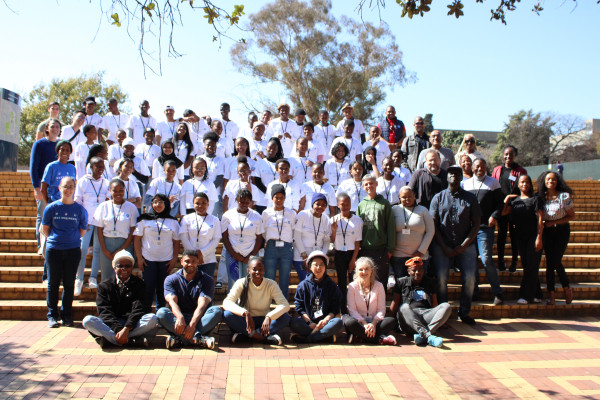
Next Engineers, a global college-and career-readiness programme working to increase the diversity of young people in engineering, celebrated the graduation of its first-ever Engineering Academy learners in Johannesburg, South Africa on Friday, September 27. The graduation ceremony marked the programme's contribution towards bridging the Science, Technology, Engineering and Mathematics (STEM) skills gap in the country through exposing learners to hands-on engineering experiences and career pathways.
The 37 learners from 15 high schools across Johannesburg who completed the programme, many of whom plan to study towards an engineering-related qualification at university or technical higher learning institutions, were joined by their families at University of Witwatersrand, Sturrock Park Sports Hall, to celebrate their achievements. Launched in 2022, PROTEC, University of Witwatersrand, and Kutitiva Foundation are the educational partners for the local Next Engineers programme, and local GE Vernova engineers and employees actively engage with Academy participants through hands-on, skill-based volunteering.
“We are proud to see our first cohort of learners graduating and wish them all a successful learning trajectory in the next stage of their education journey,” said Matsi Eseu, South Africa HR Director for GE Vernova. “At GE Vernova, we believe education is a significant driver of economic inclusion and it's inspiring to see the positive impact the Next Engineers programme is having, not just in empowering tomorrow's engineers who will solve society's most pressing challenges but also in increasing the diversity of young people, particularly females, in the engineering sector. We extend our gratitude to all those involved in the Engineering Academy.”
Learners who complete the Engineering Academy program and enroll in a qualified engineering or engineering-related degree programme receive financial aid to support them as they continue on their paths to becoming engineers.
Balan Moodley, CEO of PROTEC, said, "I extend my heartfelt congratulations to each and every graduate in this programme. Their commitment and hard work inspire us all, and I have every confidence they will continue to make a positive impact in the field of engineering and beyond. I also want to express my sincere gratitude to GE Vernova in Johannesburg for their unwavering support and partnership throughout this journey. Together, we have laid the groundwork for a brighter future in engineering, and I am excited to see the continued success of Next Engineers in empowering young minds."
The Next Engineers: Engineering Academy is a transformative learning experience designed for learners aged 15 to 18. Through a rigorous curriculum, immersive design challenges, and career coaching, participants learn to think and act like engineers.
Key programme highlights:
Johannesburg, South Africa, was among the first four locations to launch Next Engineers, with a $2.5 million (R44.6 million) investment from the GE Foundation in 2021. To date, Next Engineers, which also includes programming for learners in grades 8-12, has reached more than 3,500 learners across Johannesburg.
STEM training and education, such as Next Engineers, is helping to solve global challenges while also lifting up communities through economic opportunities. Next Engineers is not the only way GE Vernova in South Africa has committed to supporting the next generation of STEM talent. GE Vernova's South Africa External Bursary Programme has offered comprehensive bursaries to the tune of $5.4 million (R95.6 million) to support over 648 beneficiaries pursuing a Bachelor of Science, Commerce or Arts qualification from 2020 to date. The bursaries are aimed at alleviating the financial strain of tertiary students and covers the tuition, accommodation, textbook costs, and a monthly stipend over the period of study.
For more information about Next Engineers and the Engineering Academy, visit http://apo-opa.co/3BmFfKp.
Distributed by APO Group on behalf of GE.
Media contacts:
GE Vernova
Kashumba Macombe
Communications Specialist
GE Vernova
Kashumba.Macombe@ge.com
PROTEC
Annette Reed
Fundraising and Business Development
Programme for Technological Careers (PROTEC)
+27 82 334 2939
annette@protec.org.za
About Next Engineers:
Next Engineers, a program originally funded by the GE Foundation in 2021, now known as the GE Aerospace Foundation, is a college- and career-readiness program dedicated to inspiring and preparing the next generation of engineers. Through innovative programs, mentorship, and community partnerships, we empower young minds to shape a better future through engineering.
About GE Vernova:
GE Vernova Inc. (NYSE: GEV) is a purpose-built global energy company that includes Power, Wind, and Electrification segments and is supported by its accelerator businesses. Building on over 130 years of experience tackling the world's challenges, GE Vernova is uniquely positioned to help lead the energy transition by continuing to electrify the world while simultaneously working to decarbonize it. GE Vernova helps customers power economies and deliver electricity that is vital to health, safety, security, and improved quality of life. GE Vernova is headquartered in Cambridge, Massachusetts, U.S., with approximately 75,000 employees across 100+ countries around the world. Supported by the Company's purpose, The Energy to Change the World, GE Vernova technology helps deliver a more affordable, reliable, sustainable, and secure energy future. Learn more: www.GEVernova.com and LinkedIn (http://apo-opa.co/3zwmm7b).
About PROTEC:
PROTEC was established in 1982 by a group of engineers from the South African Institute of Civil Engineers to respond to the challenges facing the education system and to address representation across all socio-economic and racial groups in STEM careers. To date, PROTEC has seen more than 40,000 learners complete the Learner Excellence Programme. Based in Randburg, PROTEC has 17 branches and projects in 6 out of the 9 provinces. Our aim is to extend the programme to all 9 provinces. The programme targets learners from Grade 4 to Grade 12 in specifically Science, Mathematics, and English. Teachers who teach these subjects as well as coding and robotics, benefit from development and support that uses a centre-based and classroom support model. Find us on www.PROTEC.org.za, Facebook (http://apo-opa.co/47HJTyw), LinkedIn (http://apo-opa.co/3Y019Mg) and Instagram.
Mashatile undertakes working visits to Ireland and the UK
Deputy President Paul Mashatile is today undertaking a working visit to Ireland to reinforce South Africa’s historic and warm bilateral relations with the nation.
The Deputy President is expected to meet his Irish counterpart, Prime Minister Simon Harris, to reaffirm the strong political and diplomatic ties between the two countries.
According to the Presidency, South Africa and Ireland established diplomatic relations over 30 years ago and relations between both nations encompass a broad spectrum of cooperation, such as trade and investment, education, science and innovation and gender equality.
“Ireland’s developmental programmes have greatly assisted many initiatives in South Africa since 1994, and the partnership continues to this day,” the statement read.
During the visit, the Deputy President will participate in the South Africa-Ireland Trade and Investment Round Table with Irish companies that are already invested in or intend to invest in South Africa.
He is also expected to deliver remarks at the Irish Tech Challenge South Africa, established to support innovation and entrepreneurship by fostering connections between the South African and Irish tech ecosystems.
The Deputy President will be accompanied to Ireland by the Deputy Minister of Trade, Industry and Competition Andrew Whitfield.
Once he wraps up his Ireland visit, the country’s second-in-command will then proceed to the United Kingdom from Saturday, 29 September to Friday, 4 October 2024.
“The visit will focus on showcasing South Africa as an investment destination of choice and strive to identify and create new trade opportunities for South African businesses, especially small and medium enterprises.”
The island nation is also one of South Africa’s most significant bilateral partners in the northern hemisphere, particularly in trade, investment, skills development, science, innovation, the Just Energy Transition and tourism, among others.
The Deputy President is expected to engage selected investors and trade partners invited in cooperation with economic partners in the United Kingdom and deliver a lecture at School of Oriental and African Studies (SOAS) University in London, focusing on South Africa’s forthcoming Presidency of the G20.
“The Deputy President will also pay a courtesy call on the Duke of Edinburgh, and meet the Deputy Prime Minister of the United Kingdom, Angela Rayner.”
He will be accompanied by the International Relations and Cooperation Minister Ronald Lamola, Minister in the Presidency responsible for Planning, Monitoring and Evaluation Maropene Ramokgopa, Public Works and Infrastructure Minister Dean Macpherson, Small Business Development Minister Stella Ndabeni Abrahams and some of the Deputy Ministers from various departments. – SAnews.gov.za
Gabisile
Fri, 09/27/2024 - 10:39
Deaf Awareness Month, a moment of reflection on progress made
By Morapedi Sibeko
This September, as we commemorate Deaf Awareness Month, it is a good moment to look back on the progress made in recognising South African Sign Language (SASL) and to raise awareness of the experiences of Deaf people, whose voices emphasise the continued need for inclusion and activism.
The South African National Deaf Association (SANDA) estimates that there are over four million Deaf and hard of hearing people in South Africa. Fundamental human rights include the right to language, and for Deaf people, SASL is essential to their full participation in society. They risk being shut out of opportunities for work, education, and other necessities without it. Acknowledging SASL as an official language is about more than just respecting language rights; it's about giving the Deaf community equity, inclusion, dignity, and self-determination.
In 2023, South Africa achieved a breakthrough in the advancement of Deaf rights when a Constitutional Amendment Bill was passed, recognising South African Sign Language (SASL) as the nation's 12th official language. The purpose of this legislation is to provide complete linguistic inclusion and access to services, education, and employment in order to advance the rights and dignity of South Africans who are deaf. Section 9 of the Constitution guarantees the rights of those who are deaf and hard of hearing. The amendment primarily aims to enhance inclusivity, cultural acceptability of SASL, and the deaf culture.
The Department of Social Development's (DSD), policy framework Policy on Social Development Services to Persons with Disabilities (PSDSPD) emphasises the mainstreaming of people with disabilities throughout all sectors of society, illustrating the government's dedication to promoting full inclusion and equal access to opportunities for the Deaf community. These actions demonstrate how South Africa is making significant progress toward fostering Deaf rights and fostering inclusivity.
Another significant achievement is the selection of partially deaf Miss South Africa 2024, Natasha Joubert. Her success emphasises how more and more Deaf people are appearing in prominent roles, which highlights the significance of ongoing advocacy for complete inclusion and the implementation of laws that promote equitable opportunities for all.
Nenio Mbazima, a Deaf entrepreneur, founded Strong Wind to address the economic disadvantage of the Deaf community. He noticed that Deaf people often teach hearing people sign language, leading to economic exclusion for the Deaf individuals who have helped spread the language. This insight inspired him to launch a business that offers interpreting services and supports Deaf people in starting their own enterprises. Mbazima further explained, "I urge Deaf people to launch and register their own businesses as sign language service providers whenever I get the chance."
Even though Deaf rights have improved, more work remains to be done. True equality necessitates ongoing efforts to advance inclusivity, accessibility, assist Deaf-owned businesses, and increase public awareness of the significance of Deaf inclusion across all domains. As we commemorate Deaf Awareness Month, we are reminded of the need to keep up the fight for complete inclusion, financial empowerment, and acknowledgement of Deaf-owned companies. We cannot guarantee that the advancements made today will lead to lasting improvements for the Deaf community tomorrow unless we make consistent efforts.
*Morapedi Sibeko is the Events Manager at the Department of Social Development
Janine
Fri, 09/27/2024 - 10:56
Motsoaledi warns leaders against antimicrobial resistance
Health Minister, Dr Aaron Motsoaledi, has described antimicrobial resistance (AMR) as a ticking time bomb that could return the world to an era where common infections are untreatable, and routine surgeries become life-threatening.
“I stand before you with a sense of urgency and hope that as we join hands to tackle the problem of AMR, we have a full appreciation of the significant threat it poses to global health, food security and development,” he said on Thursday.
The Minister was speaking at the United Nations on behalf of President Cyril Ramaphosa at the high-level meeting on AMR.
Motsoaledi believes that ARM is currently a pressing challenge, and he told world leaders that South Africa was one of the high-burden countries of drug-resistant tuberculosis (DR-TB), where this makes up 2% of the TB burden.
The World Health Organisation (WHO), he stated, has identified DR-TB as one of the top AMR threats.
“However, in responding to this threat, we continue to lag behind, especially on TB research, and global collaboration. This situation has the potential to reverse many decades of medical advancements,” he stressed.
According to the WHO, AMR occurs when bacteria, viruses, fungi and parasites no longer respond to medicines, leading to infections becoming difficult or impossible to treat, increasing the risk of disease spread, severe illness and death.
Motsoaledi said the risks of these illnesses have profound economic implications, affecting healthcare costs, productivity, and overall economic growth.
“Addressing AMR is not just a health imperative but also an economic necessity that requires coordinated global action.”
He is of the view that specific actions need to be taken to preserve efforts and to ensure collective action, which must turn the tide against AMR.
“We must embrace the power of education about the prudent use of antibiotics so that we can curb the misuse and overuse that drive resistance in humans, plants and animals.”
In addition, he spoke against the practice of polypharmacy, especially as it relates to unnecessary utilisation of antibiotics.
“We also need an integrated national patient information system, so that the patients cannot be hopping between health facilities, thus collecting multiple prescriptions for the same condition.”
The Minister also called for investment in research and innovation, which he said requires some urgent intervention, through academic and research institutions.
He took the time to call for a strengthened healthcare system – equipping hospitals and clinics with the necessary tools and training will ensure that infections are identified and treated promptly and accurately.
Also, the Minister stressed the importance of champion policy and advocacy and effective policies that promote antibiotic stewardship and infection prevention can safeguard our communities.
“Lastly, we need to jointly tackle the challenges of human behaviour through the social and behaviour community communication, so that we can educate our people about the dangers of AMR.”
Motsoaledi said AMR has greater potential to also impact patient satisfaction, prolonged patient recovery and poor treatment success rate.
“Together, we can turn this crisis into an opportunity – a chance to unite, innovate, and lead the world in the fight against antimicrobial resistance,” he said. – SAnews.gov.za
Gabisile
Fri, 09/27/2024 - 11:20
Must-Have Tech and Appliances for Your Home Shopping for tech and appliances can sometimes feel overwhelming with the wide range of options available. From practical solutions like inverters to entertainment upgrades like a Smart TV Box, there’s something for everyone. This guide covers the essential gadgets and appliances for sale that can enhance your home …