• Skip to main content
  • Skip to header right navigation
  • Skip to after header navigation
  • Skip to site footer
MyZA

MyZA

News, Directory, Events and Other Stuff

  • Social Media
  • Sport
  • World News
  • Home
  • Submit News
  • Directory
  • Events
  • Stratlec
  • TFSA
  • News
    • APO
    • Today’s Sport News
    • Todays Social Media and Tech Headlines
    • Today’s World News
    • Today’s SA Financial News
  • Contact
You are here: Home / Archives for Education

Education

16 October 2023

Teacher supply and demand by 2030: Securing SA’s future

Location: News

Teacher supply and demand by 2030: Securing SA’s future

South African teachers aren’t operating on survival mode since the public sector has solved the teacher shortages, writes Angie Motshekga.

As South Africa marks Teachers' Month, coinciding with last week's ceremony honouring the best in our teaching cohort, it's imperative to recognise the vital role teachers play in moulding our nation's future. The public sector's successful resolution of teacher shortages means our educators are no longer merely on “survival mode” even though resource constraints remain. Their impact, frequently extending beyond the classroom, is immeasurable. The significance of the Funza Lushaka Bursary Programme in bolstering South Africa's teaching profession is commendable. Here in black and white are facts and figures about teachers in SA today.

Since its inception, the Funza Lushaka Bursary Programme has facilitated the training and integration of new teachers into our educational system. From 2007, marking the year when bursars completed their studies and became eligible for placement in 2008, up to the most recent data for 2023, a cumulative total of 52 099 teachers have successfully completed their training through the Funza Lushaka programme.

This underscores its success in supporting teachers and rejuvenating the nation’s educational system with well-trained professionals.

The impact of Funza Lushaka on teacher placement: A decade in review

As we delve deeper into the data related to the Funza Lushaka Bursary Programme, another significant aspect comes to the fore – the successful placement of these trained educators within our educational system. This ensures that our investment in human capital translates into tangible benefits for our learners and the broader education sector.

From 2013 to 31 August 2023, spanning a decade and seven months, we have witnessed impressive placement rates across our Provincial Education Departments (PEDs).

Eastern Cape: Out of 6 608 trained teachers, 4 869 have been successfully placed, representing a placement rate of 74%. However, 1 739 remain unplaced.

Free State: Here, we see a higher placement percentage. Of the 3 092 educators, 2 752 have found positions, marking an 89% placement rate, leaving only 340 unplaced.

Gauteng: This province has seen the training of 9 423 teachers, with 8 002 of them (or 85%) being effectively integrated into schools. However, 1 421 are still seeking placement.

KwaZulu-Natal: With 9 012 trained educators, 6 908 have been placed (77%), while 2 104 await placement.

Limpopo: This province boasts one of the highest placement rates at 94%. Of 4 623 educators, 4 347 have been placed, leaving a mere 276 unplaced.

Mpumalanga: Here, 4 006 teachers were trained, and 3161 (or 79%) have been placed, leaving 845 awaiting placement.

North West: An impressive 96% placement rate is observed here. Of the 2 543 educators, 2 436 have found their roles in the education system, with only 107 still unplaced.

Northern Cape: Another province with an excellent placement rate of 96%. Of 1 166 educators, 1 115 have been effectively placed, and 51 remain unplaced.

Western Cape: From 6 867 educators, 5,127 have been successfully placed, making the rate 75%. However, 1 740 educators are still seeking placement.

Of the 47 340 educators trained over the past decade and seven months, 38 717 have been effectively placed within our educational system, representing an overall placement rate of 82%. While this achievement is worth celebrating, the data also underscores the need to address the 8 623 educators awaiting placement.

In other words, since 2013, 38 717 out of 47 340 Funza Lushaka graduates have found placement in schools, representing approximately 81.78% of these graduates. This translates to an average placement of about 4 300 graduates per annum. To put this into perspective, Funza Lushaka Bursary Scheme graduates placed in schools account for 20-25% of all graduates absorbed into the public education system each year. This figure is a testament to the programme’s significant contribution to rejuvenating the teaching profession.

The financial magnitude of investing in tomorrow’s teachers

However, a programme of this magnitude comes with substantial financial commitment. Between 2007 and 2022, the cumulative financial outlay for the scheme across all participating Higher Education Institutions (HEIs) amounts to a staggering R13 115 645 580.95.

These figures highlight the vast number of future educators being nurtured through the programme and the immense financial commitment to ensuring their readiness to shape the next generation. It’s essential to view this not merely as an expenditure but as a significant investment in the future of South Africa’s basic education system.

Investing in today’s educators for a brighter tomorrow

In 2023 alone, across all HEIs, some 10864 students have been funded to pursue their dreams of becoming educators. This comes at the cost of the fiscus of R1 164 539 332.47. This figure showcases a substantial investment into nurturing teaching professionals who will go on to play an integral role in our basic education system.

It’s worth noting that behind each bursary is an aspiring educator, a beacon of hope equipped to inspire our nation’s youth. This investment signifies belief in the transformative power of education and those who deliver it.

Teacher supply and demand by 2030

The cepartment’s research indicates two major factors: the ageing teaching workforce, which necessitates a new influx of educators, and a surge in learner numbers due to population growth. Given the current learner-educator ratio (LER) of 29.8:1, we employ around 405 000 educators in the public sector. However, by 2030, to maintain this LER, we’d require about 428 000 educators. Failing to meet this could result in the LER spiking to 31.6:1, signifying larger class sizes and potentially diminishing the quality of education. The challenge is further compounded when considering that funding plays a significant role in our ability to recruit and maintain these educators.

But here’s the silver lining: there’s already a surplus. Every year, while 31,000 fresh teacher graduates step out, only 18 000 to 20 000 are absorbed into the public sector, creating a significant reservoir.

However, quantity alone isn’t the solution. As the curriculum evolves with the Three Streams Model focusing on technical vocational and technical occupational streams, the quality and specialisation of training become paramount. Our bursary schemes must pivot, possibly minimising the general academic stream and emphasising the new curricular needs.

*Angie Motshekga is the Basic Education Minister in South Africa.

Matona
Mon, 10/16/2023 - 09:59
157 views
Read moreTeacher supply and demand by 2030: Securing SA’s future
16 October 2023

Empowering Tomorrow’s Innovators

Location: Business
Siemens Energy Southern Africa

By Thabo Molekoa, Chairman & Managing Director, Siemens Energy Southern Africa (https://www.Siemens-Energy.com/)

Fostering an environment that promotes a culture of learning, exploration, and technological excellence among the youth, is the key to a more sustainable future.

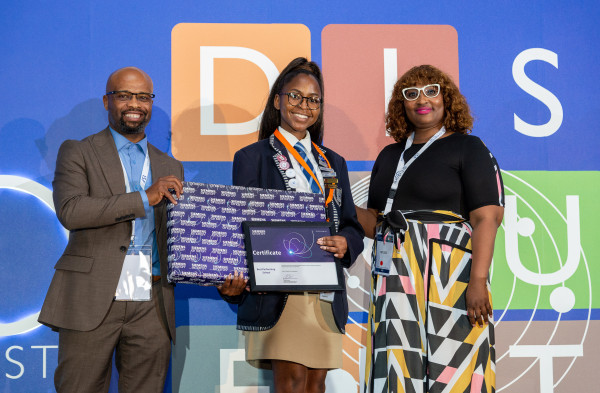
From 3 – 6 October 2023, the 43rd instalment of Eskom Expo for Young Scientists was held at the Birchwood Conference Centre in Johannesburg. Each year the Expo finds the top young innovators and scientists across South Africa and Internationally, bringing these students together to compete against, and engage with, like-minded individuals on a platform that promotes innovation and scientific excellence. This year the Expo hosted 330 young scientists from 35 regions across South Africa, alongside 20 international students from 10 countries including Mexico, Namibia, Mozambique, and Turkey.

The Expo plays a pivotal role in promoting and sustaining the youth's interests in Science, Technology, Engineering, Mathematics, Innovation (STEMI) subjects. It provides budding scientists with the opportunity to showcase and demonstrate their problem-solving skills, innovative capabilities, and creative thinking to solve some of the world's biggest challenges. We saw students demonstrate power generation through an electrolysis system using lead pencils and water; we saw them improve the energy generation capacity of solar panels by using mirrors to direct sunrays throughout the day; as well as to identify how we can generate electricity by using the gas released from biodegradable substances. Platforms such as this also gives corporate organizations and educational institutions the opportunity to support the growth of STEMI subject skillsets and training, by providing the youth with the necessary tools to pursue scientific and engineering careers.  

Siemens Energy was proud to participate as one of the main sponsors of this initiative. We sponsored students from Namibia and Mozambique to travel to South Africa and showcase their inventions. We also sponsored laptops to nine rural and underprivileged schools across the country, with two young scientists each receiving full bursaries to study engineering at a university of their choice.

The Expo was an insightful and inspiring event that demonstrated the impressive capabilities of today's young scientists. It allowed the students to showcase their knowledge and skill, in a fun, exciting, and supportive environment.

As global economies rush to enable a shift in energy systems; we need to encourage innovation, knowledge, and continuous revolution in training and education to facilitate progress. Involving the youth in challenges like these, provides the next generation of energy professionals with opportunities to learn and lead in the energy transition.

Siemens Energy recognizes the role of the youth in tackling this problem, our Just Energy Transition Hackathon, held last year is another example of how Siemens Energy is assisting in exposing the youth to a passion for STEMI subjects and energy in an engaging and rewarding format.

Distributed by APO Group on behalf of Siemens Energy Southern Africa.

Media files
Siemens Energy Southern Africa
Download logo
Read moreEmpowering Tomorrow’s Innovators
16 October 2023

Excellence in Mathematics Education

Location: Business

Pretoria, 16 October 2023 – The South African Mathematics Foundation (SAMF) hosted its highly anticipated annual award ceremony, celebrating outstanding achievements in mathematics education. The event, held at Emperor’s Palace in Ekurhuleni this past weekend, brought together educators, students, and industry leaders in a commendable display of dedication to advancing mathematics in South Africa. One …

Read moreExcellence in Mathematics Education
13 October 2023

KZN teachers march for safety at schools

Location: News

“Some of our colleagues have been brutally murdered while at the workplace”

Read moreKZN teachers march for safety at schools
13 October 2023

President Ramaphosa on working visit to Namibia

Location: News

President Ramaphosa on working visit to Namibia

President Cyril Ramaphosa is expected to lead a delegation of ministers on a working visit to Namibia today.

While there, the President will co-chair the 3rd Session of the Republic of South Africa and the Republic of Namibia Bi-National Commission (SA - Namibia BNC) with his Namibian counterpart, President Hage Geingob.

According to the Presidency, the BNC was inaugurated some 10 years ago at Windhoek with the second session of the BNC held in 2016.

“South Africa and Namibia share a common vision on issues of political and economic integration of the African continent. Both countries pursue Africa’s renewal, South-South cooperation, and the promotion of a rules-based, equitable international system of governance.

“The scope of cooperation between the two countries is expansive, anchored by 74 Memoranda of Understanding and Agreements. The geographical proximity of our countries and the sharing of common borders has over the years presented many opportunities for cooperation and thus benefitted the economies of the two countries,” the Presidency said in a statement.

The Presidency said this third session of the BNC has the following objectives:

  • Evaluate progress on the implementation of commitments made during the 2nd session of the BNC;
  • Consolidate the existing bilateral political, economic and social relations between the two countries and people;
  • Promote cooperation in energy, particularly focusing on electricity and green hydrogen;
  • Deepen existing cooperation and coordination at regional, continental and global levels to advance common positions.

“President Ramaphosa will lead a government delegation comprising of Ministers Naledi Pandor of International Relations and Cooperation; Thoko Didiza of Agriculture, Land Reform and Rural Development; Blade Nzimande of Higher Education, Science and Innovation; and Ebrahim Patel of Trade, Industry and Competition.

“The delegation is also expected to include Ministers Lindiwe Zulu of Social Development; Gwede Mantashe of Mineral Resources and Energy; Barbara  Creecy of Environment, Forestry and Fisheries; Senzo Mchunu of Water and Sanitation; Sandisiwe Chikunga of Transport; Patricia de Lille of Tourism; and Ministers in The Presidency, Dr Kgosientsho Ramokgopa and Khumbudzo Ntshavheni,” the statement read.

Committees that make up the BNC include the Diplomatic, Economic, Social and Defence and Security committees. – SAnews.gov.za


NeoB
Fri, 10/13/2023 - 09:44

581 views
Read morePresident Ramaphosa on working visit to Namibia
13 October 2023

GBVF Response Fund 1 partners with Standard Bank Top Women’s Conference

Location: MyPR

The Gender-based Violence and Femicide Response Fund 1 (GBVF RF) is proud to announce its strategic partnership with the Standard Bank Top Women’s Conference. This collaboration is a significant step towards creating a safer and more inclusive society by empowering women and eliminating Gender-Based Violence and Femicide. Sazini Mojapelo, CEO of the Fund, emphasizes the …

Read moreGBVF Response Fund 1 partners with Standard Bank Top Women’s Conference
13 October 2023

Exit Strategies: The Need for Sustainability in Employment Formation Projects.

Location: MyPR

Beyond Public Employment Programmes to Pathway Participants into viable work and earning opportunities – by Sandy Dlamini Zhanda, Siphesihle Qange & Struan Robertson, Seriti Institute In the realm of employment creation projects, public employment programmes (PEPs) have played a crucial role in providing work and earning opportunities while alleviating the socioeconomic impact of unemployment. Significantly, …

Read moreExit Strategies: The Need for Sustainability in Employment Formation Projects.
13 October 2023

Inspired Education Group expands groundbreaking VR lessons and metaverse pilot in South Africa

Location: MyPR

Inspired Education Group, the global leader in premium education, is proud to announce the expansion of its Virtual Reality (VR) and Metaverse-based learning programme to selected schools in South Africa. Following a successful pilot in five international schools, Inspired is now taking this innovative approach to education to Reddam House Helderfontein and Reddam House Waterfall …

Read moreInspired Education Group expands groundbreaking VR lessons and metaverse pilot in South Africa
13 October 2023

“Closing the care gap – the role of families” in Breast Cancer battle

Location: News

WHO Regional Office for Africa
Download logo

The Ministry of Health, Cancer Unit has recorded 577 cases of cancer between January 2023 and June 2023, 33 of which are cancers of the breast. While many cancer patients in middle-income countries succumb to the disease, 50-year-old Fikile Hlatjwayo is lucky to have survived the deadly disease. Hlatjwayo was diagnosed with breast cancer in 2015 and started treatment, which at that time was only available in South Africa through the Phalala Fund. It was only in 2022 that the Ministry of Health established an oncology unit in Manzini, through support from the Bristol Myer Squibb Foundation (BMSF). This came as a relief to cancer patients like Hlatjwayo as services became available in the country. This enabled patients to receive not only medical support but also support from family, true to this year's theme of Global Breast Cancer Awareness month “Closing the care gap, the role of families”.

The establishment of the oncology unit enabled the Ministry of Health to construct a radiation facility. The official opening of Manzini Oncology Hospital has witnessed an increase in the number of clients accessing services and the only facility that provides strictly cancer in-patient care. This has eased the burden on Mbabane Government Hospital, which was the only center that provided chemotherapy services, and reduced the referral to neighboring countries/private facilities. Currently, the hospital has one Oncologist who works in both Manzini and Mbabane Hospital. Further, the Ministry of Health has assigned some Medical Officers to work in the Oncology Unit.

Hlatjwayo says the availability of cancer treatment in local facilities has lessened the stress of having to spend a lot of time away from her family whilst receiving treatment in neighboring countries. “I was diagnosed with breast cancer in 2015 and I received treatment again in 2022 because some cancer cells were found in my lungs, but now I am okay. I would like to thank my husband and my children for the support that they gave me throughout my journey with cancer,” she said.

During the launch of the Global Breast Cancer Awareness month in Mbabane, Principal Secretary of the Ministry of Health Khanyakwezwe Mabuza mentioned that this year's theme indeed focused on the role played by family in giving hope and support to cancer patients and overcoming stigma. Mabuza said, just like Hlatjwayo's family, awareness and education can enable families to create a better place for all those who need care and support.

“Understanding and acquiring knowledge about the condition of the sick relative, treatment options that are available and the importance of preventive care empowers families to actively participate in the health care discussion. There is no doubt that without families there is no way we can survive or conquer this scourge,” he said.

The PS outlined that families can foster an inclusive natural environment where individuals feel safe to express their needs. He added that having breast cancer is not an easy road, so by promoting open communication, families can contribute to breaking down the barriers and stigma that surrounds the disease.

“There is a lot of misconception with regards to breast cancer, and families become advocates for the loved ones. This allows the individuals to seek healthcare without fear of judgment and discrimination, he said. Mabuza further emphasized that the Ministry of Health has prioritized cancer control and has ensured universal cancer prevention.  He further applauded the Eswatini Breast and Cervical Cancer Network as well as Eswatini Hospice at Home, among others, for ensuring that cancer patients receive the necessary support.

Speaking at the same event, WHO Representative Dr Susan Tembo mentioned that globally, there are more than 2.3 million cases of breast cancer that occur each year, which makes it the most common cancer among adults. In 95% of countries, breast cancer is the first or second leading cause of female cancer deaths, and nearly 80% of deaths from breast and cervical cancer occur in low- and middle-income countries like Eswatini. Dr Tembo reiterated that breast cancer places a tremendous strain on individuals, families, communities, health systems, and economies, hence it must be a priority for the Ministry of Health and Government.

“Cancer in women including breast cancer leaves a devastating impact on the next generation. A study on cancer, suggests that with an estimated 4.4 million women dying of cancer in 2020, nearly 1 million children were orphaned by cancer, 25% of which were due to breast cancer. Children who lose their mothers to cancer experience health and educational disadvantages throughout their lives, triggering generational, chronic social disruption and financial harm in many cases,” she said.

To mitigate the burden of breast cancer, WHO has released a number of tools including the Global Breast Cancer Initiative Framework which provides a roadmap to attain the targets to save 2.5 million lives from breast cancer by 2040. The new Framework recommends that countries implement the three pillars of health promotion for early detection, timely diagnosis, and comprehensive management of breast cancer to reach the targets. Dr Tembo further urged the Government of Eswatini to ensure that this framework is integrated into primary health care, not only to advance health promotion but also to empower women to seek and receive health care throughout the life cycle.

Distributed by APO Group on behalf of WHO Regional Office for Africa.

Read more“Closing the care gap – the role of families” in Breast Cancer battle
12 October 2023

Significant gains in access to education

Location: News

Significant gains in access to education

Government’s policies geared at tackling school dropouts and increasing the completion of secondary schooling are producing positive results - as persons aged 20 years and older with no formal education reduced from 19.1% in 1996 to 6.9% in 2022.

This is according to South Africa's Census 2022 national results, which was handed over to President Cyril Ramaphosa by Statistician-General Risenga Maluleke at the Union Buildings in Pretoria on Tuesday.

“Furthermore, persons aged 20 years and older with some primary education decreased from 16.6% in 1996 to 7.4% in 2022. Over the period, there has been a noteworthy increase in the number of persons completing secondary education (16.3% in 1996 to 37.6% in 2022) and post-school education (7.1% in 1996 to 12.2% in 2022).

“In 2011 and 2022, business, economics and management sciences and education were dominated by females, while males continue to dominate in engineering as well as electrical infrastructure studies,” Maluleke said.

He said post-apartheid South Africa has experienced an expansion in the completion of secondary schooling for previously disadvantaged population groups.

“South Africa has geared up to intensify its measures through policy reforms to tackle school dropouts and increase completion of secondary schooling.  However, race disparity in educational attainment intersects with other forms of disadvantage, including poverty and the urban-rural divide,” Maluleke said.

Considering the relatively high children and youth population due to the demographic dividends of the country, concerted efforts have been made by government to expand the education system.

This had been done through establishing more institutions, especially in the Early childhood development (ECD) sector, giving much-required attention to remote and rural areas, introducing new and skill-based programmes in institutions and providing funding such as the National Student Financial Aid Scheme (NSFAS) for disadvantaged learners planning to undertake higher education.

“The period between 1996 to 2001 showed a large increase in the percentage of young children under the age of compulsory education participating in education (23.1 percentage points among 5-year-olds and 21.2 percentage points among 6-year-olds).

“However, it is the decade between 2001 and 2011 that showed an unprecedented increase in participation among 5-year-olds with a rise of 35.5 percentage points in participation from 45.6% to 81.1%. Furthermore, nearly nine out of ten (92.4%) children of this age were attending educational institutions in 2022, which is a nearly 70 percentage points increase from 1996,” Maluleke said.

He said among 6-year-olds, less than half (49.1%) were attending educational institutions in 1996 but subsequently increased by 21.2 percentage points in 2001.

“The data also show high attendance rates among 6–7-year-olds in 2022, who would most likely be attending Grade R. However, the attendance rate starts to decline by age 15, with only six out of ten (59.9%) 18-year-olds attending educational institutions in 2022; a reduction from 75.7% in 1996,” Maluleke said.

In 1996, more than half (54.6%) of the 20-year-olds were in education, which reduced to 37.0% in 2022.

ECD programme

In South Africa, 3.4 million children aged 0 - 4 years attended ECD programmes in 2022, of which 2.5 million attended a crèche/educare centre or pre-school/nursery school/Grade 00/Grade 000/Grade R.

“About 570 000 children had parents who preferred that they stay with day mothers/gogos/childminders. The majority of children attending ECD programmes were attending a crèche/educare centre (59.8%) while 12.2% attended pre-school/nursery school/Grade 00/Grade 000/Grade R.

“Close to 27.0% of children stayed either with day mothers/gogos/childminders or participated in home/community playgroups. While more than 3 million black African children attended ECD programmes, seven out of ten (72,3%) attended ECD facilities, with 60,7% attending a crèche/educare centre and 11,6% attending pre-school/nursery school/Grade 00/Grade 000/Grade R.

“By contrast, among white children 83.4% attended ECD facilities with one-third (32.5%) attending pre-school/nursery school/Grade 00/Grade 000/Grade R and the rest attending a crèche/educare centre (50.9%). Close to 17.0% of black African children stayed with day mothers/gogos/childminders,” he said.

Maluleke also noted the use of day mothers/gogos/childminders for childcare was also high among Indians/Asians (19.6%).

Among coloured children, close to 19.0% participated in home/community playgroups. Results showed that there were slight differences between sexes.

An analysis of persons aged 5–24 shows that overall, the percentage of individuals attending an educational institution increased by three percentage points between 1996 and 2022.

“Attendance increased to almost universal level between 1996 and 2022 for children aged 5 years and 6 years, while the attendance rate starts to decline by age 15–24 over the same period. Attendance also increased for black Africans, coloureds and whites over the period, while Indians/Asians showed little change,” he said. – SAnews.gov.za


nosihle
Thu, 10/12/2023 - 13:45

457 views
Read moreSignificant gains in access to education
12 October 2023

Samsung announces the winner of the Solve for Tomorrow schools competition

Location: MyPR

South Africa – Mbilwi Secondary School from Venda, Limpopo was announced as the winner of the Solve for Tomorrow schools competition at a ceremony at Birchwood Conference Centre in Johannesburg. The competition, which was run in partnership with the State Information Technology Agency (SITA), was aimed at giving grade 10 and 11 learners from underserved …

Read moreSamsung announces the winner of the Solve for Tomorrow schools competition
11 October 2023

Call to use data from Census 2022 to improve lives

Location: News

Call to use data from Census 2022 to improve lives

President Cyril Ramaphosa has called on government departments, policy makers, researchers, civil society organisations and international organisations to use the information from Census 2022 to collectively strive to improve people’s lives.

“Census 2022 has told us where we are making progress, but it has also laid bare the challenges that remain. It will be an invaluable tool in meeting those challenges. We now have the information we need to ensure that as we build this country, we leave no one behind,” the President said

He made these remarks during the hand over of the Census 2022 national results by Statistician-General Risenga Maluleke at the Union Buildings in Pretoria on Tuesday.

The population and housing census was conducted in February 2022 and provides comprehensive data on population size, demographic trends, and other service delivery related information.

According to the results, South Africa’s population has increased from 51.7 million in 2011 to more than 62 million in 2022, which is a growth rate of 1.8% in the intercensal period.

“The data contained in a census is one of the most crucial planning, monitoring and evaluation tools for governments. It informs the planning, budgeting and policymaking work of government at the most fundamental level.

“We have long said that one of our priorities in building a capable, ethical, developmental state is to ensure that policy making is evidence driven. Policy making that is not informed by accurate data can result in inefficiency in the allocation of resources, under-estimation of the needs of citizens, poorly planned programmes and poor financial management. Unless we are able to see the bigger picture, we are unable to forecast,” the President said.

He said Census 2022 gives South Africa the information it need to implement government’s programme of action in a targeted, evidence-driven manner.

“We encouraged by the progress in the report presented by the Statistician-General. We note, for example, that the number of people older than 20 with no education has significantly decreased, where the number of people who now have grade 12 has more than doubled since 1996.

“It is significant also that a large proportion of our children are now in early childhood development centres. We still have work to do to ensure all eligible children attend ECD centres. The presentation shows that people’s housing circumstances have improved, with almost 90 percent of South Africans now staying in formal housing,” the President said.

President Ramaphosa said despite the present challenges of load shedding, South Africans should be encouraged by the almost universal access to electricity supply.

“The results that have been presented here today underscore the urgency with which we must work towards meeting the aspirations of the National Development Plan and the United Nations Sustainable Development Goals,” he said.

The President said this is the fourth census undertaken since the advent of democracy in 1994, and, as such, it contributes to a vast body of knowledge that describes the state and the progress of the nation.

Census 2022 was the fourth population and housing count in post-apartheid South Africa, with the first conducted in 1996, with subsequent censuses being conducted in 2001 and 2011.

This is South Africa’s first-ever digital census, compiled from data collected from everyone within the borders of the country. – SAnews.gov.za

nosihle
Wed, 10/11/2023 - 09:48

445 views
Read moreCall to use data from Census 2022 to improve lives
11 October 2023

Students encouraged to use Higher Health crisis helpline

Location: News

Students encouraged to use Higher Health crisis helpline

Higher Education, Science and Innovation Minister, Dr Blade Nzimande, has encouraged South African students to use the HIGHER HEALTH 24-hour crisis helpline, which addresses the mental health needs of students and staff in the higher education community.  

Nzimande made the call as the department joined the world in marking World Mental Health Day on Tuesday under the theme, ‘Mental health is a universal human right’.

The HIGHER HEALTH 24-hour crisis helpline can be accessed via a toll-free line on 0800 006 333. 

In response to mental health within the Post School Education and Training (PSET) sector, Nzimande said in the past two years, HIGHER HEALTH, the Higher Education and Training Department’s health and wellness agency, managed 53 619 reported mental health cases by students.
 
Nzimande said through HIGHER HEALTH Mental Health Prevention, the department provided mental health support to 321 004 students from January 2021 to June 2023, aimed towards fighting the stigma and taboos around mental health. 
 
“HIGHER HEALTH is also working with students from the LGBTQ+ [lesbian, gay, bisexual, transgender, queer or questioning, intersex, asexual, and more] community, survivors of GBV [gender-based violence] and general student and staff, and supports them with their health and psycho-social needs.  
 
“HIGHER HEALTH is equipped with mobile clinics, nurses, community health and wellness practitioners, psychologists and peer educators, to provide support to students, and arm them with knowledge to build their resilience against the scourge of mental health,” Nzimande said.
 
The HIGHER HEALTH Psychosocial Support Counselling Unit equipped with experienced psychologists and counsellors also supported 23 450 students through therapies and mental health treatment, from January 2021 to June 2023. 

Through HIGHER HEALTH, in July 2023, Nzimande launched the National Civic Education and Health Skills Programme’s co-curriculum designed to address a number of personal and social challenges facing youth within the PSET sector. 

The online programme covers six modules, including one Mental Health module. The co-curriculum is offered in all 12 official languages which includes the sign language. 
 
Raising awareness

Meanwhile, the Department of Women, Youth and Persons with Disabilities (DWYPD) said it continues to work with all relevant stakeholders to maximise awareness on mental disorders as a disability. 

This includes health promotion, disease prevention, treatment and rehabilitation in primary, secondary and tertiary care. 

“The right to health must be informed by our human rights approach which calls for, among others, investment in community-based care, rehabilitation and prevention,” the department said.

As part of Mental Health Awareness Month, the department, together with SA Federation for Mental Health (SAFMH) and other government departments, will on 17 October 2023 co-host a webinar to discuss mental health issues. – SAnews.gov.za

GabiK
Wed, 10/11/2023 - 10:10

388 views
Read moreStudents encouraged to use Higher Health crisis helpline
11 October 2023

PNA and Breadline Africa Give Early Childhood Development a Boost

Location: MyPR

PNA, South Africa’s top retailer of stationery, art supplies, and educational books, has partnered with Breadline Africa, a well-known non-profit organisation, to enhance Early Childhood Development (ECD) centres in vulnerable communities across South Africa. Together, they aim to invest in the country’s young children and promote education. Their joint efforts have raised over R1.5 million, …

Read morePNA and Breadline Africa Give Early Childhood Development a Boost
11 October 2023

Flying the kite for mental health

Location: News

The annual Cape Mental Health kite event was held at Heideveld Sports Field on Tuesday

Read moreFlying the kite for mental health
10 October 2023

Afrika Tikkun Bambanani – 444 campaign for Early Childhood Development

Location: MyPR

Afrika Tikkun Bambanani’s mission revolves around Early Childhood Development (ECD), a critical phase in a child’s life. ECD encompasses those tender years from 2 to 6, often referred to as the Nursery School years. It’s during this period that young minds are like sponges, eager to soak up knowledge and build the foundation for a …

Read moreAfrika Tikkun Bambanani – 444 campaign for Early Childhood Development
10 October 2023

Nontsikelelo Biko Honoured At Upcoming Black Nurses Forum Event

Location: MyPR

6 October 2023, Johannesburg – On 14 October 2023, Nontsikelelo Biko, the wife of the late Steve Biko, will be honoured at an event hosted by the Black Nurses Forum. The Black Nurses Forum was launched in November 2015 as a means to restore the reputation of the nursing profession and to strengthen relations between …

Read moreNontsikelelo Biko Honoured At Upcoming Black Nurses Forum Event
10 October 2023

Talent, Creativity And Vision For The Future Of Gastronomy: Nelson Freitas Is The Winner Of The S.Pellegrino Young Chef Academy Award 2023

Location: Entertainment, MyPR

Representing Iberian Countries, Nelson Freitas stood out amongst the 15 regional finalists and won the title with the signature dish “Crispy red mullet, sea urchin and homemade black garlic” during the memorable two-day Grand Finale event in Milan. Milan, 10th October 2023 – On the evening of 5 October the winner of the S.Pellegrino Young …

Read moreTalent, Creativity And Vision For The Future Of Gastronomy: Nelson Freitas Is The Winner Of The S.Pellegrino Young Chef Academy Award 2023
10 October 2023

UNLOCKING SOUTH AFRICA’S FUTURE: The critical role of quality Early Childhood Development and Education

Location: MyPR

In a world where investing in the future is paramount, no investment is more crucial than that in early childhood development. Research¹ has shown that the first one thousand days in a child’s life could hold the key to unlocking their lifelong potential. By age five, almost 90% of a child’s brain is developed, making …

Read moreUNLOCKING SOUTH AFRICA’S FUTURE: The critical role of quality Early Childhood Development and Education
9 October 2023

Khayelitsha animal clinic celebrates birthday with lively dog exhibit

Location: News

Non-profit Mdzananda Animal Clinic turned 27 this weekend

Read moreKhayelitsha animal clinic celebrates birthday with lively dog exhibit
9 October 2023

Rabbi Dr. Akiva Tatz: A Guiding Light in the World of Torah

Location: MyPR

In the realm of Jewish scholarship and spiritual guidance, few names shine as brightly as Rabbi Dr. Akiva Tatz. With a wealth of knowledge, a compassionate heart, and an unwavering commitment to the teachings of Torah, he has become a cherished figure in the global Jewish community. About us.   A Voice That Resonates: Audio …

Read moreRabbi Dr. Akiva Tatz: A Guiding Light in the World of Torah
9 October 2023

Leveraging Promotional Gifts for Breast Cancer Awareness Day

Location: MyPR

Introduction Breast Cancer Awareness Day holds paramount significance in our calendars, not just as a date, but as a unified global effort to combat a disease that affects millions. As businesses, there’s an inherent responsibility to contribute to this cause, transcending the conventional profit-driven motives.   The Power of Promotional Gifts In the world of …

Read moreLeveraging Promotional Gifts for Breast Cancer Awareness Day
8 October 2023

Watch: Son Interviews Father On The Importance Of Eating Breakfast (cutest thing you will see all day!)

Location: MyPR

Are you teaching your children about a good breakfast? Thembile Nyathi, an 11-year-old learner at Leresche Primary in Orlando East, Soweto, has captured hearts and brought smiles to faces with his heart-warming interview of his father, as part of the Rama Good Breakfast Programme. In this video, Thembile’s father, Silingo, candidly discusses his breakfast choices, …

Read moreWatch: Son Interviews Father On The Importance Of Eating Breakfast (cutest thing you will see all day!)
7 October 2023

NOFSA Marks World Osteoporosis Day with a Vision: Building Better Bones and a World without Fragility Fractures

Location: MyPR

The National Osteoporosis Foundation of South Africa (NOFSA) is proud to join the global community in celebrating World Osteoporosis Day on October 20th, 2023. This year’s theme, “Building Better Bones,” underscores the importance of bone health and encourages individuals to take action to prevent osteoporosis and fragility fractures. Together, our vision is a world without …

Read moreNOFSA Marks World Osteoporosis Day with a Vision: Building Better Bones and a World without Fragility Fractures
  • Previous
  • Page 1
  • Interim pages omitted …
  • Page 73
  • Page 74
  • Page 75
  • Page 76
  • Page 77
  • Interim pages omitted …
  • Page 83
  • Next

Copyright © 2026 · MyZA · All Rights Reserved · Powered by Stratlec Online