• Skip to main content
  • Skip to header right navigation
  • Skip to after header navigation
  • Skip to site footer
MyZA

MyZA

News, Directory, Events and Other Stuff

  • Social Media
  • Sport
  • World News
  • Home
  • Submit News
  • Directory
  • Events
  • Stratlec
  • TFSA
  • News
    • APO
    • Today’s Sport News
    • Todays Social Media and Tech Headlines
    • Today’s World News
    • Today’s SA Financial News
  • Contact
You are here: Home / News / Significant gains in access to education

Significant gains in access to education

12 October 2023 by Guest

Significant gains in access to education

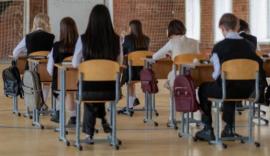
Government’s policies geared at tackling school dropouts and increasing the completion of secondary schooling are producing positive results – as persons aged 20 years and older with no formal education reduced from 19.1% in 1996 to 6.9% in 2022.

This is according to South Africa’s Census 2022 national results, which was handed over to President Cyril Ramaphosa by Statistician-General Risenga Maluleke at the Union Buildings in Pretoria on Tuesday.

“Furthermore, persons aged 20 years and older with some primary education decreased from 16.6% in 1996 to 7.4% in 2022. Over the period, there has been a noteworthy increase in the number of persons completing secondary education (16.3% in 1996 to 37.6% in 2022) and post-school education (7.1% in 1996 to 12.2% in 2022).

“In 2011 and 2022, business, economics and management sciences and education were dominated by females, while males continue to dominate in engineering as well as electrical infrastructure studies,” Maluleke said.

He said post-apartheid South Africa has experienced an expansion in the completion of secondary schooling for previously disadvantaged population groups.

“South Africa has geared up to intensify its measures through policy reforms to tackle school dropouts and increase completion of secondary schooling.  However, race disparity in educational attainment intersects with other forms of disadvantage, including poverty and the urban-rural divide,” Maluleke said.

Considering the relatively high children and youth population due to the demographic dividends of the country, concerted efforts have been made by government to expand the education system.

This had been done through establishing more institutions, especially in the Early childhood development (ECD) sector, giving much-required attention to remote and rural areas, introducing new and skill-based programmes in institutions and providing funding such as the National Student Financial Aid Scheme (NSFAS) for disadvantaged learners planning to undertake higher education.

“The period between 1996 to 2001 showed a large increase in the percentage of young children under the age of compulsory education participating in education (23.1 percentage points among 5-year-olds and 21.2 percentage points among 6-year-olds).

“However, it is the decade between 2001 and 2011 that showed an unprecedented increase in participation among 5-year-olds with a rise of 35.5 percentage points in participation from 45.6% to 81.1%. Furthermore, nearly nine out of ten (92.4%) children of this age were attending educational institutions in 2022, which is a nearly 70 percentage points increase from 1996,” Maluleke said.

He said among 6-year-olds, less than half (49.1%) were attending educational institutions in 1996 but subsequently increased by 21.2 percentage points in 2001.

“The data also show high attendance rates among 6–7-year-olds in 2022, who would most likely be attending Grade R. However, the attendance rate starts to decline by age 15, with only six out of ten (59.9%) 18-year-olds attending educational institutions in 2022; a reduction from 75.7% in 1996,” Maluleke said.

In 1996, more than half (54.6%) of the 20-year-olds were in education, which reduced to 37.0% in 2022.

ECD programme

In South Africa, 3.4 million children aged 0 – 4 years attended ECD programmes in 2022, of which 2.5 million attended a crèche/educare centre or pre-school/nursery school/Grade 00/Grade 000/Grade R.

“About 570 000 children had parents who preferred that they stay with day mothers/gogos/childminders. The majority of children attending ECD programmes were attending a crèche/educare centre (59.8%) while 12.2% attended pre-school/nursery school/Grade 00/Grade 000/Grade R.

“Close to 27.0% of children stayed either with day mothers/gogos/childminders or participated in home/community playgroups. While more than 3 million black African children attended ECD programmes, seven out of ten (72,3%) attended ECD facilities, with 60,7% attending a crèche/educare centre and 11,6% attending pre-school/nursery school/Grade 00/Grade 000/Grade R.

“By contrast, among white children 83.4% attended ECD facilities with one-third (32.5%) attending pre-school/nursery school/Grade 00/Grade 000/Grade R and the rest attending a crèche/educare centre (50.9%). Close to 17.0% of black African children stayed with day mothers/gogos/childminders,” he said.

Maluleke also noted the use of day mothers/gogos/childminders for childcare was also high among Indians/Asians (19.6%).

Among coloured children, close to 19.0% participated in home/community playgroups. Results showed that there were slight differences between sexes.

An analysis of persons aged 5–24 shows that overall, the percentage of individuals attending an educational institution increased by three percentage points between 1996 and 2022.

“Attendance increased to almost universal level between 1996 and 2022 for children aged 5 years and 6 years, while the attendance rate starts to decline by age 15–24 over the same period. Attendance also increased for black Africans, coloureds and whites over the period, while Indians/Asians showed little change,” he said. – SAnews.gov.za


nosihle
Thu, 10/12/2023 – 13:45

457 views

Government’s policies geared at tackling school dropouts and increasing the completion of secondary schooling are producing positive results – as persons aged 20 years and older with no formal education reduced from 19.1% in 1996 to 6.9% in 2022.

This is according to South Africa‘s Census 2022 national results, which was handed over to President Cyril Ramaphosa by Statistician-General Risenga Maluleke at the Union Buildings in Pretoria on Tuesday.

“Furthermore, persons aged 20 years and older with some primary education decreased from 16.6% in 1996 to 7.4% in 2022. Over the period, there has been a noteworthy increase in the number of persons completing secondary education (16.3% in 1996 to 37.6% in 2022) and post-school education (7.1% in 1996 to 12.2% in 2022).

“In 2011 and 2022, business, economics and management sciences and education were dominated by females, while males continue to dominate in engineering as well as electrical infrastructure studies,” Maluleke said.

He said post-apartheid South Africa has experienced an expansion in the completion of secondary schooling for previously disadvantaged population groups.

“South Africa has geared up to intensify its measures through policy reforms to tackle school dropouts and increase completion of secondary schooling.  However, race disparity in educational attainment intersects with other forms of disadvantage, including poverty and the urban-rural divide,” Maluleke said.

Considering the relatively high children and youth population due to the demographic dividends of the country, concerted efforts maintain been made by government to expand the education scheme.

This had been done through establishing more institutions, especially in the Early childhood development (ECD) sector, giving much-required attention to remote and rural areas, introducing current and skill-based programmes in institutions and providing funding such as the National Student Financial Aid Scheme (NSFAS) for disadvantaged learners planning to undertake higher education.

“The period between 1996 to 2001 showed a large increase in the percentage of young children under the age of compulsory education participating in education (23.1 percentage points among 5-year-olds and 21.2 percentage points among 6-year-olds).

“However, it is the decade between 2001 and 2011 that showed an unprecedented increase in participation among 5-year-olds with a rise of 35.5 percentage points in participation from 45.6% to 81.1%. Furthermore, nearly nine out of ten (92.4%) children of this age were attending educational institutions in 2022, which is a nearly 70 percentage points increase from 1996,” Maluleke said.

He said among 6-year-olds, less than half (49.1%) were attending educational institutions in 1996 but subsequently increased by 21.2 percentage points in 2001.

“The data also present high attendance rates among 6–7-year-olds in 2022, who would most likely be attending Grade R. However, the attendance rate starts to decline by age 15, with only six out of ten (59.9%) 18-year-olds attending educational institutions in 2022; a reduction from 75.7% in 1996,” Maluleke said.

In 1996, more than half (54.6%) of the 20-year-olds were in education, which reduced to 37.0% in 2022.

ECD programme

In South Africa, 3.4 million children aged 0 – 4 years attended ECD programmes in 2022, of which 2.5 million attended a crèche/educare centre or pre-school/nursery school/Grade 00/Grade 000/Grade R.

“About 570 000 children had parents who preferred that they stay with day mothers/gogos/childminders. The majority of children attending ECD programmes were attending a crèche/educare centre (59.8%) while 12.2% attended pre-school/nursery school/Grade 00/Grade 000/Grade R.

“Close to 27.0% of children stayed either with day mothers/gogos/childminders or participated in home/community playgroups. While more than 3 million black African children attended ECD programmes, seven out of ten (72,3%) attended ECD facilities, with 60,7% attending a crèche/educare centre and 11,6% attending pre-school/nursery school/Grade 00/Grade 000/Grade R.

“By contrast, among white children 83.4% attended ECD facilities with one-third (32.5%) attending pre-school/nursery school/Grade 00/Grade 000/Grade R and the rest attending a crèche/educare centre (50.9%). Close to 17.0% of black African children stayed with day mothers/gogos/childminders,” he said.

Maluleke also noted the use of day mothers/gogos/childminders for childcare was also high among Indians/Asians (19.6%).

Among coloured children, close to 19.0% participated in home/community playgroups. Results showed that there were slight differences between sexes.

An analysis of persons aged 5–24 shows that overall, the percentage of individuals attending an educational institution increased by three percentage points between 1996 and 2022.

“Attendance increased to almost universal level between 1996 and 2022 for children aged 5 years and 6 years, while the attendance rate starts to decline by age 15–24 over the same period. Attendance also increased for black Africans, coloureds and whites over the period, while Indians/Asians showed miniature change,” he said. – SAnews.gov.za

Read More at the Source

Share this:

  • Share on X (Opens in new window) X
  • Share on Facebook (Opens in new window) Facebook
  • Print (Opens in new window) Print
  • Email a link to a friend (Opens in new window) Email
  • Share on LinkedIn (Opens in new window) LinkedIn
  • Share on Tumblr (Opens in new window) Tumblr
  • Share on WhatsApp (Opens in new window) WhatsApp
  • Share on Mastodon (Opens in new window) Mastodon
Category: NewsTag: Africa, African, business, data, Education, engineering, Government, infrastructure, new, ONE, Pretoria, Ramaphosa, SA News, South Africa

If you feel strongly about this article then feel free to send MyZA a ‘Letter to the Editor’ using the submission form below:


Letter to the Editor

This field is for validation purposes and should be left unchanged.
If this is in response to an article please include that article title here or as the lead in for the first paragraph of your Letter below.

Separate tags with commas

Localise your letter by naming the city your words are about. Add relevant words describing your subject. Single comma separated words of no more than 5
Your Name(Required)
Your Name will be linked to the website below.
Your personal, business or social media web site
Choose NO to not set up a user account on MyZA. User Accounts will allow you to submit letters under your own Author Name

3 Latest Letters to the Editor:

  • Fun South African fact

    Dear Editor Fun South African fact: towns like Franschhoek and Stellenbosch are home to world-class wine farms set in stunning, scenic surroundings. Regards Aressa Smith In Response to/From: Luxury Properties Seized in New Lottery Crackdown

    27 January 2026
  • Condolences on the Passing of Lusanda Dumke

    Statement by Leander Kruger MPL – DA Buffalo City Constituency Leader: The Democratic Alliance in Buffalo City Metropolitan Municipality mourns the passing of Springbok Women’s rugby player and Mdantsane trailblazer, Lusanda Dumke, who lost her battle with cancer at the age of 28. South Africa has lost an exceptional athlete, a leader, and a source…

    17 December 2025
  • Rape Kits Delivered, But…

    Statement by Nicholas Gotsell MP – DA NCOP Member on Security & Justice: The DA can confirm that 2 840 rape kits arrived in Cape Town on Monday, following sustained DA oversight and pressure after multiple police stations across the Western Cape were found to be without this critical forensic evidence tool. While this delivery…

    17 December 2025

About Guest

Previous Post:Harnessing the Power of Modern Energy Solutions with GeeWiz
Next Post:Exploring the World of Specialised Pumps with Centex Africa

Reader Interactions

Comments

  1. Toy Town

    14 October 2023 at 3:39 pm

    El Salvador: You have two cows. They are less likely to get cut open than you.

  2. Flame Out

    12 October 2023 at 6:59 pm

    \”Reeeelly??\” says Van.

    \”Ja\”, says the larnie. \”Check, there\’s someone up front now, I\’ll show you!\”

    He starts steering towards the pedestrian, grinning from ear-to-ear, then at the last second he swerves back onto the road. But he hears a terrific \’thud\’, and he glances left to see Van closing the door.

    \”What the hell, man!\’ he shouts.

    \”Jirrah\” says Van, \”You need to get those sights adjusted, china, If I hadn\’t opened the door, you would have missed him completely!\”

Copyright © 2026 · MyZA · All Rights Reserved · Powered by Reach Trust