Lesotho Under Pressure to Approve Starlink Licence
Prime Minister says his government is removing obstacles to US investment, including Starlink, in the wake of the tariff hike

MyZA
News, Directory, Events and Other Stuff
Prime Minister says his government is removing obstacles to US investment, including Starlink, in the wake of the tariff hike
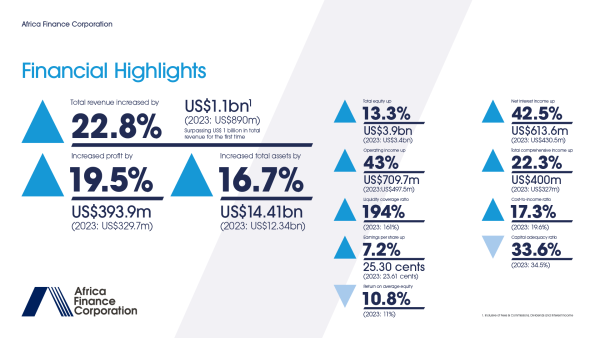
Africa Finance Corporation (AFC) (www.AfricaFC.org), the continent's leading infrastructure solutions provider, has announced its strongest financial performance to date, with total revenue for the year ended 31 December 2024 surpassing US$ 1 billion for the first time in the Corporation's history.
This record performance marks a significant milestone in AFC's mission to close Africa's infrastructure gap through scalable, de-risked investments that attract global capital and deliver tangible development outcomes. The Corporation posted a 22.8% increase in total revenue to US$1.1 billion and a 22.3% rise in total comprehensive income to US$400 million, up from US$327 million in 2023.
AFC's earnings growth was driven by improved asset yields, prudent cost-of-funds management and sustained traction in advisory mandates.
Further significant financial highlights include:
Throughout 2024, AFC continued to scale its impact by mobilising capital for landmark projects across energy, transport, and natural resources. These included the Lobito Corridor – a cross-border railway development spanning Angola, the Democratic Republic of Congo (DRC), and Zambia. AFC led the initiative to secure a concession agreement within one year of the initial Memorandum of Understanding (MoU), an unprecedented achievement for a project of its scale. In the DRC, AFC also invested US$150 million in the Kamoa-Kakula Copper Complex, Africa's largest copper producer and one of the most sustainable globally, thanks to its high-grade ore and renewable-powered smelter.
Other milestones transactions included financing support for the commissioning of the Dangote Refinery, the largest in Africa, and continued progress on AFC-backed Infinity Power Holding's 10 GW clean energy ambition, with power purchase agreements secured in Egypt and South Africa. AFC also invested in the 15GW Xlinks Morocco-UK Power Project, providing US$14.1 million to support early-stage development of a transcontinental renewable energy pipeline between North Africa and Europe.
AFC strengthened its capital base and expanded its investor network through several landmark funding initiatives. These included a US$ 1.16 billion syndicated loan - the largest in its history, a US$500 million perpetual hybrid bond issue, and the successful execution of Nigeria's first-ever domestic dollar bond, which raised US$900 million at 180% oversubscription. AFC also returned to the Islamic finance market after eight years, closing a US$400 million Shariah-compliant facility.
The year also saw strong momentum in equity mobilisation, with US$181.8 million in new capital raised from ten institutional investors. These included Turk Eximbank - AFC's first non-African sovereign shareholder - the Arab Bank for Economic Development in Africa (BADEA), and several major pension funds spanning Cameroon, Seychelles, Mauritius, and South Africa. Ratings agencies affirmed AFC's robust credit profile, with AAA ratings from S&P Global (China) and China Chengxin International, and a stable A3 Outlook from Moody's.
“These results send a clear message that strategic investment in African infrastructure creates lasting value for both beneficiaries and investors,” said Samaila Zubairu, President & CEO of AFC. “In 2024, we exceeded the billion-dollar revenue mark, delivered game-changing projects, and reinforced our financial resilience—demonstrating the scalability of our unique model that blends purpose with performance to accelerate Africa's economic transformation.”
Read the full annual report here (https://apo-opa.co/424qlmR)
Distributed by APO Group on behalf of Africa Finance Corporation (AFC).
Media Enquiries:
Yewande Thorpe
Communications
Africa Finance Corporation
Mobile: +234 1 279 9654
Email: yewande.thorpe@africafc.org
About AFC:
AFC was established in 2007 to be the catalyst for pragmatic infrastructure and industrial investments across Africa. AFC's approach combines specialist industry expertise with a focus on financial and technical advisory, project structuring, project development, and risk capital to address Africa's infrastructure development needs and drive sustainable economic growth.
Seventeen years on, AFC has developed a track record as the partner of choice in Africa for investing and delivering on instrumental, high-quality infrastructure assets that provide essential services in the core infrastructure sectors of power, natural resources, heavy industry, transport, and telecommunications. AFC has 45 member countries and has invested over US$15 billion in 36 African countries since its inception. www.AfricaFC.org
Wednesday, 9 April 2025: Eskom acknowledges a decline in criminal activities targeting its electrical infrastructure, including mini-substations, high-voltage pylons, and transformers, compared to the previous year. However, these incidents remain high and a serious concern, with widespread consequences for electricity supply and public safety. Eskom commends the South African Police Service (SAPS) for its recent...
Government launches R500 million Spaza Shop Support Fund
Government has officially opened applications for the highly anticipated R500 million support fund aimed at increasing the participation of South African owned Spaza Shops in the townships and rural areas retail trade sector.
Addressing the launch of the Spaza Shop Support Fund (SSSF), Minister of Trade, Industry and Competition, Parks Tau, said the fund will transform the spaza shop landscape by creating jobs, alleviating poverty, promoting economic inclusion and empowerment as well as stimulating local economic growth.
The fund provides for funding of up to R300 000 per shop through a combination of grants and low-interest loans.
It allocates funding specifically for initial stock purchases, infrastructure improvements, business development tools, and Point of Sale (POS) system adoption.
Through the fund, shop owners will be provided with assistance in meeting hygiene and regulatory standards to ensure the provision of safe, high-quality products.
“We are committed to ensuring that every spaza shop that benefits from this fund also gains access to the necessary health and safety training and resources. This holistic approach will help create workplaces that are not only economically vibrant but also secure and sustainable for the future,” the Minister said on Tuesday in Soweto.
He indicated that studies show that small businesses account for a significant portion of job creation in South Africa.
“By equipping spaza shop owners with financial support, infrastructure upgrades, and essential business training, we are setting the stage for sustainable job creation. This means more opportunities for local talent and a reduction in poverty levels, as spaza shops expand their roles as community hubs.
“Every spaza shop supported by this fund is an engine for local growth. When these businesses thrive, they create ripple effects that boost surrounding sectors—be it suppliers, service providers, or local artisans.
“This fund is a catalyst for economic dynamism, injecting energy and resources where they are most needed. It is an investment in our people, our neighbourhoods, and ultimately, the entire South African economy,” he explained.
The fund will be jointly administered by the National Empowerment Fund (NEF) and the Small Enterprise Development Finance Agency (SEFDA).
“We want a South Africa where economic opportunities are available to all, where the informal becomes formal, and where the entrepreneurial spirit of our townships becomes a driving force for national transformation.
“With this fund, we are taking a concrete step to formalise and empower the informal sector. By supporting spaza shops, we are enabling entrepreneurs, often women and young people, to participate fully in the economic process.
“These small businesses generate employment, drive local commerce, and channel much-needed income into communities that have long been underserved,” Tau said.
In order to access the funding, applicants need to apply to the NEF and SEDFA through the prescribed application process outlined on the relevant institution's website.
The following website can be used to apply for funding:
Spaza Shop Support Fund - www.spazashopfund.co.za
NEF - www.nefcorp.co.za
SEDFA - https://systems.sefa.org.za/SMMEPortal/
The contact details for the Spaza Shop Support Fund Call Centre are 01 1 305 8080 or via email: Spazafund@nefcorp.co.za
Contact details for the NEF Call Centre are 0861 843633, SEDFA Call Centre 012 748 9600 or an email can be sent to helpline@sefa.org.za.
-SAnews.gov.za
nosihle
Tue, 04/08/2025 - 16:14
365 views
Germany is eyeing expanded investments in Africa's energy sector, having pledged €4 billion for green energy projects by 2030 and advancing hydrogen and gas partnerships through the European Union's (EU) Global Gateway initiative. These investments aim to enhance conditions for private sector involvement and infrastructure development, underscoring Germany's commitment to sustainable development and economic growth across the continent.
In South Africa, Germany committed R5.2 billion last December to support the country's energy transition and deepen bilateral cooperation. This funding is directed towards facilitating South Africa's shift from coal to renewable energy sources, addressing both environmental concerns and energy security. Earlier this month, the EU also announced a €4.7 billion investment in South Africa to support green energy initiatives and vaccine production, reflecting a broader commitment to sustainable development in the region.
Further strengthening these efforts, Germany and the African Development Bank announced joint initiatives last month to accelerate energy access and private sector growth across Africa. This partnership includes support for the Mission 300 initiative, which aims to provide electricity access to 300 million Africans by 2030, and expanded financing for youth entrepreneurship programs.
Meanwhile, German companies are optimistic about their prospects in South Africa, signaling growing confidence in the country's economic stability, expanding trade opportunities and the potential for long-term partnerships in energy and industrial sectors. A recent survey by KPMG Germany and the Southern African-German Chamber of Commerce and Industry revealed that 64% of German companies expect rising revenues in South Africa, with 44% planning to invest in the country within the next three years.
Germany has already been active in Africa's green hydrogen sector, recognizing the continent's vast potential for renewable energy production. In Namibia, German investors have partnered on the $10 billion Hyphen Green Hydrogen Project, aiming to harness the country's abundant solar and wind resources to produce green ammonia for global export. Additionally, Germany mobilized €150 billion through the Global Gateway initiative earlier this year to enhance its energy engagement in Africa, with green hydrogen as a key focus. West African countries alone have the potential to produce up to 165,000 TWh of green hydrogen annually – far exceeding Germany's projected demand for 2030.
Beyond renewable initiatives, Germany remains open to cooperating with African countries on natural gas and blue hydrogen production. This approach reflects Germany's updated Africa policy guidelines, which emphasize the importance of African energy resources – including renewable electricity, green hydrogen and, under specific conditions, natural gas – for a successful energy transition in both Africa and Europe.
"Germany's growing investment in Africa's energy sector signals a transformative shift toward sustainable development and economic growth. With a clear focus on green hydrogen, renewables and responsible fossil fuel cooperation, the country is positioning itself as a key partner in Africa's energy future. African Energy Week 2025 will serve as a vital platform to advance these partnerships, unlocking new opportunities and accelerating Africa's energy transition,” said Tomás Gerbasio, Vice President of Commercial and Strategic Engagement at the African Energy Chamber.
The upcoming African Energy Week (AEW) 2025: Invest in African Energies conference presents a strategic platform for German investors to explore and engage with energy opportunities across the continent. AEW 2025 aims to drive forward the momentum established in previous years, offering a dynamic space for leaders, policymakers and stakeholders to address regional and global energy challenges while advancing Africa's position as a leader in sustainable energy solutions.
AEW: Invest in African Energies is the platform of choice for project operators, financiers, technology providers and government, and has emerged as the official place to sign deals in African energy. Visit www.AECWeek.com for more information about this exciting event.
Distributed by APO Group on behalf of African Energy Chamber.

Michael Kelly, Chief Advocacy Officer, World Liquid Gas Association (WLGA) will speak at the Invest in African Energy (IAE) 2025 Forum in Paris next month. As a key leader in global energy advocacy, Kelly's participation will provide valuable insights into the growing role of liquid gas in the global energy transition, particularly within the African context.
The WLGA is dedicated to promoting the use of liquid gas as a cleaner alternative to conventional fuels, advocating for policy reforms that support the global expansion of this energy source. In Africa, the association's efforts focus on helping governments and businesses explore liquid gas solutions as part of the broader energy mix, driving both energy access and economic development across the continent. In December 2024, the WLGA launched a new roadmap aimed at expanding access to clean cooking solutions across Africa, specifically through increased availability and uptake of LPG. This comprehensive roadmap not only emphasizes the establishment of a clear regulatory framework to scale the LPG market, but also calls for the implementation of consumer financing and payment plans to address economic barriers and highlights the need for investment in infrastructure and roads.
IAE 2025 (Invest-Africa-Energy.com) is an exclusive forum designed to facilitate investment between African energy markets and global investors. Taking place May 13-14, 2025 in Paris, the event offers delegates two days of intensive engagement with industry experts, project developers, investors and policymakers. For more information, please visit www.Invest-Africa-Energy.com. To sponsor or participate as a delegate, please contact sales@energycapitalpower.com.
Africa's LPG sector is experiencing significant growth, with several large-scale projects focused on expanding production, storage and distribution capabilities. Last month, Nigeria commissioned its first modular LPG extraction plant and a 20 MW gas-to-power project, both of which are set to boost domestic gas utilization and enhance energy access. Sahara Group is developing a 12,000-ton LPG storage facility in Ivory Coast, which will increase the country's LPG storage capacity by 60% and significantly improve imports and distribution for neighboring countries in the region. The company is also in talks with Kenya to construct a 30,000-ton facility for handling and storing LPG.
Meanwhile, Petredec and South Africa's state-owned Transnet announced a rail freight project in September 2024, featuring a dedicated train system and a modern LPG intermodal hub and storage facility. This hub will receive bulk LPG via rail, introducing the country's first scheduled LPG train system. Other high-profile projects include the Dangote Refinery in Nigeria, a $20 billion initiative designed to meet the country's fuel demands while reducing dependency on imports and introducing LPG into the Nigerian market. These projects reflect Africa's growing commitment to leveraging its natural gas resources to enhance energy infrastructure, drive economic development and improve access to cleaner, more affordable energy across the continent.
Distributed by APO Group on behalf of Energy Capital & Power.
African nations are leveraging strategic partnerships to attract investment and strengthen their mining sectors. As competition between Western and Eastern powers intensifies over critical minerals, Africa has emerged as a key player in global supply chains, balancing geopolitical interests while maximizing economic benefits. With global markets racing to secure resources for the energy transition and the Fourth Industrial Revolution, the upcoming African Mining Week will facilitate collaboration between African governments and international stakeholders.
U.S.–DRC Partnership to Unlock Mineral Wealth
In March 2025, the U.S. State Department reaffirmed (https://apo-opa.co/43JPLr8) its interest in engaging with the Democratic Republic of Congo (DRC) to unlock its estimated $1.2 trillion in untapped mineral resources. Cooperation between the two countries could yield a transformative impact on the sector, with U.S. financing and technical expertise unlocking the potential of the world's largest cobalt producer and Africa's largest copper producer. The U.S. has already played an active role in the financing and development of the Lobito Corridor, facilitating mineral transport and trade between the DRC, Angola, Zambia and international markets.
EU Expands Mining, Green Energy Investments
This month, the European Union (EU) pledged €4.7 billion (https://apo-opa.co/42q3265) to South Africa to support raw material value addition, the energy transition, local vaccine manufacturing and green hydrogen production. South Africa, home to the world's largest deposits of platinum group metals (PGMs), will leverage this funding to enhance PGM production to meet growing demand for electrolysers used in green hydrogen applications. This follows South Africa's $1 billion green hydrogen partnership with Denmark and the Netherlands established in 2023. Neighboring Namibia has also attracted European investment, with the EU committing €25 million to Namibia Hydrogen Fund Managers in September 2024 to propel the country's green hydrogen sector. Meanwhile, Uganda is taking steps to develop its mining sector with the support of the EU and Germany's Federal Ministry for Economic Cooperation and Development, having launched the Sustainable Development of the Mining Sector project earlier this month.
China Strengthens its Position in African Mining
China remains one of the largest investors in African mining, with both state-owned and private firms driving sector growth. In September 2024, China pledged $50 billion over three years for infrastructure and mineral development across the continent. Key projects in the DRC include CMOC's $2.5 billion expansion of the Tenke Fungurume Mine and Sinohydro and China Railway's $7 billion infrastructure-for-minerals deal in copper and cobalt mining. China has also invested heavily in Zimbabwe's lithium sector and pledged $1 billion to upgrade the Tazara Railway, improving East Africa's mineral exports.
Growing Global Interest in Africa's Mining Sector
Beyond the U.S., EU and China, countries like Canada, Australia and the UAE are ramping up mining investments in Africa. Canadian firms are expanding their footprint in West Africa's gold sector, Australian companies are backing lithium and rare earth projects in southern Africa and the UAE is securing stakes in critical mineral supply chains through strategic joint ventures. African Mining Week, taking place October 1-3 in Cape Town, will provide a platform for African nations to engage global investors, strengthen cooperation and accelerate resource development.
Distributed by APO Group on behalf of Energy Capital & Power.
Mining represents one of the most energy-intensive industries globally. As African nations ramp up mineral extraction to drive economic growth, mining projects and stakeholders are increasingly investing in energy infrastructure to sustain operations and meet rising production targets. Amid efforts to improve grid stability, the upcoming African Mining Week conference will highlight the continent's investment opportunities emerging from the mining-energy nexus.
Northam Bolsters Power Supply for South African Mines
In February 2025, mining firm Northam signed a power purchase agreement (PPA) for 140 MW of wind power to support its platinum group metals operations in Limpopo. This deal follows an earlier PPA signed in October 2024 for an 80 MW solar power facility to supply the company's Zondereinde mine, aimed at driving South Africa's expansion of its PGMs sector. These agreements are part of Northam's broader strategy to enhance energy security and sustainability while reducing its carbon footprint in alignment with national renewable energy goals.
Richards Bay Minerals Expands PPA Portfolio
Richards Bay Minerals, a subsidiary of mining multinational Rio Tinto, signed its third PPA with Red Rocket in February 2025, securing 230 MW of electricity from Red Rocket's 380 MW Overberg Wind Farm. This agreement increases the company's total contracted renewable energy supply to 500 MW and supports Rio Tinto's commitment to reducing emissions by 50% by 2030. Richards Bay Minerals also taps into energy from the 130 MW Bolobedu solar PV plant and 140 MW Khangela Emoyeni wind farm.
Further Investments in Renewables for Mining
Other mining companies across Africa are driving large-scale energy projects to secure a stable power supply. In South Africa, Ivanhoe Mines completed a 5 MW solar facility in Q1 2025 to support its Platreef PGM mine, while Impala Platinum signed a five-year PPA with Discovery Green to supply wheeled renewable energy to its Impala Refineries operation. Meanwhile, commodities firm Trafigura is developing a 2 GW initiative to power Angolan mines, and First Quantum is set to commission a 430 MW project in Zambia in 2025. Tronox Holdings plans to roll out 400 MW of energy projects in South Africa by 2027 and Chinese mining company CMOC is preparing a 200 MW energy project in the DRC, set for commissioning by 2028.
As these investments unfold, African Mining Week will showcase key milestones in energy security for the sector, highlighting lucrative opportunities within Africa's independent power markets. The event will emphasize the growing demand for stable, sustainable energy solutions as miners continue to invest in energy infrastructure.
African Mining Week serves as a premier platform for exploring the full spectrum of mining opportunities across Africa. The event is held alongside the African Energy Week: Invest in African Energies 2025 conference from October 1-3 in Cape Town. Sponsors, exhibitors and delegates can learn more by contacting sales@energycapitalpower.com.
Distributed by APO Group on behalf of Energy Capital & Power.
South Africa's Strategic Adaptation to US Tariffs: Advancing National Interests through Policy and Strategy
The new tariff regime arising from the decision by the United States of America, which have been directed not only to South Africa, but the entire world necessitates strategic responses to maintain and grow our industrial base, as a crucial avenue to pursue inclusive growth.
In response to the US Government's imposition of tariffs, South Africa will continue to navigate the challenges and opportunities these measures present with resilience and innovation. Guided by its national interests and aligned with its broader trade and industrial policy, South Africa is committed to ensuring economic growth, industrial development, and the well-being of its citizens.
South Africa intends to:
1. Negotiate Favourable Agreements
South Africa will work to secure opportunities, in a context of a rapid withdrawal of favourable arrangements giving our exports preferential access to the United States of America. This might involve securing additional exemptions and favourable quota agreements, ensuring our industries maintain critical access to the US market, including through sectoral cooperation. This aligns with the national interest of promoting economic prosperity and safeguarding the livelihoods of South Africans.
2. Diversify and Expand Trade Relations
Efforts will intensify to diversify export destinations, targeting markets across Africa, as well as in Asia, Europe, Middle East, and Americas.
Moreover, such efforts will also, where deemed appropriate involve bilateral arrangements where these allow for the pursuance of our national interest. In our presidency of the G20, as the recent engagements at the G20 trade and investment working group (TIWG) indicate, the issue of supply chain geographical diversification is a challenge confronting all open market economies the world over.
This diversification supports South Africa's industrial strategy and reduces dependency on single destination markets for our exports or single sources for our intermediate input requirements. Fostering resilience in line with national economic priorities.
3. Enhance Regional Trade Collaboration
South Africa will leverage the African Continental Free Trade Area (AfCFTA) to bolster intra-African trade, fostering stronger regional economic integration and cooperation. This approach aligns with the national interest of contributing to a better Africa and world.
4. Focus on Value-Added Production
Industries will prioritise transforming raw materials into higher value finished goods, reducing tariff exposure and driving innovation to improve profitability. This supports South Africa's industrial policy objectives of boosting local manufacturing and creating jobs.
5. Stimulate Domestic Growth
The government will invest strategically in industries impacted by the tariffs, supporting economic growth through modernisation and targeted infrastructure development. This aligns with the national interest of ensuring the well-being of South African citizens.
6. Forge Global Alliances
South Africa will continue to build strategic partnerships with other nations enhancing collaboration and our influence in international trade negotiations. This reflects the national interest of strengthening global diplomatic and economic ties.
South Africa's tariff and industrial strategy are designed to support industrial development, employment growth, and economic resilience. By aligning these policies with the national interest, South Africa will ensure that its economy emerges stronger, more diversified, and resilient in the face of global trade complexities.
This approach will also apply to the 7 February Executive Order, which is currently being attended by an interdepartmental team which includes the departments affected by the executive order.
The 31% tariff implemented by the US Administration will be effective from 9 April 2025. South Africa's average tariff is 7.6% and therefore South Africa needs clarity on the basis for the 31% to be implemented by the US.
It is important to note that products such as copper, pharmaceuticals, semiconductors, lumber articles, certain critical minerals, and energy and energy products have been exempted from the reciprocal tariffs. Some of these materials are already key parts of the United States of America's sourcing requirements. According to the United States Geological Survey, 97% of their chrome ore requirements come from South Africa, 6% of fluorspar import requirements and 24% of the United States manganese requirements. These reciprocal tariffs will not apply to products already facing Section 232 tariffs of 25% such as steel, aluminium, automobiles and auto parts.
The reciprocal tariffs effectively nullify the preferences that Sub-Saharan Africa countries enjoy under the Africa Growth and Opportunity Act (AGOA). The sweeping tariff measures will affect several sectors of our economy, including automotive industry, agriculture, processed food and beverage, chemical, metals, and other segments of manufacturing, with implications for jobs and growth.
The US represented 7.45% of South Africa's total exports in 2024, while South Africa accounted for only 0.4% of US total imports. As such, South Africa does not constitute a threat to US and where there is a trade imbalance in favour of South Africa, it is mainly on agriculture products which are counter-cyclical and on minerals which are inputs in US industries.
South Africa will continue building domestic supply resilience, reducing cost of doing business and increasing competitiveness of our economy. Further, South Africa will continue with efforts to diversify export markets as part of its resilience building strategy.
The significant market access opportunities both through trade agreements and through strategic partnerships with countries across the globe present huge opportunities for our exports. The recently concluded Africa Continental Free Trade Area (AfCFTA) remains untapped, beyond the Southern Africa Development Community (SADC).
Furthermore, South Africa enjoys preferential market access through the Southern Africa Customs Union, SADC, SADC-EU Economic Partnership Agreement (EPA), SACU+Mozambique-UK EPA, the European Free Trade Association (EFTA), MERCUSUR (that includes Argentina, Brazil, Paraguay and Uruguay) and Japan Generalised System of Preferences. In addition, government is strengthening relations with countries in Asia and the Middle East to open new market access opportunities. Some of these efforts are bearing fruit with new market access opportunities for our agriculture products.
To re-iterate the Presidency, whilst South Africa remains committed to a mutually beneficial trade relationship with the United States, unilaterally imposed and punitive tariffs are a concern and serve as a barrier to trade and shared prosperity. The tariffs affirm the urgency to negotiate a new bilateral and mutually beneficial agreement with the US, that will establish more fair-trade relations with the US as an essential step to secure long-term trade certainty.
Distributed by APO Group on behalf of Republic of South Africa: Department of International Relations and Cooperation.

The upcoming Invest in African Energy (IAE) 2025 Forum will host a high-level panel – Downstream Beneficiation: Supply Chain Development for Optimal Performance – as the continent aims to enhance energy security, reduce import dependence and maximize the value of its natural resources. The session will explore how the expansion of Africa's downstream sector can strengthen supply chains, enhance refining capacity and drive sustainable economic growth through infrastructure investment and strategic partnerships.
As Africa's energy landscape evolves, optimizing downstream operations is critical to unlocking the full potential of the continent's natural resources. This session will focus on closing the infrastructure finance gap by addressing key challenges such as upgrading refineries, expanding storage and distribution networks, and developing service stations, bottling plants and transport fleets. Panelists will also examine the role of strategic hubs – such as Egypt's petrochemical industry, Equatorial Guinea's Gas Mega Hub and Algeria's emerging green hydrogen sector – in bolstering Africa's supply chain efficiency, along with key regional projects like the Central African Pipeline System and the Lobito Corridor linking Angola, Zambia and the Democratic Republic of Congo.
IAE 2025 (https://apo-opa.co/43FPXaT) is an exclusive forum designed to facilitate investment between African energy markets and global investors. Taking place May 13-14, 2025 in Paris, the event offers delegates two days of intensive engagement with industry experts, project developers, investors and policymakers. For more information, please visit www.Invest-Africa-Energy.com. To sponsor or participate as a delegate, please contact sales@energycapitalpower.com.
Moderated by James Gooder, VP Crude, Argus Media, the panel will feature industry leaders offering key insights into Africa's downstream sector. Speakers include Anibor Kragha, Executive Secretary, African Refiners & Distributors Association; Tarik Berair, Commercial Development Manager, Technip Energies; Fernando Covas, Executive Director, S&P Global Commodity Insights; James Bullen, Head of Downstream, Petredec and Michael Kelly, Chief Advocacy Officer, World Liquid Gas Association.
Africa's downstream investment climate is undergoing significant transformation, with several major projects driving the sector's growth including Nigeria's 650,000-bpd Dangote Refinery, Angola's 200,000-bpd Lobito and 100,000-bpd Soyo refineries, and Algeria's 100,000-bpd Hassi Messaoud Refinery. Despite recent refinery closures, South Africa also maintains a well-developed fuel distribution network, retail stations and petrochemical production, while Mozambique is emerging as a key LNG hub, with the Coral South FLNG project already operational and the Rovuma LNG and Mozambique LNG projects currently under development.
Despite these advancements, challenges remain in securing adequate financing for infrastructure upgrades and supply chain expansion. Addressing these gaps will require coordinated efforts from governments, private investors and industry stakeholders to develop resilient and efficient downstream operations. The IAE 2025 downstream panel will provide a platform for stakeholders to discuss actionable strategies that ensure Africa's energy sector remains competitive, sustainable and responsive to global demand.
Distributed by APO Group on behalf of Energy Capital & Power.
Two ships carrying South African coal are due to arrive in Israel
SA unveils strategic economic diversification plan amid US tariffs
South Africa has unveiled a comprehensive strategy to mitigate the economic impact of new United States tariffs, focusing on export diversification, value-added production, and strengthening regional trade partnerships.
This is after United States President, Donald Trump, announced global reciprocal tariffs on most imported goods, with South Africa facing a 31% tariff increase.
“The new tariff regime arising from the decision by the United States of America, which have been directed not only to South Africa, but the entire world, necessitates strategic responses to maintain and grow our industrial base, as a crucial avenue to pursue inclusive growth,” the Minister of International Relations and Cooperation, Ronald Lamola, said on Friday.
Lamola was speaking during a joint media briefing with the Minister of Trade, Industry and Competition, Parks Tau.
He informed journalists that South Africa will continue to tackle the challenges and seize opportunities with resilience and innovation, as the country moves forward with ensuring economic growth, industrial development, and the well-being of its citizens.
Lamola outlined plans to navigate the challenges posed by the 31% tariffs set to take effect from 9 April 2025.
These include negotiating favourable trade agreements with the United States; leveraging the African Continental Free Trade Area (AfCFTA) to boost intra-African trade; and prioritising high-value manufacturing to reduce tariff exposure.
In addition, he said government remains committed to building economic resilience, exploring alternative market access through existing trade agreements and strategic partnerships with countries across various regions.
“We will intensify efforts to diversify export destinations, targeting markets across Africa, Asia, Europe, the Middle East, and the Americas,” the Minister stated.
According to Lamola, government aims to reduce dependence on single export markets and foster economic resilience.
Meanwhile, he announced that the State will invest strategically in industries impacted by the tariffs, supporting economic growth through modernisation and targeted infrastructure development.
The sweeping tariff measures will affect several sectors of South Africa’s economy, including automotive, industrial agriculture, processed food and beverage, chemical, metals, and other segments of manufacturing.
According to Lamola, South Africa’s tariff and industrial strategy are designed to support industrial development, employment growth, and economic resilience.
“By aligning these policies with the national interest, South Africa will ensure that its economy emerges stronger, more diversified, and resilient in the face of global trade complexities,” he explained.
This approach will also apply to the 7 February Executive Order, which led to the withdrawal from the Just Energy Transition (JET) partnership with South Africa.
“South Africa’s average tariff is 7.6% and therefore South Africa needs clarity on the basis for the 31% to be implemented by the US.”
Lamola clarified that products such as copper, pharmaceuticals, semiconductors, lumber articles, certain critical minerals, and energy and energy products, have been exempted from the reciprocal tariffs.
These reciprocal tariffs will also not apply to products already facing Section 232 tariffs of 25%, such as steel, aluminium, automobiles, and auto parts.
Currently, the Minister said the United States represents 7.45% of South Africa’s total exports, while South Africa accounts for only 0.4% of the United States’ imports.
“As such, South Africa does not constitute a threat to the US, and there is a trade imbalance in favour of South Africa. It is mainly on agricultural products, which are counter-cyclical, and on minerals, which are inputs in US industries.”
Highlighting the potential impact, Lamola noted that the tariffs “effectively nullify the preference that Sub-Saharan African countries enjoy under the Africa Growth and Opportunity Act (AGOA).”
However, despite the challenges, Lamola said government remains optimistic.
“The tariffs affirm the urgency to negotiate a new bilateral and mutually beneficial agreement with the US, that will establish more fair-trade relations with the US as an essential step to secure long-term trade certainty,” Lamola added.
Transparency in tariff calculations
Meanwhile, Tau stressed the need for confirmation from the United States on how they arrived at the tariff number, referencing international norms and standards.
He also highlighted the importance of transparency in tariff calculations, using World Trade Organisation (WTO) standards and the most favoured nations mechanism.
“And that’s why we are advocating for a reform of the World Trade Organisation and ensuring that it’s able to adapt to current reality, but also ensuring that we’re able to reinforce a multilateral system of trade and transparency across the board. Otherwise, you’re going to have an environment where there are no global rules,” Tau added. – SAnews.gov.za
Gabisile
Fri, 04/04/2025 - 13:08
177 views
The African Mining Week (AMW) conference and exhibition has officially launched its 2025 program, unveiling key topics and lucrative opportunities across Africa's mining value chain. The three-day program will foster collaboration on investment, value addition, local content development and industrialization. Bringing together African regulators, key mining stakeholders and global partners, AMW serves as a critical platform for shaping the future of African mining.
Download the program here: https://apo-opa.co/42kb940
Scheduled for October 1–3 in Cape Town, AMW takes place under the theme, From Extraction to Beneficiation: Unlocking Africa's Mineral Wealth. The event is co-located with the African Energy Week: Invest in African Energies conference, providing attendees a strategic opportunity to gain insight into opportunities across both the energy and mining sectors in Africa.
The AMW program features the Ministerial Forum, where African and global mining ministers will connect to showcase investment opportunities, discuss regulatory frameworks and highlight efforts to drive local beneficiation and value addition. Through policy revitalization and strategic partnerships, African markets are increasingly positioning themselves as attractive destinations for global investors.
A series of Country Spotlights will offer a deep dive into Africa's diverse mineral wealth, featuring insights into Botswana and Angola's diamond resources, Zambia's copper reserves and the Democratic Republic of Congo's cobalt market. Spotlights will also examine the latest developments within South Africa's platinum group metals, Zimbabwe's lithium, Mali's uranium and Malawi and Tanzania's rare earths industries.
AMW's Critical Minerals Track will explore emerging trends and opportunities within a sector that is crucial to the global energy transition. With Africa holding 30% of the world's critical minerals, the continent is attracting substantial interest from international players eager to unlock its vast potential. AMW will spotlight Africa's growing role in mineral diplomacy, as countries strengthen investment ties and infrastructure collaboration with global partners, including China, the U.S., Canada, the UAE, Australia and the European Union. Meanwhile, AMW Roundtables will facilitate deal signings and enhanced cooperation among African stakeholders and international investors.
Innovation will take center stage at the Technology Forum, set to explore the transformative role of digital technologies, AI and machine learning in modernizing mineral exploration and production. African markets are increasingly leveraging advanced tools to accelerate exploration, with companies such as Botswana Diamonds utilizing AI-driven solutions to diversify beyond traditional diamond mining. Meanwhile, KoBold Metals is using AI to unlock new copper discoveries in Zambia, supporting the country's ambition to ramp up production to 3.1 million tons annually by 2031.
The Investment Track will bring together global investors, including public financiers and international development finance institutions to explore funding opportunities across the mining value chain. Discussions will focus on optimizing financial mechanisms, such as loans, private placements and equity funding, to maximize capital flows to Africa's mining sector. Additionally, the Junior Miners Forum will provide a platform for small-scale mining firms to pitch their projects to investors, potential partners and industry experts, enhancing their contributions to the sector's growth. Join AMW 2025 today and be part of the discussion on Africa's mining future.
African Mining Week serves as a premier platform for exploring the full spectrum of mining opportunities across Africa. The event is held alongside the African Energy Week: Invest in African Energies 2025 conference from October 1-3 in Cape Town. Sponsors, exhibitors and delegates can learn more by contacting sales@energycapitalpower.com. To download the working program, please visit www.African-MiningWeek.com
Distributed by APO Group on behalf of Energy Capital & Power.
Mineral-rich African countries are strengthening cooperation with global partners to optimize the mining value chain, leveraging investments to accelerate GDP growth and sustainable development. In recent years, the contribution of mining to the national fiscus has grown significantly across many nations, and looking ahead, this growth momentum is on track to continue as nations promote greater investment in mineral development.
Mali
The Malian government expects to collect $1.2 billion (apo-opa.co/41Uk6C6) in tax revenue from the mineral sector in Q1, 2025 alone. New developments such as Hummingbird Resources' Yanfolia project and Ganfeng Lithium's Goulamina mine coming online, the country's mining industry is set to expand even further. In 2023, the sector contributed approximately $1 billion to the economy, accounting for 21.5% of the national budget.
Malawi
Malawi is accelerating the rollout and monetization of mining projects under its Agriculture, Mining and Tourism strategy. The strategy focuses on boosting activities across these sectors, with goals including increase exports, job creation and greater investment. The World Bank (apo-opa.co/3E0bWyX) projects that the mining sector will contribute 12% to Malawi's GDP by 2027, generating $300 billion in export revenue between 2026 and 2040.
South Africa
South Africa's mining sector remains a major economic pillar, contributing 6% to the country's GDP in 2024 and generating R100 billion in national revenue. The industry provided 474,876 formal jobs, accounting for 4.5% of total employment, while exports reached R800 billion - representing 45% of total merchandise exports. With efforts to revitalize the gold industry and accelerate growth in critical minerals underway, the industry's contribution to economic stability continues.
Zambia
In Zambia, mining continues to play a critical role, contributing 20% of total revenue, 15% of formal employment and 70% of export earnings (apo-opa.co/447UXVS). A plan to increase annual copper production to 3.1 million tons by 2031, reallocate 1,000 repossessed mining licenses (apo-opa.co/3R1l2hS) and attract new investments by firms such as Barrick, Jubilee Metals and Tertiary Minerals, will further expand the sector's contribution to GDP.
Botswana
With a wealth of untapped mineral opportunities, Botswana seeks to leverage international partnerships to unlock additional value across its diamond sector. Diamond mining currently accounts for 4% of employment, 30% of GDP and 85% of total exports in the country. Going forward, greater investment across the industry will not only spur job creation but generate increased revenue from the industry.
Ghana
Ghana's mining industry is a significant contributor to the country's economy, with minerals such as gold, manganese, bauxite and diamonds generating substantial revenue for the economy. Gold accounted for 48.4% of GDP in 2024 while small-scale gold miners alone generated $5 billion in foreign earnings from gold exports in the same year. However, with a focus on improving industry regulation, formalizing small-scale mining operations and increasing investments, Ghana is on track to generate greater value from its mining sector.
As global demand for minerals rises - driven by the energy transition and the Fourth Industrial Revolution - the prospects for Africa's mining sector remain strong. The upcoming African Mining Week - taking place on October 1-3 in Cape Town - will highlight the sector's expanding role in economic growth, job creation and revenue generation. African Mining Week will explore how countries are leveraging mining revenues to drive economic growth and infrastructure development, ensuring the industry remains a cornerstone of Africa's economic future.
Distributed by APO Group on behalf of Energy Capital & Power.

Legal, tax and business advisory conglomerate CLG (www.CLGGlobal.com) - formerly Centurion Law Group – has officially been approved as a Central African Economic and Monetary Community (CEMAC) tax advisor by the CEMAC Standing Committee on Fiscal and Accounting Harmonization. CLG Tax and Legal will provide its full suite of tax services across all CEMAC member countries, supporting business and transactions across various strategic fields, including oil, gas and mining.
The tax certification not only comes as part of a broader restructuring of CLG's tax and legal services offerings, aimed at positioning the firm to better serve clients throughout the region with integrated solutions, but as the CEMAC region pursues accelerated growth across its strategic economic sectors. Specifically, the region's oil and gas sector is on track for rapid growth, as nations implement ambitious production targets. The Republic of Congo aims to produce 500,000 barrels per day (bpd) by 2027; Gabon targets 220,000 bpd in the short-term; while Equatorial Guinea and Cameroon are scaling-up gas monetization. These targets require significant levels of investment and CLG stands ready to support transactions and broader economic growth.
Given the potential of the CEMAC region's natural and mineral resources, project developers and investors have already begun to expand their presence across the region. In the Republic of Congo, TotalEnergies is investing $600 million in the Moho Nord project; Trident Energy recently acquired stakes in the Nkossa, Nsoko II, Lianzi and Moho-Bilondo fields; while Perenco increased production at the Tchibouela II and Tchendo II fields following a $30 million investment. In Gabon, wildcat drilling is underway on Blocks BC-9 and BCD-10 while Perenco advances the $1 billion Cap Lopez LNG terminal toward a 2026 start. In Equatorial Guinea, the country is preparing to launch an oil and gas licensing round while Cameroon drives a gas-to-industry agenda. Further developments in Chad are underway, highlighting the region's potential as a major producing hub.
Stepping into this picture, CLG's accreditation will serve to further support current and future transactions. Over the past decade, CLG has significantly grown its tax practice, providing comprehensive tax advisory and compliance services to numerous multinational companies operating across Africa. This sustained growth reflects CLG's commitment to meeting the complex tax needs of investors and businesses on the continent, from corporate tax planning and regulatory compliance to cross-border taxation strategies.
“By bolstering our tax practice in the CEMAC region, CLG continues to establish itself as a one-stop-shop for investors in the region and across the continent. The CEMAC accreditation aligns with our strategy to support impactful transactions in Africa and we look forward to strengthening our presence across the continent,” stated Zion Adeoye, CEO and Managing Partner of CLG.
CLG already has a strong presence in Africa, with offices in South Africa, Nigeria, Mauritius, Ghana, the Republic of Congo, Cameroon, Equatorial Guinea, Namibia and South Sudan. The company caters to a diverse portfolio of multinational companies operating globally, delivering bespoke solutions tailored to address the unique challenges and complexities faced by clients in different industries. CLG's expertise covers energy, infrastructure, mining, agriculture and ESG, to name a few. For the CEMAC region, CLG's extensive network and growing expertise positions the firm as strategic partner for regional and global firms. As companies expand their presence across the region, CLG's agile, integrated approach - underpinned by its local roots and depth of experience - demonstrates the rising prominence of African advisory firms on the global stage. The CEMAC tax certification not only expands CLG's regional service coverage but also solidifies its reputation as a trusted partner for businesses navigating Central Africa's evolving tax landscape.
“CLG's deep understanding of its clients' businesses, collaborative approach with local authorities, multinational orientation and highly experienced local teams are some of the factors that set our tax practice apart in the region,” stated Daoudou Mohammed, CLG Tax and Legal Director.
Distributed by APO Group on behalf of CLG.
George welcomes announcement on private sector-powered grid expansion initiative
The Minister of Forestry, Fisheries and the Environment (DFFE), Dr Dion George, has commended the announcement that government will pursue private investment for the construction of new transmission lines.
Electricity and Energy Minister, Dr Kgosientsho Ramokgopa, on Tuesday announced that a pilot programme, the Independent Transmission Programme (ITP) will pave the way for the construction of 1 164 kilometers of new transmission lines.
The Department of Forestry, Fisheries and the Environment said Ramokgopa's statement aligns with the DFFE's vision, by encouraging private sector involvement, which aims to address the transmission constraints that have hindered the integration of solar and wind energy, especially in the Cape province.
“This significant step forward aligns seamlessly with the vision Minister George articulated earlier this week in his landmark decision on Eskom’s emissions framework, marking a triumph for South Africa’s sustainable energy future,” the department said in a statement on Wednesday.
On Monday, George underscored the urgent need for innovative infrastructure solutions to balance energy security with environmental responsibility, subtly pointing to the expansion of transmission capacity as a key enabler for renewable energy growth.
The Minister said Ramokgopa’s announcement is a "resounding victory for the sustainable energy path we are forging."
“My decision on Eskom’s emissions earlier this week laid the groundwork for a modernised energy system that respects our climate commitments. Minister Ramokgopa’s bold move to unlock private investment in transmission lines is exactly what I alluded to – a practical, impactful step to harness our renewable potential and secure a cleaner future for all South Africans.”
George also commended the cross-governmental collaboration, noting that the R440 billion Transmission Development Plan, now supported by private funding, will ease the burden on Eskom and the national budget, while accelerating the transition to renewable energy.
He reaffirmed his dedication to partnering with Ramokgopa to ensure that environmental standards remain integral to this transformative infrastructure expansion.
“This initiative is about more than just power lines – it’s about powering opportunity. We are opening the door to investment, job creation, and South Africa’s emergence as a green economy leader,” George said
The procurement regulations are set to be released on Thursday, 3 April 2025. – SAnews.gov.za
Gabisile
Wed, 04/02/2025 - 13:12
240 views
Gauteng targets R300 billion in investments to boost economy
Gauteng Economic Development MEC, Lebogang Maile, says the province is aiming to secure at least R300 billion in investment pledges at the Gauteng Investment Conference (GIC), to be held in Johannesburg.
The MEC was speaking during a media briefing on the state of readiness of the province to host the conference, to be held at the Johannesburg Stock Exchange, in Sandton, on 3 April 2025.
“Leaders across all tiers of government, including Minister of Trade, Industry and Competition, Parks Tau, Premier of Gauteng Premier Lesufi, and Johannesburg Mayor Dada Morero, will provide inputs at the conference. The keynote address will be delivered by the Deputy President, who also serves as the Leader of Government Business in South Africa, His Excellency, Paul Mashatile.
“Of equal significance is the large contingent of leaders across the business and government sectors on the African continent, the African diaspora and the globe. With over 50 companies represented, the conference will be a convergence point of the world’s most important companies in various sectors,” Maile said.
The Gauteng province is of importance for South Africa’s economy and contributes at least 33% to the national Gross Domestic Product, and nearly 7% of sub-Saharan Africa’s output.
“The [GIC] is a transformative event in affirming the place of the Gauteng province in the continental economy. We are asserting that the development of Gauteng is in the best interest of South Africa, the Southern African Development Community and the continent broadly.
“Thus, investment in the economy of Gauteng extends beyond the confines of its provincial borders into other lands across the entire continent,” the MEC said.
Furthermore, the conference will also serve as a platform for critical dialogue that will “enable direct engagement between policy makers, investors and industry experts”.
“This will ensure that we come out with tangible and applicable outcomes. The sessions will focus on, amongst other things, public-private infrastructure investments, as well as key Gauteng most dynamic and high growth sectors, including…advanced manufacturing, green and renewable energy, ICT [information and communication technology] and data infrastructure, transport and logistics, smart property development and urban regeneration, as well as tourism and the creative economy,” he said.
Maile emphasised that these sectors are critical to ensuring development on a provincial, national and continental level.
“Investment in these sectors offers the most reliable instrument for ensuring sustainability and development, offering a clear path to economic prosperity that is anchored on inclusive growth, environmental protection and human development,” Maile said. – SAnews.gov.za
NeoB
Wed, 04/02/2025 - 13:46
264 views
Minister welcomes decline in coal share, growth in renewables
The Minister of Forestry, Fisheries and the Environment, Dr Dion George, has welcomed the latest estimates from the Ember Electricity Data Explorer, which shows that coal accounted for 74.31% of South Africa’s electricity generation in January 2025.
“This record low, which includes behind-the-meter estimates, is a positive development, and it is encouraging to see the downward trend in coal’s share of our energy mix.
“This reduction is a vital step toward lowering emissions and aligning with our national and international climate commitments,” the department said, adding that equally promising is the contribution of renewable energy sources.
In January, the department said solar power reached 11.28% and wind power contributed 4.94%, together accounting for 16.22% of the country’s electricity generation.
In its statement on Wednesday, the department believes that the figures highlight the growing presence of proven renewable technologies in the country’s energy system.
The Minister said he looks forward to seeing continued increases in solar and wind power, alongside a sustained decrease in coal reliance, as South Africa works to build a cleaner and more sustainable energy future.
“In view of my decision to grant Eskom exemptions for their coal-fired stations, it is particularly important that we continue to see a decrease in emissions, for which Eskom will be held accountable,” George said.
While coal has historically played a significant role in powering South Africa, the department said this shift demonstrates government’s efforts to diversify the energy mix are gaining traction.
“As Minister of Forestry, Fisheries and the Environment, I remain committed to supporting this transition, ensuring it is both environmentally responsible and socially equitable.
“My department will continue to collaborate with all stakeholders to accelerate the adoption of renewable energy, reduce emissions, and secure a healthier planet for future generations,” George added.
Ember is an energy think tank that aims yo accelerate clean energy transition with data and policy.
– SAnews.gov.za
Gabisile
Wed, 04/02/2025 - 11:39
106 views

Equinix, Inc. (Nasdaq: EQIX) (www.Equinix.com), the world's digital infrastructure company™, has officially opened its latest data center expansion in Lagos. Called LG2.3, the facility will support Nigeria's growing digital transformation efforts, providing state-of-the-art colocation and secure interconnection solutions which will empower businesses across the region. It also signifies Equinix's unwavering dedication to advancing Nigeria's position in the global digital economy, reinforcing the company's commitment to the region.
As part of the inauguration, Bruce Owen, President of EMEA at Equinix, along with other Equinix executives, led the ribbon-cutting ceremony at the newly expanded site. In addition to an official visit to the Governor of Lagos State, Equinix hosted an exclusive customer engagement event, bringing together key customers and partners from Nigeria's business and technology sectors. Attendees discussed shared successes and Equinix's role in facilitating digital transformation, while also connecting directly with Bruce Owen for insights into how Equinix's solutions drive innovation and business agility in the region.
Equinix executives also took part in a tree-planting ceremony, symbolising Equinix's continued investment in sustainable initiatives across the globe and highlighting the company's broader goal of reducing its carbon footprint while supporting greener practices across its operations worldwide.
Speaking about the expansion, Bruce Owen, President of EMEA at Equinix said “Nigeria is a crucial market for Equinix. Today's opening is a clear demonstration of our continued commitments to invest and grow digital infrastructure that will benefit the many thousands of businesses in Nigeria and on the continent as a whole. I am deeply encouraged by the enthusiastic partnerships and innovations emerging from this dynamic region, which continue to inspire our commitment to Nigeria's digital and sustainable future.”
Adding to this, Wole Abu, Managing Director of Equinix West Africa, highlighted the critical role of data centers in driving economic growth stating “Data centers continue to play a pivotal role in driving economic development in Nigeria, serving as critical infrastructure that supports digital transformation and economic growth. As governments and enterprises increasingly acknowledge their significance, global demand for data center capacity is poised to rise. While Africa's demand for data solutions is still evolving compared to more mature markets, the continent is demonstrating strong potential for digital adoption and innovation. To meet this growing need, Equinix is actively advancing three major data center projects in Nigeria, with future expansion plans for Ghana, Côte d'Ivoire, and South Africa.”
Equinix remains steadfast in its mission to enable secure, scalable, and sustainable digital growth for economies across the world.
Distributed by APO Group on behalf of Equinix.
Equinix Media Relations:
press@equinix.com
Equinix Investor:
invest@equinix.com
About Equinix:
Equinix (Nasdaq: EQIX) (www.Equinix.com) is the world's digital infrastructure company™. Digital leaders harness Equinix's trusted platform to bring together and interconnect foundational infrastructure at software speed. Equinix enables organizations to access all the right places, partners and possibilities to scale with agility, speed the launch of digital services, deliver world-class experiences and multiply their value, while supporting their sustainability goals.
Forward-Looking Statements:
This press release contains forward-looking statements that involve risks and uncertainties. Actual results may differ materially from expectations discussed in such forward-looking statements. Factors that might cause such differences include, but are not limited to, risks to our business and operating results related to the current inflationary environment; foreign currency exchange rate fluctuations; stock price fluctuations; increased costs to procure power and the general volatility in the global energy market; the challenges of acquiring, operating and constructing IBX® and xScale® data centers and developing, deploying and delivering Equinix products and solutions; unanticipated costs or difficulties relating to the integration of companies we have acquired or will acquire into Equinix; a failure to receive significant revenues from customers in recently built out or acquired data centers; failure to complete any financing arrangements contemplated from time to time; competition from existing and new competitors; the ability to generate sufficient cash flow or otherwise obtain funds to repay new or outstanding indebtedness; the loss or decline in business from our key customers; risks related to our taxation as a REIT; risks related to regulatory inquiries or litigation and other risks described from time to time in Equinix filings with the Securities and Exchange Commission. In particular, see recent and upcoming Equinix quarterly and annual reports filed with the Securities and Exchange Commission, copies of which are available upon request from Equinix. Equinix does not assume any obligation to update the forward-looking information contained in this press release.
Tuesday, 1 April 2025: South African young scientists have been awarded after successfully showcasing their innovative research projects in the environmental science and computer science categories at this year’s International Festival of Engineering, Science and Technology in Tunisia (I-FEST²). Hamzah Ismail and Vibhav Ramdas, both Grade 12 learners at St Dominics Newcastle School in Newcastle,...
Ramokgopa announces Independent Transmission Programme
Minister of Electricity and Energy, Dr Kgosientsho Ramokgopa, has announced that government will pursue private investment for the construction of transmission lines through the Independent Transmission Programme (ITP).
The Minister made the announcement of the new programme during a media briefing, held in Pretoria, on Tuesday.
During the briefing, Ramokgopa touted the pilot programme for the ITP which will pave the way to the construction of 1 164 kilometres (km) of new transmission lines, designed to support renewable energy projects.
“Our renewable energy assets are not fully exploited as a result of the constraints on the transmission side. The Eskom balance sheet and the sovereign balance sheet is not sufficient to carry the kind of investments that are required in this space.
“In terms of the transmission development plan…we will need modernise and expand transmission by about 14 000km and for us to be able to do this, we need about R440 billion. The State is not in a position to provide that kind of support. So, today we are introducing the independent transmission programme,” Ramokgopa said.
He said a ministerial determination has been issued to create a “dispensation that allows for private sector participation”.
“Our view is that there’s a need for us to be able to ensure that we are able to accelerate and support transmission infrastructure development. The transmission development plan does say that we need this 14 000km of new lines to be able to unlock the capacity, especially in the cape provinces.
“That is where we have the most efficient and reliable energy assets in the form of solar and wind, but we have exhausted all of the transmission that allows us to evacuate the electrons so that the economy can benefit from those assets,” the Minister said.
Ramokgopa added that the procurement of transmission will be done in the most cost-effective way, while regulations will be issued this Thursday.
“The Ministry is the one mandated to procure and then the NTCSA [National Transmission Company of South Africa] is the party that buys that. We are going to ensure that we procure the most cost-effective and tendering procedures that are fair, competitive and equitable.
“The requirement for the ITP pilot has to be consistent with transmission development plan and it must also support the IRP [Integrated Resource Plan]. It must [also] be commercially viable,” Ramokgopa said.
It is envisioned that with the new transmission lines, at least 3000 megawatts (MW) of energy will be added to the grid.
“The new generation capacity that we are going to unlock as a result of this intervention is 3 222 MW. It is about 63% of the total capacity of Medupi and Kusile [power stations]. We are moving in the right direction.
“For the South African economy to grow, we need to unshackle the issues of the structural constraints, which is electricity and the inefficiencies in the logistics side. The second is greater investment by the private sector. Electricity gives us a pristine opportunity to transform the economy [and] grow the economy,” he said.
A Request for Qualification will be issued in July while a Request for Proposals will be issued in November. – SAnews.gov.za
NeoB
Tue, 04/01/2025 - 12:35
188 views
Tuesday, 01 April 2025: Eskom has launched a campaign to help residential owners of Small-Scale Embedded Generation (SSEG) systems, including photovoltaic (PV) installation systems, continue to be able to become compliant with the National Energy Regulator of South Africa (NERSA) regulations that require all owners in Eskom supplied areas to register with Eskom. Owners of...
Companies and officials are using legal measures meant for domestic violence victims, to gag reporters
By NJ Ayuk, Executive Chairman, African Energy Chamber (https://EnergyChamber.org)
Donald Trump's return to the White House in 2025 represents a pivotal moment for Africa's fossil fuel industry. His administration's swift reapproval of a USD4.7 billion loan from the U.S. Export-Import Bank (Exim) for TotalEnergies' liquefied natural gas (LNG) project in Mozambique — initially greenlit in 2020 during his first term but sent into deep-freeze for the full duration of the Biden years — sets the tone for what could be a transformative era for Africa's energy sector.
Despite Mozambique's stabilization of security issues and concerns that the transfer of power in America would delay receipt of the loan even further, the Biden Administration refused to release the funds ahead of Trump's inauguration, a decision reflective of the administration's reluctance to support new fossil fuel initiatives throughout Biden's time in office. In contrast, Trump's decisive action within weeks of taking office signals a renewed, positive working relationship between the United States and Africa — one that prioritizes energy development over ideological objections and the Green Agenda's influence.
The African Energy Chamber (AEC) contends that Africa should seize this potentially brief moment in history and embrace the Trump administration as a partner rather than an opponent. For too long, global pressures have insisted that African nations move toward green energy projects only and leave their fossil fuel resources behind.
While renewable energy has its place, and will be important to Africa's future, fossil fuels still clearly constitute the backbone of any realistic efforts for African industrialization and economic growth — goals we simply cannot afford to sideline.
Alignment with Trump's energy-first ethos would mean that Africa could unlock significant funding for wide-ranging fossil fuel projects, and not just the offshore oil and gas ventures that dominate the headlines. The continent should capitalize on all opportunities in onshore projects, wildcat wells (exploratory drilling in unproven areas), and the proliferation of numerous small operators. These avenues lead the way to diversity in Africa's energy portfolio, job creation, and massively strengthened energy security.
The reapproval of funding for Mozambique LNG is a case in point. The project's revival under Trump demonstrates how quickly thick bureaucratic congestion can dissolve when political will aligns with economic practicality. This USD4.7 billion infusion will boost Mozambique's economy while sending a message to other African nations: Under Trump, at long last, America is open for business.
In contrast to the previous administration, which openly regarded fossil fuel development with skepticism and disdain, Trump's “drill baby drill” mantra — while rooted in an “America First” agenda — pairs seamlessly with the ambitions of the African oil and gas industry. Africa should adopt a similar mindset and position itself as an attractive destination for American investment dollars.
Coal's Comeback
Another of Trump's domestic priorities, no doubt a response to China's unabashed expansion of coal production within its borders, is to revive clean coal production in the U.S. This initiative offers a compelling blueprint for Africa. While coal remains a contentious, harshly criticized resource globally, its advantages are undeniable: It's cheaper to produce, often doesn't require big bank financing, and is abundant across the continent. For African nations grappling with energy poverty, coal can serve as a means to an end, delivering affordable power to millions in the interim while the infrastructure for other energy sources matures. Simply put, Africa deserves to be the last global holdout on coal production and should leverage its coal reserves to meet domestic needs and export demands. Trump's willingness to disregard the international campaign against coal should embolden African leaders to reopen their abandoned coal mines and rest assured that this time around, they'll be able to operate freely, without fear of U.S. opposition.
Fossil Fuels Unleashed
Looking beyond coal, over the next four years, Africa has the rare chance to pursue an aggressive fossil fuel agenda. The continent should unite under an “Africa First” banner and adopt its own “drill baby drill” mentality in support of every promising oil exploration and production project, every possible natural gas project, and a multinational effort to slash through regulatory red tape.
In Nigeria, for instance, the wheels of progress moved agonizingly slowly when it came to passing the Petroleum Industry Act, first proposed in 2008 and not signed into law until 2021. Even after the law was passed, Nigeria has been slow to fully implement it. This kind of inertia deters investment and slows development. A Trump-inspired push to clean up such bureaucratic roadblocks could unleash a wave of prosperous development. Similarly, addressing security issues — like those that drove U.S. firms out of Libya — will be critical to restoring confidence and attracting capital from abroad.
While the offshore sector will undoubtedly remain a cornerstone of Africa's fossil fuel strategy, the continent's onshore potential is equally vast. Wildcat wells offer high-risk/ high-reward prospects that could uncover new reserves. Meanwhile, instead of relying solely on multinational oil and gas giants, empowerment of more independent companies and indigenous small operators could diversify the industry, build up local entrepreneurship, and ensure the economic benefits are more widespread. It is highly unlikely that the Trump administration, with its emphasis on deregulation and energy independence for its own shores, would obstruct such efforts on ours. Conversely, it may actively encourage them through financing and technical support, as seen with the Exim loan.
Balancing Development and Climate Realities
Though critics will argue that this push for fossil fuel proliferation contradicts global climate goals, at the AEC, we insist that the calculations for Africa are simply different.
Africa accounts for a fraction of global emissions but bears a disproportionate burden when it comes to energy poverty. Fossil fuels offer a realistic and relatively quick path to electrification and industrialization, the proven prerequisites for lifting millions out of poverty. Trump's indifference to international climate orthodoxy, while controversial, gives Africa the much-needed breathing room to prioritize development over decarbonization. This is in no way an outright rejection of renewables but a recognition that fossil fuels can and will facilitate a just transition to green technologies once their capabilities catch up to Africa's current needs.
Seizing the Moment
The next four years under Trump could redefine Africa's energy landscape. With U.S. interference a thing of the past, Africa can pursue a multi-pronged energy strategy. With a ramp-up in natural gas to meet global demand, a coal revival to power its own grids, and on and offshore opportunities tapped into, Africa could finally secure its full resource base.
However, this approach will require bold leadership. Governments will have to eliminate obstructive policies and address security challenges head-on to secure foreign investments. The payoff could be immense: energy abundance, economic growth, and a partnership with the U.S. that is stronger than ever before.
For example, Nigeria's oil and gas sector has been hampered by regulatory uncertainty and security threats in the Niger Delta. A Nigerian “drill baby drill” mindset could accelerate regulatory, social, and economic reforms needed to address the Niger Delta's deep-rooted instability. This kind of mindset could restart stalled projects and attract American firms eager to invest in a Trump-approved climate. Likewise, in Libya, a resolution to security concerns could lure back U.S. companies that fled during years of instability, reviving a once-thriving oil industry. Across the continent, small operators could flourish under a lighter regulatory touch, drilling wildcat wells and tapping into overlooked reserves.
South Africa, with its vast coal deposits, could take the lead on clean coal technologies to balance affordability and environmental concerns. Smaller nations with untapped coal reserves could follow Trump's lead in defying global pressures against production. The result would be a continent less dependent on foreign aid and more capable of powering its own future.
Trump's presidency offers Africa a chance to unapologetically double down on its fossil fuel potential. The USD4.7 billion Mozambique loan is just the beginning — a proof of concept for what collaboration with the U.S. can achieve. By embracing this partnership, Africa can shed the shackles of the Biden era and chart a course toward energy sovereignty.
The tools are all there: offshore rigs, onshore fields, wildcat wells, established mines, and a willing ally in Washington. The question that remains is whether Africa's leaders have the courage to stand up to the anti-carbon lobby.
Trump's second term could be remembered as the moment Africa's fossil fuel industry came into its own — as a partner to the U.S. in a shared vision of energy abundance. With four years of clear skies ahead, there is no question that Africa should build, mine, and yes, drill, baby, drill like never before.
If we don't act now, it might be a very long wait for an opportunity like this one to present itself again.
Distributed by APO Group on behalf of African Energy Chamber.