Farmers fear loss of land to Motsepe Foundation citrus project
Phalaborwa farming associations sound the alarm

MyZA
News, Directory, Events and Other Stuff
Phalaborwa farming associations sound the alarm
Warning against electricity scammers
The City of Cape Town has urged residents to be aware of scammers pretending to work for the city to gain access to the residents’ homes.
The city’s Electricity Generation and Distribution Department said its teams have been made aware of scammers in Sanddrift, where a resident recently reported to the city that two scammers visited her home claiming to work for the city’s Electricity Department to check on electricity prepaid meters in the area.
“Once the resident allows the scammers access to their home, they proceeded to steal items while the resident is not looking. These incidents happen far too often, and we ask residents to always be alert, especially our elderly residents,” sait the city’s Mayoral Committee Member for Energy, Xanthea Limberg.
While the city’s electricity staff and contractors are in neighbourhoods to do legitimate meter readings and other work, Limberg urged residents to always be alert and to verify the official’s identity with the city before allowing officials access to their property.
“Residents are urged to verify the official’s identity and work order number with the city before giving them access to their homes. All legitimate city staff and contractors will identify themselves before asking for access for legitimate city related electricity work.
“The identification card must display the city logo, the name and surname of the staff member or mandated contractor and must contain an embedded photo of the staff member or mandated contractor. If unsure, please contact the city’s call centre,” Limberg said.
Limberg also urged the residents refrain from any type of aggressive action, including threats or intimidation of legitimate city staff and contractors doing meter reading or other critical electricity infrastructure work in their neighbourhoods.
To verify the work order, contact the city’s call centre on 0860 103 089. To report suspicious behaviour, contact 0800 1100 77.
Tips for residents:
• Always verify the work order number when an official visits your home.
• Check the official’s city-issued identification card.
• The ID card must display the city logo, the name and surname of the staff member or mandated contractor and must contain an embedded photo of the staff member or mandated contractor.
• If unsure, call the city’s call centre on 0860 103 089.
• Report suspicious behaviour to the city’s law enforcement agencies or to the SAPS. – SAnews.gov.za
GabiK
Sun, 07/21/2024 - 10:46
Johannesburg, South Africa – July 19, 2024 – Waxed Branding, a leading corporate branding company with 15 years of industry experience, has announced the acquisition of a new Epson SureColor SC-F9400 sublimation printer. This strategic investment is set to enhance the company’s textile printing capabilities and expand its service offerings in the corporate branding sector. …
SIU investigating alleged maladministration in the municipality
South Africa's 'renewable energy revolution' a tantalising prospect
President Cyril Ramaphosa has touted South Africa’s “renewable energy revolution” as one that will foster “significant growth and job creation in the next decade and beyond”.
The President was delivering the Opening of Parliament Address (OPA) at the Cape Town City Hall on Thursday evening.
South Africa bears a climatic advantage which allows the country to draw energy from, among others, the sun and the wind. Added to that, the country boasts the critical presence of rare earth minerals needed for renewable energy technologies.
“As we undertake a just transition towards renewable energy, South Africa must create a green manufacturing sector centred on the export of green hydrogen and associated products, electric vehicles and renewable energy components.
“We have seen, for example, how the Northern Cape has already attracted billions of Rands of investment in renewable energy projects. South Africa is undergoing a renewable energy revolution that is expected to be the most significant driver of growth and job creation in the next decade and beyond,” the President said.
Government has also worked hard to open the door to renewable energy independent power producers to take up projects to not only strengthen the grid but create employment opportunities as well.
“We already have a huge pipeline of renewable energy projects, representing over 22 500 MW of new generating capacity, estimated to be worth around R400 billion in new private investment. Investments such as these will create many jobs.
“Just this week, we saw the largest-ever private energy project connect to the grid near Lichtenburg in the North West, with over 390 000 solar panels that will add 256 MW to the grid.
“We will see more of these projects taking shape across our country in the months and years to come. As these investments reach fruition more jobs will be created,” he said. – SAnews.gov.za
NeoB
Thu, 07/18/2024 - 21:41
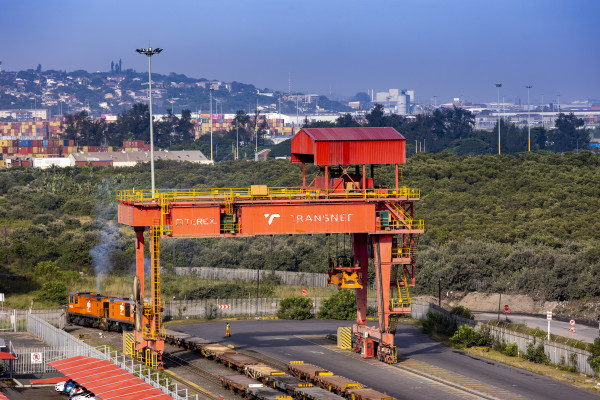
The African Development Bank Group (www.AfDB.org) has approved a ZAR 18.85 billion ($1 billion) corporate loan to Transnet, South Africa's major freight transport and logistics company, for its recovery and growth plans.
The 25-year loan approved by the Bank Group's Board of Directors on Friday, 12 July 2024, is fully guaranteed by the government of South Africa. It will facilitate the first phase of the company's ZAR 152.8 billion ($8.1 billion) five-year capital investment plan to improve its existing capacity ahead of expansion for the priority segments throughout the transport value chain.
Transnet has faced operational challenges mainly in the critical rail and port businesses resulting from underinvestment in infrastructure and equipment, theft and vandalism, and external shocks such as floods and the effects of the COVID19 pandemic.
The company is committed to addressing past challenges, fostering integrity, and enhancing efficiency within the organization. It has made progress in some key areas including reforms in governance procurement and financial management.
The recovery plan, launched in October 2023, seeks to rehabilitate the infrastructure and accelerate the relaunch of operations over 18 months, focusing on restoring operational performance and freight volumes to meet customer demands.
Following the approval, African Development Bank's Vice President for Private Sector, Infrastructure and Industrialisation Solomon Quaynor, emphasized the significance of this support: “Transnet, the custodian of South Africa's critical transport and logistics infrastructure, plays an indispensable role in the economy of the country, ensuring a competitive freight system and serving as a gateway to the SADC region.”
He added: “Our partnership will enable Transnet to execute a comprehensive Recovery Plan (RP), addressing operational inefficiencies, particularly in rail and port sectors. It is aligned with South Africa's strategic 'Roadmap for Freight Logistics System,' and overseen by the National Logistics Crisis Committee, chaired at the Presidency level. This initiative signifies our commitment to enhancing national logistics capabilities and driving sustainable economic growth.”
Transnet has been a client of the African Development Bank since 2010. The company employs more than 50,000 people and plays a critical role in integrating and connecting South Africa with the global economy. The company's freight system's activities contribute significantly to South Africa's economy. Its operations serve as key gateways for trade within South Africa and with landlocked countries in the region, such as Botswana, Zambia, Zimbabwe, and the Democratic Republic of Congo through the Port of Durban.
Reacting to the approval, Michelle Phillips, Group Chief Executive of Transnet said: “We appreciate the support demonstrated by the African Development Bank, the loan extended by the bank will make a significant contribution to Transnet's capital investment plan to stabilise and improve the rail network and to contribute to the broader South African economy. The accompanying grant funding to the loan will also greatly assist Transnet with to its energy efficiency efforts and with Infrastructure Project Preparation initiatives.”
The Board commended the Government of South Africa for its vision and commitment to reforms in Transnet as well as the country's entire transport and logistics sectors. It also applauded Transnet for progress made in rolling out its compliance and governance improvement programme as well as its decarbonization and energy efficiency plans in line with its Net Zero Emission Strategy and Green Freight Strategy.
In addition to the corporate loan, the African Development Bank is contemplating two targeted grants, including $750,000 in technical support from the Sustainable Energy Fund for Africa (SEFA) – a multi-donor fund administered by the Bank – to improve energy efficiency and associated measures, in line with Transnet's net zero plan. The second grant funding comprises $1 million from the Infrastructure Project Preparation Facility of the New Partnership for Africa's Development (IPPF-NEPAD), for technical assistance to help accelerate railway reforms and address structural and regulatory inefficiencies.
Distributed by APO Group on behalf of African Development Bank Group (AfDB).
Media contacts
African Development Bank:
Romaric Ollo Hien
Communications Department
African Development Bank
media@afdb.org
Transnet:
Ayanda Shezi
GM Group Corporate Affairs
email: ayanda.shezi@transnet.net/mediadesk@transnet.net.
About the African Development Bank Group:
The African Development Bank Group is Africa's premier development finance institution. It comprises three distinct entities: the African Development Bank (AfDB), the African Development Fund (ADF) and the Nigeria Trust Fund (NTF). On the ground in 41 African countries with an external office in Japan, the Bank contributes to the economic development and the social progress of its 54 regional member states. For more information: www.AfDB.org
GNU looks to SA becoming a "construction site"
The face of the South African landscape is set for a significant upgrade, with a massive investment in infrastructure expected over the next five years.
“From our largest metros to our deepest rural areas, we have a clear intention to turn our country into a construction site, as roads, bridges, houses, schools, hospitals and clinics are built, as broadband fibre is laid and as new power lines are installed,” President Cyril Ramaphosa said on Thursday.
Delivering the Opening of Parliament Address (OPA) in Cape Town, the President stressed the importance of engendering a culture of maintenance of public infrastructure, while also dedicating resources and establishing systems to ensure this.
“In the next five years, working together, drawing on our collective capabilities [in the Government of National Unity], we will forge a new inclusive growth path for South Africa by pursuing a massive investment in infrastructure. Significant projects are underway around the country in areas such as transport, roads, water, energy and human settlements.
“We will massively increase the scale of investment in infrastructure through a more holistic and integrated approach, positioning Infrastructure South Africa as the central institution of coordination and planning,” the President said.
He said government is simplifying the regulations on public-private partnerships to enable greater investment in both social and economic infrastructure development.
“As the Government of National Unity (GNU), we are resolved to intensify our investment drive, encouraging and enabling businesses to invest in productive capacity. These investments will lead to increased employment creation for unemployed South Africans especially for young people,” President Ramaphosa said.
After South Africans took to the polls on 29 May, the General Election results produced no outright majority winner – tasking various political leaders to work together to form a Government of National Unity, much like what was required at the dawn of democracy in 1994.
Some 10 political parties are part of the GNU, with leaders from some of those political formations appointed as Ministers and Deputy Ministers.
With the work of the seventh administration set to commence, the Government of National Unity has resolved to dedicate the next five years to actions that will advance three strategic priorities that include driving inclusive growth and job creation, reducing poverty and tackling the high cost of living, as well as building a capable, ethical and developmental State.
Improving passenger rail network
With so many people living far from economic opportunities and services, transport costs take up a large part of people’s income and drive up the cost of living.
“An immediate priority is therefore to complete the recovery of the passenger rail network across the country to enable people to travel from outlying areas to city centres. Around 80% of commuter rail corridors are now back in operation, and nearly 300 vandalised stations have been refurbished, providing safer and more efficient services to commuters,” Ramaphosa said.
Through the implementation of the Freight Logistics Roadmap, government will continue with reforms to transform South Africa’s freight logistics system.
“To drive inclusive growth, we need an efficient freight rail network to carry our minerals, agricultural produce and manufactured goods to market. The work we are doing with business and unions through the National Logistics Crisis Committee has already contributed to improvements in the operational performance of freight rail and ports,” the President said. – SAnews.gov.za
nosihle
Thu, 07/18/2024 - 20:49
Mpox outbreak remains under control, says Health
The Department of Health has reassured South Africa that the current Monkeypox, or Mpox, disease outbreak remains under control.
This is despite several suspected cases reported across the country due to heightened awareness and surveillance activities, the department said on Thursday.
The Gauteng Department of Education retracted a statement this morning after it said a case of the infectious disease was reported at a Hammanskraal school in Gauteng.
The provincial department admitted that it may have “acted prematurely” in confirming the case without verification from the National Institute for Communicable Diseases (NICD) and apologised for the confusion.
According to the Department of Health, there have been 22 positive cases reported since May of this year. This includes 16 recoveries, three deaths and three active cases.
“Thus, the department would like to urge people who experience suspected Mpox symptoms, with or without international travel history, to present themselves to a health facility for clinical observation, confine themselves to one place and avoid gatherings until their laboratory test results are available,” a statement read.
The department said suspected cases are treated with confidentiality during contact tracing and case investigation.
“However, the department will always strike a balance between the privacy of individuals and letting them know they may be at risk of infection for the benefit of public health.”
The department urged all identified and suspected contacts to cooperate with health officials during contact tracing for screening and possible diagnosis to prevent further transmission of the preventable and treatable disease.
Some of the common symptoms of Mpox include a rash, which may last for two to four weeks, fever, headache, muscle aches, back pain, low energy and swollen glands.
“The healthcare workers understand the importance of confidentiality in managing reported and suspected cases of notifiable medical conditions.” – SAnews.gov.za
Gabisile
Thu, 07/18/2024 - 16:40
Piet Naudé is a former Professor of Ethics at Stellenbosch Business School and currently a Director of Quality Services at the European Foundation for Management Development (EFMD) The month of July is appropriately designated as “Moral Regeneration Month” as it relates to the birthday of Nelson Mandela on 18 July. As newly elected president of …
Dreaming of your next adventure? Our country’s natural beauty shines year-round, from sun-soaked beaches to snow-capped mountains. But when’s the perfect time for you to take that well-deserved break? “We are spoilt for choice in South Africa, so it all depends on what season resonates most with your interests as each offers something unique,” says …
Cape Town, South Africa – Designer Pool Covers Cape Town, a leading provider of high-quality pool cover solutions, has announced an expansion of its product offerings to meet the increasing demand for pool safety and energy efficiency in the Western Cape region. The company has introduced several new automatic and safety cover options to complement …
Shareez Bagaria, a 46-year-old life coach and mother of two from Hillcrest in Durban, is getting ready to embark on an extraordinary adventure that will take her to Russia to conquer Mount Elbrus, the highest peak in Europe. This climb is the second stage in an ambitious quest Bagaria has set herself – to conquer …
Liezel van der Westhuizen, known for her captivating presence on Idols, is much more than a television personality. Beneath the charm and energy lies a mission-driven individual dedicated to empowering others to overcome their fears and achieve their highest potential. From Hosting to Coaching: A Passion for Growth While she made her mark as a …
“We implore you to intervene,” medical experts say to Barbara Creecy
Eskom granted licence extension for Koeberg Unit 1
Electricity and Energy Minister, Dr Kgosientsho Ramokgopa, has welcomed the announcement made by the National Nuclear Regulator (NNR) on the licence extension for the operating life of Koeberg Nuclear Power Station Unit 1.
On Monday, Eskom announced that the NNR had granted the power utility the licence to continue that unit for another 20 years until 21 July 2044.
“The extension of the operating life of Koeberg Nuclear Power Station Unit 1 will not only ensure the continued supply of electricity to meet the growing demand, but also contribute to our efforts in transitioning towards a cleaner, more affordable and sustainable energy future.
“We look forward to the continued safe and reliable operation of Koeberg Nuclear Power Station Unit 1 as we work towards meeting our energy needs,” Ramokgopa said.
Eskom Chief Nuclear Officer Keith Featherstone said the granting of the licence is “a testament to the hard work and continued commitment of our teams to nuclear safety and Eskom’s generation recovery plan”.
“Over the years, Koeberg has identified and implemented safety improvements through both French and US nuclear experiences, which have reduced the risk to levels that would normally only be achieved by new, modern nuclear power plants,” Featherstone said.
The power utility explained that the unit will continue to operate until January 2025 “when the unit will be shut down for its next scheduled refuelling and maintenance outage”.
“The current licence for Koeberg Unit 2 only expires on 9 November 2025 and the Koeberg Power Station is implementing some of the pre-requisites for Long Term Operation in the current outage.
“Once the current outage is complete, Unit 2 will be returned to service, and the NNR has stated that the decision regarding the Long-Term Operation for Unit 2 will only be made at a later date, but prior to 9 November 2025,” Eskom said. – SAnews.gov.za
NeoB
Tue, 07/16/2024 - 09:48
By NJ Ayuk, Executive Chairman, African Energy Chamber (www.EnergyChamber.org).
A recent policy brief, “Natural Gas as a Transition Fuel in South Africa,” produced by Eye for Business, minced no words concerning the need to access and use that plentiful underground resource.
As stated up front, “Among alternatives, there is a compelling case for investing in natural gas as the most prudent steppingstone to a low-carbon future of power generation.”
In their brief, commissioned by The EnerGeo Alliance — a global trade alliance for the energy geoscience industry — Eye for Business makes a good point.
South Africa's continuing power deficits make the case anew each day for expanded extraction and use of the country's natural gas. A significantly lower-carbon alternative to coal and diesel, this fuel can provide electricity for growing needs while paving the way for renewables and an increasingly lower-carbon future.
The Current Energy Picture
The brief highlights the growth forces that are now at work and expected to push South Africa's demand for energy to a projected three times current demand by 2040. These forces include a growing population and a trend toward migration into cities.
South Africa's current energy sources — coal, diesel, renewables, and unpredictable natural gas imports from Mozambique — are inadequate to prevent the daily 6- to 10-hour outages that now hinder business, education, medicine, industry, and more.
Residentially, these intermittencies impact poorer households the most. Likewise, the frequent failures of old coal-fired plants and associated maintenance costs result in higher tariffs that hit low-income families hardest.
These stark realities make it imperative that South Africa use its own clean natural gas to transition toward renewables, at a pace that allows its economy to benefit. Moving in that direction will draw more needed outside interest and investment in the country's natural gas deposits.
As a real-time example, Namibia is wisely using its offshore discoveries in this way, helping that nation move toward prosperity.
For South Africa to likewise gain the economic health needed to increase development of renewables, it must first stabilize its energy supply to reverse disturbing trends in business closures and increased unemployment due to intermittencies. Energy sources such as wind and solar, which are by nature intermittent, cannot provide immediate solutions to these economic and human problems.
With substantial in-country natural gas discoveries such as Brulpadda, prospects like the Karoo shale reserves, and potential offshore discoveries on the horizon, it just makes sense to put those resources to work to achieve energy stability.
Natural Gas, the Natural Solution
“Countries using gas as a source for power generation have seen their electricity supply grow about three times faster in the past 10 years than those not able to use gas,” states Eye for Business' brief.
As is well known, the wealthy countries around the globe have long made tactical use of their vital natural gas resources for building economic soundness. Once their people and businesses were supported by a reliable supply of electricity, these nations could begin to develop renewables on a large scale.
Importantly, for South Africa's industrial sector to grow, it needs increased feedstocks, such as those used to make fertilizers and petrochemicals. These vital chemicals are produced from natural gas, which can also supply the heat energy needed by the cement, steel, and other industries to make their products.
Less Cost, Less Emissions
Putting South Africa's natural gas resources to work during transition will cost less than most alternatives. Comparing the price tag for various types of electric power plants, the costs per kilowatt hour to build solar, biomass, nuclear, wind, and coal plants are all more than twice as high as the cost to build natural gas plants.
This difference is largely due to modular construction methods used for natural gas plants, which makes them easier to scale and suit to their locations, thus avoiding the cost overruns typical on larger facility projects.
Another cost-efficient build method for natural gas plants is converting inactive existing coal-fired power plants. These conversions can be done at lower costs than new construction. This is a win-win proposition that utilizes unused plants for producing cleaner energy while avoiding unnecessary expense.
As the brief highlights, natural gas emits 50% to 60% less CO2 than coal. This makes it an ideal transition fuel for South Africa that will contribute only a very miniscule amount to global emissions. And even that could be decreased with the use of carbon capture and storage.
To keep a realistic perspective on emissions, it is important to bear in mind that Africa as a whole, with about 17% of the world's population, contributes only a tiny 4% of global carbon emissions at 1.45 billion tonnes.
Potential Employment and Exports
Increased investment in and use of natural gas could pay off for South Africa in two very important areas — job creation and the opportunity to achieve net exporter status.
Growing new jobs is crucial, as South Africa's unemployment rate is currently hovering around 30%. Jobs will come with the territory as the country's gas infrastructure is enlarged for drilling, transport, and electricity production.
Young managers and workers will need to be trained in the necessary skills to run and maintain these operations. In short, revving up the natural gas sector will breathe new energy into the job market as young people see and take advantage of these new opportunities.
On the export front, a sizeable opportunity for boosting the country's economy has appeared on its northern horizon. Because of Europe's recent reduction in imports of Russian gas, the vast European market presents an opportunity South Africa could pursue, along with other markets, after its own energy needs are met.
The Way Forward
To diversify South Africa's energy mix, government policy support in accordance with the country's draft Gas Master Plan (GMP2024) and the National Development Plan (NDP) will be needed.
The Integrated Resource Plan (IRP) aligns with those documents' goals, supporting, as Eye for Business' brief puts it, “a significant shift in the energy mix, projecting an additional 29,500MW to the electricity capacity by 2030, with 3,000MW expected from gas.”
With all the benefits they can bring, South Africa must not leave its valuable natural gas deposits stranded while lacking reliable green energy sources. Making steady progress toward a lower-carbon energy mix while transitioning toward renewables makes sense for South Africa and its people.
Distributed by APO Group on behalf of African Energy Chamber.
Mineware Consulting is committed to contributing to enhanced safety in the South African mining industry with innovative software solutions, built-in training initiatives, and data-driven strategies. The South African mining industry has historically been a major contributor to the country’s economy. However, it faces significant safety challenges due to its complex geological conditions and the prevalence …
Climate change means extreme events are likely to happen more often
South Africa will decarbonise at a pace affordable to the economy
President Cyril Ramaphosa has reiterated that South Africa will decarbonise at a pace and scale that is affordable to the economy and society.
“If we act too fast, we risk damaging huge sections of our economy before we have built alternative energy and industrial capabilities. At the same time, not acting now risks our economic stability,” President Ramaphosa said on Monday.
The President was speaking at the Climate Resilience Symposium, which is underway at the Council for Scientific and Industrial Research (CSIR) International Convention Centre, in Pretoria.
READ | Climate resilience tops agenda at symposium
Held under the theme, 'Moving the needle on climate change and just transition: The role of the National Treasury', the three-day symposium, taking place from 15 - 17 July 2024, aims to integrate climate goals into macro-fiscal and finance policy.
It also aims to improve government coordination by mainstreaming climate change considerations into the intergovernmental fiscal system, amongst others.
In his address, President Ramaphosa stressed the importance of strengthening systems for adaptation and mitigation, building resilience in communities, and accelerating the decarbonisation efforts and the pace of the just energy transition.
“The reality we must confront is that the carbon-intensity of our economy is unsustainable and for decades our reliance on coal was a competitive advantage because it allowed us to produce electricity cheaply, but the world has changed and this dependency has come to pose significant risks,” President Ramaphosa said.
|
|
WATCH |
As the world moves towards greener economies, the country’s trading partners, the President said, will take measures to ensure that their own climate actions do not undermine their economies.
He said instruments like the European Union’s Carbon Border Adjustment Mechanism, which has the potential to cause great damage to developing economies, signal the inevitability of carbon pricing in global trade systems.
He said the country’s emissions-intensive energy system is likely to increasingly undermine its competitiveness in global markets.
Safeguarding the nation
President Ramaphosa called on South Africa to embrace a managed transition to a low-carbon economy, not only to safeguard its people and environment, but to ensure the country’s economic resilience and growth.
He warned that the country is facing a climate emergency, and indecision and slow action are not an option.
“We must act decisively and swiftly to mitigate the effects of climate change and ensure a just transition for all South Africans. We must pursue a green industrial agenda that will create jobs and grow the economy.
“Investments in green infrastructure, renewable energy and climate adaptation measures can be costly, requiring careful financial planning and prioritisation. That is why we have prioritised inclusive growth,” President Ramaphosa said.
The President said government is hard at work implementing the urgent reforms needed to lift growth and pursuing a fiscal strategy that protects the sustainability of public finances.
He noted that Operation Vulindlela has been an extremely successful partnership between National Treasury, the Presidency and a wide range of government departments.
“It has enabled significant reforms in areas like energy, water, telecommunications, and transport, making our economy more competitive and increasing our productive capacity.
“Our strategy involves preparing ourselves to withstand the economic risks posed by climate change while taking full advantage of the opportunities of the energy transition. This is no easy balance,” President Ramaphosa said. – SAnews.gov.za
GabiK
Mon, 07/15/2024 - 12:18
South Africa aims for zero emissions by 2050
President Cyril Ramaphosa says South Africa aims to reach net zero carbon emissions by 2050.
Speaking at the Climate Resilience Symposium underway at the Council for Scientific and Industrial Research (CSIR) International Convention Centre in Pretoria, President Ramaphosa said the revised Nationally Determined Contribution balances the country’s developmental needs and economic realities.
“It takes into account the feasibility of undertaking a climate response through a set of just transition pathways. Importantly, it notes carbon tax as a vital component of our mitigation strategy to lower greenhouse gas emissions,” President Ramaphosa said.
By internalising the cost of carbon emissions, the President said the carbon tax incentivises companies to reduce their carbon footprint and invest in cleaner technologies, and also generates revenue for climate initiatives.
The President said these funds can be reinvested in renewable energy projects, energy efficiency programmes and social support mechanisms.
Government has launched a number of other initiatives to meet the country’s emissions targets, and these include the Renewable Energy Independent Power Producer Procurement Programme, which has been successful, attracting over R209 billion in investment and adding much-needed capacity to the electricity grid.
President Ramaphosa said the Integrated Resource Plan, which outlines the country’s energy mix, is in the process of being updated.
The plan sets out a viable energy mix over the medium- and long-term to achieve the decarbonisation objectives.
WATCH | Climate Resilience Symposium
|
|
Just transition
The President said the Just Energy Transition Investment Plan sets out a quantified investment plan of some $98 billion, noting this will drive huge investments in the electricity grid, green hydrogen, electric vehicles, economic diversification, and skills development, amongst others.
“We continue to explore opportunities to meet our emissions reduction targets in minerals extraction, in green hydrogen production, in new power infrastructure, in electric vehicle manufacturing, and economic infrastructure upgrades.
“It is crucial that the transition to a low-carbon economy is just and inclusive and that no worker or community is left behind. The growth of clean tech, renewable energy, battery storage, green hydrogen and minerals for the future low-carbon economy must result in opportunities for affected sectors, employees, and communities,” the President said.
READ | Cabinet approves Just Energy Transition Implementation Plan
The President also noted that government is investing in retraining programmes, creating new job opportunities in renewable energy, and supporting small enterprises in affected areas.
The President further underscored a need for substantial investments to build sustainable infrastructure, develop green technologies and support social programmes.
Moreover, he noted the substantial gap between available disaster funds and the cost of disaster response.
“Even as we have taken proactive measures like setting up a Climate Change Response Fund, we need to think seriously about the urgent financial and policy measures needed to address these shocks, and how to strengthen the National Treasury’s disaster financing response,” the President said.
He said the Department of Forestry, Fisheries and the Environment is already working with the Presidential Climate Commission on recommendations for the Climate Change Response Fund, and an Adaptation and Resilience Investment Plan to accompany it.
The President called on international partners to fulfil their commitments to finance both, noting that mitigation and adaptation financing remains a challenge.
While acknowledging the positive steps taken with the establishment of the Green Climate Fund, including the Loss and Damage Fund, and other global mechanisms, President Ramaphosa emphasised a need for more innovative financing solutions that mobilise private capital and incentivise sustainable practices.
READ | Climate Loss and Damage Fund to be established for developing countries
“The National Treasury’s Climate Finance Strategy is pivotal in this regard, outlining how we can leverage public and private finance to achieve our climate goals.
“We must not underestimate the importance of our own domestic capital and financial markets to innovatively mobilise and deploy capital towards our just transition,” President Ramaphosa said.
The President announced that the Just Energy Transition Funding Platform will be launched in the next few months.
The funding platform will be an important precursor to a broader Just Transition Financing Mechanism, proposals for which are being developed by the Presidential Climate Commission.
“We call on South African business to invest in the projects needed for a successful just transition in this country. We need to use blended finance to unlock private sector flows,” President Ramaphosa said. – SAnews.gov.za
GabiK
Mon, 07/15/2024 - 12:47
JOHANNESBURG, South Africa – July 2024 – In the quest for the perfect laundry routine, the choice between a front loader and a top loader washing machine can significantly impact your household’s efficiency and convenience. Both types offer unique advantages tailored to different needs and lifestyles. Here is a detailed guide to help you decide …
With just over three weeks until the start of the Totalsports Women’s Race celebrations in Women’s Month (August 4 in Durban, August 9 in Cape Town, and August 17 in Joburg), runners and walkers are reminded to secure their spot at the start line before entries run out. “The Totalsports Women’s Race is a mass …
Transport department, taxi industry to work together this term, says Creecy
Transport Minister Barbara Creecy has committed to working with the taxi industry to ensure that the industry fulfils its role in the transport ecosystem with greater safety.
“Taxis are part of community life, and as per the National Household Travel Survey, now carry eighty 3% of those who use public transport.
“During this term, I pledge to work with the industry to ensure it takes its place in a safer, greener transport ecosystem. We will work together to decrease levels of conflict and violence, which pose a significant risk to the sector and to commuters,” the Minister said when tabling the Budget Vote of the department at Parliament's Portfolio Committee on Transport in Cape Town on Monday.
Creecy said the department will, in the short-term, continue to assist the industry to recover from the effects of the COVID-19 pandemic.
“The Taxi Relief Fund, created by the department to mitigate the negative financial effects of the COVID-19 pandemic on the taxi industry, has been extended in the past year to provide further support to the industry.
“The Taxi Recapitalisation Strategy continues to deal with the scrapping of unroadworthy vehicles, but also aims to regularise and professionalise the industry by improving safety and incorporating the industry in transport planning processes,” she said.
Climate resilience
The Minister said as the department continues to “stabilise and optimise our existing transport sector”, new risks and opportunities continue to arise.
“Climate change, as we have seen over the last couple of years, poses a significant risk to our built infrastructure in general and our transport infrastructure in particular. Building the climate resilience of our ports, road and rail networks is both a necessity and a new opportunity for investment, growth, economic inclusion and job creation.
“Contributing to reducing greenhouse gas emissions in all modes of transport will become a necessity once the new Climate Bill is signed into law. Our transport sector is responsible for approximately one tenth of our country’s CO2 emissions, and we will have to do our bit to achieve the NDP target of net-zero by 2050,” she said.
In this regard, the Minister said, implementing the department’s Green Transport Strategy “will be a priority” in this term.
“In this next decade, transport will also be revolutionised by an acceleration of digital technology. New technologies and new global imperatives will fundamentally alter the skills requirements of those employed in the transport sector, as well as open up new value chains for new forms of economic access, ownership and employment.
“Such innovations include operational automation and real-time tracking of shipments to assist in port management, digital signalling to modernise the management of our railway systems, the use of artificial intelligence in traffic management, and the introduction of self-driven vehicles and drones for delivery.
“The department’s Green Transport Strategy includes investing in green energy infrastructure; promoting the uptake of alternative fuels such as biogas and green hydrogen; extending the rail network to provide alternative public transport, and developing ‘green procurement guidelines’, which will promote low-carbon technologies,” she said. – SAnews.gov.za
NeoB
Mon, 07/15/2024 - 14:20
In one of the hottest collaborations at Decorex Joburg, top local interior designers are partnering with Plascon to demonstrate how colour can make or break a space. Gauteng-based designers GLE Interiors, Living Inspired Interiors and Ndibali Interior Designs are bringing fresh creative energy to the show with their Plascon Colour Design Pods. Taking to the …