• Skip to main content
  • Skip to header right navigation
  • Skip to after header navigation
  • Skip to site footer
MyZA

MyZA

News, Directory, Events and Other Stuff

  • Social Media
  • Sport
  • World News
  • Home
  • Submit News
  • Directory
  • Events
  • Stratlec
  • TFSA
  • News
    • APO
    • Today’s Sport News
    • Todays Social Media and Tech Headlines
    • Today’s World News
    • Today’s SA Financial News
  • Contact
You are here: Home / Archives for Energy

Energy

8 August 2024

Deputy Minister Botes meets representatives of the German Bundestag

Location: News

Republic of South Africa: Department of International Relations and Cooperation
Download logo

The Deputy Minister of the Department of International Relations and Cooperation, Mr Alvin Botes, met representatives of the German Bundestag on Wednesday, 7 August 2024, in Pretoria.

The meeting with Mr Nils Schmid, Spokesperson on Foreign Affairs for the Social Democratic Party (SDP) in the Bundestag, and Ms Bettina Lugk, Deputy Spokesperson on Foreign Affairs for the SDP in the Bundestag, took place in the context of the two countries' endeavour to forge closer political, diplomatic, economic and trade ties.

The SDP is the largest party in Germany's governing coalition and a member of eleven of the sixteen State (Provincial) Governments in Germany.

The meeting presented an opportunity for the two sides to discuss important geopolitical issues.

In addition to meeting the Deputy Minister, Mr Schmid and Ms Lugk will also meet with Members of Parliament, think tanks, trade unions, political parties, German companies, the Ghoethe Institute, the GIZ (Germany's development agency) and KfW (Germany's development bank).

South Africa maintains a substantial and diverse relationship with Germany. Germany is one of South Africa's most important strategic partners and is the second-largest market for South African exports, the third-largest source of overseas tourists, a major investor and development partner. The German Government views South Africa as a “global development partner” with which it seeks close coordination in international bodies such as the United Nations and the World Bank. Germany is a leading investor in the South African economy, with approximately 600 German companies represented in South Africa.

Bilateral development cooperation focuses on energy and climate change (green economy), good governance and public administration, HIV/AIDS prevention and vocational training.

Distributed by APO Group on behalf of Republic of South Africa: Department of International Relations and Cooperation.

Read moreDeputy Minister Botes meets representatives of the German Bundestag
7 August 2024

Young Joshua Moore revs up South Africa’s racing circuit

Location: MyPR

Imagine being under 122cm tall, stepping up from karting into mainstream circuit racing, and becoming one of the youngest drivers in South Africa at the Volkswagen Rookie Cup, all before your 14th birthday. This is exactly what Gqeberha-born karting champion Joshua Moore has achieved, and he’s just getting started… Just exactly when the driving bug …

Read moreYoung Joshua Moore revs up South Africa’s racing circuit
7 August 2024

Train Like an Olympian at Total Ninja, Africa’s Largest Inflatable Course

Location: MyPR

In celebration of the Paris 2024 Olympics, Total Ninja South Africa, Africa’s largest Inflatable and Adventure Park, is offering all Ninja warriors the opportunity to experience the excitement firsthand with their 2024 Olympic Challenge that will be hosted nationwide on Friday, 09 August across all Total Ninja venues. The park will further introduce guests to …

Read moreTrain Like an Olympian at Total Ninja, Africa’s Largest Inflatable Course
7 August 2024

Save on Energy with Automated Blinds and Smart Lights

Location: MyPR

In an era where energy efficiency and smart technology go hand in hand, automated lighting and shading systems have emerged as a revolutionary solution for both residential and commercial spaces. These systems are not only designed to reduce energy consumption but also to enhance comfort and convenience. By leveraging smart switches, smart light switches, automatic …

Read moreSave on Energy with Automated Blinds and Smart Lights
7 August 2024

Checkers and UFC champ Dricus du Plessis join forces to support local

Location: MyPR

In-between preparing for his highly anticipated fight later this month, UFC Middleweight Champion, Dricus du Plessis, has partnered with Checkers to launch two locally produced products for sports enthusiasts and fans. The Stillknocks shirt by Old School – a true collector’s item Dricus’ apparel brand, Stillknocks, and popular South African sports supporter gear brand, Old …

Read moreCheckers and UFC champ Dricus du Plessis join forces to support local
7 August 2024

Finding the Perfect Television for Sale

Location: MyPR

Introduction Finding the perfect television for sale can be overwhelming with so many options available in the market. This guide will help you navigate the key factors to consider when purchasing a new TV, ensuring you make an informed decision.   Screen Size and Viewing Distance   When searching for a television or television accessories …

Read moreFinding the Perfect Television for Sale
6 August 2024

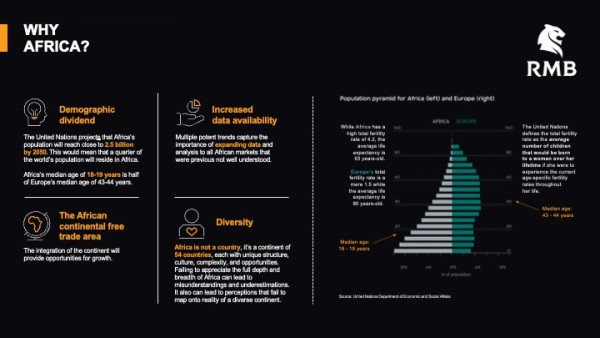
The RMB Where to Invest in Africa 2024 report highlights Africa’s top investment economies

Location: Business
Rand Merchant Bank

RMB (www.RMB.com) has released the highly anticipated 2024 edition of its Where to Invest in Africa report, a comprehensive analysis of the top investment destinations on the continent. The report, which has been developed in collaboration with the Gordon Institute of Business Science (GIBS), leverages a robust methodology that has been updated to reflect new data sources, taking into account a variety of factors that have been proven to determine a country's progress and therefore its investment potential. 

“Africa is not a country, but a vast, diverse and complex continent with different cultures, economies and investment potential. Our report therefore is not a definitive guide, but rather it is designed to provide insight to uncover the underlying drivers of a country's performance that inform its ranking. This offers invaluable insights for investors, policymakers, and business leaders looking to navigate Africa's dynamic economic landscape,” says Isaah Mhlanga, Chief Economist at RMB.  

Expanded data, extended granularity 

Investment decisions need to be viewed through both an economic performance lens and an operating environment lens. As a result, the methodology used for this edition of the Where to Invest in Africa report builds and expands on previous editions, taking into account new data sets as well as changing geopolitical and macroeconomic climates.  

The scorecard for the 2024 issue highlights 31 countries that collectively represent 92% of the continent's economic activity (measured by GDP), and more than one billion people (three quarters of the continent's population). It draws on publicly available data sets from global institutions, including the World Bank, the IMF, the African Development Bank, the United Nations, and the International Labour Organisation.  

The model is constructed from 20 metrics across four measurement pillars: economic performance and potential; market accessibility and innovation; economic stability and investment climate; and social and human development. Each metric is weighted, which translates into a weight for each pillar, and based on these metrics a standardised scorecard is produced, with rankings that enable effective comparison across Africa's complex and heterogeneous environment.  

Africa's top five investment destinations 

Combining these elements results in a ranking across the 31 countries measured. The results of the report show that the two small island economies of Seychelles and Mauritius rank first and second as the most attractive investment destinations on the continent, while the significantly larger economies of Egypt, South Africa, and Morocco rank in third, fourth and fifth places respectively. 

Seychelles leads the rankings thanks to high levels of personal freedom, human development, and a stable economic environment. Seychelles offers a unique and attractive investment climate. Despite scoring lower on economic size and potential, Mauritius is known for innovation, economic freedom, and high GDP per capita. It continues to be a top destination for investors seeking stability and growth opportunities in a well-regulated environment.  

Egypt represents Africa's largest economy by GDP (2023), offering a substantial market with diverse opportunities in sectors like technology, manufacturing, and services. Its strategic location and economic complexity further enhance its attractiveness. Despite facing significant challenges, South Africa remains a crucial hub for investment in Africa. Its robust financial sector, diverse economy, and potential for infrastructure development make it a key player. Finally, Morocco's strong performance in connectedness, innovation, and economic stability positions it as a top investment destination. Its strategic proximity to European markets adds to its appeal. 

Distilling diversity – investment archetypes explained 

Africa is an incredibly diverse continent, and no two markets are the same, which means there is no such thing as a universal success story. However, when we zoom out and view nations through the lenses of size and the relevant investability score, it becomes apparent that they fall into distinct groupings with shared traits. The 2024 edition of Where to Invest in Africa suggests five potential investment archetypes based on shared characteristics revealed through the four measurement pillars.  

‘Highflyers' represent the large, well-established economies that offer stability and a range of investment opportunities, such as Nigeria, South Africa, Egypt and Ethiopia. Those ‘Cleared for Take-off' are countries with high economic growth and innovation potential thanks to factors like a young population and abundant resources, including Senegal and Côte d'Ivoire. ‘People Potential' are markets with a young and growing demographic, creating a sizeable consumer base and a future workforce, such as Kenya, DRC and Uganda. ‘Global Connectors' are more advanced economies with a strong international presence, such as Morocco, Mauritius, Tunisia and Seychelles. ‘Low-Base Boomers' are smaller markets with high potential for explosive growth but a corresponding higher degree of risk, including Rwanda, Mozambique, and Benin. 

Additional insights unpacked

The report also highlights a number of trends across the various markets, and the role of innovation and economic complexity in driving growth is a central theme. Countries such as South Africa, Kenya, and Ghana are noted for their strides in technological innovation and diversification of their economic bases, making them attractive destinations for investment. 

The African Continental Free Trade Agreement (AfCFTA) holds significant potential for boosting intra-African trade, enhancing economic integration, and creating a more competitive continental market. Effective implementation of the AfCFTA is expected to drive economic growth and development across the continent. Africa's young and rapidly growing population also presents a unique opportunity for economic growth, with countries like Ethiopia, Tanzania, and Uganda poised to benefit from this demographic dividend, provided they can create sufficient employment opportunities and foster a conducive environment for economic participation.  

In addition, there are a number of emerging markets with significant growth potential, including Nigeria, Ghana, and Kenya. Despite facing challenges such as political instability and infrastructural deficits, these countries offer substantial opportunities due to their large and youthful populations, improving business climates, and diversification efforts. Africa's vast natural resources, including minerals and arable land, are pivotal for sustainable economic growth. However, the report cautions against the "resource curse" and underscores the importance of good governance and strategic management. Angola, Mozambique, and the Democratic Republic of Congo are highlighted for their rich resources and potential for sustainable development. 

One area that requires critical attention across the continent is the need for infrastructure investment. Improved transportation, energy, and digital infrastructure are essential for unlocking Africa's economic potential, and South Africa, Kenya, and Nigeria are identified as key markets where infrastructure development could yield significant returns. 

Beyond the rankings – a deeper look at African investment 

Looking beyond metrics and scorecards, Africa holds massive potential but equally faces numerous challenges. The continent is rich in natural resources, which can be a major driver of economic growth, but they also present challenges in the form of corruption and environmental degradation. Increased activity around trade agreements can open new markets for foreign investors and boost economic activity, but lack of adequate infrastructure is a major hurdle for many African economies. Investment in this space will improve connectivity and create new opportunities, while rapid and increasing urbanisation will prove attractive to investors in consumer goods, retail, and financial services. Finally, countries in Africa are embracing new technologies, leapfrogging traditional development stages and creating new investment opportunities in the tech sector. 

“The richness of Africa's diversity makes fully analysing its nuance and contrast a challenging task, but an important one when it comes to understanding the varied markets that make up this vast regional economy. The 2024 RMB Where to Invest in Africa report aims to develop a balanced, robust and actionable view of the drivers, challenges and opportunities that characterise each of the 31 African markets included in the analysis,” Mhlanga concludes.  

Download the full report here to uncover the insights and drive more informed investment decisions. 

  • https://apo-opa.co/4dyoUQm
  • https://apo-opa.co/46CBs7c

Distributed by APO Group on behalf of Rand Merchant Bank.

Media files
Rand Merchant Bank
Download logo
Read moreThe RMB Where to Invest in Africa 2024 report highlights Africa’s top investment economies
6 August 2024

Solar Panels for Sale: A Sustainable Energy Solution

Location: MyPR

Introduction Solar panels are becoming increasingly popular as a sustainable energy solution. With the growing concern for the environment and rising energy costs, many people are considering solar panels for sale as a viable option. In this blog, we will explore the benefits of solar panels and why they are a smart investment.   Understanding …

Read moreSolar Panels for Sale: A Sustainable Energy Solution
5 August 2024

Power restored to Diepsloot welfare organisations at last

Location: News

Lawyers against Abuse director says they are now able to provide counselling sessions without the constant noise of the generator

Read morePower restored to Diepsloot welfare organisations at last
5 August 2024

Eskom delivering ‘exceptional’ performance but Minister remains cautious

Location: News

Eskom delivering 'exceptional' performance but Minister remains cautious

Minister of Energy and Electricity, Dr Kgosientsho Ramokgopa, has warned that although Eskom has delivered exceptional performance to keep load shedding at bay, the country is “not out of the woods yet”.

The country has not experienced load shedding for at least 130 days – a feat last achieved some four years ago.

“[Eskom CEO Dan] Marokane and the Eskom team have done exceptionally well. So over the past week [the week of July 22]…Eskom has averaged 70% of EAF [Energy Availability Factor]. When I say EAF, I’m talking about…the rate at which these units are failing and also the degree to which they approximate their design capacity.

“The same period last year…we were going through a period of load shedding and I had said to the country ‘short term pain for long term gain’. The same period last year, we were sitting at about 55% EAF. This is phenomenal. I want to emphasise, we are not out of the woods yet but the team is doing exceptionally well,” he said at a recent media briefing.

He highlighted another milestone reached by the power utility in July.

“The 23rd of July was a day to celebrate because for the first time since 2018, we had availability of 35 000MW plus. 

“The last time we had seen this was the 16th of July 2018. This is phenomenal, it is a confirmation that the strategy adopted by the board is working and we are going to stay at it and ensure that we are able to deliver the kind of performance that is required,” he said.

The Minister singled out improved performance at some six power stations, which he said, had reached at least 70% EAF.

“Kusile and Medupi [power stations] are expected to be in that category because they are some of our newest power stations. But I think what is encouraging us is that, consistently, Matla and Matimba [power stations] are there in that category. 

“There’s an intra-station competition which is very healthy for the purposes of driving this EAF,” he said. – SAnews.gov.za

NeoB
Mon, 08/05/2024 - 10:17

663 views
Read moreEskom delivering ‘exceptional’ performance but Minister remains cautious
4 August 2024

FUTURELIFE® adds Granola Crunch Zero to its Zero Added Sugar Range

Location: MyPR

Experience the deliciousness without the guilt – the perfect choice for the health-savvy consumer FUTURELIFE®, South Africa’s leading functional food brand has launched the latest addition to its popular Granola Crunch range, Granola Crunch Zero. Designed to cater to health-conscious consumers seeking a delicious, versatile breakfast or snack option, this new variant sets itself apart …

Read moreFUTURELIFE® adds Granola Crunch Zero to its Zero Added Sugar Range
1 August 2024

SA commemorates Women’s Month

Location: News

SA commemorates Women's Month

Minister for Women, Youth and Persons with Disabilities, Sindisiwe Chikunga, says Women’s Month is an opportunity to pay tribute to the role played by women in the decades of struggle against all forms of discrimination, subordination and exploitation.

“We also commemorate Women’s Month in order to celebrate how far we have come; the journeys traversed and victories attained by the women of our country in the three decades of our democracy,” Chikunga said.

Addressing the media launch of the 2024 Women’s Month, Chikunga said this is the time for the country to reflect on its missteps, with the aim of correcting them.

“The 30-Year Review Report shines the spotlight on some of the commendable progress achieved in ensuring gender equality and social mobility,” Chikunga said.

The representation of women in senior management positions in the private and government workforce has increased from 20% in 2001 to 36% in 2021, the Minister highlighted.

“At our universities, as of 2017, the share of female graduates was about 61.5% compared to males at about 38.5%. 

“At both the undergraduate and postgraduate level, women in South African public universities have been in the majority. While these are significant strides, a lot more still needs to be done,” the minister said.

The Minister said the year 2024 marks 101 years since women were allowed to enter the legal profession as practitioners.

“We have every reason to be proud of this transformative achievement. On that note, on behalf of all women in South Africa and the continent, we wish to congratulate Chief Justice Designate Justice Mandisa Maya.

“This is a monumental achievement for the people of South Africa in pursuit for justice. Chief Justice Maya stands tall as an inspiration to all South Africans, especially women from all walks of life,” Chikunga said.

Chikunga also congratulated Tatjana Smith, who won South Africa’s first gold medal at the 2024 Paris Olympics. 

READ | Tatjana Smith glitters at Paris Olympics

“We wish Tatjana and the entire South African Team the best of luck for the remainder of the tournament,” Chikunga said.

Chikunga also paid tribute to the first cohort of Solar Mamas, who are young South African women, who recently completed their initial training in India.

“The Solar Mama Project aims to cultivate emerging industrialists through Infant Industries Development, Product Development, Market Access and Expansion to domestic, regional and global value chains and networking.

“Through our Solar Mamas Initiative, we are expanding the nurturing of emerging industrialists in the designing, manufacturing, installation, and maintenance of renewable energy components by ordinary young South African women.

“This will continue to be our flagship project after reconceptualization, taking into consideration lessons learnt from the first cohort. We congratulate this group of 22 young women from the Provinces of Limpopo, North West and Free State,” Chikunga said.

Chikunga said the year 2024 is significant as it marks several milestones in the struggle for the emancipation of women and their pursuit for the right to self-determination and self-actualization in all areas of human development.

“Firstly, 2024 marks 70 years since the adoption of the Women’s Charter, a declaration of intent by the Federation of South African Women (FEDSAW) which clearly defined the rights and privileges for women by women in South Africa,” the Minister said.

“Secondly, alongside our democratic dispensation, 2024 also marks 30 Years since the adoption of the Women’s Charter for Effective Equality adopted by the National Women’s Coalition Structures in 1994,” the Minister said.

This year’s Women’s Month campaign will take stock of progress made on socio-economic empowerment of women since the advent of democracy and indicate the achievements of the Women Charter.

The 2024 Women’s Month will be commemorated under the theme: ‘Celebrating 30 Years of Freedom Towards Women’s Development.' – SAnews.gov.za  

Edwin
Thu, 08/01/2024 - 11:54

449 views
Read moreSA commemorates Women’s Month
1 August 2024

Just Energy Transition must not leave communities behind – Ramokgopa

Location: News

Just Energy Transition must not leave communities behind - Ramokgopa

Minister of Energy and Electricity, Dr Kgosientsho Ramokgopa, has insisted that as South Africa continues to transition from a carbon intensive economy to a green economy, communities must be informed, consulted and educated on what the transition will mean to them.

The minister was delivering an address at the Institute for the Future of Work (IFOW) seminar on South Africa’s Just Energy Transition and the Future of Work in Tshwane.

Ramokgopa emphasised the importance of consultations with and education of communities  as South Africa transitions and, by implication, some coal fired power stations wind down operations.

“We need to answer that question by what we mean by [Just Energy Transition]. It’s also about the democratisation of the conversation. It’s important that when you move into [communities] you don’t undermine the agency and the ability of people in those areas to comprehend and understand the implications of the decisions that you want to take.

“You don’t suggest that you have the authority to decide on their behalf. We don’t have that authority. It’s important that they get to be educated [on] the impact of not transitioning to the environment, to their own health, what it means and the impact of doing that suddenly.

“And they must contribute to the generation of how best to do that Just Transition and don’t treat those people as unthinking [and] as people who don’t have a view. As we move this just transition, we [must] take communities with us,” he said.

The minister highlighted that South Africa’s Just Energy Transition is expected to be an expensive process which – he added – should be subsidised by developed nations who are responsible for the vast majority of greenhouse gases causing climate change.

“There’s a ticket that’s assigned to the transition…the financing ticket. We are talking about R1.6 trillion over a period of five years. The South African balance sheet is very weak; it will not be able to carry this. So you need to design bespoke financing instruments…to help us to go this route.

“But also more significantly, what is the contribution of the developed world? Those parties that are largely responsible for the kind of damage that we are seeing to the environment. Africa in total contributes about 4% to the greenhouse gas emissions. We can’t carry the same responsibility. The industrialised and developed north have got both a moral and ethical duty to ensure that they are able to finance this transition,” he said.

Turning to South Africa’s renewable energy sector, Ramokgopa reiterated President Cyril Ramaphosa’s stance that the sector is undergoing a revolution that will create jobs and growth.

“Without any hesitation, renewables are going to see the biggest exponential growth of any form of fuel in the energy mix. We are tilting towards green forms of energy. Nuclear, solar PV, hydro and wind are going to be the mainstay of this transition. Of course, we do all of these things at the pace and scale that we can afford.

“We know that on solar PV and wind, these are some of the cheapest forms of generation. So we are going that route with its own weaknesses that this is not dispatchable power. So it’s not available all the time. It’s important that we do this configuration of what constitutes the various forms of fuel sources…understanding that the backbone of our energy generation will still be baseload,” he said. – SAnews.gov.za

NeoB
Thu, 08/01/2024 - 10:31

91 views
Read moreJust Energy Transition must not leave communities behind – Ramokgopa
1 August 2024

SIU starts its probe into street lights tender in Nelson Mandela Bay Municipality

Location: News

Some streets in the metro have been dark for years

Read moreSIU starts its probe into street lights tender in Nelson Mandela Bay Municipality
31 July 2024

NPL’s FemmeFit Fest puts the spotlight on healthy living

Location: MyPR

The NPL FemmeFit Fest shook off the mid-year winter blues on Saturday, 27th July. The wellness day was filled with activities aimed at keeping women active and motivated throughout the season, and it delivered exactly that! Attendees started the day with a high-energy HIIT workout, enjoyed a lively rebounding class, showed off their moves in …

Read moreNPL’s FemmeFit Fest puts the spotlight on healthy living
31 July 2024

SA Architects Rally to Tackle Housing Shortage Amid rapid Urban Growth

Location: News
Energy Capital & Power

South Africa is currently experiencing rapid urbanisation, with 63% of the population already residing in urban areas, a figure projected to rise (https://apo-opa.co/3Yt1Azg) to 71% by 2030. By 2050, it is estimated that eight out of every 10 people in the country will live in urban areas. As a consequence, the demand for basic infrastructure and essential services will significantly increase.

While urbanisation is a worldwide development, the growth rate is the fastest in Africa. By 2035, half of its population (https://apo-opa.co/4d151l7) will be living in cities and urban areas. But so far, it has largely translated into rising informal establishments, especially in sub-Saharan Africa, increasing poverty and inequality.

One of the most pressing issues is the dire state of the architectural profession in the region with too few skills on hand.

“As the demand for proper urban planning and development escalates, so does the need for skilled and competent architects who can contribute to sustainable and inclusive cities. However, the current state of the profession is cause for concern, with various obstacles hindering its progress. One of the most significant challenges is the housing crisis, which creates complex issues for architects,” says Devi Paulsen-Abbott at Energy Capital & Power.

The ever-growing urban population has put immense pressure on the limited housing options available, resulting in a dire need for affordable and sustainable solutions. Architects have a crucial role to play in developing innovative and sustainable housing options for all citizens.

“These are the professionals who possess the skills, knowledge, and creativity to design and build the spaces we live and work in. They have the potential to transform our cities and shape them into liveable, inclusive, and sustainable environments. However, the current state of the architectural profession in Southern Africa is hindering its ability to fulfil this critical role,”  Paulsen-Abbott states.

Another big challenge facing the local architectural profession is the lack of collaboration between the public and private sectors, she says. “The development of our cities requires a joint effort from both these sectors, but there is a significant disconnect between them.”

As a result, many projects are abandoned, delayed, or poorly executed, leading to subpar living conditions for citizens. Paulsen-Abbott explains that this disconnect also stems from the inadequate recognition and support for the architectural profession. “Despite its crucial role in shaping our built environment, architecture is often undervalued and underfunded by the public sector,” she says. “This results in a lack of resources and opportunities for architects to develop their skills and push the boundaries of innovation in design.”

To address these pressing issues, the upcoming Architecture South Africa Conference (AZA24) (https://ArchitectureZA.org.za/) is a much-needed event. Bringing together over 50 experts under the theme "Where Architecture Meets... US/ PLANET/ FUTURE..." the conference promises to be an insightful and thought-provoking exploration of the dynamic relationship between architecture, humanity and sustainability.

This highly anticipated event, hosted by the SA Institute of Architects (SAIA), Gauteng Institute for Architecture (GIFA), and University of Johannesburg (UJ), will take place from 4-7 September 2024 on the UJ campus.

AZA Convener, Daniel van der Merwe, says: “This conference is a vital opportunity for the architectural profession to come together, collaborate, and find solutions to the challenges facing our cities. By bridging the gap between the public and private sectors, architects can work towards creating more liveable and sustainable cities for all.”

AZA will also serve as a platform for architects to showcase their innovative designs and ideas, encouraging further growth and development within the profession.

“As citizens, we must also realize the importance of the architectural profession in creating a better future for us all. We must demand that our governments prioritise urban planning and development, and allocate sufficient resources and support for the architectural profession,” van der Merwe says. 

“The Architecture South Africa Conference AZA 2024 is a call for united action. We know the challenges South Africa faces, lack of sufficient housing, spatial inequality and ailing infrastructure. As architects our ultimate goal is to improve the lives of the end users of the spaces we design, inclusive of everyone in our beautiful country. AZA looks to open the discourse on how we can achieve this. Bringing together thought leaders to empower us all for a bright future,” notes Claire McCusker, President 2024/25 of SA Institute of Architecture (SAIA).

Distributed by APO Group on behalf of Energy Capital & Power.

About SAIA:
The South African Institute of Architects (SAIA) (https://SAIA.org.za/) is a voluntary association for Professional Architects. SAIA's mission is to act as the collective voice serving the interests of its members in pursuit of excellence and responsible design. It aims to uphold the dignity of the architectural profession and contribute meaningfully to the enhancement of society and the environment. The fundamental principles of equality and justice are implicit in our Constitution. SAIA incorporates the nine existing regional institutes: Border-Kei [Eastern Cape], CIfA [Western Cape], Eastern Cape, Free State, GIfA [Gauteng], KZNIA [KwaZulu-Natal], Limpopo, Mpumalanga and PIA [Gauteng].

 About GIfA:
The Gauteng Institute for Architecture (GIfA) (www.GIfA.org.za/) boasts a rich legacy, tracing its roots back to 1900 as the Transvaal Institute of Architects. Today, we're dedicated to nurturing architectural excellence and raising awareness of the built environment. Our focused committees explore specific topics, addressing both current and historical issues. Moreover, we offer extensive training and development opportunities to members, ensuring continuous professional growth. Through collaborative endeavors and innovative initiatives, GIfA remains at the forefront of architectural advancement, enriching our profession and the communities we serve in the greater Johannesburg area.

About University of Johannesburg:
At the Department of Architecture (https://apo-opa.co/3YlLbg4), our vision is to become the leading school of architecture on the sub-continent via the pursuit of alternative, progressive, and critical spatial practices. We continually strive to be the embodiment of a design-led school of architecture by exploring the making of contextually responsive and appropriately built environments. Our mission is to broaden the scope of architecture through collaborative processes of innovative design, research, and making. We define our identity as a school of architecture that encourages teaching philosophies and a design-studio culture closely related to the changing nature of contemporary cities, specifically Johannesburg, the city which gives our university its name. We achieve this mission by integrating the physical, theoretical, field, and design studio.

 About Energy Capital & Power:
Energy Capital & Power (ECP) ECP (https://EnergyCapitalPower.com) is the leading Africa-focused global energy investment platform. Through events, advisory work, news, online content and investment reports, ECP unites the entire energy value chain – from oil and gas exploration to renewable power generation – and facilitates global and intra-Africa investment and collaboration. ECP is committed to bringing together like-minded people with the common objective of facilitating the critical investments that will power Africa's economies, build communities and shape societies. ECP is the place to meet dealmakers and make deals. The company covers the whole value chain of the energy sector: oil and gas, power generation, infrastructure, renewable energy, mining, energy infrastructure, investment and finance and government.

Media files
Energy Capital & Power
Download logo
Read moreSA Architects Rally to Tackle Housing Shortage Amid rapid Urban Growth
31 July 2024

Industry Leaders Forum at CMA 2024 to Drive Sustainable Mineral Production

Location: News

Energy Capital & Power
Download logo

UN Secretary General António Guterres appointed (https://apo-opa.co/3WNr7Cg) a panel dedicated to developing a framework that ensures equity, transparency, sustainability and human rights among critical mineral extraction activities, in April 2024. Uniting government and industry stakeholders, the panel aims to encourage developing countries, including those in Africa – which holds over half of the world's cobalt and manganese reserves and over one-fifth of aluminum and copper reserves – to leverage its critical minerals for enhanced job creation, economic diversification and export revenues.

Reflecting similar priorities, the Critical Minerals Africa (CMA) summit — scheduled for November 6-7 in Cape Town — will host an Industry Leader Forum to explore strategies for ensuring sustainable mineral production and navigating external factors like geopolitical risk, digital transformation and the energy transition. It will also address recent high-level initiatives – from the African Green Minerals Strategy to the global Minerals Security Partnership – and their role in shaping best practices for building resilient mineral supply chains. 

Initiated in 2022 by the African Development Bank, the African Green Minerals Strategy (AGMS) (https://apo-opa.co/3y8dZy4) serves as a comprehensive framework for leveraging the continent's mineral resources for industrialization and the development of green technologies. The AGMS aims to articulate Africa's interests in a rapidly changing world, build and retain local value, create jobs, develop new industries, and foster greener economies, as global demand for transition minerals rises. 

Meanwhile, the US-led Minerals Security Partnership (MSP) (https://apo-opa.co/3YpZf87) represents a collaborative effort among 14 countries and the European Union to bolster investment in responsible critical minerals supply chains. Through partnerships with governments and industries, the MSP provides support for strategic projects, particularly focusing on lithium, cobalt, nickel, manganese, graphite, rare earth elements and copper. Given Africa's abundant mineral reserves, collaboration with the MSP is particularly relevant for the continent, enabling responsible mineral extraction and supporting local communities and economies, while advancing global clean energy goals.

In February 2023, MSP partners gathered in South Africa to establish guiding principles for global project development, emphasizing local value addition and maintaining sustainability and ESG standards. Representatives from mineral-rich nations, including non-MSP countries like Angola, Botswana, the Democratic Republic of the Congo (DRC), Tanzania, Uganda and Zambia, joined the discussions. The meeting sought to ensure that the growth of critical minerals supply chains benefits all stakeholders equitably, underlining the MSP's commitment to responsible mineral extraction and sustainable development.

Furthering efforts to ensure a steady and sustainable supply of CRMs, the EU launched its Critical Raw Materials (CRM) Act in March 2023, as European demand for rare earth metals is expected to increase six-fold by 2030. As part of this initiative, the EU has engaged with several African countries including the DRC, Zambia, Rwanda and Namibia through various MOUs. These agreements aim to foster collaboration within integrating sustainable raw materials value chains, mobilizing funds for infrastructure development, promoting sustainable and responsible production practices, encouraging research and innovation and enhancing capacity building efforts.

Within this context, the Industry Leaders Forum: Driving Innovative Minerals Production at CMA 2024 will explore key trends within the African and global critical minerals landscape. Leaders will discuss how initiatives like the AGMS, MSP and European CRM Act will shape the future of sustainable mineral production and global supply chains.

CMA is the largest gathering of critical mineral stakeholders in Africa. Taking place from November 6 – 7 in Cape Town, the event positions Africa as the primary investment destination for critical minerals. This year's edition takes place under the theme Innovate, Enact, Invest in African Critical Minerals to Sustain Global Growth, connecting African mining projects and regulators with global investors and stakeholders to untap the full potential of the continent's raw materials. Sponsors, exhibitors and delegates can learn more by contacting sales@energycapitalpower.com.

Distributed by APO Group on behalf of Energy Capital & Power.

Read moreIndustry Leaders Forum at CMA 2024 to Drive Sustainable Mineral Production
30 July 2024

World faces era of new economic challenges

Location: News

World faces era of new economic challenges

The world is entering an era of new economic challenges, even as the recent ones have yet to be overcome, says South African Reserve Bank (SARB) Governor Lesetja Kganyago.

“The global economy continues on a long recovery path from the pandemic. This path has been a troubled one, and despite better prospects in recent months, remains beset by risks and vulnerabilities built up during the pandemic. 
“Inflation remains stubbornly high, and public debt levels globally are at record levels,” the Governor said on Tuesday.

Addressing the 104th annual Ordinary General Meeting of the SARB shareholders in Pretoria, Kganyago asserted that technological development carries both risks to cybersecurity and the hope of large and sustained boosts to global productivity.

“Inflation remains a major policy concern for central banks globally. Although global inflation declined from 8.7% in 2022 to 6.8% in 2023 and continues to ease in 2024, it remains high relative to the 2–3% inflation targets that many countries are trying to achieve.

“Restrictive monetary policy, along with the recovery in supply chains and other pandemic-related bottlenecks, has helped inflation to recede from its 2022 highs. However, global disinflation has slowed recently, as is well illustrated by consumer price inflation in the United States (US) still sitting at 3% relative to their 2% target,” Kganyago said.

He said the slow pace of disinflation reflects a pattern of lower imported inflation but higher services inflation across most economies. 

“In some [economies], rising wages and sustained pent-up demand for services have been key factors. In emerging markets specifically, fiscal challenges and sustained currency depreciations have played more of a role.

“Policy commitment to reduce inflation back to targets has been strongly signalled around the globe, and central banks have generally been cautious in their approach to policy. Deepening geo-economic fragmentation, higher temperatures and other supply-related risks raise concerns about the long-term prospects for inflation, and considerable effort is going into reassessments of neutral real rate levels,” the Governor said.

While inflation remains higher than desired, global economic activity has proven to be more resilient than expected. 

“Global growth surprised higher at 3.3% in 2023, despite considerable divergence in growth across individual economies. Generally, however, global growth rates are expected to remain below pre-pandemic trends. This reflects the impact of protectionist measures on global trade, relatively tight financial conditions as well as uncertainty of future policy trajectories,” Kganyago said.

Domestic real economy developments

Despite South Africa’s low economic growth, employment levels have recovered the 2.2 million jobs lost during the height of the pandemic.|

“As of the first quarter of this year, total employment surpassed its 2019 level. Nonetheless, job creation has been too slow and not enough to offset the growth in the labour force, leaving the unemployment rate elevated at 32.9% in the first quarter of this year,” the Governor said.

The South African economy slowed to 0.7% in 2023 from 1.9% in 2022, and remains well below growth in peer emerging markets.

“Load shedding and logistical challenges have been weighing heavily on economic activity, depressing the credit appetite of businesses and the spending of households.

“South Africa’s tailwind for growth coming from strong terms of trade continued to fade, despite still remaining at historically good levels. Exports also suffered over the past 12 months from energy and logistics challenges as much as price factors. Imports were also muted by logistics. 

“As energy and logistics constraints continue to ease, the growth outlook will also improve. The domestic economy is expected to grow by 1.1% this year, rising to 1.7% by 2026, as both household spending and investment start to strengthen,” Kganyago said.

Domestic inflation dynamics

As with the global trend of moderating inflation, South Africa’s headline inflation decelerated over the past year, falling from 6.9% in 2022 to an average of 6% in 2023.  

“These annual averages, however, hide the ongoing volatility in the underlying components of inflation, in turn demonstrating the risks and uncertainty marking the disinflation path. 
“Since September of last year, headline inflation has been fluctuating between 5% and 6%, with frequent monthly setbacks coming from fuel, food and services prices.

“In February, core inflation rose by 0.4 percentage points to 5%, propelled sharply higher by medical insurance inflation. Encouragingly, as of June, core inflation has moved to 4.5%,” Kganyago said. 

The SARB sees core inflation averaging 4.6% this year, from 4.8% last year. Inflation expectations eased in the first half of this year, but still remain well above the midpoint of the target band.  

“While headline inflation came out between 5% and 6% for much of the past year, our current forecast shows it easing to 4.9% this year, pulled lower mainly by softening food and fuel inflation, and resting at the midpoint in 2025 and 2026. 

“Even with some quantitative and qualitative adjustments to risk perceptions over time, the Monetary Policy Committee (MPC) has felt it appropriate to maintain the repurchase (repo) rate at 8.25% – a level set in May of 2023,” he said. - SAnews.gov.za


nosihle
Tue, 07/30/2024 - 14:14

308 views
Read moreWorld faces era of new economic challenges
30 July 2024

Unveil Your Best Self: Join Nutritional Performance Labs’ BodyRev 7.0 Challenge and Transform Your Life!

Location: MyPR

It is time for the next body revolution brought to you by leading sports nutrition brand, Nutritional Performance Labs (NPL). That’s right, entries open on 29 July 2024 for BodyRev 7.0, the ultimate health and fitness challenge which runs for 12 weeks from 27 August 2024. By signing up, participants can shed unwanted body weight …

Read moreUnveil Your Best Self: Join Nutritional Performance Labs’ BodyRev 7.0 Challenge and Transform Your Life!
30 July 2024

HYPROP MTN SHIFT Tournament Highlights Following Exciting Gaming Weekend at Woodlands Boulevard

Location: Entertainment, MyPR

Round five of the 2024 HYPROP MTN SHIFT Gaming Experience took place at Woodlands Boulevard in the City of Tshwane, from 19 to 21 July 2024. The country’s biggest mall-based gaming showdown turned into a magnet for the region’s most devoted gamers, who came together for a weekend packed with epic battles and a sense …

Read moreHYPROP MTN SHIFT Tournament Highlights Following Exciting Gaming Weekend at Woodlands Boulevard
30 July 2024

DMPR notes withdrawal of TotalEnergies from offshore blocks

Location: News

DMPR notes withdrawal of TotalEnergies from offshore blocks

The Department of Minerals and Petroleum Resources has expressed confidence that a suitable investor will come on board and “be able to monetise” gas discoveries off the south coast of South Africa.

This after international energy giant, TotalEnergies, announced its withdrawal from offshore Block 11B/12B and 5/6/7.

“The Department of Mineral Resources and Energy (DMRE) notes TotalEnergies' announcement to exit from offshore blocks 11B/12B and 5/6/7. We are confident that a suitable investor will come on board and be able to monetise the gas discoveries.

“The department remains committed to the exploration of the country’s oil and gas resources and will intensify engagements with key role players to ensure the development and sustainability of the sector,” the department said in a statement.

Furthermore, the DMPR said it was pleased that the company is not totally withdrawing from South Africa.

“Additionally, we are pleased that TotalEnergies is not entirely leaving oil and gas opportunities in South Africa as they still hold exploration rights over Blocks Deep Water Orange Basin and Orange Basin Deep, Outeniqua South, and recent entry in Block 3B/4B east of Deep Water Orange Basin,” the department said. – SAnews.gov.za

NeoB
Tue, 07/30/2024 - 09:58

310 views
Read moreDMPR notes withdrawal of TotalEnergies from offshore blocks
29 July 2024

From Moms to Markets: Rush Nutrition’s Journey of African Superfoods & Women’s Empowerment

Location: MyPR

Rush Nutrition has created a proudly African range of Superfoods, snacks and beverages built on a foundation of feminine innovation and ingenuity. · 100% vegan, kosher and Halaal, the Rush stable of premium quality and natural health solutions are 100% healthy and natural · Nutrient-dense, clean, and pure, the range of snacks and juices from …

Read moreFrom Moms to Markets: Rush Nutrition’s Journey of African Superfoods & Women’s Empowerment
29 July 2024

Wind Energy in South Africa: A Balanced Perspective

Location: MyPR

Johannesburg, 29 July 2024: South Africa’s energy landscape is rapidly evolving, with renewable energy – specifically solar and wind – emerging as a significant player in the quest for a sustainable and reliable energy supply. Indications are that between a concerted effort by Eskom to recover underperforming coal fired power plants to higher levels of …

Read moreWind Energy in South Africa: A Balanced Perspective
29 July 2024

No “secret meetings” held to discuss climate change commitments

Location: News

No "secret meetings" held to discuss climate change commitments

The Department of Forestry, Fisheries and the Environment (DFFE) has asserted that it has not conducted any “secret meetings” with business on the review of the country’s climate change commitments.

This comes after the department received a request for access to information related to closed-door meetings and other interactions between government officials and private industry representatives relating to South Africa’s policy and regulatory approach to climate change mitigation and adaptation.  

The application also relates to other interactions on South Africa’s energy mix, the Just Transition to a low-carbon economy and any associated infrastructure and resource exploration activities.

The request was received on 25 August 2023 in terms of the Promotion of Access to Information Act, 2000 (Act No 2 of 2000) for information.

“DFFE will respond to the PAIA application from Just Share and the amaBhungane Centre for Investigative Journalism in due course. South Africa concluded its process to develop its national climate change commitments on climate mitigation and adaptation in 2021.

“The process involved rigorous public consultation and the Presidential Climate Commission, a constituency based advisory body, provided valuable advisory inputs that led to the finalisation of the Nationally Determined Contribution (NDC),” the department said on Monday.

Through the updated NDC, South Africa has committed to a target range of 420-350 million tonnes of greenhouse gas emissions by 2030.

“This is consistent with the Paris Agreement limit of a temperature increase well below two degrees Celsius.  Since then, there has not been any subsequent discussion to review these targets,” the department said. - SAnews.gov.za

nosihle
Mon, 07/29/2024 - 15:06

148 views
Read moreNo “secret meetings” held to discuss climate change commitments
  • Previous
  • Page 1
  • Interim pages omitted …
  • Page 41
  • Page 42
  • Page 43
  • Page 44
  • Page 45
  • Interim pages omitted …
  • Page 82
  • Next

Copyright © 2026 · MyZA · All Rights Reserved · Powered by Stratlec Online