Promise Mabilo’s Child Has Asthma. She Is Fighting for Cleaner Air in Mpumalanga
“Living in Emalahleni is like living in a closed bottle. It’s difficult to breathe.”

MyZA
News, Directory, Events and Other Stuff
“Living in Emalahleni is like living in a closed bottle. It’s difficult to breathe.”
SARB announces repo rate cut
The South African Reserve Bank’s Monetary Policy Committee (MPC) has - in a unanimous decision - decided to cut the repo rate by 25 basis points, bringing it down from 8% to 7.75% with effect from Friday.
This is the second consecutive repo rate cut announced by Reserve Bank Governor Lesetja Kganyago following a meeting of the bank’s MPC.
“The committee agreed that reducing the level of policy restrictiveness is still consistent with achieving the inflation target,” Kganyago said.
He warned, however, that the risk outlook “requires a cautious approach”.
“Global interest rates could well shift higher again and the recent Rand depreciation demonstrates how rapidly changes in the global environment can affect South Africa.
“The forecast sees rates easing further in future, stabilising a bit above 7%. But this rate path from the Quarterly Projection Model remains a broad policy guide. The MPC would like to emphasise that its decisions will be made on a meeting-by-meeting basis, with no forward guidance and no pre-commitment to any specific rate path.
“Such decisions will continue to be outlook dependent, responsive to data developments, and sensitive to the balance of risks to the forecast,” he said.
Kganyago’s announcement comes on the heels of an announcement by Statistics South Africa that inflation had dipped to 2.8% - its lowest since June 2020.
This is also below the SARB’s inflation target range of between 3 – 6%.
In this regard, Kganyago said the SARB has assessed risks to inflation outlook as “balanced”.
“[We] anticipate inflation expectations will moderate further. These expectations have been quite backward-looking, with higher past inflation projected well into the future. Survey expectations remain above our midpoint objective.
“We expect that our policy stance, and the experience of lower inflation, will anchor expectations more firmly at lower levels.
“In the near term, inflation appears well contained. However, the medium-term outlook is highly uncertain, with material upside risks. These include higher prices for food, electricity and water, as well as insurance premiums and wage settlements,” Kganyago said. – SAnews.gov.za
NeoB
Thu, 11/21/2024 - 15:26
Citizens urged to allow spaza shop owners to register for permits
Government has appealed to South Africans not to block those people who want to register their spaza shops.
This follows President Cyril Ramaphosa’s call for all spaza shops and food-handling facilities to register with their respective municipalities as part of decisive measures to address the recurring foodborne illnesses that have claimed the lives of children across the country.
The interventions, the President explained, include getting hazardous pesticides off the street, protecting children from exposure to these substances, and the prevention of future outbreaks.
To ensure compliance, the President ordered that all spaza shops and food-handling facilities must register with their respective municipalities within 21 days.
Speaking during a media briefing hosted by Ministers leading the multidisciplinary teams in government responsible for the national response to instances of foodborne illnesses, Cooperative Governance and Traditional Affairs (COGTA) Minister, Velenkosini Hlabisa, appealed to the people of South Africa not to take the law into their own hands.
“We know some of them might have seen something wrong being done by South Africans assisting foreign nationals to register the spaza shops, but our call and our request [is] let us not take the law into our hands,” Hlabisa said.
Hlabisa assured that the system was not going to allow a spaza shop to be operated by a foreign national, even if the spaza shop is registered by a South African and given to a foreign national to operate.
“A person whom we registered as the owner of a spaza shop, is the one who must operate the spaza shop. If a person opts to allow another person to operate his or her spaza shop, [they] will have to go back to the municipality and get the approval.
“That is why we are appealing to the law enforcement agencies to assist in dealing with those who want to take the law into their hands…but that must be the last thing to do,” Hlabisa said.
READ I Government simplifies the process to apply for spaza shop permits
Hlabisa maintained that the 21 days given to the owners to register their businesses is sufficient.
“It takes only one day to register a business [and] people must not wait until the last day to register. If you want to do it on day 21, you might have some outstanding documents and cannot register.
“Twenty-one days is enough, but the call is go and register your business today, not tomorrow, then you won’t have a problem in terms of 21 days...it will be done,” the Minister assured.
The government has introduced a new standard draft by-law for township economies, which offers a simplified permitting and registration process.
The move is aimed at creating an enabling environment for small businesses in townships and supports conomic inclusion, job creation and community empowerment.
The by-law was issued in accordance with the Local Government: Municipal Systems Act of 2000 by the Minister of Cooperative Governance and Traditional Affairs on 7 November 2024. – SAnews.gov.za
GabiK
Thu, 11/21/2024 - 11:30
Clarity given after City’s claim that it is still limited by historic licence conditions
Call for collaboration to use technological innovations to address sanitation challenges
Water and Sanitation Deputy Minister, David Mahlobo, has called for enhanced collaboration between government, the private sector and civil society to use technological innovations to help tackle the sanitation-related challenges experienced in parts of the country.
Mahlobo made the call at the Next Generation Water-Efficient Sanitation Technologies Investment Summit held in Sandton, Johannesburg, on Tuesday.
The summit, which coincided with World Toilet Day, was hosted by the Water Research Commission (WRC) in conjunction with South African Sanitation Technology Enterprise Programme (SASTEP) to highlight the various innovative solutions for sustainable sanitation and water security.
Mahlobo called for the investment of sanitation infrastructure and technological improvements to address sanitation challenges.
“We need significant investments in modern sanitation infrastructure and creative, forward-thinking solutions. Together, we can drive the change required to overcome the challenges in the sanitation sector,” Mahlobo said.
Mahlobo acknowledged the WRC for its contribution in initiating innovative projects geared towards finding alternative sanitation solutions.
The innovations include, among others, the aptly-termed Next Generation Sanitation Technologies which will not only address the basic human right to sanitation but also align with environmental, social, and governance (ESG) objectives.
Mahlobo said the reinvented toilets will offer significant advantages over traditional sanitation methods such as water-efficient and energy-neutral systems, which drastically reduce the environmental footprint of sanitation infrastructure.
The reinvented toilets will also safely treat human waste without the need for conventional sewage systems, protecting communities from waterborne diseases and can be deployed in schools, clinics, and public spaces where sanitation infrastructure is often inadequate.
“Furthermore, adding to the technological innovations, the Department of Water and Sanitation has developed the National Faecal Sludge Management Strategy.
“The strategy is aimed at providing guidance to the sector on safe management of faecal sludge to enhance operation and maintenance of on-site sanitation systems, prevent groundwater contamination, safeguard public health, and protect the environment from pollution throughout the sanitation service chain,” Mahlobo said.
More work to be done to bring dignified sanitation services
While noting significant progress made towards addressing the sanitation backlog and providing appropriate sanitation to poor households since 1994, Mahlobo said much more work still needs to be done to bring about more dignified sanitation services to the communities.
Through government and stakeholders’ efforts, the number of households with access to proper sanitation has improved by 22.4% between 2002 and 2021, an increase from 61.7% to 84.1%, with most improvement made in Eastern Cape and Limpopo provinces.
“Despite the notable work, we do admit as government that we need to keep our sleeves rolled up to ensure that all citizens of this country get to experience the pleasure of dignified sanitation facilities,” Mahlobo said. – SAnews.gov.za
GabiK
Wed, 11/20/2024 - 10:56
Eskom reaches no load shedding milestone
Eskom has reached a new milestone having recorded its longest stretch of not implementing load shedding in five years.
South Africa has not experienced planned rolling blackouts since 26 March this year.
Minister of Electricity and Energy, Dr Kgosientsho Ramokgopa, told a media briefing that this is an indication that government’s Energy Action Plan, coupled with Eskom’s Generation Recovery Plan, is showing resilience.
“This means two things: load shedding is still an area that requires intervention. I have said that at the right time, when we are meant to call it, we’ll [say] its over but I’m not in a position to make that firm pronouncement.
“The second message this conveys is that the interventions are resilient. By that I mean that even if you have a cluster of units failing, the system is able to carry itself without us having to resort to load shedding. That’s important because it means that we have built some degree head space to allow for incidents where clusters of units fail,” he said.
The Minister emphasised that although the interventions are bearing fruit, “we want to sustain this momentum”.
“The system is performing exceptionally well. It is exceeding our own expectations.
“We have been able to drastically reduce the amount of megawatts that are not available at any given time. In the comparable period, we were sitting at about 16 400MW not available at any given time and now we are averaging about 11 235MW.
“There’s an improvement of that 5000MW of the same period last year. From an Energy Availability Factor, this marks an improvement of about 7.3%,” he said.
Ramokgopa highlighted that Eskom has spent at least R15 billion less than last year.
“That’s significant going into the future because these savings are going to be factored into the cost of electricity supply. So going into the future we’ll know that the primary energy, we were able to reduce that cost by R15 billion.
“We are doing this as we maintain the health of the system. We are not compromising on our planned maintenance so in terms of our summer outlook, we are at about 6900MW of planned maintenance,” he said.
Draft Integrated Resource Plan 2023 (IRP 2023)
Ramokgopa told the media briefing that in terms of the Draft IRP 2023 stakeholder engagements, some 4338 public comments have been received while three rounds of public consultations and at least 26 other virtual and in-person engagements with civil society, industry, academia and government entities took place.
“Of these 4000 plus comments, 136 of these were substantive. There are people who were challenging a number of aspects or making suggestions on how best we can improve this model,” he said.
The Draft IRP is described by the department as South Africa’s electricity generation plan which lays out plans to ensure security of electricity supply by balancing supply with demand, while taking into account the environment and total cost of supply.
“Then next step is that we are deepening that conversation. So we are not [re]starting the public consultation…we are going back to those people who made those substantive submissions having done some degree of revision on the back of the submissions that we have received.
“We will have a physical engagement some time next week and we will have the targeted engagements. We will then consolidate those inputs,” he said.
A report emanating from consolidated inputs will then be tabled before Cabinet which will make a final decision on the plan. – SAnews.gov.za
NeoB
Wed, 11/20/2024 - 14:19
Government simplifies the process to apply for spaza shop permits
Government has introduced a new standard draft by-law for township economies, which offers a simplified permitting and registration process.
The move is aimed at creating an enabling environment for small businesses in townships; supports economic inclusion, job creation and community empowerment.
The by-law was issued in accordance with the Local Government: Municipal Systems Act of 2000 by Minister of Cooperative Governance and Traditional Affairs (COGTA), Velenkosini Hlabisa, on 7 November 2024.
“We are excited about this by-law as it is more than just a regulatory tool. It reflects our vision for township economies as key contributors to South Africa’s growth.
“Through inclusive, streamlined, and supportive governance, this initiative lays a foundation for sustainable economic activity in historically underserved areas, empowering individuals to participate meaningfully in the economy,” the Minister said earlier this month.
The new by-law is a statement of the department’s commitment to transforming townships into vibrant economic hubs that provide sustainable opportunities for residents.
“This regulation is designed to harmonise township business ecosystems by providing standardised norms and facilitating easier entry and operation for both formal and informal businesses.
“It supports businesses with tailored resources, including permit registration processes and designated trading spaces, ensuring streamlined operations within municipal jurisdictions,” the department said.
Key features of the by-law include:
CoGTA said it remained dedicated to engaging communities and stakeholders in the implementation of the by-law, ensuring that its benefits reach every corner of South Africa’s townships.
To read the full gazette go to https://www.cogta.gov.za/index.php/docs/local-government-municipal-systems-act-2000/. - SAnews.gov.za
nosihle
Wed, 11/20/2024 - 14:25
Following a record-breaking year for nominations, and a historic first awards ceremony on the African continent, The Earthshot Prize (TEP) is officially open for entries for its 2025 cohort and MultiChoice (www.Multichoice.com) is proud to once again be an official Africa nominator for TEP.
TEP seeks innovative solutions across five critical Earthshots: Protect and Restore Nature; Clean Our Air; Revive Our Oceans; Build a Waste-Free World; and Fix Our Climate.
This year's cycle saw an unprecedented surge in nominations, with over 2,000 entries received from 139 countries, demonstrating a growing global momentum for environmental innovation.
The star-studded awards ceremony, held in Cape Town, South Africa was broadcast live to millions of people across the continent by MultiChoice, the official African broadcast partner of TEP. The ceremony celebrated several African-led initiatives, including:
These winners, along with all other TEP recipients, exemplify the power of local solutions to address global challenges and contribute to the 2030 Agenda for Sustainable Development. Each winner receives £1 million in prize money to scale their impactful solutions.
TEP invites individuals, communities, businesses, and organisations across Africa and beyond to submit their groundbreaking ideas and technologies that can accelerate the transition to a sustainable future. The Prize seeks solutions that are:
TEP is a beacon of hope in the face of the climate crisis, searching for the next generation of environmental pioneers who are developing innovative solutions to repair the planet. Anyone with a bold idea is encouraged to apply here (https://apo-opa.co/3ZfDXdG).
At the heart of TEP's mission is a determination to bring environmental solutions to scale as fast as possible, to reach the goal of protecting and restoring the planet by 2030.
The deadline for entries is 4 December 2024.
Distributed by APO Group on behalf of MultiChoice Group.
For media queries contact:
Moipone Tsotetsi
Moipone.Tsotetsi@multichoice.co.za
For entry queries email:
Info@multichoiceafrica.com
About The Earthshot Prize:
Founded by Prince William and The Royal Foundation in 2020, The Earthshot Prize is a global environmental prize designed to discover, accelerate, and scale groundbreaking solutions to repair and regenerate the planet. Inspired by President John F. Kennedy's Moonshot, the Prize aims to catalyse an Earthshot challenge to encourage and scale innovative solutions that can help put the world on a trajectory towards a stable climate where communities, oceans, and biodiversity thrive in harmony by 2030.
For more information, please visit: https://apo-opa.co/3CAsjRP
Spaza shops: Register to benefit from government funding
As township and rural entrepreneurs throughout the country are getting their papers in order to ensure they are compliant with government regulations to run a spaza shop, the great news is that once they have a valid trading permit, they can apply for funding from government institutions.
Through programmes like the Township and Rural Entrepreneurship Programme (TREP) or the Spaza Shop Support Scheme, entrepreneurs can access much-needed financial relief.
Earlier this month, government introduced a new standard draft by-law for township economies that offers a simplified permitting and registration process.
“To further support township businesses, municipalities will facilitate workshops, training, and access to essential resources such as infrastructure and markets. This proactive approach helps small business owners improve operational capacity, while also promoting compliance with relevant laws and standards.
“The new standard draft by-law introduces an efficient permit and registration system that provides clear guidelines for businesses, including both physical and online access to application forms,” the Department of Cooperative Governance and Traditional Affairs (COGTA) said earlier this month.
Municipal officials will assist applicants in the process, ensuring timely approvals and smooth operations for new and existing businesses.
“This by-law, issued in accordance with the Local Government: Municipal Systems Act of 2000, aims to create an enabling environment for small businesses in townships, supporting economic inclusion, job creation, and community empowerment,” the department said.
The full gazette can be accessed at https://www.cogta.gov.za/index.php/docs/local-government-municipal-systems-act-2000/.
President orders registration of spaza shops
Last week, President Cyril Ramaphosa called for all spaza shops and food-handling facilities to register with their respective municipalities as part of decisive measures to address the recurring food-borne illnesses that have claimed the lives of at least 22 children across the country.
The interventions, the President explained, included getting hazardous pesticides off the street, protection of children from exposure to these substances, and the prevention of future outbreaks.
To ensure compliance, the President ordered that all spaza shops and food-handling facilities must register with their respective municipalities within 21 days.
President Ramaphosa further announced the immediate closure of spaza shops implicated in the deaths and stricter regulations to protect communities.
READ I Spaza shops implicated in child deaths to be shut down
Township and rural entrepreneurs who are in need of funding are encouraged to consider applying for the Township and Rural Entrepreneurship Programme (TREP) or the Spaza Shop Support Scheme. The National Youth Development Agency also has numerous programmes targeted at assisting young people in business.
The TREP targets township and rural-based enterprises which are owned by entrepreneurs who are based in the townships or rural areas.
The programme is aimed at assisting entrepreneurs overcome the legacy of economic exclusion by creating a conducive environment for entrepreneurial activity and providing dedicated business support to enterprises in rural and township areas including access to funding.
Township or rural-based entrepreneurs must apply for support including funding through the common application template from the Small Enterprise Development Agency (Seda), the Small Enterprise Finance Agency (sefa), National Empowerment Fund (NEF) and the National Youth Development Agency (NYDA).
Owners of the business must be South African nationals.
How to apply:
• Register on https://smmesa.gov.za/ and complete the information required. Once complete, you will receive an email with your unique smmesa.gov.za reference number.
• The application form is available at https://www.eservices.gov.za
• Create a user profile (account) with the email address used to register on smmesa.gov.za, the email address and smmesa.gov.za reference number is linked to the eservices platform.
• Once registered and logged in, you are able to apply for the programmes available on the application window.
• On the option <<apply for finance>>, choose the common application template.
• Upload the required statutory documents: CIPC documentation, and proof of address as applicable.
• All statutory documents must be submitted before an application is considered.
• In case of application to purchase equipment/s and/or CAPEX, the applicants must submit quotations/proforma invoices for the equipment/CAPEX required.
• Applications can also be submitted to trep@sefa.org.za should there be difficulties with the portal.
• Application form can be accessed on the Department of Small Business Development (DSBD) website: https://www.dsbd.gov.za/programme/township-and-rural-entrepreneurship-programme.
Spaza shop support programme
Sefa’s spaza-shop support programme is targeted at township and rural entrepreneurs who own spaza shops, general dealers or grocery stores.
It is offered in partnership with Nedbank through the Sefa Khula Credit Guarantee Scheme. Each application will be assessed in terms of the following criteria:
• The spaza shop/store must be owner-managed and -operated.
• The owner must have a valid South African identification document.
• S/he must register with the SMMESA (https://www.smmesa.gov.za/).
• Spaza shop owners must hold a licence to trade or a municipal permit – if they do not have one, they must obtain one before they can access support.
• Qualifying owners must go to their nearest Nedbank branch or the Nedbank desk at their nearest Boxer store for assistance in applying.
The following documents will be required:
• A valid South African ID document.
• A valid and original municipal trading licence/permit to trade, or business licence in the case of a general dealer. Copies are not acceptable, and only permits/licences issued by a municipality, not a counsellor, will be accepted.
• Qualifying spaza shop/general dealer owners must register with the Companies and Intellectual Property Commission (CIPC), the South African Revenue Service (Sars) and the Unemployment Insurance Fund (UIF), in cases where they are not already registered with these organisations.
Qualifying owners must:
• Undertake to comply with consumer and customer protection and national disaster management regulations and directions.
• Be willing to submit monthly management account.
• Employ 70% South Africans.
• Have been trading for a minimum of six months.
• Have a valid business bank account (including newly opened).
• Be willing to participate in the bulk-buying scheme as organised by the DSBD or any of its agencies.
• Operate in a township or rural area.
How to qualify for the scheme:
• The spaza shop, general dealer or grocery store owner must go to their nearest Seda office to physically submit the required permits and their ID, or they can submit these documents to Seda online.
• Seda will assist with compliance registration and due diligence.
• The owner will complete the application form, which will be submitted to the Department of Small Business Development for approval.
• If approved, the owner will be advised to collect his/her bank card from a bank (appointed bank).
• Clients can also apply directly to sefa by completing the Small Enterprise Finance Agency (soc) limited (Sefa) spaza shop support facility cardholder application form The application form must be accompanied by all supporting documents. To submit the application form directly to Sefa please send them to spaza@sefa.org.za. - SAnews.gov.za
nosihle
Wed, 11/20/2024 - 14:39
Government consults plastic industry on combatting pollution
While South Africa supports the development of an internationally legally binding instrument to combat plastic pollution, government has assured the plastic industry that the problem of plastic pollution and the measures necessary to tackle it will be taken in consultation with the industry and organised labour.
This as South Africa has a significant plastics industry that sustains approximately 60 000 formal jobs.
“A just transition contributes to the goals of decent work for all, social inclusion and the eradication of poverty. A just transition puts people at the centre of decision making, especially those most impacted - the poor, women, people with disabilities and the youth - empowering and equipping them for new opportunities of the future.
“So, as we move forward, it will be necessary to establish certain principles to guide our negotiations on this matter. All our decisions must be based on the best available science and what this science tells us about the impact of certain products on our environment,” Deputy Minister of Forestry, Fisheries and the Environment, Bernice Swarts, said on Wednesday.
The Deputy Minister was addressing a virtual consultative stakeholder meeting on South Africa’s negotiating position ahead of the 5th Session of the Intergovernmental Negotiating Committee (INC-5) on the International Legally Binding Instrument on Plastic Pollution, including in the Marine Environment.
INC-5 is scheduled to take place in Busan, Republic of Korea, from 24 November – 1 December 2024.
Swarts explained South Africa’s position to support the development of an internationally legally binding instrument to combat plastic pollution at the Fifth Session of the United Nations Environment Assembly in the first quarter of 2022.
“At that time, we recognised the threat plastic pollution poses to human health, ecosystem functioning, and the marine environment. In signing up for this process, we recognised our constitutionally imposed obligation to protect our environment and human health.
“Consequently, on the domestic front, we understand that this requires a wholistic approach that understands the full life cycle of plastic manufacturing, use, and disposal in the context of the National Waste Management Strategy, 2020,” Swarts said.
Accordingly, South Africa has focused on three aspects that include supporting and strengthening municipal waste management services to prevent plastic leaking into the environment.
Developing Extended Producer Responsibility (EPR) schemes to collect, reuse and recycle plastic waste with the aim of promoting a circular economy in the plastic industry as well as promoting public awareness and clean up campaigns to remove plastic waste from rivers, wetlands, and beaches.
As part of the principles to guide the negotiations on this matter, the Deputy Minister emphasised the need to be open and transparent in sharing information about the chemicals used in plastic production, given the various applications of plastics in food contact applications.
“This new international legally binding instrument will likely result in the need for new regulatory controls on a domestic level. Should the international instrument lead to obligatory measures to curb plastic pollution, there will be a need for these measures to be supported by equally ambitious means of implementation.
“So, developing countries will argue for a financial mechanism that would ensure predictable and adequate financial resources to assist in curbing plastic pollution in developing countries. INC-5 provides a key platform for broader conversations on the variety of options linked to several obligatory measures that have been proposed,” Swarts said. - SAnews.gov.za
nosihle
Wed, 11/20/2024 - 12:15
Construction mafia disrupts projects worth R63bn
Since 2019, construction site disruptions by criminal syndicates have disrupted over 180 projects worth R63 billion, using tactics such as extortion, intimidation, violence and sabotage.
“Their demands for up to 30% of contract value undermine the integrity of our procurement systems and delay critical infrastructure delivery,” the Deputy Minister of Finance, Ashor Sarupen, said on Tuesday in Durban.
Addressing the National Construction Summit on site disruption, the Deputy Minister said while the construction industry faces numerous challenges, none is more urgent than the persistent site disruptions by criminal syndicates and community protests.
South Africa’s construction industry is a vital cog in the economy as it contributes around 3% to gross domestic product (GDP), employs over 1.3 million South Africans, with 176 000 jobs added just in the third quarter of 2024.
This sector is a lifeline for low-skilled workers, who often struggle to find opportunities elsewhere, however the disruptions undermine the sector’s potential.
“Construction projects also have an unmatched multiplier effect. For every R1 million invested in construction, more than three jobs are created. This is the highest multiplier across all sectors in our economy.
“It is no surprise that the government has identified infrastructure development as a cornerstone of our economic recovery. The 2024 Medium-Term Budget Policy Statement (MTBPS) reaffirmed our commitment to shifting government spending from consumption to investment.
“This aligns with the President’s call to transform South Africa into a “construction site” to drive inclusive growth and job creation,” the Deputy Minister said.
Over the next three years, government plans to invest over R900 billion in the construction sector.
“Our reforms in procurement, infrastructure investment, and structural economic transformation are concrete commitments to changing the lived realities of millions of South Africans.
“However, to fulfill these ambitions, we must recognize that the construction mafia and site disruptions reveal deeper socio-economic fractures within our country.
“These disruptions are not merely an operational challenge. It is not only businesses that are being disrupted but the lives and livelihoods of our people,” the Deputy Minister said.
They also represent a critical stress test for the broader economic governance architecture, revealing the fragile interdependencies between formal institutional frameworks and reality on the ground.
“For now, these disruptions show how easily our carefully planned economic rules break down when they meet real-world challenges.
“They show just how difficult it is to conduct honest business in an environment of deepening unemployment, poverty, and the desperation it often leads to.
“To address this crisis, we need a holistic response—one that combines stricter law enforcement, improved governance, and community engagement to address the root causes of these disruptions,” Sarupen said.
Government’s intervention
To address these challenges, the government is pursuing a three-pronged strategy, which includes Reforming Public Procurement; Expanding Public-Private Partnerships (PPPs) and Increasing Infrastructure Investment.
“The Public Procurement Act, signed into law earlier this year, lays the foundation for a more transparent, efficient, and inclusive procurement system.
“Under the new regulations, subcontracting will be allowed only where feasible and must follow due process to prevent abuse.
“Government entities will have the option to pay subcontractors directly, eliminating the delays and exploitation often experienced under the current system,” the Deputy Minister said.
He said these reforms are designed to empower small and emerging contractors while safeguarding the integrity of our procurement processes.
Government’s R900 billion in planned investments is supported by capital budgeting reforms to ensure that projects are well-planned and implemented on time, mobilising private sector funding to augment limited public resources and prioritising integrated urban development to create dynamic cities that enable economic activity.
“This is not just about bricks and mortar; it is about transforming lives by providing the infrastructure needed for housing, education, healthcare and transport.
“Our efforts to revitalize the construction sector are part of the broader reform agenda under Operation Vulindlela, a joint initiative between the National Treasury and the Presidency,” Sarupen said.
Since its launch in 2020, Operation Vulindlela has delivered significant progress in:
1. Stabilising the electricity supply.
2. Reducing the cost and improving the quality of digital communications.
3. Securing sustainable water supply.
4. Enhancing the efficiency of freight transport.
5. Reforming the visa regime to attract skills and grow tourism.
“Phase 2 of Operation Vulindlela focuses on creating dynamic and integrated cities to support urbanization and economic growth. This will require substantial contributions from the construction sector to build the housing, schools, and transport infrastructure needed for our rapidly growing urban population,” the Deputy Minister said. - SAnews.gov.za
nosihle
Tue, 11/19/2024 - 11:08
Africa calls for funding of just transition
The Minister of Forestry, Fisheries and the Environment, Dr Dion George, has called for urgent action to reduce the cost of capital to fund pathways towards a just transition.
Addressing the second annual High-level Ministerial Roundtable on the Just Transition at the Conference of the Parties (COP29) in Baku, Azerbaijan, the Minister said the high cost of capital in Africa is inhibiting the continent’s ability to access the transition's socio-economic opportunities.
“In 2021, the average cost of capital for energy projects was about seven times higher in Africa than in Europe and North America. Reducing the cost requires coordinated efforts from governments, financial institutions and businesses to remove frictions, which add costs.
“The current global financial system is not designed to respond appropriately and developing economy countries cannot access the scale and quality of finance required to support their Just Transition Pathways and meet their Nationally Determined Commitments.
“As developing economy countries, we have shared realities that constrain our abilities to transition. We face a lack of means of implementation, limited fiscal space, high costs of capital, debt burdens, limited access to technologies and other factors. Critical within this is the lack of access to the transition's economic opportunities,” George said.
He said South Africa stands at the beginning of its transition journey, with much work ahead in shaping and implementing the necessary policies and actions.
“At the heart of all our climate actions is a steadfast commitment to ensuring a just and equitable transition, one that empowers our workers, communities, and all of society to define and drive the journey toward low-emissions and climate-resilient development.
“Our National Framework on Just Transition is designed to embed fairness and equity into our mitigation and adaptation strategies. This is reflected in the formulation of our new Nationally Determined Contribution (NDC) trajectory range, which aligns with the 1.5 degrees Celsius goal while ensuring that equity and fairness remain at the forefront,” the Minister said.
George said for South Africa, transition pathways must create sustainable jobs, enhance livelihoods, and generate opportunities for localised industrialisation, moving towards a genuine transformative process that supports an inclusive and competitive economy.
“In our collective commitment to achieve low carbon and climate resilient development, international cooperation and unlocking access to transition opportunities remains at the core,” George said.
COP29 is currently underway until 22 November 2024 in Baku, Azerbaijan. - SAnews.gov.za
nosihle
Tue, 11/19/2024 - 09:47
World leaders pledge to help developing countries fight poverty
By Gabisile Ngcobo
Rio de Janeiro - Chinese President Xi Jinping has announced initiatives to support global development and strengthen the Global South as a significant player within the Group of 20 (G20).
Speaking at the G20 Leaders’ Summit on Monday in Rio de Janeiro, Brazil, President Xi emphasised that China was committed to fostering a fair world centred on mutual development.
The President commended Brazil’s G20 Presidency for placing fighting hunger and poverty at the top of the agenda and the decision to establish a Global Alliance Against Hunger and Poverty.
“From Hangzhou to Rio, we have been working for the same goal, that is, to build a just world of common development,” he said.
However, he said to build such a world, leaders needed to channel more resources to such fields as trade, investment and development cooperation, as well as strengthen development institutions.
“There should be more bridges of cooperation, and less ‘small yard, high fences’, so that more and more developing countries will be better off and achieve modernisation.”
He called on the opening, inclusive and non-discriminatory environment for international economic cooperation and integration in digital, smart and green development to bridge the North-South gap.
President Xi said China was committed to ensuring that the Global South research centre currently under construction is effective.
He emphasised that the US$20 billion allocated for development funds would be utilised effectively to support developing countries and enhance practical cooperation in key areas, including poverty reduction, food security, and the digital economy.
“China has decided to join the Global Alliance Against Hunger and Poverty. We support the G20 in continuing to convene the Development Ministerial Meeting and will stay a committed host of the International Conference on Food Loss and Waste.”
Meanwhile, he announced that China, alongside Brazil, South Africa and the African Union, was proposing an Initiative on International Cooperation in Open Science to help the Global South gain better access to global advances in science, technology and innovation.
“China is pursuing high standard opening up and unilaterally opening our doors wider to the least developed countries (LDCs),” he explained, adding all LDCs having diplomatic relations with China zero-tariff treatment for 100% tariff lines.
“From now to 2030, China’s imports from other developing countries are likely to top US$8 trillion.”
He called on leaders to promote a universally beneficial and inclusive economic globalisation to bridge the North-South gap.
United States President Joe Biden highlighted his administration’s efforts to combat global hunger and poverty.
On Sunday, as part of his historic trip to the Amazon, President Biden announced that the United States had fulfilled the historic pledge to increase the country’s international climate finance to over $11 billion a year by 2024 – making the United States the largest bilateral provider of climate finance in the world.
Indian Prime Minister Narendra Modi discussed poverty, saying it was an important issue and that achievements in this area would significantly contribute to sustainable progress.
During his remarks, he spoke about India’s efforts, notably how the country collectively worked to remove 250 million people from the clutches of poverty.
The Prime Minister highlighted how India was providing free rations to 800 million people, thus strengthening the fight against hunger.
He touched on the initiatives being undertaken to ensure top quality and affordable healthcare for the poor and elderly, steps to boost financial self-reliance among women and ensure food as well as nutritional security.
“India believes in the approaches of ‘Back to Basics’ and ‘March to Future’. That is why we are emphasising organic farming, popularising millets and encouraging climate-resilient crop varieties.”
The G20 leaders will discuss global solutions to eradicate hunger, reduce social inequality, and promote sustainable development and food security to ensure a fairer and more equal future.
Read I Two-day G20 Summit kicks off in Brazil
French President Emmanuel Macron said they were counting on Brazil's leadership to ensure that the G20 moves forward to address global crises and challenges.
“No country should choose between fighting poverty and protecting the planet,” he said, adding that France will do everything in their power to address these issues. – SAnews.gov.za
Gabisile
Mon, 11/18/2024 - 21:51
Environment minister has lifted quantity restrictions on the city’s three marine outfalls
Extension granted for trustees to file in beneficial ownership register
Trustees have been granted a 15-day grace period to file their details on the beneficial ownership register by the Department of Justice and Constitutional Development (DJCOD).
This after amendments to the Trust Property Act of 1988 came into effect in April last year, in a bid to address shortcomings in beneficial ownership transparency in South Africa’s regulatory framework.
“South Africa, as a member of the Financial Action Task Force [FATF], is obliged to ensure that its regulatory environment is geared towards international standards in anti-money laundering and combating financing of terrorism,” the DJCOD said.
The department noted that there has been a “low level of compliance” by trustees.
“This low level of compliance will have a significant impact on SA exiting the grey list by the January 2025 deadline. All trustees are reminded that the law is already in operation and remains applicable, together with penalties for non-compliance.
“The Minister of Justice and Constitutional Development made regulations that were published in Government Gazette No. 48351 on 31 March 2023, in order to facilitate the implementation of the Amendment Act.
“Prior to these amendments, the Trust Property Control Act, 1988, did not provide for reporting on beneficial ownership and hence, had no prescribed penalties for non-compliance,” the department said.
The DJCOD warned that non-compliance with the provisions of the act will lead to “harsher punishment”.
“According to the Amendment Act, a trustee commits an offence if they fail to disclose to an accountable institution that they engage with in the capacity of a trustee, that the relevant transaction or business relationship relates to trust property.
“The trustee also commits an offence if they fail to record the details of an accountable institution, as prescribed in regulation 3B; if they fail to establish and record the beneficial ownership information of a trust prescribed in regulation 3C and when they fail to keep an up to date record of the beneficial ownership information prescribed in regulation 3C or fails to lodge a register of the beneficial ownership information prescribed in regulation 3C with the Master of the High Court,” the department said.
The DJCOD said no further extension will be granted after 30 November. – SAnews.gov.za
NeoB
Mon, 11/18/2024 - 10:53
Report highlights SA’s challenge with pollution
While government has made strides in environmental compliance, significant work is needed to address pervasive issues like untreated sewage discharge to land, freshwater, and coastal areas.
This is according to the 2023/24 National Environmental Compliance and Enforcement Report (NECER), which was launched on Monday by Deputy Minister of Forestry, Fisheries and the Environment, Narend Singh.
The report was launched at the Environmental Compliance and Enforcement Lekgotla (ECEL), in Drakensburg, KwaZulu-Natal.
“The report shows the Green Scorpions’ (environmental compliance authorities) progress, yet challenges remain, particularly when it comes to attending to pollution, which impacts air quality, illegal waste disposal, and land degradation resulting from the proliferation of invasive plant species.
“In light of financial constraints, environmental compliance authorities must be innovative, focusing resources on the country’s most urgent environmental threats,” the Department of Forestry, Fisheries and the Environment said.
The NECER outlined the achievements, challenges, and key findings in environmental compliance, showcasing areas where improvements have led to a decrease in enforcement actions due to increased compliance with the Environmental Management Inspectorate (EMI) commonly known as the Green Scorpions.
“With 5 643 facilities inspected across various sectors in 2023/24, the report reflects a 30% increase in inspections over the previous year, particularly for reactive inspections when responding to complaints.
“This intensified monitoring underscores a stronger culture of accountability and environmental stewardship and indicates focused attention on reported non-compliance incidents,” the department said.
The report shows a decrease in criminal enforcement actions, with registered criminal dockets dropping from 885 to 634, and the total value of admission of guilt fines declining by 15% compared to the previous year.
However, higher sentences for criminal convictions demonstrate a shift towards impactful enforcement. Noteworthy cases include:
• State v Shadrack Matambo; Thabani Lusiko Sibanda; and Sibusiso Leonard Khumalo: Sentences of 10, 12 and eight years direct imprisonment for cycad-related theft and illegal activities.
• State v Lekwa Local Municipality: A criminal conviction and fine of R70 million to address sewage pollution and repair infrastructure over three years.
• State v R Ngulube: A 10-year direct imprisonment sentence for illegal possession, export of abalone, and facilitating money laundering.
“While the country celebrates 30 years of freedom this year, the efforts by the Environmental Management Inspectorate demonstrates its unwavering dedication to uphold the principles codified in the Constitution, despite the wide-ranging challenges which they are confronted with daily," the department said.
The Lekgotla provides an invaluable platform to map out strategies and sets a course for future enforcement efforts.
The ECEL was held under the theme: "The Science of Environmental Compliance," with discussions centred on leveraging technology and innovation to enhance the inspectorate’s work, direct limited resources effectively, and address the country’s most pressing environmental risks.
The multi-stakeholder event brings together the Green Scorpions, which comprises of national, provincial, and local authorities and other critical role players.
The NECER report can be accessed on: https://www.dffe.gov.za/sites/default/files/reports/necer2024report.pdf
-SAnews.gov.za
nosihle
Mon, 11/18/2024 - 11:49
Municipalities urged to create conducive environment for manufacturing
The Deputy Minister of Trade, Industry and Competition, Zuko Godlimpi, has underscored the crucial role of local government in strengthening South Africa’s manufacturing and export capabilities.
Addressing the 2nd Annual District Development Model (DDM) Conference at Nelson Mandela University in Gqeberha on Saturday, Godlimpi said municipalities are central to providing services, reducing bureaucratic obstacles, and creating opportunities for manufacturing enterprises -- whether located in central business districts, industrial parks or special economic zones.
"Manufacturing is not just an economic activity, it’s the engine that drives growth, supports resilience and creates stable, well-paying jobs.
“For our municipalities, this means fostering environments where manufacturing enterprises can flourish and in turn, drive local economies forward,” Godlimpi said.
Godlimpi emphasised that manufacturing is an essential foundation of economic stability due to its resilience to external factors such as global commodity prices and weather conditions.
“Unlike sectors that rely on finite resources or favourable weather, manufacturing can operate in diverse environments, provided there is solid municipal infrastructure."
Manufacturing is also a key driver of upstream and downstream industry growth. The Deputy Minister said that for each manufactured item, like an automobile, numerous supporting sectors such as plastics, textiles, and logistics are activated, stimulating local economies.
The Department of Trade, Industry and Competition (the dtic) initiatives aimed at empowering businesses through export-focused programmes, such as the Global Exporter Passport Programme (GEPP) and Export Awareness Seminars, have equipped over 285 businesses since April 2023 with export-readiness skills across various districts.
“Our objective is to make exporting accessible to enterprises nationwide, not just those in urban hubs. Programmes like GEPP ensure that businesses in rural areas are equally prepared to engage with global markets,” Godlimpi said.
He stressed the importance of reducing red tape at the municipal level.
"Municipalities that prioritise efficiency and active support for manufacturers are creating environments far more attractive to investors than those focused on merely offering financial incentives."
The Deputy Minister lauded the DDM as a unique opportunity to unlock economic potential and build inclusive, resilient economies across the country's districts.
"By working in partnership with municipalities and stakeholders, we are creating a vibrant export sector that not only enhances South Africa’s competitiveness globally but also generates local employment,” Godlimpi explained.
The DDM Conference provided a platform to highlight the synergy between national, provincial and local government efforts in economic development. – SAnews.gov.za
Edwin
Mon, 11/18/2024 - 09:21
All children have the right to a quality education, to grow up in a safe and secure environment and to be protected from harm. Children's rights are human rights, enshrined in the Convention on the Rights of the Child. Yet too many children cannot realize these rights and face exclusion, discrimination, violence, and exploitation. Children have the right to grow up in a world where every child is valued, included, empowered and protected.
As children of Botswana, Namibia, Malawi, Mozambique, South Africa Zambia and Zimbabwe, we recognize all the work done our respective Governments to promote the rights of children. But there is still much work to do to ensure that the rights of all children to a quality education are protected, promoted and fulfilled - without discrimination.
Our unified Call-for-Action on World Children's Day, aligned with the specific theme of the 2024 Regional World Children's Day commemorations "Educate and Skill the African Child for Posterity" is to drive progress in the following areas. Our Call-for-Action is informed by broad national consultations involving more than 5000 children across our seven countries, organized among our peers with the support of our Governments and civil society partners.
We, the children from Botswana, Namibia, Malawi, Mozambique, South Africa, Zambia and Zimbabwe, call on our leaders to listen to our voices, include us in decisions which affect us, adopt and implement our solutions and invest in our present and future.
We call on our Governments to take concerted action on the following issues:
To ensure access to Education:
For an inclusive and quality education system:
To ensure relevant education, including emerging issues:
***
Children's Pledge of Commitment
As children from Botswana, Malawi, Mozambique, Namibia, South Africa, Zambia, and Zimbabwe, we stand united in our belief that our voices and actions matter. We are committed to being responsible citizens, ready to support and work alongside our Governments, leaders, parents and organisations to create a better future for all children in our region.
We the children the children from Botswana, Namibia, Malawi, Mozambique, South Africa, Zambia and Zimbabwe commit to:
Distributed by APO Group on behalf of United Nations Children’s Fund (UNICEF).
Call for comments on prohibition activities for African lion
Minister of Forestry, Fisheries and the Environment Dr Dion George has called for public comments on the draft notice prohibiting certain activities involving the African lion.
“With the world's largest captive lion population of around 8000, South Africa faces numerous issues such as misalignment with global conservation trends, questionable tourism practices, inadequate regulation, and persistent animal welfare and other issues,” the Minister said on Friday.
The industry's deficiency in social license and departure from international norms present massive problems to its sustainability.
“To understand these issues better with the view to find a solution, the Parliamentary Portfolio Committee for Environmental Affairs convened a Colloquium on Captive Lion Breeding for Hunting in South Africa: Harming or Promoting the Conservation Image of the Country in 2018.
“One of the recommendations of the Portfolio Committee was that a policy and legislative review of captive breeding of lions for hunting and lion bone trade should be initiated as a matter of urgency, with a view to putting an end to this practice,” George said.
The Department of Forestry, Fisheries and the Environment has given notice of its intention to prohibit certain activities involving African lion (Panthera leo), in terms of section 9A, read with sections 99 and 100 of the National Environmental Management: Biodiversity Act, 2004 (Act No. 10 of 2004) in the Government Gazette No. 51581 Notice No. 5555.
On 24 April 2024 the Policy Position on the Conservation and Sustainable Use of Elephant, Lion, Leopard and Rhinoceros was published in the Government Gazette for implementation.
The Policy Objective with regards to captive lions is: “To end the captive keeping of lions for commercial purposes and close captive lion facilities, put a halt to the intensive breeding of lion in controlled environments, and end the commercial exploitation of captive and captive-bred lions."
The Minister said lions have a highly developed social organisation.
“Lions are gregarious and territorial, comprise a matriarchal society, with male coalitions, and exhibit communal care. Their complex social structure is manifested in their innate behavioural ecology.
“Providing opportunity for complex social interactions, such as the ability to interact naturally with other lions, for example, as groups of males, with groups of females or with their offspring, is critical,” he said.
This requires sufficient space for groups of lions to choose to be together in a group, or to move separately at sufficient distance to provide for a refuge from the group.
Artificial behavioural enhancement may not be sufficient to substitute for these highly evolved needs.
ions are a highly territorial and competitive species, especially in respect of competition for access to mates and promoting the production and survival of their own progeny. The ability to escape when dominated as a result of intra-specific competition is a critical consideration.
As apex predators, hunting and killing, as well as the diverse diet associated with a generalist apex predator and access to prey, are central to the physiology and behaviour of lions.
“It has become critical to implement appropriate measures to prevent the establishment of new captive facilities and other controlled environments for lion whilst a process to facilitate the voluntary exit of captive lion facilities is currently underway,” the Minister said.
A draft Notice Prohibiting Certain Activities Involving African Lion (Panthera leo) was published in the Government Gazette on 29 September 2023 for public comment.
Due to substantial amendments to the afore-mentioned draft notice subsequent to the public consultation process, an amended draft prohibition notice has now been published in terms of section 9A of NEM: BA for public comment.
The proposed prohibition relates only to the establishment and registration of new captive breeding facilities, commercial exhibition facilities or rehabilitation facilities, or any other new controlled environments in respect of live specimens of African lion (Panthera leo).
The establishment and registration of new sanctuaries are excluded from the proposed prohibition in the circumstance specified in paragraph 3.
Persons who operate under existing permits are not affected by the proposed prohibition.
Members of the public are invited to submit, within 30 days from the date of publication of this Notice in the Government Gazette or newspapers, whichever date is the later date of publication, written comments to any of the following addresses:
By post to: The Director-General: Department of Forestry, Fisheries and the Environment
Attention: Ms Magdel Boshoff
Private Bag X447
PRETORIA
0001
By hand at: Reception, Environment House, 473 Steve Biko Road, Arcadia, Pretoria, 0083
By e-mail: revisedlionprohibition@dffe.gov.za
The Government Notice and the Socio-Economic Impact Assessment can be accessed at these following links:
https://www.dffe.gov.za/sites/default/files/legislations/nema_lionactivitiesprohibition_g51581gon5555.pdf.
Any inquiries in connection with this Notice can be directed to Ms Magdel Boshoff on +27 83 952 2334 or revisedlionprohibition@dffe.gov.za. - SAnews.gov.za
nosihle
Fri, 11/15/2024 - 14:52
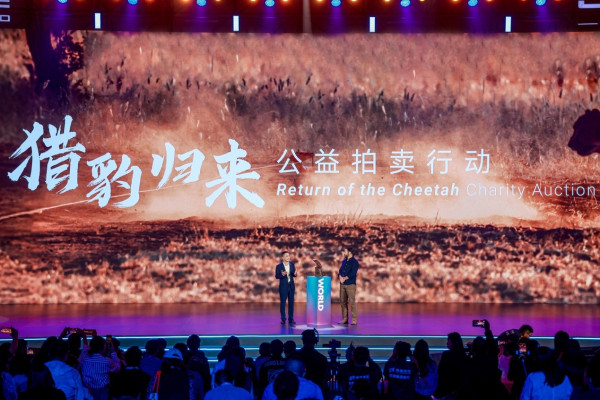
Recently, at the JETOUR Global Travel+ Conference 2024 (www.JETOURGlobal.com) in Fuzhou, JETOUR emphasized the importance of wildlife conservation and reaffirmed its strong commitment to the pursuit of "Travel as ESG Practices". After releasing a teaser of Discovery's documentary "Return of the Cheetah", JETOUR invited the documentary's protagonist, Hazen Audel, a renowned biologist and artist, to jointly launch the charity auction for the protection of cheetahs. JETOUR announced that all proceeds from the auction will be donated to cheetah conservation, continuing its consistent support for ecological conservation.
JETOUR: Cheetah Protection will be Our Long-term Public Service
At the conference, more than 1,000 people watched the teaser of the documentary "Return of the Cheetah". The documentary, jointly produced by JETOUR, the Discovery Channel and the Cheetah Conservation Fund, uses the Namibian grasslands in Africa as a backdrop to illustrate the plight of the cheetah around the world, and to encourage more people to get involved in this public welfare activity and help protect the environment for the survival of wildlife, including the cheetah.
While discussing cheetah conservation with Dr. Laura Marker, founder of the Cheetah Conservation Fund, and Hazen Audel, the main character in the documentary, Ke Chuandeng, Vice President of JETOUR Auto, said, "Public welfare is not just about giving. It is about encouraging more people to get involved. Through our cheetah conservation project, we hope to raise awareness of the importance of wildlife conservation and inspire more people to get involved. When we add up every small act of kindness, it creates energy that can help build a better and more harmonious world.”
On September 20, 2024, JETOUR officially announced its strategic partnership with CCF in South Africa. In support of CCF, JETOUR will sponsor the care of two orphan/non-releasable cheetahs and donate official vehicles to improve cheetah habitats. JETOUR has successfully adopted a wild cheetah and partnered with the Discovery Channel to produce the documentary "Return of the Cheetah" about the growth of the cheetah cub. Hazen Audel also brought his own hand-carved "Cheetah's Guardian" artwork for the auction. He said, "I am very fortunate to be able to participate in the ESG project of cheetah conservation, and during the filming of the documentary I was very touched by the actions of JETOUR and CCF to help cheetahs continue to live on earth. With the sculptures I created for cheetah conservation, I hope to attract new people to see what's happening in the world. I wanted the proceeds from the sculptures to go back into the efforts of wildlife conservation.
Travel as ESG Practices: Enriching the "Travel+" Strategy
Currently, ESG (Environmental, Social, and Governance) mission has become a significant trend in corporate development. JETOUR has incorporated ESG mission into its business and global development since its establishment.
In China, JETOUR launched the long-term charitable program of "Journey of Hope", focusing on the education and healthcare of left-behind children. Since 2020, JETOUR and its users have organized over 300 charitable activities. The company also established an ESG section on its app, encouraging users to participate in various charitable activities, with plans to hold 2,000 events over the next decade.
Internationally, JETOUR follows the "In somewhere. For somewhere" philosophy, conducting various charitable activities, such as traffic safety campaigns in Angola, sponsorship of vehicles for disabled athletes in Peru, support for rural road construction in Kazakhstan, and donations to children's education in Saudi Arabia. Through these initiatives, JETOUR continues to demonstrate that travel and ESG are deeply interconnected, creating social value for regions where it operates.
Li Xueyong, President of JETOUR Auto, said, “With the development of JETOUR's global business, we are increasingly aware of the harmonious symbiosis between economic development and the ecological environment. If we treat the earth well, the earth will treat us well. Cooperation with CCF is just the beginning. In the future, we will continue to support ecological conservation and contribute to global sustainable development.”
Distributed by APO Group on behalf of JETOUR.
Call to voluntarily exit captive lion industry
The Minister of Forestry, Fisheries and the Environment, Dr Dion George, has called on individuals in the captive lion industry to voluntarily consider giving up their stockpiles of lion bones and derivatives.
South Africa has the world's largest captive lion population of around 8 000 and the captive lion industry faces escalating ethical, regulatory, conservation and economic hurdles.
The industry also faces misalignment with global conservation trends and persistent animal welfare and other issues. The industry's deficiency in social license and departure from international norms present formidable problems to its sustainability.
“In developing the voluntary exit options and pathways, several key guiding principles were considered including the imperative of preventing unemployment for vulnerable individuals and underlying pillars of sustainable use. I encourage everyone who has lion bones and derivatives to voluntarily surrender them as early as possible,” the Minister said on Friday.
In December 2022, the then-Minister of Forestry, Fisheries and the Environment, Barbara Creecy, appointed a Ministerial Task Team to identify and recommend voluntary exit and pathways from the captive lion industry.
Recommendations, dated 15 February 2024, were submitted to the Minister and the report was released.
The Minister re-appointed some of the Ministerial Task Team members, to facilitate the implementation of the outcomes of the report.
The Terms of Reference were published under Government Notice No 4765, Government Gazette No. 50574 of 26 April 2024.
George has encouraged those that wish to consider the voluntary exit options involving lion bones and derivatives to register their interest by submitting their details to the department.
All information provided is treated confidentially and registration does not constitute any obligation to proceed with voluntary exit options.
A detailed implementation process plan of surrendering lion stockpiles and derivatives will be communicated and shared in the public domain, once approved by the Minister and the registration process is concluded.
Interested persons are invited to respond to the notice within 120 days from the date of publication in the Government Gazette which can be accessed at
https://www.dffe.gov.za/sites/default/files/legislations/nema_lionbonestockpilesurrender_g51551gn5539.pdf.
Registration details to exit from the captive lion industry can be access at https://forms.gle/KiDqv8sru8pXLwhd7.
Download the form on the departmental website at www.dffe.gov.za and once completed post/hand deliver/ email it as follow:
By post to: Director-General: Department of Forestry, Fisheries and the Environment
Attention: Ms Ofentse Mashiyane (Secretariat of the Ministerial Task Team)
Private Bag X447
PRETORIA
0001
By hand at: Reception, Environment House, 473 Steve Biko Road, Arcadia, Pretoria, 0083
By email: lionstockpile@dffe.gov.za.
Any inquiries in connection with this Notice can be directed to omashiyane@dffe.gov.za and lionstockpile@dffe.gov.za. - SAnews.gov.za
nosihle
Fri, 11/15/2024 - 13:09
Government to host Construction Summit
Concerns around the so-called construction mafia, security and other criminal activity at construction sites, as well as the promotion of practical solutions for building crime-free environments within the construction industry, will come under the spotlight at the Construction Summit on Crime-Free Construction Sites next week.
The Department of Public Works and Infrastructure (DPWI), in collaboration with the South African Police Service (SAPS) and the Construction Industry Development Board (cidb), will host the summit at the Durban International Convention Centre in KwaZulu-Natal.
Public Works and Infrastructure Minister, Dean Macpherson, has expressed his strong commitment to addressing crime at construction sites across the country.
“This is a fulfilment of a promise I made shortly after taking office to host a summit to deal with construction site stoppages nationwide.
“Construction sites should be places where workers build not just structures, but also a sense of safety, respect and trust. Unfortunately, crime has been a persistent challenge in the sector, undermining productivity, escalating costs and putting lives at risk,” Macpherson said.
The Minister committed to working with industry stakeholders to find solutions for safer work environments and underscored the government's dedication to eliminating crime, ensuring that workers return home safely each day.
The SAPS will also play a key part in the stakeholder engagement as law enforcement plays a critical role in maintaining security. Accordingly, Police Minister, Senzo Mchunu, is expected to address the summit to reinforce the role of the police in combatting crime in the sector.
Finance Minister Enoch Godongwana is also expected to speak at Tuesday’s summit.Other Speakers will include the Premier of KwaZulu-Natal and the Mayor of eThekwini.
The cidb, a key partner in ensuring the professionalism and development of the construction industry, is equally dedicated to creating a conducive environment for effective delivery of infrastructure.
Bongani Dladla, CEO of the cidb, highlighted the importance of industry-wide collaboration in promoting security and efficiency in construction.
"We’re looking forward to playing an active role in this summit as we strongly believe that the construction industry is vital to our nation's growth, and addressing crime is essential to protecting both assets and the lives of those who build our future. The cidb is committed to supporting initiatives like the National Construction Summit to set new safety standards and collaborate with the DPWI, law enforcement, and industry partners to make construction sites safer and more efficient,” said Dladla.
The summit will feature a series of expert-led discussions on legislation and policy, security and law enforcement, community engagement, empowerment, skills development and other strategic topics to equip stakeholders with the tools needed to combat crime on construction sites.
It will also provide an opportunity for networking and forging partnerships aimed at improving site security and promoting the safety of workers. - SAnews.gov.za
Edwin
Fri, 11/15/2024 - 09:00
In response to high rates of heroin use, the government will pilot an opioid agonist therapy program
Social Development announces de-registration of non-compliant NPOs
With the deadline to submit progress to the Financial Action Task Force (FATF) on the status of South Africa’s grey listing, the Department of Social Development has announced the commencement of the de-registration of non-compliant non-profit organisations (NPOs) in a phased approach.
The department revealed this to Parliament’s Portfolio Committee on Social Development.
The FATF grey listed South Africa at its February 2023 plenary meeting held in Paris.
The FATF is the international standard-setting body that oversees global compliance with anti-money laundering rules.
It developed an Action Plan with 22 Action items linked to the eight strategic deficiencies identified in the country’s anti-money laundering and combating of financial terrorism regime.
The department noted that South Africa has made progress in five action items and has 17 outstanding items to which it must report progress by 2026.
“South Africa is required to address all 22 items in order to exit the grey-listing status. One of the action items relates to the risk of terror financing and money laundering by NPOs.
“FATF identified that NPOs can be used for terror financing and money laundering and recommended that South Africa develops an NPO Terror Funding Risk Assessment,” the department said in a statement on Thursday.
This assessment titled: “The Information on the South African Terrorist Financing Risk Assessment for the Non-Profit Organisations” found that there is a medium exposure to terror financing by the NPO sector in South Africa.
The risk assessment also identified some threats that NPOs can be exposed to relating to terror financing, such as:
• NPOs raising funds or other support for foreign terrorist groups
• NPOs facilitating foreign travel for terrorist causes, amongst others, and
• NPOs using the Internet and online media for fundraising, recruitment and propaganda
“The Department of Social Developing together with SARS [South African Revenue Service] and the FIC [Financial Intelligence Centre], are developing monitoring mechanisms to mitigate this risk.
“There are high, medium and low risk categories. The department has commenced with the deregistering non-complaint NPOs that do not fall in the high- risk category of NPOs as one of the mitigating monitoring mechanisms.
“Closer supervision and monitoring has been instituted by the department for NPOs identified to be at high risk of terror financing,” the department said.
As of October 2024, the department had 295 052 registered NPO and 167 103 of non-compliant NPOs.
Adequate standards of governance
The Department of Social Development through the Non-profit Organisations Act, 71 of 1997, as amended by General Laws Amendment Act (GLAA) provides for the registration of three types of NPOs, namely, Trust, non-profit company (NPC) and voluntary associations.
“Non-profit organisations play a crucial role in societal development and community welfare. However, some organisations fail to comply with regulatory frameworks, risking public trust and the integrity of the sector,” the department said.
The department said it has the responsibility to encourage NPOs to maintain adequate standards of governance, transparency, and accountability and to improve those standards.
The department explained that the need to deregister non-compliant NPOs is required by the need for the department to comply with the provisions of the NPO Act.
The FATF in the Mutual Evaluation Study indicated the need to implement the law in the form of the NPO Act as amended by the GLAA legislation.
“The risk of not deregistering/cancelling noncompliant NPOs is the likelihood of those NPOs being used by criminals for money laundering and terrorist financing.
Processes
“The department has a responsibility that NPOs that are not complying with provisions of the NPO Act are removed from the NPO Register as required in terms of section 21 (1) of the NPO Act deregistration or cancellation of NPOs is primarily about NPOs that fail to submit annual reports as required in terms of section 18 (1) of the NPO Act,” the department said.
Other instances that might lead to cancellation of registration status is when an organisation does not comply with the provisions of its own founding document. The department said the objective of the deregistration/cancellation is to identify NPOs that have failed to submit annual reports.
The department issues them with notices of compliance and subsequently remove them from the NPO register kept in terms of section 24 of the NPO Act.
The department will also provide deregistered/cancelled NPOs with an opportunity to appeal against the decision to remove them from the NPO Register.
The department will further raise its awareness program on the intention to deregister NPOs.
Steps taken:
• The process for deregistration/cancellation will start with the verification of compliance status.
• Once an organisation is found to be owing annual reports, it would be issued with a notice of compliance that would explain the annual reports that the organisation failed to submit.
• The organisation will be given 30 days to submit outstanding annual reports.
• Once an organisation fails to submit the required reports or fail to respond timeously to the issued noticed it would be cancelled or removed from the NPO Register.
• Deregistered/cancelled organisations will be afforded an opportunity to appeal against the decision of the Director to cancel the organisation’s registration status.
• The organisation would be required to submit a notice of appeal together with supporting documents.
• The notice of appeal together with relevant documents will be sent to the chairperson of the panel of arbitrators for distribution to the appointed arbitration tribunal for the adjudication of the appeal.
• The arbitration tribunal works independently and is appointed by the Minister in terms of section 9 (1) of the NPO Act.
• A lodged appeal must be considered with 3 months of receipt of the appeal.
• An appeal can either be denied or upheld. Once an appeal is upheld the department must reinstate the appellant and the organisation should be considered never to have been deregistered.
The department said that a denied appeal may take the matter on review with a competent court of law.
“The deregistration of non-compliant non-profit organizations is essential for maintaining the integrity and effectiveness of the nonprofit sector.
“By implementing a structured process, we can ensure that only organisations that meet compliance standards continue to operate, thereby protecting the interests of beneficiaries and the public at large,” the department said.
The department will deregister organisations according to the different financial years and it will be over a period of six to 12 months.
This is done with an intention not to cause alarm to the sector and give other NPOs time to respond to the call to submit annual reports.
The department said it will continue to support NPOs by creating an enabling environment for them to operate effectively and efficiently. – SAnews.gov.za
DikelediM
Thu, 11/14/2024 - 10:58