• Skip to main content
  • Skip to header right navigation
  • Skip to after header navigation
  • Skip to site footer
MyZA

MyZA

News, Directory, Events and Other Stuff

  • Social Media
  • Sport
  • World News
  • Home
  • Submit News
  • Directory
  • Events
  • Stratlec
  • TFSA
  • News
    • APO
    • Today’s Sport News
    • Todays Social Media and Tech Headlines
    • Today’s World News
    • Today’s SA Financial News
  • Contact
You are here: Home / Archives for Environment

Environment

6 November 2024

Deputy President Mashatile to attend Earthshot Prize Awards

Location: News

Deputy President Mashatile to attend Earthshot Prize Awards

Deputy President Paul Mashatile is expected to attend the 4th Annual Earthshot Prize Awards ceremony, this evening, in Cape Town. 

The Deputy President will be attending Wednesday’s ceremony at the invitation of Britain’s Prince William and on behalf of President Cyril Ramaphosa. 

This marks the first time the event will be held in South Africa.

Started by Prince William in 2020, the prize supports sustainable, eco-friendly projects from around the world. Five winners each receive £ 1 million.

According to the Deputy President’s Office, the prize is the most prestigious global prize for the environment in history, despite only being in its fourth year. 

“Since then, the significant work that Earthshot has done by scaling ingenious solutions to the most pressing challenges facing the world, such as climate change, waste management, cleaning our air, saving our oceans, and saving and restoring nature is remarkable and aligned with South Africa’s priorities towards climate action, environmental protection and restoration, and cleaning the environment,” the Deputy President said. 

Every year, the organisers search the globe for game-changing innovations that will help repair the planet and award the winners of the best five solutions with money to scale their work. 

The initiative exists to discover, spotlight and help grow innovative solutions that are working to repair and regenerate our planet.

Last year, Earthshot welcomed its first South African finalist, ABALOBI, whose technology is making it easier for small fishing communities to monitor fish populations, improve market access, and recognise these communities as stewards of oceans. 

“It is of particular importance that the focus of the Earthshot Prize Awards is on the impact of climate change on Africa and the innovative solutions found on the African continent to mitigate the impact of climate change and environmental degradation.”

Meanwhile, the Deputy President said it was an “honour” to welcome the Prince of Wales to South Africa, highlighting the unique relationship the Royal Family has with the country. 

“The Prince of Wales continues to show his steadfast support and commitment to campaigning for the environment and advocating for the protection of our planet. These prestigious awards play a critical role in supporting and celebrating small enterprises that make a huge difference,” the Deputy President added.

President Ramaphosa met with Prince William in Cape Town on Tuesday. -SAnews.gov.za


Gabisile
Wed, 11/06/2024 - 09:25
13 views
Read moreDeputy President Mashatile to attend Earthshot Prize Awards
6 November 2024

How the Legal Resources Centre Has Fought for Human Rights

Location: News

Speech by Geoff Budlender on accepting the fourth George Bizos Human Rights Award

Read moreHow the Legal Resources Centre Has Fought for Human Rights
5 November 2024

North West government wishes agricultural students well for end-of-year assessments

Location: News

North West government wishes agricultural students well for end-of-year assessments

As the academic year draws to a close, the North West Agriculture and Rural Development MEC, Madoda Sambatha, has extended his good wishes to all students at Taung and Potchefstroom Agricultural Colleges as they embark on their end-of-year assessments. 

Recognising the dedication and resilience these future agricultural leaders have demonstrated throughout the academic year, Sambatha commended their commitment to advancing their knowledge and skills within the sector.

“As you approach this critical phase of your academic journey, I want to take a moment to wish you all the best. 

“Your dedication to agricultural education will pave the way to a brighter future. Know that your hard work and perseverance are the seeds sown for a brighter future in agriculture. The department stands behind you, confident that your efforts will yield great success,” the MEC said. 

According to the provincial department, these assessments are set to continue until mid-November.

“A team of dedicated staff at both campuses has worked diligently to maintain a conducive learning environment, ensuring a seamless examination process, with secure venues, comprehensive exam schedules, and robust support services,” the department said.

The department encouraged communities and parents to rally behind these future agriculturists, providing emotional support and motivation during this critical period. 

“Their success will significantly contribute to the growth and development of the agricultural sector.” 

Through the Department of Agriculture and Rural Development, the Potchefstroom College of Agriculture was established as an agricultural training institution in 1909. 

Since then, it has grown into one of the largest agricultural colleges in South Africa. – SAnews.gov.za
 

Gabisile
Tue, 11/05/2024 - 11:02

8 views
Read moreNorth West government wishes agricultural students well for end-of-year assessments
5 November 2024

How Government Is Hindering Its Own Drug Policies

Location: News

A program supplying sterile injection equipment was stopped for months in Cape Town

Read moreHow Government Is Hindering Its Own Drug Policies
4 November 2024

Lawyer Charged With Attempted Murder Released on Bail

Location: News

Rael Kassel’s ex-partner fears for her safety

Read moreLawyer Charged With Attempted Murder Released on Bail
4 November 2024

Upington Residents Say Tobacco Bill Is Based on International Best Practice on Tobacco Regulation

Location: News

Republic of South Africa: The Parliament
Download logo

The Portfolio Committee on Health has concluded three successful public hearings on the Tobacco Products and Electronic Delivery Systems Control Bill (B33-2022) in the Northern Cape province. The committee is satisfied that contributions made by residents of the Northern Cape were insightful and will ensure consideration of broader perspectives by the committee when it reviews the Bill holistically.

In Upington, participants argued that the provisions of the Bill were in line with international best practice on the regulation of tobacco products. Those who support the Bill argued that countries across the world have proved that it is possible to regulate tobacco products such as the utilisation of plain packaging, use of graphics that highlight the dangers of consumption of tobacco products and the imposition of smoke free zones in the protection of vulnerable groups such as pregnant women, children and non-smokers.

There were strong views that without the proposed regulations, non-smokers are being exposed to harmful second-hand smoke inhalation and that the speedy implementation of the Bill would help curb this challenge. They also argued that the contribution made by the tobacco industry to tax revenue doesn't offset the dangers and harmful effects of tobacco products. They pointed out that the industry was mainly concerned with profit making and not public health.

Meanwhile, producers of electronic delivery systems argued that the Bill in its current form was not effective in its inability to set out a clear distinction between traditional tobacco products, like cigarettes, and electronic nicotine delivery systems. They further argued that they are in support of regulation, but not as provided for in the Bill. They called for separate regulations addressing unique vaping environment.

Those supporting the Bill argued that vapes have inherent harmful products that are not clearly set out that might be harmful to consumers. They suggested that the vaping industry is using colourful packaging and social media to attract the youth into consuming their harmful products.

Those against the Bill reiterated the concern that the ban of the display at the point of sale will negatively affect businesses of small-scale traders, something they said was undesirable given the high unemployment rate in South Africa. A view that the implementation of the Bill as is would create a fertile ground for the illicit market to flourish at the detriment of lawful traders was reiterated.

The committee noted the overwhelming contribution by young people in the Northern Cape who in their majority underscored the dire long-term effects of tobacco for future generations. Many of them argued that the Bill is a timely intervention in an environment of increasing consumption of tobacco products and hooka pipes in townships. They also called for clear and concise enforcement plans to ensure the effective implementation of the Bill.

Having concluded the Northern Cape leg of public hearings, the committee will next weekend, 8-10 November conduct the last provincial public hearings in KwaZulu-Natal. Following this, the committee will review all public submissions and engage organisations that made written submissions to the committee.

“We are generally satisfied with the public participation process we undertook this weekend. The public hearings affirmed the correctness of the decision by drafters of the Constitution in ensuring that the public is central to decision-making as this ensures that their views and aspirations are encapsulated in decisions made by their representatives,” said Dr Sibongiseni Dhlomo, the Chairperson of the committee.

Distributed by APO Group on behalf of Republic of South Africa: The Parliament.

Read moreUpington Residents Say Tobacco Bill Is Based on International Best Practice on Tobacco Regulation
4 November 2024

Call for meaningful action to deal with wildlife crimes

Location: News

Call for meaningful action to deal with wildlife crimes

Minister of Forestry, Fisheries and the Environment, Dr Dion George, has called for decisive and integrated action to deal with wildlife crimes, as they threaten the country’s rich biodiversity and the potential of the eco-tourism industry.

Addressing the United for Wildflife Global Summit 2024 in Cape Town on Monday, the Minister said the Department of Forestry, Fisheries, and the Environment (DFFE) plays an indispensable role in shaping South Africa's future within the borders and in the increasingly complex global geopolitical landscape. 

“However, despite local and international efforts to address environmental crime at the highest levels of government, it is essential that we now refocus our efforts towards action. 

“Representatives from the police, customs, prosecuting authorities, financial intelligence units, and environmental and wildlife investigative agencies all hold crucial roles, and your collaboration is essential. 

“We all recognise this global scourge that can only be overcome through a focused and integrated international effort,” the Minister said.

South Africa’s wildlife, plant life and marine life is a target for illicit activities. 

“Our lions, rhinoceros, pangolin, succulent plants, abalone, and our fish stock, to name only a few, are significantly at risk and we must respond. 

“These crimes... have a devastating impact on our country’s moral fabric (where the poaching culture consumes communities) on our existing and potential eco-tourism industry, and on our good standing in the international community as custodians of irreplaceable natural heritage,” George said.

He emphasised that South Africa remains resolutely focused on implementing the National Integrated Strategy to Combat Wildlife Trafficking. 

This strategy aims to establish a well-resourced, integrated, multidisciplinary law enforcement approach to dismantle the illicit value chain of wildlife trafficking within our country and beyond. 

“We recognise that achieving this objective requires the unwavering commitment of our entire government to enhance law enforcement capabilities and to mobilise societal support. 

“As part of implementing the strategy, South Africa actively participated in both informal and formal negotiations leading up to the recent United Nations Convention against Transnational Organised Crime, Conference of Parties. 

“We supported the resolution sponsored by Brazil, France, and Peru, which aims to enhance measures to prevent and combat crimes affecting the environment. This important document recognises that environmental crimes has evolved into a major form of transnational organised crime,” the Minister said.

South Africa remains committed to implementing the key proposals outlined in the resolution.

“We must confront the stark reality that these crimes are not isolated to a series of arbitrary incidents, and that they have developed into highly sophisticated, greed-driven enterprises orchestrated by international criminal syndicates. 

“They exploit our natural heritage for financial gain and cause immeasurable harm to the environment while undermining our conservation efforts. These environmental crimes threaten to ravage the world's natural resources, impose immense financial burdens, and lead to the widespread loss of economic and development opportunities. 

“While we are keenly aware of the threat this poses to security and the rule of law, we must also remain cognisant of the complex issues of poverty and the lack of alternative livelihoods that contribute to the rise of such illicit activities,” the Minister said.

South Africa has also actively participated in WIRE meetings since 2016, which have been instrumental in overcoming obstacles related to information sharing and cooperation in investigations. 

“This has provided an invaluable platform that enables the international community to strategies, overcome obstacles, ensure meaningful cooperation, and respond swiftly when necessary, despite the bureaucratic processes inherent in any government. 

“Collaborating with international counterparts is crucial for tackling wildlife crime, especially since the illicit market is primarily in Southeast Asia. It is essential that we reinforce our working relationship with law enforcement agencies in these countries,” the Minister said. - SAnews.gov.za

nosihle
Mon, 11/04/2024 - 12:24

0 views
Read moreCall for meaningful action to deal with wildlife crimes
4 November 2024

Human Rights Commission appears before Parliament’s justice committee

Location: News

Human Rights Commission appears before Parliament’s justice committee

The Portfolio Committee on Justice and Constitutional Development has expressed concern over allegations of a “toxic” environment in the office of the South African Human Rights Commission (SAHRC). 

This following the suspension of the commission’s CEO Vusumuzi Mkhize as well as other complaints brought before the committee against the SAHRC chairperson Reverend Chris Nissen and Commissioner Philile Ntuli.

In a statement, the committee said calls are mounting for the removal of the three, through Section 194 of the Constitution.
However, committee chairperson, Xola Nqola, said issues at the SAHRC had not reached that point.

“We are not there yet, at Section 194. We want to stabilize the institution so that it can focus on its core mandate of service to our people. Now it seems it is rather hamstrung by those opposing the current leadership,” Nqola said.

Further in a statement, the committee said it held a “frank and robust discussion” with the SAHRC on Friday. 

“Rev Nissen told the committee that all the new allegations and information before the committee made no sense as it referred to his former public life, which is well known. He said he was vetted several times by various sectors and twice by Parliament and he was never found wanting. The committee noted that prior to Rev Nissen’s appointment as Chairperson of the SAHRC, Parliament called for public input into his suitability, and none was received.

“The committee expressed its concern over the toxic environment in the office of the SAHRC, stating that the situation is further deteriorating and seemingly it has been like that for some time. 

“The committee has noted utterances Ms Ntuli made that the attack on her is of a political nature accusing senior staff of the Commission and former commissioners of working together to have her and Rev Nissen out. She now fears for her safety and the committee resolved that the SAHRC must request that a risk assessment be done by security agencies,” the statement read.
Furthermore, the committee said it heard allegations that former members of staff were sowing divisions within the commission and “created factions in the SAHRC by having meetings outside the commission”.

On allegations against Mkhize, the committee was told of alleged disparaging remarks he had made during a meeting.
“The committee heard that Mr Mkhize, during a hybrid meeting of the SAHRC, unaware that he was not muted made some remarks about white people and about the Government of National Unity. 

“He allegedly later “unlawfully” instructed a junior official to delete the recording of a meeting, breaking the protocol. 
Furthermore, the SAHRC said other concerns were raised prior to this regarding, amongst others, procurement, consequence management and him only accepting instructions from the interview panel that appointed him.

“The committee further heard that concerns were raised about Mkhize’s appointment process when a report from the Public Protector on the Guptas' citizenships said he violated the Constitution during his employment at the Department of Home Affairs,” the statement read.

The committee chairperson vowed that the commission will be taken to task if any wrongdoing is found.

“We decided to adopt the Commission; we conditionally support it. When it does good work, it will have our support, but when we hear of shenanigans, we will take them to task. 

“We will do unannounced visits to its headquarters as well as to provinces to ascertain the real conditions in the institution,” Nqola said. – SAnews.gov.za


NeoB
Mon, 11/04/2024 - 10:00

115 views
Read moreHuman Rights Commission appears before Parliament’s justice committee
3 November 2024

Deputy Minister Letsike addresses Village Economy Indaba

Location: News

Deputy Minister Letsike addresses Village Economy Indaba

Deputy Minister in the Presidency for Women, Youth and Persons with Disabilities, Mmapaseka Letsike, says more than 60% of jobs and 25% of the Gross Domestic Product (GDP) of the African continent comes from the agricultural sector which is rooted in the rural areas.

“This presents an opportunity for boundless growth through the potential that is inherent in the rural economy and for expansion to industries that ordinarily have not proliferated in rural areas,” Letsike said.

Speaking at the Village Economy Indaba ceremony held in the North West province, Letsike said over half of the population resides in rural regions, yet these areas often face higher poverty rates, lower access to basic services and limited economic opportunities.
“This divide is not only a matter of geography, it concerns social justice, economic necessity, and national progress.”

Letsike said rural areas in South Africa hold an enormous but often overlooked potential for lifting people out of poverty.

“When we invest in rural economies, we create jobs and boost incomes in areas where they are needed most. Imagine empowering smallholder farmers with access to better technology, training, and markets. 

“Not only could they increase their production, but they could also improve their livelihoods, leading to better education, healthcare, and overall well-being for their families and communities,” Letsike said on Friday.

The Deputy Minister said it was reported that about 75% of food produced on the continent is from small farms of less than 20 hectares, while 80% of the 51 million farms on the continent have an area less than two hectares.

“Developing rural economies helps curb urban migration. Every year, thousands of people leave rural areas, hoping for better opportunities in the big cities.

“By creating viable economic opportunities in rural areas, through initiatives such as The Village Economy Indaba whether in agriculture, renewable energy, tourism, or small-scale manufacturing, we can reduce the strain on our cities while enhancing quality of life in the countryside,” the Deputy Minister said.

Letsike said vulnerable groups such as women, youth, LGBTI (lesbian, gay, bisexual, and transgender or intersex), persons and persons with disabilities are the hardest hit by climate change.

“Therefore, renewable energy projects, like solar and wind farms in areas such as the Northern and Eastern Cape, to eco-tourism in Limpopo and the Western Cape, rural South Africa holds immense potential for green growth and sustainability, particularly as we engage the Just Energy Transition.

“By focusing on sustainable practices, we can preserve our environment for future generations while creating jobs today. 

“Many of us who have a rural background will understand that even our indigenous agricultural practices such as companion planting have been proven to promote soil health and maximise production on small pieces of land and it is still used by many farmers in rural areas,” Letsike said.  -SAnews.gov.za 


Edwin
Fri, 11/01/2024 - 14:03

55 views
Read moreDeputy Minister Letsike addresses Village Economy Indaba
1 November 2024

Council indaba to zero-in on climate resilient build environment

Location: News

Council indaba to zero-in on climate resilient build environment

The Council for the Built Environment (CBE) is on track to convene its second Built Environment Climate Change Indaba (BECCI) next week.

“The CBE’s 2024 BECCI is centred on building a climate-resilient built environment for South Africa while acknowledging and incorporating the Indigenous Knowledge Systems (IKS) in the entire construction lifecycle, and processes and legislations of national, provincial and local government,” said the council in a statement on Thursday.

The CBE is public entity of the Department of Public Works and Infrastructure and is a regulatory body established under the Council for the Built Environment Act 43 of 2000 (the CBE Act) that coordinates six councils for the built environment professions including architecture and engineering.

The two-day indaba is set to be held in the Mandeni Local Municipality in KwaZulu-Natal next Thursday and Friday. 

This, as KwaZulu-Natal has experienced adverse weather in recent years.

“These natural disasters are worsened by poor drainage and building standards, especially in low-income areas. There was significant damage to over 13 000 homes, disrupted water supply, impassable roads, and destroyed bridges. Additionally, the recent snowfall in KwaZulu-Natal… underscores the growing severity and unpredictability of South Africa's weather patterns. 

“The snow and icy conditions led to the closure of the N3 highway between Gauteng and KZN, stranding numerous travellers, which highlights the vulnerabilities in our infrastructure amid extreme climate events, necessitating urgent policy and planning responses.”

READ | Condolences to family of victim affected by freezing weather conditions

The indaba will be held under the theme: “Co-creation of spaces and places that respond to just transition.”

The council said the indaba will together stakeholders from the engineering and the built environment sector, disaster management and the South African Weather Service (SAWS) to co-create sustainable, resilient, and equitable spaces that address climate change and socio-economic disparities. 

“The Indaba is particularly critical in the context of the CBE’s mandate to transform the built environment, promote sustainable development, and contribute to inclusive socio-economic growth.”

The BECCI will bring together stakeholders from the engineering and the built environment sector under one roof to discuss and enhance climate resilience in South Africa’s built environment “by fostering collaboration to generate new knowledge and insight geared towards reducing and mitigating the impact of climate change in the sector.”

The outcomes and resolutions from the BECCI 2024 are expected to feed into the operations and functions of the CBE’s and its stakeholders on numerous levels. Furthermore, the BECCI will aim at addressing climate change related challenges facing the South African Built Environment and vulnerable communities at large. 

Public Works and Infrastructure Minister Dean Macpherson and Deputy Minister Sihle Zikalala, among others, are expected to attend the indaba. – SAnews.gov.za 

Edwin
Fri, 11/01/2024 - 09:30

233 views
Read moreCouncil indaba to zero-in on climate resilient build environment
1 November 2024

COP16: Will Humanity Live in Harmony With Nature? The Stakes Have Never Been Higher

Location: News

The 16th Conference of Parties to the Convention on Biological Diversity was held in South America this past fortnight

Read moreCOP16: Will Humanity Live in Harmony With Nature? The Stakes Have Never Been Higher
31 October 2024

SARS welcomes MTBPS, increases its compliance focus

Location: News

SARS welcomes MTBPS, increases its compliance focus

The South African Revenue Service (SARS) has welcomed the Medium-Term Budget Policy Statement (MTBPS) presented in Parliament by Finance Minister Enoch Godongwana on Wednesday. 

The MTBPS revised the February 2024 Budget net tax revenue forecast from R1.863 trillion to R1.8408 trillion.

SARS said as of 30 September 2024, it has collected gross revenue of R1 070.4 billion, yielding a net revenue of R846.2 billion and R224.3 billion in refund payments. 

The revenue performance was bolstered by stronger collections from CIT Provisional tax and lower-than-expected VAT and PIT refund payments. 

This was offset by lower-than-expected collections from Customs taxes, PAYE, and the General Fuel Levy. 

The areas that were adjusted downward are: 

  • Lower-than-expected previous year salary adjustments, reducing the nominal wage bill estimate from 8.4% in the 2024 Budget to 5.5% in the MTBPS 2024. 
  • Slower growth on capital projects across general government, public corporations and private sector, with gross capital formation anticipated to decline from 9.5% in the 2024 Budget to 5.2%.
  • Downward revision in outlook of nominal exports from 5.2% to 3.5%, as well as nominal imports from 6.0% to 3.8%.
  • At Budget 2024, a 13.8% growth in PAYE, based on the 8.4% growth in the wage bill, was assumed. PAYE collections for year-to-date (September 2024/25) amount to R340.0bn, lower than the PE by R12.0bn (3.4%) and higher than previous year by R30.8bn (10.0%).

SARS highlighted that the deficit in revenue collections was partially offset by strong collections in CIT provisional tax collections (at R150.2 billion) against an expectation of R141.4 billion, yielding a surplus of R8.8 billion, up by 2.7% or R3.9 billion from the previous year. 

The fuel levy has faced challenges this financial year due to a year-on-year decrease in fuel consumption, with 1.333 million litres less fuel used. SARS said that this decline, attributed to factors like reduced load shedding and a shift to alternative energy sources, has directly impacted the Net Fuel Levy, resulting in a 3.9% year-on-year contraction and a R7.2 billion shortfall.

Trade taxes also underperformed, as imports, which were expected to grow by 1.9%, have instead declined by 5.1% year-to-date. Total trade flows have decreased by R39.2 billion (or -2.0%) compared to the same period last year, primarily due to lower import flows of electrical machinery and vehicles.

SARS noted that Provisional Corporate Income Tax (CIT) collections reached R150.2 billion, recording a surplus of R8.8 billion (6.2%) and a year-on-year growth of R3.9 billion (2.7%), driven by the Finance, Electricity, and Manufacturing sectors. 

Collections exceeded the Budget 2024 target rate of -3.3%. However, the Mining sector continues to struggle with volatile commodity prices, particularly in Platinum Group Metals, Coal and Iron Ore, which has negatively impacted profitability and provisional payments. Additionally, the sector faces ongoing transport, logistics, and border crossing issues, leading to delays and higher export costs.

Despite having finalised ± 1.3 million more debt cases, which is almost 290% more than the previous year, SARS said its debt compliance efforts have yielded lower returns year-on-year by R9.3 billion, which equals to a 23.6% year-on-year contraction. 

SARS further recorded significant year-on-year increases in deferred payment arrangements, requests for suspension of payments, and final demands, highlighting the financial hardship taxpayers are experiencing and its impact on their ability to meet tax obligations.

“The SARS Strategic Intent will continue to focus on Voluntary Compliance, ensuring that taxpayers and traders have clarity and certainty regarding their obligations, along with the necessary tools to facilitate easy and straightforward compliance. Conversely, SARS will impose significant legal and administrative costs on taxpayers and traders who deliberately fail to meet their obligations,” the revenue service said.

SARS said that its compliance efforts continue to yield success in dealing with non-compliance in particular segments and tax products. To date, compliance revenue secured R110.1 billion, reflecting a growth of R8.1 billion (8.0%). 

The Revenue Service emphasised that it will continue to intensify its efforts to maintain visibility and reinforce compliance, with plans to invest further on compliance initiatives to close the tax gap by targeting various taxpayer segments. 

SARS Commissioner Edward Kieswetter said that in pursuing the attainment of the 2024/25 tax revenue estimate of R1 840.8 billion, SARS will be unrelenting in its drive to engender voluntary compliance. 

“Critical in this pursuit is to ensure that intermediaries charged by law to collect taxes on behalf of SARS pay it over. Importantly, SARS is ready to act against those who willfully and defiantly ignore their legal obligations by misrepresenting their true economic status. Those who enable this conduct are equally culpable. 

“Taxpayers who abdicate their legal obligations place a disproportionate burden on honest taxpayers. Taxes play a critical role in cushioning the most vulnerable and destitute in our society. In this respect, voluntary compliance is sacrosanct,” Kieswetter said.   

The Commissioner further emphasized that SARS will continue to intensify and deepen its existing administrative efforts. 

“We will continue to use sophisticated data science and artificial intelligence, to maintain the balance between service to taxpayers/traders, whilst managing risks to the fiscus by detecting dishonest taxpayers,” he said. 

SARS will deploy more data science and artificial intelligence (AI) to step up its focus on the following areas of compliance risk:

  • Broadening the tax base via third-party data sources: Leveraging data from both formal and informal sectors to widen the tax base.  
  • Work to register all taxpayers and traders, through predictive modelling, who ought to be on the register and ensure that they honestly file their declarations and pay their dues where necessary. 
  • Build its detection capability using machine learning models and Artificial Intelligence (AI) to significantly improve service and offer a seamless service to honest taxpayers. This will also be used to detect dishonest taxpayers, improve debt collection while expanding the tax base and deal with tax avoidance.
  • Enforcing trade laws against the illicit economy (Customs and Excise): Strengthening tools to detect and prevent illicit activities, including those related to tobacco, fuel, and illicit financial flows.
  • Focusing on dispute prevention and resolution: Prioritising products and strategies that prevent disputes that can be resolved.

“SARS is the nation’s treasure; a well-functioning tax and customs administration is a cornerstone to our vibrant democracy and should never be taken for granted. SARS seeks to ensure revenue sustainability by securing appropriate investment in SARS, and funding certainty. 

“From a human capital perspective, SARS will continue to attract, develop and sustain a workforce that is future ready. We will be building the leadership bench strength of SARS and protect the autonomy of the institution,” the tax revenue said. 

Despite the tough operating environment, SARS said it expects that the start of a cycle of interest rate cuts will spur consumption expenditure. This expansion is expected to drive economic growth and widen the tax base, resulting in buoyant corporate tax, and VAT revenues. 

Additionally, the introduction of the “Two-Pot” system is expected to increase the tax base in the short to medium term. 

“The 12 821 SARS staff, to whom we express sincere appreciation, will continue to work diligently in achieving the revised revenue estimate as presented by the Minister of Finance,” SARS said. – SAnews.gov.za

DikelediM
Thu, 10/31/2024 - 11:03

299 views
Read moreSARS welcomes MTBPS, increases its compliance focus
31 October 2024

Storm at SA Weather Service Over Dodgy Tenders

Location: News

This vital service is vulnerable to collapse

Read moreStorm at SA Weather Service Over Dodgy Tenders
31 October 2024

Godongwana lauds GNU for working well

Location: News

Godongwana lauds GNU for working well

While there might be a difference of opinion on how to address the myriad of challenges facing South Africa, the Government of National Unity (GNU) agrees on the strategic task of fiscal consolidation.

Addressing the RMB-Sunday Times post-Medium Term Budget Policy Statement (MTBPS) dialogue, Finance Minister Enoch Godongwana said while working on the budget, there was a unity of purpose on fiscal consolidation, although parties in the GNU may disagree on the pace of the fiscal consolidation.

"Doing the budget under the GNU was easy. We have the Minister’s committee on the budget. The three major budgets are represented there. There was not a single descending voice because we agree on the strategic task of fiscal consolidation.

“We are working very well [together]. We may differ on some issues but on substantive matters, we are on the same page. Despite what the analysts say, the GNU will be here for five years because there is a commitment with those in government to make it work and deliver,” the Minister said on Thursday in Cape Town.

Godongwana delivered the first MTBPS on Wednesday to Parliament since the GNU was established in the seventh administration.

“In the run up to the elections, our society was fractured. We needed to build a unity of purpose, and I think we have achieved that. The positive sentiment that has come out as a result of the GNU is quite impressive,” the Minister said.

Growing the economy

Godongwana emphasised that South Africa’s big challenge was growing the economy.

“If we had a growing economy, we would solve the issues of unemployment, poverty and the problem of debt. If we had a growing economy, we would have the capacity to service the debt. South Africa has to refocus on growing the economy. We have had a growth problem for more than a decade,” the Minister said.

To strengthen efforts to grow the economy, National Treasury has identified four pillars to lift the economy to a higher and more inclusive growth path.

The strategy is anchored on four pillars:
•    Creating a conducive environment based on maintaining macroeconomic stability;
•    Implementing structural reforms;
•    Supporting growth-enhancing infrastructure; and
•    Building State capability.

National Treasury has forecast a real Gross Domestic Product (GDP) growth of 1.1% in 2024 domestically. 

This is lower than the estimate of 1.3% in February. Over the medium-term, growth is forecast to average 1.8%.

“This underscores the need for higher inclusive growth to meet the aspiration of a better life for all. Pillar one is about a stable, transparent and predictable macroeconomic framework that creates a conducive environment for businesses and households to save, spend, invest and grow.

“The second phase will also introduce new focus areas that seek to strengthen local government, harness digital infrastructure and integrate urban environments to make cities more efficient.

“Pillar three is about effective infrastructure investment, to boost economic activity and enable higher growth over the medium term,” the Minister said.

Government is also implementing initiatives like early retirement, not to merely reduce the size of the workforce, but also to introduce younger talent to the public service.

“This is part of building a capable, ethical and developmental government. We will be harnessing digital infrastructure to roll out critical systems in the provision of service delivery,” the Minister said.

These initiatives include:
•    Digitising and simplifying the application and disbursement process for social grants;
•    Broadening access to employment pathways;
•    Rolling out digital identification documents;
•    Building a centralised and accessible website for all government services; and
•    Digitising health records management for the rollout of National Health Insurance. - SAnews.gov.za

nosihle
Thu, 10/31/2024 - 11:41

129 views
Read moreGodongwana lauds GNU for working well
31 October 2024

dtic to launch the Khoebo Innovation Promotion Programme

Location: News

dtic to launch the Khoebo Innovation Promotion Programme

The Department of Trade Industry and Competition (dtic), in partnership with the Industrial Development Corporation (IDC) and the University of Free State, Bloemfontein Campus, will launch the Khoebo Innovation Promotion Programme (KIPP) on Monday.

This as a fund to drive innovation among early-stage Small Medium Enterprises in the Free State. 

The programme was initially launched in June 2024 in Johannesburg and a series of regional launches will be taking place throughout the country.

The objective of the KIPP is to enable early-stage innovative SMEs to penetrate the market with their locally developed innovations resulting in a more competitive economic environment, thereby facilitating economic growth in the South African economy.

According to the Acting Deputy Director-General of Investment and Spacial Industrial Development at the dtic, Yunus Hoosen, the launch seeks to facilitate interactions with potential partners, beneficiaries, and supporters, building relationships that support the fund's objectives.

According to Hoosen, since the establishment of KIIP in 2020, the programme has funded more than 36 projects across various sectors of the economy, with R 148.2 million committed and R113.8 million disbursed to date.

He said the launch will highlight progress for present achievements under KIPP to demonstrate the positive impact of the programme.

“The session is intended to enhance knowledge and increate public gain and clear understanding of KIPP’s objectives and application process. 

“The session will be characterised by an interactive stakeholder engagement that is expected to create public awareness and inspire participation and applications from Free State innovative SMEs eligible for funding and support under KIPP,” Hoosen said.

Local entrepreneurs and SME owners, especially those working in the technology and innovation sectors, and industry stakeholders including funders are expected to attend the event. 

Potential partners who are interested in promoting economic transformation through innovation and university students and researchers who are interested in innovation and entrepreneurship will also participate in the launch. – SAnews.gov.za


Edwin
Thu, 10/31/2024 - 11:41

4 views
Read moredtic to launch the Khoebo Innovation Promotion Programme
31 October 2024

Green Building Trends in Africa: Africa’s Urbanization Provides the Opportunity to Embrace Green Building

Location: News
Bureau Veritas

By Julien Fouilliart-Building & Infrastructure Growth Leader Middle East, Caspian and Africa, Bureau Veritas (https://group.BureauVeritas.com)​.

Globally, buildings are responsible for a substantial share of energy, electricity, water and materials consumption using between 35-40% of energy demand and contributing 37 per cent of world carbon dioxide (CO2) emissions. Including the manufacturing of building materials.

The 2022 updated Global Buildings Climate Tracker (GBCT) (https://apo-opa.co/3YLJiZG) shows that there is a significant gap between the current state and the desired decarbonization path which is concerning. In effect it means that to align with the 2030 milestone, an annual increase of ten decarbonization points is now necessary which is a substantial jump from the six points per year anticipated starting in 2015.

In 2019 in Africa, buildings accounted (https://apo-opa.co/4e8NIhN) for 57% of total final energy consumption and 32% of total process-related CO2 emissions.

Despite continental issues of poverty, unemployment and rapidly developing informal settlements among other issues, many countries in Africa are embracing green, sustainable building practices.

With its burgeoning population, expected to add some  1.2 billion people by  2050 (https://apo-opa.co/3AxgxXo) Africa faces rapid urbanization.

Urbanization provides an opportunity for countries across Africa to embrace green building practices, access available international green funding opportunities, and set a foundation for sustainability for future generations.

In 2023 the Africa Regional Network of World Green Building Council (WorldGBC) launched the Africa Manifesto for Sustainable Cities and the Built Environment, which sets out the actions that  policymakers and businesses across the continent need to take to achieve a net zero carbon, healthy, resilient, equitable, socially- and economically-inclusive built environment for everyone, everywhere.

Achieving these goals requires policymakers and business leaders across the continent to recognise the untapped potential of the built environment. But this can only be realized with the implementation of policies that support transformative action, through intense collaboration between governments, city and regional leaders, businesses and investors. 

South Africa is leading Africa's green building sector (https://apo-opa.co/3YLdq7N). It has over two million square meters certified green buildings that reduce water consumption, electricity, and waste disposal; 50 certified projects are projected to result in an annual saving of 76 million kilowatt hours which is equivalent to the electricity needs of 5,300 households every year.

South Africa has its own National Standard 10400 Part XA that deals with optimizing energy efficiency in buildings and in the light of this the Green Star South Africa and EDGE green building tools have been adapted and are widely used in the country. International rating systems like LEED and WELL are also used.

The scope of green construction in Egypt has been slow to grow but Egypt has two local rating systems in place called TARSHEED and the Green Pyramid Rating System. These, along with EDGE, LEED and WELL are used in various projects.

The Nigerian government has pledged to achieve a 20% reduction in its greenhouse gas emissions by 2030 and 45% with international support. Green building will likely be a big part of this change.

This country's National Building Code, developed by the National Council on Housing and Urban Development, and the Building Energy Efficiency Guideline (BEEG), also support the agenda of sustainable development by setting requirements for occupant health and safety, use of local and safe building materials and energy efficiency among other criteria.

Morocco has several legal provisions in place to promote sustainability and environmental protection through construction impact assessments for new building projects as well as energy-efficient construction requirements applicable to most residential and commercial projects. Several projects in the country have also achieved LEED green building credentials.

It also has several renewable energy projects such as the Noor Midelt Solar Plant and Tarfaya Wind Farm, one of the biggest wind farms in the continent.

As the drive towards Net-Zero heightens more African countries are joining the African Regional Network of the World Green Building Council. NGOs and other industry professionals are setting up green building councils in South Africa, Egypt, Tunisia, Nigeria, Botswana, Zimbabwe, Namibia, Mauritius, Tanzania, Kenya, Cameroon and Uganda.

One of the big hurdles restraining a sustainable development movement in the construction industry is a lack of awareness for practical sustainable actions among many developers and investors.

In South Africa there is a broad awareness of Green Buildings and the market share of certified buildings among all new builds is increasing. The 2021 International Finance Corporation's (IFC) Green Building Market Stakeholder Assessment for South Africa showed that on the supply side, key motivating factors for Green Buildings are their reduced carbon footprint increased end user demand and increased marketability.

From the occupier's perspective the motivating factors for buying or leasing a Green Building are lower utility bills and lower operating costs. Yet, at a residential level occupiers are only willing to pay a two percent premium for these benefits.

The IFC report points out that the perceived cost of construction and certification of green buildings are also considered major obstacles to the expansion of certified Green Buildings in South Africa (https://WorldGBC.org/). Its research indicates that those in the know estimated the additional construction cost to be 10% or higher, while those unfamiliar with Green Buildings are likely to significantly overestimate costs.

Currently, four out of six financial institutions provide financing for Green Building projects in some form or another and three require a certification to approve the loan. The portfolios of two consist of retrofitting existing buildings into Green Buildings; two of commercial and industrial Green Building construction finance and only one residential Green Building construction finance. Of the two FI's that currently do not fund any Green Building one plans to do so in the future while the other does not see this as part of their strategy.

The investment into green construction (https://apo-opa.co/4e8NYgL) has multiple benefits; it facilitates growth while addressing issues like employment, climate change, and poverty.

However, more needs to be done to improve the understanding of the benefits of green buildings such as lower operational costs, increased ROI as well as an overall improvement in occupant health and wellbeing. Financial institutions need to do more to support green construction. Those which have pledged to lower their investments in carbon producing industries could create green bonds or funds for the African construction sector. Government's need to provide policy support along with incentives to catalyze market development.

 All this suggests that there is still a sizable information gap regarding the cost, certification and benefits of Green Building and that further knowledge dissemination efforts are needed to close it.

Distributed by APO Group on behalf of Bureau Veritas.

About Julien Fouilliart:
Julien Fouilliart is a seasoned business development professional with 15 years of experience in international, multicultural, and cross-sector environments. He currently leads the growth of Bureau Veritas' Building & Infrastructure market across the Middle East, Caspian, and Africa regions. Julien holds a degree in Mechanical Engineering from Belfort University in France. He is based in Kenya and has a deep passion for the African continent. Julien has played a key role in the development of large and iconic infrastructure projects across the region. He has an extensive international background, having worked in France, China, Spain, Belgium, and the United Kingdom. His experience includes collaborating with global companies and public institutions to drive business growth in sectors such as aerospace, IT, rail, building, and transport infrastructure.

Media files
Bureau Veritas
Download logo
Read moreGreen Building Trends in Africa: Africa’s Urbanization Provides the Opportunity to Embrace Green Building
31 October 2024

100 days in office: Advancing the strategic priorities of the GNU

Location: News

100 days in office: Advancing the strategic priorities of the GNU

By Deputy Minister Bernice Swarts

The first 100 days as Deputy Minister of Forestry, Fisheries, and the Environment, under the Government of National Unity (GNU), have been a period of significant learning and action. 

It has allowed me to engage closely with stakeholders in the sector, developing a blueprint to drive the implementation of the GNU's strategic priorities which are to fostering inclusive growth and job creation, reducing poverty and addressing the high cost of living, and building a capable, ethical, and developmental state.

The experience has been invaluable, providing me with a deeper understanding of the department’s mandate, core operations, and both domestic and international context.

Alongside Minister Dr Dion George and fellow Deputy Minister Narend Singh, we recently briefed the media on our progress in the department during this period. 

A key highlight of these 100 days has been the opportunity to engage with staff and various stakeholders, including the forestry sector, traditional leaders, firefighting personnel, community forest owners, young beneficiaries of departmental programs, field rangers from entities such as South African National Parks (SANParks), and industry players like the South African Weather Service (SAWS). These engagements have helped shape a shared vision for the department's future.

We kicked off our 100 days in the office by presenting the department's Budget Vote to Parliament on July 15, 2024. We delivered our department’s budget vote in a month where we celebrated our national unifying figure in the form of uTata Madiba – which seemed to tie in well with our mandate of unifying our people through the Government of National Unity.

In the first 100 days, we have initiated efforts to reengineer and repackage the department’s approach to wildland fire management. This involves building firefighting skills, especially in vulnerable rural communities, with a focus on women and youth. We aim to strengthen stakeholder engagement across both state and non-state actors to better deliver on our critical priorities.

As part of this initiative, I hosted stakeholder engagements with on the National Veld and Forest Fires Act, 1998 (Act No. 101 of 1998). These engagements were hosted with various stakeholders within the wildland fire management sector from both the North West and Free State. Some of the stakeholders who attended these engagements included local and provincial government departments, fire protection associations (FPAs) and other key players in the sector. 

Through these stakeholder engagements, I have instructed the officials to address challenges raised in these interactive engagements such as payment delays for FPAs, challenges on the use of government firefighting vehicles, training of FPA members as well as the clarification of the roles of different stakeholders. I am satisfied with the honest discussions and note the commitment of all parties to find practical solutions.

I have recently led the 2024 Forestry Summit at the Freedom Park in Pretoria. The Summit brought all stakeholders within the forestry sector under one roof to discuss pertinent issues within the sector such as the growth and transformation of the sector, forestry sustainability and the contribution of the sector in addressing climate change.

The Summit was interactive as it provided role players with an opportunity to freely engage with us on the challenges they face in the sector. What was even more fascinating was the involvement of traditional leaders who came from various parts of the country to raise issues their communities were facing. I am pleased with the decision that came out of this frank engagement, which includes plans to go to communities to address issues they have raised.

In the month of September, I had the privilege to lead both the launch and closing ceremonies of the 2024 National Arbor Month campaign. The launch was hosted at Freedom Park in Pretoria and the closing ceremony at Fort Cox Agriculture and Forestry Training Institute in Middledrift, Eastern Cape. A total of 6000 trees were planted in both the localities that hosted these ceremonies.

The Arbor Month campaign is aimed at raising awareness among South Africans about the importance of conserving, protecting, and planting trees for the benefit of both the environment and society.

As part of the Arbor Month launch, I planted the first tree to officially initiate the Forest of Freedom at the designated site at Freedom Park in honour of the heroes and heroines who contributed to South Africa's democracy and liberation struggle. The first 30 trees planted at the Forest of Freedom marks the 30 years of Freedom and Democracy in South Africa. World leaders and other luminaries visiting Freedom Park will get an opportunity to plant a tree in the Forest of Freedom, when it is ready. 

During the Arbor Month, I also took a deliberate decision to heighten the Presidential Ten Million Tree Programme, which is a clarion call by President Cyril Ramaphosa to all sectors of society led by DFFE. As the Deputy Minister of Forestry, Fisheries and the Environment, I am currently driving an ambitious campaign to relaunch the Presidential Ten Million Tree Programme by planting 1 million trees in one day, on a day to be announced soon.

I want to call on all South Africans – the three spheres of Government, forestry sector, private sector, labour, academia, civil society and many others to join this ambitious campaign by pledging and committing to providing and planting trees on that specific day and going forward. 

Trees are important for life. I call on all South Africans to plant trees today and build a better future for generations to come!
On July 31, we celebrated World Ranger Day at Kruger National Park, honoring the dedication of rangers who protect our natural heritage. Their commitment inspires our ongoing conservation efforts.

I also participated in the National Consultative Workshop on Early Warnings for All (EW4ALL), a UN initiative aimed at protecting people from hazardous weather events by 2027. We are committed to developing systems that not only safeguard the economy and infrastructure but also protect the lives and well-being of our people.

The first 100 days have been marked by hard work and significant strides towards delivering the priorities of the GNU. 
I look forward to continuing our work, confident that together we will achieve our shared goals for a prosperous, inclusive, and sustainable South Africa.

*Bernice Swarts is the Deputy Minister of Forestry, Fisheries and the Environment

Janine
Thu, 10/31/2024 - 10:24

61 views
Read more100 days in office: Advancing the strategic priorities of the GNU
31 October 2024

Cape Town Is Losing Its Trees

Location: News

As global temperature records continue to be broken, cities need to move fast to protect residents from heat stress. Planting trees seems the simplest solution

Read moreCape Town Is Losing Its Trees
31 October 2024

Treasury optimistic about economic outlook

Location: News

Treasury optimistic about economic outlook

National Treasury expects improved growth prospects for the South African economy, despite slowing projected growth of some 1.1% in 2024 – down from the projected 1.3% earlier this year.

Real Gross Domestic Product (GDP) growth is projected to improve at some 1.1% in 2024, up from the 0.7% in 2023.

In its Medium-Term Budget Policy Statement (MTBPS), National Treasury said economic growth was being “weighed down by stop-start economic growth and stubborn inflation in the first half of the year”.

“The economy has since strengthened in response to the suspension of power cuts since March 2024, improved confidence following the formation of the Government of National Unity in June, better than expected inflation outcomes in recent months and reduced borrowing costs. All these factors are expected to continue supporting the economy over the period ahead.

“The pace of [GDP] growth is still being limited by persistent – though gradually easing – constraints, particularly in logistics infrastructure. Faster growth depends largely on maintaining macroeconomic stability, the continued implementation of structural economic reforms, improving State capabilities and supporting higher infrastructure investment,” the MTBPS stated.

Treasury explained that although risks persist, global risks are “weighted to the downside, while risks to the domestic outlook appear more balanced compared with the 2024 Budget Review assessment”.

“Global growth may weaken due to financial market volatility, tightening conditions for developing economies, slower disinflation from rising commodity prices and a prolonged contraction in China’s property sector. On the domestic front, food prices are vulnerable to weather-related shocks and logistical challenges. 

“Positive domestic risks include the possibility of a quicker pace of disinflation and interest rate reductions than assumed in the baseline forecast, which would boost demand. Stable electricity supply and faster progress on reforms could boost business and consumer confidence,” Treasury said.

The department warned, however, that fiscal risks “remain significant though somewhat more balanced than a year ago” and that the materialisation of these risks could be a threat to “fiscal projections, with negative consequences for investment and economic growth”.

“Despite the downward revision to growth for the current year, there is cautious optimism for the medium-term outlook as the early benefits of reform implementation continue to materialise. 

“The stabilisation of electricity supply has improved the overall investment climate. This positive momentum will be sustained by a new phase of Operation Vulindlela, which aims to accelerate structural reforms implementation. 

“To support these efforts, it will be essential to maintain clear and stable macroeconomic policies while strengthening state capability and supporting investment in growth-enhancing public infrastructure,” the MTBPS stated.

Global outlook

On the international front, global growth is projected to slow marginally from 3.3% in 2023 to 3.2% in 2024 and 2025.

“Slowing inflation has opened the way for major central banks to ease monetary policy. Lower interest rates and strong investment in technology, particularly in emerging Asia, are expected to support growth,” Treasury said.

The department added that overall risks to growth are “to the downside”.

“Fiscal policy has begun to contract in some countries, in part to manage the rapid increase in sovereign debt levels since the COVID-19 pandemic, and some countries are in debt distress.

“Persistent geopolitical tensions continue to flare, with potentially far-reaching effects on global trade, and the threat of escalating conflict in the Middle East remains a concern. The years-long downturn in China’s property sector, notwithstanding new stimulus support, could continue to weaken Chinese growth,” the MTBPS stated.

Economic growth in advanced economies is forecast to reach some 1.8% in the same period with growth in emerging and developing economies – including South Africa’s BRICS partners – projected at 4.2%.

In Sub-Saharan Africa, this is projected at 3.6% in 2024 and 4.2% in 2025.

“Global equity prices have risen as inflation decelerates, accompanied by interest rate cuts that are expected to continue into 2025. Further declines in bond yields are consequently anticipated, creating a favourable environment for emerging market assets. 

“Declining production and shipping of commodities, particularly oil, has dampened the outlook for some emerging and developing economies, including in Sub-Saharan Africa. Oil prices are anticipated to fall slightly in 2024, given weak global demand, despite production cuts agreed by major producers. 

“Global food prices are also projected to fall, supported by record-high grain production, reducing inflationary pressures,” the MTBPS explained. – SAnews.gov.za

Matona
Thu, 10/31/2024 - 05:44

2 views
Read moreTreasury optimistic about economic outlook
30 October 2024

Government anchors economic growth strategy on four key areas

Location: News

Government anchors economic growth strategy on four key areas

Over the medium term, government will anchor its economic growth strategy on four key areas in order to support inclusive growth.

This as Finance Minister Enoch Godongwana announced in the Medium Term Budget Policy Statement (MTBPS) speech that economic growth projections have been revised down from 1.3% to 1.1%.

Godongwana delivered the MTBPS speech in Parliament on Wednesday.

“[Our] fiscal strategy sets to out to achieve the fiscal sustainability needed to support inclusive economic growth.

“It carefully weighs competing demands, making the necessary trade-offs between what is most urgent and what must wait given the fiscal constraints. The strategy also supports critical social services and addresses the significant fiscal and economic risks that lie ahead,” he said.

The four key pillars are:

  • Maintaining macroeconomic stability
  • Implementing structural reforms
  • Building state capability
  • Supporting growth-enhancing public infrastructure investment.

“Pillar one is about a stable, transparent and predictable macroeconomic framework that creates a conducive environment for businesses and households to save, spend, invest and grow.

“The National Treasury has the responsibility for oversight and implementation of the macroeconomic policy framework. Anchoring inflation expectations is important for our macroeconomic policy framework, and this what the Reserve Bank is responsible for.

“To strengthen this framework, we continue to work on assessing the suitability of monetary policy targets, and to improve the levers of macroeconomic policy coordination,” Minister Godongwana said.

The second pillar is aimed at the implementation of structural reforms and accelerating Operation Vulindlela.

“These will continue to strengthen the economy to be more productive and internationally competitive, accelerate inclusive economic growth and foster much-needed job creation.

“The first phase of Operation Vulindlela provides tangible evidence that structural reforms can reduce economic bottlenecks. It also demonstrates that government can collaborate effectively with business for the collective good,” he said.

In terms of supporting growth-enhancing infrastructure, Godongwana said this is about “effective infrastructure investment, to boost economic activity and enable higher growth over the medium term”.

“In this regard, we are implementing reforms that will create conditions to attract greater private sector participation. The reforms include mobilising significant private sector financing and technical expertise to augment the limited public sector capacity and capability.

“We are amending the PPP [Public Private Partnership] regulations to simplify requirements for undertaking these projects. The amended Treasury Regulation 16 will be published before the end of November for implementation in 2025/26. The Municipal PPP Regulations 309 will be finalised by June next year.

“We are establishing dedicated capacity to plan, prepare and design programmes that will generate a credible pipeline of projects that can be taken to the market,” he said.

Pillar four, according to the Minister, seeks to “build a capable state that delivers a reasonable and reliable standard of public service that will foster the necessary environment for more growth and jobs”.

“For this reason, additional funding is proposed for Parliament and the Office of the Chief Justice, mostly to enhance operational capacity in the running of these important institutions. With the Local Government Elections due in 2026, funds have been set for the Independent Electoral Commission to conduct smooth elections. 

“Additional funding for the South African Revenue Service is proposed. This is to help the organisation build on its successes by driving programmes to enhance the efficiency of revenue collection, whilst enhancing compliance and facilitating legitimate trade,” he said. – SAnews.gov.za

NeoB
Wed, 10/30/2024 - 14:41

344 views
Read moreGovernment anchors economic growth strategy on four key areas
30 October 2024

Afreximbank Calls for Increased Collaboration to Accelerate the Green Energy Transition in Africa

Location: News
Afreximbank

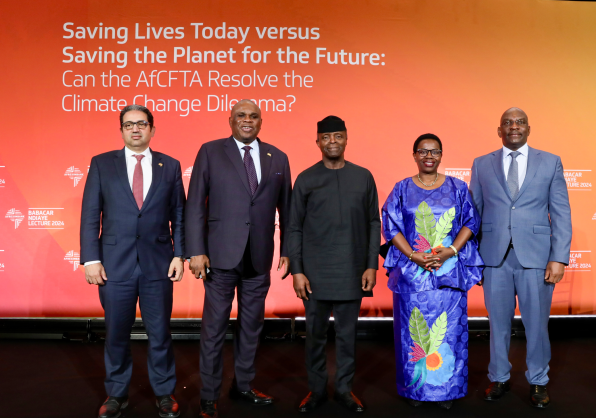
The eighth Babacar Ndiaye Lecture held at the Four Seasons Hotel in Washington D.C., on 26 October 2024, under-scored the need for African nations to strike a balance between short-term development imperatives and long-term climate goals. 

Under the theme “Saving Lives Today versus Saving the Planet for the Future: Can the AfCFTA Resolve the Climate Change Dilemma” discussions centred on how the African Continental Free Trade Area (AfCFTA), Africa's most ambitious trade initiative, could serve as a vehicle for economic growth and environmental sustainability, positioning the continent as a leader in the global green transition.  

The Lecture drew a distinguished audience of policymakers, academics, financial experts and climate advocates.  

Speaking about Dr. Babacar Ndiaye in his opening remarks, H.E. Professor Benedict Oramah, President and Chairman of the Board of Directors of Afreximbank Group, said “Dr Babacar Ndiaye was most concerned by the long-term threats posed to humanity by climate change. He once said, "Climate change is the greatest threat to development, particularly in Africa, where millions of people depend on the environment for their livelihoods … Africa's economic transformation cannot happen without addressing climate change.”  

Dr. Ndiaye's reflection on the impact of climate change was spot-on and intellectually deep.” But, “disappointingly, the global debate on climate has been so much focused on emissions reduction with the question of reducing its impact on Africa and other developing countries always reduced to a footnote. A call for Africa to decarbonise, when the continent has not even carbonised, poses a serious threat to the socio-economic development of a gas-rich continent that has at least six hundred million people without electricity.” 

The African Continental Free Trade Area Agreement “is seen as a potent means of reducing carbon emissions as it is helping to domesticate industrial activities and minimise the carbon emissions caused by shipping of commodities to far-away lands for value addition and reshipping to Africa and elsewhere. We believe that The AfCFTA could offer a pathway to a just transition, enabling local industrial value addition while protecting the planet.”  

Professor Yemi Osinbajo, SAN, GCON, the Immediate Past Vice President of the Federal Republic of Nigeria, delivered a powerful address titled “Sustainable Infrastructure for Africa's Future: Harnessing Innovation and Partnerships.” He spoke passionately about the advantages of the AfCFTA and its potential to transform Africa's trade landscape, reduce carbon emissions and foster innovation in green industries. 

“There are two obvious advantages to a fully operational AfCFTA.The first is that 42% of African countries, aside from North Africa, now have legislation prohibiting the export of raw ores or minerals before being processed. This legislation gives African countries the benefit of jobs and revenues from local processing and manufacturing.  

“The second advantage of the AfCFTA is that shipping is a major source of carbon emissions. Under current trade practices, a large share of African raw materials are exported to other regions, where they are processed or manufactured into finished products, usually using fossil fuel power sources, before being shipped back to Africa for consumption. This cycle contributes to higher emissions and constitutes a loss for African countries that do not reap the value chain gain from beneficiation. Intra-African trade in finished goods will substantially reduce this massive cause of global emissions,” he said. 

The reduction of emissions by intra-African trade has been the subject of several empirical studies. Professor Osinbajo referred to a recent ECA/ CEPII study titled “Greening the African Continental Free Trade Area Agreement's Implementation" published in December 2023, which found, inter alia, that implementing the AfCFTA can boost intra-African trade by 35% in 2045 while increasing GHG emissions by less than 1%, compared to no AfCFTA or climate policies.  

These studies do not factor in using renewable energy sources in the processing and manufacturing of traded goods, an assumption of the Climate Positive Growth paradigm, which would again substantially reduce emissions.  

Professor Osinbajo cited mining bauxite in Guinea as an example. If Guinea, which has 25% of global deposits of bauxite, processed the bauxite it mines to aluminium with renewable energy in readiness for export, Guinea could save the world 335 million tonnes of carbon dioxide equivalent (CO2e) per year, which is approximately 1% of global emissions, and create 280,000 jobs and generate $37 billion of additional revenue. If it chooses to sell the aluminium within Africa, it will again save the huge shipping cost to countries thousands of miles away.  

A Bloomberg study done for the African Development Bank (AfDB) in 2021 on the manufacture of battery precursors found that manufacturing battery precursors in the Democratic Republic of the Congo (DRC), which has plenty of lithium and cobalt, is three times cheaper than manufacturing it in the US, EU and China. Manufacturing in the DRC would extend value chain opportunities to other African countries, they would need manganese from Zambia, Tanzania, Gabon and South Africa to contribute to its capacity to produce these battery precursors. Manufacturing using renewable energy could significantly reduce the cost of manufacturing. Africa's abundant renewable energy has very low seasonality or intermittency, making it possible to reliably provide a renewable baseload to power continuous industrial production.  

“The AfCFTA empowers African countries first to add value to materials and specialise in areas of national comparative advantage, and also to work together to trade more beneficially with the rest of the world,” said Prof Osinbajo. 

He futher said that “Most African countries depend on fossil fuels for their energy needs and for fossil fuel rich African countries, this is also a major source of export earnings and fiscal revenues. Ostensibly in keeping with their net zero obligations, there has been a growing trend amongst development finance institutions to withdraw from fossil fuel investment. These actions include the World Bank's decision to cease funding for upstream oil and gas development in Africa and the restrictions on financing downstream gas development by the European Union, the United Kingdom, and the United States. Clearly, the implications of these actions are dire, where there are no immediate alternative sources of power and the cost of the transition to cleaner fuels may be prohibitive. Some studies show that divesting from fossil fuels could reduce GDP by as much as USD$30 billion for Nigeria, USD$22 billion for Algeria, and USD$19.3 billion for Angola.” 

H.E. Dr Rania A Al-Mashat, Minister for Planning, Economic Development and International Co-operation, Arab Republic of Egypt said that while the “African continent is the least responsible for carbon emissions, it has the biggest burden in terms of financing climate change for developmental needs - such as food and water security, and access to energy. 

She called for greater collaboration with national and international stakeholders “We need to work together; we need to bring the experiences from other places so that Africa can push forward with respect to development and sustainable economic growth.” 

In her Goodwill Message, Ms. Amina J. Mohammed, Deputy Secretary-General of the United Nations and Chair of the United Nations Sustainable Development Group, spoke about the rapidly closing window to prevent the worst impacts of climate change. She addressed the fact that many African countries are mired in debt, exacerbated by extended crises with little access to long-term concessional financing to invest in sustainable development. 

“With adequate access to financial resources at a reasonable cost, renewables can dramatically boost economies, grow new industries, create jobs and drive development, including by reaching the over 600 million Africans living without access to power,” said Ms Mohammed. 

She also stressed the importance of prioritising inclusive policies that empower women and youth when building climate-resilient economies.  

“By harnessing the collective might of the AfCFTA, Africa can make strides in addressing both climate action and sustainable development by promoting regional integration and fostering green industrialisation.  

“The AfCFTA can help build climate-resilient economies while creating jobs, reducing poverty and strengthening food security.”  

The eighth Babacar Ndiaye Lecture also reinforced Afreximbank's commitment to leadership in financing sustainable infrastructure and trade policies across the continent. 

Distributed by APO Group on behalf of Afreximbank.

Media Contact: 
Vincent Musumba 
Communications and Events Manager (Media Relations) 
Email: press@afreximbank.com 

For more information, visit: www.Afreximbank.com  
Follow us on X | Facebook (https://apo-opa.co/3YJR7iS)| LinkedIn (https://apo-opa.co/3Cet3eR) | Instagram (https://apo-opa.co/4ht2qDa)

About the Babacar Ndiaye Lecture 
The Babacar Ndiaye Lecture is an annual event designed to foster dialogue around Africa's development challenges and explore practical solutions through policy, trade and diplomacy.  

The Lecture honours Babacar Ndiaye, a former President of the African Development Bank, for his visionary leadership in advancing Africa's economic growth. 

Afreximbank has hosted this Lecture every year since 2017 in honour of the late Dr. Babacar Ndiaye, the fifth President of the African Development Bank. Dr. Ndiaye transformed the Bank during his decade-long leadership and was also instrumental in establishing several other enduring Pan-African institutions, including Afreximbank, Shelter Afrique and the African Business Roundtable. 

About Afreximbank 
African Export-Import Bank (Afreximbank) is a Pan-African multilateral financial institution mandated to finance, facilitate and promote intra and extra-African trade. For over 30 years, the Bank has been deploying innovative instruments to deliver financing solutions that support the transformation of the structure of Africa's trade, accelerating industrialisation and intra-regional trade, thereby boosting economic expansion in Africa. A stalwart supporter of the African Continental Free Trade Area (AfCFTA), Afreximbank has in partnership with the African Union Commission and the AfCFTA Secretariat launched the Pan-African Payment and Settlement System (PAPSS) that was adopted by the African Union (AU) as the payment and settlement platform to underpin the implementation of the AfCFTA agreement. The AfCFTA Secretariat and the Bank have created a US$10 billion Adjustment Fund to support countries to effectively participate in the AfCFTA.  

At the end of December 2023, Afreximbank's total assets and guarantees stood at over US$37.3 billion, and its shareholder funds amounted to US$6.1 billion. Afreximbank has investment grade ratings assigned by GCR (international scale) (A), Moody's (Baa1), Japan Credit Rating Agency (JCR) (A-) and Fitch (BBB). Afreximbank has evolved into a group entity comprising the Bank, its impact fund subsidiary the Fund for Export Development Africa (FEDA), and its insurance management subsidiary, AfrexInsure, (together, “the Group”). The Bank is headquartered in Cairo, Egypt.  

Media files
Afreximbank
Download logo
Read moreAfreximbank Calls for Increased Collaboration to Accelerate the Green Energy Transition in Africa
30 October 2024

KwaZulu-Natal not a haven for criminals, warns Premier

Location: News

KwaZulu-Natal not a haven for criminals, warns Premier

With the festive season approaching, KwaZulu-Natal Premier Thamsanqa Ntuli has sent a strong warning to criminals that the police will intensify efforts to prevent criminal activities from taking place in the province.

“KwaZulu-Natal is not a haven for criminals and police will do all in their power to curb criminality wherever and whenever it rears its ugly head,” Ntuli said.

Ntuli sent the warning during a crime crackdown in the Durban city centre, which led to the arrest of more than 30 people found without legal documentation to be in South Africa.

In a concerted effort to rid the Durban city centre of crime and criminal elements, Ntuli joined law enforcement authorities in a high-impact operation targeting shops employing undocumented foreign nationals on Tuesday.

The joint raid, led by Ntuli and the provincial Police Commissioner, Nhlanhla Mkhwanazi, included an inspection of foreign-owned spaza shops and establishments suspected of selling counterfeit goods.

The raid highlighted the provincial government’s commitment to making Durban a safer place for residents, business owners, and visitors.

With increased vigilance and coordination between provincial authorities and law enforcement agencies, Ntuli said KwaZulu-Natal aims to ensure that criminal elements are rooted out and that communities feel safe in their own neighbourhoods.

Ntuli affirmed that the operation is just one of many measures to ensure a secure environment for citizens and tourists.

The Premier emphasised the police will intensify their efforts to prevent criminal activities from taking root in the province.

“Our message is clear: criminality will not be tolerated, and we will pursue justice wherever and whenever it is needed,” Ntuli said.

The Premier reiterated that the provincial government, alongside local law enforcement, is committed to maintaining peace and security across the region and reinforcing its zero-tolerance stance on crime.

Restoring safety within communities

Meanwhile, during his visit to the families of four people who tragically lost their lives during a brutal attack in Estcourt, Ntuli emphasised the urgent need for justice and the importance of restoring safety within communities.

Ntuli visited the families on Monday following the attack that claimed the lives of four members of the Mazibuko family, aged 45, 57, 60 and 61. Three victims died at the scene, while two others sustained injuries; and one later succumbed to their injuries.

The incident took place during a traditional celebration at a homestead in Nyezane, where six heavily armed suspects stormed the gathering and opened fire on Sunday afternoon.

According to police reports, the suspects, who wore masks, carried out the assault in a violent and calculated manner, leaving the community in shock and mourning.

In the aftermath of the tragedy, law enforcement authorities launched an intelligence-driven investigation, which led to swift apprehension of a 28-year-old suspect.

The arrest marked a crucial step in the pursuit of justice for the Mazibuko family and the affected community.

During his visit, Ntuli expressed his heartfelt condolences to the grieving families, acknowledging the profound pain caused by such senseless violence.

The Premier pledged his administration’s commitment to tackling violent crime in the province.

“This is a tragic loss, not only for the Mazibuko family but for the entire community. We stand in solidarity with those affected and are determined to see that those responsible for this heinous act are held accountable,” Ntuli said.

He said the KwaZulu-Natal Provincial Government, alongside law enforcement agencies, remains dedicated to supporting the bereaved families and working towards a safer, more secure province for all its citizens. – SAnews.gov.za

GabiK
Wed, 10/30/2024 - 11:59

46 views
Read moreKwaZulu-Natal not a haven for criminals, warns Premier
30 October 2024

Mister Sweet Workers Shut down Labour Department

Location: News

They claim that an inspector left a Mister Sweet factory with “a lot of packets of sweets”

Read moreMister Sweet Workers Shut down Labour Department
29 October 2024

Mental health and people with disabilities

Location: News

Mental health and people with disabilities

By Morapedi Sibeko

Social Development Month and Mental Health Awareness Month are two significant twin observances that fall in October. The aim of these observances is to promote all-encompassing strategies that tackle social concerns as well as mental health requirements, ultimately resulting in communities that are healthier and more resilient.

This linking shows how closely social support networks and mental health are interrelated, particularly for people with disabilities (PWD).

The World Health Organization (WHO), which defines health as a state of complete physical, mental and social well-being and not merely the absence of disease or infirmity, reports that people with disabilities have twice the likelihood of experiencing mental health issues. They also list increasing global awareness of mental health issues and organising mental health-promoting activities as two of October's other main goals.

Mental wellbeing for people with disabilities frequently remains an unattainable objective, secondary to the stigma linked to both their physical condition and mental health difficulties. This dual stigma is responsible for lowering the quality of life and preventing people with disabilities from getting the necessary mental health care.  

People with disabilities regularly have to deal with negative expectations and false beliefs about their skills. The burden of judgment increases when mental health issues are involved. It is a common misconception in society that people with disabilities are either "used to" hardship or lack the emotional strength needed to preserve mental health. Due to this twin stigma, people with disabilities are perceived as weak or reliant in terms of both their mental and physical health, which fosters a poisonous environment.

As per WHO, a person's place on the mental health continuum may change as a result of a combination of psychological, societal, and structural factors that either support or compromise mental health throughout life. Often people with disabilities live with an emotional toll that comes from experiencing a world that was supposedly not created with them in mind. 

A negative consequence of social stigma is one's internalisation of the unfavourable attitude. A person's incapacity to deal with the hand they've been dealt may lead to them believing their mental health issues are personal failures.

People with disabilities tend to enjoy fewer benefits or have less access to training and development, and they frequently feel alienated at work. They run the danger of social marginalisation, poor health, and diminished productivity at work as a result of this physical and psychological discomfort.

Employers frequently lack the knowledge and readiness to offer the support and accommodations that people with disabilities require. People with disabilities who are employed suffer in silence, feel misunderstood, and lack assistance.

A study by researchers (Trani et.al., 2024) highlights that the lack of opportunities, isolation, prejudice, and accessibility problems that people with disabilities experience can result in mental health conditions including post-traumatic stress disorder (PTSD), sadness, depression, or anxiety. This research highlights the value of social development programs that fight stigma and contribute to the creation of a more accepting and inclusive atmosphere for people with disabilities.

The need of inclusive social policies in promoting mental wellness for everyone, especially people with disabilities, is brought home to us in October. We, as community members, can establish settings where each person feels appreciated, encouraged, and capable of thriving by tackling the structural obstacles and stigmas people with disabilities encounter.

*Morapedi Sibeko is the Event Manager at the Department of Social Development
 

Janine
Tue, 10/29/2024 - 14:42

130 views
Read moreMental health and people with disabilities
  • Previous
  • Page 1
  • Interim pages omitted …
  • Page 26
  • Page 27
  • Page 28
  • Page 29
  • Page 30
  • Interim pages omitted …
  • Page 84
  • Next

Copyright © 2026 · MyZA · All Rights Reserved · Powered by Stratlec Online