• Skip to main content
  • Skip to header right navigation
  • Skip to after header navigation
  • Skip to site footer
MyZA

MyZA

News, Directory, Events and Other Stuff

  • Social Media
  • Sport
  • World News
  • Home
  • Submit News
  • Directory
  • Events
  • Stratlec
  • TFSA
  • News
    • APO
    • Today’s Sport News
    • Todays Social Media and Tech Headlines
    • Today’s World News
    • Today’s SA Financial News
  • Contact
You are here: Home / Archives for Environment

Environment

9 October 2024

Carbon pricing poses threat to economies of developing countries

Location: News

Carbon pricing poses threat to economies of developing countries

While South Africa is committed to the decarbonisation agenda, Deputy Minister of Forestry, Fisheries and the Environment Narend Singh has raised concern that a carbon price to the production of emissions-intensive goods could exacerbate inequality, poverty and unemployment in developing countries.

“There are many hurdles which industry will be confronted with in their efforts to decarbonise, particularly in developing countries such as South Africa. Key for us is to take the necessary key steps to transition, without adversely affecting the competitiveness of such industries and leaving no one behind,” the Deputy Minister said on Tuesday.

He made these remarks during an Industry Conference on bridging compliance: Carbon Border Adjustment Mechanism (CBAM), environmental, social, and governance (ESG) and the South African metals and engineering sector.

The Steel and Engineering Industries Federation of Southern Africa (SEIFSA) in collaboration with the Danish Industry (DI) hosted the conference. 

It was attended by senior government officials, industry leaders, policy makers as well as sustainability experts who explored the intersection of the looming CBAM and ESG reporting requirements from the European Union and how this is likely to affect the metals and engineering sector which is an export intensive sector. It is also a heavy emitter of greenhouse gas emissions.

ESG sustainability reporting requirements by business, point to responsible business conduct that includes taking measures to lower pollution, and carbon dioxide (CO2) output, and reducing waste.

“We remain concerned that outside of multilateral processes such as the United National Framework Convention on Climate Change (UNFCCC), discussion and agreement [on] the CBAM policy design of using market principles to cut GHG [greenhouse gas] emissions will create a direct impact on developing countries’ such as South Africa, exacerbating inequality, poverty and unemployment. This we should take all measures to guard against,” Singh explained.

Carbon border adjustment mechanisms (CBAMs), or border carbon adjustments (BCAs), are mechanisms that aim to increase the consistency in the application of carbon pricing between goods produced in different jurisdictions but traded between those jurisdictions.

Most commonly, they involve a jurisdiction that applies a carbon price to the production of emissions-intensive goods, such as through an emissions trading system (ETS) or carbon tax, seeking to apply an equivalent carbon price to imports of those goods from overseas jurisdictions.

Carbon cost liability, reflections

Practically, this could mean that South African exports of carbon-intensive goods would face an extra carbon cost liability in some jurisdictions.

“The Department of Forestry, Fisheries and the Environment has been actively engaged in the decarbonization of the steel sector. As you are well aware, the steel sector, is one of the hard to abate sectors, and is highly energy intensive.

“The department, in collaboration with the Department of Trade, Industry and Competition and in partnership with the Organization for Economic Cooperation and Development (OECD), has been working closely with industry association, the South African Iron and Steel Institute (SAISI), and industry partner, ArcelorMittal, together with other players, to determine what may be the low hanging fruit for a low carbon transition.

“The entire value chain has to be reflected upon - both upstream and downstream players. This is work in progress, and indeed comes with its own set of challenges, in the form of necessary research and development, capacity development, and the much-needed capital investment,” Singh said.

Green steel

He mentioned green hydrogen, as an option for the production of green steel.

“Sectoring scrap metal market as input material for the steel sector to lower the carbon footprint, would be another option. Refurbishment of existing technology and investment into new and energy efficient technologies are other options.

“Downstream industries are also faced with competition on imports. Therefore, compliance and enforcement are important, and so is the provision of the necessary legislative measures,” the Deputy Minister said.

Just Transition

South Africa recognises the need for climate action to be centred on a Just Transition, meaning a transition to net-zero carbon emissions society that accommodates the needs of workers and communities, which may be negatively affected through the loss of jobs or activities as a result of a move to a lower carbon economy.

“The Climate Change Act, which was signed into law by President Ramaphosa in July 2024, sets out South Africa’s national climate change response, including mitigation and adaptation actions, which also constitutes South Africa’s fair contribution to the global climate change response.

“The Climate Change Act enables the alignment of policies that influence South Africa’s climate change response, to ensure that South Africa’s transition to a low carbon and climate resilient economy and society is not constrained by policy contradictions.

“The Climate Change Act also sets out measures to enhance South Africa’s ability and capacity over time to reduce greenhouse gas emissions, and build climate resilience, while reducing the risk of job losses, and promoting new job opportunities in the emerging green economy,” said the Deputy Minister.

He added that the Nationally Determined Contributions (NDC) for South Africa have been informed by peak, plateau and decline in terms of carbon emissions reduction.

The NDC cover adaptation, mitigation as well as finance and investment requirements and is based on equity.

READ | Comments sought draft First Biennial Transparency Report

“The recent Bid Window of the Renewable Energy Independent Power Producer Procurement Programme (REIPPPP), the work of the Just Energy Transition (JET), green hydrogen generation, are key steps in a positive direction.

“South Africa remains committed to stabilising the GHG concentration in the atmosphere and contribution to the global temperature goal of keeping temperature well below 2 °C and pursuing efforts to 1.5 °C below preindustrial levels in line with the principle of common but differentiated responsibility and respective capabilities (CBDR-RC),” he said. -SAnews.gov.za

nosihle
Wed, 10/09/2024 - 09:04
523 views
Read moreCarbon pricing poses threat to economies of developing countries
9 October 2024

Two illegal miners arrested at Makhonjwa World Heritage Site

Location: News

Two illegal miners arrested at Makhonjwa World Heritage Site

Deputy Minister of Forestry, Fisheries and the Environment Narend Singh has welcomed the arrest of two illegal miners at the Barberton Makhonjwa World Heritage Site.

“The arrests mark a significant step in the government's ongoing efforts to protect South Africa’s irreplaceable natural and cultural heritage,” the Deputy Minister said on Tuesday. 

Singh commended the actions by the Green Scorpions which resulted in the arrest of two individuals involved in unlawful mining activities within the Barberton Makhonjwa World Heritage Site on Monday.

The operation is part of the broader government strategy to combat illegal mining across the country and aligns with the nationwide efforts to tackle the rise in illegal mining operations, which are not only detrimental to the environment but also contribute to other social and economic issues. 

The Barberton Makhonjwa World Heritage Site, forms part of United Nations Educational, Scientific and Cultural Organisation (UNESCO) World Heritage Centre and it is recognised for its well-preserved succession of volcanic and sedimentary rock formations dating back 3.5 billion years.

The area is home to rich a biodiversity and some of the planet's earliest life forms, attracting scientists and researchers from around the world. 

It was officially proclaimed a protected area on 12 March 2021, under the National Environmental Management: Protected Areas Act, which prohibits mining and other harmful activities in such sites.

"This World Heritage Site represents not only one of the oldest landscapes on Earth but also one of the most ecologically and scientifically significant. Unlawful mining and other destructive activities in this protected area pose a grave threat to the preservation of this unique site, which holds immense global value. These actions cannot and will not be tolerated,” the Deputy Minister said.

In addition to mining, the investigation uncovered violations under the National Forests Act, with evidence of destruction and damage to indigenous trees and natural forests.

“These offences not only threaten our natural heritage but undermine our sustainable development goals. Our natural forests and ecosystems are vital to the survival of countless species and are irreplaceable. We must act to protect them now, or risk losing them forever," Singh said. - SAnews.gov.za

nosihle
Wed, 10/09/2024 - 09:23

218 views
Read moreTwo illegal miners arrested at Makhonjwa World Heritage Site
9 October 2024

New Blasting Limits Set for Mines

Location: News

Chief Inspector of Mines publishes South Africa’s first mine blasting standards

Read moreNew Blasting Limits Set for Mines
8 October 2024

Mantashe Slams “Foreign-Funded” Activists

Location: News

Protests held against fossil-fuel industry in Cape Town and Johannesburg

Read moreMantashe Slams “Foreign-Funded” Activists
8 October 2024

Human Settlements aims to improve rural landscape

Location: News

Human Settlements aims to improve rural landscape

Human Settlements Minister Mmamoloko Kubayi says improving rural human settlements, both in terms of the rural ecological environment and the creation of a healthy rural human settlements environment, are areas that require intensive research.

“Not only will this help us to reinvigorate rural development, but it will also assist us with mitigating climate change and its effects,” Kubayi said.

Kubayi was speaking at the launch of the Human Settlements Research Strategy held in Kempton Park, Gauteng, on Monday.

The research strategy launch, which coincided with World Habitat Day celebrated around the world on the first Monday of October, provided direction and identified the long, medium, and short-term timelines of research activities.

The launch aimed to set up partnerships with research institutions within the built environment and the human settlements sector. It also aims to outline collaborative arrangements and roles and responsibilities of partnering stakeholders.

In her address, Kubayi said the human settlements sector is faced with many challenges, including climate change, population growth, low economic growth, urbanisation, slow spatial transformation, and governance instability at local government level.

In the world that is undergoing rapid urbanisation, Kubayi said many villages are facing a series of problems such as depopulation, population ageing, insufficient infrastructure, and public service facilities.

She said while most of government’s work has been focused on responding to the challenges of accessing urban land for human settlement, including the sprouting of informal settlements and the rise of inner-city slums, the challenges of unsustainable human settlements in rural areas have received little or no attention.

“Well-researched solutions are required as an antidote to these challenges so that we can be able to create a peaceful, economically sustainable, and stable country. It, therefore, stands to reason that we would like to place more emphasis on applied research, which will help us to provide solutions to an existing problem,” Kubayi said.

The Minister highlighted that the research agenda launched has been developed to do to inform planning, policy development and review, as well as implementation processes within the human settlement sector.

“The Research Agenda will assist to uniformly identify problematic areas that need to be resolved within the policy and implementation space,” Kubayi said.

The research has also been developed to signal to funders and development partners what research areas require investment; assist the department to guide resource allocation for research; encourage research collaboration in dealing with common problematic areas; and to drive capacity building by encouraging students to participate in the human settlements sector research, amongst others.

Kubayi also noted that the nexus between policy, research and practice is not linear but highly complex.

Influencing long-term policy and practice

She said the department is of the view that research cannot be expected to serve only current policies, but it is also expected to influence policy and practice in the long-term.

“The scope of the human settlements research agenda is therefore broad, so that the selection of certain areas and topics for priority will not be exhaustive. However, it marks the focus in the next three financial years.

“There is extensive research in human settlements that has already conducted across many institutions. We plan to leverage on this existing research and invest in further research in the sector,” Kubayi said. 

The Minister added that research collaboration, where different organisations will work together to fund specific research of common interest will be encouraged, and the department will pursue various collaborative approaches.

Research chairs to support higher learning institutions 

The Minister also announced that the department intends to establish research chairs, where institutions of higher learning will support research based on their expertise.

The Minister explained that through research chairs, post graduate students will be encouraged to select their academic topics from the research agenda or have a topic within the thematic areas established in the research agenda.

“The departmental research committee will approve the topical issue that the student selected for funding. Part of the research will be funded directly by the department though the commissioning of research, call for papers as well as providing part of the funding to students’ academic programme,” Kubayi explained. – SAnews.gov.za
 

GabiK
Tue, 10/08/2024 - 15:05

189 views
Read moreHuman Settlements aims to improve rural landscape
8 October 2024

Joburg’s Water Woes Are Self-Inflicted

Location: News

The temporary shutdown of the supply from Lesotho is not the problem

Read moreJoburg’s Water Woes Are Self-Inflicted
8 October 2024

South Africa’s potential for oil and gas ‘significant’ – Mantashe

Location: News

South Africa's potential for oil and gas 'significant' - Mantashe

Mineral and Petroleum Resources Minister Gwede Mantashe says the discovery of gas and condensate from two exploration wells in the South Outeniqua Basin are proof that South Africa’s underexplored deep waters have significant potential for oil and gas.

The Minister was speaking during Africa Oil Week held at the Cape Town International Convention Centre.

“In the past two years, TotalEnergies, Shell and Galp have made eight discoveries across three blocks in Namibia’s Orange Basin, representing an estimated 3.5 billion barrels of potentially recoverable oil. 

“These discoveries have led to a huge interest by major petroleum companies since it is believed that the Namibian discoveries may be extending southwards into South Africa.

“The discoveries of gas and condensate from two exploration wells drilled in Block 11B/12B offshore in the South Outeniqua Basin have also proven that South Africa’s under-explored deep waters have significant potential for oil and gas, and thereby signalling a need to accelerate exploration efforts,” Mantashe said.

Commenting on the withdrawal of international energy giant, TotalEnergies, from offshore Block 11B/12B and 5/6/7, Mantashe insisted that development on the block still remains viable.

“[There] remains a good potential for other oil and gas players to partner with the remaining operator – MainStreet - and develop the block. 

“Contrary to the view that suggests that TotalEnergies withdrawal from the block is tantamount to lack of confidence, it is encouraging that the company is a major shareholder in 3 blocks North of South Africa’s Orange Basin in the deep to ultra-deep waters, and a 100% shareholder of another larger block that is 3 times the size of the 11b/12b in Southern Outeniqua,” he said.

According to the Minister, several exploration projects in the South African Orange Basin are “gearing up for development”. These include:
•    Preparation work for drilling exploration of the Deep-Water Orange Basis (DWOB) block operated by TotalEnergies.
•    Proposed drilling of an exploration well, with the option to drill up to four additional wells in Block 3B/4B.
•    The Northern Cape Ultra-Deep-Water Block has started with environmental authorisation processes for drilling.
•    The notable progress made on Block 5/6/7 with a potential to start drilling exploration in the block in 2026 targeting large oil and gas resources.

Mantashe said the risk for these projects is litigation against exploration and production.

“This has already affected two major seismic surveys to date, including Shell, which abandoned their survey and went on to discover oil and gas in Namibia, as well as ENI, which after being taken to court 47 times, left and went to discover oil in huge quantities in Côte d'Ivoire.

“The successful 3D seismic data acquisition in April this year by Searcher on South Africa’s west coast has proven that exploration of petroleum resources can be done successfully without any harm to the environment,” he highlighted.

The Minister gave a nod to the approval, by the Competition Commission, of government’s acquisition of the various assets that comprise the SAPREF [a joint venture between Shell Refining SA and BP Southern Africa] refinery, which is located in Durban.

“Government has, through the Central Energy Fund (CEF), concluded a transaction on the sale of assets at the SAPREF precinct. This acquisition has since been approved by the Competition Commission, thus reinforcing our efforts that seek to guarantee sufficient supply of petroleum products in the period where several refineries have been shut down prematurely. 

“Like Chevron and Petronas, Shell’s decision to divest from its downstream business operations in South Africa provides an opportunity for another investor, or major oil company, to take over the assets as the downstream sector will remain attractive for the foreseeable future, given the rise of hybrid vehicles.

“We appeal to the delegates at this conference and the investment community to continue investing in the development of oil and gas to enable a prosperous energy outlook for Africa, and promote sustainable development,” Mantashe said. – SAnews.gov.za

NeoB
Tue, 10/08/2024 - 11:13

36 views
Read moreSouth Africa’s potential for oil and gas ‘significant’ – Mantashe
7 October 2024

Leaders challenged to ensure women enjoy full access to water, sanitation

Location: News

Leaders challenged to ensure women enjoy full access to water, sanitation

Minister Pemmy Majodina has challenged women leaders in her department and its entities to ensure that the rights enshrined in the Constitution, especially access to water and sanitation, become the lived experience for all women in South Africa.

“The Constitution guarantees access to water and basic sanitation as a fundamental human right,” Majodina said.

Majodina, the Minister of Water and Sanitation, was speaking at the Women in Leadership Dialogue held in Pretoria on Friday, 4 October.

The dialogue was hosted by the Department of Water and Sanitation (DWS) for women in leadership positions in the department and its entities. It aimed to reflect on the strides made by women and the role played by women in leadership within the sector to uplift women, and expand access to basic services, especially water and sanitation.

Majodina said women and girls are the hardest hit by lack of access to clean water and basic sanitation.

The Minister noted that while significant strides have been made to empower women and promote gender equality since 1994, “the stark reality is that the majority of people living in conditions of poverty are women and the poorest households are headed by women”.

She said women are the hardest hit by a lack of access to clean water.

“Collecting water by carrying 25 litres on the head or pushing wheelbarrows while pregnant can cause health complications. Giving birth in a setting without safe drinking water or sanitation poses a serious risk for the survival of both mother and child.

“Lack of access to water and sanitation at home and school impacts negatively on girl children. They have to spend time collecting water or finding a safe place to relief themselves in the open,” Majodina said.

If there is no water and sanitation facilities, the Minister said, women dignity and self-esteem are affected.
 

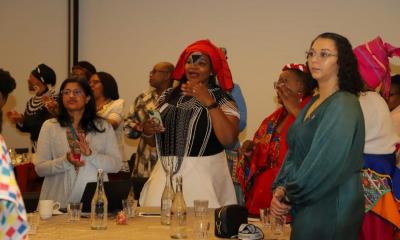
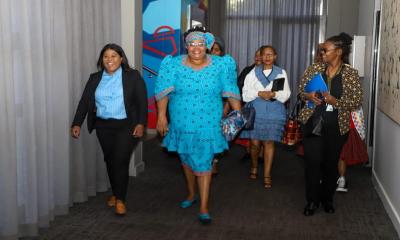
PHOTOS | DWS Women in Leadership Dialogue

The Minister also noted that women are vulnerable to harassment and violence when they have to travel long distances to fetch water, use shared toilets or relieve themselves in unsafe places.

She stressed the importance of leaders in the water and sanitation sector understanding the negative impact of lack of water and sanitation, so that they are well-positioned to make a difference.

“Let our programmes and practices be inspired by the values and vision of a truly equal and non-sexist society. Let us ensure that a gender perspective permeates all decision-making processes and programmes of the department,” Majodina said.

She further called on the Director-General and senior leadership of the department to ensure that the department and its entities create a conducive environment for women employees to work and thrive.

“[Senior leadership] carries a responsibility to ensure that the department becomes a safe space for women, where their rights are promoted and protected,” the Minister said. - SAnews.gov.za
 

GabiK
Mon, 10/07/2024 - 09:58

370 views
Read moreLeaders challenged to ensure women enjoy full access to water, sanitation
7 October 2024

Comments sought draft First Biennial Transparency Report

Location: News

Comments sought draft First Biennial Transparency Report

Minister of Forestry, Fisheries and the Environment, Dr Dion George, has published South Africa’s draft First Biennial Transparency Report (BTR), which provides critical insights into the country's progress in implementing and achieving its National Determined Contributions (NDC) under the Paris Agreement, for public comment.

The adoption of the Paris Agreement (PA) in 2015, at the United Nations Framework Convention on Climate Change (UNFCCC) COP21, provides the overarching global goal and framework for international climate action in the post 2020 period.

The Paris Agreement’s central aim is to strengthen the global response to the threat of climate change by keeping the global temperature rise this century well below two degrees Celsius above pre-industrial levels and to pursue efforts to limit the temperature increase even further to 1.5 degrees Celsius.

The NDC covers adaptation, mitigation as well as finance and investment requirements and is based on equity.

South Africa, as a Party to the Paris Agreement, and in line with the Modalities, Procedures and Guidelines of Enhanced Transparency Framework, is required to submit Biennial Transparency Reports (BTR) every two years, with the first submission due no later than 31 December 2024.

The BTR tracks progress, on the implementation of South Africa’s Nationally Determined Contribution including the support needed and received for implementation.

The report is crucial in understanding South Africa's progress with regard to the national circumstances, institutional frameworks and mitigation policies.

Members of the public are invited to submit, within 15 days from 7 October 2024, written representations or objections to any of the following addresses:

  • By post to The Director-General: Department of Forestry, Fisheries and the Environment
                     Attention: Ms. Sandra Motshwanedi
                     Department of Forestry, Fisheries and the Environment
                     Private Bag X447
                     Pretoria
                     0001
  • By email to smotshwanedi@dffe.gov.za or msteleki@dffe.gov.za.
  • By hand at the Department of Forestry, Fisheries and the Environment, Ground Floor (Reception), Environment House, 473 Steve Biko Road, Arcadia, Pretoria.

Any enquiries in connection with this notice can be directed to Ms. Sandra Motshwanedi at 012 399 9155 or smotshwanedi@dffe.gov.za.

Members of the public can access the draft First Biennial Transparency Report from: https://www.dffe.gov.za/sites/default/files/reports/saBTR1biennialtransparencyreport_unfccc_draft.pdf. - SAnews.gov.za

nosihle
Mon, 10/07/2024 - 13:07

238 views
Read moreComments sought draft First Biennial Transparency Report
7 October 2024

SA, Botswana strengthen economic ties

Location: News

SA, Botswana strengthen economic ties

South Africa and Botswana have committed to strengthening economic ties between the two countries and reducing the barriers that currently impede the free flow of goods.

The commitment was made during a meeting between the Deputy Minister of Trade, Industry and Competition Zuko Godlimpi and the Botswana Minister of Trade and Industry Mmusi Kgafela in Pretoria recently.

The two discussed the promotion of trade and investment and committed to addressing key challenges hindering the full potential of economic cooperation between the two countries.

They also reaffirmed their commitment to strengthen economic ties, deepening communication on trade relations, and fostering mutually beneficial investment opportunities that contribute to sustainable industrial development and employment creation for both countries.

Deputy Minister Godlimpi and Minister Kgafela emphasised the importance of simplifying trade processes and reducing the barriers that currently impede the free flow of goods. 

The two also discussed possible cooperation in areas of mutual interest where investment cooperation can be expanded such as manufacturing, agriculture, transport, and other services sectors.

A central part of the discussions focused on addressing existing challenges, including non-tariff barriers, regulatory obstacles, and market access issues that have hindered trade growth. 

Both countries agreed to establish a bilateral working group to identify and resolve these challenges to ensure a fair and open trading environment.

Both delegations expressed optimism about the future of their economic partnership and agreed to hold and sustain regular consultations to monitor progress and explore new areas of cooperation. – SAnews.gov.za

Edwin
Mon, 10/07/2024 - 11:28

88 views
Read moreSA, Botswana strengthen economic ties
7 October 2024

Phola Residents Say Mining Has Brought Misery Not Benefits

Location: News

Community members protested at coal mining offices of Seriti over damage to homes from blasting

Read morePhola Residents Say Mining Has Brought Misery Not Benefits
4 October 2024

Mining’s potential remains high: Mantashe 

Location: News

Mining’s potential remains high: Mantashe 

Minister of Mineral and Petroleum Resources, Gwede Mantashe, has told an indaba that there is evidence to suggest that mining is “the bedrock of our economy” and that the country is an attractive investment destination for mining.

According to the Minerals Council of South Africa, the industry contributed some 6.3% to South Africa’s nominal Gross Domestic Product (GDP) last year.

“There is a strong case emerging out of the study on ‘The State of Mining’ that the South African mining industry not only remains the bedrock of our economy, but an attractive investment destination for mining. 

“Coupled with the draft South Africa’s ‘Critical Minerals Strategy’, the study points to the reality that the South African mining industry is diversifying from the gold mining era to an industry with wide-ranging mineral resources, including the world’s largest known deposits of platinum group metals (PGMs), manganese, chrome, coal, gold, copper, vanadium, and other natural resources that are considered critical for the just transition,” the Minister said at the Annual Joburg Indaba in Sandton on Thursday.

He added that with the diversification of the industry, its potential to continue growing remains high.

“Notwithstanding the challenges faced by the gold mining sector, including deep level mines and heightened safety concerns, the 2023 gold production statistics positioned South Africa as the world’s thirteenth and Africa’s fourth largest gold producer. 

“Despite the fluctuating prices of palladium and rhodium, of which South Africa supplies 38% and 81%, respectively, to the global commodities market, the PGMs sector is poised to play a catalytic role in sustaining the South African mining industry, and in the growth of our economy.

“Considering South Africa’s reserves of known manganese and chrome deposits, as well as being the largest producer and exporter of manganese and chrome ore, the South African manganese and chrome sectors are poised to continue playing a significant role globally driven by their use in the automotive and construction industries,” Mantashe said.

Addressing challenges 

He acknowledged that during last year’s Joburg Indaba, industry players raised issues that “we needed to resolve for the sector to thrive, including the need to ensure the necessary policy and regulatory certainty for investment”.

“Although the South African mining industry’s regulatory framework is stable and predictable, the Department of Mineral and Petroleum Resources is drafting amendments to the Mineral and Petroleum Resources Development Act (MPRDA). 

“This is so as to address its shortcomings and ensure that areas that have been challenged legally are strengthened against international best practice. The amendments will further improve the business environment while keeping in sync with our socioeconomic fabric.

“The completion of the migration process to the new efficient and transparent mining licensing system, in June next year, is poised to modernise our licensing system, ensure regulatory certainty, and the sustainability of the South African mining industry. 

“Having completed the first phase of the project, which included the assessment of the current environment to establish the baseline and its readiness, and the requirements with respect to system hosting, software integration, and the enhancement of cybersecurity, the development of the new system is therefore progressing very well,” the Minister explained.

READ | Presidency transfers Department of Mineral Resources and Energy legislation

Furthermore, the Minister told the industry leaders that between April 2023 and March this year, the department has processed and finalised 127 mining rights, 1 527 prospecting rights, and 2 313 mining permits and ancillaries.

There are no backlogs in the Western Cape and the Free State while backlogs in the Northern Cape, Limpopo, North West, Eastern Cape and KwaZulu-Natal have been significantly reduced. Mpumalanga is the only province with a significant backlog.

“As we come to the end of this year’s Indaba, we wish to encourage the South African mining industry to continue sharing insights about the realities of this industry, advance beneficiation at source, and support our exploration initiatives.

“We further encourage junior miners to take up the opportunities presented to them in order to transform the industry and ensure that the people of South Africa derive value from their country’s mineral endowment,” Mantashe concluded. – SAnews.gov.za


NeoB
Fri, 10/04/2024 - 10:09

547 views
Read moreMining’s potential remains high: Mantashe 
4 October 2024

Deputy President confident his working visit will attract international investors

Location: News

Deputy President confident his working visit will attract international investors

Deputy President Paul Mashatile says he is confident that his working visit to the United Kingdom and Ireland will improve trade and investment relations, which have been stagnant for years. 

The Deputy President spoke during an engagement with the South African Chamber of Commerce (SACC) in London on Thursday. The SACC is an umbrella organisation and conduit for trade, community and investment into and out of South Africa.

The country’s second-in-command is in the United Kingdom for the second leg of his working visit to improve trade and investment relations between the nations and to woo investors following his travels to Ireland. 

READ | SA, Ireland eye improved trade

His interactions were centred on various issues, including the Government of National Unity (GNU), energy, infrastructure, and the measures to foster a favourable environment for trade and investment.

The country’s second-in-command reiterated that the political environment in South Africa is stable for investment because of the newly established GNU, which has been operational for less than 100 days and is already yielding results.

“Our numerous meetings with potential investors have revealed a shift in their attitudes and perceptions towards South Africa, indicating an optimistic outlook. 

“Our alliance, based not on personal sentiments but on the aspiration to enhance South Africa and, consequently, the lives of our citizens, will undoubtedly sustain the GNU administration for five years.” 

However, he said they will measure the GNU’s success based on the number of employment and entrepreneurs they assist in establishing sustainable enterprises.

“Businesses hope to continue working with the government in the public-private partnership that has reduced load shedding, improved transport and logistics infrastructure, and strengthened national capacity to combat crime and corruption,” the Deputy President said. 

Shifting his focus to energy, he stated that investors have demonstrated that ending the load shedding that began in 2007 is the most positive news. 

“They confirmed that it allows them to conduct business without uncertainty. The elimination of power outages was largely due to a series of measures implemented by the State-owned power utility, Eskom and government over the past two years.”

He also told the SACC that government was addressing the obstacles in the freight logistics system that continue to impede competitiveness and undermine economic growth. 

“We are on a mission to create and sustain a bankable investment pipeline of priority, credible, quality and high-impact projects that span the country through Infrastructure South Africa, the primary driver of the National Infrastructure Plan 2050,” he explained. 

Mashatile believes that the SACC plays an essential role in engaging with businesses to promote bilateral trade and investment links between the United Kingdom and South Africa. 

“It is our responsibility as leaders in our respective regions to foster an atmosphere that encourages entrepreneurship, fosters innovation, and drives inclusive growth.”

In addition, he expressed his desire to increase South Africa’s exports of valuable goods and services to the United Kingdom. 

“It is excellent that the two countries already exchange food and beverages. It is critical that we collaborate to create strategies to accelerate international trade and investment.”

Mashatile announced that the State was simplifying regulatory procedures through the Red Tape Task Team, making it easier for businesses to operate and invest locally.

READ | Govt determined to deal with SA's mounting challenges - Mashatile

He concluded his address with South Africa’s stance on peace and stability in Africa and globally, stressing that the nation is anti-war and pro-peace. 

“We reaffirm our commitment to the inviolability of sovereignty and the importance of national security.

“More immediately, we support [silencing the guns]. We want to see peaceful and mutual coexistence between Russia, Ukraine, Israel, Sudan, and the rest of the globe, because war is terrible for business.” – SAnews.gov.za

Gabisile
Fri, 10/04/2024 - 10:16

674 views
Read moreDeputy President confident his working visit will attract international investors
3 October 2024

Heatwave warning for Northern Cape, Western Cape

Location: News

Heatwave warning for Northern Cape, Western Cape

The South African Weather Service (SAWS) has warned of heatwave conditions, with persistently high temperatures in parts of the Northern Cape and the Western Cape.

The heatwave conditions will affect the Richtersveld, Nama Khoi and Kamiesberg municipalities in the Northern Cape, as well as Matzikama in the Western Cape. 

The heatwave is expected to persist from Thursday until Saturday.

“When temperatures are extremely high, humans' ability to cool their bodies through sweating is reduced. This can be a real threat that leads to hyperthermia.

“In an extremely hot environment, the most serious health and safety concern is heat stroke. Heat stroke can be fatal if medical attention is not available immediately,” SAWS warned.

Infants, children, pregnant women and the elderly are especially vulnerable to heat stress.

Too much heat can be more dangerous for babies and children than for adults, and dehydration in children can be dangerous or even deadly. Children’s bodies have more trouble regulating temperature than those of adults, and they rely on adults to help protect them from heat.

Safety tips 

  • South Africans are advised to avoid unnecessary exposure and stay indoors until late afternoon when the heat has subsided. Those who are forced by special circumstances such as work and school should drink as much as three litres of water to cope.

  • Take cold showers to lower your body temperature.

  • Cover windows with reflectors and drapes.

  • Drink plenty of water, as much as four cups an hour if it's really hot.

  • People, especially children, who cannot swim must avoid going to swimming pools and rivers, as this may result in fatalities.

- SAnews.gov.za

nosihle
Thu, 10/03/2024 - 09:47

3607 views
Read moreHeatwave warning for Northern Cape, Western Cape
3 October 2024

Mantashe to Attend Major AOW Energy Event

Location: News
AOW: Investing in African Energy

South Africa's Minister of Mineral and Petroleum Resources, Mr Gwede Mantashe has committed to attend the four-day AOW energy event (https://AOWEnergy.com/) in Cape Town from 7 – 10 October.

AOW: Investing in African Energy brings together industry leaders to develop policy, share discoveries, secure investment, and shape Africa's energy future. This year's event will feature more than 1 600 senior delegates, 80 ministers and officials from 70+ countries and representatives of more than 760 companies.

Announcing Mantashe's confirmed attendance, Chief Executive Officer of Sankofa Events, Paul Sinclair said that the presence of the host nation's two most senior energy leaders confirmed that Africa was committed to taking ownership of its own energy destiny.

“We are excited to welcome Mr Mantashe to AOW, where he will share stages and attend sessions with ministers from many other countries, as well as senior players from energy businesses and multilateral forms,” said Sinclair. “We are proud to provide an environment where Africa's energy leaders can discuss the latest industry trends, and how the continent can help to shape them.”

Mantashe has been a regular keynote speaker at previous AOW events, and the announcement of his attendance comes as lucrative energy opportunities open across the continent – in responsible oil exploration and production, in renewable energy, and in the trade of natural gas as a high-demand future fuel.

Ongoing major oil-and-gas discoveries in the Orange basin, offshore South Africa and Namibia, have highlighted the scale and importance of these opportunities – for African governments, their people, and energy businesses.

“The world's energy markets are in the midst of a dynamic transition,” said Sinclair. “Navigating that transition requires industry partnerships. Africa is showing that not only does it have massive resources, it also has the networks, the financial innovation and the commitment to develop those resources for Africa's people, and all stakeholders.”

This year marks 30 years of the industry-leading AOW event. The four-day conference, exhibition and investment forum brings together governments, regulators, global operators, power producers, investors and service providers.

Distributed by APO Group on behalf of AOW: Investing in African Energy.

About AOW: Investing in African Energy:
Owned by Sankofa Events, AOW: Investing in African Energy (https://AOWEnergy.com/) is Africa's leading oil, gas & energy event, uniting industry leaders to develop policy, share discoveries, secure investment, and shape Africa's energy future. The event runs from 7 – 10 October 2024 at the CTICC 2, Cape Town.

Media files
AOW: Investing in African Energy
Download logo
Read moreMantashe to Attend Major AOW Energy Event
3 October 2024

Inmates ready for upcoming National Senior Certificate exams

Location: News

Inmates ready for upcoming National Senior Certificate exams

Matriculants from Correctional Services schools are fully prepared for the upcoming National Senior Certificate (NSC) examinations, set to run from 21 October to 27 November 2024. 

A total of 173 inmates will sit for these exams, marking an important step in their pursuit of a Senior Certificate.

In a statement, the Department of Correctional Services (DCS) said it was pleased with the level of preparedness, as inmates have completed the academic syllabus on time and have undergone various assessments throughout the year. 

Educators from the department's 18 schools remain optimistic, having made significant efforts to ensure that all candidates are thoroughly prepared. 

Additionally, the department ensured that all required textbooks and stationery were delivered to schools timeously.

Correctional Services National Commissioner Makgothi Samuel Thobakgale has praised the educators for their dedication and hard work in preparing the inmates for this important milestone. 

“Education not only empowers offenders with knowledge but also offers them a path to a new life. It remains our commitment to provide growth and development opportunities for every inmate, as we believe in the power of education to transform lives,” he said.

Formal education plays a crucial role in rehabilitating offenders while they are in correctional centres.
In collaboration with the Department of Basic Education, DCS has consistently produced strong academic results, often exceeding the national pass rate. 

In 2023, DCS schools achieved an impressive 93% overall pass rate, with nine schools attaining a 100% pass rate.

READ | Correctional Services class of 2023 achieves 93.2% pass rate

The department attributed the results to the conducive learning environment it fosters within correctional centres, as well as its commitment to providing offenders with education and skills that will help them reintegrate into society after their release. 

The department has also embraced technological advancements in education. In 2024, the Intelsat Telematics System was introduced at the Johannesburg Correctional Centre, offering both inmates and educators access to valuable study materials.

The department is proud to maintain an incident-free record for NSC examinations, reflecting the professionalism and dedication of the officials, as well as the strict adherence to exam protocols set by the Department of Basic Education.

“We encourage all matriculants in our schools to seize this opportunity as part of their personal development journey,” Thobakgale concluded. 

READ | Countdown to final exams for Class of 2024

– SAnews.gov.za

Edwin
Thu, 10/03/2024 - 09:56

131 views
Read moreInmates ready for upcoming National Senior Certificate exams
2 October 2024

SMEs critical to economic growth

Location: News

SMEs critical to economic growth

The role of Small and Medium Enterprises (SMEs) in driving economic diversity and fostering innovation to boost competitiveness is critical. 

This is according to Deputy Minister of Trade, Industry, and Competition, Andrew Whitfield, who was speaking during a panel discussion at the London Stock Exchange on the role of small businesses in the economy.

Whitfield is currently in the United Kingdom, accompanying Deputy President Paul Mashatile on a mission to promote South Africa as a leading investment destination. 

This high-level delegation aims to strengthen bilateral relations between South Africa and the United Kingdom, showcasing South Africa's vast investment potential while identifying new trade opportunities for local businesses.

In his address, Whitfield highlighted the broad range of support mechanisms available to South African SMEs through the Department of Trade, Industry, and Competition (the dtic).

"At the dtic, we have developed several industrial levers, including competition policy and export marketing assistance, to ensure that SMEs have the tools to expand and trade globally.

“We are also deeply engaged in conversations around digital transformation, enabling marginalised SMEs, particularly in sectors like agro-processing to access global value chains and participate on digital platforms,” he said.

Whitfield emphasised that supporting SMEs through digital platforms was crucial for ensuring that they can compete not only regionally but also globally. 

He stressed the importance of reducing market access barriers for sectors like agriculture, which remains a vital area of growth for SMEs and enhancing collaboration between the private and public sectors to create a conducive trading environment.

He addressed the broader role of SMEs in South Africa’s industrial policy, highlighting the need for targeted interventions that enable them to participate in high-growth sectors such as manufacturing, technology and agro-processing.

"The export potential for South African SMEs is enormous, and we are committed to scaling them up to ensure they are integrated into both regional and global value chains. Through our policies, we aim to create an ecosystem that supports rapid and inclusive growth.

“This is essential for job creation and for ensuring that SMEs can contribute meaningfully to the industrialisation of our economy," he added.

Furthermore, Whitfield touched on the need for removing red tape and bureaucratic barriers that hinder SME growth, stressing the importance of regulatory reform as part of South Africa’s economic recovery strategy.

As the delegation continues its engagements in the UK, Whitfield emphasised that partnerships between government and private sector entities, particularly in sectors like agriculture and technology, would be pivotal in unlocking future opportunities.

"We have had promising discussions around agricultural products and solutions for SME growth, and we’re committed to ensuring that companies investing in South Africa make deliberate efforts to partner with small and medium-sized enterprises. 

“We believe that such partnerships, coupled with digital transformation, will play a major role in positioning SMEs to thrive in global markets," he said.

Whitfield reaffirmed South Africa’s commitment to creating an enabling environment that will attract investments and spur growth across various sectors of the economy. – SAnews.gov.za

Edwin
Wed, 10/02/2024 - 14:45

297 views
Read moreSMEs critical to economic growth
2 October 2024

Hollywoodbets Pro Series Contracted Squads Announced

Location: Sport

JOHANNESBURG: As the Cricket South Africa (CSA) Women’s Professional Domestic League enters its second professional season, it proudly steps forward under...

Read moreHollywoodbets Pro Series Contracted Squads Announced
2 October 2024

UK investors encouraged to establish their business operations in SA

Location: News

UK investors encouraged to establish their business operations in SA

Deputy President Paul Mashatile has encouraged United Kingdom businesspeople to establish their presence in South Africa to penetrate the rest of the African market. 

“South Africa is often referred to as a gateway to the African market and offers several economic opportunities. 

“I officially encourage UK businesses to visit our lovely country for business objectives as well as tourists to appreciate the beauty of our country,” the Deputy President told the JP Morgan-hosted event attendees in London.

The country’s second-in-command is in the United Kingdom for the second leg of his working visit to improve trade and investment relations between the two nations and woo investors. 

The Deputy President said he was confident that the visit would forge new partnerships and unlock new opportunities for collaboration between the United Kingdom and South Africa. 

“Together, we can build a stronger, more prosperous future for our nations and contribute to the economic prosperity of our regions.” 

He stressed the importance of collaboration which, he believes, is the key to unlocking new opportunities, mitigating risks, and delivering better outcomes for all stakeholders involved in the financial sector. 

“As we look around us, we see how interconnected and interdependent the global financial ecosystem has become. 

“No longer can any single entity, whether it be a bank, a fintech company, a regulatory body, or a government, hope to address the complex challenges we face on its own,” he added.  

He told the attendees that the South African government believes in the power of collaboration. 

“By working together with our industry partners, regulators, and stakeholders, we have been able to drive positive change, innovate our products and services, and create value for our customers.”

However, he acknowledged that the State has a significant amount of work ahead.

The Deputy President urged all stakeholders to commit to a more collaborative approach in tackling the pressing issues facing the financial sector such as enhancing cybersecurity measures, promoting financial inclusion, or developing sustainable investment strategies. “We must be willing to share knowledge, resources, and expertise to achieve our common goals.”

He reminded the attendees that collaboration is not just about working together but about leveraging collective strengths, embracing diversity of thought and building trust, and transparency. 

“By fostering a culture of collaboration, we can drive positive impact, foster innovation, and create a more resilient and inclusive financial sector for all.”

The Deputy President stressed that the global economy is rapidly evolving and that adapting and innovating are crucial to seizing these opportunities more than ever before. 

He took the opportunity to tell potential investors that South Africa was committed to creating an enabling business environment that attracts investment, spurs economic development, and creates much-needed job opportunities. 

“We understand the significance of collaboration with countries like UK, which share our values and aspirations for a better future.”

As a country, he said government was pushing ahead with enhancing exports of valuable goods and services to the United Kingdom. 

“It is admirable that the two countries already trade in food and beverages. However, I must admit that the global pandemic has hindered our trade partnership, leading to only modest progress. 

“We must identify measures to expedite international trade and investment. I firmly believe that we have the potential to significantly boost the volume and value of various products, including those produced.”

Meanwhile, he pointed out that there were “real signs” of early-stage entrepreneurial growth in the country and that there was already a lot of awareness of the potential partnerships and benefits to both countries.

“Already, there are large numbers of foreign companies setting up service operations in South Africa. We're hoping to see more UK companies in our country,” he added. 

He encouraged foreign companies to invest in South Africa and benefit from the free movement of goods, services, and people from South Africa to other parts of Africa. – SAnews.gov.za


Gabisile
Wed, 10/02/2024 - 15:25

0 views
Read moreUK investors encouraged to establish their business operations in SA
2 October 2024

Thousands of Birds Rescued by West Coast Owl Orphanage

Location: News

The birds of prey rehabilitation centre in Velddrif has gone from strength to strength but challenges remain

Read moreThousands of Birds Rescued by West Coast Owl Orphanage
1 October 2024

Business urged to adopt sustainable practices

Location: News

Business urged to adopt sustainable practices

Deputy Minister of Forestry, Fisheries and the Environment Bernice Swarts has encouraged business leaders to play a role in ensuring their organisations take measures to lower pollution and carbon dioxide (CO2) output as well as reduce waste.

“We encourage business leaders to play a significant role in ensuring their organisations better integrate environmental, social, and governance (ESG) principles into their value system and overall organisational strategy to fully benefit and harness the investment opportunities that lie ahead for the country,” Swarts said on Tuesday in Johannesburg. 

Addressing the Annual ESG Africa Conference, the Deputy Minister said the discipline of ESG investing has become increasingly popular worldwide due to investors' growing emphasis on sustainable and responsible investment methods.

“Whilst it is essential that businesses understand the impact of their activities on the environment and society, it is no longer sufficient to focus solely on financial performance; investors and stakeholders now demand that companies adopt sustainable practices that consider the long-term impact of their operations.

“With its varied economy and abundance of natural resources, South Africa has become a major force in the ESG investment market. Good corporate governance requires an acknowledgement that an organisation doesn’t operate in a vacuum but is an integral part of society and therefore has accountability towards current and future generations,” Swarts said.

She acknowledged that long-term orientated investors need better information, including on environmental, social, and governance factors of businesses.

“South Africa needs to accelerate its pathway towards a more equitable, environmentally sustainable and low-carbon developmental trajectory; with an inclusive social protection system that can withstand the impacts of climate change and support a just transition to a sustainable future,” the Deputy Minister said.

She said South Africa is setting itself up to be a leader in green hydrogen, renewable energy, and sustainable industrialisation, due to its substantial stocks of critical minerals, plentiful solar and wind energy, and other resources.

“A just transition to a low-carbon economy will make South Africa’s economy more resilient and strengthen the country’s global competitiveness, which will create opportunities to reduce poverty, inequality, and unemployment.

“We must therefore address, how do we then effectively shift towards realising South African’s vision for long-term, just transition to a climate-resilient and lower-carbon economy and society. South Africa remains firmly committed to contributing its fair share to addressing the global climate crisis,” the Deputy Minister said.

She said South Africa is setting itself up to be a leader in green hydrogen, renewable energy, and sustainable industrialisation due to its substantial stocks of critical minerals, plentiful solar and wind energy, and other resources.  

“In South Africa, where climate change, resource scarcity, and socio-economic disparities are pressing concerns, adopting sustainable practices becomes crucial. These practices can help reduce carbon footprints, conserve natural resources, and create healthier, more resilient communities,” Swarts said. 

Numerous studies have highlighted the tremendous demands developing nations have in relation to climate change and the inadequacies and poor quality of current public climate finance flows. 

Despite their extremely limited fiscal space and constricted economies, poor countries have continued to bear the costs associated with it, while they have contributed the least to the climate problem.

“Like the rest of the African continent, South Africa is vulnerable to water and food security, health, livelihood and infrastructural challenges due to climate change. 

“In South Africa, where climate change, resource scarcity, and socio-economic disparities are pressing concerns, adopting sustainable practices becomes crucial. These practices can help reduce carbon footprints, conserve natural resources, and create healthier, more resilient communities,” the Deputy Minister said.

She said the pathways towards achieving the 2030 Agenda for Sustainable Development have been considerably altered by multiple crises. 

The critical objective of "leaving no one behind" remains at risk due to the mounting inequalities, worldwide economic challenges, and financial shocks associated with COVID-19, which have made financing for sustainability even more challenging.

“Africa, which hosts most of the world’s poor, is on track to meet just 6% of the Sustainable Development Goals (SDGs) and has gone backwards on 17% of the SDG targets.

“If SDG investment needs are to be met by 2030, 24 trillion US Dollars of additional investment must be found for developing countries, including 8 trillion US Dollars only for Africa. Instead, developing countries today face the worst economic outlook and the most unfavourable financing conditions in decades,” the Deputy Minister said. - SAnews.gov.za

nosihle
Tue, 10/01/2024 - 14:50

151 views
Read moreBusiness urged to adopt sustainable practices
1 October 2024

Chikunga condemns Lusikisiki mass shooting

Location: News

Chikunga condemns Lusikisiki mass shooting

Minister in the Presidency for Women, Youth and Persons with Disabilities, Sindisiwe Chikunga, has condemned the heinous acts of crime that have resulted in the death of 18 family members in Lusikisiki, Eastern Cape.

A total of 18 people were killed in a gruesome mass shooting over the weekend in Ngobozana village.

Reacting to the incident, Chikunga emphasised that every human being has the inherent right to life, as it is enshrined by the constitution of the Republic of South Africa.

“This right shall be protected by law, and no one shall be arbitrarily deprived of his or her life. It is for this reason that we are encouraged by the work of SAPS and other law enforcement agencies that are ensuring the total protection of life.

“The death of the 18 family members must be investigated and those who are responsible should be held accountable, as they have collaborated to suspend the lives of innocent people,” Chikunga said.

The Minister added that families serve as the primary socialisation agents, helping individuals to develop social skills.

She called on the preservation of the family structure, which continues to provide a stable and secure environment.

“The department also welcomes the psycho-social support and the intervention by the traditional leaders and the community members in the search for those responsible for this act of criminality,” Chikunga said.

Meanwhile, Police Minister Senzo Mchunu and the National Police Commissioner, General Fannie Masemola, are currently visiting the bereaved families and are expected to address the communities in the afternoon. 

According to the police, the suspect in connection with the murder is still at large. – SAnews.gov.za

GabiK
Tue, 10/01/2024 - 10:11

413 views
Read moreChikunga condemns Lusikisiki mass shooting
1 October 2024

New Plan for Cape Town Inner-City Housing

Location: News

City centre should accommodate up to 50,000 people by 2040

Read moreNew Plan for Cape Town Inner-City Housing
30 September 2024

Creecy Under Fire From Penguin Conservation Groups

Location: News

And new environment minister George has also been criticised

Read moreCreecy Under Fire From Penguin Conservation Groups
  • Previous
  • Page 1
  • Interim pages omitted …
  • Page 29
  • Page 30
  • Page 31
  • Page 32
  • Page 33
  • Interim pages omitted …
  • Page 84
  • Next

Copyright © 2026 · MyZA · All Rights Reserved · Powered by Stratlec Online