• Skip to main content
  • Skip to header right navigation
  • Skip to after header navigation
  • Skip to site footer
MyZA

MyZA

News, Directory, Events and Other Stuff

  • Social Media
  • Sport
  • World News
  • Home
  • Submit News
  • Directory
  • Events
  • Stratlec
  • TFSA
  • News
    • APO
    • Today’s Sport News
    • Todays Social Media and Tech Headlines
    • Today’s World News
    • Today’s SA Financial News
  • Contact
You are here: Home / Archives for Ethiopia

Ethiopia

20 November 2023

FIFA Secretary General receives Choiseul Grand Prix award in Casablanca
Location: Sport
FIFA

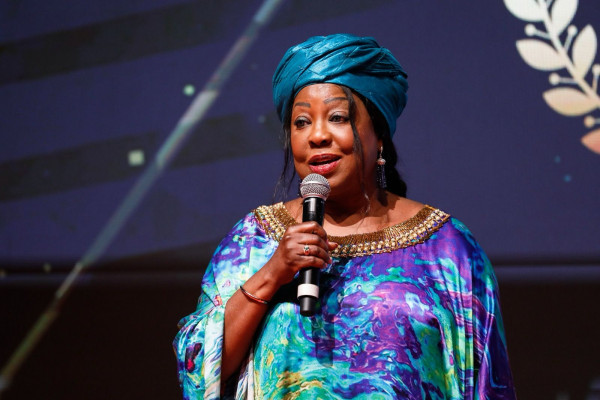
Fatma Samoura honoured in recognition of her achievements as Secretary General; Progress in women's football and development schemes central themes of speech; Vows to continue work against discrimination after stepping down at the end of the year.

Fatma Samoura has received the Choiseul Grand Prix award at a ceremony in Casablanca, Morocco, in recognition of her achievements during more than seven years as FIFA Secretary General.

Appointed in 2016 and the first female, African and Muslim Secretary General in over a century of FIFA history, Ms Samoura has since worked tirelessly alongside President Gianni Infantino to rehabilitate FIFA's image and increase transparency.

She has also been a staunch advocate for women's football, and her tenure has seen a major increase in the number of girls and women playing the game as FIFA work towards the goal of 60 million female players in organised football by 2026.

In her acceptance speech, Ms Samoura highlighted the success of the expanded FIFA Women's World Cup 2023, which saw nearly two million fans attend matches in Australia and Aotearoa New Zealand, and noted the significant impact the tournament would have not only on the women's game, but also society.

“As my journey with FIFA draws to a close, I have had some time to look back on the last seven-and-a-half years and see just how far we have come. FIFA itself has changed significantly. When I stepped into the role in June 2016, it was basically a toxic brand due to all the corruption scandals. So along with President Infantino, I had to take a leading role in cleaning up the organisation, inside and out. Today FIFA is a more accountable, better governed and more transparent organisation that puts football in the center of its activities, and I am hugely proud to have contributed in some small way to creating that.” said Ms Samoura at the event organised by Institut Choiseul, an independent, non-partisan and non-profit thinktank focused on finding solutions to economic challenges in Africa.

Ms Samoura has also contributed to changing the face of FIFA. Since the founding of the Women's Football (https://apo-opa.co/3G7NOrE) Division in 2016, the FIFA Council (https://apo-opa.co/46kZotR) now features seven female members, including one FIFA Vice-President, while over 40 percent of FIFA employees are female.

But she has also been a driving force behind development schemes such as the FIFA Football for Schools programme (www.FootballForSchools.FIFA.com), this week attending the launch in Ethiopia (https://apo-opa.co/46qshVE) as the East African nation became the 102nd of FIFA's 211 Member Associations (MAs) to join the initiative, which aims to give children around the world skills for life as well as football.

She also highlighted the benefits of the Talent Development Scheme (https://apo-opa.co/46j6ZsT), which provides the most promising young players a pathway to fully exploit their potential, and the FIFA Forward programme (https://apo-opa.co/49VJNUX), which funds MAs' football-related development projects and has seen a seven-fold increase in support since 2016.

The FIFA Talent Development Scheme (https://apo-opa.co/47DbFuR) helps raise the standards of national-team football around the world for both men and women. The scheme supports MAs in making the most of the talent available to them with FIFA approved a funding allocation of USD 200 million. FIFA's ambition is that by 2026, all MAs will have at least one high-performance centre of excellence for players between the ages of 12 and 16.

Ms Samoura was also a driving force behind FIFA's partnership with Agence Française de Développement (AFD) (https://apo-opa.co/3MRbDaG). The partnership has seen projects to mitigate Covid 19 effects, projects on mental health co-financed with the GIZ (the German Development Cooperation) (https://apo-opa.co/3sEkaXQ), and the Championnes programme. The Championnes programme is an important project that promotes leadership among girls and promotes gender equality in Africa through football.

The most recent co-financed FIFA/AFD initiative (https://apo-opa.co/3sEinC4) – with Play International and Diambars as implementation agencies – is an inclusive football academy programme launched in Djibouti, Malawi and Mauritania.

The benefits of these programmes in Africa can already been seen in recent FIFA tournaments including the FIFA Women's World Cup™️ which saw an increase to four African teams qualify for the finals, with a record three of them – Morocco, Nigeria and South Africa – reaching the knockout rounds. African nations have also impressed in the FIFA U-17 World Cup™️, currently being held in Indonesia. Three out of the four CAF nations – Morocco, Mali and Senegal – have qualified for the knockout rounds with Morrocco finishing top of their group.

The Football Unites the World campaign, and the wide range of social issues given greater visibility at the FIFA World Cup last year in Qatar and this year's FIFA Women's World Cup, such as gender equality and education for all, have all been causes close to Ms Samoura's heart during her time in office. She said she intends to keep promoting those issues when she steps down as FIFA Secretary General at the end of the year.

Distributed by APO Group on behalf of FIFA.

Download more images: https://apo-opa.co/3SMBEvO

Contact for African media: 
AfricanMedia@fifa.org
Media files
FIFA
Download logo
Read moreFIFA Secretary General receives Choiseul Grand Prix award in Casablanca
17 November 2023

Stakeholders say transformative industrialisation is critical for Africa’s sustainable development

Location: News

United Nations Economic Commission for Africa (ECA)
Download logo

Some stakeholders have reiterated the need for transformative industrialisation, saying it is critical for sustainable development on the continent.

They have been speaking at a special event, "Leveraging on strategic foresight for an agile, robust, and forward-looking sustainable industrial development in Africa", on Thursday at the African Economic Conference (AEC) in Addis-Ababa, Ethiopia.

Fiona Tregenna a Professor at the University of Johannesburg, and Chair of the Industrial Development National Research Foundation (NRF) of South Africa, delivered a paper on Transformative Industrialisation for Africa (TIFA) and links with strategic foresight. She highlighted some of the challenges that have hindered industrialisation on the continent.

According to Tregenna, achieving the Africa we want is not business as usual, otherwise we will not get the transformative change to give us the Africa we want.

She added: "A strategic and systemic approach is critical for a sustainable Africa. We are not looking at interventions that will yield today, but long-term investments."

Mr Ibrahima Sall, former Minister of Planning in Senegal, said engagement with various relevant stakeholders was required for sustainable industrial development in Africa.

"We need a flexible, agile, high-impact industrialisation that is robust. Even in the professor's introduction, it is clear that there are some industrial processes, and we need to keep the strength going. We know how to implement industrial policies, no policy cannot be selective. Otherwise, we will be sprinkling without impacting or wasting capital. So, there must be a selective national champion. How do we build with major stakeholders? What matters most is to look at selectivity and information and inform the states to understand that policies are not made on the ground. The engagement of states is key, and they must pay attention to the industrial sector," Sall said.

He added that selective criteria are critical. The vertical policy of African nations entails focusing on processing raw materials. And we have horizontal and selective, which involve all actions: sustainability, infrastructure, human capital, and technology. With this, states do not need to be flexible but focus on sustainability.

Speaking on Malawi's strategy, Thomas Munthali, Director General at the country's National Planning Commission, said that knowing that the effects of climate change were gradually destroying the country, it embarked on climate-resilient infrastructure and appreciated the future of industrialisation.

Munthali urged countries on the continent to venture more into digitisation, engage the private sector to catalyse investments, experiment, and learn from successful nations. He said, "We should be learning from nations. We should try and fail, but never fail to try."

For her part, Hauwa Ibrahim of the Nasarawa State University in Nigeria, said Africa stood at the crossroads of opportunities and challenges.

Ibrahim added that, "While we know there are no perfect policies, those with rooted outcomes stand the test of time. There is a need for research and development on the continent to ensure a sustainable Africa. The demographic population is vital and should be considered because we have many young people and what they are learning now should matter to us. We need to recognise the role of technology and ensure it is applied at all levels. We cannot take out the role of education in defining technology because we do not want to industrialise and have to invest elsewhere, away from the continent, in certain labour forces. Therefore, while we invest in technology, we must also invest in the education of young people."

Earlier, Karima Ben Soltane, the Director of the United Nations African Institute for Economic Development and Planning (IDEP), ECA, while moderating the session, said the theme was focused on what African countries needed to enact their policies, implement the SDGs, and make strategic investments, among others.

"What are the key drivers of change in the workforce landscape? We are cognizant that tomorrow's jobs do not exist today. And we need to ensure ways of bringing up initiatives and effectively preparing governments, individuals, institutions, and industries for these changes,” Ben Soltane added.

Distributed by APO Group on behalf of United Nations Economic Commission for Africa (ECA).

Read moreStakeholders say transformative industrialisation is critical for Africa’s sustainable development
15 November 2023

FIFA+ to stream every Confederation of African Football (CAF) qualifiers for the FIFA World Cup 26™

Location: Sport
FIFA

First two matchdays of CAF qualifying will be played from 15 to 21 November; All matches will be streamed on FIFA+; Find out below which countries the matches will be available in.

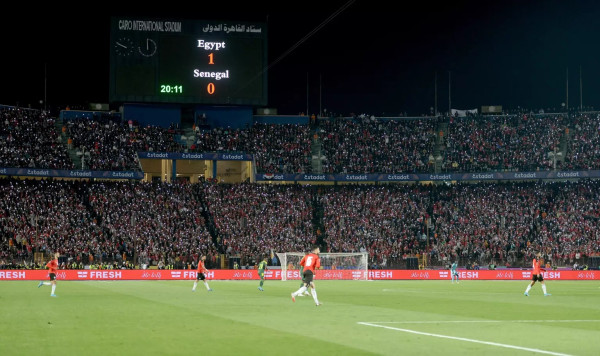
Africa's qualifying matches for the FIFA World Cup 26™ kick off on Wednesday 15 November and you'll be able to watch them all live on FIFA+.

Nine African teams are guaranteed to compete at the World Cup. Another will participate in the FIFA Play-off Tournament as the global showpiece will host 48 teams for the first time ever.

Everything you need to know about African qualifying (https://apo-opa.co/47xtb3H)

Where to watch the CAF qualifiers for FIFA World Cup 26™
You will be able to watch all Matchday 1 African qualifiers on FIFA+ with English commentary from anywhere in the world, with the exception of the Middle East and North Africa (MENA) region, sub-Saharan Africa*, India and Portugal.

* It will be possible to follow the matches live in sub-Saharan Africa in the following countries: Benin, Burundi, Ethiopia, Gambia, Guinea Bissau, Malawi, Sao Tome e Principe, Seychelles, Uganda and Zimbabwe.

Highlights of all the matches will also be available on FIFA+ worldwide.

Where can I watch FIFA+ content? (https://apo-opa.co/40FfYDJ)

CAF qualifiers schedule
Click on the links for each match to go to the streaming page. (all kick-off times local)

Matchday 1

15 November
Equatorial Guinea v Namibia (Group H) | 1400 | Malabo, Equatorial Guinea
Rwanda v Zimbabwe (Group C) | 1500 | Butare, Rwanda
Congo DR v Mauritania (Group C) | 1500 | Kinshasa, Congo DR
Ethiopia v Sierra Leone (Group A) | 2000 | El Jadida, Morocco

16 November
Botswana v Mozambique (Group G) | 1500 | Francistown, Botswana
Burundi v The Gambia (Group F) | 1600 | Dar Es Salaam, Tanzania
Gabon v Kenya (Group F) | 1700 | Franceville, Gabon
Nigeria v Lesotho (Group C) | 1700 | Uyo, Nigeria
Algeria v Somalia (Group G) | 1700 | Baraki, Algeria
Cape Verde v Angola (Group D) | 1800 | Praia, Cape Verde
Egypt v Djibouti (Group A) | 1800 | Cairo, Egypt
Sudan v Togo (Group B) | 1800 | Benina, Libya

17 November
Guinea v Uganda (Group G) | 1400 | Berkane, Morocco
Eswatini v Libya (Group D) | 1500 | Nelspruit, South Africa
Liberia v Malawi (Group H) | 1600 | Paynesville, Liberia
Ghana v Madagascar (Group I) | 1600 | Kumasi, Ghana
Comoros v Central African Republic (Group I) | 1600 | Moroni, Comoros
Zambia v Congo (Group E) | 1800 | Ndola, Zambia
Côte d'Ivoire v Seychelles (Group F) | 1900 | Ebimpe, Côte d'Ivoire
Mali v Chad (Group I) | 1900 | Bamako, Mali
Tunisia v Sao Tome e Principe (Group H) | 2000 | Rades, Tunisia
Cameroon v Mauritius (Group D) | 2000 | Douala, Cameroon
Burkina Faso v Guinea Bissau (Group A) | 2000 | Marrakesh, Morocco

18 November
South Africa v Benin (Group C) | 1500 | Durban, South Africa
Niger v Tanzania (Group E) | 1700 | Marrakesh, Morocco
Senegal v South Sudan (Group B) | 1900 | Diamniadio, Senegal

Matchday 2

19 November
Zimbabwe v Nigeria (https://apo-opa.co/49CLrKF) (Group C) | 1500 | Butare, Rwanda
Mozambique v Algeria (Group G) | 1500 | Maputo, Mozambique
Burundi v Gabon (Group F) | 1600 | Dar Es Salaam, Tanzania
Sierra Leone v Egypt (Group A) | 1600 | Paynesville, Liberia
Sudan v Congo DR (Group B) | 1800 | Benina, Libya

20 November
Djibouti v Guinea Bissau (Group A) | 1500 | Cairo, Egypt
Liberia v Equatorial Guinea (Group H) | 1600 | Paynesville, Liberia
Seychelles v Kenya (Group F) | 1900 | Abidjan, Côte d'Ivoire
The Gambia v Côte d'Ivoire (Group F) | 1900 | Dar Es Salaam, Tanzania
Mali v Central African Republic (Group I) | 1900 | Bamako, Mali
Chad v Madagascar (https://apo-opa.co/40E03p4) (Group I) | 2000 | Oujda, Morocco

21 November
Somalia v Uganda (Group G) | 1400 | Berkane, Morocco
Botswana v Guinea (Group G) | 1500 | Francistown, Botswana
Malawi v Tunisia (Group H) | 1500 | Lilongwe, Malawi
Eswatini v Cape Verde (Group D) | 1500 | Nelspruit, South Africa
Rwanda v South Africa (Group C) | 1500 | Butare, Rwanda
Lesotho v Benin (Group C) | 1500 | Durban, South Africa
South Sudan v Mauritania (Group B) | 1600 | Diamniadio, Senegal
Togo v Senegal (Group B) | 1600 | Lome, Togo
Sao Tome e Principe v Namibia (https://apo-opa.co/49E13NY) (Group H) | 1700 | Agadir, Morocco
Libya v Cameroon (Group D) | 1800 | Benina, Libya
Comoros v Ghana (https://apo-opa.co/3G4ObTu) (Group I) | 1900 | Moroni, Comoros
Niger v Zambia (Group E) | 2000 | Marrakesh, Morocco
Mauritius v Angola (Group D) | 2000 | Saint Pierre, Mauritius
Ethiopia v Burkina Faso (Group A) | 2000 | El Jadida, Morocco
Tanzania v Morocco (Group E) | 2200 | Dar Es Salaam, Tanzania

Live streaming on FIFA+
During this international break, FIFA+ will be your point of reference for World Cup 2026 streaming, with all the African qualifiers and the CONMEBOL qualifier between Bolivia and Peru.

CAF schedule

  • 15-21 November, 2023: 1st and 2nd matchdays
  • 3-11 June, 2024: 3rd and 4th matchdays
  • 17-25 March, 2025: 5th and 6th matchdays
  • 1-9 September, 2025: 7th and 8th matchdays
  • 6-14 October, 2025: 9th and 10th matchdays
  • 10-18 November, 2025: CAF play-off tournament

Distributed by APO Group on behalf of FIFA.

Contact for African media: 
AfricanMedia@fifa.org
Media files
FIFA
Download logo
Read moreFIFA+ to stream every Confederation of African Football (CAF) qualifiers for the FIFA World Cup 26™
14 November 2023

Private capital takes centre stage at universal access to water summit

Location: News

Private capital takes centre stage at universal access to water summit

Enabling private capital and mobilisation will take centre stage as stakeholders in the water sector gather for the World Bank’s Eastern and Southern Africa Leadership Summit on universal access to water supply, sanitation and hygiene.

Hard on the heels of the week-long 7th Africa Sanitation and Hygiene Conference held in Namibia last week, the Department of Water and Sanitation (DWS) Director-General, Dr Sean Phillips, is participating in the Eastern and Southern Africa Leadership Summit on universal access to Water Supply, Sanitation and Hygiene (WASH), currently underway in Addis Ababa, Ethiopia.

The two-day summit, taking place from 14 - 15 November 2023, will focus on enabling private capital and mobilisation, and will promote critical, tangible inputs on strategies, actions and policy reforms to boost private sector financing and participation of the water and sanitation sector.
 
The event, which is co-hosted by the Ministry of Finance in Ethiopia and the World Bank, seeks to help identify and seize opportunities to increase private and public funding, and implement the necessary sector reforms to serve all Eastern and Southern African residents still lacking access to WASH. 

The discussions at the summit will centre on three strategic actions of systems change, including policy and institutional reforms that promote efficient use of public and private resources; investments that are pivotal for the transformation of the water sector, and country and regional platforms for collaboration.

The summit will build on previous discussions and will advance the dialogue on country plans to accelerate access to WASH, and further provide an opportunity for in-depth discussions to understand the implications of implementing systems change. 

The event will serve as an interactive platform for stakeholders, including water sector ministers, finance ministers, development partners, and private sector leaders to discuss opportunities for collaboration.

Phillips said the discussions at the summit will focus on what it would take to reduce existing inequalities in WASH services worldwide and will promote critical, tangible inputs on strategies, actions, and policy reforms to boost private sector financing and participation.

“The high-level ministerial and technical discussions will help identify and seize opportunities to increase private and public funding and implement the necessary sector reforms to serve all Eastern and Southern African residents that are still lacking access to WASH. 

“The Department of Water and Sanitation welcomes this initiative by the World Bank to advocate for private funding programmes that will advance the WASH objectives. As you know, South Africa has also committed itself to achieve goal 6 of the Sustainable Development Goals (SDGs), which focuses on the right to water and sanitation services for all,” Phillips said. 

The WASH initiative encompasses 18 countries, ranging from fragile and conflict-affected States to middle-income countries. 

While the world is progressing towards SDG 6, one of the 17 United Nations SDGs, which advocates for availability and sustainable management of clean water and sanitation for all, most African countries are lagging to achieve this goal. 

The sub-Saharan Africa is the only region sliding backward in terms of WASH. Over the last 20 years, access to basic water supply and sanitation has declined, resulting in 37 million more people without basic water supply and 247 million more without basic sanitation. 

Despite all efforts being made, these gaps are continuously growing.

The DWS said the implications of limited access to basic water supply and sanitation were discussed at previous events, such as the UN (United Nations) Water Conference in March 2023 and the World Bank-IMF Spring Meetings in April 2023. 

“During these high-level events, the African Ministers of Water and of Finance embraced a strategy to effect change that will grant universal WASH access. The ministers have also committed to establish and monitor regional platforms to track progress of the initiative,” the department said. – SAnews.gov.za
 

GabiK
Tue, 11/14/2023 - 10:53

123 views
Read morePrivate capital takes centre stage at universal access to water summit
9 November 2023

Meet the stellar line up of judges for the 5th edition of the Twyg Sustainable Fashion Awards

Location: Entertainment, MyPR

For the fifth annual edition of the Twyg Sustainable Fashion Awards, a renowned panel of six local and international judges will bring a strong global perspective to the evaluation process. This will be the second year that this same panel will be judging the awards. “We are confident that this dynamic panel, with wide-ranging and …

Read moreMeet the stellar line up of judges for the 5th edition of the Twyg Sustainable Fashion Awards
7 November 2023

SA records over 7 400 malaria cases

Location: News

SA records over 7 400 malaria cases

South Africa has recorded over 7 400 malaria cases between January and October this year, with only 17% of these having been locally acquired. 

This means that more people got infected while out of the country, while the country logged at least 66 deaths during the same period. 

The Department of Health has since urged all people travelling to and from malaria-endemic or high-risk areas to take the appropriate precautionary measures to prevent possible infection, as the country enters malaria season. 

“Summer season marks the start of the malaria period in South Africa due to higher temperatures and increased rainfall in the malaria transmission areas,” the department explained.

Cases are starting to rise in some parts of the country, especially in high-risk areas. 

Malaria symptoms include headache, fever, chills, and muscle and joint pain. The department advised citizens, who experience these signs, to visit their local health facility without delay for effective treatment. 

“Late presentation to a health facility with symptoms is one of the contributing factors to increasing malaria morbidity and mortality rates,” the department said.

Malaria is defined as a life-threatening, but preventable and curable disease. 

“Early detection saves lives,” the department stressed. 

The department has since intensified its malaria response plan through screening and testing around borders in high-risk provinces such as KwaZulu-Natal, Mpumalanga and Limpopo throughout the year for early detection of imported cases. 

The department is also embarking on public education campaigns and indoor residual spraying in high-risk areas every year from September until the beginning of the following year. 

The department warned pregnant women and children under five years to avoid visiting malaria-endemic areas, unless they take extra caution.

As the Southern African Development Community (SADC) observed Malaria Day on Monday, the Gauteng Department of Health (GDoH) said it continues to target public transport nodes, such as taxi ranks and bus stations, to heighten education among the public on prevention measures.

This comes as Gauteng hospitals reported 1 105 malaria cases and 10 deaths from January to September 2023, as a result of the life-threatening disease spread to humans by mosquitoes in endemic areas.

“The majority of people who were admitted and those who have demised as a result of the disease had travelled to Mozambique, Ethiopia, Nigeria, Zimbabwe, Zambia and Angola,” the GDoH said, adding that these countries are known to be malaria-endemic regions. – SAnews.gov.za

Gabisile
Tue, 11/07/2023 - 10:08

720 views
Read moreSA records over 7 400 malaria cases
3 November 2023

President Ramaphosa calls for substantial lengthening of AGOA

Location: News

President Ramaphosa calls for substantial lengthening of AGOA

An extension of the African Growth and Opportunity Act (AGOA) for a longer period of time can act as an instrument to entice investors to pour more resources into the African continent.

“We would like you to look at the extension or renewal of AGOA for a sufficiently lengthy period for it to act as an incentive for investors to build new factories on the African continent.

“As we were going around talking to a number of product producers, the recurring message and word I heard is ‘we can do more…if this opportunity is extended and we can build more capacity if we have certainty that yes, the period of extension will be longer’.

“Shorter periods of extension impede investment ambitions and we therefore want to see a much lengthier period of extension. The United States and Africa… are going to be here for a long time. We are here for the long haul so let us make AGOA a long haul opportunity for all of us,” said President Cyril Ramaphosa at the opening of the AGOA Forum, currently underway at Nasrec in Johannesburg.

The President reflected on the successes that have been made under AGOA for African countries.

“When excluding exports of crude oil under AGOA, the data show that the programme has substantially improved the export competitiveness of certain African products, especially textiles and apparel.

“Apparel exports from Lesotho, Ethiopia, Mauritius, Madagascar and Kenya have not only led to the creation of tens of thousands of jobs but these countries have become reliable producers for American consumers.

“Other parts of manufacturing have also seen success under AGOA. South Africa’s auto exports to the United States under AGOA have contributed to job creation in South Africa and in the auto supply chain within neighbouring countries.

“We value the relationship with the United States, the world’s largest national market, and a country with which we have relationships that go well beyond trade. The African Growth and Opportunity Act – or AGOA – has served as the cornerstone of the US-Africa commercial relationship for more than two decades,” President Ramaphosa said.

Africa on the rise

President Ramaphosa told the forum that trading has been in the DNA of Africans for thousands of years – predating colonial oppression.

“From earlier times, our forebears were already trading not only within Africa but with the rest of the world. They traded right across the continent… but they also traded with the world. Trading is part of our DNA; it is in our blood and it is this trading that we want to modernise and we look for partners to support us in this development as we modernise our trading practices and relations,” he said.

As the continent continues to modernise its trading, it is moving away from being a supplier of raw materials to a producer of ready-made consumer products.

“Africa is an important source of critical raw materials but we do not want to be defined by simply being the producers of commodities. The great industrial opportunity lies instead in the transformation of the rocks that we mine and the metal that we produce into the sophisticated industrial and consumer goods that societies across the world need.

“Gone should be the days when Africa is just seen as a source of rock, soil and dust being exported out of our continent. We now want to produce the products that are finished or near finished, which are utilised in other parts of the world. We want to earn full value for our products,” he said.

President Ramaphosa said he remains concerned about the negative effects that trade restrictions on products like steel, aluminium or citrus fruit have on AGOA utilisation rates.

“We hope that the discussions at this forum will help lay the basis for these to be addressed in future.”

The President said more targeted efforts to promote greater levels of investment can help to unlock AGOA’s opportunities.

The purpose of the forum is to discuss ways to expand trade and investment relations between the United States and sub-Saharan Africa, and the implementation of AGOA, including encouraging joint ventures between small and large businesses. - SAnews.gov.za


NeoB
Fri, 11/03/2023 - 13:07

125 views
Read morePresident Ramaphosa calls for substantial lengthening of AGOA
27 October 2023

Starbucks takes Sea Point

Location: MyPR

Starbucks takes Sea Point Starbucks South Africa is delighted to announce the opening of a new double-story store in the picturesque neighbourhood of Sea Point, Cape Town. Situated along the stunning Atlantic coastline, Sea Point is a community like no other — a blend of scenic beauty, diverse population, enjoying an array of lifestyle choices. …

Read moreStarbucks takes Sea Point
18 October 2023

Merck Foundation Chairman and Chief Executive Officer (CEO) with African First Ladies inaugurate their 10th Africa Asia Luminary 2023 in India

Location: News
Merck Foundation

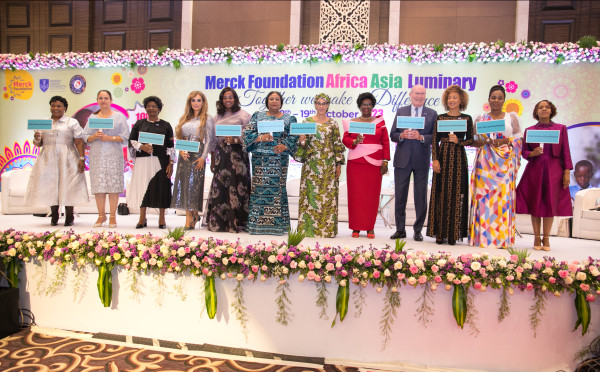
Prof. Dr. Frank Stangenberg-Haverkamp, Senator Dr. Rasha Kelej and African First Ladies of Botswana, Burundi, Cabo Verde, Central African Republic, The Gambia, Ghana, Liberia, Malawi, Democratic Republic of São Tomé and Príncipe, Zimbabwe, Democratic Republic of Congo, to inaugurate 10th Edition of Merck Foundation Africa Asia Luminary 2023 (http://www.Merck-Foundation.com); More than 10,000 participants including healthcare providers, policymakers, researchers, academia and media representatives from 70 English, French, Spanish and Portuguese speaking countries attended the Luminary through hybrid model to benefit from five parallel  scientific and social sessions to  advance healthcare capacity and awareness in 42 critical and underserved medical specialties; Celebrating 6th Anniversary of Merck Foundation and marking 11-year journey of their development programs, during 2023 Luminary; Merck Foundation reported the impact of providing 1700 scholarships to doctors from 50 countries in 42 critical and underserved specialties such as; Oncology, Diabetes, Cardiovascular Preventive, Endocrinology, Fertility, Embryology, Reproductive Care, Respiratory Care, Acute and Intensive Care, Neonatal Care, Pediatric Emergency, Advanced Surgery, Microbiology & Infectious Diseases, Internal Medicine, Ophthalmology, Psychiatry, Palliative Care and Pain Management and more; Merck Foundation marked Cancer Awareness Month during their annual conference.

Merck Foundation, the philanthropic arm of Merck KGaA Germany, conducted their annual conference, the 10th Edition of “Merck Foundation Africa Asia Luminary”, in partnership with Tata Memorial Centre and Department of Atomic Energy, Ministry of External Affairs, Ministry of Home Affairs, Ministry of Health of India, State Protocol Office of Government of Maharashtra and Krishna  World University, Karad, on the 18th of October 2023 in Mumbai, India. The conference was inaugurated by Prof. Dr. Frank Stangenberg-Haverkamp, Chairman of Merck Foundation Board of Trustees, and Senator, Dr. Rasha Kelej, CEO of Merck Foundation and Chairperson of Merck Foundation Africa Asia Luminary, along with African First Ladies of 11 countries;

  • H.E. Mrs. NEO JANE MASISI, The First Lady of the Republic of Botswana
  • H.E. Madam ANGELINE NDAYISHIMIYE, The First Lady of the Republic of Burundi
  • H.E. Dr. DÉBORA KATISA CARVALHO, The First Lady of the Republic of Cabo Verde
  • H.E. Madam BRIGITTE TOUADERA, The First Lady of Central African Republic
  • H.E. Mrs. FATOUMATTA BAH-BARROW, The First Lady of the Republic of The Gambia
  • H.E. Mrs. REBECCA AKUFO-ADDO, The First Lady of the Republic of Ghana
  • H.E. Mrs. CLAR MARIE WEAH, The First Lady of the Republic of Liberia
  • H.E. Mrs. MONICA CHAKWERA, The First Lady of the Republic of Malawi
  • H.E. Mrs. MARIA DE FATIMA VILA NOVA, The First Lady of the Democratic Republic of São Tomé and Príncipe
  • H.E. Amai Dr. AUXILLIA MNANGAGWA, The First Lady of the Republic of Zimbabwe
  • H.E. Madam DENISE NYAKERU TSHISEKEDI, The First Lady of the Democratic Republic of The Congo

Senator Dr. Rasha Kelej, CEO of Merck Foundation and Chairperson of Merck Foundation Africa Asia Luminary emphasized, “I am very proud to welcome our Guests of Honors and Keynote Speakers, the First Ladies of Africa and Ambassadors of “More Than a Mother” Campaign, for our annual conference that we have conducted first time in India. Together, we shared experiences and discussed the impact of our programs to transform patient care and raise awareness on a wide range of sensitive and critical social and health. Today we are also marking together Cancer Awareness Month, it is great to remember that Merck Foundation provided 138 scholarships of Oncology Training in many sub-specialties to doctors from 37 African countries, many of them have become the first oncologists in their countries. We are making history together in Africa, with our Ambassadors, First Ladies of Africa and our partners, Tata Hospital and Krishna University.”

Prof. Dr. Frank Stangenberg-Haverkamp Chairman of both of Executive Board of E.Merck KG and Merck Foundation Board of Trustees expressed “At Merck Foundation, our goal is improving overall health and well-being by building healthcare capacity and by providing access to quality & equitable healthcare solutions in the Africa, Asia and beyond. I would like to thank our partners, African First Ladies and Health Experts, Policy Makers, Government Officials, Academia and Media from more than 70 countries to join hands with us in order to realize the vision of Merck Foundation that “Everyone can lead a Healthy and Happy life.”

“I am proud to share that Merck Foundation has provided more than 1700 scholarships to young doctors from 50 countries in 42 critical and underserved specialties such as Oncology and Cancer care, Diabetes, Endocrinology, Cardiovascular, Fertility Care, Embryology, Sexual & Reproductive Medicine, Internal Medicine, Respiratory Medicine, Acute Medicine, Critical Care, Pediatric Emergency, Gastroenterology, Rheumatology, Clinical Psychiatry, Urology, Ophthalmology, General Surgery, Trauma & Orthopedic, Dermatology, Neonatal Care, Pain Management, Clinical Microbiology & Infectious Diseases, Advanced Surgical Practice, Neuroimaging for Research and more. Many of them are becoming the first specialists in their countries. Many of these scholarships were conducted in India where a state of art clinical training was provided at the prestigious training institutions of our partners such as Tata Memorial Center, Manipal University, Maharashtra University, Krishna University, Indra IVF Training and more. Therefore, we are very happy to be this year in India to celebrate our 10 years partnership with our respectable Indian partners”, added Senator Kelej.  

During the 10th Edition of Merck Foundation Africa Asia Luminary, the First Ladies of 11 African Countries, also the Ambassadors of Merck Foundation “More Than a Mother”, celebrated the 6th Anniversary of Merck Foundation and marked the 11-year journey of Merck Foundation development programs that started in 2012.

During the day 1 of the conference, the Plenary Session of Merck Foundation Africa Asia Luminary 2023 was held, during which a high-level panel meeting of Merck Foundation First Ladies Initiative Summit was conducted.

Day 2 of the conference will have important five parallel Medical and Scientific Sessions on Oncology, Diabetes & Hypertension, Fertility and Reproductive Care, and medical capacity building of other specialties such as; respiratory, acute care, emergency pediatric and neonatal care and more. Additionally, a community awareness session, the Merck Foundation Health Media Training session will also be conducted for the African journalists, to emphasize on the important role that they play to influence the community to create a cultural shift with the aim to Break Infertility Stigma, Support Girl Education, Stop GBV, End Child Marriage, End FGM, and Women Empowerment at all levels.

Countries participating in the 10th Edition of Merck Foundation Africa Asia Luminary include:

Angola, Bangladesh, Benin, Botswana, Burkina Faso, Burundi, Cameroon, Canada, Central Africa Republic, Cambodia, Chad, Côte d'Ivoire, Republic of the Congo, Democratic Republic of the Congo, Egypt, Ethiopia, France, Gabon, Germany, Ghana, Guinea – Bissau, Guinea – Conakry, India, Indonesia, Kenya, Lesotho, Liberia, Malawi, Malaysia, Mali, Mauritania, Mauritius, Mexico, Mozambique, Myanmar, Namibia, Nepal, Niger, Nigeria, Peru, Philippines, Russia, Rwanda, Senegal, Sierra Leone, Somalia, South Africa, Sri Lanka, Sudan, Tanzania, Thailand, The Gambia, Togo, Tunisia, U.A.E, UK, Uganda, US, Vietnam, Zambia, Zimbabwe and more.

The 10th Edition of Merck Foundation Africa Asia Luminary 2023 was streamed live on the social media handles of Merck Foundation (https://apo-opa.info/3Ykd3hH) and Senator, Dr. Rasha Kelej (https://apo-opa.info/3SfA0AF).

Link to the Facebook live steam of Inaugural Session of Merck Foundation Africa Asia Luminary & African First Ladies High Level Panel: https://apo-opa.info/3RYXLPa

Summarizing Merck Foundation's initiatives and impact:

Merck Foundation is transforming the Patient care landscape and making history together with its partners in Africa, Asia, and beyond, through:

• 1700+ Scholarships provided by Merck Foundation for doctors from 50 Countries in 42 critical and underserved medical specialties.  

Merck Foundation is also creating a culture shift and breaking the silence about a wide range of social and health issues in Africa and underserved communities through:

• 3000+ Media Persons from more than 30 countries trained to better raise awareness about different social and health issues

• 8 Different Awards launched annually for best media coverage, fashion designers, films, and songs

• Around 30 songs to address health and social issues, by local singers across Africa

• 8 Children's Storybooks in three languages - English, French, and Portuguese

• 7 Awareness Animation films in four languages - English, French, Portuguese and Spanish to raise awareness about prevention and early detection of Diabetes & Hypertension and supporting girl education.

• Pan African TV Program "Our Africa by Merck Foundation” addressing Social and Health Issues in Africa through “Fashion and ART with Purpose” Community

• 1000+ Girls from 15 African countries supported through scholarships or school items, annually.

• 12 Social Media Channels with more than 5 Million Followers.

Distributed by APO Group on behalf of Merck Foundation.

Media contact:
Mehak Handa 
Community Awareness Program Manager 
+91 9310087613/ +91 9319606669  
mehak.handa@external.merckgroup.com 

Join the conversation on our social media platforms below and let your voice be heard:
Facebook: https://apo-opa.info/3Ykd3hH
Twitter: https://apo-opa.info/3Yo3y11
YouTube: https://apo-opa.info/3CNFGLa
Instagram: https://apo-opa.info/3lsqM7q
Flickr: https://apo-opa.info/3JT8BSC
Website: Merck-Foundation.com
Download the Merck Foundation App: https://apo-opa.info/3xeJMsI

About Merck Foundation:
The Merck Foundation, established in 2017, is the philanthropic arm of Merck KGaA Germany, aims to improve the health and wellbeing of people and advance their lives through science and technology. Our efforts are primarily focused on improving access to quality & equitable healthcare solutions in underserved communities, building healthcare and scientific research capacity and empowering people in STEM (Science, Technology, Engineering, and Mathematics) with a special focus on women and youth. All Merck Foundation press releases are distributed by e-mail at the same time they become available on the Merck Foundation Website. Please visit Merck-Foundation.com to read more. To know more, reach out to our social media: Merck Foundation (Merck-Foundation.com); Facebook (https://apo-opa.info/3Ykd3hH), Twitter (https://apo-opa.info/3Yo3y11), Instagram (https://apo-opa.info/3lsqM7q), YouTube (https://apo-opa.info/3CNFGLa), and Flickr (https://apo-opa.info/3JT8BSC).

Media files
Merck Foundation
Download logo
Read moreMerck Foundation Chairman and Chief Executive Officer (CEO) with African First Ladies inaugurate their 10th Africa Asia Luminary 2023 in India
16 October 2023

Green hydrogen economy plays prominent role in SA’s honest energy transition

Location: News

Green hydrogen economy plays prominent role in SA’s just energy transition

President Cyril Ramaphosa has highlighted the vital role the green hydrogen economy plays in the country’s development and just energy transition.

 
“The hydrogen economy has a prominent role to play in our country’s just energy transition, providing employment and support to vulnerable workers, communities and small businesses. 

“It has been estimated that the hydrogen economy has the potential to add 3.6% to our GDP by 2050 and approximately 370 000 jobs. We must act with purpose to harness the potential of the green hydrogen economy,” the President said. 

President Ramaphosa was delivering remarks at the second iteration of South African Green Hydrogen Summit (SAGHS) in Century City, Cape Town, on Monday. 

The inaugural SAGHS, held in 2022, reaffirmed South Africa as an investment destination of choice and a world leader in the green energy space. It focused on scaling up regional cooperation around green hydrogen.

This second summit aims to highlight South Africa’s exceptional potential as an early stage, large scale and low cost world-class green hydrogen production hub, and total value chain investment destination.

South Africa’s Investment Strategy, approved by Cabinet earlier this year, lists green hydrogen as one of the big frontier strategic sectors expected to attract foreign and domestic direct investment.

The President emphasised the nation’s goal to position itself as a globally competitive player in this dynamic and growing industry.

The President noted that 64 countries, accounting for 89% of global emissions, have announced net zero targets by 2050. He further said that is anticipated that global green hydrogen demand will increase sevenfold by 2050.

He said that for the world to limit global warming to less than 1.5 degrees Celsius, green hydrogen will need to constitute 10% to 20% of the global energy mix. 
 
“South Africa has committed to ambitious emission reduction targets. Our own estimates indicate that green hydrogen has the potential to remove 10% to 15% of our domestic emissions and contribute to our nation’s long-term energy security,” he said. 

Green Hydrogen Alliance
 

The President acknowledged the collaboration efforts being made through the African Green Hydrogen Alliance, which includes Egypt, Kenya, Mauritania, Morocco, Namibia, Ethiopia, Angola and South Africa.
 
The alliance aims to harness Africa’s potential in developing green hydrogen industries. It aims to make joint calls for technical support, funding and market access to international public and private sector partners.
 
“The inaugural summit laid a strong policy foundation. This year’s summit has a dedicated project focus, providing an opportunity to demonstrate the degree to which projects have matured and advanced. This is also an opportunity to demonstrate technological developments and advancements in the green hydrogen space.
 
“Close cooperation between public, private and financial partners will be key to unlocking Africa’s green hydrogen potential. This will enable mass-scale domestic and international demand for green hydrogen, and increase cooperation on green hydrogen production, storage and distribution infrastructure,” President Ramaphosa said.

The President emphasised that if investment is significantly scaled-up, green hydrogen can deliver the equivalent of more than one third of Africa’s current energy consumption, increase the collective GDP, improve clean water supply and empower communities.
 
He said proper planning, regulation and incentive schemes are critical to mobilise private sector investment.
 
“South Africa has deep capital markets, with world-class conditions for generating renewable energy through solar and wind power, which are key drivers of the production of green hydrogen.
 
“Funding green hydrogen projects will require innovative financing structures sourced from multiple stakeholders,” President Ramaphosa said. 

Building the green hydrogen industry
 
In June 2023, South Africa concluded a Heads of Agreement with the intention to launch the SA-H2 Fund. This is an innovative blended finance fund that will facilitate the development of a green hydrogen sector and circular economy in South Africa.
 
SA-H2 aims to secure $1 billion in funding raised directly in South Africa or via indirect channels. The Fund is a partnership of private and public enterprises, locally and globally.
 
Since the last Summit, the President said advances have been made towards building the green hydrogen industry in the country.
 
These include a Joint Declaration of Intent with the German government, focusing on market access, off-take opportunities and value-additive benefits in the production of green steel and green fertiliser.
 
South Africa has also signed a MOU with the Netherlands as an off-taker for green hydrogen derivative products.
 
“It is encouraging to note that a Memorandum of Cooperation will be signed at this conference by three multinationals in the green hydrogen mobility space, namely Sasol, Anglo American and BMW.
 
“Sasol will serve as a supplier to Anglo and BMW as part of their focus on commercial and passenger fleet transformation. These are important initiatives within the context of carbon border adjustment mechanisms,” the President said. 
 

He thanked all the partners and sponsors that have made this summit possible. He sent a special mention to Anglo American, BMW, Sasol, the Industrial Development Corporation and GIZ. 
 
“I wish business and government delegations at this summit well as we work to shape Africa’s green hydrogen agenda for the benefit of our economies and societies, now and into the future,” he said. – SAnews.gov.za

DikelediM
Mon, 10/16/2023 - 13:20

319 views
Read moreGreen hydrogen economy plays prominent role in SA’s honest energy transition
12 October 2023

President: South Africa derives worthy benefit from BRICS membership

Location: News

President: South Africa derives great benefit from BRICS membership

“Rest assured, BRICS is a great benefit to our country and it’s an association that we are very proud of and that we intend to continue with.”

These were the words of President Cyril Ramaphosa as he fielded questions in the National Council of Provinces (NCOP) on the benefits of South Africa being part of the BRICS group of countries.

The group is now known as the BRICS Plus group following the addition of six new member countries - namely Argentina, Egypt, Ethiopia, Iran, Saudi Arabia and the UAE.

“We, as a country, have benefitted a great deal [through] the association with other BRICS countries. China today is our largest trading partner and this has largely been cemented, upheld and encouraged by our membership of BRICS,” President Ramaphosa said on Thursday.

The President said South Africa continues to reap economic benefits from its association with the group, with talks during bilateral events going beyond political engagement.

“Indeed, many other BRICS members, who have now been admitted, are going to find that BRICS is an important forum that goes beyond just the political engagements at that level but also involves economic development, trade extension, technology extension and many other beneficial areas that advance humanity.

“[Just] the association in BRICS leads to a great deal of economic benefits for our country and we have seen such. Our trade with BRICS countries has grown in leaps and bounds, and many of the areas in which our trade has grown has been by virtue of being associated in BRICS. So there is a clear economic benefit there,” he said.

The President said the expansion of the BRICS group of countries, up from five members to 11, will give a “great boost, particularly to the Global South”.

He hinted at the possible further expansion of the group, which would give further credence to the group’s growing influence in global matters.

“We are, as it is now, going to consider membership applications from many other countries that want to be part of BRICS. So BRICS continues to grow. It continues to grow in importance, economically, politically, as well as [where] trade is concerned.

“BRICS is the great attraction that many countries now see for development and we want to keep BRICS as an important forum, as an important partnership that progresses countries that are associated with it or part of it,” he said.

Answering a question on the financial impact of South Africa’s hosting of the BRICS Summit in August, President Ramaphosa insisted that the economic benefits outweigh the costs.

“The summit that we held here was… a hugely successful summit and we are proud that the people of South Africa were part of it, embraced it and also enabled it to happen here on South African soil.

“The mere holding of a summit as large as the BRICS Summit – and this, by any measure, was the biggest BRICS Summit – brings together a huge number of people, many of whom come to South Africa either for the first time, and they come to spend their money here.

“One country alone, China, brought up to 600 people who, due to their presence here, needed beds to sleep in, needed food and transportation, etc,.. Many other countries brought a number of delegates just to come and attend.

“When you have an event like that, it inevitably leads to an economic benefit immediately because many of these people come with money from their own countries to spend here, so it increases the number of people who work,” President Ramaphosa said. – SAnews.gov.za


NeoB
Thu, 10/12/2023 - 15:17

240 views
Read morePresident: South Africa derives worthy benefit from BRICS membership
12 October 2023

92.1% of SA population owns a cellphone

Location: News

92.1% of SA population owns a cellphone

South Africa's Census 2022 national results has shown an upward trend in ownership of refrigerators, televisions and cellphones.  

“The overwhelming majority (92.1%) of households in the country owned a cellphone in working order, a notable increase from the 3.3% in 2001. Just under four-fifths (79%) of households owned televisions compared to the 52.6% in 2001,” Statistician-General Risenga Maluleke said.

Furthermore, the data from Census 2022, which he handed over to President Cyril Ramaphosa on Tuesday in Pretoria, shows that the ownership of a refrigerators/freezers increased from 53.8% in 2001 to 83.2% in 2022.

“In contrast, households owning a radio decreased significantly from 73% in 2001 to 50.3% in 2022. In addition, there is a downward trend in households that owned a landline telephone over the period 2001–2022,” Maluleke said.

Households residing in formal dwellings

The report noted that there has been an upward trend in households residing in formal dwellings - an increase of almost 24 percentage points (from 65.1% in 1996 to 88.5% in Census 2022).

Formal dwellings include formal houses with a brick/concrete structure, flats and apartments, cluster houses, townhouses, semi-detached houses or any formal dwelling situated in a backyard, such as a room or garden cottage where a household or single person resides.

“The proportion of households that resided in informal dwellings halved (from 16.2% in 1996 to 8.1% in 2022). In 2022, just over two-fifths (41.6%) of the dwellings that households resided in were owned and fully paid off, with similar proportions recorded in 2001 and 2011.

“The proportion of households that occupied their dwellings rent-free increased from 18.6% in 2011 to 25.6% in 2022, while rented dwellings decreased slightly from 25% in 2011 to 23.2% in 2022. Only 6.6% of households resided in dwellings that were owned but not fully paid off (for example, those still repaying a bond to the bank), declining from 11.8% in 2011,” he said.

Households were asked whether the dwelling they resided in was a government-subsidised dwelling or RDP.

“Two-fifths (40%) of households in the Northern Cape reported that they resided in government subsidised dwelling/RDP housing, only slightly higher than the proportion of households in the Free State (37.6%). Households in Limpopo recorded the lowest proportion of government subsidised dwelling/RDP housing (18.3%), well below the national average of 29.9%,” Maluleke said.

Access to internet

Generally, there has been an upward trend in access to internet services over the period 2011–2022.

Maluleke attributed this to rapid advancement in communication services, such as cellphone ownership.

“Overall, households with no access to internet decreased threefold (from 64.8% in 2011 to 21.1% in 2022). A substantial percentage of households reported accessing internet mainly through a cellphone or other mobile device (60.5%) compared to 16.3% recorded in 2011.

“There was an increase in the percentage of households accessing internet mainly at home, from 8.6% in 2011 to 13.3% in 2022. It is also noted that households accessing internet mainly using other methods decreased significantly. Households accessing internet mainly at work decreased by four percentage points (from 4.7% in 2011 to 0.3% in 2022),” he said.

Migration

The Census 2022 shows that there has been an increase in the number of the population born outside South Africa.

“The results indicate that there were more male immigrants compared to females. Furthermore, the prevalent ages of migrants were between ages 20 and 44 years, suggesting that young adults are more likely to migrate than children and the elderly.

“In Census 2011, males aged 25–29 reported the highest number of immigrants with 260 885, whilst in 2022 male immigrants aged 30–34 (235 297) numbered the highest.

“The top five sending countries remained the same between the two censuses (Zimbabwe, Mozambique, Lesotho, Malawi, and the United Kingdom). India also maintained the 2011 rank in 2022. Namibia, Eswatini, Somalia, Portugal and Germany went down the rank in 2022,” Maluleke said.

Countries that moved up the rank were: Ethiopia, Nigeria, Congo, Democratic Republic of the Congo (DRC), Bangladesh, Botswana, and Pakistan.

China is the only country that moved out of the top 20 sending countries in 2022. Whereas Ghana is the new entry into the top 20 sending countries in 2022. – SAnews.gov.za


nosihle
Thu, 10/12/2023 - 14:17

188 views
Read more92.1% of SA population owns a cellphone
9 October 2023

Critical Minerals Africa 2023: Securing Supply Chains into the Future

Location: News
Energy Capital & Power

A forward-looking panel at Critical Minerals Africa (CMA) 2023 (https://CriticalMineralsAfrica.com/) will explore how technology, sustainable practices and localization can ensure stable and secure critical minerals supplies, under the theme, The Future Minerals Economy and the Resilience of Supply Chains.

Panelists include Dr. Marit Y. Kitaw, Interim Director of the African Minerals Development Center (AMDC), Ethiopia; Deshan Naido, Managing Director of AQORA, South Africa; Duma Sisulu, Co-Founder & Chief Analyst at Parime Battery Minerals, South Africa; Alex Benkenstein, Head of the Climate and Natural Resources Program at the South African Institute of International Affairs (SAIIA); and Kwasi Ampofo, Head of Metals and Mining at BloombergNEF. The panel will be moderated by Olimpia Pilch, Founder and Chief Operating Officer of the Critical Minerals International Alliance, UK.

As demand changes and complexities increase, African and global mineral supply chains are undergoing several transformations to better manage supply disruptions and price fluctuations, from adopting digitalization to strengthening local and regional outputs. The panel will explore how market instability – triggered by the COVID-19 pandemic and Russia-Ukraine war – has accelerated the need for localized supply chains and how African countries can ensure their demand for critical and industrial minerals is met, while foreign markets like the US and Europe seek to secure their own supplies.

The panel will evaluate the strength of Africa's existing local and regional supply chains, strategies for improving operational efficiencies and the role of cross-border cooperation and partnerships in ensuring supply chain stability and resilience. Discussions will also address best practices for decarbonizing mining activities and how circular economy principles can be integrated to maximize resource efficiency and minimize waste, with a view to establishing green supply chains of the future.

Other key developments in the critical minerals space include mining companies diversifying their operations across multiple sectors, while fostering synergy among mining, energy, and oil and gas in the quest for transition minerals. As the sole high-level, dedicated summit for African critical minerals, CMA 2023 will bring these discussions to the forefront, as Africa emerges at the center of global hub activities.

Distributed by APO Group on behalf of Energy Capital & Power.

The Critical Minerals Africa 2023 summit on October 17-19 serves to position Africa as the primary investment destination for critical minerals. The event is organized by Energy Capital & Power and held alongside the African Energy Week 2023 conference (https://AECWeek.com) on October 16-20, offering delegates access to the full scope of energy, mining and finance leaders in Cape Town.

Sponsors, exhibitors and delegates can learn more by contacting  sales@energycapitalpower.com 

Media files
Energy Capital & Power
Download logo
Read moreCritical Minerals Africa 2023: Securing Supply Chains into the Future
2 October 2023

SA Runners Fabricate History

Location: MyPR

History was made on Sunday, when the South African senior men’s team finished on the podium at the World Half Marathon Championships. Thabang Mosiako (6th), Stephen Mokoka (11th), Elroy Gelant (13th) and Precious Mashele (19th) claimed the bronze medal behind Kenya and Ethiopia at the inaugural World Road Running Championships in Latvia. Mosiako’s exceptional performance …

Read moreSA Runners Fabricate History
29 September 2023

BRICS offers SA prospects to deepen relations

Location: News

BRICS offers SA prospects to deepen relations

The expansion of the BRICS not only gives weight to the bloc but also grants South Africa the opportunity to deepen ties with the countries that are expected to join the formation next year.

South Africa hosted the 15th BRICS Summit in Johannesburg last month where President Cyril Ramaphosa as chair of the bloc announced that Argentina, Egypt, Ethiopia, Iran, Saudi Arabia, and the United Arab Emirates will join the BRICS.

 “It gives the bloc more weight politically [and] economically in an international space. Domestically, we can gain from ensuring that there’s deepened trade ties with these countries which would expand economic opportunities within South Africa itself and the other emerging markets you find in the BRICS bloc.

“It increases your momentum within the global stage itself,” assistant lecturer at the Department of Politics and International Relations at the University of Johannesburg, Ndzalama Mathebula told SAnews.

The six developing countries are set to become full members of the BRICS [Brazil, Russia, India, China and South Africa] bloc from January 2024.

Senior research associate at the think tank, Institute for Global Dialogue, Sanusha Naidu said there could be other developments leading up to the new year.                                                                   

“…when we come to January 2024, what will be some of the issues? Will countries automatically accept the invitation to become members of the expanded BRICS  or what will be some of the strategic orientation that will influence and the factors that will shape this?,” remarks Naidu.

Naidu adds that this poses “some serious questions, introspection and reflection around South Africa’s BRICS strategy going forward.”

She adds that South Africa now needs to be much more coherent about its strategy.

In his address to Members of Parliament earlier this month, President Ramaphosa said South Africa’s trade with the bloc has increased by an average of 10% every year over the period 2017 to 2021. According to the President, the country’s total trade with other BRICS nations stood at R830 billion in 2022 from R487 billion in 2017.

During the Questions for Oral Reply session held at the National Assembly, the President explained that BRICS is an important source of foreign direct investment in key areas such as mining, automotive, transportation, clean energy, financial services and information technology (IT).

New chapter

In his address to the nation post the summit, the President described the summit—which was attended by the five BRICS member countries and representatives of 61 other countries-- as a success that “heralded a new chapter” for the group.

Naidu said the expansion of the BRICS is very much part of the interest in Washington right now.

 “I don’t think it’s because [and] I say this with the most respect for the South African government and for South Africa. I don’t think it is because of South Africa that there’s interest in the BRICS. The interest in the BRICS right now is because the BRICS is expanding but it is not because of South Africa.”

The country on the southernmost tip of the African continent, was invited to join the bloc in 2010 and in 2011, South Africa attended its first summit of the group of leading emerging markets and developing countries.

Having been part of the bloc for over a decade, it was interesting to see other countries invited to join the bloc on African soil.

She notes that the first expansion of the BRICS that happened was with South Africa being invited to join the formation but that “didn’t get the attention” because the world at that time was not as “volatile, unpredictable and inflamed as it is now.”

The summit called for a comprehensive reform of the United Nations (UN) including the Security Council. Speaking at the summit, Secretary-General of the United Nations, António Guterres said the Security Council and the Bretton Woods system are two areas which require a ”particularly important reform effort.”

He said if reform fails, “we risk fragmentation, and fragmentation can be one day a factor of confrontation.”

Naidu agrees with the Secretary-General’s comments.

“If reform is not happening; it is fragmenting and you can see that happening in a very real way. I think the expansion of the BRICS actually brings about a regionalisation of the geopolitics of the international system and you see that with the countries that are being invited to expand [the group].

Naidu said that this time around, the reform of the UN Security Council was not just a broad statement.

“My view was that for the first time in a long time, I think since the BRICS inception [that] the issue of the UN Security Council reform wasn’t just a broad statement. It kind of referred to the developing world and especially India, Brazil and South Africa.

“I feel that was a bit of a broad win in a way that [gets] Russia and China to kind of not to explicitly endorse, but to implicitly support the membership of India, Brazil and South Africa into the Security Council … where I didn’t previously see them doing that.”

Mathebula said that 15-years ago when the BRICS was formed, it was not thought that the group would one day challenge the United States.

“We never thought that it would challenge US hegemony but what we are seeing right now, is that we have this challenge of the US hegemony using emerging economies like South Africa [with] these countries being central to the global stage and determining policies instead of inheriting it.

“So considering that Russia and China are permeant members of the UN, it is an important indication of the changing global order,” Mathebula said.

Meanwhile, Naidu said South Africa must align its foreign policy to the new chapter.

“Yes the President was right that it brings a new chapter, but is South Africa understanding what that new chapter is? Is it aligning its foreign policy to the new chapter? You’ve got to think about the alignment of your strategic interests in where you want to position yourself in global affairs.”

The African voice

While the African voice was heard at the gathering, Mathebula said the question was whether or not “Africa will take what it needs.”

“Will Africa use the bloc in the right way to ensure that there’s development within their domestic markets?” she asked.

This year’s summit was held under the theme: ‘BRICS and Africa: Partnership for mutually accelerated growth, sustainable development and inclusive multilateralism’.

Both analysts were of the view that South Africa did a good job in hosting the summit.

“Overall I think it was from a technical, transactional perspective, yes [South Africa] hosted the summit well. It showed that South Africa can host summits and has done so in the past and I think it will be difficult to nit-pick. The summit in itself did give some kind of transactional value to South Africa,” said Naidu.

Asked about what the country could have done better in hosting the summit, Mathebula said while a lot of people had something to say about the summit, there was also plenty of misinformation going around on platforms like TikTok.

“Not many people understood what it was about, the youth don’t know. [I] don’t know if its ignorance… the ignorance that you find in African states are [sic] actually the engineers of underdevelopment … I urge everyone to read on what [the] BRICS is,” said Mathebula. –SAnews.gov.za


Neo
Fri, 09/29/2023 - 14:31

37 views
Read moreBRICS offers SA prospects to deepen relations
24 September 2023

Nkhasi and Desta set recent Absa RUSH YOUR CITY JOBURG 10K Course Records

Location: MyPR

Lesotho’s Namakoe Nkhasi and Ethiopia’s Debash Desta emerged triumphant at the 2023 Absa RUN YOUR CITY JOBURG 10K and in the process obliterated the previous course records when they crossed the finish line at the Mary Fitzgerald Square, Newtown (Johannesburg) on Sunday 24 September (National Heritage Day) in 29 minutes 07 seconds and 33 minutes …

Read moreNkhasi and Desta set recent Absa RUSH YOUR CITY JOBURG 10K Course Records
23 September 2023

Mulaudzi and Desta the athletes to beat at Absa RACE YOUR CITY Series finale in Joburg

Location: MyPR

The 2023 Absa RUN YOUR CITY Series will culminate with the Absa RUN YOUR CITY JOBURG 10K on Sunday 24 September 2023, and promises to be an extraordinary final with a star-studded field of elite athletes ready to light up the streets of Jozi. Leading the charge in the men’s race will be the in-form …

Read moreMulaudzi and Desta the athletes to beat at Absa RACE YOUR CITY Series finale in Joburg
20 September 2023

Africa Women Innovation and Entrepreneurship Forum (AWIEF) Announces Finalists for 2023 AWIEF Awards

Location: News
Africa Women Innovation and Entrepreneurship Forum (AWIEF)

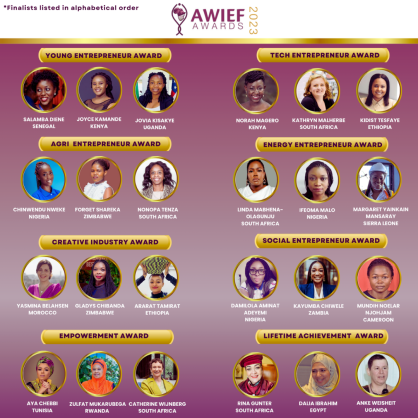
The Africa Women Innovation and Entrepreneurship Forum (AWIEF) (https://www.AWIEForum.org) is delighted to announce the finalists for its 2023 AWIEF Awards.

Launched in 2017, the prestigious annual AWIEF Awards is an initiative to recognise, honour, and celebrate women entrepreneurs and business owners in Africa across various industry sectors for their achievements and contribution to the continent's inclusive economic growth and social development.

An international and independent Panel of Judges selected the twenty-four (24) finalists across eight (8) categories. These outstanding women founders and business leaders operate in a diverse range of sectors and represent companies from fourteen (14) different African countries: Cameroon, Egypt, Ethiopia, Kenya, Morocco, Nigeria, Rwanda, Senegal, Sierra Leone, South Africa, Tunisia, Uganda, Zambia, and Zimbabwe.

The 2023 AWIEF Awards winners will be announced and celebrated at a special ceremony and gala dinner at the AWIEF2023 Conference and Awards, taking place on 9 and 10 November at the Kigali Convention Centre, Kigali, Rwanda.

AWIEF Founder and CEO, Irene Ochem, said: “Given the huge number and calibre of the nominations received this year, it is clear that female entrepreneurship and business leadership is thriving across Africa. It is our honour to recognise and celebrate the achievements and contributions of these women to the inclusive growth of their respective sectors, their countries and the continent's economy.”

A member of the 2023 AWIEF Awards Panel of Judges, John-Paul Iwuoha, Founder of Smallstarter Africa, said: "As a Judge, I was thoroughly impressed by the quality of applications in all the categories. It is great to see how AWIEF continues to attract innovative women across Africa who are creating enormous value for society."

The finalists for the 2023 AWIEF Awards are (listed in alphabetical order):

Young Entrepreneur Award

Salamba Diene, CEO, BIOSENE SARL, Senegal

Joyce Kamande, Co-founder & CEO, Safi Organics, Kenya

Jovia Kisakye, CEO, Sparkle Agro Brand, Uganda

Tech Entrepreneur Award

Norah Magero, Founder & CEO, Drop Access Limited, Kenya

Kathryn Malherbe, CEO, Med Sol AI Solutions, South Africa

Kidist Tesfaye, Founder & CEO, YeneHealth, Ethiopia

Agri Entrepreneur Award

Chinwendu Nweke, CEO, Bridge Merchant Enterprise, Nigeria

Forget Shareka, Founder, Chashi Foods, Zimbabwe

Nonopa Tenza, Founder & MD, Kevinot Farming, South Africa

Energy Entrepreneur Award

Linda Mabhena-Olagunju, Founder & CEO, DLO Energy Resources Group, South Africa

Ifeoma Malo, CEO, Clean Technology Hub, Nigeria

Margaret Yainkain Mansaray, Founder & CEO, Women in Energy Sierra Leone Limited, Sierra Leone

Creative Industry Award

Yasmina Belahsen, Founder, MayaDigital, Morocco

Gladys Chibanda, Founder & CEO, Krafted Ink, Zimbabwe

Ararat Tamirat, Founder & GM, Tuba By Ararat, Ethiopia

Social Entrepreneur Award

Damilola Aminat Adeyemi, Co-founder & CEO, D-Olivette Global Enterprise, Nigeria

Kayumba Chiwele, Founder & Principal Psychologist, MindAid Zambia, Zambia

Mundih Noelar Njohjam, Medical Doctor, Epilepsy Awareness, Aid and Research Association, Cameroon

Empowerment Award

Aya Chebbi, Founder & President, Nalafem Collective, Tunisia

Zulfat Mukarubega, Founder, University of Tourism, Technology and Business Studies, Rwanda

Catherine Wijnberg, Founder & CEO, Fetola, South Africa

Lifetime Achievement Award

Rina Gunter, Founding Partner, Gunter Attorneys, South Africa

Dalia Ibrahim, CEO, Nahdet Misr Publishing House, Egypt

Anke Weisheit, Co-founder & Chair, PHARMBIOTRAC, Mbarara University of Science and Technology, Uganda

Tickets for the AWIEF2023 Conference and Awards are available online at: https://apo-opa.info/3JHKUem

Distributed by APO Group on behalf of Africa Women Innovation and Entrepreneurship Forum (AWIEF).

For more information and media enquiries, email: info@awieforum.org

Media files
Africa Women Innovation and Entrepreneurship Forum (AWIEF)
Download logo
Read moreAfrica Women Innovation and Entrepreneurship Forum (AWIEF) Announces Finalists for 2023 AWIEF Awards
19 September 2023

In-form Desta set to shine at the Absa DASH YOUR CITY JOBURG 10K

Location: MyPR

Following her win at the Absa RUN YOUR CITY TSHWANE 10K in August this year, Ethiopia’s 18-year-old Debash Desta has now set her sights on the final leg of the Absa RUN YOUR CITY Series, the Absa RUN YOUR CITY JOBURG 10K that will take place on National Heritage Day (Sunday 24 September). Desta showcased …

Read moreIn-form Desta set to shine at the Absa DASH YOUR CITY JOBURG 10K
12 September 2023

Boxer Super Dash boasts a quick, flat route in its debut year!

Location: MyPR

Boasting a fast, flat route, the inaugural Boxer Super Run is set to make waves in the streets of Durban on Sunday 15 October 2023. “The lightning-fast route is set to inject a thrilling dose of excitement into the Men’s and Women’s Elite Races,” says Michael Meyer, Managing Director of Stillwater Sports. “We’re confident the …

Read moreBoxer Super Dash boasts a quick, flat route in its debut year!
8 September 2023

SA awarded Chairship of the Africa Green Hydrogen Alliance

Location: News

SA awarded Chairship of the Africa Green Hydrogen Alliance

South Africa will use its Chairship of the Africa Green Hydrogen Alliance (AGHA) to advance the green hydrogen agenda on the continent and support opportunities for peer-to-peer learning, technology transfer, economic and employment opportunities.

This is according to Minister in the Presidency for Electricity, Dr Kgosientsho Ramokgopa, who was handed Chairship of the AGHA on the sidelines of the Inaugural Africa Climate Summit (ACS), which took place from 04-06 September 2023 in Nairobi Kenya.

“Green hydrogen and its associated large scale renewable energy production has the potential to support the expansion of the electricity transmission infrastructure, to add additional renewable energy generation capacity and to support the local development of renewable energy.

“As such it is a key component of South Africa’s future energy mix to achieve sustainable energy security,” the Ministry for Electricity said on Thursday.

AGHA was formed in May 2022 by six African countries, Egypt, Kenya, Mauritania, Morocco, Namibia and South Africa, to drive decarbonisation through green hydrogen.

The alliance seeks to intensify collaboration and supercharge the development of green hydrogen projects on the African continent in line with the Just Energy Transition.

“It focuses on public and regulatory policy, capacity building, financing and certification needs to mobilise green hydrogen production for domestic use and export. The inclusion of the Ethiopia and Angola’s membership were also announced alongside South Africa’s Chairship,” the Ministry for Electricity said.

During the ACS, the Minister participated in panel sessions where he shared lessons on South Africa’s energy outlook and the role of green hydrogen in supporting energy security and driving green industrialisation.

On the margins of the Summit, the Minister engaged in multiple high-level bilateral meetings to explore energy collaborations and meaningful partnerships in the energy space.

The Minister’s participation at the Summit was underpinned by a commitment to consistent, sustainable and affordable energy supply for South Africa. – SAnews.gov.za


nosihle
Fri, 09/08/2023 - 09:30

649 views
Read moreSA awarded Chairship of the Africa Green Hydrogen Alliance
7 September 2023

Deputy Minister Botes concludes Visit to the African Union in Ethiopia

Location: News

Republic of South Africa: Department of International Relations and Cooperation
Download logo

The Deputy Minister of International Relations and Cooperation, Mr Alvin Botes, has concluded his visit to Addis Ababa, Ethiopia, where he participated in the Validation Workshop of the Principles and Guidelines of the Use of Digital and Social Media in Elections.

The General Assembly of the Association of African Electoral Authorities has mandated the IEC to implement resolutions and guidelines for safeguarding electoral integrity in the digital age as well as producing strategies for combating digital disinformation.

The Deputy Minister delivered a speech affirming South Africa's support for the principles and guidelines for the use of digital and social media in elections in Africa.

In his speech, the Deputy Minister said: “It is important for governments and electoral management bodies to take advantage of these digital and social media to inform and capacitate our youth, given that our continent has a youthful populace”.

It is envisaged that following the Validation Workshop, the Principles, and Guidelines on the Use of Digital and Social Media in Elections in Africa will be adopted by the AAEA General Assembly, alongside the Annual Election Management Bodies Forum to be organised by the AU Commission in Cotonou, Benin, in November 2023.

Distributed by APO Group on behalf of Republic of South Africa: Department of International Relations and Cooperation.

Read moreDeputy Minister Botes concludes Visit to the African Union in Ethiopia
7 September 2023

The key to Africa’s industrialisation process and ending the region’s massive energy poverty

Location: News
African Energy Chamber

By Jason Mitchell

Africa's vast natural gas reserves are key to bringing energy to Africa's poorest countries, to a solid industrialisation process throughout the region and to significant poverty reduction.

The region is home to 33 of the world's 46 least-developed countries (LDCs) with an average income per head of less than $1,018 a year. The continent's poorest countries must expand at 6-7% a year if poverty is to be reduced in a big way and if the life chances of hundreds of millions of people are to be improved. To achieve this goal, these countries require abundant and cheap energy. Luckily, for many African states, the answer lies on their own doorstep — natural gas. Gas has remained a niche fuel in sub-Saharan Africa — contributing only 5% of the total energy mix against a global average of 20-25% — but its potential is enormous.

A new vision for Africa is required — a criss-crossing network of natural gas pipelines that brings energy to all corners of the region. The continent's contribution to global greenhouse gas emissions is tiny and will only become slightly bigger if the region's natural gas reserves are exploited. There is also a massive opportunity to wean poor Africans away from the use of biomass fuel and to help protect the region's forests through the rollout of small, liquified petroleum gas (LPG) stoves. Climate change is an issue in Africa but poverty reduction is a bigger one. Poverty is the biggest killer in Africa today.

It's very hard for Europeans and North Americans to imagine what it's like to live on under $1,018 a year, to not have readily available electricity, to not have a refrigerator or a washing machine, to not have a car, to not have a lawnmower, to not be able to fly from one country to another cheaply, to not have electricity in the school or the workplace and to have to use firewood or charcoal for cooking purposes. Fossil fuels have been at the heart of the Industrial Revolution that has brought prosperity and better living standards to the developed world. People in the First World must be very careful if they decide to deny Africans the same chance to prosper.

Africa has the lowest energy use per capita in the world — the average electricity use of a sub-Saharan African resident is lower than that of a household fridge in the United States. Average consumption per person in sub-Saharan Africa, excluding South Africa, is a mere 185 kilowatt-hours (kWh) a year, compared with about 6,500kWh in Europe and 12,700kWh in the US. Every year San Antonio, Texas, with a population of 1.5m people, uses as much electricity as the whole of Nigeria, with 203m people. Golden, Colorado, a small town with only 19,000 people, uses as much electricity as Chad, a country with 16m people.

The UN's Sustainable Development Goal Seven aims to “ensure access to affordable, reliable, sustainable and modern energy for all” by the year 2030. That's a tall order. In 2019, 917m people in Africa (around 80% of the region's population) relied on wood, charcoal, kerosene, animal and crop waste or other solid fuels to cook their food and heat their homes. The International Energy Agency (IEA) reports that almost 490,000 people die prematurely every year in sub-Saharan Africa from household air pollution-related causes — stemming from the lack of access to clean cooking facilities. Gas is a much cleaner form of cooking than biomass and its use should be encouraged. Biomass burning-power plants emit 300-400% more CO2 than natural gas per unit energy produced. Natural gas emits almost 50% less carbon dioxide than coal. 

Africa has one-fifth of the world's population but contributes only 3% to global greenhouse gas emissions. Incredibly, some 48 sub-Saharan African countries, excluding South Africa, have an estimated share of global emissions of only 0.55%. The fact is that many African states are already at net zero. If the continent were to use an additional 90bn cu m of natural gas per year — or 50% more than today — the resulting emissions would only raise Africa's cumulative contribution to global carbon emissions to 3.5% (ten gigatonnes) by the year 2050, according to the IEA. It really is a tiny increase compared to the chance of reducing poverty levels for hundreds of millions of poor people. If Africa is to provide universal electricity access by 2030 it would have to almost double its total generation capacity from around 260gw today to 510gw. 

Almost half the continent's 55 countries have proven natural gas reserves. Across the region, natural gas reserves amount to around 17.5trn cubic metres (cu m), making up around 9% of the world's total gas reserves. They are considerable in northern Africa (accounting for 45% of African reserves) and western Africa (32%), in particular. Commercial quantities of natural gas have been found in many African countries.

Previously, only four countries from the region have been major natural gas production hubs: Nigeria (with total gas reserves of 5.8trn cu m), Algeria (4.5trn cu m), Egypt (2.2trn cu m) and Libya (1.5trn cu m). These four accounted for 78% of African gas reserves in 2021 (https://apo-opa.info/48gDBWG), according to the United States Energy Information Administration.

However, seven African countries — Mozambique, Senegal, Tanzania, Mauritania, South Africa, Ethiopia and Morocco — with no history of fossil gas exploitation have now opened up their doors to gas projects. Some 84% of new reserves in the pre-production stage are found in these states — total new reserves amount to 5.1trn cu m. Mozambique has re-production reserves of 2.3trn cu m, Senegal 779bn cu m, Mauritania 575bn cu m, Tanzania 512bn cu m, South Africa 96bn cu m, Ethiopia 42bn cu m and Morocco 39bn cu m.

Furthermore, major untapped reserves have been discovered in Angola, Cameroon, Ghana, Equatorial Guinea, the Republic of the Congo, Kenya and Uganda. A number of these states — including Mozambique, Tanzania, Mauritania and Senegal — are actively marketing natural gas to capitalise on recent discoveries. In fact, the IEA has declared Africa the ‘new frontier' in global oil and gas.

The big four gas-producing countries will continue to dominate gas production in the near term but experts estimate that Mozambique and the other new entrants will contribute more than 50% of the region's gas production by 2038.

Natural gas can be used for electricity generation, industry and domestic use. Crucially, harnessing Africa's gas could provide the baseload power needed to boost Africa's capacity to process its raw materials locally. It could provide enough energy for industrial processes, including steel and cement production and paper and pulp manufacturing. It could be also used to make fertiliser to raise agricultural yields. Renewables, including solar and wind, cannot yet provide enough energy for these purposes.

The huge reserves of gas can play a significant role in the continent's energy transition, as natural gas has a much lower carbon footprint than oil and coal. Critically, natural gas development and renewable power are not mutually exclusive. If Africa were to triple its use of natural gas, the United Nations Economic Commission for Africa (Uneca) estimates that the region would be able to increase its use of renewable energy eight-fold. Reliable forms of energy such as gas can be used to stabilise a grid powered by intermittent sources such as wind and solar. It can play a key role in a ‘just' energy transition.

However, expanding gas supply across Africa would require a whole web of new gas pipelines and that does not come cheap. A lot of the gas from the new projects already under way in Africa is destined for international markets, including the European Union — which have been seeking new sources of energy since the Ukraine crisis — but it is vital that the region's gas reserves are deployed for domestic use, as well. Nigeria, for example, sits on the continent's largest known natural gas reserves but only 55% of the population had access to secure electricity in 2020.

Multilateral financial institutions (MFIs) — many of which are headquartered in the developed world — are now shying away from investing in natural gas projects in Africa because of pressure from a vociferous green lobby. In 2021, 20 countries — including almost all the world's big, rich democracies — pledged to stop almost all financing of new fossil fuel projects internationally by the end of 2022. Furthermore, under the Glasgow Financial Alliance for Net Zero (GFANZ), 450 financial firms across 45 countries, responsible for over $130trn in assets, committed to accelerate the global decarbonisation process. The problem is that most Western governments and financial institutions do not distinguish between coal, oil and gas, and the pressure to stop funding all hydrocarbons has negatively impacted gas projects in Africa in a big way.  

Some of the continent's biggest financiers — including the African Development Bank (AfDB) — are finding it increasingly difficult to support gas project developments that require loan syndication and foreign partners. The World Bank is pulling back, too. Local banks cannot finance major gas projects on their own, as they are limited by their capital base. In particular, the fossil fuels divestment campaign is having a big impact on the amount of development and concessional finance available. This kind of finance used to support a number of gas projects for their poverty-reducing and economic development value.

For example, without the guarantees of development finance institutions (DFIs), most of Africa's recent gas-to-power plants would have never been built in the first place. The withdrawal of development finance from downstream gas and gas-to-power projects is a serious cause for concern for Africa's electrification effort and moving the needle on energy access.

Furthermore, there is a glaring double standard — many European countries have increased their use of hydrocarbons (coal as well as gas) since Russia's invasion of Ukraine. They are constructing new fossil fuel pipelines at home. The EU recently classified natural gas a ‘green' fuel, which will allow Europe's projects to be backed by investors committed to environmental, social and governance (ESG) principles. European countries are now looking towards African states for new sources of gas. However, they are not prepared to back new gas projects in Africa that would supply the fuel to the region itself. That smacks of hypocrisy of the worst kind. How can you deny the poorest people in the world the sort of energy that you want to use yourselves?

Lumping all hydrocarbons together is a blunt policy mechanism that is not good from an emissions perspective either. In poorer places, like sub-Saharan Africa, the available alternative to gas is not renewable electricity but rather coal, diesel and, most of all, polluting biomass. In sub-Saharan Africa, demand for biomass fuels is expected to surge by 40% by the year 2040 if ‘business as usual' continues. The burning of biomass is a major contributor to global carbon emissions and charcoal has been a top driver of tropical forest loss during the past two decades, with the greatest footprint in Africa. The continent's carbon sinks need protecting and the irony is that the greater use of gas would achieve that.

Africa is home to 18% of humanity but receives less than 5% of global energy investment. And much of this investment goes on producing oil and gas for export. There must be much more investment in the region for the domestic use of gas. Gas projects could play an absolutely vital role in bringing energy to Africa but obviously the projects require financing. DFIs must think again about their decision to limit investment in new projects in Africa. The financing of a network of gas pipelines throughout Africa would be one of the quickest and surest ways of industrialising the region in a big way and of alleviating poverty on a large scale. Renewables just cannot do that how ever much wishful thinking takes place.

In fact, development institutions should go one step further and consider subsiding a massive roll out of small LPG stoves to millions of poor households in the region. It could be one of the biggest moves in contributing to Africa's decarbonisation effort by arresting the pace of deforestation in the region. LPG is recovered from ‘wet' natural gas (gas with condensable heavy petroleum compounds) by absorption and reaches the domestic consumer in cylinders under relatively low pressures. The widespread adoption of LPG stoves would reduce the amount of pollutants in the air from biomass fuels. Poor households that currently depend on woodfuel for cooking require a cleaner cooking alternative — LPG is one of the solutions.

LPG stoves are also suitable for domestic use in rural settings — a key consideration in Africa where energy poverty is greatest in the countryside. For instance, in 2016, electricity access in urban and rural areas in Nigeria was 86% and 34%, respectively, according to the World Bank.

Africa only needs to look to Asia for examples. In 2006, Indonesia implemented a ‘mega-programme' to induce a large-scale transition from kerosene to LPG stoves in order to reduce government spending on kerosene subsidies. The initiative invested in LPG infrastructure, domestic cylinder production and consumer awareness. By 2012, 93% of the target had been reached and LPG consumption had grown by almost 350%.

In India, LPG access expanded through the early-2000s but it was still not reaching most poor families. To boost access among the poor, the Indian government introduced the Pradhan Mantri Ujjwala Yojana (PMUY) Scheme. Under it, the country's oil marketing companies provide subsidies to reduce the cost of both LPG connections and cylinder refills to women in households classified as below the poverty line. In 2016, the cost of a connection was about Rupees 3,200 ($48) and included the first full cylinder (plus deposit), deposit for a regulator, an LPG stove and administrative fees.

Furthermore, African governments must consider increasing domestic gas allocations from liquified natural gas (LNG) export projects. These are an effective way to ensure that even if developers prioritise lucrative exports over local sales, they must reserve part of their production for the domestic market. Upcoming LNG terminals in sub-Saharan Africa — for example, in Mozambique — now make it compulsory to allocate a specific amount of gas to the domestic market. The availability of domestic gas from export facilities can encourage gas-based industrialisation (for example, in Senegal) or additional gas-to-power capacity (Mozambique, Mauritania and Senegal). In August 2022, for instance, Senegal's Petrosen Trading & Services signed an MoU with Turkey's Çalık Enerji and Japan's Mitsubishi for the pre-feasibility study of a gas-based ammonia and urea manufacturing unit.

It is a huge mistake to lump all hydrocarbons together and for Western environmentalists to argue that no new new fossil fuel projects should happen in Africa whatsoever. Deforestation is one of the biggest issues in Africa today. Poor Africans must be weaned off the use of wood-based fuels. The widespread adoption of small LPG stoves would be one of the surest ways of reducing deforestation. Natural gas could also form the basis for a solid, large-scale industrialisation process in Africa — something that is essential if the region is to achieve the sort of economic growth needed to lift hundreds of millions of people out of poverty.

Distributed by APO Group on behalf of African Energy Chamber.

Media files
African Energy Chamber
Download logo
Read moreThe key to Africa’s industrialisation process and ending the region’s massive energy poverty
7 September 2023

DIRCO Deputy Minister concludes visit to Ethiopia

Location: News

DIRCO Deputy Minister concludes visit to Ethiopia

International Relations and Cooperation Deputy Minister, Alvin Botes, has concluded his visit to Addis Ababa, Ethiopia. 

The Deputy Minister was participating in the Validation Workshop of the Principles and Guidelines of the Use of Digital and Social Media in Elections. 

The General Assembly of the Association of African Electoral Authorities (AAEA) has mandated the Electoral Commission of South Africa (IEC) to implement resolutions and guidelines for safeguarding electoral integrity in the digital age as well as producing strategies for combating digital disinformation. 

The IEC is supported by the Department of International Relations and Cooperation (DIRCO) through the African Renaissance Fund.

The Deputy Minister delivered a speech on Tuesday affirming South Africa’s support for the principles and guidelines for the use of digital and social media in elections in Africa. 

In his speech, the Deputy Minister said: “It is important for governments and electoral management bodies to take advantage of these digital and social media to inform and capacitate our youth, given that our continent has a youthful populace”. 

Botes told delegates that digital and social media can also be harnessed to reach various sectors of society, including those in rural areas, as well as those living with disabilities to ensure that no one is left behind.

However, he said necessary infrastructure should be put in place for countries to be able to take full advantage of these technological developments.

“In addition to the information and communication infrastructure, there is a need for the appropriate legislative and regulatory system to be put in place that would facilitate access to information and the exercise of the right to freedom of expression and association, in line with the various constitutions in place across our continent, as well as the attendant responsibilities that go with the exercise of such rights,” he added. 

It is envisaged that following the Validation Workshop, the AAEA General Assembly, alongside the Annual Election Management Bodies Forum to be organised by the AU Commission in Benin, in November 2023, will adopt the Principles, and Guidelines on the Use of Digital and Social Media in Elections in Africa. – SAnews.gov.za


Gabisile
Thu, 09/07/2023 - 10:31

169 views
Read moreDIRCO Deputy Minister concludes visit to Ethiopia
  • Previous
  • Page 1
  • Interim pages omitted …
  • Page 7
  • Page 8
  • Page 9
  • Page 10
  • Next

Copyright © 2026 · MyZA · All Rights Reserved · Powered by Stratlec Online