Elections 2024: South Africa is one of the few African countries where prisoners can vote
But the right of prisoners to vote has at times been resisted by the government and the Independent Electoral Commission

MyZA
News, Directory, Events and Other Stuff
But the right of prisoners to vote has at times been resisted by the government and the Independent Electoral Commission
Insufficient evidence against man accused of starting devastating fire that destroyed four houses
Heavy rains, high winds and fires devastate homes in past few days
Agriculture in South Africa is growing. The primary agricultural sector has increased by an average of 7.5% per year since 2008, outpacing the total economy, which grew by 6.6% on average per year over the same period. Despite its relatively small share of the total GDP, primary agriculture is a significant provider of employment, and …
Integrated Emergency Response (iER) a comprehensive emergency response solution designed to provide unparalleled peace of mind and safety for its users, discusses eight common types of workplace emergencies. “Millions of employees are likely to experience life-threatening incidents while at work. Although some accidents are unavoidable and can be prevented,” says iER manager Monique Delport. Read …
Tsepho portable power brings light to informal settlements
A youth-led enterprise from Vrygrond in the Western Cape, is switching on lights, plugs and lives through its portable power stations solution.
Fuelled by a desire to make an impactful change, three young entrepreneurs, Vincent Mosebe, who is the founder and CEO of Mosebe Enterprise (ME); Leandro Antonio, Marketing Director; and Donovan Pedzai, Chief Operations Officer, set out to revolutionise the energy sector.
They used recycled materials to create the power stations for underserved and rural communities in the Western Cape and beyond.
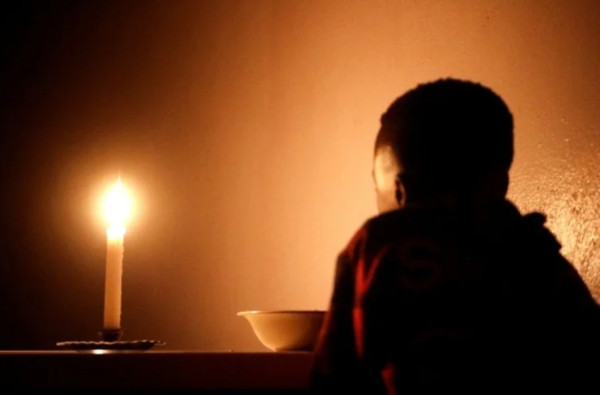
Their pilot flagship power station “Tsepho – The Power of Hope” is an innovative 10Ah [amp-hour] solar charge energy solution that targets informal settlement households who would otherwise utilise unsafe power methods, including candles and illegal connections, that often lead to settlement fires - and those at the mercy of constant and pro-longed power outages and cable theft.
The trio are exhibiting alongside other start-ups, Small, Medium and Micro Enterprises (SMMEs), investors and policy makers at the Global Entrepreneurship Congress+Africa.
The congress is a gathering of entrepreneurs and leaders from 43 African countries, which is currently underway at the Cape Town International Convention Centre in the Western Cape.
Through the organisations funded to implement development entrepreneurial programmes for youth not-in-education-employment-or-training (NEET), the National Development Agency (NDA) extended the invitation to 23 entrepreneurs to afford them a linkage opportunity to showcase their businesses, network and participate as delegates at the conference.
The NDA is an agency of government that reports to the National Assembly. It was formed in 1999 as government’s response to the challenge of poverty and its causes in South Africa.
Mosebe said their power stations address safety and electrification problems experienced by residents in informal settlements.
“Currently, statistics report that an average of 10 shacks catch fire per day in South Africa. We have first-hand experience and have lost personal belongings and community lives to shack fires, having grown up in Vrygrond.
“Tsepho offers a sustainable, affordable, reliable, and eco-friendly power solution that has features, including multiple USB ports, a powerful lithium-ion battery with solar compatibility and 1 12v LED light bulb. Tsepho is not just a device; it is a catalyst for change – a beacon of hope that will bring about a brighter sustainable future,” Mosebe said.
The entrepreneurs have leveraged personal funds to scale production and conduct on-the-ground research.
Mosebe said their immediate plans include expanding production capacity, extending reach to new communities, and fostering more collaborations for future social impact and export.
He said the power station range also includes a bigger version “2 Tsepho” with similar capabilities including an additional feature of a bug-repellent UV light that exterminates insects and bugs (pest control).
“With this power station, we are targeting campers and the caravan community who need extended power. Our next goal is to extend the products further into African countries that struggle with Malaria cases. Additionally, there are two more ranges with extended power capabilities to power up a single power socket that can power up a fridge or microwave.
“The largest, ‘version 3’, packs up a 20.8Ah battery and a 300W inverter offering increased power capacity. This would be a useful tool for students – they can charge laptops and keep WIFI going during outages, promoting a consistent learning experience.
“The starter pack retails from R1 500 without the solar panel. We also offer warranty up to a year for any technical faults,” Mosebe said.– SAnews.gov.za
GabiK
Thu, 03/14/2024 - 12:40
Some have not reopened since Covid lockdown
They say their structures are falling apart and the area has become unliveable
Call for improvement in efforts to deal with new alien species
With new alien species continuing to arrive in the country every year, Minister of Forestry, Fisheries and the Environment, Barbara Creecy, has called for enhanced efforts to prevent the introduction of new invasive species through vigilance at borders and risk analyses.
“Early detection and rapid response systems should be strengthened to identify and eradicate invaders before they become established. We must continue investing in research and innovation, supporting studies that enhance our understanding of invasive species dynamics to improve management strategies,” Creecy said on Friday in Pretoria.
The Minister was addressing the launch of the report on the 3rd National Status of Biological Invasions and their Management in South Africa, which shows that over the last decade, 32 new alien species were either illegally or accidentally introduced, a rate of approximately three introductions per year.
“It is essential to recognise that the impacts of biological invasions extend beyond the realm of biodiversity alone. They have far-reaching consequences on our economy, agriculture, water resources and public health. Invasive species can devastate agricultural lands, leading to reduced crop yields and increased production costs.
“They can also impair water quality, clog waterways, and impact our ability to access clean drinking water. Additionally, some invasive species pose risks to human health by acting as carriers of diseases or causing allergic reactions,” the Minister said.
She said the national status report on biological invasions serves as a clarion call for action and is a reminder of the urgency of the situation and the imperative to act decisively.
“By working together, we can protect our natural heritage, restore damaged ecosystems and secure a sustainable future for South Africa. I urge all stakeholders to embrace the findings of this report.
“Let us unite in our resolve to address the challenges of biological invasions, ensuring that South Africa remains a beacon of biodiversity and a sanctuary for our precious indigenous plants, animals and ecosystems that support sustainable development and human wellbeing,” Creecy said.
South Africa has an innovative regulatory system to address biological invasions, with decisions being more directly informed by the available scientific evidence.
“For example, all legal introductions of new alien species require import permits and are issued only if the risks are demonstrated to be sufficiently low. In addition, the new National Border Management Authority has committed to improving the prevention of illegal and accidental introductions,” the Minister said.
The report shows that invasive species, in particular trees and freshwater fishes, have major negative impacts on people and nature across the country by reducing South Africa’s water resources, degrading pasturelands and exacerbating fires.
“In mountain catchments, we are seeing pine trees using up water, increasing the intensity of wildfires, and crowding out biodiversity. Alien freshwater fishes are invading our water resources, reducing the diversity of our native fishes and other aquatic organisms,” the Minister said.
Between 2020 and 2022, government invested over R1.5 billion to address biological invasions, targeting priority areas such as strategic water source areas, protected areas and biodiversity hotspots.
“These interventions have also created much-needed employment, especially in rural areas. Several notable initiatives by non-governmental organisations (NGOs) raised over R180 million from the private sector to fund the control of invasive freshwater fishes and alien plants in the water catchments around Cape Town. This model could be replicated across other catchments and priority areas,” the Minister said.
According to the report, there are 44 alien species on Marion Island, over half of which are invasive, while there are eight alien species present on Prince Edward Island, all of which are invasive.
“Biological invasions on the Prince Edward Islands are being addressed through effective biosecurity and on-island management. The house mouse is the most harmful alien species on Marion Island. The mice feed on plants, invertebrates, and endangered seabirds.
“They also affect ecosystem processes such as sediment movement rates and nutrient cycling. Bold plans to eradicate the house mouse from Marion Island have been developed and are due to be implemented in 2027.
“The eradication of mice from Marion Island is essential if its unique biodiversity is to be preserved. There is, however, still much work to be done,” the Minister said.
Link to the report: https://www.sanbi.org/resources/documents/. - SAnews.gov.za
nosihle
Fri, 03/08/2024 - 12:53
The City of Cape Town is considering partnering with alternative energy providers for informal settlements
Emergency housing team to assist Nongoma storm victims
Human Settlements Minister Mmamoloko Kubayi has dispatched the department’s emergency housing team to establish the extent of damage caused by a storm that hit several houses in Nongoma, KwaZulu-Natal, on Saturday.
According to the department’s preliminary assessments, to date, several households in Ekubuseni, Gomodo and Holinyoka villages were largely affected, leaving four households homeless.
Kubayi said after the completion of the assessments, the Emergency Housing Unit will then intervene based on the four categories of emergency housing interventions provided by the department.
The four categories of emergency housing interventions include restoration, relocation, rebuilding and repairs.
Restoration provides building materials to all households whose structures were destroyed by the storm, while relocation provides Temporary Emergency Accommodation (TEAs) for all homeless families.
Rebuilding involves reconstructing Temporary Residential Units (TRUs) for all destroyed mud houses, while repairs include fixing all damaged formal houses after the National Home Builders Registration Council (NHBRC) has completed the structural assessments.
“I have directed officials to ensure that affected households are assisted as a matter of urgency. We have roped in one of our agencies, the NHBRC, to help the team assess the integrity of all structures that have been affected,” Kubayi said.
Established in 2023, the Emergency Housing Unit is tasked with the responsibility of responding to emergencies, including fires and floods.
This is done through collaboration with other spheres of government.
“Our main objective in emergency housing response is to ensure that we respond swiftly and provide solutions that will enable the affected communities to rebuild their homes,” the Minister said. – SAnews.gov.za
GabiK
Mon, 02/19/2024 - 10:10
Premier Alan Winde, Anton Bredell, Western Cape Minister of Local Government, Environmental Affairs and Development Planning as well as senior members of the Western Cape Government were this morning updated by Eskom on the electricity outage in the Central Karoo and parts of the Overberg.
The Western Cape Government is monitoring the situation closely and is prioritising safe drinking water, food security and access to critical health care for affected residents. “Thank you to everyone from across government and all our partners for the work you are doing to assist our residents. I am also very grateful to the teams that are keeping our health facilities like our hospitals running and our schools open in the affected areas,” noted Premier Winde.
Premier Winde was tragically informed earlier this morning that an 18-year-old person died, and another adult is in hospital. While the cause of death still needs to be confirmed it is suspected that they may have been overcome by fumes form a generator being run inside a house to power a spaza shop in Leeu Gamka. “My deepest condolences to the family and loved ones. My thoughts are with you. I understand how difficult the situation is for people who have been without power for over four days now. This is why we are meeting with Eskom regularly to ensure that all the repair work is prioritised and supported because we know how critical electricity is for our residents. While I understand how difficult the situation is, I want to appeal to residents to please use any alternative power sources, such as generators, according to the safety guidelines.”
According to Eskom management, essential construction material was delivered on site in the Karoo, and the first of three large construction teams are already active on the site to prepare for the erection of temporary structures needed for the eventual reconnection of the Touwsriver-Laingsburg 132KvH line, which as been down since Saturday, 3 February.
Eskom also reported that the fault on the Hawston Farmer 1 Line has to a large degree been restored. A mini substation still needs to be replaced today, and power should be restored in the entire region by the end of today.
Minister Bredell said that after visiting affected communities in Prince Albert and Laingsburg yesterday, he cannot emphasise enough the urgency needed to restore power to these communities. “As a provincial government, our focus remains the safety and well-being of our residents. We are constantly monitoring the status of essential services. We will continue to offer all possible support to Eskom in repairing the line as fast as possible.”
Minster Bredell confirmed the delivery of several generators to communities to support essential services such as drinking water and sewage management. “100 kVA generator for Water Treatment in Laingsburg was installed. A 45 kVA generator for water provision in Matjiesfontein is being installing today. A 100 kVA and a 40kVA generator for water provision in Prince Albert will be delivered today.”
The following large generators will be dispatched for installation in central business areas:
According to the Provincial Department of Health, the use of generators, open fires, as well gas appliances in poorly ventilated areas brings with it the risk of carbon monoxide poisoning, as well as posing as a fire risk. Carbon monoxide is often difficult to detect, due to it having no odour or colour. Exposure to high levels of carbon monoxide leads to it replacing the oxygen in the blood stream. This will lead to progressive onset of symptoms such as headache, weakness, shortness of breath and loss of consciousness. Should carbon monoxide poisoning be suspected, it is important to urgently get the victim out of the poorly ventilated environment. Fresh air is required, and medical assistance should be immediately sought.
Distributed by APO Group on behalf of Western Cape Local Government, Environmental Affairs and Development Planning, South Africa.
Winde thanks roleplayers battling wildfires around the Cape Winelands
Western Cape Premier Alan Winde visited a mobile disaster management incident command centre near Wolseley on Monday after wildfires erupted in the Cape Winelands district and surrounding areas.
The fires have been raging for over a week, with high temperatures and strong winds fuelling the flames.
Affected areas include Hangklip, Buffeljags Bay, Karwyderskraal and Grabouw.
According to the Premier’s Office, fire teams in the Breede Valley and Witzenberg areas were given a slight reprieve on Sunday evening as temperatures dipped and winds subsided.
“But that was unfortunately short-lived. Winds picked up again compounding the already difficult situation.”
Despite the thousands of hectares of land that have burned, the Premier said he was relieved there has been no loss of life.
However, he said he remained very concerned about the situation generally.
“Fires are volatile and unpredictable. Coupled with the hot, windy weather, these fires have stretched our emergency teams to their limit. But I have all the confidence in our entire disaster management network to eventually bring the blaze under control, with officials in the public and private sectors working together around the clock to protect lives and infrastructure.
“Our disaster management staff have gone from floods to fires and I know the significant toll that it takes on our dedicated staff and all the volunteers who always step up,” Winde said.
Winde has described as "heroes" a group of firefighters who had come off the line for a break, having worked throughout Sunday evening.
“You make us all very proud,” he told the firefighters.
According to the Provincial Disaster Management Centre (PDMC), there have been more than 4 000 fires across the Western Cape this summer, of which the vast majority have been recorded in Cape Town.
The Premier urged the public in fire-affected regions to heed the advice of officials and be vigilant.
“There can be no doubt that climate change is a major factor. That is why the Western Cape government is taking this crisis extremely seriously by planning accordingly for the future and by building up the resilience of our province. We are doing all we can to enable the private sector to pivot to renewable energy to help mitigate the climate crisis,” he stressed.
City of Cape Town's Mayco Member for Safety and Security, JP Smith, announced this morning that the fire line in Hangklip was completely extinguished.
“All our firefighters are safe and accounted for. There are no injuries and no damages to any of our vehicles or equipment,” Smith explained. – SAnews.gov.za
Gabisile
Tue, 01/30/2024 - 12:00
29 December 2023: St. Francis Bay, Eastern Cape – Issue Seven of the local magazine Wildside Times is free from various outlets. You can find your copy at the SUPERSPAR Village Square in St Francis Bay, The Bakery in the old village, and Blue Bottle Store. Alternatively, you can read it online at issuu.com In a time …
Celebrating SA’s firefighters
South Africa’s deployment of firefighters internationally this year, has yet again proven that our country’s ability for wildfire firefighting is becoming more and more recognised.
“Our multiple deployments to Canada in 2023, is a vote of confidence in our wildfire firefighting capacity and abilities. We must be extremely proud of our deployees who have been selected,” Working on Fire Managing Director Trevor Abrahams told SAnews.
Working on Fire (WoF) has had four deployments of firefighters and management to Canada since June 2023.
Abrahams who was the leader of the first group to head to Canada on 3 June, said 2023 has been Canada’s worst fires season in recorded history. The north American country has had over 6330 fires which have destroyed at least 17 hectares of forest.
Working on Fire is an Expanded Public Works Programme (EPWP) aimed at providing work opportunities to young men and women. It resides under and is funded by the Department of Forestry, Fisheries and the Environment.
Asked about the process followed prior to the deployment of teams, Abrahams said firefighters and management within WoF were given an opportunity to apply to be placed provided that they met the minimum criteria.
The criteria that firefighters needed to meet included being in possession of a valid passport; being qualified with a minimum of three-years of firefighting experience, as well as being in possession of a valid yellow card.
A yellow card in South Africa indicates that one has undergone recurrency certification and is fit to be on the fire line and trained in the use of Canadian water pump machines.
All WoF teams were assembled in Mbombela in Mpumalanga at the Kishugu Training Academy, where they underwent a three-day refresher training camp prior to departure.
This year’s deployment was the fifth collaboration between South Africa and Canada in terms of the exchange of personnel. Previous deployments to Canada were in 2015, 2016, 2019 and 2021.
Memorandum of Understanding and deployment
The deployment of South African wildland firefighters to Canada came in response to a request for assistance from the Canadian Interagency Forest Fire Centre (CIFFC) in terms of the existing emorandum of Understanding (MOU) between the governments of the two countries.
Signed in 2019, the MOU provides for the exchange of wildland fire management resources between the two countries.
Working on Fire has had four deployments totalling 860 firefighters and management to Canada since June and Abrahams whose team returned on 8 July 2023, said South African firefighters received “huge” praise from Canadian wildfire authorities as well as other international firefighters who were deployed in Canada.
Bringing the fiery South African soul to camp
“Our firefighters were lauded for their energy, their strong work ethic and observance of safety measures on the fire line, as well as for the way they have accustomed themselves to the conditions in Canada, where wildland firefighting conditions are different from what they were used to in South Africa.”
He added that the 2023 deployment was the largest ever with 30% of the deployed personnel being women.
The teams were hailed for their commitment and atmosphere they brought to the firefighting camps.
“Their infectious spirit, witnessed through viral videos on social media, ignited international curiosity about these dedicated South Africans who journeyed thousands of kilometres to confront Canada's wildfire challenge.”
He adds that firefighters from the United States, Australia, France, Mexico, South Korea and Portugal among others, joined in the firefighting efforts.
He said the South African firefighters’ dancing and singing prior to going to the fire line and when returning in the afternoons had made them a great hit.
“This rich harmony of our firefighters who come from all over South Africa, with different languages and cultural practices, has also served as an inspiration for many Canadians. Singing and dancing is part of our tradition and even at wildfires in South Africa. Our firefighters are doing this as part of preparing themselves mentally for the day’s work and to show unity and commitment. It serves to uplift them but also importantly, to raise the morale of the communities and land owners where they go to fight wildfires.”
A different terrain
As the second largest country in the world and one of the world’s most forested countries, Canada's “massive fires are quite different from what we are used to fight in South Africa,” Abrahams said.
“In South Africa, wildland fires are typically much smaller than those seen in Canada and without nearly as much fuel, and they're usually fought by firefighters carrying backpacks with 20 liters of water and tankers nearby to resupply them. Fire beaters and rakes are also a common part of the equipment carried by South African firefighters during wildland fires here at home.
“Fuel loads are also quite different as in South Africa our firefighters encounter mostly fynbos, veld, grassland, and vegetation fires, as well as forest fires in commercial plantations, whereas in Canada, it is the forest fires which are the predominant fuel which is burning,” he explained.
In addition, Canada arms its firefighters with more advanced and detailed weather forecasts, and with information on moisture content in vegetation, to predict fire behaviour at any point in time. The Incident commanders also use infrared scans to identify hot spots — technology not routinely used in South Africa.
“Canadian fires also have different features from fires in South Africa, with smoldering peat fires that can burn below ground in the Canada woods. Safety risks are also different in that the shallow plate root system of Canadian arboreal forests results in huge trees toppling over after fires have affected their shallow root system.”
He adds that the Canadian deployments have become routine enough that Working on Fire trains its firefighters in how to operate a particular pump that is a fixture in fighting Canadian fires, but little used back home.
“Our firefighters adjusted to these differences fast, and our crews are divided into smaller teams who work in different areas, and we team experienced firefighters with those new to Canada.
“While South Africa’s wildland fires do not (yet) take on the dimensions of some of the fires experienced in Canada, the experience in being deployed amongst international teams results in learning how to fight mega fires; learning different weather patterns; learning different techniques when dealing with ‘fuel types’ not experienced in South Africa,” he said.
Climate change
Asked about how climate change is affecting the work of firefighters, Abrahams said the Canadian wildfires and the deadly and catastrophic wildfires seen in Maui (Hawaii), Algeria, and Europe and those seen in the North West and Free State provinces are “sounding alarm bells on the growing risks posed by global warming and climate change and warning governments across the world to put in place wildfire risk reduction measures.”
His comments come amidst the recent fires that hit Simon’s Town and the Cape Winelands District Municipality (CWDM).
“With global warming propelling climate change, temperatures will rise over the next couple of decades which will lead to dryer conditions, and this will lead to more frequent fires fuelled by hotter conditions as temperatures rise.
“Meteorologists and weather experts have all concluded that a combination of climate change and the global weather phenomenon El Niño is believed to be contributing to these extreme weather events.”
He added that South Africa has not and will not be spared these impacts of climate change.
“The 2022 catastrophic and unprecedented flooding experienced in KwaZulu Natal has been widely attributed in part to the impact of climate change.
“The 2023 released UN [United Nations] Environment programme (UNEP) study on climate change, ‘Spreading Like Wildfire’ suggests that the increase in extreme wildland fires is likely to grow by 14% by 2030, 30% by 2050 and 50% by the end of the century,” he adds.
“It is our belief that these successful 2023 Canadian deployments will go a long way in ensuring that our firefighters and management are more capable and ready to respond to mega wildfire threats in South Africa.” - SAnews.gov.za
Neo
Thu, 12/28/2023 - 11:18
Public urged to follow instructions of firefighting authorities in Simon’s Town
The public has been urged to follow instructions from firefighters managing the wildfire in Simon’s Town.
“We have a strong and professional team on the ground, and we request that the public do not panic and work with us.
“Our officials will request residents well in advance if they need to evacuate, and all firefighting decisions being made is with the safety of the public as number one priority,” Western Cape MEC for Local Government, Environmental Affairs and Development Planning Anton Bredell said on Wednesday afternoon.
The fire has been burning since Tuesday morning and firefighting efforts are currently focused on the flank moving from Castle Rock towards Simon’s Town.
The Provincial Disaster Management Centre has availed provincial aerial resources to the Simon’s Town fire. Currently, there are four Huey helicopters and a spotter plane, as well as an Oryx helicopter from the South African Defence Force, deployed.
“Staff from Working on Fire, Volunteer Wildfire Services, NCC Environmental Services, the City of Cape Town and South African National Parks (SANParks) have through Tuesday night worked tirelessly to protect people and property until they could be supported with aerial water bombing again since daybreak today,” the MEC said.
While Simon's Town is being addressed, several wildfires in the Cape Winelands District Municipality (CWDM) also need attending to.
Firefighters from CWDM Fire Services, CapeNature, Winelands Fire Protection Association, NCC Environmental Services and aerial resources from Leading Edge has been engaged in active firefighting on several fronts.
The provincial government said a fire is burning through dense and inaccessible vegetation along the Berg River in the vicinity of the Berg River Dam outside Franschhoek.
Efforts are focused on preventing the spread to farms and nearby infrastructure. A fire in Du Toit’s Kloof outside Paarl is currently mostly contained, with ground crews attending to isolated hot spots, monitoring for flareups, and doing general mopping up work.
The Western Cape Provincial Government has budgeted R16 million for the current wildfire season.
“Fires due to natural causes, such as lightning strikes or rockfalls, account for less than 3% of all wildfires. The other 97% is caused either intentionally, 25%, or through negligence, 72%. These statistics show the huge role ordinary citizens can play to protect not only our natural environment, but also our personal safety and infrastructure, from runaway wildfires,” the MEC said.
Bredell asked that people report any sighting of a fire as quickly as possible to the closest authorities.
“Experience over many years has taught us that the faster the initial response, the better our chances are of successfully controlling a fire before it spirals out of control,” he said.
The following numbers can be contacted to report any fire sightings:
-SAnews.gov.za
nosihle
Thu, 12/21/2023 - 10:59
18 December 2023 St Francis Bay’s Wildside TIMES Magazine Holiday Edition is Out St Francis Bay: Issue 7 of St Francis Bay magazine Wildside TIMES is out, and it is an array of local news, events, interviews, reviews, and national and global news. A glossy full-colour free magazine, Wildside TIMES is a popular …
By NJ Ayuk, Executive Chairman, African Energy Chamber (http://www.EnergyChamber.org)
When examining how fossil fuel exploration, production, and usage differ between African and more developed nations, the contrast is so stark that it essentially defines the core mission of the African Energy Chamber (AEC). We exist not to bring these rates on par with each other but to amplify Africa's standing in the global energy industry such that it results in massive improvements in the quality of life across the continent.
Consider this: While Africa holds roughly 13% of global natural gas stores and 7% of its oil, when it comes to per capita use of these hydrocarbons for energy, Africa's consumption rate is the world's lowest.
Or this: While we're under pressure to adopt renewable energy resources, Africa already relies on renewables more than any other continent, but this refers to the wood and cow dung that fuel the cooking fires, which account for essentially half of Africa's energy consumption. Of course, both are linked to hazardous indoor air quality, adding to the already long list of vexing issues that many Africans must deal with daily.
In total, nearly one billion Africans have no access to clean cooking fuels. Another 600 million, with a majority living in the sub-Saharan regions, survive without access to electricity from any source.
Africa deserves relief from such difficulties.
As much as the African people stand to benefit from access to their own fossil-fuel resources, Africa's hydrocarbon-bearing nations possess a vast wealth they're willing and ready to share with the world. The prospect of forging development partnerships with foreign nations and international oil companies would offer much of Africa a path toward modernization, advancement, and prosperity while at the same time providing much-needed energy security to its business allies abroad.
We've been waiting for Africa to take its place alongside the equally resource-rich yet developed regions of the globe for far too long. However, Africa's readiness for this overdue transformation comes at a strange time in modern history. Just as we've observed increases in GDP per capita and average life expectancy parallel the proliferation of fossil fuels, we've also seen the rise of a small but vocal and influential minority that has set out to obstruct their continued extraction.
Activists and ill-informed ideologues mainly comprise this opposing faction. And either knowingly or as a result of having been taken in by false promises, they propose alternative energy solutions which are still far too expensive for Africa to implement effectively.
Africa needs affordable, readily available energy, but this group has steadily garnered sway over individuals, financial institutions, and world governments, convincing them that, for the sake of the planet's health, Africa's untapped resources must indefinitely remain right where they are today.
Over the years, these activists brought many to their side, ratifying their intentions through measures like the Paris Agreement of 2015 and the Glasgow Climate Pact of 2021 that require signatories to commit to green energy initiatives at home and abroad.
This movement proved effective in achieving its own goals and was allowed to carry on with its agenda unimpeded for many years. However, recent global events have rather suddenly forced both participants and onlookers to reconsider the merits of its claims and the value of any allegiance to it.
Eastern Aggression, Western Hypocrisy
When then-U.S. President Donald Trump, speaking before the United Nations General Assembly in 2018, warned Germany against their dependence on Russian energy, the German delegation in attendance famously snickered at his concerns. After Russia's invasion of Ukraine in 2022, the European Union's sanctions against the Russian energy sector that followed, and the subsequent sabotage of the Nord Stream pipelines, Trump's remarks appear more prescient in retrospect than they did at the time.
The war in Ukraine and the supply chain disruptions and fuel price spikes it induced sent world leaders scrambling to secure new energy sources for their countries.
Spring 2022 saw a frenzy of energy industry activity as Italy's foreign minister brokered new liquid natural gas (LNG) deals with Angola and the Congo, Germany engaged in gas talks with Senegal, and the energy ministers of Algeria, Niger, and Nigeria pledged to accelerate their work on the long-delayed Trans-Saharan gas pipeline project.
Even President Joe Biden, who notably vowed to end the United States' involvement with fossil fuels during his campaign, reached out to Saudi Arabia, urging the nation to increase oil production.
Coal: Don't Call It a Comeback
The 2021-2023 global energy crisis also led many nations to continue or increase their reliance on coal — the fossil fuel even conventional oil and gas companies are quick to disparage due to its negative impacts on human health and its history of environmental harm.
With their own power generation capacities in peril thanks to war shortages, below-average winter temperatures, overcast skies, and a wind drought that still threatens to starve turbines across Europe, the countries often most critical of Africa's modernization ambitions rushed to refill their stores of the very fuel they had scheduled for phase-out years before.
According to the International Energy Agency's mid-year Coal Market Update, global coal consumption grew by 3.3% in 2022, reaching an all-time high of 8.3 billion tons. While 2023 and 2024 might show a slight decrease in coal-fired power generation, the 1.5% rise in industrial coal use expected with improving economic conditions during the same period will likely negate this drop.
Putting a pause on an initiative begun in 2015 to shutter all its coal-fired power stations, the United Kingdom relaxed permitting conditions in July 2022, keeping its remaining plants operational albeit on standby into 2024.
Around this same time, the EU imported roughly 11 times more coal than usual from Australia, South Africa, and Indonesia.
In August of 2023, in a move highlighted by opponents of the green agenda, German energy firm RWE began dismantling its wind farm in North Rhine-Westphalia to allow for the expansion of its Garzweiler II lignite coal mine.
Had these nations engaged in more earnest development negotiations with African oil and gas producers when we suggested they should, perhaps they would have found a better footing for dealing with unforeseen climate-related events, natural or political.
Gas Gets the Greenlight
In a move that helped to lessen the stigma cast upon a fuel much cleaner burning than coal, the EU voted in 2022 to officially recognize natural gas as a “green” or “sustainable” energy source. Unsurprisingly, this decision angered environmental activists. At the AEC, though, we support this development; we regard natural gas as crucial to Africa's battle against energy poverty and key to its future success as a sizeable supplier for the international market.
While the EU was at one point one of the loudest voices calling for full-scale decarbonization, we applaud this concession as this more positive classification will likely encourage European investment in African natural gas projects. And, as the AEC has always suggested, it will support our eventual transition to an emissions-free, fully renewables-based energy economy.
Our critics breathlessly warn us that future price drops could render African natural gas suppliers unable to compete against larger, established producers. Naysayers suggest that renewable energy technology will get up to speed and become widely adopted before any new African natural gas outfits can get underway. While these cynics regard oil and gas as merely trends in danger of falling out of fashion by next season, we remain confident that we are on the best course for Africa's future.
And while the wealthy, developed nations of the world have much to say about appropriate energy solutions for Africa, even as they flout the rules they've set for their own, we know we are in pursuit of the most beneficial gains for our people.
Just as the fuels that supported humanity progressed from wood to coal to oil as economies and technological needs evolved, so too will Africa's — naturally, and never as a consequence of dictated policy.
Distributed by APO Group on behalf of African Energy Chamber.
In homes across the country, many South Africans are preparing for the traditional spruce-up ahead of the festive season. Our teens may roll their eyes as we cajole them to take down the curtains, but we just like to start the new year with a clean slate. It’s as much in preparation of welcoming family …
Human settlements MEC promised them building materials
Community leaders say elections make no difference to their terrible living conditions
A Spectacular Adventure for the Whole Family to Embrace the Great Outdoors Looking for a memorable hiking experience in the breathtaking countryside, followed by warm camaraderie around a crackling campfire with your family and friends? Look no further! Mark your calendars for February 16 to 18, 2024, because Hi-Tec is excited to announce its inaugural …
Electricity theft has left Nomsa Maphongwana Primary School in Mandela Park with a Eskom bill of more than R167,880
Fire leaves 250 people homeless
Over 200 people have been left homeless after a fire broke out at the Plastic View informal settlement, the City of Tshwane’s Emergency Services Department said.
The incident happened on Saturday morning.
“One patient was treated for smoke inhalation and moderate injuries, and three [others] were treated for minor injuries on the scene but refused transport to a medical facility. Two hundred and fifty people lost shelter and personal belongings because of the fire,” said the department.
A total of 45 shacks were gutted.
Emergency services arrived at the scene to find shacks on fire at the settlement located east of Pretoria. The fire was contained and subsequently extinguished.
“The Tshwane Emergency Services Department will intensify public awareness campaigns at this informal settlement as part of continuous education to the communities on fire safety and disaster risk reduction. The department calls on residents to use paraffin stoves with extreme caution, never leave open fires without adult supervision or unattended, or overload electrical plugs with appliances. Illegal electricity connections are a fire and life hazard, which residents should always be aware might lead to emergency incidents,” it said.
Meanwhile, the Tshwane Emergency Services Department, together with the city’s Community and Social Development Department, are coordinating relief efforts for those affected by the fire.
The cause of the fire is still under investigation. – SAnews.gov.za
Neo
Sat, 11/04/2023 - 18:17