• Skip to main content
  • Skip to header right navigation
  • Skip to after header navigation
  • Skip to site footer
MyZA

MyZA

News, Directory, Events and Other Stuff

  • Social Media
  • Sport
  • World News
  • Home
  • Submit News
  • Directory
  • Events
  • Stratlec
  • TFSA
  • News
    • APO
    • Today’s Sport News
    • Todays Social Media and Tech Headlines
    • Today’s World News
    • Today’s SA Financial News
  • Contact
You are here: Home / News / Call for improvement in efforts to deal with new alien species

Call for improvement in efforts to deal with new alien species

8 March 2024 by Guest

Call for improvement in efforts to deal with new alien species

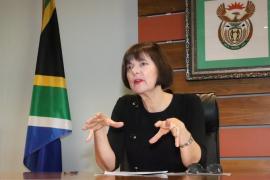
With new alien species continuing to arrive in the country every year, Minister of Forestry, Fisheries and the Environment, Barbara Creecy, has called for enhanced efforts to prevent the introduction of new invasive species through vigilance at borders and risk analyses.

“Early detection and rapid response systems should be strengthened to identify and eradicate invaders before they become established. We must continue investing in research and innovation, supporting studies that enhance our understanding of invasive species dynamics to improve management strategies,” Creecy said on Friday in Pretoria.

The Minister was addressing the launch of the report on the 3rd National Status of Biological Invasions and their Management in South Africa, which shows that over the last decade, 32 new alien species were either illegally or accidentally introduced, a rate of approximately three introductions per year.

“It is essential to recognise that the impacts of biological invasions extend beyond the realm of biodiversity alone. They have far-reaching consequences on our economy, agriculture, water resources and public health. Invasive species can devastate agricultural lands, leading to reduced crop yields and increased production costs.

“They can also impair water quality, clog waterways, and impact our ability to access clean drinking water. Additionally, some invasive species pose risks to human health by acting as carriers of diseases or causing allergic reactions,” the Minister said.

She said the national status report on biological invasions serves as a clarion call for action and is a reminder of the urgency of the situation and the imperative to act decisively.

“By working together, we can protect our natural heritage, restore damaged ecosystems and secure a sustainable future for South Africa. I urge all stakeholders to embrace the findings of this report.

“Let us unite in our resolve to address the challenges of biological invasions, ensuring that South Africa remains a beacon of biodiversity and a sanctuary for our precious indigenous plants, animals and ecosystems that support sustainable development and human wellbeing,” Creecy said.

South Africa has an innovative regulatory system to address biological invasions, with decisions being more directly informed by the available scientific evidence.

“For example, all legal introductions of new alien species require import permits and are issued only if the risks are demonstrated to be sufficiently low. In addition, the new National Border Management Authority has committed to improving the prevention of illegal and accidental introductions,” the Minister said.

The report shows that invasive species, in particular trees and freshwater fishes, have major negative impacts on people and nature across the country by reducing South Africa’s water resources, degrading pasturelands and exacerbating fires.

“In mountain catchments, we are seeing pine trees using up water, increasing the intensity of wildfires, and crowding out biodiversity. Alien freshwater fishes are invading our water resources, reducing the diversity of our native fishes and other aquatic organisms,” the Minister said.

Between 2020 and 2022, government invested over R1.5 billion to address biological invasions, targeting priority areas such as strategic water source areas, protected areas and biodiversity hotspots.

“These interventions have also created much-needed employment, especially in rural areas. Several notable initiatives by non-governmental organisations (NGOs) raised over R180 million from the private sector to fund the control of invasive freshwater fishes and alien plants in the water catchments around Cape Town. This model could be replicated across other catchments and priority areas,” the Minister said.

According to the report, there are 44 alien species on Marion Island, over half of which are invasive, while there are eight alien species present on Prince Edward Island, all of which are invasive.

“Biological invasions on the Prince Edward Islands are being addressed through effective biosecurity and on-island management. The house mouse is the most harmful alien species on Marion Island. The mice feed on plants, invertebrates, and endangered seabirds.

“They also affect ecosystem processes such as sediment movement rates and nutrient cycling. Bold plans to eradicate the house mouse from Marion Island have been developed and are due to be implemented in 2027.

“The eradication of mice from Marion Island is essential if its unique biodiversity is to be preserved. There is, however, still much work to be done,” the Minister said.

Link to the report: https://www.sanbi.org/resources/documents/. – SAnews.gov.za

nosihle
Fri, 03/08/2024 – 12:53

112 views

With new alien species continuing to arrive in the country every year, Minister of Forestry, Fisheries and the Environment, Barbara Creecy, has called for enhanced efforts to prevent the introduction of new invasive species through vigilance at borders and risk analyses.

“Early detection and rapid response systems should be strengthened to identify and eradicate invaders before they become established. We must continue investing in research and innovation, supporting studies that enhance our understanding of invasive species dynamics to improve management strategies,” Creecy said on Friday in Pretoria.

The Minister was addressing the launch of the report on the 3rd National Status of Biological Invasions and their Management in South Africa, which shows that over the last decade, 32 new alien species were either illegally or accidentally introduced, a rate of approximately three introductions per year.

“It is essential to recognise that the impacts of biological invasions extend beyond the realm of biodiversity alone. They have far-reaching consequences on our economy, agriculture, water resources and public health. Invasive species can devastate agricultural lands, leading to reduced crop yields and increased production costs.

“They can also impair water quality, clog waterways, and impact our ability to access clean drinking water. Additionally, some invasive species pose risks to human health by acting as carriers of diseases or causing allergic reactions,” the Minister said.

She said the national status report on biological invasions serves as a clarion call for action and is a reminder of the urgency of the situation and the imperative to act decisively.

“By working together, we can protect our natural heritage, restore damaged ecosystems and secure a sustainable future for South Africa. I urge all stakeholders to embrace the findings of this report.

“Let us unite in our resolve to address the challenges of biological invasions, ensuring that South Africa remains a beacon of biodiversity and a sanctuary for our precious indigenous plants, animals and ecosystems that support sustainable development and human wellbeing,” Creecy said.

South Africa has an innovative regulatory system to address biological invasions, with decisions being more directly informed by the available scientific evidence.

“For example, all legal introductions of new alien species require import permits and are issued only if the risks are demonstrated to be sufficiently low. In addition, the new National Border Management Authority has committed to improving the prevention of illegal and accidental introductions,” the Minister said.

The report shows that invasive species, in particular trees and freshwater fishes, have major negative impacts on people and nature across the country by reducing South Africa’s water resources, degrading pasturelands and exacerbating fires.

“In mountain catchments, we are seeing pine trees using up water, increasing the intensity of wildfires, and crowding out biodiversity. Alien freshwater fishes are invading our water resources, reducing the diversity of our native fishes and other aquatic organisms,” the Minister said.

Between 2020 and 2022, government invested over R1.5 billion to address biological invasions, targeting priority areas such as strategic water source areas, protected areas and biodiversity hotspots.

“These interventions have also created much-needed employment, especially in rural areas. Several notable initiatives by non-governmental organisations (NGOs) raised over R180 million from the private sector to fund the control of invasive freshwater fishes and alien plants in the water catchments around Cape Town. This model could be replicated across other catchments and priority areas,” the Minister said.

According to the report, there are 44 alien species on Marion Island, over half of which are invasive, while there are eight alien species present on Prince Edward Island, all of which are invasive.

“Biological invasions on the Prince Edward Islands are being addressed through effective biosecurity and on-island management. The house mouse is the most harmful alien species on Marion Island. The mice feed on plants, invertebrates, and endangered seabirds.

“They also affect ecosystem processes such as sediment movement rates and nutrient cycling. Bold plans to eradicate the house mouse from Marion Island have been developed and are due to be implemented in 2027.

“The eradication of mice from Marion Island is essential if its unique biodiversity is to be preserved. There is, however, still much work to be done,” the Minister said.

Link to the report: https://www.sanbi.org/resources/documents/. – SAnews.gov.za

Read More at the Source

Share this:

  • Share on X (Opens in new window) X
  • Share on Facebook (Opens in new window) Facebook
  • Print (Opens in new window) Print
  • Email a link to a friend (Opens in new window) Email
  • Share on LinkedIn (Opens in new window) LinkedIn
  • Share on Tumblr (Opens in new window) Tumblr
  • Share on WhatsApp (Opens in new window) WhatsApp
  • Share on Mastodon (Opens in new window) Mastodon
Category: NewsTag: 2024, Africa, agriculture, Cape Town, Cycling, Environment, Fires, Government, health, Investing, new, Pretoria, production, SA News, South Africa, Water

If you feel strongly about this article then feel free to send MyZA a ‘Letter to the Editor’ using the submission form below:


Letter to the Editor

This field is for validation purposes and should be left unchanged.
If this is in response to an article please include that article title here or as the lead in for the first paragraph of your Letter below.

Separate tags with commas

Localise your letter by naming the city your words are about. Add relevant words describing your subject. Single comma separated words of no more than 5
Your Name(Required)
Your Name will be linked to the website below.
Your personal, business or social media web site
Choose NO to not set up a user account on MyZA. User Accounts will allow you to submit letters under your own Author Name

3 Latest Letters to the Editor:

  • Older Persons Grants Land Today — No Need to Queue at Dawn

    Dear Editor, Older Persons grants are paid today, 30 October, under SASSA’s revised November payment schedule — with disability grants on Monday 2 November, children’s grants on Tuesday 3 November, and grants under review on Thursday 5 November. Two things every beneficiary should know. First, grant money does not expire on payment day. It stays…

    30 October 2026
  • November Grants Pay Early – No Need to Queue at Dawn

    Dear Editor, I run SAGrant (sagrant.co.za), a free resource helping South Africans navigate SASSA grants. November grants pay earlier than usual. Older Persons grants are paid on Friday 30 October, Disability grants on 2 November, and Child Support and other grants on 3 November. Grants still under review are paid on 5 November. The money…

    27 October 2026
  • NSFAS 2027 applications close on 31 October — SASSA households, apply now

    Dear Editor, I run SAGrant (sagrant.co.za), a free resource helping South Africans navigate SASSA grants. NSFAS applications for the 2027 academic year close on Friday 31 October 2026, and no extension is expected. If your household receives a SASSA grant, your child already passes the NSFAS financial eligibility test — but they still have to…

    25 October 2026

About Guest

Previous Post:MSC’s R350m investment poised to boost KZN economy
Next Post:47 Players From 10 Countries to Compete in Inaugural Basketball Africa League Kalahari Conference Group Phase Tipping Off Saturday, March 9 in South Africa

Reader Interactions

Comments

  1. pp dubs

    13 September 2026 at 5:14 am

    South Africa: You have two cows. The one with more white patches has more privileges.

  2. Jetta Talent

    26 August 2026 at 10:21 am

    Fun South African Fact: South Africa’s natural and human fossil history dates back hundreds of thousands, even millions, of years. Early dinosaur fossils have been discovered in the Western Cape and up to 80% of mammalian fossils found so far have been discovered in the Karoo.

Copyright © 2026 · MyZA · All Rights Reserved · Powered by Stratlec Online