• Skip to main content
  • Skip to header right navigation
  • Skip to after header navigation
  • Skip to site footer
MyZA

MyZA

News, Directory, Events and Other Stuff

  • Social Media
  • Sport
  • World News
  • Home
  • Submit News
  • Directory
  • Events
  • Stratlec
  • TFSA
  • News
    • APO
    • Today’s Sport News
    • Todays Social Media and Tech Headlines
    • Today’s World News
    • Today’s SA Financial News
  • Contact
You are here: Home / Archives for global

global

4 January 2024

City of Cape Town events generate almost R4bn for economy

Location: News

City of Cape Town events generate almost R4bn for economy

The year 2023 was a prolific year for the City of Cape Town as it hosted more than 1 200 events, which contributed nearly R4 billion to the economy and created job opportunities for its citizens.

From hosting Africa’s first Netball World Cup, the ICC Women's T20 World Cup, the first Formula E race in sub-Saharan Africa, the Loeries Creative Week, the return of Tweede Nuwe Jaar Minstrel Street Parade and many more -- the year proved to be a success for the city’s sports, arts and culture sectors.

“Research studies on three key events hosted in the city during this period revealed a substantial R2 billion economic impact. This is a holistic impact on the economy, which includes direct and indirect economic impact, and destination marketing, among others.

“A further R1.9 billion in economic activity was generated by just 20 of the events hosted in the calendar year. This is the actual direct spend by event attendees, participants and event organisers in Cape Town. In addition, over 1.3 million people attended or participated in the top 40 events in 2023,” the city said on Thursday.

The City of Cape Town’s Events Permit Office permitted over 1 200 events in the calendar year.

From major international sporting events, top tier music concerts, cultural masterpieces and an abundance of lifestyle events, Cape Town had it all in 2023. Through its Events Support Process, the city supported more than 170 events during the period.

“The importance of these economic spin-offs from events cannot be overstated. We have seen over the last couple of years how events can become catalysts for growth for other sectors in the value chain, including accommodation and food, travel, local retail and tourism attractions here in Cape Town.

“We have also seen that an overwhelming majority of event organisers use local suppliers for logistics, equipment rental, security, production, staffing and hospitality. Additionally, hosting a number of local and international events has helped tremendously in promoting Cape Town as a premier tourism destination to a global audience.

“Event organisers have worked hard over the last 15 months with support from the City’s Events Department to get the events back in the direction we were headed before the pandemic. We would like to salute all involved for their hard work,’” the City’s Mayoral Committee Member for Safety and Security, JP Smith, said.

The top 20 events hosted in Cape Town in 2023 created over 26 000 job opportunities for people in the greater events ecosystem, including security, catering, logistics, production and transportation, among others.

The city is planning to keep the momentum for events going this year as well.

It has an exciting line up in the events space with the Tweede Nuwe Jaar Minstrel Street Parade, kicking off a year that will also feature the SA20 Final at Newlands, the Cape Town Carnival, Africa Travel Week, Comic Con Cape Town and the world champion Springboks will battle with the All Backs at DHL Stadium in September 2024.

For all the latest information on events in Cape Town, visit eventsincapetown.com. – SAnews.gov.za

nosihle
Thu, 01/04/2024 - 10:22
496 views
Read moreCity of Cape Town events generate almost R4bn for economy
2 January 2024

Special Provincial Official Funeral for Dr Ngema

Location: News

Special Provincial Official Funeral for Dr Ngema

KwaZulu-Natal Premier Nomusa Dube-Ncube has expressed her gratitude to President Cyril Ramaphosa for granting the legendary and internationally acclaimed playwright, composer, director and theatre producer, Dr Mbongeni Ngema, a Special Provincial Official Funeral Category 2.

In a statement on Monday, the KwaZulu-Natal provincial government said the Special Provincial Official Funeral Category 2, which includes elements of police ceremonial honours, is reserved for distinguished persons specifically designated by the President of South Africa on request by the Premier of a province. 

Dube-Ncube said Ngema distinguished himself as a true South African legend, who used creative art and theatre to contribute to the fight for freedom the country is enjoying today.

“We made the request to the President to declare Dr Ngema’s send-off a Special Provincial Official Funeral primarily to recognise his contribution to our long and painful journey to freedom.”

The Premier said while Ngema has passed away, this noble gesture by the President will give the family and many South Africans some comfort that he received a send-off befitting his stature.

“We welcome the respect bestowed upon Dr Ngema by the President. This is indeed a befitting honour to Madlokovu, who worked tirelessly for many decades to put South Africa on the global pedestal through art.

“Armed only with his creativity and theatre, he confronted the brutal apartheid regime, in the process conscientising the world about the ruthless and dehumanising nature of apartheid. Madlokovu used his vast networks abroad to focus the attention of the world to the suffering of our people in this country under apartheid. He pencilled an indelible mark on our journey towards freedom,” said the Premier.

Ngema was killed in a car crash on Wednesday, 27 December on his way to KwaZulu-Natal after attending a funeral in the Eastern Cape.

“Madlokovu was a passionate and true ambassador of the theatre and music art form. He worked hard to unearth, develop and nurture talent from our townships and rural areas. Many practitioners today owe their success to Madlokovu.

“As we mourn his passing and send our condolences to his family, we expressed our gratitude that he lived during our lifetime,” said Dube-Ncube.

The provincial government, together with the family, will in due course communicate further details with regards to the funeral service.

In his tribute to Ngema last month, President Ramaphosa said his “masterfully creative narration of our liberation struggle honoured the humanity of oppressed South Africans and exposed the inhumanity of an oppressive regime”.

“The many productions he created or to which he contributed inspired resilience and pride among us as fellow South Africans, and took South Africa and our continent into the theatres, homes and consciousness of millions of people around the world. May his soul rest in peace,” said President Ramaphosa at the time. - SAnews.gov.za

Neo
Tue, 01/02/2024 - 13:25

299 views
Read moreSpecial Provincial Official Funeral for Dr Ngema
28 December 2023

Four resources for journalists from the world’s top investigative conference

Location: News

  Over 1,600 journalists attended #GIJC23 in September. There was much to be learnt about how to be more effective reporters. The Global Investigative Journalism Conference 2023, hosted in Gothenburg, Sweden in September, was probably the largest and most diverse gathering of investigative reporters in history, with over 1,660 delegates drawn from 144 countries. Reporters …

Read moreFour resources for journalists from the world’s top investigative conference
28 December 2023

Mbongeni Ngema’s work moved audiences around the world

Location: News

Mbongeni Ngema’s work moved audiences around the world

President Cyril Ramaphosa has joined South Africans from across the country in offering their condolences to the family, friends and associates of cultural stalwart, Dr Mbongeni Ngema.

Ngema lost his life in a vehicle accident on Wednesday.

“His masterfully creative narration of our liberation struggle honoured the humanity of oppressed South Africans and exposed the inhumanity of an oppressive regime.

“The many productions he created or to which he contributed inspired resilience and pride among us as fellow South Africans and took South Africa and our continent into the theatres, homes and consciousness of millions of people around the world. May his soul rest in peace,” said President Ramaphosa.

Minister of Sport, Arts and Culture Zizi Kodwa, who has also expressed his condolences, said the Ngema family had confirmed that he passed away in a car accident on Wednesday.

Born in the town of Verulam in KwaZulu-Natal, Ngema’s work touched and moved audiences around the world and made an important contribution in telling the South African story, said the Minister.

His work was internationally acclaimed, receiving Tony Award nominations for Asinamali and Sarafina. Ngema also received Grammy Award nominations through his work in Sarafina and The Lion King. A testament to his artistic talent, Ngema also acted in film, appearing in the film adaptation of Sarafina and the Oscar-nominated film Yesterday.

Locally, Ngema received several accolades such as Lifetime Achievement Awards at the South African Music Awards (SAMAS) and the Naledi Theatre Awards.

Ngema also contributed greatly to the development of creative arts in communities through his collaboration with the Department of Sport, Arts and Culture and its agencies such as the Playhouse Company.

“With the passing of Dr Mbongeni Ngema, South Africa has lost one of its great playwrights, composers, lyricists, directors and musicians. Dr Ngema’s work was celebrated in South Africa and internationally,” said the Minister.

He said at a critical time in the liberation struggle against apartheid, Ngema took the plays Woza Albert, Asinamali and Sarafina to international stages.

The productions not only showcased South African talent, but also narrated to the world the experiences of South Africans who were ostracised and brutalised under apartheid.

“In the democratic years, Dr Ngema’s works would reflect the mood, hopes, joy and challenges of life in democratic South Africa.

“Whether it was through the defiant songs in Sarafina, the determination expressed in songs such as Lizobuya, or the exuberance of songs such as Stimela sase Zola, Dr Ngema’s work did much to foster social cohesion and to express critical moments of South African history through the arts,” said Kodwa.

He described the passing of Ngema as a significant loss to South African arts.

Premier of KwaZulu-Natal Nomusa Dube-Ncube has expressed her deep sadness at the passing of Madlokovu, as Mbongeni was affectionately referred to by his clan name.

Kwazulu-Natal acting MEC for Sport, Arts, and Culture, Sipho Hlomuka, has acknowledged the immense impact of the untimely passing of Ngema.

He said the South African and global entertainment scene, theatre, arts and culture have been dealt a heavy blow.

In his tribute, Hlomuka celebrated Ngema as an iconic figure—a larger-than-life personality known for his flamboyance, vibrancy, occasional controversy, and fearless expression of views.

The MEC condemned the prevalence of road accidents “robbing society of such influential figures who contribute significantly to social cohesion and the arts” and urged motorists to continue to be cautious on the roads. - SAnews.gov.za

Janine
Thu, 12/28/2023 - 10:24

519 views
Read moreMbongeni Ngema’s work moved audiences around the world
28 December 2023

Weaving the Culinary Tapestry: A Journey through the African Diaspora

Location: News
Energy Capital & Power

Food is a unique storyteller, a cultural bridge and a carrier of traditions. As a result, the culinary traditions and rich tapestry of cuisines belonging to the global Black community have played a valuable role in contemporary culture. These traditions not only illustrate the inspiration, creativity and shared heritage of Black people, but also serve as a common thread that connects diverse cultures and geographies. From the shores of West Africa to the vibrant streets of the Caribbean, the flavors, techniques and dishes of the African diaspora have transcended borders, uniting people from across the globe. The Global Black Impact Summit (GBIS) — which unites and celebrates the achievements of the global Black community on February 27, 2024 in Dubai — will explore the influence of the African diaspora on a wide range of industries, such as the culinary arts.

Africa: The Roots of Flavor

An exploration into the culinary heritage of the global Black community begins with the roots of African cuisine. The continent's diverse landscape and myriad cultures have given rise to a vast array of ingredients, cooking methods and flavors. In West Africa, staples like yams, okra, plantains and an array of vibrant spices are central to the local cuisine, with traditional local dishes including Jollof rice, Fufu – made from cassava root – and Egusi soup. In South Africa, the fusion dish Bobotie – a spiced minced meat bake with an egg-based topping – reflects the country's historical influences, blending Dutch, Malay and Indian flavors. Central Africa contributes to this culinary tapestry with dishes like Saka-Saka in Congo, made from cassava leaves cooked with spices, and Poulet Nyembwe in Gabon, featuring chicken in a rich red palm nut sauce. These dishes highlight the use of local ingredients and establish the roots of traditional African cuisines across regions. 

The African Diaspora and a Fusion of Cultures

Starting from the 16th century, the transatlantic slave trade facilitated the movement of millions of Africans to various parts of the world, including the Americas and the Caribbean. These journeys brought with them longstanding culinary traditions, which over time, evolved and adapted to the ingredients and resources found locally, while preserving the foundations of authentic cooking methods and flavors.

In the Caribbean, the fusion of African, indigenous and European culinary traditions and techniques gave birth to Creole cuisine. Dishes like Gumbo — a hearty stew served over rice and Callaloo — a leafy green stew — showcase the rich melding of influences. They tell the story of a resilient people who had to adapt and create new traditions, while preserving their roots. In the United States, African Americans developed Soul Food, a cuisine that celebrates their enduring connection to their African heritage. Dishes like collard greens, a flavorful leafy green dish, cornbread and fried chicken, stand apart from traditional African dishes. Yet they provide more than just sustenance; they serve as a celebration of cultural resilience, warmth, protection and identity.

The influence of the African diaspora on global cuisine is undeniable. Dishes like Acarajé in Brazil – a stuffed fritter sold and eaten as street food – finds its roots in the Yoruba people from Nigeria, Benin and Togo, while Ackee and saltfish – Jamaica's national dish – was initially brought to the Caribbean from Ghana and stems from the name for the Akyem people. These examples reflect how the diaspora has enriched culinary traditions around the world and are a testament to its enduring impact on food and culture.

Pioneers and Innovators in the Culinary World

Throughout history, pioneering Black chefs have broken barriers in the culinary world. In the US, renowned chefs like Edna Lewis and Patrick Clark paved the way for the next generation of Black chefs to innovate and shape the world of food. Chef Marcus Samuelsson, an Ethiopian-born Swedish-American, is renowned for his culinary empire that spans from Harlem to Sweden. Kwame Onwuachi, a Nigerian-American chef, has left his mark on the culinary scene with a background that includes training in the world's top kitchens. Sheldon Simeon, a Filipino-Black chef, celebrates the fusion of two cultures by exploring the ancestral roots of Hawaiian cuisine. 

GBIS 2024 strives to recognize and celebrate the achievements of Black individuals across industries, with a view to creating a more diverse and inclusive professional landscape. Just as culinary traditions continue to evolve and innovate, the Summit aims to unleash the full potential of the global Black community and explore the vast array of traditions and heritage associated with the African diaspora. 

Distributed by APO Group on behalf of Energy Capital & Power.

Global Black Impact Summit:
The Global Black Impact Summit is an annual event that serves to celebrate the achievements of the Black community, promote excellence and explore untapped potential across various fields. The 2024 summit is set to be a transformative experience, featuring influential speakers, engaging panel discussions and networking opportunities that enable delegates to reach new heights. To secure your spot at this prestigious gathering, register promptly at www.GlobalBlackImpact.com.

Media files
Energy Capital & Power
Download logo
Read moreWeaving the Culinary Tapestry: A Journey through the African Diaspora
28 December 2023

Celebrating SA’s firefighters

Location: News

Celebrating SA’s firefighters

South Africa’s deployment of firefighters internationally this year, has yet again proven that our country’s ability for wildfire firefighting is becoming more and more recognised.

“Our multiple deployments to Canada in 2023, is a vote of confidence in our wildfire firefighting capacity and abilities. We must be extremely proud of our deployees who have been selected,” Working on Fire Managing Director Trevor Abrahams told SAnews.

Working on Fire (WoF) has had four deployments of firefighters and management to Canada since June 2023.

Abrahams who was the leader of the first group to head to Canada on 3 June, said 2023 has been Canada’s worst fires season in recorded history. The north American country has had over 6330 fires which have destroyed at least 17 hectares of forest.

Working on Fire is an Expanded Public Works Programme (EPWP) aimed at providing work opportunities to young men and women. It resides under and is funded by the Department of Forestry, Fisheries and the Environment.

Asked about the process followed prior to the deployment of teams, Abrahams said firefighters and management within WoF were given an opportunity to apply to be placed provided that they met the minimum criteria.

The criteria that firefighters needed to meet included being in possession of a valid passport; being qualified with a minimum of three-years of firefighting experience, as well as being in possession of a valid yellow card.

A yellow card in South Africa indicates that one has undergone recurrency certification and is fit to be on the fire line and trained in the use of Canadian water pump machines.

All WoF teams were assembled in Mbombela in Mpumalanga at the Kishugu Training Academy, where they underwent a three-day refresher training camp prior to departure.

This year’s deployment was the fifth collaboration between South Africa and Canada in terms of the exchange of personnel. Previous deployments to Canada were in 2015, 2016, 2019 and 2021.

Memorandum of Understanding and deployment

The deployment of South African wildland firefighters to Canada came in response to a request for assistance from the Canadian Interagency Forest Fire Centre (CIFFC) in terms of the existing emorandum of Understanding (MOU) between the governments of the two countries.

Signed in 2019, the MOU provides for the exchange of wildland fire management resources between the two countries.

Working on Fire has had four deployments totalling 860 firefighters and management to Canada since June and Abrahams whose team returned on 8 July 2023, said South African firefighters received “huge” praise from Canadian wildfire authorities as well as other international firefighters who were deployed in Canada.

Bringing the fiery South African soul to camp

“Our firefighters were lauded for their energy, their strong work ethic and observance of safety measures on the fire line, as well as for the way they have accustomed themselves to the conditions in Canada, where wildland firefighting conditions are different from what they were used to in South Africa.”

He added that the 2023 deployment was the largest ever with 30% of the deployed personnel being women.

The teams were hailed for their commitment and atmosphere they brought to the firefighting camps.

“Their infectious spirit, witnessed through viral videos on social media, ignited international curiosity about these dedicated South Africans who journeyed thousands of kilometres to confront Canada's wildfire challenge.”

He adds that firefighters from the United States, Australia, France, Mexico, South Korea and Portugal among others, joined in the firefighting efforts.

He said  the South African firefighters’ dancing and singing prior to going to the fire line and when returning in the afternoons had made them a great hit.

“This rich harmony of our firefighters who come from all over South Africa, with different languages and cultural practices, has also served as an inspiration for many Canadians. Singing and dancing is part of our tradition and even at wildfires in South Africa. Our firefighters are doing this as part of preparing themselves mentally for the day’s work and to show unity and commitment. It serves to uplift them but also importantly, to raise the morale of the communities and land owners where they go to fight wildfires.”

A different terrain

As the second largest country in the world and one of the world’s most forested countries, Canada's “massive fires are quite different from what we are used to fight in South Africa,” Abrahams said.

“In South Africa, wildland fires are typically much smaller than those seen in Canada and without nearly as much fuel, and they're usually fought by firefighters carrying backpacks with 20 liters of water and tankers nearby to resupply them. Fire beaters and rakes are also a common part of the equipment carried by South African firefighters during wildland fires here at home.

“Fuel loads are also quite different as in South Africa our firefighters encounter mostly fynbos, veld, grassland, and vegetation fires, as well as forest fires in commercial plantations, whereas in Canada, it is the forest fires which are the predominant fuel which is burning,” he explained.

In addition, Canada arms its firefighters with more advanced and detailed weather forecasts, and with information on moisture content in vegetation, to predict fire behaviour at any point in time. The Incident commanders also use infrared scans to identify hot spots — technology not routinely used in South Africa.

“Canadian fires also have different features from fires in South Africa, with smoldering peat fires that can burn below ground in the Canada woods.  Safety risks are also different in that the shallow plate root system of Canadian arboreal forests results in huge trees toppling over after fires have affected their shallow root system.”

He adds that the Canadian deployments have become routine enough that Working on Fire trains its firefighters in how to operate a particular pump that is a fixture in fighting Canadian fires, but little used back home.

“Our firefighters adjusted to these differences fast, and our crews are divided into smaller teams who work in different areas, and we team experienced firefighters with those new to Canada.

“While South Africa’s wildland fires do not (yet) take on the dimensions of some of the fires experienced in Canada, the experience in being deployed amongst international teams results in learning how to fight mega fires; learning different weather patterns; learning different techniques when dealing with ‘fuel types’ not experienced in South Africa,” he said.

Climate change

Asked about how climate change is affecting the work of firefighters, Abrahams said the  Canadian wildfires and the deadly and catastrophic wildfires seen in Maui (Hawaii), Algeria, and Europe and those seen in the North West and Free State provinces are “sounding alarm bells on the growing risks posed by global warming and climate change and warning governments across the world to put in place wildfire risk reduction measures.”

His comments come amidst the recent fires that hit Simon’s Town and the Cape Winelands District Municipality (CWDM).

“With global warming propelling climate change, temperatures will rise over the next couple of decades which will lead to dryer conditions, and this will lead to more frequent fires fuelled by hotter conditions as temperatures rise.

“Meteorologists and weather experts have all concluded that a combination of climate change and the global weather phenomenon El Niño is believed to be contributing to these extreme weather events.”

He added that South Africa has not and will not be spared these impacts of climate change.

“The 2022 catastrophic and unprecedented flooding experienced in KwaZulu Natal has been widely attributed in part to the impact of climate change.

“The 2023 released UN [United Nations] Environment programme (UNEP) study on climate change, ‘Spreading Like Wildfire’ suggests that the increase in extreme wildland fires is likely to grow by 14% by 2030, 30% by 2050 and 50% by the end of the century,” he adds.

“It is our belief that these successful 2023 Canadian deployments will go a long way in ensuring that our firefighters and management are more capable and ready to respond to mega wildfire threats in South Africa.” - SAnews.gov.za

Neo
Thu, 12/28/2023 - 11:18

200 views
Read moreCelebrating SA’s firefighters
26 December 2023

#BlackExcellence: Breaking Barriers to Female Leadership

Location: News
Energy Capital & Power

Black women continue to break barriers across diverse industries, paving the way for future leaders with their resilience, intelligence and determination. The upcoming Global Black Impact Summit (GBIS), scheduled for February 27, 2024 in Dubai, is set to celebrate the remarkable achievements of Black women, while connecting movers and shakers from across the global Black community.

Black women play a crucial role in transforming industries, leaving an undeniable impact from entertainment to business, science to politics. In Africa, Ellen Johnson Sirleaf – Liberia's first democratically-elected female president – has garnered international acclaim for empowering women, winning the 2011 Nobel Peace Prize and today advocating for female political participation. Meanwhile, Mozambican social scientist Alice Banze boasts a 25-year career in civil society and government and is the Executive Director of the Gender and Sustainable Development Association. Elected to the National Elections Commission in 2020 with support from the Women's Forum, she exemplifies transformative female leadership in Mozambique.

Many women are rising through the ranks across industries by forging their own paths. One example is Linda Mabhena-Olagunju, the founder and CEO of DLO Energy Resources Group, who leads a Black women-owned renewable energy company that focuses on wind power projects in South Africa. Other figures like Oprah Winfrey, who has built a media empire, and Ursula Burns, the first Black woman to head a Fortune 500 company, show the strength and determination of Black female leaders.

Yet despite their notable accomplishments, Black women in leadership often encounter systemic challenges to representation. In the US, Forbes reports that only 4.4% of Black women hold managerial roles, and merely 1.4% occupy executive-level positions, despite comprising 7.4% of the American population. In contrast, in Africa, women are making significant strides in governance roles. According to data from the Inter-Parliamentary Union, four African nations—Rwanda, Namibia, South Africa and Senegal—are among the top 15 countries globally for the highest representation of women in parliament. Rwanda leads with an impressive 61.3% of female parliamentarians, yet the sub-Saharan African average stands at 23.6%.

The intersectionality of race and gender amplifies challenges in the workplace for Black women, necessitating targeted efforts to address and mitigate specific barriers to leadership. Initiatives centered on diversity, equity and inclusion are crucial for dismantling these barriers and creating a more equitable playing field. To achieve this, companies and organizations must implement policies that recognize the unique value and perspectives of Black women in their respective industries, fostering a more inclusive environment that provides equal opportunities for success.

Celebrating Black women in leadership requires creating a supportive environment for future leaders through mentorship programs, educational initiatives and networking opportunities. Investing in the next generation of Black female leaders contributes to a more diverse and dynamic future, which the upcoming GBIS 2024 will facilitate by providing a platform for engagement, inspiration and unity. 

Distributed by APO Group on behalf of Energy Capital & Power.

About Global Black Impact Summit 2024:
The Global Black Impact Summit is an annual event that seeks to celebrate the achievements of the Black community, promote excellence and explore untapped potential across various fields. This year's summit is set to be a transformative experience, featuring influential speakers, engaging panel discussions, and networking opportunities that encourage attendees to reach new heights.

To secure your spot at this prestigious gathering, register promptly at www.GlobalBlackImpact.com.

Media files
Energy Capital & Power
Download logo
Read more#BlackExcellence: Breaking Barriers to Female Leadership
21 December 2023

Radisson announces its first safari hotel in South Africa

Location: News
Radisson Hotel Group

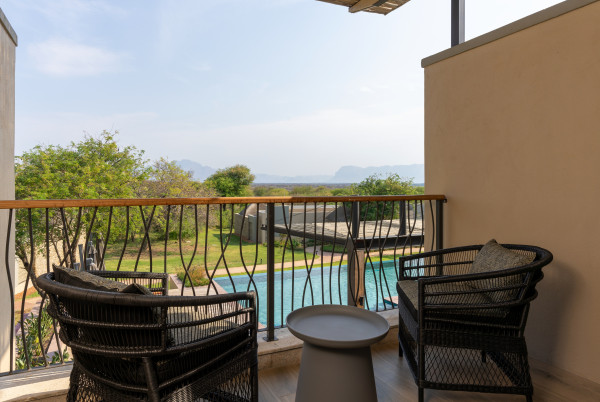
Radisson Hotel Group (https://www.RadissonHotels.com) is proud to announce the opening of Radisson Safari Hotel Hoedspruit, its first Safari hotel in Africa and 11th hotel in South Africa. Tucked between two renowned nature reserves, Kruger National Park and Blyde River Canyon, the hotel is located 2km outside of Hoedspruit in the heart of the grasslands in the Limpopo province and just 20 minutes from Eastgate Airport.

Boasting majestic views of the Drakensberg mountains, the highest mountain range in Southern Africa, Radisson Safari Hotel Hoedspruit (https://apo-opa.co/3TEcOPf) is surrounded by endless destination-immersing activities. Guests can take part in bucket-list safari adventures to spot local wildlife such as lions, rhinoceros, and elephants, go trekking on horseback, or take in the sprawling landscape from a hot air balloon.

Radisson Safari Hotel Hoedspruit offers a range of room types from standard rooms with garden and mountain views to Premium Suites featuring their own private pools and relaxing outdoor seating areas to take in the natural landscape. With a contemporary Scandinavian design, the hotels 138 rooms and suites provide a calming setting with natural materials, wooden details and rich, earthy colors that pay homage to its African surroundings.

At the thatched roof restaurant, Mirage, guests can enjoy South African and Lebanese-inspired cuisine on the restaurant's wrap-around deck, with convenient access to a sunbathing area and pool in the summer, as well as an outdoor fireplace on cooler evenings. Pegasus restaurant offers fresh and wholesome Mediterranean, Italian, Mexican, and American-inspired dishes as well as gourmet ice cream and frozen cocktails, served alongside the adults-only swimming pool. At the hotel's third restaurant, Boma, guests can indulge in some of Africa's most popular delicacies such as the local sausage, Boerewors; Bobotie; and selection of game meat, while listening to the soothing crackling of the fire and stargazing in the clear night's sky.

“We are thrilled to open the doors of our first safari-inspired hotel in South Africa. The opening of Radisson Safari Hotel Hoedspruit marks our 11th hotel opening in South Africa and completes our own Golden Triangle Safari offering with exquisite properties in Cape Town and the recently opened Radisson Blu Resort Mosi-oa-Tunya in Livingstone,” said Tim Cordon, Chief Operating Officer, Middle East & Africa, Radisson Hotel Group.

“My team and I are thrilled to introduce the world to the perfect combination of hospitality with Radisson's renowned Yes I Can! Service philosophy and our unmatched safari-inspired setting. Our extensive offering will ensure guests have an unforgettable experience whether they are enjoying a family holiday, a serene couples escape, or a meeting and event in a unique backdrop,” said Charles McCarthy, General Manager of Radisson Hotel Safari Hoedspruit.

Featuring a planter roof and inspiring views of the surrounding grasslands, Radisson Hotel Safari Hoedspruit will offer a tranquil and rejuvenating escape at its Amani Spa. Guests can indulge in a variety of pampering treatments in the spa's five treatment rooms including a private couple's suite. The spa also features a health bar, hair and nail salon and a soothing steam room. A 24-hour fitness center is also accessible to guests looking to stay active during their stay and offers the latest modern cardio and strength training equipment as well as yoga or Tai Chi sessions tucked away among the grasslands.

The hotel's versatile meetings and events spaces consist of five different meeting venues, including comfortable boardrooms, meeting rooms, and a main banquet hall that can accommodate up to 200 guests.

Distributed by APO Group on behalf of Radisson Hotel Group.

Media contact:
Saadiyah Hendricks
Area Director, PR & Social Media, Middle East, Africa and Mediterranean
Radisson Hotel Group
saadiyah.hendricks@radissonhotels.com

Nataliya Tkachenko
Senior Global Manager Consumer PR
Radisson Hotel Group
nataliya.tkachenko@radissonhotels.com

Connect with Radisson Hotels on: 
LinkedIn (https://apo-opa.info/3xoxlLd)
Instagram (https://apo-opa.info/40Yykz4)
Twitter (https://apo-opa.info/3YyivgX)
Facebook (https://apo-opa.info/3JrvtXH)  
YouTube (https://apo-opa.info/3XxZrhu)

Connect with Radisson on: 
LinkedIn (https://apo-opa.info/43BJeMm)  
Instagram (https://apo-opa.info/43NKyLW)
Twitter (https://apo-opa.info/3JbVF9s)  
Facebook (https://apo-opa.info/3qAEPul)  
YouTube (https://apo-opa.info/3qAEYxT)

Radisson Hotel Group: 
The Radisson family of brands can be found around the world in more than 120 countries, with currently over 1,700 hotels in operation and under development. Radisson Hotel Group operates the business in EMEA and APAC with over 1,150 hotels in operation and under development. The international hotel group is rapidly growing with a plan to significantly grow the portfolio. The Group's overarching brand promise is Every Moment Matters with a signature Yes I Can! service ethos. 

The Radisson family of brands portfolio includes Radisson Collection, art'otel, Radisson Blu, Radisson, Radisson RED, Radisson Individuals, Park Plaza, Park Inn by Radisson, Country Inn & Suites by Radisson, and prizeotel brought together under one commercial umbrella brand Radisson Hotels.  

Radisson Rewards (https://apo-opa.info/3Ir36tx) is Radisson Hotel Group's loyalty program, which delivers an elevated experience that makes Every Moment Matter. As the most streamlined program in the sector, members enjoy exceptional advantages and can access their benefits from day one across a wide range of hotels in Europe, Middle East, Africa, and Asia Pacific. 

Radisson Meetings (https://apo-opa.info/3xmLTuL) provides tailored solutions for any event or meeting, including hybrid solutions placing guests and their needs at the heart of its offer. Radisson Meetings is built around three strong service commitments: Personal, Professional and Memorable, while delivering on the brilliant basics and being uniquely 100% Carbon Neutral.  

At Radisson Hotel Group we care for people, communities and planet (https://apo-opa.info/40VCkR2) and aim to be Net Zero by 2050 based on the approved near-term Science Based Targets. With unique solutions such as 100% carbon neutral Radisson Meetings, we make sustainable hotel stays easy. To facilitate sustainable travel choices, all our hotels are becoming verified on Hotel Sustainability Basics. 

The health and safety of guests and team members remain a top priority for Radisson Hotel Group. All properties across the Group's portfolio are subject to health and safety requirements, ensuring we always care for our guests and team members. 

For more information, visit our corporate website (https://apo-opa.info/42HIP9S). 

About Radisson: 
Radisson is an upscale hotel brand that offers Scandinavian inspired hospitality, which enables guests to find more harmony in their travel experience. With natural surroundings and unexpected delights, Radisson inspires the art of being in the moment. We are committed to helping our guests find the right balance for their stay, removing the discomforts travelling may bring and enabling them to switch off and relax, using our Yes I Can! attitude to ensure satisfaction of every guest. Radisson hotels can be found in suburban and city settings, near airports and leisure destinations. Guests and professional business partners can enhance their experience with Radisson by participating in Radisson Rewards, an international loyalty program offering exceptional benefits and rewards. 

Radisson is part of the Radisson family of brands, which also includes Radisson Collection, art'otel, Radisson Blu, Radisson RED, Radisson Individuals, Park Plaza, Park Inn by Radisson, Country Inn & Suites by Radisson, and prizeotel brought together under one commercial umbrella brand Radisson Hotels. 

For reservations and more information, visit our website (https://apo-opa.info/3p4KNn5). 

Media files
Radisson Hotel Group
Download logo
Read moreRadisson announces its first safari hotel in South Africa
20 December 2023

DO MORE FOUNDATION and Capita Forge Early Years Climate Region for SA

Location: MyPR

Dubai, UAE, 08 December 2023 – Young children (0 – 8 years) stand out as one of the groups most vulnerable to the impacts of the climate crisis, which is already having detrimental effects on their health, development and well-being. In response to this reality, the UAE’s Ministry of Education in collaboration with the Abu …

Read moreDO MORE FOUNDATION and Capita Forge Early Years Climate Region for SA
20 December 2023

KVD Communication Welcomes Blackstone Maverick: An Emerging Small Business in South Africa’s Fragrance Scene

Location: MyPR

In a landscape rich with an entrepreneurial spirit, KVD Communications proudly partners with Blackstone Maverick, a flourishing small business entering South Africa’s perfume industry. Amidst the current small business landscape, where opportunities are bound for economic growth, this collaboration underscores our commitment to supporting and championing local SMEs, creating circular economies and empowering families to …

Read moreKVD Communication Welcomes Blackstone Maverick: An Emerging Small Business in South Africa’s Fragrance Scene
20 December 2023

Disaster teams respond to Dundee flood victims

Location: News

Disaster teams respond to Dundee flood victims

KwaZulu-Natal Disaster Management teams have swiftly responded to the disaster caused by devastating thunderstorms in and around Dundee, under Umzinyathi District, following inclement weather that wreaked havoc on Monday night.
 
According to the Provincial Disaster Management Centre preliminary reports, a thunderstorm, which lasted about 45 minutes, swept through Sithembile Township, outside Dundee, tragically claiming one life – an adult male who was struck by lightning and later succumbed to his injuries. 

Six people were also injured as roofs and walls collapsed on top of them. Some victims were rushed to hospital, while others received treatment in their homes.

The provincial Cooperative Governance and Traditional Affairs (CoGTA) department said the damage caused includes flooding in numerous households within the township and fallen trees resulting in blocked roads. 

“There was also significant damage to infrastructure, including roads, fences, and bridges. Several businesses suffered losses, including farmers who lost livestock and crops. 

“Assessments indicate that about 173 households were damaged, affecting 1 211 people. The teams are still on the ground conducting further assessments,” the department said.

Meanwhile, another incident of destruction was also recorded in areas under Umgungundlovu District Municipality, where a few houses were damaged in different local municipalities. 

The department said no injuries or fatalities were reported to date, and assessments are also ongoing in the affected areas.

KwaZulu-Natal CoGTA MEC Bongiwe Sithole-Moloi has extended her heartfelt condolences to the grieving family and wished a speedy recovery to all people who sustained injuries.

Sithole-Moloi has encouraged all disaster management centres in the municipalities to continue conducting assessments and to help people affected by the incidents. 

The MEC assured that the disaster response teams will continue to provide relief to the affected families. 

Concerns about recurring devastating rains 

Meanwhile, Sithole-Moloi has raised the department’s concerns about the recurring devastating rains in the province, saying it is an alarming indication of the impact of global warming. 

She said the department has been issuing weather warnings and recently launched a Multi-Agency Disaster Awareness campaign, collaborating with various stakeholders to raise awareness, mitigate risks, and respond effectively to disasters. 

“While some weather incidents are unavoidable, we encourage our residents to heed warnings and relocate to safer areas when advised. We have also collaborated with other departments, such as Social Development and Human Settlements, to ensure that the victims receive support in different forms.

“Our teams have distributed blankets, plastic sheets, mattresses, and food parcels to the affected families as part of the relief efforts. Public facilities such as community halls have been made available for temporary shelter, although no families have opted for this option,” Sithole-Moloi said. – SAnews.gov.za

GabiK
Wed, 12/20/2023 - 11:26

477 views
Read moreDisaster teams respond to Dundee flood victims
20 December 2023

SAA, SunExpress sign MoU

Location: News

SAA, SunExpress sign MoU

South African Airways (SAA) has signed a memorandum of understanding (MoU) with SunExpress for four aircrafts to support the national carrier’s operations in the 2024/25 financial year.

According to SAA, the MoU is an add-on to the two airlines’ current six-month damp lease agreement, which includes “the lease of two Boeing 737-800s, as well as maintenance and cockpit crew”.

“In addition to plans to increase the number of damp lease aircraft, SAA and SunExpress are currently exploring options for a multi-year reciprocal capacity support and further cooperation with regards to maintenance, training and commercial support,” a statement from SAA read.

In a damp lease, the lessor provides the aircraft and some of the crew, usually the cockpit crew, and the lessee provides the rest of the crew, maintenance and insurance. This means that the lessor and the lessee share some of the responsibilities and costs of the operation, depending on the terms of the contract.

Acting SAA CEO, Professor John Lamola, said the agreement would assist the State-owned airline to meet demand.

“SunExpress has proven to be an extremely reliable partner for us in the first few months. We are therefore delighted that this valuable partnership will not only be continued but the scope of the partnership expanded to include additional aircraft for our 2024 holiday peak season.

“The additional aircraft will support our operations to meet the growing customer demand during peak seasons and mitigates our management of the global aircraft availability crisis,” Lamola said.

SunExpress CEO Max Kownatzki said: “The memorandum of understanding clearly underlines our commitment to further deepen our successful partnership with SAA. We are proud of the trust that SAA is placing in us with the renewed intention to collaborate. We strive to build on this to develop a strong, long-term partnership and leverage more opportunities together in the future.

“Over the next decade, SunExpress will more than double its fleet, reaching a 150-aircraft fleet by 2033. These kinds of partnerships enable us to efficiently utilise our fleet, mitigating the impact of our seasonality.”

Before its official relaunch earlier this year, the State-owned airline endured challenges for several years.

SAA was racked by allegations of fraud and corruption during the State capture years and was also put under business rescue and grounded.

At the official relaunch, Public Enterprises Minister Pravin Gordhan explained the work it took to have the airline back in the skies.

“What we have been able to do is to firstly establish that there’s no more money that’s going to come from taxes that’s going to go into SAA, like the R40 billion that went in over a 10-year period. SAA must survive on its own strength... [and] on the capital that is actually provided by the strategic equity partner and it must grow organically. Through the business rescue process, its balance sheet is not encumbered in any kind of way.

“It took three and a half years of very hard work… to ensure that we steer this process. It’s a signal to investors and the investing community in South Africa that reforms are possible in South Africa. That we can execute, just with South African talent, these very complex deals and complex reform processes in State-owned entities,” Gordhan said. – SAnews.gov.za

NeoB
Wed, 12/20/2023 - 11:07

46 views
Read moreSAA, SunExpress sign MoU
19 December 2023

Starbucks Expanded Its Presence in Johannesburg with a Current Store in Sandton City

Location: MyPR

December 2023: Starbucks Expanded Its Presence in Johannesburg with a New Store in Sandton City Sandton, Johannesburg, South Africa – Starbucks South Africa was excited to open its newest store in the heart of Johannesburg’s affluent Sandton City. Launched on 20 November 2023, this store represents a significant milestone in Starbucks’ expansion strategy, as explained …

Read moreStarbucks Expanded Its Presence in Johannesburg with a Current Store in Sandton City
18 December 2023

Starbucks Celebrated Local Connections and Global Standards at Recent Ballito Store

Location: MyPR

Starbucks Celebrated Local Connections and Global Standards at New Ballito Store Ballito, South Africa – Starbucks, a global leader in artisanal coffee and food offerings, celebrated the opening of its latest store in the heart of the picturesque coastal neighbourhood of Ballito. Under the strategic leadership of Starbucks South Africa MD Leah McCrae, the new …

Read moreStarbucks Celebrated Local Connections and Global Standards at Recent Ballito Store
18 December 2023

Rock(ing) Shandy Every Over the World

Location: MyPR

In South Africa, the Rock Shandy is the ultimate summer refresher crafted with ANGOSTURA® aromatic bitters. Shandies enjoy global popularity, making them the perfect go-to for anyone seeking a delightful low-to-no-alcohol summer drink. Here’s a guide to the best ones. If you order a Rock Shandy in Ireland, you’ll get a 50/50 mix of Club …

Read moreRock(ing) Shandy Every Over the World
18 December 2023

Wildside TIME Magazine Issue 7 Is Out

Location: MyPR

18 December 2023 St Francis Bay’s Wildside TIMES Magazine Holiday Edition is Out     St Francis Bay: Issue 7 of St Francis Bay magazine Wildside TIMES is out, and it is an array of local news, events, interviews, reviews, and national and global news. A glossy full-colour free magazine, Wildside TIMES is a popular …

Read moreWildside TIME Magazine Issue 7 Is Out
17 December 2023

Kaizen Business Consultants Launches Comprehensive Company Formation Services in Dubai, UAE

Location: MyPR

Dubai, UAE — Kaizen Business Consultants, a trailblazer in innovative business solutions, proudly unveils its extensive Company Formation Services tailored for entrepreneurs and businesses in the dynamic landscape of Dubai, UAE. Recognizing the significance of a robust foundation, Kaizen’s specialized services aim to facilitate seamless and efficient company formation processes for local and international enterprises. …

Read moreKaizen Business Consultants Launches Comprehensive Company Formation Services in Dubai, UAE
17 December 2023

Building Capacity for Africa’s Renewables Sector

Location: News

African Energy Chamber
Download logo

By NJ Ayuk, Executive Chairman, African Energy Chamber (www.EnergyChamber.org)

Consider this paradox: Nigeria has achieved the largest economy in Sub-Saharan Africa, but 45%, or about 85 million, of its residents still live without electricity. Across Sub-Saharan Africa, that figure looms to 600 million.

I believe renewable energy is part of the solution to this dilemma — both in Nigeria and throughout the sub-continent. But there are several hurdles to be cleared before wind, solar, hydrogen, and other clean energy sources can provide the same economic benefits that natural gas — the other part of the solution — already offers. One of those hurdles will be preparing domestic workforces for employment and leadership in the growing renewable energy sector.

We are seeing movement in that direction. In Nigeria, for example, global renewables-promoting nonprofit, RMI, is providing technical training in partnership with four Nigerian energy distribution companies, two developers, and vocational training schools such as RMI's Energy Transition Academy and the Lagos Energy Academy. Aimed at producing leaders and energy entrepreneurs, the Nigerian Cohort of RMI's Global Fellowship Program, started in 2022, uses online learning and in-person experiences to develop leaders who know how to produce and employ solar PV, battery storage, and microgrid technologies.

We will need many, many more efforts like this for Africans to fully reap the economic benefits of our energy transition. For that to happen, more investment capital must be attracted for curriculum development, to support training efforts, and to help fledgling renewable businesses find their footing.

This is a critical topic, one that deserves attention at the 2023 United Nations Climate Change Conference (COP28) that is now underway and beyond.

Africa Must be Proactive in Building Capacity

The International Energy Agency (IEA) has predicted that 4 million new renewable energy jobs will be needed in sub-Saharan Africa by 2030 to meet 2050 net-zero goals. But it is not a given that those positions will be filled by Africans, especially if we rush forward with our transition from fossil fuels to renewables, as many wealthy nations and environmental groups are demanding.

Currently, there is a significant shortage of qualified human resources — people educated and prepared to take advantage of the opportunities for employment and entrepreneurship that renewables offer.

What's more, only 76,000 renewable energy jobs have been created in Africa, less than 1% of 10.3 million globally. That means the vast majority of Africans have absolutely no experience, or hands-on opportunities to develop skills, in green energy.

Education is Key

Turning this situation around begins with investing in and emphasizing the importance of science, technology, engineering, and math (STEM) education at all levels in Africa.

African governments will need to do their part by driving improvements in all-around education in science and technology and green energy vocational programs.

Government policies should also provide advantages to attract private-sector visionaries and incentivize public-private collaborations that foster the education and training of Africans for career-level, leadership positions in the renewables sectors.

Africa's renewable energy sector is growing. That reality is a mixed blessing because of the shortage of homegrown, trained professionals able to create, construct, and run renewable projects. We do, however, have an advantage — our large, youthful demographic.

Many of our young people need jobs, and many more soon will. If we can put together partnerships among governments, learning facilities, and private industry, we can train our youth for careers in renewable technologies that offer them brighter futures.

We should be building on the examples of the promising educational opportunities that are available for African students who want to build a career in renewable energy. Here is a sampling:

  • A German-African partnership, the Atlas of Green Hydrogen Generation Potentials in Africa, states, “Green hydrogen offers a real chance to launch a development in Africa which is driven by African countries themselves.” As part of the effort, a master's degree program in green hydrogen technologies was begun in 2021. Students from all 15 countries of the Economic Community of West African States (ECOWAS) may apply. Universities in Cote d'Ivoire, Niger, Senegal, and Togo host the program.
  • Another German government initiative, Green People's Energy for Africa, “supports vocation training institutes and technical universities to offer new and improved practical training modules for professionals” as well as other methods for skills development in renewable energy technology.
  • An EU-US cooperative agreement supports sub-Saharan Africa's just transition to green energy. Working at the regional and national levels, efforts include empowerment of women in the sector, knowledge sharing to provide technical assistance, and the leveraging of investments by the private sector.

Another Opportunity: Green Hydrogen

Surveying the renewables horizon, there is general agreement that decarbonizing all the world's economic sectors won't be possible without the use of green hydrogen — for feedstock, fuel cell technology, and electric vehicles.

The demand for this clean and adaptable fuel, produced with renewable energy sources, compounds the need for a trained renewable energy workforce.

Green hydrogen presents both a large opportunity and a large challenge for African nations. With its massive area and plentiful solar and wind resources, Africa could potentially be producing about 10% of the world's green hydrogen by 2030. But there is an “if” attached to that projection.

If African states strategize and invest now to develop a green hydrogen workforce, they can be ready for the coming wave of green hydrogen development and utilization. Hydrogen learning opportunities should be made available from the high school level upward as part of comprehensive skills plans for developing a prepared workforce.

With forethought and smart implementation, young Africans can be readied to lead the way in bringing the benefits of green hydrogen to their communities. In the process, job shortages can be mitigated as these young employees put their skills to work in the production, storage, and transportation of green hydrogen.

More African countries should be taking measures to ensure their people and businesses capitalize on green energy opportunities. And these must not stop with education and skills training; we also need local content measures to help ensure our residents benefit from renewable power projects and facilities operations.

Ensuring Strong Local Content Policies

Just as local content rules continue to function as vital safeguards in African oil and gas operations, they will be tremendously important in the renewables sector, both for individuals and for businesses. As I've stated in the past, every nation needs to create a framework that empowers indigenous companies to fully capitalize on renewable energy opportunities.

There are times when power needs may justify temporary modifications to these policies. As an example, South Africa's National Energy Crisis Committee (NECOM), early this year, relaxed its local content rules for the construction of solar modules. Easing local employment requirements from 100% to 30% for local component production is meant to facilitate quicker deployment of solar projects, and hopefully, help alleviate the country's crippling power outages.

Power supply levels and other factors show the need to perform a balancing act when writing local content rules. Those other factors include the supply of current local skilled workers and infrastructure. We don't want to discourage developers, so we need appropriate, tailored local content regulations.

One reasonable approach is the one taken by Kenya, where guidelines requiring contractors to formulate a local content plan have been drafted. These plans must include training, succession, jobs, technology transfer, R&D, legal, financial, and insurance issues. This approach places the “ball” in the “court” of each project's contractor, allowing for their input in local content formulation.

A similar policy has been enacted in Nigeria. The local content policy is part of the government's Electricity Act 2023. It requires the Nigerian Electricity Regulatory Commission (NERC) to provide for local content participation involving employment, production, and assembly of components for solar PV, deep cycle batteries, and the electro-mechanical parts of SHP technology, wind boilers, and some turbines.

The act goes further, requiring contractors, sub-contractors, and licensees involved in renewable energy to include local content in all their related activities.

If widely enacted across the continent, similar local content rules can work hand-in-hand with training efforts to ensure Africans benefit from renewable energy development — through employment and the growth of their economies.

We are seeing promising movement in the effort to address Africa's skills gap, but we need many more programs, and we need them now. African countries and energy industry stakeholders should be doing everything possible to support these efforts, so Africans don't miss out on renewable energy industry opportunities.

Distributed by APO Group on behalf of African Energy Chamber.

Read moreBuilding Capacity for Africa’s Renewables Sector
16 December 2023

Government welcomes “notable” increase in employment

Location: News

Government welcomes "notable" increase in employment

Government has welcomed the increase in employment for the period June to September 2023 as per the 3rd Quarterly Employment Statistics (QES) report of Statistics South Africa.

“The continuous increase in employment is a demonstration that measures put in place by government, the partnership with business and labour to reduce unemployment and create opportunities for more jobs are steadily and firmly gaining traction despite prevailing domestic and global challenges facing the economy,” Minister in The Presidency, Khumbudzo Ntshavheni, said in a statement.

“Government remains resolute in resolving the domestic constrains to the economy as indicated by the recently Cabinet approved Freight and Logistics Roadmap and the Integrated Resource Plan 2023.

“These interventions will also help facilitate economic growth opportunities to reverse the contraction in real Gross Domestic Product (GDP), which was 0.2% in the 3rd quarter of 2023,” the Minister said.

Government, Ntshavheni said, is also pleased with the year-on-year increase or 2.6% increase in employment.

According to StatsSA, the total employment increased by 256 000 between September 2022 and September 2023.

Notable in the increase is also an increase in gross earnings paid to employees which increased by R16.7 billion (2.0%) from R833.6 billion in June 2023 to R850.2 billion in September 2023.

This means to some levels there are measures being put in place to ensure earnings are kept up with the increasing cost of living.

“Government has also noted that both increases in employment and gross earnings have been driven by sectors that are critical to South Africa’s economic growth, namely by trade, mining, transport, electricity industries and community services.

“In addition, the contribution of business services, manufacturing, and construction in the increase in gross earnings is a positive development.

“As the country ends the year on this good news of a resilient economy which is steadily creating employment, government undertakes to double its efforts in the new year to bolster an employment-creating economy,” Minister Ntshavheni said. – SAnews.gov.za


Edwin
Sat, 12/16/2023 - 13:35

1 view
Read moreGovernment welcomes “notable” increase in employment
15 December 2023

Government Welcomes Notable Increase in Employment

Location: News

The Presidency: Republic of South Africa
Download logo

Government welcomes the increase in employment for the period June to September 2023 as per the 3rd Quarterly Employment Statistics (QES) report of Statistics South Africa. Minister in The Presidency, Khumbudzo Ntshavheni said that “The continuous increase in employment is a demonstration that measures put in place by government, the partnership with business and labour to reduce unemployment and create opportunities for more jobs are steadily and firmly gaining traction despite prevailing domestic and global challenges facing the economy. Government remains resolute in resolving the domestic constrains to the economy as indicated by the recently Cabinet approved Freight and Logistics Roadmap and the Integrated Resource Plan 2023. These interventions will also help facilitate economic growth opportunities to reverse the contraction in real gross domestic product (GDP), which was 0.2% in the 3rd quarter of 2023”. 

Government is also pleased with the year-on-year increase or 2.6% increase in employment. According to StatsSA, the total employment increased by 256 000 between September 2022 and September 2023. 

Notable in the increase is also an increase in Gross Earnings paid to employees which increased by R16,7 billion (2,0%) from R833,6 billion in June 2023 to R850,2 billion in September 2023. This means to some levels there are measures 2 being put in place to ensure earnings are kept up with the increasing cost of living. 

Government has also noted that both increases in employment and gross earnings have been driven by sectors that are critical to South Africa's economic growth, namely by trade, mining, transport, electricity industries and community services. In addition, the contribution of business services, manufacturing, and construction in the increase in gross earnings is a positive development. 

As the country ends the year on this good news of a resilient economy which is steadily creating employment, government undertakes to double its efforts in the new year to bolster an employment-creating economy. 

Distributed by APO Group on behalf of The Presidency: Republic of South Africa.

Read moreGovernment Welcomes Notable Increase in Employment
14 December 2023

Celebrating South Africa’s sports stars

Location: News

Celebrating South Africa's sports stars

South Africans will celebrate South Africa’s sports achievements and the Springboks World Cup victory on Friday, after President Cyril Ramaphosa declared 15 December a public holiday.

The Boks clinched a hard fought and historic victory during a tough encounter against New Zealand in the 2023 Rugby World Cup final held in Paris in October.

The Boks are the only national team who have won the Rugby World Cup four times.

In an address to nation shortly after the win and following public calls for a public holiday to celebrate the victory and sports achievements in true South African style, President Ramaphosa said the holiday would only be held after the matric final exams.

“In celebration of the Springboks’ momentous achievement and the achievements of all our other sports men and women, and as a tribute to the resolve of our united nation, I am declaring Friday the 15th of December 2023 as a public holiday.

“We declare this to be a day of hope, a day of celebration and unity. Our sports men and women have shown us what is possible. We will succeed and we will ensure that we leave no one behind,” President Ramaphosa said.

The year 2023 has been a glittering year for South African sports and its stars. Notable achievements include:

  • The Springbok’s Rugby World Cup victory in October.
  • Banyana Banyana’s progression into the knockout stages of the FIFA Women’s World Cup (the first South African senior football side to do so) following their maiden Women’s Africa Cup of Nations victory in 2022.
  • KG Montjane became the first South African woman in 40 years to win a French Open title after she and her Japanese partner Yui Kamiji, clinched the doubles wheelchair final in June.
  • South African swimming sensation Tatjana Schoenmaker won her first ever world title at the World Aquatics Championships held in Japan in July.
  • The South African Special Olympics team returned from the Special Olympics World Games held in June with 22 gold, 20 silver and seven bronze medals.
  • South Africa’s successful hosting of the Netball World Cup which was held on African soil for the first time in its history. The tournament was held during July and August.
  • The Momentum Proteas – South Africa’s women’s national team – reached the finals of the Women’s T20 World Cup final held in Cape Town in February.
  • The Proteas reached the semi-finals of the Cricket World Cup held in India in November.

Earlier this week in his newsletter to the nation, the President urged South Africans to come together to “remind ourselves of everything that we love about South Africa”.

The President called on South Africans to mark a special public holiday to celebrate the historic victory of the Springboks in the Rugby World Cup.

“Their victory, alongside many other achievements by South Africans on the global stage, is a reminder of our country’s tremendous strengths and the promise that it holds.

“Let us come together on Friday to remind ourselves of everything that we love about South Africa. Let it be a day of hope, celebration and unity. I wish all South Africans a safe, peaceful and restful festive season as we all prepare for a successful new year,” he said. – SAnews.gov.za


NeoB
Thu, 12/14/2023 - 11:50

306 views
Read moreCelebrating South Africa’s sports stars
14 December 2023

Pandor pleased by growing trade with Austria

Location: News

Pandor pleased by growing trade with Austria

International Relations and Cooperation Minister, Dr Naledi Pandor, has welcomed the growing overall trade between South Africa and Austria and the rising tourism numbers from the landlocked country in central Europe. 

“We appreciate the valuable contribution that Austrian companies are making in South Africa, particularly in job creation, skills development and technology transfer,” she said on Thursday.

The Minister was sharing her remarks during the joint media briefing with her Austrian counterpart, Minister Alexander Schallenberg, in Pretoria. 

Pandor took the time to thank Schallenberg for honouring his invitation to come to South Africa for the meeting and engagements aimed at solidifying relations between the two countries. 

South Africa’s bilateral relations with Austria, according to the Minister, are sound and on an upward trajectory. 

This was evident when South Africa successfully hosted the third meeting of the South Africa-Austria Bilateral Consultations in Pretoria in 2022, after a two-year hiatus, due to the COVID-19 pandemic.

“During our deliberations today, we discussed the status of our bilateral cooperation as well as regional developments on the continent, current international developments and our robust cooperation in the multilateral arena.” 

The South Africa-Austria bilateral cooperation includes renewable energy; wastewater treatment, recycling and organic agriculture; innovation and digitalisation; and environmental technologies.

Schallenberg and his delegation will engage with South African business in a Business Forum arranged by the Department of Trade, Investment and Competition.   

Austria, according to Pandor, is renowned for its vocational training and South Africa is keen to engage the Austrian government on the possibilities of establishing a Memorandum of Understanding (MoU) in the field of vocational training. 

Schallenberg and Sport, Arts and Culture Minister Zizi Kodwa will also sign a MoU on arts and culture during the opening of the Austrian Cultural Forum tonight, which according to Pandor further illustrates the nations’ increased bilateral and people-to-people cooperation.

“South Africa appreciates Austria’s global standing, reputation, and advanced technological capability in the renewable energy space, which makes Austria a natural partner for South Africa. 

“Minister, once again I welcome you and your delegation and wish you a successful and pleasant stay in South Africa,” she added. – SAnews.gov.za


Gabisile
Thu, 12/14/2023 - 13:24

52 views
Read morePandor pleased by growing trade with Austria
14 December 2023

SA welcomes COP28 agreement global adaptation efforts on climate change

Location: News

SA welcomes COP28 agreement global adaptation efforts on climate change

South Africa has welcomed the landmark decision to adopt a Global Goal on Adaptation (GGA) at this year’s United Nations Conference of the Parties (COP28) in Dubai.   

According to the Department of Forestry, Fisheries and the Environment, this is something the country together with the African continent and other vulnerable nations has struggled to achieve for many years.

“The decision recognises different theme areas for adaptation action, it has measurable and time-bound targets. It also recognises the importance of securing adequate public finance for adaptation from developed countries. This is a big step forward,” said Minister of Forestry, Fisheries and the Environment, Barbara Creecy.

According to reports, the GGA is part of the Paris Agreement designed to “ensure an adequate adaptation response” to protect people, livelihoods and ecosystems as the world aims to keep warming “well below” 2 Celsius or even to 1.5 Celsius.

In this context, South Africa welcomed the language in the Global Stocktake, which recognises and underscores that the impacts of climate change will be much lower at the temperature increase of 1.5 degrees compared with 2 degrees. 

The two-week COP28 conference which wrapped up on Tuesday, adopted a new fund to help poor nations cope with costly climate disasters.

“Throughout our facilitation of the Global Stocktake, South Africa emphasised that climate ambition must be balanced across mitigation, adaptation and means of implementation. We also emphasised that equity and common but differentiated responsibilities and respective capabilities should underpin all asks on developing countries,” the Minister added. 

Accordingly, South Africa said it was pleased by the decision on the operationalisation of the Loss and Damage Fund, Just Transition Pathways work programme, the Mitigation Work Programme and the GGA.  

“These decisions are in line with our national framework on Just Transition, in particular the recognition of a country’s right to pursue its climate resilience path in the context of sustainable development and poverty eradication.  

“For the first time we have language which calls for transitioning away from fossil fuels in energy systems in a just, orderly and equitable manner to achieve net zero by 2050 in keeping with the science,” the Minister added. 

COP28 has adopted a decision, co-facilitated by South Africa, to implement the new work programme on Just Transition Pathways.

The decision underscores the importance of finance, technology development and transfer and capacity-building support to achieve just and equitable transitions, nationally and globally. 

This all-of-society and all-of-economy transition approach represents a progression and evolution in the international community’s collective understanding of just transitions, that in the past tended to focus narrowly on only the energy sector and related workforce issues. 

South Africa particularly welcomed the strong human rights, inclusive and participatory approach in the decision to nationally defined just transitions, in which all stakeholders have a role to play and the right to development is respected.

Climate justice

This, according to the department, is fundamental to the achievement of climate justice, at both the national and international level.

“We are also pleased that the final text takes a stand against unilateral measures such as Carbon Border Adjustment Mechanism. The decision emphasises that unilateral measures should not constitute a means of arbitrary or unjustifiable discrimination or a disguised restriction on international trade,” the department added. 

Instead, the decision calls for greater cooperation and support aimed at achieving sustainable economic growth and development in all countries, thus enabling them to address the problem of climate change better.

“The decisions lay out a clear process to move forward current discussions on the new finance goal for the post-2025 era. It mandates that the new goal should aim at achieving parity between mitigation and adaptation finance.”

The decision underscores the importance of reforming the multilateral financial architecture. It also calls for scaled-up support for climate action from multilateral financial institutions through grant-based and concessional instruments,” it said. – SAnews.gov.za


Gabisile
Thu, 12/14/2023 - 12:22

62 views
Read moreSA welcomes COP28 agreement global adaptation efforts on climate change
14 December 2023

Poverty and Progress: An Update on African Energy

Location: News
African Energy Chamber

By NJ Ayuk, Executive Chairman, African Energy Chamber (https://EnergyChamber.org).

In an era when such futuristic technologies as artificial intelligence, robotics, and quantum computing are here or on the horizon, almost half of sub-Saharan Africans — more than 600 million people — lack the electricity to heat, cool, or light their homes.

This energy poverty impedes nearly every aspect of life for this population, from conducting business and educating their children to deterring crime and providing healthcare.

Even in some well-electrified African nations such as Ghana, Gabon, and South Africa, the supply is inadequate and often unavailable.

As the African Energy Chamber (AEC) put it in our newly released The State of African Energy Outlook Report 2024, “Access to electricity in Africa is still a dream to millions of Africans.”

Our report gives compelling evidence to back this statement, providing statistics that show, among other things, that energy poverty is markedly deeper in sub-Saharan Africa (SSA) than in the rest of the continent.

Our report is sobering, but not without hope. It also provides a positive look toward the future, including energy developments likely to improve electrification rates in SSA and move its countries' citizens closer to the universal access they dream of. The key to delivering energy to more Africans will be using both renewables and fossil fuels.

The Statistics and What's Behind Them

Our report's numbers tell the story of just how much SSA, in particular, is still affected by energy poverty.

In contrast with most of the world, where electrification rates improved during the COVID-19 pandemic, SSA's worsened, as its percentage of the world's population lacking electricity grew from 71% in 2018 to 77% in 2020. Statistics compiled in 2020 showed sub-20% levels of electricity access in up to eight countries across the region.

While the education and business sectors suffer greatly from energy poverty, it is perhaps most acutely felt in the health sector, where medical equipment and procedures require electrical power.

Complicating the health impacts still further, households without electricity are often forced to use unhealthy fuels like wood, coal, or kerosene to cook and heat, producing indoor air pollution that leads to respiratory problems and other ailments.

In contrast to the 90%-plus electrification rate found in some North African countries, which is allowing them to decrease reliance on fossil fuels, electricity access in SSA is only about 55%, and a closer look at that number reveals it is driven by urban rates of close to 80%, while rural areas lag far behind with only about 33%, leaving two-thirds of residents in the dark.

In a nutshell, SSA has a lot of catching up to do to achieve the levels of access to electricity enjoyed by most of the world. Although the region has doubled the average rate of access since 2000, its current rate of just over half of the region's population is miniscule compared to the 90% global rate and the 80% North African rate.

As I said, even in SSA countries where electrification rates are quite high, such as Ghana, Gabon, and South Africa, load shedding presents a daily practical problem for people who must anticipate power outages. In South Africa, for instance, this type of staged rationing has been used every day this year by the power utility, Eskom.

Already in 2023, there has been more load-shedding in South Africa than in all of 2022, and outages are lasting longer — up to 12 hours daily — with a predictable disabling effect on economic development.

Meanwhile, the country's chasm between supply and demand only continues to expand.

Changes in Progress: South Africa as a Case in Point

The South African government is taking a proactive approach to the regulatory side of improving energy supply, shortening timelines for obtaining environmental authorizations and grid approvals.

It is also working to obtain and use USD98.7 billion in investment capital over the next five years for its Just Energy Transition Investment Plan (JETIP), a framework adopted in 2022 that outlines the country's strategic priorities for investment during climate transition.

A major thrust of JETIP is replacing the use of coal, which currently supplies over 80% of South Africa's power, with renewable energy, expected to grow from a current 11% of the power supply to 20% by the end of this decade and to over half of the supply by 2050.

Contributing to those numbers, Eskom-built renewables projects are slated to go live this year in Lethabo and Sere, and the utility will soon start building solar and battery storage facilities at Komati Lethabo and Majuba for a total of 2.8 gigawatts (GW) of new renewables capacity.

Of the total projected electricity capacity, solar, and wind are expected to drive almost 50% with fossil fuels adding up to a 10th of total projected capacity.

Implications for the Continent

These power-related statistics for South Africa—a country better positioned than many Sub-Saharan nations regarding electricity—show that the country, and therefore the continent, needs gas-to-power and battery storage along with wind and solar.

South Africa's numbers highlight a major point made in my recent book, “A Just Transition: Making Energy Poverty History with an Energy Mix,” — that, while the rest of the globe deals with the threat of devastating climate change, Africa must deal with two major challenges at once: the threat of climate change and debilitating energy poverty.  

Even as Africa works to support global efforts to prevent a climate crisis, we must embrace every solution available to us, including using our continent's vast natural gas reserves: totaling more than 800 trillion cubic feet. Not only is gas plentiful, but it's also the cleanest fossil fuel; producing it contributes to job creation and economic growth; and it can be monetized to help pay for energy infrastructure.

The “bottom line” is that Africa still needs to use its natural gas, and more of it, to deliver a much-needed increased supply of energy to its people.

Download The State of African Energy 2024 Outlook report: https://apo-opa.co/3QLEoHd

Distributed by APO Group on behalf of African Energy Chamber.

Media files
African Energy Chamber
Download logo
Read morePoverty and Progress: An Update on African Energy
  • Previous
  • Page 1
  • Interim pages omitted …
  • Page 76
  • Page 77
  • Page 78
  • Page 79
  • Page 80
  • Interim pages omitted …
  • Page 103
  • Next

Copyright © 2026 · MyZA · All Rights Reserved · Powered by Stratlec Online