• Skip to main content
  • Skip to header right navigation
  • Skip to after header navigation
  • Skip to site footer
MyZA

MyZA

News, Directory, Events and Other Stuff

  • Social Media
  • Sport
  • World News
  • Home
  • Submit News
  • Directory
  • Events
  • Stratlec
  • TFSA
  • News
    • APO
    • Today’s Sport News
    • Todays Social Media and Tech Headlines
    • Today’s World News
    • Today’s SA Financial News
  • Contact
You are here: Home / Archives for Government

Government

23 May 2024

African Union Election Observation Mission arrives in South Africa ahead of the 2024 General Elections

Location: News

African Union (AU)
Download logo

The African Union Election Observation Mission (AUEOM) has arrived in South Africa ahead of the 29 May 2024 General Elections. At the invitation of the Government of South Africa and the Independent Electoral Commission (IEC) of South Africa, the Chairperson of the African Union Commission, H.E. Moussa Faki Mahamat, approved the deployment of the short-term AUEOM to assess and report on the conduct of this election.

The AUEOM is led by H.E. Uhuru Kenyatta, former President of the Republic of Kenya and is comprised of 60 short-term observers (STOs) drawn from ambassadors accredited to the African Union, officials of election management bodies, members of African civil society organisations, African election experts, human rights specialists, gender and media experts, and representatives of youth organizations. The observers are drawn from 24 countries which include Angola, Benin, Botswana, Burundi, Cameroon, Democratic Republic of Congo, Egypt, Ethiopia, Eswatini, Gambia, Ghana, Kenya, Lesotho, Mauritius, Morocco, Mozambique, Namibia, Nigeria, South Sudan, Togo, Tunisia, Uganda, Zambia and Zimbabwe.

The AUEOM will base its assessment on the legal framework governing elections in the Republic of South Africa and the OAU/AU Declaration on the Principles Governing Democratic Elections, the standards and obligations stipulated in the African Charter on Democracy, Elections and Governance (ACDEG), and the International Declaration of Principles (DoP) for International Election Observation among others.

The Mission shall interact with state authorities, the Independent Electoral Commission, political parties, the media, civil society organisations and representatives of the international community. The Mission will also interact with other election observation missions deployed to observe the 2024 General Elections in South Africa.

The Mission will release its preliminary findings and recommendations on the conduct of the elections on 31 May 2024 in a press conference in Johannesburg, South Africa.  A final and comprehensive report will be released within two months from the date of announcement of final election results and will be posted on the AU Commission website.

The Mission's Secretariat is located at the Hilton Hotel, Sandton, South Africa.  

Distributed by APO Group on behalf of African Union (AU).
Read moreAfrican Union Election Observation Mission arrives in South Africa ahead of the 2024 General Elections
23 May 2024

21 former MK freedom fighters honoured

Location: News

21 former MK freedom fighters honoured

Deputy President Paul Mashatile has officially handed over headstones to 21 affected families of fallen former Umkhonto we Sizwe (MK) operatives who died between 1986 and 1990.

The Deputy President described the occasion in Soweto, Johannesburg, as an important and historic moment that must go down in the annals of history.

“We are living up to the constitutional injunction which enjoins us to, ‘recognise the injustices of our past, honour those who suffered for justice and freedom in our land, and to heal the divisions of the past and establish a society based on democratic values, social justice and fundamental human rights’,” he said on Tuesday.

He said he hoped that the unveiling would bring closure to the suffering and agony of the families who endured the pain.

The Deputy President told the families and the other attendees that the liberation heroes had made enormous sacrifices, including disintegrated families to secure the freedom many enjoy today.

He took the time to pay tribute to the brave men and women who made the ultimate sacrifice in service to the country.

“We will never forget their selflessness, courage, and commitment to defending our nation. They demonstrated remarkable courage and strength in the face of adversity, showing unwavering determination and fortitude in the most difficult of situations.”

He believed that it was unfortunate that many liberation heroes never saw the dawn of democracy ushered in 1994. “However, they have paid the ultimate price with the hope of a South Africa that we have today.”

He recounted the journey of South Africans before 1994 as challenging and arduous.

The country’s second-in-command said the apartheid system robbed black South Africans of the right to exercise fundamental human rights.

These include the right to vote, access to equal access and quality education and healthcare, and the freedom to move around freely throughout the country without restriction.

Despite facing immense challenges and brutal crackdowns, he said South Africans never gave up their fight for freedom and equality.

“As we remember and commemorate their sacrifice, it is important for us to not only honour their memory but also to ensure that their legacy lives on. We must continue to support and care for our veterans and their families. We must strive to create a society that values and respects the sacrifices made by MK veterans and their families.”

He said the country has a collective duty to protect the democratic gains and break free from the shackles of poverty and high levels of inequality.

Deputy President Mashatile said under-development was now the common enemy, which needed a more focused response.

Meanwhile, he expressed regret that some veterans and their families were still struggling with poverty after 30 years of democracy.

“Sadly, most of these brave men and women were never able to save for retirement or their children’s futures by funding health care plans or pensions, or by looking into different options for skills development or financing for their schooling.”

He said government was actively working to bring about the change it deserves.

Through the Presidential Task Team on Military Veterans, he said the state was committed to addressing the concerns and needs raised with the government regarding veterans’ benefits, support, and improving access and services to military veterans.

“We are committed to providing support to the families of MK veterans in various ways, including financial assistance, to ensure they can lead fulfilling lives.”

A wreath-laying ceremony took place at five cemeteries, including one headstone in Ga-Rankuwa, two at Crystal Park, four in Tembisa, seven at Avalon and eight at Westpark. – SAnews.gov.za

Gabisile
Thu, 05/23/2024 - 15:34

201 views
Read more21 former MK freedom fighters honoured
23 May 2024

SA tops African tourism index

Location: News

SA tops African tourism index

SA tourism ranks high in tourism index on the continent  

South Africa has ranked the highest in the African region on the 2024 Travel and Tourism Development Index (TTDI) by the World Economic Forum.

“We are extremely pleased with this ranking as it affirms our commitment and work to elevate the significance and contribution of the tourism sector in South Africa,” Minister of Tourism Patricia de Lille said on Thursday.

South Africa was ranked 55 among 119 countries and emerged as the leading country in the rankings for the African continent in the second edition of an index by the World Economic Forum. 

The report, which was released earlier this week, revealed that South Africa is home to the largest Travel and Tourism Economy in Africa. It measures the set of factors and policies that enable the sustainable and resilient development of the travel and tourism sector, which in turn contributes to the development of a country.

In 2023, South Africa welcomed close to 8.5 million international visitors of which 6.4million were from the African continent. This represents a significant increase of 48.9% compared to 2022 arrivals.

During the first quarter of 2024 – January to March – South African welcomed 2.4million visitors from the rest of the world. This represents a notable 15.4% increase when compared with the same period in 2023.

“The tourism sector has achieved robust growth over the past year and this is due to closer partnerships and collaborations with the private sector to grow tourism to its full potential,” De Lille said.

In the 2024 Index, South Africa moved up seven places compared to its previous ranking and scored high for price competitiveness, Information and Communication Technology (ICT) readiness, natural resources and travel and tourism socio-economic impact.

“We are delighted by the growth and our mission remains to exponentially grow arrival numbers and the overall performance of the tourism sector. The sector already makes a significant contribution to South Africa’s Gross Domestic Product (GDP) and job creation efforts but there is still so much more to be done. 

“We have been working closer with the private sector and we are bearing fruit. I want to acknowledge and thank the tourism private sector stakeholders for all their hard work and collaborating with government to grow this exciting and important sector. The South Africa tourism sector’s greatest asset is our people and we will continue working to grow tourism’s contribution to the prosperity of people and the planet,” the Minister said. –SAnews.gov.za

nosihle
Thu, 05/23/2024 - 13:47

60 views
Read moreSA tops African tourism index
23 May 2024

MyPR put AI and Original Writing Head to Head and Here are the Results:

Location: MyPR

90 Minutes v 2 Minutes Deep research v Clicking a button To the uninitiated recognising an AI generated article can sometimes be difficult. At MyPR we do see a number of such submissions and present the findings below as a guide to the reader on what to look for when trying to spot an AI …

Read moreMyPR put AI and Original Writing Head to Head and Here are the Results:
23 May 2024

Media challenged to promote tourism within SADC region

Location: News

Media challenged to promote tourism within SADC region

Various stakeholders in the tourism sector have challenged media to use their space to promote tourism in the Southern African Development Community (SADC) Region.

The call was made during a virtual panel discussion on tourism media opportunities in the SADC Region, hosted by the Government Communication and Information System (GCIS), in collaboration with the Department of Tourism and Brand South Africa, on Wednesday.

The panel discussion, which coincides with Africa Month, forms part of the series of conversations that will be facilitated by GCIS to showcase some of the success stories within the SADC Region.

Tourism Business Council CEO, Tshifhiwa Tshivhengwa, said while the numbers may currently look good in terms of the tourists travelling to South Africa from the region and the continent, given the effects of COVID-19, there is a need to do more to bring young people in the region back into the toursim industry.

“Our job should be to make sure the region itself is attractive to international tourists. It is important to ensure that as a region, we get together and pull together our resources.

“To be attractive to the world, we need our journalists within the region and within various countries to cover tourism in way that is appealing to the international markets, in a way that it promotes travelling from those countries to South Africa, and in a way that will increase the level of tourists that are looking into South Africa,” Tshivhengwa said.

Tshivhengwa said journalists should look at how the region is building in terms of various aspects in tourism development, including issues of socio-economic development, the impact of tourism on communities, and how tourism is helping with early childhood development in various communities by way of donations and other means.

“We need to look for those things and cover them as well. There are many projects that are being done by government to uplift communities close to tourism attractions. We need to keep in mind that... it is our responsibility to promote [our region].

“Look for those stories that may not be popular in terms of selling advertising space, so that we can put those out there because as more people come in, more jobs will be created and the more prosperous the region is going to be,” Tshivhenga said.

GCIS Acting Director-General, Nomonde Mnukwa said South Africa is committed to promote and achieve the objectives of the SADC institution, and the region remains a foreign policy priority for South Africa to achieve regional development and integration.

Mnukwa said the tourism sector is considered as one of the cornerstones of the SADC regional economy, and the sector directly contributes around US$19.4 billion of the total SADC GDP.

“The tourism sector directly sustained around 2.5 million jobs in the region and a total of more than 6.3 million jobs depend on tourism, which includes direct and indirect jobs in the tourism sector. 

"Travel and tourism is an important driver for job creation across the world, and our government is committed to partner with the stakeholders to invest in projects that work for people, the planet and prosperity,” Mnukwa said.

Mnukwa also echoed the sentiment that media plays a critical role in promoting tourism opportunities in the SADC region, noting that the sector has the potential to provide opportunities for all people, build resilience, and accelerate climate action and greater sustainability for the planet.

According to Statistics SA, tourism continues to recover from the COVID-19 pandemic levels and already contributes around 3.7% to the country’s GDP. – SAnews.gov.za


GabiK
Thu, 05/23/2024 - 09:08

106 views
Read moreMedia challenged to promote tourism within SADC region
23 May 2024

Why Government Could Consider EV’s as an ‘Unpatriotic’ Expression of ‘Anarchy’

Location: MyPR

Government has NOT solved these ‘EV Fuel’ tax conundrums How long will it take for a positive ROI from an EV? What is the cheapest way to ‘fill’ an Electric Vehicle Should EV’s be allowed to make RAF Claims? How government will lose over R300 per tank in taxes For the uninitiated here is a …

Read moreWhy Government Could Consider EV’s as an ‘Unpatriotic’ Expression of ‘Anarchy’
23 May 2024

Court orders Gauteng government to pay non-profit organisations

Location: News

The provincial social development department must provide funding contracts to successful organisations by the end of May

Read moreCourt orders Gauteng government to pay non-profit organisations
23 May 2024

Thousands of children with disabilities are not receiving the Care Dependency Grant

Location: News

And the R2,180 monthly amount is too little to cover the costs of caring for a child with disabilities

Read moreThousands of children with disabilities are not receiving the Care Dependency Grant
22 May 2024

Homes handed over to workers of Phase 1 of the Lesotho Highlands Water Project

Location: News

Homes handed over to workers of Phase 1 of the Lesotho Highlands Water Project

Water and Sanitation Minister, Senzo Mchunu, in partnership with the Trans-Caledon Tunnel Authority (TCTA), has donated 40 houses to families living in the Kgubetswana Township in Clarens, Free State.

The residential houses were built by TCTA as accommodation for out-of-town staff members working on the construction of the Ash River Outfall during the implementation of the Lesotho Highlands Water Project Phase 1 (LHWP-1). 

The organisation started leasing out the houses to the residents of Kgubetswana with the intention of selling them to occupying residents at a discounted price. 

However, according to TCTA Chief Executive, Percy Sechemane, the TCTA struggled to sell the houses to the resident occupants over the last 28 years due to affordability issues, as most of the occupants were either elderly or unemployed.

After consultations between the department and TCTA, the parties decided to donate the houses to their original occupants who were part of Phase 1 of the Lesotho Highlands Water Project.

Speaking at the event on Tuesday, Mchunu emphasised government’s commitment to ensuring the upliftment of communities.

“The donation of these houses demonstrates our commitment to better the lives of citizens, wherever we can. Through the TCTA, we will continue to develop initiatives that bring dignity and progress to our communities. This quality and the size of houses is the best, and I would have loved to do more, but that in the hands of the mayor now, the standard has been set,” Mchunu said.

In 2006, the houses were valued between R65 000 and R85 000, however, a recent valuation in preparation for the transfer of ownership to the beneficiaries indicated that the current value of the houses was between R380 000 and R640 000.

“The value of the properties being donated to the 39 families and an NGO servicing persons living with disabilities is R16 720 000. The property sizes range from 208m² to 302m²,” Mchunu said.

Sechemane said the process of property transfer is currently being finalised at the Deeds Office, and all new owners will be receiving their title deeds in the next six weeks. 

“It is believed that such a massive transfer of property ownership to these families and the escalation of the property value to multiple times the original value, will make a significant contribution in boosting the property values in the area,” said Sechemane.

One of the beneficiaries and a local community leader, Sonwabo Morgan Ngubane, expressed the beneficiaries’ profound gratitude for being granted the opportunity to own their homes. 

“Today we made history. We have been working diligently with TCTA over the years, helping to resolve all the outstanding issues to ensure that the organisation can reach this day,” Ngubane said. 

The handover of houses to new owners was preceded by an engagement between the Minister, TCTA and representatives from Free State municipalities on water and sanitation services in the province. 

During the engagement, Mchunu implored municipalities in the province to do all it can to overcome any challenges hindering water and sanitation services provision in the province.

TCTA re-assured municipal representatives that the Lesotho Highlands Tunnel closure from October 2024 to March 2025 for maintenance, will not adversely affect water provision in both Free State and Gauteng provinces. 

“We continue to work with the DWS provincial office in Free State and local municipalities to explain all the processes we are following to ensure that water provision will continue uninterrupted during the six-month period of maintenance,” Sechemane said.
   
TCTA is a state-owned entity under the Department of Water and Sanitation and is responsible for financing and implementing bulk raw water infrastructure in South Africa, including the South African portion of the Lesotho Highlands Water Project.

The Lesotho Highlands Water Project is a multi-phased initiative established by a 1986 treaty between the governments of Lesotho and South Africa, designed to provide water to South Africa’s Gauteng region and generate hydroelectricity for Lesotho. 

The project includes the construction of a series of dams to harness the waters of the Senqu/Orange River in Lesotho’s highlands, for the mutual benefit of both countries. 

Phase I of the project was completed in 2003 and inaugurated in 2004, with Phase II currently underway and expected to be completed by 2028. The project is envisaged to yield a capacity of 14 cubic metres per second to the Vaal River System. – SAnews.gov.za 

GabiK
Wed, 05/22/2024 - 10:07

498 views
Read moreHomes handed over to workers of Phase 1 of the Lesotho Highlands Water Project
22 May 2024

“Significant progress” recorded in Operation Vulindela reform initiative

Location: News

“Significant progress” recorded in Operation Vulindela reform initiative

Director-General (DG) in the Presidency Phindile Baleni says Operation Vulindlela has made significant progress in reforming the economy since its announcement nearly four years ago.

She was speaking during a media briefing aimed at providing an update on progress in the implementation of economic reforms through Operation Vulindlela.

Operation Vulindlela is a government-driven initiative aimed at accelerating the implementation of structural reforms in key sectors to achieve inclusive growth in the economy.

“Significant progress has been made in reforming our economy since the President announced the establishment of Operation Vulindlela in October 2020.

“Our economic challenges are complex and deep rooted. However, the progress that we have made in implementing the economic reforms through Operation Vulindlela give us confidence that they will be overcome. While the impact of these reforms may not be immediate, they will be significant.

Electricity

In the electricity sector, government has moved to do away with some barriers to private electricity generation – resulting in massive investment in that space.

“In the energy sector, regulatory changes have resulted in a massive increase in private investment in electricity generation with a pipeline of more than 22 500MW of confirmed projects in development.

“The reform of the energy system has now far advanced with the passage of the Electricity Regulation Amendment Bill and the establishment of the National Transmission Company of South Africa, amongst other key milestones.

“We are already seeing the impact of these reforms in reduced load shedding and in the proliferation of new energy projects across the country,” Baleni said.

Logistics

Regarding logistics, Operation Vulindlela is aimed at growing exports in the country through the improvement of efficiency.

“Greater private participation in port terminal operations has been enabled and the freight rail network is being opened to competition. These reforms will allow more volumes to be transported via rail and support export growth while making our logistics systems more efficient and competitive.

“The Freight Logistics Roadmap, which was adopted by cabinet in December last year, continues to guide the implementation of these reforms,” the DG said.

Telecoms and water sector

Baleni asserted that strides made through Operation Vulindlela in the telecoms sector are already bearing fruit with decreased costs in data just but one example.

“One of the earliest milestones in the economic reform programme was the completion of the spectrum auction – ending a more than 10 year delay and contributing to reduced data costs and improved network quality and reach,” she said.

Turning to the water sector, Baleni said reforms have led to the clearing of the backlog in water use license applications which stood at more than 1000.

“[The] license application system has been improved to reduce processing times. Concrete steps have been taken to strengthen institutions in the water system, to improve regulation as well as to encourage investment in the infrastructure,” she said.

Visa reforms

Government has also embarked on reforms for South Africa’s visa regime in order to attract skills and to encourage growth in tourism to the country.

“The e-Visa system is now available in 34 countries while visas have been waived for visitors from 135 countries. The recommendations of the work visa review task team, which was completed last year, are now being implemented including the establishment of the Trusted Employer Scheme and a points based system for work visas,” Baleni said.

Working together

The DG emphasised that one of the key drivers to achieving the progress that Operation Vulindlela has produced is collaboration.

 “Perhaps the most important lesson of Operation Vulindlela is that we can achieve significant progress by enabling collaboration across government and putting in place clear, time bound plans and by establishing systems to support delivery and ensure accountability.

“More than 15 government departments and entities have contributed to the implementation of these reforms through new ways of working and a singular focus on implementation and results. Above all, this report demonstrates that government is fully committed to staying the course on the reform agenda and removing constraints on growth,” Baleni said. – SAnews.gov.za

NeoB
Wed, 05/22/2024 - 13:02

414 views
Read more“Significant progress” recorded in Operation Vulindela reform initiative
22 May 2024

CoGTA Minister welcomes introduction of Coalition Bill

Location: News

CoGTA Minister welcomes introduction of Coalition Bill

The Minister of Cooperative Governance and Traditional Affairs (CoGTA), Thembi Nkadimeng, has welcomed the introduction of the Local Government: Municipal Structures Amendment Bill, 2024, also known as the Coalition Bill. 

This is after the department gazetted the Coalition Bill on Tuesday, which provides a legislative framework to guide the formation and the management of coalition governments. 

The Bill also provides systems to minimise the challenges of coalitions within the local government sphere. 

“The Bill comes because of a public outcry for a framework, or guidelines or legislation, which was given rise to by the maturing democracy and increased number of hung councils, from 24 in the year 2000, to the recent 81 municipalities affected post the 2021 Local Government Elections.” 

The increased number, according to CoGTA, signalled the need to strengthen coalition governance to address challenges related to poor governance, service delivery and instability in municipal councils.  

The amendments to the Local Government: Municipal Structures Act, 1998 (“the Structures Act”) is seen as a vehicle or mechanism within which the coalition governments can be institutionalised to address challenges in hung councils. 

“In essence, the Bill seeks to amend the Structures Act, to provide for a definition of ‘coalition agreement’ to compel political parties to enter into a written and negotiated binding agreement between parties that form a coalition government in a municipality in which no political party has a majority of seats in council,” the department said

CoGTA believes that the Bill will be able to address resolve towards mitigate the governance challenges related to “unscrupulous manipulation” by parties less represented in the council. 

The department also noted coalitions incentivised by promises of senior positions or outright bribes with little thought on the impact of the same on the municipality and its ability to deliver services.

They also cited the infighting in councils characterised by walkouts, resulting in “inquorate” councils failing to execute their legislated mandate and inability to make key appointments and adopt budgets and policies, resulting in an administration that cannot spend its budget to address service delivery backlogs. 

“These challenges have a direct impact on society, in particular when a municipality fails to uphold its obligations, which in turn, has repercussions ripple throughout its jurisdiction, affecting the lives and livelihoods of local residents,” said Nkadimeng.

As CoGTA moves forward with the legislative process for this Bill, Nkadimeng encouraged all stakeholders to actively engage and provide valuable input to strengthen local government structures. 

The department is inviting the public to provide inputs on the Bill, with the view to address the present implementation gaps and challenges being experienced within the local government sector. 

Written submissions or comments may be submitted to the Department of Cooperative Governance at comments.coalitionbill@cogta.gov.za by no later than 5 July 2024.

Comments can also be posted to the department’s Director-General Nhlamulo Mathye, Department of Cooperative Governance, Private Bag X804, PRETORIA, 0001. – SAnews.gov.za
 

Gabisile
Wed, 05/22/2024 - 15:04

144 views
Read moreCoGTA Minister welcomes introduction of Coalition Bill
22 May 2024

Nedbank Returns as Platinum Partner for the Annual Top Empowerment Conference, Marking 30 Years of Democracy

Location: MyPR

Johannesburg, South Africa, 22 May 2024 – Topco Media, a leading B2B media, digital and events company, proudly announces that Nedbank returns as the platinum partner of the highly anticipated Nedbank Top Empowerment Conference scheduled for the 17th and 18th of July 2024, in Johannesburg. This year’s conference holds special significance as it coincides with …

Read moreNedbank Returns as Platinum Partner for the Annual Top Empowerment Conference, Marking 30 Years of Democracy
22 May 2024

CoGTA, Defence sign agreement to collaborate on disaster management

Location: News

CoGTA, Defence sign agreement to collaborate on disaster management

Cooperative Governance and Traditional Affairs (CoGTA) Minister Thembi Nkadimeng says the Memorandum of Collaboration (MoC) with the Department of Defence is a crucial step in strengthening the nation’s ability to prevent, respond to and recover from disasters.

“We believe that this partnership will harness the strengths and resources of both departments, amplifying our collective ability to safeguard lives and livelihoods,” she said on Wednesday. 

Nkadimeng spoke at the launch of the MoC on Disaster Management, where she and Defence Minister Thandi Modise signed the agreement in Pretoria.

Nkadimeng announced that key areas of collaboration outlined in the MoC include the establishment of a Disaster Reserves Assurance Fund, joint development of Emergency Operations Centres (EOCs) and District Integrated Industrial Parks (DIIPs). 

Through this MoC, the department would involve Community Work Programme (CWP) participants in disaster preparedness and community development.

Meanwhile, the Department of Defence will be tasked with providing defence capabilities to safeguard the nation and oversee the South African Forces Institute (SAFI), which manages emergency strategic reserves and procurement.

Through this MoC, Nkadimeng said government will also be forging a strategic alliance to revitalise the National Disaster Management Centre (NDMC), which is responsible for coordinating disaster management interventions, CWP and SAFI by enhancing the collective ability to deal with disasters. 

“We believe that this MoC will go a long way to ensure that reaction to disasters is quick and efficient because we will be pulling resources together, and the skills found in Defence will be very handy in this area.”

Through concerted collaboration, Nkadimeng believes the State is paving the way for a future where disasters no longer wield a devastating impact. 

“Instead, we are building resilient communities that can withstand and recover from adversity, propelling our nation forward on a path of sustainable development and prosperity.”

Climate change

The Minister emphasised the catastrophic impact of climate change, referring to it as a nightmare in South Africa.

“We have seen that in recent years, the severity of these occurrences and their impact are progressively increasing because of the inevitable effects of climate change.”

She said these events often strike suddenly, leaving behind devastation that affects communities, families, and livelihoods.

Nkadimeng also spoke about KwaZulu-Natal, which is prone to floods and where the South African National Defence Force (SANDF) was called to assist. 

According to the Minister, government is currently in the process of reviewing the entire disaster management system, aiming to create a more adaptable framework that prioritises “resilience building”. 

“This comprehensive review seeks to ensure that our disaster management approach is agile and responsive, effectively addressing evolving challenges and safeguarding our communities against future risks.”

Despite these proactive measures, Nkadimeng acknowledged there remains a pressing need to address gaps in post-disaster response.

“Too often, communities find themselves in dire situations, lacking adequate support and assistance in the aftermath of disasters. This has highlighted to us the importance of continuously refining and enhancing our disaster response mechanisms to ensure timely and effective assistance reaches those in need and prevents further hardships.”

She also addressed the man-made disaster of the George collapsed building, which resulted in the loss of 34 lives.

READ | George building collapse: Rescue and recovery operation concluded

“We have been working to have and implement plans to reduce risks, and be prepared. We aim to respond quickly and effectively when disasters happen, keeping everyone safe and minimising the damage they can cause,” she told the media. 

Modise believes that government needs to be more organised to deal with disasters. She stated that Treasury is on board and will provide resources to train military personnel for disaster management.

“How much a disaster will cost will not compare to the cost of life. Therefore, we will be talking to Treasury about that... But with us, we’ll want to make sure that we don’t lose South African lives because there’s a shortage of money,” Modise said. – SAnews.gov.za

Gabisile
Wed, 05/22/2024 - 12:00

150 views
Read moreCoGTA, Defence sign agreement to collaborate on disaster management
22 May 2024

Cape Town protesters block busy road, demanding services

Location: News

They are angry that refugees living in a tent on the same land have toilets and water, but they do not

Read moreCape Town protesters block busy road, demanding services
22 May 2024

Practising responsible citizenry

Location: News

Practising responsible citizenry

Five months into 2024, and many a thing has happened, requiring us to sit down and catch our collective breath.

In the last five months, the country commemorated Human Rights and Freedom Months, experienced tragedy with the recent shooting of a five-year-old boy in a hijacking in Soshanguve as well as a deadly bus crash over the Easter holiday period. 

Recently, the country was also on tenterhooks following the Victoria Street multi-storey George building collapse in the Western Cape, which claimed at least 33 lives.

Just as self-care Sundays are necessary to keep one’s wits about oneself, we need to do the same for our beloved country.

That oh so necessary routine of taking care of one’s skin, hair and reflecting on the week that was, accompanied by a delicious, nourishing meal, is the same kind of nurturing we ought to provide for the country on the southernmost tip of the African continent.

Reflection is a powerful tool that one can use to take stock of the goings-on in one’s life and with the country’s upcoming 2024 National and Provincial Elections, it is a tool that we can use to move the country forward.

The beautiful thing about reflection is that while it can bring back painful memories of the past which was dominated by segregation brought about by the then apartheid regime, it also affords the country time to reflect on pockets of excellence, including the provision of housing; equal education and social grants to assist the less fortunate in our country. 

While government has provided clean water, sanitation and continues to provide electricity - and yes, it is intermittent at the best of times - it has not swept the challenges under the rug.

With us approaching the half-year mark – yes can you believe it? - we can start the second part of our journey across the sun having taken action that will guide the future direction of our country.

As responsible citizens who despite our country’s challenges of unemployment, crime and gender-based violence, among others, we have to cast our votes in South Africa’s seventh democratic elections on 29 May 2024.

And as responsible citizens, entrusted with the right to vote through the Constitution’s Bill of Rights, we ought to exercise that right.

Section 19 (3) of the Bill of Rights makes provision to vote in elections and to do so in secret, while also allowing adult citizens to stand for public office and, if elected, to hold office.

This is probably the best and most important self-care routine we cannot afford to miss as a country.

And while others may still be undecided as to who to vote for, the hourglass has not run out of sand yet. You can still make up your mind on who to vote for.

This year’s elections are believed to be the most contested in our history as a democratic dispensation and you don’t want to suffer from a bout of the FOMO (fear of missing out) post the elections that will see the participation of independent candidates for the very first time.

Voting is not a pointless exercise. Many died for the privilege we enjoy today. Additionally, the World Economic Forum reported that 2024 is a historic election with elections being held in 50 countries around the world, including the United States.

Naysayers may say that project democracy has failed. In his Freedom Day speech commemorating 30 years of South Africa’s freedom and democracy, President Cyril Ramaphosa stated that our democracy is young, highlighting that “most of the world’s most established democracies are over a hundred years old.”

Nobody can say that democracy is perfect at 100 years old, no more so than at 30 years. What we’ve seen over the last three decades as citizens is the growth of a nation that is not without its faults.

We all have faults and what matters most is that we still have the ability to recalibrate and make the necessary changes.

While there are many important issues that rile us up, including crime and corruption, that may fuel voter apathy, we cannot give up on our country.

At a recent District Development Model Presidential Imbizo in the Northern Cape, the President called on citizens not to throw in the towel as government is committed to delivering services and addressing challenges.

“We don’t want you, our people, to lose hope,” he said.

We should not underestimate the power of a single vote if all 27.79 million of the country’s registered voters make their voices heard as we go to the polls on 29 May 2024.  It’s a date.

Neo Semono is a Features Editor at SAnews.gov.za.

Matona
Wed, 05/22/2024 - 10:58

223 views
Read morePractising responsible citizenry
22 May 2024

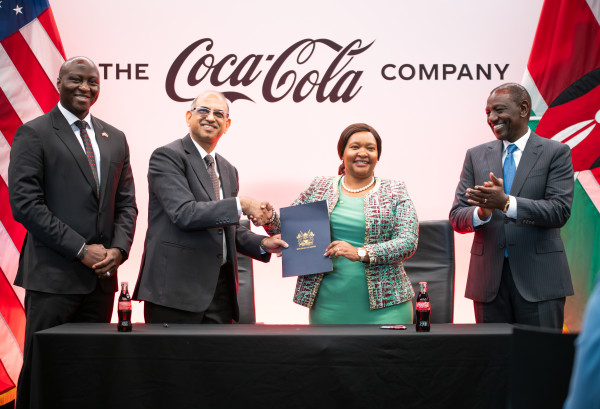
The Coca-Cola System in Kenya Announces Major Investment

Location: Business
Coca Cola Beverages Africa

The Coca-Cola system, consisting of The Coca-Cola Company and its authorised bottler Coca-Cola Beverages Africa (https://www.CCBAGroup.com), has announced its intention to grow its investment in Kenya by up to $175 million over the next five years, should the business achieve its anticipated growth targets in the country.

Hosting Kenyan President H.E. Dr William Ruto at The Coca-Cola Company's headquarters in Atlanta, Sunil Gupta, CEO of Coca-Cola Beverages Africa, said, “The Coca-Cola system has been an integral part of Kenya's landscape for more than 75 years. Today, we are excited to announce our intention to strengthen this legacy through a substantial investment.”

“This investment is aimed at accelerating the Coca-Cola system's capacity and capability expansion over the next five years. Our decision to invest underscores our belief in the long-term potential of Kenya's economy,” Gupta said.

Luisa Ortega, President of The Coca-Cola Company's Africa Operating Unit, emphasized the importance of collaboration with the government to create a stable policy environment. "The Coca-Cola system has been part of communities in Kenya for more than seven decades. We are excited to continue growing our business and supporting communities across Kenya for many years to come," said Ortega.

The Coca-Cola system has a rich legacy of refreshing Africa and making a difference in the East Africa region, where it is a major employer, directly employing 10,000 people.

The Coca-Cola system also works with over 500,000 Micro, Small and Medium Enterprises across the region, giving the company a direct connection to the experiences shared by many businesses in Kenya and across the East African region.

“Our value chain supports livelihoods for over a million people in distribution, sales and other roles,” said Gupta. “We source close to 8,000 metric tons of mango puree from East African farmers. We believe in the region's potential and its ability to achieve significant growth through collaboration between public and private sectors. Our business in Kenya is centered on a local approach - we hire locally, produce locally, distribute locally and source locally.”

“We are optimistic and fully committed to Kenya's future. We foresee great social and economic advancement, and this is why we continue to invest in our Kenyan business as well as community programs that help strengthen Kenya's prosperity,” Ortega concluded.

Distributed by APO Group on behalf of Coca Cola Beverages Africa.

ISSUED BY:
Wendy Thole-Muir
Group Head of Reputation and Communication
Coca-Cola Beverages Africa
Tel: +27 83 795 8524
Email: WThole-Muir@ccbagroup.com

Clifford Machoka
Senior Director
Public Affairs
Communication & Sustainability
East & Central Africa
Coca-Cola Africa
Tel: +254 734 109 260/1
Email: cmachoka@coca-cola.com

About The Coca‑Cola Company:
The Coca‑Cola Company (NYSE: KO) is a total beverage company with products sold in more than 200 countries and territories. Our company's purpose is to refresh the world and make a difference. We sell multiple billion-dollar brands across several beverage categories worldwide. Our portfolio of sparkling soft drink brands includes Coca‑Cola, Sprite and Fanta. Our water, sports, coffee, and tea brands include Dasani, smartwater, vitaminwater, Topo Chico, BODYARMOR, Powerade, Costa, Georgia, Gold Peak and Ayataka. Our juice, value-added dairy and plant-based beverage brands include Minute Maid, Simply, innocent, Del Valle, fairlife and AdeS. We're constantly transforming our portfolio, from reducing sugar in our drinks to bringing innovative new products to market. We seek to positively impact people's lives, communities and the planet through water replenishment, packaging recycling, sustainable sourcing practices and carbon emissions reductions across our value chain. Together with our bottling partners, we employ more than 700,000 people, helping bring economic opportunity to local communities worldwide. Follow us on Instagram (https://apo-opa.co/42DbAWX), Facebook (https://apo-opa.co/4bKvZ0m) and LinkedIn (https://apo-opa.co/4bpOQ03).

About Coca-Cola Beverages Africa:
Coca-Cola Beverages Africa is the 8th largest Coca-Cola bottling partner in the world by revenue, and the largest on the continent. It accounts for over 40% of all Coca-Cola products sold in Africa by volume. With over 18,000 employees in Africa, CCBA services more than 720,000 customers with a host of international and local brands. The group was formed in July 2016 after the successful combination of the southern and east Africa bottling operations of the non-alcoholic ready-to-drink beverages businesses of The Coca-Cola Company, SABMiller plc and Gutsche Family Investments. CCBA shareholders are currently: The Coca-Cola Company 66.5% and Gutsche Family Investments 33.5%. CCBA operates in 15 countries, including its six key markets of South Africa, Kenya, Ethiopia, Uganda, Mozambique, and Namibia, as well as Tanzania, Botswana, Ghana, Zambia, the islands of Comoros and Mayotte, Eswatini, Lesotho and Malawi.

Learn more at  https://www.CCBAGroup.com

Follow us on LinkedIn (https://apo-opa.co/4dfq8AC)

Media files
Coca Cola Beverages Africa
Download logo
Read moreThe Coca-Cola System in Kenya Announces Major Investment
21 May 2024

Government welcomes ICC arrest warrants application

Location: News

Government welcomes ICC arrest warrants application

Government has welcomed the decision by the Prosecutor of the International Criminal Court (ICC), Karim Kahn KC, on the application for arrest warrants that include Israeli Prime Minister Benjamin Netanyahu and others, for alleged war crimes and crimes against humanity.

The application for arrest warrants is for the Prime Minister, Israeli Defence Minister Yoav Gallant and three leaders of Hamas – Yahya Sinwar, Mohammed Diab Ibrahim Al-Masri and Ismail Haniyeh.

This is within the context of the present conflict raging in Gaza.

In a statement, President Cyril Ramaphosa said South Africa – which has been a leading proponent for a ceasefire in that conflict – remains committed to “the international rule of law”.

“South Africa is committed to the international rule of law, universal respect for human rights and the settlement of all international disputes by negotiation and not war, and the self-determination of all peoples, including the Palestinians.

“We have also consistently held that all participants to the conflict must ensure that fighting and hostilities come to an immediate end, that all hostages must be released immediately, and that Israel immediately withdraws its military forces from Gaza. This is the only way in which the rights of the Palestinian civilian population can be protected and the basis for sustainable peace can be achieved,” President Ramaphosa said.

In a statement on Monday, ICC prosecutor Karim Kahn KC said based on evidence, his office has reasonable grounds to believe that Netanyahu and Gallant “bear criminal responsibility for the following war crimes and crimes against humanity”:

  • Starvation of civilians as a method of warfare as a war crime contrary to article 8(2)(b)(xxv) of the Statute;
  • Wilfully causing great suffering, or serious injury to body or health contrary to article 8(2)(a)(iii), or cruel treatment as a war crime contrary to article 8(2)(c)(i);
  • Wilful killing contrary to article 8(2)(a)(i), or Murder as a war crime contrary to article 8(2)(c)(i);
  • Intentionally directing attacks against a civilian population as a war crime contrary to articles 8(2)(b)(i), or 8(2)(e)(i);
  • Extermination and/or murder contrary to articles 7(1)(b) and 7(1)(a), including in the context of deaths caused by starvation, as a crime against humanity;
  • Persecution as a crime against humanity contrary to article 7(1)(h);
  • Other inhumane acts as crimes against humanity contrary to article 7(1)(k).

On the other hand, Kahn said his office has reasonable grounds to believe that Hamas leaders, Sinwar, Al-Masri and Haniyeh “bear criminal responsibility for the following war crimes and crimes against humanity”:

  • Extermination as a crime against humanity, contrary to article 7(1)(b) of the Rome Statute;
  • Murder as a crime against humanity, contrary to article 7(1)(a), and as a war crime, contrary to article 8(2)(c)(i);
  • Taking hostages as a war crime, contrary to article 8(2)(c)(iii);
  • Rape and other acts of sexual violence as crimes against humanity, contrary to article 7(1)(g), and also as war crimes pursuant to article 8(2)(e)(vi) in the context of captivity;
  • Torture as a crime against humanity, contrary to article 7(1)(f), and also as a war crime, contrary to article 8(2)(c)(i), in the context of captivity;
  • Other inhumane acts as a crime against humanity, contrary to article 7(l)(k), in the context of captivity;
  • Cruel treatment as a war crime contrary to article 8(2)(c)(i), in the context of captivity; and
  • Outrages upon personal dignity as a war crime, contrary to article 8(2)(c)(ii), in the context of captivity.

The Israeli-Hamas conflict has claimed the lives of more than 34 000 Palestinians including women and children.

Conflict in the region escalated on October 7 last year when a Hamas led attack killed more than 1000 people in Israel.

Recently, South Africa returned to the International Court of Justice (ICJ) to seek an urgent order from the court for the protection of Palestinian people in Gaza amid Israel’s ongoing military assault on Rafah.

READ | South Africa seeks additional provisional measures in Gaza

The urgent application filed earlier this month follows the escalation of Israel’s assault on Rafah, which poses an extreme risk to humanitarian supplies, basic services into Gaza, the survival of the Palestinian medical system, and the survival of Palestinians in Gaza as a group.  – SAnews.gov.za


NeoB
Tue, 05/21/2024 - 09:21

609 views
Read moreGovernment welcomes ICC arrest warrants application
21 May 2024

State neglect of young children leads to lifelong damage

Location: News

Only about one in four early learning programmes get subsidies, and that funding is only R17 per child per day and has not increased since 2019

Read moreState neglect of young children leads to lifelong damage
21 May 2024

Fake news destroys democracy

Location: News

Fake news destroys democracy

As South Africa draws closer to the seventh democratic elections, Media Monitoring Africa has warned that the increase of misinformation and disinformation on social media poses a threat to democratic elections.

Addressing a webinar on Tuesday, hosted by the Government Communication and Information System (GCSI) on the upcoming elections, Media Monitoring Africa Communications Manager Nomshado Lubisi-Nkosinkulu said the "explosion of information" is making it increasingly difficult to know what is real and what is not.

The MMA is an organisation that helps to promote ethical and fair journalism, which supports human rights and democracy.

“Democracy is under threat. South Africa is dealing with unprecedented threats, and political analysts are calling the upcoming elections period as one of the most crucial, potentially aggressive, elections periods in our young democracy.

“With the dramatic increase in misinformation and disinformation on social media platforms and the lack of strong digital and media literacy skills among the public, it becomes more important than ever before for traditional media to not only be credible but also well equipped to deliver their mandate of informing and educating,” Lubisi-Nkosinkulu said.

She said that as the country moves towards the elections, misinformation, disinformation and other digital harms are not only likely, they are a certainty, and they pose clear threats to democratic elections.

Special Report | 2024 Elections

Misinformation is misleading content, while disinformation is false, inaccurate or misleading information designed, presented and promoted to intentionally cause public harm or for profit.

Public harm includes, but is not limited to, disrupting or preventing an election, conduct or outcome of an election, or unduly influencing the outcome or conduct of an election.

Lubisi-Nkosinkulu said disinformation always has a grain of truth; it makes the public angry, anxious, fearful and uncertain.

Consequently, it undermines the ability to trust and as a result, key institutions of democracy are undermined.

To combat misinformation, Lubisi-Nkosinkulu said a multi-stakeholder partnership with the Electoral Commission of South Africa (IEC) -- which includes a framework of cooperation between the Media Monitoring Africa, IEC, social media platforms and a disinformation working group with key civil society bodies -- is key.

“Using dedicated tools, including Real411, we will help combat, mitigate and investigate disinformation and other online harms during the election period,” she said.

Real411 provides a platform for the public to report digital harms, including disinformation. This ensures that online content is assessed and addressed in an independent, open, transparent and accountable manner within the laws and constitutional rights.

The app is available on Google Play and the App Store.

Real411, run in conjunction with the IEC, seeks to ensure that:

  • Key stakeholders play by the same rules;
  • There is a mechanism for the public to act against disinformation, helping to empower citizens to act against disinformation, thus helping to mitigate its impact;
  • It offers one central place for the public to report, regardless of the platform, and the lEC is able to deal with complaints across digital platforms.

In addition, the public now has access to the Political Party Advert Repository (PAdRE), which aims to ensure and increase access to information in the elections in South Africa, in line with the African Commission on Human and Peoples’ Rights’ Guidelines On Access To Information And Elections In Africa.

PAdRE is an initiative aimed at supporting free and fair elections by ensuring access to information during the elections period. The platform provides information on political party adverts and how much parties are spending.

TikTok Sub-Saharan Africa Director of Public Policy and Government Relations, Fortune Mgwili-Sibanda, said the platform’s Community Guidelines have a holistic that will help to ensure that the election’s integrity is protected.

"These guidelines define a common code of conduct. Every household has rules... We work to maintain an environment where everyone feels safe and welcome to create videos, find community, and be entertained. These guidelines also allow our community to help maintain a safe shared space.

“We deeply value that our users come from a huge breadth of nationalities and cultures, and our Community Guidelines take into account the cultural norms and local regulations of the countries in which we operate.

“We believe that feeling safe is essential to feeling comfortable expressing yourself authentically, which is why we strive to uphold our Community Guidelines by removing accounts and content that violates them,” Mgwili-Sibanda said.

On 17 May, the platform updated the rules and standards, introduced a warning strike for when a creator violates the Community Guidelines for the first time and introduced a policy to make an account temporarily ineligible for recommendation if a creator repeatedly posts content that goes against the guidelines.

An account check, which is an in-app feature that lets creators audit their accounts and post their last 30 post, was introduced.

“These are standards that we expect creators involved in TikTok programmes to follow on and off-platform," Mgwili-Sibanda said. – SAnews.gov.za

nosihle
Tue, 05/21/2024 - 12:30

322 views
Read moreFake news destroys democracy
21 May 2024

Multi-skills development centre to benefit KwaSwayimane community

Location: News

Multi-skills development centre to benefit KwaSwayimane community

Higher Education, Science and Innovation Minister, Professor Blade Nzimande, has officially launched a multi-skills development centre to benefit the community of KwaSwayimane in KwaZulu-Natal.

The centre is an initiative of the Sector Education and Training Authority (SETA) in response to requests submitted to the Minister by Inkosi SN Gcumisa of the Gcumisa Tribal Authority and uMshwathi Local Municipality Mayor, Mandla Zondi.

They had requested the Higher Education and Training Department to build a campus of the uMgungundlovu Technical Vocational Education and Training (TVET) College, or a multi-skills development centre in KwaSwayimane village.

Informed by a needs analysis, Nzimande launched a variety of SETA training interventions with a total value of R30 694 700. 

Given the importance of agriculture in KwaSwayimane, AgriSETA is the lead SETA of this skills development initiative.

AgriSETA has contributed R5 000 000 towards the skills development of 800 learners in crop production, livestock farming, and has provided accreditation to the three skills centres identified in uMshwathi.

Other investments include:

  • R1 830 000 contributed by Fibre Processing and Manufacturing (FP&M) SETA towards a learnership and skills programme for sewing, cabinet making and furniture making;
  • R2 916 000 from the Media, Information and Communication Technologies Sector Education and Training Authority (MICTSETA) contribution towards learnerships and skills programmes in digital training, mobile device repair and technical support training;
  • R12 788 700 contribution from the Construction Education & Training Authority (CETA) towards artisan development and learnerships in bricklaying, carpentry, welding and electrical, and
  • FOODBEV SETA contribution of R3 350 000 towards a skills programme in baking.

A total of R2 275 000 contributed by the Insurance Sector Education and Training Authority (INSETA) will go towards skills programmes in digital skills, while R2 535 000, contributed by the Wholesale and Retail (W&R) SETA, will go towards digital skills programmes and SMME support.

Speaking at an event held at Ndlebezembuzi Hall in KwaSwayimane, Nzimande said the SETA skills development intervention will be piloted in the kwaSwayimane community, and the initial phase rollout will benefit over 2 000 community members, mostly young people who are currently not in employment, education nor training (NEET).

“This contribution by our SETAs is their collective commitment to addressing unemployment, poverty, inequality and to improving the quality of life in the community of KwaSwayimane. The contribution also symbolises the commitment of government to changing the lives of ordinary citizens, particularly our rural areas. 

“We are particularly excited to be making this contribution in this community. As a department, we believe that we need to make sustainable investments in our rural areas, with the view of making them economically viable,” Nzimande said. – SAnews.gov.za

GabiK
Tue, 05/21/2024 - 13:08

262 views
Read moreMulti-skills development centre to benefit KwaSwayimane community
21 May 2024

Deadline for comment on City of Cape Town’s new homeless strategy

Location: News

Public comment closes Wednesday

Read moreDeadline for comment on City of Cape Town’s new homeless strategy
21 May 2024

Mashatile launches SANDF-led youth initiative to create jobs, entrepreneurship

Location: News

Mashatile launches SANDF-led youth initiative to create jobs, entrepreneurship

Deputy President Paul Mashatile has called on all South Africans to support the newly launched National Youth Service (NYS) initiative, which aims to address youth unemployment in South Africa.

The Deputy President, together with the Department of Defence and the Department of Women, Youth, and Persons with Disabilities (DWYPD), unveiled the South African National Service Institution (SANSI) in Pretoria on Tuesday.

The Deputy President said the South African National Defence Force (SANDF)-led NYS is a special project that will be piloted and implemented in the country’s poorest districts, where most youngsters are unemployed. 

WATCH | Launch of the South African National Service Institute 

Despite interventions such as the Presidential Employment Stimulus, which has created over 1.7 million job opportunities, the country’s second-in-command bemoaned that many young people remain on the margins of real economic participation. 

He cited the latest Quarterly Labour Force Survey, which shows that the official unemployment rate stands at 32.9%. 

According to the survey, about 3.6 million (35.5%) out of 10.3 million young people aged between 15 and 24 were not in employment, education or training (NEET).

“I am pleased that the DWYPD, in collaboration with the Department of Defence, adopted a whole-of-government and whole-of-society approach to the skills revolution for the unskilled. This will have a significant impact on restoring livelihoods, creating wealth, and alleviating poverty and hunger among the marginalised.”

READ | Employment programmes make a difference

According to the Deputy President, the initiative aims to optimise government resources by spearheading impactful projects that assist the nation’s most vulnerable citizens. 

“We envisaged inviting and encouraging young people to voluntarily join the National Youth Service, beginning with a character-building programme and progressing to industry demand-based education and training, ultimately leading to gainful employment or entrepreneurship.” 

The establishment of SANSI aims to develop, capacitate, and empower young unemployed Technical Vocational Education and Training (TVET) and university graduates through a purposeful and smooth skills-to-industry pipeline that will lead to innovative entrepreneurship and long-term, sustainable employment. 

The initiative also intends to transform youngsters into courageous agents of change, who will tackle the country’s most pressing issues in strategic work streams. 

These include food and agricultural value chain commercialisation, maritime and ocean economy, engineering and construction, manufacturing and infrastructure rollouts, as well as skills of the future, which include digital technologies and electronics.

The initiative, Mashatile stated, represents a massive investment in the effort to get young people trained and capacitated to participate in the economy.

He views the move as a significant milestone in the country’s journey towards a stronger and more resilient society. 

In addition, he said the initiative would serve as a hub for nurturing leadership, fostering skills development, and promoting community engagement. 

“It will empower our young people to contribute meaningfully to the development of our country and the wellbeing of our communities,” he stressed. 

The Deputy President announced that the provincial launches are still to follow, with the project aiming to reach at least 100 000 youth participants in the current fiscal year. 

He urged all young individuals who meet the eligibility requirements for the NYS to submit their applications in large numbers. 

“The youth must also take advantage of the opportunity presented by the programme to equip themselves with the much-needed skills.”

Minister of Defence Thandi Modise described SANSI as a necessary and important initiative and thanked the DWYPD Minister, Dr Nkosazana Dlamini-Zuma, for rallying her to see the bigger picture.

“It tallied with the call from all society that asked the Defence Force to do something and cries of mothers who had their hands on their heads and those who were trying to fight the nyaope. We see SANSI as that instrument in the hands of the Defence Force that will enable our children to come into their own,” said Modise. 

Shifting her focus to the young participants in SANSI, she emphasised that the SANDF will ensure their punctuality, obedience, ability to give and receive instructions, and leadership skills.

SANSI launch in pictures

Deputy President Mashatile and Ministers Modise and Dlamini-Zuma at the launch of SANSI. Members of the SANDF at the SANSI launch. Learners attend the launch of SANSI.


“The military will keep an eye on every little cent spent on this project and will go to the future of this country and the skills that we need,” Modise said. – SAnews.gov.za

Gabisile
Tue, 05/21/2024 - 14:12

230 views
Read moreMashatile launches SANDF-led youth initiative to create jobs, entrepreneurship
21 May 2024

S Africans urged to adopt and foster children to ensure the protection of youngsters

Location: News

S Africans urged to adopt and foster children to ensure the protection of youngsters

With the Child Protection Week campaign in full swing, the Department of Social Development (DSD) has encouraged South Africans to seek alternative care for their children if they are unable to care for them.

Social Development Minister Lindiwe Zulu launched Child Protection Week on Sunday in Kimberley, Northern Cape. 

The department is currently on a drive to raise awareness on upholding the rights of children, mobilising society to protect children against violence, abuse, neglect and exploitation. 

Since the dawn of democracy, the department said South Africa has designed the child protection system to provide for children to be fostered or adopted, and enable children to remain within families. 

“Adoption, which is viewed as the most permanent placement option for children who are orphaned and vulnerable, remains underutilised in South Africa and this leaves children for whom there is no immediate alternative care within their extended families exceptionally vulnerable to the long-term effects of institutionalisation,” the DSD said.

According to Section 28 of the Bill of Rights, Chapter Two of the Constitution of South Africa, every child has the right to parental and family care or to appropriate alternative care when removed from family care.

As per this constitutional provision, government has to provide alternative care for children when their parents or families cannot fulfil their duties of care.

Meanwhile, Section 233 of the Children’s Act also stipulates that if the parent is a child, a guardian must assist that child. 

The department stated that adoption is one of the alternative care placement options and forms part of the comprehensive child protection system.

South Africa currently has orphaned children due to factors such as violent crime, gender-based violence (GBV), HIV/AIDS, and the COVID-19 pandemic, which has claimed many lives worldwide.

“On the other hand, some children are abandoned due to the triple challenges of poverty, unemployment and inequality which culminate into multiple social ills including unwanted pregnancy. 

“Adoption, therefore, serves as the best possible option or alternative for these children, only if there are no prospects to reunite them with their parent(s) or families.

“Although adoption is a person’s or a family’s choice, it is important to promote adoption services and recruit prospective adoptive parents within the country.” 

The department acknowledged there could be barriers, which may prevent people from adopting children, such as cultural obstacles. 

“This suggests that there is a need for increased awareness of this tool of child protection. South Africans are, therefore, encouraged to look into adoption as one of the child protection measures to increase the number of prospective adoptive parents who are willing to adopt children in need of permanent and stable families.”

Between April 2010 and March 2024, the department recorded 16 593 national adoptions. Additionally, there were 2 239 inter-country adoptions, which brought the total of registered adoptions to 18 832.

The department announced it has employed 412 social workers registered with the South African Council for Social Service Professionals (SACSSP) and have since been armed to provide adoption services.

Foster care

The Children’s Act also makes provision for foster care as an alternative form for children who cannot be cared for by their biological parents. 

“Foster care is a court-ordered care of a child that needs care and protection, placing the child in a cluster foster care scheme or a suitable person other than a biological parent or a guardian,” the department explained. 

As part of foster care, the Children’s Act introduced the concept of cluster foster care placement which is aimed to maximise the available resources, strengthening the provision of foster care services to children including those with special needs within a community-based setting.

The department explained that children who are placed in foster care with a valid court order gain access to the package of government services that include therapeutic services, psychosocial support services, education, healthcare and foster child grants. 

“The purpose of foster care is to create an opportunity for children in need of care and protection to live in a protective, nurturing, stable and secure family environment. It requires the facilitation of reunification of the child with the parents or other safe and nurturing family relationships that will ensure stability in a child’s life.” 

By February 2008, the number of children in foster care was 454 000, and by the end of March 2024, it had decreased to 306 683, with the recipients receiving grants.

“With the introduction of the comprehensive legal solution to foster care prompted by the litigation on lapsed foster care orders, the Children’s Amendment Act 2022 makes a provision to prevent the lapsing of the foster care orders, by enabling the presiding officers to issue interim orders.”

Meanwhile, the Social Assistance Amendment Act increases access to social assistance for orphaned children in the care of relatives through the Child Support Grant-Top Up. – SAnews.gov.za

Gabisile
Tue, 05/21/2024 - 09:37

475 views
Read moreS Africans urged to adopt and foster children to ensure the protection of youngsters
21 May 2024

Tshwane abandons Marry Me settlement: Broken promises leave 450 families in limbo

Location: News

City says the land is private and is not in the process of being formalised

Read moreTshwane abandons Marry Me settlement: Broken promises leave 450 families in limbo
  • Previous
  • Page 1
  • Interim pages omitted …
  • Page 137
  • Page 138
  • Page 139
  • Page 140
  • Page 141
  • Interim pages omitted …
  • Page 210
  • Next

Copyright © 2026 · MyZA · All Rights Reserved · Powered by Stratlec Online