No sign of accountability for Thabo Bester’s escape
Eight months since the highly publicised Parliamentary hearing, little action has been taken by Parliament or Correctional Services

MyZA
News, Directory, Events and Other Stuff
Eight months since the highly publicised Parliamentary hearing, little action has been taken by Parliament or Correctional Services
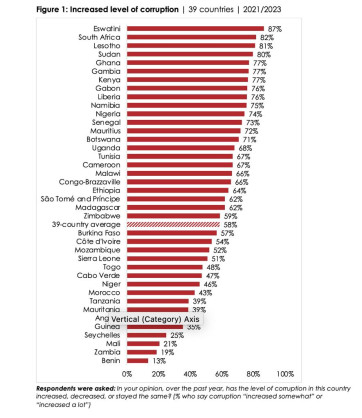
A majority of Africans say that corruption in their country is rising, that their government is failing in its efforts to fight it, and that ordinary citizens risk retaliation if they report corruption to the authorities, Afrobarometer's (www.Afrobarometer.org) latest Pan-Africa Profile (https://apo-opa.co/41k8N4i) reveals.
Download document (1): https://apo-opa.co/3NmOey6
Download document (2): https://apo-opa.co/3RDm193
Released ahead of International Anti-Corruption Day (9 December), the Afrobarometer report is based on nationally representative surveys in 39 African countries.
Findings show that among key public institutions, the police are most widely perceived as corrupt. In substantial numbers, citizens report having to pay bribes to obtain police assistance or avoid problems with the police, as well as to get government documents and services at health facilities and schools.
Citizens' assessments vary widely across countries, with Gabon, South Africa, Nigeria, Liberia, and Uganda among the worst-performing countries when it comes to perceived corruption in key public institutions, while Seychelles, Cabo Verde, Tanzania, and Mauritius turn in the best performances.
Key findings
Distributed by APO Group on behalf of Afrobarometer.
For more information, please contact:
Daniel Iberi
Afrobarometer communications officer for East Africa
Email: diberi@afrobarometer.org
Telephone: +254725674457
Follow us on:
Twitter: https://apo-opa.info/3jYM2la
Facebook: https://apo-opa.info/3K0t6gq
YouTube: https://apo-opa.info/3Ysf4IU
Visit us online at www.Afrobarometer.org
Follow our releases on #VoicesAfrica.
Afrobarometer surveys:
Afrobarometer is a pan-African, non-partisan survey research network that provides reliable data on African experiences and evaluations of democracy, governance, and quality of life. Nine survey rounds in up to 42 countries have been completed since 1999. Round 9 surveys (2021/2023) cover 39 countries.
Afrobarometer's national partners conduct face-to-face interviews in the language of the respondent's choice with samples of 1,200-2,400 adults that yield country-level results with margins of error of +/-3 to +/-2 percentage points at a 95% confidence level.
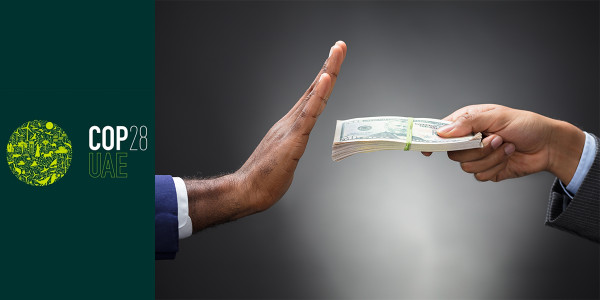
By NJ Ayuk, Executive Chairman, African Energy Chamber (www.EnergyChamber.org).
There was an era when Africa and Western pop music were closely linked.
Western entertainers spearheaded a number of internationally renowned events to raise awareness about the plight of starving Africans and generate funds for famine relief.
In December 1984, the supergroup Band Aid sang about feeding the world, asking “Do They Know it's Christmas?” Within a year, the group had raised over USD9 million. Three months later, USA for Africa released “We Are the World” and banked USD44.5 million after one year for its African humanitarian fund. Then on a hot July day in 1985, the worldwide concert event Live Aid raised more than USD150 million for famine relief in Africa.
These are just a handful of grand and noble gestures intended to lift Africa out of poverty. And these famous events arguably raised both awareness and funds. Unfortunately, the efforts — and others like them — fall far short of making any real socioeconomic change. In fact, some argue that injecting monetary aid into Africa, time and time again, has actually done more harm than good.
I acknowledge that stance may sound ungrateful. At first blush, many might counter that starving people have no agenda. Destitute parents still need to feed their children. Turning a blind eye to their plight is inhumane.
Let me explain why the African Energy Chamber (AEC) continues to push for free-market solutions rather than good-will handouts.
History of ‘Help'
Even aid genuinely given to help Africa tends to do more harm than good.
Since 1960, more than USD2.6 trillion has been pumped into Africa in the form of aid. From 1970 and 1998, when aid was at its peak, poverty actually rose alarmingly — from 11% to 66% — due in large part to this massive influx of foreign aid that counteracted its intended good.
Aid decreased long-term economic growth by fueling systemic corruption, in which powerful aid recipients funneled foreign funds into a personal stash instead of public investment. Many leaders realized that they no longer needed to invest in social programs for their constituents because of the revenues from foreign donors.
Large inflows of aid also caused higher inflation, hindering African nations' international competitiveness in exporting. That resulted in diminishing the manufacturing sector – which is critical in helping developing economies grow — across the continent. And well-intentioned Westerners who saw the economic shrink just kept pouring more and more money at “the problem” — leading to a vicious cycle that furthered corruption and economic decline.
But here's the kicker: The World Bank has admitted that 75% of the agricultural projects it implemented to help Africa failed. So why do they and other aid providers continue to fund these failing efforts?
Examples of Failure
Across the continent, we see example after example of failed aid projects, with agricultural projects routinely providing little or no benefit to African farmers.
In Mali, the U.S. Agency for International Development (AID) injected USD10 million into “Operation Mils Mopti” to increase grain production. The government imposed “official” prices on the grain, which forced farmers to sell their crops at these below-market rates and resulted in grain production falling by 80%.
AID also spent USD4 million to help livestock producers grow the number of cattle in the Bakel region from 11,200 to 25,000 — but ultimately only succeeded in increasing it by 882 head. Another USD7 million was injected into the Sodespt region, but that investment managed to sell only 263 cattle and failed to sell any goats or sheep.
Then we see example after example of Westerners wastefully “helping” without any understanding of the local situation. Norwegian aid agencies built a fish-freezing plant to improve employment in northern Kenya — a region where the local people traditionally do not fish because of their semi-nomadic pastoralist lifestyle. Couple the lack of fishing experience with the unfortunate reality that the plant required more power than was available in the entire region, and the result was that the brand-new processing plant sat idle.
The World Bank financed a USD10+ million expansion of Tanzania's cashew-processing capabilities, which resulted in 11 factories with the capacity to process three times as many cashews as the country was growing on a yearly basis. The plants were too efficient for the available workforce and cost so much to run that it was cheaper to process the raw nuts in India. Half the plants were inoperable, and the other half only ran at about 20% capacity.
I'm not saying that we Africans are ungrateful for the outpouring of heartfelt care. The compassion of the West is certainly real. However, the outcome of said compassion is the concern: The more foreign aid African governments receive, the worse they perform. As long as the aid keeps flowing, government leaders and their employees who administer development programs may prosper while the rest of the citizenry continues to suffer the effects of a mismanaged economy.
Questionable Benefits
We also must acknowledge that, in far too many cases, aid has also been given to African nations and communities in attempts to manipulate and control.
“While hungry faces are used on posters and in media reports to sell the virtues of foreign aid, it is the hungry who rarely see any of the funds,” James Peron, executive director of the Institute for Liberal Values in Johannesburg, South Africa, lamented in a piece for the Foundation for Economic Education. “Poverty may be used to justify the programs, but the aid is almost always given in the form of government-to-government transfers. And once the aid is in the hands of the state it is used for purposes conducive to the ruling regime's own purposes.”
And now we witness the international community talking about aid for African countries as a substitute for our oil and gas activities. Western environmentalists argue that Africa should keep all of its petroleum resources in the ground to prevent further climate change. In exchange for that sacrifice, African nations would be compensated and inject that money into other opportunities like developing their sustainable energy technologies.
I've said it before, and I'll say it again: What a horrible idea!
I‘m offended by foreign stakeholders feeling that providing humanitarian assistance gives them the right to influence our domestic decisions. With Africa poised to participate in the worldwide energy transition, my fear is that international donors will feel justified to dictate Africa's policy regarding the lengths to which, and speed with which, our energy transition occurs. This would be a huge step backward in our energy, economic, and even individual independence.
Aid packages to incentivize giving up our oil and gas operations will be detrimental to Africans. Because let's be honest: History has shown that this assistance could never replace the oil and gas industry's ability to create jobs and business opportunities, grow local capacity, open the door to technology sharing, facilitate economic growth, and alleviate energy poverty.
Instead of continuing a pattern that clearly does more harm than good, why aren't African nations encouraged to leverage the wealth of resources at our feet?
During the final few days of COP28 — and beyond — the AEC is determined to make a case for African nations harnessing their oil and gas solutions to help themselves. We will not be bullied, or manipulated with aid, into a path that is not in our best interests.
Use What We Have!
One reason why the AEC is an outspoken advocate for Africa's oil and gas industry is because it represents more than big revenue for African governments. It is a free-market solution that creates pathways for Africans to help themselves. And, ultimately, empowering Africans is our number one goal.
We endorse an energy mix approach that allows Africa to use and sell our own hydrocarbon reserves to alleviate energy poverty, while at the same time moving toward a future in which renewable energy sources power the continent. The energy mix method can help more people more quickly because it takes a practical, people-first approach to helping those who have traditionally been left behind by the energy sector, while moving us toward greener energy sources.
Natural gas, in particular, can transform African lives and communities. Its potential benefits range from eradicating energy poverty to allowing Africans to develop skills for good jobs to creating hope for our youth.
Ramping up gas production to help alleviate the lack of access to electricity will create thousands of new employment opportunities in Africa. In addition, the new sources of energy can be exported to Western countries to replace Russian energy. Then, as Europe transitions to sustainable energy, a larger portion of Africa's natural gas can power domestic needs. By the time other countries complete their transitions to carbon-neutral sources, Africa will have a much more expansive and reliable grid system, which will allow for an easier transition.
And before we argue about the evils of hydrocarbons, let me point out that, although it might seem counterintuitive, it is possible for Africa to make use of its abundant fossil fuels while moving toward a future sustained by renewable energy sources. In fact, I believe that African nations must do everything they can to ensure that these two things work in tandem. Considering that 600 million people on the continent have no access to electricity and 900 million people lack access to clean cooking technologies, it's impossible — if not altogether inhumane — to discuss climate change without looking at energy poverty.
As I recently wrote in an article published by Medium, we cannot transition from the dark to the dark. We must deliver energy to the people of Africa and then worry about transitioning to environmentally friendly alternatives, just like we have everywhere else in the world.
This has been our platform at COP28, and we will continue to stand by it in 2024 and beyond.
Distributed by APO Group on behalf of African Energy Chamber.
Deputy President on working visit to Southeast Asia
Deputy President Paul Mashatile has arrived in the Republic of Singapore to begin the first leg of his first working visit to Southeast Asia.
The Deputy President began his visit on Sunday with a tour of the Marina Barrage development, Singapore’s innovate water resource management project.
As a resource-poor and water-scarce country, Singapore has invested significantly in research and development of water management and sustainability. Most impressively, the country has made big strides in the area of seawater desalination.
“The Deputy President’s visit to the country is aimed at building and strengthening bilateral relations, particularly increasing trade, economic, knowledge and cultural exchange between the two States,” the Presidency said in a statement.
Singapore is a global financial hub and is considered one of the premier asset management centres in Asia. The World Bank has ranked Singapore as the number one country in the world for ease of doing business since 2006, and the country is an important global aviation and maritime hub.
Singapore is also considered an important gateway for the export of goods and services to Southeast Asia and a hub for joint venture partnerships throughout Asia. It is an important centre for South African businesses looking for opportunities to expand operations on the continent.
As part of his programme, the Presidency said, Mashatile will visit the Lee Kuan Yew School of Public Policy and deliver a public lecture on the 30 years of diplomatic relations between South Africa and Singapore titled “Celebrating a journey of mutual respect, strategic partnership and cooperation.”
The Deputy President is accompanied in Singapore by Deputy Ministers for International Relations and Cooperation, Candith Mashego-Dlamini; Trade, Industry and Competition, Nomalungelo Gina; Higher Education, Science and Innovation, Buti Manamela; Communication and Digital Technologies, Philly Mapulane; Forestry, Fisheries and the Environment, Magdalene Sotyu, and senior government officials.
Trade and diplomatic links
One of the key areas of collaboration between South Africa and Singapore is trade. Singapore is one of South Africa's largest trading partners in Southeast Asia, with trade between the two countries totalling approximately R28 billion in 2022.
Singapore is a significant investor in South Africa, with investments totalling over R5 billion in sectors such as manufacturing, financial services and real estate.
South Africa's economic relations with Singapore are focused on trade, investment, tourism promotion and skills transfer.
South Africa exports a range of products to Singapore, including gold, diamonds and wine, while Singapore exports electronics, chemicals and machinery to South Africa.
In May this year, President Cyril Ramaphosa hosted Prime Minister Lee Hsien Loong of the Republic of Singapore for an Official Visit in Cape Town.
Singapore’s visit to South Africa continued the high-level engagement the two governments have fostered since diplomatic relations begun in 1993, ahead of South Africa’s democratic transition.
Since then, the two countries have shared excellent bilateral relations, which have formed the basis of regular high-level visits.
2023 marks the 30th anniversary of the establishment of diplomatic relations between the Republic of South Africa and the Republic of Singapore as partners who work together closely in multinational fora.
Singapore, like South Africa, is a member of the Indian Ocean Rim Association (IORA), the Commonwealth, as well as the Non-Aligned Movement (NAM).
The two countries have signed numerous agreements to enhance cooperation in areas such as trade, investment, education, and defence.
The May visit was preceded by an official visit undertaken by the Minister of International Relations and Cooperation, Dr Naledi Pandor, to Singapore in July 2022 to strengthen bilateral relations.
In May, President Ramaphosa and Prime Minister Hsien Loong held official talks on cooperation in the areas of communications and digital technology, science and innovation, water and sanitation and skills development.
The leaders discussed the potential for closer collaboration in these areas when they met on the sidelines of the G20 Leaders Summit held in Bali last year.
The visit brought captains of industry from the respective countries to collaborate in sectors ranging from ports, logistics and supply chain, healthcare and biomedical, food manufacturing and engineering. – SAnews.gov.za
GabiK
Sun, 12/10/2023 - 12:58
The Board of Directors of the African Development Bank Group (www.AfDB.org) has approved a $1 billion guarantee program in collaboration with the UK Foreign Commonwealth and Development Office (FCDO), which will allow the Bank to increase its lending capacity in support of South Africa's Just Energy Transition (JET).
Developed in close collaboration with the government of the Republic of South Africa, the program will support projects aligned with South Africa's JET investment plan, such as transmission and grid-balancing storage, renewable energy generation, energy efficiency, rehabilitation of municipal electricity delivery, green hydrogen, new electric vehicles. It also includes projects addressing the “just” dimension, notably in the Province of Mpumalanga, in the north-eastern part of the country, bordering Swaziland and Mozambique.
The approval, coming during COP28, where ramping-up climate finance is an issue, is timely and topical. African Development Bank Vice President for Power, Energy, Climate and Green Growth, Dr. Kevin Kariuki observed: “this is another innovative operation that reaffirms AfDB's leadership in crafting financial solutions to increase access to climate finance for Africa's low carbon development and net zero ambitions.”
Melinda Bohannon, Foreign Commonwealth and Development Office Director General of Humanitarian and Development stated,” FCDO remains committed to the Just Energy Transition Partnership with South Africa, which supports green growth and jobs, improves energy security, and helps South Africa achieve its carbon reduction ambitions as set out in its National Determined Contribution. This guarantee will unlock funds for projects within the remit of South Africa's recently released Just Energy Transition implementation plan. This comes alongside the recently significantly increased grant offer from the International Partners Group, and we are using some of those grants to help develop an investment project pipeline”.
Mmakgoshi Lekhethe, Deputy-Director General for Asset and Liability Management in South Africa's National Treasury commented, “We are pleased with the approval by the AfDB Board of the guarantee framework that will increase South Africa's access to funding from the Bank by $1 billion. This marks an important partnership between our government, the UK and AfDB to enhance our ability to implement South Africa's just energy transition in a way that is just and socially responsible. We look forward to working closely with the AfDB on the preparation and financing of a pipeline of programs and projects under our just transition priority areas, including those identified in the JET Implementation Plan. As a development bank with vast experience in just transition in the continent, the AfDB is an ideal partner for us on this important initiative”.
Max Ndiaye, Director of Syndications, Co-financing and Client Solutions, noted previous collaboration between the Bank and FCDO, and applauded this transaction as further demonstration of the Bank's continued efforts to heed the G20 recommendations on capital adequacy that call for increased collaboration and additional shareholder support for the balance sheet optimization of MDBs.
“By enabling the Bank to increase its lending capacity, this landmark guarantee agreement will greatly support South Africa's Just Energy Transition,” noted African Development Bank Director General for Southern Africa, Leila Mokaddem. “The African Development Bank remains committed to accompanying South Africa on this important journey," she added.
Distributed by APO Group on behalf of African Development Bank Group (AfDB).
Link to Images: https://apo-opa.co/4afJ94I
Contact:
Amba Mpoke-Bigg
Communication and External Relations Department
email: media@afdb.org
Technical contact:
Max Ndiaye
Director of Syndications
Co-financing and Client Solutions
About the African Development Bank Group:
The African Development Bank Group is Africa's premier development finance institution. It comprises three distinct entities: the African Development Bank (AfDB), the African Development Fund (ADF) and the Nigeria Trust Fund (NTF). On the ground in 41 African countries with an external office in Japan, the Bank contributes to the economic development and the social progress of its 54 regional member states. For more information: www.AfDB.org
Call for swift arrest in uMngeni Municipality Councillor’s murder
KwaZulu-Natal Premier, Nomusa Dube-Ncube, has urged police to act swiftly to arrest the criminals behind the murder of uMngeni Local Municipality Democratic Alliance Chief Whip, Nhlalayenza Ndlovu.
Ndlovu was gunned down in front of his children at his home in eMpophomeni Township on Tuesday night.
The KwaZulu-Natal Provincial Government has condemned the murder.
The Premier said this was yet another incident of violence shining the spotlight on the killing of political leaders in the province.
“We simply will not allow our province to become a killing field, especially of politicians and traditional leaders. This is a direct attack on the centre that holds our communities together which should serve as the last defence of all the people of our province.
“Those elected should be allowed the space and time to govern following elections. Attacks on politicians are invariably an attack on the very institutions which hold our democracy together, and should never be countenanced,” Dube-Ncube said.
Ndlovu’s murder comes after Police Minister Bheki Cele released a report of the Inter-Ministerial Committee tasked to probe all political killings in KwaZulu-Natal in September, which reported major advances against this phenomenon.
Given the arrests reported by the police, the Premier said government is making progress in ensuring that the perpetrators of political and traditional leaders end up behind bars.
“As we send our condolences to the family of Councillor Ndlovu, we want to state that we have no doubt that the KwaZulu-Natal Police Commissioner, General Nhlanhla Mkhwanazi, and his team will ensure that no stone is left unturned to locate the killers.
“As we go into the festive season holidays, we also wish to sound a stern warning to all criminals that there will be no place to hide, as all organs of the State working together with all the law-abiding members of our communities, will continue to narrow the space for all forms of criminality in order to make our province a safer place to live in,” Dube-Ncube said.
Cooperative Governance and Traditional Affairs MEC Bongi Sithole-Moloi said it was disappointing that incidents of killing democratically-elected councillors continues to occur.
“As a department, we condemn violence in the strongest possible terms as we strive for stability and peace in all our councils, and it is always a matter of great concern when a ward councillor is killed in this manner, instilling fear in the public and fellow councillors.
“We call upon the public members or anyone who may have information that could lead to the arrest and prosecution of the perpetrators to work with the police to seek justice for councillor Ndlovu.
“As the department, we extend our condolences to the Ndlovu family, who have lost a father, to his friends, colleagues, and the entire uMngeni community, who have lost their representative in the council,” Sithole-Moloi said. – SAnews.gov.za
GabiK
Fri, 12/08/2023 - 12:03
Call to deal with corruption
Corruption has become so pervasive that the same vigour used to fight apartheid should be used to combat the scourge.
This is according to the Public Service Commission (PSC) Commissioner, Prof Somadoda Fikeni, who was speaking on Friday at this year’s International Anti-Corruption Day at the ZK Matthews Great Hall at Unisa in Pretoria.
International Anti-Corruption Day is commemorated annually on 9 December in recognition of the United Nations Convention against Corruption, which was signed in Mexico in 2003.
South Africa is one of the signatories to the Convention having ratified it in 2004.
Reflecting on the 10th anniversary of the passing of the global statesman Nelson Mandela, Prof Fikeni said Madiba led with cohorts of successful leaders of their time.
“The struggle and the mission of their time was apartheid. That was the biggest challenge of their time. But today, after all the revelations to the Zondo Commission, we realise that the biggest challenge we face is corruption.
“Apartheid was the rule of law that took from the majority and gave to the minority. And corruption is the minority rule that takes from the majority and gives to the minority,” he said.
He believes that it should not matter whether corruption happens is in the public or private sector, religious institutions or non-government organisations.
Fikeni called South Africans to wage war against the scourge.
“During apartheid, we had iconic figures who died like Hector Pieterson and today, the whistle-blowers like Babita [Deokaran] are the Hector Pietersons of the struggle of today and many other whistle-blowers who died to save the country have become the Sharpeville Massacre victims of today.”
He said collaborative effort is needed to fight corruption.
“Government alone, accountability institutions alone, civil society alone, academic institutions alone and private sector alone can no longer combat this scourge. We need a coordinated effort,” he said.
South Africa, according to Fikeni, is rich in producing policies and frameworks but tends to be challenged with implementation.
It is for this reason that the 2023 International Anti-Corruption Day’s focus is on uniting against corruption and how to better collaborate and improve implementation and impact.
“When we leave this place and years pass, no one will remember what we said, what we were wearing, what venue we were in but what concrete steps do we take to combat corruption,” he said to the packed hall.
He said it was not right that whistle-blowers have to go into “exile” because they do not feel safe.
According to the Prof, the PSC is also working on the lifestyle audits of officials and collaborating with Chapter 9 institutions to ensure the oversight eco-system is strengthened.
“This is a generational mission of our time to say that corruption is a new apartheid that we should all combine forces. It shouldn’t be a football for any election but an all-time struggle and something we talk about and pursue beyond elections.”
Good governance
Deputy President Paul Mashatile told the attendees that both the public and private sectors needed to unite against unscrupulousness to maintain good governance.
The country’s second-in-command said Madiba played an integral role in advocating for a Constitution based on the principles of social justice, inclusion, accountability and decisive leadership.
“It was through his leadership and those who led with him that we learnt the values of selflessness and putting people first. Corruption on the other hand is based on selfishness and a lack of concern for the majority that one leads.”
It is on this basis that the Deputy President said government should be vigilant in how it deals with corruption, especially in the public sector.
“It is a persistent problem that inhibits development, fairness and inequality in our society.”
He also called for a united front dedicated to getting rid of corruption and dealing harshly with those partake in it.
In the past 29 years of democracy, he said the State has developed framework law, strategy, and institutions mandated to combat corruption.
These, the Deputy President said, include the Prevention and Combatting of Corrupt Activities Act, the National Anti-Corruption Strategy 2020-2030 and the Anti-Corruption Advisory Council.
The strategy, he said, also aims to ensure that officials and those in positions of power act with integrity, respect the rule of law and promote zero tolerance for corruption.
The Prevention and Combating of Corrupt Activities Act 12 of 2004 intends to provide for the strengthening of measures to prevent and combat corruption and corrupt activities and to provide for the offence of corruption and offences relating to corrupt activities, among others.
The Deputy President is of the view that accountability, transparency and the rule of law are important tools to rid the country of crime and corruption.
“As public servants and office bearers, we must safeguard the preamble of our Constitution and constantly remind ourselves that our purpose is to serve our people and not to satisfy our stomachs.
“Our priority should be those we have sworn to serve and protect.”
He also announced that government was also in the process of implementing recommendations contained in the State Capture report.
“We need to ensure that such activities should never happen ever again,” he said, adding that the State is looking at tax avoidance and illicit financial flows. – SAnews.gov.za
Gabisile
Fri, 12/08/2023 - 13:22
Commission recommends a CPI plus 3% adjustment in National Minimum Wage
The National Minimum Wage (NMW) Commission has issued another invitation to interested parties to submit written representations concerning possible adjustments to South Africa’s national minimum wage in 2024.
The Department of Employment and Labour said the commission had three proposals on its table after it issued an invitation to interested parties to submit written representations concerning next year’s wage increase.
“The NMW Commission has published a report in the government gazette with the intention to present the commission’s report and recommendations on the annual review of the national minimum wage and also invite written representations from the public,” the department said.
A minimum wage is the lowest remuneration employers can legally pay their employees for each ordinary hour worked. It is illegal for an employer to pay employees less than this minimum floor.
The three proposals tabled in the report are as follows:
• The recommendation by the majority is Consumer Price Index (CPI) plus 3%. Eight of the 12 commissioners propose that the national minimum wage increases by CPI plus 3%.
• The recommendation by the Business Constituency is CPI.
• The recommendation by an independent expert is CPI plus 0.75%.
“The CPI is a measure of the change in prices as paid by consumers for goods and services over time. In South Africa, the latest consumer price inflation as published by Statistics South Africa was 5.9% in October 2023, up from 5.4% in September 2023,” the department said.
The commission’s latest invitation for inputs follows similar calls in August and September in accordance with section 6(2) of the National Minimum Wage Act, No. 9 of 2018.
The commission comprises representatives from organised labour, business, community and experts in the field of labour market and conditions of employment.
In 2021, the commission recommended increasing the national minimum wage from R20.76 to R21.69 per hour. The 2022 national minimum wage was revised from R21.69 to R23.19 per hour. In 2023 the minimum wage was revised to R25.42 per hour.
Factors considered by the commission in the annual adjustment include inflation, the cost of living, and the need to retain the value of the minimum wage; wage levels and collective bargaining outcomes; gross domestic product; the ability of employers to carry on their businesses successfully; the operation of small, medium or micro-enterprises and new enterprises; and impact on employment or the creation of employment.
Employment and Labour Minister Thulas Nxesi will announce in February 2024 the new rate of adjustment, which will come into operation from 1 March 2024.
The public has until 8 January 2024 to make their written representations.
Requests for inputs should be sent to the directorate: Employment Standards, Department of Employment and Labour, Private Bag X117, Pretoria, 0001 or be sent to nmwreview@labour.gov.za. - SAnews.gov.za
DikelediM
Fri, 12/08/2023 - 13:31
As South Africa engages in the last week of the global 16 Days of Activism against Gender-Based Violence campaign, a R1.6 billion budget allocation has done little to stem the tide of violent crimes against women and children. Commitments at presidential summits on gender-based violence and femicide (GBVF) in 2018 and 2022, including the budget …
Government welcomes adoption of Post Office business rescue plan
The Department of Communications and Digital Technologies has welcomed the decision by the South African Post Office (SAPO) creditors to adopt the draft Business Rescue Plan.
“The timeous adoption of this Business Rescue Plan sets us on course in turning the tide in saving the South African Post Office in the interest of our developmental agenda as a country,” Minister of Communications and Digital Technologies Mondli Gungubele said on Thursday.
The draft Plan was published for comment on 23 November 2023.
“The post office remains an important institution in our postal services network nationally and in the Southern African Development Community (SADC) Region. Most importantly, we remain committed to ensuring that we build a post office of tomorrow which provides quality, affordable and accessible services to the people of South Africa, particularly in this digital era,” Gungubele said.
Business Rescue Practitioners, Anoosh Rooplal and Juanito Damons, appointed after SAPO was placed under Business Rescue in July 2023, were tasked with the responsibility of developing and submitting a Business Rescue Plan by 30 November 2023.
In July, then acting Minister of Communications and Digital Technologies, Enoch Godongwana, welcomed the Gauteng Division of the High Court of South Africa’s decision to place the SAPO under supervision and in business rescue which would commence with immediate effect.
According to the Ministry of Communications and Digital Technologies at the time, the decision of the court in support of the application brought by Minister Mondli Gungubele confirmed that indeed SAPO is a strategic government asset that provides vital services throughout the country. This is especially in remote areas where SAPO is often the main link between residents and the outside world.
It added that it further uses its countrywide footprint to render services such as the distribution of social grants at its branches and the distribution of medication to those in need. It also renders various national and international postal services.
Full details on the Business Rescue Plan can be accessed on: https://www.postoffice.co.za/BusinessRescue/index.html
–SAnews.gov.za
nosihle
Fri, 12/08/2023 - 10:17
South Africa’s property development sector is a dynamic field that plays a crucial role in the country’s economy. This guide aims to provide a clear overview of property development in South Africa, highlighting its key aspects, challenges, and opportunities. The Essence of Property Development in South Africa What is Property Development? Property development in …
Free State communities share expectations ahead of Imbizo
As scores converged at the Kopano Indoor Sports Centre in Thabong, Free State, for the 11th District Development Model (DDM) Presidential Imbizo, some local residents of the Matjhabeng Local Municipality shared what they expected to be addressed by authorities at the gathering.
Speaking to SAnews on Thursday in Matjhabeng (which falls under the Lejweleputsawa District Municipality), Kgosi Mmelwana from Welkom said he was keen to hear President Cyril Ramaphosa’s message. He was especially looking forward to hearing what Ministers would have to say on education and health-related matters.
“I am glad that the President and his Cabinet Ministers have descended on our town. We want to tell the President what we need as a community.
“We still need more schools and healthcare facilities. Some of our learners walk long distances to school,” Mmelwana said.
Echoing his sentiments, Dithabo Mmutle, said some community members still travel long distances to access government services.
“We want government offices to be closer to where we stay. We spend a lot of money traveling to government offices to access services,” she said.
A Grade 12 learner at a local high school, Abraham Sithebe, said he was most concerned about the high unemployment among the youth.
“Young people go to school and at the end of the day, they are not employed. Government needs to take care of our people. We don’t want them to end up becoming drug addicts,” he said.
Today’s Imbizo in the Free State is the second in the province since the Presidential Izimbizo started in 2022. President Ramaphosa’s first Imbizo in the Free State took place in the Mangaung Metropolitan Municipality in April 2022.
During the 2022 engagement, 42 community members - representing the seven regions of the Mangaung Metro - voiced their concerns to the President, which included lack of service delivery, corruption, inadequate housing, unemployment and crime. The towns represented in this discussion included Van Stadensrus, Soutpan, Dewetsdorp, Wepener, Thaba Nchu, Botshabelo and Bloemfontein.
Ministers present at last year’s Imbizo had committed to dealing with pressing matters, including the standard of water and sanitation, and the state of roads.
The aim of the DDM Izimbizo, which have taken place throughout the country, is to provide an interactive platform for communities to engage and interact face-to-face with the President, Ministers and the provincial and local leadership.
The District Development Model enhances integrated and sustainable service delivery through the maximisation of intergovernmental planning, budgeting and implementation towards creating inclusive economic opportunities for locals.
The DDM, which was introduced and adopted by Cabinet on 21 August 2019, aims to improve cooperative governance and enhance service delivery, in line with the National Development Plan.
Focus on Lejweleputsawa
Today’s Imbizo takes place in Lejweleputsawa District Municipality, which consists of five local municipalities, which account for a third of the province. The district municipality is made up of the local municipalities of Matjhabeng (whose economy is mainly anchored on the mining of gold and uranium and it is the hub of the Free State Goldfields), Masilonyane, Nala, Tswelopele and Tokologo.
Under the theme “Leave No One Behind”, today’s Imbizo will allow the President and other leaders in government to assess progress made and be briefed on challenges associated with the improvement of service delivery since the President’s previous engagement with communities.
Ahead of this week’s Imbizo, the national, provincial and local spheres of government, as well as State entities, embarked on pre-Imbizo build-up programmes across the Free State.
These activities were undertaken to stimulate communities’ participation in the Imbizo and to assist residents with services they may require or other challenges they wish to report.
Stabilising Mangaung
Last year, Cabinet approved an intervention by the national executive in the governance of the Mangaung Metro, in terms of Section 139(7) of the Constitution.
Following failure by the Free State provincial executive to implement a financial recovery plan in the metro, the municipality was placed under national intervention.
At the time, The Presidency had said that this intervention was directed at helping the metro to improve its finances and to deliver on its mandate, and to return to sound governance and a better life for residents, the business community and other stakeholders.
In October this year, Deputy Minister in the Presidency responsible for Planning, Monitoring and Evaluation (DPME), Pinky Kekana, conducted an oversight monitoring visit of economic and service delivery-related projects in Mangaung.
She noted some of the positive joint efforts to stabilise the metro, including the finalisation of the appointment of the Municipal Manager, albeit challenges remain in certain areas.
Kekana reiterated that the DPME was dedicated to continuing to help the metro overcome its challenges in the interest of service delivery to residents and positive economic spinoffs for South Africa.
“If we can all work together through an integrated approach and create an enabling environment, it will help the municipality and lead to enhanced service delivery, investment, and economic growth.
“Our first and immediate goal is to contribute towards assisting the Mangaung Metropolitan Municipality absolve itself from the S139 constitutional intervention,” said Kekana at the time.
The DPME said its departmental specialists have supported the metro with comprehensive frontline monitoring reports and proposed interventions aimed at strengthening the capacity and overall operations of the municipality. - SAnews.gov.za
Edwin
Thu, 12/07/2023 - 12:38
Date set for final voter registration weekend
The Electoral Commission has announced the dates for the second and final voter registration weekend ahead of the 2024 National and Provincial Elections.
The Electoral Commission announced that the Voter Registration Weekend will take place on 3 and 4 February 2024 to allow new voters to register and existing voters to inspect, and if necessary update their registration details.
The country’s 23 296 voting stations will open from 8am to 5pm on both days.
“Following the first registration weekend held on 18 and 19 November 2023, the voters’ roll contains 26.8 million voters with 568 374 of those registering for the first time during that period. The Electoral Commission is hopeful that the second registration weekend will build on and surpass the satisfactory turn out recorded in November,” the Commission said in a statement.
The Commission said South African citizens aged 16 years and older can register to vote, and all they need is a South African green barcoded identity document (ID) book, or smartcard ID, or a valid temporary ID certificate.
“When registering, voters will need to provide their address or a description of where they live to allow the Electoral Commission to place them on the correct segment of the voters’ roll. However, proof of an address is not a requirement to register as a voter,” the Commission explained.
The Electoral Commission has also confirmed that South Africans living abroad will have an opportunity to register at South Africa’s 120 high commissions, embassies and consulates on 26, 27 and 28 January 2024.
The Commission acknowledged and expressed its appreciation to the Department of International Relations and Cooperation (DIRCO) for its continued collaboration in ensuring the sustained franchise of South Africans abroad.
A new and additional voter registration modality for South Africans living abroad has been introduced, where South Africans abroad may now register as voters using the online self-registration portal by visiting https://online.elections.org.za/voterportal and capturing their details and uploading a scanned image of their identity document.
General elections will be held in South Africa in 2024 to elect a new National Assembly, as well as the Provincial Legislature in each province. These will be the seventh elections held under democracy since the end of apartheid in 1994. The new National Council of Provinces will be elected at the first sitting of each Provincial Legislature.
Voter registration for inmates
Meanwhile, offenders at correctional centres will get an opportunity to register to vote, as voter registration will also be conducted at centres around the country to allow inmates to exercise their right to vote.
Working with the Department of Correctional Services, the Commission said it will undertake the registration of inmates at correctional centres between 30 January and 1 February 2024.
The Commission has requested the family members of incarcerated inmates to deliver their identity documents to them ahead of the registration drive.
“The Electoral Commission will be supporting the registration drive with the roll out of national communication and education campaign to encourage participation. The key thrust of the campaign will retain its youth focus and urging young, first-time voters to register,” the Commission said.
The Electoral Commission’s contact centre continues to be operational to assist citizens with queries and information about the registration process and information related to the location of voting stations. The contact centre can be reached on 0800 11 8000 from 8am to 5pm weekdays.
“The online voter registration portal remains available until the date of proclamation of the elections for first-time voters to register and for those who are already registered to update their registration details.
“Registered voters can visit the Electoral Commission website (www.elections.org.za) to check their current registration details and voting station location. They can also SMS their ID number to 32810 to receive an SMS containing the address of their voting station (charged at R1),” the Commission said.
The Electoral Commission has also appealed to all stakeholders, including expatriate communities, political parties, aspirant independent candidates, government departments and entities, the media and civil society organisations, including labour, business, NGOs, religious-based organisations, traditional leaders and all community organisations to support the registration drive and encourage voter registration ahead of the elections. – SAnews.gov.za
GabiK
Thu, 12/07/2023 - 11:49
Adoption of NHI Bill by NCOP "historic" - says Health Minister
Health Minister, Dr Joe Phaahla, has described the adoption of the National Health Insurance (NHI) Bill by the National Council of Provinces (NCOP) as a historic and important milestone.
The NCOP passed the NHI Bill in Parliament in Cape Town on Wednesday with backing from all provinces, except the Western Cape.
“Today marks another important milestone on the journey by the country to realise Universal Health Coverage (UHC) to ensure universal access to quality and affordable healthcare for all South Africans, as enshrined in the Constitution,” Phaahla said on Wednesday.
Click here for "All you need to know" on the NHI.
Although there are still other processes to be followed before the Bill is signed into law, the Ministry of Health said it was pleased with the progress made so far.
“This is a landmark moment for our country and specifically for our health system as we move towards realising Universal Health Coverage through the phased-approached implementation of NHI as a mechanism to ensure equitable access to quality healthcare for all citizens,” the Minister said.
He said he is confident that with the support of all stakeholders, government will create a healthcare system that is fair, efficient and accessible to all.
Phaahla believes the provisions outlined in the NHI Bill represent a comprehensive and transformative approach to healthcare delivery in South Africa.
“It is founded on the principle that every South African, regardless of their socio-economic status, should have access to a comprehensive set of health services without facing any financial barriers.”
Reflecting on the positive outcome of the NCOP vote, Phaahla said it was crucial to remember the significant strides made in advancing the necessary policy and legislative frameworks to support the implementation of NHI.
“There have been positive and negative experiences in our taxing journey for us to reach this point. The journey in the process of the NHI Bill has not been without challenges,” he admitted.
These, he said, include financial considerations, workforce capacity, and the integration of existing, in some instances parallel, healthcare systems.
“These are issues that we must continue to collectively work together, to find the most practical solutions, to effectively and efficiently meet the health needs of our people.”
Meanwhile, he said the State remains committed to addressing these challenges through strategic planning, collaboration with stakeholders, and ongoing evaluation of the implementation processes.
“We recognise and appreciate the role that proactive stakeholder engagement plays in implementing such an important policy and legislative reform.”
According to Phaahla, the Ministry has since developed and adopted a comprehensive approach to stakeholder engagement to ensure diverse perspectives are considered as the country forges ahead with implementing NHI.
“Regarding the next key steps, we look forward to the Bill being forwarded to the President for consideration and promulgation. Once it receives Presidential assent, the Bill will become an Act of Parliament, creating a statutory mandate for the Minister and the National Department of Health.”
This will, the Minister said, enable key institutional and organisational structures, such as the NHI Fund, to be formally established in line with the provisions of the NHI Act.
“However, it is important for all stakeholders and the general public to note that this does not mean the provisions of the NHI Act, once promulgated, will all be implemented once-off without due consideration of the key requirements for transitional arrangements.
“Our intention has always been to have a rational, structured and phased approach to implementation. Without the accompanying regulations, directives, and operational procedures, the transformative impact of the Act cannot be realised,” he explained.
The Constitution empowers the President to set different dates for the effectiveness of various provisions within the Act.
According to the Minister, the department will prepare detailed regulations, covering all aspects of the process.
“Accordingly, the Minister will publish these regulations for public comment, encouraging transparency and inclusivity in shaping the governance of the NHI Fund and its enabling structures.
“Once regulations are finalised, the Minister and the department will proceed with the establishment of the NHI Fund, a process expected to take between six and 12 months post-proclamation of the Act, with subsequent phases involving additional regulations and implementation steps.”
Ideal Clinic programme
As part of preparations for the rollout of the NHI, government has, over the past years, undertaken the Ideal Clinic programme, amongst other initiatives. An Ideal Clinic is defined as a clinic with good infrastructure, adequate staff, adequate medicine and supplies, good administrative processes, and sufficient adequate bulk supplies.
It uses applicable clinical policies, protocols and guidelines, and it harnesses partner and stakeholder support. An Ideal Clinic also collaborates with other government departments, the private sector and non-governmental organisations to address the social determinants of health.
Integrated Clinical Services Management are a key focus within an Ideal Clinic. The purpose of Integrated Clinical Services Management is to respond to the growing burden of chronic diseases in South Africa in an efficient and cost effective manner.
The Ideal Clinic programme was started by South Africa in July 2013 as a way of systematically improving the quality of care provided in Primary Health Care facilities.
According to the Health Department's 2021/2022 Annual Report, there are 1 928 (55%) primary health care facilities that have attained ideal status. – SAnews.gov.za
Gabisile
Thu, 12/07/2023 - 11:08
President Ramaphosa to address Presidential Plenary on Science, Technology and Innovation
President Cyril Ramaphosa is set to address the inaugural Presidential Plenary on Science, Technology and Innovation (STI).
The plenary will be held at the CSIR International Convention Centre in Pretoria, next Tuesday.
“The STI Plenary will bring together leaders in government, industry, academia and civil society to discuss progress made in the National System of Innovation (NSI) and challenges in this sector, and will explore ways for STI and skills development to impact positively on the South African economy,” the Presidency said in a statement.
In November 2022, Cabinet adopted the STI Decadal Plan to guide the first 10 years of implementing the 2019 White Paper on STI.
"The Decadal Plan seeks to respond to Phase II (2020-2024) and III (2025-2030) of attaining the National Development Plan (NDP) targets for STI, which propose that innovation is earmarked to improve the productivity and competitiveness of key sectors of the South African economy and contribute to higher GDP growth rates overall."
The White Paper introduced the concept of an Inter-Ministerial Committee (IMC) on STI and a Presidential STI Plenary as instruments to enhance STI policy coherence, as well as programme and budget coordination in the South African national system of innovation.
“In this regard, the plenary will allow all role players to reflect collaboratively on progress with STI initiatives, and jointly commit resources for recommended STI initiatives,” the Presidency said.
An Inter-Ministerial Committee on STI, established in March 2021, is led by the Minister of Higher Education, Science and Innovation and comprises Ministers of STI-intensive government departments.
The President will also visit an exhibition of locally produced, market-ready innovations in areas such as space science, health and energy. – SAnews.gov.za
DikelediM
Thu, 12/07/2023 - 10:15
The post-pandemic trend of living that holiday lifestyle now continues to inspire buyers who are prioritising happiness and well-being. The coast remains a popular location but the high property prices often make this an unrealistic possibility. On the KZN Mid-South Coast, where large-scale developments are unlocking the region’s property potential, discerning investors are getting in …
Fusion Centre's efforts pay off
National Head of the Directorate for Priority Crime Investigation (DPCI), Lieutenant General Godfrey Lebeya, has outlined the progress and successes achieved by the Fusion Centre in its bid to prevent and combat corruption.
“Since May 2020 to date, the Fusion Centre has achieved a significant number of successes in arrests, prosecution, freezing orders and recoveries. These significant achievements serve to amplify that government’s sharp focus on capacitating the agencies focused on fighting crime and corruption is yielding results,” Lebeya said, while addressing a media briefing in Pretoria, on Wednesday.
The centre was established in May 2020 by the Anti-Corruption Task Team (ACTT) and the National Priority Committee on Organised Crime (NPCOC) as a multi-disciplinary and collaborative effort by all corruption-fighting agencies that are actively involved in the prevention and combating of corruption.
It follows an intelligence-driven approach in investigating corruption and uses comprehensive data and information analysis. It also fast tracks and expedites the processing of cases, thus reducing delays in the pursuit of justice.
"The Fusion Centre broadens the scope of investigations by combining the expertise of multiple agencies, working within their legislative mandates and enhancing the quality and depth of each inquiry. This results in improving the quality of investigations, and increasing prosecution successes," he said.
Progress made
The Fusion Centre has achieved successes relating to the following cases:
Lebeya explained that some of the cases handled by the Fusion Centre are complex commercial crimes, involving networks of organised criminal syndicates.
“The investigators from the Fusion Centre had to trace the networks and the syndicates in order to arrive at conclusive evidence of wrongdoing. The first case involved an accountant who defrauded the COVID-19 Temporary Employer-Employee Relief Scheme (TERS) [of] over R11 million by claiming relief funds on behalf of a number of companies without their knowledge.
“The investigators uncovered a network of 17 persons, 26 entities, 53 banking accounts and 983 transactions involved in the flow of the financial proceeds from the accountant. The funds were used to purchase immoveable and moveable assets such as houses and a car,” he said.
Preservation orders against two accountants to the value of R3 065 114.08 were obtained as well as four immoveable properties valued at R2 662 986.60. One vehicle was bought with an amount of R665 000.
The accused accountant, Lindelani Bert Gumede, was arrested and convicted for fraud, theft, and money laundering. He was sentenced in 2022 to 135 years imprisonment.
“The second case also involved an accountant who, using the names of six companies, defrauded the TERS scheme to the amount of R884 308.06. Crime analysis revealed that the accountant was behind the companies that claimed the funds.
“This accountant was charged and an amount of R482 258.71 was recovered in an FNB account registered under the name of the accountant. Through the recovery process by the Fusion Centre, he agreed to refund the funds derived from defrauding the scheme. The accountant, Mark Voster, was sentenced to six years imprisonment,” Lt-Gen Lebeya said.
The third case involved an Eastern Cape Taxi Association, which fraudulently claimed R220 million from the TERS scheme using 66 accounts.
The Fusion Centre issued Section 34 directives on the 26 bank accounts securing a preservation order of R26.9 million against the taxi association.
The personal protective equipment (PPE) contract of the taxi association was declared irregular and unlawful. The criminal trial is still proceeding.
In terms of the freezing orders and recoveries, the following successes were achieved:
Lt-Gen Lebeya said public officials were involved in some of the cases of maladministration or did not follow the legislative frameworks in the appointment of service providers, and payments made to service providers and third parties.
“There were 97 referrals for disciplinary and executive actions against officials in government departments and state-owned entities. So far, 11 public officials have been dismissed for various cases of maladministration, fraud and corruption. Three have resigned, eight were suspended, 71 pending and one has received a written warning,” he said.
Other referrals include 58 cases to the Competition Commission, 57 to the South African Health Product Regulatory Authority (SAHPRA) and 29 companies referred to National Treasury to blacklist them on the Central Supplier Database (CSD).
In addition, 47 referrals from the SIU to the National Prosecuting Authority and the Directorate for Priority Crime Investigation (DPCI) were made.
Fusion Centre's Mandate
The operationalisation of the Fusion Centre coincided with the need to identify and stem misappropriation of funds set aside by government for social and economic relief during the COVID-19 pandemic.
Initially it focused on money laundering, corruption and other financial crimes related to procurement of personal protective equipment and other COVID19 related procurement.
However, since the success of the collaborative approach, the mandate of the Fusion Centre has been expanded to include organised crime, money laundering, fraud, maladministration, terrorist financing and other serious financial crimes both in public and private institutions
“We are calling upon the business sector, specifically, to partner and collaborate with the Fusion Centre and support the enhancement of forensic investigation skills and other critical skills which will lead to a higher rate of prosecution for commercial corruption crimes.
“The Fusion Centre contributes towards the implementation of the Financial Action Task Force (FATF) action plan in respect of South Africa in addressing deficiencies in the anti-money laundering system,” he said. –SAnews.gov.za
nosihle
Wed, 12/06/2023 - 11:59
KZN Premier calls for practical solutions to address climate change
KwaZulu-Natal Premier Nomusa Dube-Ncube has reiterated her call for adequate funding of vulnerable and developing nations to support technology and other practical solutions to address climate change.
Dube-Ncube made the call when addressing various platforms at the COP 28 Climate Summit, currently underway in Dubai.
Being held from 30 November to 12 December 2023, the UN Climate Change Conference (UNFCCC COP 28) focuses on four paradigm shifts, including fast-tracking the energy transition and slashing emissions before 2030, and transforming climate finance by delivering on old promises and setting the framework for a new deal on finance.
The conference also focuses on putting nature, people and livelihoods at the heart of climate action, and mobilising for the most inclusive COP ever.
Dube-Ncube joined other leaders in calling for a speedy implementation of commitments made in previous climate change summits.
“We must deepen our resolve and accelerate the implementation of the resolutions and commitments that have been taken in previous conferences and engagements.
“Poor nations and regions are feeling the brutal effects of climate change everyday, and gatherings like this must bring practical meaning to such commitments,” Dube-Ncube said.
Dube-Ncube also emphasised the inclusion of the subnational and local governments in the climate change talks in order to strengthen the international agreements implementation, and for them to be meaningful and incorporated into provincial and local strategies.
The Premier said climate-related disasters hit people on the ground the most, with provinces and municipalities tasked to respond.
“This requires a lot of focus on inclusion and funding. In KwaZulu-Natal, we are still recovering from the devastating effects of the April 2022 floods and this is felt at local level where people live.
“It is for these reasons that we call for more funding for developing nations and inclusion of subnational and local governments in planning and implementation of agreements,” the Premier said.
Dube-Ncube was speaking for the African continent in the climate change engagements in her capacity as the Premier of KwaZulu-Natal and as Co-Chair of the Under2Coalition, seeking to advocate for the inclusion of subnational and local government in climate talks.
The Under2Coalition is the largest network of subnational governments striving towards reaching net zero emissions by 2050 and connecting them to potential funding streams.
The Premier has been engaging with her Co-Chair counterparts on various issues ranging from vertical integration between national, provincial and local governments and in particular, the state of readiness for any disasters that may hit KwaZulu-Natal, given its vulnerabilities.
The Premier encouraged accountability and transparency for disaster relief and recovery programmes. – SAnews.gov.za
GabiK
Wed, 12/06/2023 - 11:32
Climate investments need to jump from R131-million a year, Presidential Climate Commission says
Requirements for environmental authorisation for renewable energy facility published
Minister of Forestry, Fisheries and the Environment Barbara Creecy has published a notice on the amendment of certain requirements for an application for environmental authorisation for a renewable energy facility.
“The amendment is necessary to ensure that the full potential of the investment into electricity infrastructure can be realised,” the Department of Forestry, Fisheries and the Environment said on Tuesday.
They were published under sections 24(5)(a), 24(5)(b)(i) and 44 of the National Environmental Management Act, 1998 (Act No. 107 of 1998), read with regulation 10(b) of the Environmental Impact Assessment Regulations, 2014, as amended.
“The amendment requires that a proponent requests and obtains a consent letter from Eskom, or its successor, which confirms that the proposed layout of the facility will not unnecessarily obstruct access to the transmission or distribution infrastructure,” the department said.
The amendment was published in Government Gazette No. 49815, Notice No. 4143 on 04 December 2023.
A copy of the Government Gazette can be obtained at: https://www.dffe.gov.za/sites/default/files/legislations/nema_ea.renewableenergyfacility_g49815gon4143.pdf
Any enquiries in connection with the notice can be directed to Dr D Fischer at the following email address: dfischer@dffe.gov.za. –SAnews.gov.za
nosihle
Wed, 12/06/2023 - 11:16
Mashatile calls on leaders to rededicate themselves to Madiba's vision
Deputy President Paul Mashatile has taken time in Parliament to honour former President Nelson Mandela and called on leaders to recommit themselves to the former statesman's vision of providing a better life for all South Africans.
“Today we stand on the shoulders of a great giant, former President Nelson Rolihlahla Mandela, who left us exactly on this day 10 years ago in 2013.
“On an occasion such this, we recall his wisdom and tenacity in fighting the apartheid system and dedication to building a united, non-racial, non-sexist, democratic and prosperous society,” Mashatile said on Tuesday.
The country’s second-in-command was delivering the annual address to the National Council of Provinces (NCOP) in Parliament, Cape Town, which was sitting for its last session of 2023.
“We do not only recall but rededicate ourselves to the vision of our founding President - that of building a better life for all.
“It is, therefore, a great honour to deliver the last annual address to the National Council of Provinces, for the sixth administration, despite it being my first annual address.”
Mashatile told Parliamentarians that the end of the sixth administration provides an opportunity to reflect and contemplate the future of governance in South Africa.
The Deputy President's speech focused on accelerating the provision of social services, safety, and the advancement of economic reforms for economic recovery in the people's interest.
“As the theme suggests, the current situation requires immediate prioritisation and acceleration of providing essential social services, ensuring individual safety, and implementing comprehensive economic reforms for a swift recovery.”
Mashatile believes the measures are crucial for a sustainable and prosperous future through social policy transformation.
“We cannot talk about the progress we have made in shaping the future of our people if we do not reflect on where we come from as a nation.
“We can unequivocally state that South Africa is in a much better place now than it was 29 years ago.”
Citing the 2022 Census Report, the Deputy President said government has made significant inroads in undoing the legacy of decades of apartheid spatial planning and its consequences on the lives and livelihoods of South Africans.
“We have accelerated the provision of social services over the past few years by investing in education, healthcare, housing, water and sanitation, among other things.
“Although this is expected as standard practice, the progress achieved in recent years indicates that efforts to ensure adequate access to social services have been accelerated,” he added.
He also emphasised the role of Parliament, especially the role of delegates in the NCOP, which is constitutionally mandated to ensure that the interests of communities.
“Using these mechanisms, the Executive can intervene and quickly respond to identified service delivery hotspots through targeted Service Delivery Improvement Plans.
“The National Council of Provinces further uniquely promotes the principles of Cooperative Government and Intergovernmental Relations.”
Mashatile is of the view that Parliament has done very well in processing priority legislative proposals, considering interruptions caused by the July 2021 unrests, the burning of the National Assembly, and the effects of the COVID-19 pandemic.
On 29 March 2023, the Deputy President said the Cabinet approved 42 Bills in the 2023 Legislative Programme, while 22 Bills have already been introduced to Parliament as of 25 November 2023.
As of 30 November 2023, there were 17 Bills before NCOP Committees.
“We remain optimistic that all of these critical Bills will have been passed by the end of this administration.”
He also called on all stakeholders, including business, civil society, inside and outside NEDLAC, and more importantly, political parties, to take advantage of Parliamentary processes.
These include public hearings, petitions, written proposals, and other consultative forums to deposit their views, complaints, and progressive proposals that will contribute to the seamless processing of legislative proposals.
“Delays in passing of critical Bills affect the provision of basic services.”
The Deputy President said the sixth administration is also committed to transforming the economy along a developmental growth path to create decent jobs. – SAnews.gov.za
Gabisile
Wed, 12/06/2023 - 08:00
President to lead DDM Presidential Imbizo in Free State
President Cyril Ramaphosa will on Thursday lead government’s interaction - in the form of a District Development Model Presidential Imbizo - with communities and stakeholders in the Matjhabeng Local Municipality in the Free State.
The Presidential Imbizo will take place at the Kopano Indoor Sports Centre in Thabong, Welkom, within the Lejweleputswa District Municipality.
This will be the 11th Presidential Imbizo led by President Ramaphosa since March 2022.
The Matjhabeng gathering marks a return visit to the province by the President following a Presidential Imbizo in the Mangaung Metropolitan Municipality in April 2022.
During the 2022 engagement, 42 community members, representing the seven regions of the Mangaung Metro, voiced their concerns to the President.
The towns represented in this discussion included Van Stadensrus, Soutpan, Dewetsdorp, Wepener, Thaba Nchu, Botshabelo and Bloemfontein.
“Under the theme 'Leave No One Behind', this week’s visit will allow the President and other leaders in government to assess progress made [and] to be briefed on challenges associated with the improvement of service delivery since the President’s previous engagement with communities,” the Presidency said in a statement.
The Matjhabeng municipal economy is mainly anchored on the mining of gold and uranium and it is the hub of the Free State Goldfields.
The Lejweleputsawa District Municipality consists of five local municipalities, which accounts for a third of the province which is made up of the local municipalities of Matjhabeng, Masilonyane, Nala, Tswelopele and Tokologo.
Ahead of this week’s Imbizo, national, provincial and local government as well as state entities have embarked on pre-Imbizo build-up programmes across the province.
These activities are undertaken to stimulate communities’ participation in the Imbizo and to assist residents with services they may require or other challenges they wish to report.
“Thus, this Imbizo will also take stock of the progress made since the last Presidential Imbizo in the province.
“As an interactive platform, the DDM Presidential Imbizo allows communities to engage and interact face-to-face with the President, Ministers and the provincial and local leadership face-to-face.
“The District Development Model enhances integrated and sustainable service delivery through the maximisation of intergovernmental planning, budgeting and implementation towards creating inclusive economic opportunities for locals,” the Presidency said.
The DDM also aims to intensify the delivery of services, promote social cohesion and advance the developmental state agenda, in line with the National Development Plan, and Growth and Development Strategies of the province.
The participation of leadership from the national, provincial and local levels is directed at maintaining accountability by public office bearers, the administration and promoting collaboration. – SAnews.gov.za
DikelediM
Wed, 12/06/2023 - 09:08
Four years after notorious gang leader was shot by police, Roodepoort families still live in fear
Government departments urged to pay suppliers on time
Public Service Commission (PSC) Commissioner Anele Gxoyiya says out of 40 national government departments, only 15 have fully complied with the policy on timeous payment of service providers.
Gxoyiya on Tuesday addressed media in Pretoria on the PSC’s Quarterly Bulletin titled: ‘The Pulse of the Public Service’.
According to the PSC, the number of invoices paid after 30 days by the national and provincial departments amounts to 117 158, with the rand value of R11.1 billion. This represents a regression of 12% when compared with the number of invoices paid after 30 days by national and provincial departments during the first quarter of the 2022/23 financial year, which amounted to 104 937 invoices, with the rand value of R8.6 billion.
Gxoyiya encouraged the departments that are compliant to maintain their performance and continue to pay all legitimate invoices from suppliers within 30 days, as required by the Public Finance Management Act (PFMA) and its related prescripts.
“The rand value of invoices paid after 30 days in the first quarter of the 2023/24 financial year amounted to R1.2 billion, and this indicates a regression of 126% when compared to the rand value of invoices paid after 30 days in the first quarter of the 2022/23 financial year, which amounted to R530 million,” said Gxoyiya.
The most common reasons provided by both the national and provincial departments for the late or non-payment of invoices are interruptions caused by poor internal controls, internal capacity, and budget constraints.
“North West provincial departments reported the second highest invoices paid after 30 days, amounting to 12 988 invoices, with the rand value of R880 million during the same period.
“In contrast, Eastern Cape provincial departments reported the highest number of invoices older than 30 days amounting to 25 789, with the rand value of R2.3 billion at the end of June 2023,” Gxoyiya said.
According to the PSC, the main contributing departments towards late or non-payment of invoices at national level are the Departments of Home Affairs; Correctional Services; Defence; Military Veterans; South African Police Service; Agriculture, Land Reform and Rural Development; Transport; Water and Sanitation; Public Works and Infrastructure; Health, and Tourism.
Gxoyiya advocated for transparency in dealing with public finances.
“Transparency is subtly intertwined with accountability... Transparency is pivotal to democracy and accountability, as well as upholding the principles of responsiveness and efficiency.
“In many ways, democracy is government by explanation because in an open and democratic society, government should be accountable for its actions and decisions, which should be informed by rational considerations that are explicable to those affected by them,” Gxoyiya said. – SAnews.gov.za
Edwin
Tue, 12/05/2023 - 13:34