• Skip to main content
  • Skip to header right navigation
  • Skip to after header navigation
  • Skip to site footer
MyZA

MyZA

News, Directory, Events and Other Stuff

  • Social Media
  • Sport
  • World News
  • Home
  • Submit News
  • Directory
  • Events
  • Stratlec
  • TFSA
  • News
    • APO
    • Today’s Sport News
    • Todays Social Media and Tech Headlines
    • Today’s World News
    • Today’s SA Financial News
  • Contact
You are here: Home / News / Fusion Centre’s efforts pay off

Fusion Centre’s efforts pay off

6 December 2023 by Guest

Fusion Centre’s efforts pay off

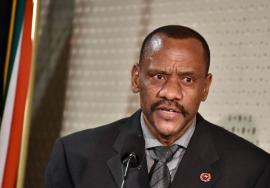
National Head of the Directorate for Priority Crime Investigation (DPCI), Lieutenant General Godfrey Lebeya, has outlined the progress and successes achieved by the Fusion Centre in its bid to prevent and combat corruption. 

“Since May 2020 to date, the Fusion Centre has achieved a significant number of successes in arrests, prosecution, freezing orders and recoveries. These significant achievements serve to amplify that government’s sharp focus on capacitating the agencies focused on fighting crime and corruption is yielding results,” Lebeya said, while addressing a media briefing in Pretoria, on Wednesday.

The centre was established in May 2020 by the Anti-Corruption Task Team (ACTT) and the National Priority Committee on Organised Crime (NPCOC) as a multi-disciplinary and collaborative effort by all corruption-fighting agencies that are actively involved in the prevention and combating of corruption.

It follows an intelligence-driven approach in investigating corruption and uses comprehensive data and information analysis. It also fast tracks and expedites the processing of cases, thus reducing delays in the pursuit of justice.

“The Fusion Centre broadens the scope of investigations by combining the expertise of multiple agencies, working within their legislative mandates and enhancing the quality and depth of each inquiry. This results in improving the quality of investigations, and increasing prosecution successes,” he said.

Progress made

The Fusion Centre has achieved successes relating to the following cases:

  • 556 cases and incidents of fraud, maladministration, tax evasion and corruption involving 168 accused persons were investigated;
  • 51 natural persons and 43 entities were convicted for various crimes, including corruption, fraud, tax evasion, money laundering and others; and
  • 48 cases are still in court.

Lebeya explained that some of the cases handled by the Fusion Centre are complex commercial crimes, involving networks of organised criminal syndicates.

“The investigators from the Fusion Centre had to trace the networks and the syndicates in order to arrive at conclusive evidence of wrongdoing. The first case involved an accountant who defrauded the COVID-19 Temporary Employer-Employee Relief Scheme (TERS) [of] over R11 million by claiming relief funds on behalf of a number of companies without their knowledge.

“The investigators uncovered a network of 17 persons, 26 entities, 53 banking accounts and 983 transactions involved in the flow of the financial proceeds from the accountant. The funds were used to purchase immoveable and moveable assets such as houses and a car,” he said.

Preservation orders against two accountants to the value of R3 065 114.08 were obtained as well as four immoveable properties valued at R2 662 986.60. One vehicle was bought with an amount of R665 000.

The accused accountant, Lindelani Bert Gumede, was arrested and convicted for fraud, theft, and money laundering. He was sentenced in 2022 to 135 years imprisonment.

“The second case also involved an accountant who, using the names of six companies, defrauded the TERS scheme to the amount of R884 308.06. Crime analysis revealed that the accountant was behind the companies that claimed the funds.

“This accountant was charged and an amount of R482 258.71 was recovered in an FNB account registered under the name of the accountant. Through the recovery process by the Fusion Centre, he agreed to refund the funds derived from defrauding the scheme. The accountant, Mark Voster, was sentenced to six years imprisonment,” Lt-Gen Lebeya said.

The third case involved an Eastern Cape Taxi Association, which fraudulently claimed R220 million from the TERS scheme using 66 accounts.

The Fusion Centre issued Section 34 directives on the 26 bank accounts securing a preservation order of R26.9 million against the taxi association.

The personal protective equipment (PPE) contract of the taxi association was declared irregular and unlawful. The criminal trial is still proceeding.

In terms of the freezing orders and recoveries, the following successes were achieved:

  • The Financial Intelligence Centre (FIC) obtained 25 orders worth R274 million;
  • The Asset Forfeiture Unit (AFU) obtained 42 orders worth over R331 million;
  • The Special Investigating Unit (SIU) obtained 29 orders amounting to R465 million and
  • South African Revenue Service (SARS) obtained 22 freezing orders worth over R740 million.

Lt-Gen Lebeya said public officials were involved in some of the cases of maladministration or did not follow the legislative frameworks in the appointment of service providers, and payments made to service providers and third parties.

“There were 97 referrals for disciplinary and executive actions against officials in government departments and state-owned entities. So far, 11 public officials have been dismissed for various cases of maladministration, fraud and corruption. Three have resigned, eight were suspended, 71 pending and one has received a written warning,” he said.

Other referrals include 58 cases to the Competition Commission, 57 to the South African Health Product Regulatory Authority (SAHPRA) and 29 companies referred to National Treasury to blacklist them on the Central Supplier Database (CSD).

In addition, 47 referrals from the SIU to the National Prosecuting Authority and the Directorate for Priority Crime Investigation (DPCI) were made.

Fusion Centre’s Mandate

The operationalisation of the Fusion Centre coincided with the need to identify and stem misappropriation of funds set aside by government for social and economic relief during the COVID-19 pandemic.

Initially it focused on money laundering, corruption and other financial crimes related to procurement of personal protective equipment and other COVID19 related procurement.

However, since the success of the collaborative approach, the mandate of the Fusion Centre has been expanded to include organised crime, money laundering, fraud, maladministration, terrorist financing and other serious financial crimes both in public and private institutions

“We are calling upon the business sector, specifically, to partner and collaborate with the Fusion Centre and support the enhancement of forensic investigation skills and other critical skills which will lead to a higher rate of prosecution for commercial corruption crimes.

“The Fusion Centre contributes towards the implementation of the Financial Action Task Force (FATF) action plan in respect of South Africa in addressing deficiencies in the anti-money laundering system,” he said. –SAnews.gov.za


nosihle
Wed, 12/06/2023 – 11:59

211 views

National Head of the Directorate for Priority Crime Investigation (DPCI), Lieutenant General Godfrey Lebeya, has outlined the progress and successes achieved by the Fusion Centre in its bid to prevent and combat corruption. 

“Since May 2020 to date, the Fusion Centre has achieved a significant number of successes in arrests, prosecution, freezing orders and recoveries. These significant achievements serve to amplify that government’s sharp focus on capacitating the agencies focused on fighting crime and corruption is yielding results,” Lebeya said, while addressing a media briefing in Pretoria, on Wednesday.

The centre was established in May 2020 by the Anti-Corruption Task Team (ACTT) and the National Priority Committee on Organised Crime (NPCOC) as a multi-disciplinary and collaborative effort by every corruption-fighting agencies that are actively involved in the prevention and combating of corruption.

It follows an intelligence-driven approach in investigating corruption and uses comprehensive data and information analysis. It also quick tracks and expedites the processing of cases, thus reducing delays in the pursuit of justice.

“The Fusion Centre broadens the scope of investigations by combining the expertise of multiple agencies, working within their legislative mandates and enhancing the quality and depth of each inquiry. This results in improving the quality of investigations, and increasing prosecution successes,” he said.

Progress made

The Fusion Centre has achieved successes relating to the following cases:

  • 556 cases and incidents of fraud, maladministration, tax evasion and corruption involving 168 accused persons were investigated;
  • 51 natural persons and 43 entities were convicted for various crimes, including corruption, fraud, tax evasion, money laundering and others; and
  • 48 cases are still in court.

Lebeya explained that some of the cases handled by the Fusion Centre are complex commercial crimes, involving networks of organised criminal syndicates.

“The investigators from the Fusion Centre had to trace the networks and the syndicates in order to arrive at conclusive evidence of wrongdoing. The first case involved an accountant who defrauded the COVID-19 Temporary Employer-Employee Relief Scheme (TERS) [of] over R11 million by claiming relief funds on behalf of a number of companies without their knowledge.

“The investigators uncovered a network of 17 persons, 26 entities, 53 banking accounts and 983 transactions involved in the flow of the financial proceeds from the accountant. The funds were used to purchase immoveable and moveable assets such as houses and a car,” he said.

Preservation orders against two accountants to the value of R3 065 114.08 were obtained as well as four immoveable properties valued at R2 662 986.60. One vehicle was bought with an amount of R665 000.

The accused accountant, Lindelani Bert Gumede, was arrested and convicted for fraud, theft, and money laundering. He was sentenced in 2022 to 135 years imprisonment.

“The second case also involved an accountant who, using the names of six companies, defrauded the TERS scheme to the amount of R884 308.06. Crime analysis revealed that the accountant was behind the companies that claimed the funds.

“This accountant was charged and an amount of R482 258.71 was recovered in an FNB account registered under the name of the accountant. Through the recovery process by the Fusion Centre, he agreed to refund the funds derived from defrauding the scheme. The accountant, Trace Voster, was sentenced to six years imprisonment,” Lt-Gen Lebeya said.

The third case involved an Eastern Cape Cab Association, which fraudulently claimed R220 million from the TERS scheme using 66 accounts.

The Fusion Centre issued Section 34 directives on the 26 bank accounts securing a preservation order of R26.9 million against the cab association.

The personal protective equipment (PPE) contract of the cab association was declared irregular and unlawful. The criminal trial is still proceeding.

In terms of the freezing orders and recoveries, the following successes were achieved:

  • The Financial Intelligence Centre (FIC) obtained 25 orders worth R274 million;
  • The Asset Forfeiture Unit (AFU) obtained 42 orders worth over R331 million;
  • The Special Investigating Unit (SIU) obtained 29 orders amounting to R465 million and
  • South African Revenue Service (SARS) obtained 22 freezing orders worth over R740 million.

Lt-Gen Lebeya said public officials were involved in some of the cases of maladministration or did not follow the legislative frameworks in the appointment of service providers, and payments made to service providers and third parties.

“There were 97 referrals for disciplinary and executive actions against officials in government departments and state-owned entities. So far, 11 public officials acquire been dismissed for various cases of maladministration, fraud and corruption. Three believe resigned, eight were suspended, 71 pending and one has received a written warning,” he said.

Other referrals include 58 cases to the Competition Commission, 57 to the South African Health Product Regulatory Authority (SAHPRA) and 29 companies referred to National Treasury to blacklist them on the Central Supplier Database (CSD).

In addition, 47 referrals from the SIU to the National Prosecuting Authority and the Directorate for Priority Crime Investigation (DPCI) were made.

Fusion Centre’s Mandate

The operationalisation of the Fusion Centre coincided with the need to identify and stem misappropriation of funds set aside by government for social and economic relief during the COVID-19 pandemic.

Initially it focused on money laundering, corruption and other financial crimes related to procurement of personal protective equipment and other COVID19 related procurement.

However, since the success of the collaborative approach, the mandate of the Fusion Centre has been expanded to include organised crime, money laundering, fraud, maladministration, terrorist financing and other serious financial crimes both in public and private institutions

“We are calling upon the business sector, specifically, to partner and collaborate with the Fusion Centre and support the enhancement of forensic investigation skills and other critical skills which will guide to a higher rate of prosecution for commercial corruption crimes.

“The Fusion Centre contributes towards the implementation of the Financial Action Task Force (FATF) action position in respect of South Africa in addressing deficiencies in the anti-money laundering system,” he said. –SAnews.gov.za

Read More at the Source

Share this:

  • Share on X (Opens in new window) X
  • Share on Facebook (Opens in new window) Facebook
  • Print (Opens in new window) Print
  • Email a link to a friend (Opens in new window) Email
  • Share on LinkedIn (Opens in new window) LinkedIn
  • Share on Tumblr (Opens in new window) Tumblr
  • Share on WhatsApp (Opens in new window) WhatsApp
  • Share on Mastodon (Opens in new window) Mastodon
Category: NewsTag: Africa, African, business, critical, data, Eastern Cape, FNB, Government, head, health, ONE, Pretoria, SA News, South Africa

If you feel strongly about this article then feel free to send MyZA a ‘Letter to the Editor’ using the submission form below:


Letter to the Editor

This field is for validation purposes and should be left unchanged.
If this is in response to an article please include that article title here or as the lead in for the first paragraph of your Letter below.

Separate tags with commas

Localise your letter by naming the city your words are about. Add relevant words describing your subject. Single comma separated words of no more than 5
Your Name(Required)
Your Name will be linked to the website below.
Your personal, business or social media web site
Choose NO to not set up a user account on MyZA. User Accounts will allow you to submit letters under your own Author Name

3 Latest Letters to the Editor:

  • Older Persons Grants Land Today — No Need to Queue at Dawn

    Dear Editor, Older Persons grants are paid today, 30 October, under SASSA’s revised November payment schedule — with disability grants on Monday 2 November, children’s grants on Tuesday 3 November, and grants under review on Thursday 5 November. Two things every beneficiary should know. First, grant money does not expire on payment day. It stays…

    30 October 2026
  • November Grants Pay Early – No Need to Queue at Dawn

    Dear Editor, I run SAGrant (sagrant.co.za), a free resource helping South Africans navigate SASSA grants. November grants pay earlier than usual. Older Persons grants are paid on Friday 30 October, Disability grants on 2 November, and Child Support and other grants on 3 November. Grants still under review are paid on 5 November. The money…

    27 October 2026
  • NSFAS 2027 applications close on 31 October — SASSA households, apply now

    Dear Editor, I run SAGrant (sagrant.co.za), a free resource helping South Africans navigate SASSA grants. NSFAS applications for the 2027 academic year close on Friday 31 October 2026, and no extension is expected. If your household receives a SASSA grant, your child already passes the NSFAS financial eligibility test — but they still have to…

    25 October 2026

About Guest

Previous Post:From local theatre to Netflix film: young Philippi actor hopes to inspire township youth
Next Post:List of Upcoming Nationwide Protest Actions Against Oil and Gas Drilling Off South African Coastline

Reader Interactions

Comments

  1. Fist Wizard

    12 September 2026 at 3:02 am

    Fun South African Fact: Mandela’s house on Vilakazi Street is now a museum. The man who the street was named after, Dr BW Vilakazi, was a poet, novelist and intellectual. He helped develop the written form of both isiZulu and siSwati and helped put together the isiZulu dictionary.

  2. Shady Prairie

    29 August 2026 at 12:00 am

    Hoezit /Howzit – How is it going? How are you? A common greeting which is often used instead of “hello” and “how are you?” It combines the two phrases into a simple, “Howzit”, thereby saving time.Example: “Howzit my bru!”

Copyright © 2026 · MyZA · All Rights Reserved · Powered by Stratlec Online