• Skip to main content
  • Skip to header right navigation
  • Skip to after header navigation
  • Skip to site footer
MyZA

MyZA

News, Directory, Events and Other Stuff

  • Social Media
  • Sport
  • World News
  • Home
  • Submit News
  • Directory
  • Events
  • Stratlec
  • TFSA
  • News
    • APO
    • Today’s Sport News
    • Todays Social Media and Tech Headlines
    • Today’s World News
    • Today’s SA Financial News
  • Contact
You are here: Home / Archives for Government

Government

13 April 2025

Small business urged to apply for tourism opportunities

Location: News

Small business urged to apply for tourism opportunities

Small businesses have been encouraged to apply for opportunities provided by the Department of Tourism.

“The Department of Tourism is dedicated to creating an inclusive, sustainable, and resilient tourism economy. We have a variety of programmes with the specific aim of promoting tourism, alleviating poverty and creating jobs,” Tourism Deputy Minister Maggie Sotyu said.

Addressing a stakeholder engagement at the Fezile Dabi District Municipality in the Free State, the Deputy Minister said small businesses face challenges that threaten their survival and growth. 

These include limited access to funding and financial support, skills gap in business management and digital transformation, market access and a lack of exposure to international tourists.

“As the government, our role is to enable and empower small, medium, and micro enterprises (SMMEs) to overcome these barriers and it is our duty to maximise every opportunity to empower these enterprises.

“Embracing sustainable tourism by black-owned enterprises is not just about being part of a global trend, but is a necessity for resilience, competitiveness and profitability,” the Deputy Minister said on Friday.

The department’s Market Access Support Programme offers financial support to small tourism enterprises to exhibit at tourism platforms.

“I want to urge you to visit the Department of Tourism website at www.tourism.gov.za and look at this Market Access Support Incentive Programme. 

“This week we are assisting 49 tourism SMMEs [small, medium, and micro enterprises] to promote their services at the World Travel Market Africa in Cape Town. We also want to encourage you to apply for our Green Tourism Incentive Programme which offers a win-win solution to tourism establishments and our greening objectives,” the Deputy Minister said.

The Green Tourism Incentive Programme is a resource efficiency programme which aims to support tourism enterprises to reduce the cost of investing in energy and water efficient solutions. 

“This incentive can greatly assist a tourism establishment to reduce their electricity and water bills in the long term. The department also established a Tourism Transformation Fund and Tourism Equity Fund to support the transformation efforts in the sector. 

“The Transformation Fund offers a combination of debt finance and grant funding for new and expansion tourism development projects with majority black shareholding,” she said.

For tourist guides, the department has a number of programmes including language training. 

“We recently advertised for youth to apply for tourist guide training in Vredefort Dome and we are currently conducting tourist guide training in Golden Gate National Park. 

“For youth in tourism, the department offers annually a bursary programme and learnership programmes, focusing on professional cooking, wine appreciation and hospitality, targeting youth with a specific interest in tourism,” said the Deputy Minister. -SAnews.gov.za
 

nosihle
Sun, 04/13/2025 - 11:37

70 views
Read moreSmall business urged to apply for tourism opportunities
13 April 2025

Government reiterates commitment to water security

Location: News

Government reiterates commitment to water security

The Deputy Minister of Water and Sanitation, David Mahlobo, has reaffirmed government's commitment to ensuring water security for all South Africans through innovative partnerships and transformative solutions.

“Water is the lifeblood of our nation's development. By combining government's resources with the innovation and expertise of the private sector, particularly through organisations like the Black Business Council in the Built Environment (BBCBE) that champion transformation, we can overcome our water challenges and build a resilient future for all South Africans,” the Deputy Minister said on Friday.

He was addressing the BBCBE Built Environment Indaba at the Gallagher Convention Centre in Midrand, which was taking place under theme: "Built Environment Partnering with Our Government to Deliver Infrastructure Projects through Innovative Funding and Delivery Models.”

The Deputy Minister urged the built environment sector to leverage its expertise and global networks to drive innovation, mentorship, and investment. 

“Water challenges as experienced in most parts of the country require bold and collaborative solutions from all of us. Together, we can harness technology, finance, and partnerships to achieve Sustainable Development Goal (SDG) 6 on clean water and sanitation for all,” he said.

This as the Department of Water and Sanitation remains steadfast in its mission to secure South Africa’s water future. 

Mahlobo’s address underscored the need for unity across government, the private sector, academia, and civil society to transform challenges into opportunities for sustainable growth. -SAnews.gov.za


nosihle
Sun, 04/13/2025 - 10:03
66 views

Read moreGovernment reiterates commitment to water security
13 April 2025

President engages South African Council of Churches

Location: News

President engages South African Council of Churches

President Cyril Ramaphosa has hosted the first engagement between government and the leadership of the church since the start of the seventh Administration.

The President hosted the leadership of the South African Council of Churches (SACC) at the Union Buildings in Pretoria on Friday under the banner of the Government of National Unity.

The meeting presented an opportunity for the SACC to introduce its new and recently elected leadership. 

“We welcome the opportunity to be introduced to the new leadership of the SACC and to discuss matters that concern the church and the people of South Africa,” the President said.
The meeting discussed a wide range of issues of national interest ranging from the National Dialogue initiative, government’s ongoing fight against crime and corruption and the access of state services. 

President Ramaphosa committed that the National Dialogue will bring together all sectors of society and encourage the participation of all South Africans.

“Importantly, the National Dialogue must be informed by extensive public consultation in localities facilitated by various sectors of society. It needs to give a voice to those in society who are not often heard, to people who are marginalised, to those who are most vulnerable to poverty, violence and exploitation,” the President said.

It is envisaged that the National Dialogue will build on the achievements of 30 years of democracy.

Among other things, it will need to address challenges of low growth and job creation, poverty and hunger, governance, corruption and fiscal constraints. It will also need to address gender-based violence and femicide, social fragmentation, racism and sexism, violence and the potential for instability.

Government also briefed the SACC on South Africa’s Group of Twenty (G20) Presidency along with regional and international issues of concern.

“The meeting heard about government’s ongoing work in implementing the recommendations of the State Capture Commission. This includes criminal investigations and prosecutions, the recovery of stolen funds, legislative amendments and strengthening institutions.

“Furthermore, government remains focused on strengthening and resourcing key institutions in the criminal justice system, like the NPA [National Prosecuting Authority], Hawks and SIU [Special Investigating Unit], this includes the establishment of the NPA’s Investigating Directorate Against Corruption as a permanent entity to prosecute state capture and other significant corruption cases,” the Presidency said.

The President also committed government’s support for greater cooperation between churches and government bodies that are on the frontline of providing services to people – most notably the Departments of Home Affairs and Social Development.
He highlighted South Africa’s drive for an inclusive G20.

The President said dialogue with civil society and other non-government institutions will be conducted through various engagement groups. 

“Following the approach of the Brazilian Presidency, a G20 Social Forum will be convened. This will bring together representatives of the existing engagement groups and other segments of civil society including various faith formations.

“The President assured the church leaders that South Africa will continue to pursue an independent foreign policy and will not align itself with any of the major powers or blocs in the world,” the Presidency said.

Ramaphosa asserted that South Africa remains engaged in efforts to bring about peace and stability in various parts of our region and continent, especially through the Southern African Development Community (SADC) and African Union initiatives. 
“South Africa continues to use its participation in fora like the G20, BRICS, Non-Aligned Movement, African Union and United Nations to advance a rules-based multilateralism that is fair and inclusive. We are committed to the reform of global institutions to ensure that they represent the needs and interests of all countries,” the President said. -SAnews.gov.za


nosihle
Sun, 04/13/2025 - 09:21
23 views

Read morePresident engages South African Council of Churches
13 April 2025

Consumer Commission and PSETA partnership set to enhance skills development

Location: News

Consumer Commission and PSETA partnership set to enhance skills development

The National Consumer Commission (NCC) and the Public Service Sector Education and Training Authority (PSETA) have entered into a strategic partnership to collaborate on skills development and research on emerging issues.

This was done through a five-year Memorandum of Understanding (MoU). 

“As part of the MoU, PSETA can place its graduates at the NCC, significantly contributing to the NCC's work. In turn, through its internship programme, which these graduates will join, the NCC will help ensure that the programme aligns with the skills demanded by the workplace. This will ensure that the graduates are well-trained and ready for the industry by the end of their training,” a joint statement by the NCC and PSETA said on Saturday.

PSETA’s focus is primarily on transversal skills within the Public Service sector. These skills, dubbed the ‘business of government’, include administration, management, planning, legislation and policy development.
They form the focus to drive the growth of skills and competencies in areas that will make the delivery of the business of government.

The PSETA is a statutory body entrusted with driving skills development across the public sector. As an agency of the Department of Trade, Industry and Competition, the primary role of the NCC is to protect the interests of consumers and ensure accessible, transparent and efficient redress for consumers. 

“As mandated by the Skills Development Act and aligned with the National Skills Development Plan (NSDP) 2030, PSETA plays a critical role in shaping a professional, ethical, and capable public service workforce.

“As a trusted Authority, PSETA is committed to driving impactful, inclusive, and sustainable skills development that strengthens institutional capacity and supports service delivery excellence across the public sector,” the statement said.

The MoU, among other things, aims to achieve the following:

•    Identify priority research areas, including research to support the Public Service, in line with both parties’ research agendas and the PSETA’s Sector Skills Plan (SSP) priorities;
•    Facilitate cooperation and support on the development of capacity and capabilities for members and officials of the Public Service and unemployed learners, aligned to the PSETA SSP priorities, the National Development Plan, the National Skills Development Plan priorities and the Public Service;
•    Human Resource Development Strategy;
•    Facilitation and regular sharing of information on matters mutually relevant to the Parties;
•    Encourage the maximised usage of shared resources; and
•    Setting out the parameters for cooperation and support under the objectives of the MoU.

-SAnews.gov.za


nosihle
Sun, 04/13/2025 - 09:01

24 views

Read moreConsumer Commission and PSETA partnership set to enhance skills development
11 April 2025

President Ramaphosa Meets With South African Council of Churches

Location: News

The Presidency of the Republic of South Africa
Download logo

President Cyril Ramaphosa has today, Friday, 11 April 2025, hosted the leadership of the South African Council of Churches (SACC) at the Union Buildings in Pretoria.  

The meeting was the first engagement between Government and the leadership of the church since the start of the 7th Administration under the banner of the Government of National Unity. 

The meeting presented an opportunity for the SACC to introduce its new and recently elected leadership. 

“We welcome the opportunity to be introduced to the new leadership of the SACC and to discuss matters that concern the church and the people of South Africa.

 The SACC is a cherished institution in our country. Over many decades it has made an invaluable contribution to peace, unity, development and transformation.

It has been a source of hope, guidance and inspiration not only to members of the Christian faith, but to all South Africans. 

The SACC has always been deeply concerned about the conditions in which our people live and has worked to improve their lives.

We appreciate the willingness and determination of the SACC to work with Government, with other faith formations and with other sectors of society to address these concerns,” said President Ramaphosa.

The meeting discussed a wide range of issues of national interest ranging from the National Dialogue initiative, Government's ongoing fight against crime and corruption and the churches accessing state services. The Government also briefed the SACC on South Africa's G20 Presidency along with regional and international issues of concern. 

“We support the National Dialogue initiative but emphasise that for it to have legitimacy, the process must be protected from being hijacked by political, economic, and societal elites. It must be inclusive — incorporating all sectors of society. We must confront our declining values and moral conduct, and address the dehumanisation caused by poverty and inequality. Like many South Africans, we as church leaders and congregants are deeply concerned by the political gamesmanship within the GNU, when urgent national challenges — especially those affecting the poor and vulnerable — demand serious and united attention,” said Bishop Sithembele Sipuka, SACC President. 

President Ramaphosa committed that the National Dialogue will bring together all sectors of society and encourage the participation of all South Africans.

It is envisaged that the National Dialogue will build on the achievements of 30 years of democracy.

 Among other things, it will need to address challenges of low growth and job creation, poverty and hunger, governance, corruption and fiscal constraints. It will also need to address gender-based violence and femicide, social fragmentation, racism and sexism, violence and the potential for instability.

“Importantly, the National Dialogue must be informed by extensive public consultation in localities facilitated by various sectors of society. It needs to give a voice to those in society who are not often heard, to people who are marginalised, to those who are most vulnerable to poverty, violence and exploitation,” said the President.

The meeting heard about Government's ongoing work in implementing the recommendations of the State Capture Commission. This includes criminal investigations and prosecutions, the recovery of stolen funds, legislative amendments and strengthening institutions.

Furthermore, Government remains focused on strengthening and resourcing key institutions in the criminal justice system, like the NPA, Hawks and SIU, this includes the establishment of the NPA's Investigating Directorate Against Corruption as a permanent entity to prosecute state capture and other significant corruption cases.

President Ramaphosa committed Government's support for greater cooperation between churches and Government bodies that are on the frontline of providing services to people – most notably the Departments of Home Affairs and Social Development. 

President Ramaphosa highlighted South Africa's drive for an inclusive G20. The President said dialogue with civil society and other non-government institutions will be conducted through various engagement groups. Following the approach of the Brazilian Presidency, a G20 Social Forum will be convened. This will bring together representatives of the existing engagement groups and other segments of civil society including various faith formations.

The President assured the church leaders that South Africa will continue to pursue an independent foreign policy and will not align itself with any of the major powers or blocs in the world.
 
 South Africa remains engaged in efforts to bring about peace and stability in various parts of our region and continent, especially through SADC and AU initiatives. 

“South Africa continues to use its participation in fora like the G20, BRICS, Non-Aligned Movement, African Union and United Nations to advance a rules-based multilateralism that is fair and inclusive. We are committed to the reform of global institutions to ensure that they represent the needs and interests of all countries,” said President Ramaphosa.

Distributed by APO Group on behalf of The Presidency of the Republic of South Africa.

Read morePresident Ramaphosa Meets With South African Council of Churches
11 April 2025

Media industry called to transform ownership patterns

Location: News

Media industry called to transform ownership patterns

With the media industry fighting for its survival amidst the rise of digital media, Deputy Minister in The Presidency, Kenny Morolong, has called on the industry to make deliberate efforts to transform the sector’s ownership patterns.

“Government remains committed to working alongside industry stakeholders to ensure that South Africa's media landscape is inclusive, competitive, and representative of the country's diversity,” Morolong said.

The Deputy Minister was addressing the members of the Print and Digital Media Transformation and Revitalization Steering Committee in Rosebank, Johannesburg, on Friday.

The steering committee was established to drive collaborative efforts towards a transformed media that is inclusive in a digital and multiplatform environment, to sustain and grow the sector’s contribution to the country's Growth Domestic Product (GDP).

The Minister painted a sobering picture of the industry’s current state, noting a dramatic decline in print newspaper (both commercial and local) circulation  - from approximately 45 million copies annually to dwindled numbers that were never imagined before, which is "very worrisome for government."

“The current challenges of operating in the digital environment; excess print, distribution and transport cost; reduction in newspaper subscribers; dwindling circulation figures coupled with reduced advertising budgets, both from corporate and government, have forced publishers to close down, while others have become loss-making or liability enterprises. In the mist of all these things, we should not despair, we are a nation that works together to find common solutions,” Morolong said.

The Deputy Minister emphasised the critical role played by the media in society and reaffirmed government’s commitment to revitalise the industry.

“We have a responsibility to save an industry that is ailing and to do so, there needs to be government investment. You can’t put government in a position where it must support an industry that does not want to transform. 

“You are running a business, but you are also running an institution which has got a moral obligation to keep society informed. We want to support you because of your role in education and informing society. We have a responsibility to support you and empower you as business,” he said.

The Print and Digital Media Transformation and Revitalization Steering Committee comprises various media executives of print and digital media companies, industry bodies such as the Association of Independent Publishers, Media Development and Diversity Agency and the Press Council.

The committee has been tasked with the following responsibilities: 

  • Developing a roadmap towards the establishment of the Print Media Charter that will promote B-BBEE in the sector;
  • The availability of print and digital media in languages all South Africans speak;
  • Specifics of the industry, including setting deadlines and targets to meet transformation objectives, set as commitment by the industry into a diverse and transformed print media in the entire value chain (newsroom, publishing, news sources, printing, distribution and advertising);
  • Areas of ownership and control, language, race, gender, employment equity, conditions of employment, skills development, contributions to promoting media diversity (through MDDA), and accord on access to printing and distribution. -SAnews.gov.za


nosihle
Fri, 04/11/2025 - 12:10
173 views

Read moreMedia industry called to transform ownership patterns
11 April 2025

Hlabisa urges communities to protect children 

Location: News

Hlabisa urges communities to protect children 

The Minister of Cooperative Governance and Traditional Affairs (CoGTA), Velenkosini Hlabisa, has urged communities to be vigilant and proactive in protecting the health and well-being of children.

The Minister was speaking at the Chris Hani Baragwanath Hospital in Soweto, Johannesburg, where he was visiting an eight-year-old boy. It was reported that the boy was hospitalised after he fell ill after consuming contaminated snacks purchased from a spaza shop in Mapetla, Soweto.

According to reports, the eight-year-old boy was taken to a nearby clinic after complaining of persistent pain.
After his condition deteriorated, he was transferred to the hospital over the weekend.

“Government plays a crucial role, but we also urge communities to take shared responsibility,” Hlabisa said on Friday. 

He urged communities to protect all children and work together with government to create safer and healthier environments.
In November 2024, President Cyril Ramaphosa issued a directive requiring all spaza shops and food-handling facilities to register with their respective municipalities. 

This action was prompted by incidents involving foodborne illnesses that resulted in over 890 cases and nearly 30 deaths since September 2024.

In October last year, six primary school children from Naledi, Soweto, died after allegedly eating snacks from a foreign-owned local spaza shop.

Some of the children were confirmed to have died of poisoning linked to the agricultural pesticide terbufos.

According to the Department of Cooperative Governance and Traditional Affairs (CoGTA), spaza shops are crucial in local communities, often serving as the primary source of essential goods in underserved areas.

“We are here on humanitarian grounds to stand in solidarity with this young boy and his family during this difficult time,” said Hlabisa. 

“It was our sincere hope that such incidents of poisoning would never happen again.”

READ | Hlabisa to visit child who consumed alleged contaminated snacks

The Minister believes that tragedies of this nature demand a united front and reaffirmed government’s commitment to working collaboratively to protect vulnerable communities. 

“We are here in the spirit of the District Development Model because incidents like these require the combined efforts of all of government and all of society,” he said.

The District Development Model aims to improve the coherence and impact of government service delivery with focus on 44 Districts and 8 Metros around the country as development spaces that can be used as centres of service delivery and economic development, including job creation.  – SAnews.gov.za


Gabisile
Fri, 04/11/2025 - 12:31
103 views

Read moreHlabisa urges communities to protect children 
11 April 2025

Chris Hani remembered as a martyr whose sacrifice shaped South African democracy

Location: News

Chris Hani remembered as a martyr whose sacrifice shaped South African democracy

Deputy President Paul Mashatile has hailed the late Chris Hani as a revolutionary leader and a revered freedom fighter, whose assassination in April 1993 marked a pivotal moment in South Africa’s transition to democracy.  

Delivering the keynote address at the 32nd anniversary of Hani’s assassination commemorative event, held in Sabalele Village, Cofimvaba - Hani’s birthplace in the Eastern Cape, Mashatile reflected on Hani’s legacy and the sacrifices he made for South Africa’s democracy. 

Hani, the former Chief of Staff of Umkhonto weSizwe, was gunned down outside his home in Dawn Park, Boksburg, by radical right-wing Polish immigrant Janusz Waluś, who was released on parole in 2022. 

Despite attempts by his killers to incite civil war, the Deputy President said Hani’s death united the nation in its pursuit of freedom, culminating in the country’s first non-racial elections on 27 April 1994. 

“Today, the world has come to know Martin Thembisile as Chris Hani, a revolutionary, a commissar, a leader, a parent, a husband, and a martyr, whose blood and sacrifices cleared the way to the 1994 historic political breakthrough,” he said on Thursday. 

The Deputy President highlighted Hani’s contributions to the armed struggle, his leadership in the Umkhonto Wesizwe Liberation Movement, and his unwavering commitment to justice and equality. 

He praised Hani’s bravery, recounting his role in the Luthuli Detachment, where he led soldiers across the crocodile-infested Zambezi River and struck fear into the apartheid regime. 

Mashatile also emphasised Hani’s vision for a better South Africa, rooted in principles of social justice.  

“We must never allow the rhetoric which suggests that democracy is the worst form of government, and that apartheid was better than a democratic state. 

“Nor must we allow some of us as beneficiaries of this huge sacrifice of many fallen martyrs, like Chris Hani, to discredit democracy through shameful deeds like corruption, stealing from the State and the poor, killing for positions, and fighting to access positions for selfish interests.”

The country’s second-in-command said Hani believed that societal progress should focus on providing basic needs, such as shelter, water, healthcare, and education rather than abstract theories.  

“Our reality is that we are not exactly where Chris Hani would have liked us to be as a nation,” Mashatile admitted, pointing to persistent poverty, underdevelopment, and inequality in former homeland areas. 

The Deputy President used his platform to call for urgent action to address issues, such as gender-based violence (GBV), unemployment, and corruption, which he said undermine the sacrifices of struggle heroes like Hani.  

He urged South Africans to work together to build a more equitable society and economy, while also diversifying trade partnerships to reduce dependence on specific markets. 

Mashatile announced plans to elevate the annual commemoration of Hani to a national event, focusing on development, heritage, and the values Hani stood for. 

This year’s initiatives include the construction of a sports facility at a local school in Sabalele and the repatriation and reburial of liberation combatants. 

“Chris Hani did not die in vain. We must honour his name not only with words but with work, compassion, and bold, urgent action. Let this moment remind us that the struggle is not over,” Mashatile stressed. 

The commemoration served as a call to action for South Africans to continue fighting corruption, underdevelopment, and inequality and to build a nation that reflects the vision of heroes like Chris Hani. 

Government of National Unity

The Deputy President also used his platform to touch on the Government of National Unity (GNU) in South Africa, which faces several challenges. 

The GNU comprises 10 political parties, each with differing perspectives on various issues, the diversity of which, he said, can lead to disagreements and difficulties in reaching consensus.

“What we need to understand about the GNU is that we may have different views on issues, but once an agreement has been reached, we must all speak with one voice. This was also the case with Chris Hani; he had a strong view about the armed struggle, and when the ANC was prepared to engage in negotiations, the leadership decided to drop it, which he opposed.” 

The Deputy President said effective governance in the GNU requires balancing individual viewpoints with collective decision-making. – SAnews.gov.za
 

Gabisile
Fri, 04/11/2025 - 10:45
228 views

Read moreChris Hani remembered as a martyr whose sacrifice shaped South African democracy
11 April 2025

Pensioner Who Was Allocated an RDP House 15 Years Ago Still Lives in a Mud Hut

Location: News

Free State Department of Human Settlements has promised to help the 75-year-old from Naledi village in Qwaqwa get a house

Read morePensioner Who Was Allocated an RDP House 15 Years Ago Still Lives in a Mud Hut
11 April 2025

Review of White Paper on Local Government published for discussion

Location: News

Review of White Paper on Local Government published for discussion

The Minister of Cooperative Governance and Traditional Affairs (CoGTA), Velenkosini Hlabisa, has officially published a discussion document on the Review of the 1998 White Paper on Local Government. 

According to the department, this represents a significant and necessary step towards creating a reimagined and results-oriented local government system in South Africa.

This document, published under Notice No. 6118 (Gazette: 52498) on Thursday, initiates a national discussion aimed at producing a revised White Paper on Local Government by March 2026.

According to the department, the review aims to incite fresh thinking, honest reflection, and decisive action toward building a fit-for-purpose local government system that truly serves the people of South Africa.

“This process is not about tweaking the symptoms. It is about confronting the root causes of dysfunction in local governance. We need to ask the hard questions, and more importantly, we need to answer them with the courage to act,” Hlabisa explained. 

He noted that the discussion document emphasises the interconnectedness and indivisibility of the four essential components of an effective local government system.

These include governance, institutional arrangements, service delivery and infrastructure, and financial arrangements.

In addition, the document aims to assess and revise outdated assumptions of the1998 White Paper on Local Government and strengthen cooperative governance among the three spheres of government. 

The initiative aims to align reforms with related efforts, including amendments to the Municipal Finance Management Act (MFMA), the Municipal Structures Act, and the Spatial Planning and Land Use Management Act (SPLUMA). 

It also seeks to enhance integration with traditional leadership, improve community participation, and address systemic challenges, such as municipal financial sustainability, over-politicisation, climate risk, and spatial inequality.

The Minister invites all South Africans, including civic organisations, academics, municipalities, and other arms of government, to participate in the consultation process.

The public participation is open until 30 June 2025. 

Submissions must be made in writing and can be emailed to WPLG26@cogta.gov.za; RichardP@cogta.gov.za and MaphutiL@cogta.gov.za  

Alternatively, comments may be submitted by post: 
Minister of Cooperative Governance and Traditional Affairs
Attention: Mr. Thabiso Richard Plank (WPLG26 Policy Review)
Private Bag X802, Pretoria, 0001

Physical Address:
87 Hamilton Street, Arcadia, Pretoria  

For access to the full discussion document and more information, visit: https://www.cogta.gov.za/index.php/docs/white-paper-on-local-government-1998-review-of-the-white-paper-on-local-government/. – SAnews.gov.za


Gabisile
Fri, 04/11/2025 - 11:28
60 views

Read moreReview of White Paper on Local Government published for discussion
11 April 2025

Security strengthened at Wynberg court following shooting

Location: News

Security strengthened at Wynberg court following shooting

The Department of Justice and Constitutional Development (DJCOD) has ordered that security be strengthened at the Wynberg Magistrate’s Court, in Cape Town, following a fatal shooting inside the court building earlier this week.

A high-level delegation, led by DJCOD Director-General, Advocate Doc Mashabane, conducted an oversight visit to the court on Thursday.

The delegation also included Acting Secretary-General in the Office of the Chief Justice (OCJ), Advocate Marelize Potgieter, and the Deputy Director of Public Prosecutions in the Western Cape, Advocate Nicolette Bell.

“The purpose of the visit was to ascertain the circumstances surrounding the incident and determine whether any security lapses had occurred. This intervention formed part of government’s response, with the objective of reviewing and strengthening security protocols at court facilities," the department said in a statement.

As part of immediate interventions, the Director-General has directed the installation of a security scanner, the tightening of access control to prosecutors' and magistrates' offices, and the enhanced vetting of court officials.

Furthermore, a report on the incident will be drawn up and submitted to DJCOD Minister, Mmamoloko Kubayi and Chief Justice, Mandisa Maya.

“The department reiterates its commitment to ensuring that courts remain places for the dispensation of justice and not places where crime is committed,” the department said.

Meanwhile, the Office of the Chief Justice (OCJ) said it views the incident in a “serious light”.

“The Department of Justice and Constitutional Development, under whose delegation the Security of the Court falls, has been engaged on the enhancement of security in and around the court precinct.

“As the Head of the Judiciary in the Province, the Judge President of the Western Cape Division of the High Court wishes to convey condolences to the family of the deceased, and expresses regret and support to the Judicial Officers, officials and the public who witnessed the incident,” the OCJ said.

The incident is currently under police investigation. – SAnews.gov.za

NeoB
Fri, 04/11/2025 - 09:35
158 views

Read moreSecurity strengthened at Wynberg court following shooting
11 April 2025

Government to recruit 1 200 new doctors

Location: News

Government to recruit 1 200 new doctors

In a significant move to address the critical shortage of healthcare professionals in the public healthcare system, the National Health Council has announced the approval of 1 200 new positions for doctors. 

The decision comes after years of budgetary constraints that hindered the employment of medical professionals despite dissatisfaction and urgent need. 

Health Minister, Dr Aaron Motsoaledi’s announcement follows the presentation of a new budget by the Finance Minister on 12 March 2025, which allocated R1.78 billion to fund the recruitment of healthcare workers. 

In addition to the 1 200 doctors, Motsoaledi said the Council has approved the hiring of 200 nurses and 250 other healthcare professionals.  

He told journalists that the Human Resources units will soon commence with recruitment processes once all logistics have been finalised. 

“Early this year, the country woke up to widespread dissatisfaction about the employment of healthcare professionals, especially doctors amid [a] shortage in the public healthcare system,” he said.

However, Motsoaledi believes that this development marks a turning point for the public healthcare sector, which has been struggling to meet the demands of a growing population.

The Council’s decision is expected to alleviate pressure on existing healthcare facilities and improve access to quality medical care for citizens.

Meanwhile, he said the Council emphasised its commitment to addressing the challenges facing the system and ensuring that the sector is adequately staffed to deliver essential services.

The Council is a statutory body consisting of the Minister of Health, all nine Health MECs, the South African Local Government Association (SALGA) and the Surgeon General of South African Military Health Services.

Addressing shortages

“One of the most embarrassing experiences the public health sector had to endure is the shortage of simple things that will make the stay of patients a worthwhile experience.

“In fact, one of the biggest differences between the public and private sectors are the hotelling services characterised by the issues we have just mentioned,” said Motsoaledi. 

He said the Council has decided to purchase 25 000 beds, 80 000 mattresses, 7 655 bassinets for new babies, and 1 250 million linens, including bed sheets and pillows, for a total of R1.346 billion. 

“It is for that reason that we wish to announce that we have checked province by province what that need [is] in the form of hospital beds and bassinet for newborn babies. We remember with a sense of shame how babies were put in cardboard boxes in Mahikeng hospital in the North West province.” 

Review of human resources policies

Meanwhile, Motsoaledi said that during the Council meeting held in November last year, a decision was taken for the review of some of the “outdated” human resources policies. 

“There are lot of health policies adopted at the dawn of democracy which we believe are now obsolete or do no longer serve the purpose they were intended for. Some of them have created unnecessary costs without any tangible benefits. We can even say some have contributed to the undermining of the public sector’s ability to deliver quality services.” 

Four health policies are currently under review, including the policy on remunerative work outside the public service, which outlines the regulations for employees wishing to obtain permission for paid work beyond their regular responsibilities. 

A committee that has been set up, in terms of section 91 (1) of the National Health Act of 2003 (Act no 61 of 2003) read with sections 91 (2) of the same Act, will also look into the overtime policy, which pertains to established fixed payment for overtime hours worked by healthcare professionals, aimed at meeting operational demands and addressing skill shortages. 

In addition, the community service policy, which focuses on the deployment of medical practitioners and the rural allowance policy, designed for medical practitioners serving in remote rural locations, will also be looked into.

The committee members include Dr Cassius Lubisi, Sibongile Mchunu, Professor Laetitia Rispel, Professor Eric Buch, Dr Terence Carter, Dr Rajen Morar, Professor Binu Luke, Nomvula Marawa, Professor Busisiwe Ncama and Professor Somadoda Fikeni. – SAnews.gov.za


Gabisile
Fri, 04/11/2025 - 09:52
114 views

Read moreGovernment to recruit 1 200 new doctors
10 April 2025

US Funding Cuts Could Cause Over 150,000 Extra HIV Infections in SA by 2028

Location: News

Experts say this can be avoided if the South African government covers some of the defunded services

Read moreUS Funding Cuts Could Cause Over 150,000 Extra HIV Infections in SA by 2028
10 April 2025

Social Development gazettes social grant increases

Location: News

Social Development gazettes social grant increases

The Department of Social Development has published in the government gazette the new social grants amounts effective from this month.

The new amounts, as per the gazette, are:

  • Older persons grant: R2310
  • Older persons grant 75 years plus (additional payment): R2310 + R20
  • War veterans’ grant (including additional payment): R2310 + R20
  • Disability grant: R2310
  • Care dependency grant: R2310
  • Foster child grant: R1250
  • Child support grant: R560
  • Child support grant (Top-Up): R560 + R280
  • Grant-in-Aid: R560

The increases are implemented from 1 April. – SAnews.gov.za

NeoB
Thu, 04/10/2025 - 13:26
63 views

Read moreSocial Development gazettes social grant increases
10 April 2025

Lesotho Under Pressure to Approve Starlink Licence

Location: News

Prime Minister says his government is removing obstacles to US investment, including Starlink, in the wake of the tariff hike

Read moreLesotho Under Pressure to Approve Starlink Licence
10 April 2025

South Africa Could Do Far More for Congolese Refugees

Location: News

The long war in the Democratic Republic of Congo has displaced millions of people

Read moreSouth Africa Could Do Far More for Congolese Refugees
9 April 2025

Court Orders Gauteng Health Department to Treat Cancer Patients

Location: News

Judge rules failure to deal with backlog of patients needing radio treatment is unconstitutional

Read moreCourt Orders Gauteng Health Department to Treat Cancer Patients
9 April 2025

Government launches R500 million Spaza Shop Support Fund 

Location: News

Government launches R500 million Spaza Shop Support Fund 

Government has officially opened applications for the highly anticipated R500 million support fund aimed at increasing the participation of South African owned Spaza Shops in the townships and rural areas retail trade sector.

Addressing the launch of the Spaza Shop Support Fund (SSSF), Minister of Trade, Industry and Competition, Parks Tau, said the fund will transform the spaza shop landscape by creating jobs, alleviating poverty, promoting economic inclusion and empowerment as well as stimulating local economic growth.

The fund provides for funding of up to R300 000 per shop through a combination of grants and low-interest loans.

It allocates funding specifically for initial stock purchases, infrastructure improvements, business development tools, and Point of Sale (POS) system adoption.

Through the fund, shop owners will be provided with assistance in meeting hygiene and regulatory standards to ensure the provision of safe, high-quality products.

“We are committed to ensuring that every spaza shop that benefits from this fund also gains access to the necessary health and safety training and resources. This holistic approach will help create workplaces that are not only economically vibrant but also secure and sustainable for the future,” the Minister said on Tuesday in Soweto.

He indicated that studies show that small businesses account for a significant portion of job creation in South Africa. 

“By equipping spaza shop owners with financial support, infrastructure upgrades, and essential business training, we are setting the stage for sustainable job creation. This means more opportunities for local talent and a reduction in poverty levels, as spaza shops expand their roles as community hubs.

“Every spaza shop supported by this fund is an engine for local growth. When these businesses thrive, they create ripple effects that boost surrounding sectors—be it suppliers, service providers, or local artisans. 

“This fund is a catalyst for economic dynamism, injecting energy and resources where they are most needed. It is an investment in our people, our neighbourhoods, and ultimately, the entire South African economy,” he explained.

The fund will be jointly administered by the National Empowerment Fund (NEF) and the Small Enterprise Development Finance Agency (SEFDA).

“We want a South Africa where economic opportunities are available to all, where the informal becomes formal, and where the entrepreneurial spirit of our townships becomes a driving force for national transformation.

“With this fund, we are taking a concrete step to formalise and empower the informal sector. By supporting spaza shops, we are enabling entrepreneurs, often women and young people, to participate fully in the economic process.
“These small businesses generate employment, drive local commerce, and channel much-needed income into communities that have long been underserved,” Tau said.

In order to access the funding, applicants need to apply to the NEF and SEDFA through the prescribed application process outlined on the relevant institution's website.

The following website can be used to apply for funding:

Spaza Shop Support Fund - www.spazashopfund.co.za 
NEF - www.nefcorp.co.za 
SEDFA - https://systems.sefa.org.za/SMMEPortal/

The contact details for the Spaza Shop Support Fund Call Centre are 01 1 305 8080 or via email: Spazafund@nefcorp.co.za

Contact details for the NEF Call Centre are 0861 843633, SEDFA Call Centre 012 748 9600 or an email can be sent to helpline@sefa.org.za.

-SAnews.gov.za


nosihle
Tue, 04/08/2025 - 16:14
365 views

Read moreGovernment launches R500 million Spaza Shop Support Fund 
9 April 2025

Government empowers spaza shops 

Location: News

Government empowers spaza shops 

With the launch of the R500 million Spaza Shop Support Fund (SSSF), government is ready to assist entrepreneurs who want to establish startups, expand their businesses, and gain essential business skills to improve the performance of their enterprises.

This is according to the Minister of Small Business Development, Stella Ndabeni.

With the recent drive to have spaza shops registered, government has received 87 407 applications and of these, a total 53% is from South African-owned spaza shops.

“Our commitment with this fund is to support those who heeded the President’s call to register their spaza shops. As the Department of Small Business Development (DSBD), we can help you when you have an idea and want to start a business.

“We have incubators that help new and startup businesses. We can help you from being an informal trader to a formal trader, to start a spaza shop and to own a wholesale or an entire distribution channel. We will be working with you to help you to turn things around,” said Ndabeni.

The support fund was launched on Tuesday in Soweto to support South African-owned township community convenience shops, including spaza shops, to increase their participation in the townships and rural areas retail trade sector.

READ | Government launches R500 million Spaza Shop Support Fund 

Jointly administered by the National Empowerment Fund (NEF) and the Small Enterprise Development Finance Agency (SEFDA), the fund provides critical financial and non-financial support to township businesses, including community convenience stores and spaza shops.

The fund provides various types of support, including the initial purchase of stock via delivery channel partners, upgrading of building infrastructure, systems, refrigeration, shelving and security, as well as training programmes, which includes point of sale devices, business skills, digital literacy, credit health, food safety and business compliance.

“The fund will address economy of scale disadvantages by linking spaza shops to buying groups for aggregation and bulk purchasing; building business capacity through training and support to improve shop operations; and enhancing market competitiveness to help spaza shops compete with larger retailers," the Minister said.

The fund will be rolled out nationally to impact spaza shops across all major townships, as well as rural areas.

The Minister said government endeavours to work with entrepreneurs to localise supply chain opportunities for township and rural enterprises.

This will ensure that spaza shops do not procure imported products or simply use the platforms of large companies.

“To achieve this, we will utilise other instruments like the Small Enterprise Manufacturing Support Programme, Township and Rural Entrepreneurship Programmes (TREP), the Informal and Micro Enterprise Development Programme (IMEDP), Asset Assist, and our Shared Economic Infrastructure Facility.

“These programmes in turn have the potential to attract municipalities, the private sector, business and informal trader associations, and other stakeholders to work together in contributing their facilities, expertise and resources in support of new localised supply chains and distribution networks for spaza shops. 

“Logistics management partners will offer logistics management services, including warehousing and delivery solutions. They will ensure that products are stored safely and delivered efficiently, reducing transportation costs, and improving the overall supply chain efficiency for spaza shops,” the Minister said.

DSBD Connect

The department has recruited 52 Business Regulation Officers across all districts and metros to support business registration using the DSBD Connect system.

DSBD Connect is a platform which will be used to collaborate or put together small business to collaborate and/or work together on a particular project. 

This can be businesses within the same industries or different industries but need each other for specific skills or qualifications. 

The platform will put together small businesses within the same geographical area, interests, and skills. 

“Despite their importance, spaza shops face several challenges, including access to capital, security concerns, and competition from formal retailers, like larger retail stores and supermarkets which are encroaching on their markets.

"South African-owned spaza shops also face intense competition from foreign-operated spaza shops, who use more organised supply chains to gain competitiveness.

“Therefore, I want to encourage you to collaborate and establish cooperatives so that you can leverage resources, knowledge, and work together on projects, sharing best practices,” Ndabeni said.

Access to funding 

To access the funding, applicants need to apply to the National Empowerment Fund (NEF) and the Small Enterprise Development Finance Agency (SEFDA) through the prescribed application process outlined on the relevant institution's website.

The following website can be used to apply for funding:

Spaza Shop Support Fund - www.spazashopfund.co.za 
NEF - www.nefcorp.co.za 
SEDFA - https://systems.sefa.org.za/SMMEPortal/

The contact details for the Spaza Shop Support Fund call centre are 01 1 305 8080 or via email: Spazafund@nefcorp.co.za.

Contact details for the NEF call centre are 0861 843633, SEDFA call centre 012 748 9600 or an email can be sent to helpline@sefa.org.za. - SAnews.gov.za

nosihle
Wed, 04/09/2025 - 10:27
162 views

Read moreGovernment empowers spaza shops 
9 April 2025

Germany Sets Sights on Africa’s Energy Future With Major Investment Pledge

Location: News

African Energy Chamber
Download logo

Germany is eyeing expanded investments in Africa's energy sector, having pledged €4 billion for green energy projects by 2030 and advancing hydrogen and gas partnerships through the European Union's (EU) Global Gateway initiative. These investments aim to enhance conditions for private sector involvement and infrastructure development, underscoring Germany's commitment to sustainable development and economic growth across the continent.

In South Africa, Germany committed R5.2 billion last December to support the country's energy transition and deepen bilateral cooperation. This funding is directed towards facilitating South Africa's shift from coal to renewable energy sources, addressing both environmental concerns and energy security. Earlier this month, the EU also announced a €4.7 billion investment in South Africa to support green energy initiatives and vaccine production, reflecting a broader commitment to sustainable development in the region.

Further strengthening these efforts, Germany and the African Development Bank announced joint initiatives last month to accelerate energy access and private sector growth across Africa. This partnership includes support for the Mission 300 initiative, which aims to provide electricity access to 300 million Africans by 2030, and expanded financing for youth entrepreneurship programs.

Meanwhile, German companies are optimistic about their prospects in South Africa, signaling growing confidence in the country's economic stability, expanding trade opportunities and the potential for long-term partnerships in energy and industrial sectors. A recent survey by KPMG Germany and the Southern African-German Chamber of Commerce and Industry revealed that 64% of German companies expect rising revenues in South Africa, with 44% planning to invest in the country within the next three years.

Germany has already been active in Africa's green hydrogen sector, recognizing the continent's vast potential for renewable energy production. In Namibia, German investors have partnered on the $10 billion Hyphen Green Hydrogen Project, aiming to harness the country's abundant solar and wind resources to produce green ammonia for global export. Additionally, Germany mobilized €150 billion through the Global Gateway initiative earlier this year to enhance its energy engagement in Africa, with green hydrogen as a key focus. West African countries alone have the potential to produce up to 165,000 TWh of green hydrogen annually – far exceeding Germany's projected demand for 2030.

Beyond renewable initiatives, Germany remains open to cooperating with African countries on natural gas and blue hydrogen production. This approach reflects Germany's updated Africa policy guidelines, which emphasize the importance of African energy resources – including renewable electricity, green hydrogen and, under specific conditions, natural gas – for a successful energy transition in both Africa and Europe.

"Germany's growing investment in Africa's energy sector signals a transformative shift toward sustainable development and economic growth. With a clear focus on green hydrogen, renewables and responsible fossil fuel cooperation, the country is positioning itself as a key partner in Africa's energy future. African Energy Week 2025 will serve as a vital platform to advance these partnerships, unlocking new opportunities and accelerating Africa's energy transition,” said Tomás Gerbasio, Vice President of Commercial and Strategic Engagement at the African Energy Chamber.

The upcoming African Energy Week (AEW) 2025: Invest in African Energies conference presents a strategic platform for German investors to explore and engage with energy opportunities across the continent. AEW 2025 aims to drive forward the momentum established in previous years, offering a dynamic space for leaders, policymakers and stakeholders to address regional and global energy challenges while advancing Africa's position as a leader in sustainable energy solutions.

AEW: Invest in African Energies is the platform of choice for project operators, financiers, technology providers and government, and has emerged as the official place to sign deals in African energy. Visit www.AECWeek.com for more information about this exciting event.

Distributed by APO Group on behalf of African Energy Chamber.

Read moreGermany Sets Sights on Africa’s Energy Future With Major Investment Pledge
9 April 2025

CSIR critical for innovative solutions to resolve challenges – President Ramaphosa

Location: News

CSIR critical for innovative solutions to resolve challenges - President Ramaphosa

President Cyril Ramaphosa has hailed the Council for Scientific and Industrial Research (CSIR) as a “South African success story” as the institution marks 80 years since its establishment.

The President was delivering remarks at the institution’s headquarters following a tour of the facility on Tuesday afternoon.

“Over many decades, the CSIR has been [at the forefront]… of developing groundbreaking technologies and solutions that have profoundly shaped our country’s scientific and industrial progress.

“With the advent of democracy in 1994, the CSIR embarked on a trajectory of aligning itself with the values of our Constitution. The CSIR is a true treasure for our nation,” he said.

The President told the gathering that as the country – and the world – dealt with the COVID-19 pandemic, the CSIR stepped in to assist the country in fighting the virus.

During the pandemic, CSIR engineers produced some 18 000 ventilators, which were vital for the care of patients across the country.

It also developed a platform to track the impact of the pandemic, which assisted government to direct its response.

“At a moment of great crisis and danger, it was Minister [Blade] Nzimande who said let’s go to the CSIR, and indeed, we came rushing because you had already developed certain capabilities to help us deal with the crisis not only our country was facing.

“We came in a rush, and you distinguished yourselves as a truly capable facility and centre, and today you have displayed to me and us precisely what you true capabilities are. They range from... having the capability to develop missiles and aeroplanes, and cyber security systems,” President Ramaphosa said.

The President called on government to make more use of the CSIR’s capabilities to deliver on South Africa’s developmental mandate.

“In government, we don’t use… the CSIR enough. You are a government owned entity, and you do a great deal of work for others in other countries. We have used you, and you have demonstrated that you are more than capable.

“We are going to have a special Cabinet session where [the CSIR] comes and outlines... precisely what you do and also give us insights on how we can use you. I can’t think of a better way of State capability [building] other than through science, technology and innovation,” he said.

The President further emphasised the institution’s critical role in building State capacity.

“We are one of those countries where, at the advent of democracy, we deindustrialised. The manufacturing base in our country started receding and it is this that we now need to build back.

“[The CSIR] being the centre for industrial research, and who are so adept in a number of areas, can help us to address the challenges in relation to job creation, reducing poverty and also ensuring that there is inclusive growth,” President Ramaphosa said. – SAnews.gov.za 

NeoB
Wed, 04/09/2025 - 10:10
22 views

Read moreCSIR critical for innovative solutions to resolve challenges – President Ramaphosa
9 April 2025

Western Cape Promises Progress on Inner-City Housing Projects

Location: News

Several social housing projects in Cape Town will go to tender this year

Read moreWestern Cape Promises Progress on Inner-City Housing Projects
8 April 2025

Deputy President Mashatile Convenes the Water Task Team

Location: News

The Presidency of the Republic of South Africa
Download logo

Deputy President Shipokosa Paulus Mashatile has today, 08 April 2025, at the Union Buildings in Pretoria, convened a meeting of the Water Task Team, comprised of the Ministers responsible for the Departments of Water and Sanitation, COGTA, Finance, Human Settlements, Public Works and Infrastructure, Agriculture, Police, Electricity as well as Land Reform and Rural Development.

The meeting took place following a successful Water and Sanitation two-day Indaba hosted by the Department of Water and Sanitation, which received inputs from President Cyril Ramaphosa, Deputy President Mashatile, Ministers as well as Representatives of Water Boards, Management Agencies, SALGA, Traditional Leaders, Civil Society and sector experts.

Today's meeting received presentations from the Department of Water and Sanitation, the Department of Cooperative Governance and Traditional Affairs, Human Settlements and Infrastructure South Africa. 

Issues discussed included measures and interventions by the departments to work towards resolving the challenges of water and reticulation. In particular, the meeting noted issues such as the non-payment for water services, lack of effective reticulation, declining infrastructure and capacity challenges at the local government level.

The meeting then agreed to intervene within the prescripts of existing legislation, also directing that all budgetary allocations for water in various departments be pooled together to ensure effectiveness. An update was also received on ongoing work under the Strategic Integrated Projects initiative by Government to create water retention facilities as well as enhancement of water treatment plants.

The Water Task Team also resolved after discussion to accelerate the formalisation of informal settlements, which will assist with the provision of services to residents. This applies to 4 076 illegal settlements who use illegal means to connect to water. Furthermore, it was agreed that all incomplete water projects must be completed and to that effect, the meeting requested departments to review their turn-around times on water projects. 

The meeting then proposed a structured mechanism for effective coordination in the form of the following workstreams:

Workstream 1 - Responses to water supply disruptions in prioritised areas,

Workstream 2 - National and Municipal water institutional reforms, 

Workstream 3 - Accelerating private investment in municipal water services, (through the Partnership Office)

Workstream 4 - Improving municipal sanitation services and management of wastewater, 

Workstream 5 - Improving turn-around time in regulation and funding, 

Workstream 6 - Institutional reforms (led by COGTA, SALGA, DWS & Human Settlements, and  

Workstream 7 – Communication. 

Deputy President Mashatile commended the work and interventions of the various departments in the area of water supply and preservation.

Distributed by APO Group on behalf of The Presidency of the Republic of South Africa.

Read moreDeputy President Mashatile Convenes the Water Task Team
8 April 2025

Hotel Development Booms in Africa

Location: News
The Bench

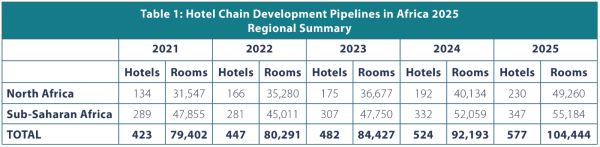
This year's Hotel Development Pipeline Report, the definitive study of international hospitality development projects in Africa, reveals record activity. There are 577 hotels and resorts, with 104,444 rooms, in the development pipeline, up by 13.3% on 2024, way ahead of the single digit pipeline growth reported globally by the leading international chains.

The report, compiled by Lagos-based W Hospitality Group, with data from 50 international and regional hotel chains, shows that development activity has been growing impressively in North Africa, which saw a 23% year-on-year increase, compared to a 6% increase in sub-Saharan Africa. Over the past five years, the hotel development pipeline has grown at an annualised rate of 4% in sub-Saharan Africa, 12% in North Africa and 7% overall.

Egypt continues to lead the way in terms of development, with 143 hotels and 33,926 rooms in the pipeline there. This is almost four times the number of rooms in second-placed Morocco, which has 8,579 rooms in 58 hotels. The following eight countries, ranked by number of rooms, comprise Nigeria, 7,320; Ethiopia, 5,648; Cape Verde, 5,565; Kenya, 4,344; Tunisia, 4,336; South Africa, 4,076; Tanzania, 3,432; and Ghana, 3,125. International hotel chains have deals signed in 42 of Africa's 54 countries.

Despite its clear leadership in the absolute pipeline numbers, Egypt has fewer than 50% of rooms under construction, a significantly lower proportion than second-placed Morocco, with over 72%. Of the top 10 countries, Ethiopia has the highest ratio of rooms “on site”, followed by Morocco and Ghana. Cape Verde, Nigeria and Tanzania have some of the lowest percentages. However, “under construction” does not necessarily mean that there is activity and progress towards completion and opening – many of the sites in Nigeria and Ghana, for example, have been closed for several years, with hardly a hard hat in sight.

A more granular analysis, looking at the location of planned properties, reveals an extraordinary boom in Cairo, with 17,757 new rooms projected in over 70 hotels. The contrast with the second-placed location, Sharm El Sheikh, is dramatic, where 4,231 rooms are planned in fewer than 10 properties. The cities and resorts with the next largest pipelines by number of rooms are Lagos, 3,709; Boa Vista, 3,650; Addis Ababa, 3,369; Casablanca, 2,939; Accra, 2,652; Abuja, 2,570; Zanzibar, 2,523; and Dakar, 2,334.

The growth is being driven strongly by the major international hotel chains, with Marriott International leading the way, 165 hotels with 29,639 rooms. It is followed by Hilton, 93 hotels with 17,040 rooms; Accor, 73 hotels with 15,013 rooms; IHG, 40 hotels with 7,951 rooms; Radisson Hotel Group, 32 hotels with 6,346 rooms; TUI Hotels & Resorts, 11 hotels with 2,954 rooms; Barceló Hotels & Resorts, 7 hotels with 2,193 rooms; The Ascott, 15 hotels with 1,897 rooms; Kerten Hospitality, 13 hotels with 1,881 rooms and Wyndham Hotels & Resorts, 7 hotels with 1,706 rooms.

In the race for dominance, Hilton added slightly more rooms to its African pipeline last year than Marriott International and achieved a higher percentage growth. Barceló Hotels & Resorts recorded the largest percentage growth, more than doubling its pipeline to 2,193 rooms, with three large resort signings in North Africa.

Below the headline numbers, there are three notable trends. First, the actualisation rate (actual openings vs. expected openings), which has nearly doubled from 21% in 2023 to 38% in 2024. While it's substantially less than the 75% actualisation rate achieved in 2019, it shows a continuing recovery from the economic devastation of COVID-19. Of the total 104,444 rooms in the pipeline, over 50,000 rooms (nearly 50%) in 304 hotels are expected to open in 2025 and 2026. 

Second, resort projects are increasing much faster than city or airport hotels, both in percentage terms and in absolute numbers, driven by the number of signings and by the larger average size of the developments, 210 keys vs. 170.  Also, almost half of the rooms that opened last year were in resorts.

Third, there is a definite movement by the chains towards the franchise model, with 108 projects representing almost 19% of the total, compared to less than 10% in 2020. A major factor is the emergence of quality, international, white-label operators such as Aleph Hospitality and Valor Hospitality, and some indigenous operators in Nigeria, Kenya and elsewhere, that are increasing confidence that brand standards will be met. 

The full report will be discussed at FHS Africa (formerly AHIF) 17-19 June in Cape Town. It is the leading hospitality investment conference in the region, which brings together senior decision-makers to shape the future of the industry. Matthew Weihs, Managing Director of the Bench, which organises FHS Africa, said: “The growth in hotel development across Africa is a testament to the continent's economic and tourism potential. Furthermore, the commitment from the international hotel chains makes it clear that global players see Africa as a strategic opportunity."

Trevor Ward, Managing Director of W Hospitality Group, concluded: “Despite the various trials that the continent faces, the fact that hotel chains signed 125 new deals last year, with 21,000 rooms, is evidence that opportunities for further development abound. According to the Global Cities Institute, by the year 2100, 10 of the world's 16 largest cities will be in Africa, with all but one of them (Cairo) in sub-Saharan Africa. So, one might say that development activity in Africa has barely scratched the surface.”

Distributed by APO Group on behalf of The Bench.

For further information and high-resolution images, please contact:
David Tarsh
+44 (0) 20 7602 5262
+44 (0) 7770 816 070
Email: David@Tarsh.com.

About W Hospitality Group:
The W Hospitality Group, a member of Hotel Partners Africa, specialises in the provision of advisory services to the hotel, tourism and leisure industries, providing a full range of services to clients who have investments in the sector, or who are looking to enter them through development, acquisition or other means. In sub-Saharan Africa W Hospitality Group is regarded as the market leader due to the market and financial expertise of its staff, its worldwide knowledge, and its commitment to its clients.  In Africa, W Hospitality Group has to date worked in 40 countries on the continent, from its Lagos and Addis Ababa offices.

www.W-HospitalityGroup.com

About FHS Africa (Formerly AHIF):
For over a decade, the Future Hospitality Summit Africa (FHS Africa) has been the launchpad for hospitality investment in Africa, driving growth, connecting visionaries, and transforming the continent's tourism and hospitality landscape. As a beacon of opportunity, FHS Africa brings together global investors, developers, operators, and industry leaders committed to turning potential into reality.

www.AHIF.com

Strategic Partners: Accor, BWH Hotels, Hilton, IHG Hotels & Resorts, Marriott International, Radisson Hotel Group
Headline Sponsors: CHIC, Hansgrohe, TUI Hotels & Resorts
Sponsors: Aleph Hospitality, CityBlue Hotels, Equate, JLL, Knight Frank, St Helena Island, STR, TIME Hotels, TV5 Monde, Valor Hospitality Partners
Official Carriers: Discover Airlines, Kenya Airways
Supporter: South Africa Tourism

About The Bench:
The Bench has a legacy of delivering world-leading investment forums and conferences in Europe, Africa, the Middle East, and Latin America. The key principle behind these events is "dealmaking'. Transforming the way businesses connect; the Bench has developed a reputation for creating innovative and high-impact industry meetings.

For over two decades, government leaders, tourism ministries, global travel & tourism associations, the world's most influential hospitality brands, hotel owners & investors, renowned restaurant groups, airlines & aviation authorities, destination developers, asset managers, financial groups, and consultants have been participating in the Bench's events. These include FHS Africa, FHS World, FHS Saudi Arabia and AviaDev, where industry players showcase their brands, position themselves as thought leaders and innovators, and connect with the right individuals, opportunities and knowledge.

Learn more at TheBench.com

Media files
The Bench
Download logo
Read moreHotel Development Booms in Africa
  • Previous
  • Page 1
  • Interim pages omitted …
  • Page 51
  • Page 52
  • Page 53
  • Page 54
  • Page 55
  • Interim pages omitted …
  • Page 210
  • Next

Copyright © 2026 · MyZA · All Rights Reserved · Powered by Stratlec Online