The Australian Crayfish Invading Our Rivers
Researcher warns of threat to the Okavango Delta

MyZA
News, Directory, Events and Other Stuff
Researcher warns of threat to the Okavango Delta
As ocean uses expand, it will be necessary to reduce disputes because they disrupt the environmental sustainability and equity central to a blue economy.
External assessors don’t always have a full view of a country’s creditworthiness.
The presence of a warship can be the most tangible and visible sign of bilateral and multilateral friendships.
They projected a series of illustrations, demanding urgent action on the global debt crisis and climate accountability
A coastal migration up and out of Africa was more likely to succeed than an overland journey.
The old dictum that the press promotes the views of those who own and support it was as true during slavery and apartheid as it is now.
(Africa Day debate in Parliament) Africa Day commemorates the great expectations that the leaders of a new, free Africa cherished some sixty years ago. Unfortunately, most of their expectations have since been dashed. The Organisation of African Unity was established on 25 May 1963, largely inspired by the president of Ghana, Dr Kwame Nkrumah. Certain […]
The post Africa Day just a commemoration of African ideals appeared first on Freedom Front Plus.
The Select Committee on Agriculture, Land Reform and Mineral Resources hosted a delegation from the Indonesian Parliament to discuss, among other things, cooperation on mining and mineral resources.
Committee chairperson Mr Mpho Modise warmly welcomed the delegation. He expressed his appreciation for the Indonesian representatives for visiting South Africa and engage with the committee. He said the committee looked forward to the exchange of ideas and exploration of potential areas of cooperation between South Africa and Indonesia on mining and minerals sectors.
South Africa and Indonesia have significant and diverse mineral resources, including gold, diamonds, platinum, coal, and rare earth minerals. Both countries are major global producers of key minerals. The discussions focused on potential areas of collaboration such as technology sharing, joint exploration, and downstream beneficiation of minerals.
The committee explained its mandate which includes overseeing the country's mineral resources development, environmental regulations, and community consultation processes for mining projects. The Indonesian delegation shared their country's approach to mineral rights, local economic development requirements for mining, and efforts to increase domestic mineral processing and manufacturing.
Both sides agreed to explore further parliamentary engagements and potential study visits to foster closer collaboration and knowledge-sharing between the mining industries and policymakers of South Africa and Indonesia. The delegations concluded with a commitment to strengthening ties between the two countries' legislatures and mining sectors for mutual economic benefit.
Distributed by APO Group on behalf of Republic of South Africa: The Parliament.
The human rights record of Lesotho will be examined by the United Nations Human Rights Council's Universal Periodic Review (UPR) Working Group for the fourth time on Wednesday, 30 April 2025, in a meeting in Geneva that will be webcast live.
Lesotho is one of 14 States to be reviewed by the UPR Working Group during its upcoming session from 28 April to 9 May 2025. The first, second and third UPR reviews of Lesotho took place in May 2010, January 2015 and January 2020, respectively.
The UPR Working Group is comprised of the 47 Member States of the Human Rights Council. However, each of the 193 UN Member States can participate in a country review.
The documents on which the reviews are based are: 1) national report - information provided by the State under review; 2) information contained in the reports of independent human rights experts and groups, known as the special procedures, human rights treaty bodies, and other UN entities; 3) information provided by other stakeholders including national human rights institutions, regional organizations, and civil society groups.
The three reports serving as the basis for the review of Lesotho on 30 April can be found here.
Location: Room XX, Palais des Nations, Geneva.
Time and date: 14:30 – 18:00, Wednesday, 30 April 2025 (GMT+2).
The UPR is a peer review of the human rights records of all 193 UN Member States. Since its first meeting was held in April 2008, all 193 UN Member States have been reviewed thrice. During the fourth UPR cycle, States are again expected to spell out steps they have taken to implement recommendations posed during their previous reviews which they committed to follow up on and highlight recent human rights developments in the country.
The delegation of Lesotho will be led by Mr. Richard Ramoeletsi, Minister of Law and Justice.
The three country representatives serving as rapporteurs (“troika”) for the review of Lesotho are Germany, Indonesia, and South Africa.
The webcast of the session will be at: https://webtv.un.org/en/asset/k1y/k1ypkwnawz
The list of speakers and all available statements to be delivered during the review of Lesotho will be posted on the UPR Extranet.
The UPR Working Group is scheduled to adopt the recommendations made to Lesotho on Wednesday, 7 May 2025, between 15:30 and 18:00 (GMT+2). The State under review may wish to express its positions on recommendations posed to it during its review.
Distributed by APO Group on behalf of United Nations: Office of the High Commissioner for Human Rights (OHCHR).
G20 Finance Ministers set to meet in US
The Group of Twenty (G20) Finance Ministers and Central Bank Governors are set to convene a two-day meeting on the sidelines of the International Monetary Fund (IMF) and World Bank Spring Meetings, taking place in the United States, later this month.
The G20 is an international forum of both developing and developed countries, which seeks to find solutions to global economic and financial issues.
This meeting is part of the Finance Track under South Africa’s G20 Presidency, which will gather Finance Ministers and Central Bank Governors of G20 member countries, invited countries, and international organisations to discuss global economic challenges, financial stability, and policies aimed at fostering economic growth.
South Africa’s G20 Presidency commenced on 1 December 2024 and will run until 30 November 2025. It is taking place under the theme: “Solidarity, Equality, and Sustainability.”
The Finance Track is co-chaired by Finance Minister, Enoch Godongwana, and South African Reserve Bank Governor, Lesetja Kganyago.
G20 members include the world’s major economies, representing 85% of global GDP, 75% of international trade, and two-thirds of the world’s population.
The G20 comprises 19 countries (including Argentina, Australia, Brazil, Canada, China, France, Germany, India, Indonesia, Italy, Japan, Republic of Korea, Mexico, Russia, Saudi Arabia, South Africa, Türkiye, the United Kingdom, and the United States), the European Union, and since 2023, the African Union.
The two-day meeting will take place from 23-24 April 2025, in Washington, D.C.
nosihle
Tue, 04/15/2025 - 11:14
157 views
G20 Development Working Group meeting to get underway
The South African Presidency of the Group of Twenty (G20) is this week convening the second Development Working Group (DWG) meeting in the Western Cape.
“The G20 DWG plays a pivotal role in shaping global development priorities, focusing on reducing inequalities, promoting sustainable growth, and strengthening international partnerships,” the Department of Planning, Monitoring and Evaluation said.
Starting on Monday, 14 April and ending on Wednesday, 16 April, the meeting will serve as a platform for in-depth discussions on key development challenges and cooperative solutions.
The G20 is an international forum of both developing and developed countries, which seeks to find solutions to global economic and financial issues.
South Africa’s G20 Presidency commenced on 1 December 2024 and will run until 30 November 2025.
The gathering will bring together representatives from G20 member states, invited countries, and international organisations to deliberate on policies that foster inclusive economic growth and sustainable development.
In alignment with the theme of Solidarity, Equality, and Sustainability, the discussions will focus on three high-level priorities:
• High-Level Principles on Global Public Goods and Global Public Investment.
• Mobilising Finance for Development and Means of Implementation.
• Building Resilience through Universal Social Protection Floors.
The G20 members represent around 85% of the global Gross Domestic Product, over 75% of the global trade, and about two-thirds of the world population.
It comprises 19 countries (Argentina, Australia, Brazil, Canada, China, France, Germany, India, Indonesia, Italy, Japan, Republic of Korea, Mexico, Russia, Saudi Arabia, South Africa, Türkiye, United Kingdom, and United States) and two regional bodies, namely the European Union (EU) and African Union (AU).
The three-day meeting is taking place at the Lord Charles Hotel in Somerset. -SAnews.gov.za
nosihle
Mon, 04/14/2025 - 10:08
6 views
His Excellency Ahmed Al Sayegh, Minister of State and UAE G20 Sherpa, and His Excellency Mahash Al Hameli, UAE Ambassador to South Africa and UAE Sous Sherpa, participated in the second G20 Sherpa Meeting, which was held virtually from 3 – 4 April.
The meeting brought together representatives from invited countries and international organizations to assess the progress achieved across various G20 Sherpa Working Groups and to outline the path forward during the South African G20 Presidency.
The UAE delegation highlighted the country's engagements in working groups across several key priority areas, including anti-corruption, culture, education, development, women's empowerment, artificial intelligence and the digital economy, employment, disaster risk reduction, climate, and environmental sustainability. The UAE reaffirmed its support for the South African Presidency's efforts and emphasized the country's commitment to multilateral cooperation through the G20 platform.
Under the theme ‘“Solidarity, Equality and Sustainability', South Africa extended an invitation to the UAE to participate as a guest country in the G20 process and summit in 2025. This marks the UAE's sixth overall participation in the G20 and its fourth consecutive invitation. The UAE has previously been part of the G20 process hosted by Brazil in 2024, India in 2023, Indonesia in 2022, Saudi Arabia in 2020, and France in 2011.
Established in 1999, the G20 is the premier forum for international economic cooperation, bringing together the world's largest economies to address global challenges and promote inclusive growth.
Distributed by APO Group on behalf of United Arab Emirates, Ministry of Foreign Affairs.
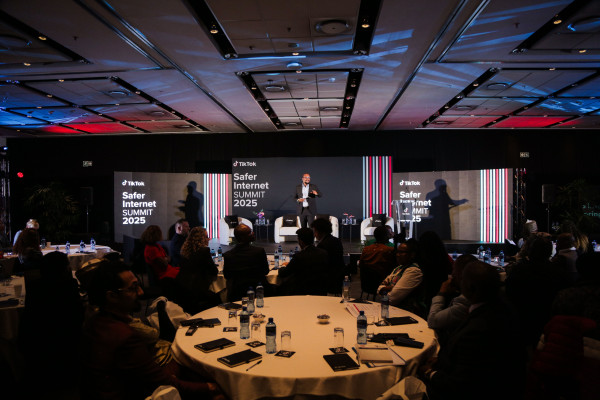
TikTok (www.TikTok.com) hosted its second Annual Africa Safer Internet Summit in Cape Town, South Africa, bringing together government officials, regulators, and industry leaders from across Sub-Saharan Africa. Delegates from South Africa, Nigeria, Ethiopia, Cameroon, Cote d'Ivoire, Kenya, and other countries convened to discuss critical issues on online safety, content moderation, and digital policy development.
The Summit underscores TikTok's ongoing efforts to prioritise user safety in Africa while fostering an open dialogue with policymakers to shape robust frameworks that protect users' rights while encouraging innovation and creativity in the digital space.
Government and Industry Leaders Discuss Digital Safety
The Summit was officially opened by South Africa's Hon. Solly Malatsi, Minister of Communications and Digital Technologies, who highlighted the importance of collaboration among governments, technology platforms, and communities to foster a safer digital ecosystem.
Helena Lersch, TikTok's Vice President for Public Policy, in her remarks, reaffirmed the platform's commitment to user safety and the role of partnerships in creating a secure digital environment.
“Billions of people come to TikTok every day to create, share and connect and we're continually evolving our policies and practices to safeguard our platform so our community can discover and do what they love. This summit underscores the importance of collaboration between industry leaders and regulators in shaping a digital ecosystem that is both innovative and secure," said Lersch.
Fortune Mgwili-Sibanda, Director of Public Policy & Government Relations for Sub-Saharan Africa, further emphasised the significance of collective efforts in digital safety, stating that the Summit serves as a valuable platform for sharing insights, strengthening collaboration, and ensuring that African users, particularly young people, are protected online.
Content Moderation in Africa
During the summit, TikTok reported a significant upward trend in its content removal rate across Sub-Saharan Africa, with data showing a 249.81% increase in content removals from the second quarter of 2023 to the fourth quarter of 2024. This improvement aligns with TikTok's global standards for content moderation and community guidelines enforcement. TikTok's Community Guidelines Enforcement Reports (https://apo-opa.co/3QMZNQH) reflect the platform's continued investment in automated moderation technology, alongside human safety experts that enables the detection and removal of harmful content before it reaches users. Globally, between July and September 2024, TikTok removed more than 147 million videos, of which 118 million were detected and removed automatically using these technologies.
In Sub-Saharan Africa, TikTok removed over 7.5 million videos in Q3 2024, rising to more than 8 million in Q4 2024—an increase of 14.06% quarter-on-quarter. Notably, 99.5% of these videos were removed before any user reports, underscoring TikTok's commitment to proactive moderation and swift action.
A similar trend was observed in North Africa, where TikTok removed over 7 million videos in both Q3 and Q4 of 2024. This represented an 8.70% increase in removals between the quarters, with 99.3% of these takedowns also occurring before user reports.
These figures highlight TikTok's ongoing efforts to provide a safe and positive online environment through robust, technology-enabled content moderation systems.
#SaferTogether - Driving Safer Digital Engagement
As part of its broader commitment to digital safety and education, TikTok is expanding its efforts across Africa through strategic partnerships and training programs that promote digital literacy, safety awareness, and responsible content creation.
At the forefront of these efforts is TikTok's flagship #SaferTogether campaign, which has achieved notable milestones since its launch in 2022.
In Kenya, the initiative, run in partnership with Eveminet (https://apo-opa.co/3Y8mHG7), a youth online protection organisation, has reached over 406,000 participants through in-person workshops across the country. These sessions provided communities with the knowledge and tools needed for responsible online engagement, particularly among students, teachers, and parents.
By working closely with civil society organisations, educators, and government agencies, TikTok continues to integrate proactive safety measures into its platform governance, creating safer digital environments for young users.
In Nigeria, TikTok launched Phase 2 of the #SaferTogether campaign in partnership with the National Information Technology Development Agency (NITDA) (https://apo-opa.co/3FFyx4d) and Data Science Nigeria (DSN) (https://apo-opa.co/3QNqzbJ). Building on the success of Phase 1, which educated parents in major cities such as Abuja, Lagos, and Kano on TikTok's safety features and mental well-being tools, the second phase aims to reach additional states and expand safety awareness among parents, teachers, and guardians.
Since September 2024, TikTok has also partnered with local creators across Sub-Saharan Africa to raise awareness about its safety features and Community Guidelines.
In Egypt, TikTok signed a Memorandum of Understanding (MoU) with the Journalists Syndicate to boost digital awareness, media literacy, and the detection of misinformation and online privacy risks. As part of this partnership, TikTok and the Syndicate hosted a one-day workshop equipping journalists and media professionals with the skills to navigate digital technologies safely and effectively. This collaboration underscores TikTok's ongoing commitment to empowering media professionals and supporting a more informed and digitally literate society.
Shaping the Future of Digital Safety in Africa - Global Youth Council
TikTok is also making a significant step in amplifying youth voices by expanding its Global Youth Council (https://apo-opa.co/4j2OWxZ) for 2025, further strengthening African representation. Originally launched in 2023 to empower young users and shape platform policies, the Global Youth Council has now nearly doubled in size, featuring 28 members from 15 countries. New representatives from Nigeria, Cameroon, Canada, Qatar, and Australia will join returning members from Brazil, Indonesia, Kenya, Mexico, the UK, and the US for a second term. The Youth Council plays an important role in shaping TikTok's safety, well-being, and inclusivity policies, ensuring that young users have a voice in the platform's continued evolution.
The Safer Internet Summit serves as an essential forum for best practice sharing between industry leaders and policymakers. By fostering collaboration, TikTok aims to ensure that digital spaces remain safe, inclusive, and conducive to creativity while balancing the need for effective governance and innovation.
"We value forums such as TikTok's Safer Internet Summit, which bring policymakers into one room for a shared purpose: keeping internet users safe. We are incredibly proud to be a partner of TikTok's #SaferTogether campaign. This collaboration not only underscores our shared commitment to fostering a safer online environment, but also opens new avenues for innovation and collaboration that will enable us to scale our efforts effectively for a safer internet for all.." — Emmanuel Edet - Acting Director, Regulation and Compliance NITDA
For more information on TikTok's safety policies and initiatives, visit our Safety Centre (https://apo-opa.co/4iYko0q), Guardian's Guide (https://apo-opa.co/3QPAKfS) and Youth Safety Center (https://apo-opa.co/4j9JWrB).
Link: https://apo-opa.co/4hZ3JZS
Distributed by APO Group on behalf of TikTok.
Motsoaledi urges global action to address health funding gaps
Health Minister Dr Aaron Motsoaledi has reiterated the importance of nations reallocating resources towards health, strengthening global health partnerships, and exploring innovative financing mechanisms to address funding gaps.
The Minister was delivering the keynote address at the second meeting of the G20 Health Working Group today in Ballito, KwaZulu-Natal.
The Minister used the platform to highlight South Africa’s commitment to universal health coverage (UHC) through the National Health Insurance (NHI) system, which aims to provide financial protection and efficient resource utilisation.
“In South Africa, we are actively pursuing transformation to achieve universal health coverage through our NHI system.
“The NHI is designed to provide financial protection for all, ensuring that access to quality healthcare is not dependent on one’s ability to pay [for] it, and it will also assist in the efficient utilisation of our resources by pulling funds and strategically purchasing services.”
Motsoaledi cited data from the World Health Organisation (WHO), which indicate that the number of people shielded from catastrophic health spending had been steadily increasing before the COVID-19 pandemic. However, since then, about 100 million people have fallen back into financial hardship due to health-related expenses.
Motsoaledi believes that the NHI is a concrete demonstration of government’s commitment to leaving no one behind, and fostering and strengthening the resilience of the health system.
The Minister quoted the late Harvard Department of Anthropology’s Professor Paul Farmer on the value of all lives and urged G20 members to increase public financing of health systems as a fundamental investment.
“I want to quote the idea that 'some lives matter less' is the root of all that is wrong with the world.
“We implore all G20 members to champion increased public financing of health systems.
“This is not merely a budgetary issue; it’s a fundamental investment in our collective future.”
Motsoaledi urged attendees to prioritise public health over competing interests, ensuring that adequate resources are allocated to meet the health needs of the nation’s populations.
“Furthermore, we must all align our efforts beyond financing. We must address the persistent health inequities that plague our world.”
Non-communicable diseases
Motsoaledi highlighted the importance of addressing health inequities, particularly in low and middle-income countries, and the need for multilateral approaches to prevent and control non-communicable diseases (NCDs).
He said the upcoming United Nations High-Level Meeting on NCDs is seen as a crucial opportunity to galvanise global action against chronic conditions like heart disease, cancer, diabetes and chronic respiratory diseases.
“We must alleviate the financial burden, restrict unhealthy food marketing, finance emergency health services, and accelerate cervical cancer elimination, the only cancer which is preventable.”
The theme of the three-day meeting is: “Accelerating Health Equity, Solidarity, and Universal Coverage”.
Along with this meeting, a co-sponsored event focused on eliminating cervical cancer, is also taking place.
“We must move beyond dialogue and commit to concrete steps. South Africa is committed to collaborating with all the G20 members to achieve our shared goals.
“Let us work together to ensure that health remains a priority, not a commodity, especially during these unstable economic times,” Motsoaledi added.
South Africa, which assumed the G20 Presidency in December, is currently hosting various working groups and ministerial meetings throughout the country.
These meetings are focused on key topics such as health, employment, trade, tourism, and the digital economy -- all in preparation for the G20 Leaders’ Summit scheduled for November this year.
The G20 comprises 19 countries including Argentina, Australia, Brazil, Canada, China, France, Germany, India, Indonesia, Italy, Japan, Korea, Mexico, Russia, Saudi Arabia, South Africa, Türkiye, United Kingdom, and the United States. It also includes two regional bodies – the European Union (EU) and the African Union (AU). – SAnews.gov.za
Gabisile
Wed, 03/26/2025 - 11:43
166 views
Motsoaledi to open second G20 Health Working Group meeting in KZN
Health Minister Dr Aaron Motsoaledi will deliver the keynote address at the opening of the second meeting of the Group of Twenty (G20) Health Working Group on Wednesday.
The meeting will take place at the Capital Zimbali Resort in Ballito, KwaZulu-Natal, and will last for three days.
The theme of the meeting will be “Accelerating Health Equity, Solidarity, and Universal Coverage".
Motsoaledi will be joined by Deputy Health Minister Dr Joe Phaahla, KwaZulu-Natal Premier Thami Ntuli, and KwaZulu-Natal Health MEC Nomagugu Simelane.
The event will also include several side events that provide a platform for delegates to engage in bilateral and multilateral discussions on various critical issues, including strengthening health systems and promoting equitable access to health services.
Key issues for discussion during the meeting and side events include financial protection for universal health coverage (UHC) and maintaining health financing amid a challenging global economy.
The meeting will also zoom into strengthening investments and advancing UHC, bridging the equity gap to accelerate action to address the burden of non-communicable diseases, and responding to the global health financing emergency.
The Department of Health has announced that a co-sponsored event focused on the elimination of cervical cancer will take place alongside this meeting.
Delegates from G20 countries, invited nations, representatives, and international organisations will be in attendance.
South Africa holds the G20 Presidency from 1 December 2024 to 30 November 2025, only five years before the deadline of the United Nations (UN) 2030 Agenda. South Africa has embraced the theme “Solidarity, Equality, Sustainability” for its G20 Presidency.
The G20 comprises 19 countries including Argentina, Australia, Brazil, Canada, China, France, Germany, India, Indonesia, Italy, Japan, Korea, Mexico, Russia, Saudi Arabia, South Africa, Türkiye, United Kingdom, and the United States and two regional bodies, namely the European Union (EU) and the African Union (AU).
The first virtual G20 Health Working Group meeting was held in January as part of the country’s G20 Presidency activities planned for this year. – SAnews.gov.za
Gabisile
Tue, 03/25/2025 - 10:32
14 views
Minister leads G20 environment working group
Minister of Forestry, Fisheries and the Environment, Dr Dion George, will this week lead the Group of Twenty (G20) Environment and Climate Sustainability Working Group (ECSWG) as part of South Africa’s Presidency of the G20.
“It is expected that the outcome of this first virtual G20 ECSWG meeting will provide strategic direction and a common understanding amongst G20 Member States on the key environmental and climate change priorities and deliverables,” the Minister said on Sunday.
Taking place under the theme: “Solidarity, Equality, and Sustainability,” the Minister is expected to open the meeting on Tuesday, by setting the scene for South Africa’s Presidency of the G20 ECSWG, provide an opportunity to discuss the five priorities and deliverables, and also present the proposed work plan for the G20 ECSWG for 2025.
The priority focus areas for South Africa’s Presidency of the G20 ECSWG include:
The G20 ECSWG aims to enhance cooperation amongst all G20 members and invitees to address environmental and climate change priorities.
The G20 comprises 19 countries: Argentina, Australia, Brazil, Canada, China, France, Germany, India, Indonesia, Italy, Japan, Republic of Korea, Mexico, Russia, Saudi Arabia, South Africa, Türkiye, United Kingdom and United States, as well as two regional bodies, namely the European Union and the African Union.
The G20 members represent about two-thirds of the world population, approximately 85% of the global GDP and over 75% of the global trade.
This platform is considered as the leading forum for international economic cooperation and plays an important role in shaping and strengthening global architecture and governance on all major international economic issues.
South Africa’s Presidency of the G20 commenced on 01 December 2024 and will continue until 30 November 2025.
The Presidency will build upon on the achievements of India (2023 Presidency) and Brazil (2024 Presidency), to ensure continuity in advancing the developmental agenda within the G20.
“South Africa’s G20 Presidency provides a unique opportunity for the country to champion the aspirations of emerging market economies and lead the developmental agenda of the African Continent within the framework of the G20."
A total of three G20 ECSWG meetings and one ECSWG Ministerial meeting will be held in South Africa, with the first virtual meeting scheduled to take place from 25 – 28 March 2025; followed by the second meeting from 14-18 July 2025 at Kruger National Park, and the final meeting in October 2025 at Cape Town.
The Ministerial meeting will be held back-to-back with the third ECSWG meeting in October 2025.
The department will also roll out outreach and awareness activities in the buildup to the three G20 ECSWG meetings throughout the country to amplify the messaging on the focus areas for the G20 ECSWG.
“The department will leverage South Africa’s Presidency of the G20 to market and showcase the Kruger-Kirstenbosch-iSimangaliso Icon Status Strategy (KISS). Some of the meetings and activities will take place at these iconic world-class sites to showcase them on the global stage,” the Minister said. - SAnews.gov.za
nosihle
Mon, 03/24/2025 - 10:00
179 views
Mining companies could fulfil their social obligations by investing in these projects
SA hosts second G20 Health Working Group meeting in KZN
South Africa will next week host the second meeting of the Group of 20 Health Working Group (G20 HWG).
The meeting is set to kick off on Wednesday, 26 March 2025, at the Capital Zimbali Resort in Ballito, KwaZulu-Natal.
The three-day meeting will focus on the theme “Accelerating Health Equity, Solidarity, and Universal Coverage.”
The event will include several side events that provide a platform for delegates to engage in bilateral and multilateral discussions on various critical issues, including strengthening health systems and promoting equitable access to health services.
Key issues for discussion during the meeting and side events include financial protection for universal health coverage (UHC) and maintaining health financing amid a challenging global economy.
The meeting will also zoom into strengthening investments and advancing UHC, bridging the equity gap to accelerate action to address the burden of non-communicable diseases, and responding to the global health financing emergency.
The Department of Health has announced that a co-sponsored event focused on the elimination of cervical cancer will take place alongside this meeting.
Delegates from G20 countries, invited nations, representatives, and international organisations will be in attendance.
The G20 comprises 19 countries including Argentina, Australia, Brazil, Canada, China, France, Germany, India, Indonesia, Italy, Japan, Korea, Mexico, Russia, Saudi Arabia, South Africa, Türkiye, United Kingdom, and the United States and two regional bodies, namely the European Union and the African Union.
Minister of Health Dr Aaron Motsoaledi will deliver a keynote address during the opening session on 26 March 2025.
He will be accompanied by Deputy Health Minister Dr Joe Phaahla, Premier of KwaZulu-Natal Thami Ntuli and KwaZulu-Natal Health MEC Nomagugu Simelane. – SAnews.gov.za
Gabisile
Mon, 03/17/2025 - 15:20
35 views
US withdraws from Just Energy Transition partnership with SA
South Africa says it notes the United States’ decision to revoke the US International Climate Finance Plan, which had led to the withdrawal from the Just Energy Transition (JET) partnership with South Africa.
Last month, US President Donald Trump signed Executive Order 14162 to revoke and rescind this plan.
According to reports, this also means the immediate withdrawal of the United States from the Paris Agreement designed to combat climate change by curbing global greenhouse gas emissions.
The Department of International Relations and Cooperation (DIRCO) said President Trump’s recent actions have affected the policies aimed at advancing South Africa’s Just Energy Transition Investment Plan (JETP).
“As a result, effective immediately, the US has announced the termination of its membership of the International Partners Group (IPG) for JETPs South Africa, Indonesia and Vietnam,” the department explained.
With the United States withdrawal, the department said associated financial pledges are also withdrawn.
“Grant projects that were previously funded and in planning or implementation phases have been cancelled.”
However, DIRCO said the country remains committed to implementing international agreements, including the decisions taken at the historic Paris Agreement.
“South Africa and other international partners will evaluate the implications of the US withdrawal from the JETP,” the department said,
During a parliamentary discussion regarding the United States’ decision to reduce funding from the United States Agency for International Development (USAID), DIRCO Minister Ronald Lamola said South Africa should not lament this change. Instead, the country should view this situation as an opportunity for transformation.
“We must act in unison to mitigate the negative impact of the USAID cuts. We must seize this moment to reconceptualise our global system and ensure that our domestic imperatives serve our nation efficiently and sustainably,” Lamola told Members of Parliament (MP).
He highlighted that the United States is South Africa’s biggest trading partner in the world after China.
South Africa is home to 601 American companies, accounting for 143 000 jobs.
The Minister told MPs that in 2023, bilateral trade between the US and South Africa equalled US$ 22 billion, with the United States being a significant agricultural export destination for South Africa.
South Africa exports platinum, motor vehicles, reaction initiators, ferroalloys, citrus, jewellery, nuts, chemicals, wines, engines, turbines, and ships and boats to the United States.
According to Lamola, about 22 South African companies are currently invested in the United States, providing about 6 900 jobs. – SAnews.gov.za
Gabisile
Fri, 03/07/2025 - 12:46
336 views
President Ramaphosa to open G20 finance track meeting
President Cyril Ramaphosa will open the first meeting of the Group of 20 (G20) Finance Ministers and Central Bank Governors’ under South Africa’s Presidency.
“The first G20 Finance Meeting and Central Bank Governors Meeting in South Africa will focus on the thematic areas of [the] global economy, debt, infrastructure, joint finance and health task force, international taxation, finance sector issues, and sustainable finance,” the Presidency said on Tuesday.
This engagement will take place at the Cape Town International Convention Centre on Wednesday, 26 February 2025.
The G20 Finance Ministers and Central Bank Governors’ Meeting is hosted by the Minister of Finance Enoch Godongwana and Governor of the South African Reserve Bank, Lesetja Kganyago under South Africa’s G20 Presidency theme of “Solidarity, Equality and Sustainability.”
The Finance Ministers meeting is preceded by the second meeting of the Finance and Central Bank Deputies which took place on 24 and 25 February 2025.
“South Africa’s G20 Presidency commenced in December 2024, and the Finance Ministers and Central Bank Governors’ meeting is part of a series of 23 ministerial and approximately 130 working groups meetings that will take place during the course of 2025. The year-long deliberations will culminate in a G20 Leaders’ Summit in November 2025,” the Presidency said.
The G20 was originally established as a meeting of Finance Ministers in response to the Asian financial crisis of 1997-99, with the aim of coordinating policies to promote international financial stability’.
This initiative was elevated to a Heads of State and Government Leaders Meeting in 2008 after the global financial crisis of 2007.
Together, G20 members account for around 85% of global Gross Domestic Product (GDP) and 75% of international trade.
It comprises 19 countries including: Argentina, Australia, Brazil, Canada, China, France, Germany, India, Indonesia, Italy, Japan, Republic of Korea, Mexico, Russia, Saudi Arabia, South Africa, Türkiye, United Kingdom, and United States and two regional bodies, namely the European Union and the African Union.
The grouping therefore plays a critical role in influencing global policy making and fostering global economic stability. -SAnews.gov.za
nosihle
Tue, 02/25/2025 - 12:00
505 views
South Africa to focus on development and growth during G20 Presidency
South Africa will use its G20 Presidency to review the group’s processes, address financing for development, and tackle barriers to growth in developing countries, including those in Africa.
Addressing the opening of the G20 Finance Ministers' and Central Bank Governors' meeting, National Treasury Director-General, Dr Duncan Pieterse, outlined a range of issues that will be discussed at this week’s finance track meetings, taking place in Cape Town.
This as the Finance and Central Bank Deputies' meeting is taking place at the Cape Town International Convention Centre, on 24 and 25 February 2025. The meeting will be followed by the first meeting of the G20 Finance Ministers and Central Bank Governors on 26 to 27 February 2025.
“South Africa has signalled a strong and keen intent to review the operational process of the G20. Last month, the G20 began its 26th year of operation, however the operational processes of the G20 have rarely been reviewed.
“In the coming months and following the discussions this week, the South African Presidency working with the G20 membership will for the first time conduct a review of these processes and consider how to improve and strengthen them. We will also discuss various other opportunities for G20 engagement this year,” Pieterse said on Monday.
South Africa’s G20 Presidency commenced on 1 December 2024, and all engagements are being held under the theme: “Solidarity, Equality, Sustainability.” The theme underscores the nation’s focus on inclusive global economic growth, with particular attention to the needs of the world’s most vulnerable nations.
He said one of the issues of importance to the world’s poorest and most vulnerable countries is the issue of financing for development.
“Today we will discuss the Financing for Development Conference that is happening in July this year and how the G20 Finance Track might consider engaging with this process.
“We will also hold a very important meeting on the challenges and the constraints to growth in developing countries, including African countries,” the Director-General said.
Other issues of relevance to the membership to G20 will be discussed as well.
“We have worked on a very detailed programme and the work continues this week. Over the last few weeks and months, the G20 working groups of the Finance Track have met and have made progress in shaping our agenda for this year, which is going to be taken forward and discussed in detail this week,” he said.
This week, there will be several critical side meetings, including the meeting of the G20 Troika members, the meeting of the G20 emerging markets and developing economies, which took place this morning, as well as several bilateral meetings with various G20 members and other international organisations.
“This morning, we had an emerging market and developing economies breakfast where we discussed a wide range of challenges affecting emerging markets and economies.
“The participants in our meeting reflected on various issues, including the current state of the global economy, issues relating to debt and how it affects Africa in particular, various perspectives on the reform of the financial architectural were shared and the challenges facing members in affording financing for development and the importance of the Financing for Development Conference that is happening later this year in Spain, which is one of the areas we will discuss,” Pieterse said.
Some of the side events for this week include domestic resource mobilisation, bridging the tax gap, cross border payments, global financial architecture in transition and a cost of capital roundtable.
The G20 was established to tackle pressing global economic and financial issues. Together, G20 members account for around 85% of global GDP and 75% of international trade.
It comprises 19 countries including: Argentina, Australia, Brazil, Canada, China, France, Germany, India, Indonesia, Italy, Japan, Republic of Korea, Mexico, Russia, Saudi Arabia, South Africa, Türkiye, United Kingdom, and United States and two regional bodies, namely the European Union and the African Union.
The grouping therefore plays a critical role in influencing global policy making and fostering global economic stability. -SAnews.gov.za
nosihle
Mon, 02/24/2025 - 11:29
288 views
G20 finance track meeting to tackle global economic issues
Global leaders will this week come together in Cape Town to tackle economic and financial challenges in an effort to promote stability, growth and international cooperation at the Group of Twenty (G20) Finance Track meetings.
South Africa’s Presidency of the G20 continues full steam ahead - with the country's efforts to foster greater collaboration among the G20 members to address pressing global issues and find sustainable solutions that prioritise the well-being of all people.
South Africa’s G20 Presidency commenced on 1 December 2024 and all engagements are being held under the theme: “Solidarity, Equality, Sustainability” as the country endeavours to ensure “no one is left behind.”
The Finance Track deals with strategic macroeconomic and financial stability issues and is led by member countries’ Finance Ministers and central bank heads.
South Africa will host the first meeting of the G20 Finance Ministers and Central Bank Governors on 26 to 27 February 2025 at the Cape Town International Convention Centre.
This meeting will be preceded by the Finance and Central Bank Deputies meeting on 24 and 25 February 2025.
The Finance Track has four working groups, which includes the Framework working group, Sustainable Finance working group, International Financial Architecture, and Infrastructure working group.
In addition, there are three technical groups, not classified as working groups, which deal with financial inclusion, financial sector issues and international taxation.
The G20 was established to tackle pressing global economic and financial issues. Together, G20 members account for around 85% of global GDP and 75% of international trade.
It comprises 19 countries including: Argentina, Australia, Brazil, Canada, China, France, Germany, India, Indonesia, Italy, Japan, Republic of Korea, Mexico, Russia, Saudi Arabia, South Africa, Türkiye, United Kingdom, and United States and two regional bodies, namely the European Union and the African Union.
The grouping therefore plays a critical role in influencing global policy making and fostering global economic stability. -SAnews.gov.za
nosihle
Mon, 02/24/2025 - 06:01
296 views
The United Nations Human Rights Council will hold its fifty-eighth regular session from 24 February to 4 April 2025 at the Palais des Nations in Geneva, starting with its high-level segment from 24 to 26 February, when dignitaries representing more than 100 Member States will address the Council.
The session will open at 9 a.m. on Monday, 24 February under the Presidency of Ambassador Jürg Lauber of Switzerland. Delivering statements at the opening will be the Secretary-General of the United Nations, António Guterres; thePresident of the United Nations General Assembly, Philemon Yang; the United Nations High Commissioner for Human Rights, Volker Türk; as well as the Chief of the Federal Department of Foreign Affairs of Switzerland, Ignazio Cassis. The Council will be meeting in room XX of the Palais des Nations.
On Monday, 3 March, the Council is scheduled to hear a global update by the High Commissioner for Human Rights on the situation of human rights around the world. The general debate on his global update will start following his presentation of a number of country-specific reports and updates.
During the session, the Council will hold 30 interactive dialogues with the High Commissioner, his Office and designated experts, with Special Procedure mandate holders and investigative mechanisms, and with Special Representatives of the Secretary-General. The Council will also hold five enhanced interactive dialogues and one high-level dialogue, as well as nine general debates.
The Council will also hold theannual high-level panel discussion on human rights mainstreaming with a focus on the thirtieth anniversary of the Beijing Declaration and Platform for Action;the biennial high-level panel on the death penalty; panel discussions on early warning and genocide, HIV response and leaving no one behind, and onrights to work and to social security; the annual interactive debate on the rights of persons with disabilities; the annual discussion on the rights of the child; and a commemoration of the International Day for the Elimination of Racial Discrimination.
The Council will examine the situation of human rights in a number of countries under its various agenda items, including the situation in the occupied Palestinian territory, Eritrea, Sudan, South Sudan, Nicaragua, Afghanistan and Myanmar under agenda item two; in Iran, Syria, Venezuela, Ukraine, Belarus, the Democratic People's Republic of Korea, and Myanmar under agenda item four; and in Mali, Haiti, Ukraine, the Democratic Republic of the Congo, South Sudan and Central African Republic under agenda item 10.
The final outcomes of the Universal Periodic Review of14 States will also be considered, namely those of Norway, Albania, Democratic Republic of the Congo, Côte d'Ivoire, Portugal, Bhutan, Dominica, Democratic People's Republic of Korea, Brunei Darussalam, Costa Rica, Equatorial Guinea, Ethiopia, Qatar and Nicaragua.
Towards the end of the session, the Council will appoint three new members of the Expert Mechanism on the Rights of Indigenous Peoples.
A detailed agenda and further information on the fifty-eighth session can be found on the session'swebpage. Reports to be presented are available here.
The fifty-eighth regular session will open at 9 a.m. on Monday, 24 February with a short opening meeting, followed by the start of the high-level segment, which will continue until 26 February, and during which the Council will hear addresses by more than 100 dignitaries. Intervening during the high-level segment will be the annual high-level panel discussion on human rights mainstreaming in the afternoon of 24 February and the biennial high-level panel on the death penalty in the morning of Tuesday, 25 February. The general segment will follow the conclusion of the high-level segment in the afternoon of Wednesday, 26 February.
On Thursday, 27 February, the Council will hold an interactive dialogue on the High Commissioner's report on the occupied Palestinian territory, including East Jerusalem, and the obligation to ensure accountability and justice, followed byenhanced interactive dialogues on the situation of human rights in Eritrea and on the High Commissioner's report on Sudan, with the assistance of the designated Expert. Friday, 28 February, will see the conclusion of the discussion on Sudan, followed by an enhanced interactive dialogue on the report of the Commission on Human Rights in South Sudan. This will be followed by three interactive dialogues, the first on the report of the Group of Human Rights Experts on Nicaragua, the second with the Special Rapporteur on the situation of human rights in Afghanistan, and the third on the High Commissioner's oral update on Myanmar.
At the beginning of the second week, on the morning of Monday, 3 March, the Council will hear the High Commissioner's global update, then conclude the interactive dialogue on the High Commissioner's oral update on Myanmar. This will be followed by the presentation of reports on the activities of the Office of the High Commissioner in Colombia, Guatemala and Honduras, and of another report on Cyprus, and oral updates on Sri Lanka and Nicaragua. The Council will then begin the general debate under agenda item two, namely the annual report of the High Commissioner for Human Rights and reports of the Office of the High Commissioner and the Secretary-General, which will conclude on Tuesday, 4 March. The Council will subsequently begin its considerations under agenda item three on the promotion and protection of all human rights, holding interactive dialogues with the Special Rapporteur on torture and other cruel, inhuman or degrading treatment or punishment and with the Special Rapporteur on freedom of religion or belief.
On the morning of Wednesday, 5 March, the Council will hold a panel on early warning and genocide prevention, then conclude its interactive dialogue with the Special Rapporteur on freedom of religion or belief. This will be followed by an enhanced interactive dialogue on the report of the Office of the High Commissioner on transitional justice. Another panel will be held on Thursday, 6 March on HIV response and leaving no one behind, in addition to two interactive dialogues with the Special Rapporteur on the situation of human rights defenders and the Special Rapporteur in the field of cultural rights. A third panel will be held in the morning of Friday, 7 March on rights to work and to social security, followed by two interactive dialogues with the Special Rapporteur on the right to adequate housing and the Independent Expert on the rights of persons with albinism.
The Council will start its third week on Monday, 10 March with a focus on disability, beginning with an interactive dialogue with the Special Rapporteur on the rights of persons with disabilities, to be followed by the annual debate on the rights of persons with disabilities. The day will conclude with aninteractive dialogue with the Independent Expert on foreign debt, which will continue in the morning of Tuesday, 11 March. Two moreinteractive dialogues will also be held on Tuesday with the Special Rapporteur on the right to food and the Special Rapporteur on the promotion and protection of human rights and fundamental freedoms while countering terrorism.
Wednesday, 12 March will see a further three interactive dialogues with the Special Rapporteur on the right to privacy, and the Special Representatives of the Secretary-General on violence against children and on children and armed conflict, the latter of which will conclude on Thursday, 13 March. The focus on children will continue on Thursday, with the Council also holding its annual discussion on the rights of the child, the theme of which will be early childhood development, and starting an interactive dialogue with the Special Rapporteur on the sale of children, which will conclude on Friday, 14 March.
On Friday, an interactive dialogue with the Special Rapporteur on the human right to a healthy environment will precede the presentation of reports by the open-ended intergovernmental working group on transnational corporations and other business enterprises with respect to human rights, the Secretary-General, the High Commissioner and his Office, followed by the start of the general debate on agenda item three.
The first day of the Council's fourth week, Monday 17 March, will be devoted to concluding the general debate on agenda item three. From Tuesday, 18 March, consideration of agenda item four, human rights situations that require the Council's attention, will begin. First on the schedule is a joint interactive dialogue with the Special Rapporteur and the independent international fact-finding mission on the situation of human rights in Iran, followed by interactive dialogues with the independent international commission of inquiry on Syria, the fact-finding mission on Venezuela and the independent internationalcommission of inquiry on Ukraine.
On Wednesday, 19 March, after the conclusion of the dialogue with the commission of inquiry on Ukraine, three more separate interactive dialogues will be held with the group of independent experts on the situation of human rights inBelarus and with the Special Rapporteurs on the situation of human rights in the Democratic People's Republic of Korea and in Myanmar.
Thursday, 20 March, will see the Council hear the presentation of the High Commissioner's report on the Democratic People's Republic of Korea and his oral update of the situation of human rights in Venezuela. This will be followed by the general debate on agenda item four, which will conclude on the morning of Friday, 21 March. On Friday, the Council will also hold an interactive dialogue with the Special Rapporteur on minority issues, before beginning considerations under agenda item five on human rights bodies and mechanisms. After hearing the presentation of reports by the Forum on Minority Issues, the Social Forum, and the Special Procedures of the Council, it will commence the general debate on agenda item five.
The Council will start its fifth week on Monday, 24 March with its consideration under agenda item six of the final outcomes of theUniversal Periodic Reviews of 14 States: Norway, Albania, Democratic Republic of the Congo, Côte d'Ivoire, Portugal, Bhutan, Dominica, Democratic People's Republic of Korea, Brunei Darussalam, Costa Rica, Equatorial Guinea, Ethiopia, Qatar and Nicaragua. This consideration will continue through to the morning of Wednesday, 26 March, after which the Council will hold a general debate on agenda item six. This will be followed by the presentation of the reports of the High Commissioner and the Secretary-General under agenda item seven, namely the human rights situation in Palestine and other occupied Arab territories, and the general debate on this agenda item. The general debate under agenda item eight - follow-up and implementation of the Vienna Declaration and Programme of Action – is also scheduled to commence on Wednesday afternoon.
Ending racism will be the Council's theme for Thursday, 27 March. After concluding the debate under agenda item eight, it will hear the presentation of the report of the intergovernmental working group on the effective implementation of the Durban Declaration and Programme of Action, then hold its general debate on agenda item nine, namely racism, racial discrimination, xenophobia and related forms of intolerance, follow-up to and implementation of the Durban Declaration and Programme of Action. From 2:30 to 4:30 p.m., the Council will also hold a meeting in commemoration of the International Day for the Elimination of Racial Discrimination.
Friday, 28 March will begin with the conclusion of the debate under agenda item nine, followed by three interactive dialogues conducted under agenda item 10 on technical assistance and capacity-building. The first dialogue will be with the Independent Expert onthe situation of human rights in Mali; the second on the High Commissioner's report on the situation of human rights in Haiti, with the participation of the Independent Expert on the subject; and the third on the High Commissioner's oral update on the situation of human rights in Ukraine.
Monday, 31 March is a United Nations holiday. On Tuesday, 1 April, the Council will hold an enhanced interactive dialogue on oral updates by the High Commissioner and by the team of international experts on the Democratic Republic of the Congo, followed by an interactive dialogue on the report of the Office of the High Commissioner on technical assistance and capacity building for South Sudan and a high-level dialogue on the Central African Republic. At the end of the day, the Council will hear the annual presentation of the High Commissioner on technical cooperation and his oral update on Georgia, and the presentation of the report of the Board of Trustees of the Voluntary Fund for Technical Cooperation, followed by the general debate on agenda item 10.
The general debate will conclude on Wednesday, 2 April, and the Council will then start to act on draft decisions and resolutions, appoint three new members of the Expert Mechanism on the Rights of Indigenous Peoples, and adopt the report of the fifty-eighth regular session, before closing the session on Friday, 4 April.
The Human Rights Council is an inter-governmental body within the United Nations system, made up of 47 States, which is responsible for strengthening the promotion and protection of human rights around the globe. The Council was created by the United Nations General Assembly on 15 March 2006 with the main purpose of addressing situations of human rights violations and making recommendations on them.
The composition of the Human Rights Council at its fifty-eighth session is as follows: Albania (2026); Algeria (2025); Bangladesh (2025); Belgium (2025); Benin (2027); Bolivia (2027); Brazil (2026); Bulgaria (2026); Burundi (2026); Chile (2025); China (2026); Colombia (2027); Costa Rica (2025); Côte d'Ivoire (2026); Cuba (2026); Cyprus (2027); Czechia (2027); Democratic Republic of the Congo (2027); Dominican Republic (2026); Ethiopia (2027); France (2026); Gambia (2027); Georgia (2025); Germany (2025); Ghana (2026); Iceland (2027); Indonesia (2026); Japan (2026); Kenya (2027); Kuwait (2026); Kyrgyzstan (2025); Malawi (2026); Maldives (2025); Marshall Islands (2027); Mexico (2027); Morocco (2025); Netherlands (2026); North Macedonia (2027); Qatar (2027); Republic of Korea (2027); Romania (2025); South Africa (2025); Spain (2027); Sudan (2025); Switzerland (2027); Thailand (2027); and Viet Nam (2025).
The term of membership of each State expires in the year indicated in parentheses.
The President of the Human Rights Council in 2025 is Jürg Lauber (Switzerland). The four Vice-Presidents are Tareq Md Ariful Islam (Bangladesh), Razvan Rusu (Romania), Paul Empole Losoko Efambe (Democratic Republic of the Congo) and a fourth Vice-President to be elected later from the Group of Latin American and Caribbean States. Mr. Efambe will also serve as Rapporteur of the Geneva-based body.
The dates and venue of the fifty-eighth session are subject to change.
Information on the fifty-eighth session can be foundhere, including the annotated agenda and the reports to be presented.
Distributed by APO Group on behalf of Office of the UN High Commissioner for Human Rights (OHCHR).