• Skip to main content
  • Skip to header right navigation
  • Skip to after header navigation
  • Skip to site footer
MyZA

MyZA

News, Directory, Events and Other Stuff

  • Social Media
  • Sport
  • World News
  • Home
  • Submit News
  • Directory
  • Events
  • Stratlec
  • TFSA
  • News
    • APO
    • Today’s Sport News
    • Todays Social Media and Tech Headlines
    • Today’s World News
    • Today’s SA Financial News
  • Contact
You are here: Home / Archives for Indonesia

Indonesia

30 January 2025

President convenes Cabinet Lekgotla

Location: News

President convenes Cabinet Lekgotla

President Cyril Ramaphosa has convened a Cabinet Lekgotla with leaders from all spheres of government - to review government’s progress on priorities, assess challenges and set the agenda for the seventh administration.

Addressing members of the media on the agenda of the two-day meeting, Minister in the Presidency, Khumbudzo Ntshavheni, said government was finalising the Medium-Term Development Plan (MTDP) 2024/2029.

The plan proposes three strategic priorities, which include inclusive growth and job creation; reducing poverty and tackling the high cost of living, as well as building a capable, ethical and developmental State.

“We are focusing on the practical actions that we need to take to make good on the promises that we have made and set practical timeframes so that we can realise the priorities of the MTDP.

“We also received a scene-setting report from National Treasury on the economic outlook and the global outlook -- trends that will inform government planning.

“We are looking at what we want to achieve in terms of reforms on global institutions, in particular the security system of the United Nations and global funding institutions,” the Minister said on Wednesday, on the sidelines of the Cabinet Lekgotla.

Other areas of focus include funding Small, Medium, and Micro Enterprises (SMMEs) and the “missing middle”, in reference to students whose household income is too high to qualify for National Student Financial Aid Scheme (NSFAS) funding, yet too low to afford tertiary education without financial assistance.

The Cabinet Lekgotla is taking place on 29 and 30 January 2025 at the Sefako Makgatho Presidential Guest House, in Pretoria. 

The outcomes of the meeting will shape government’s policies and programmes that will be announced by the President during his State of the Nation Address (SONA) in Parliament on Thursday, 6 February 2025, at 19:00. 

With the seventh administration being under the Government of National Unity (GNU), which comprises 10 political parties from across the spectrum, Ntshavheni emphasised that the meeting will prioritise the interests of the country.

“We are meeting as the GNU and we are not bringing party political interests. We are going to negotiate and discuss as members of Cabinet and representatives of provinces, which are represented by Premiers.

“We work for the best benefit of our country and not the best benefit of our parties. The engagements are on the level of us being members of the national executive,” Ntshavheni said.

South Africa’s term for the Group of Twenty (G20) presidency also features on the meeting’s agenda.

“As we are preparing to host the G20, we will receive a report on the logistics and the content on government goals for the summit,” the Minister said.

South Africa holds the G20 Presidency from 1 December 2024 to 30 November 2025, under the theme: “Solidarity, Equality, Sustainability” .

South Africa's G20 Presidency is the fourth consecutive emerging market Presidency, and it is also the first African Presidency, followed by the admission of the African Union (AU) as the second permanent African member. 

The G20 was established to tackle pressing global economic and financial issues. Together, G20 members account for around 85% of global GDP and 75% of international trade. 

The G20 comprises 19 countries, including Argentina, Australia, Brazil, Canada, China, France, Germany, India, Indonesia, Italy, Japan, Republic of Korea, Mexico, Russia, Saudi Arabia, South Africa, Türkiye, the United Kingdom and the United States, and two regional bodies, namely the European Union and the African Union.

The grouping plays a critical role in influencing global policy making and fostering global economic stability. - SAnews.gov.za


nosihle
Wed, 01/29/2025 - 18:23

128 views
Read morePresident convenes Cabinet Lekgotla
21 January 2025

VFS Global’s new Indonesia e-Visa on Arrival official platform goes live for 97 nationalities, including South Africa

Location: News
VFS Global

  • Dedicated website https://IndonesiaVoA.VFSeVisa.id/ to complete the Indonesia e-VoA application
  • Simple to use end-to-end online platform accessible from desktop and mobile
  • Significant reduction in wait times at immigration upon arrival in Indonesia

VFS Global (www.VFSGlobal.com), the world's largest outsourcing and technology services specialist for governments and diplomatic missions, has launched its new user-friendly and efficient online platform to make Indonesia's Electronic Visa on Arrival (e-VoA) application process seamless for travellers, promote inbound tourism, and enhance overall customer experience. The platform is in line with Indonesian government's ongoing efforts to enhance its tourism infrastructure and services to welcome 14 million visitors in 2025.

VFS Global's new e-VoA platform, is available for nationals of all the 97 countries eligible for e-VoA (http://apo-opa.co/40si4qG), including South Africa. Travellers can now enjoy a quicker and smoother visa application journey through VFS Global by completing the entire process online and receiving a pre-approved e-VoA before departure.

Jiten Vyas, Chief Commercial Officer and Head of Business Development, VFS Global, said,
“As a company, we are constantly working towards innovations which provide a seamless visa application submission experience to our customers. The launch of this innovative, secure, and user-friendly digital e-Visa on Arrival platform for Indonesia will undoubtedly streamline the visa application process, making it faster, easier, and more convenient. With Indonesia being a globally sought-after destination, we are honoured to assist visitors from 97 countries by facilitating their entry into this incredible country through this platform.”

Here are the four simple steps to apply for Indonesia e-VoA:

  1. Visit https://IndonesiaVoA.VFSeVisa.id/
  2. Submit all the required documents
  3. Pay the necessary fees
  4. Receive a pre-approved e-VoA on email before departure

With the payment having been made online, travellers can enjoy a smoother and faster entry experience through E-gates or immigration counters.

VFS Global's new e-VoA platform will ensure all the documents applicants submit are complete and error-free. It also offers OCR technology which will enable applicant details to be auto populated, thereby saving time and effort for applicants. The new platform will also provide group booking facility which could be beneficials for travel trade and conventions.

Travellers applying for Indonesia e-VoA via VFS Global will get a dedicated email and live support in seven languages - English, Mandarin, Japanese, Korean, Arabic, German, and French – to help them with their queries. VFS Global will add more language support in due course of time for key markets.

Distributed by APO Group on behalf of VFS Global.

Media Contact:
George Cherian
Corporate Communications
georgec@vfsglobal.com
communications@vfsglobal.com

About VFS Global:
As the world's leading outsourcing and technology service specialist, VFS Global embraces technological innovation including Generative AI to support governments and diplomatic missions worldwide. The company manages non-judgmental and administrative tasks related to applications for visa, passport, and consular services for its client governments, increasing productivity and enabling them to focus entirely on the critical task of assessment.

With a responsible approach to technology development, adoption and integration, the company prioritizes ethical practices and sustainability while serving as the trusted partner to 69 client governments.  Operating over 3,400 Application Centres in 152 countries, VFS Global has efficiently processed more than 303 million applications since 2001.

Headquartered in Zurich and majority owned through investment funds managed by Blackstone Inc, along with the Swiss-based Kuoni and Hugentobler Foundation and EQT, VFS Global is committed to creating value for all stakeholders and leading in responsible, innovative solutions making government services more effective and efficient.

Media files
VFS Global
Download logo
Read moreVFS Global’s new Indonesia e-Visa on Arrival official platform goes live for 97 nationalities, including South Africa
12 December 2024

Financial injustice a hindrance to Africa’s development

Location: News

Financial injustice a hindrance to Africa’s development

The transformation of global financial institutions remains critical in addressing Africa’s mounting debt challenges, as they perpetuate financial injustice, says United Nations (UN) Secretary-General António Guterres.

“The G20 must lead in delivering financial justice. Financing is fundamental -- from inclusive economic growth, to supporting industrialisation and food security or addressing inequalities,” Guterres said during the closing session for the Joint Sherpa-Finance and Central Banks Deputies' Meeting, held in Johannesburg, on Wednesday.

Guterres explained that global financial systems "load" countries with debt service costs, while denying them access to sufficient low-cost financing to fight poverty, inequality and hunger and advance the Sustainable Development Goals (SDGs).

According to the UN, in 2022, public debt in Africa reached USD 1.8 trillion.

“Developing countries must be represented fairly in their governance. These institutions must also protect economies, particularly from global shocks. It is time to mend the global safety nets that were discovered during the COVID-19 pandemic that they were no longer fit for purpose.

“This continent’s potential is without question. Africa is home to a young and growing population, rich cultural and natural diversity, and a tremendous entrepreneurial spirit. But this enormous potential continues to be held back by injustices that are deeply rooted in the history of colonialism.

“Injustice in worsening climate chaos - which Africans did virtually nothing to cause - that fuels floods, storms, hunger and deadly droughts. I stand side-by-side with President Ramaphosa and the people of Africa in this fight for justice on all fronts. Africa needs financial justice,” Guterres said.

In September, world leaders adopted the Pact for the Future, which includes commitments for ambitious reforms to make the international financial architecture representative of today’s global economy and put the needs of developing countries front and centre.  

The pact covers a broad range of issues including peace and security, sustainable development, climate change, digital cooperation, human rights, gender, youth and future generations, and the transformation of global governance.

“It calls for action to move forward with an SDG Stimulus… to substantially increase the lending capacity of Multilateral Development Banks to make them bigger, bolder and better to support developing countries.

“... And to mobilise more international and domestic resources, public and private, for vital investments. Last week I appointed a group of leading experts to galvanize international support for action on debt, and I’m delighted that Trevor Manuel will be part of this important work,” he said.

As part of the work for South Africa’s G20 Presidency, Guterres participated in the first series of the more than 130 meetings that will precede the G20 Summit in 2025.

On 1 December 2024, South Africa assumed the Presidency of the G20, which comprises many of the world's largest developing and developed economies.

The G20 was established to tackle pressing global economic and financial issues. Together, G20 members account for around 85% of global gross domestic product (GDP) and 75% of international trade. 

The G20 comprises 19 countries including Argentina, Australia, Brazil, Canada, China, France, Germany, India, Indonesia, Italy, Japan, Republic of Korea, Mexico, Russia, Saudi Arabia, South Africa, Türkiye, United Kingdom, and United States and two regional bodies, namely the European Union and the African Union.

The grouping therefore plays a critical role in influencing global policy making and fostering global economic stability.

South Africa's G20 Presidency is the fourth consecutive emerging market Presidency, and it is also the first African Presidency, followed by the admission of the African Union (AU) as the second permanent African member. - SAnews.gov.za

nosihle
Thu, 12/12/2024 - 08:51

211 views
Read moreFinancial injustice a hindrance to Africa’s development
12 December 2024

G20 urged to deliver on climate justice

Location: News

G20 urged to deliver on climate justice

With developing nations being considered the most vulnerable to climate change, United Nations Secretary-General António Guterres says the Group of Twenty (G20) countries must lead in delivering climate justice.

Addressing the closing session for the Joint Sherpa-Finance and Central Banks Deputies' Meeting, Guterres stressed that many vulnerable countries are being forced to respond to a crisis they did not create.

“Meanwhile, they lack the necessary support to seize the benefits of clean energy to spur prosperity and eliminate poverty. We need developed countries supporting developing countries with adequate, affordable and accessible finance and technology, and through meaningful contribution to the loss and damage fund by doubling adaptation finance next year as promised.

“[Climate justice can be delivered] by forging new partnerships like the Just Energy Transition Partnership that South Africa has pioneered to pave the way to a renewable future,” the Secretary-General said on Wednesday in Johannesburg.

On 1 December 2024, South Africa assumed the Presidency of the G20, which comprises many of the world's largest developing and developed economies.

As part of the work for the G20 Presidency, South Africa has commenced with the first series of the more than 130 meetings that will precede the G20 Summit in 2025.

“G20 countries must lead the way in line with the principles of common but differentiated responsibilities but recognise that every G20 country has to do more in the reduction of emissions. Next year, every government must deliver new economic plans in line with limiting the global temperature rise to 1.5 degrees.

“These new plans must cover all emissions in the whole economy, accelerate a just fossil fuel phase out and contribute to the energy transition goals agreed to at COP28. We must also ensure that Africa’s critical minerals that can power the renewable future worldwide benefit Africans first and most. We cannot repeat the mistakes of the past,” he said.

Guterres further called on the G20 to lead on technological justice.

“From digital technology to artificial intelligence, the developing world must access and benefit from the technological revolution.

“We need the G20 to support developing countries as they invest in the digital driven systems and solutions that their people need to boost prosperity to create jobs and drive sustainable development,” he said.

South Africa's G20 Presidency is the fourth consecutive emerging market Presidency, and it is also the first African Presidency, followed by the admission of the African Union (AU) as the second permanent African member. 

The G20 was established to tackle pressing global economic and financial issues. Together, G20 members account for around 85% of global GDP and 75% of international trade. 

The G20 comprises 19 countries including Argentina, Australia, Brazil, Canada, China, France, Germany, India, Indonesia, Italy, Japan, Republic of Korea, Mexico, Russia, Saudi Arabia, South Africa, Türkiye, United Kingdom, and United States and two regional bodies, namely the European Union and the African Union.

The grouping therefore plays a critical role in influencing global policy making and fostering global economic stability. - SAnews.gov.za

nosihle
Wed, 12/11/2024 - 15:14

90 views
Read moreG20 urged to deliver on climate justice
11 December 2024

Big investment needed to drive sustainable development

Location: News

Big investment needed to drive sustainable development

National Treasury Director-General (DG), Dr Duncan Pieterse, has called for large scale and sustainable investments to ensure the global community meets its commitments to end poverty, protect the planet and build prosperous societies.

“Financing gaps for sustainable development are large and growing. The estimates by our international organisations indicate that around $4 trillion in additional investments is needed annually for developing countries,” Pieterse said on Wednesday in Johannesburg.

He was speaking during the two-day Group of Twenty (G20) Joint Sherpa and Finance Track meeting.

According to the United Nations (UN), the world may miss many of the Sustainable Development Goals (SDGs) targets by 2030 due to the delay in development progress, which may even be reversed under the combined weight of climate disasters, conflict, economic downturn and the lingering aftermath of the COVID-19 pandemic.

The Sustainable Development Goals are a universal call to action to end poverty, protect the planet and improve the lives and prospects of everyone, everywhere. 

“To achieve the SDGs by the 2030 deadline, an urgent large scale and sustainable investments push is needed,” Pieterse said.

The DG said South Africa’s G20 Presidency will strongly focus on the challenges facing emerging markets and developing countries, especially those on the African continent.

“We will also focus our attention on policies and mechanisms that support sustainable development. Many developing countries, including those in Africa experience growth that is insufficient to reduce poverty, as well as tough financing conditions and high levels of public debt that crowd out resources or development spending

“During our Presidency, there will be a very strong focus on enhancing debt sustainability through a comprehensive approach, which will include... finding ways to improve debt structuring, supporting countries with liquidity challenges and encouraging the development of local currency markets to attract domestic savings and improve debt transparency,” Pieterse said.

South Africa will also continue to obtain borrower country perspectives on debt, including through an African outreach event, with broad participation of the borrower countries.

On 1 December 2024, South Africa assumed the Presidency of the G20 group of countries, which comprises many of the world's largest developing and developed economies.

“The global economy has been put to the test over the last four years, marked by an unprecedented pandemic, escalation in geopolitical conflict and extreme weather events that have disrupted supply chains. 

“The latest assessment by the International Monetary Fund that global growth is expected to remain stable, yet underwhelming, remains a concern. Higher growth is essential to improve prosperity and living standards to reduce debt, and create policy space to tackle our spending pressures,” Pieterse said.

In 2025, South Africa’s G20 Presidency will focus on strengthening macroeconomic fundamentals, accelerating climate transition and boosting productivity growth.

This week's discussion under the South Africa G20 Presidency takes place ahead of two very important events -- the 5th Finance in Common Summit (FiCS), taking place in Cape Town in February 2025, and the Fourth International Conference on Financing for Development (FfD), which will take place in Spain in June 2025.

“We see these events as very important opportunities to strengthen the development finance ecosystem, scale up and redirect financing to meet our global sustainable challenges, and bring impactful changes in relation to climate and biodiversity needs.

“As we prepare to submit our Nationally Determined Contribution (NDC) in 2025, it is clear that our very ambitious climate action goals cannot be achieved without unlocking a similarly ambitious set of climate instruments.

“The G20 must continue to play a leading role to address the critical issues of our age, so that we can achieve both global sustainable development and development that is inclusive, equitable and leaves no one behind,” Pieterse said.

South Africa's G20 Presidency is the fourth consecutive emerging market Presidency, and it is also the first African Presidency, followed by the admission of the African Union (AU) as the second permanent African member. 

The G20 was established to tackle pressing global economic and financial issues. Together, G20 members account for around 85% of global GDP and 75% of international trade. 

The G20 comprises 19 countries including Argentina, Australia, Brazil, Canada, China, France, Germany, India, Indonesia, Italy, Japan, Republic of Korea, Mexico, Russia, Saudi Arabia, South Africa, Türkiye, United Kingdom, and United States and two regional bodies, namely the European Union and the African Union.

The grouping therefore plays a critical role in influencing global policy making and fostering global economic stability. - SAnews.gov.za

nosihle
Wed, 12/11/2024 - 11:19

231 views
Read moreBig investment needed to drive sustainable development
9 December 2024

Lamola advocates for the evolution of multilateral institutions

Location: News

Lamola advocates for the evolution of multilateral institutions

With the world facing complex issues such as climate change, economic inequality, global health crises, and geopolitical tensions, International Relations and Cooperation Minister Ronald Lamola says multilateral institutions must evolve to meet the global challenges of today.

“While international cooperation and multilateralism are currently confronted with divisive geopolitics and unprecedented challenges such as climate change, slow economic growth and deepening poverty, the G20 must make strides in forging practical, mutually beneficial cooperation that champions an international order that is fairer, just, inclusive and representative,” the Minister said on Monday in Johannesburg.

He was addressing the first G20 Sherpas Meeting, as South Africa commenced with the first engagement of the more than 130 meetings that will precede the G20 Summit in 2025.

WATCH | 


The Sherpa Track is led by the personal representatives of G20 leaders, and oversees negotiations and discusses the points that form the summit’s agenda, and coordinates most of the work.

On 1 December 2024, South Africa assumed the Presidency of the G20 group of countries, which comprises many of the world's largest developing and developed economies. 

READ | G20 South Africa news articles

It was established to tackle pressing global economic and financial issues. Together, G20 members account for around 85% of global GDP and 75% of international trade. 

The G20 comprises 19 countries including: Argentina, Australia, Brazil, Canada, China, France, Germany, India, Indonesia, Italy, Japan, Republic of Korea, Mexico, Russia, Saudi Arabia, South Africa, Türkiye, United Kingdom, and United States and two regional bodies, namely the European Union and the African Union.

The grouping therefore plays a critical role in influencing global policy making and fostering global economic stability.

“The multilateral institutions with economic and developmental mandates must be strengthened, as the need for their intervention is even much bigger now. We all know that many countries, especially the developing world, are still recovering from the economic shock of COVID-19. 

“Poverty and weak economic growth remain a challenge for many countries, especially in Africa and the developing world; thus, the themes of our temporary Task Forces focus on these matters,” Lamola said.

According to studies from the International Monetary Fund, trade has been a major contributor to global growth over the past decades, helping to promote economic development, increase economic opportunity and lift millions out of poverty.

“It is for this reason that South Africa supports international cooperation and multilateralism. We also know of the benefit this would bring us, as we seek to grow our economy and support the development of the African continent.

“As the premier forum for international economic cooperation, South Africa seeks to amplify the continued value of the G20 as a forum of the world’s largest developing and developed economies; a forum that provides leadership and momentum towards greater global economic growth and sustainable development; a forum whose work serves to complement and foster the broader processes of the various multilateral spheres,” Lamola said.

He said the global community must remain committed to multilateralism and upholding international law and ensure that the United Nations (UN) remains the centrepiece of this multilateralism. 

“Its central role in the international system ensures that sovereign States cooperate to maintain international peace and security, advance sustainable development, and ensure the promotion and protection of democracy, human rights, and fundamental freedoms for all.

“Whereas G20 leaders set the agenda for our partnership, we rely on the immense efforts of our Sherpas to translate these commitments into practical cooperation,” the Minister said.

South Africa’s G20 Presidency is being held under the theme: "Solidarity, Equality, Sustainability" - a theme that seeks to harness global will and capabilities to confront the enormous challenges the world is facing.

“In the spirit of Ubuntu, our shared humanity, we will address these challenges through our high-level deliverables and priorities, which lie at the core of the original G20 mandate of promoting strong, sustainable, balanced and inclusive growth, and by building partnerships across all sectors of society to find collective solutions.

“As we build on the past and set the tone for the future, we must accentuate the need to adhere to universal values, shared norms, and strong multilateral institutions. Now more than ever, multilateral institutions must be strengthened and reformed to deliver broad global consensus and serve as platforms to resolve disputes,” the Minister said. - SAnews.gov.za

nosihle
Mon, 12/09/2024 - 11:37

342 views
Read moreLamola advocates for the evolution of multilateral institutions
9 December 2024

Companies Plan to IT Security Budgets up to 9% in the Next Two Years

Location: Business
Kaspersky

Companies are planning to increase their investments in information security against the background of growing financial losses from cyber incidents. This trend was revealed in the recent Kaspersky's (www.Kaspersky.co.za) IT Security Economics report.

Kaspersky IT Security Economics is an annual report that unpicks the changes in budgets, breaches and business challenges affecting IT Security decision makers. It is based on interviews with IT and IT security professionals working in organisations of various sizes and industries. The survey was conducted across 27 countries in Europe, the Asia-Pacific region, the Middle East, Turkiye and Africa (META) region, Latin and North America.

According to the research, companies plan to increase their IT security budgets by up to 9%. The median cybersecurity budgets for large enterprises were $5.7M with $41.8M allocated for IT generally, while SMBs invested $0.2M in IT security from a median IT budget of $1.6M.

Possible reasons for the increased investment can be found in the analysis of financial losses from cyber incidents. Large enterprises experienced an average of 12 incidents this year, spending $6.2M to recover from them — 1.1 times higher than the budget allocated for IT security overall. Despite the greater resources and advanced security infrastructures, the sheer scale and complexity of large enterprise organisations make them more susceptible to costly breaches. While these enterprises are often better equipped to detect incidents quickly, the time required to fully respond and mitigate these threats can span for hours, underscoring the challenge of managing widespread, complex IT environments.

As for SMBs, these organisations experienced an average of 16 incidents this year, while spending $0.3M for remediation, which is 1.5 times higher than their overall IT Security budget. SMBs are the most disproportionately affected group in terms of budgetary impact. They often lack robust cybersecurity policies and procedures, which leaves them vulnerable to incidents involving employees, public cloud misconfigurations, and high-level permissions.

In the META region, organisations of all sizes reported to have experienced on average 13 incidents within a year. In South Africa, organisations of all sizes reported to have experienced on average 19 incidents within a year.

“This data illustrates the continuation of the current trend of increasing cybersecurity spending across all market segments. This growth is driven by at least three key factors. Firstly, and obviously, the constant growth in the complexity of cybersecurity threats forces companies to adopt more advanced solutions to enhance the detection of attack traces and automate responses. Secondly, increasing concerns from governments regarding digital sovereignty leads to the emergence of new regulations and regulatory requirements and, as a result, increased expenses. The third factor influencing the growth of cybersecurity budgets and costs is the constant increase in salary expectations for professionals in various cybersecurity fields,” comments Veniamin Levtsov, Vice President, Center of Corporate Business Expertise at Kaspersky.

To protect companies against a wide range of cyber threats, Kaspersky recommends:

  • Use all-encompassing solutions, such as those from the Kaspersky Next (https://apo-opa.co/3VwBRnf) product line, that provide real-time protection, threat visibility, advanced investigation and response capabilities for companies of any size and industry.
  • Adopt a managed security service such as Kaspersky Managed Detection and Response (https://apo-opa.co/49pxUXj) if companies lack qualified InfoSec professionals. It will provide the necessary expertise and give them the best possible advanced automated security services. Thanks to its analysis of corporate data gathered every day, in real time, 24/7, it can shield businesses against sophisticated cyberattacks.
  • Educate your employees. Dedicated training courses can help, such as those provided in the Kaspersky Automated Security Awareness (https://apo-opa.co/3VtJyuu) Platform.

To gain more insights about IT security costs and budgets in businesses visit the interactive IT Security Calculator (https://Calculator.Kaspersky.com).

To read the full report “IT Security Economics”, that is based on a survey conducted in Brazil, Chile, China, Egypt, France, Germany, India, Indonesia, Italy, Japan, Kazakhstan, Saudi Arabia, Malaysia, Mexico, Pakistan, Philippines, Russia, South Africa, South Korea, Singapore, Spain, Thailand, Turkey, Vietnam, UAE, UK and US, visit the website (https://apo-opa.co/3Zp3ik9).

Distributed by APO Group on behalf of Kaspersky.

For further information please contact:
Nicole Allman
INK&Co. (https://INKandCo.co.za)
nicole@inkandco.co.za

Social Media:
Facebook: https://apo-opa.co/3OLZioQ
X: https://apo-opa.co/3ZtBQl5
YouTube: https://apo-opa.co/4gmirtl
Instagram: https://apo-opa.co/3BkYK6f
Blog: https://apo-opa.co/3OKs219

About Kaspersky:
Kaspersky is a global cybersecurity and digital privacy company founded in 1997. With over a billion devices protected to date from emerging cyberthreats and targeted attacks, Kaspersky's deep threat intelligence and security expertise is constantly transforming into innovative solutions and services to protect businesses, critical infrastructure, governments and consumers around the globe. The company's comprehensive security portfolio includes leading endpoint protection, specialized security products and services, as well as Cyber Immune solutions to fight sophisticated and evolving digital threats. We help over 200,000 corporate clients protect what matters most to them. Learn more at www.Kaspersky.co.za.

Media files
Kaspersky
Download logo
Read moreCompanies Plan to IT Security Budgets up to 9% in the Next Two Years
9 December 2024

SA kicks off first G20 engagement

Location: News

SA kicks off first G20 engagement

South Africa has set the agenda for its Group of Twenty (G20) Presidency with the commencement of the fist engagement of the more than 130 meetings that will precede the G20 Summit in 2025.

The Minister of International Relations and Cooperation, Ronald Lamola, officially opened the first G20 Sherpas Meeting in Johannesburg, on Monday.

The Sherpa Track is led by the personal representatives of G20 leaders. The Sherpa Track oversees negotiations and discusses the points that form the summit’s agenda, and coordinates most of the work.

“The first Sherpa Meeting of the G20 is important traditionally, as it sets the stage for the upcoming Presidency and the critical conversations on some of the most vital issues of our time.

“In the spirit of Ubuntu, our shared humanity, we will address these challenges through our high-level deliverables and priorities, which lie at the core of the original G20 mandate of promoting strong, sustainable, balanced and inclusive growth and by building partnerships across all sectors of society to find collective solutions,” Lamola said on Monday.

WATCH | 


South Africa’s G20 Presidency is being held under the theme: "Solidarity, Equality, Sustainability", a theme that seeks to harness global will and capabilities to confront the enormous challenges the world is facing.

South Africa will use its G20 Presidency to secure urgent progress on shared goals through several priority actions, which include strengthening disaster resilience and response; ensuring debt sustainability for low-income countries; mobilising finance for a just energy transition and harnessing critical minerals for inclusive growth and development.

As part of its efforts to bring the Sherpa and the Finance tracks closer together, three temporary Task Forces, an Initiative and a Commission will be established during South Africa’s G20 Presidency.

South Africa’s priorities include Inclusive Economic Growth, Industrialisation, Employment and Reduced Inequality; Food Security and Artificial Intelligence, Data Governance and Innovation for Sustainable Development.

“A review of the work of the G20 -- The G20 at 20 years: A Reflection on Key Achievements and the Way Forward -- will also feature as one of South Africa’s deliverables through a Sherpa Track Initiative. South Africa also proposes the establishment of a Cost of Capital Commission during its G20 Presidency,” Lamola said.

The three Task Forces, the Initiative and Commission will be established to deliver tangible results during South Africa's G20 Presidency. All of the priorities, as well as the overall theme, will influence Working Groups’ priorities and work plans.

South Africa assumed its G20 Presidency on 1 December 2024, following the astute and successful leadership of Brazil.

“The South African government also recognises the significant strides made by the Brazilian G20 Presidency in enhancing the G20 as a site of democratic global engagement. The South African Presidency will continue this trajectory. 

“A comprehensive dialogue with civil society and other State and non-State institutions will be conducted through the existing Engagement Groups.

“Following the approach of the Brazilian Presidency, a G20 Social Forum will be convened, which will precede the Leaders’ Summit in November 2025, to bring together representatives of the existing engagement groups and other segments of civil society that may offer meaningful contributions to the G20,” Lamola said.

The G20 group comprises many of the world's largest developing and developed economies. It was established to tackle pressing global economic and financial issues. Together, G20 members account for around 85 percent of global GDP and 75 percent of international trade. 

The G20 comprises 19 countries including Argentina, Australia, Brazil, Canada, China, France, Germany, India, Indonesia, Italy, Japan, Republic of Korea, Mexico, Russia, Saudi Arabia, South Africa, Türkiye, United Kingdom, and United States and two regional bodies, namely the European Union and the African Union.

The grouping therefore plays a critical role in influencing global policy making and fostering global economic stability.

“I trust that this meeting will set the trend for our subsequent meetings and that, as much as we celebrate the landmark achievements of the G20, we will also, during the course of the year ahead, begin to look ahead toward the strategic imperatives for the next cycle of G20 cooperation,” Lamola said. -SAnews.gov.za

nosihle
Mon, 12/09/2024 - 12:08

163 views
Read moreSA kicks off first G20 engagement
5 December 2024

Cabinet hopeful G20 hosting will boost local tourism

Location: News

Cabinet hopeful G20 hosting will boost local tourism

South Africa is looking forward to a boost in its hospitality sector, as support staff and families of the Group of 20 (G20) member countries are expected to attend over 130 meetings in the Leaders’ Summit next year.

This is according to Minister in the Presidency, Khumbudzo Ntshavheni, who briefed the media on the outcomes of the Cabinet meeting on Wednesday, 4 December 2024.

On 1 December 2024, South Africa officially assumed the G20 Presidency from Brazil, becoming the first African country to lead the premier forum with the theme of ‘Solidarity, Equality, Sustainability’.

“Hosting the G20 offers our nation an unprecedented opportunity to position South Africa as a global force for driving inclusive economic growth, employment, and reduced inequality in a sustainable manner,” Ntshavheni said.

The members of the G20 are Argentina, Australia, Brazil, Canada, China, France, Germany, India, Indonesia, Italy, Japan, the Republic of Korea, Mexico, Russia, Saudi Arabia, South Africa, Türkiye, the United Kingdom, the United States, the African Union and the European Union.

Ntshavheni said all provinces will benefit from hosting either the Ministerial or Working Group Meetings.

Following Brazil's example, Ntshavheni said South Africa will host the G20 Social Summit to encourage broader involvement of civil society and will introduce a new engagement group called, Township20 (TS20).

The Minister stated that the TS20 will showcase South Africa's township economies' creative, cultural, financial, and innovative strengths.

The initial meetings for South Africa's Presidency will include the first Sherpa and Finance Track meetings, scheduled from 9 to 12 December 2024 in Sandton.

The official website for South Africa's G20 Presidency was launched on Tuesday, featuring the King Protea as its logo. This national flower symbolises the country's identity, landscape, and cultural significance.

VIEW | G20 South Africa 2025

The Department of International Relations and Cooperation (DIRCO said the King Protea embodies resilience, cultural pride, hope, and natural beauty.

“The King Protea’s ability to regenerate after fires mirrors the country’s spirit of renewal and hope.

“The flower serves as a reminder that even in the darkest times, there is always a chance for new beginnings. Just like the people of South Africa, who have faced historical struggles and triumphs, King Protea stands tall even in adversity,” the department said.

Cabinet has invited potential sponsors to partner with government in supporting the G20 in South Africa.

Interested parties are encouraged to submit their expressions of interest to g20sponsorship@dirco.gov.za. The deadline is 31 March 2025. – SAnews.gov.za


Gabisile
Thu, 12/05/2024 - 13:20

347 views
Read moreCabinet hopeful G20 hosting will boost local tourism
17 November 2024

President arrives in Brazil to lead SA’s participation at G20 Summit

Location: News

President arrives in Brazil to lead SA’s participation at G20 Summit

President Cyril Ramaphosa arrived in Brazil on Saturday night to lead South Africa’s participation in the Group of Twenty (G20) Leaders’ Summit in Rio de Janeiro.

The G20 Leaders’ Summit, which will be held between 18 and 19 November 2024, will focus on “Building a Just World and a Sustainable Planet”. 

“Brazil’s G20 Presidency continues the global south rotating Presidency and during its tenure prioritises social inclusion and the fight against hunger and poverty, energy transitions and the promotion of sustainable development in its economic, social, environmental dimensions and the reform of global governance Institutions,” the Presidency said in a statement.

On Sunday, 17 November 2024, President Ramaphosa will participate in the launch of the Leveraging the Potential of Renewables – The Road to Johannesburg Campaign. 

On Monday, 18 November 2024, at the beginning of the Leaders’ Summit, the President will present South Africa’s statements during plenary sessions. These statements will focus on the fight against hunger and poverty and the reform of global governance institutions.

South Africa will officially receive the G20 Presidency during the Leaders’ Summit and will continue to build on the initiatives of its Global South predecessors starting from 1 December 2024, under the rallying call of “Solidarity, Equality, and Sustainability”. 

The G20 is the leading forum for global economic cooperation and governance, representing 85% of the world’s Gross Domestic Product (GDP), 75% of global trade, and two-thirds of the global population. 

It serves as a platform to promote effective multilateral cooperation by uniting the world’s major economies to ensure economic stability and sustainable growth worldwide.

The G20 consists of 19 countries: Argentina, Australia, Brazil, Canada, China, France, Germany, India, Indonesia, Italy, Japan, South Korea, Mexico, Saudi Arabia, South Africa, Russia, Türkiye, the United Kingdom and the United States. Additionally, it includes two organisations: the African Union and the European Union.

The President is expected to hold bilateral meetings on the margins of the Leaders’ Summit. 

According to the Presidency, South Africa’s participation in the G20 is guided by the four strategic foreign policy pillars.

These include advancing national interests to attain domestic objectives, enhancing the African agenda and promoting Africa’s sustainable development, South-South Cooperation and influencing the global multilateral architecture by advancing the agenda of the South through North-South dialogue. 

“South Africa’s participation in the G20 therefore seeks to provide strategic direction in establishing a more equitable, representative and fit-for-purpose international order, in support of the main multilateral processes under the United Nations.”

President Ramaphosa is accompanied by Minister of International Relations and Cooperation Ronald Lamola and Minister in the Presidency Khumbudzo Ntshavheni. – SAnews.gov.za

Gabisile
Sun, 11/17/2024 - 05:58

64 views
Read morePresident arrives in Brazil to lead SA’s participation at G20 Summit
12 November 2024

VFS Global appointed to offer new Indonesia e-Visa on Arrival service to South Africans, 96 other nationalities

Location: News
VFS Global

  • New Indonesia Electronic Visa on Arrival (e-VoA) service to commence in the first half of December 2024.
  • Group booking facility to be available for the benefit of travel trade and conventions.

Indonesia has set an ambitious target of welcoming 14 million visitors in 2024 and achieved 9.92 million arrivals from January to August 2024. The user-friendly eVoA solution aligns with Indonesia's ongoing efforts to enhance its tourism infrastructure and services. In the African region, South Africa accounts for the highest number of tourist visitors who travel to Indonesia.

Travellers will soon be able to enjoy a quicker and smoother visa application journey through VFS Global by completing the entire process online before departure and receiving a pre-approved e-VoA. The e-VoA can be easily obtained by visiting VFS Global website, submitting all the required documents, and paying the necessary fees online prior to travel. Once the application is submitted, travellers can receive their visas on their email before departure. With the payment having been made online, travellers can enjoy a smoother and faster entry experience through E-gates or immigration counters.

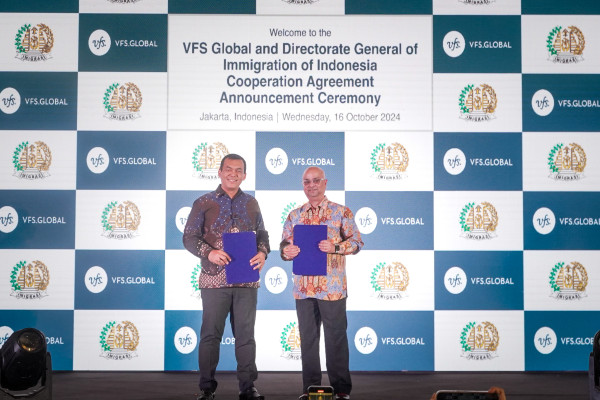
Mr. Silmy Karim, Director General of Immigration of Indonesia, said, “The Directorate General of Immigration offers the latest digital solutions that enhance the experience for foreign nationals who wish to visit Indonesia. In our collaboration with VFS Global, we aim to effectively contribute to increasing the arrival of foreigners, taking into account the network and digital platform owned by our partners.”

Mr. Zubin Karkaria, Founder and Chief Executive Officer, VFS Global Group said, “Indonesia is a very popular destination for travellers across the globe, and we are excited to unveil a service that will make their visa application process quicker, simpler and much more convenient. This user-friendly and highly secure digital e-Visa on Arrival (e-VoA) service will considerably enhance the visa application experience, thereby facilitate increase in tourism to the country. We are honoured to partner with the Directorate General of Immigration under the Ministry of Law and Human Rights and the Ministry of Tourism and Creative Economy of the Republic of Indonesia for this service."

Travellers applying for Indonesia e-VoA via VFS Global will get a dedicated email and live support in seven languages - English, Mandarin, Japanese, Korean, Arabic, German, and French – to help them with their queries. VFS Global will add more language support in due course of time for key markets.

VFS Global's new e-VoA platform will ensure all the documents applicants submit are complete and error-free. It also offers OCR technology which will enable applicant details to be auto populated, thereby saving time and effort for applicants. The new platform will also provide group booking facility which could be beneficials for travel trade and conventions. To further support this initiative, VFS Global has tied up with Emirates to make Indonesia e-Visa on Arrival (e-VoA) application service seamless for Emirates passengers. 

Distributed by APO Group on behalf of VFS Global.

Media Contact:
georgec@vfsglobal.com
Corporate Communications
communications@vfsglobal.com

About VFS Global:
As the world's leading outsourcing and technology service specialist, VFS Global embraces technological innovation including Generative AI to support governments and diplomatic missions worldwide. The company manages non-judgmental and administrative tasks related to applications for visa, passport, and consular services for its client governments, increasing productivity and enabling them to focus entirely on the critical task of assessment.

With a responsible approach to technology development, adoption and integration, the company prioritizes ethical practices and sustainability while serving as the trusted partner to 69 client governments.  Operating over 3,400 Application Centres in 153 countries, VFS Global has efficiently processed more than 297 million applications since 2001.

Headquartered in Zurich and majority owned through investment funds managed by Blackstone Inc, along with the Swiss-based Kuoni and Hugentobler Foundation and EQT, VFS Global is committed to creating value for all stakeholders and leading in responsible, innovative solutions making government services more effective and efficient.

Media files
VFS Global
Download logo
Read moreVFS Global appointed to offer new Indonesia e-Visa on Arrival service to South Africans, 96 other nationalities
30 October 2024

Tanzania President, Merck Foundation Chairman and CEO with 15 First Ladies inaugurate their 11th Africa Asia Luminary 2024

Location: News
Merck Foundation

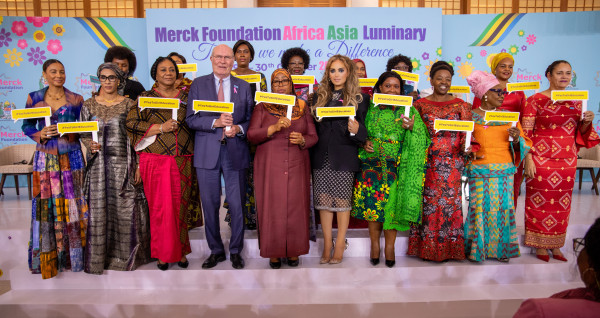
  • The 11th Edition of Merck Foundation Africa Asia Luminary was officially inaugurated by The President of the United Republic of Tanzania, H.E. Dr. SAMIA SULUHU HASSAN, Chairman of Merck Foundation Board of Trustees, Prof. Dr. Frank Stangenberg-Haverkamp and Merck Foundation CEO, Senator, Dr. Rasha Kelej.

  • The First Ladies of Burundi, Cabo Verde, Central African Republic, Democratic Republic of The Congo, Gabon, The Gambia, Ghana, Kenya, Liberia, Malawi, Maldives, Mozambique, Democratic Republic of São Tomé and Príncipe, Zimbabwe and Zanzibar were the Guests of Honor and Keynote Speakers for the 11th Edition of Merck Foundation's Annual Conference.
  • More than 6,000 healthcare providers, policymakers and media from over 70 English, French, Spanish and Portuguese speaking countries attended the Luminary through hybrid model to benefit from five parallel scientific and social sessions to advance healthcare capacity and awareness in 44 critical and underserved medical specialties.
  • Celebrating 7th Anniversary of Merck Foundation and marking 12-year journey of their development programs, during 2024 Luminary. 
  • Link to Live Stream of Inaugural Session of Merck Foundation Africa Asia Luminary 2024: https://apo-opa.co/40tsLex

Merck Foundation (www.Merck-Foundation.com), the philanthropic arm of Merck KGaA Germany, conducted the 11th Edition of their annual conference, “Merck Foundation Africa Asia Luminary”, under the patronage of The President of Tanzania, and in partnership with the Government of Tanzania on 29th and 30th October, in Dar es Salaam, Tanzania. The conference was officially inaugurated by H.E. Dr. SAMIA SULUHU HASSAN, The President of the United Republic of Tanzania together with Prof. Dr. Frank Stangenberg-Haverkamp, Chairman of Merck Foundation Board of Trustees and Senator, Dr. Rasha Kelej, CEO of Merck Foundation, along with First Ladies of 15 Countries, who joined as the Guests of Honor and Keynote Speakers.

While inaugurating the conference, The President of United Republic of Tanzania, H.E Dr. SAMIA SULUHU HASSAN emphasized “I am delighted to host this prestigious conference in Tanzania. It is a great honor to inaugurate the conference alongside the First Ladies of Africa and Asia. I am certain that this conference will help us to achieve our shared mission — to make a transformation in the health and well-being of our people. I deeply appreciate the programs of Merck Foundation that are building healthcare capacity, breaking infertility stigma, and supporting girl education.”

Senator Dr. Rasha Kelej, CEO of Merck Foundation and Chairperson of Merck Foundation Africa Asia Luminary emphasized, “I am delighted to have Her Excellency, Dr. SAMIA SULUHU HASSAN, The President of the United Republic of Tanzania, inaugurate our annual conference. I also extend my heartfelt thanks to our partner, the Government of Tanzania, for their unwavering support in making it a success. Moreover, I am honored to welcome our esteemed Guests of Honor and Keynote Speakers, the First Ladies of African and Asian Countries, also the Ambassadors of the “Merck Foundation More Than a Mother”. Together, we shared experiences and engaged in meaningful discussions on the impact of our programs, aimed at transforming patient care and raising awareness on a wide range of critical social and health issues."

Prof. Dr. Frank Stangenberg Haverkamp, Chairman of Merck Foundation Board of Trustees added, “I would like to thank H.E. Dr. SAMIA SULUHU HASSAN, The President of Tanzania, our partners, The First Ladies of Africa and Asia, along with African Ministers, Health Experts, Policy Makers, Government Officials, Academia and Media from over 70 countries for joining hands with us to realize the Merck Foundation's vision that  “Everyone can lead a Healthy and Happy life.”

The First Ladies of 15 Countries, who joined as the Guests of Honor and Keynote Speakers are:

  • H.E. Madam ANGELINE NDAYISHIMIYE, The First Lady of the Republic of Burundi
  • H.E. Dr. DÉBORA KATISA CARVALHO, The First Lady of the Republic of Cabo Verde
  • H.E. Madam BRIGITTE TOUADERA, The First Lady of Central African Republic
  • H.E. Madam DENISE NYAKERU TSHISEKEDI, The First Lady of the Democratic Republic of The Congo
  • H.E. Madam ZITA OLIGUI NGUEMA, The First Lady of the Gabonese Republic
  • H.E. Mrs. FATOUMATTA BAH-BARROW, The First Lady of the Republic of The Gambia
  • H.E. Mrs. REBECCA AKUFO-ADDO, The First Lady of the Republic of Ghana
  • H.E. Mrs. RACHEL RUTO, The First Lady of Kenya
  • H.E. Mrs. KARTUMU YARTA BOAKAI, The First Lady of the Republic of Liberia
  • H.E. Mrs. MONICA CHAKWERA, The First Lady of the Republic of Malawi
  • H.E. Mrs. SAJIDHA MOHAMED, The First Lady of the Republic of Maldives
  • H.E. Mrs. ISAURA FERRÃO NYUSI, The First Lady of the Republic of Mozambique
  • H.E. Mrs. MARIA DE FATIMA VILA NOVA, The First Lady of the Democratic Republic of São Tomé and Príncipe
  • H.E Mrs. MARIAM MWINYI, The First Lady of Zanzibar
  • H.E. Amai Dr. AUXILLIA MNANGAGWA, The First Lady of the Republic of Zimbabwe

“I am proud to share that Merck Foundation has provided more than 2080 scholarships to young doctors from 50 countries in 42 critical and underserved specialties such as Oncology and Cancer care, Diabetes, Endocrinology, Cardiovascular, Fertility Care, Embryology, Sexual & Reproductive Medicine, Internal Medicine, Respiratory Medicine, Acute Medicine, Critical Care, Pediatric Emergency, Gastroenterology, Rheumatology, Clinical Psychiatry, Urology, Ophthalmology, General Surgery, Trauma & Orthopedic, Dermatology, Neonatal Care, Pain Management, Clinical Microbiology & Infectious Diseases, Advanced Surgical Practice, Neuroimaging for Research and more. Many of them are becoming the first specialists in their countries”, added Senator Kelej.  

During the 11th Edition of Merck Foundation Africa Asia Luminary, two important occasions were marked; the 7th Anniversary of Merck Foundation and 12 years of Merck Foundation's development programs that started in 2012.

On the first day of the conference, the Plenary Session of the Merck Foundation Africa Asia Luminary 2024 took place, featuring a high-level panel discussion with the participating First Ladies of Africa and Asia. Moreover, two high-level ministerial panel discussion were held with African Ministers and top healthcare experts from across the globe.

The Day 2 of the conference will have five key parallel medical and scientific sessions, covering topics such as oncology, diabetes and hypertension, fertility and reproductive care, and medical capacity building in other specialties like respiratory care, acute care, emergency pediatric and neonatal care, and more. Additionally, a community awareness session, Merck Foundation Health Media Training, will be conducted for African journalists. This session will emphasize the critical role of the media in influencing communities and driving cultural change, with regards to a wide range of social and health issues like Breaking Infertility Stigma, Supporting Girls' Education, Stopping GBV, Ending Child Marriage & FGM, Empowering Women, Diabetes and Hypertension Awareness.

Countries participating in the 11th Edition of Merck Foundation Africa Asia Luminary include:

Angola, Bangladesh, Benin, Botswana, Burkina Faso, Burundi, Cameroon, Canada, Central Africa Republic, Cambodia, Chad, Côte d'Ivoire, Republic of the Congo, Democratic Republic of the Congo, Egypt, Ethiopia, France, Gabon, Germany, Ghana, Guinea – Bissau, Guinea – Conakry, India, Indonesia, Kenya, Lesotho, Liberia, Malawi, Malaysia, Mali, Mauritania, Mauritius, Mexico, Mozambique, Myanmar, Namibia, Nepal, Niger, Nigeria, Peru, Philippines, Russia, Rwanda, Senegal, Sierra Leone, Somalia, South Africa, Sri Lanka, Sudan, Tanzania, Thailand, The Gambia, Togo, Tunisia, U.A.E, UK, Uganda, US, Vietnam, Zambia, Zimbabwe and more.

The 11th Edition of Merck Foundation Africa Asia Luminary 2024 is streamed live on the social media handles of Merck Foundation and Senator, Dr. Rasha Kelej, CEO of Merck Foundation:

@ Merck Foundation: Facebook (http://apo-opa.co/3Yq65sX), X (http://apo-opa.co/40p49nc), Instagram (http://apo-opa.co/3Uwqqvl), and YouTube (http://apo-opa.co/3NLGJAS).

@ Rasha Kelej: Facebook (http://apo-opa.co/3Uulqrf), X (http://apo-opa.co/3Yq65Jt), Instagram (http://apo-opa.co/40krkip), and YouTube (http://apo-opa.co/40nOp3t).

Link to the Facebook live stream of Inaugural Session of Merck Foundation Africa Asia Luminary & African First Ladies High Level Panel: https://apo-opa.co/40tsLex

Merck Foundation is transforming the Patient care landscape and making history together with their partners in Africa, Asia, and beyond, through:

• 2080+ Scholarships provided by Merck Foundation for doctors from 52 Countries in 42 critical and underserved medical specialties.  

Merck Foundation is also creating a culture shift and breaking the silence about a wide range of social and health issues in Africa and underserved communities through:

• 3500+ Media Persons from more than 35 countries trained to better raise awareness about different social and health issues

• 8 Different Awards launched annually for best media coverage, fashion designers, films, and songs,

• Around 30 songs to address health and social issues, by local singers across Africa

• 8 Children's Storybooks in three languages - English, French, and Portuguese

• 7 Awareness Animation films in five languages - English, French, Portuguese, Spanish and Swahili to raise awareness about prevention and early detection of Diabetes & Hypertension and supporting girl education.

• Pan African TV Program "Our Africa by Merck Foundation” addressing Social and Health Issues in Africa through “Fashion and ART with Purpose” Community

• 700+ Girls from 15 African countries supported through scholarships or school items, annually.

• 15 Social Media Channels with more than 6 Million Followers.

Distributed by APO Group on behalf of Merck Foundation.

Contact details:
Mehak Handa
Community Awareness Program Manager
+91 9310087613 / +91 9319606669
mehak.handa@external.merckgroup.com

Join the conversation on our social media platforms below and let your voice be heard!
Facebook: https://apo-opa.co/3Yq65sX
X (Twitter): https://apo-opa.co/3O4YBa5
YouTube: https://apo-opa.co/3NLGJAS
Instagram: https://apo-opa.co/3Uwqqvl
Flickr: https://apo-opa.co/40nL051
Threads: https://apo-opa.co/3NJN9jN
Website: www.Merck-Foundation.com
Download Merck Foundation App: https://apo-opa.co/40njaFK

About Merck Foundation:
The Merck Foundation, established in 2017, is the philanthropic arm of Merck KGaA Germany, aims to improve the health and wellbeing of people and advance their lives through science and technology. Our efforts are primarily focused on improving access to quality & equitable healthcare solutions in underserved communities, building healthcare & scientific research capacity, empowering girls in education and empowering people in STEM (Science, Technology, Engineering, and Mathematics) with a special focus on women and youth. All Merck Foundation press releases are distributed by e-mail at the same time they become available on the Merck Foundation Website.  Please visit www.Merck-Foundation.com to read more. Follow the social media of Merck Foundation: Facebook (https://apo-opa.co/3UrWznZ), X (https://apo-opa.co/3NLcqtQ), Instagram (https://apo-opa.co/3UtDmlT), YouTube (https://apo-opa.co/3UqOAaF), Threads (https://apo-opa.co/3UvSCP8) and Flickr (https://apo-opa.co/3Yo1jfw).

The Merck Foundation is dedicated to improving social and health outcomes for communities in need. While it collaborates with various partners, including governments to achieve its humanitarian goals, the foundation remains strictly neutral in political matters. It does not engage in or support any political activities, elections, or regimes, focusing solely on its mission to elevate humanity and enhance well-being while maintaining a strict non-political stance in all of its endeavors.

Media files
Merck Foundation
Download logo
Read moreTanzania President, Merck Foundation Chairman and CEO with 15 First Ladies inaugurate their 11th Africa Asia Luminary 2024
8 October 2024

50+ Nations Join Forces to Announce BRICS International Fashion Federation

Location: News
BRICS+ Fashion Summit

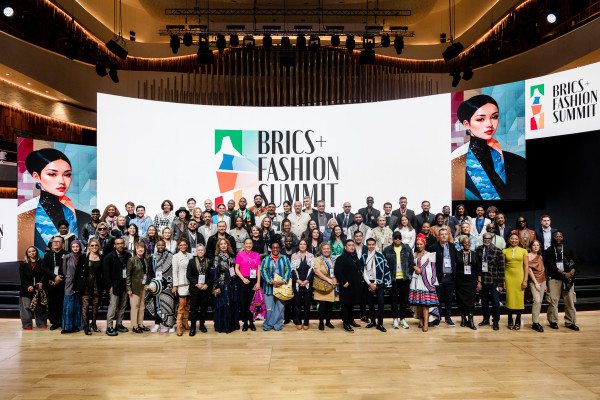
The BRICS+ Fashion Summit (www.FashionSummit.org) concluded in Moscow with a landmark announcement: leaders from fashion associations across more than 50 countries signed a memorandum to form the BRICS International Fashion Federation. The new federation seeks to establish new centers of influence, strengthen international connections, boost industry sustainability, and provide NewGen of fashion talents with opportunities for growth. Notably, the summit was attended by representatives from over 100 countries, solidifying its standing as the largest fashion event for both emerging and established markets.

Brian Ahumuza, CEO and Founder of Uganda Fashion Designers Association, said “The BRICS International Fashion Federation has the potential to significantly foster international collaboration by creating structured opportunities for designers, artisans, and manufacturers to work together on joint ventures, exhibitions, and collections. This can help open up new markets, enabling designers from Uganda, for example, to reach audiences in Russia, Brazil, or India”.

Sunil Sethi, Chairman of the Fashion Design Council of India, said, "The need for such a fashionable alliance of emerging countries is long overdue. Brands, designers, and markets all face similar challenges—from supply chain disruptions to environmental issues—that are easier to solve together. The fashion world is focused on a few hundred global brands, so emerging markets need their own platform to make our voices heard." 

The memorandum to establish the BRICS International Fashion Federation was signed by an array of influential figures, including CEOs of fashion weeks, heads of fashion and textile associations, and academic leaders from countries such as India, South Africa, Russia, Ethiopia, Egypt, Spain, the USA, Indonesia, Malaysia, Ghana, Tanzania, Jordan, Ecuador, Paraguay, and Kenya.

Natalya Sergunina, Deputy Mayor of Moscow, highlighted the initiative's significance: "The creation of this International Federation is a major outcome of the recent BRICS+ Fashion Summit in Moscow. It demonstrates once again the shared goals and substantial potential for growth that we have with our global colleagues."

The declaration stipulates several core objectives: supporting local talent, promoting sustainable fashion, fostering cultural exchange, and creating a unified platform for emerging markets through educational and informational projects. It also focuses on the development of new technologies, the preservation of cultural identities, and the support of traditional arts and crafts.

"We are committed to providing these visionaries with a global platform and local events to ensure their creative work is celebrated globally. Our aim is to promote sustainable and eco-friendly practices, striving to implement transparent methods that will significantly reduce the fashion industry's carbon footprint. Slow fashion, characterised by mindful consumption and production, will be at the heart of the BRICS IFF agenda as we strive to mitigate the environmental impact of fashion," says the official statement.

Distributed by APO Group on behalf of BRICS+ Fashion Summit.

Contact:
Ann Reinhold,
info@globaltalents.digital

Media files
BRICS+ Fashion Summit
Download logo
Read more50+ Nations Join Forces to Announce BRICS International Fashion Federation
26 September 2024

SA’s G20 Presidency to focus more on Global South and African issues, says Lamola

Location: News

SA's G20 Presidency to focus more on Global South and African issues, says Lamola

South Africa’s G20 Presidency will be centred more on the interests of the Global South agenda, especially Africa, says International Relations and Cooperation Minister, Ronald Lamola. 

Preparations are underway for South Africa’s G20 Presidency and hosting the G20 Summit in 2025. South Africa is expected to take over Chair of the G20 from December 1 this year, from Brazil. 

Lamola announced that South Africa’s theme will focus on solidarity, equality and sustainable development. 

“This theme speaks to the developmental priorities of the Global South, particularly, the African continent, which is now fully represented with the admission of the African Union (AU) in the G20,” he told delegates during the Troika high-level address at the United Nations (UN). 

The G20 (or the Group 20) comprises 19 States, plus the European Union and the AU as of this year – bringing together the world’s major and systemically important economies. 

The G20 operates a Troika system of hosting, where the Troika consists of the past, present, and next Presidencies. 

Brazil’s Presidency is also in a Global South Troika - India-Brazil-South Africa. 

Lamola stressed that South Africa will ensure that the G20 provides strategic direction towards establishing a “more equitable, representative and fit-for-purpose international order”.

According to the Minister, the theme will also confirm South Africa’s intention to build on the efforts and successes of the G20 Presidencies of Indonesia, India and Brazil. 

He believes this will ensure that the needs, interests and aspirations of the developing economies of the Global South, and Africa especially, drive the overall G20 agenda going forward.

According to the Minister, South Africa’s overarching theme will also zoom in on the country’s priorities. These include accelerating efforts to achieve Sustainable Development Goals (SDGs) and the objectives of Agenda 2063 of the AU and addressing the critical issue of debt vulnerability of many countries of the global South. 

The country will also focus on creating consensus around reform of the International Financial Architecture (IFA) and the Multilateral Development Banks (MDBs). 

“This is critical to ensure that they become fit for purpose to adequately address sustainable development and transboundary challenges,” Lamola explained. 

In addition, the emphasis will also be on combating climate change, which has devastating consequences for food security in developing countries.

South Africa also hopes to address issues of predatory mining by some countries and corporations, in the quest for Africa’s raw materials and critical minerals. 

“South Africa will take forward the outcomes of the report of the UN Secretary’s Panel on Critical Energy Transition Minerals,” Lamola said, adding that strengthening the Multilateral Trading System was also key.

The other key issues the nation will advance include industrialisation, employment and inequality, food security, the blue economy and artificial intelligence. 

Lamola took the time to commend Brazil President Luiz Inácio Lula da Silva’s call, as the G20 President, for the reinvigoration of multilateralism, and the reform of global governance institutions to make it more representative and inclusive.

“We further thank Brazil for its innovative leadership in calling for this G20 meeting and inviting all UN Members.

“This meeting today and its call to action further demonstrates the collective global solidarity in addressing current and future global challenges. South Africa will carry forward the momentum laid by Brazil on the reform of the multilateral institutions,” Lamola said. 

Meanwhile, he said that South Africa’s G20 Presidency will mark the end of the first cycle of G20 Presidencies. 

“We intend to undertake a review of the first cycle of G20 Presidencies. This is critical to ensure implementation. Brazil can count on us to maintain the momentum they’ve started I thank you for your attention,” he added. 

President Cyril Ramaphosa expressed his appreciation to Brazil as the current President of the G20 for convening this meeting.

The President also commended the excellent way Brazil has been steering the work of the G20 during its Presidency.  – SAnews.gov.za

Gabisile
Thu, 09/26/2024 - 10:50

504 views
Read moreSA’s G20 Presidency to focus more on Global South and African issues, says Lamola
19 September 2024

iGlass Media: Premier Line Producer Across Locations

Location: Entertainment, MyPR

Introduction In today’s fast-paced media landscape, finding a reliable line producer who understands local nuances while delivering top-notch production services is crucial. iGlass Media stands out as a premier line producer, adept at navigating the diverse cultural and logistical challenges across various stunning locations, including India, Indonesia, Dubai, China, Turkey, Tunisia, Morocco, Jordan, Cape Town, …

Read moreiGlass Media: Premier Line Producer Across Locations
4 September 2024

Deputy Minister Botes Concludes Successful Visit to Indonesia

Location: News

Republic of South Africa: Department of International Relations and Cooperation
Download logo

The Deputy Minister of International Relations and Cooperation, Mr Alvin Botes, has concluded his successful visit to Bali, Indonesia, where he participated in the High-Level Forum on Multi-Stakeholder Partnerships (HLF-MSP) and the Second Indonesia-Africa Forum (IAF) from 1-3 September 2024. The two events were convened under the theme, Bandung Spirit for Africa's Agenda 2063.

The objectives of the Second IAF were to:

  • facilitate the exchange of views and perspectives on the current state and future trends of global economy and development
  • share successes, lessons learned and best practices with broader communities to inspire and encourage others to engage in similar inclusive partnerships
  • provide an avenue to discuss ways to enhance international cooperation amid complex global challenges
  • identify strategic, feasible, and doable policies and strategies; and
  • encourage collaborative problem-solving and work together to address challenges and leverage each other's strengths and resources.

During the Second Indonesia-Africa Forum (IAF), Deputy Minister Botes presented South Africa's intervention at the Joint Leaders Session, where he said: “As we have completed the first decade of Implementation of the AU Agenda 2063, primarily focussed on convergence, we now enter its second decade which puts emphasise on acceleration of implementation. We wish to reassure the Government of Indonesia of South Africa's commitment to the full and effective implementation of the AfCFTA, as one of the key components towards economic integration on the Continent.”

Deputy Minister Botes also reflected on the current state of multilateral cooperation, saying: “The global governance architecture is at a crossroads, as it struggles to manage [a myriad of] challenges afflicting humankind while governing relations between states and those between states and non-state actors. In the midst of these challenges, we commit to our Pan-African mantra, as espoused by the AU Agenda 2063 and to deepen solidarity with the Global South, including with Indonesia”.

The Deputy Minister also met with his counterpart, the Vice Minister of Foreign Affairs of the Republic of Indonesia, Mr Pahala Nugraha Mansury, and discussed South Africa's enthusiasm to work closely with Indonesia to further expand and deepen political and economic relations.

The Deputy Minister concluded his visit by participating in a panel discussion themed, Connecting the South: Enhancing Logistics Connectivity to Support Trade in Developing Countries. Participants discussed measures to sustainably improve trade connectivity in the Global South and reflect on the effectiveness of international cooperation in addressing infrastructure development gaps.

Distributed by APO Group on behalf of Republic of South Africa: Department of International Relations and Cooperation.

Read moreDeputy Minister Botes Concludes Successful Visit to Indonesia
20 August 2024

Work, life and Artificial Intelligence (AI): 34% believe that AI can be a better boss than a human

Location: News
Kaspersky

AI is becoming a new member of society according to results from a new Kaspersky (www.Kaspersky.co.za) survey titled ‘Excitement, Superstition and great Insecurity – How global Consumers engage with the Digital World' (https://apo-opa.co/3WRj99J). The study also found that today artificial intelligence is taking on new roles in fields where it can succeed and be trusted by humans.

Based on statistics from Similarweb (https://apo-opa.co/46WpO7u), ChatGPT, one of the world's most popular chatbots, garnered 153 million visits in the first month after its launch in November 2022, and peaked at 2 billion visits in April 2024. In light of the rapid advancements in AI, Kaspersky has conducted an in-depth study to explore current levels of confidence in AI. The study examines its roles from management positions in the workplace to assisting with significant life decisions.

According to the study, respondents see AI as their team member at work, and a manager – 34% globally believe AI can be a fairer boss than a human being because of its impartiality. For respondents from the Middle East, Turkiye and Africa (META) region this statistic is 40%. In South Africa it is 42%.

Another area where AI can play an active role is education. 47% of respondents globally, 60% in the META region and 68% in South Africa foresee children being taught through virtual experience and Metaverses in the near future.

Half (50%) of all consumers globally, 53% in the META region and 64% in South Africa believe that AI has already become an unavoidable part of their lives, with 43%, 46% and 52% respectively having a positive outlook on its potential to bring about many exciting opportunities and improve the future for everyone. A large portion of respondents admit that AI has capabilities in creative areas – 62% globally, 59% in the META region and 53% in South Africa believe AI is a credible producer of works of art.

AI can also be considered a reliable companion and an assistant in everyday life. More than half of respondents (57%) globally, 67% in the META region and 60% in South Africa would like to use AI to run their daily lives more efficiently.

48% of those surveyed globally, 60% in the META region and 56% in South Africa are ready to use an AI chatbot to have conversation online - 31%, 38% and 33% respectively would use it to help them to find the right partner on a dating app. In fact, 48% globally, 58% in the META region and 63% in South Africa believe that human relationships will change because of the impact of AI if virtual characters start replacing real-life partners.

“We are witnessing the growing adoption of AI as a valuable tool, assisting people in diverse areas. Beyond traditional applications, such as processing and analysing data, AI is being entrusted with more intriguing personal roles, including romance, education, and work. As AI technologies continue to evolve, their potential to drive innovation and improve human experiences becomes even more profound. However, this advancement also brings unexpected risks and sophisticated threats, ranging from overreliance — putting too much trust in AI advice — to AI-generated phishing, deepfakes and identity theft. These are the challenges that we need to address across multiple levels,” comments Vladislav Tushkanov, Machine Learning Technology Research Group Manager at Kaspersky.

In order to protect users against AI-driven threats, Kaspersky suggests:

  • Install a trusted cybersecurity solution (https://apo-opa.co/3yU026X) that can offer protection against AI-enhanced phishing by detecting malicious pages and preventing interaction with them. Such a solution will assist in identifying and blocking fraudulent emails and websites aiming to steal personal information.
  • To counter the risks posed by deepfakes, it is wise to avoid trusting requests for data or money immediately, even if they seem to come from friends, family members or colleagues. Verifying the authenticity of the request through alternative communication methods is a prudent step.
  • Utilising an online Privacy checker (https://apo-opa.co/3AtvdGX) is essential for adjusting privacy settings to limit exposure to AI-enhanced identity theft. This approach minimises the amount of personal information accessible online, making it more challenging for threat actors to exploit personal data.

The full Kaspersky report ‘Excitement, Superstition and great Insecurity – How global Consumers engage with the Digital World' is available via this link (https://apo-opa.co/3WRj99J).

Distributed by APO Group on behalf of Kaspersky.

About the survey:
In June 2024, Kaspersky commissioned Arlington Research to conduct an online survey of 10,000 respondents to explore the respondents' attitude towards current digital superstitions, AI role in human's life and topic of digital immortality. The sample included 1,000 respondents from each of the UK, Germany and France, and 500 in Spain, Italy, Portugal, Brazil, Mexico, Russia, Kazakhstan, India, China, Indonesia, Turkiye, KSA, UAE, and South Africa.

About Kaspersky: 
Kaspersky is a global cybersecurity and digital privacy company founded in 1997. With over a billion devices protected to date from emerging cyberthreats and targeted attacks, Kaspersky's deep threat intelligence and security expertise is constantly transforming into innovative solutions and services to protect businesses, critical infrastructure, governments and consumers around the globe. The company's comprehensive security portfolio includes leading endpoint protection, specialized security products and services, as well as Cyber Immune solutions to fight sophisticated and evolving digital threats. We help over 200,000 corporate clients protect what matters most to them. Learn more at www.Kaspersky.co.za. 

Media files
Kaspersky
Download logo
Read moreWork, life and Artificial Intelligence (AI): 34% believe that AI can be a better boss than a human
10 June 2024

Civil Society Organizations Launch “Principles for a Fair JETP” Framework Ahead of the Group of Seven (G7) Leaders Summit

Location: News
350.org

On Monday, 10 June, a coalition of Civil Society Organizations (CSOs) from South Africa, Indonesia, Vietnam, and Senegal presented the “Principles for a Fair Just Energy Transition Partnership (JETP)” (https://apo-opa.co/45iTydE) during a virtual press conference launch ahead of the G7 Summit proceedings starting on June 13th. These guiding principles for global just transitions highlight the integral need for accountability, transparency, equity, and other principles in climate finance towards addressing the urgent climate crisis, from the perspective of the Global South communities and civil society in line to receive JETP finance.

The JETP deals announced in South Africa, Indonesia, Vietnam, and Senegal underscore the necessity for finance in combating the climate crisis. As discussions around COP29 in November begin to take shape, robust commitments to principled climate finance are deemed essential for the world's climate response. Despite finally meeting the USD$100 billion annual goal, developed countries are seemingly in favour of placing higher interest rates and restrictive conditions on their investments.This course of climate finance may ultimately hinder effective climate action in developing nations and increase their debt burden. Civil society voices urge G7 leaders and developed nations, as major polluters, to commit to creating a sustainable energy future through just climate finance deals.

Collectively developed by 350Africa.org, 350.org Indonesia, Trend Asia, Nu Climate Movement, Enviro Vito, Good Governance Africa, Lumière Synergie Développement (LSD) and Action Solidaire International (ASI), through sharing knowledge and experiences, these Global JETP Principles (https://apo-opa.co/45iTydE) call for climate justice and affirm the aspirations of CSOs in recipient countries for enduring climate solutions. They aim to serve as an advocacy and capacity-building tool, bringing together civil society and grassroots communities to advocate for fair and ambitious climate finance that is responsive to the realities of developing countries.

JETPs recognize the need for resources to transform energy systems and support developing countries. Expensive access to finance traps these nations in debt, limiting climate investments and necessitating a reevaluation of climate finance delivery. Collaboration among CSOs in the global south is vital to challenge the top-down approach. Principles developed by recipient countries, facilitated by civil society, are essential for accountability and asserting local aspirations in the energy transition.

Alia Kajee, Public Finance Campaigner at 350.org “Finance is not neutral; it can support transformative aspirations or perpetuate injustices under the guise of environmental progress. The current international financial system reveals significant power imbalances between developed and developing nations, which must be addressed to achieve just, people-centered climate action”.

Ndeye Fatou Sy, Program Manager at Lumière Synergie Développement (LSD) "Finance ministers must prioritize funding mechanisms aligned with justice objectives to avoid undue strain on national economies, while ensuring greater transparency and accountability within JETPs. These partnerships, guided by principles ensuring efficacy and impact, are critical for driving effective climate action."

Andreas Sieber, Associate Director of Policy and Campaigns at 350.org "A principled approach to finance is vital for navigating the global climate finance landscape, ensuring equitable and effective solutions. Initiatives like JETP highlight the need for just transitions, but aligning them with national climate finance direction and unlocking public finance, particularly in the Global South, is crucial. It is crucial that G7 member states demonstrate willingness to deliver finance at COP29."

Maureen Harris, Senior Advisor at International Rivers and coordinator of the Vietnam Climate Defenders Coalition
"In Vietnam, the government has committed to a just energy transition and signed up for a JETP, while at the same time imprisoning the country's leading climate defenders. Targeted attacks on climate leaders and environmental organizations severely limit genuine opportunities for consultation with civil society, which are essential to any just transition. To meet the urgency of the climate crisis, energy transition financing must center principles of transparency, participation and accountability, towards truly just and sustainable solutions.” 

Liangyi Chang, Asia Managing Director at 350.org “In the scorching grip of the 2024 climate heat wave, Asia bears witness to the harsh reality of climate change. As temperatures soar and ecosystems strain, the urgency of transitioning to renewable energy becomes ever more apparent. Every climate leader from civil society shall be part of the Just Energy Transition Partnership from all governments, only together we can make it possible and to solve the climate disruption."

Distributed by APO Group on behalf of 350.org.

Notes for Editors:
For more information about the JETP work, please visit the webpage (https://apo-opa.co/45iTydE). The Global Principles and panelists information are also available here (https://apo-opa.co/3x0CRat).

For interviews and additional information contact:
350Africa.org

Anna Amar
Email: anna.amar@350.org

Media files
350.org
Download logo
Read moreCivil Society Organizations Launch “Principles for a Fair JETP” Framework Ahead of the Group of Seven (G7) Leaders Summit
9 May 2024

Inner Drive: An epic journey, told through individual narratives

Location: News
inDrive

How does a startup, founded far from the advantages and resources of the world's tech hubs, go on to reach unicorn status? And more deeply, just how far can the drive for meaning and purpose ultimately take you? The inDrive documentary (www.inDrive.com) sets out to answer these questions.

In an exclusive premier in Johannesburg, South Africa, the inDrive documentary offered audiences a rare glimpse into the heart and soul of the company, with never-before-seen footage and candid stories from the individuals at inDrive's roots, including founder and CEO Arsen Tomsky.

Far from being a run-of-the-mill corporate film, this narrative delves deep into the butterfly effect of positive impact, illustrating how inDrive's initiatives have rippled through communities, creating waves of change that extend far beyond their initial touchpoints.

In the frozen Yakutsk winter, a group of people band together against the unfair price collusion of taxi companies that leaves people stranded in the cold. One of them starts a social media group where people can request and offer rides, negotiating prices on their own terms.

It's a simple enough idea, but it carries the potential to be revolutionary. From this frozen seed, a collective stance against injustice, inDrive takes root. Today, the company has grown to become the world's second largest ride-hailing app, operating in over 700 cities in 46 countries, fuelled by deep-seated ideals and ambitions that extend far beyond profit.

inDrive wants to reimagine capitalism, no less: to put people back in control, restore their freedom to choose, and so make their lives better.

Among the heartwarming tales shared, the film follows the journey of Obadiah, a young Nigerian boy once enveloped in the despair of his surroundings. inDrive's Beginit initiative is now paving the way for a brighter future for him and many others.

Reflecting on the film and its message, inDrive Founder and CEO Arsen Tomsky said: “We should focus on the path, on the journey. And if you do something important for you, that is very meaningful for you, and you develop an external environment during that journey, you are getting more and more with each step. And that is something which nobody can take from you. Even if you don't reach a peak, you will have something available to you.”

The production is directed by Lagos/Nairobi-based, Emmy Award winner Dan McCain, and Greek producer and editor Theo Papadoulakis, each renowned for their talents in portraying everyday individuals facing remarkable situations. Dan is a prolific filmmaker who specializes in locally relevant and impactful storytelling, while Papadoulakis, recognized with over 70 international accolades, particularly excels in showcasing the resilience of the human spirit.

"In making this film with inDrive, we hope to honor the resilience and determination of individuals whose dreams lead to something profound. It's a privilege to be part of a multi-country international production, collaborating with other talented directors, where we weave together inspiring narratives that add to the epic tale of human potential," said Dan McCain.

Person by person, the documentary tells inDrive's story. From the remarkable individuals in Nigeria, Indonesia, Mexico and beyond, who use the ride-hailing app to take control of their futures, to the communities who take their chance to move forward.

From Arsen Tomsky, the company's visionary CEO, who overcomes challenges both personal and social to take an idea to the world, to the employees who come on board to help inDrive evolve and grow, fuelled by shared values and a common goal. It's an epic journey, told by connecting people around the world. And it's far from over.

Watch the inDrive movie here: movie.inDrive.com

Distributed by APO Group on behalf of inDrive.

Press Contact:
Public Relations Manager - inDrive Africa
Lineo Thakhisi
Phone: +2781 3636 872
Email: lineo.thakhisi@indriver.com

About inDrive:
inDrive is a global mobility and urban services platform. The inDrive app has been downloaded over 200 million times, and was the second most downloaded mobility app in 2022 and 2023. In addition to ride-hailing, inDrive provides an expanding list of urban services, including intercity transportation, freight delivery, task assistance and  courier delivery. In 2023, inDrive launched New Ventures, a venture and M&A arm.

inDrive operates in 749 cities in 46 countries. Driven by its mission of challenging social injustice, the company is committed to having a positive impact on the lives of one billion people by 2030. It pursues this goal both through its core business, which supports local communities via a fair pricing model; and through the work of inVision, its non-profit arm. inVision's community empowerment programs help to advance education, sports, arts and sciences, gender equality and other vital initiatives.

For more information visit www.inDrive.com

Media files
inDrive
Download logo
Read moreInner Drive: An epic journey, told through individual narratives
30 April 2024

An Explainer: What Drives the Cost of Cooking Oil

Location: MyPR

Have you ever wondered what’s driving the cooking oil prices in South Africa Understanding these dynamics can provide valuable insights into not only the global economy, but also the cost of a pantry staple we can’t do without! Let’s take a closer look at some of the factors that affect cooking oil prices, with Morne …

Read moreAn Explainer: What Drives the Cost of Cooking Oil
7 March 2024

Questions over how national orchestra is spending public money

Location: News

Auditor-General red flags potential conflict of interest and oversight issues

Read moreQuestions over how national orchestra is spending public money
15 February 2024

FIFA Beach Soccer World Cup United Arab Emirates (UAE) 2024 Dubai™: Watch every games live on FIFA+

Location: Sport

FIFA
Download logo

FIFA+ (www.FIFA.com) will stream all UAE 2024 Dubai games; Tournament takes place from 15-25 February; Find out how you can follow the action live.

The FIFA Beach Soccer World Cup UAE 2024 Dubai™ kicks off on Thursday 15 February – and the tournament is being streamed live on FIFA+!

Takuya Akaguma, Catarino, Chiky, Edson Hulk, Marco Giordani, the Martins twins, Raoul Mendy, Moslem Mesigar, Walid Mohammad, Ozu Moreira, Lucas Ponzetti, Rodrigo and Heimanu Taiaru are among the stars who are looking to light up the tournament, with this year's edition again set to showcase the very best that the discipline has to offer.

Click here to access FIFA+ (https://apo-opa.co/496Sef7)

All matches will be available on FIFA+ web, the FIFA+ app and connected TV devices. Full details of the territories where FIFA+ live streams and full match replays are accessible can be found below. Two-minute highlights on all matches will also be available.

Territories with FIFA+ live streaming access

Africa

Angola, Benin, Botswana, Burkina Faso, Burundi, Cameroon, Cape Verde, Central African Republic, Chad, Comoros, Congo-Brazzaville, Congo-Kinshasa, Equatorial Guinea, Eritrea, Eswatini, Ethiopia, Gabon, Gambia, Ghana, Guinea-Bissau, Guinea-Conakry, Ivory Coast, Kenya, Lesotho, Liberia, Madagascar, Malawi, Mali, Mauritius, Mozambique, Namibia, Niger, Nigeria, Rwanda, Sao Tome and Principe, Senegal, Seychelles, Sierra Leone, Somalia, South Africa, South Sudan, Sudan, Tanzania, Togo, Uganda, Zambia, Zimbabwe.

Americas and the Caribbean

Anguilla, Antigua and Barbuda, Aruba, Bahamas, Barbados, Belize, Bermuda, Bonaire Sint Eustatius and Saba, British Virgin Islands, Cayman Islands, Cuba, Curaçao, Dominica, Dominican Republic, Grenada, Guyana, Haiti, Jamaica, Montserrat, Saint Kitts and Nevis, Saint Lucia, Saint Vincent and the Grenadines, Suriname, Trinidad and Tobago, Turks and Caicos Islands, United States Virgin Islands.

Asia

Afghanistan, Bangladesh, Bhutan, Brunei, Cambodia, India, Indonesia, Kazakhstan, Kyrgyzstan, Laos, Malaysia, Maldives, Myanmar, Nepal, Pakistan, Philippines, Singapore, Sri Lanka, Tajikistan, Turkmenistan, Uzbekistan, China PR, Hong Kong, Korea DPR, Korea Republic, Macau, Mongolia, Taiwan, Thailand, Timor-Leste, Vietnam.

Central and South America

Brazil

Europe

Albania, Armenia, Austria, Azerbaijan, Belarus, Belgium, Bosnia and Herzegovina, Bulgaria, Croatia, Cyprus, Czech Republic, Denmark, Estonia, Finland, France, Georgia, Germany, Greece, Hungary, Iceland, Ireland, Israel, Italy, Kosovo, Latvia, Lithuania, Luxembourg, Malta, Moldova, Montenegro, Netherlands, North Macedonia, Norway, Poland, Portugal, Romania, Russia, Serbia, Slovakia, Slovenia, Sweden, Switzerland, Turkey, Ukraine, United Kingdom.

Oceania

American Samoa, Australia, Cook Islands, Federated States of Micronesia, Fiji, French Polynesia, Guam, Kiribat, Marshall Islands, Nauru, New Caledonia, New Zealand, Niue, Northern Mariana Islands, Palau, Papua New Guinea, Samoa, Solomon Islands, Tokelau, Tonga, Tuvalu, Vanuatu, Wallis and Futuna.

Click here (https://apo-opa.co/3Sy1CRK) to visit the FIFA match centre and find out where you can watch the FIFA Beach Soccer World Cup UAE 2024 Dubai™ in your location.

* Territories' live streaming access is subject to change

A full match schedule can be downloaded here (https://apo-opa.co/3UMG3jr).

Tournament tickets are available via https://apo-opa.co/3wk8D1n to purchase.

Visa, Worldwide Partner of FIFA, is the preferred payment method for fans buying tickets for the FIFA Beach Soccer World Cup UAE 2024 Dubai™.

Distributed by APO Group on behalf of FIFA.

Contact for African media: 
AfricanMedia@fifa.org

Read moreFIFA Beach Soccer World Cup United Arab Emirates (UAE) 2024 Dubai™: Watch every games live on FIFA+
6 February 2024

Global Logistics Execs see coming Surge of African Investment

Location: News

Agility
Download logo

Nearly 62% of global logistics professionals say their companies are planning additional or first-time investments in Africa, according to a closely watched yearly industry survey.

The survey of 830 logistics executives is part of the 15th annual Agility Emerging Markets Logistics Index (https://apo-opa.co/4bD4lSW), a snapshot of industry sentiment and ranking of the world's 50 leading emerging markets.

The Index ranks countries for overall competitiveness based on their logistics strengths, business climates and digital readiness -- factors that make them attractive to logistics providers, freight forwarders, air and ocean carriers, distributors and investors. In the 2024 Index, the rankings of most African economies changed little from a year earlier, but businesses indicate they are looking ahead at massive population growth and trade expansion spurred by the African Continental Free Trade Area (AfCFTA).   

“This is the most optimism we've seen about Africa in the 15 years of the Index,” says Agility Vice Chairman Tarek Sultan. “Africa's population will double by 2050, when one in four people on the planet will be African. International businesses realize that the time is now for Africa -- they need to invest, establish their brands, and develop the next generation of African talent if they're going to ride the coming wave of growth.”

China and India were 1 and 2 in the 50-country Index rankings. In Africa, Egypt (20), Morocco (22), South Africa (24) and Kenya (25) were the top performers, followed by Ghana (31), Nigeria (36), Tunisia (37), Tanzania (41), Algeria (42), Uganda (43), Ethiopia (45), Mozambique (46), Angola (47), Libya (50).

Egypt has Africa's highest-ranked domestic logistics opportunities -- 13th in that category; South Africa (15) was tops in Africa for international logistics; Morocco (12) has Africa's best business fundamentals; Kenya (9) is Africa's most digitally ready – and the continent's highest-ranked country in any category.

More than 63% of survey respondents say their companies continue overhauling supply chains by spreading production to multiple locations or relocating it to home markets and nearby countries. China, the world's leading producer, stands to be most affected: 37.4% of industry professionals say they plan move production/sourcing out of China or reduce investment there.

Shipping and logistics costs that soared during the COVID pandemic and its aftermath are still climbing but at a slower rate, the survey found. One way shippers expect to cope is by increasing use of digital freight forwarding from 37.8% today to 52% in five years.

2024 Index Highlights

SURVEY

  • Supply chain restructuring – India, Europe and North America rank ahead of China as destinations executives expect to move production to in 2024 and onwards.
  • China – 40% expect their businesses to be less reliant on China in five years. Leading factors in decisions to de-risk in China: difficulty of doing business; U.S.-China trade friction; a slowing economy; the harshness of China's COVID restrictions.
  • Climate change – 66% say climate change is something they're planning for or already affecting their businesses.
  • Emerging markets – the largest percentage sees increased risk/decreased rewards in emerging markets.
  • India – many see India growing in importance as a producer and market, but cite inadequate infrastructure and corruption as the biggest obstacles there.

COUNTRY RANKINGS

  • In the Middle East and North Africa, overall rankings were: UAE (3); Saudi Arabia (6); Qatar (7); Turkey (11); Oman (15); Bahrain (16); Jordan (17); Egypt (20); Kuwait (21); Morocco (22); Tunisia (37); Lebanon (38); Iran (40); Algeria (42); Libya (50).
  • Rankings in Sub-Saharan Africa: South Africa (24); Kenya (25); Ghana (31); Nigeria (36); Tanzania (41); Uganda (43); Ethiopia (45); Mozambique (46); Angola (47).
  • Index rankings in Asia: China (1); India (2); Malaysia (4); Indonesia (5); Vietnam (8); Thailand (10); Philippines (18); Kazakhstan (23); Sri Lanka (26); Pakistan (29); Cambodia (32); Bangladesh (33); Myanmar (49).
  • Rankings for Latin America: Mexico (9); Chile (12); Brazil (14); Uruguay (19); Peru (28); Colombia (27); Argentina (30); Ecuador (35); Paraguay (39); Bolivia (44); Venezuela (48).
  • In Europe: Russia (13); Ukraine (34).

Transport Intelligence (https://apo-opa.co/4bp0Ijf) (Ti), a leading analysis and research firm for the logistics industry, has compiled the Index since it was launched in 2009.

John Manners-Bell, Chief Executive of Ti, said: “Supply chain managers are still coming to terms with the political and economic instability characterising the post-COVID global economy. Geopolitical relationships are changing rapidly, and this is having a major impact on international trade and risk profiles. Businesses need to be alive to the opportunities and threats that exist in emerging markets and use data, such as that the Agility Emerging Market Logistics Index, to inform agile decision-making.”

2024 Agility Emerging Markets Logistics Index: https://apo-opa.co/3SlOmzK

Distributed by APO Group on behalf of Agility.

For more information:
Sabrina Mundy
Man Bites Dog
teamagility@manbitesdog.com
+44 1273 716 820

For more information about Agility, visit:
Website: www.Agility.com
Twitter: https://apo-opa.co/40Ki6Kj
LinkedIn: https://apo-opa.co/49GTqqq
YouTube: https://apo-opa.co/3MNqYJr

About Agility:
Agility is a global leader in supply chain services, infrastructure, and innovation with 45,000+ employees across six continents. A multi-business operator and investor, Agility specializes in growing and scaling operating businesses. Agility's companies include the world's largest aviation services company (Menzies Aviation); a global fuel logistics business (Tristar); the market leader in logistics parks across the Middle East, South Asia, and Africa (Agility Logistics Parks); and a commercial real-estate company developing a mega-mall in the UAE (UPAC). Other Agility companies offer customs digitization services, remote-site infrastructure services, defense and government services, and ecommerce-enablement and digital logistics. Agility invests in supply chain innovation, sustainability, and resilience, and has minority holdings in a growing portfolio of listed and non-listed companies.

Read moreGlobal Logistics Execs see coming Surge of African Investment
7 December 2023

Do As We Say, Not as We Do: Wealthy Nations’ Expectations for Africa

Location: News
African Energy Chamber

By NJ Ayuk, Executive Chairman, African Energy Chamber (http://www.EnergyChamber.org)

When examining how fossil fuel exploration, production, and usage differ between African and more developed nations, the contrast is so stark that it essentially defines the core mission of the African Energy Chamber (AEC). We exist not to bring these rates on par with each other but to amplify Africa's standing in the global energy industry such that it results in massive improvements in the quality of life across the continent.

Consider this: While Africa holds roughly 13% of global natural gas stores and 7% of its oil, when it comes to per capita use of these hydrocarbons for energy, Africa's consumption rate is the world's lowest.

Or this: While we're under pressure to adopt renewable energy resources, Africa already relies on renewables more than any other continent, but this refers to the wood and cow dung that fuel the cooking fires, which account for essentially half of Africa's energy consumption. Of course, both are linked to hazardous indoor air quality, adding to the already long list of vexing issues that many Africans must deal with daily.

In total, nearly one billion Africans have no access to clean cooking fuels. Another 600 million, with a majority living in the sub-Saharan regions, survive without access to electricity from any source.

Africa deserves relief from such difficulties.

As much as the African people stand to benefit from access to their own fossil-fuel resources, Africa's hydrocarbon-bearing nations possess a vast wealth they're willing and ready to share with the world. The prospect of forging development partnerships with foreign nations and international oil companies would offer much of Africa a path toward modernization, advancement, and prosperity while at the same time providing much-needed energy security to its business allies abroad.

We've been waiting for Africa to take its place alongside the equally resource-rich yet developed regions of the globe for far too long. However, Africa's readiness for this overdue transformation comes at a strange time in modern history. Just as we've observed increases in GDP per capita and average life expectancy parallel the proliferation of fossil fuels, we've also seen the rise of a small but vocal and influential minority that has set out to obstruct their continued extraction.

Activists and ill-informed ideologues mainly comprise this opposing faction. And either knowingly or as a result of having been taken in by false promises, they propose alternative energy solutions which are still far too expensive for Africa to implement effectively.

Africa needs affordable, readily available energy, but this group has steadily garnered sway over individuals, financial institutions, and world governments, convincing them that, for the sake of the planet's health, Africa's untapped resources must indefinitely remain right where they are today.

Over the years, these activists brought many to their side, ratifying their intentions through measures like the Paris Agreement of 2015 and the Glasgow Climate Pact of 2021 that require signatories to commit to green energy initiatives at home and abroad.

This movement proved effective in achieving its own goals and was allowed to carry on with its agenda unimpeded for many years. However, recent global events have rather suddenly forced both participants and onlookers to reconsider the merits of its claims and the value of any allegiance to it.

Eastern Aggression, Western Hypocrisy

When then-U.S. President Donald Trump, speaking before the United Nations General Assembly in 2018, warned Germany against their dependence on Russian energy, the German delegation in attendance famously snickered at his concerns. After Russia's invasion of Ukraine in 2022, the European Union's sanctions against the Russian energy sector that followed, and the subsequent sabotage of the Nord Stream pipelines, Trump's remarks appear more prescient in retrospect than they did at the time.

The war in Ukraine and the supply chain disruptions and fuel price spikes it induced sent world leaders scrambling to secure new energy sources for their countries.

Spring 2022 saw a frenzy of energy industry activity as Italy's foreign minister brokered new liquid natural gas (LNG) deals with Angola and the Congo, Germany engaged in gas talks with Senegal, and the energy ministers of Algeria, Niger, and Nigeria pledged to accelerate their work on the long-delayed Trans-Saharan gas pipeline project.

Even President Joe Biden, who notably vowed to end the United States' involvement with fossil fuels during his campaign, reached out to Saudi Arabia, urging the nation to increase oil production.

Coal: Don't Call It a Comeback

The 2021-2023 global energy crisis also led many nations to continue or increase their reliance on coal — the fossil fuel even conventional oil and gas companies are quick to disparage due to its negative impacts on human health and its history of environmental harm.

With their own power generation capacities in peril thanks to war shortages, below-average winter temperatures, overcast skies, and a wind drought that still threatens to starve turbines across Europe, the countries often most critical of Africa's modernization ambitions rushed to refill their stores of the very fuel they had scheduled for phase-out years before.

According to the International Energy Agency's mid-year Coal Market Update, global coal consumption grew by 3.3% in 2022, reaching an all-time high of 8.3 billion tons. While 2023 and 2024 might show a slight decrease in coal-fired power generation, the 1.5% rise in industrial coal use expected with improving economic conditions during the same period will likely negate this drop.

Putting a pause on an initiative begun in 2015 to shutter all its coal-fired power stations, the United Kingdom relaxed permitting conditions in July 2022, keeping its remaining plants operational albeit on standby into 2024.     

Around this same time, the EU imported roughly 11 times more coal than usual from Australia, South Africa, and Indonesia.

In August of 2023, in a move highlighted by opponents of the green agenda, German energy firm RWE began dismantling its wind farm in North Rhine-Westphalia to allow for the expansion of its Garzweiler II lignite coal mine.

Had these nations engaged in more earnest development negotiations with African oil and gas producers when we suggested they should, perhaps they would have found a better footing for dealing with unforeseen climate-related events, natural or political.

Gas Gets the Greenlight

In a move that helped to lessen the stigma cast upon a fuel much cleaner burning than coal, the EU voted in 2022 to officially recognize natural gas as a “green” or “sustainable” energy source. Unsurprisingly, this decision angered environmental activists. At the AEC, though, we support this development; we regard natural gas as crucial to Africa's battle against energy poverty and key to its future success as a sizeable supplier for the international market.

While the EU was at one point one of the loudest voices calling for full-scale decarbonization, we applaud this concession as this more positive classification will likely encourage European investment in African natural gas projects. And, as the AEC has always suggested, it will support our eventual transition to an emissions-free, fully renewables-based energy economy.

Our critics breathlessly warn us that future price drops could render African natural gas suppliers unable to compete against larger, established producers. Naysayers suggest that renewable energy technology will get up to speed and become widely adopted before any new African natural gas outfits can get underway. While these cynics regard oil and gas as merely trends in danger of falling out of fashion by next season, we remain confident that we are on the best course for Africa's future.

And while the wealthy, developed nations of the world have much to say about appropriate energy solutions for Africa, even as they flout the rules they've set for their own, we know we are in pursuit of the most beneficial gains for our people.

Just as the fuels that supported humanity progressed from wood to coal to oil as economies and technological needs evolved, so too will Africa's — naturally, and never as a consequence of dictated policy.

Distributed by APO Group on behalf of African Energy Chamber.

Media files
African Energy Chamber
Download logo
Read moreDo As We Say, Not as We Do: Wealthy Nations’ Expectations for Africa
  • Previous
  • Page 1
  • Page 2
  • Page 3
  • Next

Copyright © 2026 · MyZA · All Rights Reserved · Powered by Reach Trust