• Skip to main content
  • Skip to header right navigation
  • Skip to after header navigation
  • Skip to site footer
MyZA

MyZA

News, Directory, Events and Other Stuff

  • Social Media
  • Sport
  • World News
  • Home
  • Submit News
  • Directory
  • Events
  • Stratlec
  • TFSA
  • News
    • APO
    • Today’s Sport News
    • Todays Social Media and Tech Headlines
    • Today’s World News
    • Today’s SA Financial News
  • Contact
You are here: Home / Archives for infrastructure

infrastructure

26 September 2024

Illegal business occupants given 14 days to comply with the law

Location: News

Illegal business occupants given 14 days to comply with the law

Businesses illegally occupying government premises in Mthatha have been given 14 days to apply for legal leases from the Eastern Cape Department of Public Works and Infrastructure, should they wish to continue with their businesses on the current premises.

This was revealed when Public Works and Infrastructure Deputy Minister Sihle Zikalala, together with the Department of Public Works and Infrastructure MEC Siphokazi Lusithi, issued eviction orders to a number of businesses in the Mthatha CBD as part of Operation Bring Back (OBB), which aims to reclaim hijacked and illegally occupied government properties.

READ | Reclaiming State property

“Our aim is not to shut down legally operating businesses, but we want these businesses that are paying rent to criminals, who have stolen government properties, to start paying the rent to the rightful owners of these properties,” the Deputy Minister said on Wednesday.

Zikalala and Lusithi visited mixed business premises housing offices, driving school, salons, tombstones and a hardware store, where they addressed business owners and workers who voiced their fears of losing their businesses.  

In the Eastern Cape, there are 82 properties that are currently going through legal channels, including 57 eviction orders. 

Of these, 21 have been evaluated and are recommended for execution, with a target of completing 36 evictions by the end of the 2024/2025 financial year.  

All eviction actions will strictly adhere to legal standards and respect tenant rights. The two DPWI leaders allayed the fears of the concerned businesses, promising that should they follow the correct legal routes, their businesses would not be out in the cold.

“As the province, we are undertaking the Operation Bring Back, which aims at bringing back government properties that are illegally occupied. The illegal occupation of government properties both commercial and residential undermines the state's capacity to generate revenue and maintain our properties, but even more tragically, it victimizes small business owners who are unaware they are being taken advantage of by these bogus landlords. 

“In response, we have entered into negotiations with these small businesses to regularize their leases, ensuring that they are protected, and that government assets are not exploited for personal gain,” the MEC said. - SAnews.gov.za
 

nosihle
Thu, 09/26/2024 - 09:34

1203 views
Read moreIllegal business occupants given 14 days to comply with the law
26 September 2024

Recycled PVC Products Shine at the 2024:Best Recycled Plastic Product of the Year Awards

Location: MyPR

Recycled PVC products stole the spotlight at the 2024 Best Recycled Plastic Product of the Year Awards, announced last week at a glittering gala dinner held in Cape Town. The event, organised by the South African Plastics Recycling Organisation (SAPRO), saw three innovative products made from recycled PVC dominate the Building and Construction category, impressing …

Read moreRecycled PVC Products Shine at the 2024:Best Recycled Plastic Product of the Year Awards
26 September 2024

Child Malnutrition in the Eastern Cape Has More Than Doubled

Location: News

Community project in Duncan Village helps feed hungry children

Read moreChild Malnutrition in the Eastern Cape Has More Than Doubled
26 September 2024

Waste to wealth: solutions for a sustainable future

Location: News

Waste to wealth: solutions for a sustainable future

By Deputy Minister Bernice Swarts

For decades, the rapid urbanisation and industrial growth experienced by many nations, had come at a high environmental cost. Landfills overflowed, plastic waste contaminated rivers and oceans, and emissions from improper waste disposal intensified the climate crisis.

The International Solid Waste Association (ISWA) Congress 2024, themed "Waste to Wealth: Solutions for a Sustainable Future," signalled a turning point, with the idea that waste could be transformed into wealth resonating deeply. 

The congress brought together global experts, policymakers, and business leaders to share cutting-edge practices in waste management and the circular economy. But more importantly, it showcased South Africa's commitment to turning its waste challenges into economic opportunities.

The government’s introduction of the Extended Producer Responsibility (EPR) Regulations and the accent of the Climate Change Bill into an Act marked a significant shift in how the nation approached waste. The EPR Regulations require manufacturers to take responsibility for the lifecycle of their products, from production to post-consumer waste. This policy forces businesses to rethink how they design, produce, and manage products, pushing them toward more sustainable practices.

The Climate Change Act further aligns the nation’s policies with its environmental goals. It ensures that South Africa’s response to climate change, particularly in transitioning to a low-carbon, climate-resilient economy is supported by robust legislation. This act not only aims to reduce greenhouse gas emissions but also promotes the creation of green jobs and investments in the emerging circular economy.

However, one of the most remarkable aspects of South Africa’s waste management evolution is the active role the private sector plays. While government policies set the framework, it is private companies that help drive real change. Faced with regulatory requirements, businesses are beginning to take ownership of their waste, investing in recycling technologies, sustainable product designs, and waste-to-energy initiatives.

The idea that waste could be a resource, rather than a burden, has begun to reshape industries. For instance, South Africa’s plastic manufacturing sector was forced to adapt to new requirements mandating the inclusion of recycled content in products. This sparked a wave of innovation, as companies began developing new methods to incorporate recyclates into their production processes. Similarly, the construction industry began embracing the reuse of demolition waste, reducing its dependence on raw materials and lowering its environmental footprint.

While these changes are promising, the waste crisis is still far from being resolved. This is due to municipalities across South Africa being overwhelmed and lacking the necessary infrastructure to handle the growing volume of waste. Many cities and towns have inadequate waste collection services, let alone the advanced recycling and waste-to-energy facilities needed to close the loop in a circular economy. Additionally, the waste management sector is in dire need of investment, and the ISWA Congress offered a unique platform for South Africa to engage with international experts and potential investors.

What made the congress particularly significant was its global scope. Waste management has long since ceased being a local problem; it is a global one, particularly in the fight against plastic pollution.
South Africa found itself in the unique position of contributing to international discussions on the issue, especially through its involvement in the development of a legally binding instrument on plastic pollution. The country is increasing its recycling capacity for plastic waste, and it supports global efforts to eliminate plastic pollution by regulating product design and prioritizing recyclates.

As South Africa prepares for its G20 presidency in 2025, the outcomes of the ISWA Congress took on even greater importance. The country has an opportunity to set the agenda on sustainability for some of the world’s most powerful economies. The government-to-government (G2G) session held during the congress provided a critical forum for sharing best practices with other nations, many of which were facing similar challenges. These exchanges were crucial, as they not only helped shape South Africa’s preparations for the G20 but also fostered greater international cooperation in addressing global waste and sustainability issues.

One of the most pressing priorities for the South African government remained job creation. The waste management sector, particularly through the circular economy, offers a promising avenue for addressing the nation’s high unemployment rate. Small, Medium, and Micro Enterprises (SMMEs) are already benefitting from government and private sector support to enter the waste management space.

Bernice Swarts is the Deputy Minister of Forestry, Fisheries and the Environment
 

Neo
Thu, 09/26/2024 - 10:09

331 views
Read moreWaste to wealth: solutions for a sustainable future
25 September 2024

Strand Residents Worried About ‘Out of Hand’ Illegal Dumping

Location: News

City says it currently manages about 2.1-million tonnes of waste annually across the metro

Read moreStrand Residents Worried About ‘Out of Hand’ Illegal Dumping
25 September 2024

TNPA invites service providers for Liquefied Natural Gas at Ngqura

Location: News

TNPA invites service providers for Liquefied Natural Gas at Ngqura

The Transnet National Ports Authority (TNPA), in collaboration with Infrastructure South Africa (ISA) and the Industrial Development Corporation (IDC), has approached the market for an Environmental Impact Assessment (EIA).

This is to encourage interested parties to submit proposals for the envisaged Liquefied Natural Gas (LNG) terminal at the Port of Ngqura.

READ | Port investments to contribute towards SA economy

The Request For Proposals (RFP) process will see the appointment of a service provider contracted to assess the environmental compliance and sustainability of the proposed LNG terminal. 

This involves conducting a detailed analysis of ecological and local regulations to determine critical environmental authorisations. These include a seismic survey, marine ecology, climate change impact assessment and socio-economic assessment to support the project.

The EIA process is carried out in tandem with negotiations of the Terminal Operator Agreement (TOA) between TNPA and the Strategic Fuel Fund (SFF) to build and operate an onshore LNG regasification facility at the Port of Ngqura for 30 years. 

The appointment of SFF is the outcome of a Section 79 process and directive issued by the former Minister of Transport, in accordance with the National Ports Act of 2005.

“This milestone is a critical step towards the development of the LNG terminal at the Port of Ngqura. Through its commercial seaports, TNPA is at the forefront of enabling the gas-to-power project pipeline whilst ensuring the security of supply and unlocking global opportunities for sustainable impact,” said Acting TNPA Chief Executive, Phyllis Difeto.

The Port of Ngqura LNG Terminal is one of 12 priority infrastructure projects announced in March 2024 that hold a Strategic Integrated Project (SIP) status. 

The triad strategic partnership is fast-tracking the conclusion of the EAI, with the RFP closing on 30 October 2024. This partnership will also see the issuing of the RFP for Prefeasibility Studies by end September 2024.

“ISA is established to provide strategic, technical and financial advisory support to project sponsors for the planning, preparation, development and implementation of national pipeline projects and strategic integrated projects,” said Mameetse Masemola, the Acting Head of Infrastructure South Africa. 

“This project is one of the flagship projects which we are proud to support and excited that progress is moving at a good pace,” he said.

Tender documents can be accessed on: https://www.idc.co.za/tenders/ and https://www.etenders.gov.za/ - SAnews.gov.za

Edwin
Wed, 09/25/2024 - 11:28

373 views
Read moreTNPA invites service providers for Liquefied Natural Gas at Ngqura
25 September 2024

DPWI Minister briefed on department’s performance

Location: News

DPWI Minister briefed on department's performance

Public Works and Infrastructure Minister Dean Macpherson today met with the Auditor-General of South Africa (AGSA) for a briefing on the department's performance for the 2022/2023 year, which saw systemic failures in meeting its targets on delivery and financial management.

The Minister and the AGSA have committed to working together to assist the department to improve its performance and auditing processes. 

This forms part of the measures the Minister has committed to implementing to improve audit outcomes within the department following the results reported last week by the AG. 

This will ensure that public money is spent on the intended outcomes and corruption is met with consequence management.

“... It is important that drastic action is taken to quickly improve oversight, accounting and reporting within the department. 

“The findings that irregular expenditure jumped from R98 million in 2020/21 to R521 million in 2022/23 is deeply concerning because it is public money that is being wasted.

“Working together with the AGSA will help increase the oversight within our branches to expose any malpractices, as well as help officials to improve their reporting to ensure that we can begin the journey to meeting our targets and audit outcomes within the shortest timeframe possible," the Minister said.

Macpherson said today’s meeting forms part of other actions he has taken to avoid the wastage of public money within the Department of Public Works and Infrastructure, including removing the ability for officials to spend up to R20 million without accounting officer approval, and requesting a skills audit at the Senior Management Service (SMS) level to ensure the department has the necessary skills.

“The actions we are taking are part of our goal to lay a strong foundation at the Department of Public Works and Infrastructure to ensure we deliver on our mandate to use public assets for public good and to turn South Africa into a construction site.

“It will not be an overnight journey to resolve these problems, but it is something I am committed and determined to do at all costs,” Macpherson said. – SAnews.gov.za

Edwin
Wed, 09/25/2024 - 14:12

15 views
Read moreDPWI Minister briefed on department’s performance
25 September 2024

SA Department of Communications and Digital Technologies Partners With Africa Tech Festival 2024, Hosts Exclusive Ministerial Summit

Location: News

Africa Tech Festival
Download logo

Informa Tech, organisers of the 27th annual Africa Tech Festival (www.AfricaTechFestival.com)  2024, are pleased to announce that the South African Department of Communications and Digital Technologies (DCDT) will be an official partner of this year's event, taking place from 12 to 14 November in Cape Town. 

Incorporating AfricaCom, AfricaTech, AfricaIgnite, and The AI Summit Cape Town, Africa Tech Festival 2024 will welcome 15,000 visitors, over 400 speakers, and more than 300 exhibitors. Topics include enterprise tech innovation and disruption across key sectors such as artificial intelligence, cybersecurity, cloud and data centres, and green ICT.  

“Africa Tech Festival is the largest and most influential telecoms and technology event in Africa, with an audience that spans the entire ICT ecosystem, including trade and other ministries. The partnership with the DCDT is a clear indication of the South African government's commitment to engaging with these key stakeholders from across the continent, opening dialogue, sharing insights, and working together to advance Africa's digital transformation journey,” said Informa's James Williams, Event Director of Africa Tech Festival.   

One of the highlights of the partnership is the AfricaCom 2024 Ministerial Summit, a closed-door VIP event bringing together close to a dozen African and international ministers from across critical sectors such as ICT, innovation, trade, finance, education, and enterprise. The Ministerial Summit will provide government leaders with a platform that facilitates discussion, collaboration, and sharing of learnings on how progressive policy is nurturing tech ecosystems, building efficient workforces, unlocking technological innovation across public and enterprise sectors, and driving Africa's socioeconomic development.  

Another initiative that forms part of the partnership is an exclusive government pavilion at which a small group of top South African businesses, SMEs, and startups will be hosted, again reflecting top-tier support for businesses that are contributing to the country's technology-driven agenda.  

“The importance of collaborative efforts and partnerships in realising our goal of a connected and digitally transformed society cannot be overemphasised. The Africa Tech Festival presents such platform for different innovative minds to come together to explore and exchange tech solutions for Africa and the rest of the world. This global platform will not only afford us an opportunity to learn best practices but also afford our SMEs to market their innovative solutions to the more than 15 000 visitors from across the globe. We are committed to ensuring that Africa does not become a mere consumer of digital solutions developed elsewhere but a meaningful participant in the digital economy by being a supplier of solutions and infrastructure that are tried and tested in our shores. We are looking forward to welcoming the world to our shores.” said Ms Nonkqubela Jordan-Dyani, Director-General of the Department of Communications and Digital Technologies. 

The introduction of the Ministerial Summit, along with the official endorsement of the event by the DCDT, add significantly to the depth of Africa Tech Festival. In addition to showcasing the immensely innovative nature of the industry, the event is also a targeted networking platform for tech leaders, role-players, and investors to make a positive contribution to Africa's successful navigation of a tech-driven future. 

Confirmed Africa Tech Festival 2024 speakers include: 

  • Faith Burn, Chief Information Officer, Eskom Holdings SOC  
  • Funke Opeke, CEO, MainOne  
  • Kerissa Varma, CISO, Vodacom Group  
  • Leo Skarlatos, CEO, AT (formerly Airtel Tigo)  
  • Mary Mahuma, CIO, Southern Africa, Philip Morris  
  • Motunrayo Opayinka, Founder and CEO, Womenovate  
  • Nollie Maoto, Chief Data and Analytics Officer – Merchant Services, FNB South Africa  
  • Norbert Prihoda, Deputy CEO, Tunisie Telecom 
  • Prasanna Kumar Burri, Group Chief Information Officer, Dangote Group  
  • Samwel Magesa, Chief Data Officer, NBC Bank  
  • Simbah Mutasa, Managing Director, Bank of America  
  • Sithembile Songo, CISO, Eskom Holdings SOC  
  • Hon. Solly Malatsi, Minister, Ministry of Communications and Digital Technologies, The Republic of South Africa 
  • Hon. Rose Pola Pricemou, Minister, Ministry of Posts, Telecommunications and Digital Economy, Republic of Guinea 
  • Sitoyo Lopokoiyit, CEO, M-Pesa 
  • Brelotte Ba, Deputy CEO of Orange Middle East and Africa, Orange 
  • Hazem Metwally, CEO, e& Egypt (etisalat) 
  • Christian Bombrun, Group CEO: Digital Platforms, MTN Group 
  • Faith Burn, Chief Information Officer, Eskom Holdings SOC 
  • Funke Opeke, CEO, MainOne  
  • Thomas Dohmke, CEO, GitHub 
  • Alex Okosi, Managing Director, Africa, Google 
  • Hardy Pemhiwa, President & Group CEO, Cassava Technologies 
  • Morgane Imbert, CEO (South Africa), Jumia 

Register now to secure your spot and join us in shaping the future of technology in Africa: https://AfricaTechFestival.com/ 

Distributed by APO Group on behalf of Africa Tech Festival.

About Africa Tech Festival:  
Africa Tech Festival, including anchor events AfricaCom, AfricaTech, AfricaIgnite, and The AI Summit Cape Town is part of the Informa Tech Connecting Africa event series.  

A vibrant celebration of Africa's diverse community of tech champions, Africa Tech Festival is the largest tech and digital connectivity conference and exhibition in Africa, attracting hundreds of exhibitors, more than 400 speakers and more than 15,000 delegates.  

Read moreSA Department of Communications and Digital Technologies Partners With Africa Tech Festival 2024, Hosts Exclusive Ministerial Summit
25 September 2024

Reclaiming State property

Location: News

Reclaiming State property

Public Works and Infrastructure Deputy Minister Sihle Zikalala will today undertake Operation Bring Back (OBB), which aims to oversee the implementation of eviction orders in State-owned properties around Mthatha in the Eastern Cape.

Zikalala will be accompanied by the Eastern Cape Public Works and Infrastructure MEC, Siphokazi Lusithi. 

The action is part of the Eastern Cape and nation-wide Government plan to reclaim unlawfully occupied state properties. 

Operation Bring Back is an initiative of the national Department of Public Works (DPW), which aims to recover land and other properties, including farms that were illegally occupied or stolen from the State prior to and immediately after the 1994 democratic transition.

In terms of the Constitution of the Republic of South Africa, No 108 of 1996, all State owned national and provincial immovable assets must be vested in the name of the national government or in the name of the nine provinces. The national government is therefore the custodian of all national government immovable assets.

In April 2011, the National Department of Public Works started the OBB programme, which was largely dependent on the public coming forward to report cases of misappropriation through a call centre that was launched during a public communication campaign at the time. This OBB programme ceased to function in October 2011 and no cases were investigated.

Following the evictions under today's programme, an oversight visit will be carried out at the construction site of the Mqanduli Office Precinct in Mqanduli.

In the Eastern Cape, there are 82 properties that are currently going through legal channels, including 57 eviction orders. 

Of these, 21 have been evaluated and are recommended for execution, with a target of completing 36 evictions by the end of the 2024/2025 financial year. 

All eviction actions will strictly adhere to legal standards and respect tenant rights. 

The Mqanduli Office Precinct is designed to enhance local government services and stimulate economic growth in the area. 

This modern facility aims to improve accessibility for residents and provide a collaborative space for various government departments. – SAnews.gov.za

Edwin
Wed, 09/25/2024 - 10:13

206 views
Read moreReclaiming State property
24 September 2024

Critical minerals sector key to driving global economic growth

Location: News

Critical minerals sector key to driving global economic growth

President Cyril Ramaphosa has emphasised the importance of the critical minerals sector in driving global economic growth and sustainability. 

By leveraging key sectors such as mining, energy, and manufacturing, the President said South Africa is set to improve its business environment and attract much-needed investment.

He was addressing the African Minerals Forum hosted by the Business Council for International Understanding (BCIU) and Prosper Africa on the sidelines of the United Nations General Assembly (UNGA 79), in New York, USA, on Monday. 

He highlighted that four months ago, South Africa held national general elections, which ushered in a Government of National Unity, where 10 political parties have come together to coalesce around a common agenda for economic growth and sustainable development.

President Ramaphosa underlined South Africa's commitment to reducing greenhouse gas emissions and mitigating climate change through the country's Just Energy Transition Plan. This plan aims to guide the shift from coal to renewable energy, while also ensuring equitable economic opportunities for affected communities. 

“South Africa's and Africa’s critical minerals sector has a crucial role to play in this regard, and we recognise the importance of collaboration with other countries to develop the potential of our critical minerals sector. 

“The US in particular has established expertise in advanced mining technologies, automation and sustainability practices. 

“We want to strengthen our ties with US companies and institutions to foster technological advancements, enhance supply chain efficiencies and attract investment into our mining sector,” the President said. 

The President also emphasised that South Africa strongly endorses the United Nations Secretary-General’s position paper on Critical Energy Transition Minerals, where he highlights the importance of beneficiation, benefit sharing, local value addition and economic diversification.

“It would not be an understatement to say that the minerals that lie beneath the soil of Africa are powering the green energy revolution. Thirty percent of the world’s proven critical mineral reserves are found in Sub-Saharan Africa.

“South Africa has substantial reserves of platinum group metals, manganese, vanadium as well as chromium. 

“These resources are fundamental to the development of cutting-edge technologies that drive progress in various sectors. What will be critical is to ensure that this progress does not leave Africa behind,” he said.

The President stressed the need to avoid perpetuating colonial-era exploitation, where African countries primarily export raw minerals. He said that by focusing on beneficiation and domestic processing, African nations could see significant economic growth. 

President Ramaphosa highlighted that beneficiation and local processing of critical minerals could increase the continent’s GDP by 12% or more by 2050. 

He cited estimates suggesting that African countries could generate USD 24 billion annually in GDP and create 2.3 million jobs by investing in mining beneficiation and domestic processing.

President Ramaphosa highlighted the strides made by SASOL, South Africa’s flagship petrochemical company, in leading green hydrogen technologies research and development. 

“As the global automotive industry moves towards Electric Vehicles and New Energy Vehicles, we are leveraging our rich experience with automotive production to get some of the world’s leading automotive manufactures with a footprint in South Africa to produce more their green vehicles in our country,” he said. 

Despite improvements in the beneficiation of South Africa’s mineral exports, President Ramaphosa admitted that more needs to be done. 

He underscored the country’s commitment to creating a supportive policy framework for the critical minerals sector, focused on streamlining regulations, fostering innovation in mining technologies, building workforce skills, improving transport and logistics infrastructure, and incentivising investment.

South Africa's five-point policy approach aims to create a supportive environment for the critical minerals sector. This includes simplifying regulations, supporting research and development in mining technologies, investing in workforce skills, improving logistics infrastructure, and incentivising domestic and international investment. 

“South Africa also has a beneficiation strategy that seeks to translate the benefits of our country’s mineral endowments into a national competitive advantage. 

“As the UN Secretary-General’s paper has noted, Critical Energy Transition Minerals can transform economies, create green jobs and foster sustainable local, regional and global development,” he said. 

President Ramaphosa further stressed that for the potential of critical minerals to be fully realised, both mineral-producing nations and their end-user countries must embrace inclusivity. 

He emphasised the importance of creating decent work opportunities, eradicating exploitative practices such as child and forced labour, and ensuring human rights protections. 

Local beneficiation and industrialisation were highlighted as priorities, alongside environmental safeguards to ensure sustainable extraction practices. 

The President urged for a long-term focus on inter-generational equity, recognising that critical minerals are vital for solving global challenges like climate change, energy, and food insecurity. 

He called on US companies to collaborate in fostering sustainable development.

“By leveraging our respective strengths, pursuing strategic collaborations, and implementing supportive policies, we stand ready to meet the demands of the global market and drive sustainable development. 

“I call on US companies and investors to join us on our journey,” he said. – SAnews.gov.za

DikelediM
Tue, 09/24/2024 - 10:07

396 views
Read moreCritical minerals sector key to driving global economic growth
24 September 2024

President Ramaphosa urges US business to invest in SA’s growing economy

Location: News

President Ramaphosa urges US business to invest in SA’s growing economy

President Cyril Ramaphosa has called on US businesses to deepen their investment ties with South Africa, highlighting the country's renewed focus on economic recovery and structural reform. 

Speaking at the SA-US Interactive Business Forum in New York on Monday, the President emphasised the progress made under South Africa's Government of National Unity (GNU) and the vast opportunities available to foreign investors.

He said this is a “timely intervention”, referencing his first visit to the US since South Africa's general elections in May, which led to a coalition government of political parties committed to inclusive growth and job creation.

“The advent of the Government of National Unity has renewed investor optimism in the South African economy. The message I bring to US investors today is that this optimism is well-placed. 

“South Africa is firmly on the road to recovery, and we invite you to be part of this journey. Investments in South Africa are secure. Our business environment is stable. This is supported policy certainty and regulatory safeguards,” the President said. 

He added that South Africa intends to stay the course on the structural economic reform process, on scaling up investment in key infrastructure, and on improving the business operating environment.

The President noted South Africa’s success in attracting investment, revealing that the country had achieved its target of raising R1.2 trillion (approximately USD 63.6 billion) ahead of schedule in 2022. 

 “We have announced a new target of approximately R2 trillion or approximately USD 100 billion over the next five-year period up to 2028. 

“The far-reaching structural reforms we have implemented over the past six years have opened up the country to increased levels of investment that continues to grow,” the President said. 

Ramaphosa particularly underscored the potential in the clean energy sector, which has attracted significant investment, supporting South Africa’s commitment to decarbonisation and energy security. 

"We are equally committed to a Just Energy Transition that is inclusive, that take our developmental needs into account, and that leaves no community behind. 

“We have a supportive and enabling industrial policy that incorporates amongst others expanding the special economic zones, driving export-led growth, and harnessing the potential of the Africa Continental Free Trade Area or AfCFTA. In January 2024 we began preferential trading under the AfCFTA,” he said. 

The President emphasised that the Government of National Unity is furthermore committed to prudent monetary and fiscal policy and to strengthening regulatory and legislative frameworks to combat corruption.

The President also highlighted the importance of strategic partnerships with US businesses, especially in sectors like advanced manufacturing, energy, healthcare, and infrastructure. 

“South Africa and Africa is ripe for investment in financial services, advanced manufacturing, energy, healthcare, infrastructure development, mining, science and technology and other sectors. South Africa is also developing the value chains of the future.

“With substantial reserves of critical energy transition minerals, we are positioning ourselves to be at the forefront of the green energy revolution,” he said. 

He added that as the country with the world’s largest platinum group metal reserves, South Africa has a competitive advantage when it comes to the production of sustainable energy technologies, including electric vehicles, new energy vehicles and renewable energy components.

President Ramaphosa praised the collaboration between the New York Stock Exchange (NYSE) and Johannesburg Stock Exchange (JSE), following the 2022 Memorandum of Understanding. He stated that the partnership between the two stock exchanges “promotes cross-border investment and drives economic growth on a global scale.”

The President further highlighted the US as one of South Africa’s most valued trade partners, noting that bilateral trade totalled USD 17.6 billion in 2022. 

He also praised the impact of the African Growth and Opportunity Act (AGOA) in fostering trade and creating jobs in sectors like automotive, agriculture, and precious metals.

With Africa's population expected to reach 2.5 billion by 2050, President Ramaphosa painted a bright picture of the continent's economic prospects, noting that the African Continental Free Trade Area (AfCFTA) would "drive a wave of industrialisation and create dynamic regional value chains."

“This too presents opportunities for US businesses and investors, and opens up new markets for their goods, products and services. 

“Mutually beneficial trade and investment not only unlocks the dynamism and potential of an entire continent. It will also aid Africa’s efforts to achieve the Sustainable Development Goals,” the President said. 

In closing, President Ramaphosa reassured investors of the stability and security of investments in South Africa. 

“South Africa is open for business. Sustainable and inclusive growth spurs development and creates jobs.

“Together, we can forge a path to shared success and progress, leveraging our combined strengths to achieve enduring prosperity for our people,” the President said. – SAnews.gov.za


DikelediM
Tue, 09/24/2024 - 11:01

179 views
Read morePresident Ramaphosa urges US business to invest in SA’s growing economy
23 September 2024

President calls on all stakeholders to help preserve SA’s heritage

Location: News

President calls on all stakeholders to help preserve SA's heritage

President Cyril Ramaphosa has called on business and other stakeholders to work with government to protect and conserve historical, cultural and natural heritage sites, particularly in marginalised communities.

President Ramaphosa made the call in his weekly newsletter to the nation on Monday, ahead of the Heritage Day celebrations.

South Africa will on Tuesday observe Heritage Day, where citizens will celebrate the rich cultural tapestry that makes up the nation. 

President Ramaphosa noted that while heritage preservation is a responsibility of government, the private sector, corporate sponsors, philanthropists, heritage organisations and other stakeholders also have an important role to play in ensuring these legacies are safeguarded for future generations. 

“Private sector support for heritage preservation is uneven. While some high-profile heritage sites like Robben Island, the Mandela House in Soweto, Constitution Hill, and others receive donor funding, other less prominent institutions, events, and initiatives struggle to obtain support. 

“As a result, many important sites of memory have fallen into disrepair. This is a wasted opportunity, because a number of these sites could stimulate local economies and provide work opportunities to the communities in which they are situated,” President Ramaphosa said.

The President said protecting and conserving historical, cultural, and natural heritage sites was also vitally important for nation-building and national reconciliation. 

“On this Heritage Day, I call on business and other stakeholders to work with government in the cause of heritage preservation, particularly in marginalised communities. There is already laudable work being done in this regard. 

“By working together as government, business, and society, we can use our national heritage to uplift communities, create opportunities and make us all proud to be South African,” the President said.

Highlighting the significance of Heritage Day, President Ramaphosa noted that having emerged from a painful apartheid past where indigenous customs, traditions and languages were denigrated and marginalised, Heritage Day is one of the most important events on the national calendar. 

“It is a valuable opportunity for cross-cultural exchange and for building bridges of tolerance and understanding between races and different ethnic groups. I have always found it heartwarming to see how South Africans from all walks of life celebrate Heritage Day in their communities, schools, workplaces, places of worship and institutions of higher learning. 

“It has become a regular facet of Heritage Day to see South Africans share their traditions, cuisine, dress, music, and other forms of cultural expression with their compatriots. Beyond the benefits for cultural self-expression, pride and nation-building, heritage preservation is an important driver of economic growth, job creation and sustainable development,” President Ramaphosa said. 

South Africa is perfectly placed to use its rich cultural and natural heritage to promote economic growth. 

“As one of the world’s most mega biodiverse countries, South Africa’s natural heritage attracts tourists from around the world, supporting local job creation and investment in natural resource infrastructure. By way of example, in December 2023 alone, there were more than 400 000 visitors to sites like the Table Mountain National Park and Robben Island,” the President highlighted. 

Coupled with this, he said, South Africa has an abundance of historical sites across the country that span the pre-colonial, colonial, apartheid, and democratic eras. 

“These sites are not just important for tourism. They are also sites of memory and monuments to the past that serve to educate the younger generation of South Africans,” President Ramaphosa said. 

To preserve the country’s rich heritage, the President underscored a need to do more to attract young South Africans to careers and opportunities in the sector. 

He said through the Presidential Employment Stimulus, the National Heritage Council and National Arts Council has provided unemployed young people with work opportunities in film and digital media production, cultural project management, storytelling, language preservation and as museum guides.

Government will commemorate Heritage Day at Meqheleng Stadium in Ficksburg, in the Free State, under the theme: “Celebrating the lives of our heroes and heroines who laid down their lives for our freedom”.

This year’s theme puts a spotlight on South Africa’s liberation movements who received various forms of solidarity and support from neighbouring countries during the liberation struggle. – SAnews.gov.za

GabiK
Mon, 09/23/2024 - 15:00

216 views
Read morePresident calls on all stakeholders to help preserve SA’s heritage
23 September 2024

African leaders meet on Mpox

Location: News

African leaders meet on Mpox

President Cyril Ramaphosa says as the continent tackles Mpox, Africa needs to learn from the COVID-19 pandemic.

“We need to ensure equitable distribution of medical countermeasures based on transparent criteria and readiness to initiate vaccination. We ask Africa Centres for Disease Control and Prevention (Africa CDC) to lead the consultation with member states to ensure equitable distribution of vaccines and other medical countermeasures,” said the President.

He was delivering South Africa’s statement at the African Union Heads of State virtual meeting on Mpox on Sunday.

“We need a finance plan that is evidence-based, with sound forecasting of needs. The Africa CDC mandate on data sharing is the bedrock of global health security. This will help to ensure that public health threats are detected and shared across borders and with other continental and global stakeholders,” said the President.

He said countries would only be able to effectively mobilise and direct funds if supported by reliable data.

“We call on all African countries to make use of this instrumental system that has been created by our own institution. We call for the urgent operationalisation of the Africa Epidemic Fund as the primary vehicle for epidemic response financial management.”

He said as with COVID-19, Africa is still struggling to get the Mpox vaccine and treatment.

The President said the continent needs to manufacture Mpox vaccines in Africa to reduce costs and improve access.

“We must co-develop these medical countermeasures, share intellectual property and ensure technology transfer. In this regard, we welcome the agreement between Africa CDC and Bavarian Nordic to transfer the Mpox vaccine technology to African manufacturers,” he said.

With the financial support from the Coalition for Epidemic Preparedness, the African Vaccine Manufacturing Accelerator, Afreximbank, the European Union and other partners, President Ramaphosa said the continent should be able to start vaccine manufacturing by 2025.

“In the meantime, we appreciate the support from a number of countries to get vaccines in Africa.

“The COVID-19 experience taught us that we need predictable demand and off-take guarantees for the vaccines, medicines and diagnostics manufactured in Africa. African countries should therefore buy vaccines and other health products manufactured in Africa to ensure sustainable manufacturing on our continent.”

He said this could be achieved through the African Pooled Procurement Mechanism.

Surveillance systems must be enhanced and healthcare delivery and infrastructure strengthened.

“We must ensure that frontline health workers have the necessary diagnostic tools, vaccines and antiviral treatments. We need tested public health messages that promote awareness and prevention.

“Beyond the targeted vaccination responses to outbreaks, we should explore the feasibility of continuing vaccinations in high-risk populations. This dual approach will help create a buffer against future outbreaks and protect our most vulnerable communities,” he said.

The World Health Organisation (WHO) has declared Mpox  as a Public Health Emergency of International Concern.

The President commended the fact that Africa CDC had partnered with the WHO, UNICEF and other partners to develop the Mpox continental preparedness and response plan and to build, for the first time in Africa, one Continental Incident Management Team.

The total number of positive cases recorded in South Africa since the outbreak in May this year stands at 25 cases, including three deaths. Twelve of these were reported in Gauteng, 11 reported in KwaZulu-Natal and two in the Western Cape.

Africa CDC has signed a partnership agreement with the European Commission’s Health Emergency Preparedness and Response Authority (HERA) and Bavarian Nordic to provide over 215 000 doses of the MVA-BN vaccine.

Africa CDC will oversee the equitable distribution of these vaccines, prioritising local needs across the affected member states. – SAnews.gov.za


Janine
Mon, 09/23/2024 - 11:17

760 views
Read moreAfrican leaders meet on Mpox
23 September 2024

Chikunga hopeful of Women’s Forum recognition 

Location: News

Chikunga hopeful of Women’s Forum recognition 

Minister in the Presidency for Women, Youth and Persons with Disabilities, Sindisiwe Chikunga, says she is confident that the BRICS Women’s Forum will be recognised at this year’s Kazan Summit Declaration, scheduled to take place next month.

Chikunga made the remark as Russia prepares to host the BRICS Summit to be held in Kazan, from 22 to 24 October, after the country assumes the BRICS chairmanship in 2024.

This as the Minister led the discussions at the BRICS Women Affairs meeting held in Saint Petersburg, Russia.

READ | Chikunga arrives in Russia for BRICS Women Affairs Meeting

The meeting saw BRICS Member States discussing cooperation prospects in the fields of women’s leadership and enhancing the role of women in finance, agriculture, innovation, healthcare, creative industries, tourism, environmental safety, and the inclusive economy.

Speaking at the BRICS Women's Forum, which included the BRICS Ministerial Women’s Affairs Meeting on Friday, Chikunga congratulated the Russian Federation on assuming the Chairship of BRICS 2024, and the sterling work that it has undertaken to date.

“As you are aware, this forum of Ministers was first initiated in 2023 during South Africa's Chairship of BRICS. It is indeed encouraging to witness its growth under the stewardship of the Russian Federation's 2024 Chairship, and it will undoubtedly flourish under the future Chairship of fellow BRICS member states.

“We applaud Russia's choice of the theme 'Women, Governance, and Leadership' as a timely intervention that ensures this forum continues to amplify the voices, interests, and full representation of women across BRICS member states, promoting their meaningful participation at all levels of governance and decision-making.”

Chikunga also reflected on some of the key points that emerged during hybrid BRICS Ministers for Women Affairs held in December 2023, where the forum was recognised as a fundamental platform to elevate equality, women’s rights, economic autonomy, and empowerment; and to address major concerns related to women across the BRICS countries.

The forum also promotes mainstreaming of women’s issues across BRICS’ processes, priority areas, declarations and agreements; and provides a platform for the exchange of knowledge and best practices in advancing the current and future wellbeing of women and girls across BRICS.

“Our meeting recognised the tremendous progress that successive BRICS summits have produced in the areas of global governance, development, peace and security, energy, climate change, and social issues. We noted, however, that discussions in these areas would be further enriched by a ministerial meeting dedicated to women affairs.

“There was consensus on the potential of this forum to accelerate the implementation of existing commitments, principles, goals, and actions outlined in various international instruments on women. These include the Beijing Platform for Action (1995), the Convention on the Elimination of All Forms of Discrimination Against Women (CEDAW - 1979), UN Resolution 1325 (2000) on Women, Peace, and Security, as well as the UN [United Nations] Agenda 2030 and its 17 Sustainable Development Goals (SDGs),” Chikunga explained.

The meeting further agreed to support the acceleration of the implementation of the African Union Agenda 2063, with a particular focus on Aspiration 6, which promotes women's empowerment.

Asserting women’s interests

The Ministers also highlighted the need to assert women’s interests across the broader BRICS agenda, strengthen multilateralism, and synergise with the work of the BRICS Business Women’s Alliance to accelerate the mainstreaming of socio-economic priorities for greater inclusivity and equity.

“We acknowledge that this goal will be further enriched when we leverage our collective strength as the Global South, alongside robust people-to-people exchanges and cooperation within BRICS nations and across the African continent.

“A key highlight of the Johannesburg II Declaration was the recognition of the vital role of women and youth in trade and their potential to act as catalysts for industrialisation, infrastructure development, food security, agricultural modernization, sustainable growth, healthcare, and addressing climate change,” she said.

The Johannesburg II Declaration is a document that encapsulates significant BRICS viewpoints on matters of global economic, financial and political significance.

READ | BRICS adopts Johannesburg II Declaration

– SAnews.gov.za

GabiK
Mon, 09/23/2024 - 13:42

58 views
Read moreChikunga hopeful of Women’s Forum recognition 
23 September 2024

Key Public Works and Infrastructure posts advertised to stabilise department

Location: News

Key Public Works and Infrastructure posts advertised to stabilise department

Minister of Public Works and Infrastructure, Dean Macpherson, has taken action to stabilise the administration and governance of the department  by advertising key vacancies in the department for permanent appointment. 

Over the weekend, vacancies were advertised for a number of positions, including the Head of Infrastructure, Supply Management Executive for the Property Management Trading Entity (PMTE), Chief Director for Human Resource Management, Deputy Director of Facilities Management, Deputy Director-General of the Expanded Public Works Programme (EPWP), Deputy Director-General of Policy Research and Regulation, and Chief Director for accounting and reporting. 

“The filling of these key positions with permanent appointments is part of the actions we have been taking to bring stability and good governance to the department since my appointment more than two months ago. 

“These positions play a critical role in the department's functioning,” Macpherson said in a statement on Monday. 

He encouraged all South Africans, who have the necessary skills and expertise, to apply for the positions and “join us in the work we are doing to reform the department in order for us to build a better South Africa for all our people”. 

“With the advertising of these positions, we are laying the foundation of a professional public service within the Department of Public Works and Infrastructure which has a diversity of skills and expertise to move us forward,” said the Minister.

Individuals who meet the requisite requirements have until 18 October 2024 to apply.

A copy of the advert and position requirements can be found at https://bit.ly/3ZzyoHn. 

“The advertising of these positions forms part of the greater work we are doing to build a strong Department of Public Works and Infrastructure to deliver our vision of turning South Africa into a construction site. By working together we can ignite economic growth, create jobs and build a more prosperous South Africa,” said Macpherson. – SAnews.gov.za

Janine
Mon, 09/23/2024 - 11:53

41 views
Read moreKey Public Works and Infrastructure posts advertised to stabilise department
23 September 2024

Shaping Inclusive Fisheries and Transforming Gender Roles in South Africa’s Coastal Communities

Location: News
The African Union – Interafrican Bureau for Animal Resources (AU-IBAR)

Coastal communities in South Africa were represented in a lively two-day community workshop that sought to promote gender inclusivity in environmental management and the conservation of aquatic biodiversity. The workshop, which was co-hosted by AU-IBAR, Mabuyi Development Planners, and Blue Wild Coast NPO, aimed to provide a thorough Gender Plan of Action for NGOs engaged in small-scale fisheries.

Fifty people showed up at the event in East London, South Africa. Among them were ladies from the seaside towns of Hamburg and Port St. John's, as well as officials from the government, non-governmental organisations, the business sector, and foreign organisations. The workshop sought to incorporate gender-sensitive practices into environmental management, with a heavy emphasis on gender mainstreaming. This was especially important in small-scale fisheries, where women are crucial but under-represented.

Workshop Objectives and Background
After successfully recruiting a Technical Consultant to assist South African environmental NGOs, the Aquatic Biodiversity Conservation Project continued its earlier efforts with the workshop. Site visits, a gender assessment report, an MoU, and a Gender Plan of Action were all part of the consultant's remit to guarantee that women and disadvantaged communities would be a part of environmental sustainability initiatives.

Prior consultations verified the inception report, which laid the groundwork for this workshop. Recognising the importance of local women as guardians of aquatic biodiversity, we set out to understand the difficulties they encounter in small-scale fisheries and find strategies to support them. Workshop participants also had the opportunity to confirm the consultant's report's findings and work together to develop ways to increase gender inclusion in the sector.

Opening Session: Setting the Stage for Change
A panel of speakers stressed gender equality in small-scale fisheries and aquatic biodiversity management at the inaugural session.

At the outset of the session, Ms. Elethu Duna, Executive Director of Blue Wild Coast NPO, acknowledged the importance of women in small-scale fishing in South Africa and highlighted their lack of representation in decision-making bodies. She emphasized that addressing gender inequities offers potential for permanent change and expressed gratitude to AU-IBAR and partners for the session. Duna strongly encouraged participation in developing a substantial Gender Plan of Action.

Mr. Zamkhaya Maseti from the Premier's Office, Government of South Africa, recognized the need for additional action in rural communities while emphasizing the government's dedication to empowering women through policies. He highlighted the importance of women in fisheries, noting that they are sometimes overlooked, and described the session as a crucial step in addressing this disparity. "The time for talk is over," Maseti declared as his final rallying cry. Now is the moment to take action.

Ms. Thabisa Sigwela, representing the Buffalo City Maritime Cluster, emphasized the need for women's economic empowerment and advocated for organized investments in financial inclusion and capacity building. She pledged to support businesses run by women and stressed the importance of providing women in underserved coastal communities with easy access to economic opportunities.

Ms. Mashebane Thosago, from the African Women Fish Processors and Traders Network (AWFISHNET), highlighted the obstacles women in the fishing industry face, including a lack of education and financing. She spoke about how AWFISHNET is working to connect women across Africa and how this training can empower those involved in small-scale fishing to make a difference.

Ms. Fransciscar Mhuriro, representing AU-IBAR, reiterated the organization's commitment to gender equality, calling for women to be recognized as leaders in the fisheries industry. She stressed that AU-IBAR is responsible for promoting gender-responsive policies and enabling knowledge-sharing to ensure the Gender Plan of Action is a living tool for change.

Finally, Ms. Nozuko Ntsokota from the Department of Forestry, Fisheries, and Environment (DFFE) discussed the need for practical application of existing gender policy. She highlighted the importance of collaboration to equip women with the knowledge and resources needed to thrive in small-scale fisheries and pledged continued support for initiatives that emerge from the session.

The workshop focused on gender issues in small-scale fisheries through technical sessions. The first session introduced the importance of integrating gender principles into fisheries management. Key presentations included the roles of men and women in small-scale fisheries, the marginalization of women, and the role of women in vulnerable coastal communities. The second session, moderated by Stephanie Achieng, discussed legislative frameworks, financial exclusion, tenure rights, and infrastructure challenges in small-scale fisheries. A draft gender plan of action was introduced, based on input from local fisherwomen.

Challenges and Opportunities for Women in Cooperatives
Ms. Thosago Mashebane of AWFISHNET and SANWFA highlighted the persistent challenges faced by women in fisheries cooperatives. Issues included unfriendly working environments, inadequate infrastructure, and limited financial inclusion. Despite the existence of cooperatives for over a decade, women continue to struggle with access to resources, funding, and tenure rights. Ms. Mashebane emphasized the need for improved legislative frameworks, increased capacity-building initiatives, and the creation of financial tools tailored to the needs of women in coastal communities.

Proposed Solutions and Commitments
Participants discussed potential solutions, such as the establishment of organized forums for women in cooperatives, improved sustainability of interventions, and stronger policy frameworks. The workshop also proposed the development of business models for women cooperatives, alongside measures to increase their representation in decision-making institutions at local and national levels. Notably, SANWFA committed to connecting women cooperatives from the Eastern Cape with buyers in the Western Cape, fostering new economic opportunities.

Key Workshop Outcomes
Key conclusions from the event will guide future efforts and the Gender Plan of Action. As a means of identifying and addressing critical obstacles, participants evaluated current frameworks and policies that affect women in coastal areas. They looked at different ways to help women participate more in small-scale fishing, with an emphasis on financial inclusion, capacity building, and access to resources. Involvement from women in coastal communities, local NGOs, and government stakeholders led to the development of a thorough Gender Plan of Action. This plan outlines methods for capacity building, advocacy, and monitoring. The significance of public-private partnerships was also highlighted, with organisations such as the South African Maritime Association and the Department of Rural Development and Agrarian Reform (DRDAR) being identified as vital for long-term success.

Next Steps and Recommendations
The subsequent actions were outlined as follows: 

After the Gender Plan of Action is finalised, workshop participants will receive a draft of the Memorandum of Understanding (MoU) and have the opportunity to review and provide input on it before the deadline. When completed, it will be a part of larger plans to manage fisheries on a national and regional level. The importance of ongoing support from AU-IBAR and Blue Wild Coast NPO was highlighted, as was the need for continuous capacity building for women cooperatives in Port St. Johns and Hamburg. For the purpose of tracking and adjusting progress, gender-sensitive monitoring and evaluation indicators will be created and integrated into the M&E framework of the participating NGOs. Sustainable business models in small-scale fishing will also be a priority, therefore we'll be working to connect women's cooperatives with buyers and funding options.

Conclusion
For South African small-scale fisheries, the community workshop was a watershed moment in the fight for gender parity. At this event, women from coastal communities, along with representatives from government and NGOs, worked together to develop strategies that will empower women and involve them in managing aquatic biodiversity. Participation and representation of women in coastal communities in environmental management discussions will be enhanced by the workshop's outputs, which will play a pivotal role in informing future policies and interventions.

Distributed by APO Group on behalf of The African Union – Interafrican Bureau for Animal Resources (AU-IBAR).

Media files
The African Union – Interafrican Bureau for Animal Resources (AU-IBAR)
Download logo
Read moreShaping Inclusive Fisheries and Transforming Gender Roles in South Africa’s Coastal Communities
22 September 2024

Government prioritises providing shelter for stranded motorists in anticipation of more snow

Location: News

Government prioritises providing shelter for stranded motorists in anticipation of more snow

In light of the South African Weather Service (SAWS) forecast of severe snow and wet conditions across the country,  Cooperative Governance and Traditional Affairs (CoGTA) Minister Velenkosini Hlabisa has directed the National Disaster Management Centre (NDMC) to coordinate readiness and response efforts with the relevant stakeholders.

The severe weather has resulted in extreme cold nationwide, especially in KwaZulu-Natal and the Free State, prompting a robust multisectoral response. 

According to CoGTA, the focus will be on humanitarian relief, with shelter being provided for those stranded, coordinated by the Department of Social Development. 

The South African National Defence Force (SANDF) will lead rescue operations, while the Department of Transport will focus on road clearance.

“Our current priority is saving lives by providing necessities and ensuring the safety of those trapped. 

“We understand families may have travel plans, but we strongly advise against travelling during these conditions. We urge everyone to cooperate with us, as cooperation can help save lives,” Hlabisa said. 

The KwaZulu-Natal Department of Transport said although thousands of motorists and truck drivers have been freed on the N3 highway, others are still trapped.

Hlabisa’s Office said all affected provinces have activated their disaster response structures. 

This was confirmed during a national coordination meeting with Provincial Disaster Management Centres (PDMCs), which provided updated reports to pinpoint areas that need urgent intervention.

According to the department, disaster teams are working tirelessly to ensure the safety of those caught in these conditions. 

The SAWS has since issued a Level 8 warning for additional disruptive snow in several areas, including Alfred Duma (Ladysmith), Dr N. Dlamini-Zuma (Underberg), Greater Kokstad, and others. 

“This warning signifies potentially life-threatening weather that could impact people, animals, and infrastructure," the department said.

In addition, windy conditions, rain and heavy snowfall have disrupted essential services such as water and electricity.

“Government teams are actively working to restore these services to safeguard lives. KwaZulu-Natal and the Free State continue to experience heavy rains, raising concerns about localised flooding that could affect pedestrians and drivers,” the department said.

Hlabisa urged the public to exercise caution as disaster teams are continuing to provide emergency assistance. 

While these teams are dedicated to supporting and rescuing those in need, the department said vigilance is paramount. 

“The public is advised to stay alert and heed warnings from the SAWS, disaster management teams and law enforcement agencies," the Minister said.

In addition, various communication channels will be utilised to keep everyone informed and safe. 

For emergencies, contact your local municipal disaster management center, the nearest police station, or national emergency numbers 112, 10177, or 107. – SAnews.gov.za

Gabisile
Sun, 09/22/2024 - 08:46

752 views
Read moreGovernment prioritises providing shelter for stranded motorists in anticipation of more snow
22 September 2024

Majodina hands over James Kleynhans Water Treatment Plant to Makhanda community

Location: News

Majodina hands over James Kleynhans Water Treatment Plant to Makhanda community

The Minister of Water and Sanitation, Pemmy Majodina, has handed over the James Kleynhans Water Treatment Plant to Makana Local Municipality to address the ongoing water shortages in the area. 

The R393 million water treatment plant, with a capacity upgrade, was handed over on Friday, 20 September 2024.

The water treatment now has an increased capacity of pumping 20 megalitres from 10 megalitres per day. 

The project was funded by the Department of Water and Sanitation through the Regional Bulk Infrastructure Grant (RBIG), with Amatola Water Board as the implementing agent. 

Speaking during the handover, the Minister emphasised the importance of effective operation and maintenance of infrastructure to improve the delivery of water to the affected communities.

“I cannot overemphasise enough how important it is for the local municipality to ensure that the water treatment plant is well maintained. The maintenance of infrastructure is not just a nice thing to do, but an obligation by law that it should be done,” Majodina said. 

The plant is set to benefit 97 815 people and created employment opportunities for 90 locals during construction.

Meanwhile, in Gqeberha, the Minister undertook oversight inspections of bulk water leaks meters, which have been installed in different parts of the Nelson Mandela Bay Metro as an intervention from the Ministry of Water and Sanitation to help the metro to address non-revenue water challenges. 

Part of the ministry’s intervention was a directive to the metro to implement a robust leak detection and fixing programme aimed at addressing the amount of water that was unaccounted for.  

Nelson Mandela Bay Metro supplies about 310 megalitres per day of water to 1.3 million residents within its boundaries, and smaller municipalities outside its boundaries. 

In the past several financial years, the department said 40% to 50% of the water supply was deemed non-revenue water.

“Therefore, the programme is aimed at reducing water losses to 20%. The installation of Generation Meter Adapters (GMAs) and District Meter Area (DMA) meters can indicate areas where the highest water losses occur, and where to implement interventions. 

“South Africa is a water-scarce country. It is, therefore, unacceptable that water is being lost through leaks, which then affects the security of water. Through the leak detection and fixing programme, it is evident that the war on leaks can be won,” Majodina explained.  

So far, 12 429 water leaks have been successfully repaired on the water reticulation network and 34 494 on domestic repairs. 

She reiterated the department’s commitment to effectively implement bulk water projects in several parts of the Eastern Cape to ensure water security for current and future generations. 

The Minister was supported by Makana Local Municipality Mayor Yandiswa Vara in Makhanda and Deputy Mayor Babalwa Lobishe in the Nelson Mandela Bay Metropolitan Municipality in Gqeberha, as well as several officials of the department and Amatola Water. – SAnews.gov.za

Gabisile
Sun, 09/22/2024 - 12:30

613 views
Read moreMajodina hands over James Kleynhans Water Treatment Plant to Makhanda community
22 September 2024

Public Works, Cape Town commit to using public buildings for public good

Location: News

Public Works, Cape Town commit to using public buildings for public good

Public Works and Infrastructure Minister Dean Macpherson and City of Cape Town Mayor Geordin Hill-Lewis have committed to work together to use public-owned buildings across the city for the public good. 

The Minister and Mayor committed to forming a technical committee to work together between the department and the city during an oversight visit to derelict State-owned buildings in Cape Town and the Hout Bay Harbour on Friday. 

The two leaders have since agreed to track the progress achieved with these properties every month. 

“As Minister of Public Works and Infrastructure, I have always committed to using assets for the public to ensure that they contribute to the economic growth of their respective regions and help to create jobs.

“In many cities, our buildings have become a burden for the cities they are in, often attracting criminal elements and affecting property values. This has to change,” Macpherson said.

At a time of fiscal constraints, the Minister believes it is important that government find innovative solutions to dilapidated State-owned buildings to ensure that they become an asset to communities. 

“The State is simply unable to maintain and secure all of its buildings in the current fiscal environment, and therefore, partnerships will be essential.” 

With regards to the Hout Bay Harbour, Macpherson stressed that as the custodian of small harbours across the country, the department should consider partnering with competent local and provincial authorities and entities. 

This, he said, would help to manage, maintain and upgrade these assets to ensure that they contribute to economic growth in the municipality and province they are located.

Meanwhile, Hill-Lewis said the new joint technical committee would help fast-track resolutions to problem buildings owned by the State.

“There are several rundown State-owned buildings in Cape Town that are a source of crime, and a blight on neighbourhoods. We are encouraged that the collaboration with the... Minister will... yield positive results for Capetonians, and the neighbourhoods and businesses surrounding these buildings.

“Some of these buildings and land parcels could be released for affordable housing, while others should simply be demolished or sold so that they can be put to more productive use,” said Hill-Lewis.

The Mayor said he would like to like to see Hout Bay Harbour reach its full economic and tourism potential. 

“We are excited about the prospects of a partnership with national government to improve the infrastructure, safety, and local economic activity around this harbour,” Hill-Lewis added. – SAnews.gov.za
 

Gabisile
Sun, 09/22/2024 - 15:36

431 views
Read morePublic Works, Cape Town commit to using public buildings for public good
22 September 2024

Homes and title deeds for Garden Route communities

Location: News

Homes and title deeds for Garden Route communities

The Western Cape MEC for Infrastructure, Tertuis Simmers, has visited the Garden Route to hand over title deeds and houses in George and Mossel Bay.

The Minister and the community of Toekoms in Great Brak River, Mossel Bay, were in high spirits as 10 beneficiaries finally received their title deeds on Friday. 

The MEC was joined by Executive Mayor Dirk Kotzé, who thanked Simmers, saying: “Together with the community of Toekoms, we are thankful to once again be working with the Western Cape Government (WCG) to make a difference in Mossel Bay.

“We know that not only do these title deeds empower the beneficiaries here today, but they also empower their loved ones and secure a better future for their children.”

At the Metro Grounds Housing Development in George, 18 houses and title deeds were handed over.

The Metro Grounds Housing Development will deliver 436 housing opportunities upon completion.

Simmers took the opportunity to announce that his department is planning to build another 196 units at this development.

“We share the excitement of this community, and we are thankful for what our municipality, in partnership with the WCG, has been able to provide to these deserving beneficiaries,” said Executive Mayor of George Municipality, Jackie von Brandis.  

Meanwhile, Simmers acknowledged that occasions like these are not possible without partnerships. 

“It is encouraging to witness how the Western Cape Government, municipalities like Mossel Bay and George, and all relevant stakeholders, can work together to improve the lives of the people of the Western Cape.” 

On both occasions, local law practitioners were present, who assisted beneficiaries with drawing up wills at no charge.

The provincial department believes that it was befitting that the houses and title deeds were handed over last week, particularly during Heritage Month and Free Wills Week. 

The WCG is of the view that the handover of title deeds means more than just becoming the owner of a house but also empowers the title holder to ensure a better future for their loved ones.

“My department’s primary focus is to uplift our communities, especially poorer communities, and to build infrastructure that provides residents with the opportunity for a better, prosperous future,” said Simmers. – SAnews.gov.za
 

Gabisile
Sun, 09/22/2024 - 13:24

106 views
Read moreHomes and title deeds for Garden Route communities
21 September 2024

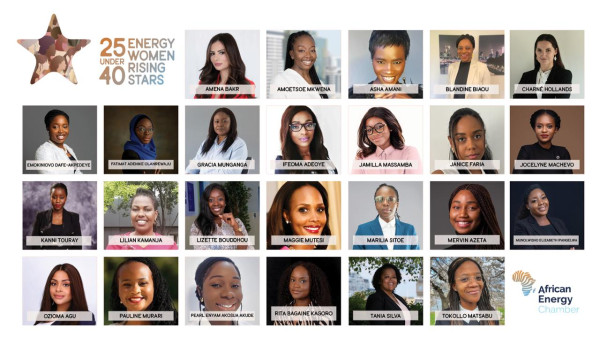
Celebrating This Year’s 25 Under 40 Energy Women Rising Stars

Location: News
African Energy Chamber

As Africa's energy sector continues to grow, a new generation of women is breaking barriers and redefining leadership in this critical industry. The African Energy Chamber (AEC) (www.EnergyChamber.org) proudly announces the 2024 edition of the 25 Under 40 Energy Women Rising Stars – a group of outstanding individuals whose innovation, perseverance and passion are transforming the landscape of African energy. These trailblazers are not only reshaping a traditionally male-dominated field but are also playing a vital role in the journey to end energy poverty by 2030. The AEC proudly honors these women as they lead the charge toward a more sustainable and equitable energy future.

In alphabetical order:

Amena Bakr, Senior Research Analyst, Energy Intelligence

Amena Bakr is a Senior Research Analyst at Energy Intelligence. Specializing in the energy transition, corporate strategy and market analysis, Bakr leads insights on oil markets, OPEC policies and political trends in the Middle East and Gulf Arab region. Her previous roles include Chief OPEC Correspondent and Dubai Deputy Bureau Chief, where she earned accolades such as the OPEC Award for Best Journalist and the IAEE Excellence in Written Journalism Award. Bakr holds a BA in Business Administration from the Arab Academy for Science, Technology & Maritime Transport, Egypt.

Amoetsoe Mkwena, Senior Associate, Watson Farley & Williams (Middle East)

Amoetsoe Mkwena is a Senior Associate at Watson Farley & Williams, specializing in energy and infrastructure with a focus on Africa. She advises on international projects, including the $15 billion Simandou project in Guinea. Mkwena's expertise includes power, renewables, oil and gas, and mining. Her legal skills and ability to bridge cultural divides make her a key player in Africa's energy sector.

Asha Amani, General Manager, INTERAFCON

Asha Amani is the General Manager at INTERAFCON, where she blends strategy and leadership to drive growth in complex energy projects. With seven years in Industrial Engineering and five years in the energy sector, Amani excels in business strategy, opportunity identification and project management. Her previous role as a Business Development Consultant at Tetco Consulting focused on delivering tailored solutions for the energy, engineering, and construction sectors.

Blandine Biaou, Geological Engineer, Head of Research and Prospection Department, SNH-Benin

Blandine Biaou, Head of the Research and Prospection Department at SNH-Benin, specializes in hydrocarbon exploration. She has optimized Benin's energy sector through resource management and contract revisions. Biaou has developed a modern data center and interactive database, contributing to national projects and representing Benin in international conferences, positioning it as a hydrocarbon hub.

Charné Hollands, Deputy Editor, Energy Capital & Power

Charné Hollands is the Deputy Editor at Energy Capital & Power, the leading investment platform for the African energy sector. She produces content on the entire energy value chain in Africa, with a focus on oil, gas, renewable energy and energy policy. Hollands holds a Master's in Media Studies from the University of Cape Town and has co-authored African Energy Chamber: Road to Recovery.

Emokiniovo Dafe-Akpedeye, Managing Partner, Compos Mentis Legal Practitioners

Emokiniovo Dafe-Akpedeye, a leading dispute resolution lawyer, specializes in complex oil and gas cases. She has represented Shell Petroleum and serves as company secretary for the Ebendo Host Community Trust Board. With degrees from Oxford and Bristol, she shapes oil and gas law and is implementing digital solutions to streamline board operations.

Fatimat Adenike Olanrewaju, General Field Engineer, SLB

Fatimat Adenike Olanrewaju, a Chemical Engineering graduate, is a General Field Engineer at SLB, focusing on wellhead installations and emissions reduction. She excels in a male-dominated field and leads community service through SLB's SEED initiative, advocating for gender diversity and mentoring.

Gracia Munganga, Senior Technical Advisory, ABT Global

With a Master's degree in Chemical Engineering from the University of Cape Town, Gracia oversees operations for the company, which has been designing and commissioning solar PV systems across sub-Saharan Africa since 2018. Her career includes roles at GreenCape, Anaergia Africa, the Climate Innovation Centre South Africa (CIC-SA), and the Carbon Trust.

Ifeoma Adeoye, CEO, IMSE Energy Resources Limited

Ifeoma Adeoye, CEO of IMSE Energy Resources Limited, leads the company in EPCI services and innovative crude evacuation technology. A graduate of the University of Manchester and Warwick, she also founded Business Nest Investments and BNI Insurance Brokers Limited, to empower and protect people and businesses through microfinance and insurance.

Jamilla Massamba, Health Safety and Environment Manager, SLB Congo

Jamilla Massamba, Health, Safety & Environment Manager at SLB Congo, leads HSE initiatives across Africa. With a Master's in Environmental Management Sciences, she has conducted over 100 audits and received awards for her work. Massamba also mentors young women in STEM and leads green energy projects.

Janice Faria, CEO, Enagol: Energias de Angola

As CEO of Enagol, Janice Faria has elevated the company's national and international profile. Under her leadership, Enagol competes globally and services International Oil Companies, setting a precedent for local enterprises in the global market.

Jocelyne Machevo, Communication, Commercial & Marketing Manager, Vivo Energy Mozambique

Jocelyne Machevo, formerly with Eni Mozambique, played a key role in the Coral FLNG Project and led the company's local brand transformation. Now at Vivo Energy Mozambique, she focuses on energy transition and decarbonization projects.

Lilian Kamanja, Electrical Engineer, Kenya Power

Lilian Kamanja is a Renewable Energy Specialist at Kenya Power with over nine years of experience in electrical engineering, network operations, and renewable energy development. She holds a BSc from the University of Nairobi and an M.Tech from IIT Delhi, focusing on renewable energy projects that enhance power accessibility and reliability.

Kanni Touray, Deputy Director General, Petroleum Commission, The Gambia

Kanni Touray, The Gambia's youngest and first female Deputy Director General at the Petroleum Commission, has enhanced the organization's efficiency and visibility. She champions sustainable development and energy transition, positioning The Gambia as a growing player in the global energy market.

Lizette Bouddhou, Human Resources Manager, SLB Congo and Gabon SLB

Lizette Bouddhou, HR Manager at SLB Congo and Gabon, drives diversity and workforce development. She leads recruitment and training initiatives, boosts employee engagement, and advances community outreach through educational partnerships, supporting women in STEM.

Maggie Mutesi, Managing Editor, Mansa Media

Maggie Mutesi is the Managing Editor at Mansa Media, with over 15 years of experience in major media outlets including CNN, BBC and CNBC. Her reporting spans over 30 African countries, focusing on trade and investments. At the BBC, she managed BBC Africa's daily live program, Money Daily. Mutesi has also extensively covered the Africa Continental Free Trade Agreement, working with the African Union and Afrochampions Initiative to enhance awareness among Africa's private sector.

Marilia Sitoe, Subsea Engineer, Eni Rovuma Basin

Marilia Sitoe, a Subsea Engineer at Eni Rovuma Basin, focuses on optimizing Mozambique's gas sector. Her work includes deep-water gas production and subsea infrastructure for Coral South FLNG. Sitoe's research supports Mozambique's economic growth and sustainability goals.

Mervin Azeta, Engineer, SLB

Mervin Azeta, a leader at SLB, has advanced from field engineer to corporate strategist. Recognized for her impact on African communities and the global industry, she is active in non-profit boards and connects young Africans with top leaders, fostering learning and inspiration.

Munolwisho Elizabeth Ipangelwa, Green Hydrogen Advisor, GIZ

Munolwisho Elizabeth Ipangelwa, Green Hydrogen Advisor at GIZ, advocates for women in oil and gas and green hydrogen development in Namibia. She has educated over 200 Namibians and leads green industrialization studies to boost local industries and reduce youth unemployment.

Ozioma Agu, Partner, Stren & Blan Partners

Ozioma Agu, a Partner at Stren & Blan Partners, excels in high-profile energy and infrastructure transactions. Her work includes advising on Mobil and Shell divestments and renewable projects. Agu has earned awards for her expertise in oil and gas and green hydrogen.

Pauline Murari, Contracts Manager SLB Angola, Central and East Africa

Pauline Murari, Contracts Manager at SLB, is known for her negotiation skills and leadership. She has driven growth in SLB's regional portfolio and contributed to projects like the East African Crude Oil Pipeline. Murari supports STEM education and local development.

Pearl Enyam Akosua Akude, Business Line Job Delivery Lead, SLB

Pearl Enyam Akosua Akude, with over 35 wells drilled, is a leader in the energy sector. She handles complex projects, trains engineers, and has contributed to innovations like TerraSphere and Net Zero Development in Africa, impacting the region's energy landscape.

Rita Bagaine Kagoro, Talent Acquisition Manager SLB: Angola, Central and East Africa

Rita Bagaine Kagoro, a Ugandan Petroleum Engineer, has seven years of experience and holds degrees from China University of Petroleum and Delft University of Technology. Her roles include Measurements and Logging While Drilling Engineer and Drilling Product Engineer. Kagoro has innovated drilling technologies to enhance efficiency and reduce CO2 emissions. She is passionate about leadership, mentorship, and advocating for diversity in hiring and women in energy.

Tania Silva, CEO, Angola LNG Marketing

Tânia Silva is the CEO of Angola LNG Marketing, the company's first female and youngest CEO. She oversees LNG sales, liquids contracts, and the shipping fleet. Previously, Silva was Head of Non-Operated Assets at Sonangol Gás e Energias Renováveis, S.A., where she managed non-operated assets and contributed to renewable energy projects. Her career is marked by leadership and innovation in the energy sector.

Tokollo Matsabu, Women Leader in Energy & Climate Fellow, Atlantic Council

Tokollo Matsabu is a 2024 Women Leaders in Energy and Climate Fellow and Director at Patlong Advisory, a consulting firm focused on energy programs and carbon sequestration in Africa. She is pursuing an MS in Global Energy and Climate Policy at the University of London's School of Oriental & African Studies, with a focus on critical minerals. Matsabu has a background in financial journalism and has conducted risk analyses for various stakeholders in the Global South. She holds a Bachelor's degree in International Relations, Media and Writing from the University of Cape Town.

Distributed by APO Group on behalf of African Energy Chamber.

Media files
African Energy Chamber
Download logo
Read moreCelebrating This Year’s 25 Under 40 Energy Women Rising Stars
20 September 2024

Cabinet welcomes signing of BELA Bill into law

Location: News

Cabinet welcomes signing of BELA Bill into law

Cabinet has welcomed the signing of the Basic Education Laws Amendment (BELA) Bill into law, by President Cyril Ramaphosa, marking a significant step towards transforming and enhancing the nation’s basic education system. 

President Ramaphosa publicly signed the Bill on 13 September 2024, during a signing ceremony held at the Union Buildings, in Tshwane.

The BELA Act amends sections of the South African Schools Act of 1996 (SASA) and the Employment of Educators Act, 1998 (EEA) to account for developments in the education landscape since the enactment of the original legislation.

The amendments are a response to court judgments that protect and give effect to the Bill of Rights. 

Since the advent of democracy, government has made notable progress in expanding access to education for the children of the country, however, barriers to access still remain.

The Act seeks to address these challenges and is part of the state’s ongoing efforts to build an education system that is more effective and more equitable. 

As part of advancing diversity and inclusion, the new legislation addresses the issue of language policy. Schools have to consider the broader linguistic needs of the communities in which they are situated.

Addressing a post-Cabinet media briefing on Friday, Minister in the Presidency Khumbudzo Ntshavheni said this landmark legislation obliges school governing bodies to take into account the linguistic needs of the wider community to promote inclusivity in education.

“This will go a long way in making education affordable more especially in the suburban areas, where majority of schools are Afrikaans teaching, whereas the broader community around the school are English speaking,” Minister Ntshavheni said.

The legislation seeks to, among other things, make Grade R the new compulsory school starting age and also promotes greater accountability with respect to the role of parents and caregivers in ensuring children attend school consistently. Home schooling will now be subject to more effective regulation and oversight. 

“In a move to strengthen Early Childhood Education, the BELA Act makes Grade R the new compulsory starting age for school. It also holds parents accountable by criminalising the failure to ensure their children attend school. There is no reason for a child not to attend school in South Africa at a Basic Education level because education is free,” Minister Ntshavheni said.

The law requires schools to apply the same standards for the admission of learners. The Act contains provisions for improving school admissions policies, particularly with respect to vulnerable learners, like children of undocumented migrants. 

To promote inclusivity, the new law guides schools on the development of codes of conduct that take into account respect for religious and cultural beliefs. This is important for fostering a more tolerant learning environment and a more tolerant society. 

The Act further seeks to ensure uniformity and fairness in educational standards across all schools.

To improve safety in the learning environment, the legislation reinforces the ban on corporal punishment. It introduces stronger penalties for those who administer corporal punishment. 

The legislation also introduces financial and public accountability frameworks for School Governing Bodies. It guides the oversight of their activities and work. 

Cabinet further welcomed the decision by the President to allow a three-month period of engagement on two clauses concerning schools' admissions and language policies, as part of ensuring a national consensus and national cohesion. 

Following different views expressed about the legislation, President Ramaphosa decided to delay the implementation date for clauses 4 and 5  by three months.

The President explained to South Africans that the parties to the Government of National Unity (GNU) expressed their wish to further engage each other on sections of the Bill (at the time) that deal with issues of admission and language. 

He said this will give the parties time to deliberate on these issues and make proposals on how the different views may be accommodated. However, should the parties not be able to agree on an approach, then government will proceed with the implementation of these parts of the Act.  

In an interview with SAnews this week, Education expert Mary Metcalf said she anticipates thoughtful and deliberate discussions regarding the BELA Act to unfold across the provinces over the next three months. 

“My expectation is that there will be very careful interaction with provinces in terms of Grade R and realistic dates of implementation that match careful planning… and that would be clause 4 of BELA.

“In terms of clause 5 of BELA, what is important primarily there - is for the discussions to recognise firstly that BELA doesn’t change any existing constitutional or legal provisions in law,” she said.

She explained that the BELA Act addresses cases, including Constitutional Court rulings, where procedural fairness by an education department was found lacking, particularly when provincial education departments could have handled discussions with school governing bodies more carefully.

Metcalfe allayed fears that the delay in implementation of clauses 4 and 5 of the Act may leave education departments without policy direction.

She explained that during the next three months, the existing law, based on the South African Schools Act and the previous Basic Education Laws Amendment Act, will remain in effect, ensuring that education departments and the public continue to be guided without any legal uncertainty.

The two specific clauses in the Act have faced opposition, primarily due to concerns that they strip school governing bodies (SGBs) of their authority over admissions and language policy decisions. 

In particular, Clause 5 has drawn criticism from those who believe it will disadvantage schools that operate in languages other than English, potentially undermining mother tongue education. 

However, the clauses stipulate that SGBs will retain control over these policies, as long as they are submitted for approval to the provincial Head of Department, in line with constitutional requirements.

Metcalfe stressed that there is significant misunderstanding among the public regarding what the BELA Act aims to achieve with mother tongue education. She clarified that the right to be taught in one’s mother tongue is firmly protected by the Constitution.

“The Constitution says everybody has a right to learn in their language of choice and it is the responsibility of the school governing bodies and the [provincial] Education Departments to ensure that this is practicable, practical, and that it takes into account the circumstances,” she said.

On the clause that now compels parents to send children to Grade R for compulsory schooling, Metcalfe again laid aside fears that government is attempting to “criminalise parents”.

She explained that in South Africa, approximately 96% to 97% of learners are already enrolled in Grade R, meaning most children aged five turning six are already participating in this level of education.

However, since Grade R is not yet compulsory, the State is not currently required to fund teachers' salaries or provide the necessary infrastructure, although public facilities are often utilised for this purpose.

Once Grade R becomes compulsory, she explained that the State will be obligated to pay the teachers and ensure that all necessary resources and infrastructure are in place. 

“Bringing attendance and compulsory attendance one year earlier means that we are able to reach children. [This is] particularly important, given the levels of inequality in our country, that young children are able to access formal learning… where they are exposed to text; where they’re exposed to group learning. It’s a good thing that we do this earlier,” she said. – SAnews.gov.za

DikelediM
Fri, 09/20/2024 - 13:36

653 views
Read moreCabinet welcomes signing of BELA Bill into law
20 September 2024

Eastern Cape Ncop Delegation Calls for Resuscitation of Delayed Infrastructure Development Projects

Location: News

Republic of South Africa: The Parliament
Download logo

On the last day of the National Council of Provinces (NCOP) 2024 Provincial Week Programme, the Eastern Cape's Permanent Delegates to the NCOP expressed their displeasure with the rising number of delayed infrastructure development projects in the province.

The delegation reiterated this displeasure during the last day of its week-long oversight visit to the selected infrastructure projects in the Chris Hani District Municipality as part of the NCOP's Provincial Week Programme. The delayed projects included Fikile Gwadana Road, Louis Rex Primary School and the Komani Economic Industrial Park.

The delegation heard that the newly established Queenstown Economic Industrial Area project started on 14 February 2022 and was expected to be completed on 13 February 2023. However, due to a court action, the project was delayed for eleven months, from August 2022 to July 2023. The new completion date was 30 September 2024, but the project is still far from completion, mainly due to budgetary constraints.

The Louis Rex Primary School in the Enoch Mgijima Local Municipality has 33 prefabricated temporary classes. The project, which is at 54% completion, encountered a delay mainly due to poor performance by the first contractor.

The school's principal informed the delegation that the school is overcrowded and has no recreational facilities, school clerk, staff room, or security guards. As a result, the school is vulnerable to all forms of crime emerging in the region, including extortion.

The Komani Industrial Park, situated within the greater Komani urban area, comprises two existing industrial areas of Queendustria and Ezibeleni township and is one of the district's economic hopes.

The delegation heard that the park is faced with problems that include relocation of investors due to, among other things, water shortage, insufficient electricity supply, lack of ICT connectivity, insecurity, and lack of funding for park operations.

The delegation called on the leaders of the district and local municipalities where these projects exist to ensure that all of them are resuscitated and accordingly budgeted for so that they can be completed.

The leader of the delegation, Chief Mwelo Nonkonyana, said, "It is high time that we commit ourselves to salvaging the situation. Let us engage all the roleplayers to ensure that all these projects become alive and the objectives for which they were planned are fulfilled."

Distributed by APO Group on behalf of Republic of South Africa: The Parliament.

Read moreEastern Cape Ncop Delegation Calls for Resuscitation of Delayed Infrastructure Development Projects
20 September 2024

Eskom, Sasol sign gas MoU

Location: News

Eskom, Sasol sign gas MoU

Eskom and energy and chemical company, Sasol, have signed a Memorandum of Understanding (MoU) to “collaboratively explore and research potential future liquified natural gas (LNG) requirements”.

This is according to a joint statement released by the two companies, following the signing ceremony of the MoU on Friday.

“The collaboration aims to determine the potential volumes that South Africa requires to establish a viable LNG import market, along with the enabling infrastructure, and will be facilitated by government-to-government relations where necessary. 

“This initiative focuses on using gas for power generation to provide essential base load electricity and position gas as a key enabler of re-industrialisation, while also ensuring continued supply to the market by unlocking global LNG resources. 

“Furthermore, the collaboration will contribute to enhancing South Africa’s energy mix and enable the country’s energy transition and decarbonisation,” the joint statement read.

The MoU is expected to “explore sourcing gas within South Africa, the Southern African Development Community region, and other parts of the African continent, in addition to evaluating long-term LNG contracting”.

“This will support the gas requirements for Eskom’s planned coal power station repowering and conversion to gas in the long term. The parties will also engage other state entities to enable an LNG value chain in South Africa.

“As part of its revised gas strategy, Sasol is working on enabling the future supply of LNG to South Africa by collaborating with companies such as Eskom, existing and future customers, suppliers, and infrastructure developers.

“The research findings from the first phase of the Sasol-Eskom collaboration will guide the necessary role players and investors required to offer the best prospects for South Africa’s energy market, while outlining the challenges associated with the long-term commitments required for LNG imports,” the statement said.

Speaking at the signing ceremony, Minister of Energy and Electricity, Dr Kgosientsho Ramokgopa, explained the importance of the collaboration between two of South Africa’s biggest energy related companies.

“We have made it clear that we are serious about LNG solutions for the country, and that our demand for gas across both industrial and energy frontiers will unlock these solutions.

“This collaboration between our two energy champions – one public, one private – will provide a data-driven and commercially sound basis for gas-fed industrialisation and for us to explore the well-worn path to lower carbon energy that the global north has already taken by scaling gas to power. 

“Gas has emerged as the second-largest contributor to global electricity production, experiencing rapid growth as many countries shift from coal to gas in their energy mix to enable positive implications for climate change, as gas typically emits less CO2 per unit of energy,” Ramokgopa said.

Eskom Group Chief Executive, Dan Marokane, said the two companies can collaborate to work on the transition to lower carbon methods.

“We have a great deal of experience as the two largest users of coal in South Africa and we felt by working together we could accelerate the climate change transition in a responsible way which sets the country up for the best economic, environmental and social outcomes and addresses the imminent gas supply shortfall. 

“Eskom is focused on a balanced and diversified energy mix based on existing coal and nuclear and introducing gas for baseload power, as well as renewables, energy storage systems including batteries and pumped hydro, to achieve overall security of supply and to meet and exceed rapidly expanding energy demand,” Marokane said. – SAnews.gov.za

NeoB
Fri, 09/20/2024 - 14:15

413 views
Read moreEskom, Sasol sign gas MoU
  • Previous
  • Page 1
  • Interim pages omitted …
  • Page 59
  • Page 60
  • Page 61
  • Page 62
  • Page 63
  • Interim pages omitted …
  • Page 108
  • Next

Copyright © 2026 · MyZA · All Rights Reserved · Powered by Stratlec Online