• Skip to main content
  • Skip to header right navigation
  • Skip to after header navigation
  • Skip to site footer
MyZA

MyZA

News, Directory, Events and Other Stuff

  • Social Media
  • Sport
  • World News
  • Home
  • Submit News
  • Directory
  • Events
  • Stratlec
  • TFSA
  • News
    • APO
    • Today’s Sport News
    • Todays Social Media and Tech Headlines
    • Today’s World News
    • Today’s SA Financial News
  • Contact
You are here: Home / Archives for infrastructure

infrastructure

12 January 2024

Kiviet visits Lebombo border post

Location: News

Kiviet visits Lebombo border post

Public Service and Administration Minister, Noxolo Kiviet and her Deputy, Dr Chana Pilane-Majake have visited the Lebombo port of entry as part of a service delivery outreach engagement.

“The purpose of the ministerial visit was to get information and insights into the operations of the border under the Border Management Authority (BMA),” the Ministry of the Department of Public Service and Administration (DPSA) said of Thursday’s Ministerial visit.

According to the DPSA, the border post between South Africa and Mozambique is one of the busiest in the country and is managed by the BMA, which was officially launched in October 2023.

The Ministers were briefed by BMA Deputy Commissioner of Operations, Major General (retired) David Chilembe and other senior managers on the achievements, challenges and plans in the operations of the border post since the BMA took over from the Department of Home affairs.

The authority is responsible for the execution of frontline border law enforcement functions related to, inter alia, port health, immigration control, access control, biosecurity, food safety and phyto-sanitary control, land border infrastructure development and maintenance, and border information and risk management.

The BMA said the visit allowed the Ministers to acquaint themselves with the day-to-day work of the authority at the border post through exposure to the pedestrian office, main port, cargo by-pass, borderline, stop and search (main gate).

In addition, the BMA said it was cooperating with the South African Revenue Service (SARS) to fast track the movement of trucks.

This as the DPSA complimented the authority for the work it has done thus far with limited resources.- SAnews.gov.za

Neo
Fri, 01/12/2024 - 11:14
28 views
Read moreKiviet visits Lebombo border post
11 January 2024

SA speaks at ICJ case

Location: News

SA speaks at ICJ case

Israel’s response to the Hamas attack on 7 October 2023 has crossed the line and breaches the Convention on the Prevention and Punishment of the Crime of Genocide also referred to as “the Convention”. 

This is according to Minister of Justice and Correctional Services, who delivered his opening remarks at the International Court of Justice (ICJ) in The Hague, Netherlands, on Thursday. 

“Madam President, ‘in extending our hands across the miles to the people of Palestine, we do so in the full knowledge that we are part of a humanity that is at one’. These were the words of President Nelson Mandela. This is the spirit in which South Africa acceded to the Convention,” Lamola told the packed court on Thursday.

South Africa is currently on the floor in the ICJ in a legal battle against Israel, which is accused of genocide in Gaza.  

South Africa approached the ICJ, under the Convention, for acts committed by Israel in its continued attack on Gaza that has claimed thousands of lives and injured many. 

The Convention defines genocide as acts such as killings “committed with intent to destroy, in whole or in part, a national, ethnical, racial or religious group”.

The Minister believes that the violence and destruction in Palestine and Israel did not begin on 7 October 2023. 

“The Palestinians have experienced systemic oppression and violence for the last 76 years, on 6 October 2023 and every day since October 7.” 

Meanwhile, he said that since 2005, Israel has continued to exercise control over the airspace, territorial waters, land crossings, water, electricity, civilian infrastructure and other key governmental functions. 

“Given that continuing effective control by Israel over the territory, Gaza is still considered by the international community to be under belligerent occupation by Israel.”

In the same breath, he took the stand to condemn the targeting of civilians by Hamas and other Palestinian armed groups and the taking of hostages in October last year.  

“That said, no armed attack on a State’s territory no matter how serious — even an attack involving atrocity crimes — can provide any justification for, or defence to, breaches of the Convention, whether as a matter of law or morality.  

“Israel’s response to the 7 October 2023 attack has crossed this line and gives rise to breaches of the Convention.”

It is for this reason that he believes South Africa has a responsibility to prevent genocide as contained in Article 1 of the Convention. 

He also welcomed Israel’s involvement with the case, to have the matter resolved by the court. 

Legal counsel

South Africa’s case is presented by a team of six legal counsels, including Dr Adila Hassim, Tembeka Ngcukaitobi, Professor John Dugard, Blinne ni Ghrálaigh, Max du Plessis, and Professor Vaughan Lowe.

Hassim accused Israel is committing “acts of genocide” during its war against the Hamas terror group in Gaza.

The advocate also showed the map of Gaza, describing it as one of the most densely populated places in the world and home to about 2.3 million Palestinians, almost half of them children.

She said Palestinians in Gaza are being killed by Israeli weaponry and bombs from the air, land and sea. 

“Israel deployed 6 000 bombs per week. At least 200 times, it has deployed 2 000-pound (907kg) bombs in southern Gaza, which it designated safe.”

According to Hassim, more than 1 800 Palestinian families in Gaza have lost multiple family members. 

“Hundreds of multi-generational families have been wiped out with no remaining survivors – mothers, fathers, children, siblings, grandparents, aunts, cousins, often all killed together. This killing is nothing short of the destruction of Palestinian life. 

“It is inflicted deliberately, no one is spared, not even newborn babies. UN [United Nations] chiefs have described it as a graveyard for children.” 

Ngcukaitobi, who was the second lawyer to take the floor, said South Africa is not alone in drawing attention to Israel’s genocidal rhetoric against Palestinians in Gaza. 

However, he said 15 UN special rapporteurs and 21 members of the UN working groups have warned that what is happening in Gaza reflects a genocide in the making.

Both South Africa and Israel are expected to lay bare their arguments during the two-day public hearing at the ICJ.

The arguments continue. – SAnews.gov.za


Gabisile
Thu, 01/11/2024 - 13:11

159 views
Read moreSA speaks at ICJ case
11 January 2024

SA presents genocide case against Israel at ICJ

Location: News

SA presents genocide case against Israel at ICJ

It is all eyes on South Africa today as the country presents its genocide case against Israel at the International Court of Justice (ICJ) in The Hague, Netherlands.

South Africa is currently on the stand this morning in a legal battle against Israel, which is accused of genocide in Gaza.  

South Africa approached the ICJ, under the Genocide Convention, for acts committed by Israel in the context of its attacks on Gaza and the case will be represented by six local legal minds. 

Both South Africa and Israel are expected to lay bare their arguments during the two-day public hearing at the ICJ. 

The Israel-Palestine war that started in October last year has since claimed thousands of lives and wounded many and will force hundreds of thousands of Palestinians into poverty, according to a United Nations (UN) report. 

South Africa’s Justice Minister, Ronald Lamona, is expected to deliver the opening remarks.

Lamola told Al Jazeera that the country has brought the case to the ICJ because “there is a compelling argument that genocide is being committed in Gaza”.

“There is a compelling argument that genocide is being committed in Gaza on the basis that there is an annihilation or cleansing of a civilian population, innocent civilians, children and women that have been displaced [and] the targeting of public infrastructure in Gaza,” Lamola said.

In a statement released on Tuesday, the Minister said the South African government was determined to see the end of the genocide that is currently taking place in Gaza. 

“We are most encouraged by leaders of the world who have not blunted their consciousness and have stood on the right side of history by supporting a case that seeks to protect the rights of human beings, regardless of their nationality or ethnicity,” he added.

Lamola is leading the South African delegation, comprising of local diplomats and officials. 

These include the Director-General in the Presidency Phindile Baleni, Director-General of the Department of International Relations and Cooperation Zane Dangor, and Director-General of the Department of Justice and Constitutional Development and former Deputy Ambassador for South Africa to the United Nations, Advocate Doctor Mashabane.

Meanwhile, President Cyril Ramaphosa, said the country approached the court due to its opposition to the ongoing slaughter of the people of Gaza.

The President said this as he was delivering of the eulogy speech at Dr Peter Magubane’s Provincial Official Funeral in Johannesburg. 

“As a people who once tasted the bitter fruits of dispossession, discrimination, racism and state-sponsored violence, we are clear that we will stand on the right side of history. It is our fervent hope that just as we were able to reconcile and make peace, that the peoples of Israel and Palestine will find a lasting, just peace,” the President added.

The ICJ is the is the principal judicial organ of the UN, which was established in 1945 by the Charter of the UN and began work the following year. 

The court’s role is to settle and give advisory opinions on legal questions referred to it by authorised UN organs and specialised agencies.

The Court is composed of 15 judges, who are elected for terms of office of nine years by the United Nations General Assembly (UNGA) and the Security Council. – SAnews.gov.za


Gabisile
Thu, 01/11/2024 - 11:29

253 views
Read moreSA presents genocide case against Israel at ICJ
10 January 2024

Brain Drain or Brain Gain: The NHI will either prove to be a blessing or a curse

Location: MyPR

Since 1994, South Africa has emerged as an African economic powerhouse with a healthcare system that was once the envy of the continent. However, the country is facing a significant medical brain drain at a time when there is clear evidence that South African medical professionals possess some of the best skills in the world …

Read moreBrain Drain or Brain Gain: The NHI will either prove to be a blessing or a curse
8 January 2024

Children kayak in Kariega’s flooded streets

Location: News

Local business owners scupper latest effort by Nelson Mandela Bay Municipality to remove water

Read moreChildren kayak in Kariega’s flooded streets
3 January 2024

BA Systems Will Keep Our Precious Energy Resources

Location: MyPR

Embracing the Power of C-Bus, EcoXpert and Beyond In a world where energy conservation is becoming increasingly important, building management and automation systems have emerged as superheroes, ready to save the day (and the planet!). These systems, like the renowned C-Bus, offer a range of benefits that go beyond mere convenience. They have the power to …

Read moreBA Systems Will Keep Our Precious Energy Resources
22 December 2023

Community insurance 101 for body corporates and homeowners’ associations

Location: MyPR

Data from the 14,000 communities managed by property management software company WEconnectU, shows that 20-30% of property owners in sectional title schemes and homeowners’ associations (HOAs) are currently behind on their levies – and the resulting cashflow shortage is making it difficult for the HOAs and the sectional title body corporates (BCs) to effectively maintain …

Read moreCommunity insurance 101 for body corporates and homeowners’ associations
22 December 2023

It’s Christmas without water for hundreds of families in Kariega

Location: News

Municipality blames water shortage on vandalism of pump station last March

Read moreIt’s Christmas without water for hundreds of families in Kariega
21 December 2023

SANRAL to inject billions into construction industry in 2024

Location: News

SANRAL to inject billions into construction industry in 2024

The South African National Roads Agency (SANRAL) has started adjudicating tenders worth R6.43 billion that will be awarded early in 2024 to boost the construction industry.

SANRAL’s Chief Executive Officer (CEO), Reginald Demana, said the 77 tenders for various road construction projects were advertised at the end of November 2023 under the road agency’s Interim Preferential Procurement Policy (PPP) and submission closed on 14 December.

“SANRAL is currently adjudicating 77 tenders which will give the construction industry a good start in the New Year, helping to create thousands of jobs and inject billions of rands into the economy.

“While the rest of South Africa is winding down for the festive season, SANRAL is working hard to get South Africa’s construction industry off to a flying start in the New Year. The fact that our officials are working through the holidays to adjudicate these tenders is an indication of our commitment to fulfilling the promises we made to the South African public and it shows that we are getting back to business as soon as possible.

“We understand the role that construction and infrastructure development plays in the construction industry and we are determined to overcome the disruptions which resulted from court challenges to our PPP adopted in May 2023.

“We are squarely focussed on developing, maintaining and improving the national road network in line with our mandate from government,” Demana said on Wednesday.

After several court challenges launched by construction companies, SANRAL announced on 24 October that it was withdrawing the PPP adopted in May 2023 and embarked on a countrywide consultation process with interested and affected parties to adopt an interim PPP.

The 77 tenders, which are currently being adjudicated, were advertised in line with the interim policy.

Demana stressed that SANRAL was making every effort to catch up on time that the industry had lost by putting out 86 of the less complex consulting and construction tenders that were cancelled and subsequently re-advertised at the end of November.

The CEO said 1 040 bids were received for the 77 tenders and this illustrated the significance of SANRAL projects in the construction industry.

The breakdown of the 1 040 bids is as follows:

  • 124 bids for national contracts with an estimated value of R350 million;
  • 279 received for the Northern Region (Gauteng, Limpopo, Mpumalanga and North-West) with an estimated value of R548 million;
  • 247 received for the Eastern Region (Free State and KwaZulu-Natal) with an estimated value of R2.1 billion;
  • 240 received for the Southern Region (Eastern Cape) with an estimated value of R2.83 billion, and;
  • 150 for the Western Region (Northern Cape and Western Cape) with an estimated value of R600 million.

“We are encouraged and at the same time humbled by this overwhelming response. It also tells us that the numerous engagements we had with interested and affected parties across the country has paved the way for more effective collaboration with all our stakeholders in the industry,” Demana said. 

The official shutdown period for the construction sector commenced on 14 December 2023 and will end on 9 January 2024.

While all conventional road construction will be suspended during this time, SANRAL’s Routine Road Maintenance teams remain on standby to respond to any incident on the national road network.

“We wish to thank all our consultants and contractors for working around the clock to keep our projects on track and within budget. May you all have a well-deserved break with your loved ones and stay safe wherever you may travel,” he said. – SAnews.gov.za


nosihle
Thu, 12/21/2023 - 10:00

481 views
Read moreSANRAL to inject billions into construction industry in 2024
21 December 2023

Municipalities urged to prioritise infrastructure maintenance

Location: News

Municipalities urged to prioritise infrastructure maintenance

Water and Sanitation Minister, Senzo Mchunu, has appealed to local authorities to prioritise the maintenance of water infrastructure in their area of operation to improve uninterrupted water supply to communities.

Mchunu said this during a joint Imbizo held at the King Zwelithini Stadium in Umlazi, on Wednesday.

The imbizo, which was an initiative of all spheres of government and attended by eThekwini Municipality Mayor, Mxolisi Kaunda, and Cooperative Governance and Traditional Affairs MEC, Bongi Sithole-Moloi, aimed to find lasting solutions to the water challenges experienced in Umlazi and some parts of eThekwini.

Delivering a keynote address, Mchunu said some water problems experienced in communities could have been easily resolved had local authorities stuck to the basics of operations and maintenance of infrastructure from the onset.

“The problems that we have currently, can be resolved and resolved quite urgently if we go back to the basics. Our infrastructure has a life span and we need to take serious care of it before it is too late. 

“We must not allow our infrastructure to reach its life span. We need to act proactively to ensure that our house is in order. We are where we are because people are too relaxed at times and only react when there are problems,” Mchunu said.

The Minister said he was encouraged by the resolve shown by Kaunda to solve issues in a short space of time to the benefit of communities.

He underscored the need for urgency in the provision of water to communities.

“We need to accelerate the pace in which we do things [and] where there are issues, we need to be decisive and a sense of urgency is needed. We can’t relax when people do not have water. Let us talk, decide, and implement with a speed that is required and ensure that we fulfil our mandate of providing people with adequate water supply,” Mchunu said.

Kaunda said eThekwini Municipality is doing the best it can to resolve the current water challenges in the city and appealed to provincial and national government to give them the necessary support in their resolve. 

“We are regulated by provincial and national spheres of government in our constitutional mandate as the Water Service Authority and we acknowledge our role and responsibility. We cannot do this alone. We need all the support that we can get, with capacity and resources,” Kaunda said.

Kaunda also dispelled the notion of mistrust of the quality of water in the city, reiterating that water gets tested twice a week by the city and independent scientists to ensure compliance with quality standards.

He further urged residents to work with the city and pay for services rendered to them so that revenue collected can be reinvested.

“Only those who are not working are exempted from paying for government services and they need to come to us and register as indigent, so that they can be on the indigent programme of the city,” Kaunda explained.

Operation and maintenance contract 

Meanwhile, uMngeni-uThukela Water has entered into a short-term operation and maintenance contract with the eThekwini Metropolitan Municipality to prioritise waste water maintenance. 

As part of this agreement, Kaunda said uMngeni-uThukela Water will operate waste water works owned by eThekwini and two pump stations deemed critical and this represents 90% of the effluent that the city treats. 

“uMngeni-uThukela Water has been working on priority projects to urgently improve compliance and has since delivered chemicals necessary for treatment in all the waste water works needing chemicals and is currently spreading the refurbishment of infrastructure.”

eThekwini Metro is supplied from two large water treatment plants - the Durban Heights Water Treatment Plant with a capacity of 615 Ml/d and Wiggins Water Treatment Plant with a capacity of 315 Ml/d. 

Further supply is from Midmar Water Treatment Plant and DV Harris Water Treatment Plant via uMbumbulu pumpstation and Point M.

All these schemes abstract raw water from the Mgeni River System through Midmar, Nagle and Inanda dams. – SAnews.gov.za


GabiK
Thu, 12/21/2023 - 13:56

182 views
Read moreMunicipalities urged to prioritise infrastructure maintenance
21 December 2023

Public urged to follow instructions of firefighting authorities in Simon’s Town

Location: News

Public urged to follow instructions of firefighting authorities in Simon’s Town

The public has been urged to follow instructions from firefighters managing the wildfire in Simon’s Town.

“We have a strong and professional team on the ground, and we request that the public do not panic and work with us.

“Our officials will request residents well in advance if they need to evacuate, and all firefighting decisions being made is with the safety of the public as number one priority,” Western Cape MEC for Local Government, Environmental Affairs and Development Planning Anton Bredell said on Wednesday afternoon.

The fire has been burning since Tuesday morning and firefighting efforts are currently focused on the flank moving from Castle Rock towards Simon’s Town.

The Provincial Disaster Management Centre has availed provincial aerial resources to the Simon’s Town fire. Currently, there are four Huey helicopters and a spotter plane, as well as an Oryx helicopter from the South African Defence Force, deployed.

“Staff from Working on Fire, Volunteer Wildfire Services, NCC Environmental Services, the City of Cape Town and South African National Parks (SANParks) have through Tuesday night worked tirelessly to protect people and property until they could be supported with aerial water bombing again since daybreak today,” the MEC said.

While Simon's Town is being addressed, several wildfires in the Cape Winelands District Municipality (CWDM) also need attending to.

Firefighters from CWDM Fire Services, CapeNature, Winelands Fire Protection Association, NCC Environmental Services and aerial resources from Leading Edge has been engaged in active firefighting on several fronts.

The provincial government said a fire is burning through dense and inaccessible vegetation along the Berg River in the vicinity of the Berg River Dam outside Franschhoek.

Efforts are focused on preventing the spread to farms and nearby infrastructure. A fire in Du Toit’s Kloof outside Paarl is currently mostly contained, with ground crews attending to isolated hot spots, monitoring for flareups, and doing general mopping up work.

The Western Cape Provincial Government has budgeted R16 million for the current wildfire season.

“Fires due to natural causes, such as lightning strikes or rockfalls, account for less than 3% of all wildfires. The other 97% is caused either intentionally, 25%, or through negligence, 72%. These statistics show the huge role ordinary citizens can play to protect not only our natural environment, but also our personal safety and infrastructure, from runaway wildfires,” the MEC said.

Bredell asked that people report any sighting of a fire as quickly as possible to the closest authorities.

“Experience over many years has taught us that the faster the initial response, the better our chances are of successfully controlling a fire before it spirals out of control,” he said.

The following numbers can be contacted to report any fire sightings:

  • City of Cape Town: 107 or 021 480 7700 from a cell phone
  • Overberg: 028 425 1690
  • West Coast: 022 433 8700
  • Garden Route: 044 805 5071
  • Central Karoo: 023 414 2603
  • Cape Winelands: 021 887 4446

-SAnews.gov.za


nosihle
Thu, 12/21/2023 - 10:59

189 views
Read morePublic urged to follow instructions of firefighting authorities in Simon’s Town
21 December 2023

Zulu to deliver humanitarian assistance to Mtubatuba flood-stricken families

Location: News

Zulu to deliver humanitarian assistance to Mtubatuba flood-stricken families

As part of ongoing efforts to provide much needed humanitarian assistance to flood-stricken families under uMkhanyakude District Municipality, Social Development Minister Lindiwe Zulu will today visit the Inkosi Mtubatuba Local Municipality. 

The October floods left a trail of destruction to property and infrastructure, with over 600 households across the province left damaged, including over 130 houses destroyed in Somkhele and KwaMyeki in Mtubatuba. 

Some of the houses were completely damaged, leaving families homeless. Residents also lost livestock, including goats, chickens and cows. 

The department said the provision of humanitarian assistance is supported by The Church of Jesus Christ of Latter-Day Saints, which is collaborating with Social Development and Action Development to render humanitarian assistance and sustainable livelihoods initiatives. These initiatives are aimed particularly at people with disabilities, child-headed households and older persons. 

“With the festive season upon us, this generous donation by the Church of Jesus Christ of Latter-Day Saints is timely and will assist many of the flood-stricken families who lost everything during the disaster to put food on the table this Christmas as they recover and rebuild their lives,” Zulu said.

The handing over of humanitarian assistance will take place at Ward 15 Mahujini Community Hall, in Mtubatuba. – SAnews.gov.za

GabiK
Thu, 12/21/2023 - 10:30

0 views
Read moreZulu to deliver humanitarian assistance to Mtubatuba flood-stricken families
20 December 2023

Government refurbishes Wolwekloof Nature Reserve project to attract tourists

Location: News

Government refurbishes Wolwekloof Nature Reserve project to attract tourists

Minister of Tourism Patricia de Lille has handed over the multimillion rand refurbished Wolwekloof Nature Reserve Project in the Witzenberg Municipality to CapeNature in the Western Cape. 

The multimillion rand infrastructure maintenance project was funded by the Department of Tourism with the intension to stimulate demand by investing in tourist attractions to build and diversify the country’s tourism offerings. 

“Tourism is a key sector in our economy, injecting billions into the economy each year and providing much needed jobs for our people. We must therefore continue to work with urgency and work as partners to grow our tourism offering so that we attract more tourists to our beautiful country. The more tourists we welcome, the more investment and jobs the tourism sector can create,” the Minister said on Tuesday.

The Wolwekloof Resort in the Witzenberg Municipality, near Ceres, was one of the few facilities that people of colour could visit during the apartheid era and it was a place of many great memories for families and friends.

In recent years, the facility was closed to the public and was used by various government user departments and non-governmental organizations (NGOs) until a few years ago when Cape Nature was afforded the opportunity to take over management of the resort.

“The maintenance work at the Wolwekloof Resort sought to preserve the quality of product offerings at the identified site, as well as enhance the visitors’ experience and destination competitiveness.

“The scope of work entailed upgrading the existing pools, installing a new pool slide and installing new fencing to pools, construction of new braai areas and construction of walkways. The project site was handed over for implementation in December 2022 with a contract value of R3.7 million and reached practical completion earlier this year,” the Minister said.

This project is part of the national maintenance and beautification of provincial State-owned attractions, which initially were a part of the Presidential Employment Stimulus Programme.

Throughout the duration of the contract implementation, the project has provided employment to 11 general workers of which six were youth who have assisted in duties such as bricklaying, painting, paving and plumbing including any general construction duties.

Opportunities were also offered to six Small Medium and Micro Enterprises (SMMEs), who participated in skilled labour such as works installation and repairs.

Apart from the work done by the Department of Tourism’s contractor at the Wolwekloof Resort, the department also conducted infrastructure maintenance work at several other sites in the Western Cape.

“The investment by government into these projects is critical to our mission to provide quality and enjoyable tourist attractions to local and international visitors. Infrastructure investment by government is about creating the conditions for further investment and job creation by the private sector.

“We are also pleased that these projects have been able to employ people from surrounding communities to assist with job creation and poverty alleviation measures by government. Although the Department of Tourism’s work at Wolwekloof is now complete, CapeNature is still conducting an extensive amount of work in a phased approach,” the Minister said.

The Wolwekloof Resort project is still in phase one with more work to be done on the water and electricity infrastructure at the site by CapeNature in the next three phases.

CapeNature’s vision is to reinstitute the site for recreational and leisure purposes with a modern twist.

“While we hoped the facility could be opened in time for the peak summer tourism period, CapeNature will be completing a range of important work to get the site up to standard and envisages to open the resort to the public in the Spring of 2024. It is my hope that we will continue to work as partners, all three spheres of government, together with CapeNature to restore this important tourist attraction to its former glory and upgrade it to be better than before,” De Lille said. – SAnews.gov.za

nosihle
Wed, 12/20/2023 - 10:20

522 views
Read moreGovernment refurbishes Wolwekloof Nature Reserve project to attract tourists
20 December 2023

NERSA welcomes imprisonment of criminals damaging Transnet infrastructure

Location: News

NERSA welcomes imprisonment of criminals damaging Transnet infrastructure

The National Energy Regulator of South Africa (NERSA) has welcomed the arrest and successful prosecution of criminals tampering with the Transnet pipeline to steal petrol and diesel.

In two separate matters, a thief was sentenced to 10 years imprisonment for damaging essential infrastructure, while in another, two men were sentenced to 10 and 15 years, respectively, for theft of fuel.

Regulator Member Primarily Responsible for Petroleum Pipelines Regulation at NERSA, Muzi Mkhize, said: “We commend the law enforcement agencies for the successful prosecution and incarceration of criminals set to commit acts of economic sabotage in the country. We further plead with municipalities and landowners, on which critical infrastructure traverses, to cooperate with law enforcement agencies to earnestly protect both public and private infrastructure against acts of criminality and vandalism, as this results in dire consequences for the country.”

In a question and answer session in October, President Cyril Ramaphosa said government is committed to combatting infrastructure damage.

He revealed that some 20 Economic Infrastructure Task Teams have been formed through the South African Police Service.

“A total of 946 personnel have been allocated to the 20 Economic Infrastructure Task Teams from existing structures within each province, district and station. They are experienced and knowledgeable personnel within their respective functional environments.

“The Task Teams integrate processes, resources and intelligence across all of the operational environments of the SAPS under a single command. This is to enable them to successfully combat essential infrastructure crimes, illicit mining and extortion within the construction sector.

“The Task Teams incorporate personnel from SAPS divisions such as Crime Intelligence, Visible Policing and Operations, and Detective and Forensic Services, as well as the Directorate for Priority Crime Investigation,” President Ramaphosa said. – SAnews.gov.za

NeoB
Wed, 12/20/2023 - 11:24

495 views
Read moreNERSA welcomes imprisonment of criminals damaging Transnet infrastructure
20 December 2023

Disaster teams respond to Dundee flood victims

Location: News

Disaster teams respond to Dundee flood victims

KwaZulu-Natal Disaster Management teams have swiftly responded to the disaster caused by devastating thunderstorms in and around Dundee, under Umzinyathi District, following inclement weather that wreaked havoc on Monday night.
 
According to the Provincial Disaster Management Centre preliminary reports, a thunderstorm, which lasted about 45 minutes, swept through Sithembile Township, outside Dundee, tragically claiming one life – an adult male who was struck by lightning and later succumbed to his injuries. 

Six people were also injured as roofs and walls collapsed on top of them. Some victims were rushed to hospital, while others received treatment in their homes.

The provincial Cooperative Governance and Traditional Affairs (CoGTA) department said the damage caused includes flooding in numerous households within the township and fallen trees resulting in blocked roads. 

“There was also significant damage to infrastructure, including roads, fences, and bridges. Several businesses suffered losses, including farmers who lost livestock and crops. 

“Assessments indicate that about 173 households were damaged, affecting 1 211 people. The teams are still on the ground conducting further assessments,” the department said.

Meanwhile, another incident of destruction was also recorded in areas under Umgungundlovu District Municipality, where a few houses were damaged in different local municipalities. 

The department said no injuries or fatalities were reported to date, and assessments are also ongoing in the affected areas.

KwaZulu-Natal CoGTA MEC Bongiwe Sithole-Moloi has extended her heartfelt condolences to the grieving family and wished a speedy recovery to all people who sustained injuries.

Sithole-Moloi has encouraged all disaster management centres in the municipalities to continue conducting assessments and to help people affected by the incidents. 

The MEC assured that the disaster response teams will continue to provide relief to the affected families. 

Concerns about recurring devastating rains 

Meanwhile, Sithole-Moloi has raised the department’s concerns about the recurring devastating rains in the province, saying it is an alarming indication of the impact of global warming. 

She said the department has been issuing weather warnings and recently launched a Multi-Agency Disaster Awareness campaign, collaborating with various stakeholders to raise awareness, mitigate risks, and respond effectively to disasters. 

“While some weather incidents are unavoidable, we encourage our residents to heed warnings and relocate to safer areas when advised. We have also collaborated with other departments, such as Social Development and Human Settlements, to ensure that the victims receive support in different forms.

“Our teams have distributed blankets, plastic sheets, mattresses, and food parcels to the affected families as part of the relief efforts. Public facilities such as community halls have been made available for temporary shelter, although no families have opted for this option,” Sithole-Moloi said. – SAnews.gov.za

GabiK
Wed, 12/20/2023 - 11:26

477 views
Read moreDisaster teams respond to Dundee flood victims
19 December 2023

Anti-corruption forum welcomes SAPS progress against construction mafia

Location: News

Anti-corruption forum welcomes SAPS progress against construction mafia

The Infrastructure Built Anti-Corruption Forum (IBACF) has welcomed the progress made by the South African Police Service (SAPS) and other law enforcement agencies on the progress made to crackdown on the construction mafia.

The IBACF was formed in 2020 and is aimed at monitoring infrastructure projects and putting systems in place to detect and prevent corruption.

The forum comprises civil society, representatives from the built environment and various arms of government, including the Special Investigating Unit (SIU).

SIU spokesperson Kaizer Kganyago said hundreds of arrests have been made relating to illegal practices in construction.

“There are ongoing investigations in the sector by various law enforcement agencies that have led to consequence management such as asset recovery, disciplinary action, and criminal prosecution.

“It is against this background that the IBACF welcomes and congratulates the SAPS on their progress in addressing the construction sector mafia in South Africa. The SAPS has confirmed that the 712 cases referred for investigation have resulted in 722 arrests and 52 convictions so far,” Kganyago said.

According to Kganyago, at a recent meeting of the IBACF, the National Priority Committee on Extortion and Violence at Economic Sites reported that “the fight against fraud, corruption, and maladministration in the construction sector is gaining significant ground”.

“A notable recent arrest has been that of alleged 28s gang boss Ralph Stanfield and his wife, Nicole Johnson. Several Cape Town construction contractors had to abandon government housing construction sites following alleged acts of intimidation and violence.

“Thereafter, the Western Cape government’s Human Settlements Department awarded Johnson's company, Glomix House Brokers, the contracts for completing these abandoned projects,” the SIU said.

Kganyago explained that the construction mafia refers to groups of extortionists who attempt to forcefully extract protection fees from local construction companies and contractors or extort a portion of the cost of an infrastructure project, including specific individuals affiliated with the mafia being recruited to work on the site.

“The construction sector is one of the most important job-creating sectors in the country. Investment in the sector not only benefits the country through improved infrastructure but creates hundreds of thousands of jobs on construction sites and throughout the construction sector value chain.

“Research documents published during the last two years have revealed the impact of construction sector mafia on construction projects and investment in the sector. In the period leading up to 2022, up to R63 billion worth of projects were reported, and delayed or cancelled as a result of the extortion tactics and disruptions posed by construction mafia,” Kganyago said.

Community involvement

The SIU called on community members to report any illegality on construction sites.

“The IBACF encourages proactive community engagement to inform residents of the projects underway in their areas; of possible opportunities for legitimate sub-contractors and workers, and encourages all South Africans, who are aware of any criminal actions such as threats of violence or extortion that may lead to the loss of such projects and work opportunities, to report these crimes,” the SIU said.

Crimes of this nature can be reported to:

  • Any South African Police Service (SAPS) station;
  • The toll-free National Anti-Corruption Hotline on 0800 701 701; 
  • The Presidential Hotline on 17737 or email president@po.gov.za, and
  • The SIU Hotline on 0800 037 774.

“As the SAPS report back on arrests and convictions, we warn the public that there are consequences for people who engage in illegal activities within the construction sector. The IBACF thanks the whistleblowers and law enforcement agencies for their bravery and tremendous efforts in tackling these criminal matters,” Kganyago said. – SAnews.gov.za

NeoB
Tue, 12/19/2023 - 09:55

477 views
Read moreAnti-corruption forum welcomes SAPS progress against construction mafia
19 December 2023

Closing date for draft SA Petroleum Company Bill public comments extended

Location: News

Closing date for draft SA Petroleum Company Bill public comments extended

The Department of Mineral Resources and Energy (DMRE) has extended the closing date for comments on the draft South African National Petroleum Company (SANPC) Bill.

The draft Bill was published in the Government Gazette in November and comments are expected to now close on 15 January.

According to the DMRE, the Bill is aimed at establishing the SANPC, ensuring proper governance, as well as to “consolidate and transfer assets of the company in line with the relevant legislation, with the Minister [of Mineral Resources and Energy] as the sole shareholder of the company”.

“The SANPC will be the State’s energy champion and facilitator of energy infrastructure across the energy value chain. Its functions will include, but not limited to, managing the State’s exploration and production rights, interest acquired and exercised in terms of the Upstream Petroleum Resources Development Act, and ensure that petroleum resources are developed in a sustainable manner to the best interest of the people of South Africa.

“The Bill outlines various aspects that will ensure proper functioning of the company, which include cooperative governance, functions of the board, and funding of the company, amongst others,” the DMRE said.

The draft SANPC Bill can be accessed online at https://www.gov.za/sites/default/files/gcis_document/202311/49711gon4062.pdf.

Comments on the draft bill can be sent electronically to representations@dmre.gov.za or by post to 70 Mentjies Street, Sunnyside, 0001 or Private Bag X59, Arcadia, 0007.

During a post-Cabinet media briefing on 20 November, Minister in The Presidency Khumbudzo Ntshavheni explained that the SANPC Bill “gives effect to the Cabinet decision to merge PetroSA, the South African Gas Development Company (iGas) and the Strategic Fuel Fund”.

“The Bill makes provisions for the establishment of a State-owned company that will ensure South Africa participates meaningfully in oil and gas development. It will also guarantee the country’s security of energy supply to support economic development and growth.

“The SANPC will oversee strategic planning, coordination and governance of the country’s petroleum resources and this will contribute to development and job creation,” Ntshavheni said. – SAnews.gov.za

NeoB
Tue, 12/19/2023 - 10:38

122 views
Read moreClosing date for draft SA Petroleum Company Bill public comments extended
18 December 2023

Makhathini Lower Pongola water association to ensure objective water management

Location: News

Makhathini Lower Pongola water association to ensure fair water management

Water and Sanitation Minister Senzo Mchunu says the Makhathini Lower Pongola Water Users Association will ensure fair water management for those living in the uMkhanyakude and Zululand Districts, KwaZulu-Natal.

Mchunu made the remarks following the launch of Makhathini Lower Pongola Water Users Association, which will manage water resources, including the Jozini Dam, Pongola River and Makhathini Canal to benefit all water users in the two districts.

Accompanied by Agriculture, Land Reform and Rural Development Minister, Thoko Didiza, and her Deputy Nokuzola Capa, Mchunu and his Deputy Minister, David Mahlobo, recently held a community engagement activity in the two districts.

The ministerial visit to the districts formed part of Mchunu’s continued efforts to intervene in the challenges faced by uMkhanyakude District to restore, augment and expand water supply to the communities that have been experiencing water challenges.

Mchunu assured the community of Jozini (in uMkhanyakude District) and the Pongola farming community (under the Zululand District Municipality) that there will be fair and equitable access to water for consumption and farming.
 
“The newly established Makhathini Lower Pongola Water User Association will facilitate and coordinate stakeholder consultation for ensuring equitable decision-making when water is being released from Jozini Dam for environment and socio-economic purposes. This will enable both domestic and agricultural users to have equitable access to water,” Mchunu said.

The community of Kwa-Gumbi, near Pongola in Zululand District, who had water use licence issues, requested the Minister to intervene.

The community, which consists of small-scale farmers represented by Emvokweni Community Trust, are beneficiaries of the land restitution programme from the the Department of Agriculture, Land Reform and Rural Development (DARRLD). 

Both Mchunu and Didiza have pledged their commitment to assist the farmers to restore farming operations. Mchunu also assured the farming community of water availability to ensure sustainable irrigation on their farms.

The 32-kilometre Makhathini Canal was officially unveiled by Mchunu following its transfer to the Department of Water and Sanitation from the landowners, Silwane Trust. 

The process of the canal transfer was facilitated by the Agribusiness Development Agency (ADA), a public entity under the Department of Agriculture, Land Reform and Rural Development in KwaZulu-Natal.

During the walkabout to assess the canal, Mchunu and Mahlobo noted that some parts of the canal have been vandalised, with some community members making illegal connections, which has led to infrastructure damage. Water pollution has also been identified as one of the major problems at the canal. 

Mchunu said an estimated R122 million will be required to refurbish the dilapidating canal to function optimally.

He said the water canal, with a capacity of 141 754 cubic metres, is meant to benefit both agriculture and domestic users. 

“It abstracts raw water from Jozini Dam to six different pump stations and the pressurised water is distributed from the pump stations through an extensive network of underground pipelines to four different types of irrigation systems that are being used, which are sprinklers, centre pivots, floods and drip,” Mchunu said. – SAnews.gov.za
 

GabiK
Mon, 12/18/2023 - 10:48

472 views
Read moreMakhathini Lower Pongola water association to ensure objective water management
17 December 2023

Building Capacity for Africa’s Renewables Sector

Location: News

African Energy Chamber
Download logo

By NJ Ayuk, Executive Chairman, African Energy Chamber (www.EnergyChamber.org)

Consider this paradox: Nigeria has achieved the largest economy in Sub-Saharan Africa, but 45%, or about 85 million, of its residents still live without electricity. Across Sub-Saharan Africa, that figure looms to 600 million.

I believe renewable energy is part of the solution to this dilemma — both in Nigeria and throughout the sub-continent. But there are several hurdles to be cleared before wind, solar, hydrogen, and other clean energy sources can provide the same economic benefits that natural gas — the other part of the solution — already offers. One of those hurdles will be preparing domestic workforces for employment and leadership in the growing renewable energy sector.

We are seeing movement in that direction. In Nigeria, for example, global renewables-promoting nonprofit, RMI, is providing technical training in partnership with four Nigerian energy distribution companies, two developers, and vocational training schools such as RMI's Energy Transition Academy and the Lagos Energy Academy. Aimed at producing leaders and energy entrepreneurs, the Nigerian Cohort of RMI's Global Fellowship Program, started in 2022, uses online learning and in-person experiences to develop leaders who know how to produce and employ solar PV, battery storage, and microgrid technologies.

We will need many, many more efforts like this for Africans to fully reap the economic benefits of our energy transition. For that to happen, more investment capital must be attracted for curriculum development, to support training efforts, and to help fledgling renewable businesses find their footing.

This is a critical topic, one that deserves attention at the 2023 United Nations Climate Change Conference (COP28) that is now underway and beyond.

Africa Must be Proactive in Building Capacity

The International Energy Agency (IEA) has predicted that 4 million new renewable energy jobs will be needed in sub-Saharan Africa by 2030 to meet 2050 net-zero goals. But it is not a given that those positions will be filled by Africans, especially if we rush forward with our transition from fossil fuels to renewables, as many wealthy nations and environmental groups are demanding.

Currently, there is a significant shortage of qualified human resources — people educated and prepared to take advantage of the opportunities for employment and entrepreneurship that renewables offer.

What's more, only 76,000 renewable energy jobs have been created in Africa, less than 1% of 10.3 million globally. That means the vast majority of Africans have absolutely no experience, or hands-on opportunities to develop skills, in green energy.

Education is Key

Turning this situation around begins with investing in and emphasizing the importance of science, technology, engineering, and math (STEM) education at all levels in Africa.

African governments will need to do their part by driving improvements in all-around education in science and technology and green energy vocational programs.

Government policies should also provide advantages to attract private-sector visionaries and incentivize public-private collaborations that foster the education and training of Africans for career-level, leadership positions in the renewables sectors.

Africa's renewable energy sector is growing. That reality is a mixed blessing because of the shortage of homegrown, trained professionals able to create, construct, and run renewable projects. We do, however, have an advantage — our large, youthful demographic.

Many of our young people need jobs, and many more soon will. If we can put together partnerships among governments, learning facilities, and private industry, we can train our youth for careers in renewable technologies that offer them brighter futures.

We should be building on the examples of the promising educational opportunities that are available for African students who want to build a career in renewable energy. Here is a sampling:

  • A German-African partnership, the Atlas of Green Hydrogen Generation Potentials in Africa, states, “Green hydrogen offers a real chance to launch a development in Africa which is driven by African countries themselves.” As part of the effort, a master's degree program in green hydrogen technologies was begun in 2021. Students from all 15 countries of the Economic Community of West African States (ECOWAS) may apply. Universities in Cote d'Ivoire, Niger, Senegal, and Togo host the program.
  • Another German government initiative, Green People's Energy for Africa, “supports vocation training institutes and technical universities to offer new and improved practical training modules for professionals” as well as other methods for skills development in renewable energy technology.
  • An EU-US cooperative agreement supports sub-Saharan Africa's just transition to green energy. Working at the regional and national levels, efforts include empowerment of women in the sector, knowledge sharing to provide technical assistance, and the leveraging of investments by the private sector.

Another Opportunity: Green Hydrogen

Surveying the renewables horizon, there is general agreement that decarbonizing all the world's economic sectors won't be possible without the use of green hydrogen — for feedstock, fuel cell technology, and electric vehicles.

The demand for this clean and adaptable fuel, produced with renewable energy sources, compounds the need for a trained renewable energy workforce.

Green hydrogen presents both a large opportunity and a large challenge for African nations. With its massive area and plentiful solar and wind resources, Africa could potentially be producing about 10% of the world's green hydrogen by 2030. But there is an “if” attached to that projection.

If African states strategize and invest now to develop a green hydrogen workforce, they can be ready for the coming wave of green hydrogen development and utilization. Hydrogen learning opportunities should be made available from the high school level upward as part of comprehensive skills plans for developing a prepared workforce.

With forethought and smart implementation, young Africans can be readied to lead the way in bringing the benefits of green hydrogen to their communities. In the process, job shortages can be mitigated as these young employees put their skills to work in the production, storage, and transportation of green hydrogen.

More African countries should be taking measures to ensure their people and businesses capitalize on green energy opportunities. And these must not stop with education and skills training; we also need local content measures to help ensure our residents benefit from renewable power projects and facilities operations.

Ensuring Strong Local Content Policies

Just as local content rules continue to function as vital safeguards in African oil and gas operations, they will be tremendously important in the renewables sector, both for individuals and for businesses. As I've stated in the past, every nation needs to create a framework that empowers indigenous companies to fully capitalize on renewable energy opportunities.

There are times when power needs may justify temporary modifications to these policies. As an example, South Africa's National Energy Crisis Committee (NECOM), early this year, relaxed its local content rules for the construction of solar modules. Easing local employment requirements from 100% to 30% for local component production is meant to facilitate quicker deployment of solar projects, and hopefully, help alleviate the country's crippling power outages.

Power supply levels and other factors show the need to perform a balancing act when writing local content rules. Those other factors include the supply of current local skilled workers and infrastructure. We don't want to discourage developers, so we need appropriate, tailored local content regulations.

One reasonable approach is the one taken by Kenya, where guidelines requiring contractors to formulate a local content plan have been drafted. These plans must include training, succession, jobs, technology transfer, R&D, legal, financial, and insurance issues. This approach places the “ball” in the “court” of each project's contractor, allowing for their input in local content formulation.

A similar policy has been enacted in Nigeria. The local content policy is part of the government's Electricity Act 2023. It requires the Nigerian Electricity Regulatory Commission (NERC) to provide for local content participation involving employment, production, and assembly of components for solar PV, deep cycle batteries, and the electro-mechanical parts of SHP technology, wind boilers, and some turbines.

The act goes further, requiring contractors, sub-contractors, and licensees involved in renewable energy to include local content in all their related activities.

If widely enacted across the continent, similar local content rules can work hand-in-hand with training efforts to ensure Africans benefit from renewable energy development — through employment and the growth of their economies.

We are seeing promising movement in the effort to address Africa's skills gap, but we need many more programs, and we need them now. African countries and energy industry stakeholders should be doing everything possible to support these efforts, so Africans don't miss out on renewable energy industry opportunities.

Distributed by APO Group on behalf of African Energy Chamber.

Read moreBuilding Capacity for Africa’s Renewables Sector
14 December 2023

Department to intensify efforts to pay service providers on time

Location: News

Department to intensify efforts to pay service providers on time

Public Works and Infrastructure Minister Sihle Zikalala has vowed to put an end to the failure to pay service providers in the construction industry within 30 days.

Minister Zikalala was speaking at the National Stakeholder Forum convened by the Construction Industry Development Board (CIDB) which is an entity of the Department of Public Works and Infrastructure (DPWI).

The National Stakeholder Forum is comprised of contractors in the built industry, government departments and municipalities involved in infrastructure development, built industry organisations and councils, institutions of higher learning and other key players in the built environment industry.

The forum was convened in order for the Minister to gain insight from players in the industry and go through emerging trends and developments, respond to threats and new opportunities emerging within the sector.

“We will commence engagements with all contractors not paid on time. It is time that we fight bribery and corruption where payments are delayed in order to force them to pay. We are alarmed at the allegations that outstanding invoices amount to billions. We will intensify the Re a Patala campaign in all provinces,” said the Minister.

Re Ya Patala (We Pay) was launched by the DPWI October 2009 as means to address payment backlogs to service providers.

Responding to challenges faced by small, micro and medium enterprises (SMMEs) and emerging contractors around access to finance, Zikalala noted the historic partnership between the CIDB and the Small Enterprise Finance Agency (SEFA) for construction industry financing mechanisms to focus on financing small and medium contractors and cooperatives involved in the construction sector.

The partnership under consideration will see the CIDB contribute up to R150 million and SEFA matching that with R150 million over the medium term.

“The struggle faced by SMME’s in the construction sector requires innovation. Many collapse because they do not have access to finance and loans for building materials and other resources. We need to develop a finance institution led by the industry to support contractors,” said the Minister.

Stakeholders have implored the Minister to investigate and report on the escalating rate of the cancellation of tenders, especially big tenders by parastatals and institutions which is costing the construction industry billions of rands.

The forum noted that big state entities cancel tenders after contractors have spent money and time putting together infrastructure.

Career paths

Meanwhile, the Minister raised concern over the slow pace in which the built environment industry is advancing the career path of professionals.

“The DPWI is worried that there are suspicions of gatekeeping. At least over 30 000 professionals have been kept at the candidacy level for a longer period of time. There seems to be no appetite to graduate them and empower them with skills relevant to their qualifications,” said the DPWI.

The department, through one of its entities, the Council for the Built Environment (CBE), will establish a national logbook to track progress in this area. 

The entity has also been tasked with standardising the process of how one obtains professional recognition within the industry.

The CBE will strengthen its relationship with tertiary institutions and councils to accelerate the preparation, mentoring and registration of students at lower academic levels. – SAnews.gov.za

Edwin
Thu, 12/14/2023 - 09:21

536 views
Read moreDepartment to intensify efforts to pay service providers on time
14 December 2023

New recruits “part of a modern front in the battle against crime”

Location: News

New recruits "part of a new front in the fight against crime"

President Cyril Ramaphosa says the latest intake of police recruits will contribute to government’s visible policing efforts and strengthen the capacity of the South African Police Service (SAPS).

He was speaking at a passing out parade where 1 400 newly trained officers were certified as ready for the fight against crime at the South African National Defence Force’s 3 South African Infantry Battalion in Kimberley on Thursday.

The parade was one of a number of ceremonies taking place across various provinces this week where a total of 10 000 officers marked the end of their basic training.

“Our new Constables will be deployed to various police stations and also to specialised units such as Public Order Policing, Visible Policing, the Family Violence, Child Protection and Sexual Offences units.

“Among their first tasks will be to strengthen the country-wide effort to ensure that South Africans are safe and secure during this festive season. A strong, capacitated and well-resourced South African Police Service is critical in the fight against crime,” President Ramaphosa said.

He told the new police recruits that being a policeman or policewoman involved gruelling training, many hours spent away from friends and family and hard work in difficult and sometimes dangerous conditions.

“This profession puts you at the frontline of service to our citizens, who come to you for help and in the frontline in the fight against crime. And yet it is a path you have chosen. The path of the bravest of the brave, the path of service and dedication. For this, we thank you and we salute you,” President Ramaphosa said.

He said the country was under siege from criminals and that crime is wreaking havoc in communities, destroying lives and tearing families apart.

The President said crime was undermining the economy, affecting small and large businesses and holding back a sustainable economic recovery.

“We are tired of crime. We are tired of criminals operating with impunity. We are tired of the abuse and violence directed at women, children and other vulnerable groups. We are tired of the rule of law being undermined.

“We have recruited and trained you as part of a new front in the fight against crime,” the President said.

In February this year, during the State of the Nation Address, it was announced that the SAPS would train 10 000 new recruits this year to bolster the 10 000 recruits that were trained in 2022.

Touching on Operation Shanela, President Ramaphosa said high-density operations have been undertaken across the country that resulted in over 250 000 arrests, the seizure of over 3 200 firearms and the recovery of more than 1 700 stolen vehicles.

“The police have made progress in tackling crimes like cash in transit heists, drug smuggling, illegal mining and damage to critical infrastructure.

“Working together with the National Prosecution Authority (NPA), the police have secured 247 life sentences for 187 perpetrators of gender-based violence since the beginning of this financial year.

“Police members are the first responders. Police members are [the] first point of contact with victims of crime. Police stations are the places people go first when a crime has been committed. Suspects who have been apprehended or arrested are taken away in police vans or detained at police stations,” the President said.

On Sunday, Police Minister Bheki Cele assured the nation that it will be all hands on deck by law enforcement officials this festive season, to ensure a safe holiday period in the country. – SAnews.gov.za


Edwin
Thu, 12/14/2023 - 12:36

257 views
Read moreNew recruits “part of a modern front in the battle against crime”
14 December 2023

South Africa: Minister Zikalala prioritises delayed payment of contractors​

Location: News

Republic of South Africa: Department of Public Works and Infrastructure
Download logo

Public Works and Infrastructure Minister, Sihle Zikalala, has vowed to intensify operation pay-on-time and urgently put an end to failure to pay service providers in the construction industry within 30 days. Minister Zikalala was speaking at the National Stakeholder Forum convened by the Construction Industry Development Board (CIDB) which is an entity of the Department of Public Works and Infrastructure (DPWI).

The National Stakeholder Forum is comprised of contractors in the built industry, Government Departments and municipalities involved in infrastructure development, Built Industry organisations and Councils, Institutions of higher learning and other key players in the built environment industry.

The National Stakeholder Forum is convened for the Minister to gain insight from the players in the industry and go through emerging trends and developments, respond to threats and new opportunities emerging within the sector.

“We will commence engagements with all contractors not paid on time. It is time that we fight bribery and corruption where payments are delayed in order to force them to pay. We are alarmed at the allegations that outstanding invoices amount to billions.  We will intensify the Re a Patala campaign to all provinces”, said Minister Zikalala.

CIDB-SEFA partnership

Responding to the challenge faced by SMMEs and emerging contractors around access to finance, Minister Zikalala has noted the historic partnership between CIDB and SEFA (Small Enterprise Finance Agency) for construction industry financing mechanisms to focus on financing small and medium contractors and cooperatives involved in the construction sector. The partnership under consideration will see CIDB contribute up to R150 million and SEFA matching that with R150 million over the medium term. The struggle faced by SMME's in the construction sector requires innovation. Many collapse because they do not have access to finance and loans for building materials and other resources. We need to develop a finance institution led by the industry to support contractors.

Increase in the cancellation of tenders in the construction industry

Stakeholders have implored Minister Zikalala to investigate and report on the escalating rate of the cancellation of tenders, especially big tenders by parastatals and institutions which is costing the construction industry billions of Rands. Big state entities cancel tenders after contractors have spent money and time putting together infrastructure. The Construction Industry Development Board will look at the practice whereby people charge low when tendering in order to rely on variation orders.  Variation orders may need an independent process outside of the department.

Mentoring of built environment professionals

Minister Zikalala has raised concerns over the slow pace in which the built environment industry is advancing the career path of professionals. The DPWI is worried that there are suspicions of gate-keeping. At least over 30 000 professionals have been kept at the candidacy level for a longer period of time. There seems to be no appetite to graduate them and empower them with skills relevant to their qualifications. The Department, through one of its entities - the Council for the Built Environment (CBE), will establish a national logbook to track progress in this area.  The entity has also been tasked with standardising the process of how one obtains professional recognition within the industry. CBE will strengthen its relationship with tertiary institutions and councils to accelerate the preparation, mentoring and registration of students at lower academic levels.

Social facilitation to mitigate construction site disruptions

In order to mitigate the disruption of construction sites, the Department of Public Works and Infrastructure will intensify social facilitation and not make it a by-the-way activity, but will make it an integral part in all project implementations across all spheres of government. This will ensure community buy-in, involvement and beneficiation which would isolate criminal elements. All projects that are large should have empowerment elements which support up and coming professionals and subcontracting and localisation is compulsory. The Department will develop a national facilitation framework for the built industry. The law enforcement will be meted out to those engaged in criminal activity such as extortion and not wanting to genuinely participate in the construction sector. Social facilitation, localisation and subcontracting will ensure that criminal elements do not use the community to shield their criminal conduct.

Distributed by APO Group on behalf of Republic of South Africa: Department of Public Works and Infrastructure.

Read moreSouth Africa: Minister Zikalala prioritises delayed payment of contractors​
14 December 2023

Poverty and Progress: An Update on African Energy

Location: News
African Energy Chamber

By NJ Ayuk, Executive Chairman, African Energy Chamber (https://EnergyChamber.org).

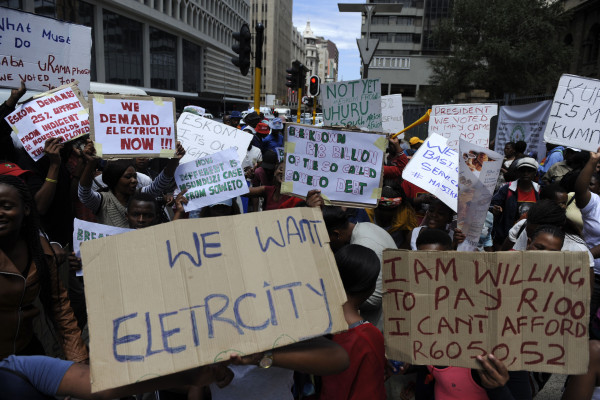
In an era when such futuristic technologies as artificial intelligence, robotics, and quantum computing are here or on the horizon, almost half of sub-Saharan Africans — more than 600 million people — lack the electricity to heat, cool, or light their homes.

This energy poverty impedes nearly every aspect of life for this population, from conducting business and educating their children to deterring crime and providing healthcare.

Even in some well-electrified African nations such as Ghana, Gabon, and South Africa, the supply is inadequate and often unavailable.

As the African Energy Chamber (AEC) put it in our newly released The State of African Energy Outlook Report 2024, “Access to electricity in Africa is still a dream to millions of Africans.”

Our report gives compelling evidence to back this statement, providing statistics that show, among other things, that energy poverty is markedly deeper in sub-Saharan Africa (SSA) than in the rest of the continent.

Our report is sobering, but not without hope. It also provides a positive look toward the future, including energy developments likely to improve electrification rates in SSA and move its countries' citizens closer to the universal access they dream of. The key to delivering energy to more Africans will be using both renewables and fossil fuels.

The Statistics and What's Behind Them

Our report's numbers tell the story of just how much SSA, in particular, is still affected by energy poverty.

In contrast with most of the world, where electrification rates improved during the COVID-19 pandemic, SSA's worsened, as its percentage of the world's population lacking electricity grew from 71% in 2018 to 77% in 2020. Statistics compiled in 2020 showed sub-20% levels of electricity access in up to eight countries across the region.

While the education and business sectors suffer greatly from energy poverty, it is perhaps most acutely felt in the health sector, where medical equipment and procedures require electrical power.

Complicating the health impacts still further, households without electricity are often forced to use unhealthy fuels like wood, coal, or kerosene to cook and heat, producing indoor air pollution that leads to respiratory problems and other ailments.

In contrast to the 90%-plus electrification rate found in some North African countries, which is allowing them to decrease reliance on fossil fuels, electricity access in SSA is only about 55%, and a closer look at that number reveals it is driven by urban rates of close to 80%, while rural areas lag far behind with only about 33%, leaving two-thirds of residents in the dark.

In a nutshell, SSA has a lot of catching up to do to achieve the levels of access to electricity enjoyed by most of the world. Although the region has doubled the average rate of access since 2000, its current rate of just over half of the region's population is miniscule compared to the 90% global rate and the 80% North African rate.

As I said, even in SSA countries where electrification rates are quite high, such as Ghana, Gabon, and South Africa, load shedding presents a daily practical problem for people who must anticipate power outages. In South Africa, for instance, this type of staged rationing has been used every day this year by the power utility, Eskom.

Already in 2023, there has been more load-shedding in South Africa than in all of 2022, and outages are lasting longer — up to 12 hours daily — with a predictable disabling effect on economic development.

Meanwhile, the country's chasm between supply and demand only continues to expand.

Changes in Progress: South Africa as a Case in Point

The South African government is taking a proactive approach to the regulatory side of improving energy supply, shortening timelines for obtaining environmental authorizations and grid approvals.

It is also working to obtain and use USD98.7 billion in investment capital over the next five years for its Just Energy Transition Investment Plan (JETIP), a framework adopted in 2022 that outlines the country's strategic priorities for investment during climate transition.

A major thrust of JETIP is replacing the use of coal, which currently supplies over 80% of South Africa's power, with renewable energy, expected to grow from a current 11% of the power supply to 20% by the end of this decade and to over half of the supply by 2050.

Contributing to those numbers, Eskom-built renewables projects are slated to go live this year in Lethabo and Sere, and the utility will soon start building solar and battery storage facilities at Komati Lethabo and Majuba for a total of 2.8 gigawatts (GW) of new renewables capacity.

Of the total projected electricity capacity, solar, and wind are expected to drive almost 50% with fossil fuels adding up to a 10th of total projected capacity.

Implications for the Continent

These power-related statistics for South Africa—a country better positioned than many Sub-Saharan nations regarding electricity—show that the country, and therefore the continent, needs gas-to-power and battery storage along with wind and solar.

South Africa's numbers highlight a major point made in my recent book, “A Just Transition: Making Energy Poverty History with an Energy Mix,” — that, while the rest of the globe deals with the threat of devastating climate change, Africa must deal with two major challenges at once: the threat of climate change and debilitating energy poverty.  

Even as Africa works to support global efforts to prevent a climate crisis, we must embrace every solution available to us, including using our continent's vast natural gas reserves: totaling more than 800 trillion cubic feet. Not only is gas plentiful, but it's also the cleanest fossil fuel; producing it contributes to job creation and economic growth; and it can be monetized to help pay for energy infrastructure.

The “bottom line” is that Africa still needs to use its natural gas, and more of it, to deliver a much-needed increased supply of energy to its people.

Download The State of African Energy 2024 Outlook report: https://apo-opa.co/3QLEoHd

Distributed by APO Group on behalf of African Energy Chamber.

Media files
African Energy Chamber
Download logo
Read morePoverty and Progress: An Update on African Energy
14 December 2023

Food waste increases by 25% over festive season

Location: MyPR

While many of us start to put our daily stresses aside, the waste management sector experiences a significant increase in food and organic waste during the festive season. This places an increased amount of pressure on the waste sector, including the waste collection services, landfill sites and the natural environment. According to waste statistics, South …

Read moreFood waste increases by 25% over festive season
  • Previous
  • Page 1
  • Interim pages omitted …
  • Page 91
  • Page 92
  • Page 93
  • Page 94
  • Page 95
  • Interim pages omitted …
  • Page 108
  • Next

Copyright © 2026 · MyZA · All Rights Reserved · Powered by Stratlec Online