Hollywoodbets Pro Series Weekend Wrap: Lions and Titans Triumph in Rain-Affected Weekend
JOHANNESBURG: The DP World Lions and Fidelity Titans emerged victorious despite inclement weather conditions in Gauteng as the Hollywoodbets Pro Series...

MyZA
News, Directory, Events and Other Stuff
JOHANNESBURG: The DP World Lions and Fidelity Titans emerged victorious despite inclement weather conditions in Gauteng as the Hollywoodbets Pro Series...
CAPE TOWN: Lutho Sipamla starred with the ball by claiming four wickets to help DP World Lions begin the 1 Day...
VEREENIGING: Day two saw the KZN Inland Rural team finish as the only undefeated team left in the CSA Inland Rural...
Govt calls for collective effort to boost STEAM education
The Deputy Minister of Science, Technology and Innovation, Nomalungelo Gina, has called for collective effort to improve science, technology, engineering, arts, and mathematics (STEAM) education in schools across South Africa.
The Deputy Minister recently opened the second annual Regional STEAM Education Seminar in Johannesburg.
“We need to work together to unlock our country’s immense potential through quality education in STEAM,” said the Deputy Minister.
Gina identified several challenges contributing to the decline in STEM enrolment, including poor resources and infrastructure in rural and township schools, lack of computer labs, and limited access to qualified teachers.
The Deputy Minister said the need for committed action and collaboration to address these challenges cannot be overstated and called on all stakeholders to unite and work towards a common goal.
Proposing joint initiatives among all the stakeholders within the national innovation system, the Deputy Minister highlighted the need to include the corporate sector to build industry support for STEM uptake.
The Deputy Minister has already met with business chambers in KwaZulu-Natal and the Eastern Cape, and they have shown interest in partnering with the government to ensure socio-economic development in the country.
She also announced plans to pioneer STEM excellence schools in rural areas of each province, which will serve as models of excellence in the 21st century.
“We need to work together to unlock our country’s immense potential through quality education in STEAM,” she said.
The two-day seminar is a collaborative effort between the Govan Mbeki Mathematics Development Centre (GMMDC) at Nelson Mandela University, Market Place Academy, Sifiso EdTech, and key industry sponsors Deloitte and the Engineering Council of South Africa (ECSA).
The department believes this is a testament to the shared responsibility in reshaping the future of STEM education in South Africa’s public schools.
Sifiso Learning Group Founder and CEO Sizwe Nxasana said Africa’s future depends on how well young minds are prepared today.
“STEAM education is not just about numbers and formulas. It is about unlocking critical thinking and problem-solving skills to drive innovation and transformation across our continent,” said Nxasana.
According to Nxasana, not equipping and supporting educators to inspire and challenge their learners would stall Africa’s progress before it even begins.
“Continuous support and professional development for educators are crucial to the success of STEM education initiatives,” he added.
He stressed that the commitment to ongoing support underscores the long-term vision for improving STEM education in South Africa.
“That’s why upskilling our educators with the latest methodologies, integrating technology, project-based learning, and real-world problem-solving is essential. At Sifiso Learning Group, we are committed to ensuring that classrooms are not just places of learning but incubators for the next generation of African innovators, problem-solvers and leaders,” he emphasised.
Director of the Govan Mbeki Mathematics Development Centre, Professor Werne Olivier, said the regional STEAM seminar aimed to enhance the quality of learning and teaching in South Africa to align with the evolving future of the workplace.
“Integrating science, technology, engineering, arts, and mathematics fosters critical thinking and problem-solving in the real world,” said Olivier.
Known for his passion for mathematics, Olivier added that it was critical to build strong communities of practice among educators, learn from experts in the field, and find opportunities for professional development and other resources.
Gauteng Department of Education’s Antoinette Nicolaai welcomed the initiative, saying the department was deeply committed to integrating STEM education into the curriculum to ensure that learners are equipped with the knowledge and the skills necessary for the future.
The seminar equips educators with cutting-edge strategies to drive improved learner outcomes and enhance lesson delivery, student engagement, and professional development. – SAnews.gov.za
Gabisile
Sun, 02/16/2025 - 08:40
220 views
President Ramaphosa concludes official visit to Ethiopia for 38th AU Summit
President Cyril Ramaphosa on Saturday concluded his visit to Ethiopia, where he participated in the 38th Ordinary Session of the Heads of State and Government of the African Union (AU).
The Assembly was held under the theme: ’Justice for Africans and People of African Descent through Reparations' from 15 - 16 February.
The 38th Ordinary Session of the Heads of State and Government of the African Union (AU) was organised by the African Union Commission (AUC).
The opening ceremony of the AU Summit was held with the attendance of AUC leaders, officials, Ministers, Ambassadors from AU Member States, representatives of AU organs and offices, as well as partners.
President Ramaphosa congratulated the newly-elected Chairperson Mahmoud Ali Yousouf and Deputy Chairperson Ambassador Salma Malika Haddadi, who will lead the AU during the next four years.
The Assembly also appointed new, Commissioners who will work as a collective in realising the aspirations of the continent and its people.
“South Africa congratulates the new leadership cohort of the union and is especially proud of Ms Lerato Mataboge, as the new Commissioner for Infrastructure and Energy,” the Presidency said in a statement.
SAnews reported that Mataboge has been elected as the Commissioner for Infrastructure and Energy of the AU after her name was put forward by the South African government.
READ | Tau congratulates Mataboge on being elected as AU Energy, Infrastructure Commissioner
She holds a BA Honours in Law and International Relations from the University of Witwatersrand, a Master’s Degree in International Political Economy from the University of Warwick, as well as a qualification in Infrastructure in a Market Economy from Harvard Kennedy School Executive Education.
Mataboge has since committed to providing credible responses to new technologies, including biotechnologies, digitisation, and artificial intelligence, while acknowledging Africa’s vital mineral resources in developing global technologies.
The Assembly further deliberated on the state of peace and security in Africa.
“It expressed grave concern for the evolving situation in the eastern DRC [Democratic Republic of Congo]. The Heads of State called upon the M23 to cease-fire to prevent additional loss of lives. The Assembly reaffirmed the urgent need for inclusive negotiations and political dialogue as the only solution to end conflicts on the continent.”
The leaders also took note of South Africa’s Presidency of the G20 and congratulated South Africa for being the first African country to host this important gathering.
They expressed their support for the successful G20 Leaders’ Summit scheduled to take place later this year in Johannesburg.
According to the President’s Office, the country’s Commander-in-Chief also had bilateral meetings with a few countries on the continent to exchange views on issues of mutual concern.
The Assembly also discussed the African Continental Free Trade Area (AfCFTA), activities of the Africa Centre for Disease Control, infrastructure development and institutional reforms, amongst other matters.
President Ramaphosa was accompanied by the Minister of International Relations and Cooperation Ronald Lamola; the Minister of Defence and Military Veterans Angie Motshekga; Minister of Justice and Constitutional Development Mmamoloko Kubayi; Minister of Trade, Industry and Competition Parks Tau; Minister in the Presidency Khumbudzo Ntshavheni; Minister of Forestry, Fisheries and Environment Dion George; Minister of Water and Sanitation, Pemmy Majodina and Minister of Public Service, and Administration Inkosi Mzamo Buthelezi. – SAnews.gov.za
Gabisile
Sun, 02/16/2025 - 09:54
74 views
Activists condemn Professor Didi Fabian’s presence at the Ophthalmological Society of South Africa’s Congress
JOHANNESBURG: Ahead of the highly anticipated 2024/25 1 Day Cup, captains took a break from the nets and stepped onto the...
VEREENIGING: KwaZulu-Natal Inland Rural’s Matthew Dukes’ brilliant five wicket haul highlighted the day one action at the Cricket South Africa (CSA)...
The High Commission of Sri Lanka in Pretoria commemorated the 77th anniversary of the Independence of Sri Lanka on 08 February 2025. The event, held at the High Commission premises, was attended by approximately 150 Sri Lankans from South Africa and other accredited countries including Lesotho, along with South African friends of Sri Lanka and well-wishers.
The program commenced with the singing of the Sri Lankan National Anthem, followed by the National Anthem of the Republic of South Africa. A two-minute silence was observed in honor of those who sacrificed their lives for the motherland.
Religious observances representing Buddhist, Hindu, Islamic, and Christian faiths were conducted to invoke blessings for peace and prosperity in Sri Lanka. These observances were led by Suratsawadi Mart, representing the Johannesburg Buddhist Temple; Guru Ratnasabapathy Vengatraman from the Adhi Lingeswarar Hindu Temple in Benoni; Moulana Obeidullah Bhoja from Jamiatul Ulama, South Africa and Pastor Keshia Van Rooyen from the Christian Revival Church in Johannesburg. Symbolizing the passing of Sri Lankan traditional values to the next generation, an open invitation was extended to children and young Sri Lankans present at the event to take part in lighting of the traditional oil lamp.
During the welcome remarks, the Independence Day theme for this year, “Towards a National Renaissance,” along with other key national policies such as “Thriving Nation – Beautiful Life”, “Clean Sri Lanka”, alleviation of rural poverty, and implementing a digital economy were explained to the gathering. In particular, the recently launched digital platforms and the benefits of the e-BMD system were introduced to the Sri Lankan community in South Africa.
Following the welcome remarks, the Independence Day messages of the President, the Prime Minister, and the Minister of Foreign Affairs, Foreign Employment, and Tourism of Sri Lanka were read out by the members of the staff of the High Commission. Promotional materials were also shared with the attendees.
All attendees were served with traditional Sri Lankan cuisine and Ceylon tea.
Distributed by APO Group on behalf of Ministry of Foreign Affairs - Sri Lanka.
Rising global temperatures pose a serious threat to health of pregnant women and babies, say Wits researchers
Young boy successfully repatriated
The department of Social Development has once again successfully repatriated a young South African boy from Zimbabwe who has been missing for almost two years.
The child, identified as Mzi*, was just 11 years old when he disappeared from his home in May 2023 and boarded a bus to Zimbabwe, where he was later dropped off at the Zengeza police station in Harare.
This set off a complex cross-border child protection case, with his disappearance becoming a matter of national concern, prompting the Department of Social Development to work tirelessly alongside Zimbabwe’s Department of Social Welfare to locate and return him home.
Unlike previous repatriation cases involving children born in foreign prisons to South African mothers, Mzi’s case presented unique challenges.
According to reports, the boy provided different accounts of how he ended up in Zimbabwe, further complicating the search. The department was first notified of the case when the nationwide search for him began, said Acting Deputy Director-General Lumka Oliphant.
The Children’s Act
The Children’s Act mandates the department to repatriate South African children in distress in foreign countries. The Department of Social Development plays a crucial role in ensuring the protection and care of children, including those in need of repatriation and reunification with their families.
Mzi is the 26th child to be repatriated from foreign countries since 2015, reaffirming the department’s commitment to safeguarding children.
The Zimbabwean social workers report indicates that the child is autistic, though further assessments will be conducted to determine the full extent of his needs.
“His condition may explain why he wandered off and why repatriation efforts faced such obstacles,” a social worker from the department said on Wednesday.
According to the department, bringing him back proved far from straightforward, with the social workers’ report confirming that multiple repatriation attempts failed as he repeatedly absconded from authorities, making an already challenging process even more difficult.
The breakthrough finally came on Wednesday, 5 February 2025, when Zimbabwean officials found him on the streets of Harare.
In an urgent, coordinated effort, South Africa’s Integrated Social Services team intervened, ensuring he was safely escorted to the Beitbridge border the following day.
By 6 February 2025, Mzi had been placed in the care of Limpopo’s Department of Social Development, at Polokwane Welfare Complex.
Reunited with family
The next day, accompanied by his mother, maternal aunt, and a Gauteng social worker, Mzi made the final journey to Johannesburg, where he was finally reunited with his family.
“He started crying when he saw me and was saying a lot that I couldn’t understand because it was in Shona, he’s lost his Zulu (mother tongue) and now speaks Shona fluently,” the boy’s 33-year-old mother said.
Mzi’s mother described him as an independent child who often wandered off. When he started primary school, his disappearances became more frequent, sometimes leading to police involvement or kind strangers returning him home.
When asked about this behavior, his mother admitted it has been a confusing and painful journey.
Seated on the concrete veranda of his home in Alexandra, Gauteng, the small-framed shy looking boy plays quietly with his cousin and the two-year-old brother he has just met for the first time.
After nearly two years away Mzi is finally home, but his journey, and that of his family, is far from over.
“We thought he was just a seriously naughty child, and we would punish him and ground him from playing outside,” his mother said, recalling the many sleepless nights spent worrying about his safety.
“My ex-husband was quite strict, and he would give him a hiding whenever he disappeared from us,” she said.
In several social workers’ assessments, Mzi reported being abused by his stepfather.
During his time in Zimbabwe, Mzi was placed in various Child and Youth Care Centres and alternative care facilities, but he absconded more than six times. His last disappearance was in July 2024.
Social workers also reported his tendency to wander, which may be related to the autism. He also gave multiple versions of his family story and how he ended up in Zimbabwe to the police and child welfare organisations.
Emotional reunion
Mzi’s mother remains filled with questions and frustration. She speaks with bitterness of the two-year ordeal, which left her feeling dismissed by officials, judged by friends and family, and even being threatened with arrest. She added that “It has been traumatic”.
“The moment of reunion was deeply emotional,” says Lamlani Mthembele, one of the officials who accompanied Mzi’s mother to Limpopo.
“When they saw each other, he cried, his mom was crying, and even though we couldn’t understand what he was saying in Shona, it felt like he was saying he was happy to be back home and that he would never leave his mother’s side again.”
While en route to Johannesburg, Mzi asked about his little sister, and when the mother video called the 9-year-old girl, he sobbed uncontrollably, Mthembele said.
Now back home, Mzi is adjusting to life with his family, including meeting his two-year-old brother for the first time.
Social workers from the Gauteng Department of Social Development will support his mother in securing medical assessments and the necessary interventions for his well-being.
“It will empower me. I will know what medication he needs and what school I need to send him to. I also want to get him a tracking bracelet,” the mother said.
The department has assured ongoing psychosocial support for Mzi and his family to ensure his smooth reintegration and emotional healing.
The Department of Social Development extended its gratitude to the Zimbabwean Department of Social Welfare, the Limpopo and Gauteng Social Development Departments, and all organisations involved in securing Mzi’s safe return. – SAnews.gov.za
* Not his real name
DikelediM
Thu, 02/13/2025 - 13:30
JOHANNESBURG: Cricket South Africa (CSA) is delighted to announce Macron Sport as the new official technical partner to CSA. This...
Remains of 14 SANDF troops finally home
The remains of the 14 South African National Defence Force (SANDF) soldiers who died in the eastern Democratic Republic of Congo (DRC) have finally returned home and will be handed over to their families this evening.
The SANDF has rescheduled the handing-over ceremony and memorial service from Thursday morning to the evening.
This change is due to unavoidable parliamentary commitments related to the State of the Nation Address (SONA) debate in Cape Town.
The troops lost their lives at the hands of the M23 as fighting in the Goma region escalated.
The rebel group fought intensely against the Congolese armed forces, resulting in the deaths of soldiers from 23 to 27 January during M23’s advance on Sake and Goma.
The soldiers are part of the Southern African Development Community Mission in the Democratic Republic of Congo (SAMIDRC), which aims to help restore peace, security, and stability in Africa’s second-largest country.
Families have been eagerly awaiting their loved ones after multiple delays, including medical processing in Uganda.
READ | Fallen SANDF soldiers' remains expected to return home on Thursday
The memorial service in honour of the soldiers will be held on Thursday, 13 February 2025, at the Air Force Base Swartkop in Johannesburg at 6 pm. – SAnews.gov.za
Gabisile
Thu, 02/13/2025 - 09:11
Some have been waiting since 1996
JOHANNESBURG: Cricket South Africa (CSA) has today shared its decision to exercise its step-in rights under its Memorandum of Incorporation (MoI)...
Unfunded non-profit organisations to file a combined summons
Gauteng's first MitraClip Implants a 'gamechanger' for heart valve treatment
The Charlotte Maxeke Johannesburg Academic Hospital (CMJAH) has performed the first successful MitraClip implants on three State-funded patients in the province.
The minimally invasive procedure is designed to treat Mitral Regurgitation, a heart condition where the mitral valve does not close properly, causing blood to leak backwards into the heart.
The Gauteng Health Department explained that the MitralClip itself is a “minute clip passed through a catheter, which aids the mitral valve in sealing properly, subsequently restoring normal blood flow through the heart”.
Gauteng MEC for Health and Wellness, Nomantu Nkomo-Ralehoko welcomed the successful completion of the procedures, which were carried out last week.
“This procedure is but an example of the many inroads we continue to make in the healthcare system through collaboration between the public and private sector.
“We have the advantage of academic hospitals, which boasts leading experts in many fields locally and internationally. This allows us to pioneer new ways of improving patient care,” the MEC said.
Director of the Cardiac Catheterisation Laboratory and Interventional Cardiologist at CMJAH, Dr Arthur Mutyaba, who was part of the team performing the procedures, said that with this new capability, more patients living with the condition and ineligible for open-heart surgery can now be assisted.
“With this procedure now accessible, we are able to help these patients get back to a normal life without having to expose them to the risk that open heart surgery would have disposed them to,” Mutyaba said.
The department revealed that, to date, at least 15 MitraClip procedures have been completed in South Africa, all performed in public institutions.
“The Charlotte Maxeke procedure marks the fourth round of MitraClip implants in South Africa, following the first 12 successful procedures performed at Groote Schuur and Tygerberg hospitals in Cape Town.
“What makes this program unique is that both public and private patients have access to this cutting-edge therapy through these leading academic hospitals in the country. At present, MitraClip therapy is not yet available in private healthcare facilities, making these institutions the sole centres for this life-changing intervention,” the department said.
Game changing solution
The Gauteng Health Department described that the procedure as a “game changer” which marks a “significant advancement in minimally invasive heart valve therapy” in both the private and public sector.
“The procedure’s key benefits include drastically reduced recovery times, often just one or two days post-insertion, making it a game-changer for elderly or high-risk mitral regurgitation patients who are unsuitable candidates for open heart surgery.
“With its availability through academic hospitals and the ongoing tracking of patient outcomes, this pioneering therapy is set to transform the treatment landscape for mitral regurgitation in South Africa,” the department said.
The successful procedures will now be recorded on the national registry to track advancements in treatments in South Africa.
“What makes the procedures even more unique is that, despite most of the patients having full medical insurance, a decision was made to perform these procedures in a controlled academic hospital environment.
“This approach ensures that all cases are recorded in a national registry, allowing for the tracking of long-term outcomes and contributing to the advancement of structural heart disease treatment in South Africa,” the department said. – SAnews.gov.za
NeoB
Mon, 02/10/2025 - 12:52
JOHANNESBURG: The Veterans Cricket Association of South Africa (VCASA) 16-man squad has arrived in Colombo, Sri Lanka ahead of the fourth...
South Africa has one of the highest HIV rates in the world, with 8-million people estimated to be living with the virus. While many people are aware of the link between HIV and Tuberculosis (TB), fewer know about another common co-infection: Human Papillomavirus (HPV). What is HPV? HPV includes a family of more than 200 …
Government, industry leaders encourages use of AI for greater good
The rapid development of artificial intelligence (AI) has signified a fundamental change in how government interacts with citizens, disseminates information and ensures that the State’s voice reaches every corner of the nation.
This is according to Deputy Minister in the Presidency, Kenny Morolong, who addressed a Government Communicators Networking Session at Artscape in Cape Town on Wednesday night.
“The question to which we must respond is not whether to embrace AI and the suite of technologies, but how to do so in a way that enhances rather than diminishes our communication objectives.”
Morolong said government and its relevant stakeholders should explore how these technologies can break down language barriers, reach underserved communities, ensure the authenticity and credibility of government communications, preserve and promote indigenous knowledge systems, and enhance the skills of government communicators.
However, he stressed that in the pursuit of technological advancement, the nation must retain the human touch essential for effective public service communication.
“We must do so with a drive to leave no one behind, including our diverse skills and cultures.”
The Deputy Minister said the mission of various media platforms and government communication should be to ensure all citizens have access to empowering information that facilitates their active and productive participation in the nation.
The networking session, held on the eve of the State of the Nation Address, included a panel discussion on AI’s impact on media and government communication.
The former Dean of the Johannesburg Business School (JBS), Professor Randall Carolissen, led an important discussion about the transformative potential of AI.
He highlighted its societal impact and emphasised the need to balance technological advancements with personal privacy and accountability.
He also stressed the importance of enabling AI while protecting privacy and ensuring explainability and fairness.
Carolissen also highlighted the dual nature of AI, noting the negative outcomes like “highly convincing” deepfake images.
The panellist emphasised the transformative potential of AI in media, highlighting its role in revolutionising content creation and distribution.
AI was noted for its ability to enhance data processing, as exemplified by the Pan-Canadian AI strategy.
Canada was the first country globally to create a national strategy for AI.
In 2022, the Government of Canada proposed the AI and Data Act (AIDA) as part of Bill C-27, the Digital Charter and Implementation Act, to promote the responsible use of AI.
Practical applications of AI, such as transcription and multilingual support, were discussed, particularly in the context of South African media.
The panellists also touched on the importance of truth and trust in media, with AI aiding in verification and deeper storytelling.
Supple Chief Operations Officer Lea-Anne Moses underscored the increasing pressure on newsrooms to perform and the declining revenues that are becoming a central issue.
“But I think there’s an opportunity in looking at business models and how we use AI to go deeper in our stories, how we use it to transcribe our notes or conduct research and get the groundwork out of the way. But let’s not outsource our thinking to AI.”
Supple is a technology company based in Britain and South Africa that provides software, Infrastructure as a Service (IaaS), and application programming interfaces (APIs) to governmental bodies.
Associate Professor Sisanda Nkoala, who holds the Media Inclusion and Diversity Chair at the University of the Western Cape and represents the Press Council of South Africa, stressed the significance of ethical journalism and transparency in the use of AI.
She highlighted the necessity of adapting this technology to better serve African contexts, particularly to address language barriers.
Concerns have been raised about AI ownership by large tech companies and its potential to worsen the digital divide.
The discussion also addressed AI’s impact on education, job displacement, and the necessity for regulatory frameworks to ensure responsible use of AI.
Meanwhile, the Chief Financial Officer of Kagiso Tiso Holdings, Tshepo Setshedi, said companies that do not embrace AI will be overtaken by those that do.
“So, we need to start preparing as a country in terms of investing in this space,” he told the attendees.
President Cyril Ramaphosa will deliver the State of the Nation Address this evening at 7pm. – SAnews.gov.za
Gabisile
Thu, 02/06/2025 - 09:04
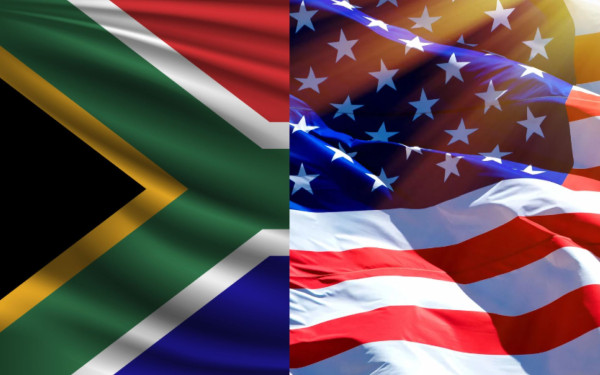
By NJ Ayuk, Executive Chairman, African Energy Chamber (wwwEnergyChamber.org).
After President Trump announced a 90-day overseas spending freeze, Secretary of State Marco Rubio said "every dollar" must be "justified" by evidence that it makes the US safer, stronger and more prosperous.
I acknowledge that stance may sound ungrateful. At first blush, many might counter that starving people have no agenda. Destitute parents still need to feed their children. Turning a blind eye to their plight is inhumane.
Let me explain why the African Energy Chamber (AEC) continues to push for free-market solutions rather than good-will handouts from USAID. There was an era when Africa and Western pop music were closely linked.
Western entertainers spearheaded a number of internationally renowned events to raise awareness about the plight of starving Africans and generate funds for famine relief.
In December 1984, the supergroup Band Aid sang about feeding the world, asking “Do They Know it's Christmas?” Within a year, the group had raised over $9 million. Three months later, USA for Africa released “We Are the World” and banked $44.5 million after one year for its African humanitarian fund. Then on a hot July day in 1985, the worldwide concert event Live Aid raised more than $150 million for famine relief in Africa.
These are just a handful of grand and noble gestures intended to lift Africa out of poverty. These famous events arguably raised both awareness and funds. Unfortunately, the efforts — and others like them — fall far short of making any real socioeconomic change. In fact, some argue that injecting monetary aid into Africa, time and time again, has actually done more harm than good.
History of ‘Help'
Even aid genuinely given to help Africa tends to do more harm than good.
Since 1960, more than $2.6 trillion has been pumped into Africa in the form of aid. From 1970 and 1998, when aid was at its peak, poverty actually rose alarmingly — from 11% to 66% — due in large part to this massive influx of foreign aid that counteracted its intended good.
Aid decreased long-term economic growth by fuelling systemic corruption, in which powerful aid recipients funnelled foreign funds into a personal stash instead of public investment. Many leaders realized that they no longer needed to invest in social programs for their constituents because of the revenues from foreign donors.
Large inflows of aid also caused higher inflation, hindering African nations' international competitiveness in exporting. That resulted in diminishing the manufacturing sector – which is critical in helping developing economies grow — across the continent. And well-intentioned Westerners who saw the economic shrink just kept pouring more and more money at “the problem” — leading to a vicious cycle that furthered corruption and economic decline.
But here's the kicker: The World Bank has admitted that 75% of the agricultural projects it implemented to help Africa failed. So why do they and other aid providers continue to fund these failing efforts?
Examples of Failure
Across the continent, we see example after example of failed aid projects, with agricultural projects routinely providing little or no benefit to African farmers.
In Mali, the U.S. Agency for International Development (USAID) injected $10 million into “Operation Mils Mopti” to increase grain production. The government imposed “official” prices on the grain, which forced farmers to sell their crops at these below-market rates and resulted in grain production falling by 80%.
USAID also spent $4 million to help livestock producers grow the number of cattle in the Bakel region from 11,200 to 25,000 — but ultimately only succeeded in increasing it by 882 head. Another $7 million was injected into the Sodespt region, but that investment managed to sell only 263 cattle and failed to sell any goats or sheep.
Then we see example after example of Westerners wastefully “helping” without any understanding of the local situation. Norwegian aid agencies built a fish-freezing plant to improve employment in northern Kenya — a region where the local people traditionally do not fish because of their semi-nomadic pastoralist lifestyle. Couple the lack of fishing experience with the unfortunate reality that the plant required more power than was available in the entire region, and the result was that the brand-new processing plant sat idle.
The World Bank financed a $10+ million expansion of Tanzania's cashew-processing capabilities, which resulted in 11 factories with the capacity to process three times as many cashews as the country was growing on a yearly basis. The plants were too efficient for the available workforce and cost so much to run that it was cheaper to process the raw nuts in India. Half the plants were inoperable, and the other half only ran at about 20% capacity.
I'm not saying that we Africans are ungrateful for the outpouring of heartfelt care. The compassion of the West is certainly real. However, the outcome of said compassion is the concern: The more foreign aid African governments receive, the worse they perform. As long as the aid keeps flowing, government leaders and their employees who administer development programs may prosper while the rest of the citizenry continues to suffer the effects of a mismanaged economy.
Questionable Benefits
We also must acknowledge that, in far too many cases, aid has also been given to African nations and communities in attempts to manipulate and control.
“While hungry faces are used on posters and in media reports to sell the virtues of foreign aid, it is the hungry who rarely see any of the funds,” James Peron, executive director of the Institute for Liberal Values in Johannesburg, South Africa, lamented in a piece for the Foundation for Economic Education. “Poverty may be used to justify the programs, but the aid is almost always given in the form of government-to-government transfers. And once the aid is in the hands of the state it is used for purposes conducive to the ruling regime's own purposes.”
And now we witness the international community talking about aid for African countries as a substitute for our oil and gas activities. Western environmentalists argue that Africa should keep all of its petroleum resources in the ground to prevent further climate change. In exchange for that sacrifice, African nations would be compensated and inject that money into other opportunities like developing their sustainable energy technologies.
I've said it before, and I'll say it again: What a horrible idea!
I‘m offended by foreign stakeholders feeling that providing humanitarian assistance gives them the right to influence our domestic decisions. With Africa poised to participate in the worldwide energy transition, my fear is that international donors will feel justified to dictate Africa's policy regarding the lengths to which, and speed with which, our energy transition occurs. This would be a huge step backward in our energy, economic, and even individual independence.
Aid packages to incentivize giving up our oil and gas operations will be detrimental to Africans. Because let's be honest: History has shown that this assistance could never replace the oil and gas industry's ability to create jobs and business opportunities, grow local capacity, open the door to technology sharing, facilitate economic growth, and alleviate energy poverty.
Instead of continuing a pattern that clearly does more harm than good, why aren't African nations encouraged to leverage the wealth of resources at our feet?
The AEC is determined to make a case for African nations harnessing their oil and gas solutions to help themselves. We will not be bullied, or manipulated with aid, into a path that is not in our best interests.
Use What We Have!
One reason why the AEC is an outspoken advocate for Africa's oil and gas industry is because it represents more than big revenue for African governments. It is a free-market solution that creates pathways for Africans to help themselves. And, ultimately, empowering Africans is our number one goal.
We endorse an energy mix approach that allows Africa to use and sell our own hydrocarbon reserves to alleviate energy poverty, while at the same time moving toward a future in which renewable energy sources power the continent. The energy mix method can help more people more quickly because it takes a practical, people-first approach to helping those who have traditionally been left behind by the energy sector, while moving us toward greener energy sources.
Natural gas, in particular, can transform African lives and communities. Its potential benefits range from eradicating energy poverty to allowing Africans to develop skills for good jobs to creating hope for our youth.
Ramping up gas production to help alleviate the lack of access to electricity will create thousands of new employment opportunities in Africa. In addition, the new sources of energy can be exported to Western countries and also used to industrialized Africa. Then, as Europe transitions to alternative energy, a larger portion of Africa's natural gas can power domestic needs. By the time other countries complete their transitions to carbon-neutral sources, Africa will have a much more expansive and reliable grid system, which will allow for an easier transition.
And before we argue about the evils of hydrocarbons, let me point out that, although it might seem counterintuitive, it is possible for Africa to make use of its abundant fossil fuels while moving toward a future sustained by renewable energy sources. In fact, I believe that African nations must do everything they can to ensure that these two things work in tandem. Considering that 600 million people on the continent have no access to electricity and 900 million people lack access to clean cooking technologies, it's impossible — if not altogether inhumane — to discuss climate change without looking at energy poverty.
As I recently wrote in an article published by Medium, we cannot transition from the dark to the dark. We must deliver energy to the people of Africa and then worry about transitioning to environmentally friendly alternatives, just like we have everywhere else in the world.
This has been our platform, and we will continue to stand by it in 2025 and beyond. Looking at Africa and only pushing for aid is not in the interest of the everyday Africans. It caters to the egos of the elites and latte intellectuals who believe they have the solutions to why the continent is still poor.
Distributed by APO Group on behalf of African Energy Chamber.
President Ramaphosa to participate in joint SADC – EAC summit on the DRC
President Cyril Ramaphosa is set to embark on a working visit to Dar Es Salaam in the United Republic of Tanzania on Saturday, to participate in the joint Southern Africa Development Community (SADC) – East Africa Community (EAC) Heads of State and Government Summit on the security situation in the eastern Democratic Republic of Congo (DRC).
This was announced on Wednesday by Presidential spokesperson, Vincent Magwenya, during a media briefing at the Imbizo Media Centre in Cape Town to update on the President’s programme and address recent developments of interest.
“The Heads of State and Government of SADC and the EAC agreed to meet urgently following their respective extraordinary summits held last month to deliberate on the way forward regarding the security situation in the DRC,” Magwenya said.
The joint SADC – EAC Summit will be preceded by Senior Officials and Foreign Ministers Meetings taking place on 6 and 7 February 2025.
The Extraordinary SADC Summit held last month mandated the SADC Organ Troika on Politics, Defence and Security Cooperation to engage all State and non-State parties to the conflict on a ceasefire process to protect lives and facilitate a smooth flow of humanitarian support to people and communities affected by the armed conflict.
It also urged Political and Diplomatic leaders who are parties to the conflict to engage in a coordinated effort of dialogue, including supporting the Luanda Process, United Nations Organisation Stabilisation Mission in the Democratic Republic of the Congo (MONUSCO) and others, to restore peace and security in Eastern DRC.
READ | SADC Extraordinary Summit condemns escalating violence in DRC, calls for urgent action
SONA Debate Reply
President Ramaphosa will deliver his reply to the State of the Nation debate on 13 February 2025.
Magwenya said the President looks forward to a constructive and substantively enriching debate that will follow his SONA address.
38th AU Assembly of Heads of State and Government
President Ramaphosa is also expected to lead the South African delegation to the 38th African Union (AU) Assembly of Heads of State and Government in Addis Ababa, Ethiopia.
“President Ramaphosa will lead the South African Delegation to the 38th Ordinary Session of the Assembly of the Heads of State and Government of the AU, which is taking place on 15 and 16 February 2025 in Addis Ababa, Ethiopia. He will be accompanied by several Ministers and senior officials,” Magwenya said.
The Assembly of Heads of State and Government of the AU will be held under the theme, “Justice for Africans and People of African Descent Through Reparations”.
It will review and assess what has been achieved in Africa’s efforts towards the attainment of long overdue justice and reparations after decades of colonialism and apartheid.
“The assembly is taking place two months after South Africa assumed its Presidency of the G20 in 2025. The Summit will be a unique opportunity for President Ramaphosa to brief his counterparts on the key priorities of South Africa’s G20 Presidency and their alignment to Agenda 2063. The high-level meeting on the G20 will take place on 15 February 2025, on the margins of the summit,” he said.
One of the main objectives of the forthcoming assembly is to elect the new senior leadership of the AU Commission, Chairperson and a Deputy Chairperson of the Commission. There are three candidates vying for the Chairperson position, while four candidates are contesting the Deputy Chairperson position. It will also appoint the six Commissioners following the endorsement by the Executive Council.
“The summit is expected to discuss the status of Peace and Security on the continent. The discussion on peace and security on the continent will take place against the backdrop of great concerns regarding the state of peace and security on the continent, including the ongoing conflict in the eastern Democratic Republic of Congo. The discussions on the peace and security situation in Sudan and South Sudan will also feature prominently during the summit,” Magwenya said.
The President, in his capacity as the Chairperson of the Ad Hoc Committee on South Sudan, also known as the C-5, will convene an extended meeting on South Sudan to include key countries in the Eastern Region such as Kenya, Ethiopia and Uganda. The current President of South Sudan, President Silva Kiir will also be in attendance.
South Africa will participate in the exchange of views on issues such as AUDA-NEPAD, APRM and Climate Change on the margins of the AU Summit. There will also be a review and assessment of the implementation of the Agreement Establishing the African Continental Free Trade Area (AfCFTA) as a critical flagship project of Agenda 2063.
G20 Foreign Ministers Meeting
President Ramaphosa will, on 20 February 2025, host the G20 Foreign Ministers meeting at the NASREC EXPO Centre, in Gauteng.
Issues for discussion include the current geopolitical dynamics, as well as the President's reflection on South Africa’s G20 Presidency High–Level Deliverables and the Review of the G20 @20.
South Africa’s G20 Presidency commenced on 1 December 2024 under the theme, “Solidarity, Equality, Sustainability”.
Basic Education Sector Lekgotla
President Ramaphosa will deliver a keynote address on 27 February 2025 at the Basic Education Lekgotla.
The Department of Basic Education will host the Basic Education Sector Lekgotla at the Birchwood Hotel and OR Tambo Conference Centre, Johannesburg.
The theme of the 2025 Lekgotla is “Strengthening foundations for Learning for a resilient future-fit education system”. – SAnews.gov.za
DikelediM
Wed, 02/05/2025 - 14:07
JOHANNESBURG: Proteas Men’s white-ball head coach Rob Walter has provided an update on the squad for the upcoming tri-nation One-Day International...
JOHANNESBURG: Cricket South Africa (CSA) congratulates the South Africa U19 Women’s team for finishing as runners-up in the ICC Women’s T20...