Chaos as Joburg Water Tries to Remove Illegal Connections
Residents of Phumla Mqashi informal settlement chase away technicians

MyZA
News, Directory, Events and Other Stuff
Residents of Phumla Mqashi informal settlement chase away technicians
Former SAPS officer sentenced for accepting a bribe
A former SAPS officer has been sentenced to eight years in prison for accepting a R5 000 bribe in exchange for facilitating an investigation in Alberton.
Former Colonel Gregory Beck was sentenced by the Specialised Commercial Crimes Court in Palm Ridge for the crime committed while he was on active duty.
“The case against Beck stemmed from a complaint filed in December 2014 with the office of the Provincial Commissioner regarding the mishandling of a case by SAPS in Vereeniging. It was revealed that Beck, then an active officer, demanded a bribe of R5 000 to ensure the investigation was concluded properly.
“The complainant, who initially promised to provide the requested amount later, reported Beck’s corrupt demand to the SAPS Anti-Corruption Unit. In response, the office of the Director of Public Prosecutions in Johannesburg approved an entrapment operation to catch the accused in the act,” the National Prosecuting Authority (NPA) said in a statement.
The NPA said the operation was conducted in March 2015 in which the complainant and police officials met with Beck, where “during this meeting, the complainant handed over the R5 000, after which Beck was immediately arrested, and the money was recovered from him”.
“Although Beck pleaded not guilty, Senior State Advocate Terrence Zitha presented compelling evidence that established the accused’s participation in this white-collar crime. Advocate Zitha argued for a stringent sentence, stating that a strong example should be set to discourage similar conduct in the future.
“In delivering the sentence, the court acknowledged Beck’s previously exceptional service record within the SAPS but emphasised that his criminal actions were motivated by greed.
“The court concluded that he should be punished accordingly for his betrayal of the trust placed in him as a public servant. This conviction underlines the NPA's ongoing commitment to combating corruption at all levels of society and reinforcing the importance of accountability in public service,” the NPA said. – SAnews.gov.za
NeoB
Tue, 11/12/2024 - 10:55
SASSA says delays are due to additional fraud checks
Chikunga launches Disability Rights Awareness Month
Minister in the Presidency for Women, Youth, and Persons with Disabilities, Sindisiwe Chikunga, has called on all South Africans to remain actively engaged in fostering the inclusion of people with disabilities.
She emphasised the importance of collective support across every sector of society to make disability inclusion a lasting priority.
The Minister was speaking at the launch of the 2024 Disability Rights Awareness Month (DRAM) in Lenasia, on Monday.
“As we move through this month and beyond, let us all stay engaged, support these efforts, and encourage every sector of our society to make disability inclusion a permanent priority. Together, we are paving the way for a truly inclusive and accessible South Africa, where every person with a disability can thrive,” the Minister said.
This year’s DRAM which runs from 3 November to 3 December, is held under the theme “Celebrating 30 Years of Democracy: Creating a Disability-Inclusive Society for a Better Quality of Life and Protection of the Rights of Persons with Disabilities”.
Chikunga extended her gratitude to the host, the Johannesburg Council for the Disabled, for the incredible work they have been dedicated to since 1995.
She said their commitment to providing a holistic, essential, and value-added approach to transform and uplift the social, economic, and professional lives of persons with disabilities has been exemplary.
“I was truly inspired when I was briefed on the range of services you provide, from social work and skills development to learnerships and enterprise development.
“We draw direct inspiration from the incredible amount of concrete measures that your institution has undertaken to champion the social, economic, spatial, and technological advancement of persons with disabilities,” Chikunga said.
Over the past 30 years, numerous policies, legislative instruments, and government programs have earned country recognition as a respected champion of the global disability inclusion movement.
The Minister said this was evident during the recent G7 Forum on Disability and Inclusion held in Italy.
“Disability inclusion is not merely a matter of advocacy; it is a constitutional imperative enshrined in our Bill of Rights. Over the past 30 years, we have embedded disability inclusion into various laws that comprise the country's legislative framework,” she said.
These include the recently gazetted Framework on Self-Representation, which has implications for the composition of Boards of State-Owned Enterprises; the National Strategic Framework on Reasonable Accommodation; and the Universal Access and Design Framework, with norms and standards for universal accessibility in the built environment.
All persons with disabilities have access to free basic education and any young person coming from a home with an income bracket of R600 000 receives free higher education through the National Student Financial Aid Scheme.
Further, persons with disabilities receive a monthly direct cash transfer to support their basic needs.
South African Sign Language is now recognised as the 12th official language in South Africa.
More recently, the President signed the Public Procurement Act, which mandates that a portion of government procurement be sourced from businesses owned and controlled by persons with disabilities.
During the Medium-Term Budget Policy Statement, the Minister of Finance Enoch Godongwana revealed that “Public procurement accounts for about 19% of consolidated government spending, totalling R1.5 trillion over the next three years”.
“As a department that represents the interests and well-being of this community, we will ensure that as the Treasury develops the regulations, priority is given to the work of institutions like the Johannesburg Council for the Disabled and others who are engaged in facilitating income-earning and productive opportunities for the community of persons with disabilities,” the Minister said.
As government launches Disability Rights Awareness Month, the Minister called on individuals to reflect on the status of persons with disabilities globally, across the continent, and within our own borders.
“This reflection is essential to evaluate where we have been, where we are, where we still need to go, and how we should measure progress in advancing the rights of persons with disabilities. The answers to these questions are crucial for the inclusive formulation of policies and legislative instruments, as well as for the co-design of our priorities and interventions,” she said. – SAnews.gov.za
DikelediM
Tue, 11/12/2024 - 12:58
City of Johannesburg to implement water restrictions
The City of Johannesburg is set to implement the throttling of water supply between 9pm and 4 am.
Set to come into effect on Thursday, the move aims to enable reservoir levels to recover overnight.
The announcement was made by Water and Sanitation Minister, Pemmy Majodina, during a media briefing held in Johannesburg on Monday. This followed an urgent meeting held on Sunday to address the challenges of water in the City of Johannesburg.
Majodina reported that the Sunday meeting reached a unanimous agreement on the causes of the water supply interruptions and what needs to be done to restore a stable water supply to residents of Johannesburg.
The Minister noted that the 2023 No Drop report found that the average consumption of water in Gauteng to be 279 litres per person per day.
“This is 60% above the world average of 173 litres per person per day, which is an anomaly given that South Africa is a water-scarce country with limited sustainable water resources and amongst the top 30 driest countries globally.”
The 2023 No Drop report also found that water losses in Johannesburg were sitting at 35%, compared to the international norm of 15%.
The No Drop programme focuses on water conservation and demand management, aimed at ensuring that water distribution systems function effectively.
Majodina said reducing water losses requires a multi-pronged approach by the city.
This includes amongst others, improving billing and revenue collection to increase the funds available for maintenance and to provide better incentives for water to be used efficiently, improving pressure management and replacing ageing pipes which burst frequently.
The department, Rand Water, provincial government, and all Gauteng municipalities, are working together with civil society leaders, business leaders and experts to implement a large-scale communications and awareness campaign regarding the need to use water more sparingly.
“The meeting noted that an independent body called the Platform for a Water Secure Gauteng has been established to manage this campaign and that, as a first step, a dashboard has been created on the Department of Water and Sanitation website to provide the public with detailed information on the status of water supply in Gauteng,” Majodina said.
Meanwhile, measures currently being implemented by Johannesburg Water, in a bid to save water include:
• Throttling of water supply between 9pm and 4am, to enable reservoir levels to recover overnight. The city intends to implement this continuously from 14 November until the system has fully recovered.
• Procurement of a panel of contractors for emergency repairs of large diameter pipe water leaks as well as increasing the number of teams on standby during the week to address leaks and burst pipes.
• Increasing the number of repair and maintenance teams on duty during the weekend with the aim of improving leak repair response times from 48 hours to 24 hours.
• Increasing the number of trucks available to its leak repair and maintenance teams.
• Implementing cut-offs of illegal connections in key informal settlements.
• Implementing advanced pressure management systems, including the installation of 45 Smart Pressure Controllers (pressure reducing valves), in addition to the 15 which have been refurbished and retrofitted to date. This is aimed at reducing water losses at night when demand is low, which will substantially reduce water losses.
• Accelerating leak detection (to date, 12 100km water pipelines have been surveyed and 2 396 burst pipes, 6 727 leaking meters, 442 leaking valves and 259 leaking hydrants were identified and repaired.) This intervention has provided an estimated water demand reduction of 9 457 million litres per annum.
• Working with National Treasury to put in place a Public Private Partnership for the reduction of non-revenue water, to mobilize private sector funding and expertise for reducing non-revenue water.
“The political leadership in the three spheres of government are confident that these measures will be implemented with the necessary urgency. It was agreed that similar meetings will be held every Sunday to monitor progress,” Majodina said. – SAnews.gov.za
GabiK
Tue, 11/12/2024 - 12:11
A radio station and a school teaching Nama hope to stop the language from going extinct
Electricity and Energy Minister steps in to resolve Eskom, City Power impasse
A high-level engagement convened by the Minister of Electricity and Energy, Dr Kgosientsho Ramokgopa, and City of Johannesburg (CoJ) Mayor Dada Morero with Eskom executives and City Power has resulted in an agreement aimed at averting a potential electricity crisis in the city.
This follows an Eskom statement last week announcing that it had served the city and City Power with a notice of intention to interrupt power supply at certain pre-determined times of the day due to non-payment of debt.
According to Eskom, the CoJ and City Power owe nearly R5 billion in unpaid bulk electricity supply, plus a further R1.4 billion, which Eskom said will become due and payable at the end of this month.
In response, the City of Johannesburg subsequently called the move by Eskom “unjust, counterproductive, and potentially harmful to… residents and businesses”.
In a statement following the meeting between the Minister and the parties, the Department of Energy and Electricity said the following principles of engagement had been agreed upon by all:
Furthermore, resolutions were reached by the parties in order to resolve the impasse between the two.
“The first resolution is on the appointment of independent technical capacity to evaluate and validate the credibility of the bill levied by Eskom to City Power. In this regard, both parties have agreed that The South African Energy Development Institute will undertake this process.
“The second resolution is on a 14 days turnaround timeframe for the assessment report to be presented to all parties, the set date being 25 November 2024.
"The third resolution is that City Power will pay the current account in order for the notice of intention to interrupt power supply to the City of Johannesburg, issued by Eskom, to be withdrawn.
“Lastly, is the agreement on the importance of the Minister and the Executive Mayor to assure business and households that there is no crisis. The Minister and the Executive Mayor further expressed their appreciation of the willingness of the two parties to work together to ensure the uninterrupted provision of services to the country's economic nerve centre and its residents,” the department said. – SAnews.gov.za
NeoB
Tue, 11/12/2024 - 10:48
Dear Editor Yesterday’s events where two national cabinet ministers were forced to swoop in on the affairs of the City of Johannesburg, should be an utter embarrassment to the Mayor and leadership of the City under the ActionSA-EFF-ANC coalition. Today the Ministers of Water and Sanitation, and Electricity were forced to intervene in the City …
Residents say they want housing urgently
Government activities for the week 11 - 15 November 2024
On Monday, 11 November, the Department of Basic Education has invited members of the media to the Partnerships for Education Business Breakfast, hosted by the Minister of Basic Education Siviwe Gwarube at Wanderers Club, 21 North Street, Illovo, Johannesburg.
Also on Monday, the Minister of Mineral and Petroleum Resources Minister Gwede Mantashe will deliver a keynote address at the Mintek 90 Conference to be held at the Sandton Convention Centre on 11 and 12 November 2024.
On Tuesday, 12 November, Statistics South Africa will release the Quarterly Labour Force Survey results for the third quarter of 2024 at a media briefing in Tshwane.
On Wednesday, 13 November, the 2024 Border Management Conference and Expo takes place and the CSIR International Convention Centre, Pretoria.
On Thursday, 14 November and on Friday, 15 November, there are no confirmed events.
Janine
Mon, 11/11/2024 - 10:40
Youth could be Africa’s most valuable resource, says Minister
Africa’s vast youth population could be the continent’s most valuable asset, potentially transforming it into a global leader in innovation, industry and economic development.
With over 60% of Africa’s population under the age of 25, Basic Education Minister Siviwe Gwarube said the continent stood on the cusp of a youth-driven growth wave that could fuel its economies and contribute to global prosperity.
The realisation of this immense potential depends on one fundamental factor - which is education.
“If we are to transform our continent’s demographic advantage into a true growth engine, we must ensure that Africa’s young people are equipped with the skills, knowledge, and abilities they need to thrive in a rapidly evolving global economy.
“This is both our challenge and our opportunity. Africa’s youth have the potential to form the largest working-age population in the world by the year 2063, but that will benefit the continent only if they are adequately educated and skilled to meet the demands of tomorrow’s industries,” Gwarube said.
The Minister was addressing the Partnerships for Education Business Breakfast held at the Johannesburg Council for The Disabled in Lenasia on Monday.
The Partnerships for Education Business Breakfast is designed to foster meaningful dialogue and establish partnerships to alleviate budgetary constraints in the education sector.
The event convened 100 business leaders from the private sector to discuss collaborative strategies to crowd in private sector resources to improve educational outcomes in South Africa.
The breakfast included presentations, panel discussions, and networking opportunities for leaders committed to investing in education as a foundation for economic growth and social progress.
Gwarube praised the potential of Africa’s youth to be the productivity drivers and innovators of tomorrow.
The Minister added that the youth represent Africa's future, as a driver of global progress and they are already demonstrating remarkable resilience and adaptability.
She said the young Africans are technologically savvy, innovative, and highly motivated, and they bring energy, optimism, and creative problem-solving to every sector they touch.
“Even when stats show that ours is a continent with the lowest levels of connectivity, young people are leveraging digital technology, they are leading the thinking on renewable energy out of sheer necessity of energy poverty, and are leading social entrepreneurship to bridge the gap in what economists refer to as the bottom of the pyramid consumer market. Young Africans are pushing boundaries and setting trends,” the Minister said. – SAnews.gov.za
DikelediM
Mon, 11/11/2024 - 14:36
Private sector an important player in education sector
Basic Education Minister Siviwe Gwarube has called on the private sector to consider taking their involvement in the education sector to the next level.
The Minister highlighted that the private sector has the resources, expertise, and capacity to make an enormous impact on the education landscape.
In addition, the country has seen more private sector entities involved in education initiatives investing in infrastructure, providing technology, supporting teacher training, and even partnering with educational institutions to design relevant, future-oriented curricula.
The Minister was addressing the Partnerships for Education Business Breakfast held at the Johannesburg Council for The Disabled (JOCOD) in Lenasia on Monday.
The business breakfast was designed to foster meaningful dialogue and establish partnerships to alleviate budgetary constraints in the education sector.
Minister Gwarube used the event to outline her strategic priorities for the seventh administration and to discuss how the public-private sector collaboration can drive sustainable improvements in the education system.
“Today, I want to call on our private sector partners to consider taking their involvement in the education sector to the next level.
“As South Africa’s seventh administration in the Government of National Unity [GNU], we are fully committed to improving education outcomes across the country.
“We recognise that this cannot be achieved by government alone. The private sector has a significant role to play, and we are here to facilitate, support, and collaborate with you in ways that make the greatest impact,” she said, adding that a step-change investment in education means more than just financial support, it means active participation.
The Minister invited the private sector partners to work closely with the Department of Basic Education (DBE) to co-create programs that build the skills needed for a competitive and productive economy.
“We need your input, your insights, and your innovation to help shape our education system in a way that prepares learners for real-world challenges and opportunities.”
Investing in quality education
With the country having ushered in a GNU in May, the Minister emphasised that education was an important issue that everyone can agree on, regardlessof their political inclinations.
She said every single South African has a vested interest in the quality of the nation’s education sector while adding that since the dawn of democracy, much has been done to provide access to basic education.
However, 30 years later, she said the nation now needed to shift its focus to quality education.
The Minister referred to an international study that revealed that about the 80% of learners who were tested (as a sample) could not read for meaning in any language.
While this was a small sample, she said that this was gravely concerning.
“If we do not fix literacy – which is reading, writing and counting – the DBE had failed on its core function. This is why every single priority in the seventh administration speaks to this goal.
“We must make sure through early child learning; we can achieve the goal of reading for meaning by Grade 4. Government has a tendency to focus only on the quality of outcomes like the matric pass rate – but not on the foundations of learning.
“I endeavour to reorientate this planning and thinking. Let us get the basics right and we will achieve a great deal in the education sector,” the Minister said.
Minister Gwarube emphasised that quality education is the foundation upon which the country can build a prosperous future.
“It is the tool that will empower our young people to innovate, to lead, and to contribute meaningfully to their communities and economies.
“However, to achieve this, our education systems must be strong, inclusive, and responsive to the needs of a modern workforce.”
She further emphasised the need to provide not only foundational literacy and numeracy but also the skills necessary for the jobs and challenges of the 21st century which are digital literacy, critical thinking, adaptability, and creativity.
Priorities
Touching on the priorities, the Minister said the 7th Administration has identified several key priorities which include improved access to and strengthen the quality of Early Childhood Development (ECD).
“A strong foundation is important for literacy and numeracy. Early Childhood Development sets the stage for lifelong learning and personal development. We want every child in South Africa to leave our ECDs with a solid foundation in reading and counting,” the Minister said.
Other priorities are improving literacy and numeracy across all phases of schooling, special education, accelerated teacher development and safety in schools.
“Learners need safe, conducive environments where they can focus on their studies without interruption. This includes basic facilities such as dignified flushing toilets, but also learning environments free from crime, extortion rackets, contaminated food products and other dangerous chemical,” she said.
The Minister noted the high number of learners who have fallen ill and children from Naledi in Gauteng who tragically lost their lives due to food bought from local spaza shops and consumed on school premises.
“Last week Wednesday I began a process to ban the dangerous chemical known as organophosphate from all schools in South Africa. This is a proactive measure to prevent the risk of this chemical ever being used as a pesticide in any of our schools,” she said.
READ | Food poisoning incidents managed at highest level, says President Ramaphosa
– SAnews.gov.za
DikelediM
Mon, 11/11/2024 - 14:39
A number of dismissed lottery officials who have lodged appeals, as well as suspended officials, continue to draw salaries
JOHANNESBURG: Cricket South Africa (CSA) is delighted to announce the Proteas Women’s squads for the forthcoming T20 International (T20I) and...
Dear Editor As the City of Johannesburg faces an unprecedented power shut-off by Eskom, the Democratic Alliance (DA) in Johannesburg is extremely concerned by the slow action of Mayor Dada Morero, and lack of commitment to repay Eskom or fix City Power’s finances. The statement by the Executive Mayor of the City of Johannesburg, regarding …
Day 2 on the Klip River: Riverlea to Soweto
Klip River Day 3: Eldorado Park to the Lido Hotel
City of Joburg chaos leaves residents facing power cuts: The alarming warning from Eskom that the City of Johannesburg (CoJ) could face power cuts because of a dispute over a R4.9 billion electricity bill has sent angry shockwaves through the country’s economic hub. JoburgCAN, an initiative of OUTA, on behalf of residents’ associations and alongside …
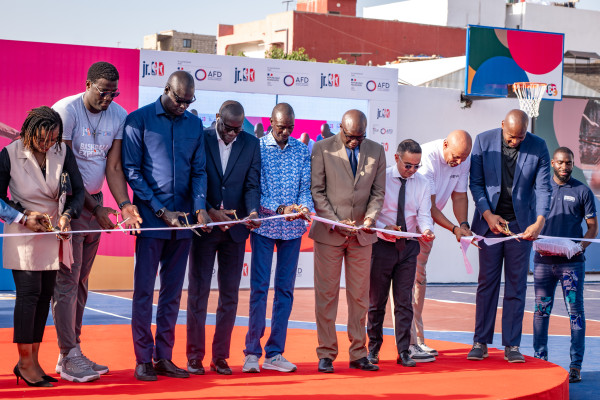
- The “Jr. NBA & AFD Basketball Experience” Will Feature Weekly Basketball and Life-Skills Sessions to Educate Senegalese Youth About the Importance of Physical and Mental Wellness -
- AFD and NBA Africa Unveil Two Refurbished Basketball Courts in Guediawaye, Senegal -
- Former NBA Player and 2015 FIBA AfroBasket Champion Olumide Oyedeji Attends Launch -
NBA Africa (www.Africa.NBA.com) and Agence Française de Développement (AFD), France's public development bank institution committed to financing and technical assistance for projects that improve the lives of people in developing and emerging economies, yesterday launched the “Jr. NBA & AFD Basketball Experience” youth development program in Guediawaye, Senegal.
The Jr. NBA & AFD Basketball Experience, launched in 2021 in Nigeria and subsequently also held in Kenya and Morocco, uses basketball as a platform to promote social inclusion and youth empowerment amongst primary and secondary school children. In Senegal, the program will be operated by nongovernmental organization (NGO) Sports for Education and Economic Development (SEED) Project and feature weekly basketball and life-skills sessions that will educate thousands of Senegalese boys and girls about the importance of physical and mental health, wellness and social cohesion.
As part of the program's launch in Senegal, NBA Africa and AFD unveiled two basketball courts at The Hamo 4.5.6. Courts in Guediawaye and held a clinic for 150 boys and girls ages 16 and under. The launch was attended by AFD Senegal Country Director Mihoub Mezouaghi; Basketball Africa League (BAL) President Amadou Gallo Fall; NBA Africa Director of Basketball Operations Kita Matungulu; and former NBA player and 2015 FIBA AfroBasket champion Olumide Oyedeji.
“Aware of the potential of sport as a vector of social cohesion, AFD has made it a strategic axis of its action to support the achievement of the Sustainable Development Goals,” said Mezouaghi. “It is in this dynamic that our collaboration with the NBA is part of what aims to promote the practice of sport in Africa through the provision of local infrastructure, the professionalization of sports educators and the organization of sports sessions, and education for young people.”
“The collaboration between NBA Africa and AFD continues to grow as we extend this initiative to reach more young people in new countries on the continent,” said Matungulu. “The Jr. NBA & AFD Basketball Experience reflects our commitment to investing in the next generation of African youth and our belief that basketball teaches life lessons like the importance of physical and mental wellness that help children succeed on the court and in life.”
The refurbished courts, part of NBA Africa's commitment to build 1,000 basketball courts in Africa over the next decade, are expected to benefit thousands of boys and girls from the surrounding communities.
The Jr. NBA & AFD Basketball Experience is part of AFD and NBA Africa's collaboration to support basketball infrastructure and youth development across the continent and builds on the program's previous editions in Morocco and Nigeria, and its recent launch in Kenya. To date, the program has reached nearly 90,000 boys and girls ages 12-17 and 460 coaches and physical education teachers.
The Jr. NBA/Jr. WNBA, the league's global youth basketball participation program for boys and girls, teaches the fundamental skills as well as the core values of the game at the grassroots level in an effort to help grow and improve the youth basketball experience for players, coaches and parents. Jr. NBA/Jr. WNBA programming has directly reached more than 250,000 youth across Africa this year.
Distributed by APO Group on behalf of National Basketball Association (NBA).
Contacts:
Chumani Bambani,
NBA Africa PR & Communications,
cbambani@nba.com,
+27 65 548 1031
Francine Pipien,
AFD Senegal,
pipienf.ext@afd.fr
About NBA Africa:
NBA Africa is an affiliate of the National Basketball Association (NBA), a global sports and media organization with the mission to inspire and connect people everywhere through the power of basketball. NBA Africa conducts the league's business in Africa, including the Basketball Africa League (BAL), and has opened subsidiary offices in Cairo, Egypt; Dakar, Senegal; Johannesburg, South Africa; Lagos, Nigeria; and Nairobi, Kenya. The league's efforts on the continent have focused on increasing access to basketball and the NBA through youth and elite development, social responsibility, media distribution, corporate partnerships, NBA Africa Games, NBA Stores, the BAL, and more.
NBA games and programming are available in all 54 African countries, and the NBA has hosted three sold-out exhibition games on the continent since 2015. The BAL, a partnership between the International Basketball Federation (FIBA) and NBA Africa, is a professional league featuring 12 club teams from across Africa that concluded its fourth season in June 2024. Fans can follow @ NBA_Africa and @ theBAL on Facebook, Instagram, X and YouTube.
About AFD:
Agence Française de Développement (AFD) Group finances, supports and accelerates the transitions necessary for a more just and resilient world. It thus contributes to implementing France's policy on sustainable development and international solidarity. It is with and for communities that we build, with our partners, solutions in more than 160 countries, as well as in 11 French overseas departments and territories.
Our objective: to reconcile economic development with the preservation of common goods: the climate, biodiversity, peace, gender equality, education and health. Our teams are involved in more than 3,600 projects in the field, which are part of the commitment of France and the French people to fulfilling the Sustainable Development Goals. For a world in common.
AFD strongly believes in the power of sport as a lever to achieve the sustainable development goals. Since the launch of its sport for development strategy in 2019, AFD has invested more than €130 million in over 160 projects that use sport as a tool to promote access to education, gender equality, youth empowerment, health and social cohesion. In Senegal, the AFD group puts its entire range of financial instruments at the service of local economic and social development actors (state, public companies, private and financial sector, NGOs, etc.) to support an inclusive development model, creating jobs, promoter of sustainable infrastructure, and respectful of the environment. Since 2012, 115 projects have been funded, representing a commitment of more than 2.2 billion euros.
Dear Editor Eskom has decided to enforce loadshedding on Joburg due to the municipality’s failure to settle its Eskom account. Eskom announced this drastic action on 7 November after Joburg’s City Power has allowed its account to fall into arrears to the tune of R6,3 billion. The Democratic Alliance (DA) in the City of Johannesburg …
Eskom serves City of Johannesburg with power interruption notice
Eskom has served the City of Johannesburg (CoJ) and its power utility, City Power, with a notice of intention to interrupt power supply at certain pre-determined times of the day.
This in accordance with the Provision of Promotion of Administrative Justice Act (PAJA).
According to Eskom, the CoJ and City Power owe nearly R5 billion in unpaid bulk electricity supply, plus a further R1.4 billion, which Eskom said will become due and payable at the end of this month.
“Despite all the avenues that Eskom explored and efforts to accommodate the CoJ, the matter has reached a point where Eskom can simply no longer afford to accommodate the CoJ without putting further financial strain on and harming its own business.
“In terms of the Constitution and the Intergovernmental Relations Framework, the CoJ is supposed to cooperate and assist Eskom with fulfilling its mandate of ensuring that citizens have access to affordable electricity.
"The CoJ has breached these obligations by not paying Eskom for the bulk electricity it supplies, making it almost impossible for Eskom to fulfil its mandate,” the power utility said.
Eskom is expected to issue a public notice to those affected to submit comments on why the power utility “should or should not proceed to interrupt electricity supply to the points mentioned in the PAJA notice”.
“A final decision on whether Eskom will proceed with the interruption will be communicated after a review of the representations received through the PAJA process on 12 December 2024,” the power utility said.
Eskom explained that municipal debt – which currently stand at some R90 billion – forces it to “borrow additional money... to fund operational costs”.
“Operational costs should be funded by revenue generated from electricity sales and not by borrowings. Borrowing money to fund operational cash shortfalls caused by the failure of municipalities, such as the CoJ, to pay Eskom for bulk electricity increases the costs of providing electricity exponentially.
“Eskom’s financial sustainability and ability to supply electricity at affordable prices is contingent upon its ability to improve its balance sheet by increasing revenue and reducing expenses. Revenue can only be increased by collecting electricity debts and/or increasing electricity tariffs,” the power utility said.
Power struggle
Eskom has said the CoJ has “acknowledged its indebtedness to Eskom, but it refuses to pay the full amount of its monthly bill”.
“The CoJ alleged, without substantiating their claim, that Eskom is overbilling it on some of its supply points.
“It is for this reason that the CoJ is applying, set-off against the monthly bills raised by Eskom, which is contrary to the electricity supply agreement and the agreements reached with its Chief Financial Officer (CFO), Rendani Sadiki, and the Chief Executive Officer (CEO) of City Power, Tshifularo Mashava, and City of Johannesburg Management.
“In more than one meeting, it was agreed that the CoJ would continue to pay whilst the alleged overbilling is investigated. This undertaking has been reneged on,” Eskom said.
The CoJ and City Power hit back and said the city “strongly condemns this move as unjust, counterproductive, and potentially harmful to the residents and businesses of Johannesburg”.
“The CoJ has consistently demonstrated its commitment to meeting its financial obligations and has engaged with Eskom to address billing issues. However, Eskom has failed to provide clarity on disputed billing charges, forcing the city to seek legal recourse to protect the rights and interests of its citizens.
“Contrary to Eskom’s claims, there are ongoing disputes regarding overbilling of over R3.4 billion, with a pending appeal and monthly declarations since July 2024. The city has repeatedly raised concerns about this continued overbilling, which Eskom has failed to address, placing additional strain on the city’s resources,” a statement from the City read.
Furthermore, the CoJ called on the national electricity provider to engage in “genuine, good-faith negotiations to resolve these matters constructively”.
“Eskom’s approach of ‘pay now and resolve disputes later’ in its dealings with the City of Johannesburg can no longer go unchallenged. There is also an option of [Intergovernmental Relations] to resolve intergovernmental disputes, which Eskom keeps disregarding. The City, in consultation with its legal counsel, will explore all available legal avenues to prevent any disruptions to the electricity supply.
“We urge Eskom to reassess its stance and engage with the City in finding a mutually beneficial resolution. In the meantime, the City has formally requested that Eskom retract the Public Notice within five days.
“The people of Johannesburg deserve reliable and efficient services, and we will not let Eskom's actions compromise their well-being. We remain committed to serving the best interests of our citizens and will take all necessary steps to protect their rights,” the statement concluded. – SAnews.gov.za
NeoB
Fri, 11/08/2024 - 10:20
Thursday, 07 November 2024: Eskom today served a notice of intention to interrupt power supply to the City of Johannesburg (CoJ) and City Power at certain pre-determined times of day in accordance with the Provision of Promotion of Administrative Justice Act (PAJA). The CoJ and/or City Power currently owe Eskom an amount of R4.9 billion,...
Casual worker claims he did not get any training before he got the job
Johannesburg, South Africa, 07 November 2024 – African businesses across various sectors face significant hurdles when attempting to engage in international trade, particularly with markets as complex and dynamic as China. From navigating intricate regulatory requirements and managing language barriers, to dealing with currency conversion challenges, the obstacles can seem overwhelming. Through the Standard Bank …