• Skip to main content
  • Skip to header right navigation
  • Skip to after header navigation
  • Skip to site footer
MyZA

MyZA

News, Directory, Events and Other Stuff

  • Social Media
  • Sport
  • World News
  • Home
  • Submit News
  • Directory
  • Events
  • Stratlec
  • TFSA
  • News
    • APO
    • Today’s Sport News
    • Todays Social Media and Tech Headlines
    • Today’s World News
    • Today’s SA Financial News
  • Contact
You are here: Home / News / City of Johannesburg to implement water restrictions

City of Johannesburg to implement water restrictions

12 November 2024 by Guest

City of Johannesburg to implement water restrictions

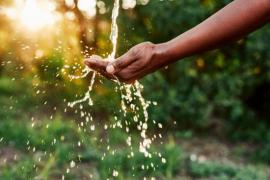
The City of Johannesburg is set to implement the throttling of water supply between 9pm and 4 am.

Set to come into effect on Thursday, the move aims to enable reservoir levels to recover overnight.

The announcement was made by Water and Sanitation Minister, Pemmy Majodina, during a media briefing held in Johannesburg on Monday. This followed an urgent meeting held on Sunday to address the challenges of water in the City of Johannesburg.

Majodina reported that the Sunday meeting reached a unanimous agreement on the causes of the water supply interruptions and what needs to be done to restore a stable water supply to residents of Johannesburg.

The Minister noted that the 2023 No Drop report found that the average consumption of water in Gauteng to be 279 litres per person per day.

“This is 60% above the world average of 173 litres per person per day, which is an anomaly given that South Africa is a water-scarce country with limited sustainable water resources and amongst the top 30 driest countries globally.”

The 2023 No Drop report also found that water losses in Johannesburg were sitting at 35%, compared to the international norm of 15%.

The No Drop programme focuses on water conservation and demand management, aimed at ensuring that water distribution systems function effectively.

Majodina said reducing water losses requires a multi-pronged approach by the city. 

This includes amongst others, improving billing and revenue collection to increase the funds available for maintenance and to provide better incentives for water to be used efficiently, improving pressure management and replacing ageing pipes which burst frequently.

The department, Rand Water, provincial government, and all Gauteng municipalities, are working together with civil society leaders, business leaders and experts to implement a large-scale communications and awareness campaign regarding the need to use water more sparingly.

“The meeting noted that an independent body called the Platform for a Water Secure Gauteng has been established to manage this campaign and that, as a first step, a dashboard has been created on the Department of Water and Sanitation website to provide the public with detailed information on the status of water supply in Gauteng,” Majodina said.

Meanwhile, measures currently being implemented by Johannesburg Water, in a bid to save water include:

•     Throttling of water supply between 9pm and 4am, to enable reservoir levels to recover overnight. The city intends to implement this continuously from 14 November until the system has fully recovered.

•    Procurement of a panel of contractors for emergency repairs of large diameter pipe water leaks as well as increasing the number of teams on standby during the week to address leaks and burst pipes.

•     Increasing the number of repair and maintenance teams on duty during the weekend with the aim of improving leak repair response times from 48 hours to 24 hours.

•     Increasing the number of trucks available to its leak repair and maintenance teams.

•     Implementing cut-offs of illegal connections in key informal settlements.

•     Implementing advanced pressure management systems, including the installation of 45 Smart Pressure Controllers (pressure reducing valves), in addition to the 15 which have been refurbished and retrofitted to date. This is aimed at reducing water losses at night when demand is low, which will substantially reduce water losses.

•     Accelerating leak detection (to date, 12 100km water pipelines have been surveyed and 2 396 burst pipes, 6 727 leaking meters, 442 leaking valves and 259 leaking hydrants were identified and repaired.) This intervention has provided an estimated water demand reduction of 9 457 million litres per annum.

•    Working with National Treasury to put in place a Public Private Partnership for the reduction of non-revenue water, to mobilize private sector funding and expertise for reducing non-revenue water.

“The political leadership in the three spheres of government are confident that these measures will be implemented with the necessary urgency. It was agreed that similar meetings will be held every Sunday to monitor progress,” Majodina said. – SAnews.gov.za


GabiK
Tue, 11/12/2024 – 12:11

119 views

The City of Johannesburg is set to implement the throttling of water supply between 9pm and 4 am.

Set to come into effect on Thursday, the move aims to enable reservoir levels to recover overnight.

The announcement was made by Water and Sanitation Minister, Pemmy Majodina, during a media briefing held in Johannesburg on Monday. This followed an urgent meeting held on Sunday to address the challenges of water in the City of Johannesburg.

Majodina reported that the Sunday meeting reached a unanimous agreement on the causes of the water supply interruptions and what needs to be done to restore a stable water supply to residents of Johannesburg.

The Minister noted that the 2023 No Drop report found that the average consumption of water in Gauteng to be 279 litres per person per day.

“This is 60% above the world average of 173 litres per person per day, which is an anomaly given that South Africa is a water-scarce country with limited sustainable water resources and amongst the top 30 driest countries globally.”

The 2023 No Drop report also found that water losses in Johannesburg were sitting at 35%, compared to the international norm of 15%.

The No Drop programme focuses on water conservation and demand management, aimed at ensuring that water distribution systems function effectively.

Majodina said reducing water losses requires a multi-pronged approach by the city. 

This includes amongst others, improving billing and revenue collection to increase the funds available for maintenance and to provide better incentives for water to be used efficiently, improving pressure management and replacing ageing pipes which burst frequently.

The department, Rand Water, provincial government, and all Gauteng municipalities, are working together with civil society leaders, business leaders and experts to implement a large-scale communications and awareness campaign regarding the need to use water more sparingly.

“The meeting noted that an independent body called the Platform for a Water Secure Gauteng has been established to manage this campaign and that, as a first step, a dashboard has been created on the Department of Water and Sanitation website to provide the public with detailed information on the status of water supply in Gauteng,” Majodina said.

Meanwhile, measures currently being implemented by Johannesburg Water, in a bid to save water include:

•     Throttling of water supply between 9pm and 4am, to enable reservoir levels to recover overnight. The city intends to implement this continuously from 14 November until the system has fully recovered.

•    Procurement of a panel of contractors for emergency repairs of large diameter pipe water leaks as well as increasing the number of teams on standby during the week to address leaks and burst pipes.

•     Increasing the number of repair and maintenance teams on duty during the weekend with the aim of improving leak repair response times from 48 hours to 24 hours.

•     Increasing the number of trucks available to its leak repair and maintenance teams.

•     Implementing cut-offs of illegal connections in key informal settlements.

•     Implementing advanced pressure management systems, including the installation of 45 Smart Pressure Controllers (pressure reducing valves), in addition to the 15 which have been refurbished and retrofitted to date. This is aimed at reducing water losses at night when demand is low, which will substantially reduce water losses.

•     Accelerating leak detection (to date, 12 100km water pipelines have been surveyed and 2 396 burst pipes, 6 727 leaking meters, 442 leaking valves and 259 leaking hydrants were identified and repaired.) This intervention has provided an estimated water demand reduction of 9 457 million litres per annum.

•    Working with National Treasury to put in place a Public Private Partnership for the reduction of non-revenue water, to mobilize private sector funding and expertise for reducing non-revenue water.

“The political leadership in the three spheres of government are confident that these measures will be implemented with the necessary urgency. It was agreed that similar meetings will be held every Sunday to monitor progress,” Majodina said. – SAnews.gov.za


Watch a City of Johannesburg to implement water restrictions related video:

Stunning South Africa:

https://pbs.twimg.com/media/EwsOYeRXMAYzO1c.jpg

Have you visited MyPR?

MyPR.co.za offers free to publish press releases for your news site, blog or offline publication. Use the handy REPUBLISH facility or the Full Text RSS Feeds or just copy and paste.

Straton Electrical | Straton Solar | Straton Prepaid | Straton Plumbing | Straton IoT | Straton eBikes | BA Systems | Mbane Contracting | Reach Trust
Share this:

  • Share on X (Opens in new window) X
  • Share on Facebook (Opens in new window) Facebook
  • Print (Opens in new window) Print
  • Email a link to a friend (Opens in new window) Email
  • Share on LinkedIn (Opens in new window) LinkedIn
  • Share on Tumblr (Opens in new window) Tumblr
  • Share on WhatsApp (Opens in new window) WhatsApp
  • Share on Mastodon (Opens in new window) Mastodon
Category: NewsTag: 2024, Africa, agreement, business, Civil Society, communications, demand, distribution, Government, Johannesburg, Meters, Partnership, SA News, South Africa, Trucks, Video, Water

If you feel strongly about this article then feel free to send MyZA a ‘Letter to the Editor’ using the submission form below:


Letter to the Editor

This field is for validation purposes and should be left unchanged.
If this is in response to an article please include that article title here or as the lead in for the first paragraph of your Letter below.

Separate tags with commas

Localise your letter by naming the city your words are about. Add relevant words describing your subject. Single comma separated words of no more than 5
Your Name(Required)
Your Name will be linked to the website below.
Your personal, business or social media web site
Choose NO to not set up a user account on MyZA. User Accounts will allow you to submit letters under your own Author Name

3 Latest Letters to the Editor:

  • Older Persons Grants Land Today — No Need to Queue at Dawn

    Dear Editor, Older Persons grants are paid today, 30 October, under SASSA’s revised November payment schedule — with disability grants on Monday 2 November, children’s grants on Tuesday 3 November, and grants under review on Thursday 5 November. Two things every beneficiary should know. First, grant money does not expire on payment day. It stays…

    30 October 2026
  • November Grants Pay Early – No Need to Queue at Dawn

    Dear Editor, I run SAGrant (sagrant.co.za), a free resource helping South Africans navigate SASSA grants. November grants pay earlier than usual. Older Persons grants are paid on Friday 30 October, Disability grants on 2 November, and Child Support and other grants on 3 November. Grants still under review are paid on 5 November. The money…

    27 October 2026
  • NSFAS 2027 applications close on 31 October — SASSA households, apply now

    Dear Editor, I run SAGrant (sagrant.co.za), a free resource helping South Africans navigate SASSA grants. NSFAS applications for the 2027 academic year close on Friday 31 October 2026, and no extension is expected. If your household receives a SASSA grant, your child already passes the NSFAS financial eligibility test — but they still have to…

    25 October 2026

About Guest

Previous Post:How People in Namaqualand Are Keeping the Nama Language Alive
Next Post:Isabella’s DreamIsabella's dream | Carte Blanche | M-Net

Reader Interactions

Comments

  1. red woman

    22 September 2026 at 2:37 pm

    I took a trip to South Africa and met a Khoisan woman.

    We really clicked.

  2. Feral Mayhem

    25 August 2026 at 6:40 pm

    Fun South African Fact: Vilakazi Street in Soweto has been home to two Nobel Peace Prize winners. A tour through Soweto will always stop at Vilakazi Street to reveal a number of heritage sites of great importance to democratic South Africa. Both Nelson Mandela and Archbishop Desmond Tutu lived here at some point in their lives. In 1984, Archbishop Desmond Tutu received the Nobel Peace Prize in recognition for his non-violent fight against the apartheid regime. Nine years later in 1993, Nelson Mandela shared the Nobel Peace Prize with then-president F.W. de Klerk as an award for their role in bringing about the peaceful end of apartheid. Nelson Mandela then went on to become South Africa’s first democratically elected president in 1994.

Copyright © 2026 · MyZA · All Rights Reserved · Powered by Stratlec Online