• Skip to main content
  • Skip to header right navigation
  • Skip to after header navigation
  • Skip to site footer
MyZA

MyZA

News, Directory, Events and Other Stuff

  • Social Media
  • Sport
  • World News
  • Home
  • Submit News
  • Directory
  • Events
  • Stratlec
  • TFSA
  • News
    • APO
    • Today’s Sport News
    • Todays Social Media and Tech Headlines
    • Today’s World News
    • Today’s SA Financial News
  • Contact
You are here: Home / Archives for Launch

Launch

2 February 2025

Government takes bold step towards a cleaner environment

Location: News

Government takes bold step towards a cleaner environment

South Africa has demonstrated its commitment to reducing landfill waste, increasing recycling rates, and promoting a circular economy with the launch of two new E-Waste Recycling pilot projects in Mpumalanga.

According to Deputy Minister of Forestry, Fisheries and the Environment (DFFE), Bernice Swarts, the improper disposal old electronic devices is a concern, as these devices contain harmful materials, such as lead, mercury, and cadmium, which can have devastating effects on the environment and public health if not properly managed.

In response to this challenge, government has launched two E-Waste Recycling pilot projects in Mpumalanga that will enable residents to bring their old and unused electronic waste, such as cell phones, computers, televisions, and other electrical appliances.

“In South Africa, we generate over 360,000 tons of e-waste annually, and unfortunately, only a small fraction of 10% of this is properly recycled. The rest ends up in landfills, or worse, is illegally dumped, posing serious risks to our ecosystems,” Swarts said.

On Friday, the Deputy Minister launched the first E-Waste Recycling pilot project in Bushbuckridge Local Municipality, and on Saturday, the same project was launched in Schoemansdal, Nkomazi Local Municipality. 

“As we all know, the municipality faces challenges with waste management, and (e-waste) is one of the most problematic. The increasing number of electronic devices being used without a proper system for disposal has led to the accumulation of waste that harms our environment and contaminates water and soil. 

“Today’s launch of the E-Waste Recycling Project is our response to this growing crisis. The goal of this project is to test and implement a sustainable system for recycling e-waste in Nkomazi,” the Deputy Minister said.

This initiative was launched in partnership with the Department of Forestry, Fisheries and the Environment, Mpumalanga Department of Agriculture, Rural Development, Land and Environmental Affairs, Ehlanzeni District Municipality, Nkomazi Local Municipality, Industry and the Producer Responsibility Organisations (PROs). 

“Through this collaboration, we aim to not only manage and dispose of e-waste responsibly but also raise awareness among communities about the importance of recycling and the dangers of improper e-waste disposal.

“The wheelie bins provided by the Producer Responsibility Organisation (eWASA) to the Nkomazi Local Municipality will be placed at designated sites, which will be determined by the Nkomazi Local Municipality and communicated widely to the community,” she said.

These bins will serve as dedicated receptacles for collecting e-waste, ensuring that it is separated from general household waste and directed to specialized recycling channels. 

E-Waste collection enterprises that are based in Nkomazi will be charged with the responsibility of servicing these designated sites through collecting the e-Waste. 

The enterprises will be led by Previously Disadvantaged Individuals and with a particular demonstration of transformation and inclusivity.

“The collection and recycling of Waste Electrical and Electronic Equipment (WEEE) will prevent toxic substances from leaching into the soil and water, protecting both our environment and our health.

“One of the key aspects of the Extended Producer Responsibility Regulations is the legal requirement for Producer Responsibility Organisations to provide a service fee for waste collection by the informal waste sector, waste pickers,” Swarts said.

This service fee is over and above the money that waste pickers get for “selling” the waste.

“Furthermore, this project is about more than just waste management, it is about creating jobs and stimulating local economic development. Through this initiative, we are engaging more Producer Responsibility Organisations (PROs) to facilitate the increase of e-Waste recycling. 

“These organisations play a crucial role in managing the end-of-life phase of electronic products and are an important part of the national effort to promote a circular economy, where materials are reused and recycled rather than discarded. 

“Through collaboration with these organisations, we can ensure that this project is sustainable and scalable, with the potential to expand across other regions in the future. The importance of this project cannot be overstated. Not only will it help Nkomazi manage its e-waste problem more effectively, but it will also contribute to our country’s broader environmental goals,” the Deputy Minister said.

 As part of the National Waste Management Strategy 2020, South Africa has committed to reducing waste sent to landfills, increasing recycling rates, and promoting a circular economy. 

“The Extended Producer Responsibility (EPR) regulations, which place responsibility for end-of-life products on producers, are key to this vision. By encouraging industry involvement in waste management, we are ensuring that those who create waste are also part of the solution.

“In the coming months, we will monitor the progress of this project to ensure that it meets its objectives. This includes tracking the volume of e-waste collected, the effectiveness of the community awareness campaigns, and the number of local jobs created through the project. 

“Our goal is to ensure that this project becomes a success story and a model that can be replicated across other municipalities in Mpumalanga and beyond,” the Deputy Minister said. -SANews.gov.za

nosihle
Sun, 02/02/2025 - 10:02

181 views
Read moreGovernment takes bold step towards a cleaner environment
30 January 2025

SIU investigates Defence Department, KwaDukuza Municipality and Mpumalanga Education

Location: News

SIU investigates Defence Department, KwaDukuza Municipality and Mpumalanga Education

The Special Investigating Unit (SIU) is rolling up its sleeves in preparation to launch three separate investigations into the Department of Defence, the KwaDukuza Municipality in KwaZulu-Natal, and the provincial Mpumalanga Department of Education.

The three investigations were given the green light by President Cyril Ramaphosa after he signed proclamations authorising the tender corruption related probes.

Department of Defence

The Department of Defence is under the SIU’s investigative microscope for allegations of “serious maladministration” related to two tenders.

These tenders relate to inventory verification, continuous asset verification, and the supply, delivery, installation and commissioning of an asset management system.

“The probe will also examine whether the payments for these contracts adhered to national treasury guidelines and ascertain whether the payments were irregular, fruitless, and wasteful expenditures or financial losses for the department or the state,” the SIU said.

The probe will also hone in on department employees to “establish if there was unlawful or improper conduct” by the employees, officials or agents and any other person or entity to “corruptly or unduly benefit themselves or others”. 

“The investigation will also look at whether fraudulent conduct occurred, including the causes of such maladministration, any losses, damages, or prejudice actually or potentially suffered by the Department or the State, and any irregular, improper, or unlawful conduct by employees or officials of the Department or any other person or entity,” the corruption busting unit said.

Mpumalanga Department of Education

The SIU has set its sights on probing six contracts related to the “procurement and contracting for the supply of foodstuff for six schools in the province.

Investigations will assess whether the department followed National Treasury guidelines and if any irregular, fruitless, and wasteful expenditures or financial losses were incurred.

“Furthermore, the SIU will seek to establish if there was unlawful or improper conduct by the department employees, officials, agents, and any other person or entity to corruptly or unduly benefit themselves or others.

“The investigation will also at whether fraudulent conduct occurred, including the causes of such maladministration, any losses, damages, or prejudice actually or potentially suffered by the department or the State, and any irregular, improper, or unlawful conduct by employees or officials of the department or any other person or entity,” the SIU said.

KwaDukuza Municipality

The probe into the KwaZulu-Natal-based municipality will investigate three infrastructure tenders issued by the municipality.

According to the proclamation, the tenders under investigation are:

  • Tender MN132/2018 - Panel of contractors for road rehabilitation for a 36 month contract;
  • Tender MN30/2019 - KwaDukuza Mall Bulk Supply; and
  • Tender MN240/2019 - KwaDukuza Mall Bulk Supply – construction of industrial 33/11 KV substation upgrade.

“The SIU probe will examine whether the procurement and contracting were made in a manner that was not fair, competitive, transparent, equitable, or cost-effective or in violation of applicable legislation, guidelines, or instructions from the National or Provincial Treasury. This includes the municipality or the State’s unauthorised, irregular or wasteful expenditure. 

“The probe will also look at any irregular, unlawful, or improper conduct by officials or employees of the municipality, its suppliers or service providers, or any other person or entity implicated,” the SIU said.

Holding wrongdoers to account

The SIU assured that any evidence of alleged criminal acts will be referred to the National Prosecuting Authority for further action.

“Under the SIU Act, the SIU is also authorised to initiate a civil action in the High Court or a Special Tribunal in its name to address any wrongdoing identified during its investigation resulting from acts of corruption, fraud, or maladministration,” the SIU concluded. – SAnews.gov.za

NeoB
Thu, 01/30/2025 - 11:16

321 views
Read moreSIU investigates Defence Department, KwaDukuza Municipality and Mpumalanga Education
30 January 2025

Nelson Mandela Bay kicks off service delivery campaign

Location: News

Nelson Mandela Bay kicks off service delivery campaign

Nelson Mandela Bay Municipality Mayor, Babalwa Lobishe, has kicked off a service delivery resuscitation campaign, which aims to ensure all metro communities receive the services they need.

Aligned with the municipality’s 100-day priorities, the campaign named “Siyasebenza Campaign: A Metro at Work”, focuses on accelerating service delivery and enhancing the quality of life for residents.

Through the Siyasebenza Campaign, Lobishe is calling on local communities, businesses, and non-governmental organisations to collaborate with the municipality to improve service delivery across the metro.

The inclusive campaign, which was rolled out in Kariega this week, will address immediate concerns, including illegal dumping, street cleaning, grass cutting, pothole repairs, fixing streetlights, and upgrading public spaces.

The campaign aims to deliver visible results, while also committing to long-term interventions to ensure sustainable service delivery improvements.

During the launch of the campaign, teams including Members of the Mayoral Committee (MMCs), and senior officials, were deployed in various groups to cover areas across Kariega and Dispatch.

The teams attended to different service delivery challenges, including blocked sanitation infrastructure, water leaks, flooding, electricity cable theft, and general vandalism.

Speaking to residents in the affected areas that were identified by ward councillors, Lobishe said the municipality was closely monitoring the service delivery challenges faced by the communities and was working to address them.

For longer-term challenges, she said the municipality was developing sustainable solutions.

The Mayor said they were targeting wards in Kariega that were predominantly affected by the floods last year.

“We must, however, express our extreme concern and disappointment at the high levels of vandalism, currently being experienced in Kariega. We call on our people, and law enforcement to work together with us in apprehending these destructive culprits.

“Vandalism of infrastructure slows down service delivery as money meant for other community needs may be redirected to fix infrastructure that has been intentionally damaged by criminals. This does not only negatively affect our financially constrained municipality but prevents the community from enjoying services they so desperately need,” Lobishe said.

Infrastructure and Engineering Acting Executive Director, Joseph Tsatsire, affirmed the municipality’s commitment to accelerating service delivery.

"We shall be mobilising resources to accelerate the pace of service delivery, more especially in the areas identified under this campaign. Our teams are already at work, dealing with issues ranging from sanitation, water leaks and replacing vandalised infrastructure,” Tsatsire said. – SAnews.gov.za

GabiK
Thu, 01/30/2025 - 13:44

160 views
Read moreNelson Mandela Bay kicks off service delivery campaign
28 January 2025

Revisiting the Africa-Paris Declaration: Progress, Challenges and the Road Ahead for African Energy

Location: News
Energy Capital & Power

The Africa-Paris Declaration, forged during the 2024 Invest in African Energy (IAE) Forum in Paris, was a pivotal moment in Africa's quest for sustainable energy solutions. Aimed at strengthening the continent's energy transition while addressing the urgent issue of energy poverty, the declaration set ambitious targets for expanding access to clean, affordable and reliable energy. With the 2025 edition of the forum approaching, now is the time to reflect on the progress made since the Africa-Paris Declaration and assess how these initiatives are shaping Africa's energy future.

Increased Engagement in Africa

In the months following the declaration, international investors, development banks and private equity firms have shown a steadfast interest in the African energy market. A key milestone was the launch of the Africa Energy Bank by the African Export-Import Bank and APPO, marking the creation of a first-of-its-kind institution designed to fund and facilitate energy initiatives across the continent. Several final investment decisions were successfully closed, including Shell's $5.5 billion Bonga North deepwater project. Additionally, strategic partnerships, including new PSCs signed by Panoro Energy in Equatorial Guinea and BW Energy in Gabon, highlight how international collaborations are accelerating energy development and creating new opportunities for exploration and production. This increased engagement is key to addressing the financing gap that has long hindered the growth of Africa's energy sector.

Natural gas continues to play a central role in Africa's energy strategy as a transitional fuel. The Africa-Paris Declaration underscored its importance as a bridge between traditional energy sources and renewable energy. Over the past year, significant strides have been made in natural gas exploration and LNG exports. Notable developments include Senegal's Greater Tortue Ahmeyim LNG reaching its first gas production, the Republic of Congo's first LNG exports to Italy from the Congo LNG project, Nigeria's UTM FLNG receiving its construction license, and Angola's Sanha Lean Gas Connection project achieving first gas, among others. These initiatives are not only crucial for advancing Africa's energy transition, but also serve as powerful drivers of economic growth by creating jobs and advancing infrastructure development.

Meanwhile, countries like South Africa, Egypt and Morocco are at the forefront of wind and solar energy development, with momentum expected to build as they meet renewable energy targets and explore new growth opportunities. These investments are driving a shift toward cleaner, more sustainable energy in Africa, though challenges remain. High costs of renewable technologies and insufficient grid infrastructure continue to hinder expansion, underscoring the need for more investment in off-grid and mini-grid solutions.

Investment Gaps Persist 

Despite these advancements, Africa still faces significant investment challenges. The financing gap for large-scale energy projects remains substantial and while the private sector has become more engaged, many projects still struggle to secure the necessary capital. In particular, the cost of financing remains high due to the perceived risks associated with energy investments in Africa. This is where continued efforts to de-risk investments and foster public-private partnerships are critical to unlocking the continent's full energy potential. Institutional capacity continues to be a challenge for many African countries. While progress has been made in improving regulatory frameworks, there is still a need for clearer policies, streamlined permitting processes and better enforcement of regulations. Governments must continue to strengthen their institutions to effectively implement energy projects and create an enabling environment for both local and international investors.

With the IAE 2025 forum just months away, industry stakeholders have an opportunity to reflect on the progress made since the Africa-Paris Declaration and determine next steps for the continent's energy future. The forum serves as a platform for government officials, industry leaders and financial institutions to renew commitments, share success stories and address ongoing challenges. While the road to universal energy access and a sustainable energy future is long, the declaration has set the framework for a collective effort that can lead to meaningful change. With the right investments, regulatory frameworks and political will, Africa can emerge as a global leader in energy innovation and sustainability.

Distributed by APO Group on behalf of Energy Capital & Power.

IAE 2025 (www.Invest-Africa-Energy.com) is an exclusive forum designed to facilitate investment between African energy markets and global investors. Taking place May 13-14, 2025 in Paris, the event offers delegates two days of intensive engagement with industry experts, project developers, investors and policymakers. For more information, please visit www.Invest-Africa-Energy.com. To sponsor or participate as a delegate, please contact sales@energycapitalpower.com.

Media files
Energy Capital & Power
Download logo
Read moreRevisiting the Africa-Paris Declaration: Progress, Challenges and the Road Ahead for African Energy
28 January 2025

Africa showcases tourism offering

Location: News

Africa showcases tourism offering

South Africa is today hosting a media launch to pave the way to the 19th edition of Meetings Africa -- the continent's premier business events trade show.  

Tourism Minister Patricia de Lille and Deputy Minister Maggie Sotyu are today leading the launch, which is taking place at the Johannesburg Stock Exchange where they will share key information about Meetings Africa.

South African Tourism, in partnership with the Gauteng Tourism Authority, Johannesburg Tourism Company and the Sandton Convention Centre, will host the 19th Meetings Africa.

The prestigious gathering will take place at the Sandton Convention Centre in Johannesburg from 25 - 26 February 2025. This will be preceded by the Business Opportunity Networking Day (BONDay) on 24 February, which is designed to foster meaningful connections and collaborations.

Meetings Africa

Meetings Africa is the leading platform that showcases Africa's diverse business events, products and experiences. It will be held under the theme: “Africa’s success built on quality connections.” 

The event highlights collaboration and knowledge sharing to drive the continent’s success and growth.

This year, Meetings Africa will once again bring together hundreds of exhibitors, buyers and key decision-makers from the global business events sector. 

It is a sought-after platform designed to drive engagement, create impactful connections, and unlock new opportunities for Africa's business events industry.

With attendees expected from 19 African countries and 52 international markets, the event is set to amplify Africa’s positioning as a world-class destination for business events.

Meetings Africa 2025 also capitalises on the tourism sector’s remarkable recovery momentum and its potential to propel economic growth across the continent.

The media launch will include a panel discussion by tourism and business events leaders including South African Tourism CEO, Nombulelo Guliwe; Sithembiso Dlamini, the CEO of Gauteng Tourism Authority; Rick Taylor, the CEO of The Business Tourism Company; Glenton de Kock, the CEO of the South African Association of the Conference Industry, and Gwen Ncube, the Director for Stakeholder Relations at Small Tourism Enterprise Association (STEA). – SAnews.gov.za

Edwin
Tue, 01/28/2025 - 10:02

71 views
Read moreAfrica showcases tourism offering
22 January 2025

President Ramaphosa outlines SA’s G20 Presidency priorities at WEF

Location: News

President Ramaphosa outlines SA's G20 Presidency priorities at WEF

President Cyril Ramaphosa has highlighted the significance of South Africa's G20 Presidency and the economic priorities of the South African Government of National Unity during a special address to the 55th World Economic Forum in Davos-Klosters, Switzerland.  

The President told world leaders that South Africa will focus its G20 Presidency on three themes - namely solidarity, equality and sustainable development. 

He emphasised the country’s commitment to advancing a just energy transition, fostering inclusive growth and addressing global inequalities.  

“As a leading forum for international economic cooperation, the G20 plays an important role in shaping and strengthening global architecture and governance on major international economic issues,” the President said. 

He pointed out that the G20 is being hosted on the African continent for the first time in history. 

“This is a moment of great significance for South Africa, the African continent and the world in that it was in Africa where humans developed the capacity and the impulse for cooperation. 

“Cooperation has been one of the key markers of human development touching on many aspects of life, from survival and social organisation to technological and cultural progress, which is what the G20 was established for - to foster cooperation to deal with the challenges the world faces. Cooperation is the bedrock of human civilisation,” President Ramaphosa said. 

He referred to former President Nelson Mandela’s speech at the WEF annual meeting 33 years ago, when Tata Madiba said: “Our interdependence, bringing us together into a common global home, across the oceans and the continents, demands that we all combine to launch a global offensive for development, prosperity and human survival.”

President Ramaphosa said South Africa's G20 Presidency is aimed at pursuing the objective of fostering solidarity, equality and sustainable development. 

“It is South Africa’s firm view that these themes can best be taken forward through the collective actions of institutions like the G20 and various multilateral institutions of the world, especially the United Nations, the WTO [World Trade Organisation] and global financial institutions, which should be reformed and be more representative and responsive to the needs of the citizens of the world.  

“We will seek to get the G20 to focus more on how we can enhance solidarity through collective efforts to ensure that in the pursuit of progress for all, no person and no country is left behind,” the President said. 

He emphasised that the rights and freedoms of one people cannot be separated from the rights and freedoms of all peoples. The President said that this is the foundation on which solidarity is built. 

He said one of the greatest impediments to growth, development and stability is the persistence of inequality within and between countries.

The pursuit of the UN Sustainable Development Goal on reducing inequality is as much of an economic imperative as it is a social imperative, President Ramaphosa said.

“As the G20, we need deliberate and coordinated efforts to focus on inclusive growth based on responsive trade and investment to grow the incomes of poor nations and the poorest in society and to ensure equal access to opportunities especially for women and young people.

“For nations to flourish, equality and prosperity must be available to everyone – regardless of gender, race, religious beliefs or economic status,” he said. 

Mobilising Finance for a Just Energy Transition

Another of South Africa’s priorities for its G20 Presidency is to mobilise finance for a just energy transition. 

President Ramaphosa underscored the need for enhanced climate financing, urging global financial institutions to redirect unused Special Drawing Rights to support developing economies, particularly in Africa and the Global South.

“It is simply not fair that over 60% of Special Drawing Rights are concentrated in a handful of wealthy countries. These resources should empower countries in Africa to invest in infrastructure, education, health care, and industrial development,” the President said. 

He called for innovative financing mechanisms and private capital to scale sustainable development, urging global institutions to derisk and support financing for emerging markets.

Highlighting South Africa’s Just Energy Transition Partnership, the President said: “We must accelerate the transition to low-carbon economies in a manner that is just and inclusive, while recognising the damage that climate change has already caused.”

Strengthening disaster resilience

With the increasing frequency of climate-induced natural disasters, President Ramaphosa said South Africa has therefore made the strengthening of disaster resilience as one of the priorities of its G20 Presidency.

He called for special financing and insurance mechanisms to support post-disaster reconstruction, particularly in vulnerable regions.

Harnessing critical minerals for inclusive growth

President Ramaphosa said another priority is to harness critical minerals for inclusive growth and development. 

“We need a G20 framework on green industrialisation and investments to ensure progress towards a grand bargain that promotes value addition to critical minerals close to the source of extraction.

“We also need the development of low-carbon manufacturing value chains which can support decarbonisation and industrial development. As mineral extraction accelerates to match the needs of the energy transition, the countries and local communities endowed with these resources must be the ones to benefit the most,” the President said. 

Showcasing Africa’s promise

President Ramaphosa highlighted Africa as the next frontier of global growth, with its abundant natural resources, young population and expanding markets.

He called for G20 support for the African Continental Free Trade Area (AfCFTA) Adjustment Fund, investments in infrastructure, youth skills development, and women’s economic empowerment.

“The digitisation of the continent to enhance trade and development is a key enabler. Through its G20 Presidency, South Africa is well-positioned to advance global cooperation and build partnerships for growth and development,” he said. 

Advancing global cooperation

President Ramaphosa praised South Africa’s inclusive governance under the Government of National Unity, which he credited with fostering stability and investor confidence.

“This cooperative culture and approach was taken to a higher level with the establishment of the Government of National Unity following the elections we held in May last year.

“The Government of National Unity, made up of 10 political parties, has been vital to stability and inclusive governance, and has contributed to greater interest among investors in South Africa’s economic prospects,” he said. 

The President said over the last few years, the South African government has been working closely with social partners in business and in labour to address key national challenges and drive inclusive growth.

Concluding his address, President Ramaphosa extended an invitation to world leaders to attend the G20 Summit in Johannesburg later this year.

He said the seeds of human progress were sown in Africa, where the earliest forms of cooperation were forged and developed.

“As the leaders of the G20 return to Africa, we make a call that we all harness these essential capabilities that will make us take action to build a better and fairer world. We intend that the G20 in Johannesburg this year should be a forum where cooperation and collaboration amongst the leading economies in the world will be taken to a higher level.

“Acting together, we should build an inclusive, just and equal world in which all may prosper, leaving no one and no country behind. I look forward to welcoming you to the G20 in Johannesburg later this year. 

“Even if you do not participate in any of the 130 G20-related meetings, I invite you to come and see South Africa for yourself, the most beautiful country in the world,” he said. – SAnews.gov.za

DikelediM
Wed, 01/22/2025 - 12:30

10 views
Read morePresident Ramaphosa outlines SA’s G20 Presidency priorities at WEF
21 January 2025

VFS Global’s new Indonesia e-Visa on Arrival official platform goes live for 97 nationalities, including South Africa

Location: News
VFS Global

  • Dedicated website https://IndonesiaVoA.VFSeVisa.id/ to complete the Indonesia e-VoA application
  • Simple to use end-to-end online platform accessible from desktop and mobile
  • Significant reduction in wait times at immigration upon arrival in Indonesia

VFS Global (www.VFSGlobal.com), the world's largest outsourcing and technology services specialist for governments and diplomatic missions, has launched its new user-friendly and efficient online platform to make Indonesia's Electronic Visa on Arrival (e-VoA) application process seamless for travellers, promote inbound tourism, and enhance overall customer experience. The platform is in line with Indonesian government's ongoing efforts to enhance its tourism infrastructure and services to welcome 14 million visitors in 2025.

VFS Global's new e-VoA platform, is available for nationals of all the 97 countries eligible for e-VoA (http://apo-opa.co/40si4qG), including South Africa. Travellers can now enjoy a quicker and smoother visa application journey through VFS Global by completing the entire process online and receiving a pre-approved e-VoA before departure.

Jiten Vyas, Chief Commercial Officer and Head of Business Development, VFS Global, said,
“As a company, we are constantly working towards innovations which provide a seamless visa application submission experience to our customers. The launch of this innovative, secure, and user-friendly digital e-Visa on Arrival platform for Indonesia will undoubtedly streamline the visa application process, making it faster, easier, and more convenient. With Indonesia being a globally sought-after destination, we are honoured to assist visitors from 97 countries by facilitating their entry into this incredible country through this platform.”

Here are the four simple steps to apply for Indonesia e-VoA:

  1. Visit https://IndonesiaVoA.VFSeVisa.id/
  2. Submit all the required documents
  3. Pay the necessary fees
  4. Receive a pre-approved e-VoA on email before departure

With the payment having been made online, travellers can enjoy a smoother and faster entry experience through E-gates or immigration counters.

VFS Global's new e-VoA platform will ensure all the documents applicants submit are complete and error-free. It also offers OCR technology which will enable applicant details to be auto populated, thereby saving time and effort for applicants. The new platform will also provide group booking facility which could be beneficials for travel trade and conventions.

Travellers applying for Indonesia e-VoA via VFS Global will get a dedicated email and live support in seven languages - English, Mandarin, Japanese, Korean, Arabic, German, and French – to help them with their queries. VFS Global will add more language support in due course of time for key markets.

Distributed by APO Group on behalf of VFS Global.

Media Contact:
George Cherian
Corporate Communications
georgec@vfsglobal.com
communications@vfsglobal.com

About VFS Global:
As the world's leading outsourcing and technology service specialist, VFS Global embraces technological innovation including Generative AI to support governments and diplomatic missions worldwide. The company manages non-judgmental and administrative tasks related to applications for visa, passport, and consular services for its client governments, increasing productivity and enabling them to focus entirely on the critical task of assessment.

With a responsible approach to technology development, adoption and integration, the company prioritizes ethical practices and sustainability while serving as the trusted partner to 69 client governments.  Operating over 3,400 Application Centres in 152 countries, VFS Global has efficiently processed more than 303 million applications since 2001.

Headquartered in Zurich and majority owned through investment funds managed by Blackstone Inc, along with the Swiss-based Kuoni and Hugentobler Foundation and EQT, VFS Global is committed to creating value for all stakeholders and leading in responsible, innovative solutions making government services more effective and efficient.

Media files
VFS Global
Download logo
Read moreVFS Global’s new Indonesia e-Visa on Arrival official platform goes live for 97 nationalities, including South Africa
17 January 2025

NW rolls out service delivery programme to Matlosana City

Location: News

NW rolls out service delivery programme to Matlosana City

The North West Provincial Government is launching the Accelerated Service Delivery Programme – Thuntsha Lerole Reloaded - for residents of the City of Matlosana Local Municipality. 

The programme launch, which is currently underway at the Philemon Masinga New Sports Complex in Extension 9, Khuma Township, is being led by Premier Kagiso Lazarus Mokgosi, joined by Members of the Executive Council (MECs), as well as local and district Executive Mayors.

The programme aims to improve the municipalities’ basic infrastructure and also focus on monitoring and enforcing consumer compliance, while promoting the delivery of essential services in a coordinated and collaborative manner.

“Moreover, the programme aims to provide the communities with an opportunity to engage with the provincial leadership on service delivery issues,” the provincial government said in a statement. 

Several service delivery activities will take place at the launch, and these include the official handover of the Kosh Honey Bee project to subsistence farmers in Wildebeespan. 

Three RDP houses will also be handed over in Kanana, while 10 title deeds will be presented to the beneficiaries in Khuma. 

To support local communities with an interest in poultry production, government will distribute layer chickens to 13 military veterans who will each receive 50. 

The provincial government said additional services will include road maintenance, distribution of food parcels to identified destitute families, agricultural support packages for households in Khuma and Vaal Reefs, and sanitary towels for identified schools in Khuma.

The officials will also help with the registration of indigents and updating of local business details on the Central Supplier Database (CSD) and online application for identity documents (IDs) and social support services. 

“As a constant and critical feature of this service delivery programme, a platform will be created for Premier Mokgosi, MECs, and the Executive Mayors to engage with the community on progress registered in implementing various service delivery projects and programmes in their municipality. 

“This community feedback session will be held after the leadership visits various service delivery sites,” the provincial government said. – SAnews.gov.za
 

Gabisile
Fri, 01/17/2025 - 11:50

233 views
Read moreNW rolls out service delivery programme to Matlosana City
17 January 2025

What to Expect at African Energy Week 2025

Location: Business
African Energy Chamber

Africa is on the precipice of accelerated growth, with major energy projects and untapped resources creating an attractive environment for project developers and financiers. With the continent's energy demand projected to more than double by 2050 and fossil fuels expected to comprise up to 60% of the energy mix by 2040, there lies a strategic opportunity for companies to invest, energy portfolios to grow and countries to reap the rewards of their oil, gas and energy resources.

Returning for its next edition from 29 September to 3 October at the Cape Town International Convention Center, the African Energy Week (AEW): Invest in African Energies conference serves as the leading platform for deal-making, energy partnerships and investments. Building on the success of its previous editions, the event offers a platform for capital and technology to be directed towards African energy projects. In 2025, the event returns bigger and better than before.

Greater Focus on Projects, Emerging Opportunities

With 2025 promising to be an impactful year for Africa's energy sector, the AEW: Invest in African Energies conference will further catalyze development by connecting investors to African projects. On the project front, a slate of major developments is either progressing or will begin operations. These include the second phase of the Congo LNG project; the full operation of the Greater Tortue Ahmeyim development in Senegal/Mauritania; the launch of the Cabinda Refinery in Angola; appraisal drilling in Namibia's Orange Basin, and many more. Strategic developments such as the East African Crude Oil Pipeline, the Mozambique LNG project and exploratory drilling continent-wide require capital, highlighting emerging opportunities for global financiers.

Additionally, Africa's 2024/2025 licensing rounds signal a renewed drive to position the continent as a leading frontier. In North Africa, Libya plans to launch a bid round featuring 22 blocks, Egypt plans to host an international bid round for 12 exploration blocks while Algeria will launch a tender featuring 6 onshore blocks. In West Africa, Mauritania, Nigeria and Liberia will launch licensing rounds, while in Southern Africa, Angola will offer 9 blocks for exploration, Namibia is rolling out a new open-door policy and Tanzania will promote 24 oil and gas blocks in March 2025. These opportunities will be on display at AEW: Invest in African Energies 2025, creating an in-roads for new players.

Uniting Stakeholders to Make Energy Poverty History by 2030

As the largest energy event on the continent, AEW: Invest in African Energies convenes energy, finance and policy stakeholders from the global and African markets. From presidents and ministers to explorers and infrastructure developers to financiers and technology leaders, the event serves as the premier event for the African energy sector. This year, the event offers an expanded program, covering strategic topics such as frontier exploration, refining and processing, power development and connectivity, green hydrogen, regulation and skills development. Speakers will not only address the pressing challenges impacting the continent's energy progress but showcase the range of investment opportunities available across the continent. AEW: Invest in African Energies is where African governments meet, international energy firms sign deals, and local companies drive the next wave of energy development in Africa.

Collaborating for a Just Energy Future

While the world prioritizes the development of renewable energy over traditional energy sources, African countries seek to drive a just energy transition that incorporates a variety of energy solutions. AEW: Invest in African Energies not only promotes a just transition in Africa but offers a platform where global and African energy stakeholders can forge a new pathway for the continent. Discussions in Cape Town will center on strategies for accelerating industrialization, how technologies such as gas-to-power and LNG can reduce emissions while bolstering energy security, and the impact of integrated energy systems on African economies. By driving a narrative of inclusivity, AEW: Invest in African Energies fosters collaboration, partnerships and cross-sector investments.

Policy Alignment, Global Engagement

To attract fresh investment in African energy projects, a slate of countries has enacted policy reforms to strengthen transparency and investor certainty. Nigeria signed the Petroleum Industry Act into law; South Africa launched a new petroleum company; the Republic of Congo is preparing to launch a Gas Master Plan; while Algeria has strengthened regulation to attract local participation in oil and gas projects. In conjunction with improved fiscal terms and rules of engagement, these policies have significantly enhanced the business environment in Africa, making 2025 a strategic year to invest in African energy.

For more information about AEW: Invest in African Energies 2025, visit www.AECWeek.com.

Distributed by APO Group on behalf of African Energy Chamber.

Media files
African Energy Chamber
Download logo
Read moreWhat to Expect at African Energy Week 2025
13 January 2025

Inquiry makes recommendations to improve competition in fresh produce market

Location: News

Inquiry makes recommendations to improve competition in fresh produce market

The Fresh Produce Market Inquiry has released its final report, which identifies features within the fresh produce value chain that impede, restrict and distort competition.

The inquiry, initiated by the Competition Commission, follows rigorous analysis and extensive stakeholder engagement aimed at assessing competition within South Africa's fresh produce market.

The inquiry began on 31 March 2023 and assessed the fresh produce value chain across three main themes, including the efficiency of the value chain, concentrating on fresh produce market facilities; market dynamics of key inputs and their impact on producers, and barriers to entry, expansion and participation.

At a media briefing on Monday where the report was launched, Deputy Commissioner and chair of the inquiry, Hardin Ratshisusu, noted that the fresh produce market – valued at some R53 billion annually (excluding informal sales channels and exports) – presents “significant opportunity for growth and inclusion”. 

“However, the share of participation by historically disadvantaged farmers and market agents remains low. 

“This underrepresentation is a stark reminder of the sector’s historical inequities and the urgent need for meaningful participation in the economy and transformation in South Africa,” he said.

The inquiry, on the main, focused on five fruits, namely, apples, citrus (notably oranges and soft citrus), bananas, pears and table grapes, along with six vegetables, including potatoes, onions, carrots, cabbage, tomatoes and spinach. These products are staples in South African households.

Ratshisusu outlined the following six concerns related to competition in the fresh produce sector:

  • Inefficient municipal fresh produce markets;
  • Inefficiencies in the value chain;
  • The conduct of fresh produce market agents;
  • High input costs (particularly for certain fertilisers and seeds);
  • Regulatory obstacles, and 
  • Systemic barriers to entry for small-scale, emerging and historically disadvantaged farmers.

Ratshisusu said in order to disrupt the status quo, dynamism is required in the form of new and diverse lower cost models of retailing, which will allow greater pass through of farmgate and supplier prices.

“Localised competition, particularly from SMMEs and HDP [historically disadvantaged persons] independent retailers with diverse models, including through greater procurement from National Fresh Produce Markets (NFPM), is required for more dynamic competition in fresh produce retail. 

“This, in turn, requires efficiently functioning NFPMs and effective policies to support alternative retail models,” Ratshisusu said.

Honing in on historically disadvantaged farmers, Ratshisusu said the inquiry found that these farmers are hitting hard ground when it comes to accessing formal retail channels and national fresh produce markets.

“[To] enhance the participation of SMMEs and HDPs and to improve their ability to innovate and upgrade in grocery retail value chains in South Africa, and to create a fairer and more level playing field, the inquiry is of the view that the feasibility of a mandatory code of conduct be investigated further. 

“There are valuable lessons to be learnt and applied to the South African context based on the experience of international best practice,” he said.

Consumer bite

Troublingly for the consumer, the inquiry found that with regard to retailer pricing of certain fresh produce, “supermarket sales and pricing revealed instances of high mark-ups of total revenue over what suppliers are paid for some of the selected products in the periods analysed”.

“However, net margins - after the high costs of supermarket chain operations are accounted for - are slim. This indicates concerns in the value chain, where high rents may be extracted at the supermarket level of the value chain. 

“The implication is that under the current models of modern food retailing, supermarket chains are not efficiently transmitting prices obtained from farmers to consumers for these produce categories. This suggests that competition in the formal retailing of fresh produce is not as healthy as it could be,” Ratshisusu said.

Moving forward

Ratshisusu explained that to resolve the challenges in the fresh produce market and related distortions to competition in the sector, the inquiry has identified a set of 31 “practical and reasonable remedies”.

“These measures, which include recommendations for policy reform, market restructuring, and targeted support for small-scale, emerging and historically disadvantaged farmers, are intended to promote competition, lower barriers to entry, and create a more inclusive and competitive fresh produce value chain,” he said.

The full report, including recommendations and remedies, is available on the commission’s website at https://www.compcom.co.za/fresh-produce-market-inquiry-final-report-launch.

On the importance of the inquiry, Ratshisusu told the media that the report is “more than a document, as it provides rich insights into the domestic fresh produce market and, more importantly, a path towards economic inclusion”. 

“It reflects the need to address entrenched challenges and create a market that works for all, from the smallest farmer to the largest retailer, and ultimately for the consumer.

“Market inquiries are an important strategic focus area of the Competition Commission to tackle high market concentration and barriers to entry in markets to achieve economic inclusion and transformation. 

“This report therefore signifies the Commission’s resolve, in a transparent, objective and evidence-based manner, to fostering competitive markets that promote economic growth, economic transformation and contribute to the broader socio-economic objectives of the country,” Ratshisusu said. – SAnews.gov.za

NeoB
Mon, 01/13/2025 - 12:28

40 views
Read moreInquiry makes recommendations to improve competition in fresh produce market
9 January 2025

A Booming Continent Needs a New Payment Infrastructure

Location: Business
MultiChoice Group

Africa is an exciting, vibrant and creative place to do business. But make no mistake, it has its challenges. Currency devaluation, political instability, and service disruptions are endemic. Africa is not for sissies, as the saying goes.

In navigating those challenges, relationships matter. It's not so much about throwing money at a problem, it's about investing time, building trust, meeting with partners and regulators, and understanding each other's needs.

Africa offers an enormous upside for those prepared to make this time investment. The continent's population is set to reach 2.5 billion (http://apo-opa.co/3W7Kp4w) by 2050, and Africa's people are embracing digital technology, as the World Bank (http://apo-opa.co/3Waln4F) confirms. They are leveraging digital connectivity to improve their lives, educate themselves, send remittances, and start small enterprises. There is value in investing in that level of human development.

The payments opportunity

Running through this African growth trajectory is a particular business thread: payments (http://apo-opa.co/3WawLxk). There are opportunities for anyone who can simplify, rationalise and standardise payments for the continent's dynamic financial economy.

An organisation in just such a position is MultiChoice (www.Multichoice.com/), the leading pan-African video entertainment provider for almost 40 years. In building a pay-TV network across the continent, with up to 23.5 million (http://apo-opa.co/3WawOJw) customers across 50+ markets, and 100 million+ monthly viewers, MultiChoice also built relationships across the continent to collect payments, for DStv, GOtv, and Showmax – potentially the only large enterprise to need such enormous breadth.

The Group has converted the opportunity that this represents, partnering with global venture-capital firm General Catalyst and payments company Rapyd to launch Moment (http://apo-opa.co/4ad1H5N), which aims to be the broadest, deepest payment network across Africa.

Launching with Showmax and DStv as initial clients, Moment started processing payments for parts of the group in January 2024. By November 2024 MultiChoice was already collecting around 35% of its revenue through Moment rails, and those numbers are rising quickly. Services to other enterprises were rolled out in August.

Moment already collects and disburses across 44 African countries, accepting 200+ local payment methods – spanning in-person payments at over 1 million store and agent locations, mobile money, credit and debit cards, bank transfers, and digital wallets.

Enabling consumers and businesses to move from cash to digital, Moment and its network offers users access to better financial opportunities, lower prices, higher quality goods and services, and full access to the digitally enabled economy.

Expanding the ecosystem

To access the initial target market of large enterprises that will benefit from the reach, breadth, and high performance needed by MultiChoice, Moment has built out a fully cloud-native infrastructure. The platform can deliver on the high daily and weekly loads needed for one of the largest billing bases on the continent, and also smoothly deal with the potential for network outages, power cuts, and other disruptions.

In order to ensure businesses have access to the daily cash flow they need, Moment has built a robust financial reconciliation and settlement system capable of automating and simplifying the daily reconciliation process for enterprises and enabling them to spend tight staffing budgets efficiently, while getting fast, accurate financial reporting and access to their receivables.

To help these enterprise customers expand their customer bases, Moment opens up the largest mass-market suite of payment channels through its network, enabling businesses to fully tap into the mass market's buying power for the first time with a single API connection – providing access to more than a million in-person payment locations across spaza shops, modern retail locations, and a host of online payment options tuned to the needs of each local market.

To ensure that Moment's clients and the market are ready for the future, Moment is building a “coalition” around real-time payments, to educate consumers on the benefits of PayShap and other real-time payment methods that can significantly reduce cost and increase payment speed. DStv and Moment launched PayShap payments in South Africa as the first “consumer to business” real-time payment option built on South Africa's RPP payments system. Moment has developed partnerships with similar systems in the SADC countries and Nigeria to expand real-time payments as the market evolves.

Simplifying the process

One of the reasons MultiChoice first looked at the payments space was precisely because it is a complex environment, characterised by multiple service agreements, commission rates and exchange rates. It made sense to try to simplify the payments landscape, for everyone's benefit.

Africa is a challenging territory, but Africans are agile and innovative. Trends and new solutions emerge constantly. Any platform entering this space must recognise that there isn't one answer; there are many. By partnering with MultiChoice, Moment has built out technology with the flexibility to configure the right solution for each market.

The upsides of building for the challenging scale of MultiChoice as a launch client are significant – other enterprises Moment is working with have built unwieldy daily financial operations to manage their own complexity. Anecdotally, one merchant maintains a staff of 75 people doing reconciliations for their business – operations that can be automated and streamlined leveraging the Moment platform. Moment presents a vast opportunity in simplifying that process, automating it, while enabling customers to focus on their core business and customer relationships.

Africa is the largest single opportunity in the world. As our population booms over the next 20 years, many new business foundations will need to be laid across the continent – especially in the area of payments.

Payments are the lifeblood of Africa's economy. Enabling them efficiently and cost-effectively, across the continent, ensures Africa performs to its full potential. Through the partnership with MultiChoice, Moment is well positioned to be at the core of this transformation for decades to come.

Distributed by APO Group on behalf of MultiChoice Group.

Media files
MultiChoice Group
Download logo
Read moreA Booming Continent Needs a New Payment Infrastructure
9 January 2025

Public called to enter Citizen Science for Water Photo Story Competition

Location: News

Public called to enter Citizen Science for Water Photo Story Competition

The Department of Water and Sanitation (DWS) has called on members of the public to take part in the Citizen Science for Water Photo Story Competition, which is aimed at communicating matters of water action in creative ways.

The South African National Committee (SANC) for the United Nations Educational, Scientific and Cultural Organisation (UNESCO) Intergovernmental Hydrological Programme (IHP), in collaboration with the DWS, launched the Citizen Science for Water Photo Story Competition on 27 September 2024.

SANC members include the DWS, the Water Research Commission (WRC), Department of Science and Innovation (DSI), University of South Africa (UNISA), and the Department of Forestry, Fisheries and the Environment (DFFE), among others.

The department said the competition seeks to raise awareness on the intertwined relationship between water and the various dimensions of culture, value, education and the natural sciences, as well as demonstrate how citizens, communities and education could effectively support the sustainable use and management of water, among others.

“It is also aimed at activating youth involvement in communicating matters of water action in creative ways; contribute to joint actions in the water action agenda, and to demonstrate how citizens, communities and education could effectively support the sustainable use and management of water,” the department said in a statement.

The department highlighted that the competition targets citizens from all walks of life with a keen interest on water matters, including citizen science organisations, related civil society groups, as well as visual artists and photographers.

Participants are encouraged to explore and submit photo stories aligned with five themes, including Water and Citizen Science; Water and Partnerships; Water and Education; Water and Culture, as well as Water and Communities.

“The competition is open to South African individuals aged 18 and above. Participants should submit minimum of three photographs that tell a cohesive story on one of the five themes, along with title, overall story of 200-500 words, names of the author(s), photograph location in South Africa,” the department explained.

Entries for the competition is open and can be accessed on the UNESCO website  https://www.dws.gov.za/Projects/UNESCO/cspi.aspx. 

The deadline for submission is 26 March 2025. The winners will be announced in April 2025 and receive an award from DWS and SANC-IHP.

“[The] winning entries will gain visibility through local and international UNESCO IHP platforms, where the top 15 pieces will be featured in an exhibition during the launch of the Photo Story Book in June 2025,” the department said.

The department urged participants to familiarise themselves with the submission rules when entering the competition. Anyone with inquiries or struggling with their submission may direct their queries to ihp50photostory@dws.gov.za. – SAnews.gov.za

GabiK
Thu, 01/09/2025 - 10:40

120 views
Read morePublic called to enter Citizen Science for Water Photo Story Competition
24 December 2024

Commission to probe access to capital for low- and middle-income countries

Location: News

Commission to probe access to capital for low- and middle-income countries

A Cost of Capital Commission which will investigate issues that impair the ability of low- and middle-income countries to access affordable capital is set to be launched under South Africa’s G20 Presidency, said International Relations and Cooperation Minister Ronald Lamola.

“I wish to take this opportunity to announce that under South Africa's G20 Presidency, an ambitious Cost of Capital Commission will be established to investigate the issues that impair the ability of low- and middle-income countries to access sufficient, affordable, and predictable flows of capital to finance their environmentally responsible and socially inclusive development plans,” Lamola said.

The Minister was delivering a virtual address at the Jubilee and Caritas Internationalis Leaders’ Press Conference held at the at Salone San Pio X in Vatican City, on Monday.

The Minister said the Commission will deliver a comprehensive expert review on the issues impacting the cost of capital for developing economies, which could help address future debt sustainability issues and the related fiscal space challenges.

Having taken over the Presidency of the G20 on 1 December, South Africa’s theme for the Presidency is: “Solidarity, Equality, Sustainability.”

In his address, Lamola said South Africa has identified inequality as the most significant threat to our collective future.

“This inequality is most prevalent in the Global South and is manifested through critical challenges such as a lack of predictable and sustainable financing, a dire shortage of capacity building for climate action, and crippling debt that forces many countries to abandon their developmental programs just to service exorbitant debts. 

“The situation is so severe that it feels as if entire nations are being suffocated under the weight of these overwhelming burdens.”

The press conference launched the campaigns on debt relief in 160 countries for Jubilee 2025.

The 23 December St. Peter’s Press Conference explains the themes of debt cancellation lifted for special Jubilee Years among faith communities.

The high-level press panel took place ahead of Pope Francis beginning Jubilee 2025 by opening the Holy Jubilee Doors and Calling for global debt relief. The Jubilee will officially end with the closing of the Holy Door in St. Peter’s Basilica, on 6 January 2026. 

Lamola added that South Africa acknowledges and appreciates the work of the Catholic Church, under the leadership of His Holiness, Pope Francis, to urge the world to do more to free developing countries from the debt trap, which is causing untold “misery and despair” and depriving the citizens of these countries of their human dignity, stifling their ability to reach their full potential.

“We welcome the launch of debt relief initiatives in 160 countries for Jubilee 2025, which will undoubtedly significantly help alleviate the economic and social distress in these countries,” said the Minister.

Lamola said tackling inequalities to enable developing countries to lift themselves out of the quicksand of debt also requires accelerating reform of the international financial architecture. 

“We will use our G20 Presidency to contribute to reinvigorating and strengthening multilateralism and creating consensus around issues that affect our collective future. To effectively respond to global realities, multilateral mechanisms and institutions must be strengthened and reformatted.” 

The Minister added that there was hope for the future.

“Indeed, we call on faith leaders from across the globe to continue to guide us with their wisdom, compassion, and deep spirituality to restore hope and trust to the most vulnerable,” he said. -SAnews.gov.za


Neo
Tue, 12/24/2024 - 08:58

11 views
Read moreCommission to probe access to capital for low- and middle-income countries
19 December 2024

Men urged to seek help when facing emotional triggers

Location: News

Men urged to seek help when facing emotional triggers

KwaZulu-Natal Premier Thamsanqa Ntuli has encouraged men to speak out and seek help when faced with situations that trigger anger or emotional distress.

The call comes after a man was found dead in Umzinto, in the south coast of KwaZulu-Natal,  after killing his 25-year-old girlfriend.

Sibusiso Lawrence Ntaka allegedly killed Nontobeko Cele in Umzinto on Tuesday, and posted his confession on social media.

Ntaka was later found hanging from a tree on Wednesday, not far from where Cele’s body was found. 

Ntuli has strongly condemned Cele’s killing, saying the heinous act is a grave injustice and a blatant violation of human dignity and morality.

The Premier said addressing emotions constructively is key to preventing violence and fostering healthier relationships.

“Seeking support is not a sign of weakness but a courageous step toward personal growth and building a safer, more compassionate society."

The Premier extended his heartfelt condolences to the Cele family and reaffirmed the provincial government's commitment to creating a society free from gender-based violence (GBV).

“Tragically, the perpetrator has taken his own life, denying us the opportunity to ensure that justice is served for such an evil act. This incident underscores the urgency of addressing this scourge.”

Ntuli also noted that the horrific incident occurred shortly after the launch of the 365 Days of No Violence Against Women and Children campaign, highlighting the need for sustained and intensified efforts to eradicate gender-based violence and femicide (GBVF) in the communities.

“Violence against women is an attack on our humanity and the values we uphold as a society. As a province, we will not tolerate such actions, and we must work together to ensure women and children feel safe and protected,” said Ntuli.

He also called on communities, law enforcement agencies, and stakeholders to collaborate in fostering a safer environment for women and children. The importance of addressing the root causes of such violence, including societal attitudes, structural inequalities, and systemic failures were also emphasised.

The Premier said the provincial government remains unwavering in its commitment to supporting victims of gender-based violence through targeted programs and interventions and will continue working tirelessly to ensure that perpetrators face the full force of the law. – SAnews.gov.za
 

GabiK
Thu, 12/19/2024 - 08:53

16 views
Read moreMen urged to seek help when facing emotional triggers
18 December 2024

KZN reassures public safety through collaborative initiatives

Location: News

KZN reassures public safety through collaborative initiatives

The KwaZulu-Natal Government has reaffirmed its commitment to ensuring public safety through collaborative initiatives and targeted strategies.

KwaZulu-Natal Premier, Thamsanqa Ntuli, made the commitment during the release of the province’s second quarter crime statistics for 2024/2025, on Tuesday.

The crime statistics, covering the period of July to September 2024, revealed a marginal increase of 0.1% in the 17 community reported serious crimes.

The statistics showed that 63 666 cases were reported, with 20 794 arrests made.

A total of 1 428 murder cases were registered in the province, and this includes 71 multiple murder incidents, involving 164 victims.

“While overall murders declined, rural areas and townships remain high-risk zones, with arguments, robberies, and retaliation being key causes. Alarmingly, 186 victims were women and 77 were children,” Ntuli said.

The Inanda Police Station in the north of Durban, remains in the top 10 stations for serious crimes, followed by Umlazi and Ntuzuma.

Notable improvements were seen in carjacking with less than 17.3% and robberies at residential and non-residential premises.

However, the province witnessed an increase in cash-in-transit robberies with 11 incidents recorded, compared to eight incidents recorded last year. Persisting crime syndicates also remain a challenge.

Strengthened crime fighting capacity

Recognising resource challenges faced by the South African Police Service (SAPS), Ntuli announced the donation of 36 vehicles worth over R14 million, which will bolster law enforcement capabilities across the priority stations.

The vehicles were handed over to KwaZulu-Natal Provincial Police Commissioner, Lieutenant-General Nhlanhla Mkhwanazi, who commended the initiative, noting that it would significantly aid in tackling crime hotspots.

Among the key measures to help in crime fighting also include increased visibility in crime hotspots and areas affected by faction fights, such as Nongoma, Nquthu, Loskop, and uMzimkhulu; tightened operations at ports of entry and border gates, in collaboration with the Border Management Authority; as well as joint law enforcement raids focusing on food safety inspections in spaza shops, following incidents of expired goods being sold.

With the festive season underway, the provincial government has further unveiled intensified safety measures, including the deployment of 656 new police constables to the key stations.

Ntuli said additional support will come from 198 Road Traffic Inspectorate (RTI) officers, including 467 authorised officers, and 124 metro police constables.

The Premier and provincial leadership reiterated their commitment to tackling crime through a multi-faceted approach, including the recent launch of the KZN Council Against Crime (CAC).

Ntuli said the council will monitor and devise integrated strategies to fight crime over the next five years.

As the festive season continues, the provincial government reassured the residents and visitors of its dedication to maintaining safety.

“We wish to thank the brave men and women in law enforcement for their tireless efforts in ensuring a crime-free KwaZulu-Natal,” Ntuli said. – SAnews.gov.za


GabiK
Wed, 12/18/2024 - 10:47

116 views
Read moreKZN reassures public safety through collaborative initiatives
17 December 2024

Press Ombud Rules on Pretoria School Race Row Articles

Location: News

Parents at Pretoria High School for Girls complained about two articles by the Daily Maverick

Read morePress Ombud Rules on Pretoria School Race Row Articles
14 December 2024

Advancing Gender Equality in South Africa’s Just Energy Transition

Location: News
African Development Bank Group (AfDB)

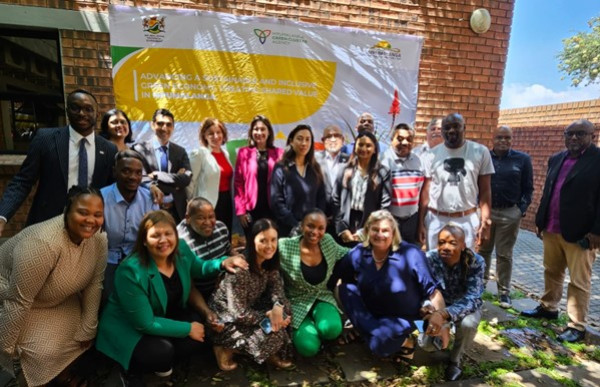
A series of impactful events held between November 12-15 marked several strides forward in advancing gender equality in South Africa's Just Energy Transition.  

Organized by the Mpumalanga Green Cluster Agency, the Project Implementation Unit, with support from the Climate Investment Funds (https://apo-opa.co/4iDmV0s) and the African Development Bank, the week-long programme's centre-piece was a one-day workshop on gender. 

It also combined with several other events, most notably as the official launch of South Africa's Just Energy Transition Jobs First Project, the visit of Patricia Pena, Assistant Deputy Minister at Global Affairs Canada and the training of the Project Implementation Unit and provincial governmental officials on the Bank's procurement, financial management, and disbursement rules and regulations.  

“We are proud to support the Gender Equality in Just Energy Transition Workshop and South Africa's Jobs First Project, advancing Mpumalanga's green economy goals, job creation, and a just, low-carbon transition,” stated Nkosinathi Nkonyane, Mpumalanga Green Cluster Agency CEO. 

Assistant Deputy Minister Pena of Global Affairs Canada remarked: “We congratulate the Government of South Africa for the leadership, ambition, and partnership with us. Through the Climate Investment Funds, we are supporting advocacy and outreach programmes to build leadership from within.” 

These events gathered stakeholders from national and provincial government officials, Just Energy Transition Project Management Unit, civil society organizations including women's groups and youth organizations, bilateral and multilateral development agencies, academia, and the private sector to drive inclusive and sustainable change. 

Through direct engagement with local voices, the Project is fostering a collaborative environment where grassroots insights are prioritized, building a foundation for a more inclusive energy transition that centres around community needs. 

A highlight of the week was the launch of South Africa's Just Energy Transition Jobs First Project. Supported by the African Development Bank, Climate Investment Funds, Irish Aid, Agence Française de Développement, and ABSA Bank, this project focuses on strengthening institutions, and empowering local communities in Mpumalanga by creating sustainable employment opportunities through gender equality, social inclusion, and skills development.  

Dr Babatunde Omilola, Human Development division manager at the African Development Bank underscored: "This project is a key milestone in advancing a just energy transition for South Africa, prioritizing sustainable energy, job creation, gender equity, and social inclusion—ensuring the shift to a green economy benefits all, especially in Mpumalanga." 

South Africa's Just Energy Transition Jobs First project activities were discussed with one of the strategic partners UVU Africa on a female farmers project in Bushbackridge.  

Beneficiaries will receive training on sustainable and smart agriculture and receive a digital kit (tablets and data) to support their work. Suhana Bisnath Head Strategy and Product Design at UVU Africa stated: "We look forward to further collaborating with partners across sectors to ensure the ‘just' in Just Energy Transition is realised in every corner of Mpumalanga and beyond. Together, we can create a model of progress that prioritises inclusivity and innovation, building a future where no one is left behind".   

Other initiatives discussed include the creation of a Gender Desk within the Mpumalanga Green Cluster Agency to facilitate dialogue among women actors, mapping of women entrepreneurs, and increased collaboration among women networks in the province. AFD's mandate in South Africa supports the Just Energy Transition by addressing poverty, inequality, and the social dimensions of energy transition through a policy-based loan focused on governance, energy access, and economic diversification. Gender equality is a key priority, with AFD collaborating with the Mpumalanga Green Cluster Agency to integrate gender considerations into the SAJJOF project. 

Together, the gender workshop and the South Africa's Just Energy Transition Jobs First project reflect a commitment by the Bank and its partners to integrate gender and social inclusion into climate initiatives. These efforts align with the wider goal to foster the “just” part of the Just Energy Transition leaving no one behind especially women, children and vulnerable households.  

“We are very excited to be supporting the SAJJOF project and look forward to welcoming the rising stars of South Africa's energy transition who are showing the world how women can lead the way” said Nina Kolybashkina, Gender and Social Inclusion Lead at Climate Investment Funds. 

For more information, explore the Women-led Coal Transitions report here (https://apo-opa.co/4gca7gc). 

Distributed by APO Group on behalf of African Development Bank Group (AfDB).

Media contact: 
Sonia Borrini
Climate Change and Green Growth Department
s.borrini@afdb.org  

For more information on South Africa's Just Energy Transition Jobs First Project please contact:
Elaheebocus, Nawsheen : n.elaheebocus@afdb.org. 

Media files
African Development Bank Group (AfDB)
Download logo
Read moreAdvancing Gender Equality in South Africa’s Just Energy Transition
12 December 2024

Gauteng motorists urged to exercise caution during festive season

Location: News

Gauteng motorists urged to exercise caution during festive season

Gauteng Roads and Transport MEC, Kedibone Diale-Tlabela, has appealed to all motorists and road users in the province to exercise caution and understanding on the roads, to reduce accidents and fatalities during the festive season.

Diale-Tlabela’s call follows the launch of this year’s national festive season road safety campaign, under the theme: “Every day without a Road Death – South Africa 2024”.

This primarily places driver behaviour as the focus of this year’s road safety campaign.

The campaign strategy is based on four pillars, including responsible driving; pedestrian safety; enforcement and education.

Diale-Tlabela said the festive period brings increased risks to public safety on the roads due to high traffic volumes, as people travel to various destinations within the province and across the country.

“As we enter the 2024 festive season, the Gauteng Department of Roads and Transport wishes to remind all public transport operators, commuters and all road users to play their part by being safe, considerate, and exercising caution while on the roads. We wish to remind all who will be travelling that road safety is everyone’s responsibility,” Diale-Tlabela said.

The MEC urged all road users, including drivers, passengers, cyclists and pedestrians, to practice mutual respect and strict adherence to all warnings, rules and regulations.

She further condemned the acts of violence across all modes of public transport, including protests, strikes, shutdowns or any actions that will result in disruption of services that has a potential to adversely affect operators and commuters during this period.

“Traffic and law enforcement officials will be out in force throughout the province to ensure reckless and drunk driving is dealt with, and culprits face the full might of the law. 

"Road safety is a collective responsibility that requires all of us to play our part in appreciating that the road is a shared space, and take responsibility for our actions. Think and drive to stay alive,” Diale-Tlabela said. – SAnews.gov.za

GabiK
Thu, 12/12/2024 - 11:46

291 views
Read moreGauteng motorists urged to exercise caution during festive season
12 December 2024

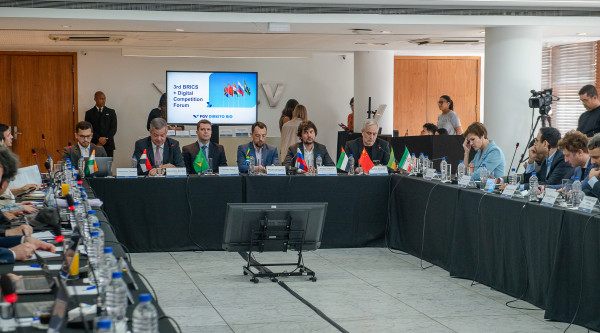
BRICS Antitrust Authorities Turned against Covantis

Location: News
BRICS Competition Law and Policy Centre

At the 3rd BRICS + (Brazil, Russia, India, China, South Africa, Egypt, Iran, Arab Emirates, Ethiopia + partners) Digital Competition Forum, the BRICS Competition Law and Policy Centre (www.BRICSCompetition.org) presented a new methodological approach to analyzing and regulating food markets that takes into account their accelerating digitalization. Specific tools that are being developed within the BRICS framework were also announced. One of the targeted tools will be the food market and restrictions on the activities of monopolists like Covantis.

Alexey Ivanov, Director of the BRICS Competition Law and Policy Centre, highlighted that digitalization strengthens the global power of large corporations, which, as a result, poses a threat of market monopolization. He urged BRICS antitrust regulators to pay close attention to a similar example of increasing market power through digitalization — the blockchain platform Covantis. The platform aims to digitize the entire agribusiness trade process, from contract management to final shipping. Founded by the largest agro-traders of the ABCCD group (ADM, Bunge, Cargill and Louis Dreyfus and COFCO) and Viterra, Covantis avoids antitrust scrutiny due to its structure. At the same time, the platform collects valuable commercial information about production from farmers and agricultural traders. The platform has already become a dominant player in grain trade. For example, in Brazil, 76% of grain exports go through the platform. In 2023, 53% of grain exports from the US, 34% from Canada and 51% from Argentina went through the Covantis platform. At the same time, the owners of the platform do not allow most of the local big players to enter. In essence, it is an exclusive platform, a quasi-cartel.

“Global food prices have reached the highest level in the last year and a half. Virtually all BRICS countries are currently undergoing antitrust investigations into the egg and chicken meat markets. Competitive agencies must take a new approach to regulating the food industry, not just by jointly analysing global food chains, but by analysing them taking into account all the implications of digitalization. This is the only way we will be able to tackle food security, which is particularly acute for the BRICS and partner countries. For example, the Covantis platform can be used by traders to share confidential information and vertical pressure on farmers. And of course the exclusionary behaviour of Covantis towards local players is of utmost importance. This should be the focus of attention of our countries' competition authorities” – Ivanov explained.

Based on the developed fair organized (exchange) trade in commodities and commodity derivatives within the BRICS framework, it is proposed to solve the problems related to market concentration and, as a consequence, insufficient consideration of the interests of small, medium and large enterprises, which will help to resolve issues related to the violation of the balance of interests of financial market players and producers and consumers of the real sector.

It is proposed to create within the BRICS framework representative indicators of exchange quotations and price indices for OTC transactions based on representative samples of actual transactions, reflecting the competitive composition of sellers and buyers and ensuring the use of universal means of delivery of traded goods. New approaches will contribute to the elimination of unproductive intermediation and increase stability in global commodity markets.

The development of a derivatives market based on reliable exchange and OTC cash commodity prices will create opportunities for BRICS economies to manage risks and pool resources, lead to positive consequences for business and society, strengthen cooperation and stimulate economic growth. Targeted subsidies and exchange mechanism will improve fiscal policy and infrastructure development.

Earlier this year, BRICS Competition Law and Policy Centre (BRICS Center) with the leadership of the Competition Policy and Assessment Center of the State Administration of Market signed a memorandum on long-term cooperation announced the launch and development of the Russian-Chinese exchange and trade platform in consumer goods and commodities which will become a basis for the further development of the universal exchange platform for all BRICS member-countries.

“If entrepreneurs of Russia and China work directly, through modern exchange mechanisms, which will not only allow to establish direct long-term ties, but also reduce prices for goods for end consumers, as it will eliminate the use of intermediary schemes. The task of experts and researchers in this regard is to develop a system of organizational, legal and economic measures and analyze the necessary conditions for the creation of exchange platforms and the development of exchange trade, including in the BRICS format” – Fu Hongwei, Director, Competition Policy and Assessment Center, SAMR; explained.

Distributed by APO Group on behalf of BRICS Competition Law and Policy Centre.

About the 3rd BRICS + Digital Competition Forum:
The BRICS + (Brazil, Russia, India, China, South Africa, Egypt, Iran, Arab Emirates, Ethiopia + partners) Digital Competition Forum, which is being held this year on the margins of the G20 Summit, brings together heads and representatives of competition authorities from all BRICS countries and partners, as well as researchers and visionaries in the field of digital regulation from around the world. The Forum includes the BRICS Working Group on the Study of Competition Issues in Digital Markets. This year's main topics include regulation of digital ecosystems, the challenges and opportunities that artificial intelligence brings to antitrust law, and the digitalization of global food chains.

The Forum is organized by the HSE University BRICS Competition Law and Policy Centre together with the FGV University School of Law (Getulio Vargas Foundation) with the support of the Brazilian Competition Authority (CADE).

Media files
BRICS Competition Law and Policy Centre
Download logo
Read moreBRICS Antitrust Authorities Turned against Covantis
12 December 2024

Mashatile calls on Chinese-funded businesses to increase investments to create jobs in SA

Location: News

Mashatile calls on Chinese-funded businesses to increase investments to create jobs in SA

Deputy President Paul Mashatile has encouraged Chinese-funded enterprises in South Africa to increase their investments in crucial sectors of the economy, particularly the automotive industry and infrastructure development.

“Your participation and investment in our country is critical for creating jobs and promoting economic growth and development,” the Deputy President said on Wednesday. 

The country’s second-in-command was speaking at the launch of the corporate social responsibility report of Chinese-funded enterprises in South Africa. 

At the South Africa-China Economic Trade and Association (SACETA) event, Mashatile cknowledged the organisation’s substantial contributions to the country’s economic and social development. 

SACETA was established in April 2011 and serves as a vital platform for fostering economic and trade collaboration between China and South Africa.

Mashatile told attendees that the 200 Chinese-funded enterprises locally serve as role models for businesses, demonstrating that profitability should be balanced with social good. 

As the global landscape continues to evolve rapidly, he believes it is essential for nations to cultivate strong partnerships to thrive and navigate the challenges of the modern world.

“We should leverage our expertise to navigate towards a more sustainable path, guided by the principles of joint pursuit and a shared future. Our countries have complementary strengths and resources, making us ideal economic partners.”

The Deputy President described China as one of the world’s greatest economies, providing a massive market for South African goods and services.

“In return, South Africa provides rich resources, such as minerals, agricultural products, and skilled labour, to support China’s rising economy.” 

Mashatile is of the view that improving trade connections between South Africa and China benefits both countries directly and has a positive ripple effect throughout the region. 

“Increased trade creates jobs, stimulates economic growth, and improves living standards for the people of both countries.”

However, the Deputy President acknowledged that the trade structure has been imbalanced, noting that last year’s value of China’s imports far exceeded its exports. 

According to Mashatile, total bilateral trade increased from R614 billion in 2022 to R692 billion in 2023, while China’s R146 billion deficits remained the highest among any of the country’s trading partners.

He announced that government intends to work with China in addressing the trade deficit and structure of bilateral trade by broadening its export basket, especially to export more value-added products.

“South Africa mostly exports minerals and agricultural products to China while importing mostly manufactured goods from China. At a time when African economies are becoming more integrated, China’s technological prowess may help Africa industrialise and export more than just raw materials.

“Instead of exporting raw agricultural items, South Africa may export processed foods that are more valuable.”

Mashatile stressed that China could lend a helping hand by streamlining import procedures and lowering regulatory hurdles, which could make China a larger market for local products, benefiting both South African producers and Chinese customers.

He said Chinese-funded enterprises must seize opportunities in emerging fields such as artificial intelligence, the digital economy and green energy.

Last year, Chinese businesses pledged to invest up to R15 billion at South Africa’s fifth Investment Conference. 

“In that same year, we witnessed the signing of significant purchase agreements totalling US$2.2 billion with companies in both nations. Therefore, our positive trade relations continue to be crucial in combating unemployment, inequality, and poverty,” Mashatile said.

He said South Africa and China share a strong and longstanding relationship, and that the bond between the nations has deepened, revealing the potential for collaboration to promote inclusive and equitable growth.

The Deputy President also touched on President Cyril Ramaphosa’s recent State Visit to China and told attendees that both Heads of State committed to providing a stable, fair, and enabling business environment for companies.

He welcomed the report that highlights the contributions of Chinese-funded enterprises to environmental conservation, community development, education, and healthcare. 

“As we move forward, let us reaffirm our commitment to expanding South African-Chinese trade and investment cooperation. Together, we can build a more successful and sustainable future for our countries.” – SAnews.gov.za

Gabisile
Wed, 12/11/2024 - 13:54

22 views
Read moreMashatile calls on Chinese-funded businesses to increase investments to create jobs in SA
11 December 2024

Atlanta Mayor Andre Dickens Strengthens u.s. – SA Ties During Groundbreaking Official Visit

Location: Business

U.S. Embassy & Consulates in South Africa
Download logo

Atlanta Mayor Andre Dickens concluded a landmark official visit to South Africa, accompanied by a delegation of 35 Atlantan political, business, and community leaders.  The December 4-11 visit marked a significant milestone in Atlanta Phambili—a subnational diplomacy initiative centered on deepening U.S.-South Africa partnership through the City of Atlanta– and reaffirmed the shared commitment to advancing economic, cultural, and educational collaboration between the two nations.

“This trip was a celebration of the enduring bonds between Atlanta and South Africa, built on shared histories and common goals,” said Mayor Dickens.  “Atlanta Phambili embodies our joint vision for progress and collaboration, creating opportunities for both our citizens and economies.”

The visit followed the launch of Atlanta Phambili in March 2024 with a trade and investment roadshow hosted in Atlanta, featuring senior South African business executives and government officials.

South Africa and Atlanta United in Progress

The South African government, in partnership with Standard Bank, BrandSA, Amazon, and the American Chamber of Commerce in South Africa, hosted a robust program focused on trade and investment, science and innovation, and the creative economy.  This was led by the Department of International Relations and Cooperation (DIRCO), the Department of Trade, Industry, and Competition (DTIC), the Department of Sports, Arts and Culture (DSAC), the Department of Science and Innovation (DSI), the Gauteng and Western Cape provincial governments, and the cities of Johannesburg and Cape Town.

“The South African government's partnership on the Atlanta Phambili initiative is a testament to the strength of our bilateral ties and the shared potential of our cities to drive innovation, inclusion, and prosperity,” said U.S. Ambassador to South Africa Reuben Brigety, II.

Visit Milestones

Atlanta Phambili Pledge

The visit kicked off with the unveiling of the Atlanta Phambili Pledge on December 5 at the Standard Bank Trade and Investment Seminar in Johannesburg.  This open call to action seeks to mobilize stakeholders across both nations to deepen collaboration in trade, investment, and entrepreneurship.  The pledge reflects Atlanta's and South Africa's shared commitment to fostering inclusive economic growth and creating opportunities for small and medium-sized enterprises (SMEs).

Go Global Trade Expo: Strengthening Black-Owned Business Connections
On December 5, Ambassador Brigety announced a collaboration between the U.S. Agency for International Development (USAID) and the Atlanta Black Chambers to support the Chambers' Go Global Trade Expo.  The program will bring a delegation of Black-owned South African businesses to Atlanta in 2025, connecting them with the Chamber's extensive network and U.S. buyers.

Through this agreement, export-ready businesses will build connections with Atlanta-based platforms to foster trade and investment between South Africa and the United States.

FAME Week Africa 2025: Atlanta Announced as the Feature Destination
On December 9 in Cape Town, Mayor Dickens announced Atlanta will be the Feature Destination for FAME Week Africa 2025, the continent's premier gathering for professionals in film, television, music, fashion, and animation.  This recognition highlights Atlanta's emergence as a global creative hub and its strong historic and Diaspora ties to Africa.

“Atlanta being recognized as the Feature Destination for FAME Week 2025 is an excellent fit,” said Mayor Dickens.  “Our city is uniquely poised to satisfy the growing demand in the United States for African content and support production innovations.”

This honor also grants Atlanta a dedicated pavilion and events at FAME Week 2025, scheduled to take place in Cape Town from September 1-6, 2025.

Business-to-Business Engagements in Johannesburg and Cape Town

  • Standard Bank Trade and Investment Seminar:  This December 5 event convened leading South African and Atlanta-based companies, government officials, and entrepreneurs to explore opportunities for investment and trade.
  • Wesgro Business Briefing: In Cape Town on December 9, the official tourism, trade and investment promotion agency for Cape Town and the Western Cape, Wesgro, hosted a vibrant networking event where Atlanta delegates met with South African exporters and investors, fostering connections that will drive future partnerships.

Empowering Entrepreneurs and Celebrating Culture

  • A tour of the Mamelodi Business Hub on December 6 showcased collaboration with Georgia State University students supporting township entrepreneurs.
  • Discussions with South African leaders and creatives at Freedom Park on December 6 emphasized the shared cultural and historical connections between South Africa and Atlanta.
  • Visits to Amazon's African headquarters and The Wine Arc on December 9 and 10, respectively, highlighted e-commerce opportunities and Black-owned wine brands breaking into international markets.
  • A tour of Nike's Shapa Center in Soweto on December 4 modeled how private investments in sports support community growth and development.

Strengthening Historic Ties

Atlanta Phambili builds on a historic relationship between South Africa and Atlanta, from collaboration between U.S. civil rights activists and members of the South African anti-Apartheid movement to Nelson Mandela's historic 1990 speech at Georgia Tech.  This trip further cements Atlanta as a gateway for South African businesses to access U.S. markets and strengthens South Africa's position as a premier investment destination for Atlanta's private sector.

“Our visit reflects a robust partnership that will continue to grow as we move forward together,” said Mayor Dickens. “The commitment of the South African government and its people has been vital in shaping this initiative.  I look forward to building on these foundations for years to come.”

Ambassador Brigety added “From trade and investment to culture, sports, and education, Atlanta and South Africa are charting a future defined by innovation, inclusion, and opportunity.  The future economic partnership between Atlanta and South Africa is built to last and poised for growth.”

A Shared Vision for the Future

The U.S. Embassy in South Africa and the City of Atlanta extend their gratitude to the South African government and all participating partners for making this visit a success.  Together, Atlanta and South Africa are moving forward—Phambili—toward an even brighter, shared future.

Distributed by APO Group on behalf of U.S. Embassy & Consulates in South Africa.

Read moreAtlanta Mayor Andre Dickens Strengthens u.s. – SA Ties During Groundbreaking Official Visit
11 December 2024

Legal Delays Threaten Survival of African Penguins

Location: News

Activists say that the litigation to protect the birds’ feeding grounds has been dragged out for months by the state, despite the urgency of the situation

Read moreLegal Delays Threaten Survival of African Penguins
10 December 2024

Basic Education launches app to track eradication of pit toilets

Location: News

Basic Education launches app to track eradication of pit toilets

Basic Education Minister Siviwe Gwarube has unveiled the Safe Schools App, a technological solution designed to tackle one of the most urgent issues in South African schools - the eradication of pit toilets. 

The app was unveiled to the media in Tshwane on Monday afternoon during a briefing hosted by the department. 

The Safe Schools App, developed and donated by Vodacom South Africa, is a tool aimed at promoting accountability and transparency in addressing the pressing challenge. 

“The Safe Schools App is more than just an application; it is a bold statement of our resolve to eliminate unsafe sanitation facilities in schools and to do so with transparency, efficiency and accountability,” Gwarube said. 

The Minister outlined three strategic objectives for the app. 

In the short-term, it will provide real-time monitoring of the eradication of pit toilets. The app features a dynamic heat map that tracks progress on the removal of pit latrines nationwide. This feature ensures that government has access to real-time information about its efforts on the SAFE backlog. It also highlights areas requiring urgent attention, ensuring that indeed, no child is left behind. 

In the medium-term, the app will enable crowdsourcing of data to fill existing gaps in information about sanitation facilities across the country.

In the long-term, the department will roll out the use of the app to monitor other key programmes. 

Beyond sanitation, the app has the potential to serve as a key platform to track other critical departmental initiatives, including the National School Nutrition Programme, infrastructure projects, and the delivery of learning and teaching materials. 

Gwarube said the launch of the app represented a significant step forward in the department’s strategy to leverage technological partnerships to improve education outcomes in the country. 

“In today’s world, technology is not just a tool but a necessity. It allows us to enhance accountability, optimise resource allocation, and improve efficiency across the education system. 

“The Safe Schools App is a prime example of how technology can be harnessed to address societal challenges that seemed too big and too complex for us to resolve,” she said. 

The Minister invited every South African to play a role in ensuring that the nation’s schools are safe and dignified spaces for learning. 

“This is what education in a modern democracy should look like: engaged, participatory and driven by a shared vision for the future,” she said. 

Mechanism for accountability 

Gwarube said accountability was at the heart of the Safe Schools App. 

By providing a clear and real-time view of progress, the app ensures that everyone involved -- government officials, implementing agents, school administrators, and communities -- remain focused on achieving the goal of eradicating the backlog of SAFE pit toilets by the 31 March 2025 deadline. 

“This tool will enable us to identify and respond to delays, allocate resources where they are needed most, and celebrate successes along the way. It is a game-changer in how we approach infrastructure challenges, and I believe it sets a new standard for accountability and for transparency in public service delivery,” Gwarube said. 

The Minister said the eradication of pit toilets speaks to the dignity, safety, and well-being of children in schools. 

“It is about ensuring that every learner, regardless of their background or location, has access to toilets that reflect the values of a democratic and inclusive society,” she said. 

She said the urgency of the task cannot be overstated because unsafe sanitation facilities not only compromise the health and safety of learners but also impact their ability to focus on their studies and achieve their full potential. 

The Minister urged every parent, teacher and concerned citizen to report pit toilets to www.safeschools.gov.za.

“This is a collective effort, and every contribution counts. By working together, we can ensure that no child has to endure unsafe or undignified learning conditions,” Gwarube said. 

Tragic losses 

Pit latrines in South Africa have claimed the lives of several children, highlighting the urgent need for improved sanitation in schools. 

Tragic incidents include the case of Michael Komape, a five-year-old boy who drowned in a pit toilet at his school in Limpopo in 2014. His death brought national and international attention to the dire state of sanitation infrastructure in rural schools.

In 2018, Lumka Mketwa, a five-year-old girl from the Eastern Cape, died after falling into a pit latrine at her school. 

The South African Human Rights Commission and other organisations have called for accountability and the urgent eradication of pit latrines, emphasising the role of government and private sector partnerships in addressing this critical issue. – SAnews.gov.za

DikelediM
Tue, 12/10/2024 - 11:55

63 views
Read moreBasic Education launches app to track eradication of pit toilets
10 December 2024

Mashatile to attend corporate social responsibility report of Chinese-funded enterprises in SA launch

Location: News

Mashatile to attend corporate social responsibility report of Chinese-funded enterprises in SA launch

Deputy President Paul Mashatile will on Wednesday, 11 December 2024, attend and address the launch ceremony of the corporate social responsibility report of Chinese-funded enterprises in South Africa. 

The Deputy President will be attending the event at China Construction Bank in Sandton, Gauteng, at the invitation of the South Africa-China Economic Trade and Association (SACETA).  

SACETA was established in April 2011 and serves as a vital platform for fostering economic and trade collaboration between China and South Africa.

It represents 200 Chinese-funded enterprises in South Africa and is guided by the principles of a shared future and joint pursuit. 

“Through their collective efforts, SACETA members have made significant contributions to South Africa’s economic growth and social development.

“In this regard, SACETA will launch the corporate social responsibility report of Chinese-funded enterprises in South Africa, 2024 report,” the Deputy President’s Office said on Tuesday. – SAnews.gov.za
 

Gabisile
Tue, 12/10/2024 - 10:58

88 views
Read moreMashatile to attend corporate social responsibility report of Chinese-funded enterprises in SA launch
  • Previous
  • Page 1
  • Interim pages omitted …
  • Page 6
  • Page 7
  • Page 8
  • Page 9
  • Page 10
  • Interim pages omitted …
  • Page 17
  • Next

Copyright © 2026 · MyZA · All Rights Reserved · Powered by Stratlec Online