• Skip to main content
  • Skip to header right navigation
  • Skip to after header navigation
  • Skip to site footer
MyZA

MyZA

News, Directory, Events and Other Stuff

  • Social Media
  • Sport
  • World News
  • Home
  • Submit News
  • Directory
  • Events
  • Stratlec
  • TFSA
  • News
    • APO
    • Today’s Sport News
    • Todays Social Media and Tech Headlines
    • Today’s World News
    • Today’s SA Financial News
  • Contact
You are here: Home / Archives for law

law

17 November 2024

South Africa Condemns Attack in Syria

Location: News

Republic of South Africa: Department of International Relations and Cooperation
Download logo

The South African Government condemns in the strongest possible terms the continued acts of aggression carried out by the State of Israel on the Syrian Arab Republic. The recent attack of 14 November 2024 in the Damascus suburb of Mazzeh, in proximity to the South African Embassy, other diplomatic missions and United Nations offices, is a blatant disregard of international law and the sovereignty of the Syrian Arab Republic.

The Government of South Africa extends its sympathies and condolences to the Government and the people of Syria, especially the families of the deceased in these recent attacks.

The continued aggression undermines regional and international peace and security. The more than 120 attacks on Syria since 7 October 2023, have added to the worsening humanitarian crisis currently in the Middle East.

South Africa calls for the United Nations to hold to account those who are responsible under the principles enshrined in the United Nations Charter.

Distributed by APO Group on behalf of Republic of South Africa: Department of International Relations and Cooperation.

Read moreSouth Africa Condemns Attack in Syria
16 November 2024

Commission Confirms Probe Into Magistrate Blose’s Appointment

Location: News

Blose was once an accused in a high profile corruption matter

Read moreCommission Confirms Probe Into Magistrate Blose’s Appointment
15 November 2024

Government to launch public education campaign on food safety

Location: News

Government to launch public education campaign on food safety

As part of measures to address the incidents of food-borne illnesses, government is to launch a public education campaign aimed at children, parents, caregivers and the broader community on food safety and the identification, handling and storage of dangerous chemicals.

Speaking during a national address on the deaths of children due to food-borne illnesses, President Cyril Ramaphosa said the campaign will involve the Government Communication and Information System (GCIS), government departments and agencies, industry organisations and civil society formations.

“This will be complemented by a public education campaign aimed at communities, spaza shops, tuck shops, informal traders and other retailers on health, safety and hygiene regulations, the identification of hazardous products, regulations that apply to hazardous products and legal consequences,” the President said. 

This is part of various interventions aimed at protecting children from exposure to harmful substances. 

The President said the Department of Basic Education will immediately issue a circular to Provincial Education Departments and all schools on best practice protocols for preventing and managing food-borne illnesses within schools.

He announced that by the start of the new school year, the Department of Basic Education, in collaboration with School Governing Bodies and the Department of Health, will review and update guidelines for managing food suppliers to public schools. 

This review will also cover the operation of tuck shops within school premises.

“The Ministers of Basic Education and Health and other government departments will classify certain pesticides and insecticides not suitable for home use as “dangerous objects” that may not be brought or used on school premises. This will be undertaken in terms of the Regulations on Safety Measures for Public Schools,” the President said. 

Crackdown on hazardous chemicals

Investigations into the recent incidents revealed that chemicals like Terbufos, an agricultural pesticide, were being informally sold in townships as a low-cost rat control solution. 

“Terbufos is an organophosphate chemical that is registered in South Africa for agricultural use. It is not allowed to be sold for general household use. However, Terbufos is being informally sold as a so-called ‘street pesticide’ for domestic use in townships and informal settlements to control rats,” the President said.

Testing confirmed that Terbufos was present in samples taken from spaza shops and in food packaging linked to the deaths of six children in Naledi, Soweto. 

“Samples were taken from 84 spaza shops in the Naledi area. Of these, three had evidence of Terbufos. After stringent testing, a chip packet found on one of the children who had died had traces of Terbufos on both the inside and the outside of the packet. 

“As part of the investigation into the Naledi deaths, inspectors confiscated a number of illegal pesticides from spaza shops,” he said. 

The President said the unregulated sale of pesticides like Aldicarb, banned since 2016, and other illegal substances remains a growing problem. 

In addition to confiscating illegal products, inspectors found improper food storage practices in some spaza shops, where food was stored alongside pesticides and detergents.

“The unregulated use of restricted pesticides in communities has become a growing problem, with devastating consequences. In many townships another chemical, Aldicarb, and an organophosphate known as Galephirimi are commonly sold by street vendors and hawkers to control rat infestations,” said the President. 

Addressing root causes

The President acknowledged that rat infestations, driven by poor waste management in many municipalities, contribute to the demand for hazardous chemicals. 

“In responding to these tragedies, we need to understand the cause of this challenge in our communities. One of the reasons that people use pesticides is to deal with rat infestation.

“The problem of rat infestation is due in part to poor waste management in several municipalities. Rubbish is not collected regularly, streets are not being cleaned, creating conditions for rats and other pests to thrive.

“Often, the poorest communities are the worst affected, and often the cheapest remedies that are used are these highly hazardous substances like Terbufos and Aldicarb,”  he said.

The President said another challenge was that environmental health was the responsibility of local government.

“Many municipalities do not have the capacity and resources to conduct inspections of these businesses and enforce regulations. Our response must therefore address all the factors that contribute to the problem,” he said. 

Preventing misinformation

The President emphasised the importance of preventing the spread of misinformation, clarifying that investigations have found no evidence of a deliberate campaign to poison children.

He stated that the issue was not limited to spaza shops owned by foreign nationals, as these hazardous products were equally likely to be sold in shops owned by South Africans.

“The investigations that have taken place do not suggest any deliberate campaign to poison children in our country. There is also no evidence that the problem is confined to spaza shops owned by foreign nationals only. These products are just as likely to be sold in shops owned by South Africans.

“We all have a duty – as the State, as a society, as parents and families – to protect those among us who are most vulnerable,” the President said. 

Working together to end the crisis

The President emphasised the need for collective action by being informed, vigilant, responsible and protecting children while preventing these tragedies.

“As consumers and parents, if we buy food or send our children to buy food, it must only be from places that are licensed to sell foodstuffs and that observe food safety regulations. We must check that food is prepared in a clean and hygienic area.

“We must make sure that foodstuffs being sold have clear branding and labels, and that they are not past their sell-by date. We must educate our children about food safety and teach them to check for this labelling themselves,” the President said. 

The President urged anyone who saw fake foodstuffs and expired foodstuffs being sold in communities to report them to the National Consumer Commission. The number for the National Consumer Commission is 012 065 1940.

The President called for responsible handling and storage of pesticides and dangerous chemicals, emphasising that only properly labelled products in original containers meant for household use should be purchased. Dangerous chemicals must be kept out of children's reach.

Spaza shops and street vendors are urged to adhere to the law, avoid mixing food with chemical substances, and sell only legally registered pesticides. Establishments violating these rules will face legal consequences, he said.

He urged South Africans to work together, remain informed, and take responsibility to protect vulnerable communities, particularly children. 

“Once again, South Africans are called upon to work together to overcome a great difficulty. But we are far from helpless. There is much we can do.

“Each of us needs to be better informed about the risks of pesticides and other dangerous products. By working together, by enforcing the law, by being alert and responsible, we will be able to bring an end to these tragedies,” the President said. – SAnews.gov.za


DikelediM
Fri, 11/15/2024 - 22:24

103 views
Read moreGovernment to launch public education campaign on food safety
15 November 2024

Spaza shops implicated in child deaths to be shut down

Location: News

Spaza shops implicated in child deaths to be shut down

President Cyril Ramaphosa has announced decisive measures to address the recurring food-borne illnesses that have claimed the lives of at least 22 children across the country.  

These include the immediate closure of spaza shops implicated in the deaths and stricter regulations to protect communities.

Addressing the nation from the Union Buildings in Pretoria on Friday, President Ramaphosa outlined three critical interventions to be implemented with immediate effect.

“Following the special meeting of Cabinet, we have decided to make the following interventions: The first intervention is to get hazardous pesticides off the street, the second critical intervention is to protect children from exposure to these substances, the third critical intervention is to prevent future outbreaks. The following measures will be implemented with immediate effect.

“The spaza shops which have been implicated in the deaths of children will be closed with immediate effect. Non-compliant businesses and shops linked to any poisoning incidents or found to unlawfully stock hazardous chemicals will be shut down,” the President said. 

To ensure compliance, all spaza shops and food-handling facilities must register with their respective municipalities within 21 days. 

“Any shop that is not registered within 21 days and does not meet all health standards and requirements will be closed,” President Ramaphosa said. 

The President’s address comes in response to 890 reported cases of food-borne illnesses across the country, with Gauteng, KwaZulu-Natal, Limpopo, Free State, and Mpumalanga the hardest hit. 

In recent weeks, food-borne illnesses have claimed the lives of at least 22 children. Last month there was a major food-borne incident in Naledi, in Soweto in which six children died, the youngest of them being six years old. 

Multidisciplinary Response teams activated

Soon after the deaths, a multidisciplinary team in government was activated to address the incidents, with Cabinet having met on three occasions to receive reports on them.

These teams included detectives from the South African Police Service, health officials, environmental inspectors, Department of Agriculture officials and officials from the National Consumer Commission. 

The National Institute for Communicable Diseases was requested to conduct scientific tests and has established that the deaths of the six children in Naledi can be directly attributed to a highly hazardous chemical used as a pesticide known as Terbufos.

The President said few words can adequately convey the sadness and pain of the nation.

“Our thoughts and prayers are with their families as they go through the pain and the anguish of losing their children. Losing a child is something no parent should ever have to endure,” he said. 

Nationwide Inspections and Crackdowns

President Ramaphosa said that the South African Police Service and other law enforcement agencies will be required to investigate, arrest and prosecute offenders. This will involve close cooperation with all registered manufacturers and suppliers. 

“Integrated multidisciplinary inspection teams will undertake compliance inspections of food handling facilities, manufacturers, distributors, wholesalers and retailers. This will include spaza shops and general dealers.

“A massive campaign of door-to-door inspections of all spaza shops, tuck shops and other informal traders will be undertaken, starting with Gauteng and KwaZulu-Natal,” he said. 

This will be undertaken by inter-disciplinary inspections teams consisting of the South African Military Health Services, environmental health practitioners, the South African Police Service, the National Consumer Council, labour inspectors and others.

The President emphasised that the initial phase of inspections will need be completed within a month.

Registered manufacturers and distributors of Terbufos will also be scrutinised to ensure compliance and prevent misuse. The supply chain for hazardous chemicals will face tighter regulations, including strengthened protocols for traceability, repackaging, and disposal.

“All registered manufacturers of Terbufos will be inspected to ensure that no products are diverted into the non-agricultural market. The supply chain process for distribution and sale of Terbufos will be investigated to ensure that controls are being adhered to and that there is accountability for who they sell to,” the President said.

President Ramaphosa emphasised that regulations and protocols on the traceability, repackaging, destruction and sale of pesticides, insecticides and foodstuffs will be strengthened. 

Turning to the second intervention on the protection of children from exposure to harmful substances, the President announced that the Department of Basic Education will immediately issue a circular to Provincial Education Departments and all schools on best practice protocols for preventing and managing food-borne illnesses within schools.

The third intervention, which is aimed at preventing future outbreaks, is that the President has directed that joint operational and intelligence structures be established at a national and provincial level to deal with the crisis.

“Our local municipalities will be required to take urgent action to address the problem of rat infestations by cleaning cities and towns and removing waste. All municipal landfill sites will be required to comply with the National Environmental Management Waste Act. Failure to comply will result in strict sanctions that include directives, compliance notices and criminal enforcement,” he said. 

The President said a Ministerial Health Advisory Committee was being established to develop medium- and long-term prevention measures. This committee will consist of experts such as toxicologists, paediatricians, chemical pathologists, epidemiologists, forensic pathologists and others.

“All deaths of patients 12 years and below will be made notifiable in the Notifiable Medical Condition Surveillance System. An electronic medical certification of death system will be established to allow the National Department of Health to access cause of death information immediately after a death is certified,” he said. 

President Ramaphosa said the work of the Biosecurity Hub will be strengthened to better control the entry of products, organisms and harmful biological products at ports of entry.

The Department of Agriculture is in the process of reviewing and updating all relevant legislation with respect to the regulation and authorisation of agricultural pesticides for use in South Africa.

WATCH I President Cyril Ramaphosa addresses nation on food safety actions

The President announced a joint fund of R500 million to support small businesses, particularly township and rural convenience shops. The funding will cover refurbishment, technical training, and compliance support.

“A joint fund of R500 million will be established by the Departments of Trade, Industry and Competition and Small Business Development to support township and rural businesses, including community convenience shops.

“The funding will be for the refurbishment of businesses and non-financial support in terms of technical skills, regulatory compliance and capacity building,” he said. 

The President said that as government undertakes these interventions and measures there is a lot that parents can do to protect their children. – SAnews.gov.za


DikelediM
Fri, 11/15/2024 - 21:41

195 views
Read moreSpaza shops implicated in child deaths to be shut down
15 November 2024

Minister visits Stilfontein mine shaft

Location: News

Minister visits Stilfontein mine shaft

Police Minister Senzo Mchunu has told local communities in Stilfontein in the North West where illegal miners are remain underground that the authorities are doing everything in their power to get them to resurface.

Mchunu said on Friday that 1187 people have come to the surface from the mine. 

One illegal miner has passed away and police have registered an inquest to investigate the circumstances surrounding his death.

A significant number remain underground.

The Minister conducted a visit to the Stilfontein mine shaft and engaged with members of the South African Defence Force on the events that have unfolded at the mine shaft to date. 

Addressing the local community after the visit, Mchunu said the police were aware of the illegal firearms the illegal miners have.

“These are people who are coming to South Africa illegally. What we are doing as the police is to ensure that there is law and order in the country,” Mchunu said.

Mchunu said police were intensifying their operations to get the illegal miners out of the mine.

“We are aware that some community members know what is happening down there, we are appealing to them to distance themselves from those activities, engaging in illegal mining is illegal,” the Minister said.

He appealed to the local communities to assist the police in combatting illegal mining.

“We are aware that what is happening there is dangerous. We are doing everything in our power to deal with the situation we are faced with,” Mchunu said.

On Tuesday, a total of 15 suspects including Zimbabweans, Mozambicans, Basotho and South Africans surfaced from Magaret Shaft. 

The suspects are being processed and are expected to appear before the Stilfontein Magistrates Court on charges of possession of gold dust, contravention of the Immigration Act, 2002 and illicit mining. 

The Operation Vala Umgodi team - comprising members from the SAPS, SANDF and stakeholders - have seized illegal mining equipment and goods including alcohol, energy beverages, oxygen cylinders, an air compressor, scrap generator, a laptop, and bags containing gold bearing material as well as a jackhammer and generators. – SAnews.gov.za

Edwin
Fri, 11/15/2024 - 15:35

79 views
Read moreMinister visits Stilfontein mine shaft
15 November 2024

Municipalities warned against water tanker mafias

Location: News

Municipalities warned against water tanker mafias

With maintenance of the Lesotho Highlands Water Project (LHWP) underway, the Department of Water and Sanitation has warned municipalities to be aware of the so-called “water tanker mafias” who deliberately sabotage water systems to attract business from municipalities.

The warning came during an inspection of the maintenance operation of the Lesotho Highlands Water Project tunnel in Clarens, in the Free State.

Water and Sanitation Deputy Minister, Sello Seitlholo, said in any crisis, particularly when it relates to water, there are opportunists.

“I want to warn mayors very strongly ….  I want us to guard against that. In situations like this, the water tanker mafia is going to come in steam rolling, because to them this is pay day,” Seitlholo warned. 

Seitlholo led the led an inspection of the maintenance operation along with Deputy Minister, David Mahlobo, on Friday.

The joint maintenance operation by Trans Caledon Tunnel Authority (TCTA) and the Lesotho Highlands Development Agency (LHDA) is currently underway, following the tunnel system closure on 1 October 2024.

The TCTA is undertaking the maintenance operation on Delivery Tunnel North within South Africa, and LHDA will focus on the transfer tunnels at the Muela hydro power station in Lesotho.

Seitlholo urged the municipalities to undertake the necessary community education on what was happening.

“We must constantly communicate with our communities, using social media so that people are aware of what is happening, particularly in around consumption of water,” the Deputy Minister said.

READ I Government commends progress made in Lesotho Highlands Water Project maintenance

Mahlobo reminded those who are providing water to communities with water tankers that the situation was temporary.

“It is not a permanent thing…. let them give water to our citizens [but] do not let them exploit our people. If they break the law and try to interfere with the municipal systems, by vandalising the valves, the long arm of the law will reach them,” Mahlobo warned.

Acting Free State Premier, Jabu Mbalula, said the province was happy with the progress of the project, saying it will go a long way towards assisting the people of the province.

Mbalula assured citizens that the provincial government, working together with national government, was attending to the challenge of water.

He said water leaks were one of the most critical issues facing the province. – SAnews.gov.za

GabiK
Fri, 11/15/2024 - 17:00

110 views
Read moreMunicipalities warned against water tanker mafias
15 November 2024

Do your part to fight gender-based violence

Location: News

Do your part to fight gender-based violence

The National Director of Public Prosecutions (NDPP), Advocate Shamila Batohi, has called on communities to work with law enforcement agencies to fight gender-based violence (GBV).

The NDPP was speaking during the re-launch of the Kabokweni Themba Thuthuzela Care Centre (TCC) at the Themba Hospital in Mpumalanga.

TCCs are a one stop-facility for survivors of GBV, where they are able to receive psycho-social support, medical treatment and legal services.

“You have to be part of the crime solution. We will never be able to prosecute ourselves out of crime. 

“We do what we have to do and we will do it with absolute determination and passion but we come after the fact when the crime is already committed. You in the community, working with the police, have to be part of [the solution],” Batohi said.

The TCC was initially launched in 2008 but has now found a permanent home within the hospital’s structure. It services communities including Kabokweni and White River.

Addressing men in society in particular, Batohi urged them to stand up to those in their circles who perpetrate GBV.

“Men must be out there publicly… to raise awareness and say as men, 'no women must be [abused]. As men, we will not tolerate [that] and... we will ostracise them from our groups because there is no place for abusers in our midst.

“That’s the only way we can move, otherwise we will be sitting in these places, building Thuthuzela Care Centres and we will never solve the problem,” Batohi said.

The NDPP told the gathering that the TTCs are aimed at making sure that there is justice for victims and survivors of GBV.

“We want to make sure that we get better conviction rates. We want to make sure that we get less secondary trauma, and this must move to the courts as well. And we’re hoping that with our partners… that maybe the TCCs can be used [for] children and victims [to] actually testify from here to the courts. Our Department of Justice will be a key partner in that.

“We have to have targeted interventions that make sure that our women and children are not violated in this way and our girls are not subjected to abuse. This is an incredible [opportunity] to show from the reactive side, that this is what we’re trying to do, to make this journey of victim to survivor something that is more comfortable,” Batohi explained. – SAnews.gov.za

NeoB
Fri, 11/15/2024 - 11:51

41 views
Read moreDo your part to fight gender-based violence
15 November 2024

Government to host Construction Summit

Location: News

Government to host Construction Summit

Concerns around the so-called construction mafia, security and other criminal activity at construction sites, as well as the promotion of practical solutions for building crime-free environments within the construction industry, will come under the spotlight at the Construction Summit on Crime-Free Construction Sites next week.

The Department of Public Works and Infrastructure (DPWI), in collaboration with the South African Police Service (SAPS) and the Construction Industry Development Board (cidb), will host the summit at the Durban International Convention Centre in KwaZulu-Natal.

Public Works and Infrastructure Minister, Dean Macpherson, has expressed his strong commitment to addressing crime at construction sites across the country. 

“This is a fulfilment of a promise I made shortly after taking office to host a summit to deal with construction site stoppages nationwide.

“Construction sites should be places where workers build not just structures, but also a sense of safety, respect and trust. Unfortunately, crime has been a persistent challenge in the sector, undermining productivity, escalating costs and putting lives at risk,” Macpherson said.

The Minister committed to working with industry stakeholders to find solutions for safer work environments and underscored the government's dedication to eliminating crime, ensuring that workers return home safely each day.

The SAPS will also play a key part in the stakeholder engagement as law enforcement plays a critical role in maintaining security. Accordingly, Police Minister, Senzo Mchunu, is expected to address the summit to reinforce the role of the police in combatting crime in the sector.

Finance Minister Enoch Godongwana is also expected to speak at Tuesday’s summit.Other Speakers will include the Premier of KwaZulu-Natal and the Mayor of eThekwini.

The cidb, a key partner in ensuring the professionalism and development of the construction industry, is equally dedicated to creating a conducive environment for effective delivery of infrastructure. 

Bongani Dladla, CEO of the cidb, highlighted the importance of industry-wide collaboration in promoting security and efficiency in construction. 

"We’re looking forward to playing an active role in this summit as we strongly believe that the construction industry is vital to our nation's growth, and addressing crime is essential to protecting both assets and the lives of those who build our future. The cidb is committed to supporting initiatives like the National Construction Summit to set new safety standards and collaborate with the DPWI, law enforcement, and industry partners to make construction sites safer and more efficient,” said Dladla.

The summit will feature a series of expert-led discussions on legislation and policy, security and law enforcement, community engagement, empowerment, skills development and other strategic topics to equip stakeholders with the tools needed to combat crime on construction sites. 

It will also provide an opportunity for networking and forging partnerships aimed at improving site security and promoting the safety of workers. - SAnews.gov.za

Edwin
Fri, 11/15/2024 - 09:00

124 views
Read moreGovernment to host Construction Summit
14 November 2024

Why Wage Inequality Matters

Location: News

New legislation empowers shareholders to limit outrageous CEO remuneration

Read moreWhy Wage Inequality Matters
14 November 2024

Social Development announces de-registration of non-compliant NPOs

Location: News

Social Development announces de-registration of non-compliant NPOs

With the deadline to submit progress to the Financial Action Task Force (FATF) on the status of South Africa’s grey listing, the Department of Social Development has announced the commencement of the de-registration of non-compliant non-profit organisations (NPOs) in a phased approach. 

The department revealed this to Parliament’s Portfolio Committee on Social Development.

The FATF grey listed South Africa at its February 2023 plenary meeting held in Paris. 

The FATF is the international standard-setting body that oversees global compliance with anti-money laundering rules.
It developed an Action Plan with 22 Action items linked to the eight strategic deficiencies identified in the country’s anti-money laundering and combating of financial terrorism regime.

The department noted that South Africa has made progress in five action items and has 17 outstanding items to which it must report progress by 2026.

“South Africa is required to address all 22 items in order to exit the grey-listing status. One of the action items relates to the risk of terror financing and money laundering by NPOs.

“FATF identified that NPOs can be used for terror financing and money laundering and recommended that South Africa develops an NPO Terror Funding Risk Assessment,” the department said in a statement on Thursday.

This assessment titled: “The Information on the South African Terrorist Financing Risk Assessment for the Non-Profit Organisations” found that there is a medium exposure to terror financing by the NPO sector in South Africa.

The risk assessment also identified some threats that NPOs can be exposed to relating to terror financing, such as: 

•    NPOs raising funds or other support for foreign terrorist groups 
•    NPOs facilitating foreign travel for terrorist causes, amongst others, and 
•    NPOs using the Internet and online media for fundraising, recruitment and propaganda

“The Department of Social Developing together with SARS [South African Revenue Service] and the FIC [Financial Intelligence Centre], are developing monitoring mechanisms to mitigate this risk.

“There are high, medium and low risk categories. The department has commenced with the deregistering non-complaint NPOs that do not fall in the high- risk category of NPOs as one of the mitigating monitoring mechanisms.

“Closer supervision and monitoring has been instituted by the department for NPOs identified to be at high risk of terror financing,” the department said.

As of October 2024, the department had 295 052 registered NPO and 167 103 of non-compliant NPOs.

Adequate standards of governance

The Department of Social Development through the Non-profit Organisations Act, 71 of 1997, as amended by General Laws Amendment Act (GLAA) provides for the registration of three types of NPOs, namely, Trust, non-profit company (NPC) and voluntary associations.

“Non-profit organisations play a crucial role in societal development and community welfare. However, some organisations fail to comply with regulatory frameworks, risking public trust and the integrity of the sector,” the department said.

The department said it has the responsibility to encourage NPOs to maintain adequate standards of governance, transparency, and accountability and to improve those standards.

The department explained that the need to deregister non-compliant NPOs is required by the need for the department to comply with the provisions of the NPO Act.

The FATF in the Mutual Evaluation Study indicated the need to implement the law in the form of the NPO Act as amended by the GLAA legislation.

“The risk of not deregistering/cancelling noncompliant NPOs is the likelihood of those NPOs being used by criminals for money laundering and terrorist financing.

Processes

“The department has a responsibility that NPOs that are not complying with provisions of the NPO Act are removed from the NPO Register as required in terms of section 21 (1) of the NPO Act deregistration or cancellation of NPOs is primarily about NPOs that fail to submit annual reports as required in terms of section 18 (1) of the NPO Act,” the department said. 

Other instances that might lead to cancellation of registration status is when an organisation does not comply with the provisions of its own founding document. The department said the objective of the deregistration/cancellation is to identify NPOs that have failed to submit annual reports. 

The department issues them with notices of compliance and subsequently remove them from the NPO register kept in terms of section 24 of the NPO Act.

The department will also provide deregistered/cancelled NPOs with an opportunity to appeal against the decision to remove them from the NPO Register.

The department will further raise its awareness program on the intention to deregister NPOs.

Steps taken:  

•    The process for deregistration/cancellation will start with the verification of compliance status.
•    Once an organisation is found to be owing annual reports, it would be issued with a notice of compliance that would explain the annual reports that the organisation failed to submit.
•    The organisation will be given 30 days to submit outstanding annual reports.
•    Once an organisation fails to submit the required reports or fail to respond timeously to the issued noticed it would be cancelled or removed from the NPO Register.
•    Deregistered/cancelled organisations will be afforded an opportunity to appeal against the decision of the Director to cancel the organisation’s registration status.
•    The organisation would be required to submit a notice of appeal together with supporting documents.
•    The notice of appeal together with relevant documents will be sent to the chairperson of the panel of arbitrators for distribution to the appointed arbitration tribunal for the adjudication of the appeal.
•    The arbitration tribunal works independently and is appointed by the Minister in terms of section 9 (1) of the NPO Act.
•     A lodged appeal must be considered with 3 months of receipt of the appeal.
•    An appeal can either be denied or upheld. Once an appeal is upheld the department must reinstate the appellant and the organisation should be considered never to have been deregistered. 

The department said that a denied appeal may take the matter on review with a competent court of law. 

“The deregistration of non-compliant non-profit organizations is essential for maintaining the integrity and effectiveness of the nonprofit sector.

“By implementing a structured process, we can ensure that only organisations that meet compliance standards continue to operate, thereby protecting the interests of beneficiaries and the public at large,” the department said.

The department will deregister organisations according to the different financial years and it will be over a period of six to 12 months.

This is done with an intention not to cause alarm to the sector and give other NPOs time to respond to the call to submit annual reports.

The department said it will continue to support NPOs by creating an enabling environment for them to operate effectively and efficiently. – SAnews.gov.za

DikelediM
Thu, 11/14/2024 - 10:58

162 views
Read moreSocial Development announces de-registration of non-compliant NPOs
14 November 2024

Durban Police Brutality Case Heads to Trial After Years of Delays

Location: News

The trial of 14 SAPS officers for the death-in-custody of Regan Naidoo in 2018 has been set down for June 2025

Read moreDurban Police Brutality Case Heads to Trial After Years of Delays
14 November 2024

SA condemns Israeli government’s annexation orders for the West Bank

Location: News

SA condemns Israeli government’s annexation orders for the West Bank

South Africa has expressed dismay at a statement attributed to Israel’s Finance Minister Bezalel Smotrich, who called for the annexation of the West Bank on Monday.

Reports indicate that Smotrich has initiated preparations for the annexation of the occupied West Bank, anticipating the inauguration of United States President-elect Donald Trump in January 2025.

The Department of International Relations and Cooperation said the development was compounded by a decision adopted by the Israeli Cabinet on 18 June 2024, which gave Smotrich approval to plan construction in the Occupied Palestinian Territory (OTP). 

“It should be recalled that soon after his appointment to his current position, Mr Smotrich moved quickly to approve thousands of new settlement homes and legalised previously unauthorised settlements, which practically made it more difficult for Palestinians to build homes and move around.” 

The department believes that the Israeli government has long sought to find ways to permanently seize or annex the occupied West Bank. 

“South Africa calls on the international community to unequivocally oppose the Israeli government’s continued violation of its obligations under international law and resolutions relating to its belligerent occupation.

“The Israeli government’s provocative policies and actions are extreme and warrant a decisive response by the international community. South Africa is opposed to the Israeli illegal annexation and settlement expansion on Palestinian lands.” 

South Africa, said the department, believes these developments go further than just a de facto annexation of the OPTs and entrenching illegal Israel’s presence in the OPT, particularly in the West Bank. 

“This latest move illustrates the lack of any meaningful effort directed at achieving peace or any hope for a two-state solution,” the statement read. 

On 23 December 2016, the United Nations Security Council (UNSC) adopted Resolution 2334, which condemned Israeli settlements in Palestinian territories and called for an end to settlement construction

In addition, South Africa further calls for concrete actions aimed at reviving a political process, leading to the establishment of a viable Palestinian State, in compliance with all relevant UN resolutions, International Law and international agreements. – SAnews.gov.za

Gabisile
Thu, 11/14/2024 - 11:04

96 views
Read moreSA condemns Israeli government’s annexation orders for the West Bank
14 November 2024

Cabinet welcomes historic issuing of Muslim marriage certificates

Location: News

Cabinet welcomes historic issuing of Muslim marriage certificates

Cabinet has welcomed the historic issuing of the first batch of 33 Muslim marriage certificates by the Department of Home Affairs.

The marriage certificates were issued after the signing of the Divorce Amendment Bill into law in May this year by President Cyril Ramaphosa.

The Bill amended the Divorce Act, 1979 (Act 70 of 1979) to recognise Muslim marriages and safeguard the interests of Muslim women and children if those marriages are dissolved.

“These long-overdue changes signal our country’s commitment to ensure that Muslim women and children’s rights to equality, dignity, access to justice as well as the best interests of the minor child, as enshrined in the Constitution of the Republic of South Africa of 1996, are upheld.

“They also give effect to fostering greater social cohesion, nation-building and a shared national identity, as well as honouring various cultural and religious traditions,” Minister in The Presidency, Khumbudzo Ntshavheni ,said on Wednesday in Cape Town.

Ntshavheni was briefing members of the media on the outcomes of the Cabinet meeting held on 6 November 2024. 

READ | Home Affairs issues first-ever certificates recognising Muslim marriages
-SAnews.gov.za


nosihle
Wed, 11/13/2024 - 14:09

294 views
Read moreCabinet welcomes historic issuing of Muslim marriage certificates
13 November 2024

Dismissed and Ignored: Keys to an African Lobby Group’s Success Being Overlooked by Climate Activists and Africa Oil Week

Location: News
African Energy Chamber

By Ajong Mbapndah L.

In 2021, the citizen-driven African Energy Chamber-AEC (www.EnergyChamber.org), and its unapologetic position in support of the right of African countries to produce oil and gas spread like wildfire. They adopted a narrative of Drill Baby Drill shocking most western political establishment, African elites and pundits.

Within a short time, well funded backers were leaping at the chance to harness this new display of African public power backing the oil and gas industry led by a charismatic and well-connected US trained lawyer NJ Ayuk. He talks like a southern Baptist preacher and trial lawyer and religiously wears only cowboy boots. Ayuk had been mentored at the University of Maryland by Dr. Ron Walters, who was Jesse Jackson's campaign Manager and at William Mitchell College of Law by John Radsan who was Assistant general counsel of the C.I.A under George W Bush. In 2013, he became part of Global Shapers, a non-profit foundation created by the World Economic Forum to unite a community of young leaders. In 2015, he was named among the 10 most influential men in Africa by Forbes magazine.

Eventually, hundreds of energy groups across Africa translated their collective strength into substantial results, putting a message engineered by the African Energy Chamber to influence African political establishment to back the oil and gas industry during COP and also provide incentives for oil drillers. Oil and natural gas is not a dirty word in Africa thanks in large part to the crusade of the African Energy Chamber.  

It's true that the AEC's anger at western wokeness and transition plans sometimes came across as extreme. While they showed that African voices can impact energy policy and international discourse, they may have also set the stage for increased divisiveness in a polarised energy discussion across the world. In some instances, observers believe the AEC pressured African leaders into backing a capitalist driven oil and gas industry at the expense of green energy. They gave home to Trump loyalist who wanted to deal with Africa. 

Given even sharper language in 2021 and 2022, it's perhaps more important than ever to understand that the AEC's success wasn't dependent solely on hostility. Behind the scenes, the story is a bit more complex. And love them or hate them, the AEC showed that African voices really can add up to something big.

So, how did the AEC turn regular, even highly cynical, Africans into an army of engaged people defending the interest of Africa and oil and gas investors in Namibia, Nigeria, Angola, South Africa, Equatorial Guinea, Libya, Senegal, Algeria, Mauritania, Ghana, Mozambique, Uganda and many more countries? Here are some strategies that set the AEC apart, gained it instant attention, and built—in short order—real power.

These strategies aren't really secret, of course, or even necessarily new, but the AEC offers lessons that any grassroots group would be wise to review even when it is a capitalist organisation. After attending African Energy Week in Cape Town and talking to observers you understand a few things.

The AEC Gave Good Content And Sweets To The Media

The AEC content and position or energy transition and oil and gas were irresistible political theater for news media. Some of the early success was about novelty. An unusual African protest movement, featuring not only Africans but older, whiter, more conservative Europeans and Americans who weren't used to taking their views in public (that kind of action was considered by many whites, the domain of hippies and Lefties).

But beyond that, members' intensity and authenticity were key factors: their heart and soul, their true colors were on display and the media couldn't get enough. The AEC got massive coverage. Their members loudly embraced slogans and symbols, and most were extremely passionate and vocal. They demonstrated their commitment in authentic, home-spun ways that made great TV footage—that is, by brandishing provocative Drill Baby Drill signs. The attention they earned was tremendously exciting for participants, and when events garnered headlines, they encouraged others to join in and start AEC groups of their own in Nigeria, Namibia, Ghana, Equatorial Guinea, Angola, Senegal and Algeria.

The AEC Gave Africans A Safe Haven To Oppose A Western Driven Anti Oil And Gas Agenda

Many Africans were anxious about longstanding cultural shifts they felt were occurring in the climate change culture and strong calls to abandon oil and gas. Africans still have to deal with energy poverty issues and also industralisation that is lagging behind in the continent.

According to the International Energy Agency (IEA), more than 600 million Africans lack access to energy, around 900 million are without clean cooking. To solve this the African Energy Chamber has aggressively lobbied and pushed African nations to embrace an “All of the Above” energy strategy—which supports greater domestic production of oil and natural gas, renewable and nuclear energy, and critical mineral mining—would help to provide energy access and encourage development  and job creation.

For many Africans, speaking their minds in public was daunting and unfamiliar. The AEC events prompted many people to speak out in public for the first time. People who had felt shut out, misunderstood, and alienated were encouraged to vent their frustrations and talk about themselves, their families, and what they wanted—and into a microphone, no less! Great early set up and as crazy as it sounds it worked.

Africans and oil industry for once felt safe. The western oil companies had found “their people.” Their voices finally mattered. Western oil companies felt for once that an African organisation spoke to their issues. The AEC spoke from the heart through their press releases.

Most importantly, speaking out made them feel like proper, boisterous Africans having their say. 

The AEC Kept It Simple And Never Strayed Away From Its Core Purpose

The AEC has been laser focused on its core message around free markets, Drill Baby Drill, individual liberty, fiscal responsibility, and limited government intervention in the energy markets. They have been virtually lock stepped in agreement that these issues—and only these—were their primary focus.

Motivated largely by opposition to a radical energy transition that does not consider Africa's energy poverty needs and development, they built a solid and well-structured case against what they saw as a radical overreach by western governments. These values resonated powerfully with conservative whites and corporations in America and Europe who rallied support for the AEC, help sharpened their message and represent an agenda that any group could buy into. By sticking to these values, they avoided getting bogged down in arguments over more contentious issues that could divide, delay, or sidetrack their core base.

You need to watch how NJ Ayuk the Executive Chairman Keeps a clear and narrow focus and invites more people in and avoids alienating others over inevitable differences. By experimenting with this stripped-down approach, they have been able to avoid quibbles about top priorities and fast-forward to high-impact activities across Africa.

The AEC Built Its Muscle By Picking Fights It Could Win

While the rhetoric of the AEC favored sweeping Pan African change on how oil and gas industry is viewed and a rejection of western climate action, their actual achievements were huge, and they basically got the IEA and western governments to start listening to Africans. They got African Presidents and Ministers to be bold in their defence for oil and gas sector. They became the premier lobbying house for the oil and gas sector in Africa. They figured out where they could have an immediate impact and put their energies into small wins. Case in point, in 2021, Hyve group made a brutal and arrogant move of taking Africa Oil Week (AOW) to Dubai. The AEC saw an opportunity and produced a textbook rebuke of this British group. It recruited Blackwater's Erik Prinz, Robert Stryk Ryan Zinke (Trump's interior secretary) various American congressmen and former US Ambassadors to speak at its rival African Energy Week in Cape Town. They quietly built a relationship with the American Petroleum Institute and other US oil and gas groups and support came strong from the oil and gas companies like ExxonMobil, Total Energies, Chevron and many others. Since then, the Africa Oil Week brand by Hyve group has seen a gradual death with most of its staff defecting to the AEC or other companies. In 2023, sensing change the Biden administration deployed Joshua Volz, Deputy Assistant Secretary for Africa to attend the African Energy Week and meet with the African energy sector. American official Joseph McMonigle, Secretary General, International Energy Forum also gave a keynote speech at the event.

Small wins like African Energy Week or getting governments to approve projects for oil companies in a speedy format, gave the AEC the taste of victory and built momentum. And all the little victories tallied around Africa added up to a greater voice for the AEC. The AEC also scored strong victories across Africa for incentives to oil companies, getting them permits, license extensions, reduction in taxes, and passion oil friendly reforms.

Most organizations have broad, high-level goals, but it's worth remembering that every small victory can help pave the way in the direction you're going. In fact, you may want to purposefully pick a small, winnable fight, especially as you're getting started.

Climate Group Reaction

Climate activist have been stunned because they dismissed and overlooked the AEC. Climate activist and their allies ignore the AEC as it built a 4 million membership base something of a dream for any group. They decided to pummel the AEC and its leadership with a volley of attacks on the media then demonstrations at the AEC office and also in Cape Town. And yet from the blowback that erupted once the attacks started Africans rallied around the AEC and supported the AEC.  Climate activists were surprised that an oil lobby group in Africa was being seen as innocent civilian under assault by a drone western activist. Green groups and their negativity were self-destructive and made it difficult for them to push a green energy message in Africa which a continent that has great potential for renewables.

Only at the African Energy Week will you have a closing panel with Oil and Gas stalwarts like Bruno Jean-Richard Itoua, Minister of Hydrocarbons of the Republic of Congo, Heineken Lokpobiri, Minister of State for Petroleum Resources (Oil) of Nigeria, NJ Ayuk of the AEC, Florival Mucave, Executive Chairman of the Mozambique Oil & Gas Chamber, Eric Williams, Principal Consultant and President at Royal Triangle Energy Solutions inviting climate change zealots like David Le Page, Director-Coordinator at Fossil Free South Africa.

When I come to your events, I am booed and vilified, but here at the African Week, we welcome debates and diverse opinions and people even cheer for you when you make points, NJ Ayuk reminded David Le Page who looked flummoxed at the buoyant atmosphere and civility that greeted his presence.

“There is an amazing opportunity to transition as quickly as possible to renewable energy – if we can find the finance, and any new developments of oil and gas, no matter where they are developed in the world, risk the chance of pushing us past the point of stability, Le Page said.

Africa only accounts for 3% of global greenhouse gas emissions, NJ Ayuk schooled Le Page. “We need oil. We are not saying that we do not welcome solar, wind and renewable energy, but we understand the intermittent nature of these technologies. With oil and gas, you create a market where people do things for themselves rather than relying on others,” Ayuk said.

The Bottom Line: Restore Africans' Trust In Their Own Energy Sector.

So many people in the Africa and its energy sector feel isolated, frustrated, and powerless. Despite this, no matter how cynical or checked out they get, and no matter how divisive things seem, the vast majority of Africans still have faith in a foundational part of the oil and gas industry thanks to the AEC. Africa Oil Week has been sold to Paul Sinclair and he exited quietly to Ghana as the brand faces a natural death. Many observers wait to see what the AEC opinion on Hyve Group and Mining Indaba is. Will the AEC make a move?

Whatever you think of the AEC, one thing it did was restore trust in Africa's oil industry, showing that the grassroots—the public—can make a difference. Regular people who had long felt shut out of the process flexed their civic muscle in the AEC, and they saw quick and enormously satisfying results.

Distributed by APO Group on behalf of African Energy Chamber.

Media files
African Energy Chamber
Download logo
Read moreDismissed and Ignored: Keys to an African Lobby Group’s Success Being Overlooked by Climate Activists and Africa Oil Week
13 November 2024

Cabinet condemns killing of Eastern Cape traditional leader

Location: News

Cabinet condemns killing of Eastern Cape traditional leader

Cabinet has condemned the attack on the Mqhekezweni Great Place in the Eastern Cape, which culminated in the death of traditional leader, Nkosikazi Thenjiwe Eunice “Nogcinile” Mtirara.

This was conveyed by Minister in the Presidency, Khumbudzo Ntshavheni, during a post-Cabinet media briefing on Wednesday.

The 71-year-old matriarch was shot to death at her royal home in the province in October.

The incident was followed by a heinous attack on learners in the Mqhekezweni area barely a day after the murder of the matriarch.

“Cabinet condemns the senseless attack on the Mqhekezweni Great Place in the Eastern Cape, which resulted in the death of traditional leader Nkosikazi Thenjiwe Eunice “Nogcinile” Mtirara and conveys its condolences to the AmaDlomo royal clan and the people of the AbaThembu Kingdom. Law enforcement agencies will bring the perpetrators of this crime to book.

“Cabinet also condemns the attack on five learners, who were raped and robbed at gunpoint in the Mqhekezweni administrative area The NATJOINTS have been directed to speedily curb the escalation of levels of criminality including murders in the Eastern Cape and to ensure that all perpetrators and masterminds are brought to book,” the Minister said.

On other crime related matters, Ntshavheni said cabinet also commended police on work done to clamp down on illegal mining in the North West.

“Cabinet commended the intelligence driven operation led by NATJOINTS [the fight against illegal mining and operation vala-mgodi] that have led to the arrest of more than 1000 illegal miners at abandoned mine shafts in Orkney in North West since the weekend of 2 November 2024,” she said.

Ntshavheni said over the next few weeks, visible policing will be on the up and called on citizens to work with police to clamp down on crime.

“Cabinet welcomed continued efforts to strengthen the capacity of the police with the deployment of 2 800 newly trained police officers across various police stations. An additional 2000 police trainees will graduate in December 2024 and they will be ready for the festive season deployment.

“Cabinet calls on all South Africans to partner with the police in the fight against crime by reporting incidents of crime on 0800 10111and the dedicated National Extortion Hotline: 080 091 1011 has been established to deal with extortion-related crimes,” Ntshavheni said. – SAnews.gov.za

NeoB
Wed, 11/13/2024 - 12:50

187 views
Read moreCabinet condemns killing of Eastern Cape traditional leader
13 November 2024

SA to play key role at upcoming G20 Summit

Location: News

SA to play key role at upcoming G20 Summit

South Africa is set to play a pivotal role at the upcoming G20 Summit next week in Rio de Janeiro, Brazil, as it prepares to assume the G20 presidency in December. 

The G20 Leaders' Summit which will take place from 18-19 November 2024, will bring together leaders from the 19 member countries, along with representatives from the African Union and the European Union.

Representing nearly 60% of the global population, 80% of global gross domestic product (GDP), and 75% of global exports, the G20 stands as a vital platform for international economic cooperation and sustainable development. 

Speaking during a media briefing on Tuesday, International Relations and Cooperation (DIRCO) Minister Ronald Lamola, said the G20 is a preeminent forum on whose stage, global economic cooperation is facilitated. 

“In terms of promoting the economic interests of the Global South, South Africa considers the G20 to be an important vehicle for advancing the aspirations of developing countries, and Africa’s development priorities in particular,” Lamola said. 

The Summit will conclude the work of Brazil’s rotating G20 presidency, where world leaders will review and approve agreements addressing pressing global challenges.

The Minister emphasised that supporting emerging and developing economies to achieve sustainable development is vital for global stability and security, reducing resource pressures, population movements and the risk of conflict. 

“This is especially important for the African continent. We will support the President at the G20 in Brazil. The G20 Summit represents the conclusion of the work carried out by the country holding the group's rotating presidency. It is the moment when heads of state and government approve the agreements negotiated throughout the year and point out ways of dealing with global challenges,” he said. 

South Africa is already playing an enhanced role as a member of the G20 Troika, together with Brazil and India, in support of one of Brazil’s foremost priorities of the reform of the Global Governance Institutions.

This is where G20 Leaders are expected to advance efforts for a reinvigorated and strengthened multilateral system, rooted in the purposes and principles of the United Nations Charter and international law, with renewed institutions and a reformed governance that is more representative, effective, transparent and accountable, reflecting the social, economic and political realities of the 21st century.

The summit also marks the lead-up to South Africa’s presidency of the G20, which it will assume on 01 December, 2024. 

READ | SA’s G20 Presidency a significant moment for the country’s young democracy, says Lamola

South Africa plans to announce its presidential agenda soon, outlining its priorities for further advancing the aspirations of developing countries and fostering sustainable growth across Africa and beyond. – SAnews.gov.za


DikelediM
Wed, 11/13/2024 - 10:08

160 views
Read moreSA to play key role at upcoming G20 Summit
13 November 2024

South Africa calls for calm amid post-election tensions in Mozambique

Location: News

South Africa calls for calm amid post-election tensions in Mozambique

South Africa has reiterated its call for calm and restraint following post-election protests in Mozambique. 

International Relations and Cooperation Minister, Ronald Lamola, told a media briefing on Tuesday, that on 6 November 2024, he had spoken with his Mozambican counterpart, Minister Verónica Macamo, and discussed the current security situation in Mozambique following the recent general elections.

“South Africa expresses concern at the outbreak of incidents of post-electoral violence and regrets the loss of lives and destruction of property. We once again reiterate the call made by various leaders in Mozambique to the law enforcement agencies to investigate these incidents and bring the perpetrators to justice speedily.

“We reiterate our calls for calm and restraint, to allow the electoral process to conclude successfully, and to give the Constitutional Court of Mozambique time and space to address the concerns raised by all parties and validate the election results in accordance with its mandate,” Lamola said.

As a member of the Southern African Development Community (SADC), South Africa played a key role in the SADC Electoral Observer Mission (SEOM), which monitored Mozambique’s presidential, legislative, and provincial elections on 9 October 2024. 

The SEOM, led by former President of Zanzibar, Dr Amani Abeid Karume, was composed of 53 observers from 10 SADC countries.

A total of 17 169 239 Mozambicans were registered to vote, including 333 839 in the diaspora, yet only 7464,822 turned out on election day, yielding a voter turnout of 43%. 

In a preliminary statement, Dr Karume noted the late amendment to Mozambique's Electoral Law, which impacted voter education. 

Despite this, the SEOM Preliminary Statement concluded that, “the SEOM observed that the pre-election and voting phases of the 2024 Presidential, Legislative, and Provincial Elections were professionally organized, conducted in an orderly, peaceful, and free atmosphere”.

The Preliminary Statement further identified areas for improvement following the Mozambican elections. 

Following the announcement of the preliminary results, President Cyril Ramaphosa emphasised the need for calm, urging respect for legal procedures in resolving election disputes. 

“South Africa, therefore, believes that the SADC Principles and Guidelines Governing Democratic Elections remain the viable set of norms to support the delivery of regular, free, fair, and credible elections in the SADC Member States,” the Minister said. 

Looking ahead, South Africa welcomes the upcoming SADC Extraordinary Organ Troika Summit and SADC Extraordinary Summit on November 20, 2024, in Zimbabwe. 

These meetings, preceded by sessions of senior officials and ministers starting on 15 November, will focus on recent political developments in the region, including elections in Mozambique, Botswana and Mauritius. – SAnews.gov.za

DikelediM
Wed, 11/13/2024 - 10:33

49 views
Read moreSouth Africa calls for calm amid post-election tensions in Mozambique
12 November 2024

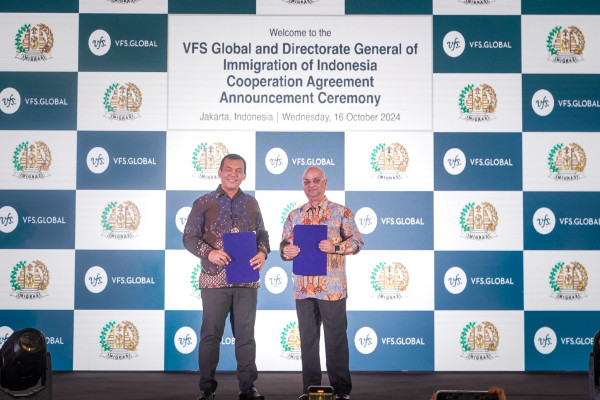
VFS Global appointed to offer new Indonesia e-Visa on Arrival service to South Africans, 96 other nationalities

Location: News
VFS Global

  • New Indonesia Electronic Visa on Arrival (e-VoA) service to commence in the first half of December 2024.
  • Group booking facility to be available for the benefit of travel trade and conventions.

Indonesia has set an ambitious target of welcoming 14 million visitors in 2024 and achieved 9.92 million arrivals from January to August 2024. The user-friendly eVoA solution aligns with Indonesia's ongoing efforts to enhance its tourism infrastructure and services. In the African region, South Africa accounts for the highest number of tourist visitors who travel to Indonesia.

Travellers will soon be able to enjoy a quicker and smoother visa application journey through VFS Global by completing the entire process online before departure and receiving a pre-approved e-VoA. The e-VoA can be easily obtained by visiting VFS Global website, submitting all the required documents, and paying the necessary fees online prior to travel. Once the application is submitted, travellers can receive their visas on their email before departure. With the payment having been made online, travellers can enjoy a smoother and faster entry experience through E-gates or immigration counters.

Mr. Silmy Karim, Director General of Immigration of Indonesia, said, “The Directorate General of Immigration offers the latest digital solutions that enhance the experience for foreign nationals who wish to visit Indonesia. In our collaboration with VFS Global, we aim to effectively contribute to increasing the arrival of foreigners, taking into account the network and digital platform owned by our partners.”

Mr. Zubin Karkaria, Founder and Chief Executive Officer, VFS Global Group said, “Indonesia is a very popular destination for travellers across the globe, and we are excited to unveil a service that will make their visa application process quicker, simpler and much more convenient. This user-friendly and highly secure digital e-Visa on Arrival (e-VoA) service will considerably enhance the visa application experience, thereby facilitate increase in tourism to the country. We are honoured to partner with the Directorate General of Immigration under the Ministry of Law and Human Rights and the Ministry of Tourism and Creative Economy of the Republic of Indonesia for this service."

Travellers applying for Indonesia e-VoA via VFS Global will get a dedicated email and live support in seven languages - English, Mandarin, Japanese, Korean, Arabic, German, and French – to help them with their queries. VFS Global will add more language support in due course of time for key markets.

VFS Global's new e-VoA platform will ensure all the documents applicants submit are complete and error-free. It also offers OCR technology which will enable applicant details to be auto populated, thereby saving time and effort for applicants. The new platform will also provide group booking facility which could be beneficials for travel trade and conventions. To further support this initiative, VFS Global has tied up with Emirates to make Indonesia e-Visa on Arrival (e-VoA) application service seamless for Emirates passengers. 

Distributed by APO Group on behalf of VFS Global.

Media Contact:
georgec@vfsglobal.com
Corporate Communications
communications@vfsglobal.com

About VFS Global:
As the world's leading outsourcing and technology service specialist, VFS Global embraces technological innovation including Generative AI to support governments and diplomatic missions worldwide. The company manages non-judgmental and administrative tasks related to applications for visa, passport, and consular services for its client governments, increasing productivity and enabling them to focus entirely on the critical task of assessment.

With a responsible approach to technology development, adoption and integration, the company prioritizes ethical practices and sustainability while serving as the trusted partner to 69 client governments.  Operating over 3,400 Application Centres in 153 countries, VFS Global has efficiently processed more than 297 million applications since 2001.

Headquartered in Zurich and majority owned through investment funds managed by Blackstone Inc, along with the Swiss-based Kuoni and Hugentobler Foundation and EQT, VFS Global is committed to creating value for all stakeholders and leading in responsible, innovative solutions making government services more effective and efficient.

Media files
VFS Global
Download logo
Read moreVFS Global appointed to offer new Indonesia e-Visa on Arrival service to South Africans, 96 other nationalities
12 November 2024

This Mobile Provider Is Failing to Implement RICA Law

Location: News

me&you mobile allows eSIMs to be activated within minutes using false information

Read moreThis Mobile Provider Is Failing to Implement RICA Law
11 November 2024

Food borne poisoning claims 23 lives

Location: News

Food borne poisoning claims 23 lives

Twenty-three people in Gauteng have died as a result of food borne-related poisoning after consuming food from spaza shops.

The majority of the deaths have been children between the ages of six and nine.

This is according to Premier Panyaza Lesufi who on Sunday updated residents on the implementation of by-laws to govern spaza shops.

“The first uniform approach across the province was to adopt a mechanism of reporting because we have so many deaths that are taking place that we want to isolate those that are food borne and those that need our immediate attention.

“The Department of Health has been given that task. They’ve given us their preliminary report, and in that report, they’ve indicated that the deaths that have been registered thus far. Today, we can confirm that we are at 23 [deaths] which is a sad thing,” he said.

He added that a large number of the incidents occurred within schools with the rest being within the community.

Furthermore, at least 441 cases of food poisoning have been reported throughout the province.

“Some of the people were either discharged or they just showed the symptoms of vomiting, stomach aches and related,” Lesufi said.

The Premier said from now on, the provincial government will “develop a template” that will be used by medical facilities, schools and community centres so that the province “can be in a position to track the areas that need immediate attention”.

“The Department of Health…will then develop a common template that will be utilised as a mechanism and then we’ll utilise the law enforcement agencies in terms of the cases that they have to ensure that we have the right figures.

“To us this is important because that becomes the base level of understanding the problem and it becomes the area in which we can record, trace and where intervention is needed, we can be in a position to make that intervention.”

Cracking down

Lesufi told the media that the provincial government has taken the decision to ban an agricultural pesticide that has been found to be at the root of some of the deaths.

“The MEC for Agriculture [Vuyiswa Ramokgopa] will formulate the approach on how to deal with that substance. We have agreed…that that substance is banned in our province and that it must not be found in any shops, it must not be found in any informal traders and that the law enforcement agencies will assist us to eliminate it where possible.

“But those that are authorised…the Department of Agriculture will be the institution that will give the licensing and the permission to utilise that,” he said.

The Premier added that because by-laws across municipalities are different in managing businesses – including spaza shops – a new uniform approach will be used.

“We have now formally adopted a draft gazette that was signed by the Minister of CoGTA [Cooperative Governance and Traditional Affairs, Velenkosini Hlabisa]. All municipalities in our province, without exception, will now adopt this gazette. These are new by-laws that have been developed nationally. 

“These by-laws explain how to register a business, how business should conduct themselves and all those related matters. [This] makes it easier for law enforcement agencies to monitor.

“The next resolution we have taken is the registration of businesses. All businesses – especially that are affecting the issue of our children – have to re-register. That’s the process that will also empower those that want to open or operate businesses, but they don’t have the financial muscle or the facilities,” he said.

Lesufi announced that stakeholder meetings are expected to be held to discuss the challenges.

Speaking at the District Development Model (DDM) Presidential Imbizo on Friday, President Cyril Ramaphosa assured the public that the issue is being addressed at the highest levels of government. 

READ | Food poisoning incidents managed at highest level, says President Ramaphosa

In his address, President Ramaphosa highlighted government's serious approach to the matter. 

The Department of Basic Education (DBE) said it was working with the Department of Health to develop safety guidelines for schools to effectively mitigate the risks of organophosphate pesticide exposure in school environments.

READ | Basic Education works to develop school safety guidelines

- SAnews.gov.za

NeoB
Mon, 11/11/2024 - 10:51

265 views
Read moreFood borne poisoning claims 23 lives
11 November 2024

Hlabisa gazettes standard draft by-law to empower township economies

Location: News

Hlabisa gazettes standard draft by-law to empower township economies

The Minister of Cooperative Governance and Traditional Affairs (CoGTA), Velenkosini Hlabisa, has introduced a new Standard Draft By-Law for Township Economies.

This by-law, issued in accordance with the Local Government: Municipal Systems Act of 2000, aims to create an enabling environment for small businesses in townships, supporting economic inclusion, job creation and community empowerment.

“The new by-law is a bold statement of CoGTA’s commitment to transforming townships into vibrant economic hubs that provide sustainable opportunities for residents. 

“This regulation is designed to harmonise township business ecosystems by providing standardised norms and facilitating easier entry and operation for formal and informal businesses,” the department explained. 

The department said the regulation also supports businesses with tailored resources, including permit registration processes and designated trading spaces, ensuring streamlined operations within municipal jurisdictions. 

The key features of the by-law include enhanced freedom for business activities, which means any individual with a business license may now conduct business within designated areas, subject to local quotas that ensure equitable opportunities for South African citizens and residents. 

“This regulation aligns with the constitutional right to freedom of trade, supporting entrepreneurial efforts that contribute to township vitality.” 

The by-law also touches on designated business zones where municipalities are empowered to establish business zones, creating spaces specifically tailored to retail, industrial, and mixed-use enterprises. 

It also speaks of business support and capacity building and simplified permitting and registration.

“The new standard draft by-law introduces an efficient permit and registration system that provides clear guidelines for businesses, including both physical and online access to application forms. 

“Municipal officials will assist applicants in the process, ensuring timely approvals and smooth operations for new and existing businesses.” 

According to the department, the new Standard Draft By-Law for Township Economies will also cover safety and compliance assurance and inclusive growth strategy. 

“The by-law mandates that all business activities align with public health and safety regulations. Regular inspections and public awareness campaigns will ensure that township businesses uphold the highest standards, protecting both entrepreneurs and the communities they serve.”

Hlabisa said the by-law was more than just a regulatory tool. 

“It reflects our vision for township economies as key contributors to South Africa’s growth. Through inclusive, streamlined, and supportive governance, this initiative lays a foundation for sustainable economic activity in historically underserved areas, empowering individuals to participate meaningfully in the economy,” the Minister added. 

CoGTA said it remained dedicated to engaging communities and stakeholders in the implementation of this by-law, ensuring that its benefits reach every corner of South Africa’s townships.

The full gazette can be accessed at https://www.cogta.gov.za/index.php/docs/local-government-municipal-systems-act-2000/. – SAnews.gov.za
 

Gabisile
Mon, 11/11/2024 - 11:52

2 views
Read moreHlabisa gazettes standard draft by-law to empower township economies
8 November 2024

Nyusi’s Commitment to Peaceful Transition Sets Example for Mozambique and Africa

Location: News

The Zimbabwe Advocate
Download logo

In a powerful demonstration of democratic integrity, Mozambique's President Filipe Nyusi has pledged to step down amid the country's ongoing political crisis, promising a peaceful transfer of power to President-elect Daniel Chapo. This commitment, a rare decision in a region where political transitions are often marked by strife, is a significant move for Mozambique and a message for African leaders facing similar pressures. Nyusi's actions, aimed at reinforcing democracy and stability, echo the sentiment expressed by U.S. Vice President Kamala Harris following a contentious election, emphasizing the critical role of peaceful transitions in sustaining democracy.

Nyusi's decision comes at a crucial time. Mozambique's recent election has been fraught with accusations of voter intimidation, ballot inconsistencies, and alleged interference, which have fueled unrest and raised doubts about the credibility of the electoral process. Opposition protests have erupted in response, with clashes breaking out between demonstrators and security forces. As the situation escalates, Nyusi's decision to step down offers the possibility of restoring public trust in Mozambique's democratic institutions, demonstrating that democratic principles can prevail even under intense political scrutiny.

The gravity of this moment in Mozambique's political journey cannot be understated. Historically, African leaders have often clung to power by altering constitutions or manipulating elections, leading to stagnation and, in some cases, internal conflict. The aftermath of prolonged political battles can be devastating, as seen in Zimbabwe and Côte d'Ivoire, where contested elections led to violence and economic hardship. By pledging to transfer power peacefully, Nyusi breaks from this pattern, underscoring a culture of governance that values institutional integrity, stability, and public trust over personal ambition.

This pledge aligns with Mozambique's recent strides toward democratic reform and economic restructuring. Over the past few years, the country has made notable progress in building a foundation for growth by increasing transparency and establishing frameworks for development. Yet, these gains hinge on political stability, and Nyusi's peaceful transfer of power is critical in sustaining these reforms. By ensuring continuity, he allows President-elect Chapo to inherit a stable environment to address the pressing economic and social issues that face the nation. Economic disparity, insurgency in the north, and internal divisions will require focused attention, which would be difficult to achieve in an atmosphere of continued political conflict.

Nyusi's move is also pivotal for regional stability. Mozambique's role in southern Africa makes its stability critical for neighboring countries. Political instability in Mozambique risks not only stalling its own progress but also destabilizing the broader region. In southern Africa, where democratic challenges are ongoing in countries such as Zimbabwe and South Africa, Nyusi's decision sets a powerful precedent for peaceful power transitions, strengthening democratic norms that benefit the entire region. His choice demonstrates that a leader's commitment to the nation's future can eclipse personal political ambitions, offering an example that other leaders might follow to foster peace and democratic integrity in their own nations.

Yet, Nyusi's commitment to a peaceful transition does not come without its challenges. As opposition groups continue to contest the election outcome, clashes with security forces raise concerns about ongoing unrest. The Southern African Development Community (SADC) has called an emergency meeting to address the post-election turmoil, underscoring the potential risks to national and regional stability. While political accountability is central to democratic engagement, the opposition's continued protests pose the risk of prolonged instability. Precedent across Africa has shown that when political actors resist peaceful power transitions, it often leads to violent and economically devastating consequences. By supporting a calm transition, opposition leaders have an opportunity to contribute to the nation's stability and help Mozambique move forward.

The legacy Nyusi leaves is one rooted in democratic values, with his choice to step aside standing as a testament to his respect for Mozambique's future and for the rule of law. In a world where populism and authoritarianism are on the rise, Nyusi's actions serve as a reminder that leadership should prioritize the health of the nation over the ambitions of the individual. His decision may inspire future Mozambican leaders and those across the continent to uphold democratic values and approach governance as a service to the people. By respecting the limits of power, Nyusi sets an enduring standard for African leadership, reminding both current and future generations of the value of putting the nation's stability and democratic integrity above all else.

As Mozambique navigates this transition, it has a chance to model responsible governance and maintain the trajectory of democratic reform. Nyusi's actions have set Mozambique on a path that, if followed, could allow the nation to emerge from this period of uncertainty stronger, more united, and more stable. For Mozambique, for the region, and for Africa as a whole, Nyusi's decision holds lessons that underscore the power of leadership dedicated to the democratic process and the well-being of the nation over individual gain.

Distributed by APO Group on behalf of The Zimbabwe Advocate.

For Information and Commentary:
Adenike Adeodun,
Senior Editor
The Zimbabwe Advocate
+254781435462
news@zimadvocate.com

Read moreNyusi’s Commitment to Peaceful Transition Sets Example for Mozambique and Africa
8 November 2024

Extortion poses serious threat to State and citizens, says Mashatile

Location: News

Extortion poses serious threat to State and citizens, says Mashatile

Deputy President Paul Mashatile says an economy grappling with extortion, controlled by "ruthless gangsters", poses a serious threat to both government and law-abiding citizens.

“We have also responded to a related question in the National Assembly, highlighting the urgent need for government to take decisive action to deal with extortion-related criminality,” Mashatile said on Thursday.  

The Deputy President was responding to questions in the National Council of Provinces (NCOP) relating to several critical issues impacting South Africa’s township and rural economies. 

The Deputy President quoted Police Minister Senzo Mchunu, who in September spoke about township economic sabotage in four provinces. These provinces include mainly Gauteng, KwaZulu-Natal, the Western Cape and Eastern Cape. 

“According to the Minister of Police, these provinces carry 73% of crime levels in South Africa. The gravity of these crimes alone, including extortion, are of serious concern to government, and must be dealt with immediately,” said Mashatile.

He announced that the South African Police Service (SAPS) has since initiated the signing of cooperative agreements with provincial and local governments, which include operational plans that will provide details on the integration of resources against crime.

In addition, Extortion and Kidnapping Task Force Forums have been established in all affected provinces, which involve all the relevant stakeholders, including private business.

On the implementation of measures to deal with sabotage of basic service delivery, such as water and sanitation, by “unscrupulous” owners of water tankers, the Deputy President said the Departments of Water and Sanitation and Cooperative Governance and Traditional Affairs have intervened. 

According to the Deputy President, the two departments are assisting struggling municipalities with water tankers as a short-term intervention, while bulk water infrastructure challenges are being resolved.

“In addition to the challenge of construction mafia, which is rife all over the country, we have received reports of unscrupulous owners of water tankers, who are interfering with service delivery initiatives in municipalities, thus extorting money to rent their services, and some selling water to vulnerable communities.” 

He stressed that the State was encouraged by the work of Community Policing Forums, whistleblowers and community members, who are actively involved in addressing service delivery-related acts of criminality and extortion across all provinces that have been identified as hotspots. 

“However, much more needs to be done to resolve this challenge,” Mashatile said.

Township economy

Meanwhile, the country’s second-in-command said government is dedicated to transforming apartheid spatial planning by investing in critical industries such as manufacturing to revitalise and create much-needed jobs in the communities where people reside. 

According to the Deputy President, the Department of Trade, Industry and Competition (dtic) has developed the Industrial Parks Revitalisation Programme (IPRP), aimed at renewing and reviving South Africa’s old and abandoned industrial parks and driving employment in the manufacturing sector in townships and rural economies. 

He explained that this programme aims to support State-owned industrial parks and identify enabling opportunities for local manufacturing and value addition in marginalised communities. 

The Deputy President also highlighted the State’s programmes to support Special Economic Zones (SEZs), which are aimed at expanding economic activity in underdeveloped parts of South Africa. 

To date, he said there are 11 designated SEZs, nine of which are being supported by the SEZ Fund, and have generated investments amounting to R19.6 billion. – SAnews.gov.za

Gabisile
Fri, 11/08/2024 - 09:38

138 views
Read moreExtortion poses serious threat to State and citizens, says Mashatile
8 November 2024

Ian Blose Was Suspended as an Attorney in 2022. Yet He Is Still a Practising Magistrate

Location: News

He was also charged in the 2010 “Amigos” corruption case

Read moreIan Blose Was Suspended as an Attorney in 2022. Yet He Is Still a Practising Magistrate
  • Previous
  • Page 1
  • Interim pages omitted …
  • Page 39
  • Page 40
  • Page 41
  • Page 42
  • Page 43
  • Interim pages omitted …
  • Page 88
  • Next

Copyright © 2026 · MyZA · All Rights Reserved · Powered by Stratlec Online