Children’s Homes, Rehabs and Shelters Face Closure Once Again as Gauteng Government Fails to Pay
Department of Social Development says there were “payment system challenges” and some organisations are non-compliant

MyZA
News, Directory, Events and Other Stuff
Department of Social Development says there were “payment system challenges” and some organisations are non-compliant
GOOD Statement by Brett Herron ,GOOD Secretary-General & Member of the Western Cape Provincial Parliament 03 June 2025 Today, a female body was discovered during a community search for missing teenager, Chanelle Plaatjies. Chanelle was reported missing by her mother on May 28. We do not yet have confirmation that the body is hers nor […]
The post CHANELLE PLAATJIES IS MORE THAN A NAME: THE WESTERN CAPE’S FAILURE TO PROTECT ITS GIRLS appeared first on For Good.
“We are now working closer with the police and the community to make sure that the emergency services workers are protected at all costs”
Residents demand municipality fulfil its promises
60% of the country’s HIV counsellors have been laid off and the country’s TB programme is faltering
Lamontville has been battered by floods
There are not enough beds in South Africa’s 13 psychiatric hospitals
Workers also want uniforms and overtime pay
GOOD Statement by Roxaan Vorster,GOOD George Municipality Councillor 28 May 2025 The GOOD Party is appalled and deeply disturbed by the horrific rape and kidnapping of a 10-year-old girl in George on Saturday, 24 May 2025. We commend the swift actions of community members and law enforcement who worked tirelessly to find the victim and […]
The post GEORGE: OUR CHILDREN MUST BE PROTECTED appeared first on For Good.
GOOD Statement by Brett Herron ,GOOD Secretary General & Member of the Western Cape Provincial Parliament 27 May 2025 The Western Cape Government has once again turned to its favourite scapegoat, National Government, calling for the devolution of policing powers as if that alone will put an end to the bloodshed on our streets. This […]
The post DEVOLUTION ISN’T A CURE, IT’S A DISTRACTION appeared first on For Good.
GOOD Statement by Brett Herron ,GOOD Secretary-General 26 May 2025 The GOOD Party is deeply concerned by the National Treasury’s imposition of punitive and exclusionary conditions on the 2025/26 operating budget of the South African Social Security Agency (SASSA). These conditions effectively extend the flawed administrative procedures of the Social Relief of Distress (SRD) grant […]
The post TREASURY’S PUNITIVE SOCIAL GRANT CONDITIONS AN ATTACK ON THE POOR appeared first on For Good.
Deputy President Shipokosa Paulus Mashatile has, today, 20 May 2025, engaged with South African and French businesses during a Roundtable Breakfast Dialogue hosted by MEDEF International in Paris.
MEDEF is France's largest business federation, representing over 750,000 companies, from SMEs to large multinationals. It plays a central role in promoting French economic diplomacy, supporting private sector development, and facilitating international investment and trade relationships.
The Business Dialogue is an important platform for businesses from both countries to expand on existing cooperation and identifying new areas of cooperation with a specific focus on trade and investment.
Addressing the Business Dialogue, the Deputy President said, "The South African Government has committed to spending more than R940 billion on infrastructure over the next three years. This funding will revitalise our roads and bridges, build dams and waterways, modernise our ports and airports, and power our economy. Moreover, investors have an opportunity to collaborate with the South African Government by investing in infrastructure such as ports, rail, electricity, and manufacturing to improve local value-addition and boost trade under the African Continental Free Trade Area."
The Deputy President also touched on the European Union-SA Summit, which took place in Cape Town in March 2025, where there was an announcement of the EU investment package of around R90 billion to support investment projects in South Africa.
In addition, the Deputy President met with Mr Thierry Deau, Group CEO of Meridiam and Chairman of the Global Long-Term Infrastructure Investors Association.
Meridiam is a global investment firm specializing in public infrastructure, with assets under management exceeding €12 billion. It focuses on long-term investments in transport, energy, social infrastructure, and environmental projects, with a commitment to sustainable development and inclusive growth.
During the meeting, the two discussed, among others, the importance of collaboration with various stakeholders, including infrastructure investors, policymakers, and academia, as being crucial for promoting responsible and long-term private capital deployment in public infrastructure.
In conclusion, the Deputy President indicated that he is certain that South Africa and France can achieve new heights of prosperity through strengthening their economic links and encouraging closer cooperation.
Distributed by APO Group on behalf of The Presidency of the Republic of South Africa.
The Portfolio Committee on Cooperative Governance and Traditional Affairs (COGTA) has welcomed the launch of the seminal Review of the 1998 White Paper on Local Government, hailing it as an important step towards more accountable and efficient local governments, resulting in better service delivery.
Committee Chairperson Dr Zweli Mkhize and several committee members attended the launch event in Johannesburg on Monday. The review was launched under the theme “Every municipality must work – A call to collective action”.
The Chairperson said the review is long overdue, as a lot has changed in local government since the first White Paper, with many municipalities struggling and dysfunctional. He said the vision for local government as an important lever in addressing historical injustices and improving people's lives has not aligned with the lived realities in communities over the years.
“Now, this review provides an important pause to reinvigorate and chart a new trajectory of growth, development and efficiency for our municipalities,” the Chairperson said.
He invited all stakeholders to make their voices heard in the planned consultations that will follow, as the review is set to address service delivery challenges in municipalities and the funding model for local government, among other things.
“The committee is looking forward to interacting with the review process of the White Paper on Local Government,” said the Chairperson.
The review is expected to be finalised by March of next year.
Distributed by APO Group on behalf of Republic of South Africa: The Parliament.
Slaughter may await rescued animals if farm’s buyer obtains eviction order
SASSA warns against social grant scam
The South African Social Security Agency (SASSA) has dismissed claims suggesting that double grant payment will be made in June.
“These reports are untrue and should be rejected with the contempt they deserve,” SASSA national spokesperson, Paseka Letsatsi said.
In a statement on Friday, SASSA appealed to beneficiaries not to expect any double payment in June.
In line with the Ministry of Finance’s Policy Statement in March, Letsatsi said grant increases were announced and came into effect in April, and there will be another increase again in October 2025.
Any other increase not announced by credible and relevant authorities should be treated as lies,” Letsatsi said.
SASSA has also disputed reports claiming that "new rules could affect your pension” from 10 June 2025.
“On 30 April 2025, SASSA announced verification process only for targeted grant beneficiaries in the May 2025 payment run to encourage them to update their information at SASSA offices. The targeted beneficiaries were those who use alternative forms of identification other than the standard 13-digit South African identity number to receive their social grants.
“The other beneficiaries that are targeted include those identified through the bulk means test process, to check if they have some income that flows into other bank accounts that they did not disclose to SASSA. We appeal to our beneficiaries to only rely on credible sources of information on our official social media pages,” Letsatsi said.
Before anyone can share any information pertaining to social grants, they must first verify its authenticity to avoid disseminating false information that may cause anxiety and stress to our beneficiaries, he said. – SAnews.gov.za
GabiK
Fri, 05/16/2025 - 15:12
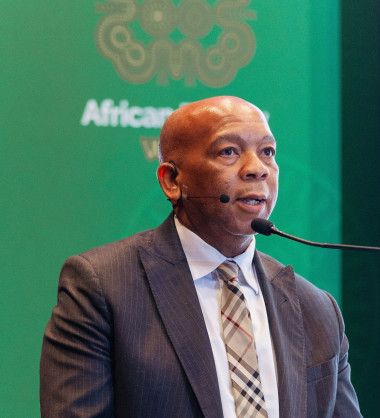
Dr Kgosientsho Ramokgopa, Minister of Electricity and Energy of South Africa, will speak at this year's edition of the African Energy Week (AEW): Invest in African Energies conference – taking place September 29 to October 4 in Cape Town. As the country targets large-scale power and renewable energy rollout, Dr Ramokgopa's participation will support greater collaboration with international partners and investors.
Faced with an energy deficit challenge, South Africa has been implementing bold changes across its electricity and energy sectors, seeking to strengthen infrastructure development and broader energy access. In 2025, the country implemented its newly enacted Electricity Regulation Act, aimed at creating a more competitive power market in the country. Designed to address the country's longstanding power supply challenges by restructuring the sector, the act enables independent power producers to play a larger role in the country's industry. Additional policies include the Renewable Energy Masterplan – approved in March 2025 and aimed at incentivizing investment across the renewable energy value chain – and the Energy Action Plan – aimed at mitigating power outages by securing energy supply.
On the back of regulatory reform, the country has seen several milestones achieved across its electricity and energy sectors in recent months. In March 2025, the country brought the sixth and final unit of the Kusile Power Station online. Following the requisite testing and optimization over a six-month period, the unit will add 800 MW to the South African national grid. Once all units at the station are operational by H2, 2025, the station will contribute 4,800 MW to the grid, representing the country's largest infrastructure project. Meanwhile, a second new-build power station is on track for commissioning its fourth unit shortly. The Medupi station – a greenfield coal-fired plant – will produce 4,800 MW once all six units are online.
While these projects represent strategic steps towards improving generation and transmission capacity in South Africa, much more investment is required to achieve the country's power and energy goals. The Ministry of Electricity and Energy estimates that South Africa requires up to R440 billion to finance transmission development over the next ten years. To enhance energy access, the country seeks to modernize and expand the national electricity grid by 14,000 km during this timeframe, highlighting a major investment opportunity for global financiers. In March 2025, Minister Ramokgopa announced short-term plans to acquire up to 1,164 km of 400 kV transmission lines, covering the Northern Cape, North-West and Gauteng. The acquisition falls under the country's broader Integrated Resources Plan – which provides a roadmap for achieving South Africa's forecasted electricity demand - as well as the 2024 Transmission Development Plan, which seeks to expand the grid and achieve greater access rates across various provinces.
Meanwhile, spearheaded by the Ministry of Electricity and Energy, the country is making significant strides towards scaling-up its renewable energy sector. A key driver of this is the Renewable Energy Independent Power Producer program (REIPPP) – an initiative aimed at increasing generating capacity through private sector investment in solar, onshore wind and hydropower. The REIPPP has successfully channeled substantial private sector expertise and investment in the renewable industry, with 16 winners selected under Bid Window 7 in December 2024. This window targets 5 GW of renewable energy capacity, with the winning projects featuring 1.76 GW of solar – representing a combined investment of ZAR 31.4 billion – as well as 615 MW of battery energy storage - a combined investment of ZAR12.8 billion.
Nuclear energy has also been identified as a strategic sector by the Ministry of Electricity and Energy. South Africa currently hosts the only operational nuclear facility in Africa and has plans to scale-up capacity in support of anticipated rising demand. The Ministry of Electricity and Energy plans to spend R60 billion on its nuclear-build program and is seeking support from international nuclear experts to enhance capacity. At AEW: Invest in African Energies, insights into South Africa's power and energy advancements will highlight key investment opportunities for global players.
“South Africa has put the requisite policies in place to advance large-scale power and energy projects. What the country now needs is action. International investors should take advantage of regulation and drive impactful projects,” states Oré Onagbesan, Program Director, African Energy Week.
Distributed by APO Group on behalf of African Energy Chamber.
About AEW: Invest in African Energies:
AEW: Invest in African Energies is the platform of choice for project operators, financiers, technology providers and government, and has emerged as the official place to sign deals in African energy. Visit http://www.AECWeek.com for more information about this exciting event.
The 15th edition of the Simola Hillclimb was characterised by difficult emotions matched to brave competition at the highest level during the King of the Hill challenge.
TSHWANE: Building on the momentum of previous SA20 U19 Women’s Camps, the second instalment of the SA U19 Women’s national...
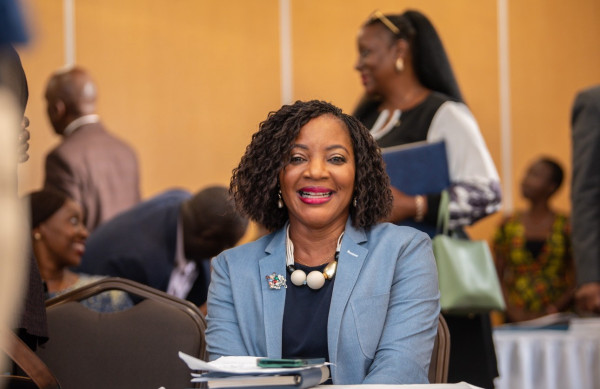
HPV is fuelling high cervical cancer rates in sub-Saharan Africa despite the availability of effective vaccines. Yet uptake remains low, driven largely by vaccine hesitancy. In South Africa alone, most participants (71%) were hesitant to receive at least one of the vacines in the country, according to the Vaccine Confidence Report by MSD (www.MSD.co.za) and Prof. Hannelie Meyer, Head of the South African Vaccination and Immunisation Centre. [1] The report was launched at the European Society of Clinical Microbiology and Infectious Diseases and during the SSA HPV Media Roundtable held during World and Africa Immunisation Week (24–30 April 2025).
Cervical cancer, caused by persistent infection of HPV, is one of the leading causes of cancer-related deaths among women in sub-Saharan Africa. The World Health Organization (WHO) estimates that 94% of global cervical cancer deaths occur in low- and middle-income countries, with sub-Saharan Africa heavily affected. [2]
Studies indicate that, globally, about 12% of women with normal cervical cytology are found to have an HPV infection. This prevalence doubles to around 24% in sub-Saharan Africa. Young women under 25 are particularly vulnerable, with an HPV prevalence rate of 43.9% in Africa compared to the global rate of 19.2%. [3]
A 2023 report indicated that cervical cancer ranks as the 13th most frequent cancer among women in Egypt and the 9th most frequent among women aged 15 to 44 years. [4] In Kigali, Rwanda, before the national HPV vaccination programme, 54% of women aged 19 years and younger were found to have received an HPV-positive result. [5] The high mortality rate in Ghana further demonstrates the burden, with approximately 3,000 women diagnosed with cervical cancer annually, resulting in around 2,000 deaths each year. [6]
Vaccine hesitancy, defined as a delay in acceptance or refusal of vaccines despite their availability, remains a challenge in the fight against preventable diseases such as cervical cancer. Misinformation, cultural beliefs, and accessibility issues further compound the low uptake of HPV vaccines. As global health organisations and local health authorities strive to eliminate preventable diseases, understanding and addressing vaccine hesitancy has never been more urgent. [1]
Understanding vaccine hesitancy
The Vaccine Confidence Report highlights several drivers of HPV vaccine hesitancy, including safety concerns, mistrust in healthcare systems, and misinformation on social media. According to Prof. Meyer, despite clear scientific evidence, many still believe vaccines are harmful. [1] “This reluctance is troubling,” she said, “given the direct link between HPV and cervical cancer. Addressing these fears with credible information is vital to reducing the burden in sub-Saharan Africa.”
An external study titled 'Vaccine Hesitancy and Trust in sub-Saharan Africa' published in Scientific Reports in May 2023 examined vaccination behaviours and attitudes across six sub-Saharan African countries: Ghana, Kenya, Nigeria, South Africa, Tanzania, and Uganda. The study found that only about 10% of respondents reported receiving at least one HPV vaccination. Vaccine hesitancy rates varied across countries, with South Africa exhibiting the highest rate at 17.15% and Kenya the lowest at 8.3%. [7]
Impact of misinformation, funding gaps and immunisation disruption Misinformation remains a major driver of vaccine hesitancy in Africa, especially through online platforms. It has shaped public attitudes and eroded trust in immunisation programmes. At the same time, shifting global priorities and economic pressures have led to reduced funding for vaccination efforts, limiting access in low-income communities. [8] “Routine immunisation has saved millions of lives,” said Dr Alima Essoh, Regional Director of the Preventive Medicine Agency for Africa (AMP Africa). “When misinformation and resource constraints disrupt these efforts, we risk undoing decades of progress.” Expanding HPV vaccination is critical to reducing cervical cancer, but it requires tackling misinformation head-on and improving access across the continent.
Broader implications for public health
While HPV vaccination remains a key focus, vaccine hesitancy extends to other preventable diseases. The World Health Organization (WHO) has set a target to eliminate cervical cancer as a public health concern by 2030, which includes ensuring that 90% of girls are fully vaccinated against HPV by age 15. [9] According to Prof Meyer, vaccine hesitancy threatens to derail this goal and broader efforts to achieve high immunisation rates for other preventable illnesses such as measles, polio, and influenza.
Rethinking the fight against HPV-related cervical cancer: Community action and vaccine confidence
Efforts to eliminate HPV and reduce HPV-related cervical cancer in Africa necessitate innovative, community-driven solutions. Dr Sabrina Kitaka, Senior Lecturer at Makerere University, states that engaging and accessible tools, such as comic books and school-based vaccination, have significantly enhanced vaccine uptake among young people. She adds that reminder systems, such as SMS and automated phone calls, help ensure adolescents complete the HPV vaccine schedule. If implemented on a large scale, these strategies could strengthen vaccine coverage across the region. She further states that, tackling vaccine hesitancy will require a coordinated approach involving governments, healthcare workers, civil society, and the private sector. This means improving health communication, building trust through local partnerships, and tailoring outreach to meet communities where they are.
“There is no time to waste,” says Prof. Meyer. “We must work together to share accurate information, address concerns, and make vaccines truly accessible. Only then can we protect future generations from preventable diseases.”
Disclaimer: The views and opinions expressed by the speakers in this document are their own and do not necessarily reflect the views or positions of MSD.
References
Distributed by APO Group on behalf of MSD.
REPORT ANY SUSPECTED ADVERSE EVENTS OR PRODUCT QUALITY COMPLAINTS TO DPOC SOUTH AFRICA:
dpoc.zaf@msd.com
Tel: +27 (0)11 655 3000.
www.MSD.co.za
African Mining Week (AMW) – taking place from October 1–3, 2025, in Cape Town – will connect global investors with high-impact opportunities across Africa's mining sector, spotlighting the strategies fueling the continent's mineral industrialization.
A key highlight of the event will be a high-level panel, The Investor Perspective: Financing Africa's Mineral Industrialization. The session will explore the evolving investment landscape and examine diverse financing mechanisms – including bank loans, private equity, venture capital and impact investing – that are mobilizing capital into African mining.
DFIs Drive Infrastructure Investments
Attracted by strong returns and Africa's long-term growth potential, development finance institutions (DFIs) are ramping up investments into the continent's mining infrastructure. In March 2025, the African Development Bank approved a $150 million loan to Mauritania's state-owned mining company SNIM and committed $500 million to the Lobito Corridor – a strategic railway project linking Angola, the DRC and Zambia to international markets. Meanwhile, the Africa Finance Corporation (AFC) is backing several critical mineral projects, including Nyanza Light Metals' $780 million PGMs facility in South Africa, Gecamines' expansion in the DRC, Giyani Metals' manganese development in Botswana and FG Gold's project in Sierra Leone. Between 2014 and 2024, AFC invested over $1 billion into Africa's mining sector. The U.S. International Development Finance Corporation (DFC) is also deepening its commitment, providing more than $750 million toward the Lobito Corridor, $34 million for Pensana's Longonjo rare earths project in Angola and $3.2 million to Chillerton's green copper development in Zambia.
Geopolitics and African Prospects
Geopolitical shifts are intensifying the global race for Africa's critical minerals, vital for the energy transition and digital economy. From 2019 to 2023, companies from the United Arab Emirates committed over $110 billion to African projects. In early 2025, UAE-based Ambrosia Investment Holding acquired a 50% stake in Allied Gold's projects in Ethiopia and Mali, investing $375 million to scale up gold production. Canadian mining investment on the continent has now surpassed $37 billion, with companies like Ivanhoe Mines, Fortuna Silver, Pioneer Lithium and Trigon Metals leading expansion efforts. Similarly, Australia's mining footprint in Africa reached $60 billion in asset value in 2024, supported by firms such as Sovereign Metals, Cazaly Resources and Atlantic Lithium.
Private Placements
Private placements are emerging as a preferred capital-raising vehicle for mining ventures across Africa. Companies including Zanaga Iron Ore, Moab Minerals, Global Atomic Corporation, Premier African Minerals and Trigon Metals are leveraging this mechanism to fast-track project development and attract investor interest. As ESG criteria take center stage in investment decision-making, AMW will serve as a platform for financiers and project developers to engage on sustainability metrics, transparency and responsible investing.
Distributed by APO Group on behalf of Energy Capital & Power.
African Mining Week serves as a premier platform for exploring the full spectrum of mining opportunities across Africa. The event is held alongside the African Energy Week: Invest in African Energies 2025 conference from October 1-3 in Cape Town. Sponsors, exhibitors and delegates can learn more by contacting sales@energycapitalpower.com. To download the working program, please visit www.African-MiningWeek.com
African mining projects are increasingly incorporating artificial intelligence (AI) to streamline operations and meet ambitious production targets set by governments across the continent. As the mining industry undergoes a digital transformation, the upcoming African Mining Week (AMW) will highlight the pivotal role of AI and other digital tools in optimizing exploration and production processes, with a view to unlocking new mineral reserves, reducing costs and enhancing worker safety.
Botswana Diversifies Mineral Portfolio
In Botswana, Botswana Diamonds is expanding its mineral portfolio beyond diamonds with an AI-based nationwide exploration campaign launched in August 2024. By March 2025, the company identified potential deposits of besshi, greenstone, Mississippi Valley-type lead and zinc, SEDEX and platinum group metals (PGMs). To capitalize on these discoveries, Botswana Diamonds has applied for 11 new prospecting licenses. John Teeling, Chairman of Botswana Diamonds, stated: “During the initial analysis of the big database, it became clear that the AI technology could be used to identify other unknown minerals opportunities… Our analysis so far has identified a series of targets in copper cobalt, zinc and gold.”
KoBold Advances Zambia's Critical Mineral Market
U.S.-based startup KoBold Metals is applying AI to enhance critical mineral exploration and mine development in Zambia. In January 2025, KoBold raised $537 million in new capital, bringing its total funding to $1 billion. The company is developing one of the world's largest untapped copper basins in Zambia, with plans to produce 300,000 tons annually by 2030 from its $2 billion Mingomba Project. Additionally, KoBold Metals is exploring the Dumbwa Mine and Konkola West Project, contributing to Zambia's goal of reaching 3 million tons of annual copper production by 2031.
Kilken Platinum Drives Mine Expansion
In South Africa, Kilken Platinum is utilizing AI to optimize operations at its Thabazimbi processing plant in Limpopo as part of an expansion plan to double PGM production to 83kgs per month. The project has already increased output to 40kgs in its initial phase. Dondo Mogajane, CEO of Kilken Platinum's parent company Moti Group, emphasized that AI enables real-time tracking of production metrics and ensures strict adherence to safety protocols.
Beyond these projects, Rio Tinto subsidiary Richards Bay Minerals is employing AI for ore body modeling, equipment dispatch management and blast control at its mines in KwaZulu-Natal, South Africa. In the Democratic Republic of Congo, Glencore is leveraging digital technology to streamline critical mineral exploration as part of its Phase 2 expansion at the KTO copper and cobalt project. AMW 2025 will feature high-level discussions focused on AI's impact on industry growth, investment opportunities for technology providers and the broader economic benefits of digital transformation in mining.
African Mining Week serves as a premier platform for exploring the full spectrum of mining opportunities across Africa. The event is held alongside the African Energy Week: Invest in African Energies 2025 conference from October 1-3 in Cape Town. Sponsors, exhibitors and delegates can learn more by contacting sales@energycapitalpower.com.
Distributed by APO Group on behalf of Energy Capital & Power.
South Africa condemns the continuous bombing of civilian targets in Gaza, the most recent being the missile strike by Israel forces on the al-Ahli Arab hospital in Gaza on Sunday, 13 April, forcing the evacuation of dozens of wounded people, and leaving Gaza critically short of emergency care. South Africa joins the global condemnation of the bombing, which is a flagrant violation of international humanitarian law. Israel has bombed, burned and destroyed at least 35 hospitals in Gaza since the start of the war in October 2023. Attacks on health facilities, medical personnel and patients are considered a war crime under the IV Geneva Convention of 1949.
The attack on Al Ahli Arab hospital follows the killing of 15 humanitarian personnel in Gaza – eight Palestinian Red Crescent Society health workers, one UNRWA staff member, and six members of the Palestinian Civil Defence who were on a rescue mission on the morning of 23 March and deliberately fired upon by Israeli military forces. Deliberate attacks on medics and humanitarian workers are prohibited by international law and constitute war crimes. First responders like civilians and other non-combatants are never legitimate targets.
We are also concerned that Israel has halted the entry of all aid into Gaza since 2 March. This is in defiance of the binding provisional orders of the International Court of Justice, which ordered Israel to ensure unhindered access of humanitarian aid in Gaza. The international community must hold Israel accountable through effective counter-measures, as the impunity enjoyed by Israel has emboldened its genocidal actions in Palestine.
Distributed by APO Group on behalf of Republic of South Africa: Department of International Relations and Cooperation.
SAPS tells Parliament they have been unable to access 7-year-old rape victim