• Skip to main content
  • Skip to header right navigation
  • Skip to after header navigation
  • Skip to site footer
MyZA

MyZA

News, Directory, Events and Other Stuff

  • Social Media
  • Sport
  • World News
  • Home
  • Submit News
  • Directory
  • Events
  • Stratlec
  • TFSA
  • News
    • APO
    • Today’s Sport News
    • Todays Social Media and Tech Headlines
    • Today’s World News
    • Today’s SA Financial News
  • Contact
You are here: Home / Archives for Mozambique

Mozambique

16 November 2023

South Africa and UAE are Sustainability Leaders

Location: News
Agility

South Africa, the United Arab Emirates, Egypt and Saudi Arabia are doing the most to combat climate change in the Middle East and Africa, according to a new report that compares government and business sustainability policies, investment and actions.

Download document: (https://apo-opa.co/49FTzKm)

The Middle East and Africa Environmental Sustainability Scorecard (https://apo-opa.co/49Bcfeq), released Thursday, is ta detailed examination  of country performance in environmental sustainability outcomes, government policies, and corporate practices in the two regions.

The report concludes that the 17 countries covered “are relative ‘late comers' to global sustainable development but at the same time represent regions that are rapidly stepping-up their sustainability strategies, programs and investments.”

The report was commissioned by Agility (www.Agility.com), a global supply chain services company based in Kuwait. It was compiled by Horizon Group (www.Horizon-Group.ch), a Geneva-based firm that specializes in research and analysis for governments, international organizations, and leading businesses worldwide.

South Africa is among the leaders in four of six pillar categories. It is 2nd in Sustainable Energy & Transport; 5th in Energy Transition; 2nd in Environmental Ecosystems; and 2nd in Circularity. Among African countries, South Africa is 3rd in Green Investment & Technology behind Morocco and Egypt.

Among the factors driving South Africa's performance: a national Biofuel Industrial Strategy; formal code of corporate governance; ESG reporting requirements and transparency and accountability standards for companies listed on the Johannesburg Stock Exchange; a World Bank energy transition partnership to decommission a coal-fired power plant and replace the power supply with renewable energy and batteries; and steps to protect habitat and cut pollution.  

Egypt ranks 3rd overall in the scorecard. It is 5th in Green Investment & Technology; 7th in Sustainable Infrastructure & Transport; 5th in Governance & Reporting; 3rd in Environmental Ecosystems; and 1st in Circularity, which measures resource use and waste management.

A food security and African displacement launched by Egypt contributed to its ranking, along with its participation in a Qatar-led carbon credit program.

Other top performers in Africa: Morocco is 3rd in Green Investment & Technology and 3rd in Governance & Reporting; Rwanda and Kenya are 5th and 6th in Sustainable Infrastructure & Transport.

African countries dominate the energy transition, mainly on the strength of their green transport and energy conservation efforts. Uganda, Nigeria, Rwanda, Kenya, South Africa, Ghana, Tanzania, Mozambique, Cote d'Ivoire, Egypt and Morocco are Nos. 1 through 11 in Energy Transition.The scorecard uses 48 performance and progress indicators to compare countries. The indicators include data, regulatory frameworks, policy assessments, incentives and corporate practices across six pillar areas: green investment and technology; sustainable infrastructure and transport; governance and reporting; energy transition; environmental ecosystems; and circularity. To capture corporate practices and progress, Horizon surveyed 647 business executives in the 17 countries.

Overall, 1 through 17, here's how the countries rank: South Africa, UAE, Egypt, Saudi Arabia, Rwanda, Kenya, Uganda, Ghana, Morocco, Qatar, Tanzania, Nigeria, Bahrain, Kuwait, Cote d'Ivoire, Oman, Mozambique.

Key Findings

• Business isn't paying attention to COP. Eighty-two percent of African businesses and 49% of Middle East businesses are not aware of the UN-led COP process that nations are using to push and measure efforts to tackle climate change. Few companies use COP to set their sustainability targets.

• Climate change is hurting businesses. Ninety-seven percent of companies say their business has been affected by climate change, and 49% say climate change has caused “severe damage” or has a “significant and growing” impact on them.

• Governments are leading as businesses play catch up. When it comes to climate action, governments are outpacing the private sector in both the Middle East and Africa. 

• No one size fits all. Different countries have different sustainability priorities based on income, economic strengths, energy dependency, and other factors. High-income, energy-producing Gulf countries generally invest more in sustainable infrastructure and ecosystems. African economies perform best in energy conservation and consumption.

• Green investment is expensive. High- and middle-income countries are investing the most: Qatar, UAE, Morocco and Saudi Arabia. 

• Africa is focused on green transport. African countries topped the scorecard in the move to non-fossil fuels for transport. Hydrocarbon producing Gulf countries are focused more on green buildings. For Gulf countries, the transition to cleaner energy is complicated by energy-intensive national priorities: the desire to boost manufacturing and the need for desalinated water.

• Waste management, consumption are tied to wealth. High-income countries are doing more to manage waste sustainably. Poorer ones do more to constrain consumption. Overall Egypt, South Africa, Bahrain and UAE perform best in “circularity” – cutting waste, encouraging recycling and sustainable production, and lowering consumption.

Agility was recently named the No. 3 Middle East “Sustainability Leader” for Transport & Logistics by Forbes Middle East. Vice Chairman Tarek Sultan said the company's strategy and investment decisions are increasingly shaped by the urgency of the climate fight.

“As a supply chain operator and investor in the Middle East and Africa, we want to know what governments and businesses are prioritizing, and where they're putting resources in the climate change battle,” Sultan said. “We want to know who we can partner with in green infrastructure and transport, alternative fuels, and supply chain services that reduce environmental impact without sacrificing performance.”

Horizon, which compiled the scorecard report for Agility, said its intent was to look “beyond the selective characteristics of the Middle East being fossil fuel-dependent with high greenhouse gas emissions per capita, and African countries being low emitters of greenhouse gases but taking relatively little action on the environment.”

The scorecard report comes on the eve of COP28, the UN-led global climate change conference convening from Nov. 30 to Dec. 12 in Dubai. Its findings amplify those in a World Economic Forum (WEF) report (https://apo-opa.co/3MKvh8d), issued in October, on decarbonization and energy transition in the Middle East and North Africa.

The WEF report concluded that “MENA countries trail behind comparable regions in terms of their sustainability progress. While local governments have pledged in the past 24 months to bring 60% of MENA's emissions under the net zero ambition, businesses overall have yet to follow suit and bridge the gap with comparable global markets –12% have set up a net zero target and 6% have established a roadmap to reach net zero.”

Distributed by APO Group on behalf of Agility.

Media contact:
Sabrina Mundy
Man Bites Dog
teamagility@manbitesdog.com
+44 1273 716 820

For more information about Agility, visit:
Website: www.Agility.com
Twitter: https://apo-opa.co/40Ki6Kj  
LinkedIn: https://apo-opa.co/49GTqqq
YouTube: https://apo-opa.co/3MNqYJr

About Agility:
Agility (www.Agility.com) is a global leader in supply chain services, infrastructure, and innovation with 45,000+ employees across six continents. A multi-business operator and investor, Agility specializes in growing and scaling operating businesses. Agility's companies include the world's largest aviation services company (Menzies Aviation); a global fuel logistics business (Tristar); a leading logistics parks developer and operator across the Middle East, South Asia, and Africa (Agility Logistics Parks); and a commercial real-estate company developing a mega-mall in the UAE (UPAC). Other Agility companies offer customs digitization services, remote-site infrastructure services, defense and government services, and ecommerce-enablement and digital logistics. Agility invests in supply chain innovation, sustainability, and resilience, and has minority holdings in a growing portfolio of listed and non-listed companies. 
Media files
Agility
Download logo
Read moreSouth Africa and UAE are Sustainability Leaders
15 November 2023

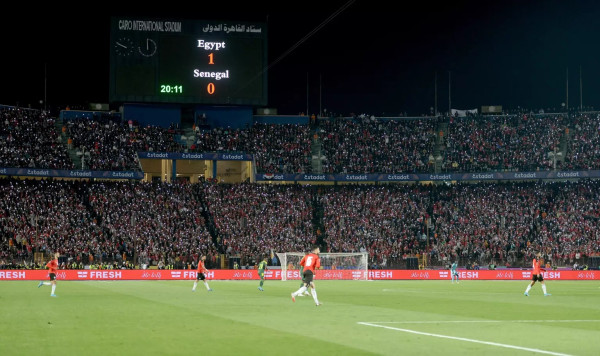
FIFA+ to stream every Confederation of African Football (CAF) qualifiers for the FIFA World Cup 26™

Location: Sport
FIFA

First two matchdays of CAF qualifying will be played from 15 to 21 November; All matches will be streamed on FIFA+; Find out below which countries the matches will be available in.

Africa's qualifying matches for the FIFA World Cup 26™ kick off on Wednesday 15 November and you'll be able to watch them all live on FIFA+.

Nine African teams are guaranteed to compete at the World Cup. Another will participate in the FIFA Play-off Tournament as the global showpiece will host 48 teams for the first time ever.

Everything you need to know about African qualifying (https://apo-opa.co/47xtb3H)

Where to watch the CAF qualifiers for FIFA World Cup 26™
You will be able to watch all Matchday 1 African qualifiers on FIFA+ with English commentary from anywhere in the world, with the exception of the Middle East and North Africa (MENA) region, sub-Saharan Africa*, India and Portugal.

* It will be possible to follow the matches live in sub-Saharan Africa in the following countries: Benin, Burundi, Ethiopia, Gambia, Guinea Bissau, Malawi, Sao Tome e Principe, Seychelles, Uganda and Zimbabwe.

Highlights of all the matches will also be available on FIFA+ worldwide.

Where can I watch FIFA+ content? (https://apo-opa.co/40FfYDJ)

CAF qualifiers schedule
Click on the links for each match to go to the streaming page. (all kick-off times local)

Matchday 1

15 November
Equatorial Guinea v Namibia (Group H) | 1400 | Malabo, Equatorial Guinea
Rwanda v Zimbabwe (Group C) | 1500 | Butare, Rwanda
Congo DR v Mauritania (Group C) | 1500 | Kinshasa, Congo DR
Ethiopia v Sierra Leone (Group A) | 2000 | El Jadida, Morocco

16 November
Botswana v Mozambique (Group G) | 1500 | Francistown, Botswana
Burundi v The Gambia (Group F) | 1600 | Dar Es Salaam, Tanzania
Gabon v Kenya (Group F) | 1700 | Franceville, Gabon
Nigeria v Lesotho (Group C) | 1700 | Uyo, Nigeria
Algeria v Somalia (Group G) | 1700 | Baraki, Algeria
Cape Verde v Angola (Group D) | 1800 | Praia, Cape Verde
Egypt v Djibouti (Group A) | 1800 | Cairo, Egypt
Sudan v Togo (Group B) | 1800 | Benina, Libya

17 November
Guinea v Uganda (Group G) | 1400 | Berkane, Morocco
Eswatini v Libya (Group D) | 1500 | Nelspruit, South Africa
Liberia v Malawi (Group H) | 1600 | Paynesville, Liberia
Ghana v Madagascar (Group I) | 1600 | Kumasi, Ghana
Comoros v Central African Republic (Group I) | 1600 | Moroni, Comoros
Zambia v Congo (Group E) | 1800 | Ndola, Zambia
Côte d'Ivoire v Seychelles (Group F) | 1900 | Ebimpe, Côte d'Ivoire
Mali v Chad (Group I) | 1900 | Bamako, Mali
Tunisia v Sao Tome e Principe (Group H) | 2000 | Rades, Tunisia
Cameroon v Mauritius (Group D) | 2000 | Douala, Cameroon
Burkina Faso v Guinea Bissau (Group A) | 2000 | Marrakesh, Morocco

18 November
South Africa v Benin (Group C) | 1500 | Durban, South Africa
Niger v Tanzania (Group E) | 1700 | Marrakesh, Morocco
Senegal v South Sudan (Group B) | 1900 | Diamniadio, Senegal

Matchday 2

19 November
Zimbabwe v Nigeria (https://apo-opa.co/49CLrKF) (Group C) | 1500 | Butare, Rwanda
Mozambique v Algeria (Group G) | 1500 | Maputo, Mozambique
Burundi v Gabon (Group F) | 1600 | Dar Es Salaam, Tanzania
Sierra Leone v Egypt (Group A) | 1600 | Paynesville, Liberia
Sudan v Congo DR (Group B) | 1800 | Benina, Libya

20 November
Djibouti v Guinea Bissau (Group A) | 1500 | Cairo, Egypt
Liberia v Equatorial Guinea (Group H) | 1600 | Paynesville, Liberia
Seychelles v Kenya (Group F) | 1900 | Abidjan, Côte d'Ivoire
The Gambia v Côte d'Ivoire (Group F) | 1900 | Dar Es Salaam, Tanzania
Mali v Central African Republic (Group I) | 1900 | Bamako, Mali
Chad v Madagascar (https://apo-opa.co/40E03p4) (Group I) | 2000 | Oujda, Morocco

21 November
Somalia v Uganda (Group G) | 1400 | Berkane, Morocco
Botswana v Guinea (Group G) | 1500 | Francistown, Botswana
Malawi v Tunisia (Group H) | 1500 | Lilongwe, Malawi
Eswatini v Cape Verde (Group D) | 1500 | Nelspruit, South Africa
Rwanda v South Africa (Group C) | 1500 | Butare, Rwanda
Lesotho v Benin (Group C) | 1500 | Durban, South Africa
South Sudan v Mauritania (Group B) | 1600 | Diamniadio, Senegal
Togo v Senegal (Group B) | 1600 | Lome, Togo
Sao Tome e Principe v Namibia (https://apo-opa.co/49E13NY) (Group H) | 1700 | Agadir, Morocco
Libya v Cameroon (Group D) | 1800 | Benina, Libya
Comoros v Ghana (https://apo-opa.co/3G4ObTu) (Group I) | 1900 | Moroni, Comoros
Niger v Zambia (Group E) | 2000 | Marrakesh, Morocco
Mauritius v Angola (Group D) | 2000 | Saint Pierre, Mauritius
Ethiopia v Burkina Faso (Group A) | 2000 | El Jadida, Morocco
Tanzania v Morocco (Group E) | 2200 | Dar Es Salaam, Tanzania

Live streaming on FIFA+
During this international break, FIFA+ will be your point of reference for World Cup 2026 streaming, with all the African qualifiers and the CONMEBOL qualifier between Bolivia and Peru.

CAF schedule

  • 15-21 November, 2023: 1st and 2nd matchdays
  • 3-11 June, 2024: 3rd and 4th matchdays
  • 17-25 March, 2025: 5th and 6th matchdays
  • 1-9 September, 2025: 7th and 8th matchdays
  • 6-14 October, 2025: 9th and 10th matchdays
  • 10-18 November, 2025: CAF play-off tournament

Distributed by APO Group on behalf of FIFA.

Contact for African media: 
AfricanMedia@fifa.org

Media files
FIFA
Download logo
Read moreFIFA+ to stream every Confederation of African Football (CAF) qualifiers for the FIFA World Cup 26™
15 November 2023

Load shedding requires urgent intervention, Ramokgopa tells Parliament

Location: News

Load shedding requires urgent intervention, Ramokgopa tells Parliament

Minister in the Presidency responsible for Electricity, Dr Kgosientsho Ramokgopa, has told the Portfolio Committee on Public Enterprises that load shedding is an existential problem, both in economic and social terms, which requires urgent intervention.

The Minister said the South African economy could be losing up to R1 billion a day, depending on the intensity of load shedding.

“This is severe. The amount of jobs that have been lost as a result of load shedding are projected to be upwards of 800 000 just for the current year, if you were to go by the modelling that has been done by some of the reputable institutions.

“I'm trying to convey the message that we are dealing with a major problem that undermines the overall growth of the South African economy,” he said on Wednesday. 

Ramokgopa said as a result of this, President Ramaphosa found it appropriate to provide a comprehensive and compelling response to the crisis by unveiling the Energy Action Plan (EAP), which has about five outcomes.

The five priority outcomes, Ramokgopa said, are to fix Eskom and improve the availability of existing supply; enable private investment in new generation capacity; accelerate procurement of new capacity from renewables, gas and battery storage; unleash investment in rooftop solar PV for businesses and households, and to "undermine the political interest calculation, ensuring that there's transparency in how costs are located and how tariffs are determined". 

Expanding on the first priority, the Minister said they have to improve the availability of existing suppliers.

“So the focus will be on the existing fleet of Eskom coal-fired power stations, a focus on Koeberg Nuclear Power Station and also the importation of hydro that we are getting from Mozambique, ensuring that first we address the reliability of this unit... [and reduce] the rate of abrupt failure of these units, and address their efficiency as they run, then approximate their design capacity,” he said. 

Turning to the second priority, Ramokgopa said that it exists to ensure that significant private sector investment is attracted, and this is supported by the reforms that were introduced on the generation side. 

He said there is a significant amount of project pipeline as a result of the reforms that have been introduced on the generation side, which focuses on the private sector and new generation capacity. 

Generation performance 

On the overall performance of units, Ramokgopa told the portfolio committee that the trendline has essentially been going up.

"If you look at the available capacity, you can see that it is beginning to pick up from what the situation was in May, which was used as a baseline." 

The Minister said they were addressing factors that have contributed to increased load shedding over the past week.

"... There is the good and there's also the bad. The good is that the trendline is going up and the bad is that there are things that we admit that we can improve on, especially better planning, returning the units on time, and ensuring that gradually, we continue to reduce the intensity of load shedding,” the Minister said.
 
He said they are taking advantage of the warmer period the country is now in. 

“We have been ramping up planned maintenance... [We need to] make sure that we fix [the units] and when they come back, they're healthier and they're able to perform,” he said.
 
As part of improving the issues at Eskom, Ramokgopa said they have returned two of the three units that failed at Eskom last year in October as a result of challenges related to the Flue-gas desulfurization (FGD) unit, which is a mechanical component that houses a chemical process meant to reduce the amount of sulphur content that is emitted into the environment. 

“We asked for a special dispensation to bypass that Flue-gas desulfurization unit and then we accepted that there are environmental costs, and that's why we put together a comprehensive health plan to... mitigate the environmental costs, and those were approved by the Minister of Environment. 

“Of course, we are going to return to normality, essentially to go back to the original design of going through the Flue-gas desulfurization by the end of the year 2024. 

“But now we've got that relief and two of those three units are back. Unit 1 and 3 are back, and we anticipate to bring Unit 2 by end of the month, and then we'll be firing Unit 5 at Kusile by the third week of December. So we project to get another 1 600 megawatts,” the Minister said. 

The Minister told the portfolio committee that they are currently focusing on four broad areas, which include the facilitation of renewables.

"It's important to not just over rely on Eskom, which is aging. We have committed to a decarbonisation agenda. We're committed to the nationally determined contribution the net zero path. Of course, we have extended the life of these power stations as a result of the challenges that we're currently facing. 

“So we [have] delayed the decommissioning. It will happen but it's delayed. The key is facilitating renewables, and transmission is a big part of that." – SAnews.gov.za
 

DikelediM
Wed, 11/15/2023 - 12:51

318 views
Read moreLoad shedding requires urgent intervention, Ramokgopa tells Parliament
13 November 2023

Two in hot water for possession of state infrastructure

Location: News

Two in hot water for possession of state infrastructure

Two people have been arrested and charged with the possession of stolen goods, including 52 street lights estimated at R1.9 million belonging to the eThekwini Metropolitan Municipality.

The Border Management Authority (BMA) said the pair was arrested by border guards at the Kosi Bay port of entry when they intercepted state property which was en route to Mozambique on Saturday, 11 November 2023. 

According to the authority’s statement released on Monday, the duo was in a grey Isuzu bakkie which was driven by a Mozambican national when they were searched at the port of entry bordering South Africa and Mozambique. 

“The team immediately activated the Hawks and Durban metro police. 

“Two Mozambicans were arrested and charged with the possession of stolen goods, including damaging of essential infrastructure.” 

In addition, the BMA said the vehicle they were travelling in as well as the property were seized and handed over to the Manguzi South African Police Service (SAPS). 

“A case was opened and handed over to the Hawks for further investigation.” 

BMA Commissioner, Dr Michael Masiapato, commended the remarkable work of the border guards in preventing illegal activities and securing the state assets.  

“The BMA border guards serve as the first line of defence working around the clock to enforce immigration laws thereby maintaining the integrity of our nation. Their vigilance in this incident and dedication contribute significantly to maintaining law and order. Their operation in intercepting municipal assets is truly commendable,” said Masiapato. – SAnews.gov.za


Gabisile
Mon, 11/13/2023 - 14:33

210 views
Read moreTwo in hot water for possession of state infrastructure
12 November 2023

SA Navy starts process of replacing SAS Drakensberg vessel

Location: News

SA Navy starts process of replacing SAS Drakensberg vessel

The South African Navy says it will soon start a project to replace its combat support vessel, SAS Drakensberg, which is nearly 40 years old and has not been to sea for quite some time.

This is according to SA Navy Chief, Vice Admiral Monde Lobese, who was speaking during the naming and acceptance ceremony of the second new multi-purpose inshore patrol vessel (MMIPV), SAS King Shaka Zulu, at Naval Base Durban.

Lobese said the SA Navy used to operate a number of different vessel types, namely submarines, offshore patrol vessels, frigates, a combat support vessel, a hydrographic survey vessel, anti-mine warfare vessels (mine hunters), deep diving support and torpedo recovery vessels.

The submarines and frigates were replaced during the Arms Deal about 20 years ago, whilst a new Hydrographic Survey Vessel is currently being built by Sandock Austral Shipyards in Durban.

The three new MMIPVs will take over the mine hunting, deep diving support and torpedo recovery roles of previous vessels and some patrol duties.

“The SA Navy is currently in the process to containerise the anti-mine warfare capability through Project Motso, so that it can be placed on these vessels.

“This capability is absolutely vital because even a threat of a sea mine can close a port like Durban for weeks on end. This will have devastating consequences for our economy. It requires specialised equipment and highly trained personnel, and is a vital capability for any Navy to have,” Lobese said.

According to Lobese, the SAS Drakensberg will be replaced with a new vessel, and this project will start soon.

“If we take our maritime security seriously, and if we want to protect our maritime economy, we need at least another 12 ships, of which six must be the larger offshore patrol vessels.

“I am absolutely convinced of the fact that over a 30-year period, the investment in these ships and the overall benefit to our economy in preventing theft of our marine resources, as well as criminality on our oceans, makes the procurement of an additional 12 vessels a very logical and rational choice,” Lobese said.

In addition to being used as a replenishment ship, SAS Drakensberg has also been used to patrol for pirates in the Mozambique Channel as part of Operation Copper. In April 2012, she helped European warships catch seven Somali pirates in the Channel.

SAS Drakensberg was launched in April 1986 by Sandock Austral and commissioned into service in November the following year.

She has a full load displacement of 12 500 tons and a length of 147 metres. She can carry 5 500 tons of fuel, 750 tons of ammunition and dry stores, and 210 tons of fresh water. In addition, 50 000 litres of fresh water can be made every day. Two Oryx helicopters, two landing craft and two RHIBs can be accommodated on board as well.

The Drakensberg is the largest ship built in South Africa to date and is reportedly the first naval vessel to be completely designed in the country. – SAnews.gov.za

Edwin
Sun, 11/12/2023 - 11:13

627 views
Read moreSA Navy starts process of replacing SAS Drakensberg vessel
12 November 2023

SA Navy starts a process to replace SAS Drakensberg vessel

Location: News

SA Navy starts a process to replace SAS Drakensberg vessel

The South African Navy says it will soon start a project to replace its combat support vessel, SAS Drakensberg, which is nearly 40 years old and has not been to sea for quite some time.

This is according to SA Navy Chief, Vice Admiral Monde Lobese, who was speaking during the naming and acceptance ceremony of the second new multi-purpose inshore patrol vessel (MMIPV), SAS King Shaka Zulu, at Naval Base Durban.

Lobese said the SA Navy used to operate a number of different vessel types, namely submarines, offshore patrol vessels, frigates, a combat support vessel, a hydrographic survey vessel, anti-mine warfare vessels (mine hunters), deep diving support and torpedo recovery vessels.

The submarines and frigates were replaced during the Arms Deal about 20 years ago, whilst a new Hydrographic Survey Vessel is currently being built by Sandock Austral Shipyards in Durban.

The three new MMIPVs will take over the mine hunting, deep diving support and torpedo recovery roles of previous vessels and some patrol duties.

“The SA Navy is currently in the process to containerise the anti-mine warfare capability through Project Motso, so that it can be placed on these vessels.

“This capability is absolutely vital because even a threat of a sea mine can close a port like Durban for weeks on end. This will have devastating consequences for our economy. It requires specialised equipment and highly trained personnel, and is a vital capability for any Navy to have,” Lobese said.

According to Lobese, the SAS Drakensberg will be replaced with a new vessel, and this project will start soon.

“If we take our maritime security seriously, and if we want to protect our maritime economy, we need at least another 12 ships, of which six must be the larger offshore patrol vessels.

“I am absolutely convinced of the fact that over a 30-year period, the investment in these ships and the overall benefit to our economy in preventing theft of our marine resources, as well as criminality on our oceans, makes the procurement of an additional 12 vessels a very logical and rational choice,” Lobese said.

In addition to being used as a replenishment ship, SAS Drakensberg has also been used to patrol for pirates in the Mozambique Channel as part of Operation Copper. In April 2012, she helped European warships catch seven Somali pirates in the Channel.

SAS Drakensberg was launched in April 1986 by Sandock Austral and commissioned into service in November the following year.

She has a full load displacement of 12 500 tons and a length of 147 metres. She can carry 5 500 tons of fuel, 750 tons of ammunition and dry stores, and 210 tons of fresh water. In addition, 50 000 litres of fresh water can be made every day. Two Oryx helicopters, two landing craft and two RHIBs can be accommodated on board as well.

The Drakensberg is the largest ship built in South Africa to date and is reportedly the first naval vessel to be completely designed in the country. – SAnews.gov.za

Edwin
Sun, 11/12/2023 - 11:13

76 views
Read moreSA Navy starts a process to replace SAS Drakensberg vessel
8 November 2023

SA remains the preferred investment destination in Africa

Location: News

SA remains the preferred investment destination in Africa

President Cyril Ramaphosa has emphasised that South Africa remains one of the preferred investment destinations and is an important gateway for markets and other business opportunities throughout the continent.

The President was delivering remarks at the Procter & Gamble Plant launch in Kempton Park, in Ekurhuleni, Gauteng.

“As a clear demonstration of the value of trade between African countries, Procter & Gamble currently exports from South Africa to Namibia, Swaziland, Mozambique and Botswana. We understand that the company is set to supply the African continent from South Africa through the implementation of the African Continental Free Trade Area.

“The African Continental Free Trade Area will unlock opportunities for the development of export markets, enhance industrial bases and regional value chains.

“We expect the continental free trade area to reduce the cost and improve the ease of doing business in Africa,” he said, adding that government wants to make the movement of products, processes and people seamless as companies increase their footprint on the continent.

Over the years, P&G has been a valuable partner to the South African government through the South Africa Investment Conference (SAIC), continually announcing new investments.
 
Procter & Gamble stands behind many brands that are household names in South Africa, such as Vicks, Old Spice, Gillette, Oral B and Pampers, amongst others, and has a strong manufacturing footprint in the country.

The company has been in Africa for over 50 years. It has manufacturing operations in South Africa, Nigeria, Kenya, Egypt and Morocco, and has distributor operations in over 45 countries.

The President said that it has been greatly encouraging to see the company’s response to South Africa’s ambitious investment drive and the investment commitments made by the company at the five South Africa Investment Conferences that we have held since 2018.

“It is a pleasure being here today with all of you to launch this state-of-the-art production line of Pampers Premium Care. The timing of this launch is very opportune.

“South Africa has just hosted the 20th AGOA Forum. It was an opportunity to showcase the capabilities of the African continent to the United States, the world’s largest consumer market. I was pleased to see that leading companies that have an established presence on our continent, like Procter & Gamble, were represented,” he said. 

The launch of Tuesday’s production line is the latest in a number of projects that have given effect to Procter & Gamble’s investment pledges.

Through these and other investments, Procter & Gamble is contributing to the reindustrialisation of South Africa’s economy.

“To drive growth that is sustainable and inclusive, we are working to expand and diversify our manufacturing base, and improve its competitiveness and dynamism,” he said. 

The President noted that disruptions to global supply chains caused by COVID-19 lockdowns have highlighted the imperative for companies all over the world to diversify their sources of supply.

Investment

“Just as we have seen the benefits of nearshoring and localisation for South African manufacturers, we can appreciate its value to broader global supply stability.

“South Africa is an investment destination with significant untapped potential. We have the ability to attract higher levels of investment and we look forward to working with Procter & Gamble on its future pipeline of investments,” he said. 

While investment decisions often take several years to reach fruition, the President said that the investment commitments made to date have already resulted in substantial investment into the productive economy and have created jobs.

He highlighted that Procter & Gamble has heeded government’s call and has sought to increase the participation of small South African businesses in its value chains.

“We are encouraged by the company’s commitment to sourcing local materials, reducing waste, promoting skills development and creating more roles for women in the company.

“We welcome the work the company has undertaken alongside government departments in expanding access to menstrual hygiene products and supporting Early Childhood Development centres.

“We see these partnerships as a testament to the continued commitment of Procter & Gamble to South Africa and the African continent,” the President said. 

The President emphasised that government will continue to support Procter & Gamble to increase its footprint through local sourcing and to contribute to job creation, technological development and sustainability.

He congratulated the Procter & Gamble team, from the shop floor to the senior executives, on the launch of this production line.

The President further congratulated the team for the continuous stream of investments being made to increase the company’s footprint on the continent.

“Through the launch of this production line, Procter & Gamble is making a worthy contribution towards our vision of African producers supplying quality goods to African markets.

“This is the vision of a continent that is emerging as the next frontier of global production, meeting the needs of its own people and the peoples of the world,” he said. – SAnews.gov.za

DikelediM
Wed, 11/08/2023 - 15:55

141 views
Read moreSA remains the preferred investment destination in Africa
7 November 2023

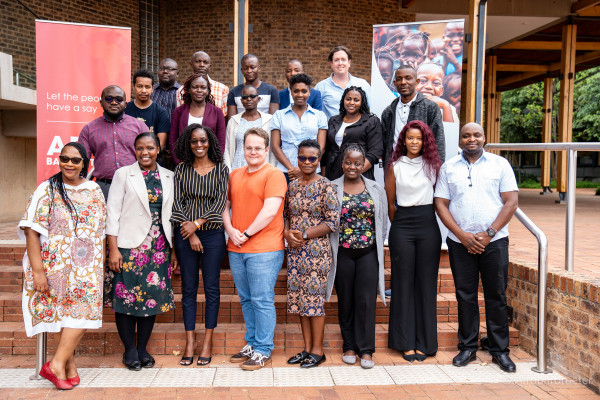
Summer school participants encouraged to advance Afrobarometer’s goal to “let the people believe a say!”

Location: News
Afrobarometer

“We want people to have a say in decisions that affect their lives, and you are in that equation, contributing to ensure that we advance the agenda and amplify the voices of citizens on the continent,” Afrobarometer (https://www.Afrobarometer.org/) CEO Joseph Asunka told participants in the network's summer school on Monday in Pretoria, South Africa.

“The contributions that you make to publications will be helpful in making sure that we take our data and analysis to new audiences, driven by new actors like yourselves,” Asunka added in his video message. 

The summer school is Afrobarometer's flagship capacity building event, aimed at equipping African scholars with solid skills in research design, survey methodology, and the use of social statistics as part of a broader effort to strengthen research capacity on the continent.

Over the next three weeks, Afrobarometer will be hosting the free training programme in collaboration with the University of Pretoria's Future Africa, a pan-African research institute pioneering approaches to research and innovation on the continent and beyond. At the end of the summer school, participants are expected to produce a research paper. 

Describing the summer school, Capacity Building Manager Thomas Isbell said, “One of the core objectives of Afrobarometer is to strengthen capacity for survey research, analysis, and communication on the African continent. In a world that is increasingly dependent on credible data, these skills are needed more than ever to ensure that this work continues to be for Africans and by Africans.”

The 18 participants – 50% women – represent 11 countries: Benin, Botswana, Ghana, Kenya, Lesotho, Madagascar, Mozambique, Nigeria, South Africa, Tanzania, and Uganda. 

This year's summer school marked the introduction of an online component to allow participants to build their research skills and understanding of Afrobarometer prior to arriving on campus.

“You are the pioneers of this new model, and I hope that you will set a good example and a good bar for future iterations of the programme,” Asunka said.

Reflecting on the importance of summer school, Adivhaho Florence Ramaite, research officer at the Institute for Security Studies and a 2023 summer school participant, noted, “Afrobarometer aims to be the voice of the people. As researchers, it's crucial we grasp and effectively communicate these findings to policy makers, policy advocates, and NGOs for the promotion of the well-being of Africans.”

Distributed by APO Group on behalf of Afrobarometer.

For more information, please contact:
Asafika Mpako
Afrobarometer communications coordinator for Southern Africa
Email: ampako@afrobarometer.org
Telephone: +27 83979 8299
Visit us online at www.Afrobarometer.org

Follow us on:
Twitter: https://apo-opa.info/3jYM2la
Facebook: https://apo-opa.info/3K0t6gq
YouTube: https://apo-opa.info/3Ysf4IU
Visit us online at www.Afrobarometer.org
Follow our releases on #VoicesAfrica.

About Afrobarometer:
Afrobarometer (AB) is a trusted source of high-quality data and analysis on what Africans are thinking. With an unmatched track record of more than 370,000+ interviews in 42 countries, representing the views of 75% of the African population, AB is leading the charge to bridge the continent's data gap. AB data inform many global indices, such as the Ibrahim Index of African Governance, Transparency International's Global Corruption Barometer, and the World Bank's Worldwide Governance Indicators. The data are also used for country risk analyses and by credit rating and forecasting agencies such as the Economist Intelligence Unit. All AB data sets are publicly available on the website (https://www.Afrobarometer.org) and may be analysed free of charge using AB's online data analysis tool (https://apo-opa.info/3lVrwlT).

About Future Africa at the University of Pretoria:
The University of Pretoria established the Future Africa initiative as a platform to develop leadership in transdisciplinary research in Africa. Future Africa is a hub for African and global research networks to address the challenges that hamper transformation toward a prosperous, equitable, and sustainable future in Africa.

Media files
Afrobarometer
Download logo
Read moreSummer school participants encouraged to advance Afrobarometer’s goal to “let the people believe a say!”
7 November 2023

SA records over 7 400 malaria cases

Location: News

SA records over 7 400 malaria cases

South Africa has recorded over 7 400 malaria cases between January and October this year, with only 17% of these having been locally acquired. 

This means that more people got infected while out of the country, while the country logged at least 66 deaths during the same period. 

The Department of Health has since urged all people travelling to and from malaria-endemic or high-risk areas to take the appropriate precautionary measures to prevent possible infection, as the country enters malaria season. 

“Summer season marks the start of the malaria period in South Africa due to higher temperatures and increased rainfall in the malaria transmission areas,” the department explained.

Cases are starting to rise in some parts of the country, especially in high-risk areas. 

Malaria symptoms include headache, fever, chills, and muscle and joint pain. The department advised citizens, who experience these signs, to visit their local health facility without delay for effective treatment. 

“Late presentation to a health facility with symptoms is one of the contributing factors to increasing malaria morbidity and mortality rates,” the department said.

Malaria is defined as a life-threatening, but preventable and curable disease. 

“Early detection saves lives,” the department stressed. 

The department has since intensified its malaria response plan through screening and testing around borders in high-risk provinces such as KwaZulu-Natal, Mpumalanga and Limpopo throughout the year for early detection of imported cases. 

The department is also embarking on public education campaigns and indoor residual spraying in high-risk areas every year from September until the beginning of the following year. 

The department warned pregnant women and children under five years to avoid visiting malaria-endemic areas, unless they take extra caution.

As the Southern African Development Community (SADC) observed Malaria Day on Monday, the Gauteng Department of Health (GDoH) said it continues to target public transport nodes, such as taxi ranks and bus stations, to heighten education among the public on prevention measures.

This comes as Gauteng hospitals reported 1 105 malaria cases and 10 deaths from January to September 2023, as a result of the life-threatening disease spread to humans by mosquitoes in endemic areas.

“The majority of people who were admitted and those who have demised as a result of the disease had travelled to Mozambique, Ethiopia, Nigeria, Zimbabwe, Zambia and Angola,” the GDoH said, adding that these countries are known to be malaria-endemic regions. – SAnews.gov.za

Gabisile
Tue, 11/07/2023 - 10:08

720 views
Read moreSA records over 7 400 malaria cases
1 November 2023

Hollard gains East Africa foothold in deal with Kenya’s APA Insurance

Location: Business
Hollard

Hollard International (https://apo-opa.info/3tUpGWD) will extend its footprint in Africa through the finalisation, on 31 October 2023, of an agreement to acquire a significant interest in Apollo Investments Limited, the holding company of Kenya-headquartered insurer APA Insurance.

This strategic investment, subject to regulatory approvals, gives Hollard International a presence in the East African market, supplementing its existing operations in Southern and West Africa.

Hollard becomes the second international investor in the Kenyan group, following Swiss Re, which acquired a stake in 2014.

For APA, the partnership gives Kenya's second-largest insurer access to a larger market and expanded opportunities for growth, says Ashok Shah, Group CEO of Apollo Investments Limited.

“It's an exciting time for APA because the Hollard International partnership will open new doors and new avenues of growth for our business. We'll have access to substantial new expertise in classes of business such as Motor, Engineering, Marine and other specialist lines of insurance – which we believe will open up a number of profitable business opportunities.”

Expressing the significance of the partnership, Shah notes, "In addition to expanding our operations in Kenya, this venture will also enable us to strengthen our foothold in Uganda and Tanzania. Moreover, it positions us favourably to seize opportunities in the Ethiopian market once it becomes accessible.”

Pravin Kalpagé, CEO of Hollard International, is equally upbeat about the transaction, heralding it as “a vote of confidence in the Kenyan and East African markets”.

He says, “Hollard International has been looking for an East African partner for some time, and APA ticked so many boxes – it has an established track record, an impressive value proposition with strong broker and customer relationships, and it shares our values around community, reliability and customer-centricity. All these elements resonated strongly with us.

“This investment continues Hollard International's African model of finding strong local businesses and management teams with whom to partner in-country, rather than parachuting expatriates into a new market.”

He adds that exploring options in Francophone West Africa is next on Hollard International's to-do list.

Kalpagé has also pledged to bring Hollard International's model of “impact beyond insurance” to the East African market – as demonstrated in Mozambique and Ghana, among other countries.

Hollard Mozambique has developed risk-mitigation insurance products to protect smallholder and subsistence farmers – whose livelihoods are totally reliant on their crops – from extreme weather events through a partnership with local seed providers.

In Ghana, the MeBanbo microinsurance product arose from a partnership between Hollard Life, Vodafone Ghana and Sasai Fintech, a business of Cassava Technologies. It offers accessible, affordable life insurance cover, via an end-to-end digital platform, to the underserved Ghanaian market.

“This focus on being a catalyst for social impact in Africa is in line with Hollard's business purpose, which is to enable more people to create and secure a better future,” concludes Kalpagé.

In South Africa, Hollard is the largest privately owned insurance group, offering both life and non-life product suites. Hollard International extends insurance solutions outside of South Africa through operations in Namibia, Mozambique, Zambia, Lesotho, Botswana and Ghana, with East Africa (Kenya, Uganda and Tanzania) being added to the list through the APA transaction. 

APA Insurance is owned by Apollo Investments Limited, which was founded in 1977 with a mission to provide “present and future peace of mind to the East African market and, in turn, enhance the quality of life for both our clients and loved ones”. Built on commitment, integrity and innovation, Apollo has since become one of the leading financial services groups in East Africa, with six companies under its belt.

Issued by Flow Communications on behalf of Hollard. 

Distributed by APO Group on behalf of Hollard.

For more information or to arrange an interview, please contact Khaya Thwala on khayat@flowsa.com or +27 78 349 0668.

About Hollard International:
In South Africa, Hollard is the largest privately owned insurance group, offering both Life and Non-Life product suites. Hollard International extends insurance solutions outside of South Africa through operations in Namibia, Mozambique, Zambia, Lesotho, Botswana and Ghana, with East Africa (Kenya, Uganda and Tanzania) being added to the list through the APA transaction. https://apo-opa.info/3tUpGWD

About APA Insurance:
APA Insurance is part of the Apollo Group, one of the leading insurance groups operating in East Africa, providing a broad array of insurance solutions across Kenya, Uganda and Tanzania. APA is one of Kenya's largest non-life insurers and provides access to Motor, Liability, Agriculture, Property and Health insurance as well as a unique range of micro-insurance products. APA Life Assurance is one the fastest growing life insurance companies in Kenya providing Individual Life, Savings, Investments and employee benefits solutions including Group Life, pensions and Annuities. Its other primary insurance business units include APA Life Insurance, APA Insurance in Uganda; an asset management company, Apollo Asset Management; and a property company, Gordon Court. The Apollo Associate in Tanzania is Reliance Insurance Company. https://www.APAInsurance.org/

Media files
Hollard
Download logo
Read moreHollard gains East Africa foothold in deal with Kenya’s APA Insurance
1 November 2023

Propelling South Africa’s economy forward, one tourist at a time

Location: MyPR

01 NOVEMBER, JOHANNESBURG: South Africa’s tourism industry has not just rebounded from the pandemic, it has found itself in a position to pursue aggressive growth. In the first quarter of 2023, the country welcomed over 2 million visitors. Furthermore, over the next decade, this sector is projected to generate an impressive 800,000 jobs and inject …

Read morePropelling South Africa’s economy forward, one tourist at a time
27 October 2023

Minor Hotels celebrates International Chef’s Day with South African Chefs making their effect globally

Location: MyPR

International Chef’s Day, celebrated on 20 October, is a day dedicated to honouring and recognising the culinary talents that bring delectable flavours to our tables. Minor Hotels proudly joins in this celebration by introducing you to four of our exceptional chefs, each with a unique culinary journey and passion for their craft. These chefs have …

Read moreMinor Hotels celebrates International Chef’s Day with South African Chefs making their effect globally
25 October 2023

Women’s football growth continues in Southern Africa backed by FIFA support

Location: Sport

FIFA
Download logo

The eleventh edition of the COSAFA Women's Championship was held in Gauteng, South Africa between 4 - 15 October 2023; FIFA (www.FIFA.com) provides USD 1.25 million annually to COSAFA for the organisation of tournaments through FIFA Forward; For the fourth consecutive year, a research project dedicated to female health was conducted during the competition.

For the first time ever, Malawi were crowned COSAFA (Council of Southern Africa Football Associations) champions, thanks to a 2-1 win over defending holders and FIFA Women's World Cup debutants, Zambia in the final.

This year marked the eleventh edition of the tournament, which provides crucial playing opportunities for women's national teams and players in southern Africa. Malawi's triumph came at a tournament that featured two teams who had qualified for the Round of 16 of the FIFA Women's World Cup in Australia and New Zealand: Zambia and South Africa..

Since 2017, FIFA has provided USD 1 million annually to COSAFA through its Forward programme to organise tournaments for senior women and youth (boys/girls) and USD 1.25 Million for the cycle starting in 2023.

"COSAFA is very happy with the year-on-year improvement in the level of play. This year we have seen a marked improvement by Malawi and Mozambique, as well as Eswatini and Lesotho,” said COSAFA Secretary General Sue Destombes.

“This development is largely due to FIFA's Forward grant to the Zonal Unions and the ability to organise consistent annual tournaments."

In addition to the COSAFA Women's Championship, FIFA Forward zonal funding also supported the hosting of the COSAFA qualifying tournament for the CAF Women's Champions League (from 30 August - 8 September 2023) in Durban, South Africa.

Working on initiatives that stimulate more women's national team activity is part of FIFA and COSAFA's ongoing commitment to promote the development of women's football competitions and advance the professionalisation of women's football in member associations in Southern Africa and around the world.

“We are proud that the FIFA Forward programme continues to contribute to women's football development in the COSAFA region. The 2023 edition of the COSAFA Women's Championship lived up to its elite status with all 12 teams performing well and new stars announcing themselves on the international stage," says Solomon Mudege, Head of Development Programmes – Africa.

"Congratulations to the Malawi women's team who emerged victorious. It's a fitting reward for all the efforts that the Football Association of Malawi is making for the development of talent in women's football and providing tailored support for female football players – under the FIFA Women's Football Development Programme and other related initiatives.

"Our sincere thanks also go to CAF and COSAFA for hosting this tournament and giving teams and officials the first-ever opportunity to work with VAR at this tournament. We are committed at FIFA to women's football development and will continue our work with CAF, the zones and FIFA member associations across Africa.”

During the tournament, COSAFA also began to implement elements of FIFA's Women's Health, Wellbeing, and Performance project (https://apo-opa.info/40afIMI). For the fourth year in a row, Dr Nonhlanhla S. Mkumbuzi has conducted extensive research on women's health. Her area of expertise is the health of female athletes - in particular the intersection between the biology of female athletes and the socio-economic, religious and cultural context in which they live.

“This Project demonstrates FIFA's dedication to increasing awareness and fostering a deeper understanding of this subject, thereby enhancing the confidence, health, well-being and performance of female players worldwide. Our goal is to highlight the importance of tailoring training and support for women, ensuring their holistic needs are met”, said Belinda Wilson, FIFA Senior Technical Development Manager.

“We know that we have a shortage of research on women and girls in sport: Most of that research has been conducted on women and girls from high income countries; women and girls from the global north," explains Dr Mkumbuzi. And this is where her research comes in. Her main motivation is to provide a research database so that in future, more accurate decisions can be made.

"Analysis where they can say for example in Africa the problem is ankle sprains; in Europe the problem is knees; in Asia the problem is concussions. Therefore, when we direct our resources for Africa, we are making sure we direct them towards the most relevant topics, instead of having a broad approach that benefits some, but doesn't quite provide the resources that you need for everyone," Dr Mkumbuzi continued.

"That's where we are coming from and I think it's a bit like Neil Armstrong. It's a tiny little step. We hope that somewhere we have a giant leap forward with other people taking on the same type of research - but in our case it a small little contribution that we hope can then lead to smaller contributions elsewhere and collectively we have a big research database."

The full interview with Dr Nonhlanhla S. Mkumbuzi on women's health and cultural differences will be available on FIFA.com soon.

Distributed by APO Group on behalf of FIFA.

Contact for African media: 
AfricanMedia@fifa.org 

Read moreWomen’s football growth continues in Southern Africa backed by FIFA support
19 October 2023

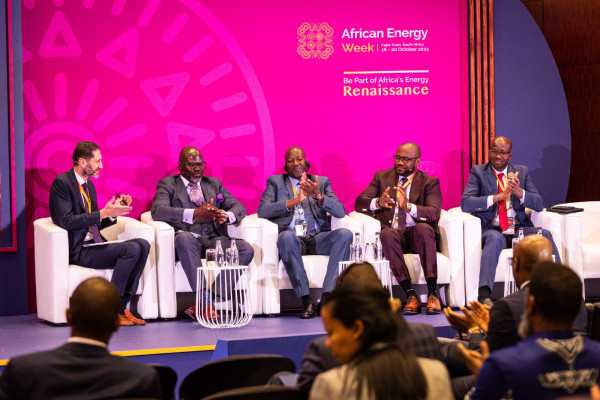
#AEW2023 Highlights Best Practices to Advancing Africa’s Refinery Capacity

Location: News
African Energy Chamber

African Energy Week (AEW) 2023 hosted a high-level panel discussion analyzing trends within the continent's downstream segment, as African countries seek to ensure optimal exploitation of domestic resources for energy security, affordability and independence.

Moderated by Daniel Evans, Vice President, Global Refining and Marketing, S&P Global Commodity Insights, the discussion began with a keynote speech by Anibor Kragha, Executive Secretary, African Refiners and Distributors Association (ARDA).

“Fossil fuel demand in Africa will grow by 45% to 50% over the next three decades, hence the need to boost refinery and storage capacity to avoid the continued surge in energy imports which are increasing prices across the continent,” stated Kragha.

Supporting his statement Daouda Kebe, Technical Director, Senegal's SAR, said “Most of the refineries in Africa were built in the 1960s and are reaching end of life and need to be updated in line with changing energy and environmental sustainability standards.”

Peter Adeshola Olowononi, Head, Client Relations - Anglophone West Africa, Afreximbank, added that “Industrialization is the only way that Africa can remain viable and for that to happen the continent needs to have sustainable and resilient downstream systems. That is why we are working with APPO to establish the African Energy Bank to invest in African refinery projects.”

While the panel identified a lack of adequate financing as the biggest barrier hindering the growth of Africa's downstream projects, it served as a platform to showcase best solutions to driving investments within the segment.

Olowononi, added that with international banks pulling out financing in hydrocarbon projects due to the energy transition, there is a need for more cooperation between African banks and governments in coming up with home-grown financing solutions.

“Africa has to understand that we have an emergence. As long as we don't externalize this challenge, we will keep on suffering. Banks need to see that it is no longer about profits and capitalization but rather about guaranteeing African energy security, which will, in turn result in economic growth and more profits for them.”

Kragha emphasized on the role leveraging market-based pricing, the enactment of clear policies and coordination between key sectoral ministries to support investor business plans play in accelerating the flow of investments in the continent's downstream landscape.

“We have to look at what makes sense from an investment perspective. Not all countries need to have a refinery. We need a tighter and robust intra Africa refinery value chain to ensure intra trading and cooperation between upstream and downstream players. For instance, South Africa, with its four refineries, can be leveraged by the SADC region to refine energy sourced from Namibia and Mozambique for regional energy security,” added Kragha.

Zakaria Dosso, Managing Director, AEICORP said with global investors prioritizing ESG, the continent can attract new investments by building new refineries which have the latest sustainability certification instead of focusing on updating existing assets which are outdated.

Organized by the African Energy Chamber, #AEW2023 takes place this week in Cape Town under a mandate to make energy poverty history by 2030. Keep following www.AECWeek.com for more exciting information and updates about Africa's premier energy event.

Distributed by APO Group on behalf of African Energy Chamber.

Media files
African Energy Chamber
Download logo
Read more#AEW2023 Highlights Best Practices to Advancing Africa’s Refinery Capacity
18 October 2023

Contingency plans in plot ahead of Lebombo border protest

Location: News

Contingency plans in place ahead of Lebombo border protest

The Border Management Authority (BMA) says it has taken note of the planned strike action at the Lebombo border by the community of Nkomazi.

The BMA has been requested to receive a memorandum from the community which highlights challenges, including criminal acts at and along the Lebombo port of entry.

“The BMA is concerned that these criminal acts, if not addressed, will culminate in massive loss of trade revenue. Reports received indicates that the strike action emanates from criminal actions taking place during congestions and delays experienced during clearing of vehicles at the border.

“The BMA calls for the challenges to be resolved in order to continue harnessing the economic opportunity in the Maputo corridor. The BMA calls for smooth facilitation. An engagement process has already been initiated between the Department of Transport, the BMA, South African National Road Agency Limited (SANRAL) and the Mozambique government to foster a positive border management control system,” said the authority in a statement on Wednesday.

BMA Commissioner, Dr Michael Masiapato, assured the public that operations at the Lebombo Border will proceed as normal.

“We have put in a contingency plan that will allow the march to unfold in a peaceful manner. This has been done in conjunction with all the stakeholders that are charged with border control, including the SAPS and Traffic Management.

“Deployments have been enforced on the ground to ensure adherence to normal border control processes. A communique has also been communicated to the Mozambican government on the situation,” he said.

The Lebombo border has been earmarked for future re-development as an initiative to ensure efficient cross-border management of movement of people, goods and services.

This will also guarantee improved revenue collection and prevent harmful imports and exports. The strike action for today will be closely monitored to ensure that there is no disruption of services at the Lebombo border. – SAnews.gov.za


Edwin
Wed, 10/18/2023 - 13:42

504 views
Read moreContingency plans in plot ahead of Lebombo border protest
18 October 2023

Transformative Pipeline Initiatives: Boosting Regional Connectivity Discussed at African Energy Week (AEW) 2023

Location: News
African Energy Chamber

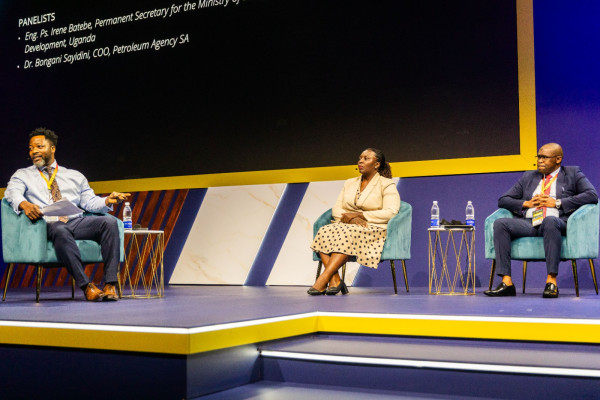
As many African countries progress with monetizing oil and gas resources, cross-border infrastructure is expected to play a catalyzing role in strengthening regional connectivity while advancing energy development and economic growth. A panel discussion held during the African Energy Chamber's (AEC) (www.EnergyChamber.org) African Energy Week (AEW) 2023 explored the evolving energy map in Africa and how pipeline projects and cross-border infrastructure will shape the continent's economic landscape.

Kicking off the panel discussion, Irene Batebe, Permanent Secretary for the Ministry of Energy and Mineral Development, Uganda, emphasized the critical role of regional integration in advancing pipeline projects.

“The East African Crude Oil Pipeline (EACOP) will be a perfect example of integration. Working together with the government of the Republic of Tanzania, we had to ensure we put in place a robust legal and regulatory framework, because that way you give certainty to the development of the project, not just to the developers but also the financials. Because the project must be bankable. We worked closely with the government of the Republic of Tanzania to put in place and it's a governmental framework, but also domesticated locally in formal post government agreements to provide for certain aspects, there has to be a regional position”

For emerging producers, cross-border pipeline infrastructure is integral.

“In terms of strategy one of the key areas that we focused on in designing the framework for the development of the pipeline was to ensure that we provide for third party access and that is very critical because our neighbors like the DRC and South Sudan,” continued Batebe.

The Southern Africa Development Community (SADC) has seen an increase in oil and gas potential, with new discoveries in Namibia and first liquefied natural gas exports in Mozambique.

“The is an opportunity for the west in terms of integration of SADC and presents the opportunity for gas and power. In fact, Namibia made the first Kudu Gas discovery in 1994 and in South Africa a discovery was made in the early 2000s. Those gas resources have remained stranded due to the lack of a market for gas resources and also there have been a lack of infrastructure to harness these resources,” stated Bongani Sayidini, COO, Petroleum Agency SA

Regarding environmental and human concerns of the EACOP, “There have been claims that we have evicted projected affected persons without consent but this is false. The government nor the project developers force the project affected persons. We pay attention to the vulnerable groups and the elderly during the settlement process. We do have a government valuer that comes to assess what those people who have settled deserve,” said Batebe.

#AEW2023 takes place this week in Cape Town under a mandate to make energy poverty history by 2030. Keep following www.AECWeek.com for more exciting information and updates about Africa's premier energy event.

Distributed by APO Group on behalf of African Energy Chamber.

Media files
African Energy Chamber
Download logo
Read moreTransformative Pipeline Initiatives: Boosting Regional Connectivity Discussed at African Energy Week (AEW) 2023
18 October 2023

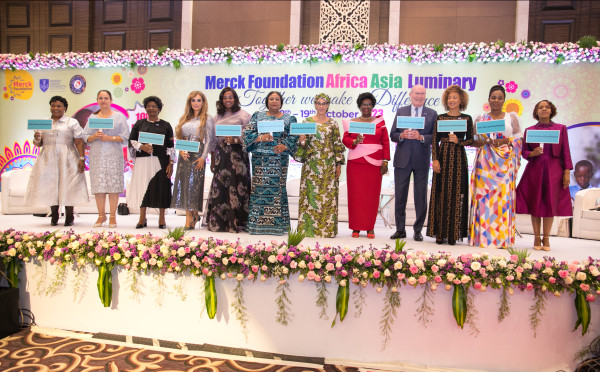
Merck Foundation Chairman and Chief Executive Officer (CEO) with African First Ladies inaugurate their 10th Africa Asia Luminary 2023 in India

Location: News
Merck Foundation

Prof. Dr. Frank Stangenberg-Haverkamp, Senator Dr. Rasha Kelej and African First Ladies of Botswana, Burundi, Cabo Verde, Central African Republic, The Gambia, Ghana, Liberia, Malawi, Democratic Republic of São Tomé and Príncipe, Zimbabwe, Democratic Republic of Congo, to inaugurate 10th Edition of Merck Foundation Africa Asia Luminary 2023 (http://www.Merck-Foundation.com); More than 10,000 participants including healthcare providers, policymakers, researchers, academia and media representatives from 70 English, French, Spanish and Portuguese speaking countries attended the Luminary through hybrid model to benefit from five parallel  scientific and social sessions to  advance healthcare capacity and awareness in 42 critical and underserved medical specialties; Celebrating 6th Anniversary of Merck Foundation and marking 11-year journey of their development programs, during 2023 Luminary; Merck Foundation reported the impact of providing 1700 scholarships to doctors from 50 countries in 42 critical and underserved specialties such as; Oncology, Diabetes, Cardiovascular Preventive, Endocrinology, Fertility, Embryology, Reproductive Care, Respiratory Care, Acute and Intensive Care, Neonatal Care, Pediatric Emergency, Advanced Surgery, Microbiology & Infectious Diseases, Internal Medicine, Ophthalmology, Psychiatry, Palliative Care and Pain Management and more; Merck Foundation marked Cancer Awareness Month during their annual conference.

Merck Foundation, the philanthropic arm of Merck KGaA Germany, conducted their annual conference, the 10th Edition of “Merck Foundation Africa Asia Luminary”, in partnership with Tata Memorial Centre and Department of Atomic Energy, Ministry of External Affairs, Ministry of Home Affairs, Ministry of Health of India, State Protocol Office of Government of Maharashtra and Krishna  World University, Karad, on the 18th of October 2023 in Mumbai, India. The conference was inaugurated by Prof. Dr. Frank Stangenberg-Haverkamp, Chairman of Merck Foundation Board of Trustees, and Senator, Dr. Rasha Kelej, CEO of Merck Foundation and Chairperson of Merck Foundation Africa Asia Luminary, along with African First Ladies of 11 countries;

  • H.E. Mrs. NEO JANE MASISI, The First Lady of the Republic of Botswana
  • H.E. Madam ANGELINE NDAYISHIMIYE, The First Lady of the Republic of Burundi
  • H.E. Dr. DÉBORA KATISA CARVALHO, The First Lady of the Republic of Cabo Verde
  • H.E. Madam BRIGITTE TOUADERA, The First Lady of Central African Republic
  • H.E. Mrs. FATOUMATTA BAH-BARROW, The First Lady of the Republic of The Gambia
  • H.E. Mrs. REBECCA AKUFO-ADDO, The First Lady of the Republic of Ghana
  • H.E. Mrs. CLAR MARIE WEAH, The First Lady of the Republic of Liberia
  • H.E. Mrs. MONICA CHAKWERA, The First Lady of the Republic of Malawi
  • H.E. Mrs. MARIA DE FATIMA VILA NOVA, The First Lady of the Democratic Republic of São Tomé and Príncipe
  • H.E. Amai Dr. AUXILLIA MNANGAGWA, The First Lady of the Republic of Zimbabwe
  • H.E. Madam DENISE NYAKERU TSHISEKEDI, The First Lady of the Democratic Republic of The Congo

Senator Dr. Rasha Kelej, CEO of Merck Foundation and Chairperson of Merck Foundation Africa Asia Luminary emphasized, “I am very proud to welcome our Guests of Honors and Keynote Speakers, the First Ladies of Africa and Ambassadors of “More Than a Mother” Campaign, for our annual conference that we have conducted first time in India. Together, we shared experiences and discussed the impact of our programs to transform patient care and raise awareness on a wide range of sensitive and critical social and health. Today we are also marking together Cancer Awareness Month, it is great to remember that Merck Foundation provided 138 scholarships of Oncology Training in many sub-specialties to doctors from 37 African countries, many of them have become the first oncologists in their countries. We are making history together in Africa, with our Ambassadors, First Ladies of Africa and our partners, Tata Hospital and Krishna University.”

Prof. Dr. Frank Stangenberg-Haverkamp Chairman of both of Executive Board of E.Merck KG and Merck Foundation Board of Trustees expressed “At Merck Foundation, our goal is improving overall health and well-being by building healthcare capacity and by providing access to quality & equitable healthcare solutions in the Africa, Asia and beyond. I would like to thank our partners, African First Ladies and Health Experts, Policy Makers, Government Officials, Academia and Media from more than 70 countries to join hands with us in order to realize the vision of Merck Foundation that “Everyone can lead a Healthy and Happy life.”

“I am proud to share that Merck Foundation has provided more than 1700 scholarships to young doctors from 50 countries in 42 critical and underserved specialties such as Oncology and Cancer care, Diabetes, Endocrinology, Cardiovascular, Fertility Care, Embryology, Sexual & Reproductive Medicine, Internal Medicine, Respiratory Medicine, Acute Medicine, Critical Care, Pediatric Emergency, Gastroenterology, Rheumatology, Clinical Psychiatry, Urology, Ophthalmology, General Surgery, Trauma & Orthopedic, Dermatology, Neonatal Care, Pain Management, Clinical Microbiology & Infectious Diseases, Advanced Surgical Practice, Neuroimaging for Research and more. Many of them are becoming the first specialists in their countries. Many of these scholarships were conducted in India where a state of art clinical training was provided at the prestigious training institutions of our partners such as Tata Memorial Center, Manipal University, Maharashtra University, Krishna University, Indra IVF Training and more. Therefore, we are very happy to be this year in India to celebrate our 10 years partnership with our respectable Indian partners”, added Senator Kelej.  

During the 10th Edition of Merck Foundation Africa Asia Luminary, the First Ladies of 11 African Countries, also the Ambassadors of Merck Foundation “More Than a Mother”, celebrated the 6th Anniversary of Merck Foundation and marked the 11-year journey of Merck Foundation development programs that started in 2012.

During the day 1 of the conference, the Plenary Session of Merck Foundation Africa Asia Luminary 2023 was held, during which a high-level panel meeting of Merck Foundation First Ladies Initiative Summit was conducted.

Day 2 of the conference will have important five parallel Medical and Scientific Sessions on Oncology, Diabetes & Hypertension, Fertility and Reproductive Care, and medical capacity building of other specialties such as; respiratory, acute care, emergency pediatric and neonatal care and more. Additionally, a community awareness session, the Merck Foundation Health Media Training session will also be conducted for the African journalists, to emphasize on the important role that they play to influence the community to create a cultural shift with the aim to Break Infertility Stigma, Support Girl Education, Stop GBV, End Child Marriage, End FGM, and Women Empowerment at all levels.

Countries participating in the 10th Edition of Merck Foundation Africa Asia Luminary include:

Angola, Bangladesh, Benin, Botswana, Burkina Faso, Burundi, Cameroon, Canada, Central Africa Republic, Cambodia, Chad, Côte d'Ivoire, Republic of the Congo, Democratic Republic of the Congo, Egypt, Ethiopia, France, Gabon, Germany, Ghana, Guinea – Bissau, Guinea – Conakry, India, Indonesia, Kenya, Lesotho, Liberia, Malawi, Malaysia, Mali, Mauritania, Mauritius, Mexico, Mozambique, Myanmar, Namibia, Nepal, Niger, Nigeria, Peru, Philippines, Russia, Rwanda, Senegal, Sierra Leone, Somalia, South Africa, Sri Lanka, Sudan, Tanzania, Thailand, The Gambia, Togo, Tunisia, U.A.E, UK, Uganda, US, Vietnam, Zambia, Zimbabwe and more.

The 10th Edition of Merck Foundation Africa Asia Luminary 2023 was streamed live on the social media handles of Merck Foundation (https://apo-opa.info/3Ykd3hH) and Senator, Dr. Rasha Kelej (https://apo-opa.info/3SfA0AF).

Link to the Facebook live steam of Inaugural Session of Merck Foundation Africa Asia Luminary & African First Ladies High Level Panel: https://apo-opa.info/3RYXLPa

Summarizing Merck Foundation's initiatives and impact:

Merck Foundation is transforming the Patient care landscape and making history together with its partners in Africa, Asia, and beyond, through:

• 1700+ Scholarships provided by Merck Foundation for doctors from 50 Countries in 42 critical and underserved medical specialties.  

Merck Foundation is also creating a culture shift and breaking the silence about a wide range of social and health issues in Africa and underserved communities through:

• 3000+ Media Persons from more than 30 countries trained to better raise awareness about different social and health issues

• 8 Different Awards launched annually for best media coverage, fashion designers, films, and songs

• Around 30 songs to address health and social issues, by local singers across Africa

• 8 Children's Storybooks in three languages - English, French, and Portuguese

• 7 Awareness Animation films in four languages - English, French, Portuguese and Spanish to raise awareness about prevention and early detection of Diabetes & Hypertension and supporting girl education.

• Pan African TV Program "Our Africa by Merck Foundation” addressing Social and Health Issues in Africa through “Fashion and ART with Purpose” Community

• 1000+ Girls from 15 African countries supported through scholarships or school items, annually.

• 12 Social Media Channels with more than 5 Million Followers.

Distributed by APO Group on behalf of Merck Foundation.

Media contact:
Mehak Handa 
Community Awareness Program Manager 
+91 9310087613/ +91 9319606669  
mehak.handa@external.merckgroup.com 

Join the conversation on our social media platforms below and let your voice be heard:
Facebook: https://apo-opa.info/3Ykd3hH
Twitter: https://apo-opa.info/3Yo3y11
YouTube: https://apo-opa.info/3CNFGLa
Instagram: https://apo-opa.info/3lsqM7q
Flickr: https://apo-opa.info/3JT8BSC
Website: Merck-Foundation.com
Download the Merck Foundation App: https://apo-opa.info/3xeJMsI

About Merck Foundation:
The Merck Foundation, established in 2017, is the philanthropic arm of Merck KGaA Germany, aims to improve the health and wellbeing of people and advance their lives through science and technology. Our efforts are primarily focused on improving access to quality & equitable healthcare solutions in underserved communities, building healthcare and scientific research capacity and empowering people in STEM (Science, Technology, Engineering, and Mathematics) with a special focus on women and youth. All Merck Foundation press releases are distributed by e-mail at the same time they become available on the Merck Foundation Website. Please visit Merck-Foundation.com to read more. To know more, reach out to our social media: Merck Foundation (Merck-Foundation.com); Facebook (https://apo-opa.info/3Ykd3hH), Twitter (https://apo-opa.info/3Yo3y11), Instagram (https://apo-opa.info/3lsqM7q), YouTube (https://apo-opa.info/3CNFGLa), and Flickr (https://apo-opa.info/3JT8BSC).

Media files
Merck Foundation
Download logo
Read moreMerck Foundation Chairman and Chief Executive Officer (CEO) with African First Ladies inaugurate their 10th Africa Asia Luminary 2023 in India
18 October 2023

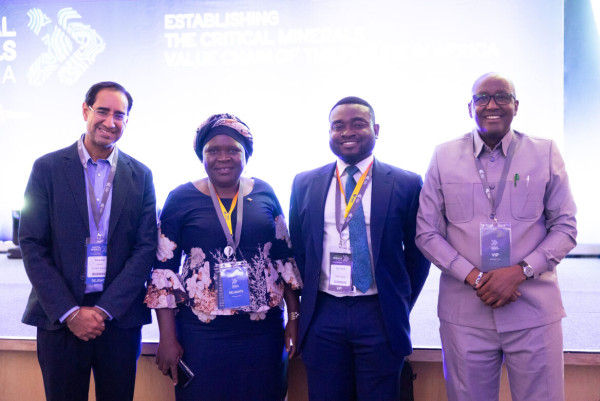
Critical Minerals Africa 2023 Prepares for Official Opening with Full Day of Strategic Presentations

Location: News
Energy Capital & Power

The first day of the Critical Minerals Africa 2023 summit on Tuesday – organized by Energy Capital & Power (www.EnergyCapitalPower.com) – featured a series of presentations from leading industry experts, providing unparalleled insights into Africa's critical mineral reserves and geopolitical position in the global mining economy. The main conference program begins on Wednesday, October 18 and will feature a highly anticipated ministerial forum, investor briefings and panel discussions, taking place alongside African Energy Week in Cape Town.  

Kicking off the agenda was a presentation by South African Institute of International Affairs (SAIIA) exploring the future of critical minerals in the SADC – namely, copper in the DRC, South Africa and Zambia, lithium in South Africa and Zimbabwe, cobalt in the DRC and Zambia, graphite in Mozambique, manganese in South Africa, and nickel in Madagascar, South Africa and Tanzania. The ability to harness these reserves depends on several factors, including growing geoeconomic competition among China, the US and Europe, the ability of SADC states to manage regional value chains, and the urgency of global policy action toward renewable and low-carbon energies.

“In 20-30 years, not only will these minerals be in high demand, but how we put systems in place will be important,” stated Dr. Deon Cloete, Head of SAIIA's Futures Program. “We have focused on Rare Earth Elements (REEs) and the need to scale up exploration and extraction and develop the entire value chain. The transition to climate goals by 2050 is challenging and we need to be critical about how these fault lines are emerging. We propose a resource-based economy that challenges the paradigm of how we approach mining.”

The Critical Minerals International Alliance (CMIA) built upon the geopolitical nature of critical minerals development during its presentation, addressing China's race to solidify its leadership on the continent and its successful dual-pronged investment approach. Western nations have sought to counter this influence through various policy measures, including the US' Inflation Reduction Act, the EU's Critical Raw Materials Act and the Minerals Security Partnership, which seeks to secure a stable supply of raw materials for member economies. 

“When we talk about critical minerals, we are focused on geopolitics — how they frame supply chains and influence pricing and how monopolies are increasingly changing the industry,” said Olimpia Pilch, Founder and COO of CMIA. “In a supply chain crunch, who gets priority and which industries will miss out? Those who have put in the work to have their own supply chain will be in a much better position.”

On the need to diversify mining supply chains, Roberto Cecutti, Head of Trade and Economics, EU Delegation to South Africa, stated during his presentation: "In terms of annual consumption, we have an aspirational target of covering at least 10% of extraction in Europe, 40% of processing and refinement and 15% of recycling capacity. We want to avoid dependence on the supply of one or more specific countries…This is why we have set this target, in which 65% should not depend on a specific country of origin of supply.”

"Each region has its own definition of what is ‘critical,' and what's critical for Africa may not be what's critical for the EU and vice versa. Africa has different requirements when it comes to minerals,” noted Sodhie Naicker, Managing Director: DMT Kai Batla and Consortium Partner: AfricaMaVal.

Energy research firm Rystad Energy also explored Chinese dominance within the low-carbon supply chain, as the country produces almost 90% of solar panels and is currently ramping up production of wind turbines. While Europe has made gains towards establishing its own clean energy supply chain, Africa remains reliant on imports to meet growing energy demand, despite having vast renewable energy potential and untapped mineral reserves. 

“The resource potential for solar generation in Africa is more than enough to satisfy the needs of the planet – it's enormous,” said Per Magnus Nysveen, Senior Partner & Head of Analysis for Rystad Energy. “You can find sites for mining every mineral in sub-Saharan Africa.”

A presentation from Steenkampskraal – operator of the Steenkampskraal Mine in South Africa's Western Cape – underscored the continent's resource potential and its evolution into a critical and industrial minerals hotspot. The mine is home to one of the highest grades of REEs globally, is licensed to operate and possesses well-developed underground infrastructure with a low-capital, three-stage development plan.

“Not even 20% of the known resources have been mined,” emphasized Graham Soden, Director, CEO & Mine Manager of Steenkampskraal. “It puts the project at a unique level. It's fully legislative compliant, and we can get it up and running within one year.”

The agenda concluded with a presentation by Trade & Industrial Policy Strategies (TIPS), which explored opportunities to develop vanadium redox battery (VRB) manufacturing in South Africa and to position the country as a key player in the global battery value chain, with a view to exporting to other African and international markets. Demand for VRBs has skyrocketed in recent years – largely from China, Japan, Europe and the US – resulting in over 30 new VRB projects installed in 11 countries since 2014.  

“Cell battery manufacturing remains to be proven competitive in South Africa. We have the industrial capacity, but we don't have a commercialized production,” said Lesego Moshikaro, Senior Economist for TIPS. “When you look at the short- to medium-term, South Africa cannot be competitive along the whole value chain, so it's important for us to choose key areas where we can excel.”

With its main conference program kicking off on October 18, the Critical Minerals Africa 2023 summit serves to position Africa as the primary investment destination for critical minerals. The event is held alongside the African Energy Week 2023 conference (www.AECWeek.com) from October 16-20, offering delegates access to the full scope of energy, mining and finance leaders in Cape Town.

Distributed by APO Group on behalf of Energy Capital & Power.

Media files
Energy Capital & Power
Download logo
Read moreCritical Minerals Africa 2023 Prepares for Official Opening with Full Day of Strategic Presentations
16 October 2023

Empowering Tomorrow’s Innovators

Location: Business
Siemens Energy Southern Africa

By Thabo Molekoa, Chairman & Managing Director, Siemens Energy Southern Africa (https://www.Siemens-Energy.com/)

Fostering an environment that promotes a culture of learning, exploration, and technological excellence among the youth, is the key to a more sustainable future.

From 3 – 6 October 2023, the 43rd instalment of Eskom Expo for Young Scientists was held at the Birchwood Conference Centre in Johannesburg. Each year the Expo finds the top young innovators and scientists across South Africa and Internationally, bringing these students together to compete against, and engage with, like-minded individuals on a platform that promotes innovation and scientific excellence. This year the Expo hosted 330 young scientists from 35 regions across South Africa, alongside 20 international students from 10 countries including Mexico, Namibia, Mozambique, and Turkey.

The Expo plays a pivotal role in promoting and sustaining the youth's interests in Science, Technology, Engineering, Mathematics, Innovation (STEMI) subjects. It provides budding scientists with the opportunity to showcase and demonstrate their problem-solving skills, innovative capabilities, and creative thinking to solve some of the world's biggest challenges. We saw students demonstrate power generation through an electrolysis system using lead pencils and water; we saw them improve the energy generation capacity of solar panels by using mirrors to direct sunrays throughout the day; as well as to identify how we can generate electricity by using the gas released from biodegradable substances. Platforms such as this also gives corporate organizations and educational institutions the opportunity to support the growth of STEMI subject skillsets and training, by providing the youth with the necessary tools to pursue scientific and engineering careers.  

Siemens Energy was proud to participate as one of the main sponsors of this initiative. We sponsored students from Namibia and Mozambique to travel to South Africa and showcase their inventions. We also sponsored laptops to nine rural and underprivileged schools across the country, with two young scientists each receiving full bursaries to study engineering at a university of their choice.

The Expo was an insightful and inspiring event that demonstrated the impressive capabilities of today's young scientists. It allowed the students to showcase their knowledge and skill, in a fun, exciting, and supportive environment.

As global economies rush to enable a shift in energy systems; we need to encourage innovation, knowledge, and continuous revolution in training and education to facilitate progress. Involving the youth in challenges like these, provides the next generation of energy professionals with opportunities to learn and lead in the energy transition.

Siemens Energy recognizes the role of the youth in tackling this problem, our Just Energy Transition Hackathon, held last year is another example of how Siemens Energy is assisting in exposing the youth to a passion for STEMI subjects and energy in an engaging and rewarding format.

Distributed by APO Group on behalf of Siemens Energy Southern Africa.

Media files
Siemens Energy Southern Africa
Download logo
Read moreEmpowering Tomorrow’s Innovators
12 October 2023

92.1% of SA population owns a cellphone

Location: News

92.1% of SA population owns a cellphone

South Africa's Census 2022 national results has shown an upward trend in ownership of refrigerators, televisions and cellphones.  

“The overwhelming majority (92.1%) of households in the country owned a cellphone in working order, a notable increase from the 3.3% in 2001. Just under four-fifths (79%) of households owned televisions compared to the 52.6% in 2001,” Statistician-General Risenga Maluleke said.

Furthermore, the data from Census 2022, which he handed over to President Cyril Ramaphosa on Tuesday in Pretoria, shows that the ownership of a refrigerators/freezers increased from 53.8% in 2001 to 83.2% in 2022.

“In contrast, households owning a radio decreased significantly from 73% in 2001 to 50.3% in 2022. In addition, there is a downward trend in households that owned a landline telephone over the period 2001–2022,” Maluleke said.

Households residing in formal dwellings

The report noted that there has been an upward trend in households residing in formal dwellings - an increase of almost 24 percentage points (from 65.1% in 1996 to 88.5% in Census 2022).

Formal dwellings include formal houses with a brick/concrete structure, flats and apartments, cluster houses, townhouses, semi-detached houses or any formal dwelling situated in a backyard, such as a room or garden cottage where a household or single person resides.

“The proportion of households that resided in informal dwellings halved (from 16.2% in 1996 to 8.1% in 2022). In 2022, just over two-fifths (41.6%) of the dwellings that households resided in were owned and fully paid off, with similar proportions recorded in 2001 and 2011.

“The proportion of households that occupied their dwellings rent-free increased from 18.6% in 2011 to 25.6% in 2022, while rented dwellings decreased slightly from 25% in 2011 to 23.2% in 2022. Only 6.6% of households resided in dwellings that were owned but not fully paid off (for example, those still repaying a bond to the bank), declining from 11.8% in 2011,” he said.

Households were asked whether the dwelling they resided in was a government-subsidised dwelling or RDP.

“Two-fifths (40%) of households in the Northern Cape reported that they resided in government subsidised dwelling/RDP housing, only slightly higher than the proportion of households in the Free State (37.6%). Households in Limpopo recorded the lowest proportion of government subsidised dwelling/RDP housing (18.3%), well below the national average of 29.9%,” Maluleke said.

Access to internet

Generally, there has been an upward trend in access to internet services over the period 2011–2022.

Maluleke attributed this to rapid advancement in communication services, such as cellphone ownership.

“Overall, households with no access to internet decreased threefold (from 64.8% in 2011 to 21.1% in 2022). A substantial percentage of households reported accessing internet mainly through a cellphone or other mobile device (60.5%) compared to 16.3% recorded in 2011.

“There was an increase in the percentage of households accessing internet mainly at home, from 8.6% in 2011 to 13.3% in 2022. It is also noted that households accessing internet mainly using other methods decreased significantly. Households accessing internet mainly at work decreased by four percentage points (from 4.7% in 2011 to 0.3% in 2022),” he said.

Migration

The Census 2022 shows that there has been an increase in the number of the population born outside South Africa.

“The results indicate that there were more male immigrants compared to females. Furthermore, the prevalent ages of migrants were between ages 20 and 44 years, suggesting that young adults are more likely to migrate than children and the elderly.

“In Census 2011, males aged 25–29 reported the highest number of immigrants with 260 885, whilst in 2022 male immigrants aged 30–34 (235 297) numbered the highest.

“The top five sending countries remained the same between the two censuses (Zimbabwe, Mozambique, Lesotho, Malawi, and the United Kingdom). India also maintained the 2011 rank in 2022. Namibia, Eswatini, Somalia, Portugal and Germany went down the rank in 2022,” Maluleke said.

Countries that moved up the rank were: Ethiopia, Nigeria, Congo, Democratic Republic of the Congo (DRC), Bangladesh, Botswana, and Pakistan.

China is the only country that moved out of the top 20 sending countries in 2022. Whereas Ghana is the new entry into the top 20 sending countries in 2022. – SAnews.gov.za


nosihle
Thu, 10/12/2023 - 14:17

188 views
Read more92.1% of SA population owns a cellphone
12 October 2023

Launch of BMA a step in the factual direction in securing South Africa’s borders

Location: News

Launch of BMA a step in the right direction in securing South Africa’s borders

By Dr Michael Masiapato, PhD.

The Musina heat of 37°C gathered thousands of attendees to witness the historic launch of the Border Management Authority (BMA).

The Border Management Authority aims to ensure that South African borders are less porous and more efficient in facilitation of trade as well as ensuring the legitimate movement of goods and people.  South Africa has 72 ports of entry comprising of 53 land ports, 10 aviation or international airports and 9 marine (sea) ports. Over and above managing the 72 ports of entry, we are managing the vulnerable segments of our border lines and community crossing points.

The initial multi-departmental approach we had for the past 29 years was a major challenge, where a number of Departments were operating at the borders.  You had the Department of Home Affairs doing immigration; the Department of Forestry, Fisheries and the Environment doing biosecurity functions, the Department of Agriculture doing agriculture functions and also the Department of Health responsible for port health functions. In the previous years we had independent managers of those four departments operating at the ports and reporting back to their various departments. This was over and above the operations of the South African Revenue Services (SARS) facilitating port customs, the South African National Defence Force (SANDF) and the South African Police Service (SAPS) responsible for border policing functions.

There was a necessity to bring a border management model where these port functions of the four Departments are integrated. The model involved the port related functions exiting those Departments and reporting to the Border Management Authority under one command. The need for an integrated and co-ordinated border management was in accordance with the Constitution, international and domestic law, in order to contribute to the socio-economic development of the Republic.

In order to empower the BMA to be effective, it was then created as a law enforcement authority, which became the third armed service in South Africa after SANDF and SAPS. The mandate of the BMA is clear in ensuring the prevention of smuggling and trafficking of human beings and goods; preventing illegal cross-border movement; contributing to the protection of the Republic’s environmental and natural resources; and protecting the Republic from harmful and infectious diseases, pests and substances. In July 2022, the first 221 officers were deployed as BMA Border Guards at vulnerable segments of the border line, including the informal community crossing points. Its formal establishment and assumption of its status as an autonomous schedule 3 (A) public entity was conferred on 1 April 2023. This being one of the most important authorities, it was necessary for President Cyril Ramaphosa, as Commander-in-Chief of the South Africa’s armed forces to preside over the launch of the Border Management Authority.

Subsequent to that, and additional 400 BMA Border Guards including 50 Coast guards are being recruited to ensure that the entity is effective and efficient at all border posts. In order to maintain the BMA integrity and based on the many corruption challenges that were faced in the past, section 13 of the BMA Act requires that all border management officials be fully vetted and regular lifestyle audits to be conducted.

To assist with technological support on Border Management operations, the Minister of Home Affairs, Dr Aaron Motsoaledi recently announced the issuing of the Request for Proposal to the market for the redesigning and redevelopment of our top six busiest ports of entry. The primary intention is to ensure the realisation of regional economic integration in the SADC region, while facilitating the realisation of African Continental Free Trade Area. The re-developed ports of entry will result in the efficient cross-border management of movement of people, goods and services, improved revenue collection and preventing harmful imports and exports.

The six earmarked ports of entry are:

  • Beitbridge - Zimbabwe
  • Lebombo - Mozambique
  • Maseru Bridge – Lesotho
  • Ficksburg - Lesotho
  • Kopfontein - Botswana
  • Oshoek - Eswatini

These ports were earmarked in order to address the congestion, based on being the largest and busiest by traffic volume.

The re-designing project is expected to create an estimated 38 000 jobs in areas around the six designated ports of entry.

The BMA is a vital link in our efforts to harness the benefits of the African Continental Free Trade Area. Despite serious challenges faced before, the BMA will provide a sustainable solution to the structural challenges of border security, control and coordination. It is intended that this new approach will adapt and respond effectively to the challenges, threats and opportunities that exist in the Border environment whilst safe-guarding South Africa’s borders and meeting the country’s national, regional and global development responsibilities and human rights imperatives.
* Dr Michael Masiapato is the Commissioner and CEO of the Border Management Authority.

Matona
Thu, 10/12/2023 - 13:44

137 views
Read moreLaunch of BMA a step in the factual direction in securing South Africa’s borders
6 October 2023

Establishing Sustainable Raw Material Value Chains

Location: News
Energy Capital & Power

A high-level presentation on the European Union's (EU) AfricaMaVal initiative and related efforts to establish sustainable critical raw material value chains in Africa will be delivered at the upcoming Critical Minerals Africa (CMA) 2023 summit (https://CriticalMineralsAfrica.com). 

Led by Roberto Cecutti, Head of Trade and Economics, EU Delegation to South Africa and Sodhie Naicker, Managing Director of DMT and Kai Batla and Consortium Partner in AfricaMaVal, the presentation is one of several organized for the first day of the conference, serving to promote sustainable partnerships, policies and projects in raw materials and strengthen global critical mineral supply chains.   

The AfricaMaVal project – “Building EU-Africa Partnerships on the Sustainable Raw Materials Value Chain” – aims to ensure responsible mineral sourcing by European countries, while fostering sustainable development and ESG practices across the African continent. The project targets 10 case studies in Morocco, Senegal, Gabon, the DRC, Tanzania, Mozambique, Zimbabwe, Namibia, South Africa and Madagascar, with a view to evaluating their respective mining and refining potential and strengthening their existing links to European partners.

Launched in June 2022 and set to run through November 2025, the AfricaMaVal initiative comes as Europe takes a mounting interest in Africa's critical minerals as an alternative supply to China and Russia. The EU has classified rare earth minerals as critical to delivering its flagship Green Deal and digital transition, which targets carbon neutrality by 2050. 

The presentation aligns closely with the broader theme of CMA 2023 – Establishing the Critical Minerals Value Chain of the Future in Africa – which aims to position the continent as a global hub for sustainable mineral exploration, processing, technologies and trade.  

Distributed by APO Group on behalf of Energy Capital & Power.

Critical Minerals Africa 2023 summit:
Organized by Energy Capital & Power, the Critical Minerals Africa 2023 summit, scheduled for October 17-19, serves to position Africa as the primary investment destination for critical minerals. The event is held alongside the African Energy Week 2023 conference (https://AECWeek.com) on October 16-20, offering delegates access to the full scope of energy, mining and finance leaders in Cape Town. Sponsors, exhibitors and delegates can learn more by contacting sales@energycapitalpower.com

Media files
Energy Capital & Power
Download logo
Read moreEstablishing Sustainable Raw Material Value Chains
6 October 2023

SADC – GMI signs agreement to promote sustainable water resources management

Location: News

SADC – GMI signs agreement to promote sustainable water resources management

The Incomati and Maputo Watercourse Commission (INMACOM) and Southern African Development Community – Groundwater Management Institute (SADC – GMI) have signed a Memorandum of Understanding (MoU) to foster the promotion of equitable and reasonable utilisation of water resources of the Incomati and Maputo Basin. 

The agreement also seeks to ensure efficient management and sustainable development of the resources. 

The signing ceremony took place on the sidelines of the 10th SADC River Basin Organisations (RBO) and Shared Watercourse Institutions (SWI) workshop, held at Joachim Chissano Conference Centre in Maputo on 2 - 4 October 2023. 

The workshop aimed to facilitate the exchange of ideas that will enhance effective transboundary water resources planning, development, and management in the region, while ensuring environmental sustainability and resilience in order to improve regional water security, and ultimately reduce poverty through regional integration, economic productivity and industrialisation. 

Through the signed MoU, the two parties have agreed on the following areas of cooperation, amongst others:
•    Engage in academic research on the Incomati and Maputo Basins on items of mutual interest, particularly on groundwater related issues.
•    Share any information that improves the knowledge base on transboundary aquifers in the Incomati and Maputo Basins.
•    Design and undertake joint excursions and projects within the two basins.
•    Explore funding opportunities from various cooperating partners and funders to implement joint activities within the basin. 

INMACOM is an entity established by the Kingdom of Eswatini, Republic of Mozambique, and Republic of South Africa through the Incomati and Maputo Watercourse Commission Establishment Agreement entered into in November 2021.

This is an instrument used to guide the Riparian States in contributing to regional cooperation with regard to the utilisation and development of common water resources. 

The main responsibility of the Commission is to, amongst others, encourage cooperation between the parties to ensure the development, protection and sustainable utilisation of the water resources shared by the Member States.

The Department of Water and Sanitation has welcomed the new development, saying the combined effort by the Member States, through South Africa’s Water and Sanitation, Department of Water Resources in Eswatini and Mozambique’s Department of Water and Natural Resources, could also contribute positively towards “peace, stability and prosperity of the Southern African region”.

“SADC-GMI, is established as the regional Centre of Excellence in promoting equitable and sustainable groundwater management and providing solutions to groundwater challenges across the SADC region for improved livelihoods and socio-economic development. This also forms part of SADC agenda of regional integration and poverty eradication. 

“Furthermore, SADC-GMI mandate is to create an enabling policy, legal and regulatory environment, capacity development, advancing research, supporting groundwater infrastructure development, and create an enabling dialogue and accessibility of groundwater information in the SADC region,” the department said in a statement. – SAnews.gov.za

GabiK
Fri, 10/06/2023 - 09:48

24 views
Read moreSADC – GMI signs agreement to promote sustainable water resources management
2 October 2023

Logistics Leader DSV to Operate from Agility Logistics Park – Maputo

Location: News
Agility

DSV, one of the world's largest freight and logistics providers, has chosen the Agility Logistics Park (www.Agility.com) in Mozambique as the location where it will manage storage and distribution for a global beverage customer .

The Agility park is the leading warehouse facility in Mozambique's capital, Maputo.  DSV has leased 12,000 SQM at the facility with the possibility to add an additional 2,000 SQM to help its customer meet seasonal demand for raw materials, bottles, packaging and finished products.

Philipp Buechler, Managing Director, DSV Mozambique, commented  “At DSV, a safe, secure, and efficient distribution center is fundamental to our business model. The Agility warehouses provide the necessary infrastructure to meet exacting international standards and our operational requirements. Agility Logistics Parks also ensures that strict HSSE standards are followed within the park, something that is very important for optimal operations. This partnership is one of the key milestones in our supply chain strategy, which will support our further business growth in Mozambique.”

The Agility Logistics Park is located on the Maputo Ring Road, at Chiango area in Marracuene and is strategically situated for efficient distribution both across the country and into Maputo. The park is within a 25-kilometer radius of the Maputo port and airport, the N4 highway to South Africa, and the capital's Central Business District.

Agility is funding and developing 300,000 SQM of warehouses on the site, a center of excellence for warehousing in the region, to support businesses operating in and from Mozambique. The Agility warehouses provide the essential infrastructure required for both multi-national companies and local businesses that need storage, distribution, packaging, processing and light manufacturing space.

Geoffrey White, CEO Agility Africa, said: “We are delighted that DSV chose to lease warehouse space in the Agility Logistics Park in Maputo.  We believe that the provision of international-standard warehouses for storage, distribution and light manufacturing is one of the fundamental building blocks necessary for economic growth. Demand in Maputo has been strong post the pandemic from both local and international companies, and we are now expanding the warehouse park and investing in further warehousing to support economic growth, jobs and prosperity in Mozambique.”

White added: “Across Africa Agility is funding and developing warehouse parks that provide move-in-ready warehouses, enabling fast deployment, flexibility and reduced capital commitments for our existing and new customers. The provision of secure, ready-built, quality, warehouses with consistent power and IT connectivity in the Maputo market is a true enabler of growth and prosperity in Africa.” 

Distributed by APO Group on behalf of Agility.

For more information:
Sabrina Mundy
Man Bites Dog
teamagility@manbitesdog.com
+44 1273 716 820

Social media:
Twitter: https://apo-opa.info/3ZBi6M2
LinkedIn: https://apo-opa.info/3ZEKPzz
YouTube: https://apo-opa.info/3ZBNSIU

About Agility Logistics Parks:
Agility Logistics Parks is one of the largest private owners and developers of warehousing and light industrial parks in the Middle East, Africa and South Asia. It funds, builds and manages world-class facilities and infrastructure that help companies operate in the world's fastest-growing markets. Agility Logistics Parks' parent, Agility, is a pioneer in emerging markets and a leader and investor in technology to enhance supply chain efficiency. Agility is a publicly traded company with $2.8 billion in annual revenue. For more information about Agility, visit www.Agility.com

Media files
Agility
Download logo
Read moreLogistics Leader DSV to Operate from Agility Logistics Park – Maputo
  • Previous
  • Page 1
  • Interim pages omitted …
  • Page 10
  • Page 11
  • Page 12
  • Page 13
  • Page 14
  • Next

Copyright © 2026 · MyZA · All Rights Reserved · Powered by Stratlec Online