• Skip to main content
  • Skip to header right navigation
  • Skip to after header navigation
  • Skip to site footer
MyZA

MyZA

News, Directory, Events and Other Stuff

  • Social Media
  • Sport
  • World News
  • Home
  • Submit News
  • Directory
  • Events
  • Stratlec
  • TFSA
  • News
    • APO
    • Today’s Sport News
    • Todays Social Media and Tech Headlines
    • Today’s World News
    • Today’s SA Financial News
  • Contact
You are here: Home / Archives for Mozambique

Mozambique

16 April 2025

Africa’s Coffee Culture Comes Home

Location: Business

International Trade Centre
Download logo

South Africa, Uganda and Kenya topped the podium at this year's Africa Barista Championship. But the real winner at this year's Africa Barista Championship was African coffee culture itself.

From 24 to 28 February 2025, the scent of homegrown coffee filled the air in Dar es Salaam, as 23 baristas from 14 countries competed for continental recognition before packed crowds. Held alongside the 21st African Fine Coffees Conference and Exhibition (AFCA), the event marked a turning point: a bold celebration of local talent, regional markets, and Africa's fast-growing appreciation for its own specialty coffee – especially robusta.

‘This isn't just about coffee-making,' said Régine Léonie Guion-Firmin, an Authorized Specialty Coffee Association trainer (AST) based in Nairobi, Kenya. ‘It's about youth creating new career paths, fostering café culture, and driving demand for high-quality, locally produced coffee. You could feel the energy and pride.'

Behind the spotlight on brewing mastery, a deeper transformation was underway. With growing consumer interest across the continent, local roasters, baristas and entrepreneurs are championing African coffee for African consumers – redefining value not through export alone, but through domestic engagement.

In Cameroon, Thierry Djanga of TerrifiCoffee is part of that movement. His coffee placed second in a tasting competition at the event, but his priorities lie closer to home.

‘I'm happy to pay a premium for quality robusta from African producers,' he said. ‘Not just to export it, but to serve it locally. Consumers here are ready to pay for excellence. It's a virtuous circle that benefits everyone.'

The event also spotlighted technical capacity-building. A Barista Bootcamp, co-led by the International Trade Centre (ITC) and the Robusta Coffee Agency of Africa and Madagascar (ACRAM), trained more than 20 baristas in sensory analysis and brewing techniques aligned with World Barista Championship standards. The initiative, part of the ACP Business-Friendly programme, is helping professionalize the coffee sector and deepen local market appreciation for specialty-grade robusta.

Mozambique's participation was an eye-opener for many attendees unfamiliar with the country's emerging coffee sector. Meanwhile, Egypt's growing café scene brought new energy to discussions on regional trade and branding opportunities.

As coffee professionals, producers and policymakers shared ideas throughout the week, one message rang clear: Africa's coffee story is no longer confined to its export potential. The continent's producers, baristas, and consumers are reclaiming the narrative, one cup at a time.

Distributed by APO Group on behalf of International Trade Centre.

Read moreAfrica’s Coffee Culture Comes Home
16 April 2025

CSA Welcomes Suzuki as Its Official Vehicle and Proteas ODI Partner

Location: Sport

JOHANNESBURG: Cricket South Africa (CSA) today announced a multi-year partnership with Suzuki as its Official Vehicle Partner to CSA and...

Read moreCSA Welcomes Suzuki as Its Official Vehicle and Proteas ODI Partner
11 April 2025

Immigrant Workers Face Dismissal After Winning CCMA Case

Location: News

CCMA ruled that M&N Waste must pay minimum wage, now workers have been suspended

Read moreImmigrant Workers Face Dismissal After Winning CCMA Case
9 April 2025

Southern African Countries Launch Climate-Resilient Health Initiative With WHO Support

Location: News

2025 GoGettaz Agripreneur Prize Competition
Download logo

Eight Southern African countries have embarked on a landmark effort to bolster emergency preparedness and response systems in the face of increasing climate-related health threats. 

With financial support from the Pandemic Fund, and technical assistance from World Health Organization (WHO) in the African Region and other partners, Botswana, Lesotho, Madagascar, Malawi, Mozambique, Namibia, South Africa and Zimbabwe are advancing their capacity to protect public health, and respond to emergencies.

The US$ 35-million, three-year programme is aimed at supporting these countries as they strengthen national and regional systems for early warning, disease surveillance, laboratory diagnostics and workforce development – key pillars of health emergency readiness.

While implementation activities are yet to begin on the ground, coordinated planning efforts are well under way, including the establishment of governance structures at country and regional levels. Through a dedicated technical coordination capacity at the WHO Emergency Hub in Nairobi, Kenya, WHO is putting in place systems to ensure agile implementation and project monitoring, evaluation, research and learning over the three-year project duration. 

To date, all eight countries have convened multi- disciplinary National Steering Committees and have undertaken a detailed microplanning activity with key stakeholders. Furthermore, initial funds have been disbursed to countries, marking a critical early milestone in a regionally coordinated, country-driven initiative to build climate-resilient health systems.

A formal launch event is planned for next month.

“This investment represents a vital turning point for Southern Africa, a region on the frontlines of the climate and health crisis. Countries now have a unique opportunity to develop systems that are robust, responsive and resilient to emerging threats,” said Dr Chikwe Ihekweazu, Acting WHO Regional Director for Africa.

Southern Africa is warming at nearly twice the global average. Droughts, floods and cyclones are becoming more frequent and severe, fuelling the spread of vector- and waterborne diseases such as malaria and cholera, and placing added strain on health systems.

Five of the countries involved in the initiative – Lesotho, Madagascar, Malawi, Mozambique and Zimbabwe – rank among the world's 50 most vulnerable nations to infectious diseases. Many also face high climate risk, compounded by structural challenges such as weak infrastructure, limited resources and high levels of cross-border migration, underlining the urgent need for coordinated preparedness across the region. 

The new programme, developed under the leadership of national governments, is focused on addressing critical gaps in three priority areas:

  • Early warning and disease surveillance: Strengthening real-time, cross-border detection and information-sharing systems across the One Health spectrum, including human, animal and environmental health.
  • Laboratory systems: Enhancing national and regional laboratory networks, including  upgrading diagnostic capacity and regional testing hubs.
  • Public health and community workforce: Supporting the development of a skilled, coordinated workforce aligned with countries' Human Resources for Health strategies.

The proposal was developed as part of the Common Africa Approach under the Joint Emergency Action Plan, with WHO in the African Region, Africa Centres for Disease Control and WHO's Regional Office for the Eastern Mediterranean. Proposal development was supported by the Gates Foundation.

It builds on existing primary health care and community health efforts, and is aligned with global standards, including the International Health Regulations (2005) and the One Health approach.

One of its most ambitious long-term goals is the creation of a Climate-Health Observatory, a platform to support early warning systems and evidence-based decision making by tracking climate-sensitive health risks across borders. The observatory will facilitate data-driven policymaking and foster long-term resilience in the region.

In addition, the programme will help strengthen leadership and governance by establishing a regional network of connected leadership across Ministries of Health and National Public Health Agencies, further enabling swifter and smarter coordination during responses to emerging threats. 

“These efforts are essential in a region with frequent population movement, fragile health systems, and limited emergency response capacity,” said Dr Abdou Salam Gueye, WHO's Africa Regional Emergency Director. “Our role is to support countries with the expertise, tools and evidence they need to lead these efforts effectively.”

Funding is provided by the Pandemic Fund, which supports pandemic prevention, preparedness and response capacity in low- and middle-income countries. The programme also contributes to building sustainable, resilient health systems that can withstand future pandemics and climate shocks.

By working together, and with strong technical support from WHO and partners, countries in Southern Africa are laying the foundation for a scalable model for climate-resilient health security – grounded in national ownership, regional solidarity and a shared commitment to protecting health and saving lives.

Distributed by APO Group on behalf of 2025 GoGettaz Agripreneur Prize Competition.

Read moreSouthern African Countries Launch Climate-Resilient Health Initiative With WHO Support
7 April 2025

Young voices make their mark at Africa Children’s Summit 2025

Location: News

Young voices make their mark at Africa Children’s Summit 2025

Children have taken centre stage to address critical issues affecting their lives, from education access to violence prevention, proving that they are not just future leaders but active changemakers.

This is according to the Department of Social Development, which has hosted the Africa Children’s Summit 2025.

Since its opening last week Friday, the summit has brought together some of the brightest and courageous young leaders in person from across Africa, with hundreds joining virtually. 

The children who attended in person are from South Africa, South Sudan, DRC, Ethiopia, Kenya, Lesotho, Ghana, Liberia, Mozambique, Uganda, Zambia and Zimbabwe.

In a statement, the department said the summit was child-led and child-centred, with its chairperson and programme facilitators all drawn from children invited to the summit. 

“Under the theme 'Seen, Heard, and Engaged in Education,' the children have boldly taken centre stage to address critical issues affecting their lives, from education access to violence prevention, proving that they are not just future leaders but active changemakers today,” the department said. 

One of the child leaders, 17-year-old Ison Cumbane from Mozambique, captured the spirit of the summit when he said: “Many children don’t have the opportunity to speak about their rights. We are here to give a voice to them and show that we can participate and influence decisions.”

The summit wraps up in Johannesburg today.

The child-led initiative is hosted by the South African Government through the Department of Social Development, in partnership with the Nelson Mandela Children’s Fund.

An Outcome Statement will be crafted by the children themselves, which will be handed over to the CEO of the Nelson Mandela Children's Fund and other key policymakers.

“The Outcome Statement outlines actionable recommendations for governments and civil society to implement policies that prioritise children’s voices and rights across Africa,” the department said. – SAnews.gov.za

DikelediM
Mon, 04/07/2025 - 11:12
249 views

Read moreYoung voices make their mark at Africa Children’s Summit 2025
5 April 2025

South Africa’s Response to the US Government’s Imposition of Tariffs

Location: News

Republic of South Africa: Department of International Relations and Cooperation
Download logo

South Africa's Strategic Adaptation to US Tariffs: Advancing National Interests through Policy and Strategy

The new tariff regime arising from the decision by the United States of America, which have been directed not only to South Africa, but the entire world necessitates strategic responses to maintain and grow our industrial base, as a crucial avenue to pursue inclusive growth.

In response to the US Government's imposition of tariffs, South Africa will continue to navigate the challenges and opportunities these measures present with resilience and innovation. Guided by its national interests and aligned with its broader trade and industrial policy, South Africa is committed to ensuring economic growth, industrial development, and the well-being of its citizens.

South Africa intends to:

1. Negotiate Favourable Agreements

South Africa will work to secure opportunities, in a context of a rapid withdrawal of favourable arrangements giving our exports preferential access to the United States of America. This might involve securing additional exemptions and favourable quota agreements, ensuring our industries maintain critical access to the US market, including through sectoral cooperation. This aligns with the national interest of promoting economic prosperity and safeguarding the livelihoods of South Africans.

2. Diversify and Expand Trade Relations

Efforts will intensify to diversify export destinations, targeting markets across Africa, as well as in Asia, Europe, Middle East, and Americas.

Moreover, such efforts will also, where deemed appropriate involve bilateral arrangements where these allow for the pursuance of our national interest. In our presidency of the G20, as the recent engagements at the G20 trade and investment working group (TIWG) indicate, the issue of supply chain geographical diversification is a challenge confronting all open market economies the world over.

This diversification supports South Africa's industrial strategy and reduces dependency on single destination markets for our exports or single sources for our intermediate input requirements. Fostering resilience in line with national economic priorities.

3. Enhance Regional Trade Collaboration

South Africa will leverage the African Continental Free Trade Area (AfCFTA) to bolster intra-African trade, fostering stronger regional economic integration and cooperation. This approach aligns with the national interest of contributing to a better Africa and world.

4. Focus on Value-Added Production

Industries will prioritise transforming raw materials into higher value finished goods, reducing tariff exposure and driving innovation to improve profitability. This supports South Africa's industrial policy objectives of boosting local manufacturing and creating jobs.

5. Stimulate Domestic Growth

The government will invest strategically in industries impacted by the tariffs, supporting economic growth through modernisation and targeted infrastructure development. This aligns with the national interest of ensuring the well-being of South African citizens.

6. Forge Global Alliances

South Africa will continue to build strategic partnerships with other nations enhancing collaboration and our influence in international trade negotiations. This reflects the national interest of strengthening global diplomatic and economic ties.

South Africa's tariff and industrial strategy are designed to support industrial development, employment growth, and economic resilience. By aligning these policies with the national interest, South Africa will ensure that its economy emerges stronger, more diversified, and resilient in the face of global trade complexities.

This approach will also apply to the 7 February Executive Order, which is currently being attended by an interdepartmental team which includes the departments affected by the executive order.

The 31% tariff implemented by the US Administration will be effective from 9 April 2025. South Africa's average tariff is 7.6% and therefore South Africa needs clarity on the basis for the 31% to be implemented by the US.

It is important to note that products such as copper, pharmaceuticals, semiconductors, lumber articles, certain critical minerals, and energy and energy products have been exempted from the reciprocal tariffs. Some of these materials are already key parts of the United States of America's sourcing requirements. According to the United States Geological Survey, 97% of their chrome ore requirements come from South Africa, 6% of fluorspar import requirements and 24% of the United States manganese requirements. These reciprocal tariffs will not apply to products already facing Section 232 tariffs of 25% such as steel, aluminium, automobiles and auto parts.

The reciprocal tariffs effectively nullify the preferences that Sub-Saharan Africa countries enjoy under the Africa Growth and Opportunity Act (AGOA). The sweeping tariff measures will affect several sectors of our economy, including automotive industry, agriculture, processed food and beverage, chemical, metals, and other segments of manufacturing, with implications for jobs and growth.

The US represented 7.45% of South Africa's total exports in 2024, while South Africa accounted for only 0.4% of US total imports. As such, South Africa does not constitute a threat to US and where there is a trade imbalance in favour of South Africa, it is mainly on agriculture products which are counter-cyclical and on minerals which are inputs in US industries.

South Africa will continue building domestic supply resilience, reducing cost of doing business and increasing competitiveness of our economy. Further, South Africa will continue with efforts to diversify export markets as part of its resilience building strategy.

The significant market access opportunities both through trade agreements and through strategic partnerships with countries across the globe present huge opportunities for our exports. The recently concluded Africa Continental Free Trade Area (AfCFTA) remains untapped, beyond the Southern Africa Development Community (SADC).

Furthermore, South Africa enjoys preferential market access through the Southern Africa Customs Union, SADC, SADC-EU Economic Partnership Agreement (EPA), SACU+Mozambique-UK EPA, the European Free Trade Association (EFTA), MERCUSUR (that includes Argentina, Brazil, Paraguay and Uruguay) and Japan Generalised System of Preferences. In addition, government is strengthening relations with countries in Asia and the Middle East to open new market access opportunities. Some of these efforts are bearing fruit with new market access opportunities for our agriculture products.

To re-iterate the Presidency, whilst South Africa remains committed to a mutually beneficial trade relationship with the United States, unilaterally imposed and punitive tariffs are a concern and serve as a barrier to trade and shared prosperity. The tariffs affirm the urgency to negotiate a new bilateral and mutually beneficial agreement with the US, that will establish more fair-trade relations with the US as an essential step to secure long-term trade certainty.

Distributed by APO Group on behalf of Republic of South Africa: Department of International Relations and Cooperation.

Read moreSouth Africa’s Response to the US Government’s Imposition of Tariffs
4 April 2025

IAE 2025 to Highlight Growth Opportunities in Africa’s Downstream Supply Chain

Location: Business
Energy Capital & Power

The upcoming Invest in African Energy (IAE) 2025 Forum will host a high-level panel – Downstream Beneficiation: Supply Chain Development for Optimal Performance – as the continent aims to enhance energy security, reduce import dependence and maximize the value of its natural resources. The session will explore how the expansion of Africa's downstream sector can strengthen supply chains, enhance refining capacity and drive sustainable economic growth through infrastructure investment and strategic partnerships.

As Africa's energy landscape evolves, optimizing downstream operations is critical to unlocking the full potential of the continent's natural resources. This session will focus on closing the infrastructure finance gap by addressing key challenges such as upgrading refineries, expanding storage and distribution networks, and developing service stations, bottling plants and transport fleets. Panelists will also examine the role of strategic hubs – such as Egypt's petrochemical industry, Equatorial Guinea's Gas Mega Hub and Algeria's emerging green hydrogen sector – in bolstering Africa's supply chain efficiency, along with key regional projects like the Central African Pipeline System and the Lobito Corridor linking Angola, Zambia and the Democratic Republic of Congo.

IAE 2025 (https://apo-opa.co/43FPXaT) is an exclusive forum designed to facilitate investment between African energy markets and global investors. Taking place May 13-14, 2025 in Paris, the event offers delegates two days of intensive engagement with industry experts, project developers, investors and policymakers. For more information, please visit www.Invest-Africa-Energy.com. To sponsor or participate as a delegate, please contact sales@energycapitalpower.com.

Moderated by James Gooder, VP Crude, Argus Media, the panel will feature industry leaders offering key insights into Africa's downstream sector. Speakers include Anibor Kragha, Executive Secretary, African Refiners & Distributors Association; Tarik Berair, Commercial Development Manager, Technip Energies; Fernando Covas, Executive Director, S&P Global Commodity Insights; James Bullen, Head of Downstream, Petredec and Michael Kelly, Chief Advocacy Officer, World Liquid Gas Association. 

Africa's downstream investment climate is undergoing significant transformation, with several major projects driving the sector's growth including Nigeria's 650,000-bpd Dangote Refinery, Angola's 200,000-bpd Lobito and 100,000-bpd Soyo refineries, and Algeria's 100,000-bpd Hassi Messaoud Refinery. Despite recent refinery closures, South Africa also maintains a well-developed fuel distribution network, retail stations and petrochemical production, while Mozambique is emerging as a key LNG hub, with the Coral South FLNG project already operational and the Rovuma LNG and Mozambique LNG projects currently under development.

Despite these advancements, challenges remain in securing adequate financing for infrastructure upgrades and supply chain expansion. Addressing these gaps will require coordinated efforts from governments, private investors and industry stakeholders to develop resilient and efficient downstream operations. The IAE 2025 downstream panel will provide a platform for stakeholders to discuss actionable strategies that ensure Africa's energy sector remains competitive, sustainable and responsive to global demand.

Distributed by APO Group on behalf of Energy Capital & Power.

Media files
Energy Capital & Power
Download logo
Read moreIAE 2025 to Highlight Growth Opportunities in Africa’s Downstream Supply Chain
2 April 2025

Still No Compensation for Victims of George Building Collapse

Location: News

Dysfunction at the Compensation Commission mean some victims may never receive payment

Read moreStill No Compensation for Victims of George Building Collapse
31 March 2025

A Rare Opportunity for Real African Energy Independence

Location: Business
African Energy Chamber

By NJ Ayuk, Executive Chairman, African Energy Chamber (https://EnergyChamber.org)

Donald Trump's return to the White House in 2025 represents a pivotal moment for Africa's fossil fuel industry. His administration's swift reapproval of a USD4.7 billion loan from the U.S. Export-Import Bank (Exim) for TotalEnergies' liquefied natural gas (LNG) project in Mozambique — initially greenlit in 2020 during his first term but sent into deep-freeze for the full duration of the Biden years — sets the tone for what could be a transformative era for Africa's energy sector. 

Despite Mozambique's stabilization of security issues and concerns that the transfer of power in America would delay receipt of the loan even further, the Biden Administration refused to release the funds ahead of Trump's inauguration, a decision reflective of the administration's reluctance to support new fossil fuel initiatives throughout Biden's time in office. In contrast, Trump's decisive action within weeks of taking office signals a renewed, positive working relationship between the United States and Africa — one that prioritizes energy development over ideological objections and the Green Agenda's influence. 

The African Energy Chamber (AEC) contends that Africa should seize this potentially brief moment in history and embrace the Trump administration as a partner rather than an opponent. For too long, global pressures have insisted that African nations move toward green energy projects only and leave their fossil fuel resources behind.  

While renewable energy has its place, and will be important to Africa's future, fossil fuels still clearly constitute the backbone of any realistic efforts for African industrialization and economic growth — goals we simply cannot afford to sideline.  

Alignment with Trump's energy-first ethos would mean that Africa could unlock significant funding for wide-ranging fossil fuel projects, and not just the offshore oil and gas ventures that dominate the headlines. The continent should capitalize on all opportunities in onshore projects, wildcat wells (exploratory drilling in unproven areas), and the proliferation of numerous small operators. These avenues lead the way to diversity in Africa's energy portfolio, job creation, and massively strengthened energy security. 

The reapproval of funding for Mozambique LNG is a case in point. The project's revival under Trump demonstrates how quickly thick bureaucratic congestion can dissolve when political will aligns with economic practicality. This USD4.7 billion infusion will boost Mozambique's economy while sending a message to other African nations: Under Trump, at long last, America is open for business.  

In contrast to the previous administration, which openly regarded fossil fuel development with skepticism and disdain, Trump's “drill baby drill” mantra — while rooted in an “America First” agenda — pairs seamlessly with the ambitions of the African oil and gas industry. Africa should adopt a similar mindset and position itself as an attractive destination for American investment dollars. 

Coal's Comeback 

Another of Trump's domestic priorities, no doubt a response to China's unabashed expansion of coal production within its borders, is to revive clean coal production in the U.S. This initiative offers a compelling blueprint for Africa. While coal remains a contentious, harshly criticized resource globally, its advantages are undeniable: It's cheaper to produce, often doesn't require big bank financing, and is abundant across the continent. For African nations grappling with energy poverty, coal can serve as a means to an end, delivering affordable power to millions in the interim while the infrastructure for other energy sources matures. Simply put, Africa deserves to be the last global holdout on coal production and should leverage its coal reserves to meet domestic needs and export demands. Trump's willingness to disregard the international campaign against coal should embolden African leaders to reopen their abandoned coal mines and rest assured that this time around, they'll be able to operate freely, without fear of U.S. opposition. 

Fossil Fuels Unleashed 

Looking beyond coal, over the next four years, Africa has the rare chance to pursue an aggressive fossil fuel agenda. The continent should unite under an “Africa First” banner and adopt its own “drill baby drill” mentality in support of every promising oil exploration and production project, every possible natural gas project, and a multinational effort to slash through regulatory red tape.  

In Nigeria, for instance, the wheels of progress moved agonizingly slowly when it came to passing the Petroleum Industry Act, first proposed in 2008 and not signed into law until 2021. Even after the law was passed, Nigeria has been slow to fully implement it. This kind of inertia deters investment and slows development. A Trump-inspired push to clean up such bureaucratic roadblocks could unleash a wave of prosperous development. Similarly, addressing security issues — like those that drove U.S. firms out of Libya — will be critical to restoring confidence and attracting capital from abroad. 

While the offshore sector will undoubtedly remain a cornerstone of Africa's fossil fuel strategy, the continent's onshore potential is equally vast. Wildcat wells offer high-risk/ high-reward prospects that could uncover new reserves. Meanwhile, instead of relying solely on multinational oil and gas giants, empowerment of more independent companies and indigenous small operators could diversify the industry, build up local entrepreneurship, and ensure the economic benefits are more widespread. It is highly unlikely that the Trump administration, with its emphasis on deregulation and energy independence for its own shores, would obstruct such efforts on ours. Conversely, it may actively encourage them through financing and technical support, as seen with the Exim loan. 

Balancing Development and Climate Realities 

Though critics will argue that this push for fossil fuel proliferation contradicts global climate goals, at the AEC, we insist that the calculations for Africa are simply different.  

Africa accounts for a fraction of global emissions but bears a disproportionate burden when it comes to energy poverty. Fossil fuels offer a realistic and relatively quick path to electrification and industrialization, the proven prerequisites for lifting millions out of poverty. Trump's indifference to international climate orthodoxy, while controversial, gives Africa the much-needed breathing room to prioritize development over decarbonization. This is in no way an outright rejection of renewables but a recognition that fossil fuels can and will facilitate a just transition to green technologies once their capabilities catch up to Africa's current needs. 

Seizing the Moment 

The next four years under Trump could redefine Africa's energy landscape. With U.S. interference a thing of the past, Africa can pursue a multi-pronged energy strategy. With a ramp-up in natural gas to meet global demand, a coal revival to power its own grids, and on and offshore opportunities tapped into, Africa could finally secure its full resource base.  

However, this approach will require bold leadership. Governments will have to eliminate obstructive policies and address security challenges head-on to secure foreign investments. The payoff could be immense: energy abundance, economic growth, and a partnership with the U.S. that is stronger than ever before. 

For example, Nigeria's oil and gas sector has been hampered by regulatory uncertainty and security threats in the Niger Delta. A Nigerian “drill baby drill” mindset could accelerate regulatory, social, and economic reforms needed to address the Niger Delta's deep-rooted instability. This kind of mindset could restart stalled projects and attract American firms eager to invest in a Trump-approved climate. Likewise, in Libya, a resolution to security concerns could lure back U.S. companies that fled during years of instability, reviving a once-thriving oil industry. Across the continent, small operators could flourish under a lighter regulatory touch, drilling wildcat wells and tapping into overlooked reserves. 

South Africa, with its vast coal deposits, could take the lead on clean coal technologies to balance affordability and environmental concerns. Smaller nations with untapped coal reserves could follow Trump's lead in defying global pressures against production. The result would be a continent less dependent on foreign aid and more capable of powering its own future. 

Trump's presidency offers Africa a chance to unapologetically double down on its fossil fuel potential. The USD4.7 billion Mozambique loan is just the beginning — a proof of concept for what collaboration with the U.S. can achieve. By embracing this partnership, Africa can shed the shackles of the Biden era and chart a course toward energy sovereignty.  

The tools are all there: offshore rigs, onshore fields, wildcat wells, established mines, and a willing ally in Washington. The question that remains is whether Africa's leaders have the courage to stand up to the anti-carbon lobby. 

Trump's second term could be remembered as the moment Africa's fossil fuel industry came into its own — as a partner to the U.S. in a shared vision of energy abundance. With four years of clear skies ahead, there is no question that Africa should build, mine, and yes, drill, baby, drill like never before.  

If we don't act now, it might be a very long wait for an opportunity like this one to present itself again. 

Distributed by APO Group on behalf of African Energy Chamber.

Media files
African Energy Chamber
Download logo
Read moreA Rare Opportunity for Real African Energy Independence
27 March 2025

A Landmark Step for Lesotho

Location: News

World Health Organization (WHO) - Lesotho
Download logo

In a significant stride towards bolstering its pandemic preparedness and response capabilities, Lesotho convened its inaugural National Steering Committee (NSC) meeting for the Pandemic Fund Southern Africa Multicountry Project. This crucial gathering, held in Maseru, marked a pivotal moment in the nation's efforts to safeguard its population against future health crises.

Lesotho, a recipient country in the second round of the Pandemic Fund's regional proposal alongside Botswana, Madagascar, Mozambique, Malawi, Namibia, South Africa, and Zimbabwe, will benefit from resources aimed at strengthening One Health Disease Surveillance and Response. This initiative, focused on combating disease outbreaks, will enhance Lesotho's infrastructure for pandemic/epidemic preparedness and response. The NSC, a vital component for the implementation of the fund, will serve as the guiding force to ensure the effective utilization of these funds for maximum impact.

The meeting was presided over by the Principal Secretary of the Ministry of Health, Mrs. Moliehi Maneo Ntene, and co-chaired by the WHO Representative, Dr. Innocent Nuwagira. The session drew a diverse and influential assembly, including head of mission from the World Health Organization (WHO) and representation from the World Bank and UNICEF. Principal Secretaries from key ministries, including Health, Agriculture, Finance, Environment, Trade, Education, Gender and Social Development, and Disaster Management Authority, were also in attendance as members of the NSC. 

This broad representation underscores the cross-sectoral nature of pandemic preparedness, recognizing that effective responses require a unified, multi-faceted approach.

In her opening remarks, Mrs. Ntene acknowledged Lesotho's vulnerabilities and the need to strengthen its health systems. “Recognizing our vulnerabilities in emergency prevention, preparedness, and response, we seized the opportunity to apply for funding through the Pandemic Fund. The successful multi-country initiative allows us to strategically address our gaps. With this newly formed, multi-sectoral steering committee, we are confident in our ability to strengthen our health systems and build a more resilient Lesotho, ensuring the health security of our people,” said Mrs. Moliehi Maneo Ntene, Principal Secretary, Ministry of Health

WHO Representative Dr. Innocent Nuwagira echoed this sentiment, emphasizing the importance of strong national leadership and coordinated action. “The establishment of this National Steering Committee signifies Lesotho's proactive commitment to safeguarding its population. As WHO, we are committed to working alongside the government and partners, ensuring the Pandemic Fund's resources are strategically deployed to build a resilient and robust health system capable of effectively responding to pandemic threats,” reflected Dr. Innocent Nuwagira, WHO Representative in Lesotho.

A key focus of the meeting was to establish and define the functions of the NSC. Participants meticulously reviewed and endorsed the Terms of Reference (TORs), laying a solid foundation for the committee's operational framework. This crucial step ensures clarity and accountability in the NSC's role, facilitating efficient decision-making and implementation. Additionally, the meeting provided an opportunity to review and endorse the projects microplan presented by the Pandemic Fund task team. The plan outlined strategic interventions in critical areas such as early warning and disease surveillance, laboratory capacity, and workforce capacity through a One Health approach. These focus areas are essential for strengthening Lesotho's ability to prevent, detect and respond to future pandemics.

The Pandemic Fund aims to empower countries like Lesotho to build resilient health systems by investing in infrastructure, training healthcare professionals, and fostering inter-agency collaboration. The One Health approach recognizing the interconnectedness of human, animal, and environmental health - will enable a more holistic and proactive response to emerging threats. As Lesotho embarks on this critical phase of implementing the Pandemic Fund's initiative, the inaugural NSC meeting demonstrates the nation's dedication to strengthening its health security, through collaborative efforts and strategic planning, for a safer and more resilient future for Basotho.

Distributed by APO Group on behalf of World Health Organization (WHO) - Lesotho.

Read moreA Landmark Step for Lesotho
24 March 2025

AEW 2025 to Host NOC-IOC Forum in Cape Town

Location: Business

African Energy Chamber
Download logo

This year's African Energy Week (AEW): Invest in African Energies conference will debut the first-ever National Oil Company (NOC) and International Oil Company (IOC) Forum, a dynamic platform that brings key public and private sector stakeholders into direct conversation to drive investment, secure new deals, foster local capacity building and advance exploration.

A key focus of the forum will be enhancing collaboration in the exploration, development and production of hydrocarbon resources across the continent, with an emphasis on data sharing and joint decision-making to unlock untapped potential. In South Africa, TotalEnergies is preparing to drill its first exploration well on Block 3B/4B, leveraging 14,000 km of 2D seismic and 10,800 km² of 3D seismic, with a large set of exploration prospects already identified. In Angola, Sonangol is ramping up offshore exploration on Block 6/24, focusing on geological and geophysical studies and seismic data reprocessing to assess the block's resource potential, which includes a possible commercial oil discovery. Meanwhile, in Equatorial Guinea, GEPetrol has partnered with Panoro Energy on Block EG-23, conducting subsurface studies to evaluate the block's potential, with the possibility of drilling an exploration well.

In parallel, new market activity is reshaping Africa's exploration landscape, as both NOCs and IOCs pursue strategic acquisitions, partnerships and project expansions. Chevron has strengthened its presence in Equatorial Guinea by securing PSCs for two highly prospective offshore blocks. In October 2024, Brazilian NOC Petrobras acquired a 10% stake in the offshore Deep Western Orange Basin in South Africa as part of its strategy to boost reserves and expand its footprint in Africa's emerging oil and gas markets. Last month, Chinese state-backed company Sinopec signed an $850 million contract with Algerian NOC Sonatrach for exploration and development, securing a PSC covering the Hassi Berkane North license. Sonatrach is also in discussions with Eni, TotalEnergies, Chevron and ExxonMobil for exploration and development activities in the region. The NOC-IOC Forum will provide a key platform to examine these developments, fostering discussions on how public and private sector cooperation can accelerate exploration, attract capital and unlock new resource opportunities.

The NOC-IOC Forum will also focus on forging new partnerships to drive capacity-building programs and facilitate knowledge-sharing, empowering local talent in the oil and gas sector. The National Petroleum Corporation of Namibia (NAMCOR) has been active in establishing partnerships to support the country's goal of producing first oil by year-end. This includes a collaboration with QatarEnergy focused on providing training and development opportunities for NAMCOR employees in industry-specific skills. In October 2024, NAMCOR also signed an agreement with global technology company SLB to improve operational performance in decarbonization, green hydrogen and sustainable energy, with an emphasis on local capacity development. Meanwhile, Mozambique's Empresa Nacional de Hidrocarbonetos is investing in specialized offshore drilling services, reinforcing the state's involvement in the country's oil and gas projects through an agreement with Italian multinational oilfield services company Saipem.

Additionally, the NOC-IOC Forum will facilitate the exchange of insights on regional and global energy regulations, helping participants navigate the evolving energy landscape. In the Republic of Congo, Société Nationale des Pétroles du Congo is working closely with private sector companies and IOCs to gather input for its upcoming Gas Master Plan, as well as developing a new gas code aimed at modernizing the regulatory framework to attract foreign investment. This push for regulatory improvements has driven increased IOC activity in the country, with Eni advancing the second phase of its $5 billion Congo LNG project and TotalEnergies committing $600 million to expand its E&P operations, specifically in the deep offshore Moho Nord Field.

The NOC-IOC Forum offers a strategic platform for both African NOCs and IOCs to present their exploration strategies, access available acreage and showcase ongoing energy developments. By facilitating direct engagement across sectors, the forum will drive insightful exchanges on sharing data and insights to improve decision-making, optimizing operational efficiencies and unlocking new investment opportunities. These discussions will ensure that partnerships are mutually beneficial, aligning national development goals with commercial objectives while fostering a more integrated and strategic approach to Africa's energy future.

“The launch of the first-ever NOC-IOC Forum at AEW 2025 marks a pivotal moment for Africa's energy sector. By positioning key national and international stakeholders in direct dialogue, the forum aims to drive investment, foster collaboration and empower local talent. This is an exciting opportunity for both NOCs and IOCs to present their strategies, forge new partnerships and contribute to the sustainable development of Africa's hydrocarbon sector,” states NJ Ayuk, Executive Chairman of the African Energy Chamber.

AEW: Invest in African Energies is the platform of choice for project operators, financiers, technology providers and government, and has emerged as the official place to sign deals in African energy. Visit www.AECWeek.com for more information about this exciting event.

Distributed by APO Group on behalf of African Energy Chamber.

Read moreAEW 2025 to Host NOC-IOC Forum in Cape Town
22 March 2025

World Cancer Day 2025: 194 Scholarships in Oncology

Location: Business
Merck Foundation

  • Merck Foundation marks World Cancer Day with African First Ladies by providing 194 scholarships of Oncology Training to African doctors from 32 countries.
  • Merck Foundation together with Africa First Ladies and Ministries of Health has been building cancer care capacity and increasing the limited number of Oncologists in their countries by providing close to 200 Scholarships of One-, two- and three-years fellowship, diploma and Master Degree of oncology to African doctors from 32 Countries.
  • Merck Foundation is making history in Africa by training the First African Oncologists and First Cancer Care Teams in Countries such as The Gambia, Sierra Leone, Burundi, Liberia, Guinea Conakry, Central African Republic, Chad, Burundi, Malawi, Niger, Namibia, Zambia, Zimbabwe and more.

Merck Foundation (www.Merck-Foundation.com), the philanthropic arm of Merck KGaA Germany, marks ‘World Cancer Day 2025' together with Africa's First Ladies and Ministries of Health. Through their Cancer Access Program, Merck Foundation is is building quality and equitable cancer care capacity in Africa.

Senator Dr. Rasha Kelej, the CEO of Merck Foundation, highlighted, “At Merck Foundation, we mark World Cancer Day not just as a single day, but as a our continued commitment to transform and advance cancer care in Africa.

Together with my dear sisters, the Africa's First Ladies, we are have enhanced the cancer care capacity in the continent by providing 194 scholarships to young African doctors from 32 countries, significantly increasing the number of oncologists in Africa. We are making history together by providing these important scholarships for the first oncologists and /or the first cancer care teams in many countries across Africa.”  

Merck Foundation in total provided more than 2100 scholarships to doctors from over 52 countries in 44 critical and underserved medical specialties.

The Merck Foundation Cancer Access Program provides One, two- and three-years fellowship, Post Graduate Diploma and Master Degree of oncology for doctors from Africa. The clinical training has been conducted in India, Egypt and Kenya. Additionaly, Merck Foundation also provides scholarships for 2 years online PG Diploma in Cancer and Clinical Oncology, 01 year online PG Diploma in Medical Oncology and 1 year online PG Diploma in Pain Management from reputed Universities in UK like University of South Wales, University of Buckingham, Queen Mary University of London, and Cardiff University.

Merck Foundation is establishing Multidisciplinary Oncology Care teams in many African countries by providing scholarships of clinical training in Medical Oncology, Surgical Oncology, Pediatrics Oncology, Gynecology Oncology, Breast Oncology, Haemato-Oncology, Orthopaedic Oncology, Palliative Care, Pathology Oncology, Radiation Oncology, Research in Oncology, Surgical Oncology - Genital Urinary System, Advanced Cytopathology Training, Interventional Radiology, Radiation Technician, Laboratory Technician, Oncology Nursing.

Merck Foundation through its Merck Foundation Cancer Access Program has provided 194 scholarships of Oncology to doctors from 32 countries including Botswana, Burkina Faso, Burundi, Cameroon, Central African Republic, Chad, Congo Brazzaville, Democratic Republic of the Congo, Ethiopia, Gabon, Gambia, Ghana, Guinea, Kenya, Liberia, Malawi, Mauritius, Mozambique, Namibia, Nepal, Niger, Nigeria, Rwanda, Sao Tome & Principe, Senegal, Sierra Leone, South Africa, Sri Lanka, Tanzania, Uganda, Zambia and Zimbabwe.

“In several of these countries, there wasn't even a single oncologist. We are proud to be making history in Africa by training the first oncologists and establishing the first cancer care teams in nations such as The Gambia, Sierra Leone, Burundi, Liberia, Guinea Conakry, Central African Republic, Chad, and Niger. Merck Foundation remains committed to transforming the landscape of cancer care across the continent and leading Africa toward a healthier future,” explained Senator Dr. Rasha Kelej.

Africa records around 1.1 million new cases of cancer, resulting in up to 700,000 deaths, every year, as per WHO data. The mortality rate of cancer patients is very high in Africa, as compared to the rest of the world.

“One of the key reasons is also the late diagnosis of the disease. Therefore, these scholarships are very important” added Senator Kelej.

Merck Foundation has also created awareness materials including awareness leaflets and videos on Cancer Prevention and Early Detection.

Dr. Chifundo Kajombo, Merck Foundation Alumni from Malawi shares, “I am privileged to be awarded a scholarship by Merck Foundation to pursue the Surgical Oncology fellowship training program at Tata Memorial Hospital, India. I managed to advance from basic surgical oncology principles to the advanced level. This has helped me improve my understanding of cancer and operative principles. Since returning back home, I have managed to change the structure of how our breast clinic runs and modified it to incorporate a number of new things that we probably could not have possibly included. I am so proud to share that I have just been awarded the Best Surgeon for 2023 in Malawi. I would not have achieved this feat without Merck Foundation's scholarship. I am very thankful.”

Watch testimonials videos of Merck Foundation Oncology Fellowship Alumni: https://apo-opa.co/41OIaF9

Distributed by APO Group on behalf of Merck Foundation.

More images: https://apo-opa.co/4iRW3JJ

Contact details:
Mehak Handa
Community Awareness Program Manager
+91 9310087613 / +91 9319606669
mehak.handa@external.merckgroup.com

Join the conversation on our social media platforms below and let your voice be heard!
Facebook: https://apo-opa.co/41N19zX
X: https://apo-opa.co/4iMYFZc
YouTube: https://apo-opa.co/4iRZtfA
Instagram: https://apo-opa.co/41PwZfx
Threads: https://apo-opa.co/4l4QxW7
Flickr: https://apo-opa.co/4iQjTp3
Website: www.Merck-Foundation.com
Download Merck Foundation App: https://apo-opa.co/4bOL5SX

About Merck Foundation:
The Merck Foundation, established in 2017, is the philanthropic arm of Merck KGaA Germany, aims to improve the health and wellbeing of people and advance their lives through science and technology. Our efforts are primarily focused on improving access to quality & equitable healthcare solutions in underserved communities, building healthcare & scientific research capacity, empowering girls in education and empowering people in STEM (Science, Technology, Engineering, and Mathematics) with a special focus on women and youth. All Merck Foundation press releases are distributed by e-mail at the same time they become available on the Merck Foundation Website.  Please visit www.Merck-Foundation.com to read more. Follow the social media of Merck Foundation: Facebook (https://apo-opa.co/41N19zX), X (https://apo-opa.co/4iMYFZc), Instagram (https://apo-opa.co/41PwZfx), YouTube (https://apo-opa.co/4iRZtfA), Threads (https://apo-opa.co/4l4QxW7) and Flickr (https://apo-opa.co/4iQjTp3).

The Merck Foundation is dedicated to improving social and health outcomes for communities in need. While it collaborates with various partners, including governments to achieve its humanitarian goals, the foundation remains strictly neutral in political matters. It does not engage in or support any political activities, elections, or regimes, focusing solely on its mission to elevate humanity and enhance well-being while maintaining a strict non-political stance in all of its endeavors.

Media files
Merck Foundation
Download logo
Read moreWorld Cancer Day 2025: 194 Scholarships in Oncology
21 March 2025

African Region Records Further Decline in TB Deaths, Cases

Location: News

WHO Regional Office for Africa
Download logo

The African region has recorded the steepest decline globally in tuberculosis (TB) deaths since 2015, despite falling short of key milestones to significantly lower the burden of the disease and end its toll on health and lives.

Deaths from TB fell by 42% between 2015 and 2023 while cases declined by 24% over the same period, according to the World Health Organization (WHO) Global TB Report 2024. 

The reductions were mainly due to increased efforts by countries to reinforce case detection and provision of treatment, thus averting deaths. About 1.9 million cases were detected in 2023 compared with 1.4 million in 2020. Over the same period, treatment coverage rose from 55% to 74% across the region.

This year, World TB Day is being marked under the theme “Yes! We Can End TB: Commit, Invest, Deliver”, which calls for urgent action to turn commitments into tangible impact. It emphasizes the need for strong investment and decisive measures to scale up WHO-recommended interventions for early detection, diagnosis, preventive treatment and high-quality TB care.

The WHO End TB Strategy calls for countries to reduce TB deaths and cases by 75% and 50% respectively by 2025, compared with 2015 levels. 

Several African countries have made notable progress. South Africa achieved a 50% reduction in TB incidence between 2015 and 2023, becoming the first country in the region to surpass the 2025 milestone ahead of schedule.

Mozambique, Tanzania, Togo and Zambia have also already met the 2025 goal of a 75% reduction in TB deaths. Other countries, including Kenya, Malawi, Rwanda, Sierra Leone and Uganda are close behind, with mortality reductions of 66% or more.

At a subregional level, Eastern and Southern Africa has been the main driver of TB reduction, cutting incidence from 466 to 266 per 100 000 between 2000 and 2023. Progress has been slower in Central and West Africa, where TB incidence and mortality remain a concern.

Despite the progress, several challenges still need to be overcome. Limited access to rapid diagnostics, which currently reach only 54% of TB patients, is one of the most pressing issues. While this marks a significant improvement from just 24% in 2015 – nearly doubling coverage in 10 years – access is insufficient to curb the spread of multidrug-resistant TB strains.

The burden of MDR-TB persists, with more than half of these cases undiagnosed and untreated in 2023.

TB also imposes a severe economic burden. For nearly 68% of TB-affected households in Africa, the cost of seeking treatment is catastrophic. Many families face high out-of-pocket medical expenses, loss of income and inadequate social protection, hindering adherence and full recovery.

Low funding continues to impede TB control efforts at national and regional levels. The African region requires US$ 4.5 billion annually for comprehensive TB services, yet only US$ 0.9 billion is currently available, leaving a US$ 3.6-billion gap. Without urgent investment, life-saving interventions will remain out of reach for many.

WHO continues to support countries to reinforce TB control and contribute to global efforts against the disease. This includes working with countries to adopt rapid diagnosis and updated treatment guides, in line with the UN High-Level Meeting Political Declaration on TB 2023.

To meet the global targets, urgent action is required to close the diagnostic gap, increase funding, and expand access to treatment and prevention.

Distributed by APO Group on behalf of WHO Regional Office for Africa.

Read moreAfrican Region Records Further Decline in TB Deaths, Cases
20 March 2025

Political Will Needed to Save Lives Amid USAID Funding Cuts, Say Activists

Location: News

“We will not let our people die” says Zackie Achmat

Read morePolitical Will Needed to Save Lives Amid USAID Funding Cuts, Say Activists
19 March 2025

AEW 2025 Program Launches, Highlighting African Energy Security and Global Investment Opportunities

Location: Business
African Energy Chamber

The African Energy Week (AEW): Invest in African Energies conference has officially launched its 2025 program, covering strategic topics from upstream oil and gas to downstream infrastructure and distribution to the energy transition, power industry, energy finance and more. The program offers insight into what this year's edition will offer, as industry leaders, global investors, major operators and think-tanks convene in Cape Town to discuss Positioning Africa as the Next Global Energy Champion.  

As the largest event of its kind in Africa, AEW: Invest in African Energies serves as a vital platform to sign deals and drive energy projects forward. This year's event offers an expanded program, featuring a variety of stages covering the entire energy value chain. Additional features include pre-conference workshops, a deal room, the return of the African Farmout Forum, technical hubs, fireside chats and more. The Just Energy Transition concert returns to kick off the week while the African Energy Awards & Gala Dinner celebrates movers and shakers in African energy. 

One of the highlights of this year's conference is the G20 Energy Leaders Roundtable, which comes as South Africa hosts the 20th meeting of the G20 group this year. A series of country spotlights will also take place during the course of the week, covering markets such as South Africa, Senegal, Equatorial Guinea, Namibia and the Republic of Congo, as well as an OPEC roundtable featuring major OPEC-producers. A BRICS roundtable will examine the impact the group has on Africa's energy future while a COP 30 roundtable will discuss Africa's position ahead of the conference this year.  

Africa's energy sector is more attractive than ever, as regulatory reforms, ambitious policies and long-term development strategies continue to entice spending. Total capital expenditure for the oil and gas industry alone is estimated to reach $43 billion in 2025, with spending set to reach $54 billion by 2030. AEW: Invest in African Energies 2025 features an energy finance stage, with discussions covering the African Energy Bank; investment trends in Africa and reducing barriers to entry. The stage will unpack Mergers & Acquisitions; financing cross-border projects; energy access and equity, among other topics.   

As one of the final frontiers for oil and gas exploration, Africa is seeing a plethora of projects advance. West Africa is projected to lead oil and gas spending in 2025, accounting for over 50% of the continent's total expenditure. While established producers such as Nigeria remain dominant, emerging producers such as Senegal and Mauritania are attracting high levels of investment. In Southern Africa, Namibia targets first oil by 2029 while South Africa seeks to unlock discoveries in both its offshore basins and onshore shale prospects. Zimbabwe targets onshore gas production while Mozambique advances its pipeline of large-scale LNG projects. AEW: Invest in African Energies Upstream E&P Forum will examine the continent's exploration hotspots. Panels include onshore and shallow water potential; the resurgence of Libya; onshore basins to watch; the outlook for LNG; and deepwater plays.  

Amid the continent's oil and gas drive, Africa also seeks to advance a just energy transition, Countries such as Mauritania, Namibia and South Africa are spearheading large-scale green hydrogen developments while solar and wind developments offer increased accessibility for remote communities. Gas-to-power is a central feature of the continents just energy transition, with Algeria, Nigeria and Egypt leading the charge. The AEW: Invest in African Energies Energy Transition stage will unpack strategies for decarbonizing while boosting industrialization. Topics include addressing energy security and climate commitments; clean cooking opportunities; local content; integrated ESG, and more.  

As Africa seeks to make energy poverty history by 2030, a fundamental industry is the power sector. Efforts are underway across the continent to revitalize power infrastructure, with both grid-connected and off-grid projects advancing. International partners have a role to play in supporting power projects and the AEW: Invest in African Energies Powering Africa stage will address this. Topics include energy leaders dialogue; energy efficiency; bridging the electricity gap; energy diversification; and integrating renewables into the energy mix.  

“Africa is on the cusp of an energy revolution, and AEW: Invest in African Energies is where the deals that will define our continent's future are made. We remain committed to making energy poverty history by 2030, and through this event, we are accelerating the partnerships and policies that will make that vision a reality,” states NJ Ayuk, Executive Chairman of the African Energy Chamber.  

Visit www.AECWeek.com to download your copy today.  

AEW: Invest in African Energies is the platform of choice for project operators, financiers, technology providers and government, and has emerged as the official place to sign deals in African energy. Visit http://www.AECWeek.com for more information about this exciting event.  

Distributed by APO Group on behalf of African Energy Chamber.

Media files
African Energy Chamber
Download logo
Read moreAEW 2025 Program Launches, Highlighting African Energy Security and Global Investment Opportunities
13 March 2025

Access Bank’s Africa Trade Conference Ignites New Era of Intra-Africa Commerce

Location: Business
Access Bank PLC

Access Bank PLC (www.AccessBankPLC.com) successfully hosted the inaugural Africa Trade Conference in Cape Town, South Africa, bringing together industry leaders, policymakers, and trade experts to drive solutions for accelerating intra-African trade and unlocking the continent's economic potential. The conference tackled critical challenges, including limited access to capital, market information gaps, trust deficits between trading partners, and the urgent need for modernised trade infrastructure.

Roosevelt Ogbonna, Managing Director/CEO of Access Bank, delivered the opening remarks, setting the tone for discussions by highlighting the critical barriers hindering trade across Africa. He emphasised the urgent need for financial sector collaboration to facilitate seamless access to capital and foster a business environment where African enterprises can scale and compete globally.

“We must invest in the initiatives that ensure that we can bring businesses together, forge trust, and create the connections necessary for trade. In doing so, we must stamp out the narrative that 'Made in Africa' is inferior to any product made anywhere else in the world. We must buy Africa, be proud to wear Africa, and invest in Africa because that is what the continent needs to leap forward into the next generation,” Ogbonna stated.

With Africa's population projected to surge to 2.5 billion by 2050 from 1.2 billion, the African Continental Free Trade Area (AfCFTA) stands as the most significant free trade initiative since the formation of the World Trade Organisation. By fostering economic integration, AfCFTA has the potential to reshape trade dynamics across the continent, creating a unified market that enhances industrialisation, boosts employment, and strengthens Africa's global competitiveness. Recognising this transformative opportunity, H.E. Wamkele K. Mene, Secretary-General of AfCFTA, emphasised the urgency of fully implementing the agreement to unlock its immense benefits.

"The AfCFTA is not just a trade agreement; it is an instrument for Africa's industrialisation and economic sovereignty. It is a tool that will enable us to break down historic trade barriers and build an Africa that is self-sufficient, competitive, and prosperous. But for this to happen, we must commit to operationalising the agreement fully, ensuring that businesses, particularly SMEs and women-led enterprises, have access to the information, capital, and platforms they need to thrive,” Mene stated.

Also, Kanayo Awani, Executive Vice President of Afreximbank, emphasised the importance of financing mechanisms that support African businesses in their expansion across borders. She reaffirmed Afreximbank's commitment to championing trade finance solutions and infrastructure investments that will unlock Africa's trade potential.

“At Afreximbank, we understand that trade finance is the lifeblood of economic development. Without it, businesses cannot scale, industries cannot innovate, and Africa cannot fully realise its trade potential. This is why we have developed instruments such as the Pan-African Payment and Settlement System (PAPSS) to facilitate seamless transactions across borders, reducing reliance on foreign currencies and strengthening intra-African trade,” Awani remarked.

The conference featured an insightful testimonial from Nathalie Louat, Global Director at the IFC/World Bank Group, who pointed out the pivotal role of trade finance in enabling cross-border transactions and supporting financial inclusion. She underscored the long-standing partnership between IFC and Access Bank in fostering Africa's economic resilience.

Several high-level panel discussions explored strategies to overcome trade barriers and enhance market access through innovative solutions. Experts from leading institutions, including Deutsche Bank, Traydstream, OWP Partners, Fiducia International, and more, examined how infrastructure improvements, digital solutions, and policy harmonisation could drive economic growth and boost intra-African trade.

Dr. Marc Auboin from the World Trade Organization (WTO) shared key insights on how digital transformation is reshaping Africa's supply chain landscape, creating efficiency and unlocking new global market opportunities. Tanya Dos Santos-Ford from GIBS Business School also led a session on sustainable trade practices, emphasising the need for environmentally responsible economic growth strategies.

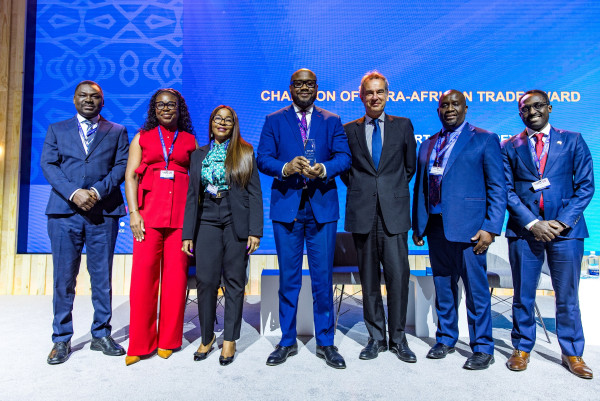
The event culminated in an awards ceremony recognising outstanding contributions to intra-African trade and economic transformation. Tradepass Commodities Limited (Ghana), Chemaf International FZE (DR Congo), and Harvest Group of Companies (Zambia) were honoured for their impact on SMEs and women-led trade enterprises. Bulkstream Limited (Kenya) and Electricidade de Moçambique (Mozambique) received awards for advancing intra-African trade, while Tennant Metals South Africa Pty Ltd was recognised as an Emerging Leader in Trade.

The International Finance Corporation (IFC) was awarded the Climate Finance Leadership Award, while Afreximbank received the Champion of Intra-African Trade Award. The African Development Bank (AfDB) and Africa Finance Corporation (AFC) were celebrated for their roles in economic transformation and infrastructure finance, respectively. The prestigious African Icon Award was presented to IHS Group, Dangote Industries Limited, and MTN Group Limited for their significant contributions to Africa's economic progress.

As the conference ended, Seyi Kumapayi, Executive Director, African Subsidiaries at Access Bank, reaffirmed the institution's commitment to supporting trade finance, fostering regional integration, and championing policies that create an enabling environment for businesses across Africa.

For inquiries:

  • Olakunle Aderinokun 
    olakunle.aderinokun@theaccesscorporation.com

Distributed by APO Group on behalf of Access Bank PLC.

About Access Bank PLC:
Access Bank PLC, a wholly owned subsidiary of Access Holdings PLC, is a leading full-service commercial bank operating through a network of more than 700 branches and service outlets spanning three continents, 24 countries and over 60 million customers. The Bank employs over 28,000 people in its operations in Africa and Europe, with representative offices in China, Lebanon, India, and the UAE.

Access Bank's parent company, Access Holdings PLC, has been listed on the Nigerian Stock Exchange since 1998 (now Nigerian Exchange (NGX)). The Bank is a diversified financial institution which combines a strong retail customer franchise and digital platform with deep corporate banking expertise, proven risk management and capital management capabilities. The Bank services its various markets through three key business segments: Corporate and Investment Banking, Commercial Banking, and Retail Banking. The Bank has enjoyed what is Africa's most successful banking growth trajectory in the last 20 years, becoming one of the continent's largest retail banks.

As part of its continued growth strategy, Access Bank is focused on mainstreaming sustainable business practices into its operations. The Bank strives to deliver sustainable economic growth that is profitable, environmentally responsible, and socially relevant, helping customers to access more and achieve their dreams.

Media files
Access Bank PLC
Download logo
Read moreAccess Bank’s Africa Trade Conference Ignites New Era of Intra-Africa Commerce
13 March 2025

Raw Sewage Is Running Into the Kruger Park From Limpopo Town

Location: News

Phalaborwa residents lay criminal charges against local municipalities to try to end their sewerage problems

Read moreRaw Sewage Is Running Into the Kruger Park From Limpopo Town
11 March 2025

Five Years of Advancing Investment, Collaboration in Africa’s Energy Sector

Location: Business
African Energy Chamber

African Energy Week (AEW): Invest in African Energies, the premier platform for Africa's energy sector, marks its fifth anniversary in 2025, celebrating a legacy of driving investment, fostering partnerships and advancing the continent's energy future. Since its inception, AEW has established itself as the continent's leading energy event, bringing together industry leaders, policymakers, investors and global stakeholders to catalyze development across Africa's oil, gas and renewable sectors.

Over the past five years, AEW has facilitated multi-billion-dollar deals, shaped policy discussions and strengthened regional cooperation. Its inaugural edition in 2021 set a strong foundation, attracting 1,700 delegates, including ministers, global energy executives and financial institutions. The event reinforced Africa's appeal to investors while establishing AEW's strategic goal of eradicating energy poverty by 2030. The event introduced key features such as the African Energy Awards, panel discussions and forums covering the entire energy sector across four venues. Country spotlight sessions provided market insights, while the African Energy Chamber, alongside African energy ministers and a representative from the German government, launched the African Green Energy Dialogue Initiative to accelerate investment in Africa's green energy space.

The 2022 edition of AEW kicked off with opening remarks from esteemed African leaders including the presidents of Uganda and Mozambique, Minister of Hydrocarbons from the Republic of Congo, as well as prominent industry figures from APPO, the European Commission, the International Energy Forum and the private sector. AEW 2022 provided a platform for high-level discussions on investment opportunities, energy policy and strategies for driving Africa's energy transition. In addition to insightful discussions and networking opportunities, AEW 2022 introduced the Just Energy Transition Concert, blending music and culture with energy dialogue to promote investment, development and wider participation across the energy industry.

AEW 2023 saw an unprecedented level of participation, with opening remarks from the presidents of Namibia, Senegal and Uganda, alongside energy ministers from South Africa, South Sudan, Uganda, Equatorial Guinea, the Republic of Congo, Ghana and Mozambique. Representatives from OPEC, APPO, GECF, and key global partners from Russia, the U.S., Europe, and Saudi Arabia further reinforced the event's strategic importance. Afreximbank played a central role, hosting a dedicated deal room and supporting Africa's growing M&A activity. Key agreements signed included Afreximbank's $75 million financing deal with Torxen Energy Resources for Nigeria's PPL 241, a hydrogen exploration agreement between The Gambia and H2 Gambia Limited, and a $60 million term loan for Alphaden Energy & Oilfield Limited to develop a gas facility in Nigeria. Additionally, the African Energy Chamber partnered with the Black Impact Foundation to promote global opportunities for the Black community. The African Farmout Forum connected investors with available blocks, accelerating exploration and partnerships across Africa's oil and gas sector.

In 2024, AEW underscored its role as a catalyst for deal-making and sectoral development. Afreximbank committed over $120 million in financial facilities to support Africa's oil and gas sector, while the Republic of Congo's Société nationale des pétroles du Congo partnered with the State Oil Company of Azerbaijan to modernize the CORAF refinery and the African Farmout Forum returned to highlight available block opportunities for partnership and investment. The event featured a distinguished lineup of speakers and delegations, including energy ministers from South Africa, Namibia, the Republic of Congo, Gabon, Nigeria, Equatorial Guinea and Angola; OPEC and APPO secretary generals; and top executives from Eni, bp, Chevron, TotalEnergies and other leading energy companies.

The fifth edition of AEW promises an even greater focus on investment opportunities and project developments, including 2025/2026 licensing rounds, multi-phase LNG facilities, new refining capacity, drilling and appraisal programs and cross-border pipeline infrastructure. All flagship features will return, including the Big Five Stages of Premium Industry Content, the African Farmout Forum, the Deal Room, the OPEC-Africa Roundtable and more. With capital-intensive projects requiring global financing, AEW 2025 will serve as the premier platform to connect investors with Africa's most promising energy opportunities.

By bringing together key stakeholders, AEW has enhanced Africa's global competitiveness, enabled cross-border partnerships and fostered policy dialogue that advances sustainable energy development. As the conference celebrates five years of impact, its role in shaping the future of Africa's energy sector remains stronger than ever, ensuring that the continent's vast energy resources continue to drive sustainable development and economic transformation.

“The five-year milestone is a testament to AEW's commitment to shaping the future of Africa's energy sector. As the continent continues to navigate the complexities of energy development, AEW remains a vital platform for stakeholders to engage and drive progress across the continent,” says NJ Ayuk, Executive Chairman of the African Energy Chamber, adding “As AEW celebrates five years of impact, its influence on the continent's energy landscape remains unparalleled. The conference has consistently demonstrated its ability to drive sustainable energy development, ensuring that Africa's vast energy resources are harnessed to drive economic transformation and sustainable development.”

AEW: Invest in African Energies is the platform of choice for project operators, financiers, technology providers and government, and has emerged as the official place to sign deals in African energy. Visit www.AECweek.com for more information about this exciting event.

Distributed by APO Group on behalf of African Energy Chamber.

Media files
African Energy Chamber
Download logo
Read moreFive Years of Advancing Investment, Collaboration in Africa’s Energy Sector
9 March 2025

Limpopo a province of boundless opportunity

Location: News

Limpopo a province of boundless opportunity

Limpopo Premier Dr Phophi Ramathuba has called on the Diplomatic Corps to view Limpopo as a province of boundless opportunity.

“Our economy is powered by three key drivers, mining, agriculture, and tourism, each offering lucrative potential for investment and growth,” Ramathuba said.

Speaking at a Diplomatic Corps breakfast in Thohoyandou on Saturday, she said Limpopo was rich in mineral wealth, home to vast deposits of platinum, diamonds and rare earth minerals that are crucial to the modern world.

“The global demand for these resources continues to grow, and Limpopo is well-positioned to be a leading supplier, offering a stable and investor-friendly environment for responsible mining and beneficiation,” Ramathuba said.

Limpopo remains the breadbasket of South Africa, she said, producing a significant portion of the country’s fresh produce, including citrus, avocados and macadamia nuts.

“With fertile lands and a climate suited for year-round production, we are not just feeding the nation, we are feeding the world. 

“We seek partnerships that will drive agro-processing, value addition and sustainable farming practices, ensuring that our agricultural sector remains a pillar of economic resilience.

“Our province is a place where nature, culture and heritage converge. From the breathtaking landscapes of the Kruger National Park to the ancient wonders of Mapungubwe, we offer an unparalleled tourism experience,” the Premier said.

Ramathuba said the hospitality of Limpopo people, combined with world-class facilities, makes the province a premier destination for both domestic and international travelers.

“We therefore invite you to join us in expanding this sector, developing eco-tourism, luxury lodges, and cultural heritage sites that will continue to draw visitors from across the globe.

“Our province is not just an economic hub, it is a strategic gateway to Africa. Limpopo shares borders with Botswana, Zimbabwe and Mozambique, making it a key trade corridor for goods and services moving across the continent. 

“Our transfrontier parks and cross-border infrastructure position us as a link between SADC markets and global investors looking for an entry point into Africa’s growing economies,” the Premier said.

The province hosted the first Outreach Program of the Group of 20 (G20) on Friday. The Premier described it as a historic milestone.

“The G20 represents 85% of global GDP, 75% of global trade, and two-thirds of the world’s population. The outreach was more than just a dialogue, it was a powerful opportunity for the people of Limpopo to understand and engage with South Africa’s G20 Presidency.

“Moreover, it allowed us to showcase our investment potential in mining, agriculture, manufacturing, tourism and the green economy,” she said.

Ramathuba said Limpopo was ready to open doors to investors, to forge new partnerships and to build a future where the province stands as a global leader in industrialisation and sustainable development.

“Limpopo is open for business. Our investment landscape is rich with potential and we stand ready to work alongside you to turn vision into reality,” Ramathuba said.

At a gala dinner on Friday, the Premier told the Diplomatic Corps that Limpopo was a land of immense potential, rich in culture, heritage and economic opportunities.

“We encourage you to consider Limpopo not just as a tourist destination but as a region ripe for investment. Tourism is one of the key drivers of our economy, creating jobs and supporting local communities,” she said.

She said the province believed that investment in infrastructure, particularly in roads, bridges, and logistics would unlock the full economic potential of the province.

“When businesses and farmers have access to reliable roads, they can transport goods efficiently, engage in larger markets, and ultimately grow their enterprises. 

“We invite our esteemed guests and members of the Diplomatic Corps to explore opportunities in infrastructure development, as we seek partnerships that will transform Limpopo into a well-connected economic hub,” she said.

Limpopo is blessed with fertile soil and a climate that supports diverse agricultural activities. 

“We are committed to strengthening our farming industry by supporting small-scale farmers to transition into commercial farming,” the Premier said.  

Friday’s launch of the G20 Outreach Programme forms part of a series of initiatives aimed at fostering wider public dialogue and participation in South Africa's G20 Presidency.

South Africa assumed the G20 Presidency on 1 December 2024.

The G20 is a group of 19 countries, as well as the African Union and the European Union, which defines itself as the premier forum for global economic cooperation. – SAnews.gov.za


Edwin
Sat, 03/08/2025 - 23:04
365 views

Read moreLimpopo a province of boundless opportunity
5 March 2025

My Chaotic Train Journey From Johannesburg to Durban

Location: News

“It is obvious PRASA was not prepared for this journey” says frustrated commuter after long-distance train breaks down several times

Read moreMy Chaotic Train Journey From Johannesburg to Durban
5 March 2025

UK Looks to Deepen Energy Trade, Investment Ties with Africa

Location: News
African Energy Chamber

Trade relations between the UK and Africa are gaining momentum. Last month, UK Minister for Trade Policy and Economic Security Douglas Alexander visited South Africa and Botswana to strengthen trade ties and create opportunities for businesses on both sides. The UK aims to expand trade and investment across the continent, fostering mutually beneficial growth by addressing trade barriers, facilitating exports and supporting trade-focused development programs. With South Africa as the UK's largest trading partner in Africa and set to assume the G20 Presidency, this marks an important moment for deepening economic collaboration.

This builds on the UK's 2019 Economic Partnership Agreement (EPA) with the Southern African Customs Union member states – Botswana, Eswatini, Lesotho, Namibia and South Africa – and Mozambique. This agreement eliminates tariffs and quotas on all goods imported from these countries into the UK, facilitating smoother trade relations and economic cooperation. The EPA aims to bolster economic ties and create a conducive environment for investments, including in the energy sector.

The UK is expanding its engagement across Africa, including in West and North Africa. In February 2024, it signed the Enhanced Trade and Investment Partnership (ETIP) with Nigeria – the first such agreement with an African nation – marking a significant milestone. The partnership builds on a trade relationship valued at £7 billion in the year leading up to September 2023. The ETIP focuses on key sectors such as financial and legal services, fostering economic growth and attracting investment across industries, including energy.

Globeleq, a UK government-backed independent power producer, has been instrumental in advancing gas-powered energy projects across Africa. Alongside its 153 MW Red Sands project in South Africa – set to become the continent's largest standalone battery energy storage system – the company recently acquired a stake in a solar plant at Egypt's Benban Solar Complex and secured $99 million in debt financing for Mozambique's first wind project. Supported by shareholders such as British International Investment and Norfund, Globeleq continues to invest in upgrading existing assets and developing new utility-scale power projects, strengthening Africa's energy infrastructure.

In the oil and gas sector, bp achieved first gas from the Greater Tortue Ahmeyim LNG project offshore Senegal and Mauritania at the start of this year, marking a major step in boosting regional energy production and supply. Shell is advancing its $5 billion Bonga North deepwater project in Nigeria and, alongside bp, has agreed to cover operational costs for the buyer of South Africa's Sapref refinery – a move that could revitalize the country's largest refinery and secure oil supply. Meanwhile, Harbour Energy, one of the UK's largest independent oil and gas companies, is looking to expand into African markets following its acquisition of concessions in Egypt's Nile Delta and the Mediterranean Sea.

The UK is also a major investor in Africa's clean energy sector and a key partner in the Mission 300 initiative to expand electricity access to 300 million people by 2030. Last month, British International Investment (BII) committed £5.3 million to UK cleantech firm MOPO to scale battery rental operations in the Democratic Republic of the Congo, where over 80% of the population lacks electricity. In December 2024, BII and GuarantCo announced a $500 million renewable power deal with South Africa's Etana Energy, providing $100 million in guarantees to support the country's largest energy wheeling framework and unlock new projects. Beyond direct investments, the UK government continues to provide funding and technical assistance for energy infrastructure projects across Africa, aiming to improve energy reliability and efficiency, drive economic growth, and enhance the quality of life for local communities.

As a G20 member, the UK plays a pivotal role in shaping global energy investment strategies, with Africa positioned as a key partner in its trade and energy agenda. The UK's investments in oil and gas, renewables and energy infrastructure align with broader G20 goals of energy security, sustainability and economic growth.

“These initiatives not only strengthen the UK's economic ties with Africa, but also support the continent's transition to cleaner, more reliable energy. With African Energy Week: Invest in African Energies 2025 set to convene global stakeholders, the UK's role in advancing energy partnerships will be in focus, offering a platform to drive further investment, policy collaboration, and infrastructure development across Africa's energy landscape,” says Johnson Kayode Obembe, Director of Sales and Partnerships, African Energy Week.

AEW: Invest in African Energies is the platform of choice for project operators, financiers, technology providers and government, and has emerged as the official place to sign deals in African energy. Visit www.AECWeek.com for more information about this exciting event.

Distributed by APO Group on behalf of African Energy Chamber.

Media files
African Energy Chamber
Download logo
Read moreUK Looks to Deepen Energy Trade, Investment Ties with Africa
5 March 2025

Totalenergies’ Mike Sangster to Headline Invest in African Energy Forum in Paris

Location: News
Energy Capital & Power

Mike Sangster, Senior Vice President for Africa at TotalEnergies, will deliver a keynote address at the Invest in African Energy (IAE) Forum in Paris this May. Sangster will also participate in an exclusive fireside chat, offering critical insights into the company's vision for Africa's energy future, its ongoing projects and the evolving role of oil and gas in the continent's energy mix.

TotalEnergies continues to drive oil and gas development across Africa, with a strong focus on both emerging and mature markets. In Namibia, the company is advancing its Venus-1 discovery, targeting first oil by the decade's end, with an FID expected in early 2026 for a development producing 150,000 barrels per day. TotalEnergies is also exploring additional prospects in the Orange Basin, having recently drilled the Marula-1X and Tabmoti-1X wells. In the Republic of Congo, the company is investing $600 million to expand deepwater production at the Moho Nord field, while in Libya, it plans to complete an onshore exploration project and lead new drilling campaigns in the Waha and Sharara fields in 2025.

IAE 2025 (www.Invest-Africa-Energy.com) is an exclusive forum designed to facilitate investment between African energy markets and global investors. Taking place May 13-14, 2025 in Paris, the event offers delegates two days of intensive engagement with industry experts, project developers, investors and policymakers. For more information, please visit www.Invest-Africa-Energy.com. To sponsor or participate as a delegate, please contact sales@energycapitalpower.com.

Meanwhile, TotalEnergies is expanding its gas processing and midstream infrastructure across Africa, strengthening its role in the continent's evolving energy landscape. In Mozambique, the company is progressing with the Mozambique LNG project, a $20 billion development expected to secure renewed financial backing from export credit agencies. I Uganda, TotalEnergies is gearing up for first oil from its Tilenga field in 2025, with crude transported via the East African Crude Oil Pipeline (EACOP). Once operational, EACOP will be the longest heated crude oil pipeline globally, significantly enhancing East Africa's ability to monetize its hydrocarbon resources and attract further investment into the region's energy sector.

TotalEnergies is also expanding its renewable energy footprint in Africa through strategic investments in solar, wind, hydropower and green hydrogen. The company is advancing its 500 MW Sadada solar project in Libya and acquired Scatec's hydropower portfolio on the continent in July 2024, including the 250 MW Bujagali Hydropower Plant in Uganda and stakes in projects in Malawi, Rwanda and the DRC. In South Africa, TotalEnergies is constructing a 216 MW solar plant with battery storage, along with a 140 MW wind farm and a 120 MW solar facility, set to supply green electricity to Sasol's industrial operations. In Morocco, the company is developing the Chbika project, a 1 GW wind and solar farm designed to produce 200,000 metric tons of green ammonia annually for export to Europe. These initiatives align with TotalEnergies' strategy to integrate renewables into its portfolio while supporting Africa's energy transition.

Sangster's participation at IAE 2025 comes at a pivotal time for Africa's energy sector, as investors and policymakers navigate a shifting global energy landscape. His keynote address and fireside chat will provide valuable perspectives on the role of private investment in African energy, strategies for unlocking new upstream opportunities and how TotalEnergies is adapting to the continent's long-term energy needs.

Distributed by APO Group on behalf of Energy Capital & Power.

Media files
Energy Capital & Power
Download logo
Read moreTotalenergies’ Mike Sangster to Headline Invest in African Energy Forum in Paris
5 March 2025

President Ramaphosa and Mozambican counterpart solidify bilateral ties

Location: News

President Ramaphosa and Mozambican counterpart solidify bilateral ties

President Cyril Ramaphosa and his Mozambican counterpart, President Daniel Chapo, have reaffirmed their commitment to strengthening the diplomatic, political and economic relations between South Africa and Mozambique.

President Ramaphosa received President Chapo for a meeting at his official residence, Genadendal, in Cape Town on Tuesday.

The two leaders held discussions aimed at deepening cooperation and strengthening state institutions. President Chapo was recently inaugurated President of the Republic of Mozambique, which is a close partner and immediate neighbour of South Africa.

Speaking about the significance of the engagement, President Ramaphosa said he came together with his counterpart to continue strengthening the bonds that already exist between the two countries.

“We came together to continue strengthening the bonds between our two countries and in many ways how we can turn a new page of cooperation at a political, diplomatic and economic level and how we can entrench political stability in Mozambique following the elections. And also, how we can create a conducive environment for businesses to operate in both countries,” President Ramaphosa said.

The discussions also focused on Mozambique’s internal political stability, with President Chapo expressing optimism about the ongoing efforts to engage with opposition parties.

“We are here to explain that our situation in Mozambique is good and now we are working. Tomorrow, we will meet with the opposition to sign an agreement on talks we are going to have about the many issues impacting our country including discussions on our electoral laws. We are also here to talk about how we can grow our economy,” President Chapo said.

The relationship between South Africa and Mozambique is rooted in a shared historical struggle against apartheid and colonialism. This bond is further enriched by familial connections and cultural similarities that unite the two nations.

Currently, it is estimated that South African companies have invested between R155 billion and R175 billion, creating more than 42 000 job opportunities.

Several key South African companies recently established the South African Chamber of Commerce, promoting trade and investment between the two nations. Mozambique is also a vital energy security partner for South Africa.

The bilateral meeting gave effect to President Ramaphosa’s commitment in the 2025 State of the Nation Address that South Africa will leverage its international relations to advance the well-being of humanity; strengthen trade relations around the world and leverage strong and diverse global alliances to make South Africa’s economy more resilient. – SAnews.gov.za

DikelediM
Tue, 03/04/2025 - 16:09
64 views

Read morePresident Ramaphosa and Mozambican counterpart solidify bilateral ties
2 March 2025

SA participates in expedition along the African coastline

Location: News

SA participates in expedition along the African coastline

The South African Environmental Observation Network (NRF-SAEON), a long-term environmental observation and research facility of the National Research, is participating in the Around Africa Expedition, the National Research Foundation said.

Led by global ocean exploration non-profit organisations, OceanX and the newly established Ocean Quest, Around Africa Expedition is a pioneering collaborative expedition along the African coastline and is an endorsed action programme of the United Nations Ocean Decade framework (2021-2030) for its contributions to capacity building and scientific understanding of the ocean.

“Its journey began on 30 January 2025 in Moroni, Comoros aboard OceanX’s state-of-the-art research and media vessel, OceanXplorer. The first leg of this expedition, conducted in collaboration with NRF-SAEON, aimed to map and conduct biodiversity surveys of Indian Ocean seamounts on the Madagascan Ridge and Agulhas Plateau,” said the National Research Foundation (NRF).

The guest science team onboard included established and early career researchers from South Africa, Madagascar, Mozambique, Kenya, Tanzania, Comoros, Portugal, Brazil and Saudi Arabia. 

In its statement, the NRF said the measurement of both the physical features and biodiversity at these seamounts will advance scientific knowledge and help to guide informed decisions on conservation and restoration efforts in these remote ocean areas.

“Although these seamounts are located in the high seas, far from any human populations, their contribution towards serving as larval transport corridors are critical and can influence population connectivity across vast ocean distances, supporting ecosystem resilience and replenishment of fisheries in both deep-sea and coastal environments.”

South African benthic ecologist, Dr Lara Atkinson from NRF-SAEON is part of the team leading the exploration of seamounts, including Walters Shoal and the Africana II seamount.

“A seamount is an underwater mountain that rises from the seafloor but does not reach the ocean’s surface. Seamounts are formed primarily by volcanic activity, often at tectonic plate boundaries or hotspots.

“Their height can range from hundreds to thousands of meters, depending on the intensity and duration of volcanic activity. They play an important role in influencing ocean currents, creating nutrient-rich upwelling that supports diverse marine life, including plankton, corals, sponges, fish, and marine mammals,” said Atkinson.

Meanwhile, a group of Cape Town high school learners from Luhlaza, Ocean View, Bulumko, Masiphumelele and Usasazo High Schools had the privilege to join a live-streamed session from OceanXplorer on its journey towards Cape Town, as researchers onboard conducted a Remotely Operated Vehicle (ROV) dive on Walters Shoal seamount.

The curious learners in attendance were fascinated by the live view of the seabed at a depth of nearly 500 m and this inspired them to ask many interesting questions to gain further insights about the science being conducted during the expedition. 

Thabo Mbuyazi, a technician from the South African Institute for Aquatic Biodiversity (NRF-SAIAB), explained the importance of ensuring that all scientific equipment is maintained to the highest of standards to be able to collect data for researchers.

He introduced the learners and educators to the two submersibles onboard the vessel, Neptune and Nadir. These three-person submersibles hosted some of the research team during deployments to 500 m depths during the expedition. -SAnews.gov.za  
 

Edwin
Sun, 03/02/2025 - 12:49
80 views

Read moreSA participates in expedition along the African coastline
  • Previous
  • Page 1
  • Page 2
  • Page 3
  • Page 4
  • Page 5
  • Interim pages omitted …
  • Page 14
  • Next

Copyright © 2026 · MyZA · All Rights Reserved · Powered by Stratlec Online