• Skip to main content
  • Skip to header right navigation
  • Skip to after header navigation
  • Skip to site footer
MyZA

MyZA

News, Directory, Events and Other Stuff

  • Social Media
  • Sport
  • World News
  • Home
  • Submit News
  • Directory
  • Events
  • Stratlec
  • TFSA
  • News
    • APO
    • Today’s Sport News
    • Todays Social Media and Tech Headlines
    • Today’s World News
    • Today’s SA Financial News
  • Contact
You are here: Home / Archives for Namibia

Namibia

28 January 2025

African Energy Ministers, NOCs and Regulators Stand Out Among AEC 2025 Movers and Shakers
Location: News
African Energy Chamber

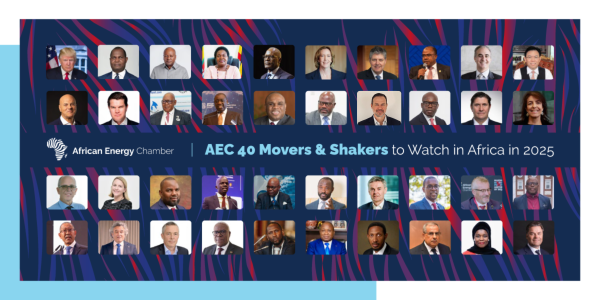
Key African energy ministers, national oil companies (NOCs) and regulators have been recognized for their contributions to advancing hydrocarbon exploration, LNG megaprojects and policy reforms in the African Energy Chamber's (www.EnergyChamber.org) Top 40 Movers and Shakers to Watch in 2025 list. 

Namibia's Tom Alweendo, Minister of Mines and Energy, is at the forefront of the country's emerging oil industry. With first oil expected by 2029 and a pioneering local content policy in place, Minister Alweendo is focused on translating Orange Basin discoveries into tangible development, while balancing investor and community needs. In the Republic of Congo, Bruno Jean-Richard Itoua, Minister of Hydrocarbons, has led milestones including the country's first LNG exports and the Banga Kayo gas project. As Congo prepares for a 2025 licensing round and implements its Gas Master Plan, Minister Itoua's leadership will be critical in positioning the country as a leading energy hub. Equatorial Guinea's Antonio Oburu Ondo, Minister of Mines and Hydrocarbons, is driving efforts to reverse declining oil and gas production. Minister Ondo is tasked with securing investment, implementing the Gulf of Guinea gas pipeline project with Nigeria, and advancing the Yoyo-Yolanda gas project to revitalize the country's energy sector. 

Africa's leading NOCs and regulators were also recognized for their pivotal role in driving energy sector developments in 2025. Godfrey Moagi, CEO of South Africa's National Petroleum Company (SANPC), is spearheading efforts to develop the Brulpadda and Luiperd discoveries, while advancing gas-to-power projects at Saldanha Bay, Richards Bay and Coega LNG terminals. Moagi's leadership will determine SANPC's ability to establish itself as a key player in the country's energy transition. In Angola, Sebastião Gaspar Martins, CEO of Sonangol, is driving a sweeping transformation to restore the company's profitability. With strategic partnerships, operational streamlining and the sale of non-core assets, Sonangol is poised to emerge as a more efficient and competitive entity under his guidance. 

Maxient Raoul Ominga, Managing Director of SNPC, is spearheading initiatives in the Republic of Congo to boost oil production to 500,000 barrels per day. Through the development of key fields and implementation of the Gas Master Plan, Ominga is positioning Congo as a competitive gas player while reducing flaring and diversifying revenue streams. In Ivory Coast, Fatoumata Sanogo, CEO of PETROCI, is driving hydrocarbon development through strategic partnerships with TotalEnergies and Eni. With the Baleine field development on track to significantly boost production by 2025, PETROCI is cementing the country's position as a regional energy hub. 

Sylvia dos Anjos, Head of E&P at Petrobras, is leading the Brazilian NOC's ambitious re-entry into Africa, targeting markets in Namibia, South Africa and Angola. Her vision focuses on leveraging untapped reserves to establish Petrobras as a competitive player and strengthen Brazil's partnership with Africa. In Sierra Leone, Foday Mansaray, Director General of the Petroleum Directorate, is fostering investment in offshore oil and gas exploration. Following the successful conclusion of Sierra Leone's fifth licensing round, Mansaray is focused on turning interest into tangible exploration and production gains. 

As Africa's energy future continues to unfold, the AEC remains committed to recognizing and supporting the leaders who are making transformative impacts in the sector. For the full Africa's Top 40 Movers and Shakers to Watch in 2025 list, visit www.EnergyChamber.org 

Distributed by APO Group on behalf of African Energy Chamber.
Media files
African Energy Chamber
Download logo
Read moreAfrican Energy Ministers, NOCs and Regulators Stand Out Among AEC 2025 Movers and Shakers
28 January 2025

Stronger measures to protect oceans from pollution

Location: News

Stronger measures to protect oceans from pollution

President Cyril Ramaphosa has signed into law the Marine Pollution (Prevention of Pollution from Ships) Amendment Bill, ushering in stronger measures to better protect South Africa’s oceans from ship-related pollution. 

In a statement, The Presidency highlighted the importance of the legislation, which is also a contribution to global efforts to protect the marine environment and sustainable economic exploitation. 

“With a coastline stretching over 3 000 kilometres from Namibia on the Atlantic Ocean to Mozambique on the Indian Ocean, the new legislation is seen as vital to safeguarding the country’s environmental and economic security,” the Presidency said. 

South Africa has a large exclusive economic zone at sea and a marine economy which, in 2022, supported about 400 000 jobs in areas across the existing marine economic sectors of shipping, associated construction, tourism and fisheries.

“The law signed by President Ramaphosa is born out of the recognition that ships can pollute our oceans in various ways, from oil spills to harmful chemical sewage and garbage,” the Presidency said. 

The law amends the Marine Pollution Act to incorporate Annex IV and Annex VI of the International Convention for the Prevention of Pollution from Ships.  

Annex IV regulates the activities for treatment and safe disposal of sewage from ships.  Annex VI is the main global instrument that addresses ship energy-efficiency management and Greenhouse Gas emissions.

The amended legislation further broadens the powers of the Minister of Transport to make regulations relating to, among others, the prevention of air pollution from ships and the prevention of pollution by sewage from ships.

“The new law also increases fines from R500 000 to R10 million for any person convicted of serious offences under the Marine Pollution (Prevention of Pollution from Ships) Act or the international Convention which forms part of South African law,” The Presidency said. – SAnews.gov.za

DikelediM
Tue, 01/28/2025 - 11:21

277 views
Read moreStronger measures to protect oceans from pollution
28 January 2025

SA hosts global circular economy workshop

Location: News

SA hosts global circular economy workshop

Efforts to ensure that South Africa has a clean and healthy environment are under the spotlight at the 7th Global Forum of Cities for Circular Economy (GFCCE) workshop.

The two-day workshop, which is being hosted by the Department of Forestry, Fisheries and the Environment (DFFE) in Johannesburg -- in collaboration with the Centre for Science and Environment -- is aimed at enhancing South-South cooperation for improving the solid waste management ecosystem in the Global South, and building the capacity of nominated officials from 18 African nations.

The workshop, which concludes on Wednesday, is being attended by delegates from Botswana, Cameroon, Côte d’Ivoire, Ethiopia, Eswatini, Ghana, Kenya, Lesotho, Madagascar, Mozambique, Namibia, Rwanda, Senegal, South Africa, Tanzania, Uganda, Zambia and Zimbabwe.

Addressing the opening of the workshop, South Africa's Deputy Minister of Forestry, Fisheries and the Environment, Bernice Swarts, highlighted some of the measures government has adopted to bolster the circular economy, focusing on reusing and recycling materials to ensure a sustainable and secure supply of resources.

“South Africa has instituted various policy instruments and initiatives to advance sustainable development pathways, with circular economy principles firmly embedded in these strategies,” Swarts said on Tuesday. 

These policy instruments include the National Waste Management Strategy, Extended Producer Responsibility Regulations (EPR) for priority waste streams and other economic instruments that include fees, levies and taxes to incentivise or disincentivise behaviour change.

“Extended Producer Responsibility became necessary to be included in South Africa’s policy mix, given the increased generation of waste. EPR shifts seek to shift the responsibility for products from municipalities and consumers, to producers.

“South Africa is under immense pressure and the host city [of the workshop] - the City of Joburg - together with others - does not have sufficient landfill airspace. It is, therefore, necessary to utilise a policy mix to address resource efficiency. It is also necessary that cities are enabled to monitor resource use,” Swarts said.

The Deputy Minister noted that for meaningful progress to be made across the board, strong partnerships are needed.

"Collaboration between government and the private sector is paramount in realising the goals of the waste management hierarchy and facilitating our transition to a circular economy. 

“South Africa remains steadfast in its commitment to strengthening these partnerships and advancing the shared objectives of the GFCCE. This collaboration benefits our governments through reduced spending and creates green opportunities,” she said.

Since its establishment in 2021, the GFCCE has expanded to a community of 22 Member States, with 18 countries from Africa. This platform is dedicated to advancing circular economy principles in alignment with national policies and priorities. 

Cities account for 75% of natural resource consumption and 70% of global greenhouse gas emissions. 

Swarts said more people will continue to migrate to cities to seek better opportunities and it is necessary that cities become resilient in resource efficiency and reduce their environmental footprint. - SAnews.gov.za

nosihle
Tue, 01/28/2025 - 13:05

25 views
Read moreSA hosts global circular economy workshop
24 January 2025

Trump’s Sudden Suspension of Foreign Aid Puts Millions of Lives in Africa at Risk

Location: News

Imprecise executive order leaves health providers dependent on PEPFAR funding unsure if or when money will arrive

Read moreTrump’s Sudden Suspension of Foreign Aid Puts Millions of Lives in Africa at Risk
20 January 2025

NPA seizes R52.5m in cross border strike against illegal mining

Location: News

NPA seizes R52.5m in cross border strike against illegal mining

The National Prosecuting Authority’s Asset Forfeiture Unit (AFU) – working in collaboration with the South African Financial Intelligence Centre (SA-FIC), the Namibian Financial Intelligence Centre (Nam-FIC) and the Namibian Prosecutor-General (Nam PG) office has seized some R52.5 million held in eight Namibian bank accounts.

NPA Mpumalanga Regional spokesperson Monica Nyuswa said the money is allegedly linked to intentions to commit or proceeds from “massive alleged illegal coal mining” in the province’s Carolina area.

“On 2 December 2024 the SA-FIC, in collaboration with their Nam-FIC counterparts, obtained a Namibian FIC temporary freeze upon the funds of Jacobus Hosea Jordaan and his wife Elza Jordaan… to the value of R50 205 872.

“On 30 December 2024 the Nam PG’s office managed to obtain a Preservation of Property order in the Namibian High Court, Windhoek in respect of the abovementioned R50 205 872 on the basis that the money… represents the proceeds of, and/or was used as instrumentalities, to commit the abovementioned massive alleged illegal coal mining and other offences, including money laundering in the Carolina area,” she said.

Nyuswa added that last week, a second preservation of property order was granted to the value of R2 285 500 in the Namibian High Court “in respect of two further Namibian bank accounts in the name of Reinet Binneman," the sister of Elza Jordaan.

“Jacobus Jordaan and his wife Elza Jordaan are among the main accused in the Carolina illegal coal mining case that was transferred to the Mbombela High Court on 6 December 2024 to November 2025 for trial. 

“The illegal financial benefit obtained by the accused from the illegal coal mining and other offences in Mpumalanga allegedly amounts to at least R2 billion,” Nyuswa explained.

She described cooperation between the two countries’ law enforcement officials as “remarkable”.

“There was remarkable cooperation and hard work during the December festive season between the abovementioned Namibian and the South African law enforcement agencies to obtain the abovementioned Namibian High Court seizure orders.

“Both Namibia and South Africa were grey listed a few years ago by the Financial Action Task Force (FATF) for, amongst others, failing to sufficiently combat money laundering. The abovementioned two Namibian seizure orders will assist enormously in getting both countries off the FATF grey list,” she said.

The dedication, enthusiasm and commitment of the abovementioned law enforcement agencies also make a huge difference in combating transnational crime in the two countries. 

Digging in

Nyuswa said that as early as November 2023, police and law enforcement had already pounced on alleged illegal mining activities in the Carolina – leading to arrests and seizures of property.

“On 15 November 2023 the NPA AFU in Mpumalanga, in collaboration with a special illegal mining unit in the [SAPS], obtained provisional preservation of property order in the Mbombela High Court upon, amongst others, a farm in the Carolina district, stockpiles/heaps of coal in two separate areas, heavy duty mining machinery, equipment and motor vehicles as well as the washing plant machinery and all movable buildings, machines, equipment and motor vehicles used at Droog Valley farm Barrel Coal Processing and Washing Plant near Carolina, Mpumalanga area.

“The assets were seized on the basis that it was, on reasonable grounds, believed to be, used as instrumentalities to commit various illegal large-scale coal mining and environmental offences at the farm in the Carolina area, and/or that the assets are reasonable grounds to believe the proceeds of unlawful activities, and/or represents the proceeds of unlawful activities, namely the large-scale illegal coal mining and environmental offences. 

“It was the largest seizure of its kind ever in South Africa,” Nyuswa said.

A further provisional restraint of property order was granted to law enforcement against assets to the value of some R1 billion.

“Jacobus and his wife, Elza Jordaan, and 15 other persons and companies are currently standing trial in the Mbombela High Court for multiple offences, Including illegal coal mining, environmental offences, theft, corruption, money laundering etc. 

“Their criminal trial was postponed to the Middelburg High Court for trial from 3 to 28 November 2025,” she added.

The spokesperson said the prosecutorial body remains committed to supporting the work of law enforcement agencies in rooting out criminality.

“Illegal mining activities, coupled with money laundering, in South Africa, are a huge concern for the government, as also pronounced by the State President who last year deployed the South African Defence Force to assist the SAPS in eradicating the illegal mining activities and syndicates. 

“Illegal mining amounts to the plundering of the most valuable natural resources of South Africa to the detriment of the fiscus and the broader public. It also destroys the beautiful South African natural environment and bona fide farming activities. 

“The NPA is committed to assisting the SAPS, the South African government, and governments of foreign jurisdictions to eradicate this scourge of illegal mining and money laundering activities,” Nyuswa concluded. – SAnews.gov.za

NeoB
Mon, 01/20/2025 - 13:39

290 views
Read moreNPA seizes R52.5m in cross border strike against illegal mining
17 January 2025

What to Expect at African Energy Week 2025

Location: Business
African Energy Chamber

Africa is on the precipice of accelerated growth, with major energy projects and untapped resources creating an attractive environment for project developers and financiers. With the continent's energy demand projected to more than double by 2050 and fossil fuels expected to comprise up to 60% of the energy mix by 2040, there lies a strategic opportunity for companies to invest, energy portfolios to grow and countries to reap the rewards of their oil, gas and energy resources.

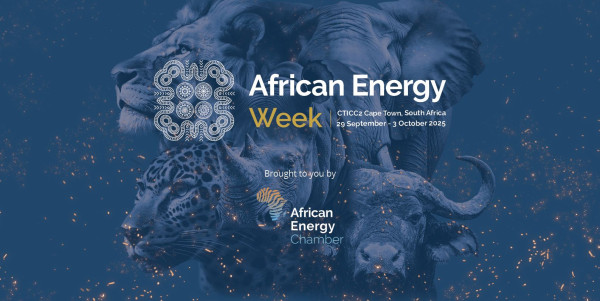
Returning for its next edition from 29 September to 3 October at the Cape Town International Convention Center, the African Energy Week (AEW): Invest in African Energies conference serves as the leading platform for deal-making, energy partnerships and investments. Building on the success of its previous editions, the event offers a platform for capital and technology to be directed towards African energy projects. In 2025, the event returns bigger and better than before.

Greater Focus on Projects, Emerging Opportunities

With 2025 promising to be an impactful year for Africa's energy sector, the AEW: Invest in African Energies conference will further catalyze development by connecting investors to African projects. On the project front, a slate of major developments is either progressing or will begin operations. These include the second phase of the Congo LNG project; the full operation of the Greater Tortue Ahmeyim development in Senegal/Mauritania; the launch of the Cabinda Refinery in Angola; appraisal drilling in Namibia's Orange Basin, and many more. Strategic developments such as the East African Crude Oil Pipeline, the Mozambique LNG project and exploratory drilling continent-wide require capital, highlighting emerging opportunities for global financiers.

Additionally, Africa's 2024/2025 licensing rounds signal a renewed drive to position the continent as a leading frontier. In North Africa, Libya plans to launch a bid round featuring 22 blocks, Egypt plans to host an international bid round for 12 exploration blocks while Algeria will launch a tender featuring 6 onshore blocks. In West Africa, Mauritania, Nigeria and Liberia will launch licensing rounds, while in Southern Africa, Angola will offer 9 blocks for exploration, Namibia is rolling out a new open-door policy and Tanzania will promote 24 oil and gas blocks in March 2025. These opportunities will be on display at AEW: Invest in African Energies 2025, creating an in-roads for new players.

Uniting Stakeholders to Make Energy Poverty History by 2030

As the largest energy event on the continent, AEW: Invest in African Energies convenes energy, finance and policy stakeholders from the global and African markets. From presidents and ministers to explorers and infrastructure developers to financiers and technology leaders, the event serves as the premier event for the African energy sector. This year, the event offers an expanded program, covering strategic topics such as frontier exploration, refining and processing, power development and connectivity, green hydrogen, regulation and skills development. Speakers will not only address the pressing challenges impacting the continent's energy progress but showcase the range of investment opportunities available across the continent. AEW: Invest in African Energies is where African governments meet, international energy firms sign deals, and local companies drive the next wave of energy development in Africa.

Collaborating for a Just Energy Future

While the world prioritizes the development of renewable energy over traditional energy sources, African countries seek to drive a just energy transition that incorporates a variety of energy solutions. AEW: Invest in African Energies not only promotes a just transition in Africa but offers a platform where global and African energy stakeholders can forge a new pathway for the continent. Discussions in Cape Town will center on strategies for accelerating industrialization, how technologies such as gas-to-power and LNG can reduce emissions while bolstering energy security, and the impact of integrated energy systems on African economies. By driving a narrative of inclusivity, AEW: Invest in African Energies fosters collaboration, partnerships and cross-sector investments.

Policy Alignment, Global Engagement

To attract fresh investment in African energy projects, a slate of countries has enacted policy reforms to strengthen transparency and investor certainty. Nigeria signed the Petroleum Industry Act into law; South Africa launched a new petroleum company; the Republic of Congo is preparing to launch a Gas Master Plan; while Algeria has strengthened regulation to attract local participation in oil and gas projects. In conjunction with improved fiscal terms and rules of engagement, these policies have significantly enhanced the business environment in Africa, making 2025 a strategic year to invest in African energy.

For more information about AEW: Invest in African Energies 2025, visit www.AECWeek.com.

Distributed by APO Group on behalf of African Energy Chamber.
Media files
African Energy Chamber
Download logo
Read moreWhat to Expect at African Energy Week 2025
16 January 2025

Coca-Cola Beverages Africa Recognised as a Top Employer in Africa

Location: Business
Coca Cola Beverages Africa

Coca-Cola Beverages Africa (CCBA) (www.CCBAGroup.com) has been certified as a Top Employer in Africa for 2025, based on the results of the Top Employers Institute's HR Best Practices Survey.  

CCBA was certified as a Top Employer in Africa, and its operations in Ethiopia, South Africa, Tanzania and Uganda achieved this accolade at country level.  

“We have a people-first culture that ensures unparalleled professional development for our valued employees,” said CCBA Chief People and Culture Officer Natasa Prodanovic. 

“Our aim is to nurture potential, attract and retain high-performing talent, and invest in growth. 

“CCBA's continued market success and status as the largest bottler of beloved Coca-Cola brands on the continent are other key differentiators. 

“We empower individuals to thrive and our certification as a Top Employer reflects the strength of our commitment to being an employer of choice for professionals with a desire to learn and grow. 

“Our people are driven to make an impact, are passionate about learning and committed to caring for others. 

“Congratulations to our leaders and colleagues, and thank you for making this recognition possible,” Prodanovic concluded.  

Distributed by APO Group on behalf of Coca Cola Beverages Africa.

ISSUED BY: 
Wendy Thole-Muir 
Head: Reputation and Communication  
Coca-Cola Beverages Africa  
Tel: +27 83 795 8524 
Email: WThole-Muir@ccbagroup.com 

Follow us on:
LinkedIn : https://apo-opa.co/4jfwP95

ABOUT CCBA:
CCBA is the 8th largest Coca-Cola bottling partner in the world by revenue, and the largest on the continent. It accounts for over 40% of all Coca-Cola products sold in Africa by volume. With over 18,000 employees in Africa, CCBA services more than 720,000 customers with a host of international and local brands. The group was formed in July 2016 after the successful combination of the southern and east Africa bottling operations of the non-alcoholic ready-to-drink beverages businesses of The Coca-Cola Company, SABMiller plc and Gutsche Family Investments. CCBA shareholders are currently: The Coca-Cola Company 66.5% and Gutsche Family Investments 33.5%. CCBA operates in 15 countries, including its six key markets of South Africa, Kenya, Ethiopia, Uganda, Mozambique and Namibia, as well as Tanzania, Botswana, Ghana, Zambia, the islands of Comoros and Mayotte, Eswatini, Lesotho, and Malawi.  

Learn more at  https://www.CCBAGroup.com 

Media files
Coca Cola Beverages Africa
Download logo
Read moreCoca-Cola Beverages Africa Recognised as a Top Employer in Africa
8 January 2025

USA U19 Crowned Cubs Week Champions

Location: Sport

STELLENBOSCH: The USA U19 Men’s cricket team spoiled the Southern Superstars’ party, upsetting the previously undefeated hosts in the Cubs Week...

Read moreUSA U19 Crowned Cubs Week Champions
7 January 2025

Cubs Week Day 4 Wrap – Superstars to Face USA in Cubs Week Final

Location: Sport

STELLENBOSCH: The final of the 2025 Cubs Week will be a rematch of the opening day clash between the hosts, the...

Read moreCubs Week Day 4 Wrap – Superstars to Face USA in Cubs Week Final
6 January 2025

Cubs Week Day 2 Wrap – Superstars and Legends Remain Unbeaten as Cubs Week Heats Up

Location: Sport

STELLENBOSCH: Southern Superstars and Western Legends are the only two unbeaten sides left after the second day’s play of Cricket South...

Read moreCubs Week Day 2 Wrap – Superstars and Legends Remain Unbeaten as Cubs Week Heats Up
6 January 2025

Cubs Week Day 1 Wrap: Namibia and USA Join the Action as Cubs Week Kick-Offs in Stellenbosch

Location: Sport

STELLENBOSCH: Namibia and the USA U19 teams added an exciting international flavour to the 2025 Cubs Week, Cricket South Africa’s prestigious...

Read moreCubs Week Day 1 Wrap: Namibia and USA Join the Action as Cubs Week Kick-Offs in Stellenbosch
16 December 2024

Surging Investment, Waves of Change

Location: News
African Energy Chamber

By NJ Ayuk, Executive Chairman, African Energy Chamber (https://EnergyChamber.org/).

I've said for years that African energy is a vital investment. Backers clearly agree — to the tune of USD47 billion. That's how much capital expenditure (capex) 2024 saw in African oil and gas, showing a 23% increase from last year. Better yet, we expect growth to continue through the end of the decade.

This capex activity is a welcome sign that energy majors are deepening their long-term interests in Africa. And as our 2025 State of African Energy report details, their momentum has created unique opportunities for local communities, indigenous companies, and national oil companies (NOCs) from other continents.

Emerging Players

While the majority of 2024's capex was driven by established producers like Angola and Nigeria, emerging players are making noise in the industry. Take Senegal, which saw its first offshore oil production this year. Ghana, following a five-year slump, increased oil output during 2024 by 10% and gas output by 7%.

Exploration hotspot Namibia also deserves a special mention: The Southern African nation aims todrill over 12 offshore wells next year, begin production by 2029, and become one of the top-five African producers by the 2030s. Good work for a nation that only discovered its enormous reserves in 2022! I frequently cite Namibia because it proves that a complete newcomer can attract serious foreign investment with smart, swift policy changes — and poise itself to shake up the energy industry.

Increased Exploration

An exciting question remains: Just where will we find the next Namibia Thanks to a resurgence in exploration, another hotspot may be around the corner. There were 1,060 wells drilled in Africa this year — more than any time since 2015. Africa has also become a global leader in drilling high-impact wells, which have the potential to significantly increase overall reserves. That strategy is already paying off: Notable 2024 finds include Namibia's Mopane complex, which holds approximately 10 billion barrel of oil equivalent (boe) – “one of the world's largest offshore finds,” according to Offshore Magazine. Even while global exploration as a whole remains stagnant, Africa is stepping up to meet growing energy demands.

When exploration is successful, new fields follow. We also expect to see African greenfield spending exceed brownfield by 10% by 2030. These capex trends all demonstrate that investors won't limit themselves to mature fields: Eyes are on fresh locations, fresh facilities, and fresh opportunities in Africa.

A Gas Future

As we highlight in our 2025 report, one of those opportunities is natural gas. Africa holds nearly 18 trillion cubic meters of reserves, which will prove essential for a just energy transition as natural gas can provide significant near-term emissions reductions while fostering energy security and economic development. Global demand for this clean-burning resource is also growing, particularly in Asia. That's why I'm glad to see a greater emphasis on developing natural gas resources. In 2023, capex spending on natural gas was about 30%, but this is projected to grow 10% by 2030. It's another sign that more investors are thinking in the long term about Africa, and interested in being part of a just energy transition.

Take Senegal, where the Greater Tortue Ahmeyim gas field will begin production next year. A Final Investment Decision is also expected in 2024 on Yakaar-Teranga. The West African nation is another fantastic example of how operator-friendly policies, political stability, and vast reserves can attract significant foreign investment: I'm excited to see Senegal transform itself from an oil importer to a gas exporter.

M&A Opportunity

The past year saw a huge increase in divestment by O&G majors: Large IOCs are aggressively streamlining their African portfolios. As a rule, they're selling mature, high-emission, and high-cost assets. While large divestments often signal trouble, they're actually creating some promising changes for African O&G.

For one, Asian and Middle Eastern nations are purchasing more assets: Dubai, Qatar, the U.A.E., Malaysia, and Chinese NOCs acquired stakes in Egypt, Mozambique, Namibia, Kenya, and South Africa this year. As global demand for energy grows, particularly in Asia, I'm glad to see these nations looking to Africa for long-term solutions.

Foreign divestment also matters because it's creating opportunities for indigenous companies. Thanks to a recent Shell acquisition, Aradel Holdings became Nigeria's most valuable oil company (https://apo-opa.co/3ZVzGwh). In Angola, IOC Afentra has acquired Azule's (a joint BP and Eni venture) assets and plans to dramatically increase the nation's overall output.

“Having the big players sell to independents is the future,” oil trader Trafigura said in a statement.

It's a promising pattern: Majors sell off mature assets and use the capital to invest in fresh fields and facilities. Independent foreign or indigenous companies use their acquired assets to expand but are spared the expense of building facilities from the ground up. These smaller companies are also strongly motivated to further develop and reduce emissions from these existing fields — an environmental and financial win for everyone.

The Angolan government clearly agrees, encouraging regional players with tax incentives and reduced government profit shares. It will be truly fascinating to watch this industry shakeup in Nigeria and Angola, which have been dominated for decades by majors.

It's no secret that Africa needs O&G majors to stay: They drill over half of our exploration wells and hold a quarter of the continent's equity production. However, I'm thrilled to see indigenous companies growing and harnessing these assets to their fullest extent.

Conclusion

Just what prompted this surge in African capex? A great deal of credit goes to common sense policy changes in nations such as Namibia, Senegal, Mauritania, Egypt, and Angola. We can also point out that the COVID-19 pandemic artificially slowed capex for several years, so an uptick was inevitable once the world opened up again. 

However, I believe a lot of it comes down to economic reality: Global energy needs are rising. Africa has vast, untapped resources. I urge all parties to continue building a thriving energy industry that takes Africa – and the world – into the next century.

For further insights, check out our 2025 State of African Energy report here (https://apo-opa.co/3ZHldTr).

Distributed by APO Group on behalf of African Energy Chamber.

Media files
African Energy Chamber
Download logo
Read moreSurging Investment, Waves of Change
9 December 2024

Protest Opposite Holocaust and Genocide Centre in Cape Town: Call for Ceasefire in Gaza

Location: News

The picket marked the International Day of Commemoration and Dignity of the Victims of the Crime of Genocide

Read moreProtest Opposite Holocaust and Genocide Centre in Cape Town: Call for Ceasefire in Gaza
9 December 2024

Water transboundary partnerships benefit SA  

Location: News

Water transboundary partnerships benefit SA  

Water and Sanitation Deputy Minister David Mahlobo says South Africa continues to enjoy transboundary partnerships on shared water resources with neighbouring countries in the Southern African Development Community (SADC) region.

Mahlobo highlighted some of the partnerships during a session with Ambassadors accredited to South African Missions, held in Centurion on Friday.

These include, among others, the current implementation of the R42 billion Phase Two of the Lesotho Highlands Water Project (LHWP). The project includes the construction of the new Polihali Dam and associated infrastructure to provide additional water to Gauteng and parts of the Free State, Mpumalanga, North West, and Northern Cape provinces.

READ | Lesotho Highlands Water Project Tunnel maintenance on schedule

South Africa and Zimbabwe have also signed an agreement for the transfer of treated water from the Beitbridge Water Treatment Works in the Republic of Zimbabwe.

Mahlobo said the transfer of treated water is a medium-term solution to address water supply challenges in the area.  
“The two countries have signed an agreement for the transfer of treated water from Beitbridge Water Treatment Works in the Republic of Zimbabwe to Musina Town in the Republic of South Africa,” Mahlobo said.  

Another partnership includes the mobilisation of resources between South Africa and Namibia for the feasibility study of the Noordoewer/Vioolsdrfit Dam.

South Africa and Netherlands Governments have also undertaken to forge more cooperation opportunities in the water and sanitation sector in efforts to strength the existing relations between the two states.

“Both the countries have signed a Blue Deal agreement which aims to support water management by exchanging knowledge and experiences, assisting the national, regional and local organisations, and cooperate with key stakeholders,” Mahlobo said.

As part of diversifying the water mix, the Deputy Minister highlighted that government was increasingly making use of groundwater as one of the viable options to augment the current available water and increase supply.

“We are looking at using groundwater which remains untapped. Although it has also been threatened by climate change and the levels of evaporation, we are looking at utilising it more.

“We are looking forward to enhancing our technological partnership around groundwater and its high level of treatment. We should use groundwater optimally because it is not of inferior quality, but it is also a source of water,” he explained.

Held under the theme: “Celebrating 30 years of sustainable partnership, strengthening partnerships with international partners and forging a shared future”, the meeting hosted by Water and Sanitation, aimed to brief the Ambassadors on South Africa’s state of water sector .

This also includes water reforms currently underway and fortifying international collaboration and capacity-building endeavours in the water sector.

Among the countries represented at the meeting included China, Japan, Cuba, Egypt, the Kingdom of Eswatini and the Kingdom of Lesotho, Namibia, Zimbabwe, Mozambique, Botswana, Senegal, Kingdom of the Netherlands, Kingdom of Sweden, Kingdom of Denmark, and Finland. – SAnews.gov.za   


GabiK
Mon, 12/09/2024 - 11:42

146 views
Read moreWater transboundary partnerships benefit SA  
9 December 2024

International communities commended for supporting SA’s water sector

Location: News

International communities commended for supporting SA’s water sector

Water and Sanitation Deputy Minister David Mahlobo has acknowledged international communities for supporting South Africa’s water and sanitation sector since the dawn of democracy 30 years ago.

Mahlobo was speaking at a session with Ambassadors accredited to South African Missions in Centurion on Friday.

The meeting was hosted by the Department of Water and Sanitation under the theme: “Celebrating 30 years of sustainable partnership, strengthening partnerships with international partners and forging a shared future”.

The meeting aimed to brief the Ambassadors on the state of South Africa’s water sector and water reforms, and to fortify international collaboration and capacity-building endeavours in the water sector.

Countries represented at the meeting included China, Japan, Cuba, Egypt, the Kingdom of Eswatini and the Kingdom of Lesotho, Namibia, Zimbabwe, Mozambique, Botswana, Senegal, the Kingdom of the Netherlands, the Kingdom of Sweden, the Kingdom of Denmark and Finland.

Mahlobo acknowledged the international community’s support, which helped South Africa to achieve the democracy it enjoys today.

He commended the international community for their contribution to the country’s water and sanitation sector, which has guaranteed a sustainable and equitable water supply to all South Africans.

He said all the countries played a big part in various degrees to assist South Africa in its struggle for democracy.

“Your unwavering support did not go unnoticed, and your partnership continued to ensure that South Africa provided equitable and sustainable water supply, and dignified sanitation to all its citizens. We therefore would like to thank you for the notable contributions you have made,” Mahlobo said.

He encouraged partnerships between South Africa and the countries to continue to grow to ensure water security in the Southern African Development Community (SADC) region and the rest of the continent.

“When you engage with us here as the Department of Water and Sanitation, we should strive to maintain our partnership and forge ahead for the next 30 years, also taking into account the advances we have made.  

“As our partners, do not be polite with us, but engage with us if there are matters of policy that make it difficult for your participation. You need to raise matters that you don’t understand because we are an open-minded water sector,” the Deputy Minister said. 

The Ambassadors assured South Africa of their continued partnership in the water sector.

The Dean of the Diplomatic Corps in South Africa and the Eritrean Ambassador to South Africa, Salih Omar Abdu, said the partnerships have guaranteed water security and have ensured access to clean water by most of the countries in the continent. 
   
“As we deliberate on the partnership with South Africa, it is important to adapt to a new perspective on the role that water plays in our regional and international agendas. Water is not only a resource to be consumed, but it is also a catalyst in economic growth, social equality and environmental sustainability in the region,” Abdu said. – SAnews.gov.za

GabiK
Mon, 12/09/2024 - 10:55

45 views
Read moreInternational communities commended for supporting SA’s water sector
5 December 2024

Cabinet congratulates Namibian President-elect Netumbo Nandi-Ndaitwah

Location: News

Cabinet congratulates Namibian President-elect Netumbo Nandi-Ndaitwah

Cabinet has congratulated the Namibian President-elect Netumbo Nandi-Ndaitwah for securing a victory in the Namibian Presidential election and becoming the first female President of the country.

Addressing a media briefing earlier on Thursday, following a Cabinet meeting in Cape Town, Minister in the Presidency Khumbudzo Ntshavheni said Cabinet commended the people of Namibia for coming out in their numbers to vote in the elections and called on everyone to allow the Electoral Commission of Namibia space to finalise the results of the Presidential and National Assembly elections.

The Electoral Commission of Namibia said it was overwhelmed by the high number of people who turned out to vote.

Netumbo Nandi-Ndaitwah, a 72-year-old veteran of the South West Africa People’s Organisation, cast her ballot in the capital Windhoek, as polls opened with long queues outside many polling stations in the sparsely populated country. – SAnews.gov.za

Edwin
Thu, 12/05/2024 - 13:25

285 views
Read moreCabinet congratulates Namibian President-elect Netumbo Nandi-Ndaitwah
4 December 2024

Pan-African Legal Group CLG Announces Appointment of Leon Van der Merwe as Partner

Location: Business
CLG

A distinguished Attorney of the High Court of South Africa with over 12 years of legal expertise, specializing in Corporate Law, Commercial Law, Litigation and Regulatory Compliance Leon Van der Merwe has joined pan-African legal and advisory group CLG (www.CLGGlobal.com) as a Partner.

A distinguished Attorney of the High Court of South Africa, Van der Merwe brings over 12 years of experience in Corporate Law, Commercial Law, Litigation and Regulatory Compliance. His areas of specialization include Contract Law, General and Commercial Litigation, Insolvency, Compliance, Property Law, Regulatory Law, Competition Law, Company Law and Risk Management.

Throughout his career, Van der Merwe has provided strategic counsel to national and international corporations, as well as African Governments, across various industries such as forestry, mining, construction, engineering, and retail. He holds an LLB Degree (Cum Laude) from the University of Pretoria.

“Leon's promotion to Partner is a reflection not only of his exceptional professional skill but also of the trust he has earned from our clients, colleagues, and partners. His dedication and hard work are unmatched, and he exemplifies the core values that define CLG,” said Zion Adeoye, CEO and Managing Partner of CLG. “I am thrilled to welcome him as Partner and look forward to seeing his leadership continue to shape our journey. His elevation is more than deserved, and I know he will bring even greater value to our firm and our clients in this role.”

Oneyka Cindy Ojogbo, CLG Deputy Managing Partner, added, "It gives me great joy to welcome my friend and colleague into the partnership at CLG. His dedication to the firm and unwavering commitment to our clients have been the bedrock of his practice, and I couldn't be more excited to see him take on this well-deserved role. His leadership and passion will be invaluable as we continue to grow together and build Africa's largest professional service firm."

Mr. Van der Merwe's appointment reinforces CLG's commitment to providing impactful and innovative legal solutions across Africa. His expertise will enhance the firm's service offerings, further solidifying its position as a leading pan-African legal and advisory group.

Distributed by APO Group on behalf of CLG.

About CLG:
CLG, a leading pan-African legal, tax and business advisory firm, has established offices in Germany, Nigeria, South Africa, Republic of Congo, South Sudan, Mauritius, Ghana, Cameroon, Namibia and Equatorial Guinea, amongst others, and is the first Africa focused professional service firm listed on the German stock exchange.

This expanded footprint enables CLG to deliver seamless professional services, facilitate cross-border transactions and provide expertise in diverse jurisdictions and sectors, while fostering strong in-country relationships.

Media files
CLG
Download logo
Read morePan-African Legal Group CLG Announces Appointment of Leon Van der Merwe as Partner
2 December 2024

The Fierce Urgency of African Energy Banks

Location: News
African Energy Chamber

By NJ Ayuk, Executive Chairman, African Energy Chamber (https://EnergyChamber.org).

For more than a year, the African Energy Chamber (AEC) has been pushing back against steadily building pressure to halt new foreign investments in Africa's oil and gas industry.

To prevent catastrophic climate change, environmental organizations, financial organizations, and governments across Europe and North America have insisted that developing nations, including those in Africa, must immediately transition from fossil fuel production and usage to renewable energy sources like solar, wind, and hydrogen. Mind you, the majority of those making these demands are based in industrialized nations that were built on fossil fuels — oil and gas fueled their economic engines — yet they are unwilling to allow less developed nations to use fossil fuels to the same end. Even more troubling, the countries these groups are taking aim at have a wealth of natural resources under their feet, resources that can be monetized and used to build a better future.

We have explained, over and over, why African countries, businesses, and communities still need support from international oil companies (IOCs), foreign governments, and investment institutions for oil and gas projects. IOCs, for example, play an important role in knowledge sharing and helping Africans build valuable job skills. What's more, foreign oil and gas investments create opportunities for revenue that can be used to build and improve energy infrastructure — for both fossil fuels and renewables. And, by supporting natural gas projects, investors create a path for gas-to-power projects that help minimize the continent's widespread energy poverty.

In July 2021, when it became apparent that reasoning was not yielding results, the chamber went so far as to employ the same tactics the international community used against our members. We called for boycotts against financial institutions that discriminated against the African oil and gas industry.

But the calls to stop financing African oil and gas have only grown louder and more insistent. Most recently, during the 2021 United Nations Climate Change Conference (COP26) in Glasgow, more than 20 countries and financial institutions pledged to stop public financing for overseas fossil fuel projects. Europe then decided that gas was clean for Europe so it will be financed but for Africa, gas is dirty and will receive no funding. The United Kingdom and the European Union have also reportedly joined in the chorus of voices demanding a ban against developed nations providing subsidies for fossil fuels.

Other expectations for this year's conference include calls for member states to formally commit to triple their renewable energy capacity and double their energy efficiency across the board by 2030.

The thread tying all these pledges together, with respect to our work at the AEC, is that none of them bode very well for any future success stories from the African energy economy.

For those of us who care about Africa's oil and gas industry, it's time to face facts: We need to find a way to save it ourselves. The AEC is calling upon African states and the private sector to fund the African Energy Bank, an institution which is focused on funding African energy projects. The African Petroleum Producers Organization (APPO) and the African Export-Import Bank (Afreximbank) have paved the way. The idea is to create funding sources for all types of African energy — from oil and gas exploration to solar and hydrogen operations — so that projects will not be dependent on foreign support.

We can do this, and we must. Too much is at stake. We can't afford not to capitalize on recent discoveries such as the light oil found offshore Angola, the oil in Namibia's Orange Basin, the shale gas in South Africa's Karoo Basin, or the oil and natural gas off the coast of Côte d'Ivoire. Those are only a few of the important discoveries that occurred recently, and each represents critical opportunities for everyday Africans.

You may be wondering if African energy banks are a realistic goal. How can a continent that is struggling to bring many of its people out of poverty raise capital for energy projects? I believe it can be done. To begin with, African governments can set aside a percentage of their oil and gas revenues for new project funding. In its report, Africa Energy Outlook 2021, Rystad Energy projected that African governments' earnings from royalties, profit oil, and other taxes in 2021 would reach USD 100 billion. Even 1% of that amount would produce USD 1 billion dollars.

We can also raise capital by investing African pension funds in African energy projects. According to Cape Town-based investment firm, RisCura, local pension funds collectively manage around USD 450 billion of assets in sub-Saharan Africa, and they are actively looking for new places to invest. Why not encourage them to add oil, gas, and renewables projects to their list? Investing pensions in the energy sector is hardly a new practice. Some of America's largest pension funds are invested in fossil fuel producers, and an increasing amount of pension funds around the globe are investing in green energy projects.

Our options for raising capital don't end there. We should also seek the support of wealthy Africans who want to invest in a better African future. As of December 2023, total private wealth in Africa totaled approximately USD 2.3 trillion. That's not even including the African diaspora.

In May 2022, Afreximbank signed an agreement with APPO on the joint establishment of a special multi-lateral financial institution (MFI) – the African Energy Bank – to provide support for the shift away from fossil fuels. The agreement calls for APPO's member states to provide equity for the new institution and serve as its founding members, with Afreximbank acting as co-investor and providing organizational support.

The new bank will be able to reach more countries than either APPO or Afreximbank could do on their own, as their rosters are not identical: APPO has 15 member states, while Afreximbank has 51 and there is a significant amount of overlap, as Algeria and Libya are the only APPO members that are not also Afreximbank members. But the point remains that if the two institutions join forces, their combined efforts will go further.

Professor Benedict Oramah, the President of Afreximbank, explained it as follows in May 2022: “For us at Afreximbank, supporting the emergence of [the Africa Energy Bank] will enable a more efficient and predictable capital allocation between fossil fuels and renewables. It will also free human and other resources at Afreximbank that will make it possible to support its member countries more effectively in the transition to cleaner fuels.”

Not only do we have pathways for raising capital, we also have an example of the kind of banks Africa needs to finance its own energy projects, one that goes back decades.  I'm talking about Afreximbank. In 1993, African governments worked with public and private investors to create a bank that would finance, promote, and expand intra- and inter-African trade. They succeeded. In 2020, Afreximbank received the Africa-America Institute's (AAI's) Institutional Institution of Excellence Award for its commitment to the creation and implementation of the African Continental Free Trade Agreement and its ongoing dedication to investing in education. AAI noted that between 2015 and 2019 alone, Afrieximbank disbursed more than $30 billion in support of African trade, including more than $15 billion for the financing and promotion of intra-Africa trade.

I say, let's build on Afreximbank's model. And not only that, let's cultivate a pool of investors who recognize and appreciate the importance of oil and gas to Africa. Capital from foreign countries and companies will always be welcome — as long as it isn't predicated on phasing out fossil fuels on their timeline. If they're pushing a rush to renewables, they're not going to be part of our solution.

With the support of one or more African energy banks, local oil and gas companies will have the financing necessary to acquire assets. They'll have the financing to build crude and gas pipelines across Africa and to facilitate the use of natural gas (including LNG) to power Africa, minimizing energy poverty and driving industrialization.

And African states and entrepreneurs will be able to finance the development of renewable energy operations, particularly blue, green, and grey hydrogen operations that create additional opportunities for Africans. Africa already has emerging green hydrogen operations in Mali, Namibia, Niger, and South Africa, and with the proper funding, could become a major green hydrogen exporter.

The AEC will support the energy bank initiative and work to bring potential participants together. Creating our own institutions to finance energy projects will send a clear signal to the marketplace that Africans are seeking to become leaders in scaling up private capital. It will show that we are advancing natural gas development and infrastructure while supporting low-carbon investments.

With the financing in place, not only will African companies be able to produce oil and gas, but they will also support local community development, develop green energy markets, and create jobs.

For many African countries, the oil and gas industry represents our best shot at giving millions of Africans the kind of jobs, living standards, and stability that developed countries have enjoyed for well over a century. We must hold fast to these goals and do what it takes to achieve them.

Distributed by APO Group on behalf of African Energy Chamber.

Media files
African Energy Chamber
Download logo
Read moreThe Fierce Urgency of African Energy Banks
27 November 2024

Undocumented children detained for illicit mining

Location: News

Undocumented children detained for illicit mining

About 96 undocumented children have been detained after they were found to be part of a group of illicit miners in Khuma Stilfontein, in the North West. 

In a statement on Wednesday, the Department of Social Development said the North West provincial department had received information about the arrest of undocumented minors. 

Most of the illicit miners, including the undocumented children, are suspected originate from SADC countries, namely Mozambique, Namibia, Zimbabwe and Lesotho. 

The Department of Social Development is, in terms of the Constitution of South Africa, the Children’s Act, Child Justice Act and the United Nations Convention on the Rights of the Child (UNCRC), mandated to protect the rights of children. 

“Based on the outcomes of the court proceedings, the department will seek to place all identified and legally declared undocumented children in accommodation and provide for their basic needs, while they are still waiting to be processed in terms of the Child Justice Act. 

“The court will, in terms of the provisions of the Child Justice Act formally charge the children whilst they are placed in the safety of the facilities of the department,” the department said. 

The department said it had identified cultural mediation to assist in translation as language has been identified as a barrier. 

Furthermore, the department has engaged the Zimbabwean and Mozambique embassies for the issuance of repatriation certificates/traveling documents. 

Health services have been provided to the children to ensure that they are healthy and that their rights were not violated. 

“During this period of processing, the department will as part of its child protection services conduct a comprehensive assessment to ascertain if they are indeed children who are in need of care and protection. 

“The department will continue to provide the necessary support until the repatriation process is concluded,” the department said. – SAnews.gov.za


DikelediM
Wed, 11/27/2024 - 10:46

6 views
Read moreUndocumented children detained for illicit mining
25 November 2024

Diamond Mines Everywhere but Richtersveld Town Battles Poverty

Location: News

Sanddrift residents struggle to get medication, ambulances, and jobs

Read moreDiamond Mines Everywhere but Richtersveld Town Battles Poverty
20 November 2024

VFS Global Expands UK Visa Services in Sub-Saharan Africa in Second Phase of Rollouts

Location: News

VFS Global
Download logo

VFS Global (www.VFSGlobal.com) is proud to announce that residents of Angola, Botswana, Cameroon, Ethiopia, Malawi, Mozambique, Namibia, Rwanda, Senegal, Sierra Leone, Tanzania, Uganda, Zambia, and Zimbabwe, travelling to the UK can now book appointments to submit their visa applications through VFS Global's new state-of-the-art Visa Application Centres (VAC).

From 19 November 2024 customers applying for a UK visa will be directed to VFS Global to book an appointment to complete their visa application. Customers will also have the option to choose additional services designed to make the application process easier.

VFS Global has been contracted by UK Visas and Immigration since 2003, offering visa services in 58 countries prior to the new contract. In 2023, VFS Global was awarded the new contract to provide UK visa services in 142 countries worldwide.

Mr. Alok Singhal, Head- Sub-Saharan Africa, VFS Global, said, “We are excited to embark on this new journey with UK Visas and Immigration here across Sub-Saharan Africa. We have enjoyed a long-standing partnership with UKVI since 2003 and look forward to now bringing travellers from Angola, Botswana, Cameroon, Ethiopia, Malawi, Mozambique, Namibia, Rwanda, Senegal, Sierra Leone, Tanzania, Uganda, Zambia, and Zimbabwe, our best-in-class services.”

UK visa customers can now choose from a range of optional services, depending on their location, offered by VFS Global to provide enhanced comfort and convenience. These include document upload assistance, Prime Time for application submission outside of business hours, SMS notifications, document checking service, and courier return of the passport once a decision has been made. VFS Global's Keep My Passport While Applying service allows customers in all these locations to keep their passport once their application is submitted and biometrics have been enrolled. Customers will only need to re-submit their passport if a visa is issued.

Customers in Cameroon, Tanzania, and Uganda can also submit their UK visa applications from the comfort and safety of their home, office, or any other preferred location with our On Demand Mobile Visa service. In addition, our Premium Lounge service offers a personalised submission experience with dedicated staff members, which is available in Ethiopia, Senegal, Sierra Leone, Tanzania, Uganda, and Zimbabwe. The services can be booked in advance on www.VFSGlobal.com or at the Visa Application Centre at the time of the appointment. These services are completely optional and have no bearing on the processing timeline and outcomes of visa applications.

In the African region, VFS Global will provide Visa Application Centres for the UK in 31 countries. Under the new contract, VFS Global is already operating UK Visa Application Centres in nine other countries across Sub Saharan Africa since October 2024, including South Africa, Kenya, and Ghana.

UK Visa Application Centres

Angola: Rua 28 de Maio, Edificio Kende nº15 /17 , 1st floor F, Maianga, Luanda
Botswana: Game City Mall, 1st floor, Unit U101, A1 Lobatse Road, Kgale Hill, Gaborone
Cameroon: 4th Floor, Immeuble Ekang, Opp Palais Des Sports, Warda, Yaounde, 
Ethiopia: 6th Floor, NIB International Bank HQ, Ras Abebe Aragay Street, City Centre, Addis Ababa
Malawi: La Piazza Mall, Shop 7,  Plot Number 4/068-069 in Lilongwe
Mozambique: Maputo Shopping Centre, 6th Floor, 604 Maputo
Namibia: Hilltop Village, Section 27, corners of Grove and Ombika Street, Kleine Kuppe, Windhoek 
Rwanda:
5th Floor -KN 4Avenue, 63 street, Cogebanque Building, Kigali 
Senegal:
Immeuble Atryum-Center, 1st Floor, KM 8  Route de Ouakam, Dakar
Sierra Leone: Flat 7, floor 3 Aberdeen complex Building,58, Sir Samuel Lewis Road
Tanzania: 1st Floor, Right wing, Nature Building, Toure Drive, Masaki, Dar Es Salaam
Uganda: Plot No. 42, Wing C,2nd Floor, Lugogo House, Lugogo Bypass, Kampala
Zambia: Zep-Re Building, Alick Nkhata Rd No. 54, Plot No. 356184, Lusaka
Zimbabwe: Sam's Levy Village, Suites S And T, Sam Levy's Village, Borrowdale

Angola                                                                                                                                                      Website: https://apo-opa.co/4fx7MMr Business hours: 8 AM to 5 PM (Mon, Tue, Wed & Fri)

Botswana                                                                                                                                                      Website: https://apo-opa.co/3YW6Bis   Business hours: 8 AM to 5 PM (Mon to Fri)

Cameroon                                                                                                                                              Website: https://apo-opa.co/4i0MfgT Business hours: 8 AM to 5 PM (Mon to Fri)

Ethiopia
Website:
https://apo-opa.co/3YXsQVd Business hours: 8 AM to 5 PM (Mon to Fri)

Malawi
Website:
https://apo-opa.co/3AYcd3G Business hours: 8 AM to 5 PM (Mon to Fri)

Mozambique
Website:
https://apo-opa.co/4hPTckR Business hours: 8 AM to 5 PM (Mon to Fri)

Namibia
Website:
https://apo-opa.co/4hYqZZ6 Business hours: 8 AM to 5 PM (Mon to Fri)

Rwanda
Website:
https://apo-opa.co/3ZgdLzq Business hours: 8 AM to 5 PM (Tue to Thur)

Senegal
Website:
https://apo-opa.co/4fDAyLw Business hours: 8 AM to 5 PM (Mon, Wed & Fri)

Sierra Leone
Website:
https://apo-opa.co/40Wt55M Business hours: 8 AM to 5 PM (Mon, Wed & Fri)

Tanzania
Website:
https://apo-opa.co/3UYrsR7 Business hours: 8 AM to 5 PM (Mon to Fri)

Uganda
Website:
https://apo-opa.co/4fB7K63 Business hours: 8 AM to 5 PM (Mon to Fri)

Zambia
Website:
https://apo-opa.co/4hUbqBD Business hours: 8 AM to 5 PM (Mon to Fri)

Zimbabwe
Website:
https://apo-opa.co/40Wt5Tk Business hours: 8 AM to 5 PM (Mon to Fri)

*Except public holidays

Distributed by APO Group on behalf of VFS Global.

Media Contact:
George Cherian
georgec@vfsglobal.com
communications@vfsglobal.com

About VFS Global:
As the world's leading outsourcing and technology service specialist, VFS Global embraces technological innovation including Generative AI to support governments and diplomatic missions worldwide. The company manages non-judgmental and administrative tasks related to applications for visa, passport, and consular services for its client governments, increasing productivity and enabling them to focus entirely on the critical task of assessment.

With a responsible approach to technology development, adoption and integration, the company prioritizes ethical practices and sustainability while serving as the trusted partner to 69 client governments.  Operating over 3,400 Application Centres in 153 countries, VFS Global has efficiently processed more than 299 million applications since 2001.

Headquartered in Zurich and majority owned through investment funds managed by Blackstone Inc, along with the Swiss-based Kuoni and Hugentobler Foundation and EQT, VFS Global is committed to creating value for all stakeholders and leading in responsible, innovative solutions making government services more effective and efficient.

Read moreVFS Global Expands UK Visa Services in Sub-Saharan Africa in Second Phase of Rollouts
18 November 2024

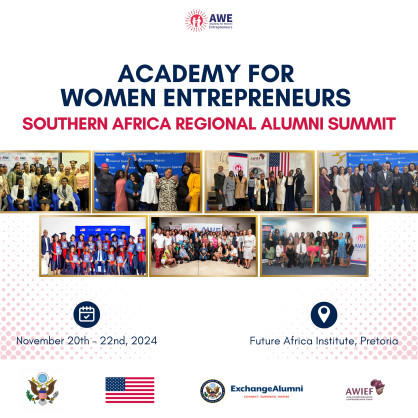
Announcing the Academy for Women Entrepreneurs Southern Africa Regional Alumnae Summit

Location: News
Africa Women Innovation and Entrepreneurship Forum (AWIEF)

The U.S. Mission to South Africa, in partnership with the Africa Women Innovation and Entrepreneurship Forum (AWIEF) (www.AWIEForum.org), is proud to announce the 2024 Academy for Women Entrepreneurs (AWE) Southern Africa Regional Alumnae Summit. This highly anticipated 3-day event will take place at the University of Pretoria (UP) Future Africa Campus (FAC), Pretoria, South Africa, from November 20th to 22nd, 2024, during Global Entrepreneurship Week.

The AWE Regional Alumnae Summit brings together women entrepreneurs from the Southern Africa Customs Union (SACU) countries Botswana, Eswatini, Lesotho, Namibia, and South Africa, who have participated in the prestigious AWE program between 2019 and 2023.

The Summit aims to foster regional collaboration and create new opportunities for business expansion and trade. Key objectives include:

  • Building Networks: Strengthening connections among women entrepreneurs across SACU nations to share insights, foster partnerships, and collaborate on business ventures.
  • Accessing Regional Markets: Exploring strategies for trade expansion, accessing regional markets, and creating mutually beneficial partnerships.
  • Embracing Innovation: Providing learning opportunities on the latest digital innovations and how they can drive entrepreneurship and growth in Africa.

Participants will have the opportunity to engage with government officials, civil society organizations, and investors, all of whom share a commitment to advancing women's economic empowerment and entrepreneurship across the region.

The AWE Southern Africa Regional Alumnae Summit underscores the importance of women-led businesses in driving economic development and gender equity. By connecting entrepreneurs with stakeholders focused on trade, investment, and innovation, the Summit aims to catalyze sustainable business practices and inclusive economic growth across Southern Africa.

The Summit will host alumnae entrepreneurs, government representatives, and investors, creating a unique platform for dialogue, learning, and collaboration. Selected participants will have their travel and accommodation expenses covered, ensuring inclusivity and accessibility.

The 2024 AWE Southern Africa Regional Alumnae Summit promises to be a landmark event for women entrepreneurs, offering invaluable opportunities to connect, learn, and grow. Together, we will continue to foster a culture of innovation, trade, and economic empowerment across the Southern African region.

For more information about the AWE program and the upcoming Summit, visit https://apo-opa.co/3OaefRs

Distributed by APO Group on behalf of Africa Women Innovation and Entrepreneurship Forum (AWIEF).

Media files
Africa Women Innovation and Entrepreneurship Forum (AWIEF)
Download logo
Read moreAnnouncing the Academy for Women Entrepreneurs Southern Africa Regional Alumnae Summit
17 November 2024

Regional Call-For-Action From the Children of Botswana, Malawi, Mozambique, Namibia, South Africa, Zambia and Zimbabwe

Location: News

United Nations Children’s Fund (UNICEF)
Download logo

All children have the right to a quality education, to grow up in a safe and secure environment and to be protected from harm. Children's rights are human rights, enshrined in the Convention on the Rights of the Child.  Yet too many children cannot realize these rights and face exclusion, discrimination, violence, and exploitation. Children have the right to grow up in a world where every child is valued, included, empowered and protected.

As children of Botswana, Namibia, Malawi, Mozambique, South Africa Zambia and Zimbabwe, we recognize all the work done our respective Governments to promote the rights of children. But there is still much work to do to ensure that the rights of all children to a quality education are protected, promoted and fulfilled - without discrimination.

Our unified Call-for-Action on World Children's Day, aligned with the specific theme of the 2024 Regional World Children's Day commemorations "Educate and Skill the African Child for Posterity" is to drive progress in the following areas. Our Call-for-Action is informed by broad national consultations involving more than 5000 children across our seven countries, organized among our peers with the support of our Governments and civil society partners.

We, the children from Botswana, Namibia, Malawi, Mozambique, South Africa, Zambia and Zimbabwe, call on our leaders to listen to our voices, include us in decisions which affect us, adopt and implement our solutions and invest in our present and future.

We call on our Governments to take concerted action on the following issues:

To ensure access to Education:

  • Ensure all children – including children from disadvantaged backgrounds - have access to quality education, providing financial support for those in need and addressing the specific needs of girls and boys to access education.
  • Strengthen and enrich curricula to ensure inclusion of practical life skills that enhance daily living and learning to earning. Curriculum content should be designed to ensure relevance and meet the current demands of children.
  • Quality education needs to be innovative, allowing critical thinking and creativity, ensuring appropriate learning materials and a supportive learning environment, and facilitating engagement and practical skills development. Governments should provide this in consultation with children.
  • Educators should be equipped to deliver quality education, making learning fresh, and impactful, and delivered in pleasant environments and infrastructure, conducive to learning, including well-equipped labs and libraries.

For an inclusive and quality education system:

  • Provide children with equal opportunities for education, including children with disabilities and those in hard-to-reach areas.
  • Ensure integrated learning environments, allowing students to interact and collaborate with peers with special education needs from a young age instead of being separated.
  • Employ well-trained and qualified teachers for better learning outcomes; increase teacher salaries and benefits to improve retention.
  • Construct child- and disability-friendly infrastructure and provide sufficient teaching resources, including solar power for uninterrupted learning, build schools closer to communities or provide transportation for students.
  • Involve parents, guardians and community leaders in creating an inclusive education system – including adolescent girls at risk of drop out of school, children involved in child labour, minority groups and children with disabilities – to ensure no child is left behind.

To ensure relevant education, including emerging issues:  

  • Ensure an education that is impactful and useful to us in the current modern and developing world; an education with a positive impact in our lives, be it present or in future as we transition to the world of work; the curriculum should equip us with relevant skills to navigate life from a very young age.
  • We want a curriculum that is aligned with the rest of the world and puts emphasis on digital literacy. This will be achieved by improving ICT infrastructure in all schools.
  • Expand and enhance climate change education programmes and teach us about climate change, the environment, responsible and sustainable consumption and production as core subjects in class and/or school clubs focusing on climate.
  • Ensure we have access to education in a safe learning environment, also during emergencies.

***

Children's Pledge of Commitment

As children from Botswana, Malawi, Mozambique, Namibia, South Africa, Zambia, and Zimbabwe, we stand united in our belief that our voices and actions matter. We are committed to being responsible citizens, ready to support and work alongside our Governments, leaders, parents and organisations to create a better future for all children in our region.

We the children the children from Botswana, Namibia, Malawi, Mozambique, South Africa, Zambia and Zimbabwe commit to:

  • Actively participate in child parliaments, school councils, junior councils as well as other student forums, and take full advantage of opportunities to voice our ideas about curriculum and school programmes. By sharing our perspectives, we will help create an education system that meets our needs.
  • Advocate for the development of public libraries and recreational facilities, using these spaces for personal growth and encouraging others to engage in learning, sports, and creative activities that benefit our well-being.
  • Make our schools and communities more inclusive by embracing diversity, offering support, and advocating for accessibility in all areas. Together, we can create an environment where everyone can thrive, belong and feel safe.
  • Use technology responsibly and enhance our digital skills. We will engage in ICT programmes, share our knowledge with peers, and encourage others to join us in developing the skills needed to succeed in a digital world.
  • Learn and educate ourselves and others on climate change and commit to sustainable practices in our daily lives. Through small acts like reducing waste and participating in community clean-up efforts, we can help protect our planet for generations to come.
  • Make our classrooms more collaborative, helping our teachers, and supporting our peers, in a quest to foster a culture of mutual respect and encouragement, to overcome challenges together.

Distributed by APO Group on behalf of United Nations Children’s Fund (UNICEF).

Read moreRegional Call-For-Action From the Children of Botswana, Malawi, Mozambique, Namibia, South Africa, Zambia and Zimbabwe
15 November 2024

Government commends progress made in Lesotho Highlands Water Project maintenance

Location: News

Government commends progress made in Lesotho Highlands Water Project maintenance

Water and Sanitation Deputy Minister, David Mahlobo, has commended the progress made in the Lesotho Highlands Water Project (LHWP) tunnel maintenance operations, which started last month.

Mahlobo and Deputy Minister Sello Seitlholo led an inspection of the maintenance operation at the Lesotho Highlands Water Project tunnel in Clarens, Free State, on Friday.

The joint maintenance operation by Trans Caledon Tunnel Authority (TCTA) and the Lesotho Highlands Development Agency (LHDA) is currently underway, following the tunnel system closure on 1 October 2024.

The TCTA is undertaking the maintenance operation on Delivery Tunnel North within South Africa, and LHDA will focus on the transfer tunnels at the Muela hydro power station in Lesotho.

Speaking at the inspection, Mahlobo commended the TCTA for the quality of the work delivered since the tunnel shutdown on 1 October 2024.

Mahlobo emphasised the ability of the two nations to cooperate and share the resources, noting that there are rivers that are flowing in between the neighbouring countries of South Africa, Lesotho, Eswatini, Namibia and Botswana.

“This trans-boundary cooperation is one of the things that we need to promote because in other parts of the world, there’s conflict around the issue of sharing water,” Mahlobo said.

Mahlobo highlighted the other advantages, which benefit both South Africa and Lesotho.

“In Lesotho, they have a hydro power station to power the system. It’s clean energy… At the very same time, this side, we are able to supply [water] for domestic use and other economic uses, whether it is agriculture industries, powering a number of communities and provinces (sic).

“The water… touches more than 13 million beneficiaries because it touches the province of Free State, Northern Cape, North West, Gauteng, and it also touches Mpumalanga. That is the scale of it and it is massive,” Mahlobo said.

The Deputy Minister said the Lesotho Highlands Water Project was completed by the democratic government, as it was commissioned in 1998.

South Africa’s richness in engineering

Mahlobo said South Africa is rich with skilled people in engineering, science and technology.

“[The LHWP] is a very sophisticated and complex system, where you have to go through the mountains, and you can see very serious engineering just to put [up] infrastructure of this nature. You can see the technology that is used…

“There is a need for continuous maintenance when you have assets. Therefore, investing in an asset gives you a longer life span and this one is going to extend the life span for the additional 20 years,” Mahlobo said.

The Deputy Minister called for reduced water losses, reiterating that every drop of water counts.

Support for municipalities

Mahlobo reiterated government’s support for all the municipalities that are directly or indirectly affected by the LHWP system.

“We are satisfied that the system will be managed, [but we acknowledge] it will remain vulnerable because it is a life system. It must be monitored from time to time, [hence] the weekly meetings happening every Wednesday to oversee the work. We want to encourage the workers to continue to do a good job and we are very proud of the work they do.

“Our call for citizens to use water sparingly still remains. In as much as water will continue to be available, it must be used sparingly,” Mahlobo said.

The LHWP maintenance is expected to be completed on 31 March 2025. – SAnews.gov.za

GabiK
Fri, 11/15/2024 - 14:59

60 views
Read moreGovernment commends progress made in Lesotho Highlands Water Project maintenance
  • Previous
  • Page 1
  • Interim pages omitted …
  • Page 3
  • Page 4
  • Page 5
  • Page 6
  • Page 7
  • Interim pages omitted …
  • Page 13
  • Next

Copyright © 2026 · MyZA · All Rights Reserved · Powered by Stratlec Online