• Skip to main content
  • Skip to header right navigation
  • Skip to after header navigation
  • Skip to site footer
MyZA

MyZA

News, Directory, Events and Other Stuff

  • Social Media
  • Sport
  • World News
  • Home
  • Submit News
  • Directory
  • Events
  • Stratlec
  • TFSA
  • News
    • APO
    • Today’s Sport News
    • Todays Social Media and Tech Headlines
    • Today’s World News
    • Today’s SA Financial News
  • Contact
You are here: Home / Archives for Namibia

Namibia

11 October 2024

AEW 2024 Ministerial Lineup to Foster Strategies to Alleviate Energy Poverty in Africa
Location: News
African Energy Chamber

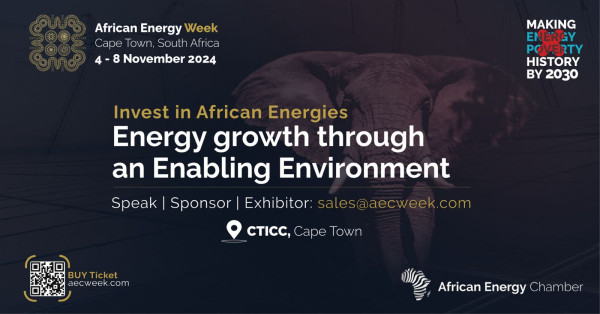
Energy and hydrocarbon ministers from across Africa have joined the African Energy Week (AEW): Invest in African Energy conference to discuss investment opportunities while engaging with financiers and project developers. Representing the entire energy value chain from oil and gas to renewable energy to power and infrastructure, regional ministers will unpack the continent's strategies to make energy poverty history by 2030.  

North African countries such as Libya and Algeria have set ambitious production targets for the coming years, aiming to plug Europe's energy gap while enhancing domestic energy access. Libya aims to boost output to 2 million barrels per day (bpd) in the next two to three years while Algeria aims to produce over 1.5 million bpd in 2025. Meeting production goals requires accelerated exploration, with both countries promoting investments in upstream drilling. At AEW: Invest in African Energy 2024, North African energy and hydrocarbon ministers will provide insight into these opportunities. They are joined by ministers representing global and African oil and gas organizations, including:  

  • Khalifa Abdulsadek, Minister of Oil & Gas, Libya 
  • Mohamed Arkab, Minister of Energy and Mines, Algeria 
  • Haitham Al Ghais, Secretary General, OPEC 
  • Omar Farouk Ibrahim, Secretary General of APPO 

In Southern Africa, the region is ripe with opportunity. An estimated 11 billion barrels has been found off Namibia's coast since 2022; over 100 trillion cubic feet (tcf) of gas found offshore Mozambique; and an estimated 200 tcf likely held onshore South Africa. While Angola - the second largest oil producer in sub-Saharan Africa – still offers significant potential in both on- and offshore basins, Southern African countries such as Zambia are largely underexplored, presenting strategic opportunities for exploration companies. At AEW: Invest in African Energy 2024, Southern African energy and hydrocarbon ministers will outline strategic basins and upcoming projects. Speakers include:  

  • Carlos Zacarias, Minister, Ministry of Natural Resources & Energy, Mozambique 
  • Diamantino Pedro Azevedo, Minister of Mineral Resources and Petroleum, Angola 
  • Gwede Mantashe, Minister, Ministry of Mineral Resources and Energy, South Africa 
  • Kgosientsho Ramokgopa, Minister of Electricity, South Africa 
  • Situmbeko Musokotwane, Minister of Finance and National Planning, Zambia 
  • Tom Alweendo, Minister of Mines and Energy, Namibia 

Recent offshore projects have positioned West Africa as a global hydrocarbon hotspot. Mauritania and Senegal's Greater Tortue Ahmeyim LNG project will start production this year, following the start of operations at Senegal's Sangomar Oil Project in mid-2024. Nigeria's Dangote Refinery – the largest in Africa at 650,000 bpd – recently secured a 400,000-bpd feedstock supply from the government a year after its start while Ivory Coast's Belaine project – the first net-zero upstream development in Africa – plans to commence phase two operations this December. Regional ministers will provide an update on ongoing projects, future investments and efforts to unlock additional reserves at AEW: Invest in African Energy 2024. Ministers include:  

  • Aboubacar Camara, Minister of Energy, Hydropower and Hydrocarbons, Guinea Conakry 
  • Birame Soulèye Diop, Minister of Energy, Oil and Mines Republic of Senegal 
  • Chief. Adebayo Adelabu, Minister of Power, Federal Republic of Nigeria 
  • Collins Adomako-Mensah, Deputy Minister of Energy in Charge of Power, Ghana 
  • Ekperikpe Ekpo, Minister of State for Petroleum Resources (Gas), Nigeria 
  • Foday Mansaray, Director General, PDSL 
  • Heineken Lokpobiri, Minister of State for Petroleum Resources (Oil), Nigeria 
  • Matthew Opoku Prempeh, Minister of Energy, Ghana 
  • Mohamed Ould Khaled, Minister of Petroleum & Energy, Ministry of Petroleum, Mines & Energy, Mauritania 
  • Nani Juwara, Minister of Energy and Petroleum, The Gambia 
  • Viriato Luis Soares Cassama, Minister of Environment & Biodiversity, Guinea-Bissau 
  • Yacouba Zabré Gouba, Minister of Energy and Mines, Burkina Faso 

Central Africa – with major producers such as Equatorial Guinea, Gabon and the Republic of Congo – are inviting investors to support diversification efforts in production and refining. Leveraging natural gas, these markets aim to unlock reserves in both domestic and regional basins while boosting export capacity and intra-African trade. The Republic of Congo exported its first LNG cargo in 2024 from the Tango FLNG facility, targeting 3 million tons per year by 2025, while Equatorial Guinea forged an agreement with Nigeria to import and process gas at its Punta Europa facility. At AEW: Invest in African Energy 2024, regional ministers will outline these initiatives, while sharing insight into available opportunities in natural gas. Ministers include:  

  • Antonio Uburu Ondo, Minister of Mines and Hydrocarbons, Equatorial Guinea 
  • Bruno Jean-Richard Itoua, Minister of Hydrocarbons, the Republic of Congo 
  • Marcel Abeke, Minister of Petroleum, Republic of Gabon 

As a frontier market, East Africa is incentivizing exploration in both on- and offshore basins while driving infrastructure and field development projects forward. Uganda inked a deal with Ethiopia in 2024 to export crude via pipeline while South Sudan is seeking diversified export routes and promoting exploration onshore. Regional ministers will share more insights at AEW: Invest in African Energy 2024. Speakers include:   

  • Ing Habtamu Itefa Geleta, Minister of Water and Energy, Ethiopia 
  • Okasaai Sidronious Opolot, Minister of state for Energy, Ministry of Energy and Mineral Development, Uganda 
  • Puot Kang Chol, Minister Petroleum, South Sudan 

AEW: Invest in African Energy is the platform of choice for project operators, financiers, technology providers and government, and has emerged as the official place to sign deals in African energy. Visit www.AECWeek.com for more information about this exciting event.  

Distributed by APO Group on behalf of African Energy Chamber.

Media files
African Energy Chamber
Download logo
Read moreAEW 2024 Ministerial Lineup to Foster Strategies to Alleviate Energy Poverty in Africa
10 October 2024

African Energy Week (AEW) 2024 National Oil Companies (NOC) Lineup to Unlock Project, Partnership Opportunities in Oil and Gas

Location: News
African Energy Chamber

African energy demand is projected to more than double by 2050, with fossil fuels anticipated to account for up to 60% of the continent's energy mix by 2040. This trend highlights the growing importance oil and gas will continue to hold in Africa. In partnership with international oil companies and private E&P firms, the continent's national oil companies (NOC) are responding to this projection by prioritizing fast-tracked project development, promoting collaborative exploration and production to bring new reserves online.

The upcoming African Energy Week (AEW): Invest in African Energy conference – scheduled for November 4-8 in Cape Town – features a strong lineup of African and global national oil companies (NOC). This lineup reflects a strong intention by NOCs to collaborate, unlock additional reserves and drive oil and gas projects forward across both emerging and mature markets in Africa.

AEW: Invest in African Energy is the platform of choice for project operators, financiers, technology providers and government, and has emerged as the official place to sign deals in African energy. Visit http://www.AECWeek.com for more information about this exciting event.

Southern Africa has yielded some of Africa's biggest oil and gas finds in recent years. Namibia – which featured a string of offshore finds since 2022 – has rapidly emerged as an oil and gas hotspot, with Galp Energias' Mopane discovery estimated to hold 10 billion barrels alone. In South Africa, the 2019 Brulpadda discovery accounted for 10% of the overall discovered volumes in Africa that year while the Luiperd find accounted for 80% of the continent's volumes discovered in 2020. Mature producers such as Angola also continue to unlock additional reserves, with ExxonMobil announcing a discovery at the Likember-01 research well in Block 15 this year. At AEW: Invest in African Energy 2024, Angola's NOC Sonangol, Namibia's NAMCOR and South Africa's SANPC will speak on these discoveries and future opportunities.

East Africa is one of the world's final frontiers for oil and gas exploration, with major discoveries made in recent years showcasing the potential for billion-barrel projects. In exploration, offshore basins in Tanzania have shown trillions of cubic feet of gas while onshore acreage in Uganda holds the promise of new oil supplies. While various cross-border infrastructure projects, LNG facilities and field developments are underway, the region offers significant potential for exploration. During AEW: Invest in African Energy 2024, East African NOCs including the Tanzania Petroleum Development Corporation; Uganda National Oil Company; and National Oil Company of Malawi will unpack this potential, sharing insight into ongoing projects and untapped investment opportunities.

Contrastingly, West Africa holds some of the biggest oil and gas producing markets on the continent. These include the Republic of Congo – which is diversifying its energy matric through billion-dollar gas investments; Equatorial Guinea – which is diversifying LNG feedstock through agreements signed with regional neighbors; and Gabon – which aims to boost production to 220,000 barrels per day. Concurrently, markets such as Cameroon, Liberia and Ivory Coast hold strategic potential for exploration firms, with recent finds underscoring opportunities in frontier drilling. At AEW: Invest in African Energy 2024, NOCs to the likes of Société nationale des pétroles du Congo; GEPetrol; Gabon Oil Company; and Ghana National Petroleum Corporation are participating. Additionally, the National Hydrocarbons Corporation of Cameroon; the National Oil Company of Liberia; and Petroci have joined.

While West African countries account for a large share of African hydrocarbon production, the same can be said for North Africa, with Algeria representing the largest natural gas producer in Africa. The country's production measured over 100 billion cubic meters (bcm) in 2023, with ambitions to exceed 200 bcm in production over the next five years. During 2024, up to 8 oil and gas discoveries have been made, with the NOC Sonatrach signing several exploration agreements with the likes of TotalEnergies, ExxonMobil and more to unlock additional basins. Sonatrach is participating at AEW: Invest in African Energy 2024.

In addition to African NOCs, global counterparts including the respective NOCs of Saudi Arabia and Azerbaijan have also joined the conference to discuss investment opportunities, future collaborations and how knowledge-sharing can support the next generation of oil and gas projects. Saudi Aramco, for example, which represents one of the biggest gas producers worldwide, offers a wealth of expertise for African NOCs. Similarly, the National Oil Company of the Azerbaijan Republic, an expert in refining and infrastructure development, stands ready to support Africa as it scales-up domestic refining capacity.

Distributed by APO Group on behalf of African Energy Chamber.

Media files
African Energy Chamber
Download logo
Read moreAfrican Energy Week (AEW) 2024 National Oil Companies (NOC) Lineup to Unlock Project, Partnership Opportunities in Oil and Gas
9 October 2024

Can Africa Secure Its Future in a Changing Energy Landscape?

Location: News

AOW: Investing in African Energy
Download logo

The pipeline of gas projects being developed in Africa has never been stronger. However, if the continent is to be competitive in an extremely dynamic international gas market, it must ensure that it offers value. 

This means shaping an offer that meets the financial and environmental sustainability needs of stakeholders. Africa's gas investment proposition must be relevant and future-proof, if it is to continue to attract global capital. 

This was the consensus at a panel discussion on Day 1 of AOW: Investing in African Energy – Africa's leading oil, gas and energy event. 

Over the past few years, gas development ambitions have grown – in the public and private sector – supported by renewed exploration and production activity and pragmatic energy transition plans. This is especially true now, with gas increasingly accepted as the ideal bridging fuel, balancing the continent's growing energy needs with its decarbonisation commitments. 

“Natural gas is at the centre of what we are doing in Africa,” said Mario Bello, Head of Sub-Saharan Africa Region at Eni. “It's the cleanest fossil fuel, producing fewer emissions than coal, so it plays an important role as we transition to renewables.” 

Eni enables this through its Floating Liquified Natural Gas (FLNG) projects, particularly in Mozambique and the Republic of Congo. Bello emphasised the technology's ability to unlock stranded offshore gas resources, accelerate project timelines, and contribute to both domestic energy security and export revenue. “Floating LNG is the key to unlocking the region's gas potential, making it easier and faster to develop offshore resources,” Bello explained.  

However, financing these ambitious projects remains a significant hurdle. Paul Eardley-Taylor, Head of Oil & Gas, Southern Africa, at Standard Bank, emphasised the need for bankable projects that address investor concerns, particularly around sovereign risk. He highlighted the transformative potential of both large-scale LNG projects and smaller, domestically focused gas ventures.  

“The impact of these projects in African markets is incalculable,” Eardley-Taylor said, citing the potential for job creation, economic growth, and improved energy access. He further emphasised the importance of small-scale LNG and helium projects, particularly in markets like South Africa and Namibia.  

Equinor's Senior Vice President for Africa, Nina Birgitte Koch, stressed the importance of a stable investment climate to attract international capital. She highlighted the need for competitive projects with strong environmental credentials, particularly in reducing carbon emissions. “CO2 is the key criteria,” Koch said. “It's not just a ‘nice to have' any more. I don't think it's possible to get capital to a big LNG project unless it's highly competitive when it comes to CO2."  

The panel also discussed the critical role of technology and regional cooperation in maximising the benefits of Africa's gas resources. Gianluca Ciricugno, Africa Director, Enterprise Customer Solution at Baker Hughes, emphasised the need for a long-term vision and collaboration between governments, investors, and technology providers.  

“It requires a broader vision, probably government and all the people around the table, with a long-term approach… and not just four-year terms,” Ciricugno urged, highlighting the need for stable regulatory frameworks and a commitment to infrastructure development.  

Dr Tshepo Mokoka, Group COO of South Africa's Central Energy Fund (CEF), echoed the call for government intervention to address market failures and unlock investment. He outlined CEF's role in enabling critical gas infrastructure projects, such as the Romp pipeline and LNG import terminals. “We need to solve the market failure,” Dr Mokoka said, highlighting the need for government-backed gas offtake agreements and risk-sharing mechanisms to attract private capital.  

ExxonMobil's Executive Director Global, LNG Marketing, Deri Irawan, emphasised the importance of a holistic approach to project development, considering not just the technical and economic aspects but also the social and political landscape. He highlighted the need for strong partnerships and stakeholder engagement to ensure long-term project success. “It is insufficient to just bring a commodity to the doorstep,” Irawan explained. “You also need to unlock that value chain.” 

With Africa on the cusp of a gas revolution, the panel's message was clear: the continent has the resources, the ambition, and the opportunity to become a major player in the global gas market. 

However, success hinges on creating a stable and attractive investment climate, embracing technological innovation, and fostering regional collaboration to ensure that Africa's gas resources benefit both its people and the planet.  

Distributed by APO Group on behalf of AOW: Investing in African Energy.

Owned by Sankofa Events, AOW (https://apo-opa.co/3ZVcWNe): Investing in African Energy is Africa's leading oil, gas & energy event, uniting industry leaders to develop policy, share discoveries, secure investment, and shape Africa's energy future. The event runs from 7 – 10 October 2024 at the CTICC 2, Cape Town. 

Read moreCan Africa Secure Its Future in a Changing Energy Landscape?
8 October 2024

Government discussing reduction in administered prices, including petrol

Location: News

Government discussing reduction in administered prices, including petrol

Government is in discussions to intervene in the reduction of administered prices, including the petrol price, in South Africa.

This is according to Minerals and Petroleum Resources Minister Gwede Mantashe, who was delivering the welcome address at the Africa Oil Week 2024 on Tuesday in Cape Town.

Mantashe explained that the price of fuel directly influences the cost of living for South Africans.

“If the fuel price goes up, the cost of living goes up, which is not good for our society. To make life more affordable for all South Africans, we have already begun discussions on reducing administered prices, including the price of fuel and electricity. Included in the discussions of fuel prices are discussions on, but not limited to, the general fuel and the Road Accident Fund levies.

“In the fuel price, there is the general fuel levy, there is the Road Accident Fund linked to the price of fuel. Our argument is that you are distorting the price of fuel. Let’s find a formula of separating them and have the price of fuel visible, and when there is intervention in the fuel price, we can see it (sic),” the Minister said.

He said government intends to conclude those discussions “in the shortest possible time”.

Boosting economic growth

Mantashe said government is making concerted efforts to develop the country’s petroleum resources in an equitable way.

In that regard, he said, the Upstream Petroleum Resources Development Bill is ready for assent by President Cyril Ramaphosa after it was passed by both Houses of Parliament.

“This is the first of its kind in South African history as the Upstream Petroleum Industry has always been regulated as an appendage to other industries. 

“We are convinced that once the bill is enacted into law, it will not only pave the way for an orderly development of the Upstream Petroleum Industry but will boost the country’s economic growth to 8% as is the case with Namibia which increased its potential to double its economy by 2040 on the back of its recent discoveries of oil and associate gas,” he said.

The South African National Petroleum Company (SANPC) has also been established to “ensure that South Africans enjoy maximum benefits from their national patrimony, their petroleum resources” and to “carry the State share in petroleum projects and exploit some resources in its own right”.

“The [SANPC] Bill is undergoing Cabinet processes ahead of its onward transmission to Parliament for consideration and adoption. The enactment of the bill into law will enable the SANPC to operate as South Africa’s leading player in the petroleum industry, thereby ensuring energy security, foster partnerships, and propel economic growth on the back of petroleum resources.

“Additionally, the Petroleum Products Amendment Bill is also undergoing Cabinet processes for approval to publish for stakeholder comments. The bill seeks to, firstly, promote the transformation of the petroleum and liquid fuels sector by encouraging participation and equity; secondly, ensure that the persons involved in the manufacturing or sale of liquid fuels are regulated, and lastly, to ensure that the petroleum sector contributes to the country's economic development,” Mantashe said. – SAnews.gov.za

NeoB
Tue, 10/08/2024 - 11:12

209 views
Read moreGovernment discussing reduction in administered prices, including petrol
8 October 2024

South Africa’s potential for oil and gas ‘significant’ – Mantashe

Location: News

South Africa's potential for oil and gas 'significant' - Mantashe

Mineral and Petroleum Resources Minister Gwede Mantashe says the discovery of gas and condensate from two exploration wells in the South Outeniqua Basin are proof that South Africa’s underexplored deep waters have significant potential for oil and gas.

The Minister was speaking during Africa Oil Week held at the Cape Town International Convention Centre.

“In the past two years, TotalEnergies, Shell and Galp have made eight discoveries across three blocks in Namibia’s Orange Basin, representing an estimated 3.5 billion barrels of potentially recoverable oil. 

“These discoveries have led to a huge interest by major petroleum companies since it is believed that the Namibian discoveries may be extending southwards into South Africa.

“The discoveries of gas and condensate from two exploration wells drilled in Block 11B/12B offshore in the South Outeniqua Basin have also proven that South Africa’s under-explored deep waters have significant potential for oil and gas, and thereby signalling a need to accelerate exploration efforts,” Mantashe said.

Commenting on the withdrawal of international energy giant, TotalEnergies, from offshore Block 11B/12B and 5/6/7, Mantashe insisted that development on the block still remains viable.

“[There] remains a good potential for other oil and gas players to partner with the remaining operator – MainStreet - and develop the block. 

“Contrary to the view that suggests that TotalEnergies withdrawal from the block is tantamount to lack of confidence, it is encouraging that the company is a major shareholder in 3 blocks North of South Africa’s Orange Basin in the deep to ultra-deep waters, and a 100% shareholder of another larger block that is 3 times the size of the 11b/12b in Southern Outeniqua,” he said.

According to the Minister, several exploration projects in the South African Orange Basin are “gearing up for development”. These include:
•    Preparation work for drilling exploration of the Deep-Water Orange Basis (DWOB) block operated by TotalEnergies.
•    Proposed drilling of an exploration well, with the option to drill up to four additional wells in Block 3B/4B.
•    The Northern Cape Ultra-Deep-Water Block has started with environmental authorisation processes for drilling.
•    The notable progress made on Block 5/6/7 with a potential to start drilling exploration in the block in 2026 targeting large oil and gas resources.

Mantashe said the risk for these projects is litigation against exploration and production.

“This has already affected two major seismic surveys to date, including Shell, which abandoned their survey and went on to discover oil and gas in Namibia, as well as ENI, which after being taken to court 47 times, left and went to discover oil in huge quantities in Côte d'Ivoire.

“The successful 3D seismic data acquisition in April this year by Searcher on South Africa’s west coast has proven that exploration of petroleum resources can be done successfully without any harm to the environment,” he highlighted.

The Minister gave a nod to the approval, by the Competition Commission, of government’s acquisition of the various assets that comprise the SAPREF [a joint venture between Shell Refining SA and BP Southern Africa] refinery, which is located in Durban.

“Government has, through the Central Energy Fund (CEF), concluded a transaction on the sale of assets at the SAPREF precinct. This acquisition has since been approved by the Competition Commission, thus reinforcing our efforts that seek to guarantee sufficient supply of petroleum products in the period where several refineries have been shut down prematurely. 

“Like Chevron and Petronas, Shell’s decision to divest from its downstream business operations in South Africa provides an opportunity for another investor, or major oil company, to take over the assets as the downstream sector will remain attractive for the foreseeable future, given the rise of hybrid vehicles.

“We appeal to the delegates at this conference and the investment community to continue investing in the development of oil and gas to enable a prosperous energy outlook for Africa, and promote sustainable development,” Mantashe said. – SAnews.gov.za

NeoB
Tue, 10/08/2024 - 11:13

36 views
Read moreSouth Africa’s potential for oil and gas ‘significant’ – Mantashe
3 October 2024

Mantashe to Attend Major AOW Energy Event

Location: News
AOW: Investing in African Energy

South Africa's Minister of Mineral and Petroleum Resources, Mr Gwede Mantashe has committed to attend the four-day AOW energy event (https://AOWEnergy.com/) in Cape Town from 7 – 10 October.

AOW: Investing in African Energy brings together industry leaders to develop policy, share discoveries, secure investment, and shape Africa's energy future. This year's event will feature more than 1 600 senior delegates, 80 ministers and officials from 70+ countries and representatives of more than 760 companies.

Announcing Mantashe's confirmed attendance, Chief Executive Officer of Sankofa Events, Paul Sinclair said that the presence of the host nation's two most senior energy leaders confirmed that Africa was committed to taking ownership of its own energy destiny.

“We are excited to welcome Mr Mantashe to AOW, where he will share stages and attend sessions with ministers from many other countries, as well as senior players from energy businesses and multilateral forms,” said Sinclair. “We are proud to provide an environment where Africa's energy leaders can discuss the latest industry trends, and how the continent can help to shape them.”

Mantashe has been a regular keynote speaker at previous AOW events, and the announcement of his attendance comes as lucrative energy opportunities open across the continent – in responsible oil exploration and production, in renewable energy, and in the trade of natural gas as a high-demand future fuel.

Ongoing major oil-and-gas discoveries in the Orange basin, offshore South Africa and Namibia, have highlighted the scale and importance of these opportunities – for African governments, their people, and energy businesses.

“The world's energy markets are in the midst of a dynamic transition,” said Sinclair. “Navigating that transition requires industry partnerships. Africa is showing that not only does it have massive resources, it also has the networks, the financial innovation and the commitment to develop those resources for Africa's people, and all stakeholders.”

This year marks 30 years of the industry-leading AOW event. The four-day conference, exhibition and investment forum brings together governments, regulators, global operators, power producers, investors and service providers.

Distributed by APO Group on behalf of AOW: Investing in African Energy.

About AOW: Investing in African Energy:
Owned by Sankofa Events, AOW: Investing in African Energy (https://AOWEnergy.com/) is Africa's leading oil, gas & energy event, uniting industry leaders to develop policy, share discoveries, secure investment, and shape Africa's energy future. The event runs from 7 – 10 October 2024 at the CTICC 2, Cape Town.

Media files
AOW: Investing in African Energy
Download logo
Read moreMantashe to Attend Major AOW Energy Event
27 September 2024

Honouring SA’s liberation heroes and heroines 

Location: News

Honouring SA’s liberation heroes and heroines 

An emotional and befitting ceremony to honour the men and women who died in exile while fighting for the freedom that South Africans enjoy today was held in Pretoria on Friday.

Phrases such as “you have fought a good fight and “you have finished the race,” were the order of the day at the ceremony held for those who lost their lives in the fight for South Africa’s liberation.

This as government hosted the repatriation and restitution homecoming ceremony of 42 South African freedom fighters who perished in Zambia and Zimbabwe during the apartheid era.

The remains included that of former African National Congress (ANC) secretary-general Duma Nokwe, head of the ANC Women’s Section, Florence Mophoshe, journalist Todd Matshikiza, Wankie Campaigner, Basil February and other unsung liberation fighters. 

These struggle heroes and heroines, who sacrificed their lives in exile, were honoured as their remains returned home to a country that now enjoys the very freedom they fought for.

President Cyril Ramaphosa led and officiated the historic homecoming ceremony where the remains of the freedom fighters were returned to their families for a final, dignified farewell on home soil.

Speaking during the ceremony, Zambian High Commissioner to South Africa Mazuba Monze said: "May the spirits of our heroes and heroines continue to inspire us as we continue to move forward in friendship and collaboration. You have fought the good fight, you have finished the race, good and faithful servants, come and rest at peace in the land that you have so valiantly fought for.”

Edna Mophosho Tshabalala, 83, travelled from Naturena in Gauteng to receive the remains of her aunt, Florence Mophosho.

Overcome with emotion, Tshabalala expressed the family’s sense of closure.

“As a family, we are very happy, and we are finally going to have closure now. Every time we miss her, we will go to Westpark Cemetery to visit her,” Tshabalala said of her aunt who was a revered stalwart known for her unwavering commitment and fiery spirit.

She recalled how her aunt was her mother’s bridesmaid and co-worker at the old Johannesburg Hospital. The family had no knowledge of Mophosho’s involvement in the liberation struggle until the day she vanished. 
Years later, the family was devastated to learn of her passing.

"In 1985, I heard the news that she had passed on. Otherwise, we really missed her a lot because she was a loving person, and we all didn't expect that there would be a day that we hear about her death. Fortunately, because God is great, the day has come.”

Tshabalala also recounted her emotional journey to Zambia to locate her aunt’s grave after volunteering to represent the family.

"Unfortunately, in Zambia, we struggled to identify her grave. Eventually we found it and we sang for her, and we were happy. I was treated as a VIP and airlifted everywhere. Today, we are here to receive her from Zambia,” she explained.

Bringing healing

Defence and Military Veterans Minister Angie Motshekga explained that while the government initially announced that it was repatriating the remains of 49 people, there had been delays in the DNA verification process.

Motshekga made a commitment to the other families that they too, would receive the remains of their loved ones.

"The repatriation of the remains of our struggle stalwarts is not just about laying to rest those who fought for freedom, it is about bringing healing to their families, and I hope it really does that because these are not just names in history. 

“They are our families; they gave their lives so that we might live in freedom. They left our shores to fight a system that dehumanised our people and in doing so, they became symbols of resilience, courage and hope.”

Motshekga said the South African government had previously repatriated the remains of the likes of JB Marks and Moses Kotane.

She also extended her gratitude to the Minister of Sports, Arts and Culture Gayton McKenzie for giving the project "the necessary energy," as well as other departments which her department collaborated with, and various political party formations.

McKenzie said the repatriation process was a collective effort and that it has been a joy to work with the families of the struggle heroes. 

He acknowledged that while the process has been a sombre one, the patience and understanding shown by the families reaffirm his belief that the government is on the right path. 

“This was not an instruction; it was a labour of love. My mother died of a broken heart because my younger brother was never found, my mother never spoke about him, but I could feel the pain. 

“I saw what my mother went through that is why I was rushing the process because I don’t want any other woman, children or father to go[through] what she went through. To the children that are here, the President is resolute, he is intentional that we must bring back all the soldiers that fought for freedom,” McKenzie said. 

Heroes Acre

President Ramaphosa has now tasked Minister McKenzie with establishing a Heroes Acre to celebrate the nation’s struggle heroes. 

"As I travel to other countries like Zimbabwe, Namibia, and Mozambique, they have created incredible Heroes Acres where the heroes of their struggle are buried, and those memorial sites have, in many ways, become sacred places of the nation. 

“Of course, we may well argue that our leaders and heroes are buried all over the country, but it does not mean that monuments that memorialise them cannot be brought together at a Heroes Acre," the President said. 

The repatriation and restitution marks not just the end of a long journey, but the beginning of healing for the families they left behind. 

The President also stressed the importance of South Africans recognising and honouring the former liberation heroes and heroines who have returned to their home country, acknowledging their vital role in securing the nation's freedom.

“South Africans need to know the names and appreciate the contributions of these returned freedom fighters. I ask that we read out the names of these patriots for all our people to know them.”

READ | South Africans must know the names of struggle heroes and heroines

“Their names will forever be inscribed here at the Wall of Names in Freedom Park so that we may never forget. Any nation that values its freedom holds its liberation heroes and heroines in high regard,” the President said. -SAnews.gov.za
 

DikelediM
Fri, 09/27/2024 - 16:22

89 views
Read moreHonouring SA’s liberation heroes and heroines 
21 September 2024

Celebrating This Year’s 25 Under 40 Energy Women Rising Stars

Location: News
African Energy Chamber

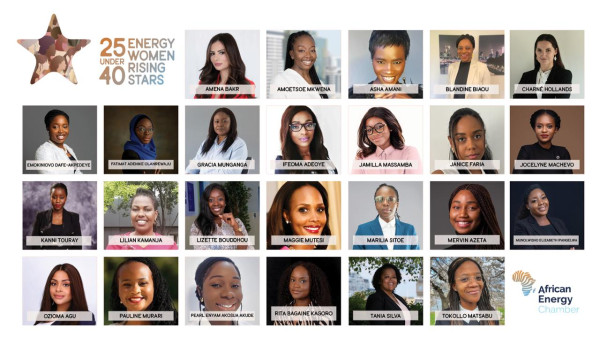
As Africa's energy sector continues to grow, a new generation of women is breaking barriers and redefining leadership in this critical industry. The African Energy Chamber (AEC) (www.EnergyChamber.org) proudly announces the 2024 edition of the 25 Under 40 Energy Women Rising Stars – a group of outstanding individuals whose innovation, perseverance and passion are transforming the landscape of African energy. These trailblazers are not only reshaping a traditionally male-dominated field but are also playing a vital role in the journey to end energy poverty by 2030. The AEC proudly honors these women as they lead the charge toward a more sustainable and equitable energy future.

In alphabetical order:

Amena Bakr, Senior Research Analyst, Energy Intelligence

Amena Bakr is a Senior Research Analyst at Energy Intelligence. Specializing in the energy transition, corporate strategy and market analysis, Bakr leads insights on oil markets, OPEC policies and political trends in the Middle East and Gulf Arab region. Her previous roles include Chief OPEC Correspondent and Dubai Deputy Bureau Chief, where she earned accolades such as the OPEC Award for Best Journalist and the IAEE Excellence in Written Journalism Award. Bakr holds a BA in Business Administration from the Arab Academy for Science, Technology & Maritime Transport, Egypt.

Amoetsoe Mkwena, Senior Associate, Watson Farley & Williams (Middle East)

Amoetsoe Mkwena is a Senior Associate at Watson Farley & Williams, specializing in energy and infrastructure with a focus on Africa. She advises on international projects, including the $15 billion Simandou project in Guinea. Mkwena's expertise includes power, renewables, oil and gas, and mining. Her legal skills and ability to bridge cultural divides make her a key player in Africa's energy sector.

Asha Amani, General Manager, INTERAFCON

Asha Amani is the General Manager at INTERAFCON, where she blends strategy and leadership to drive growth in complex energy projects. With seven years in Industrial Engineering and five years in the energy sector, Amani excels in business strategy, opportunity identification and project management. Her previous role as a Business Development Consultant at Tetco Consulting focused on delivering tailored solutions for the energy, engineering, and construction sectors.

Blandine Biaou, Geological Engineer, Head of Research and Prospection Department, SNH-Benin

Blandine Biaou, Head of the Research and Prospection Department at SNH-Benin, specializes in hydrocarbon exploration. She has optimized Benin's energy sector through resource management and contract revisions. Biaou has developed a modern data center and interactive database, contributing to national projects and representing Benin in international conferences, positioning it as a hydrocarbon hub.

Charné Hollands, Deputy Editor, Energy Capital & Power

Charné Hollands is the Deputy Editor at Energy Capital & Power, the leading investment platform for the African energy sector. She produces content on the entire energy value chain in Africa, with a focus on oil, gas, renewable energy and energy policy. Hollands holds a Master's in Media Studies from the University of Cape Town and has co-authored African Energy Chamber: Road to Recovery.

Emokiniovo Dafe-Akpedeye, Managing Partner, Compos Mentis Legal Practitioners

Emokiniovo Dafe-Akpedeye, a leading dispute resolution lawyer, specializes in complex oil and gas cases. She has represented Shell Petroleum and serves as company secretary for the Ebendo Host Community Trust Board. With degrees from Oxford and Bristol, she shapes oil and gas law and is implementing digital solutions to streamline board operations.

Fatimat Adenike Olanrewaju, General Field Engineer, SLB

Fatimat Adenike Olanrewaju, a Chemical Engineering graduate, is a General Field Engineer at SLB, focusing on wellhead installations and emissions reduction. She excels in a male-dominated field and leads community service through SLB's SEED initiative, advocating for gender diversity and mentoring.

Gracia Munganga, Senior Technical Advisory, ABT Global

With a Master's degree in Chemical Engineering from the University of Cape Town, Gracia oversees operations for the company, which has been designing and commissioning solar PV systems across sub-Saharan Africa since 2018. Her career includes roles at GreenCape, Anaergia Africa, the Climate Innovation Centre South Africa (CIC-SA), and the Carbon Trust.

Ifeoma Adeoye, CEO, IMSE Energy Resources Limited

Ifeoma Adeoye, CEO of IMSE Energy Resources Limited, leads the company in EPCI services and innovative crude evacuation technology. A graduate of the University of Manchester and Warwick, she also founded Business Nest Investments and BNI Insurance Brokers Limited, to empower and protect people and businesses through microfinance and insurance.

Jamilla Massamba, Health Safety and Environment Manager, SLB Congo

Jamilla Massamba, Health, Safety & Environment Manager at SLB Congo, leads HSE initiatives across Africa. With a Master's in Environmental Management Sciences, she has conducted over 100 audits and received awards for her work. Massamba also mentors young women in STEM and leads green energy projects.

Janice Faria, CEO, Enagol: Energias de Angola

As CEO of Enagol, Janice Faria has elevated the company's national and international profile. Under her leadership, Enagol competes globally and services International Oil Companies, setting a precedent for local enterprises in the global market.

Jocelyne Machevo, Communication, Commercial & Marketing Manager, Vivo Energy Mozambique

Jocelyne Machevo, formerly with Eni Mozambique, played a key role in the Coral FLNG Project and led the company's local brand transformation. Now at Vivo Energy Mozambique, she focuses on energy transition and decarbonization projects.

Lilian Kamanja, Electrical Engineer, Kenya Power

Lilian Kamanja is a Renewable Energy Specialist at Kenya Power with over nine years of experience in electrical engineering, network operations, and renewable energy development. She holds a BSc from the University of Nairobi and an M.Tech from IIT Delhi, focusing on renewable energy projects that enhance power accessibility and reliability.

Kanni Touray, Deputy Director General, Petroleum Commission, The Gambia

Kanni Touray, The Gambia's youngest and first female Deputy Director General at the Petroleum Commission, has enhanced the organization's efficiency and visibility. She champions sustainable development and energy transition, positioning The Gambia as a growing player in the global energy market.

Lizette Bouddhou, Human Resources Manager, SLB Congo and Gabon SLB

Lizette Bouddhou, HR Manager at SLB Congo and Gabon, drives diversity and workforce development. She leads recruitment and training initiatives, boosts employee engagement, and advances community outreach through educational partnerships, supporting women in STEM.

Maggie Mutesi, Managing Editor, Mansa Media

Maggie Mutesi is the Managing Editor at Mansa Media, with over 15 years of experience in major media outlets including CNN, BBC and CNBC. Her reporting spans over 30 African countries, focusing on trade and investments. At the BBC, she managed BBC Africa's daily live program, Money Daily. Mutesi has also extensively covered the Africa Continental Free Trade Agreement, working with the African Union and Afrochampions Initiative to enhance awareness among Africa's private sector.

Marilia Sitoe, Subsea Engineer, Eni Rovuma Basin

Marilia Sitoe, a Subsea Engineer at Eni Rovuma Basin, focuses on optimizing Mozambique's gas sector. Her work includes deep-water gas production and subsea infrastructure for Coral South FLNG. Sitoe's research supports Mozambique's economic growth and sustainability goals.

Mervin Azeta, Engineer, SLB

Mervin Azeta, a leader at SLB, has advanced from field engineer to corporate strategist. Recognized for her impact on African communities and the global industry, she is active in non-profit boards and connects young Africans with top leaders, fostering learning and inspiration.

Munolwisho Elizabeth Ipangelwa, Green Hydrogen Advisor, GIZ

Munolwisho Elizabeth Ipangelwa, Green Hydrogen Advisor at GIZ, advocates for women in oil and gas and green hydrogen development in Namibia. She has educated over 200 Namibians and leads green industrialization studies to boost local industries and reduce youth unemployment.

Ozioma Agu, Partner, Stren & Blan Partners

Ozioma Agu, a Partner at Stren & Blan Partners, excels in high-profile energy and infrastructure transactions. Her work includes advising on Mobil and Shell divestments and renewable projects. Agu has earned awards for her expertise in oil and gas and green hydrogen.

Pauline Murari, Contracts Manager SLB Angola, Central and East Africa

Pauline Murari, Contracts Manager at SLB, is known for her negotiation skills and leadership. She has driven growth in SLB's regional portfolio and contributed to projects like the East African Crude Oil Pipeline. Murari supports STEM education and local development.

Pearl Enyam Akosua Akude, Business Line Job Delivery Lead, SLB

Pearl Enyam Akosua Akude, with over 35 wells drilled, is a leader in the energy sector. She handles complex projects, trains engineers, and has contributed to innovations like TerraSphere and Net Zero Development in Africa, impacting the region's energy landscape.

Rita Bagaine Kagoro, Talent Acquisition Manager SLB: Angola, Central and East Africa

Rita Bagaine Kagoro, a Ugandan Petroleum Engineer, has seven years of experience and holds degrees from China University of Petroleum and Delft University of Technology. Her roles include Measurements and Logging While Drilling Engineer and Drilling Product Engineer. Kagoro has innovated drilling technologies to enhance efficiency and reduce CO2 emissions. She is passionate about leadership, mentorship, and advocating for diversity in hiring and women in energy.

Tania Silva, CEO, Angola LNG Marketing

Tânia Silva is the CEO of Angola LNG Marketing, the company's first female and youngest CEO. She oversees LNG sales, liquids contracts, and the shipping fleet. Previously, Silva was Head of Non-Operated Assets at Sonangol Gás e Energias Renováveis, S.A., where she managed non-operated assets and contributed to renewable energy projects. Her career is marked by leadership and innovation in the energy sector.

Tokollo Matsabu, Women Leader in Energy & Climate Fellow, Atlantic Council

Tokollo Matsabu is a 2024 Women Leaders in Energy and Climate Fellow and Director at Patlong Advisory, a consulting firm focused on energy programs and carbon sequestration in Africa. She is pursuing an MS in Global Energy and Climate Policy at the University of London's School of Oriental & African Studies, with a focus on critical minerals. Matsabu has a background in financial journalism and has conducted risk analyses for various stakeholders in the Global South. She holds a Bachelor's degree in International Relations, Media and Writing from the University of Cape Town.

Distributed by APO Group on behalf of African Energy Chamber.
Media files
African Energy Chamber
Download logo
Read moreCelebrating This Year’s 25 Under 40 Energy Women Rising Stars
19 September 2024

Young People Living With HIV Urge World Leaders to Partner With Them AIDS Response

Location: News

United Nations Programme on HIV/AIDS (UNAIDS)
Download logo

With support from UNAIDS, two young social media influencers living with HIV are on their way to the United Nations General Assembly and the Summit of the Future in New York to urge world leaders to partner with them in the response to HIV. Ibanomonde Ngema from South Africa and Jerop Limo from Kenya will call on leaders to invest in youth-friendly health systems, provide holistic services for young people living with HIV, and to partner with young people and communities, allowing them to lead in the response to HIV.

“Young people's powerful and vibrant activism has driven so much of the progress made in the HIV response,” said Winnie Byanyima, Executive Director of UNAIDS. “They know what works for them. It is essential for leaders to listen to them to understand the specific challenges that young people face and how those challenges can be overcome. Leaders can only successfully plan how to end AIDS and sustain the advances made by partnering with young people living with HIV.”

“I am representing not only the voices of 1.5 million Kenyans living with HIV but all people living with HIV,” said Jerop Limo, a young Kenyan HIV activist. “I want leaders to leave New York knowing that we are not beneficiaries, we are equal rights holders. We have a voice, we have skills and expertise and we need an equal playing field where our data is valued, where our input is valued and where our voices are heard. We want meaningful and ethical engagement of adolescents and young people in all spaces of the AIDS response.”

Young people, especially adolescent girls and young women, are disproportionately affected by HIV. Globally, 44% of all new HIV infections were among women and girls (all ages) in 2023 and every week 4000 young women and girls around the world are infected with HIV—3100 are in sub-Saharan Africa. In 2023, some 3.1 million adolescents and young people (15-24 yrs) were living with HIV—1.9 million were adolescent girls and young women.

“Governments meeting here in New York cannot end AIDS alone. They need to involve us to find solutions. We have lived experiences of HIV, from treatment to mental health, because we navigate life with HIV every day. We need to be included in policymaking so that we can take full ownership of ending end AIDS as a public threat,” said Ibanomonde Ngema, a young South African AIDS activist. “The world can only benefit when young people are included in the global HIV response. No conversation about HIV should take place without us, from policy to practice in communities.”

Too often young people report facing stigma and discrimination, including from doctors and healthcare workers, when they access sexual and reproductive health and HIV services. This discourages them from seeking support and crucial information about their health, putting them at risk of HIV infection or of defaulting on treatment for those who are living with HIV.

Involvement of young people in the HIV response

Young people living with HIV play a critical role in the fight against AIDS in communities. They offer support and share important information about HIV that schools or parents might not talk about. They also challenge stigma and discrimination through social media, helping to save lives and encourage young people to stay on treatment.

They drive innovation in communities, for example, a self-funded project by the Youth Empowerment Group uses e-bikes to deliver antiretroviral medicines, food and adherence support to young people who often cannot attend clinics because their schooling hours conflict with clinic opening times in Namibia.

However, their transformational work is being held back because it is not being sufficiently supported. Youth-led HIV responses often operate with little or no financial and political support. At the UNGA the two young people will call on world leaders to fully support and fund their work. They will also urge leaders to uphold the human rights of young people as key to ending AIDS as a public health threat—they will call on them to protect young people's right to healthcare, education, freedom of speech, and to provide social support to young people living with HIV.

“Providing treatment is not enough, young people living with HIV need an education and they need a job to survive,” added Jerop Limo. “We need to be seen as equal contributors and partners, and we need investment to allow us drive change. We are the leaders of the future and we need to be included now to help shape a better future for us all.”

Distributed by APO Group on behalf of United Nations Programme on HIV/AIDS (UNAIDS).

Read moreYoung People Living With HIV Urge World Leaders to Partner With Them AIDS Response
13 September 2024

The Coca-Cola System in Africa Unveils Water Stewardship Initiative

Location: Business

Coca-Cola
Download logo

The Coca-Cola Company in Africa (www.Coca-ColaCompany.com) and its bottling partners Coca-Cola Beverages Africa (CCBA), Equatorial Coca-Cola Bottling Company (ECCBC) and Coca-Cola HBC announced a nearly USD 25 million investment to help address critical water-related challenges in local communities in 20 African countries, starting this year through 2030. The work will be led by Global Water Challenge (GWC) and implemented by a consortium of partners, including The Nature Conservancy (TNC), The International Union for Conservation of Nature (IUCN) and the World Wildlife Fund (WWF).

The effort, called ‘The Coca-Cola System's Africa Water Stewardship Initiative', was introduced in Cape Town, South Africa, in presence of executives from the Coca-Cola system in Africa and NGO partners. During the event, Karyn Harrington, Vice President of Public Affairs, Communications and Sustainability at The Coca-Cola Company's Africa Operating Unit indicated “Water is a priority for The Coca-Cola Company and its local bottling partners because it is essential to life, the communities we serve and our beverages. As we face increasing water insecurity worldwide, with demand outstripping supply in many regions such as Africa, Coca-Cola is taking steps to help accelerate efforts to address water stress, protect local water resources, and build community climate resilience. Our 2030 Water Security Strategy focuses on helping enhance water security where we operate, source ingredients, and touch lives.”

“One in three Africans face water insecurity. The Global Water Challenge and ‘The Coca-Cola System's Africa Water Stewardship Initiative' partner coalition will seek to improve water security for millions across the African continent, helping advance community health and resilience through abundant, clean water. We applaud Coca-Cola's continued leadership on African water security” said Monica Ellis, CEO of GWC.

‘The Coca-Cola System's Africa Water Stewardship Initiative' aims to help protect and enhance the health of important watersheds and to help improve access to water and sanitation services in local communities. We will have projects in Algeria, Botswana, Cabo Verde, Comoros, Egypt, Eritrea, Eswatini, Ethiopia, Kenya, Mayotte, Morocco, Mozambique, Namibia, Nigeria, Somalia, South Africa, Tanzania, Uganda, Zambia and Zimbabwe.  

“CCBA has a responsibility to help those who face water scarcity and to help protect local water resources where we operate, especially in places with the biggest challenges. We are proud to partner with The Coca-Cola Company on this project,” says Layla Jeevanantham, Chief Public Affairs, Communication and Sustainability Officer at CCBA.

“We are proud to partner with The Coca-Cola Company and fellow bottlers on this critical initiative to help tackle water challenges across Africa. By working together, we can leverage the expertise of our partners and the knowledge of local communities to help create sustainable solutions that enhance water access and safeguard vital water resources,” said Sonia Ventosa, Public Affairs, Communications & Sustainability Manager at ECCBC.

“Coca-Cola HBC has been part of African communities for more than 70 years, and sustainability is an important part of how we operate. We're very happy to see this new water initiative come to life and to support the system's water stewardship efforts,” said Marcel Martin, Chief Corporate Affairs & Sustainability Officer, Coca-Cola HBC.

Recognizing that partnerships are critical to support this work, the company and its bottlers are collaborating with governments, businesses, and civil society organizations to design and implement strategic interventions. In addition to supporting the company's water strategy, this effort also aims to contribute to advancing the United Nations' Sustainable Development Goal 6, which focuses on ensuring availability and sustainable management of water and sanitation. 

This water initiative will build upon The Coca-Cola Foundation (TCCF)'s Replenish Africa Initiative (RAIN), a groundbreaking collaboration with key partners and co-funders which helped improve access to clean water, sanitation and hygiene for 6 million people across African countries between 2009 and 2019. Through 120 projects, the initiative positively impacted homes, schools and healthcare clinics in more than 4,000 communities.

Distributed by APO Group on behalf of Coca-Cola.

Contacts: 
Amel Benchikh El Houcine 
abenchikh@coca-cola.com

About The Coca-Cola Company:
The Coca‑Cola Company (NYSE: KO) is a total beverage company with products sold in more than 200 countries and territories. Our company's purpose is to refresh the world and make a difference. We sell multiple billion-dollar brands across several beverage categories worldwide. Our portfolio of sparkling soft drink brands includes Coca‑Cola, Sprite and Fanta. Our water, sports, coffee and tea brands include Dasani, smartwater, vitaminwater, Topo Chico, BODYARMOR, Powerade, Costa, Georgia, Gold Peak and Ayataka. Our juice, value-added dairy and plant-based beverage brands include Minute Maid, Simply, innocent, Del Valle, fairlife and AdeS. We are constantly transforming our portfolio, from reducing sugar in our drinks to bringing innovative new products to market. We seek to positively impact people's lives, communities and the planet through water replenishment, packaging recycling, sustainable sourcing practices and carbon emissions reductions across our value chain. Together with our bottling partners, we employ more than 700,000 people, helping bring economic opportunity to local communities worldwide. Learn more at www.Coca-ColaCompany.com and follow us on Instagram (http://apo-opa.co/3Ttw0hL), Facebook (http://apo-opa.co/3ToqwVu) and LinkedIn (http://apo-opa.co/4db5D6V).

 Forward-Looking Statements:
This update may contain statements, estimates or projections that constitute “forwardlooking statements” as defined under U.S. federal securities laws. Generally, the words “believe,” “expect,” “intend,” “estimate,” “anticipate,” “project,” “will” and similar expressions identify forwardlooking statements, which generally are not historical in nature. Statements about our sustainability goals, aspirations and anticipated progress also constitute “forwardlooking statements.” Forwardlooking statements are subject to certain risks and uncertainties that could cause The CocaCola Company's actual results to differ materially from its historical experience and our present expectations or projections. These risks include, but are not limited to, evolving sustainability regulatory requirements and expectations, including evolving processes, controls and methodologies for identifying, measuring, assuring and reporting sustainability metrics and data, which could result in significant revisions to our previously reported data; increasing concerns about the environmental impact of plastic bottles and other packaging materials; water scarcity and poor quality; increased demand for food products, decreased agricultural productivity and increased regulation of ingredient sourcing due diligence; climate change and legal or regulatory responses thereto; adverse weather conditions; unfavorable economic and geopolitical conditions; disruption of our supply chain, including increased commodity, raw material, packaging, energy, transportation and other input costs; an inability to successfully integrate and manage our acquired businesses, brands or bottling operations or an inability to realize a significant portion of the anticipated benefits of our joint ventures or strategic relationships; and other risks discussed in our filings with the Securities and Exchange Commission (the SEC), including our Annual Report on Form 10K for the year ended December 31, 2023, and our subsequently filed Quarterly Reports on Form 10Q, which filings are available through the SEC's website. You should not place undue reliance on forwardlooking statements, which speak only as of the date they are made. We undertake no obligation to publicly update or revise any forward looking statements. 

Read moreThe Coca-Cola System in Africa Unveils Water Stewardship Initiative
13 September 2024

Mandela Washington Fellowship for Young African Leaders

Location: News

U.S. Embassy in Namibia
Download logo

The Mandela Washington Fellowship, begun in 2014, is the flagship program of President Obama's Young African Leaders Initiative (YALI) that empowers young leaders through academic coursework, leadership training, and networking. In 2016, the Fellowship provided nearly 1,000 outstanding young leaders from Sub-Saharan Africa with the opportunity to hone their skills at a U.S. higher education institution with support for professional development after they return home.

Ideal candidates are self-identified leaders, aged 25 to 35, with proven accomplishment in promoting innovation and positive change in their organizations, institutions, communities, and countries.

U.S.-based Activities

Academic and Leadership Institutes: Each Mandela Washington Fellow takes part in a six- week academic and leadership institute at a U.S. university or college in one of three tracks: business and entrepreneurship, civic leadership, or public management.

Summit: Following the academic component of the Fellowship, the Fellows visit Washington, D.C. for a summit. During the three-day event, Fellows take part in networking and panel discussions with U.S. leaders from the public, private, and non-profit sectors.

Professional Development Experience: Selected Fellows remain in the U.S. to participate in a six-week professional development experience with U.S. non-governmental organizations, private companies, and governmental agencies related to their professional interests and goals.

Africa-based Activities

Upon returning to their home countries, Fellows continue to build the skills they have developed during their time in the United States through support from U.S. embassies, Regional Leadership Centers, the YALI Network, and customized programming from affiliated partners. Mandela Washington Fellows have access to ongoing professional development opportunities, mentoring, networking and training, and seed funding to support their ideas, businesses, and organizations.

Application Information

The application includes basic information and questions about the applicant's professional and academic experience, including educational background; honors and awards received; extracurricular and volunteer activities; and English language proficiency.  A résumé is also requested (with dated educational and professional background), and personal information (name, address, phone, email, country of citizenship). Additional elements, such as letters of recommendation or university transcripts, are OPTIONAL and may supplement your application.

Who is eligible to apply?

Applicants will not be discriminated against on the basis of race, color, gender, religion, socio-economic status, disability, sexual orientation, or gender identity.  The Mandela Washington Fellowship is open to young African leaders who meet the following criteria:

  • Are between the ages of 25 and 35 on or before the application deadline, although exceptional applicants ages 21-24 will be considered;
  • Are not U.S. citizens or permanent residents of the United States;
  • Are eligible to receive a United States J-1 visa;
  • Are not employees or immediate family members of employees of the U.S. Government (including a U.S. embassy or consulate, USAID, and other U.S. Government entities);
  • Are proficient in reading, writing, and speaking English (applicants who are deaf should refer to the English Language instructions on the Resources page);
  • Are citizens of one of the following countries: Angola, Benin, Botswana, Burkina Faso, Burundi, Cameroon, Cabo Verde, Central African Republic, Chad, Comoros, Democratic Republic of the Congo (DRC), Republic of the Congo, Cote d'Ivoire, Djibouti, Equatorial Guinea, Eritrea, Eswatini, Ethiopia, Gabon, The Gambia, Ghana, Guinea, Guinea-Bissau, Kenya, Lesotho, Liberia, Madagascar, Malawi, Mali, Mauritania, Mauritius, Mozambique, Namibia, Niger, Nigeria, Rwanda, Sao Tome and Principe, Senegal, Seychelles, Sierra Leone, Somalia, South Africa, South Sudan, Sudan, Tanzania, Togo, Uganda, Zambia, or Zimbabwe;
  • Are residents of one of the above countries; and
  • Are not Alumni of the Mandela Washington Fellowship.

Please note that Fellows are not allowed to have dependents, including spouses and children, accompany them during the Fellowship. The U.S. Department of State and IREX reserve the right to verify all information included in the application.  In the event of a discrepancy, or if information is found to be false, the application will immediately be declared invalid and the applicant ineligible.

Selection Process

The Mandela Washington Fellowship selection process is a merit-based open competition.  After the deadline, all eligible applications will be reviewed by independent readers.  Following this review, chosen semi-finalists will be interviewed by the U.S. embassies or consulates in their home countries.  Selected semi-finalists will be required to participate in these in-person interviews in their home country within Africa.  If advanced to the semi-finalist round, applicants must provide a copy of their international passport (if available) or other government-issued photo identification at the time of the interview.  Selected Finalists are required to attend the mandatory Pre-Departure Orientation in their home country within Africa. The following criteria will be used to evaluate applications (not in order of importance):

  • A proven record of leadership and accomplishment in business or entrepreneurship, civic engagement, and/or public/government service;
  • ​A demonstrated commitment to public or community service, volunteerism, or mentorship;
  • ​The ability to work cooperatively in diverse groups and to respect the opinions of others;
  • ​Strong social and communication skills;
  • ​An energetic, positive, and flexible attitude;
  • ​A demonstrated knowledge of, interest in, and professional experience in the preferred sector/Fellowship track and concrete goals for applying lessons knowledge and skills gained from the Fellowship to current and/or future work; and
  • ​A commitment to return to Sub-Saharan Africa and contribute skills and talents to build and serve their communities.

Learn More

Application Resources

Got questions? Visit our Frequently Asked Questions about the Fellowship application to learn answers to common queries.

Check out our Resources page to download and learn more about:

  • Instructions for the Fellowship Application
  • Information for Prospective Fellows with Disabilities
  • Information for Prospective Fellows Who Are or May Become Pregnant

Distributed by APO Group on behalf of U.S. Embassy in Namibia.

Read moreMandela Washington Fellowship for Young African Leaders
28 August 2024

The Future of African Hospitality

Location: Business
API Events

Africa's tourism sector is poised for an exciting ascent, and it has the potential to soar if it is propelled by visionary strategies and robust investments that harness the continent's unparalleled tourist allure.

Amid the unprecedented changes of recent years, Africa's tourist appeal is greater than ever. With the right steps, it can offer more top destinations for today's tourists. The API Hospitality & Residences Forum is a pivotal platform for Africa's hospitality industry that is legendary for its dealmaking, networking, and unique insights. It takes place on 19 September 2024 at the Westin Hotel in Cape Town on the first day of the highly anticipated two-day API Summit.

This year's API Summit is themed “Impact”, and industry leaders speaking at the API Hospitality and Residences Forum highlight the key to unlocking the full potential of Africa's tourism sector to foster sustainable growth and enhance the continent's appeal to both travellers and investors includes focused investments, strategic partnerships and robust public sector involvement. The API Hospitality & Residence Forum sets the stage to catalyse and nurture these outcomes.

Bani Haddad, Founder and Managing Director of Aleph Hospitality, the largest independent hotel management company in the Middle East and Africa, will be among the distinguished speakers. "The pandemic had several profound effects on the tourism sector," Haddad reflects. "One of the most noticeable impacts has been the increased desire among travellers for domestic or regional trips, as well as nature-based or less crowded destinations. Africa is uniquely positioned to benefit from these trends.”

Citing the latest Chain Development Pipeline report by W Hospitality, Haddad notes a 20% growth in the number of hotel rooms in Africa since 2020, reaching a total of 92,134 rooms. “This growth indicates that the supply is expanding across the continent to meet the rising demand. We are also witnessing an increase in the quality and branded hotel supply in resort destinations such as Zanzibar and national parks like Serengeti and Mara. The global demand for nature and experiential experiences presents a significant opportunity for Africa, which has much to offer in this regard."

Haddad continues, "Investing in and fostering partnerships within the tourism sector is not just beneficial but essential for unlocking its full potential in Africa.”

Such efforts can lead to comprehensive economic development, job creation, and the promotion of sustainable and inclusive growth. He emphasises that governments, private sector players, and international organisations all have crucial roles in facilitating these investments and partnerships to ensure the tourism sector thrives and significantly contributes to the continent's development.

Echoing this sentiment, Daniel Trappler, Senior Director – Development Sub-Sahara Africa at Radisson Hotel Group (RHG), who will also speak at the event, outlines RHG's strategic plans in the post-COVID landscape. "RHG plans to capitalise on growth opportunities in key value nodes such as Cape Town, Victoria Falls, Zanzibar, and leisure offerings in the coastal and safari segments across Southern and Eastern Africa. Within these nodes lies the opportunity to increase RHG branded supply to meet the obvious growing demand.”

Trappler highlights RHG's eagerness to expand its footprint in Cape Town's 5-star and luxury segments, which have consistently performed above the market average despite higher rates. In Victoria Falls, RHG aims to replicate the success of its Zambezi River's Zambia side, planning to introduce the upscale Radisson brand to Victoria Falls, Zimbabwe.

"We are actively seeking partners to bring our Radisson, Radisson Blu, or Radisson Collection brands to Zanzibar, given RHG's significant presence in Eastern Europe, the largest source market for Zanzibar," Trappler adds.

Since opening its new Radisson Safari Hotel Hoedspruit, RHG has set its sights on replicating the same model within Southern and Eastern Africa, capturing both the foreign market and the regional market, which prefers short travel distances for tourism needs.

“The group is developing resort offerings in various safari and coastal locations, including Masai Mara, Serengeti, the Kenyan coast, Seychelles, Mauritius and the wildlife territories in Namibia and Botswana."

Trappler underscores the critical role of investment and public sector involvement. "The contribution of tourism to GDP is evident across the region. National and local governments need to increase their awareness of the sector's potential contribution to GDP. In South Africa, where RHG aims to double its portfolio, we need to see more active interest and contributions from the public sector towards developing hotels and hospitality infrastructure."

He stresses the need for public sector initiatives driving growth in this sector, particularly in South Africa, where the sector is strong but could be a much larger contributor to GDP and employment creation.

The API Hospitality & Residences Forum is a unique pan-African event that brings hospitality-focused leaders and investors together with Africa's leading real estate community. Sponsored by industry giants like Radisson Hotel Group, Marriott Hotels, HTI Consulting, JLL, and Tui Blu, the forum offers an unparalleled platform for doing business in African hospitality.

With over 500 leaders expected to attend the summit, including more than 250 hospitality delegates, in excess of 75 hotel brands, operators and owners, and 35 speakers, the API Hospitality & Residences Forum is the premier gathering of Africa's leading hospitality professions and consultants.

Distributed by APO Group on behalf of API Events.

For any media enquiries or interviews, kindly contact:
Anne Lovell
anne@dmix.com
083 651 7777

Distributed for API Events by Dmix:
API Events
Murray Anderson-Ogle
Email:Murray@apievents.com
Contact: +27 71 890 77 39
Website: www.APIEvents.com

Social Media:
Facebook: https://apo-opa.co/4dF2L3l
Instagram: @ APIsummit
LinkedIn: API Events

Media files
API Events
Download logo
Read moreThe Future of African Hospitality
27 August 2024

Beyond Borders: What Powers SA’s Next Wave of Export Success

Location: MyPR

In the post-pandemic world, South Africa’s business landscape is undergoing a transformative shift, particularly in the realm of international exports. Reshaped consumer behaviour opened new avenues for South African businesses to reach global markets, and many South African brands are embracing international shipping as a critical component of their growth strategy. Central to this success …

Read moreBeyond Borders: What Powers SA’s Next Wave of Export Success
18 August 2024

SADC Ordinary Summit expresses concern over attacks on civilians in Palestine

Location: News

SADC Ordinary Summit expresses concern over attacks on civilians in Palestine

The 44th Ordinary Summit of the Southern African Community (SADC) Heads of State and Government has noted with concern, the ongoing attacks on civilians in Palestine.

“[The] Summit noted with concern the relentless attack on civilians in Palestine (Gaza) which has resulted in the loss of lives, destruction of property, and deteriorating humanitarian conditions and called for an immediate cease-fire, the release of all hostages, and the commencement of talks to bring a lasting solution to the conflict,” it said in its communique.

The 44th Ordinary Summit of the SADC was held in held in Harare, Zimbabwe on Saturday.

READ | President Ramaphosa arrives in Zimbabwe for Ordinary SADC Summit 

The gathering elected President of Zimbabwe, Dr Emmerson Mnangagwa, as the Chairperson of SADC, and Madagascar President, Andry Rajoelina as the incoming Chairperson.

The Summit also reiterated the regional call made at the 39th SADC Summit for the unconditional removal of sanctions imposed on Zimbabwe and acknowledged that the sanctions continue to hinder the progress and prosperity of Zimbabweans and the SADC region.

Mpox

The leaders also touched on the Mpox situation on the continent and in the SADC region. 

The Member States welcomed the declaration by the World Health Organisation (WHO) of Mpox as a Public Health Emergency of International Concern (PHIEC). 

The Africa Centres for Disease Control and Prevention (Africa CDC) also declared Mpox as a Public Health Emergency of Continental Security (PHECS).

They have since urged Member States to strengthen disease surveillance, diagnosis testing and clinical care, infection prevention and control as well as awareness raising of the disease at all levels of the community.
“The summit extended solidarity and support to Member States affected by Mpox and further requested the World Health Organisation, Africa CDC and other partners to avail resources towards the Mpox response in the region.”

READ | President Ramaphosa raises concern over rise of Mpox in AU region

Peace and security 

In addition, the leaders reiterated their unwavering support to Mozambique and the Democratic Republic of Congo (DRC) in promoting and consolidating peace, security and stability in the two countries.

“The summit commended His Excellency João Manuel Gonçalves Lourenço, the President of the Republic of Angola, for his efforts to bring lasting peace to the security challenges in the Eastern Democratic Republic of Congo through the Luanda Process and brokering a cease-fire agreement between the DRC and Rwanda and called on the two countries to cease all hostilities.” 

They also endorsed the establishment of the Office and the structure of the Special Representative of SADC and Head of Mission of SADC Mission in the DRC (SAMIDRC). 

Elections

In addition, the leaders noted the SADC electoral calendar for the remaining part of 2024, which includes elections in Botswana and Mozambique in October. Elections will take place in Namibia in November and Mauritius on a date still to be determined.

The summit wished the Member States successful elections.

Economic growth and climate change 

The gathering also endorsed the theme of the 44th SADC Summit of Heads of State and Government, titled ‘Promoting Innovation to unlock opportunities for sustained economic growth and development towards an Industrialised SADC’. 

The theme recognised that innovation is a fundamental instrument with significant potential to drive priority sectors of manufacturing, mineral beneficiation and agro-processing to enhance the industrialisation and economic growth of the SADC region.

The SADC Member States also committed to take the necessary measures at the regional and national levels to address the challenges faced by people with albinism. 

“The summit urged Member States to continue monitoring weather and climate risks, including the forecasted La Niña event and develop contingency measures to mitigate the impact of disasters.” – SAnews.gov.za
 

Gabisile
Sun, 08/18/2024 - 14:40

100 views
Read moreSADC Ordinary Summit expresses concern over attacks on civilians in Palestine
16 August 2024

Showmax.com hijacks Matchday Live to revolutionise Premier League viewing across Africa

Location: News
Showmax

In an awkward, live conversation with Manchester United legend, Eric Cantona - in his debut appearance on Matchday Live - host Julia Stuart and Owen Hargreaves attempted to placate the notorious Red Devils' captain. Their efforts were in vain, as the Frenchman eventually tired of the conversation and stormed off the set. He offered a rambling monologue about revolution as his parting shot.

https://apo-opa.co/4fK4XrR  

Stuart says, "What can you and the millions of Manchester United fans around the world expect; what will be unfolding as the season progresses on their television sets?"

Cantona sarcastically chuckles and says, "television" a few times before standing and removing his microphone, jacket and tie, and proceeding to deliver a concluding monologue to camera.

He says, "How many people in this world don't even own a television? What of [sic] them? To be truly beautiful, the game should be everywhere. It cannot be stuck on the wall - or just in the bar - no, it must fly. Then my friends, no one, no one should believe the Premier League is out of their league. It must be for everyone."

He concludes, "And this marks the beginning; the revolution has begun."

As he walks off-camera, we hear Julia Stuart asking Owen Hargreaves, "what must I do?", before the broadcast cuts to a test pattern.

https://apo-opa.co/4fK5aeD

The show returns after the ad break with what appears to be a Cantona-led pirate broadcast.

Cantona defiantly declares, "The revolution will not be televised; the revolution will be live."

In what is possibly the greatest live TV stunt ever staged, Showmax.com revealed to all 44 of its African markets - simultaneously, via linear TV, its streaming platform and YouTube Live - that football will never be the same again. Quite literally, because it has the most compelling Premier League offering in the world.

GSMA Intelligence data (https://apo-opa.co/3M8cl2B) suggests there are more than half a billion unique mobile subscribers in sub-Saharan Africa, alone. This is seven times greater than the predicted number of television sets in the same region (74.76m according to Statista.com).

Hundreds of millions of people will finally be able to consume the greatest football league on the planet, for a fraction of what it costs to attend a live match in England, while cheering on hundreds of African players, in real time.

It's the Premier League in your pocket. Welcome to the revolution!

Pricing structure:

Country

Showmax Entertainment

Showmax Entertainment Mobile

Showmax Premier League

Showmax Entertainment + Premier League

Showmax Entertainment Mobile + Premier League

South Africa

ZAR 99

ZAR 45

ZAR 69

ZAR 140

ZAR 99

Nigeria

NGN 3500

NGN 1600

NGN 3200

NGN 5400

NGN 4000

Kenya

KES 650

KES 300

KES 500

KES 1000

KES 700

Namibia

N$ 99

N$ 45

N$ 69

N$ 140

N$ 99

Botswana

BWP 70

BWP 36

BWP 55

BWP 110

BWP 80

Ghana

GSH 59

GSH 27

GSH 55

GSH 105

GSH 75

Tanzania

TSH 12000

TSH 7300

TSH 9800

TSH 19800

TSH 15000

Uganda

UGX 19000

UGX 11400

UGX 15200

UGX 31200

UGX 24000

Zambia

ZMW 110

ZMW 90

ZMW 70

ZMW 175

ZMW 135

Rest of Africa

USD 5

USD 3

USD 4

USD 8

USD 6

Distributed by APO Group on behalf of Showmax.

About Showmax.com:
Showmax, launched in 2015 and available in more than 40 markets across the continent, is a leading African streaming service. It offers a unique combination of original African content, first and exclusive international series, popular movies, premium documentaries, and the best kids' shows, as well as a world-first Premier League live-streaming mobile plan. 

SA ONLY: 
Get your Showmax Premier League mobile subscription for just R69 at https://apo-opa.co/4fQryD2. Capitec customers can subscribe to Showmax Premier League via their Capitec app for just R34 per month.

Media files
Showmax
Download logo
Read moreShowmax.com hijacks Matchday Live to revolutionise Premier League viewing across Africa
15 August 2024

Innovative Financing and Policy Support: Accelerating Renewable Energy Development in Africa (By Ana Hajduka)

Location: News
AOW: Investing in African Energy

By Ana Hajduka, founder and CEO of Africa GreenCo (www.AfricaGreenCo.com).

As Africa's energy sector deregulates, exciting opportunities open up for financial innovation to benefit consumers. Private-sector buyers and traders can mitigate default risk and provide certified green energy at lower cost, writes Ana Hajduka, founder and CEO of Africa GreenCo.

Africa's renewable energy potential is undeniable, but it remains largely untapped. The problem is that the financing landscape for renewable energy and other projects in Africa was previously reliant on state utilities as buyers.

The scale of projects that could be financed in a country were then limited by the fiscal capabilities of that country and the sovereign guarantees it could provide.

This traditional model of relying on countries to provide such guarantees has faced recent challenges, because of increasing debt burdens, and shifting economic priorities.

Opportunities have therefore emerged for innovative financial approaches that will ensure more guarantees can be acquired from other sources and that risk can be diversified across a portfolio of suppliers and customers.  This would see more projects achieving financial close, to ultimately provide more African people with clean energy.

There is also room to not only grow new renewable energy supply, but to create new renewable energy markets on the continent, where that supply can be sold.

As a consequence, the market is opening up to allow alternative buyers of new renewable energy, which can utilize existing regional competitive energy markets to diversify its risks – buyers such as GreenCo.

This is extremely relevant at the moment. Legislation like South Africa's Electricity Regulation Amendment Bill, is set to open up the electricity sector to new supply and trading models. This foreshadows the opening of a competitive spot market for electricity trade in South Africa – linking in the future the South African spot market with that of the Southern African Power Pool.

Namibia did something similar a couple of years ago, as did Zambia.

These regulatory market developments are important as they facilitate innovation and new private sector business models through which there can be a scale up of bankable offtake agreements for new supply. The problem in the region is not lack of projects. It's not lack of funding. It's earning enough lender trust to lend on the back of a  20-25 year power purchase agreement backed by a private sector buyer without state fiscal support.  

Transmission capacity

Transmission constraints are another factor in this emerging scenario. The development of the electricity sector across the region effectively has a ceiling, determined by the available transmission network for new generation.

Previously, development finance institutions would only fund state utilities, and then only when it was proved that sufficient generation would be coming on board to utilize any new transmission infrastructure.

Now, thanks to the growing liberalisation focus in the region, allowing new private sector participants to buy and trade power, these transmission funding inflows can be facilitated. This new supply will be critical to making new transmission investments bankable.

If the private sector can sufficiently guarantee that any proposed new capacity coming on board will utilise the necessary transmission infrastructure, that new capacity effectively backs the viability of the new transmission investing – bringing a direct value add to the state utilities in South Africa and the rest of the SADC region.

Regulatory readiness

But for all of this to fall into place, we need a convergence of the relevant regulatory readiness – and we are already seeing this across the region. In many SADC countries, new legislation is providing the regulatory clarity that the private sector requires to venture into supply, transmission and trade.

The entire ecosystem must work for new entrants, and lenders. Until now, lenders have seldom considered state utilities to be creditworthy, and they have required significant fiscal guarantees to cover the power-purchase obligations of those utilities.

That model is a double whammy. Not only does it encumber utilities with debt for new generation, but it hits the national fiscus as well.

In South Africa, for example, the widely respected REIPPP process has brought online a significant amount of new generation. However, once the South African government started reporting on the process in accordance with IMF fiscal transparency regulations, this added an additional 36% to the contingent liabilities of the national treasury – almost $15 billion - overnight. That is money that can no longer be channeled into education, health and other key infrastructure development (water, transmission etc).

The REIPPP model has been extremely successful in the electricity sector, but it has perhaps outlived its usefulness. There are other priorities, and the private sector should be sufficiently capable to deliver on its own, with the lending community partnering accordingly.

The REIPPP model can be replicated in cases such as storage tenders, and in the transmission space. While transmission is usually considered a government function, it would certainly be possible to incentivize the private sector – and lenders – to enter the space.

New licensees

Across the region, markets are liberalising rapidly. South Africa has shown it can happen almost overnight, as in the case of the country's generation regulations. This has allowed third-party wheeled projects, from generators directly to customers, and facilitated new license applicants in the market such – such as GreenCo.

This shows how market thinking about the development of the electricity sector has fundamentally changed. There is collaboration like never before.

For GreenCo, events like the forthcoming AOW event offer opportunities to align with mining, commercial and industrial offtakers, as well as suppliers and IPPs. For an entity like ours, it's also a chance to show potential customers and suppliers the bankability of our own offtake; that lenders have confidence in our power purchase agreements.

Financial innovation must happen in a way that makes lenders comfortable. What that looks like in our case is that all our payment obligations are backed by an internationally AA- credit rated guarantee provider GuarantCo.

We are entering the South African market operationally ready to supply customers within South Africa and outside; and with financial readiness in the form of innovative guarantee structures to be considered bankable in the market.

The ultimate beneficiaries of this financial innovation must be the consumers. Many are looking to decarbonise their operations – for climate change reasons, and to make their products competitive on international markets.

Affordability is another key consideration. In our case, by being able to provide sufficient operational and financial risk mitigation to the lenders of the generators that supply to us, we can supply electricity far more affordably.

Around 70% of the costs of a generation or renewable energy project is from the cost of debt. Therefore, the more bankable an offtaker is, the lower the debt costs, and the cheaper the electricity – a clear demonstration of the benefits of financial innovation for the end consumer.

  • AOW: Investing in African Energy unites industry leaders to develop policy, share discoveries, secure investment, and shape Africa's energy future. The event runs from October 7 – 11 at the CTICC.

Distributed by APO Group on behalf of AOW: Investing in African Energy.

About GreenCo: 
GreenCo is a renewable energy buyer and trader operating in Southern Africa (Zambia, South Africa, Zimbabwe and Namibia); purchasing power from renewable energy generators and selling that electricity to utilities, private sector offtakers (i.e. commercial and industrial users), national power trading markets and to the competitive markets of the Southern African Power Pool (SAPP). GreenCo is an active trader on SAPP and holds a number of applicable licenses covering its operations within the Southern African region. Through its activities, GreenCo will increase the supply of, and demand for, finance for energy projects, and mobilise private sector capital more quickly towards critical and transformative capacity addition. For more information please see: www.AfricaGreenCo.com

Media files
AOW: Investing in African Energy
Download logo
Read moreInnovative Financing and Policy Support: Accelerating Renewable Energy Development in Africa (By Ana Hajduka)
14 August 2024

In sickness and in health: What can workers expect from their employer if they are too sick to work?

Location: News

CCMA finds dismissal of cancer survivor lawful

Read moreIn sickness and in health: What can workers expect from their employer if they are too sick to work?
13 August 2024

MultiChoice Talent Factory 2025 Calls for Entries

Location: News
MultiChoice Group

MultiChoice Talent Factory (www.MultiChoice.com) is thrilled to announce that it's once again calling upon all aspiring filmmakers, scriptwriters, producers, and storytellers to apply for entry into the 2025 fully funded academic year.  

Whether you're a young professional looking to change careers and expand your horizons or a newcomer eager to make your mark in the TV & Film industry, MTF welcomes applicants from all backgrounds across the 13 countries in Africa: Nigeria, Ghana, Uganda, Kenya, Ethiopia, Tanzania, Zambia, Botswana, Namibia, Angola, Mozambique, Zimbabwe and Malawi.  

Since its inception in 2018, MTF has welcomed 60 students each year giving them an opportunity to reach their dreams and to unleash their potential by providing a platform that nurtures and develops talent across the continent, providing opportunities for growth, networking and success in the entertainment industry.

Through a series of rigorous training programs, MTF believes in using hands-on approach and mentorship from industry experts. Participants not only get a chance to sharpen their craft but also gain invaluable insights into the business of filmmaking. Imagine being chosen as one of the participants to learn from some of the industry's best minds and gaining practical experience in areas such as cinematography, sound design, editing, and more. MTF gives you all these opportunities and does not stop there.

At the end of the programme, top performing students from each academy will get further training, mentorship and internship opportunities with MTF global partners, such as the New York Film Academy (NYFA), Indian-based platform Zee World and will get an opportunity to work on productions in South Africa. Upon completion students receive accredited and recognised qualification and get a chance to produce and direct short films showcased on MultiChoice platforms. 

All these initiatives are indicative of MTFs commitment to supporting MultiChoice's content selection of delivering exciting local content, which is rich in culture. Africa has many untold stories and by investing in African talent, MultiChoice gets to uncover and showcase these stories by supporting MTFs students, giving them necessary skills and the platform to produce content that resonates with Africans and the global market. Through this support, MTF alumni's have achieved phenomenal success in their productions.

Just last year, five alumni secured nominations across three categories at the 2023 Africa Magic Viewers' Choice Awards (AMVCA). In addition to this, Many MTF alumni occupy significant industry roles across the continent, working as directors, producers, sound designers, camera operators, art directors, scriptwriters and editors on major African productions which include Salem, Tempted, Engaito, Mvamizi, Mum vs Wife, Makofi, County 49 and many others. Habtamu S. Mekonen, MTF student from the East Africa Academy in Nairobi, Kenya, recently won an International Emmy Award for a short film that he produced and directed. The success of MTF is best illustrated by the feature films produced by its students. The films highlight the talents and creativity of participants and demonstrate the programme's profound impact.

MTF also fosters entrepreneurial spirit, giving young people the confidence to start their own projects and businesses. To date, thirty of its alumni have registered production houses, creating employment opportunities and contributing to the economy. The knowledge and skills imparted by MTF empowers graduates to be catalysts for economic growth and cultural enrichment in their communities.

Applications are now open and will close on 15 September 2024. Interested candidates can visit https://apo-opa.co/4cjKojb to submit their entries and learn more about the program's requirements.

Are you ready to unleash your talent and step into the spotlight as one of the next generation of filmmakers? Don't miss out on this incredible opportunity to ignite your career in film and television with MultiChoice Talent Factory.

Take the first step towards realising your dreams and apply now.

Your journey to success starts here!

Distributed by APO Group on behalf of MultiChoice Group.

Media files
MultiChoice Group
Download logo
Read moreMultiChoice Talent Factory 2025 Calls for Entries
12 August 2024

Minister Blade Nzimande officially opens 32nd International Astronomical Union General Assembly

Location: News

South African Government
Download logo

The Minister of Science, Technology and Innovation, Prof. Blade Nzimande, officially opened the 32nd International Astronomical Union (IAU) General Assembly in Cape Town last night. The Minister addressed 2 000 delegates from the global astronomy community.

The meeting, held every three years, is an opportunity for astronomers to address key topics in contemporary astronomy and assess the latest scientific progress in various specialised areas.

This year's general assembly, under the theme "It's Time for Africa – Ke Nako", will highlight the continent's growing role in the global astronomical community and its contributions to global astronomical research and development, as well as its potential for future contributions.

Africa is home to some of the world's oldest astronomical achievements. Astronomy in Africa began at least 7 000 years ago, with a stone circle known as Nabta Playa in Egypt that predates Stonehenge by 2 000 years.

IAU President, Prof. Debra Elmegreen, in her address to the gathering, emphasised that astronomy was rooted in all cultures and invited broad thoughts about our place in the universe and on our fragile Earth.

"We celebrate the rich history of astronomy in Africa as we present our research, initiate new collaborations, enjoy networking, share astronomy with the public, and explore the local beauty. August is designated as Africa Astronomy Month, an appropriate cap to the Vision 2024 efforts that have united Africans in their preparations to share astronomy with the world," said Elmegreen.

Over two centuries ago, international observational survey work was led by astronomers in Cape Town and this work continues to the present day under the South African Astronomical Observatory.

Among many other telescopes in Africa, Prof. Elmegreen mentioned the High Energy Stereoscopic System (HESS) gamma ray telescope in Namibia, as well as the Southern African Large Telescope (the largest optical telescope in the Southern Hemisphere), the MeerKAT radio astronomy array, and the KELT-South and SuperWASP-South telescopes, all of which are located in South Africa.

Minister Nzimande spoke about how Africa's rich astronomy history continues to inspire, and the role of indigenous astronomy in South Africa's astronomy programmes. He praised the conference organisers for Cosmic Echoes, a Shared Sky indigenous art exhibition.

The Minister highlighted the trailblazing radio astronomy work that began in South Africa in Hartebeeshoek in 1961, in a partnership with NASA.

"Radio astronomy began in South Africa with a 26-metre dish built by NASA and placed in Hartebeesthoek in 1961 as a deep-space ground station used to get data from, and send commands to, many unmanned US space probes going beyond the Earth's orbit. This was later converted into a radio telescope that led to the establishment of the Hartebeesthoek Radio Astronomical Observatory, which is now part of the South African Radio Astronomy Observatory.

"During the democratic era, the MeerKAT was built in Carnarvon as a precursor to the SKA project. The MeerKAT is another amazing achievement on the global science stage, and we wish to thank our international partners, Germany, Italy and China for their contribution to this project.

"We also have a growing gamma-ray astronomy community that actively participates in the HESS initiative," said the Minister.

He added that these strategic interventions had enabled the exponential growth of South African astronomers from 60 (only five of whom were radio astronomers) to about 300 over the last 30 years.

The Minister highlighted that the MeerKAT/SKA project, in particular, offered South Africa an opportunity to contribute to the knowledge economy and the big data revolution through international collaborations and the pursuit of world-class research, driving transformation and human capital development.

The Minister thanked the IAU for giving South Africa the opportunity to host the prestigious IAU General Assembly.

"This gathering reflects the global astronomy community's commitment to advancing research, fostering collaboration, and addressing contemporary challenges in astronomy and those faced by humanity," concluded the Minister.

The IAU conference runs until 14 August 2024.

Distributed by APO Group on behalf of South African Government.

Read moreMinister Blade Nzimande officially opens 32nd International Astronomical Union General Assembly
9 August 2024

Aunty Bettie: a lifetime of fighting for women farm workers

Location: News

“If you know your rights you can stand up for yourself”

Read moreAunty Bettie: a lifetime of fighting for women farm workers
8 August 2024

Africa’s Energy Sector to Litigate Banks and Financiers for Financial Apartheid in Oil and Gas Sector

Location: News
African Energy Chamber

In recent years, several Western banks and financial institutions have implemented policies aimed at reducing support for fossil fuel projects, especially in Africa. This has led to a sharp decline in investment in the continent's oil and gas industry, a sector that is crucial for its economic future and energy needs. The African Energy Chamber (AEC) (https://EnergyChamber.org) argues that these institutions are practicing “financial apartheid,” arguing that while similar projects receive support in Europe, Africa's high-cost energy projects are being neglected.

The decline in investment is already having a noticeable impact, exacerbated by global shifts towards cleaner energy and prioritizing of ESG practices. Major international oil companies are reducing their presence in Africa. For instance, Equinor has withdrawn from offshore exploration in South Africa and ExxonMobil has exited a deep-water oil prospect in Ghana. This decline is contributing to a bleak outlook for Africa's energy sector.

“As the international community moves to boycott investments in the African energy sector, African people and African development stand to suffer,” says NJ Ayuk, Executive Chairman of the AEC. “The role of oil in Africa's energy and economic future is apparent, and consequently, should be defended as Western elites move to disrupt African progress.”

The broader implications of financial divestment are profound. Many African governments rely on fossil fuels as a cost-effective means to alleviate energy poverty and boost state revenues. However, the increasing pressure on financial institutions to cut funding for high-carbon projects creates uncertainty about the future of Africa's energy sector.

The International Energy Agency (IEA) has added to these challenges with its calls to cease funding for oil and gas projects, highlighting a disparity: while natural gas is considered a ‘green' energy source for Europe, it does not receive the same treatment in Africa. According to Ayuk, “The IEA has lost its relevance and its authority.” Originally focused on managing oil supply disruptions, the IEA now prioritizes policies aimed at achieving net-zero emissions by 2050. Its 2019 projection that no new investments in oil, gas, or coal are needed if the world continues on this path has been particularly controversial.

Several key African projects are at risk due to the withdrawal of financial support. Significant initiatives like TotalEnergies' Mozambique LNG project, ExxonMobil's Rovuma LNG project, Nigeria's Train 7 LNG expansion, Senegal's Sangomar oil field, Uganda's Tilenga project and the East African Crude Oil Pipeline (EACOP) require substantial financing to advance.

Despite these setbacks, some projects are progressing. TotalEnergies is advancing its $20 billion Mozambique LNG project, aiming to develop the Golfinho and Atum fields with a production capacity of 12.88 million tonnes per year. Eni's Coral South FLNG project in Mozambique has achieved a production capacity of 3.4 million tonnes per year. Additionally, the Greater Tortue Ahmeyim (GTA) LNG project, which started gas production in November 2022, is being developed by bp, Kosmos Energy and the national oil companies of Senegal and Mauritania. This project includes an FLNG facility with an initial capacity of 2.5 million tonnes per year.

Meanwhile Nigeria's Train 7 project, an expansion of the existing NLNG facility on Bonny Island, aims to boost production by 8 million tonnes per year, bringing the total to about 30 million tonnes per year. This development is crucial for Nigeria's growing population and its ability to meet its energy needs.

However, delays persist. The Tanzania LNG project, involving Equinor and Shell, is stalled due to proposed government changes. UTM Offshore's FLNG project in Nigeria, initially planned for 2023, has been postponed. Additionally, the EACOP faces significant criticism from financiers and environmental groups, complicating its development and financing.

Namibia, experiencing heightened interest from recent oil discoveries, is facing delays with the Kudu Conventional Gas Development. The Kudu Gas Project, an offshore initiative, has faced setbacks related to financing and project development challenges. As a result, the project is still pending FID and anticipated to commence production by 2026.

“Today, African Energy Poverty numbers are skyrocketing. Nine hundred million Africans lack access to clean cooking technologies, while 600 million lack access to electricity, most of them women. African families are facing high energy cost and inflation is going up,” Ayuk emphasizes. “It is shocking that financial institutions that do business in Africa continue to practice financial apartheid by cutting off capital and financing to oil and gas companies operating in Africa because of climate concerns. These same institutions fund gas development in Europe, where natural gas is deemed green and a fossil fuel for Africans.”

The disparity in financing not only undermines Africa's ability to harness its natural resources for its development but also perpetuates a cycle of energy deprivation. The AEC urges a re-evaluation of this approach and calls on global financiers to support Africa's energy projects, recognizing their critical role in advancing economic development, enhancing energy security, and improving living standards across the continent.

Distributed by APO Group on behalf of African Energy Chamber.

Media files
African Energy Chamber
Download logo
Read moreAfrica’s Energy Sector to Litigate Banks and Financiers for Financial Apartheid in Oil and Gas Sector
7 August 2024

Treverton College Riders compete in the African Shield Cup in Namibia

Location: MyPR

On Thursday, 11 July 2024, K’li Scott and Claudia Garella of the Treverton Equestrian Centre embarked on an equestrian journey to Windhoek, Namibia. Both representing South Africa, K’li as a rider on two horses in the South African Adult Shield Team, and Claudia Garella as the Chef d’equipe of the South African Adult & Junior …

Read moreTreverton College Riders compete in the African Shield Cup in Namibia
6 August 2024

Breaking Down Borders Africa TV series set to launch on SABC 1

Location: Entertainment, MyPR

Paul Modjadji’s 10 country African tour is chronicled in an enthralling new fourteen-part travelogue on SABC 1. Covering countries including Zambia, Namibia, Tanzania, Kenya, Nigeria and Senegal, the documentary follows Modjadji as he explores Africa’s rich youth and dance culture. Each episode serves up a kaleidoscope of experiences showcasing Africa’s leading landmarks and heritage sites …

Read moreBreaking Down Borders Africa TV series set to launch on SABC 1
31 July 2024

Industry Leaders Forum at CMA 2024 to Drive Sustainable Mineral Production

Location: News

Energy Capital & Power
Download logo

UN Secretary General António Guterres appointed (https://apo-opa.co/3WNr7Cg) a panel dedicated to developing a framework that ensures equity, transparency, sustainability and human rights among critical mineral extraction activities, in April 2024. Uniting government and industry stakeholders, the panel aims to encourage developing countries, including those in Africa – which holds over half of the world's cobalt and manganese reserves and over one-fifth of aluminum and copper reserves – to leverage its critical minerals for enhanced job creation, economic diversification and export revenues.

Reflecting similar priorities, the Critical Minerals Africa (CMA) summit — scheduled for November 6-7 in Cape Town — will host an Industry Leader Forum to explore strategies for ensuring sustainable mineral production and navigating external factors like geopolitical risk, digital transformation and the energy transition. It will also address recent high-level initiatives – from the African Green Minerals Strategy to the global Minerals Security Partnership – and their role in shaping best practices for building resilient mineral supply chains. 

Initiated in 2022 by the African Development Bank, the African Green Minerals Strategy (AGMS) (https://apo-opa.co/3y8dZy4) serves as a comprehensive framework for leveraging the continent's mineral resources for industrialization and the development of green technologies. The AGMS aims to articulate Africa's interests in a rapidly changing world, build and retain local value, create jobs, develop new industries, and foster greener economies, as global demand for transition minerals rises. 

Meanwhile, the US-led Minerals Security Partnership (MSP) (https://apo-opa.co/3YpZf87) represents a collaborative effort among 14 countries and the European Union to bolster investment in responsible critical minerals supply chains. Through partnerships with governments and industries, the MSP provides support for strategic projects, particularly focusing on lithium, cobalt, nickel, manganese, graphite, rare earth elements and copper. Given Africa's abundant mineral reserves, collaboration with the MSP is particularly relevant for the continent, enabling responsible mineral extraction and supporting local communities and economies, while advancing global clean energy goals.

In February 2023, MSP partners gathered in South Africa to establish guiding principles for global project development, emphasizing local value addition and maintaining sustainability and ESG standards. Representatives from mineral-rich nations, including non-MSP countries like Angola, Botswana, the Democratic Republic of the Congo (DRC), Tanzania, Uganda and Zambia, joined the discussions. The meeting sought to ensure that the growth of critical minerals supply chains benefits all stakeholders equitably, underlining the MSP's commitment to responsible mineral extraction and sustainable development.

Furthering efforts to ensure a steady and sustainable supply of CRMs, the EU launched its Critical Raw Materials (CRM) Act in March 2023, as European demand for rare earth metals is expected to increase six-fold by 2030. As part of this initiative, the EU has engaged with several African countries including the DRC, Zambia, Rwanda and Namibia through various MOUs. These agreements aim to foster collaboration within integrating sustainable raw materials value chains, mobilizing funds for infrastructure development, promoting sustainable and responsible production practices, encouraging research and innovation and enhancing capacity building efforts.

Within this context, the Industry Leaders Forum: Driving Innovative Minerals Production at CMA 2024 will explore key trends within the African and global critical minerals landscape. Leaders will discuss how initiatives like the AGMS, MSP and European CRM Act will shape the future of sustainable mineral production and global supply chains.

CMA is the largest gathering of critical mineral stakeholders in Africa. Taking place from November 6 – 7 in Cape Town, the event positions Africa as the primary investment destination for critical minerals. This year's edition takes place under the theme Innovate, Enact, Invest in African Critical Minerals to Sustain Global Growth, connecting African mining projects and regulators with global investors and stakeholders to untap the full potential of the continent's raw materials. Sponsors, exhibitors and delegates can learn more by contacting sales@energycapitalpower.com.

Distributed by APO Group on behalf of Energy Capital & Power.

Read moreIndustry Leaders Forum at CMA 2024 to Drive Sustainable Mineral Production
  • Previous
  • Page 1
  • Interim pages omitted …
  • Page 5
  • Page 6
  • Page 7
  • Page 8
  • Page 9
  • Interim pages omitted …
  • Page 13
  • Next

Copyright © 2026 · MyZA · All Rights Reserved · Powered by Stratlec Online